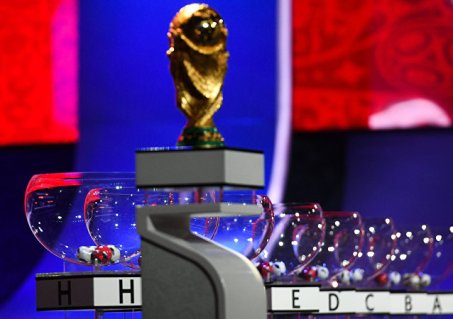
It’s right there on FIFA’s website on how much it took to determine the 32 qualifiers for next year’s World Cup: thirty months, six confederations, 209 teams, 868 matches played, and 2454 goals scored. All 31 available berths up for grabs were decided by November 15th. December 1st was the day to decide the four teams for all eight groups for the World Cup.
Qualifying for the World Cup is already enough of a battle. The respective continent’s confederations contested their matches and conducted their own qualifying format for deciding their qualifiers for the World Cup. There were even two countries that qualified via a ‘wildcard’ berth where they’d have to play a team from another continent twice. The thirty-two qualifying countries were all decided more than two weeks ago. The qualifying rounds made a lot of news for those that qualified, but those that didn’t got a lot of news of their own too. The second-round qualifying matches for the CAF saw two of Africa’s best-ever teams–Nigeria and Cameroon– pitted against each other. Only one can qualify and it ended up being Nigeria. Another surprise was the Ivory Coast being surprised by Morocco and Ghana being overtaken by Egypt. Asia didn’t have many surprises, but Qatar finished last in the Second Round group. Not good since they will be hosting in 2022. The CONMEBOL almost saw the non-qualification of Argentina, but they recovered to win their last game and qualify. Instead the most shocking non-qualifier was 2015 and 2016 Copa America winner Chile which was third the day before the final game for all teams.
The biggest shockers in qualifying came from the CONCACAF and Europe. On the last day of CONCACAF qualifying, all the USA needed to do to qualify was beat Trinidad and Tobago in their last game. It was something they could do as Trinidad would finish last of the Final 6. Instead the USA lost 2-1. That was enough for them to kiss their qualification chances goodbye as Panama beat Costa Rica 2-1 to qualify and Honduras beat Mexico 3-2 to earn a berth in the interconfederation playoff against Australia. Europe had some of the biggest shockers as The Netherlands didn’t even qualify for a UEFA playoff round and Italy thwarted their playoff against Sweden losing 1-0 the first game and a scoreless draw the next. Russia 2018 will be the first World Cup since 1958 in which Italy didn’t qualify and only the third World Cup ever with Italy absent!
Now enough of this World Cup’s also-rans. On with those that qualified. Twenty of the 32 teams for Russia 2018 played in Brazil 2014. Brazil makes it 21 for 21. All former World Cup winners except for Italy will be present. The team with the longest absence making a return to the World Cup stage in 2018 is Peru whose last World Cup appearance was back in 1982. There are only two countries that will make their World Cup debut in Russia: Iceland and Panama. Iceland is especially noteworthy as it has become the first nation with a population of less than 1 million to qualify for a World Cup! Actually there aren’t even half a million people living in the nation of Iceland so that makes it even more remarkable.
Now onto the draw. The draw was held Friday at 18:00 Moscow time at the Kremlin. Legends from all eight countries that have won the World Cup in the past were present: Laurent Blanc, Diego Maradona, Gordon Banks, Cafu, Miroslav Klose, Fabio Cannavaro, Diego Forlan and Carles Puyol. Gary Lineker was host of the event and Russian legend Nikita Simonyan was also part of the event, Vladimir Putin was defintely in attendance, an d the Igor Moiseyev Ballet provided the performance before the draw.
Now onto the actual drawing. In the past, FIFA has organized the pots to give appropriate correlation with continents and availability. FIFA wants the eight groups of four to be a case of no more than two European teams and only one team of the other confederations. There are fourteen European teams (UEFA) including host Russia, five South American teams (CONMEBOL), three teams from North and Central America and the Caribbean (CONCACAF), five African teams (CAF) and five teams from the AFC (Asia and Australia).
FIFA wants to create better parity among the groups for this World Cup. FIFA doesn’t want a case of two or three top-ranked teams in a group as only two can advance past the Group Stage. We all remember the dreaded Group D of 2014 which consisted of three top-ranked teams. This time around FIFA decided to break the draw into four pots of eight. The pots are all based on the teams’ FIFA World Ranking as of October 2017, regardless of continent. The only exception being Russia as the host nation is always automatically in Group A. Here’s how the pots break down with their confederation listed and their ranking in brackets:
POT 1:
- Russia – UEFA (65)
- Germany – UEFA (1)
- Brazil – CONMEBOL (2)
- Portugal – UEFA (3)
- Argentina – CONMEBOL (4)
- Belgium – UEFA (5)
- Poland – UEFA (6)
- France – UEFA (7)
POT 2:
- Spain – UEFA (8)
- Peru – CONMEBOL (10)
- Switzerland – UEFA (11)
- England – UEFA (12)
- Colombia – CONMEBOL (13)
- Mexico – CONCACAF (16)
- Uruguay – CONMEBOL (17)
- Croatia – UEFA (18)
POT 3:
- Denmark – UEFA (19)
- Iceland – UEFA (21)
- Costa Rica – CONCACAF (22)
- Sweden – UEFA (25)
- Tunisia – CAF (28)
- Egypt – CAF (30)
- Senegal – CAF (32)
- Iran – AFC (34)
POT 4:
- Serbia – UEFA (38)
- Nigeria – CAF (41)
- Australia – AFC (43)
- Japan – AFC (44)
- Morocco – CAF (48)
- Panama – CONCACAF (49)
- South Korea – AFC (62)
- Saudi Arabia – AFC (63)
As you can tell by the pot arrangements, they’re trying to make the contest as balanced as possible. In addition, FIFA knows the top seeded teams are Team 1 in each group–host nation being Team A1– but FIFA still wants a drawn ball in all cases to make it official, even drawing the order of the last group team drawn. That explains all those red balls at the beginning of the draw; to make defaults official. Confederation rules still apply as far as maximums per group. Pot 1 had six UEFA teams and Pot 2 had four. It could have been a case where four groups could have reached their maximum two for UEFA teams by the time Pot 2 was all drawn out. Instead it was just two groups with UEFA berths completed. Drawing teams and placing them in the right groups was not as hard and tedious as I had anticipated. In the end, all eight groups had their teams drawn and allotted with only minor complications which were sorted out with ease:
GROUP A:
- Russia
- Saudi Arabia
- Egypt
- Uruguay
GROUP B:
- Portugal
- Spain
- Morocco
- Iran
GROUP C:
- France
- Australia
- Peru
- Denmark
GROUP D:
- Argentina
- Iceland
- Croatia
- Nigeria
GROUP E:
- Brazil
- Switzerland
- Costa Rica
- Serbia
GROUP F:
- Germany
- Mexico
- Sweden
- South Korea
GROUP G:
- Belgium
- Panama
- Tunisia
- England
GROUP H:
- Poland
- Senegal
- Colombia
- Japan
So those are the groups for the 2018 FIFA World Cup. It makes for some interesting analyses. The draw usually tries to make for the host nation to have an easy time qualifying to the knockout phase. Russia has a good group with only Uruguay looking to be a real threat to them. Group B is most interesting not because of the challenge of the teams, but of the geography: Spain, Portugal and Morocco! The draw was aimed so that there could be better parity among ranked teams, but there are possibilities of a ‘Group Of Death’ or two. First bet is Group D; Croatia and Iceland are underdogs that can cause a surprise, and Nigeria meet Argentina for the fifth time out of six World Cups. The second potential Group Of Death could be Group F with Germany and Mexico plus possible upsets coming from either Sweden or South Korea.
And there you go. That’s the Final Draw for the 2018 FIFA World Cup. The teams now have six months to prepare themselves and be among the top two to advance. Lots of excitement guaranteed.
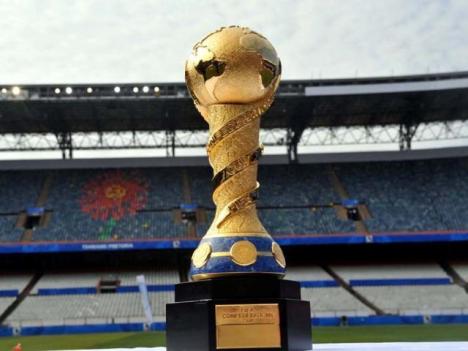
 -Russia (63): Russia is an enigma in football right now. The team has a lot of talent but constantly misses in delivering in major tournaments and qualifying events. Such examples include qualifying for three World Cups since the USSR dissolved and failing to qualify for the knockout round each time. Another example is the Euro tournament: semifinalists in 2008 but out in the Group Stage in 2012 and 2016. Trying coaches from other countries like Guus Huddink and Fabio Capello have delivered sub-par results.
 -New Zealand (95): New Zealand can be either a very good team or a bad team. It qualified for the 2010 World Cup and drew in all of its games. However it hasn’t made much of an impact since. The current line-up of the all-blacks only features one player that plays for a team in a major European League (France’s Ligue 1). The Kiwis have been dominant against teams from Oceania but have struggled against teams from other continents such as a 1-1 draw against the US and losses to Belarus, Northern Ireland and Mexico. If they don’t go far here, they can always learn in time for next year.
 -Portugal (8): Portugal is a team of surprises. The team went from lackluster group play in Euro 2016 to becoming Cup champions. Portugal has since maintained its reputation as one of the best teams in the world with excellent play in World Cup qualifying and continuing to win most of their games. However they have had some notable losses such as a 2-0 loss to Switzerland in September and a 3-2 loss to Sweden in March. Portugal can either be very on or very off here in Russia. The next two weeks will decide their fate.
 -Mexico (17): Mexico has always been seen as the leader of the CONCACAF. They hope to take it even further by proving themselves among the best in the world. However it’s come at a struggle as they’ve ended their last six World Cups in the Round of 16. Mexico have had a lot of good wins in the last 12 months to teams like Ireland, Iceland and Costa Rica and even had a 1-1 draw against the US. However they’ve had a 2-1 loss to Croatia and a 7-0 loss to Chile at the Copa America. The World Cup may be one year away but now is a good chance for Mexico to prove itself on the world stage.
 -Cameroon (32): Cameroon have been one of the most consistent African teams. However their play in the last two decades have been far from their glory days in the early 90’s. The team has worked hard to become better and more consistent since the embarrassment of the 2014 World Cup where they finished dead last. The current squad has many players from many leagues. The team hasn’t had the best chances at proving themselves since. In the past twelve months, they’ve either won or tied every game, but they’ve all been against African teams. The Confederations Cup is a chance for them to prove themselves and where they stand.
 –Chile (4): We can have a long discussion about the ‘sleeping giants’ in football waiting for their big moment to arrive. Chile would be one of them. They have been underestimated in the past and have even gone out in the Round Of 16 in the past two World Cups; and to Brazil both times. However Chile has seized the moment at both the 2015 and 2016 Copa Americas by winning their first-ever Copas. Chile now wants to prove its greatness on the world stage, but they have had an up-and-down period since Copa 2016. They’ve had wins against Uruguay, Colombia and Iceland, but they’ve also had losses to Romania and Argentina and even drew against Russia 1-1 just a week ago. Chile will have to seize the moment if they want to prove themselves further.
 –Australia (48): Since Australia was switched from the Oceania federation to the AFC after their Round of 16 surprise at World Cup 2006, bigger and better things were anticipated from them. Instead it’s been the opposite with losing in the Group Stage these past two World Cups. Australia hopes to put itself back as a powerhouse. However they’ve had a mixed bag of results in the past twelve months ranging from a 1-0 win against Greece to a 4-0 loss to Brazil. Anything can happen here in Russia and Australia could possibly find itself among the frontrunners.
 -Germany (3): The current holders of the World Cup appear to be the heavy favorites to win here. They’ve maintained a consistency even with new members added to the national team ever since. However they’ve had their difficulties too. The semifinal loss at Euro 2016 showed they still have some elements of team unity and other glitches to work on. Since Euro, Germany have not had a loss. They’ve had wins against England and the Czechs but have also drawn 0-0 against Italy and 1-1 against Denmark. They have what it takes to win the Cup here. They just have to deliver.









 Jon The Blogcentric