Oscars 2024 Best Picture Reviews: Part Three

At first I intended for my Best Picture blogs to be three in total. When it became clear how much writing I did for the first two films, I decided dividing them into blogs of two reviews each is more worth it.  So in the meantime, here’s the third of my five Best Picture review blogs:
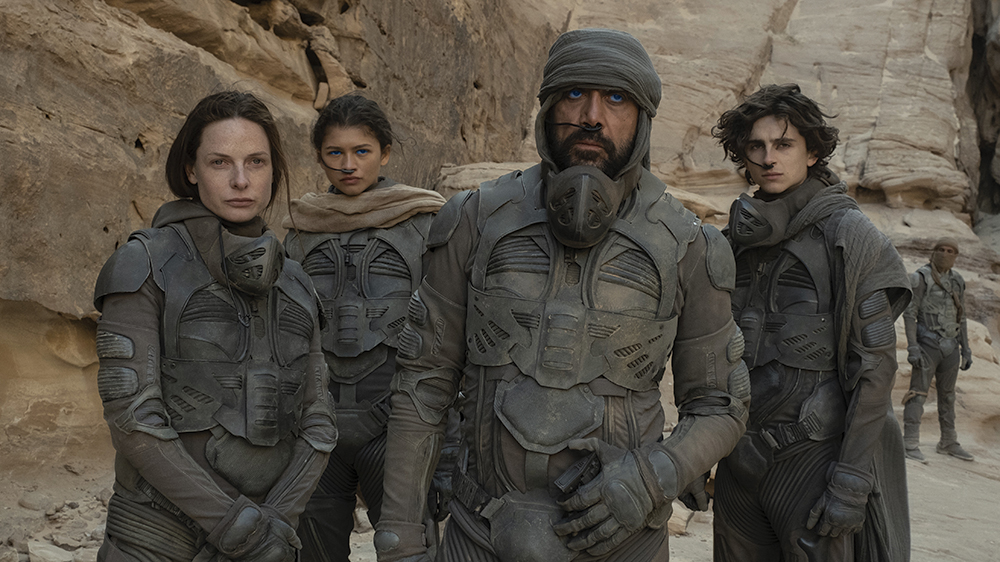
Dune: Part Two

The reboot of the Dune series has been so far the biggest movie action of the 2020’s. The re-adaptation of the Frank Herbert novel was a highly anticipated event in 2021 and hoped to get people back into the movie theatres after the relaxing of the strictest COVID precautions in history. It worked. Dune made over $400 million at the box office, was nominated for ten Academy Awards and won six. It was like what David Lynch got wrong, Denis Villeneuve got right. Originally, Villeneuve planned to divide the story into two films. This is what led to Dune: Part Two to be made.

The second Dune film continues with the drama left behind from the first. The second makes the stories of the dehumanizing Water Of Life, the installation of the young sadistic nephew of Arrakis as the ruler and heir to House Harkonnen, Paul’s romance interest to soldier Chani, the threat of holy war from Fremen fundamentalists, a spice trade at risk of smugglers, Paul’s consumption of the Water Of Life much to the disappointment of Chani, his dealing with his mother, his duel to battle the throne of the Harkonnen kingdom, his ascendancy to the role of king upon winning and the rejection of all as leader, including Chani. The drama continues, the excitement and thrills increase and the ending leaves the audience in suspense and the anticipation of what will follow in the sequel Dune: Messiah, set for release in the spring or summer of 2026.

Every year, there seems to be at least one ‘popcorn movie’ that seems to rack up enough buzz to eventually become a Best Picture nominee. Not only did Dune: Part Two get nominated for Best Picture, but the Dune franchise joins the Godfather, Lord Of The Rings, Going My Way and the Avatar franchise as the only five movie franchises to have two or more of its films nominated for Best Picture. It’s deserving of it because it succeeds in doing what a science fiction film should do. It takes people into another world. It creates an intense complex drama of the threat of the order of humanity and how it rests in the hands of one young man. It delivers in the action people go to expect form a film like Dune. On top of it, it succeeds in being the opposite of your typical movie sequel that ends up being a repeat of the first. Instead, we get a continuation of the chronologic drama and ends with the anticipation of the third and final part. Deserving of its Best Picture nomionation. And to think it was released back in March 2024. Talk about endurance!

Once again, top respect goes to Denis Villeneuve. You can trust Villeneuve to deliver in a sci-fi film. Both in his direction and his co-adaptation of the story with Jon Spaihts, he continues the excitement of the story well by keeping in the right parts, delivering on the action needed and making the smart decision to make his adaptation of Dune a three-film series instead of the two-film series he originally hoped for. He did things right and in winning fashion. Like most sci-fi films, the story is more focused on the special effects and action moments, but the film doesn’t stray away from its focus on the story and the characters. It is still there and still consistent. Even though Timothy Chalamet’s performance as Paul wasn’t too deep of a role, it is still consistent to the story and very believable. Zendaya’s performance as Chani added to the story. In the first Dune movie, Chani was a minor supporting role. Here, she’s the lead female protagonist and Zendaya does an excellent job in making her a key part of this chapter. There were also good performances of minor roles like Josh Brolin as Paul’s trainee and mentor, Rebecca Ferguson as Paul’s mother with whom Paul harbors resentment, Austin Butler as Paul’s fierce deadly rival to the throne and Christopher Walken as the emperor.

As is common with great science fiction films, the standout achievements are in the technical areas. You need it for a sci-fi film to excel and Dune: Part Two had some of the best of the year. Its top achievements are in the cinematography by Greig Fraser, the production design by Patrice Vermette and Shane Viau, the costuming by Jacqueline West, the editing by Joe Walker, the special effects by the film’s effects team, and the music from Hans Zimmer. All of it was successful in taking the audience into Dune’s futuristic world and enhancing the film’s action.

Dune: Part Two succeeds in keeping alive the drama, intensity and excitement of the first film and sets the audience up for anticipation of the third and final chapter. It succeeds in having the best qualities of a sci-fi film without the common watering down or cheapening of the quality.
Emilia Perez

Now this film has been the subject of a lot of discussion, for better or for worse. In watching it, one would be shocked how a musical is made out of subject matter that would be the last themes and elements thought of as subject matter for a musical. Nevertheless, the mix of a musical with modern-day dark drama works as a film from start to finish. Despite that, this film is not for everybody. If you’re a person who welcomes experimentation in film like I do, then you will like it or respect it as a film. If you want to be entertained, that’s taking chances as a lot of people will be unhappy with a film like this. Trust me. A transsexual druglord and all the corruption in Mexico and the missing people that come with it does not make for an entertaining film. Making a musical out of it would seem quite the oddity.

From the start, it looked like the type of film that would get a lot of Oscar buzz. It had great acting, an eyebrow-raising story and quite the unconventional way of making a film. The film would achieve thirteen Oscar nominations and then the hate began. First, there are the complaints from the transsexual communities complaining of the transsexual character being a murderous drug lord before the operation. Then came complaints from the people of Mexico of how Mexico was depicted as a place of rabid crime. Additionally, it came to light past social media messages from Karla Sofia Gascon. Exposed in her messages were tweets that were Islamophobic, racist and even critical of her own co-stars. This only came to light just after all the nominations were revealed. I know there’s always at least one Best Picture contender that starts a load of controversy. Best Picture nominees often start some controversy or debate but there’s always one that stands out the most. This will have to be the biggest of the ten.

I’m not normally one to trash a film unless it’s really horrendous or really terrible either in quality or in its subject matter. While the film is definitely one of uncomfortable subject matter, I do give it credit for its experimentation. We should know that this film is originally a stage opera created by Jacques Audiard who adapted it from a chapter in a French book Ecoute. I will give Audiard credit for trying to make a musical out of out-of-the-ordinary subject matter. Watching it will make you question if the musical elements of the film work or not but there are many parts that stand out as great and will even blow you away. Don’t forget this isn’t a story about a transition from man to woman. It’s also a transition of personality going from leader of a drug cartel to a humanitarian. Also I feel the acting in the story works well. It’s the acting from the three main stars of the film that help make the film work on the screen and work as an unexpected musical. The funny thing is after you’ve finished watching, you will ask yourself if you liked it or not. Or if this worked or not. Despite its imperfections, I consider it a brave attempt.

Responsible for this film is French director Jacques Audiard. Audiard has had a decades-long reputation as a filmmaker in France and has directed many films outside the French language. This film, which was a Palme d’Or nominee at Cannes 2024, should be seen as an accomplishment in retrospect. A flawed accomplishment, a provocative accomplishment but an accomplishment nevertheless. It’s not just this being an unlikely musical but also adapting a stage opera to the big screen. As if adapting a musical isn’t hard enough. Despite its flaws, I give Audiard credit for that.

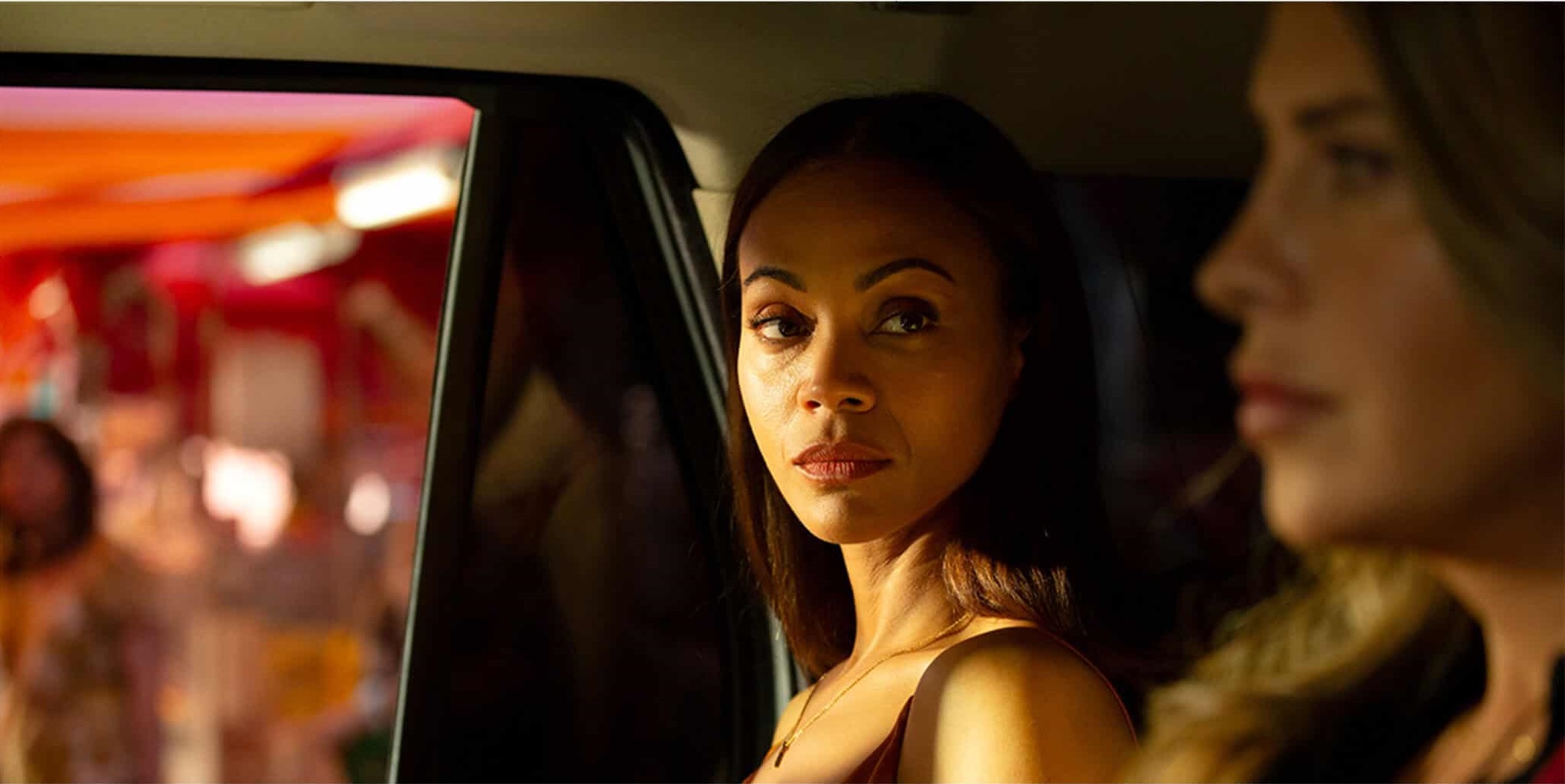
Also excellent is the performance of lead Karla Sofia Gascon. A transsexual woman herself, Gascon does a great job in both the male role of Manitas and the female role of Emilia Perez. It’s two different conflicting personalities of the same character and it needed to be done well, and Gascon succeeds in doing it. Also excellent is Zoe Saldana as the lawyer caught in the middle of it all. When watching the film, you wonder if the lead is Emilia or if the lead is Rita Castro. Zoe does a great job in making the film as much hers as it is Emilia’s. Selena Gomez’ performance was not all there. Nevertheless she did have some great moments and was believable in most scenes. Adriana Paz is also great in playing Emilia’s lover. I give top technical acclaim to Paul Guilhaume in the cinematography, the hair and makeup team for the convincing work on the pre-transition Manitas, and the collaboration of Clement Ducol and Camille on the standout music.

Emilia Perez is not everyone’s cup of tea. It gives a lot of reasons for you to hate it and a lot of reasons for you to like it. I consider it a film for myself to like and admire, despite its obvious flaws.

And there you go. This is my look at two more contenders for the Best Picture Oscar. With ten films, boy do you get a lot of different films.

2023 Oscars Best Picture Review: Oppenheimer

Oppenheimer will get you questioning whether J. Robert Oppenheimer (played by Cillian Murphy) deserves to seen as a hero or villain, or neither.

Would a film about J. Robert Oppenheimer attract crowds to the cinema this summer? Oppenheimer proved to have the right stuff to make it happen.

When the film first arrived, there was the big question. Would a film about the inventor of the atomic bomb fly or would it flop? Would today’s audience care about a story of the inventor of the atomic bomb? Especially with this being a film with a budget of almost $100 million. Would it be a box office hit during the summer? In addition, does the film justify its three-hour running time? Oppenheimer surprised all naysayers by answering “yes” in all cases. It even succeeded in being a hit right while the Barbie phenomenon was in full-swing. No wonder 2023 will be remembered as the summer of “Barbenheimer!”

This film succeeds in justifying it’s importance. It’s easy to develop a fascination for the man who pioneered the “Nuclear Age.” Hiroshima and Nagasaki are still as intriguing and haunting today as they were when the bombs were dropped in August 1945. Even how this would pave the way for the introduction of the nuclear bomb and how it would cause the most intense moments of the Cold War of the past can make people intrigued in the man that started it all. Even though the most intense days are gone, it doesn’t mean the threat is no longer. There’s still Communist China, North Korea and even Putin taunting the world with threats. As long as nuclear bombs exist and are ready to use, J. Robert Oppenheimer will remain a man of intrigue.

The film can’t just be about building the nuclear bomb. The film is about the man himself. Oppenheimer himself started his career off as an aggressively ambition physics professor who had a clever and creative way of describing complicated things. It’s after he learns of nuclear fission in 1938 that he senses that it’s something that can be weaponized. The timing of this comes just as World War II dawns. The Manhattan Project is commissioned in 1942 to create such a weapon. J. Robert, who was Jewish himself, knew of the importance of stopping the Nazis. J. Robert didn’t simply agree to create such a bomb for the sake of having one created. He created one because he sensed the Germans themselves could learn of this and create one of their own. The war ends in Germany without a single use of such a weapon, but as its relevance is questioned, J. Robert suggests it could end the war in the Pacific. The bomb is tested successfully and that prompts President Truman to order them used in the war.

Then Hiroshima and Nagasaki happen. Everything changes for Oppenheimer. He is now ridden with guilt, feeling responsible for all the deaths that happened. The American people, on the other hand, see him as a hero for ending the war. President Truman, full of excitement with winning the war, taunts J. Robert’s empathy and rejects his wish to end further atomic development. It’s at the 1954 hearings that J. Robert, his legacy and his ties to communists are put under question and he has to confront himself on who he is. Eventually his arrogance and competitiveness would take his toll on him in the end. He’d have to face the music of the new world order he helped pioneer.

It’s also about the personal side of the man. J. Robert was a man of ambition in his early days of studies. He was also a man who thrived on knowledge and frequently consulted with Albert Einstein many times, relying on his knowledge. He was a man who liked difficult things and took an interest in the mystical and the cryptic. He was also the husband of Kitty Puening, but the marriage was rocky and riddled with J. Robert’s infidelity. His ties to communists in the intellectual community, and even with wife Kitty being a former writer for a communist newspaper, is something that could easily cause the suspicion in the 1950’s communist crackdown. J. Robert Oppenheimer was as much a complicated person as he was an important part of history.

This film should be seen as the crowning achievement of writer/director Christopher Nolan. His career has spanned over half a century starting in 1998 with Following, making his North American breakthrough with 2001’s Memento. His career would be full of landmark films like The Prestige, The Dark Knight, Inception, Interstellar, and Dunkirk. Until this film, only the latter has earned him an Oscar nomination in directing. He’s frequently delivered remarkable storytelling and has often found big box-office success, but many feel he’s missing the big renown he deserves. This film, which is an adaptation of the 2005 book American Prometheus, not only makes us take interest in the man who pioneered the nuclear age, but take us into the times and in the person Oppenheimer was. He succeeds greatly in creating a film that keeps out intrigue in the man himself as our intrigue into the creation of his bomb. Definitely the best film in an illustrious career he’s created.

We should also give many top accolades to Cillian Murphy. As much as this is Nolan’s masterpiece, we should also admire Cillian for making the film work for his portrayal of J. Robert. He does a great job in portraying the man and his genius, his weaknesses, his arrogance, and his hidden frailties. Definitely one of the film’s biggest highlights. Also excellent is the performance of Emily Blunt as Kitty Oppenheimer. Not only does she show her struggles with J. Robert’s infidelity and the potentially-destructive work he’s carrying out, but she’s able to tell J. Robert bluntly some awful truths about him, the world and all he caused. Also excellent is Robert Downey Jr. playing Lewis Strauss, the former colleague who turns against him and vilifies him in the end. Additional excellent performances come from Matt Damon as Ge. Leslie Groves who’s cynical and fearful of J. Robert’s work, Florence Pugh as J. Robert’s “other woman,” and Tom Conti as Albert Einstein, whom J. Robert often confides in and confesses to.

The technical feats of Oppenheimer are also excellent. There’s the cinematography of Hoyte van Hoytema, a frequent collaborator of Nolan’s, who did a great job of using the black-and-white and color imagery to showcase the two sides of the story. There’s the excellent editing from Jennifer Lame which showcased the story well and justified the film’s three-hour length. There’s also the costuming, hairstylists and makeup personnel that did a great job in recreating the looks of the past. The production design team also did a great job in their recreation of past buildings and the empty town meant to test the bomb’s effects. There’s also the great musical score from composer Ludwig Goransson that adds to the suspense and eeriness of the film and the sound team that delivers the right sound mixing needed for the story.

Oppenheimer is a deserving summer movie hit, an accomplishment for Christopher Nolan, and one of the best films of 2023. It’s a film that can get you feeling sorry for a historical person we should really hate and also show how important the story of his invention is for our times.

Oscars 2019 Best Picture Review: Little Women

Little women
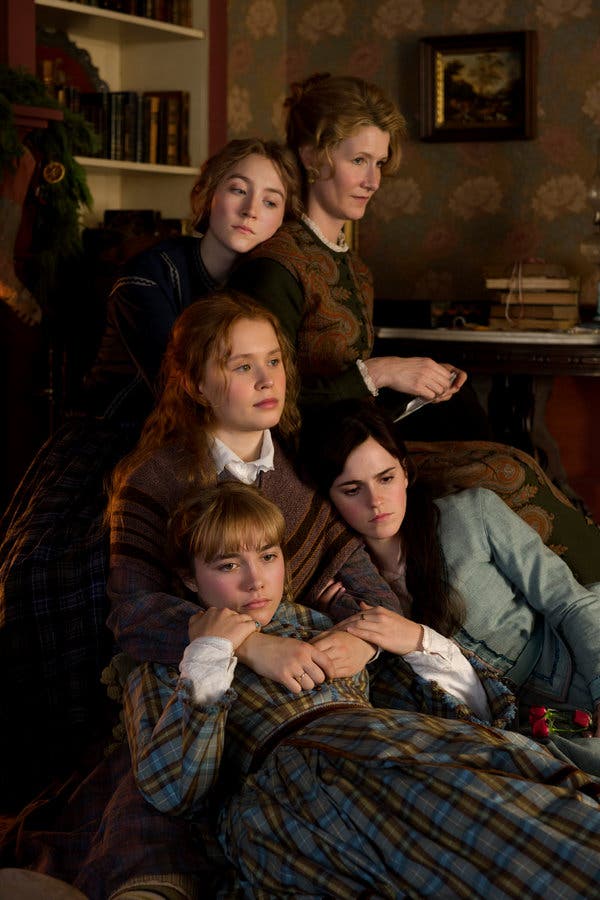
The latest adaptation of Little Women stars Saoirse Ronan (top left) as Jo March and is adapted and directed by Greta Gerwig.


I’m sure when most of you learned of Little Women about to be released, I bet most of you thought ‘not another Little Women adaptation.’ I admit I had those feelings at the start. However I was surprised to see how well it turned out.

In 1868, Jo March is a teacher in New York City. She has writing ambitions and takes her writing frequently to Mr. Dashwood who will publish her writing… under considerable editing. Her younger sister Amy is in Paris under the guidance of her elder Aunt March who never married and despises the idea of marriage. She meets her love from back home, Laurie and invites her to a party, in which he gets drunk to her dismay. Jo’s writing ambitions are kept alive by a professor named Friedrich Bhaer who supports her work but is constructive but blunt in his critiquing of her works. However Jo has to put everything on hold when she receives a letter that her younger sister Beth is sick. She has to return back home.

The film flashes back to the winter of 1861 in Massachusetts, just after the March’s father goes off to the Civil War, and the March sisters all dress up and prepare for a party where Jo meets Laurie, the grandson of their neighbor Mr. Laurence, for the first time. Just before Christmas dinner, the mother Marmee encourages the girls to give their food to their Mrs. Hummer and her group of hungry children. The girls return with a plentiful Christmas dinner thanks to Mr. Laurence and a letter from their father who just started fighting. During the trip, Jo is invited by her single elder Aunt March to come to Paris with her. Also during that winter, Amy is strapped by a teacher for her drawing in class and Laurie takes her in to his Latin lesson before her family arrives.

It’s obvious as Amy has artistic ambitions and Jo has writing ambitions, their ambitions clash, often violently. One night as Jo is out with the family for an occasion, Amy burns the notes to her novel. Jo discovers upon returning, and a violent fight ensued. However all animosity ends when on an occasion while skating, the ice breaks under Amy and is in danger of drowning. Jo saves her. Also during that winter, Mr. Laurence invites Beth to play on his piano as she reminds him of his late daughter.

Returning to 1868, Laurie apologizes to Amy for his drunken behavior the night before. He also begs Amy not to marry Fred Vaughn but marry him instead. That only makes Amy unhappy as she feels she’s ‘second to Jo’ at everything, including Laurie. Amy later rejects Fred’s proposal after she learns Laurie returned to London. Returning back to the past, there was a period of time when Marmee left to visit their father who was wounded during the War. During that time, Beth received a gift from Mr. Laurence: his piano! However she becomes ill with scarlet fever. With a weak heart, it means she might die. Her mother rushes home with their father, already recovered. All come home in time for Christmas and Amy is all better. However returning back to 1868, Amy dies shortly after Jo arrives from her train trip.

The film flashes back to the past on the day Meg is about to be married. Jo doesn’t want her to marry, feeling Meg doesn’t want to marry, but Meg reminds her Jo’s ambitions may be different from Meg’s ambitions, but they’re still her ambitions. It’s on the day of the wedding Aunt March announces she will take Amy to Paris instead of Jo. Laurie admits his feelings for Jo after the wedding, but Jo insists she doesn’t have the same feelings.

Returning back to 1868, a devastated Amy returns home with a dying Aunt March. Jo starts to wonder if she has second thoughts of her love to Laurie. She writes a letter confessing her feelings, but she soon learns Amy accepted Laurie’s proposal and rejected Fred Vaughn’s proposal. Jo later agrees with Laurie to just be friends. After she throws her letter of love to Laurie in the river, she’s inspired to write her novel about her and her sisters.

She takes the novel to Mr. Dashwood who dismisses it because he believes a lead protagonist female who marries is what sells novels. Mr. Dashwood is given a change of heart when he learns his own young daughters love the story. However he’s still skeptical and wants Jo to make the lead protagonist marry. Jo is at first against it as it is sacrilegious to her work. However she compromises, but on one condition. She gets a $500 up-front publishing payment and more than the original 5% profits promised. She starts at 10% but compromises at 6.6%. The novel Little Women is set to be published and the school Jo and her sisters wanted to open is opened in what was Aunt March’s house with Bhaer teaching children at the school.

This may be a film adapted from a novel written in 1868, but as one watches, one would be surprised to see its relevance for today. This may be a story set around the time of the US Civil War and in New England, but there are a lot of similarities to the present. One common theme is the competitiveness of sisters. We still have that. Ask any woman who comes from a family with a lot of girls! There’s also the story of women with desires and ambitions. Today’s young women have possibly the biggest ever ambitions for their future. Women may have had it rougher a century and a half ago, but it makes clear the ambitions the women shared, whether it be career ambitions, romance ambitions or artistic ambitions. We should remember from history that women had to work during the war while the men were fighting and that started suffrage groups and the first feminist groups. There’s dealing with dashing but stupid men, as seen in Laurie. There’s support and encouragement from others. There’s also the bond of the family. First of the March girls all live with their mother Marmee as they’re waiting for their father to come home from the war. Even dealing with the heartbreak of a sister that died too soon.

For those that read the novel Little Women, I feel the reason why it became so popular is that women could see mirror images of themselves in the March sisters. They shared similar goals, similar trials, similar ambitions and similar dreams. Here in the film, I felt the characters of the March girls were made to look very relatable to most young females of today.

Now Little Women has already been adapted into a film many times before. In fact this is the seventh film adaptation of the novel if you even include adaptations as far back as the silent era. To make people welcome a film adaptation of this in the present, there would have to be a freshness or a twist that works. Having it a case where Beth is one with no intentions to marry is a risky thing. I feel it did the smart thing by having it a case where Jo is the author of Little Women and trying to market it, and using the money to build the school, is a brave decision. I don’t think it does anything too sacrilegious to the book. In fact the character of Jo is to mirror that of Louisa. What the film does is actually give two alternatives of Jo: the Jo that’s common in the novel and the Jo who’s more of a reflection of Louisa’s own life and strong will when she deals with Mr. Dashwood. It’s a unique twist for Greta to make it happen. Plus instead of it defying the story, it actually adds a unique twist to it that works.

Top accolades of the film should go to director Greta Gerwig. This could have been another rehash of a commonly-adapted novel. Instead Greta adapts the story to make it very relatable to young women in today’s world and even adding a twist to the story without ruining the dignity of the original story. Gerwig bends instead of breaks. Even the constant flashes between the past and present work well. The best acting comes from Saoirse Ronan. Again she does an excellent acting performance that adds dimension and charm and speaks to the audience. Florence Pugh is also great as Amy: Jo’s most rivalrous sister and very good at stealing the show from Jo at times. Emma Watson and Eliza Scanlen are also very good as sisters Meg and Beth. Laura Dern is also good as Marmee, but her role is limited in dimension. Meryl Streep is also given a brief role as Miss March, but she delivers a character that commands your attention each time. Timothee Chalamet was good as the idiotic Laurie, but I feel he didn’t act 1860’s-ish enough.

The film also has a lot of great standout technical efforts too. There’s the costuming of Jacqueline Durran, there’s the score composition from Alexandre Desplat, the set design from Jess Gonchor and Claire Kaufman and there’s the cinematography of Yorick Le Saux.

The most recent adaptation of Little Women does the book justice, but it adds a twist at the end. I’m sure even the biggest fans of the novel will be happy how the film turns out.