Wrap-Up Of VIFF 2025

The 44th annual Vancouver International Film Festival concluded on Sunday, October 12th. The day before Canadian Thanksgiving. There were more facilities and with that, more films. It’s a case where the VIFF is trying to revive itself to its post-COVID state, like most major events. This year’s VIFF was very impressive in making that effort.

This year’s VIFF does not yet have their attendance figures published but you can bet with more films, attendance was up. There were huge crowds for a lot of films and galas were sold out. Films in the Showcase series also received excellent attendance and many did sell out. Films with a lot of Oscar buzz or award winners from Cannes or Venice were also big hits. One of the most noticeable details was that there were sell-outs for many Canadian films. Especially for some films made by local artist. That is another goal of VIFF to promote the films made from local filmmakers.

Set-Up and Strike Adventures

For volunteer work, this was the first year I did the Set-Up And Strike work. It was quite the experience and it could get crazy at times. My first such shift was two days before the start. It involved bringing in supplies to the Granville Island theatre and then to the theatres of the International Village. The activity wasn’t too hard of impact but the International Village had the most supplies to load in.

My second shift took place the day before opening. This involved loading a truck full of items from the VanCity theatre and taking them to both the Alliance Francaise theatre and the SFU theatre. The Alliance Francaise wasn’t too much to load out, but it was a half-hour wait to start moving again. The SFU theatre was more complicated because the garage was secured, cellphone access wasn’t around in the garage and taking things out also meant assembling tents. Assembling tents outdoors in a limited area was a headache!

My third shift took place on the final day, Sunday the 12th. It started at 9pm and it involved taking supplies from theatres we brought in. First was the Rio, then SFU and then International Village. All had complications. For the Rio, we learned the truck we were given by the rental company had a lock from the last customer and we could not get it off! We had to wait for a new truck. After we finished at the Rio, we go to SFU and find the garage door locked just after we finished loading. It was a wait to get moving again! Then the traffic and crowd of people from the Shawn Mendes concert added time for us! Then we see the garage at International Village all locked up! That was another delay in loading stuff. Unloading at the end at VanCity was the easier part and we all left in good time: quarter to midnight!

My fourth and last shift had to be the easiest. It started at noon the day after the Festival ended and it involved returning rented festival supplies to film rental companies. The first trip unloading things from the supply trucks was for Sunbelt Rentals in Burnaby. That move wasn’t too hard as VIFF has a space for their rentals. It took only 40 minutes to unload and pack it all in. Even the big tents didn’t end up as complicated as we feared. The next trip was to Sparky’s Rentals in Vancouver. Finding it was harder than unloading things as Google maps didn’t do things right. The unloading didn’t take as much time as we thought and we ended at 1:40pm; twenty minutes ahead of time!

My Film Watching

With my first two volunteer shifts completed and the last two to take place on the final day and the day after, I used my free time to see as many films as I could. I saw two on opening Thursday (the 2nd) and both were Spanish-language. Actually the very first five days, I saw two films a day and it was quite tiring. Especially since I saw them at various cinemas. I saw most at the International Village, but I also saw some in that time at the Rio, the Playhouse, the Granville Island Stage and the SFU theatre. I like doing different theatres and trying to do it all is tiring. So tiring, I decided to skip film-watching for Tuesday the 7th. Besides I had already completed my yearly major VIFF goals.

On Wednesday the 8th, I saw a shorts segment at the International Village with a friend I had not seen in a long time just for the sake of meeting up. We had a lot of catching up! The next day, I wanted to see a Canadian film at the Cinematheque but it was all sold out! With a free day on Friday the 10th, I saw one film in the morning at the IV, returned to the Cinematheque and got in this time, and ended at the Playhouse. Saturday the 11th was a case I saw my first film at the Alliance Francaise theatre and ended at the Rio. The last film I saw was in the early evening of Sunday the 12th at the Granville Island Stage. In time to do the takedown at the various theatres!

Isn’t it something how I completed all my film reviews and my wrap-up blog all before the end of October? What can I say? While I was waiting for my new job to start in the middle of the month, I used my free time to do whatever blog typing that I could. Boy did it help me get my blogs all completed faster than I expected. Anyways it makes me relax for the rest of 2025. So for those that want me to list all the films I saw during VIFF 2025, here’s my list and the links to my reviews for you listed in the order I saw them and with the film’s nation(s):

2025 VIFF Award Winners

So you’re all now wondering who the Award Winners are? All six juried award categories from last year returned. Two categories for Canadian films expanded to include Indigenous filmmakers from all over. For Audience Awards, the number of awarded categories expanded from nine to eleven. I find it something I saw four feature-length films and one short film that won awards. Here are the award winners for VIFF 2025:

JURIED AWARD WINNERS

SUMMIT Award
for outstanding narrative feature by an established Canadian or Indigenous filmmaker:
-The Things You Kill (dir. Alireza Khatami)

HORIZON Award
for outstanding first or second feature by a Canadian filmmaker:
-Blue Heron (dir. Sophy Romvari)

TIDES Award
for outstanding documentary feature by a Canadian or Indigenous filmmaker:
–The Track (dir. Ryan Sidhoo)

ARBUTUS Award
for outstanding feature film production in BC:
–Blue Heron (dir. Sophy Romvari)

SHORT FORUM Award
open to all short films in the Short Forums
-No Skate (dir. Guil Sela)

VANGUARD Award
open to all feature films in VIFF’s Vanguard section
–Wind, Talk To Me (dir. Stefan Djordjevic)

AUDIENCE AWARDS

Special Presentations
-Kokuho (dir. Sang Il-lee)

Showcase
-In The Room (dir. Brishkay Ahmed)

Panorama
-Meadowlarks (dir. Tasha Hubbard)

Vanguard
-Gazelle (dirs. Nadir Saribacak and Samy Pioneer [Selman])

Northern Lights
-Akashi (dir. Mayumi Yoshida)

Insights
-Free Leonard Peltier (dirs. Jesse Short Bull and David France)

Spectrum
-Khartoum (dirs. Anas Saeed, Rawia Alhag, Ibrahim Snoopy, Timmea Mohamed Ahmed and Phil Cox)

Portraits
-The Essence Of Eva (dirs. Alex Fegan and Malcolm Willis)

Altered States
-****toys (dir. Annapurna Sriram)

Spotlight On Korea
-3670 (dir. Park Joon-ho)

Focus
-Bad Girl (dir. Varsha Bharath)

And that does it for another year at the Vancouver Film Festival. It offered a lot more this year and I enjoyed as much as I could. We’ll see what 2026 has to offer next October.
VIFF 2025 Review: Bidad (بیداد)

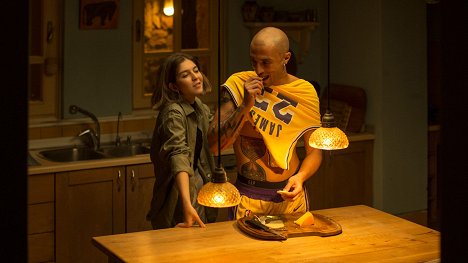
An Iranian singer named Seti (left, played by Sarvin Zabetian) is threatened by the law and only has a random man she met (right, played by Amir Jadidi) supporting her in Bidad.

At this year’s Festival, you will see a lot of films that deal with the harsh realities of the filmmaker’s home nation. Bidad is a film that deals with the issue of simple human rights.

Seti is a young Iranian woman who dreams of a singing career. In Iran, only men can be lead singers and female singers are relegated to the background. Seti did sing at a park sing-along but was stopped by the Guidance Patrols, or ‘morality police’ of Iran. Since she can’t perform on a public stage, the most she can do is post videos of her singing on social media. Seti also has a major problem in her life. Her mother Homeyra, whom she lives with, is an alcoholic who can’t seem to recover from her addiction. To make matters worse, Homeyra often has an alcohol-fueled explosive temper. Seti often stumbles into her with a bottle in her hand, and it infuriates her.

Seti is a bit of a rebel. She dares to walk the streets of Tehran without a veil or a hijab, despite the chance of the Guidance Patrols arresting her even for that. She even cuts her hair in anger. One day after rehearsing with others in her underground college, she comes across a man who hoots at her from her car. At first, she thinks it’s just another young jerk male. She reluctantly decides to spend the night at his place. She learns this man named Bebin is a lot more. He has shown a liking to Seti and her music. Overnight she learns more about Bebin and he’s a man who really cares about her. Bebin also has a secret of his own. He has a bottle of specialty alcohol that he has to keep hidden from the Guidance Patrols. He gives her a drink and he talks about hope of seeking refuge in another country.

Seti has a public performance set up for her at a club. The advertising had to be kept to a minimum for the sake of Seti’s safety. Homeyra is scared to see her there but Bebin will see her perform. Before she is even able to perform, the Guidance Patrols bust the place up. They boot everyone out of the club. Infuriated, Seti attacks the Patrol and runs off with Bebin helping her escape. The Patrols did track her identity down and later arrest her at home. She is taken into custody for a week’s period of time. The cell she’s kept in feels like a prison. The inspections she is forced to endure from both male and female patrols are humiliating. She is released on bail awaiting trial.

After her release, she returns home. Homeyra tries to show Seti that she has stopped drinking for nine days. Seti learns some unhappy news. Her social media account is restricted and Homeyra posted a message that Seti will never perform or post videos again. Seti is infuriated and lets out her anger to Homeyra. She leaves for the streets and soon learns the club she performed at is closed off by a concrete barrier. Soon, she learns of an underground public music rally. Many other women will be performing. On her way, she’s fortunate to bump into Bebin again.

Seti and Bebin find a group of ‘underground’ performers. It looks ideal for Seti to sing as many women are singing and are without veils. Just as Seti finds a female guitarist to sing along with, the Guidance Patrols bust the location up and are ready to make arrests. Bidad knows if Seti is caught, she would be arrested and could be executed. Bidad is willing to take her to safety, but Seti insists on singing with the guitarist. The ending doesn’t give full details of the aftermath but the images during the credits are telling.

Seti’s story is a common story for many women in Iran. Men have more freedoms and the women are frequently targets of the Guidance Patrols if they don’t obey. It’s been that way since 1978 when the Islamic Revolution happened in Iran. Even seeing how there are a lot of women that are part of the Guidance Patrols speaks a message how there are many women in Iran who agree with this restrictiveness. Seti is a woman of rebellion. Her only weapon is her singing voice, but the powers that be in Iran consider it a threat. No veil and a woman singing in public. You can understand the reason for rebellion with the Iranian women revolting in 2022. In fact, the word Bidad is Farsi for ‘outcry.’ You can see that this film is also outcry about this problem. That scene where Seti cuts her hair will remind you of how Iranian women cut their hair during the revolt that year.

It should also be reminded it’s not just women doing what women are not allowed to do that are under scrutiny from the Guidance Patrols. Drinking alcohol is a crime for any Iranian. That explains why Bebin has a hidden bottle of whiskey and that’s why Homeyra can’t get proper treatment for alcoholism. Because she’ll be arrested.

The film isn’t just a reminder of what women in countries like Iran are going through. The film is about Seti herself. Seti loves to sing. It’s her expression. She does not understand why only men get the lead and only men can perform in public. It’s because of her passion for singing that she dares to perform in the club and dares to attack the Guidance Patrol when she’s about to be arrested. It’s because she’s furious with her mother when she learns she posted a fake video that she’ll never sing again. How dare she say a lie like that on social media about her passion. You can understand why Seti dared to perform at that underground performance. She won’t even let the threat of death stop her from doing what she loves.

This film is a great work from Iranian director Soheil Beiraghi. Iranian women and their fight for their rights and autonomy are a common theme in his films like 2016’s I (Me), 2018’s Cold Sweat (Permission), and 2020’s Popular. This fourth feature he directed and wrote is another story of Iranian women and their struggle. This is something how Iran and their Guidance Patrols consider something as simple as a woman singing in public is seen as a threat to order. He has a statement to make and he does an excellent job of making it as a dramatic story rather than something preachy. It’s tricky to do something like that but he succeeds very well. This film was a nominee for the Best Film award at the Karlovy Vary Film Festival and won the Crystal Globe at that Festival for Special Mention.

The performance of Sarvin Zabetian is excellent. She not only delivers a good performance but she makes Seti and her dream of public singing a relatable story. One can’t help but feel a connection to her dream and disgust to why she’s forbidden, and she succeeds in making us feel that way. Leili Rashidi is another actor who delivers a great performance. Her performance of Homeyra is one where you don’t know whether to despise her or feel sympathy for her. I know Seti makes it appear living with her is like a prison of its own but sometimes, you sense Homeyra is also a prisoner of her own situation. Amir Jedidi delivers a great character in his role of Bebin. He makes Bebin to be a likeable person, especially as he’s the one person Seti feels completely secure around, but I feel his role could have been developed more.

Bidad is both a tragedy and a story of hope. You can see an incident like this happening in Iran. You can also sense the film telling you despite these dark times, there is hope for the future of women in Iran.

VIFF 2025 Review: Idiotka

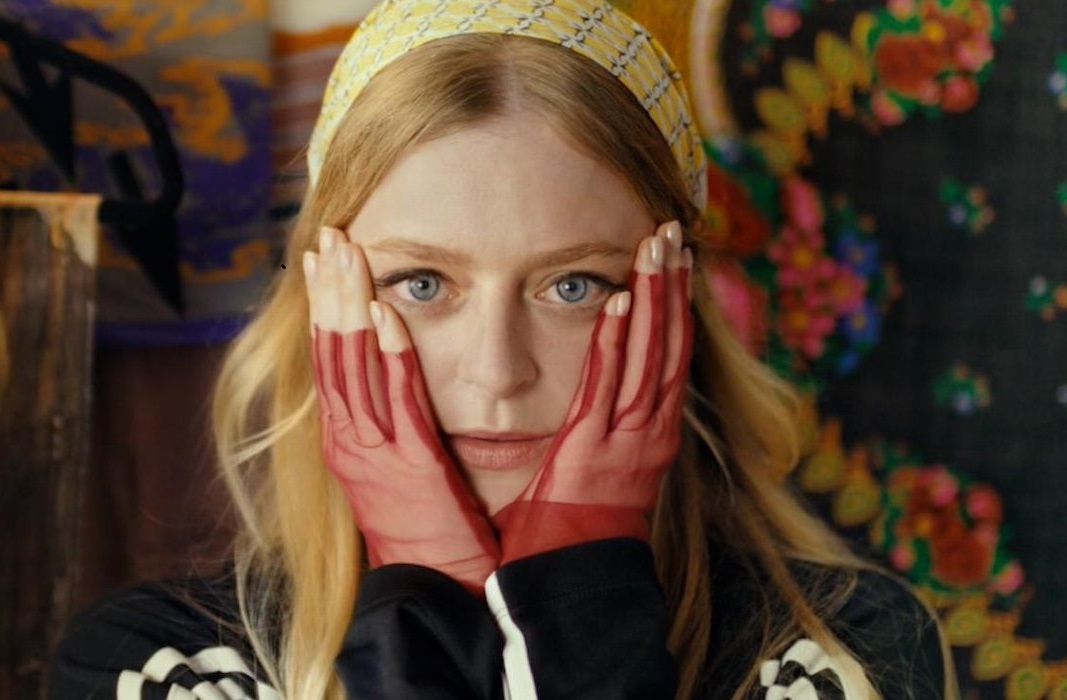
Anna Baryshnikov plays a fashion designer looking for her big break on a reality TV contest in Idiotka.

The VIFF will be full of dramatic films this year, so it’s kind of understanding why I would want to look for a comedy break. I was lucky to get it with Idiotka. It’s an American comedic film that can make you laugh.

Margarita Levlansky is a woman who dreams of becoming a fashion designer. Trouble is she lives in the Russian section of West Hollywood where it’s hard to get notice. She also has a flimsy sewing machine. The only way she can make money from her fashions is when she sells them with a big-name designer label on them and sell on eBay. Margarita’s family are full of hard times in America. Her brother Nerses is an unsuccessful musician, het father Samuel was a doctor who spend eight years in prison because of medical fraud and was depressed enough to leave his practice, and grandmother Gita is physically unable to work thanks to chain-smoking. To complicate things, they’re waiting for a house being constructed and they’re five months behind in rent at their apartment. Their landlord, restaurant owner Vlad, is not happy at all about it.

One day, Margarita finds a chance for a big break. A fashion television channel is starting a new reality competition for fashion designers from underprivileged backgrounds called Slay, Serve and Survive. At the audition, she meets the shows top producer Nicol Garcia. She let’s Margarita know from the start that this fashion contest will involve a lot of playing to the camera. That will mean things like a likable personality, a relatable scenario and even exposing personal things about her family is she progresses in the rounds. Margarita accepts. Within time, she is one of the final five for the big prize of $100,000. The family is excited for Margarita. Finally, a chance for a way out of the financial mess for them.

At the start, Margarita is nervous when she learns who her four rivals are. They also have attention-getting backgrounds of their own. To add to it, she also learns of the flamboyancy and ego of the two other judges: Candy and Emma Wexler. The first round starts where they all have to take various types of yellow-colored pieces of clothing and work them to make something nice and eye catching. They all have a limited amount of time to make it work. At the end, all five show their works off. Then the judges decide. One has to go home. It’s not Margarita! She’s still in the running!

As each round progresses, the fashions get more and more personal and the competition gets that much tighter. They even go as far as showing off one’s ethnic background. The producers are looking for more chaos from Margarita but she’s reluctant. Grandmother Gita wants to be on camera but father Samuel is reluctant. He still doesn’t want to admit his failings. Soon bad news hits the family as Vlad is evicting them from the house and Gita has been diagnosed with lung cancer.

The two finalists have been narrowed down. It’s Margarita and Jung-soo. For the final episode, only one will walk away with the $100,000. In the days leading up, Margarita is still uncertain how things will go. Her father is still reluctant, she has no place to show her clothes, and her sewing machine works terrible. She’s just about to quit. The night before the main event, she has drinks with Jung-soo and he talks about his own nervousness for this contest. Soon things look up. Gita used her last money to buy Margarita a new sewing machine. One that works effortlessly! Vlad learned of Margarita on television and is willing to forgive the family of the money they owe as long his restaurant is shown in the final episode. Right just an hour before Margarita is to give her show, the father is finally willing to go along and be on camera.

The final show is on. Filming takes place in Vlad’s restaurant. All of Margarita’s family wear fashions showing off the shortcomings of their lives. Nerses shows himself off as the flop singer. Gita shows herself off as the smoking grandmother and tosses cigarettes to the hosts and producers. Samuel comes on with his MD uniform and takes it off to unveil a prison uniform. Finally Margarita comes out in one of her hand-made outfits with all the designer labels she uses sewn all about. Then it’s up to the judges to decide who the $100,000 winner is. The ending gives us a sense that things will get better for the family, but not without some heartbreak along the way.

It’s not that often I go to see a comedy at the VIFF. I just took the film because it was available at the time. I’m glad I did. This comedy does have a lot of relatable teams. A young budding fashion designer who longs for her big break. Her family that’s full of flaws and problems. A fashion contest/reality show that’s a chance to be her breakthrough. It gives a lot to identify with and laugh about. Especially for the young.

I know that films about a reality TV competition have been done very frequently in the past, so this comedy doesn’t offer anything too new. What this comedy does do is it gives a relatable situation about a family with problems and one person trying to find a way out of it. It will require family cooperation and it gets messy, but it does work out in the end. The story is also about how the child of the family has the biggest responsibilities with her being the breadwinner. To do all that she does and then risk it big time to win on reality TV, that is one big challenge. Nevertheless the story pulls itself off well. It may get messy at times in the story, but it succeeds in the end.

This is the first feature-length film for Nastasya Popov. She has directed short films including documentaries before. Here she delivers a compelling comedy about trying for a big break while hanging by a string. It’s a funny story, if it’s not always together. Popov has gotten some acclaim for this as she won a New Director award at the San Francisco film festival.

Anna Baryshnikov holds the film together as the protagonist. The daughter of legendary ballet dancer Mikhail Baryshnykov, she’s had a steady acting career for over eight years and she looks great here. She’s able to balance the humorous with the dramatic and be able to be the centre of a story of a messy family drama. The chemistry of the family also made the film work. Mark Ivanir is great as the father too prideful to fess up to the mistakes he made. Nerses Stamos is also good as the son who can’t get a break. Galina Jovovich often steals the film as Gita the fierce grandmother. Camila Mendes adds to the humor as Nicol as do both Julia Fox and Saweetie as exaggerated versions of themselves.

Idiotka may follow a common story line found in most comedies, but it succeeds in delivering its own story. It has a mix of relatable and unrelatable ingredients that will make you enjoy it.

VIFF 2024 Ends On A Good Note

I know that VIFF ended over two months ago, but I lacked the drive to write for a long time. Since we’ve passed Christmas, I figured it’s enough wasting time and to get out the wrap-up blog.

Last year, the Vancouver International Film Festival ended the Sunday before Canadian Thanksgiving. This year, they end on Sunday October 6th: a week before Canadian Thanksgiving. Still, it was an excellent 11 days of cinema. Yes, there was the continuation of downsizing for the festival. There were less than half the number of films there were in past Festivals before the pandemic. The church that used to be the Centre In Vancouver For Performing Arts was not available this year as it has been in past years. Despite that, most facilities that had been available for the VIFF in past years were available again. VIFF also continued to showcase digital films and digital arts as it’s fast becoming a growing art form. The common cinematic films still remained the highlight of the Festival and there were excellent turn outs. There were sellout shows and repeat screenings for many films. I’ll explain more when I talk about my volunteering experience.

For this year, I was only lucky to see twelve films. I still had my goals of watching a shorts segment, a Canadian feature-length film and a Best International Feature Film Oscar contender. I was able to accomplish all three. I often want to go above and beyond it but it didn’t work out. I didn’t have as much free time during VIFF as I normally do. Outside of Monday September 30th that was a national holiday, there weren’t any regular weekdays when I could see films at any time. Another problem was not as many films had a 9:30 start time on the weekdays that’s often the best bet for me. Despite those setbacks, I did make it work. Twelve is the same number of films I saw last year. There were at least two days when I saw three films. Yes, I have a habit of cramming. Actually there were three days I saw three films but one was a day I saw a single one by choice and the other two as an usher.

For volunteering, I worked ushering at the International Village again. The crazy thing about this year is there were a lot of changes in set-up. In the past, there would be a ticket purchase booth at ground level, line control and organizing for the three cinemas on the second and the cinemas on the third floor. This year there was no booth on the main floor, lines were still on the second but ticket purchase was on the third floor just outside the theatre entrance. Even the volunteer meeting room changed. In the past, it was in a room past the theatre admission area. This year it was moved to an area just outside the main entrance. It was a lot of getting used to and sometimes a discomfort. I volunteered for three days.

The first two shifts took place the evening of the first Saturday (September 28th) and the Sunday afternoon the following day. For those two days, they were mostly to do with line control and supervising the Platinum Pass lounge. In both cases, I didn’t have the luck of seeing films. It was after that Sunday afternoon shift completed that I went to see two films after. On Saturday, October 5th, I had the luck of being able to see an Altered States film before I could start my third and last volunteer shift. With it being my last shift for the year, I had the luck of being an usher and seeing two films in the theatre. Both were documentaries.

With only nine films seen before the last day of the Festival (Sunday October 6th), I made the final day my catch-up day. There would be two films I wanted to see but would not be guaranteed a seat because their tickets sold out: the Latvian animated film Flow and the Farsi-language Canadian film Universal Language. I first took a gamble with Flow by being in the standby line-up 45 minutes in advance. After waiting and waiting, I was able to get in. I got in ten minutes after it began. It was that high in demand and it was one of the few films at VIFF open to all ages. I saw it and enjoyed it. Also I wasn’t too disappointed with coming in late because I would later have the luck of seeing it in its entirety at the VIFF volunteer party held a week later! For the rest of the day before attempting to see Universal Language, I tried making judgments of what else to see and when. I saw the Marlina film in between that time and then went back to the International Village to be early enough to see Universal Language. While the gamble with Flow paid off, the gamble with Universal Language didn’t. Being only second in the standby line did not assure me a seat. So with limited time and distance left, I rushed over to the Queen Elizabeth Theatre Warehouse to see The End. Although I wasn’t happy with The End, I was glad to see the last film of VIFF 2024 to complete itself.

For those that want a list of the films I saw at VIFF 2024, here they are in the order I saw them in:

Now some of you may want to know which films are the award winners. There were six juried award winners and nine people’s choice award winners. Interesting for this year, they changed the names of the juried categories! Descriptions of the awards are with the named categories:

JURIED AWARD WINNERS

SUMMIT Award
for outstanding narrative feature by an established Canadian director:
Universal Language (dir. Matthew Rankin)

HORIZON Award
for outstanding first or second feature by a Canadian filmmaker:
Mongrels (dir. George Yoo)

TIDES Award
for outstanding documentary feature by a Canadian filmmaker:
Ninan Auassat: We, The Children (dir. Kim O’Bomsawin)

ARBUTUS Award
for outstanding feature film production in BC:
Inay (Mama) (dir. Thea Loo)

SHORT FORUM Award
open to all short films in the Short Forums
Strawberry Shortcake (dir. Deborah Devyn Chuang)

VANGUARD Award
open to all feature films in VIFF’s Vanguard section
78 Days (dir. Emilija Gasic)

AUDIENCE AWARDS

Galas and Special Presentations
I’m Still Here (dir. Walter Salles)

Showcase
No Other Land (dirs. Basel Adra, Hamdan Ballal, Yuval Abraham & Rachel Szor)

Panorama
Angela’s Shadow (dir. Jules Arita Koostachin)

Vanguard
Red Path (dir. Lotfi Achour)

Northern Lights
The Stand (dir. Christopher Auchter)

Insights
The Chef and the Daruma (dir. Mads K. Baekkevold)

Spectrum
Grand Theft Hamlet (dir. Pinny Grylls & Sam Crane)

Portraits
Luther: Never Too Much (dir. Dawn Porter)

Altered States
40 Acres (dir. R. T. Thorne)

There you have it! That’s my long-delayed wrap up blog for VIFF 2024. Next year’s VIFF will actually start in the month of October! The Festival is expected to go from October 2 – 12 in 2025. Looking forward to it.

VIFF 2023 Wrap-Up: A Very Late Wrap-Up

DISCLAIMER: As most of you know, the Vancouver International Film Festival ended on Sunday, October 8th. That’s the day before Canadian thanksgiving. Also many of my more common readers know I usually delay my VIFF wrap-up until November. The reason why this year’s wrap-up comes so late is because, like Angela in my last VIFF review, I was overworked. Not completely because of jobs but also because of an online learning course that consisted of a lot of assignments. In fact I had only a brief wrap-up at the end of my last VIFF film review in mind at first. When I saw I wrote an awful lot of a review, it was then I felt it was worth its own separate blog.

VIFF 2023 ended well. Hundreds of films from around the world were shown. They came in a wide variety of genres and lengths and formats. They ranged from Canadian to French to Asian to African, from dramas to documentaries to comedies to horror, from three minutes to 3 1/2 hours, and from theatrical films to virtual films and virtual arts.

This year, I only saw twelve films at the Festival. Actually it’s a better number than I first thought I would do. In the past, I wouldn’t have problems taking time off from my job and seeing some films in that time. This year, time was harder to book off and I did a single weekday off. Despite that, I still had an enjoyable time. I made a lot of effort to see films as often as I could during whatever free time I could muster. When I was volunteering, I was lucky to see three films during my volunteer shifts. More on my volunteering later.

This year I was successful in fulfilling my three main VIFF goals. I saw a shorts segment consisting of eight Canadian films. The Best Foreign Language Film Oscar entries I saw were two films but they were my first VIFF film and my last VIFF film. I saw a Canadian feature, despite it being animated. I don’t have a problem with that. I support Canadian film of any genre. I went to a VR exhibit. This was my first in five years. A lot has changed with VR film and the exhibit even included interactive art. I also saw two Altered States films. Both were over the top and fit the format well of what VIFF picks for an Altered States film. To my surprise, I saw more documentaries than usual. I saw five this year. They were all a case of a film being available while I was free. If I didn’t enjoy them, I did find them all intriguing. The most bizarre film I saw ended up being a Christmas horror film. Since Christmas is coming up, should I watch it again?

As for volunteering, I was back at the International Village. This year, they asked volunteers to do a minimum of three shifts. I started out with three but the number eventually grew to five. I first did two shifts on the opening weekend. One thing they introduced this year was the Platinum Lounge: a section at the theatre where Platinum Pass holders can relax before their show. I did some supervision there. Other duties I did was line control and ticket scanning. I also did a Thursday morning show that was slated exclusively as a showing for high schools. It went well, but it was a bit of a headache with some students playing games and straying off. Teenagers never change! Sunday became a case I was willing to combine two volunteer shifts into one: seven straight hours of volunteering! I didn’t mind as long as I can end the last day of VIFF seeing a film. Funny how the last film I saw at the VIFF wasn’t the last VIFF film to start but the last VIFF film to end. Film is a funny art!

Some of you may wonder who the Award Winners are. For those that care, here’s a list of the Award Winners of the 2023 Vancouver International Film Festival. There were jury award categories and audience awards for the VIFF categories of movies:

JURIED AWARD WINNERS

Best Canadian Film:
Fitting In (dir. Molly McGlynn)

Best Canadian Documentary:
Someone Lives Here (dir. Zachary Russell)

Best Canadian Short:
Katshinau (dirs. Julien G. Marcotte and Jani Bellefleur-Kaltush)

Emerging Canadian Director:
-Anna Fahr for Valley of Exile

Best BC Film:
WaaPaKe (dir. Jules Arita Koostachin)

Vanguard Award:
Animal (dir. Sofia Exarchou)

AUDIENCE AWARDS

Galas and Special Presentations:
-Monster (dir. Hirokazu Kore-eda)

Showcase:
The Monk and The Gun (dir. Pawo Choyning Dorji)

Panorama:
Irena’s Vow (dir. Louise Archambault)

Vanguard:
Let Me Go (dir. Maxime Rappaz)

Northern Lights:
Altamaako’tamisskapi Natosi: Before The Sun (dir. Banchi Hanuse)

Insights:
Physician, Heal Thyself (dir. Asher Penn)

Spectrum:
Asog (dir. Sean Devlin)

Portraits:
Call Me Dancer (dirs. Leslie Shampaine and Pip Gilmour)

Altered States:
Humanist Vampire Seeking Consenting Suicidal Person (dir. Ariane Louis-Seize)

And there you have it. That does it for my look at VIFF 2023. For those wondering when VIFF 2024 will be, September 26th to October 6th. I plan to be back and volunteering then.

VIFF 2022 Wraps Up With Excitement

In the past, you’d have to wait until late in November for my VIFF wrap-up blog. However this was one of those years I could only stay for half the Festival. I will get into my reason why I didn’t take in the full festival later in my blog.

Anyways the Vancouver International Film Festival wrapped its 2022 Festival up on Sunday, October 9th. Just in time for people to have their Thanksgiving dinner! The Festival consisted of over 200 short and feature-length films from 74 countries. The films were a wide range including Oscar contenders, documentaries, short films, animation and various Canadian films. With the return of the VIFF to the International Village, it allowed for more opportunities for films to be seen on the big screen and less through the VIFF Connect streaming service. The Festival also brought back more features of VIFF Amp and VIFF Immersed and also allowed for some fun with a classic church performance of Nosferatu!

The showcasing of films went well. Once again, people were up to giving their opinions with the ballots they were handed after the film. And awards were handed out. Here are the award-winning films:

JURIED AWARDS

Best Canadian Film
Presented by the Directors Guild of Canada
Winner: Riceboy Sleeps (dir. Anthony Shim)
Special Mention: Queens Of The Qing Dynasty (dir. Ashley McKenzie)

Best Canadian Documentary
Presented by Rogers Group Of Funds
Winner: Geographies Of Solitude (dir. Jacquelyne Mills)
Special Mention: Ever Deadly (dirs. Tanya Tagaq & Chelsea McMullan)

Vanguard Award
Presented by the Lochmaddy Foundation
Winner: Other Cannibals (dir. Francesco Sossai)
Special Mention: Tortoise Under The Earth (dir. Shishir Jha)

Emerging Canadian Director
Presented by Directors Guild of Canada
Winner: Charlotte LeBon – Falcon Lake
Special Mention: Sophie Jarvis – Until Branches Bend

Best BC Film
Presented by Creative BC and Company 3
Winner: Until Branches Bend (dir. Sophie Jarvis)
Special Mention: The Klabona Keepers (dirs. Tamo Campos & Jasper Snow-Rosen)

Best Canadian Short Film
Presented by VIFF and William F. White International
Winner: Baba (dirs. Meran Ismaelsoy & Anya Chirkova)
Special Mentions: Heartbeat Of A Nation (dir. Eric Janvier) and Agony (dir. Arnaud Beaudoux)

AUDIENCE AWARDS

Galas And Special Presentations
Winner:
The Grizzlie Truth (dir. Kathleen S. Jayme)

Showcase
Winner:
Crystal Pite: Angels’ Atlas (dir. Chelsea McMullan)

Panorama
Winner:
The Blue Caftan (dir. Maryam Touzani)

Vanguard
Winner:
Harvest Moon (dir. Amarsaikhan Baljinnyam)

Northern Lights
Winner:
Riceboy Sleeps (dir. Anthony Shim)

Insights
Winner:
The Klabona Keepers (dirs. Tamo Campos & Jasper Snow-Rosen)

Spectrum
Winner:
The Hermit Of Treig (dir. Lizzie MacKenzie)

Portraits
Winner:
Lay Down Your Heart (dir. Marie Clements)

Altered States
Winner:
Rodeo (dir. Lola Quivoron)

And now for my volunteering experience this year. This was a rare year I could only stay for half of the Film Festival. My sister was to have her wedding in Winnipeg on Saturday October 8th. She and her husband married two years earlier, but it was a private ceremony due to the pandemic. They still aimed for that particular day in October 2020 because it would mark the milestone of the anniversary of the day they first met. They tied the knot that day, pandemic or no pandemic. Nevertheless they still wanted a ceremony for the family. After two long years, they got sick of waiting and decided to have it in Winnipeg that day.

For me and my love for the VIFF, that meant I had to cram my volunteering. When I applied, I let them know that it may be possible I can’t do the full amount of expected shifts and explained why. The person in charge of volunteering was good about it. They said they understood and had no problem. Especially since they checked back with my past supervisors and they gave me good word. When shifts were allotted, I rushed to book to the best of my availability and to have it completed in good time before my departure.

The venue I was given was the International Village Cinemas. The dates I chose were the opening day, Thursday the 29th, Saturday the 1st and Sunday the 2nd. All were evening shifts. On the first day, Vancouver was going through a heat wave that wouldn’t end. I swore if it continued to be hot on the weekend, I’d wear shorts. On my first shift, I was given line control. Lines for the films were to be separate from the regular Cineplex patrons to the cinema on the third floor. Those who wanted to see films had to stand in line on the second floor, or if there was a film with huge demand, the standby line on the ground level. Thursday’s line control wasn’t as tiring. Saturday’s line control was a lot busier as I had to do line control for many films that were big attractions. The most annoying thing about line control for the International Village wasn’t exactly the lines, but the smell of the garbage area. The mall didn’t have their main-floor garbage area doors locked and you could smell it even on the second floor!

For Sunday, I lucked out. I was an usher. I could lead people to their seats, take ballots for films finishing, do some clean-up, scan tickets, and even watch some of the films! That was the treat since line control wouldn’t have me see the films. I had no problem with it. I knew for years when we volunteer, our top duty is to be an usher. Watching films depends on the luck of the position. Sunday ended up being my lucky day as I was able to see Music Pictures: New Orleans and Like A Fish On The Moon. For watching films outside of volunteer times, my first chance was the evening of Friday the 30th where I saw two films at the Cinematheque: Love Will Come Later and The Word. My next chance was the afternoon of Saturday the 1st when I saw Klondike. That fulfilled one of my annual VIFF Goals to see a nation’s Oscar entry for Best International Feature Film, and would end up being the only one of my three annual VIFF Goals that I achieved!. My last chance to see a film was the late evening of Monday the 3rd. The last film showing that night was Riverside Mukolitta. That was a delight to see.

And that was it: six films. With my work and having to finally fly out to Winnipeg on Wednesday the 5th, that ended up being it. During the Festival, I attempted to see films on VIFF Connect from a computer in Winnipeg. I was even willing to pay the regular box office fee to do so. VIFF Connect only allows viewership in BC! So six ended up being it. I didn’t fulfill all my film goals and I didn’t have too much opportunity to chat with others I had not seen in a long time, but I’ll make up for it next year! Yes, I’m glad I went to the wedding. It would be ridiculous for me to hold it against my short time at VIFF. Nevertheless I still look forward to a good full VIFF next year.

So to end my wrap-up, I have to say it was great being back at the International Village. It was enjoyable getting to talk with other volunteers and reconnecting with others. Also I was happy with all six of the films I saw. It was a shame I could only do half of the festival. But I intend to make up for it big time at the Vancouver Film Festival of 2023!

The VIFF Is Back For 2022

I know it’s been a long time since I blogged. Normally I would fill my summer blogging with a major football event. However the World Cup doesn’t start until November. In addition, this summer I was involved in a heavy duty post-secondary course that took up a lot of my time. However the VIFF is starting up soon so now I’ve got my drive back.

The Vancouver International Film Festival returns. This year, the Festival is an eleven-day event from Thursday September 29th to Sunday October 9th. The Festival this year is a move to having less streaming on VIFFConnect and more getting people to return to the theatres. This year, VIFF returns to having films at the International Village like they did back in 2019.

Me, I will be volunteering this year at the International Village as an usher. This is the first time in three years I will volunteer there. Each year, I talk about my VIFF goals including the three that stand out: Canadian feature, shorts segment, foreign-language Oscar contender. This year is different as I will be leaving Vancouver in the middle of the Fest to attend a wedding. I will have to cut my film-watching short. However I do still have a goal of seeing at least seven films. We’ll see how the week goes. Also it depends if I’m lucky with my volunteer position for each film. Yes, you will get reviews from me. Some of you remember I still had reviews to post but I ran out of energy. You can thank an accounting class for that. But I’m sure I’ll have the energy to post reviews for all the films I see this year.

The Vancouver International Film Festival isn’t just about films. It also has a wide variety of events related to film and the industry including talks from business insiders, high school programs, interactive exhibitions and even an orchestrated replay of a silent film taking place at a church. Here’s what’s on the roster for this year’s VIFF:

VIFF Talks: This year’s VIFF Talks include Brother director Clement Virgo; Avatar costume designer Deborah Lynn Scott who will deliver a masterclass, Dean Fleischer Camp who will showcase his new short film Marcel The Shell With Shoes On.

VIFF Industry and VIFF Labs: VIFF Industry holds talks from industry professionals this year include such topics as filmmaker’s influence on climate change, showrunners of sci-fi talking of their craft, the challenges and opportunities of international coproduction in Canada, shooting analog and guests from the Directors Guild of Canada. VIFF Labs allow people in film to cultivate their craft and is for invitation-only groups.

VIFF Amp: Once again, VIFF Amp explores the connection of music and sound in film. Guest speakers include film score composers, music supervisors, songwriters and managers. Events include masterclasses, case studies, panel discussions, networking, breakout sessions and musical showcases. All are meant to promote up and coming musicians, especially from marginalized communities, to a thriving future in film.

Signals: In the past, it was VIFF Immersed that showcased the latest in virtual reality. Now it’s renames Signals. The interactive exhibitions are back. There’s more variety of new technologies including virtual production, volumetric capture, holograms, and VR/AR/XR technologies.

An Evening With Michael Abels: The composer who composed scores to Jordan Peele films like Get Out, Us, and Nope will be at the Vancouver Playhouse for a night of insight, creativity and his music performed by the Vancouver Symphony Orchestra.

Nosferatu 100 by Big Kill: Pop group Big Kill set the score of gothic pop for a resurrection of Nosferatu in what is it’s 100th anniversary. Set at St. Andrew’s-Wesley Church for the right goth feel, this promises to be an experience like no other!

And of course with the Vancouver Film Festival comes films. There are 130 films and 100 shorts from 74 countries. Theatres include the VanCity theatre (the main theatre only), the International Village, Rio Theatre, Vancouver Playhouse Theatre, Centre for the Performing Arts, Cinematheque and the SFU Goldthorp Theatre. There’s a lot to look forward to and to watch at the Film Festival. Here’s a sneak peak of some of the biggest highlights:

OPENING GALA: Bones Of Crows-Marie Clements directs a story of a Metis woman who goes through the 20th Century enduring the harsh systemic racism forced upon her from residential schooling to enlisting in the army for World War II.

CLOSING GALA: Broker- Directed by Hizoraku Kore-eda, this story starring Parasite’s Song Hang-Ko about a man conducting a baby adoption scam in Korea. It’s described to be as touching as it is comedic. Song’s performance won the Best Actor award at this year’s Cannes Film Festival.

The Banshees Of Inisherin- directed by Martin McDonagh, this story starring Colin Farrell and Brendan Gleeson is of two good friends in Ireland in the 1920’s whose friendship takes a turn for the worse and their enmity has the whole village consumed.

Corsage- directed by Marie Kreutzer, this Austrian film is a comedy of 19th Century Austrian empress Elisabeth. Elisabeth is nearing 40 and struggles with her appearance. Meanwhile she has been politically sidelined against her will and starts acting out. Vicky Krieps’ performance won a special award for performance at this year’s Cannes Film Festival.

Decision To Leave-Another South Korean film with buzz. By director Park Chan-wook, this story is of a homicide director who falls in love with the Chinese widow of a bureaucrat who committed suicide. At this year’s Cannes Festival, Park won Best Director.

Empire Of Light-Directed by Sam Mendes, this is a story of an English woman who works a cinema job in the early 80’s. Soon she is taken aback by her black co-worker. She strikes up a romance, but it does not go well in the Thatcher-dominated UK of the 1980’s.

EO-Polish director Jerzy Skolimowski directs a story of a donkey who first starts life as a circus performer in Poland. Animal rights activists change everything and his life is changed where he goes from being a part of a petting zoo to playing a Polish soccer game to encountering a countess. Shared winner of the Prix du Jury at this year’s Cannes Film Festival.

The Grizzlie Truth-Directed by Kathleen S. Jayme, this is a documentary of the ill-fated Vancouver Grizzlies of the NBA. Despite the Grizzlies’ short life in Vancouver, Jayme remained a true fan and she goes in and connects with former players and fans alike.

One Fine Morning-Directed by Mia Hansen-Love, this is a film situated in Paris. Sandra, played by Lea Seydoux, is going through financial difficulties and it’s made even more complicated as her father is suffering with Benson’s syndrome and needs to be place in a care facility. During that time, she has an affair with a past friend she meets again by chance.

The Son- Directed by Florian Zeller, this film is the story of a 17 year-old boy struggling to find himself. He feels he has to leave his mother to be with his father (played by Hugh Jackman), but the father’s new family and the son’s struggle with depression may prove to be too much.

Stars At Noon- Directed by Claire Denis, this film is a story of a young American journalist who has her passport seized. She tried to do whatever she can to make it out, but when she falls for a British man, what she thought was her way out was a path to worse trouble. Shared winner of the Cannes Grand Prix.

Triangle Of Sadness-Winner of the Cannes Palm d’Or. Directed by Ruben Ostlund, An influencer couple go on a luxury cruise for the mega-rich. During that time, they contemplate their status and their relationship. Along with a captain (Woody Harrelson) that is arrogant and quotes Marx, this cruise is bound to hit stormy weather.

The Whale-Directed by Darren Aronofsky, this film focuses on a morbidly obese teacher, played by Brendan Fraser. Turns out his eating is a suicide attempt in order to be reunited with his dead boyfriend. Will reuniting with his estranged teenage daughter change that?

Women Talking- Sarah Polley directs a story adapted from the novel by Miriam Toews. News has hit a Mennonite community in Canada that a colony in Bolivia has systematically abused over 100 women over a two year period. Eight women in the Canadian community were among the victims and they try to make sense of it all.

And there you go! There’s a sneak peak of what to expect at the 2022 Vancouver Film Festival. For more information and to buy tickets for yourself, just go to: https://viff.org/

VIFF 2021 Shorts Segment: MODES 2

With the Vancouver Film Fest comes segments of short films. That’s my second VIFF goal to see one of those segments. I achieved it when I saw the segment series MODES 2. Six films from six directors from six different nations. They all gave lots to see and hear.

-The Coast (India – dir. Sohrab Hura): The film shows people on the coast of a beach in south India as they swim around and throw themselves to the waves. The film also shows images of a religious ritual, which includes inflicting pain on one’s self. The film also shows images of a nearby carnival. Then ends again with people throwing themselves to the waves.

A video interview from the director says the images are of a religious festival where one begins by facing their personal demons and then ends as they wash their demons away. The images are seen in slow motion with disjointed music added into the score. It’s a very picturesque short film that gives us a fascinating look at people from a world away. It can even give you appreciation for such a festival as the waves form the Indian Ocean are as much of a storyteller as people.

-Happiness Is A Journey (USA/Estonia – dirs. Ivete Lucas & Patrick Bresnan): It’s very early morning of Christmas Eve 2019 at a newspaper deport in Austin, Texas. People gather at 1:30am to pick up newspapers to people’s homes. People gather them in big numbers and know they’ll need a good amount of gas. One of the delivery people is Eddie ‘Bear’ Lopez, a 62-year resident of Austin, who’s been doing this since 1997 without ever taking a day off. The film then follows Bear on his trip. Bear even brings his little dog with him. As he delivers, his trip is long. Ever since people made the move to the online news site of the paper, actual newspaper customers are less and less which means deliveries are further an wider. The film goes along Bear’s long route, which he has completed by 6am.

This is a film, shown with two different simultaneous camera images and consists strictly of the sounds around. No musical score at all. It shows about people who we either take for granted or have shunned their skills away because of our use of technology. It gives respect for a person with a low-paying job who never takes a day off, but somehow finds fulfillment in it. One of the desks in the depot has a sign that says “Happiness is a journey, not a destination.” Maybe that’s the point the two directors wanted to show. That with a job that is low-pay, facing near-extinction, and something most of us would label a ‘loser job,’ Bear finds some kind of fulfilment. Even if he has to work on a holiday.

-Show Me Other Places (Sri Lanka – dir. Rajee Samarsinghe): This film shows all sort of images: what we see on our computer, the images of suburbia, a birds-eye view of a construction site, friends, common people, and luxurious items. The film shows the many ways we see them: on a computer screen, through a VR viewing mask, and on our iWatches. Many images are seen as is, while some are meshed with colors and even other images.

I believe the point the filmmaker was trying to make was to do about imagery. It was about how we see things and also how she sees them. She allows her creativity to take place and show new and creative ways to look at things we commonly look at. In a lot of way, we’re given a new enlightenment when we see her creative imagery. Really gets you thinking.

-Adversarial Infrastructure (Russia – dir. Anna Engelhardt): The film is about a bridge that is the subject of political controversy. The bridge is the Crimean Bridge which connects a southwest tip of Russia with the Crimean town of Kerch with the bridge’s main part located on Tuzla Island. This is a bridge of great controversy as Crimea has been a subject of huge political debate as Ukraine insists is theirs while Putin proclaims Crimea to be part of Russia. This has been like that since 2014 since the Russo-Ukrainian War started. There was even a phony news story concocted by Putin that the bridge was bombed by the Ukrainian army.

The director showcases news stories with a coarsely-drawn computer map of the area in question and a rough computer graphic of the bridge as it would looked bombed out. The director even showcases how bridges are to be the opposite of walls and connect peoples, while this bridge appears to do the opposite. Or at least the media and the Russian government try to make it do the opposite. Myself being Ukrainian-Canadian, this is something of interest to me. The director is very good at using the various images in presenting a story and getting her message across. A message I personally agree with.

-The Canyon (USA – dir. Zachary Epcar): The film begins showing mostly people living in a new residential development. They’re of people relaxing, doing housework, renovating, exercising, playing tennis, a vide variety of activities. The film then shows images of luxuries and then images of peoples and what they have to say. Then the film focuses on a whirlpool-like area of Lake Berryessa in the Napa Valley of California. They talk of how the areas will no longer appear.

I believe the point of this student film and its various images is trying to make is their believe that new residential areas that are cropping up and attracting people will be empty canyons in the future. The buildings and luxuries they’re enjoying now will be swallowed up into nothingness in the future. The man-made whirlpool in Lake Berryessa conjures up images of how that area will be swallowed up over time. I believe that’s the point where they let the images they show do the storytelling as the students prove their point.

-Corps Samples (France – dir. Astrid de la Chapelle): The film begins with the focus on the year 1924. It’s the year Vladimir Lenin, the founder and first leader of the USSR dies, and the year a British mountaineer fell to his death just off Mount Everest. The only thing in common they have in common: both their bodies are perfectly preserved. The film begins with fossils found on Mount Everest during that time. Then it goes on to various images of fossils, stones, metals, minerals and crystals. It shows natural racks and crystals, and it showcases the minerals and chemicals we use for our everyday needs. It showcases on the images of the body of the mountaineer found perfectly intact after all these years. It also showcases the body of Lenin, perfectly intact in his tomb and a tourist attraction.

The filmmaker is either getting us to focus on either the association of minerals and preservation, and how it mixes into our daily lives and the everyday world, or it could be on the focus on something else. Right at the end of the film, she shows an image of a stone and asks us “Are you looking at the stone or is the stone looking at you?” Hearing that, I think it’s a case where a lot of the film is trying to get you to ask yourself that. Are you looking at the stones, crystals, fossils, and minerals? Or are they looking at you? That question of the end really gets you to change what you think the focus of the film is about. Even see it through a different light.

The six films of MODES 2 are about images and sounds. Some make their points clear, while some aren’t as clear and require your imagination to assume what you think its about. The images may be relate to each or other, or not related at all. The music or sounds may be smooth music, disjointed sounds or raw music. I guess that was the whole point of the MODES 2 short films. It’s six short films on sights and sounds and they want to get your imagination involved, and possibly even share the filmmaker’s imaginations. The films also have a message to say, but they want to convey the message creatively, and they want you to embrace the creativity as much as the message.

Even though I was hoping to see a short segment of live-action stories being played out, I’m glad I saw MODES 2. The films were loaded with images and sounds and done in their very own way. Nevertheless they were very good in sending the messages they were trying to send in their own creative way.

VIFF 2021: Mix Of Online And Live Theatre

VIFF 2021 will increase it’s cinema capacity, but restrictions will apply.

It’s a fall tradition of mine. The Vancouver International Film Festival (VIFF) comes back and I end up volunteering for it. It’s a tradition that was broken last year. You can’t blame me. The COVID pandemic severely limited seating capacities and the number of films they could show on screens, not to mention theatre attendance. Last’s year’s VIFF was a case where few shows were shown in theatres and most were screened online. This year, the VIFF makes a big return back to the theatres, if not a complete return.

The International Village which used to allow three of its theatres to show VIFF films during fourteen of its sixteen days isn’t doing it this year. The Centre for the Performing Arts isn’t giving itself to the VIFF this year either. There are five theatres from past years that are VIFF venues again this year: Cinematheque, Vancouver Playhouse, Rio Theatre, SFU Goldcorp Theatre and the VanCity Theatre at the VIFF Centre. The VIFF also acquired four new venues to facilitate for the fest:

  • Annex Theatre – It’s called the Annex because it’s the annex to the Orpheum theatre. It’s a nice cabaret-style theatre that served the VIFF before as a lecture hall or conference room. This time, it will be showing films throughout most of the VIFF.
  • Hollywood Theatre – Those that remember my blogging from bygone days will know the Hollywood is a theatre in the West Broadway area build back in the 1930’s. Although it’s no longer owned by the original members, it has reopened to become a multi-event stage with mostly theatrical shows and music concerts. During the VIFF, it will return to its original purpose as a movie theatre.
  • Studio Theatre: VIFF Centre – Even before the pandemic hit, there was a fundraising initiative underway at the VanCity Theatre of creating a studio theatre meant for screening local films and give more local filmmakers opportunity. It was finally opened this summer and this is the first VIFF in which it will serve as a venue! Just to the left of the main studio theatre at the VanCity, it’s smaller in capacity but can serve its purpose well.
  • Kay Meek Arts Centre – I think this is the first VIFF venue outside of the city of Vancouver ever. Located in West Vancouver Secondary School, this local theatre is also a major centre for arts in West Vancouver.

This year, I’m back to volunteering. I will be at the Playhouse Theatre and working as part of a ‘skeleton crew,’ which is the minimum number of volunteers a facility can have at one time. This is one of the precautions as part of the pandemic. The second is that theatres will only be at 50% capacity. The third precaution is that people are to have their BC Vaccine Card or Vaccine Passport to get into theatres. For those who don’t know what a Vaccine Card or Vaccine Passport is, it’s a scanner code the certifies that one has been vaccinated twice.

For those that are still too nervous about going into a theatre, there are many of the VIFF films that can be streamed online. Many of you may remember that the majority of VIFF films from last year can be streamed from wherever they wanted whenever they wanted. Not the case this year as the online screenings can be screened during select times and there are many that have a limit to the number of online customers of that screening.

The VIFF will be starting today and running until Monday October 11th, which is Canadian Thanksgiving. Returning back to the Festival are VIFF Immersed technology exhibits, VIFF Totally Indie Day, VIFF Talks and Masterclasses and VIFF AMP music conferences. For film lineups, there will be 185 films. 73 of them will get a cinema run. Of the sixteen expected to stand out:

  • The Electrical Life of Louis Wain – The Opening Gala film. It’s an eccentric biographical film of artist Louis Wain who is played by Benedict Cumberbatch and directed by Will Sharpe.
  • Petite Maman – The Closing Gala film. The latest feature from Portrait Of A Lady On Fire director Celine Sciamma. It’s a unique story of the mysterious bond between mother and daughter.
  • All My Puny Sorrows – Michael McGowan directs this film adaptation of the novel by Miriam Toews. Alison Pill stars as a young woman hugely concerned for her talented sister.
  • Belfast – A film loaded with potential Oscar buzz. Kenneth Branagh directs this story of the spark of civilian unrest in 1969 Northern Ireland as seen through the eyes of a child.
  • Benediction – Directed by Terence Davies, It’s a portrait of World War I poet Siegfried Sassoon. It stars Jack Lowden and Peter Capaldi.
  • Bergman Island – Directed Mia Hansen-Love. As the village Ingmar Bergman grew up in has been turned into a theme park , two filmmakers, played by Vicky Krieps and Tim Roth, ponder their relationship.
  • Drive My Car – A three-hour film by Ryusuke Hamaguchi. A recently-widowed theatre director tries to live life again as he puts together a new production, and casts his late wife’s lover as the lead.
  • Everything Went Fine – Directed by Francois Ozon and stars Sophie Marceau and Charlotte Rampling, it’s the story of an 85 year-old man who wants his daughter to end his life, while she tries to change his mind.
  • Memoria – Directed by Uncle Boonmee director Apichatpong Weerasethakul, it’s the story of an orchid grower in Colombia, played by Tilda Swinton, who experiences a booming noise only she can hear.
  • Mothering Sunday – Directed by Eva Husson, it’s about a maid in 1924 who spends time with her lover before he is about to marry a younger woman. Can she change his mind?
  • Night Raiders – Directed by Danis Goulet, this is a futuristic film set in 2043 and Canada plans to return to past colonial ways of treating Indigenous children.
  • Official Competition – The film is about a Spanish female film directer trying to direct two male movie stars with big egos. It’s co-directed by Mariano Cohn and Gaston Duprat and it stars Antonio Banderas and Penelope Cruz.
  • One Second – Directed by Zhang Yimou, It’s a story of a man during China’s Cultural Revolution who escapes China’s labor camps to see his actress daughter on screen. It’s no easy task.
  • Red Rocket – Directed by Florida Project director Sean Baker, this film is of a washed-up porn star returning to his hometown trying to reconcile with his wife, but also promoting a young teenaged girl to stardom.
  • The Sanctity Of Space – A documentary directed by Renan Ozturk and Freddie Wilkinson. It’s of the mission to meet with famed cartographer Bradford Washburn whose worked opened up a new world for mountain climbers pursuing Alaska and Yukon.
  • The Worst Person In The World – Directed by Joachim Trier, it’s a coming of age story of a young woman about a young woman who leaves a trail of destruction in her wake.

And there you go. That’s just a brief preview of the highlights at this year’s VIFF. But the VIFF has more films to offer. Way more. It’s worth checking out over these next eleven days.

VIFF 2020 Wraps Up Its First Online Fest

It does seem awkward to do a wrap-up for the Vancouver International Film Festival. Not just because it’s way into December, but because most of the film festival was online! Plus all my VIFF activity for 2020 was online! Nevertheless I feel it’s worth it.

2020 was an interesting festival as it had to resort to mostly online viewing of films. There were airings of films at theatres like the VanCity and Cinematheque, but they were very few and had limited capacity. Despite all this, the online system did give the opportunity to watch many of the films that were part of this year’s Film Festival. There were 102 feature films, 98 short films and 19 talks and events at this year’s VIFF. The number of VIFF Gold passes sold out. Despite the lower number of films, viewership was still good as it totaled over 50,000 online views.

For me, this was a unique experience to view a film festival all all online. I first had a goal of seeing ten films online. There was some time where I thought I had a lot of catching up to do as there were days I didn’t watch. Then it was like the last five days I did a lot of cramming. Like two films a day each day. In all honesty, I prefer watching films in the theatre. Having them in the theatre is better for demanding my attention. If I watch it on a computer, I will easily be distracted by other things online or want to sneak a websearch in. If I’m in the theatre, it’s nothing but that film.

Nevertheless I was successful in seeing fifteen feature films and two shorts segments. I saw six Canadian films or film segments, one multinational set of shorts, four American films, four European films, and two Asian films.Those who know me know my film goals for the VIFF consist of three main goals: one Canadian feature-length film, one shorts segment, and one contenders of the Best International Feature Film Oscar. The goal of a Canadian film was accomplished with Monkey Beach: the first VIFF film I saw this year. The shorts segments I did twice with Programme 2 and Reel Youth. The International Feature contender I was not able to do. During VIFF, there weren’t even ten countries that gave their official submissions to the AMPAS Academy. At the time, none of them were shown at the VIFF. The reason why so few is because the 2020 Oscars will be held on the last Sunday of April 2021 and the other countries were in no rush. During that time, I went with films I felt would best contend: Undine, Father and There Is No Evil. As time passed, it would eventually be revealed none of those films became their nation’s official submission in the category. Looks like this was one goal I had to put on hold this year.

One thing that was not absent from this year’s VIFF was their award winners. Awards were still given out. I’m happy to say that three of the films I saw won awards. One thing about this year’s awards was that because of the nature of the festival, most of the people’s choice or audience award categories could not happen. Thus only one audience award. Included for this year are VIFF Immersed awards for virtual reality that is sponsored by VeeR VR network. Here’s a list of the award winners from this year’s VIFF:

BC Spotlight Awards

Sea To Sky Award
Presented by Telus
WINNER: Nuxalk Radio (dir. Banchi Hanuse)
Special Mention: Cosmic (dir. Meredith Hama-Brown)

Best BC Film Award
Presented by CreativeBC, Encore by Deluxe
WINNER: The Curse of Willow Song (dir. Karen Lam)

BC Emerging Filmmaker Award
Presented by UBCP/ACTRA, AFBS & William F. White
WINNER: Jessie Anthony for Brother, I Cry

Best BC Short Film
Presented by Telus Storyhive
WINNER: Cake Day (dir. Philip Thomas)
Special Mention: Sunken Cave And A Migrating Bird (dir. Qiuli Wu)

Canadian Film Awards

Best Canadian Film
Presented by Directors’ Guild of Canada
WINNER: Beans (dir. Tracey Deer)
Special Mention: Nadia, Butterfly  (dir. Pascal Plante)

Emerging Canadian Director
Presented by Directors’ Guild of Canada
WINNER: Violation (dirs. Madeleine Sims-Fewer and Dusty Macinelli)

Best Canadian Documentary
Presented by the Rogers Documentary Fund
WINNER: Call Me Human (dir. Kim O’Bomsawin)
Special Mention: Prayer For A Lost Mitten (dir. Jean-Francois Lesage)

Best Canadian Short Film
Presented by Side Street Post
WINNER: Bad Omen (dir. Salar Pashtoonyar)
Special Mention: Moon (dir. Zoe Pelchat)

Most Promising Director of a Canadian Short Film
Presented by Delta Air Lines
WINNER: Acadiana (dirs. Guillaume Fournier, Samuel Matteau and Yannick Nolin)
Special Mention: Labour/Leisure (dirs. Jessica Johnson, Ryan Ermacora)

VIFF Impact Award
Presented by The Lochmaddy Foundation
WINNER: The Reason I Jump (dir. Jerry Rothwell)

Rob Stewart Eco Warrior Award
Presented by RBC and Cineplex
WINNER: The Hidden Life Of Trees (dir. Peter Wohlleben)

VIFF Immersed Awards

Best Cinematic Live Action
WINNER: Kowloon Forest (dir. Alexei Marfin)

Best In Documentary
WINNER: By The Waters Of Babylon (dirs. Kristin Lauth Schaeffer and Andrew Halasz)

Best In Animation
WINNER: The Book Of Distance (dir. Randall Okita)

Honorable Mention In Animation
In The Land Of Flabby Schnook (dir. Francis Gelinas)

Audience Award
WINNER: Ecosphere: Raja Ampat (dir. Joseph Purdam)

VIFF Immersed Volumetric Market Awards
Sponsored by VeeR

  • Uninterrupted (dirs. Nettie Wild and Rae Hull)
  • A Vocal Landscape (dirs. Omid Zarai and Anne Jeppesen)

Before I wrap up my blog, I’ll give you the other films in which I saw at the fest. All films listed below are Canadian unless otherwise noted:

And there you have it. That’s my wrap-up of the film festival. I know it took me a long time to finish it all up, but I finally mustered the energy after all my work and courses. As for next year, we’ll see how the VIFF is carried out. Will they do more online films? Will they reduce the number of theatres or keep the same number they had in 2019? All I can say is I hope to see the VIFF films back in theatres. I like volunteering and being part of events. Only time will tell how VIFF 2021 is played out.