VIFF 2025 Review: Free Leonard Peltier

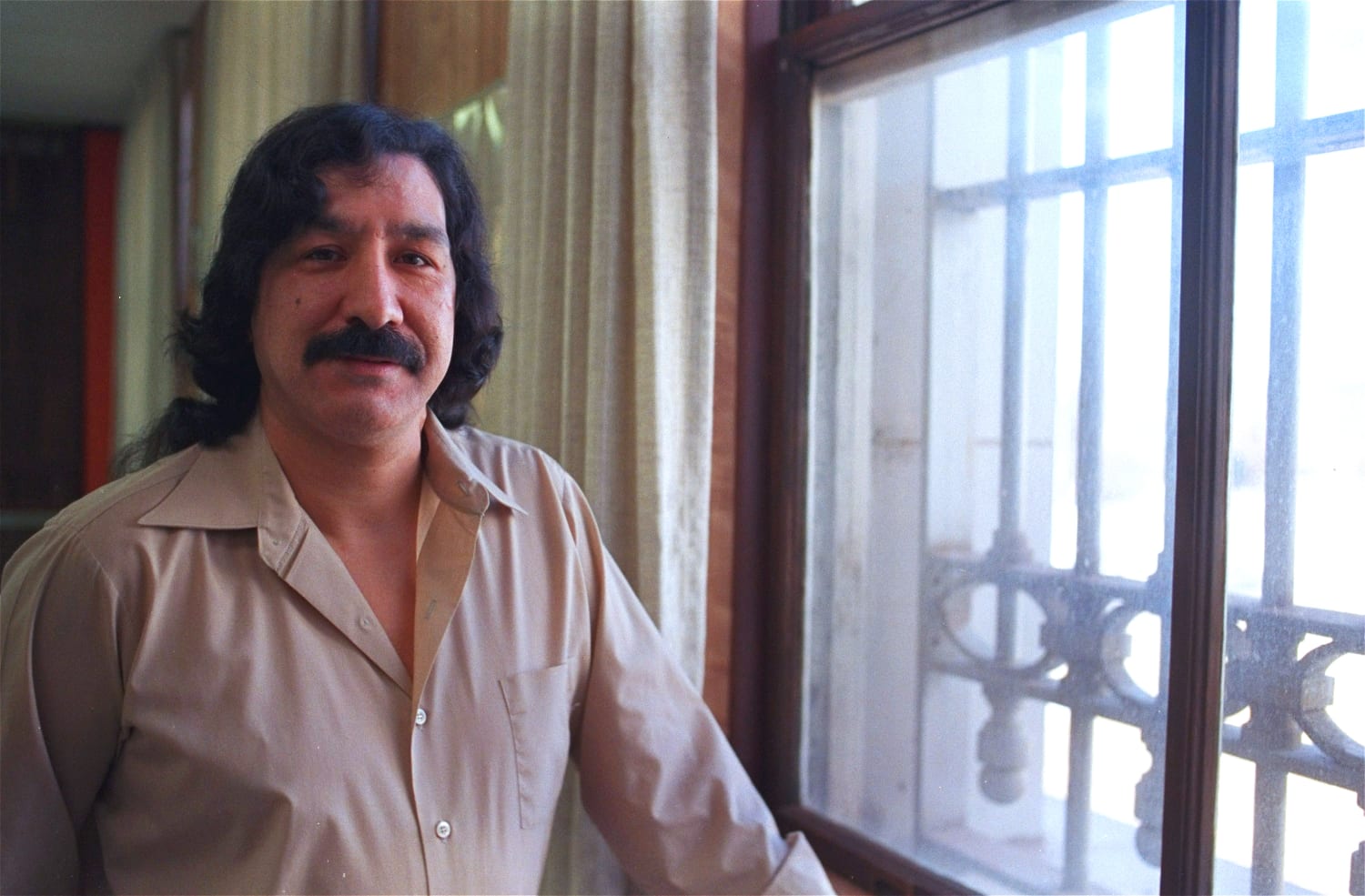
Free Leonard Peltier is about the accused crime of Indigenous activist Leonard Peltier, his imprisonment and his fight for freedom that lasted half a century.

The first documentary I saw at this year’s VIFF was Free Leonard Peltier. At a time when Canada has been made to face the music of what they’ve done to Indigenous people, Leonard’s story will remind you that the plight of the people is not strictly a Canadian problem.

The film begins with a group of American Indigenous activists on a travel. They are traveling to Florida in hopes that fellow activist Leonard Peltier be pardoned and freed just as Joe Biden is about to leave the presidency on January 20, 2025. Trying to get Peltier freed from a double-murder from 1975 he denies and most believe he’s wrongfully accused for has been going on for the last half-century. Many believe it’s Leonard’s last chance at any freedom as he just turned 80 years old and he’s ailing.

The story of the Leonard Peltier case is told through friends, family and allies of Peltier from the American Indian Movement (AIM). Footage of a 1989 news interview is also shown where Leonard states his own case. Leonard’s early life was like that of many American Indigenous people for over a century. He was born on a reserve in North Dakota to a large family and forced into a Residential School 150 miles away from his place of birth where he and others were taught to assimilate. The Bureau of Indian Affairs (BIA) dictated his life and the lives of American indigenous peoples. After he left his schooling behind in 1965, he became a man of various trades doing welding, construction or auto work.

In the late-1960’s, Indigenous activism was growing and the group AIM was founded. Leonard first started with local activism where he was elected tribal chairman of a reservation and he was introduced to AIM from a colleague. His biggest activism in that time was his appearance at 1972’s Trail Of Broken Treaties. Over time, activism became more violent and a group called the Guardians Of the Oglala Nation, or GOON, was founded. Peltier was also involved in violent conflicts and was even charged with attempted murder for an unrelated incident.

During his wait for the trial, FBI agents entered the Pine Ridge Reservation in pursuit of a man named Jimmy Eagle on June 26, 1975 wanted for theft and assault. Two FBI agents named Ronald Williams and Jack Coler were pursuing a Chevrolet with AIM members Peltier, Norman Charles and Joe Stuntz. Charles had met with the two FBI the day before and they told him of their intended pursuit. As the Chevrolet entered the ranch, the three men quickly parked the car and ran out, and that’s when a firefight between the three men and the two FBI ensued. Williams and Coler were shot to death in the shootout. Stuntz was shot to death later that day by a BIA agent. Peltier took Coler’s pistol after he died. The shootout would come to be remembered as the Battle At Wounded Knee.

In the aftermath, the FBI went to arrest three AIM members who were present at the shootout at the time: Dino Butler, Peltier and Robert Robideau. All three were AIM members and all three stole the firearms form the two FBI agents after they were killed. After Peltier was bailed out, he sought refuge in Canada, but it was unsuccessful as Hinton, Alberta RCMP agreed to extradite him back to the United States. In the end, Butler and Robideau were acquitted on grounds of self-defense but Peltier was found guilty. He was sentenced to two life terms and seven years.

In the years that followed would be a long arduous process from friends, family, Indigenous activists, human rights foundations and AIM members to get Leonard Peltier free from a crime he insisted he was innocent of. Over the decades, there was evidence proving that Peltier did not shoot any of the officers. At the same time, the FBI appeared to be playing games as they had one Indigenous women sign an affidavit claiming she was his girlfriend and he confessed to her the shooting. Truth is she didn’t even know him. They also withheld evidence and shred important documents clearing Peltier.

In later decades, Peltier would make pleas of clemency with active Presidents of the United States. Rays of hope first came in 1999 when President Bill Clinton said he would be looking into the Leonard Peltier case and have him cleared and freed. This case for clemency received support from many world leaders like Bishop Desmond Tutu and the Dalai Lama. The hope faded as the FBI held a backlash where family of FBI and their allies staged a demonstration claiming that freeing Peltier would do a dishonor to the FBI agents. Their manipulation of making this a Leonard Peltier vs. the FBI case succeeded in keeping him in prison. Peltier continued to make please with clemency with presidents in the years that followed. All would be unsuccessful.

In the 2020’s, Peltier’s health was failing. Painting and drawing, one of his passions he was able to do for decades in prison, was something he could no longer do. Joe Biden was seen as his last chance for clemency in his lifetime, especially since his friends and family knew he would not get any clemency from Trump when he re-enters the White House. Friends and family built a house for Peltier at the Turtle Mountain Indian Reservation in Belcourt, North Dakota where he could live after his release. January 19, 2025 was the last day of Biden’s presidency and the supporters at the beginning of the film are waiting to hear the news they hope to hear. Biden reduces Peltier’s sentence from life imprisonment to house arrest. They celebrate knowing he will soon stop being a prisoner.

This is a good documentary as it reminds you of a common problem in the world. Not just in Canada, in the US or in the Americas, but the whole world. The problem is nations being unable to deal with their indigenous peoples or tribal peoples well. Living in Canada, I am very familiar with news stories of how badly the Canadian government has mistreated the Indigenous peoples and how they’re doing a lackluster job to make amends and right past wrongs. The United States is just as guilty of that. They had a residential school system too, they have most of them living on reservations, they have a government that appears unable to listen to them and they’ve even had ‘Indian Wars.’ One can see how the story of the struggle of Leonard Peltier can be something all American Indigenous people can understand and relate to.

The story itself is well-told. I was first introduced to the Leonard Peltier case in 1994 through the music video of “Freedom” by the American band Rage Against The Machine. Peltier’s case has been an inspiration for many songs and films and this documentary is only the latest. In this documentary, we have news footage of the events involving the shootout, arrest, imprisonment and an interview from Peltier in 1989. We also have interviews from surviving friends and family members, Indigenous activists and even attorneys and paralegals who have worked with the Peltier case. The story becomes clear that Peltier’s imprisonment appears to have been used by the FBI just to simply give resolve to the deceased officers’ families and to protect the FBI from looking bad in the eyes of the public. The film’s inclusion of Peltier’s statement of his case makes the shootout look like a case of self-defense. Even though he has always maintained he never shot the officers, he has also stated he would defend himself and his people. One can see why the FBI would fear someone like him.

This is a very informative documentary by Jesse Short Bull and David France. They not only show the Peltier story, but they show how important the Peltier case is to his friends and allies. This is a case that’s taken so long to resolve and it’s at the point friends are even willing to travel from North Dakota to Florida by car in hopes of hearing the good news they’ve been waiting since 1976 to hear. Having AI recreate the incident with film appearing like satellite images re-enacting the heist will get you thinking of the case itself and have you try to make up your own mind about it.

This documentary has received a lot of renown this year. It got a lot of attention at the Sundance festival in January and its biggest acclaim came at the Thessaloniki Documentary Film Festival where it won three awards including the FIPRESCI Prize and the Amnesty International Award.

Free Leonard Peltier is a story about the common racism felt by Indigenous peoples in North America. It’s also a story of hope that what’s wrong can be corrected over time.

2023 Oscars Best Picture Review: Maestro

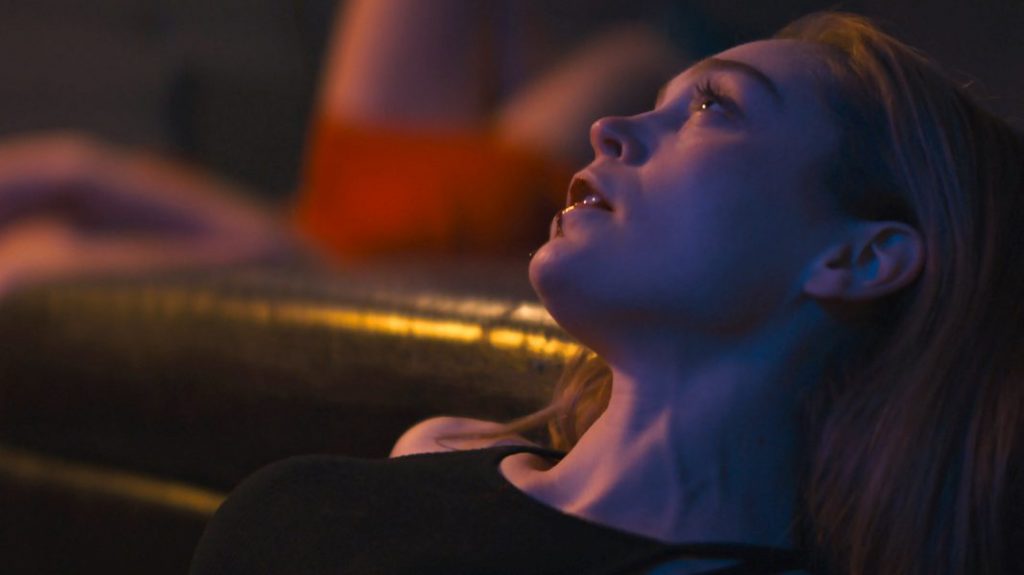
Maestro is a dead-on portrayal of Leonard Bernstein (played by Bradley Cooper) and his wife Felicia (played by Carey Mulligan)

Would a film about Leonard Bernstein be worth seeing? The film Maestro succeeds in making anyone who likes music worth seeing.

There are a lot of musical geniuses we know of for their music, but few we know of for themselves and the lives they led. Leonard Bernstein is one. Many of us are familiar with the conducting he performed or the music he’s written. What most of us are unaware of is his eccentricities as someone in the arts, his past of marrying a woman despite being gay, and his extramarital affairs. Despite it all, despite Bernstein’s failings as a person outside of his music, he still found Felicia to be his soul mate. That one person in the world who knew him inside out and understood him. There’s no doubt if Bernstein was out now, he’d have no problem pursuing a man openly. It was the times where loving his own was a criminal offense that could lead to his downfall. His liaisons with men had to be as secretive to the world as they had to be secretive to Felicia. The thing is had he lived in a time when it was okay to love your own, he wouldn’t have love Felicia: the one person meant for him. It does leave you thinking what would have happened if Leonard was free?

Even though it does a lot of focus on his marriage to Felicia and his infidelity during the time, it doesn’t forget it’s a musicography. It shows Leonard’s career from its start coming from a lucky break of the guest conductor falling ill to opening doors for him and his music to be heard in symphony halls and on the stages of Broadway musicals and on the silver screen, and even intricate choral pieces. It’s known that geniuses are known for their eccentricities. Leonard’s eccentricity was music singing inside of him and his need to create. If there’s one scene that stands out how much music was a part of Bernstein, it was him conducting his musical Mass. His body movements as he conducts sends that message of how into the music he was. Even as he was no longer the grand composer, he still spent the last years of his life teaching music students. He gave back as much as he created.

Though this is without a doubt a musicography of Leonard Bernstein, this is also about Felicia Montealegre. An actress herself, she was a free spirit of the arts like Leonard. She was understanding of his homosexuality, but was willing to take the risk of loving him and even marrying him. She herself was an actress and she also embraced the free-spirited feelings of the artist. Her love for him as well of her support for his work is as undying as his support for her and her work. She fends of rumors of his liaisons with men by reminding people and insists she holds reign over him as his wife. Even though she does, it’s obvious there will come a testing point in this. Especially as rumors are heard by his daughter Jamie and alcoholism controls his life. Even though the marriage does break down in the late-60’s she still remains with him and it’s as she’s dying of breast cancer that brings them back together. It seems as though despite the hurt, Felicia still believed Leonard was the one for him just like she appeared to be the only one for Leonard. The scenes of her death and as Leonard tries to live his last years without her sends that message.

Excellent work from Bradley Cooper. This is not the first time he acts, co-writes and directs in a film. A Star Is Born was the first. In this, his second effort, he does a great three-dimensional job in recreating Leonard Bernstein with the character he creates and the story he co-wrote with Josh Singer. He takes Bernstein inside out and showcases aspects we hardly knew of a person we’re familiar with. The film is also a great showcase of Cooper over the years. How many of you remember 2009’s The Hangover, Cooper’s breakthrough film, and still carry that image around of him over the years? This film is quite possibly the best film to rid one of that image of Bradley Cooper that’s lived rent free in your head for years and showcase his maturity of an actor over the years. Even seeing how you hardly sense a drop of Cooper in the role and see Bernstein will give you some new-found respect for him.

Also worthy of admiration is Carey Mulligan. Just like you see Leonard instead of Bradley in this film, you will also see Felicia instead of Carey in the film. Her performance of Felicia is something completely different from what you’ve seen Carey perform before. It will even get you thinking at times the film may be more about Felicia than Leonard. She does a great job who loves Leonard and embraces the freeness of the artist, but will have it tested throughout her marriage. Also great is Sarah Silverman as the sister Shirley. Those who only know Silverman through her comedy will be surprised to see she can pull drama off well too. She’s great as the one who knows Leonard inside out and serves one to warn Felicia of him. Also great is the performance of Matt Bomer as David Oppenheim: the man caught in the middle of this love triangle. For technical efforts, Matthew Libatique does a great job in doing the cinematic images and angles. The makeup team does a standout job in creating Cooper’s face to look like Bernstein from the age spots to the nose. The sound department is also great. They know that this film is about Bernstein’s music and they do an excellent job in working the sound right for the film.

Maestro is a three-dimensional biographical film that succeeds in getting one to get even closer and more personal with Leonard Bernstein. It’s also about the love of his life that would never die.

VIFF 2021 Review: Kicking Blood

Alanna Bale plays a modern world vampire who faces a life-or-death decision in the Canadian thriller Kicking Blood.

Right during the first week of the Vancouver International Film Festival, I fulfilled my first VIFF goal of seeing a Canadian feature when I saw Kicking Blood. It also became my first Altered States film of the VIFF. It’s a vampire story that’s something.

Anna celebrates her birthday with a slice of cake and with Bernice and Gus: two of her co-workers at the library. During the shift, Bernice is upset Gus is leaving her for another woman. That night, Gus is about to make love to Anna. He thinks he’s the one in control. What he doesn’t know is that anna is a vampire. She delivers him the fatal bite!

Somewhere else in the city, Robbie is an alcoholic who’s being booted out of the house of a young woman who’s been looking after him. She caught him making out with her fiance! Robbie finds himself out on the streets. Anna walks by him. She sees him with a bottle in his hands. However she notices something about him. Somehow she’s willing to take him in. She’s able to let him live in her place and feed him well. He is expected to recover from his alcoholism, if he says he’s willing to change. Anna conducts business as usual at the library. She has her friendly conversations with Bernice. She then comes home to Robbie. She learns she has feelings toward him. Feelings of love. But she doesn’t know how to deal with it.

One night in a nightclub, two men named Boris and Ben are having fun and drinking. There they meet what appears to be a woman alone named Nina. Ben is attracted to her. He tries to get closer to her, but Nina knows he’s married and trying to hide it. Soon it’s the three of them with Ben doing cocaine. They’re having good conversation. Anna joins the conversation. However it’s apparent Ben will become Nina’s latest victim. She does eventually bite the life out of him.

It becomes apparent there is a trio of vampires in the town: Anna, Nina and Boris. They bite people out of their lives and then live off their possessions. Anna is very good from hiding it from Bernice and Robbie: two people who mean a lot to her, but how can she keep it a secret? It shows in her restraint as she wants to make love to Robbie, but she can’t get any closer. How is Robbie going to find out? That also hits her as she learns from Bernice she won’t take her pills and will rely on her inner strength and her mentality on her physical condition. A vampire like Anna can’t have connection to humans. How can Anna make this work?

The trio’s next victim is an artist who lives alone. They visit her in her apartment as she’s making a sculpture. They first ask her questions about her art, but then they shift the focus on how her art may be remembered after her death. The questions of her art seen after her death continue, which the artist kindly answers them. Then Nina bites the life out of her. Instead of enjoying this, it’s a turning point for Anna as she shows huge concern.

The last incident of vampirism affects Anna. She knows as a vampire, she can’t connect with humans emotionally. Problem is she has been connecting with humans as she watches Robbie go through his alcoholic withdrawal and as she visits Bernice in the hospital as she’s dying. She is reminded she has human sensitivity. She can’t have that as a vampire If she does, she would have to identify with mortal humans. She reveals her identity to Robbie, but he is shocked and leaves her. While at a bar, he meets Vanessa: an old flame from his college days. The two start heating up.

However the time is coming for Anna. This is the time she will have to choose between life as a vampire or human mortality. First she confronts Vanessa with Robbie. The two face off right in the middle of the road as Nina and Boris arrive. Vanessa is the latest victim. Then the two remind Anna that Robbie is her last chance. One bite of him will keep her immortality active. Refusing to bite will lead to her death. The ending is slow and more about intensity than effects, but dramatic and unconventional.

I’m sure we’ve all seen our fair share of vampire stories. From the classic stories of the legendary Count Dracula to the teen craze of the Twilight series, vampires still intrigue us and captivate us. This is a unique story of a young female vampire who’s part of a trio of vampires. As they welcome themselves in other peoples’ lives, they kill them with one bite and take material things of theirs. Anna is a vampire who works a librarian job, but pursues her victims. Often you’ll understand why a librarian like Anna has so many luxuries. However it’s an odd twist when she takes in a homeless alcoholic like Robbie. Often you wonder why would she? He has nothing to take from. Would he still be one of her eventual victims? More on that later.

The thoughts continue when you learn of the vampire trio she’s a part of. It’s after she meets and tends to Robbie that she starts to reconsider her life as a vampire. She has feelings for Robbie and doesn’t want to kill him, but her vampirism is her immortality. Should she continue to be a vampire and have Robbie as one of her victims? Or will she choose the life of mortality? That she’d rather die than kill Robbie? Even with the presence of Boris and Nina, it gets you wondering. Does she like being a vampire? Or is she controlled by the other two?

The film has Robbie as the surprising secondary character. Anna meets Robbie on the streets right after his previous ‘keeper’ booted him out and with a bottle in his hand. You’re left wondering why would a vampire like Anna take in a man like Robbie who has nothing? Would he be her next victim? Even later as she houses him instead of giving him a fatal bite like all the others, you wonder why is she keeping him alive? Is it something in herself that she sees and only Robbie can bring that out in her? Is it Robbie that gives her the change of heart? Boris and Nina remind her that her biting is her key to immortality and that a vampire is not to connect or empathize with humans. But Robbie is the human that does exactly that. Even though her best friend Bernice is the first human to get her to connect as a human instead of maintain her vampire separation from humans, it’s Robbie who best conveys Anna’s human feelings. It’s also Robbie, as he goes through alcoholic withdrawal, who sends the message to Anna of the vampirism withdrawal, a fatal withdrawal, she could face. Is it worth it?

This is a film full of a lot of twists and surprises. The vampire legend is always full of various elements of the legend. I’m sure many stories play with the legend. One thing that caught my attention is how these vampires are perfectly unaffected by the sunlight. Most vampires are either affected by sunlight or the light is fatal to them. The trio of vampires are unharmed by the sunlight, but it’s the nighttime where their vampirism comes to life. Maybe that’s the trick. They act like everyday humans by day, but their vampire side comes out at night. Even the story of how another woman tries to steal Robbie from Anna adds into the drama. For the most part, the story makes sense. If it’s a jigsaw puzzle, the pieces fit well. The story however carry itself out in a slower-than-usual pace. It settles more for the intensity of the situation, rather than the sensational images of bites of the flesh. Also I feel we learn the fact that Anna is part of a trio of vampires later in the film than we should. However those who come to a film about vampires and are huge fans of seeing ‘vampires in action’ may be disappointed. The ending works, but there were even small bits where it had some flat moments, or could have been better. Like Nina’s last line.

I give top marks to director Blaine Thurier. He does a very good job in directing the play he co-wrote with Leonard Farlinger. I like how he plays along with the legend and creates a unique story of vampires in the modern world. It even gives you the feeling of a vampires-next-door story! Also very good is the acting from Alanna Bale. Playing a character that goes from an everyday girl to a vampire at night to a vampire with human feelings is not an easy task. She does a very good job of it and keeps her focus well. She makes it work. Luke Bilyk is also very good as the recovering alcoholic Robbie. He does more than just play a recovering alcoholic. His role is also that of human feelings and feelings of love to Anna. He does a very good job of showing the importance of Robbie in the story.

The film also has a lot of great supporting performances too. Rosemary Dunsmore was great as Bernice, the librarian who gives Anna her human feelings. Vinessa Antoine was also very good as Vanessa, the woman who tries to win Robbie away from Anna. Ella Jonas Farlinger (daughter of scriptwriter Leonard Farlinger) and Benjamin Sutherland were good as the two other vampires, but their roles lacked dimension.

Kicking Blood is not your typical vampire story. It does offer a twist in the common vampire story that delivers the unexpected. Despite it’s small but noticeable glitches, it will still keep you at the edge of your seat.