It seems like this decade, there always seems to be at least one foreign language film that gets a Best Picture nomination. This year, there are two films. Both are nominated for Best Picture and Best International Feature Film. Their shared nominations should make for an interesting rivalry.
Both films are different in both the language, genre and theme of the story. Both films are also excellent in getting their story to connect with the audience. Here is my look at the Brazilian film The Secret Agent and the Norwegian film Sentimental Value.
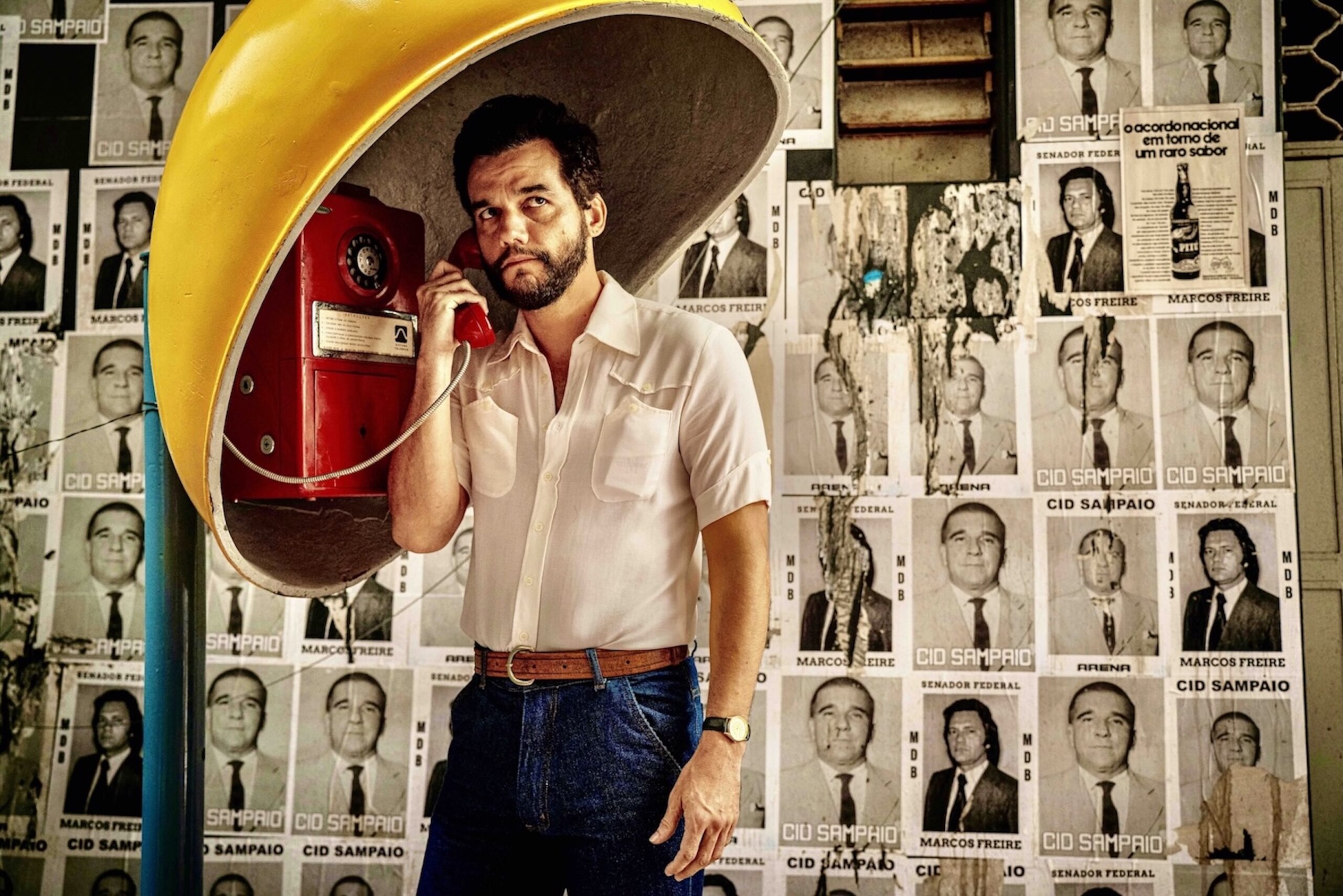
The Secret Agent (O Agente Secreto)
It’s interesting how Brazil won the Best International Feature Oscar last year for I’m Still Here and it looks heavily poised to do it again this year. It’s also interesting that just like I’m Still Here, it has the subject of the dictatorship Brazil was under from 1964 to 1985. It was a military dictatorship that formed after a coup d’etat and it committed its biggest power and intimidation during the 1970’s. There were kidnappings and murders of many people who ranged from political rivals to intellects to dissidents. While I’m Still Here is based on a true story, this film tells of a fictional story. This story is of a former college professor named Armando who goes into hiding in his hometown of Recife in 1977 during Carnival. He had already lost his wife who was also an intellect, his 7 year-old son has to be raised by his in-laws, and his hiding place where he gets his refuge has other dissidents including Angolan War refugees. He has to adopt a new name, Marcelo, and hold a behind-the-scenes government job to avoid being killed by a hitman. The whole time, he senses a hitman is after him and he finds the frustration of it hard to deal with. To add to it, his city records job allows him to find out information about his own mother, whom he remembers very faintly.
It’s not just hiding out from assassination but as corrupt leaders are in Recife. They’re first called to the city as a human leg was found in the carcass of a shark. One of the leaders has a chance meeting with Armando at the city’s records office he works at. He tries to offer him friendship and protection, but Armando is turned off his arrogance. Especially after he calls his friend a Nazi. During that time, word does hit an executive in Sao Paulo whom had an altercation with Armando years ago and has a vendetta against him. Armando feels his days are numbered and feels he has to make his testimony recorded by a close friend, Elza, who runs a resistance network and owns a movie theatre. It’s after the recording is made that the friend reveals he has a contract killing against him. Just as an assassin has been hired in Sao Paulo to go to Recife and kill him. This is all flashed back as a history student in the present comes across news stories and recordings of Elza and her network and compiles it for Armando’s son who works at the blood clinic that now takes up the former location of the movie theatre.
The film also mixes a lot of ironies and connections to others with the film. There’s the leg in the shark around the time of Jaws being in cinemas. That leg and Jaws in theatres promotes a lot of ridiculous ‘Hairy Leg’ stories published in the newspapers. There’s the civic records job Armando has while he’s in hiding and he can take advantage of job to access records of the information of his mother whom he faintly remembers. There’s a cinema showing Jaws run by Elza of the resistance network who takes the time to record Armando’s account of why he’s being hunted down. There’s Flavia accessing the mp3 of that recording and putting it on the USB which she gives to his son Fernando who now works at the blood clinic where that cinema used to be, and where Fernando even saw Jaws with his grandfather. Like Armando with his mother, Fernando has faint memories of his father. Flavia helps his to understand him better.
This is a unique story. The story of a man in a corrupt country who knows he’s being hunted down is full of omens of a possible death. It starts as when he first arrives in Recife and sees the body of a would-be robber at the gas station. It continues as he sees suspicious costumes in preparation for Carnival. Even of other incidents of death and nightmares got him fearing the worst. The story also adds in some humor with the leg found in the shark and while Jaws is in theatres adding humor of ridiculous news stories about ‘Hairy Leg.’ Even the leg thrown back into the ocean and it being rediscovered by a gay couple adds to the humor. There are times when the story gets confusing as we see the film often go to scenes in the present of student Flavia researching all this information about Armando and you often wonder what it’s about. It’s at the end after we see the past played out and Flavia discovering all the information that it’s to be on a USB as a gift to his son Fernando who’s now a blood clinic worker. It’s almost like the story is making peace with the past as an average college student helps Fernando get to know the father the father he never knew. Even how we see other men gunned down by the hired assassin but only learn of Armando’s assassination days after through a newspaper research from Flavia leaves us thinking maybe those scenes played out in the film for the better.
This film is an accomplishment for writer/director Kleber Mendonca Filho. Although it’s hard to understand why a story about a man being pursued by assassins in Brazil during a dictatorship would add in some bizarre humor and a subplot of a severed leg, Filho succeeds in making this story work. In an interview, Filho intended for this story not just to be about a man on the run but also about life in Brazil. He wanted to capture both the positive and the negative sides of living in Brazil during a time of a staunch dictatorship. He presents what is a fictional story of a man on the run from a possible political assassination, but it’s presented like a story that mirrors what it was like at that time. Armando could represent so many real-life people who were victims of this tyranny. The film also reminds us even as people were limited in their opportunities and no one was immune to being killed, people still swam in beaches, people still celebrated Carnival, couple still had sex in the parks at night. I feel he does a good job of making the film as much about life in Brazil as it is a story of a man knowing he will be killed soon. Even as it goes to the present with Flavia and Fernando showing the democratized Brazil and their lives, Filho does capture the times as well as he tells the story.
This film is also the breakthrough for actor Wagner Moura. Wagner has had an extensive career in Brazil but he’s also been seen in popular fare like 2014’s Rio, I Love You, 2022’s The Grey Man and 2024’s Civil War. In this film, he not only plays Armando in 1977 but also Fernando in 2025. Playing both the father who fears for his life and the son who’s able to live a life without fear is an excellent performance. His acting is less about being showy and about telling the story. Even in his moments of silence, you can sense his feelings. It’s no wonder it’s received a lot of acclaim. The film doesn’t develop too well on the performances of the supporting actors but if there is one supporting performance that stands out, it’s Tania Maria as Dona Sebastiana: the landlady who works to hide other people hiding out from other possible political killings. At first, she comes off as a colorful simple character but it’s when Armando leaves that she really shines in the monolog of how life is difficult but there is still hope for the better. Carlos Francisco is also good as the grandfather who is unhappy with the death of his daughter and fears for both the lives of Armando and Fernando.
This film first caught attention when it achieved a huge amount of buzz after the Cannes Film Festival. Moura won Best Actor, Filho won Best Director, the FIPRESCI Prize and the Prix des Cinemas Art et Essai and was nominated for the Palme d’Or. The film has also won major prizes like the Best International Film awards with the National Board of Review, Golden Globes and the Critics Choice awards.
The Secret Agent is as much an intriguing look at Brazil back in the 70’s as it is an intriguing story of a man who’s the target of a political regime. It mixes drama with dark humor and tells of a story that appears to be about making resolve with the past. A past Brazil is struggling to heal from.

Sentimental Value (Affeksjonsverdi)
If there’s any film that threatens to beat out The Secret Agent for the Best International Feature film Oscar, it’s this film. This film is a complete polar opposite of the former. This Norwegian film tells a story of a family of wounds reopening and of issues unresolved. It’s not just an issue of torn family ties but also conflicts of the arts. It all starts with the Borg sisters’ death of their mother and their estranged father Gustav, a film director who owns the house, possibly being resold. As the sisters are going through grief, they have the added difficulty of the father returning and the hard feelings they feel towards him. Nora continues to harbor bitterness while Agnes tries to get a better understanding of him. Nora’s bitterness is so bad, she refused a role in his latest film work months earlier which goes to an American actress named Rachel Kemp. The film is an attempt from Gustav to revive his fading career and is now shooting while Nora and Agnes are trying to sort out things after their mother’s death. You can understand why this would be the source of a lot of family friction.
The film isn’t just about an estranged father re-entering his daughter’s lives at the most inconvenient time. The issue of how a daughter who grew up to be a theatre actress senses she’s shunned by her filmmaking father. He never once saw her act on stage. That adds to the friction and also has a lot to do with why Nora has more animosity than Agnes towards the father and may explain why she rejected the role. His revelation of how he rejects theatre even adds to the friction of the hard feelings. It takes the other two to help Nora achieve her resolve. First, it’s Agnes who does research on her father and his family background which includes revelations of his mother dealing with the torture of Nazi soldiers as a member of the resistance during World War II. Since the lead role is the same first name as her grandmother, it’s as she studies the torture her grandmother endured and how she passed her trauma onto her father is how she understands the film is a telling of the past he and his family went through. It’s as Rachel continuously goes through the role with great difficulty and has a conversation with Nora that she feels the role is more suited for Nora and for her. It’s there Rachel sends the message to Gustav that Nora was meant for the role. Even her struggles with trying to speak her lines in the Norwegian language in the role sends that message. It’s through art that family friction happens and it’s through art that healing is achieved. The theme of art as both a divider and reuniter is as much a theme of the story as World War II causing wounds that hurt long after the war has ended and even wounds that hurt loved ones even after the death of those who were hurt. Those themes are a unique way of telling this story of hurt and healing.
This film is an excellent work from director Joachim Trier. In Norway, he made a name for himself for directing three films that were part of the ‘Oslo trilogy’ which focused on the periods of life of certain people in Oslo. The only one of which I saw was The Worst Person In The World. For those who have seen all three films of the Oslo Trilogy, it will tempt some to think Trier added in a fourth film. Most notably since it’s set in Oslo, it’s another story he co-wrote with his collaborator Eskil Vogt and it features many of the actors he commonly collaborates with. This however is different. Firstly, Anders Danielsen Lie, who had leading roles in the trilogy film, has a supporting role in this film. He’s more in the background as Nora’s romantic interest. Secondly, this is a story where the arts are a theme to the film and are as a source of both friction and healing. It took a death and a film role of the father’s mother to help his daughter heal the wounds caused by a past separation. This is a great form of storytelling and it plays out very well in the film.
This film is also known for its standout acting. The biggest standout is lead actress Renate Reinsve as Nora. Already, Reinsve is being hailed as the greatest Norwegian actress since Liv Ullmann. Her performance as an actress daughter who’s thrown into family friction and how it affects her acting has a lot of dimension and we’re able to feel Nora’s feelings of anger and hurt. Also excellent is Stellan Skarsgard as Gustav. His portrayal of the father who knows he hurt his daughters and seeks to make resolve after their mother’s death is another excellent performance and it’s through the silent moments you can sense his thoughts. Inge Ibsdotter Lilleaas is also great in her supporting role as the more forgiving Agnes. It’s her performance as the one who’s trying to help solve the mystery who helps to add to the theme of resolve and forgiveness. Also great is Elle Fanning. Although she’s the one who speaks the least Norwegian, it’s her performance as the American actress Rachel who is able to also help Nora heal and eventually accept the role.
This film has received a lot of awards acclaim before this year’s awards season. Back during the Cannes Film Festival, it was nominated for the Palme d’Or and Joachim Trier win the Grand Prix award. The film was also nominated for eight European Film Awards and won six.
Sentimental Value is a deep film of trying to mend family ties and generational trauma. Even though it’s in Norwegian, many people can relate to the messages and emotions conveyed in the film. That’s what most makes this film worth watching.
That completes my fourth review of the Best Picture nominees. All that’s remaining are the last two nominees to review.



 Jon The Blogcentric