Paris 2024: Fourteen To Watch

Paris will join London as the only two cities to host the Summer Olympics three times.

On Friday, July 26th, the Games Off The XXXIIIrd Olympiad will open in Paris, France. This will be the third time Paris will have hosted the Summer Olympics, having hosted in 1900 and 1924.

One thing about these Olympics Games is these will now be back to full crowds. You may remember the Tokyo Games were delayed by a year and had to be held without spectators. You may also remember the Beijing Winter Olympics were also quite limited in spectators. Now that the pandemic has been mostly tamed down, Paris can be a free-for-all and the crowds are back. Also I got back my ambition to do pre-Olympic blogging. Something I haven’t done since the 2018 Winter Games.

With every Olympics comes many an athlete or team that will be heavy favorites or athletes of curiosity. Here’s my look at fourteen athletes at the Paris Games who you should keep an eye on.

-Noah Lyles/USA – Athletics: The American sprinters have been struggling to get themselves back to the top for almost 20 years. First there was the setback of Usain Bolt and other Jamaicans. Then there was Italy’s Marcell Jacobs winning in Tokyo and the men’s really team failing to qualify for the final. Seeking to put the US back on top is 27 year-old Noah Lyles. Back at the Tokyo Games, promise was noticed as he won a bronze in the 200 metres. At last year’s World Championships, he won the 100m, 200m and was part of the winning American relay team.

This season, Lyles is ranked World #1 in both the 100m and 200m and even recently ran a personal best in the 100m of 9.81. Lyles will have rivals in Paris. In the 100m, he will be up against Jamaica’s Kishane Thompson and Kenya’s Ferdinand Omanyala who have posted faster times this year. Expecting to challenge Lyles in the 200 is Tokyo silver medalist Kenneth Bednarek who finished second to him at the US Olympic trials. Also rivaling him is Botswana’s Letsile Tebogo who finished second to him at the 2023 Worlds in the 100 and third in the 200. If all goes well for Lyles, he could be one of the stars of Paris.

-Sha’Carri Richardson/USA – Athletics: Many will remember before the Tokyo Olympics, there was a lot of news of Richardson being disqualified from the Olympic team for testing positive for marijuana. It was a shock to many. Sha’Carri was undoubtedly disappointed. Unnoticed at the time was the then 21 year-old sprinter was still young and her best years were still to come. At last year’s World Championships, her talent arrived when she won the 100m, finished third in the 200m and was part of the US’s winning relay team.

For most of this year, Sha’Carri has kept it low-key. She hasn’t been to too many competitions and bypassed the Diamond League this year. She did prove herself to be a force in the 100m in Paris after winning the US Olympic trials in 10.71. Her main rival Sherlock’s Jackson of Jamaica is injured but that won’t stop her from having rivals in Paris like Ivory Coast’s Marie-Josee Talou-Smith, St. Lucia’s Julien Alfred and Jamaican legend Shelly-Anne Fraser-Price looking for one last Olympic gold. Paris could be Sha’Carri’s moment and the possible start.of a long legendary career.

-Yaroslava Mahuchikh/Ukraine – Athletics: Back at the Tokyo Olympics, Yaroslava was 19 years old and seen as a rising talent with her bronze medal in the high jump. Then the war started months later. Many Ukrainian athletes had to find new ways to train or even leave Ukraine to seek refuge in another country. Mahuchikh first traveled by car to Belgrade to compete at the World Indoor Championships. Shortly after, she found refuge in Germany to resume training. Since her move, her career skyrocketed with silver at the 2022 World Outdoor Championships and then gold last year. Just last month, Mahuchikh broke the 37 year-old world record in the women’s high jump!

She is a heavy favorite to win the high jump in Paris, but she will have competition. She will face rivalry from Australia’s Nicola Olyslagers who beat her at this year’s World Indoor Championships as well as another Australian: 2022 World Champion Eleanor Patterson. Whatever happens, Mahuchikh’s triumphs are not limited to inside the athletics arena.

-Sydney McLaughlin-Levrone/USA and Karsten Warholm/Norway – Athletics: The biggest action in athletics at the Tokyo Olympics came in both the men’s and the women’s 400m hurdles. In both events, the winner broke the world record by a huge margin, the second-place finisher finished in a time faster than the pre-Olympic world record and the third-place finisher’s time was a small fraction short of that pre-Olympic world record!

It’s interesting to see what has happened since to both men’s winner Karsten Warholm and women’s winner Sydney McLaughlin. Both won their hurdles event at a World Championship since. Walholm has still continued his consistency with major victories, and won the 2023 World championships but finished 7th at the 2022 Worlds. McLaughlin has also won the 2022 Worlds and has even knocked almost a full second off the world record since Tokyo. She missed the 2023 Worlds due to a knee injury. Both runners will face rivalry here in Paris. For Warholm, the two other medalists from Tokyo — US’s Rai Benjamin and Brazil’s Allison dos Santos — will rival him in Paris.  McLauglin’s top rivalry will come from 2023 World Champion Femke Bol of the Netherlands and her own teammate Shamier Little. Only time will tell if both repeat as Olympic champion here in Paris, and if they break the world record again.

-Eliud Kipchode/Kenya – Athletics: One thing about social media these past ten years is that there are so many athletes being promoted as GOATs. One of which is Eliud Kipchode who’s commonly seen as the GOAT of marathon running. Personally I still want to think of Abebe Bikila as the GOAT but Kipchode’s feat of eleven major marathon victories, four Olympic medals including two marathon gold’s, and breaking the world record twice, it’s very tempting to call him the GOAT. Even his time-trial marathon run under two hours sparked buzz.

The crazy thing about marathon races, especially at the Olympics, is that it is the hardest to predict. Many favorites have succumbed to the course or the weather conditions and unknowns have often ended up the winners. Despite his illustrious career spanning almost two decades, Kipchode will face rivalries from 2023 World Champion Victor Kiplangat of Uganda and from his own teammate Benson Kipruto who has won the fastest marathon time this year. Whatever the result, Kipchode will add to his greatness here in Paris.

-Simone Biles/USA – Gymnastics: Simone Biles is an athlete loved by many, shunned by others. For many years, she was dominant in gymnastics having won a stack of World Championships and at the 2016 Rio Olympics, she was the queen winning four golds and a bronze. In between Rio and Tokyo was the revelation of the predator doctor Larry Nassar. Biles was one of his former patients who testified against him. Then at the Tokyo Olympics, she had a mental lapse called the ‘twisties’ and needed to bypass most of the competition. She did leave Tokyo with a silver and a bronze, but many people, most of whom don’t understand the dangers of gymnastics, labeled her a quitter or a loser. She would come back at the 2023 Worlds winning four golds and a silver.

Despite being the queen, she will face challenges from Brazil’s Rebecca Andrade and from her own American teammates in Jordan Chiles and defending Olympic all-around champion Sunisa Lee. Whatever happens in Paris, it will add to Simone’s greatness.

-Carlos Alcaraz/Spain – Tennis: One thing about tennis is right while there are a lot of greats, there are also young guns looking to dethrone them. One of which is Spain’s Carlos Alcaraz. Right at a time that seems dominated by Rafael Nadal and Novak Djokovic, Alcaraz appears poised to dethrone them.  The 21 year-old has already won singles titles in Wimbledon, the US Open and most recently his first French Open victory. The latter is an advantage as the Olympic tennis competition will also be in the Roland Garros arena.

One thing about Olympic tennis is that most favorites have not won the gold medal and many times, unknown players have become Olympic champion. In fact, Djokovic’s only Olympic medal is a silver from 2008. Djokovic is one of Alcaraz’s rivals here in Paris. Also in the tournament are challenges from Germany’s Alexander Zverev and Norway’s Casper Ruud. Paris should be another chance for Alcaraz to make a name for himself in the tennis world.

-Julien Alfred/St. Lucia – Athletics: One of the things I like to do each summer Olympics is keep an eye out for any athletes that just might win their nation’s first-ever medal. One with good chances is 23 year-old Julien Alfred from the Caribbean island of St. Lucia. Her talent was first noticed at the 2018 Youth Olympic Games when she won silver.in the 100m. When she enrolled at U of Texas and became part of the Longhorns track team, that’s when things improved. She won a silver medal at the 2022 Commonwealth Games and at last year’s World Championships, she finished fifth in the 100m and fourth in the 200m.

In the 100, her rivals include Sha’Carri, Shelly-Anne Fraser-Price and Marie-Josee Talon-Smith. In the 200, she will face challenges from Jamaica’s Shericka Jackson, the US’s Gabrielle Thomas and the UK’s Daryll Neita. The Olympics are known for upsets and Julien Alfred could prove to be one of the top upsetters in Paris.

-Spain Women’s National Football Team: When it comes to a nation like Spain, you figure they would greatly support their men’s football team but greatly overlook their women’s team. Over the last five years, the RFEF started taking their women more seriously. After the 2019 Women’s World Cup, Spain’s women’s team made huge improvements in the sport and even won the Women’s Works Cup last year. Despite the growing success of the team, the sexism the team has been facing has been greatly exposed. Before the WWC, players boycotted the team because of a lack of a tactical preparation and a controlling environment. After they won the WWC, there was the incident at the trophy ceremony where RFEF president Luis Rubiales kissed player Jenni Hermoso on the lips, unconsentually. The controversy sparked outrage in Spain which led Rubiales to resign and paved the way for better equality with Spain’s women’s team.

One thing about the reigning WWC champion is that they’ve never won the Olympic gold medal. Spain aims to end that bad luck curse. They could face tight rivalry from the WWC fourth-place team Australia and from the US and Germany who hope to improve greatly after their WWC disappointments. Even host-nation France could be a threat. Anything is possible at the 2024 Olympics and Spain’s team could just achieve another victory here.

Four From The Host Nation

France’s athletes have competed in every Summer Olympic games except 1904 and have won a total of 751 medals: 223 of them gold. That medal haul puts them 5th in the all-time total of Summer Olympic medals. The sports where they’ve won their most gold medals are in fencing, cycling (which they have the most total medals), judo, equestrian and sailing. Here in Paris, the French team look to greatly add to their legacy. Here are four athletes representing France to look out for:

-Leon Marchand/France – Swimming: France’s swimmers have won a total of 43 medals. Eight of them gold. So far no French swimmer has won two individual event gold medals. The possibility looks great for Leon Marchand. Back at the Tokyo Olympics, he was 19 at the time and didn’t win a medal. Since then, he has become the fastest all-around swimmer in the world. He has won the World Championships of both 2022 and 2023 in both individual medley events: 200m and 400m. 2023 had added bonuses as he broke Michael Phelps’ world record in the 400 from the 2008 Olympics and he also won a bonus gold in the 200m butterfly.

He will face rivalry here in Paris from the UK’s Duncan Scott and the US’s Carson Foster in the IM races. In the 200 fly, he will face rivalry from defending Olympic champion Krisztok Milak of Hungary and Tokyo silver medalist Tomoru Honda of Japan. If all goes well, Marchand should be able to delight the home-nation crowd.

-Joris Daudet, Sylvain André and Romain Mahieu/France – BMX Cycling: Usually when you think of France and cycling, you think road racing like the Tour De France. Even though France is still big in road racing, it has recently developed as a force in BMX racing! Franch riders have won a medal at every World Championships since 2016 and they’ve won the last two: Romain Mahieu winning last year and veteran Joris Daudet Winning this year. The caliber of talent of France’s BMX racers is so jam-packed, last year’s Worlds silver medalist Arthur Pilard didn’t make the Olympic team. Instead this year’s Worlds bronze medalist Sylvain André will be competing in Paris.

The most interesting thing is all three were finalists at the Tokyo Olympics. Despite the big predictions, it will all boil down to the races. In fact, Daudet has won World Championship medals since 2011 but has never won an Olympic medal. The anticipated sweep of the medals will face a challenge from defending Olympic champion Noel Kimmann and 2022 World Champion Simon Marquardt from Switzerland. Anything can happen in Paris and the French BMXers can deliver a performance for the ages.

And there you have it. There’s my look at foreign athletes to look out for at the upcoming Paris Olympics. My blog of Canadians to look out forl is coming soon.

2023 Women’s World Cup Intro And Group A Focus

Yes, the Women’s World Cup is back for its ninth edition. This is actually the very first Women’s World Cup that the hosting will be between two countries: Australia and New Zealand. This will be quite something as their time zones greatly differ and most of the games will be contested during times most people aren’t used to: early morning in Europe and sleeping hours in North America.

This year’s tournament promises excitement with this being the very first WWC to have thirty-two teams competing! How about that? Right after Qatar 2022 becomes the last men’s World Cup with 32 competing teams, Australia/New Zealand 2023 will be the first Women’s World Cup to contest 32 teams. I will be focusing more on various aspects of this year’s Women’s World Cup over future blogs. In the meantime, this is the first of my eight group focuses. Here’s my look at Group A. In addition, FIFA ranking as of June 2023 is in brackets:

-New Zealand (26): Usually for the World Cup, the draw is to make sure the host nation or nations don’t have such a tough time trying to qualify to the knockout round. It backfired for Qatar 2022 as the host nation achieved three ignominious World Cup records: first host nation to lose its opening game; first host nation to lose all three of their Group Stage games; and first-ever host nation to get a last-place finish at the World Cup.

New Zealand is one of the two host nations. It has always finished in the Group Stage in all five of their previous Women’s World Cup appearance without ever winning a game. Nevertheless the Football Ferns are a team that can deliver. They once made the quarterfinals of an Olympics (in 2012) and have won two Olympic matches. The current team plays for teams mostly in Australia and the United States. The team is coached by Czech coach Jitka Klimkova. You can be sure New Zealand won’t deliver the same Qatar-like disappointment here.

New Zealand has not had it good this year. They played seven friendlies this year, five at home, and they lost all but one. Their last win was back in September against the Philippines. Whatever the situation, New Zealand knows they will need to deliver a team that will make their nation proud. Sometimes home-field advantage can work and I’m confident the Ferns will deliver. Even achieve New Zealand’s first WWC win ever.

-Norway (12): If there’s one thing about Norway, they want people to stop seeing them as a blast from the past. Their WWC and Olympic wins may have come in 1995 and 2000 respectively and their last Top 4 finish may have been in 2007 but they still have a lot to prove. In fact 2019 saw them return to the WWC quarterfinals and win the Algarve Cup that year The team is even coached by Hege Riise who was part of both the 1995 World Cup winning team and the 2000 Olympic champions.

Most of the team plays for the Norwegian league and other leagues around Europe. The Grasshoppers, as they are commonly known, finished third at this year’s Tournoi de France. Since the start of 2022, their play has been off and on. They’ve won against New Zealand and the Netherlands, had draws against England and Sweden, had a win and a loss against Denmark, a draw and a loss to France and losses to England, Brazil and Spain. The World Cup is where the team has to come together if they want to prove they’re a force to be reckoned with now.

-Philippines (46): It seems as though ever since the Philippines have qualified for this World Cup, they’re doing the best they’ve ever done. Mind you football is a new sport in the Philippines. The team has had a stellar set of last few years winning the AFF Championship (for Southeast Asian teams and Australia) and becoming semifinalists at last year’s Asian Cup. The Filipinas even won their first medal at the Asian Games since 1985.

This will be the team’s World Cup debut. The team is coached by Australian Alen Stajcic. The team members play mostly for leagues in Europe and Australia. In its play since 2022, the team have amassed a lot of wins but they were all against Asian teams. Outside of Asian teams, they’ve had a draw and a loss to both Costa Rica and Chile. They’ve also had losses to New Zealand, Scotland and Iceland. Whatever the situation, this World Cup is the perfect opportunity for the Philippines team to grow and learn and maybe surprise us sooner than we expected.

-Switzerland (20): Switzerland is a team working to make a name for themselves. La Nati have competed at Euro 2017 and 2022 but never made it past the group stage. In their first and only previous World Cup back in 2015, they did qualify for the knockout stage but lost to hosts Canada in the Round of 16.

The current team is coached by German Inka Grings who was part of Germany’s bronze medal-winning team at the 2000 Olympics. The team mostly plays for leagues in Switzerland, Germany, England and Spain. Since the start of 2022, Switzerland have had wins against Croatia and Wales, draws against Portugal, Poland and China and losses to Sweden, Netherlands and Denmark. Australia and New Zealand provide Switzerland with another chance to make a name for themselves and a chance to go further than most will predict.

My Prediction: For first timers at my blog, I usually predict as I go with the World Cup. That means whenever I do group reviews, I predict who from that group will qualify into the knockout round. Group A is not too easy to predict which two will advance to the knockout round. All four teams have noticeable strengths and noticeable weaknesses. My prediction will be Norway will top but New Zealand will also qualify.

And there you have it. That’s my review for Women’s World Cup Group A. There’s more to come over time. Hard to believe it’s just two weeks away!

2022 Oscar Shorts Review: Animation and Live-Action

Did you think with this being an Oscar year I would miss my chance to see the films nominated in the short films categories? The chance was there and I took it again. All the films had a unique style about them and all appeared worthy of their nominations. So here I go. Here are my reviews for the nominated films in the Animation and Live-Action categories.

BEST ANIMATED SHORT FILM

The Boy, The Mole, The Fox And The Horse (dirs. Charles Mackesy and Matthew Freund) –

A boy is lost in the winter snows. A mole finds him. He hopes the mole will lead him home, a home he’s never had before, and wants to grow up to be kind. The two hope the river they find will lead them there, but they’re encountered by a fox. The fox wants to hunt them both down, but finds himself in a trap. The mole frees him and the fox runs away. The next day the mole falls into the river, but is saved by the fox. The fox joins the mole and the boy on the journey to the boy’s home. Along the journey, they encounter a white horse who is an outcast. The three welcome the horse along the journey. Soon they discover the horse has a special trait. He can fly like Pegasus! Soon they come to the village where the boy’s home is. The three animals say their good-byes, but the boy makes a surprising decision.

It seems like every year, there has to be at least one animated short from the UK that’s nominated. This is this year’s nomination. This is an adaptation o f a 2019 children’s book from Charlie Mackesy, who co-directs this short film. This is a 2D short that has been on Apple TV starting this Christmas. It has a quiet soft tone that’s more touching than sentimental. It makes the right moves and is able to be soft without getting too mushy or manipulative. This is one charmer that I give both my Should Win and Will Win pick.

The Flying Sailor (dirs. Wendy Tilby and Amanda Forbis) – It’s the morning of December 6, 1917 along the coast in Halifax. Two ships collide within each other with one catching on fire. A sailor thinks nothing of it and lights a cigarette. Only the burning ship soon explodes. The sailor goes flying naked in an out-of-body experience. His life flashes before his eyes from childhood to his life at sea as Halifax is engulfed by the blast. The blast sends him out of earth and even out of the galaxy. Then all of a sudden, he’s brought back down into the galaxy, then earth, then back into Halifax into a body of water. Miraculously he’s still alive. He even stares a shocked fish in the eyes.

As I was watching this, I asked myself “Is this about the Halifax Explosion?” Yes, it was. In fact the film makers dedicate the film to a sailor who flew 2 kilometers in the explosion and lived to tell! This film from the National Film Board of Canada is one of of two animated features from The New Yorker Screening Room to be nominated. It’s a clever story that doesn’t need any dialogue for us to get the message. It lets the images and the moments tell the story of a man who’s near a sudden death contemplate his existence. A fast film, but entertaining and even humorous from start to finish.

Ice Merchants (dirs. Joao Gonzalez and Bruno Caetano) – A widowed father and son run an ice selling business. The ice comes from a box they fill with water, let freeze overnight, and break up to sell the next day. They get their freezing temperature by being up on the very mountain they have their house upon. The house is thousands of feet above the ground hanging from ropes and requires a system of pulleys and ropes to get to. They have to skydive down together into the town to sell their wares. The flight always causes their hats to fall off. They use the money from sales to buy new hats. Then one day, the son notices the water in the box didn’t freeze. The temperature is above freezing. The high temperature of the snow is causing an avalanche and the house’s ropes are breaking. The parachute falls from the house. The father makes the decision to jump with his son. Fortunately a female skydiver finds the two in the air, grabs hold of them, and opens her parachute. The two survive, but in a surprising way!

This film from a Portuguese animation company is another film from The New Yorker Screening Room. It’s a good 2D film that is as much about its art as it is about telling its story. It uses only a few colors at a time for each of its scenes. It has the visuals and the music tell the story without having any dialogue. It also does a very good job in showing the drama of the climax. It also ends on a happy and humorous note that works well with the story.

My Year Of Dicks (dirs. Sara Gunnarsdottir and Pamela Ribon) – It’s 1991 in Houston and Pam seeks to lose her virginity as she is approaching womanhood. She, however, is undecided which boy she wants to lose her virginity with. She constantly trusts the opinions of her best friend Sam, who is male. The first boy she tries to lose it with is David, a skateboarder who thinks he’s a vampire. She’s attracted to his mystique, but soon learns what a jerk he is and of the little game he had with his guy friends. The second boy is Wally, who’s a theatre usher. They try to do it in a broom closet during work hours, but it doesn’t work out. Third boy is Robert, whom she finds as nice. She soon learns he’s gay and was interested in Sam. Pam tries a party hosted by her friend Karina. She meets a boy named Joey who appears to be orderly. The party comes to a sudden halt and Pam learns Joey is a Nazi! The story ends with a surprise that Pam learns what she was searching for was there all along.

It’s a story with both intrigue and humor. The rotoscope animation adds to the story and adds to the comedic elements of the story. Pam brings an intriguing story and Sara Gunnarsdottir does a great job of animating and directing it.

An Ostrich Told Me The World Is Fake And I Think I Believe It (dir. Lachlan Pendragon) – Neil is a telemarketer trying to sell toasters. His boss confronts him of his poor performance and threatens to fire him. As he continues working, he hallucinates and notices things missing from his cubicle. He wakes up and he sees an ostrich. The ostrich can speak and tells him this world is a ‘sham’ and advises him to get a better look at his surroundings. Neil soon finds his way out of the animation world and into a prop box full of his own mouths. The following day, Neil is shocked to see all the furniture removed. A co-worker named Gaven tells him it’s a corporate decision, but Neil rips his mouth off. The creator tries to intervene, but Neil falls off the set. With Neil’s body all broken up, the creator puts him back together and on the set. The next day, Neil is confronted by his boos, and quits.

This Australian short is an amusing stop-motion animated film. It goes from the animated story to the world of the production studio. It’s funny how the film knows it’s stop-motion and knows how to joke around about that fact. That adds to the humor of the story. It’s a funny film that goes from the animated story to the real world and back to the animated story. It seems odd at first, but it’s very likeable.

BEST LIVE-ACTION SHORT FILM

An Irish Goodbye (dirs. Tom Berkely and Ross White) – Two brothers from Belfast, Turlough and Lorcan, have lost their mother. The priest gives the sons the ashes and attempts to give them their mother’s ‘bucket list,’ but Turlough thinks its useless. Turlough, who works in London, wants to sell the farm and have Lorcan, who has Down’s Syndrome, live with his aunt. Lorcan wants nothing to do with it. Lorcan says he has the bucket list and still believes they can fulfill his mother’s wishes with her urn. The two agree to try all 100. However it’s the 99th, skydiving, that her urn smashes. Turlough soon finds out the truth about Lorcan’s bucket list the priest. That leads to even bigger friction, but a resolution does occur after they proceed with the 100th item.

This Irish short film is a well-acted film that’s mixes both tragedy and comedy with the intensity of family drama. It also deals with the issue of Down’s Syndrome in a humorous manner that doesn’t tread on being insulting or having mockery. It’s a story you anticipate to be sad, but instead turns out to be humorous, enjoyable, and even heart-warming. It’s worth seeing.

Ivalu (dirs. Anders Walter and Rebecca Pruzan) – It’s morning in Greenland. The Queen of Denmark is to visit. Pipaluk is looking for her older sister Ivalu. Her father, who acts like he doesn’t care, says she ran away. Pipaluk tries looking for Ivalu. She sees a raven and thinks Ivalu’s spirit is in the bird. As she continues the search, she remembers the conversations she had with Ivalu. It’s then she faces the facts of a lot of ugly secrets about Ivalu and how her father treated her. Pipaluk feels she has to confront the awful truth. In the end Pipaluk wears Ivalu’s dress for the Queen’s visit.

This is a story that touches on a taboo rarely discussed but is well-known among indigenous peoples. Child sexual abuse is also very common in the Inuit populations of Canada. Although this is touchy subject matter, it does a good job in adapting a short story into a watchable film. The film has visuals that are both mystic and disturbing. It’s a sad story that does come as life-affirming at the end. Its imagery is the film’s best quality.

Le Pupille (dirs. Alive Rohrwacher and Alfonso Cuaron) – The story revolves around a Roman Catholic boarding school in Italy during World War II. The central character of the story is a girl names Serafina. She’s an outcast at the school and the nuns are strict to all the girls, including Serafina. Mother Superior Fioralba is the strictest of them all. Christmas is fast approaching and the girls are to put on a Nativity play. The people in the town see the girls as darlings, but Fioralba always finds something to scold them about like singing a romantic song on the radio, which Fioralba describes as ‘filthy.’ She’s angry Serafina won’t admit to singing the lyrics and tells her what a bad girl she is. On Christmas, a rich socialite, who’s frustrated by her cheating boyfriend, gives the nuns a big red cake for the girls. Fiorabla thinks the cake is a bad thing as soldiers are starving. At the Christmas dinner, the girls are about to have dessert of the cake, but Fioralba tries to convince them not to have it. Serafina, shamed by her scolding, is able to get a slice. Fioralba hoped to use the cake for the Bishop’s visit. In the end a chimney sweep is given the cake which, thanks to him falling, is enough for everyone from the schoolgirls to his chimney sweep friends to the alley-way pets to have some of the cake.

It’s a charming story. I didn’t think Cuaron would be the type to do a short film for Disney. And in Italian. At first, you think with subject matter like this, it would be a dark story. Instead it turns out to be humorous and also turns out to be a good lesson in charity the girls and the chimney sweeps end up teaching a stern but dishonest nun like Fioralba. It’s also a story that shows how freeing yourself can even triumph over in a strict religious boarding school. And during World War II in Italy to boot! That’s why I give this film my Will Win pick.

Night Ride (dirs. Elrik Tveiten and Gaute Lid Larssen) – In a town in Norway, a woman with dwarfism named Ebba is waiting for a tram on a cold night. A tram arrives, but the driver is taking a half-hour’s break. Impatiently, Ebba sneaks her way on the tram as he’s in the washroom. She plays along with the buttons in conductor’s controls and is able to get the tram moving. The conductor leaves the washroom shocked to find the tram moving, but Ebba moves on wit the runaway tram. Two rude males board the train along with a woman named Ariel. One of the males hits on Ariel, only to learn she’s trans. The two males get confrontational with Ariel, even threatening, but Ebba stops the tram to face up the men to stop. Even as the men are rude to her about her height, she doesn’t back down. She then tells the men to lead the tram and Ebba and Ariel get off. It’s just Ebba and Ariel on the bus bench as they watch a police car chase the runaway tram. They both laugh together.

It’s very rare that a film can take the topic of transphobia and make a comical situation. Here we have a case of a woman with dwarfism who steals the train and the trans woman whom the woman prevents from being attacked. It’s almost as if the runaway tram was a miracle for Ariel as it prevented physical abuse from happening. Not to mention the eventual comeuppance of the transphobes as both Ebba and Ariel see the police car chasing the tram on a bench. Both are cold, but they’re both safe, unlike the transphobes. And an unlikely friendship to boot!

The Red Suitcase (dir. Cyrus Neshvad) – Ariane, a young woman from Iran, has just arrived at the Luxembourg airport. She looks fearful. She has her red suitcase but refuses to leave past security. This causes suspicion among the guards and they check her suitcase. All that’s inside is clothes, pencil drawings. and art supplies. Nothing threatening. The true threat is past security. A middle-aged man her father arranged for her to marry. Her father even instructs her to approach the man through text message. Ariane has to escape and try to avoid catching his eye. She tries to get her money exchanged for Euros. It doesn’t exchange to much. She then tries to go out to look for an escape. She sees an airport bus and boards it, using her exchanged money to get on. Meanwhile the man is impatient as he has a big wedding planned that day. He received a message from Ariane’s father that her flight has arrived. He notices her money envelope so he knows she is outside. He searches in the bus area. He boards the very bus Ariane is on. Ariane finds an escape. He sees her suitcase but can’t find her. Ariane hides herself in the baggage area of the bus and won’t leave until it’s safe. Even a text from her father promising if she returns home, she can have anything won’t calm her. Then the bus drives off with the man on board and Ariane still at the airport.

The theme over here has to be the subject of arranged marriages. This is especially an important film as the Iranian feminist movement has been fighting for their freedoms since October. Those scenes where Ariane takes off her hijab and one where she cuts her hair are definitely part of the message. Even though the film is important because of its subject matter, the way the film plays out as we see one side of the subject matter and we learn more as it goes along is a creative element. Even the scenes of near-misses add to the intensity. We all wants Ariane to avoid being with the husband she doesn’t want, but we fear for her safety. We get the relief at the very end. Ariane is alone at the airport with all her money spent and without her suitcase, but she is free. It’s because of this that I designate this film as my Should Win pick.

And there you have it. That sums it up for the Animated and Live-Action short films nominated for this year’s Oscars. Those that aren’t normally film buffs, watching these shorts are more worth it than you think!

VIFF 2021 Review: The Worst Person In The World (Verdens verste menneske)

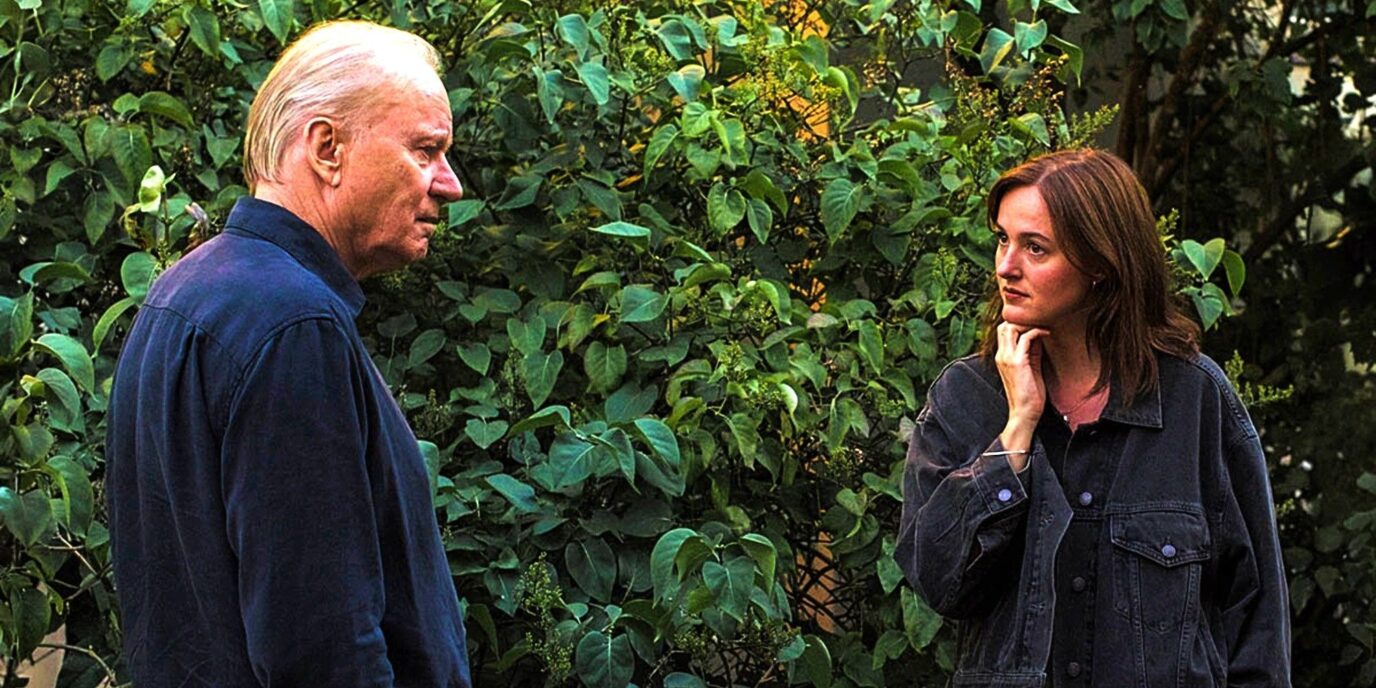
Julie (played by Renate Reinsve) looks for long-term love with Aksel (played by Anders Danielsen Lie) in the film The Worst Person In The World.

Establishing your career and settling down in love is normally something done when your in your late-20’s, early-30’s. It seems like it’s harder than ever nowadays. The Worst Person In The World has a look at a Norwegian woman trying to do exactly that.

The film starts with a prologue, leads into a twelve-chapter story, and ends with an epilogue. Julie is a woman about to turn thirty. Her road leading up to this age has been bumpy with career pursuit decisions in her academic years starting as a medical student, then switching to psychology and then pursuing a direction in photography. Approaching thirty gets to her as she finally has a serious boyfriend. This haunts her as she compares her life at 30 to her mother and many generations of her grandmothers before her. Things change when one of her photography subjects is Aksel Willman: an acclaimed politically-incorrect cartoon book author who is 15 years older than her. This is just as his cartoon Bobcat is to be adapted to a feature-length film.

Julie drops her old boyfriend for Aksel. The relationship gets more serious and it even stimulates Julie to pursue a career in writing. One weekend, the two spend it at Aksel’s parents’ house in the woods. There she meets Aksel’s brothers and nieces and nephews. That is a sudden reminder that Julie is reaching the family-planning years. To add to the frustration, Julie crashes a party after a publishing event for Aksel. There she meets a coffee barista named Eivind whom she becomes attracted to. They spend the night together, but urinate in the bathroom together to not spark any rumors of the two cheating on their significant others.

Things become more serious between Aksel and Julie. Julie writes a blog about oral sex in the age of #MeToo and Aksel is impressed with it. Then Julie has her 30th birthday with her mother and sisters. The father is a no-show. He does show up hours later as his excuse is his back. She’s hurt her father hasn’t read her blog. On the ride home, Aksel says she should make her own family. That’s difficult for her, especially with Aksel, because she’s sensing love for Eivind. One morning while everything and everyone in Oslo stands still, she’s able to meet with Eivind at his coffee store and kiss him. Over time, Julie gets disillusioned with her relationship with Aksel. The turning point is where Aksel has dinner with her and his sister-in-law. During the dinner, Aksel is constantly ranting how the film of Bobcat is a watered-down family-friendly Christmas-themed version of his comic stories.

It’s after a date with Eivind Julie is convinced Eivind is the one and breaks up with Aksel. But not after sex one last time! Becoming one with Eivind was a bit of a wait. He was married to Sunniva. However even before he met Julie, his love for Sunniva was fading. She learned from a DNA test she had Sami ancestry, albeit a small percentage. She changed herself to embrace her ‘Sami roots,’ pursue yoga, and become a climate-change activist. He met Julie at the right time, but there was still the wait to divorce. With the divorce finally settled, Julie and Eivind can finally become a pair. Eivind still follows Sunniva on Instagram, which Julie doesn’t have a problem with. However things take a turn for the bizarre when Eivind hosts a party and gives everyone psychedelic mushrooms. Julie takes some, and it sends her on a trip where she sees bizarre visions of the wrath to her father, her fear of having children, and images of Bobcat’s insanity. She feels she can be herself around Eivind.

It’s clear Julie still has feelings of attraction to Aksel as she’s at a gym working out and she watches a television interview he has where he staunchly defends the cartoon series’ past misogyny to the female host. However Aksel’s brother soon visits Julie at her job to tell her she has pancreas cancer and it’s inoperable. Soon after, Eivind discovers a short story she wrote which he believes is about her family. Julie angrily denies this and in her anger, belittles Eivind for staying a barista. Her perceived irresponsibility of Eivind is also why she doesn’t tell him she’s pregnant at first. Julie meets Aksel at the hospital. Aksel is devastated over the fact he doesn’t have a future. Aksel tells Julie after she tells him she’s pregnant she’d be a good mother. However she can’t decide whether to keep the baby or not, especially after she finally reveals to Eivind the pregnancy and she breaks up with him. Julie does see Aksel one last time. She does a photo essay of him where he visits his past places, including the school he attended where he was first inspired to be a cartoonist. The last thing he says to her is he regrets he can’t live on as something more than a memory to her. The film then ends with the prologue showcasing Julie’s current profession, and a chance encounter with Eivind all this time later.

Entering into adulthood and establishing yourself has never been easy. We have a protagonist many people can relate to. She’s made three different major decisions in her schooling as a reflection of her career choice. She’s finding her way, but now she’s at the age where she’s expected to establish herself, to settle down, and to form a family. The career path choices were hard enough, and along sparks a new career ambition after meeting Aksel. What makes it hard for establishing a relationship is the two men she’s torn between. One is a comic book artist who appears to have it together. The other man appears not to have it all together, but she’s in love with him. It’s there where she has to make decisions about her situation and who she will want to spend the rest of her life with. Her choices will eventually seal her fate.

The funny thing about it is this is happening in our modern times. Adulthood is hard to define. Julie compares her life at 30 and where it should be in comparison to past generations of her female ancestors. Meanwhile she’s torn between two men whom she loves, but can’t help but see as man-boys. One is a 44 year-old cartoonist of an obnoxious comic series about to be adapted into a film. He’s actually quite mature, if you take away the fact of his profession. Then she’s also attracted to a barista who’s more of a boy and has a lot of irresponsibilities. It’s a concern to her. Who should she love? Should she have a child? If she does want one, who should be the father? Will she be a good mother? Will either of the men accept the role of fatherhood? Add to the mix of things like social media-think, each person’s professions, current family situations and other people in their lives. You can understand the confusion in there.

The most unique thing about this story is that it goes from being a comedy of love in our times and the complications around it to suddenly adopting a more tragic tone. That comes as Julie learns Aksel is dying and Eivind’s true colors are starting to expose itself, especially after she learns she’s pregnant with Eivind’s child. We suddenly find ourselves no longer laughing at the irony and bizarreness of the situation and now sensing the seriousness of the situation. As Aksel is dying admitting personal thoughts to her, Julie starts wondering if Aksel was the one all along. The one worth loving and having a family with. We even wonder if it’s worth it for Julie to bear Eivind’s child. Mother a child to a man-boy so self-indulgent? In the end epilogue, we see a glimpse into the present that is a surprise for all to see how time elapsed for Julie and Eivind.

Norwegian-Danish director Joachim Trier directs a delight of a film. It’s common to see a film in chapters, but a film with twelve chapters, a prologue and an epilogue, and to make it all work in two hours of time, that’s something! The story he directs and co-wrote with constant colleague Eskil Vogt is the last film of his ‘Oslo Trilogy.’ I can’t compare to the other two because I haven’t seen them. As for this film, it’s a creative story as it tells of a common love triangle mixed with the confusions and distractions of the time along with the protagonist’s dreams and the wrath of Bobcat mixed in. Somehow Bobcat makes his way into Julie’s personal life! All of it is a complicated process, but the film makes it work by putting it all together in winning fashion.

Despite the story and direction working together, it’s also the excellent acting of Renate Reinsve as Julie. This story is all about Julie. Reinsve embodies her dreams, desires, confusions and frustrations in winning fashion. She embodies the comedic side of Julie as well as she embodies her tragic side. It’s a complex performance she does in remarkable fashion. The actors who played her two lovers were also great. Anders Danielsen Lie is great portraying Aksel as a man quite mature for a comic book artist and then transitioning to Aksel being a hurting man facing death too soon. Herbert Nordrum is also great in his role as Eivind, embodying his immaturities quite well.

When I first saw this film, on the last day of the VIFF, it was in the running between two other films to be Norway’s entry for the Best International Feature Film category for the upcoming Oscars. Recently it was announced to be the official entry. Even outside this Oscar category, the film has already won a lot of acclaim. It was a nominee for the Palme d’Or for the Cannes Film Festival this year. Reinsve’s performance as Julie won the Best Actress award at Cannes. The Jerusalem Film Festival awarded it the Best International Feature. The Ghent Film festival nominated it for it’s Grand Prix Award. Cinematographer Kaspar Tuxen won some film festival awards of his own including the Silver Camera 300 Award at the International Cinematographers Film Festival and the Silver Hugo award at the Chicago Film Fest. The latter of which gave him a claim for use of 35mm film, inclusion of natural light and carefully rendered interiors.

The Worst Person In The World is a funny but sad story of a woman trying to make it in a career and find a partner she can settle down with. It’s a film that does get you thinking in the end.

2019 FIFA WWC: REVISED Predictions For The Quarterfinals

WWC QF

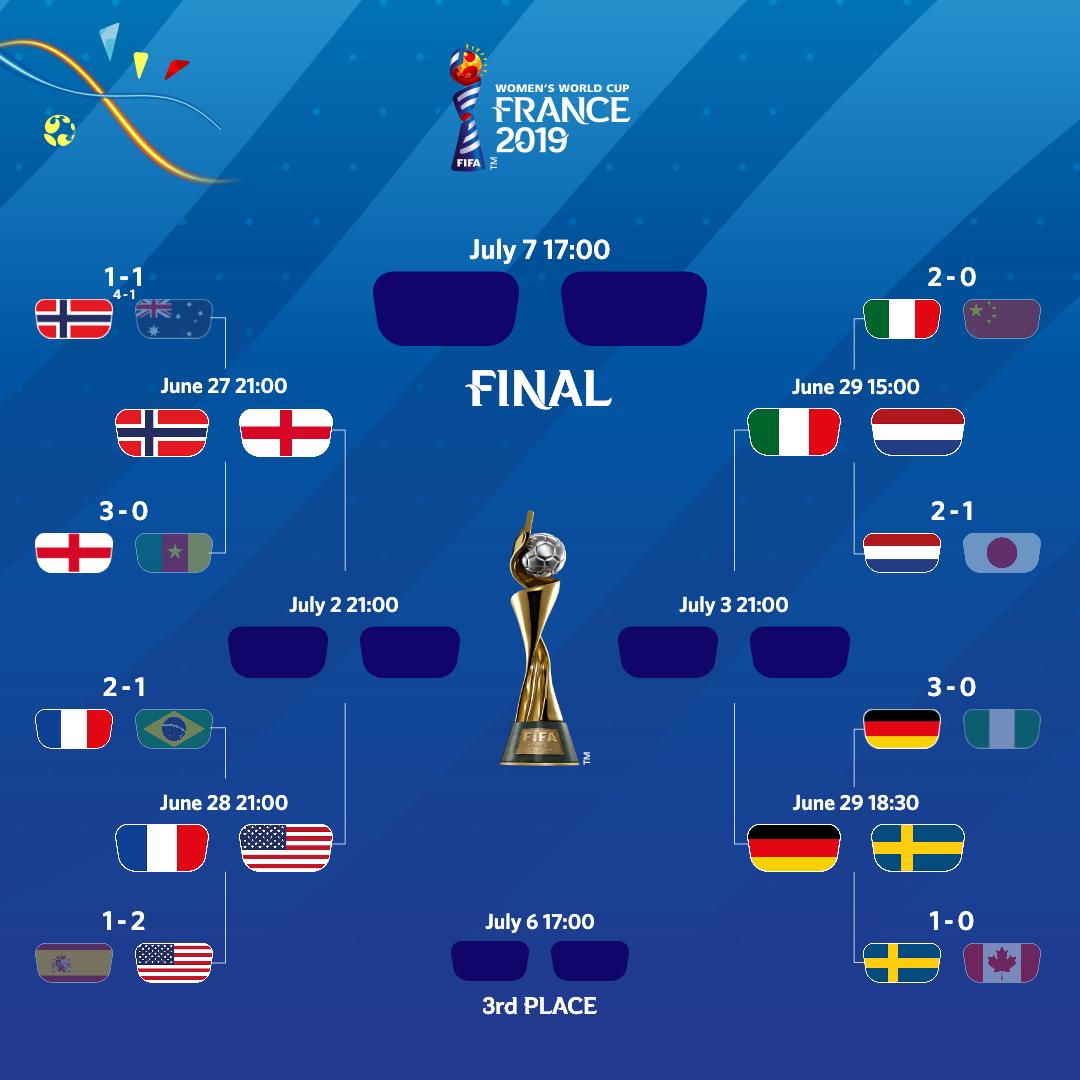
Did I say that I won’t be doing any predicting until the semifinals? I changed my mind. Normally I would let my predictions I made back on Friday stay as is, but the Round of 16 matched made me rethink a lot of things. Not simply because I got two quarterfinalists wrong — I’ve been wrong in Round of 16 predictions before and shunned them aside — but because of the play of teams in the Round of 16. Here they’re showing more of their strengths and weaknesses and it’s better to tell who will win.

So I will try to make a new set of predictions for the quarterfinals. Interesting how all six teams that topped their group won their Round-Of-16 match. Also interesting how seven of the eight quarterfinalists are European teams. The USA is the only non-European team that won their Round of 16 match. What did it? Jetlag to all those other teams? The same curse on the men’s World Cup that has prevented any non-European team from qualifying for a World Cup semifinal on European soil since 1998? Bad reffing? Or is it because the European teams are simply the most there? You be the judge. Anyways that’s the way it is and here’s how I predict for the quarterfinals:

NorwayNorway vs. England fixedEngland: Already for Norway, this is their best WWC result for them since 2007. They won their match against Australia, but on penalty kicks. They will be hard-pressed against England. Don’t forget it was England who ended Norway’s Women’s World Cup run in 2015 with a 1-2 in the Round Of 16. Don’t forget England looked good in their 3-0 win over Cameroon. I will have to go with England here.

France fixedFrance vs. USAU.S.A.: The U.S.A. looks like they struggled in their game against Spain. They won 2-1, but it was on penalty kicks from Megan Rapinoe. They appeared invincible in their 13-0 win over Thailand, but don’t forget football is opponent vs. opponent and results can differ greatly. France may have won 2-1 over Brazil, but it was in added extra time. So they showed some vulnerability here.

France may have won over the U.S. 3-1 in a friendly back in January, but this is a different day and a different meet. I think the U.S.A. will win, but in added extra time.

Italy ficedItaly vs. Netherlands FixedNetherlands: Italy, in its first Women’s World Cup in 20 years, but won their first-ever knockout round game against China 2-0. This is also the Netherlands’ first time ever winning a knock-out match at the WWC, and it was up against Japan: last year’s finalist. Both teams also looked great in their group play. Netherlands won all their games while Italy only lost to Brazil.

This is a tight call between the ‘Cinderella team’ of the tournament and the 2017 Women’s Euro winner. Don’t forget both teams will already have their best-ever result at the Women’s World Cup. I will have to say Italy as they’ve won over the Netherlands in head-to-head competition more often.

Germany fixedGermany vs. Sweden FixedSweden: Isn’t that something that this quarterfinal looks like a rematch of the 2016 Olympic final? Germany is one of five teams entering the quarterfinals with straight wins. Sweden’s only loss came to the U.S.A. in group play. Germany was very convincing in their 3-0 win against Nigeria. Sweden may have won against Canada 1-0 but they proved the can be a strong team.

I predict it will be Germany that wins as they have appeared the strongest. Also because they haven’t conceded a single goal in the tournament. And also Germany has won against Sweden more than they’ve lost in head-to-head competition.

And there you have it. My new predictions for the quarterfinals. Funny how watching play gives you second-thoughts. Right now I’m tempted to predict that the WWC final will be the U.S.A. vs. Germany. But it’s wrong to jump the gun. So let the play decide!

2019 Women’s World Cup Intro and Group A Focus

Womens Cup

It does seem like yesterday when Canada hosted the Women’s World Cup. It was the most attended and most viewed Women’s World Cup ever. I also had fun in seeing the exhibits and even a Round of 16 game.

Now it’s France’s turn to host the Women’s World Cup. The television audience is expected to be bigger, the crowds at the stadiums are expected to be bigger, and women’s football as a whole is expected to be bigger. Eighteen of the 24 teams at this year’s World Cup played in 2015 and four will be making their debut this year. Lots of excitement is expected to happen. As for hosting, France has nine stadiums set to contest the matches. All of them are over 20,000 capacity. Three of the stadiums contested matched during the 1998 World Cup and three during the 2016 Euro.

So without further ado, let’s focus on World Cup Group A. FIFA rankings of teams as of March 2019 are in brackets:

France fixed-France (4): France is a team waiting for their first ever major international moment. Their best Olympic finish is fourth in 2012, their best World Cup finish ever is fourth in 2011, and they’ve never made it past the quarterfinals of a Euro ever!

France appears ready to deliver a strong result here in WWC 2019. For their Group A teams, France has won against South Korea and Nigeria in the past, but never played Norway. France however has delivered some excellent results in recent months with wins against top-contending teams like Australia, USA, Japan, China and Brazil. Their only loss this year came to Germany. It looks like France is ready to show the world and this could finally be their chance!

Korea-South Korea (14): South Korea is a team not to be underestimated. Sure, they’ve never qualified for an Olympics, but they did achieve a Round of 16 result at the last World Cup and they have had a third-place finish at the Women’s Asian Cup.

South Korea has had an uneven play records these past twelve months. They’ve endured losses to China, Australia and Sweden. However they’ve had wins against New Zealand, Argentina and Romania. Expectations are low for South Korea here, but don’t underestimate them. They could be one of the big surprises in France.

Norway-Norway (12): Norway was one of the great teams when the Women’s World Cup was starting. They won the second WWC back in 1995 and the second-ever Olympic gold in women’s football back in 2000. Returning to their glory days has been a struggle. The last Olympics they competed in was in 2008. They have finished runner up in the 2013 Women’s Euro only to lose out in the Group Stage in 2017.

Norway has a record these past twelve months of ups and downs. The lost to Australia, Sweden, Japan and Canada, but they’ve also won against China, Scotland, Denmark and 2017 Euro winners The Netherlands. Norway even won this year’s Algarve Cup. Norway could just well be on their way to a comeback.

Nigeria-Nigeria (38): Nigeria leads the pack in terms of African teams in women’s football. They’ve won the CAF Women’s Championship all but two times. Nigeria is searching for its first major international breakthrough. The best they ever did at a WWC was a quarterfinals finish 1999. Their best Olympic finish was the quarterfinals of 2004.


Nigeria has had a challenging year losing to Canada and China, but they’ve also had wins against Slovakia and Romania. Nigeria could be one team that can pull an upset.

MY GROUP PLAY PREDICTIONS:

France looks to be the top team of the group. They will qualify strongly. Norway looks to be the team to come in second. As for third, I’m thinking of going with Nigeria. This can be anybody’s to take.

And there’s my first take on the teams of the 2019 Women’s World Cup. There’s still more to come as we’re leading up.

2015 FIFA Women’s World Cup: Group B Focus

Oh man. If I would have known that yesterday as Woman’s Football Day, I would’ve posted this blog yesterday. Well the start of the Women’s World Cup is getting closer and closer. With it the excitement is building. I just walked into a local grocery store and I saw a display of soft drink cases saluting Team Canada. So upon the building excitement, here’s my look at Group B:

GROUP B:

Germany fixed-Germany (1): Germany is like a lot of European countries that’s just slowly starting to accept women’s football. Actually Germany’s more welcoming than most and with good reason. As you know, Germany’s men, The Mannschaft, are on top of the world right now. Germany’s women, the Nationalelf (National Eleven), have a legacy of their own too. They’ve won two World Cups in the past and have won all Women’s Euros except the inaugural in 1993. They’ve even won FIFA’s Women’s Player of the Year these past two years: Nadine Kessler in 2014 and Nadine Angerer in 2013. However they have some imperfections of their own. One is that they’ve only won three Olympic bronzes. The second is that they hosted the last World Cup and were ousted in the quarterfinals on penalty kicks. Penalty kicks? The German men are penalty kick aces with a near-flawless record! That loss also meant they missed qualifying for the Olympics for the first time ever.

However the team really wants to have this World Cup as the one where they can rebound, if not win. The team consists of many members of female teams of the Bundesliga. Yes, the Bundesliga is one of many football leagues that includes female teams: 12 in total. The team looks like they have a very good chance to come out on top. Norway may be its closest threat to take #1 from them. As for winning the Cup, their chances look good too but they’re not perfect. These past twelve months they’ve had wins against Sweden, China, Brazil and England. However they’ve also had losses to Sweden and France. Canada’s the proving point. They have what it takes to win again but they have some weak spots. They will have to rise to the occasion.

Ivory Coast-Ivory Coast (67): The Ivory Coast is another one of the eight newbies at this World Cup. The men have already made a name for themselves with three world Cup appearances and churning out big names like Didier Drogba and Yaya Toure. The women hope to follow in their footsteps. They’ve already won a bronze at last year’s CAF Women’s Championships. However it will be hard for me to predict how well they’ll do in the Group Stage since they’ve never played any of the other three countries before. Whatever happens will be a big learning experience for the team.

Norway-Norway (11): Norway is another country that could easily be dismissed as a ‘blast from the past’ in women’s football. Winners of the 1995 World Cup and having won the only Olympic gold not won by the U.S.: back in 2000. They were definitely top when women’s football was starting to emerge but they’ve faded since. Failing to qualify for the 2004 and 2012 Olympics and being ousted in the Group Stage at the last World Cup. However they have shown signs of making a comeback. They were finalists at the last Women’s Euro back in 2013. Here in the Group Stage, Germany looks to be the only team that can beat them and even they have the ability to surprise Germany. Canada is the stage where they seek to redeem their reputation.

Thailand-Thailand (29): Thailand is one country which has never landed a men’s team at the World Cup but has landed a women’s team. And for the first time this year. It’s hard for me to predict how well Thailand will do in the Group Stage. The only team they’ve played before was Norway and that was all the way back in 1988. However Thailand has been impressive in their play over the past year. Sure they’ve mostly played Asian teams but they’ve delivered some very impressive wins even though they’ve also lost to China, South Korea and the Netherlands. Like the Ivory Coast, Thailand will also have a learning experience here as this will be their first World Cup.

MY PREDICTION: Without a doubt, Germany will come out on top in this group. Norway will definitely be second. Third will be a hard guess as both Ivory Coast and Thailand lack international experience. I’ll go with Thailand because of their impressive play in friendlies these past few months.

STADIUM SPOTLIGHT:

Moncton Stadium-MONCTON: Moncton Stadium

Year Opened: 2010

World Cup Capacity: 20,000

World Cup Groups Hosting: B,E,F

Additional World Cup Matches Contested: Round of 16

Of all the six stadiums that are hosting this year’s World Cup, this is the only one that is not a host site for a CFL team. Moncton was included as a host city for one of two possible reasons: either to include participation of a maritime city in the Cup or because Toronto couldn’t be a host city as they’re busy preparing for the Pan American Games later this summer. Whatever the situation, it’s good to have Moncton. This stadium was originally planned to have 28,000 seats in hopes of attracting a CFL team. Instead it was reduced for 10,000 for the current needs of a local football team. It has hosted the World Junior Athletics Championships and three CFL Touchdown Atlantic Games where expansion to 20,000 proved to be successful.

And there’s my focus on Group B. Group C is next and it’s coming hopefully Tuesday.