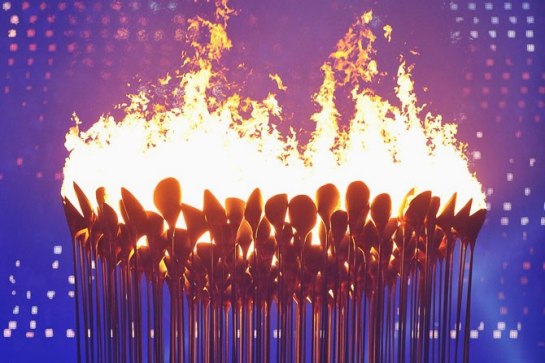
Paris 2024: Fourteen To Watch

Paris will join London as the only two cities to host the Summer Olympics three times.

On Friday, July 26th, the Games Off The XXXIIIrd Olympiad will open in Paris, France. This will be the third time Paris will have hosted the Summer Olympics, having hosted in 1900 and 1924.

One thing about these Olympics Games is these will now be back to full crowds. You may remember the Tokyo Games were delayed by a year and had to be held without spectators. You may also remember the Beijing Winter Olympics were also quite limited in spectators. Now that the pandemic has been mostly tamed down, Paris can be a free-for-all and the crowds are back. Also I got back my ambition to do pre-Olympic blogging. Something I haven’t done since the 2018 Winter Games.

With every Olympics comes many an athlete or team that will be heavy favorites or athletes of curiosity. Here’s my look at fourteen athletes at the Paris Games who you should keep an eye on.

-Noah Lyles/USA – Athletics: The American sprinters have been struggling to get themselves back to the top for almost 20 years. First there was the setback of Usain Bolt and other Jamaicans. Then there was Italy’s Marcell Jacobs winning in Tokyo and the men’s really team failing to qualify for the final. Seeking to put the US back on top is 27 year-old Noah Lyles. Back at the Tokyo Games, promise was noticed as he won a bronze in the 200 metres. At last year’s World Championships, he won the 100m, 200m and was part of the winning American relay team.

This season, Lyles is ranked World #1 in both the 100m and 200m and even recently ran a personal best in the 100m of 9.81. Lyles will have rivals in Paris. In the 100m, he will be up against Jamaica’s Kishane Thompson and Kenya’s Ferdinand Omanyala who have posted faster times this year. Expecting to challenge Lyles in the 200 is Tokyo silver medalist Kenneth Bednarek who finished second to him at the US Olympic trials. Also rivaling him is Botswana’s Letsile Tebogo who finished second to him at the 2023 Worlds in the 100 and third in the 200. If all goes well for Lyles, he could be one of the stars of Paris.

-Sha’Carri Richardson/USA – Athletics: Many will remember before the Tokyo Olympics, there was a lot of news of Richardson being disqualified from the Olympic team for testing positive for marijuana. It was a shock to many. Sha’Carri was undoubtedly disappointed. Unnoticed at the time was the then 21 year-old sprinter was still young and her best years were still to come. At last year’s World Championships, her talent arrived when she won the 100m, finished third in the 200m and was part of the US’s winning relay team.

For most of this year, Sha’Carri has kept it low-key. She hasn’t been to too many competitions and bypassed the Diamond League this year. She did prove herself to be a force in the 100m in Paris after winning the US Olympic trials in 10.71. Her main rival Sherlock’s Jackson of Jamaica is injured but that won’t stop her from having rivals in Paris like Ivory Coast’s Marie-Josee Talou-Smith, St. Lucia’s Julien Alfred and Jamaican legend Shelly-Anne Fraser-Price looking for one last Olympic gold. Paris could be Sha’Carri’s moment and the possible start.of a long legendary career.

-Yaroslava Mahuchikh/Ukraine – Athletics: Back at the Tokyo Olympics, Yaroslava was 19 years old and seen as a rising talent with her bronze medal in the high jump. Then the war started months later. Many Ukrainian athletes had to find new ways to train or even leave Ukraine to seek refuge in another country. Mahuchikh first traveled by car to Belgrade to compete at the World Indoor Championships. Shortly after, she found refuge in Germany to resume training. Since her move, her career skyrocketed with silver at the 2022 World Outdoor Championships and then gold last year. Just last month, Mahuchikh broke the 37 year-old world record in the women’s high jump!

She is a heavy favorite to win the high jump in Paris, but she will have competition. She will face rivalry from Australia’s Nicola Olyslagers who beat her at this year’s World Indoor Championships as well as another Australian: 2022 World Champion Eleanor Patterson. Whatever happens, Mahuchikh’s triumphs are not limited to inside the athletics arena.

-Sydney McLaughlin-Levrone/USA and Karsten Warholm/Norway – Athletics: The biggest action in athletics at the Tokyo Olympics came in both the men’s and the women’s 400m hurdles. In both events, the winner broke the world record by a huge margin, the second-place finisher finished in a time faster than the pre-Olympic world record and the third-place finisher’s time was a small fraction short of that pre-Olympic world record!

It’s interesting to see what has happened since to both men’s winner Karsten Warholm and women’s winner Sydney McLaughlin. Both won their hurdles event at a World Championship since. Walholm has still continued his consistency with major victories, and won the 2023 World championships but finished 7th at the 2022 Worlds. McLaughlin has also won the 2022 Worlds and has even knocked almost a full second off the world record since Tokyo. She missed the 2023 Worlds due to a knee injury. Both runners will face rivalry here in Paris. For Warholm, the two other medalists from Tokyo — US’s Rai Benjamin and Brazil’s Allison dos Santos — will rival him in Paris.  McLauglin’s top rivalry will come from 2023 World Champion Femke Bol of the Netherlands and her own teammate Shamier Little. Only time will tell if both repeat as Olympic champion here in Paris, and if they break the world record again.

-Eliud Kipchode/Kenya – Athletics: One thing about social media these past ten years is that there are so many athletes being promoted as GOATs. One of which is Eliud Kipchode who’s commonly seen as the GOAT of marathon running. Personally I still want to think of Abebe Bikila as the GOAT but Kipchode’s feat of eleven major marathon victories, four Olympic medals including two marathon gold’s, and breaking the world record twice, it’s very tempting to call him the GOAT. Even his time-trial marathon run under two hours sparked buzz.

The crazy thing about marathon races, especially at the Olympics, is that it is the hardest to predict. Many favorites have succumbed to the course or the weather conditions and unknowns have often ended up the winners. Despite his illustrious career spanning almost two decades, Kipchode will face rivalries from 2023 World Champion Victor Kiplangat of Uganda and from his own teammate Benson Kipruto who has won the fastest marathon time this year. Whatever the result, Kipchode will add to his greatness here in Paris.

-Simone Biles/USA – Gymnastics: Simone Biles is an athlete loved by many, shunned by others. For many years, she was dominant in gymnastics having won a stack of World Championships and at the 2016 Rio Olympics, she was the queen winning four golds and a bronze. In between Rio and Tokyo was the revelation of the predator doctor Larry Nassar. Biles was one of his former patients who testified against him. Then at the Tokyo Olympics, she had a mental lapse called the ‘twisties’ and needed to bypass most of the competition. She did leave Tokyo with a silver and a bronze, but many people, most of whom don’t understand the dangers of gymnastics, labeled her a quitter or a loser. She would come back at the 2023 Worlds winning four golds and a silver.

Despite being the queen, she will face challenges from Brazil’s Rebecca Andrade and from her own American teammates in Jordan Chiles and defending Olympic all-around champion Sunisa Lee. Whatever happens in Paris, it will add to Simone’s greatness.

-Carlos Alcaraz/Spain – Tennis: One thing about tennis is right while there are a lot of greats, there are also young guns looking to dethrone them. One of which is Spain’s Carlos Alcaraz. Right at a time that seems dominated by Rafael Nadal and Novak Djokovic, Alcaraz appears poised to dethrone them.  The 21 year-old has already won singles titles in Wimbledon, the US Open and most recently his first French Open victory. The latter is an advantage as the Olympic tennis competition will also be in the Roland Garros arena.

One thing about Olympic tennis is that most favorites have not won the gold medal and many times, unknown players have become Olympic champion. In fact, Djokovic’s only Olympic medal is a silver from 2008. Djokovic is one of Alcaraz’s rivals here in Paris. Also in the tournament are challenges from Germany’s Alexander Zverev and Norway’s Casper Ruud. Paris should be another chance for Alcaraz to make a name for himself in the tennis world.

-Julien Alfred/St. Lucia – Athletics: One of the things I like to do each summer Olympics is keep an eye out for any athletes that just might win their nation’s first-ever medal. One with good chances is 23 year-old Julien Alfred from the Caribbean island of St. Lucia. Her talent was first noticed at the 2018 Youth Olympic Games when she won silver.in the 100m. When she enrolled at U of Texas and became part of the Longhorns track team, that’s when things improved. She won a silver medal at the 2022 Commonwealth Games and at last year’s World Championships, she finished fifth in the 100m and fourth in the 200m.

In the 100, her rivals include Sha’Carri, Shelly-Anne Fraser-Price and Marie-Josee Talon-Smith. In the 200, she will face challenges from Jamaica’s Shericka Jackson, the US’s Gabrielle Thomas and the UK’s Daryll Neita. The Olympics are known for upsets and Julien Alfred could prove to be one of the top upsetters in Paris.

-Spain Women’s National Football Team: When it comes to a nation like Spain, you figure they would greatly support their men’s football team but greatly overlook their women’s team. Over the last five years, the RFEF started taking their women more seriously. After the 2019 Women’s World Cup, Spain’s women’s team made huge improvements in the sport and even won the Women’s Works Cup last year. Despite the growing success of the team, the sexism the team has been facing has been greatly exposed. Before the WWC, players boycotted the team because of a lack of a tactical preparation and a controlling environment. After they won the WWC, there was the incident at the trophy ceremony where RFEF president Luis Rubiales kissed player Jenni Hermoso on the lips, unconsentually. The controversy sparked outrage in Spain which led Rubiales to resign and paved the way for better equality with Spain’s women’s team.

One thing about the reigning WWC champion is that they’ve never won the Olympic gold medal. Spain aims to end that bad luck curse. They could face tight rivalry from the WWC fourth-place team Australia and from the US and Germany who hope to improve greatly after their WWC disappointments. Even host-nation France could be a threat. Anything is possible at the 2024 Olympics and Spain’s team could just achieve another victory here.

Four From The Host Nation

France’s athletes have competed in every Summer Olympic games except 1904 and have won a total of 751 medals: 223 of them gold. That medal haul puts them 5th in the all-time total of Summer Olympic medals. The sports where they’ve won their most gold medals are in fencing, cycling (which they have the most total medals), judo, equestrian and sailing. Here in Paris, the French team look to greatly add to their legacy. Here are four athletes representing France to look out for:

-Leon Marchand/France – Swimming: France’s swimmers have won a total of 43 medals. Eight of them gold. So far no French swimmer has won two individual event gold medals. The possibility looks great for Leon Marchand. Back at the Tokyo Olympics, he was 19 at the time and didn’t win a medal. Since then, he has become the fastest all-around swimmer in the world. He has won the World Championships of both 2022 and 2023 in both individual medley events: 200m and 400m. 2023 had added bonuses as he broke Michael Phelps’ world record in the 400 from the 2008 Olympics and he also won a bonus gold in the 200m butterfly.

He will face rivalry here in Paris from the UK’s Duncan Scott and the US’s Carson Foster in the IM races. In the 200 fly, he will face rivalry from defending Olympic champion Krisztok Milak of Hungary and Tokyo silver medalist Tomoru Honda of Japan. If all goes well, Marchand should be able to delight the home-nation crowd.

-Joris Daudet, Sylvain André and Romain Mahieu/France – BMX Cycling: Usually when you think of France and cycling, you think road racing like the Tour De France. Even though France is still big in road racing, it has recently developed as a force in BMX racing! Franch riders have won a medal at every World Championships since 2016 and they’ve won the last two: Romain Mahieu winning last year and veteran Joris Daudet Winning this year. The caliber of talent of France’s BMX racers is so jam-packed, last year’s Worlds silver medalist Arthur Pilard didn’t make the Olympic team. Instead this year’s Worlds bronze medalist Sylvain André will be competing in Paris.

The most interesting thing is all three were finalists at the Tokyo Olympics. Despite the big predictions, it will all boil down to the races. In fact, Daudet has won World Championship medals since 2011 but has never won an Olympic medal. The anticipated sweep of the medals will face a challenge from defending Olympic champion Noel Kimmann and 2022 World Champion Simon Marquardt from Switzerland. Anything can happen in Paris and the French BMXers can deliver a performance for the ages.

And there you have it. There’s my look at foreign athletes to look out for at the upcoming Paris Olympics. My blog of Canadians to look out forl is coming soon.
UEFA EURO 2020 Revised Quarterfinal Predictions

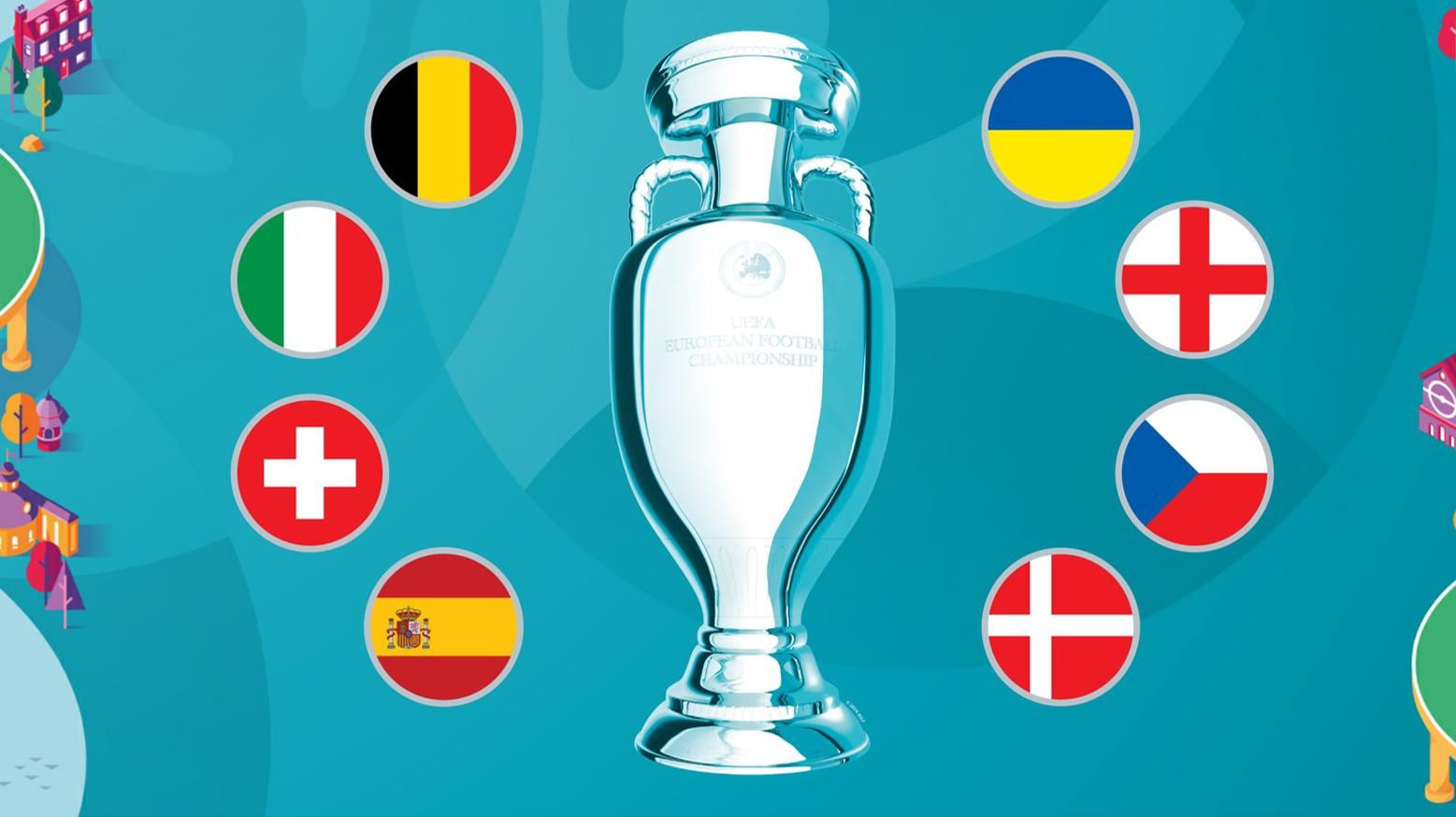
The field has been narrowed from 24 to eight. For most, like myself, not the eight we expected!

Normally I don’t concoct a blog of quarterfinal predictions of a major football tournament if it has a Round of 16. Normally I predict the winners of the Round of 16 matches, then make quarterfinal predictions based on my picks of Round of 16 winners and leave it at that. However those that read my blog of my Round of 16 guesses are undoubtedly laughing at how I only got three right. That explains my rewritten predictions for the quarterfinals. I feel they deserve a redo. So here goes my predictions:

Switzerland vs. Spain – Here is the big irony. Switzerland beat out reigning World Cup holders France on penalty kicks to qualify, and Spain beat out World Cup 2018 finalists Croatia in added extra time to qualify! Additional irony is both teams here had Round of 16 matches that ended with 3-3 after regulation time! Interesting!

This is Switzerland’s first-ever win of a knockout game at a Euro ever, and their first in a major tournament since the 1938 World Cup. For Spain, they’re in familiar territory as they’ve won three Euros and a World Cup in the past. Also in the 22 times the two countries played each other, Switzerland has only won once. Switzerland could come alive in soring prowess like they did against France, but I will predict Spain to win here.

Belgium vs. Italy – Two different teams. One is the result of years of teamwork and perfecting that has taken them to the rank of #1 in FIFA’s World rankings. The other is a fresh team with a history of a legacy that’s making a comeback after failing to qualify for the most recent World Cup. Both teams have one thing in common. They both all have straight wins in this Euro tournament.

This is the one quarterfinal lineup I predicted correctly! Hard to choose. The goal scored by Austrian Sasa Kalajdzic was the first goal Italy conceded not just in Euro 2020 but since their match against the Netherlands in October! Belgium only conceded one goal in Euro 2020 in their group game against Denmark. It’s tough to pick a winner in a quarterfinal of two teams with straight wins in this Euro. I know Italy has beaten Belgium more often in head-to-head matches but I pick Belgium because they are the powerhouse of the moment and this Italian team is a rising power.

Czech Republic vs. Denmark – Another quarterfinal of teams that surprised in their Round of 16 match. Most people would have touted the Netherlands over the Czech Republic. However the Czechs delivered a surprise win of two goals. Also many would have predicted Wales to beat Denmark as they have the more lauded players. Denmark surprised them with four goals!

It’s interesting in these past two games, Denmark scored four goals each game. Their group match against Russia was do or die for them to qualify and it became a case where the Danish Dynamite finally exploded! The Czechs are also a team that appear to be showing their best traits in only their most recent games. For this match, I will predict Denmark because they’re best at pulling surprises. Also if this is a possible draw, which is quite likely with the head-to-head record, I think the Danes will take it in penalty kicks.

England vs. Ukraine – Tuesday was a case where the eventual winners were not the favorites going into their Round of 16 matches. England has been known in recent decades of losing to Germany. How easy we forgot they beat Germany to win the 1966 World Cup. And in the old Wembley Stadium. However it was a case of one of the best English teams ever against a struggling German team and it resulted in a 2-0 win! And in the new Wembley Stadium. Their first win of a knockout game since Euro 1996, which England hosted! And current coach Garreth Southgate was a player for the team back then!
For Ukraine, Sweden had the bigger expectations to win considering they topped their group with two wins and a draw, while Ukraine squeaked in with just a win and two losses. Anything can happen in a match. The game drew 1-1 after regulation and then in the stoppage time of added extra time, Ukraine’s Artem Dovbyk scored the winning goal!

England have not yet conceded a goal during the Euro 2020 tournament. Ukraine have lost games during Euro 2020, but have also delivered some surprise moments. In football, anything can happen. England have won four of the seven head-to-head matches while Ukraine has only won once. I will have to go with England on this. Even though they won’t be in their home country for this quarterfinal, it won’t rob them of their luck.

And there you have it. My revised predictions of the Euro 2020 quarterfinals. Interesting that the quarterfinals is the last round that will have the teams play in alternating cities and countries. The semis and finals will all be held in Wembley. Stay tuned for some exciting play!

PyeongChang 2018: Seven Canadians To Watch

Canada Olympic

Two days ago, I did a blog focusing on the foreign athletes to watch for at the PyeongChang Winter Olympics. Now it’s time for me to focus on the Canadians to watch out for. We may not have the superteam we had back at the Vancouver 2010 Games, but we’re still a winter sports superpower and feature some top contenders throughout the sports. Sports Illustrated predicts Canadian athletes to win a total of 30 medals including nine gold. That’s third only to Norway and Germany. Without further ado, here are some Canadians to look out for:

Mark McMorris – Snowboarding: Now Saskatchewan doesn’t come to mind to most in terms of producing top-notch skiers. However the hills and mountains are high enough to breed some good snowboarders. Mark McMorris is one of the best ever. He already has 16 X-Games medals, including seven gold, won in both the Slopestyle and Big Air events. He’s also famous for being the first ever to perform a ‘cork 1440’ in slopestyle. His feats and charming personality have made him a huge celebrity for fans of snowboarding and extreme sports.

Major titles have eluded him in the past. His best result at a World Championships is a silver in 2013. As for the Sochi Olympics, McMorris had broken a rib two weeks before. His bronze in Slopestyle is actually seen by him as a miracle. Here in PyeongChang, he wants to win gold. He has two chances: in Big Air and Slopestyle. In both events, he will face rivalry from Norway’s Marcus Kleveland, who is the first ever to do a ‘cork 1800.’ In Slopestyle, he will be challenged most by the US’ Red Gerard and Japan’s Hiroaki Kunitake. In Big Air, he will face rivalry from American Chris Corning and his Canadian teammate Maxence Parrot. The hills in Korea will determine his fate.

Kaillie Humphries – Bobsledding: Women’s bobsledding has only been contested four times in the past, but Canadians Kaillie Humphries and Heather Moyse are already the only female double-gold medalists. However Kaillie appears poised to achieve a feat none of the male bobsledders have ever achieved: winning the same event three times.

It’s not to say it hasn’t been without its difficulties. After Sochi, she traded partners with Melissa Lothholz. She has won two World Championship silvers since. Here in PyeongChang, she will have former hurdler Phylicia George as her partner. As her former partners of Heather Moyse and Melissa Lothholz, they will both compete in PyeongChang with different drivers. Humphries’ attempt to return to the top will be challenged by the German sled driven by Stephanie Schneider and the American sled driven by Elana Meyers, which actually won at last year’s Worlds. PyeongChang could be the final chapter for Kaillie’s legacy in the sport.

Pyeongchang medalsAlex Harvey – Cross Country Skiing: Cross country skiing is in Alex Harvey’s blood. His father Pierre competed in cross country skiing in 1984 and 1988 and gave Canada its best ever results at the time, and they weren’t even Top 10 finishes! That just shows how much progress Canadians have made in nordic skiing. In fact Alex himself delivered two Top 10 finishes at the Vancouver Games, including a fourth in the Sprint.

Harvey has won a medal at every World Nordic Championships ever since the Vancouver Olympics including two golds: the most recent being in the 50km last year. He’s hoping to win the Olympic medals that have eluded him throughout his career. However he has only made the podium in three World Cup events this season. His biggest challenges come from Switzerland’s Dario Cologna and two Norwegians: Martin Johnsrud Sundby and rising 21 year-old Johannes Høsflot Klæbo. PyeongChang could finally give him the break he’s always been pursuing.

Mikaël Kingsbury – Freestyle Skiing: Canada has won three of the seven golds in men’s moguls skiing. There’s Jean-Luc Brassard in 1994 and Alexandre Bilodeau in 2010 and 2014. Mikaël Kingsbury is seeing to make it four for eight. Kingsbury has developed a top reputation in the event. He first finished third in the 2010-2011 World Cup season but has come out on top every World Cup season since including this year.

Major events have been his weakness. He’s been on the podium for moguls at every World Championship since 2011 but has only won gold once: in 2013. Also it was in Sochi in which he, not Bilodeau, was the Canadian most expected to win gold, but won silver instead. He will be challenged here in PyeongChang by Japan’s Ikuma Horishima, who handed him is only World Cup defeat this year, and Kazakhstan’s Dmitriy Reikherd. This could be Kingsbury’s year.

Tessa Virtue and Scott Moir – Figure Skating: Ah yes. Figure skating. Ever since 1984, Canada has bagged at least one figure skating medal in every Olympic Games since. Many expect 2018 to be Canada’s strongest team ever. Leading the pack is star ice dancing pair Tessa Virtue and Scott Moir. The pair have been inseparable on the ice since 1997 when Tessa was eight and Scott was ten. Their skating magic has resulted in Olympic gold and silver as well as seven World Championship medals, including three gold.

After they won silver at the Sochi Games of 2014 behind their American training partners Meryl Davis and Charlie White, it appeared they won everything they needed to and retired after Sochi. However they returned to amateur competition starting in 2016 and acquired former Canadian ice dance pair Marie-France Dubreuil and Patrice Lauzon as their coaches. The plan worked to success as they returned to the top of their sport. Of course they want to end their careers with a final gold medal, but they will face challenges from all three American pairs, most notably Maia and Alex Shibutani, and the French pair of Gabrielle Papadakis and Guillaume Cizeron. This is their chance to end their Olympic careers as they started.

The Canadian Hockey Teams: The news broke months ago. The NHL won’t allow any of their players to play at the Olympics. This is not permanent for the Olympic Games, but it is a drag for many who enjoyed. Heck, opening the Olympics to NHL pros allowed Canada to win gold in three of the five occasions. It does not however mean Canada doesn’t have a chance for the gold. Canada’s men’s team consists of pros, but mostly from the American Hockey League, the predominantly Russian Kontinental Hockey League, the Swedish Hockey League and Switzerland’s National League. Canada’s team is predicted by Sports Illustrated to win bronze with Sweden to win and Russia to take silver. Chances are the Canadians could surprise.

As for the women, Team Canada has always made it to the gold-medal final of every Olympic tournament since women’s hockey made its Olympic debut back at the Nagano Games of 1998. The inaugural competition is their only loss of the gold. The team in PyeongChang is coached by Lauren Schuler from that team in Nagano consists of thirteen from Sochi 2014 and ten newcomers. All but one play for Canadian teams. However Team Canada has finished second to the US at ever Worlds since the Sochi Games and the Americans promise to be the Canadians’ toughest rival. They’re coached by Cammi Granato who was part of the US’ gold-medal winning team in 1998: the US’ only victory in women’s hockey. Can Team Canada make it five in a row? Only time will tell.

Canada’s Curling Teams: If hockey is our national past-time, curling would rank second. Many people wonder how? It’s a gift from Scottish immigrants to us. Canada has a habit of blending things from the ‘old country’ into our national fabric. Our love for curling has paid off on the Olympic level. Ever since curling was officially added to the Olympic program at the Nagano Games in 1998, all ten Canadian teams have won medals and have even won gold five of the ten times. Sochi was especially a treat as it was the first Olympics where both the men’s and women’s team won gold.

As for the lineup in PyeongChang, the men’s team is headed by Kevin Koe who headed the Canadian team that won at the 2016 Worlds and the women’s team is headed by Rachel Homan whose team won the World Championships last year. New for Pyeongchang is mixed doubles curling. Canada’s team is headed by Winnipeggers Kaitlyn Lawes and John Morris. Both have gold medals from past teams: Kaitlyn in 2014 and John in 2010. However they’re not the favorites as Swiss pair of Jenny Perret and Martin Rios beat the Canadian pair 6-5 to win. As of yet, Canada has never won gold at the Mixed Doubles Worlds. Could this be their year to finally shine?

And there you have it. Seven Canadians to watch out for in PyeongChang. There’s many more to talk about but I’ll let the action at the Olympics do more telling. It all starts Friday the 9th at 3am PST. Can I wake up that early to see the opening ceremonies live? We’ll see.

PyeongChang 2018: Ten To Watch

Olympic Flame

After thirty years, the Olympics are returning to South Korea. After 20 years, the Winter Olympics return to an Asian country. The region of PyeongChang will be ready to host the 2018 Winter Olympics. There are expected to be over 2000 athletes from 92 nations competing. From February 9th to the 25th, medals are to be awarded in 102 events in 15 sports. Here are ten athletes and teams expected to catch your eye during the Games.

Marcel Hirscher/Austria – Alpine Skiing: Much the same way the Dutch always shell out new greats in speed skating, Austria always seems to create a new great in alpine skiing. Seeking to be the next Austrian great is Marcel Hirscher. Hirscher has been the Overall World Cup winner for the past six years and has won gold at the world Championships six times. The one title that eludes him is an Olympic gold. His one and only Olympic medal is a slalom silver at the Sochi Games of 2014.

He currently leads the World Cup standings in slalom, giant slalom and overall. He’s expected to win slalom, giant slalom and combined here in PyeongChang. He will face rivalry from Norway’s Kjetil Jansrut and France’s Alexis Pinturault. PyeongChang will be the scene where he could become a ‘best ever’ or a ‘best never.’

Mikaela Shiffrin/United States – Alpine Skiing: Back at the Sochi Olympics when Shiffrin was 18, people were already anticipating her to be the next great. She was already world Cup slalom winner and World Champion in the slalom the year before. Her gold medal in the slalom in Sochi would set in stone that she was one to watch.

Since Sochi, Shiffrin has won the World Cup in slalom every year except 2016 and finally won the World Cup overall title last year. She is expected to win slalom, giant slalom and the combined here in PyeongChang, but she will face challenges from France’s Tessa Worley, Italy’s Sofia Goggia and Liechtenstein’s Tina Weirather. PyeongChang is her chance to crown herself a great.

Martina Sablikova/Czech Republic – Long-Track Speed Skating: There have only been two long-track speed skaters that have won the same event twice: American Bonnie Blair in the 500m from 1988 to 1994, and German Claudia Pechstein in the 5000m from 1994 to 2002. One of two seeking to be the third is Czech Martina Sablikova in the 5000m.

Sablikova has won three of the Czech Republic’s seven gold medals at the Winter Olympics. Before Sablikova, no Czech speed skater has won a medal. At the Turin Games of 2006, an 18 year-old Sablikova missed a medal in the 5000m by a second. The following year, Sablikova set the first of her world records in the 5000m. Her Olympic coming-of-age came in Vancovuer 2010 as she won two gold and a bronze. Success continued for her in Sochi as she repeat at 5000m champ and won silver in the 3000m. She serves message she’s prepared to threepeat in the 5000m and return to gold in the 3000m, but she faces rivalry from Canadian Ivanie Blondin and two Dutch skaters: veteran Ireen Wust and newcomer Antoinette de Jong. Whatever happens, Sablikova has already solidified her greatness in the sport.

Johannes Thingnes Bø/Norway – Biathlon: Norway has always fielded greats in the Nordic skiing events. The sport of biathlon is no exception with greats like Magnar Solberg and Ole Einar Bjorndalen. This year with Bjorndalen failing to make the Olympic team, Norway’s future rest with their latest protege Johannes Thingnes Bø.

Bø is actually the youngest brother of Tarjei Bø who won Olympic gold in the biathlon relay in 2010. Johannes Bø first competed at the Sochi Olympics in 2014 at the age of 20, but did not win a medal. However talent was yet to come as he finished third in the overall category in that year’s World Cup. He first burst onto the scene at the world Championship the following year when he won gold in the Sprint and two additional relay medals. The following year, he won the Mass Start event and a relay gold. At last year’s worlds, he won silver in Sprint, Pursuit and Mass Start. He hasn’t won a World Cup title yet, but he has eight World Cup victories this season. Sports Illustrated predicts him to win three gold medals, but he will face rivalry from his own brother Tarjei, Slovenian Jakov Fak and Frenchman Martin Fourcade, who leads Bø in the World Cup overall this season. PyeongChang should make for an exciting showdown.

Martins Dukurs/Latvia – Skeleton: Latvia has never won a winter Olympic gold medal. In the past 15 years, Latvia has sent top contenders in the sledding sports. Latvian lugers, bobsledders and skeleton sledders have won a total of seven medals in the sledding sports since the Turin Games of 2006. Poised to win Latvia’s first ever winter Olympic gold is skeleton sledder Martins Dukurs. Martins and his brother Tomass have become two of the top skeleton sledders in recent years. Both are tndrained by their father Dainis who was a former bobsledder.

Dukurs has had the Olympic misfortune of being the silver medalist to sledders from the host nations: Canada’s Jon Montgomery in 2010 and Russia’s Aleksandr Tretyakov in 2014. The last one is biting because Tretyakov is one of many Russian athletes in which the IOC had on a lifetime ban for their part in their systematic doping for the Sochi Olympics, which I will talk about later. Their stripping of their Sochi medals, including Tretyakov’s gold, was overturned by the Court of Arbitration of Sports just on February 1st. It’s also biting for Tomass as he finished fourth in 2014 and would have been elevated to the bronze medalist.

Dukurs serves notice he is finally ready to claim the elusive gold medal. He has won every World and European skeleton title since Sochi. However he is ranked fourth in the World Cup standings this season with South Korea’s Yun Sung-bin leading, German Axel Jungk second and his brother Tomass third. PyeongChang could be his last chance to seize Olympic gold.

Marit Bjorgen/Norway – Nordic Skiing: Some of you may remember from my Sochi Olympic preview blog that I anticipated more greatness for Marit Bjorgen. I was right as she added three more gold to her legacy. She’s one of only three females with ten winter Olympic medals and one of three with six Winter Olympic golds. She continued her legacy at last year’s world Championships where she won three individual events and the relay.

Leading up to the Olympics this year, Bjorgen’s success has been lackluster, compared to previous seasons. This season she’s only had two World Cup victories and a second-place: her lowest ever. On top of that, young talent like Sweden’s Charlotte Kalla, American Sadie Bjornsen and her own teammates Ingvild Østberg and Heidi Weng are seeking to overtake her supremacy. PyeongChang looks like to be her last Olympics. However even without a gold medal, she can still add to her legacy. She’s just needs to win a single medal of any color to become the first woman with eleven winter Olympic medals and even just one gold away from being the first woman with seven golds. Keep in mind the men’s records are eight for golds and thirteen for total medals. Both records are owned by Norwegians. These Olympics are the place for Bjorgen to send the message that she’s not done yet. There’s still more to win.

Felix Loch/Germany – Luge: The nation of Germany pretty much owns luge. German lugers have won 32 of the 44 Olympic gold medals awarded. Felix Loch ranks as one of their greats. When he won at the Vancouver Games of 2010 he became the youngest male winner ever at the age of twenty. He has won almost every World Championships he has been in since 2008, only finishing second in 2011 and 2015. He also won gold again in Sochi both in individual and as part of the inaugural mixed relay.

However he has had his difficulties. He was too injured to compete at last year’s world Championships. In addition, he finished second at this year’s European Championships held just last week. Semen Pavlichenko of Russia who won will be there to block Loch’s path to a third straight gold medal, as well as Austria’s Wolfgang Kindl who won the Worlds last year. 2018 should prove to be an interesting challenge for Loch, but he definitely intends to rise to the occasion in PyeongChang.

Team Of Olympic Athletes From Russia: It all started at the Sochi Olympics where Russian athletes won the most gold medals. Then the secrets were unraveled before the Rio Olympics of 2016 of systematic doping of Russian athletes. They were told to accept the doping or be dropped from the team; reminiscent of the East German Olympic teams of the 1970’s and 1980’s. It was the IAAF, the governing body of Athletics, that was the first whistleblower. The International Olympic Committee responded by banning all Russian athletes from the athletics events and allowing Russian athletes to compete in the other sports, as long as the sports’ governing bodies can prove then clean through consistent testing results.

The doping even extended as far back as the Sochi Olympics. The IOC made the move to have athletes on the list face lifetime suspensions and even be stripped of their gold medals. This involved 28 athletes who had won ten medals including three gold in Sochi. However the moves to have the athletes banned and their medals stripped were overturned by the Court of Arbitration of Sport on February 1st because of lack of evidence. Not only are their bans overturned, including those banned for life, but they are allowed to keep their medals from Sochi.

Now PyeongChang. The IOC faced pressure to ban Russian athletes because of past controversies and also because there’s no evidence to suggest the doping system has ceased since Rio. In December, the IOC rules that athletes under the Russian Olympic Committee were banned from the Olympics in all sports. The IOC also ruled that like Rio, Russian athletes who have passed all doping tests and have been cleared by their respective sports federation and even the IOC’s own accreditation commission would be allowed to compete in PyeongChang. However they will compete under the label ‘Olympic Athletes From Russia.’ They will complete under the Olympic flag and if any of them win a gold medal, the Olympic hymn will be played.

As for the team, the team currently stands at 168 athletes across all fifteen sports. There have been restrictions as Russia originally qualified eleven biathletes, but only four are allowed to compete. Luge has also seen their entries reduced from 10 qualifications to eight invited and skeleton go from five qualified to two competing. Only one athlete in Nordic Combined is invited. The level of competition has gone down–Sports Illustrated predicts Russian athletes to take 11 medals including two gold– however some events will remain unscathed. Russian figure skaters are ones who are still expected to contend well and the men’s hockey team is still expected to win a medal. Russian athletes’ results should prove to be interesting and get one thinking about their future if they want to compete any further.

AND FROM THE HOST COUNTRY:

Lee Sang-hwa – Long-Track Speed Skating: Martina Sablikova isn’t the only long-track speed skater seeking a threepeat. South Korea’s Lee Sang-hwa is seeking to do that in the 500m. She first competed at the Turin Games of 2006 at the age of 16 and finished fifth in the 500. She would grow in world supremacy over the years as she would win the event in Vancouver 2010 and Sochi 2014 as well as win the event at the World Championships three times.

She is anticipated by the home country to win again, but she will face challenges from China’s Yu Jing, who finished third at last years’ Worlds, and two Japanese skaters: newcomer Arisa Go and 2017 World Champion Nao Kodaira. Whatever the situation, she will celebrate her 29th birthday on the day of the closing ceremonies!

Choi Min-jeong – Short Track Speed Skating: If there’s one Winter Olympic sport South Korea dominates, it’s short-track speed skating. Ever since short-track speed skating became an official Olympic event in 1992, South Korea has won 21 of the 48 golds warded in the sport. All but five of South Korea’s Winter Olympic golds and all but eleven of South Korea’s total Winter Olympic medals have been won in short track.

Their latest great is expected to be Choi Min-Jeong. She was too young to compete at Sochi in 2014, but she has come a long way since. She first burst onto the scene at the 2015 World Championships when she took home three gold and a bronze at the tender age of 16 including winning the Overall title. She would repeat her success the following year by repeating as Overall champ and winning two more gold and a silver. However 2017 was a bad year as she left those Worlds empty-handed. She has served notice that she will be on fire in PyeongChang, but she will face rivalry from last years’ Overall World Champion Elisa Christie of Great Britain, last year’s Overall runner-up Marianne St. Gelais of Canada, and even her own teammates Shim Suk-hee and Kim Ji-yoo. Her chance to prove herself a national hero on home-turf awaits.

One More From The Host Country (Added After Publishing):

Yun Sung-bin – Skeleton: Here’s a bit of trivia. All of South Korea’s 53 Winter Olympic medals, including 26 golds, have been won on skates. Short-track speed skaters account for 42 medals including 21 gold. Long-track speed skaters won a total of nine medals including four gold. The remaining gold and silver were won by figure skater Kim Yu-na. That could all change thanks to 23 year-old skeleton sledder Yun Sung-bin. Back at the Sochi Games in 2014, the 19 year-old Yun didn’t seem like muck of a future threat as he came in 16th. A lot can change in four years. Since then, he won this year’s World Cup season and finished second in the previous two. He even won a silver at the 2016 World Championships. In fact many anticipate he’s the one person most likely to block Martins Dukurs from winning the elusive gold medal. We’ll wait and see.

And those are ten athletes to watch for in PyeongChang. My blog of Canadians to look for in PyeongChang was published Thursday.

Brazil’s Olympic Legacy

Brazil Olympic
Brazil’s athletes have won a total of 108 Olympic medals in 14 sports.


Whenever an Olympic Games happens, I usually publish a blog relating to the host city or the host country. In this case, I’ll be focusing on Brazil’s past Olympic success and it has a lot. Brazil has won a total of 108 Olympic medals: 23 of them gold. That ranks them 33rd for all-time medals at the Summer Olympics. That’s also the most of any South American nation.

OFF TO A START

The very first Olympic Games Brazil sent an Olympic team to was the Antwerp Games of 1920 and they debuted with a bang, literally. Brazil won a gold, silver and bronze in various shooting events. The gold going to Guilherme Paraense in the rapid fire pistol event.

After the Antwerp Games, Brazil’s Olympic results consisted of woes up to World War II. They sent a 12-athlete team to Paris in 1924, a 67-athlete team to Los Angeles in 1932 which I will focus later on, and a 73-athlete team to the Berlin Games of 1936. All of which resulted in not a single medal won. Nevertheless there were some rays of hope. The biggest being from swimmer Maria Lenk. Just after finishing out of the final at her event in Berlin, she would set a world record in her event. She made history as the first Brazilian swimmer ever to hold a swimming world record. The Maria Lenk Aquatic Centre which was built for the 2007 Pan Am Games and will host three aquatic sports for Rio 2016 was named in her honor.

HARD TIMES FOR 1932

One of Brazil’s most famous Olympic stories is not exactly a positive one. It involved their Olympic team in 1932 as the world was going through the Great Depression at the time. Brazil was also hit hard during the Great Depression and their Olympic team were also feeling the heat. In order to raise funds for the team, the athletes would sell coffee beans at every port their ship, the Itaquicê, would dock at. Once the shipped docked at San Pedro, the authorities at the Port Of Los Angeles charged Brazil $1 for each athlete they let off the ship. The Brazilian team first let off the athletes with the best medal chances and swimmer Maria Lenk who would become the first Brazilian female to compete at the Olympics. However it wasn’t all over. The Itaquicê then sailed to San Francisco to sell more beans to fund the other athletes. It was successful enough to give the water polo, rowing and athletics athletes enough funds to compete. However the lack of funds meant 15 athletes could not live out their Olympic dreams and thus sail back to Brazil on the Itaquicê. The best result for the team was a 4th place in rowing.

SLOW BUT SURE IMPROVEMENTS

Adhemar
Brazil’s first Olympic great: triple-jumper Adhemar Ferreira da Silva.

After World War II, Brazil would get better in sports at the Olympic Games but it would mostly go unnoticed for decades. The biggest notice came in the men’s triple jump. Even before the Helsinki Games in 1952, Adhemar Ferreira da Silva held the world record in the men’s triple jump. In Helsinki, winning was an ease for da Silva as he won by almost 10 inches and set a new world record in the process. Da Silva would repeat as Olympic champion in 1956. Da Silva would prove himself to be one of the greats of triple-jumping as his career would not only include two gold medals but he’d also break the world record five times in his career. Da Silva would prove to be inspiring to Brazil as there would be two other male triple jumpers who would win Olympic medals and break the world record too.

Unfortunately for Brazil, Da Silva would prove to be Brazil’s only Olympic champion up until 1980. With the exception of a silver in the triple jump in 1968, Brazil’s Olympic teams after World War II would come home with nothing but bronze in that meantime. Sure they’d always have at least one medal but a single silver and the rest bronze was pretty much it from 1960 to 1976. It’s not to say it was all bad as Brazil would expand its abilities to win medals in other sports like basketball, swimming, sailing and judo.

A BREAKTHROUGH IN 1980

The boycott of the Moscow Games in 1980 may have kept other nations at home but Brazil didn’t cave into the pressure. Their participation at the Moscow Games boosted its sporting confidence. The team won its first gold medals since Da Silva: two in sailing. These Games would later open the doors to Brazilians in sailing as success would continue. Brazil has won a total of 17 medals in sailing: six of them gold. The team in 1980 would also win bronzes in swimming and triple-jumping.

1980 would prove to be a boost of confidence to their Olympians as more success would follow. Los Angeles in 1984 would be the stage for Joaquim Cruz as he won gold in the 800m: Brazil’s first gold in a running event. Brazil would also win an additional five silver and two bronze at those Games. Possibly making amends for 1932. Medals came in judo, volleyball, sailing, swimming and their first-ever men’s football medal: a silver. Up until 1984, professionals weren’t allowed to compete at the Olympics which meant Brazil could only send ‘diluted’ teams to the Olympics which kept them out of the medals. Professionals were allowed to compete at the Olympics for the first time in 1984 and it opened the floodgates to Brazil–although not completely– to send better football teams to the Olympics. Dunga was part of the silver medal-winning 1984 team.

The Seoul Games of 1988 would give Brazil additional success as the team would win a total of six medals including their first ever gold in judo to Half-Heavyweight Aurelio Miguel Fernandez. This would open the doors to other judokas of Brazil as Brazil has won a total of 18 Olympic medals in judo including three gold. Brazil having the biggest Japanese diaspora outside of Japan may have a lot to do with it. Additional medals came in sailing, football (featuring greats Bebeto, Careca and Romario) and athletics. One noteworthy medalist was sprinter Robson da Silva. He’s considered to be the best South American sprinter ever. His bronze in the 200m in Seoul came just five days after running in the 100m dash: considered by most to be “the dirtiest race in Olympic history.” Robson was actually one of two with the most justifiable cases of being clean athletes. I like what he’s always said: “Sure I didn’t dope and I didn’t win all that much, but I sleep well every night.”

1992 would only be a case of three medals in three different sports but it was still a good showing for Brazil as it was their second Games where they returned home with two golds: in man’s volleyball and in judo. The volleyball gold would be key as it would pave the way for future success for the Brazilian team at the Olympics.

1996 AND THE BRAZILIAN BREAKTHROUGH

As Brazil’s economy would grow over time, so would their athletic prowess. Ever since the 1996 Games in Atlanta, the Brazilian Olympic team would always leave each of the last five Games with at least ten medals or more. In fact 70 of the 109 total medals Brazil has won before the Rio Games were won in the previous five Summer Olympic Games. Atlanta was the very first sign of the Brazilian sports boom. The nation won a best-ever total of 15 medals including 3 gold. The introduction of beach volleyball led to Brazil taking the top 2 spots in the women’s category. They also had continued success in sailing, judo, football (featuring Ronaldo) and swimming but they also won their first ever equestrian medals as well as their first medals ever won by female athletes.

Scheidt Grael
Sailors Robert Scheidt (left) and Torben Grael show off their gold medals from Athens 2004. They are Brazil’s most medaled athletes. Both men have won five medals each, including two gold.

2000 was a case where Brazil didn’t win a single gold medal but still left Sydney with a total of 12 medals. Success continued in swimming, track, volleyball, judo, equestrian, sailing and volleyball. They sure made up for their no-gold disappointment in Athens in 2004 with five golds of their ten medals: their most golds ever. Actually it was originally four golds but a bizarre doping situation led to five. In equestrian show jumping, Rodrigo Pessoa finished second to Ireland’s Cian O’Connor. However it was later revealed months later that the doping sample from O’Connor’s horse went missing and was finally tested in November of 2004 resulting in a positive test. That bumped Pessoa up to Olympic champion: Brazil’s first ever equestrian gold medalist. Bizarre but glad it was finally set straight. Another example of Brazilian sportsmanship came in the men’s marathon. Vanderlei de Lima was leading the race when out of nowhere, an Irish defrocked priest hounded him and disrupted his run. Fortunately de Lima was able to get back to running and finish third. When he received his bronze medal, he was also given the de Coubertin award for fair and courageous play.

2008 in Beijing saw their Olympic prowess taken another step further as they won three golds and a best-ever 16 medals. First-ever golds for Brazil came from swimmer Cesar Cielo Filho and long jumper Maurren Maggi in women’s athletics. This was also the first Olympics where both the men’s and women’s football teams won medals: silver for the women and bronze for the men. London 2012 was another increase in the medal haul with a best-ever 17 medals including three gold. The women’s volleyball team repeated as Olympic champions but the biggest gold-medal surprise came from gymnast Arthur Zanetti on the rings as he won Brazil’s first-ever gymnastics medal: gold on the rings. The team also won three medals in boxing–their first since 1968–and Yane Marques became the first Brazilian to win a modern pentathlon medal when she won silver.

A footnote to ad: Brazil has competed in every winter Olympics since the Albertville Games of 1992. Their best result is a ninth in snowboarding back in 2006.

No kidding Brazil wants to give their home country something to be proud of. They will field a team of 465 athletes in 29 sports and they hope to give Brazil its best-ever medal total. The men’s football team has brought Neymar–who was part of Brazil’s silver medal-winning team in 2012– on the squad. Marta is back on the women’s squad. And a unique situation in sailing where two of Torben Grael’s children–Marco and Martine– are competing in the sailing events.

As the athletes in Brazil compete in Rio de Janeiro, they will compete with a sense of pride. They will also compete having a set of heroes they’ve grown up admiring and idolizing and hopefully create new heroes for the next generation. The stage will be set.

DISCLAIMER: I know the Olympics have been going on for a week and a half and Brazil has won a lot of medals but I chose to exclude the results in Rio for the sake of keeping this blog ‘evergreen.’

WORKS CITED:

WIKIPEDIA: Brazil At The Olympics. Wikipedia.com. 2016. Wikimedia Foundation Inc.<Brazil At The Olympics>

WIKIPEDIA: Brazil At The 1932 Summer Olympics. Wikipedia.com. 2016. Wikimedia Foundation Inc.<Brazil at the 1932 Summer Olympics>

Rio 2016: Fourteen To Watch

London Flame

The Rio Olympics is coming our way. Of course the media being what it is, it chooses to focus on all the bad news with the bad construction problems and the Zika virus and the slow ticket sales. The story of the Russian track team being systematically doped added to the fire and has led to scrutiny of the whole Russian team in recent weeks. However there have been tales of woe before past Olympic Games and they’ve gone off excellently so it would be fair to give Rio a chance. So without further ado, here’s my focus on thirteen to watch–eight individual athletes, a duo, and four teams:

Rio 2016
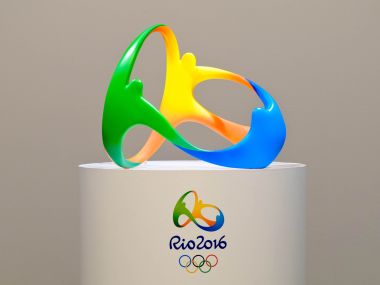
The Rio 2016 logo features three characters in the Brazilian colors in a triple embrace resembling Sugarloaf mountain.

-Katie Ledecky/USA – Swimming: You all thought Michael Phelps would be the top swimmer of focus in my blog, right? Wrong. He will be looked into in a focus on another swimmer later in my blog but now the swimmer of top focus here is the US’s next big swimming sensation: Katie Ledecky. As a 15 year-old, she competed in London as the youngest member of the US Olympic team. She won gold in the 800m freestyle and broke the American record along the way. Since then, she has become a distance freestyle ace with world records in the 400, 800 and 1500m freestyles along with World Championship golds in those events as well as the 200 free. She is poised to win gold in the 200, 400 and 800 freestyles in Rio: a feat only achieved once before by American swimmer Debbie Meyer in 1968. Katie can even add a bonus gold with the 4*200m free relay. Her chances are good as her best time in the 800 this year is 12 seconds faster than the second-best and her top 2016 time in the 400 is 1.5 seconds faster than that of American teammate Leah Smith. However the 200 will be her toughest event to win as Sweden’s Sarah Sjostrom’s 2016 best is less than .1 faster than Katie and just .12 behind her is Italy’s Federica Pellegrini: 2008 Olympic champion who finished fifth in London. Nevertheless it will be a brave attempt from the 19 year-old.

-Simone Biles/USA – Gymnastics: Women’s gymnastics has become a complicated sport ever since it was revolutionized by ‘pixies’ like Olga Korbut and Nadia Comaneci. It seems a gymnast’s career at the top is very short. It’s very hard to develop consistency especially with time encroaching. However one gymnast who can beg to differ is 19 year-old Simone Biles. She has shown a consistency in World gymnastics not demonstrated since Ludmilla Tourischeva back in the 70’s. In the past three World Championships starting in 2013, Biles has won fourteen medals including ten gold. She has also won the last three World all-around titles. Biles appears invincible but she does face rivalry from her own teammates Gabby Douglas (defending champ from London) and Laurie Hernandez as well as Russia’s Angelina Melnikova. Rio could just be the arena to crown her greatness in the sport.

-Ashton Eaton/USA – Athletics: There have only been two decathletes who have won back-to-back Olympic gold medals: The US’s Bob Mathias and the UK’s Daley Thompson. Ashton Eaton looks poised to become the third. He first burst onto the scene at the 2011 Worlds as a 23 year-old when he finished second behind his American teammate Trey Hardee. Hey, the US is known for their decathletes as they have won a total of 28 medals including thirteen gold. The following year, Eaton beat Hardee at the US Olympic Trials with a world record points total. Eaton went on to win gold in London as well as the last two World Championships. Eaton appears invincible having the year’s best result at the US trials but he does have rivals in Germany’s Arthur Abele and Canada’s Damian Warner who finished behind Eaton in second at the Worlds. Rio could just be the arena for a great to deliver.

-Usain Bolt/Jamaica – Athletics: What can I say? The ‘Lightning Bolt’ has proven himself to be the biggest thing in athletics since Carl Lewis. He has an unmatched streak at dominating sprinting in major events. It all started when he won the 100, the 200 and the 4*100 relay in Beijing in 2008 all in world record time. Since then every Olympics or Worlds he entered, he’d leave with golds in all those events each time with the exception of the 100 in 2011 where he received a false-start disqualification. Already people are ruling Bolt to achieve the triple-triple here in Rio. However it’s not 100% guaranteed. Bolt had to pull out of the Jamaican Olympic trials because of a pulled hamstring injury. He has since recovered well and even won a major 200 in London a few weeks ago. However the 100m has three runners that have a faster year’s best than Usain. Topping the list is 2004 Olympic champion Justin Gatlin. The 200m features four runners who ran a faster time this year than Usain’s 2016 best. Topping that list is American LaShawn Merritt: 2008 Olympic 400m champion. Win or lose, chasing Olympic history will make for an exciting show from a legend.

-Mo Farah/Great Britain – Athletics: Seven male distance runners have won both the 5000m and 10000m runs in the same Olympics. However one–Finland’s Lasse Viren– has done it twice back in 1972 and 1976. Mo Farah, A Somali who moved to the UK when he was eight, appears poised to duplicate Viren’s feat. Farah’s last loss of a major 5000 or a 10000 came at the 2011 World Championships. Since then he has taken gold at the 2012 Olympics and both the 2013 and 2015 World Championships in both events. There will be rivals trying to block his path like Ethiopian Muktar Edris, American Galen Rupp, his Portland training partner, and Kenyans like Caleb Ndiku, Paul Tanui and Geoffrey Kanworor. Whatever the situation, Farah’s pursuit will be one to watch.

-Cate and Bronte Campbell/Australia – Swimming: Admit it. You get intrigued when you see a pair of sibling athletes either competing together or against each other. Enter the Campbell sisters from Australia who are at the top of the world in sprint freestyle. 24 year-old Cate is the one with Olympic medals–two bronze in 2008 and a relay gold in 2012–along with 100 free gold at the 2013 Worlds. 22 year-old Bronte won the 2015 World Championship in the 50 and 100 free with Cate winning silver in the 50 and bronze in the 100. However Cate that this year’s fastest times in the world in the 50 and 100. Bronte has the second-fastest in the 100 and fifth-fastest in the 50. Ah, don’t you wish sibling rivalry was this civil? However the Malawi-born Campbell sisters are not alone at the top. They will face challenges from Sweden’s Sarah Sjostrom who also made the 2015 Worlds podiums in both events and 2012 Olympic champion from both events Ranomi Kromowidjojo of the Netherlands. The Rio stage should provide for some fun drama. And after all that rivalry, the two could just team up for a gold in the 4*100 free relay!

-Laszlo Cseh/Hungary – Swimming: All eyes will be on Michael Phelps. He may have won it all with 22 medals over three Games including 18 gold but he’s making a comeback after a troubling time since London which included his second DUI arrest. Who’s also worth looking at is 30 year-old Hungarian Laszlo Cseh. When Phelps won six golds and two bronze in Athens, Cseh won 400 individual medley bronze. While Phelps won eight golds in Beijing, Cseh won three silvers. While Phelps won four golds and two silvers in London, Cseh won 200 IM bronze. In all cases, Phelps was the Olympic champion. Here in Rio, we have a different scenario. We have Phelps trying to get back his old form while Cseh appears to be in the best form of his life. Cseh has the world fastest times this year in both the 100 and 200 butterflies. Cseh is a heavy favorite for the 200 but he does face rivalry from Phelps, American Tom Shields and Poland’s Konrad Czerniak in the 100. Cseh has never been called ‘Phelps’ Shadow’ in his career but Rio could become the first Olympic arena to finally beat Phelps and win Olympic gold.

-Majlinda Kelmendi/Kosovo – Judo: 75 nations competing in Rio have never won an Olympic medal. Two nations–Kosovo and South Sudan– will be making their Olympic debut. Kosovo’s team will consist of eight athletes in five sports. Leading the team is 25 year-old judoka Majlinda Kelmendi. Back in 2012, Kosovo was not officially recognized by the IOC and Kelmendi opted to compete for Albania. Since then Kelmendi has won gold at the World Championships in the lightweight category in 2013 and 2014. She missed out on the 2015 season because of an injury but is poised for a comeback in time for Rio. She has already won this years’ European championship. She faces rivalry from Japan’s Misato Nakamura and Brazil’s Erica Miranda. Whatever the outcome, be sure she’ll do her country proud. She will also be the flagbearer during the opening ceremonies.

FROM THE HOST NATION:

Rio 2016
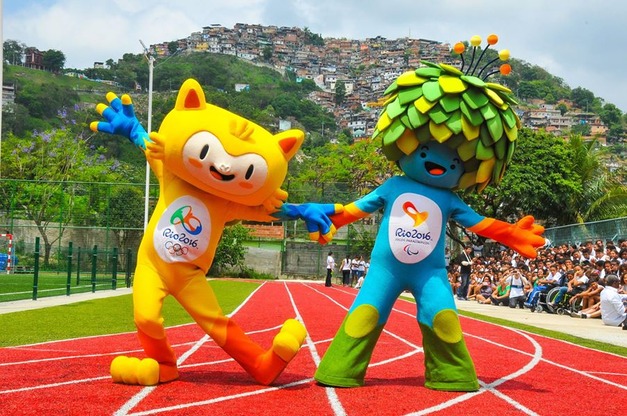
Vinicius, seen left with Rio Paralympic mascot Tom, is the 2016 Olympic mascot. Vinicius is a mix of Brazil’s mammals. Both mascots are to represent Brazil’s diverse people and culture.

Of course there is to be some focus on athletes of the host nation. I make it a priority as it makes some of my favorite Olympic moments with athletes winning gold or a medal in front of their home crowd. And in Rio, Sports Illustrated predicts Brazil to win 20 medals including six gold. The most medals Brazil has won in a single Olympics is 17 back in London. The most golds, five in Athens in 2004.

Focus on the two teams later. Here are the duo and individual of focus:

Isaquias Queiroz and Erlon Silva – Canoeing: Brazil has won Olympic medals in thirteen sports but canoeing isn’t one of them. In recent years, Brazil has fielded a canoeing duo who have emerged at the top of the world in the 1000m event. Isaquias won the Worlds in 2013 and 2014 in the individual 500m. Erlon was part of the bronze medal-winning 200m pair in 2014. However both were competing in events that won’t be contested in Rio. Leading to last year’s Worlds, the two were paired together and trained for the 1000m pairs event. They entered that event at the Worlds and won. They will face challenges from the duos of Hungary and Poland. They could just make Brazilian Olympic history here in Rio.

Fabiana Murer – Athletics: Brazil is not expected to win any medals in athletics, according to Sports Illustrated. Overlooked must be pole vaulter Fabiana Murer. She’s a 2011 world champion and she finished second at last year’s World but is known for Olympic choking. In 2008, she finished 10th. In 2012 she failed to qualify for the finals. 2016 looks to be a good year for Murer as she set a new South American record back in July. However she faces challenges from London Olympic champion Jennifer Suhr of the US, last year’s World champ Yarisley Silva of Cuba, last year’s World bronze medalist Nikoleta Kyriakopolou of Greece and American Sandi Morris who’s the only vaulter to have a higher 2016’s best than Murer as of now. Whatever the situation, the home country has her back.

TEAMS:

Refugee Olympic Athletes Team: In the past, you had to have some citizenship ties in order to compete at the Olympic Games. Refugees in the past have been overlooked as they were believed to have bigger problems than sports to deal with. Some would have to wait many years to represent the nation they’ve been adopted into. At the last Olympics in London, some refugees participated as Individual Olympic Athletes. IOC president Thomas Bach has taken note of the current worldwide refugee crisis by trying to break barrier for refugee athletes who want to compete at the Olympics. In March of this year, Bach announced his intention to create a team of refugees to compete in Rio taking into account the athletes’ sporting ability, personal circumstances and United Nations-verified refugee status. A $2 million fund created by the IOC was used to help train the athletes for Rio. At these Olympics, there will be ten athletes competing as Refugee Olympic Athletes. Five are runners from South Sudan who reside in Kenya. One is an Ethiopian marathoner who sought refuge in Luxembourg. Two are Congolese judokas living in Brazil and two are Syrian swimmers who have sought refuge in Belgium and Germany. They may not have much of a medal chance but they will already achieve victory by just competing at the Olympics.

United States Women’s Football Team: If there’s one team that one can call the class of the field, it’s the American women’s football (soccer) team. The US Women have won three of seven Women’s World Cups and four of the five Olympic gold medals. Those who saw last year’s Women’s World Cup know about how well the American women continue to play brilliantly. Here in Rio, fourteen women from last year’s WWC squad are part of the Olympic squad including stars Megan Rapinoe, Carli Lloyd and Hope Solo. There are also four newcomers including Mallory Pugh and Crystal Dunn. Since their WWC win, the team has won all but three of their matches since, losing only once to China 1-0 in a friendly back in December. WWC finalists Japan may not have qualified but it’s not to say the US won’t face some tough rivalry from China, France and even hosts Brazil. Nevertheless if they’re as brilliant together in Rio as they were in Canada last year, magic can happen again.

TRIVIA: Being WWC-holder is actually bad luck for the Olympics. In the previous five Olympics, no team that was the WWC-holder at the time has won Olympic gold. They’d make the Olympic podium, yes, but never the top step. Can the US break this bad-luck spell?

FROM THE HOST NATION:

Brazil’s Olympic Volleyball Teams: Football may be Brazil’s #1 sport. It’s safe to say volleyball is Brazil’s #2 sport. Ever since the men’s team won Brazil’s first ever court volleyball medal, Brazil has been on a roll winning a total of nine Olympic medals including four gold. They’ve also won 11 of the 30 Olympic medals awarded in Beach Volleyball including two gold medal-winning duos. Brazil is expected to dominate here. In beach volleyball, Brazil’s pairs won five of the six medals with only the men’s silver conceded to a Dutch pair. Brazil is not as dominant in court volleyball at the Worlds but the teams have what it takes to deliver as the women have won Olympic gold back in 2008 and 2012. Here in Rio, the women will face tough competition from the US and China who finished ahead of them at the 2014 Worlds. The men appear heavy favorites to win but they will face challenges from 2012 Olympic champs Russia and 2014 Worlds champs Poland. It could be possible the home crowd’s cheering could propel them both to win gold.

Brazil’s Olympic Football Teams: You’d figure Brazil, a country that has won a total of five World Cups, would have at least one Olympic gold in football, right? Wrong! It’s all because of eligibility rules in football over the years. Before 1984, footballers couldn’t even make a penny off their sport if they wanted to compete. That would allow the Eastern Bloc countries to field their best for the Olympics and propel them to the podium while World Cup-winning countries like Brazil, Argentina, Germany and Italy could only field ‘diluted’ teams to the Olympics which would finish in a shabby ranking or not make the Olympics at all. Brazil was able to qualify for six Olympics in that period but failed to win a medal.

In 1984, the Olympic door was open to professionals despite some restrictions or two. In 1992, professionals as long as they were 23 or under could compete. Since 1996, each squad had to have all but a maximum of three footballers under 23 with the other three being anyone they wanted. The opening of the floodgates to pros has boosted Brazil’s men’s team as they’ve qualified for six of the eight previous Olympic competitions and have stood on the podium five times. What they want here in Rio is to stand on the top step for the first time. In London, Brazil fielded a kit featuring a 20 year-old Neymar Jr. and won silver with Mexico taking the gold. Here in Rio, Neymar is back and the other 17 members of the Olympic squad are part of pro teams from Brazil, Spain, France and Italy. The Olympic squad may have finished third at the 2015 Pan Ams but the team has been consistent in friendly play over the last two years losing only to Nigeria back in March. Most of all, the team wants to return the football spirit to the country that left the nation broken-hearted at the 2014 World Cup and achieving shabby results at the last two Copa Americas. Whatever the situation, Brazil may just lift the spirits of their country.

Oh, did you think I’d forget the women’s football team? I didn’t. Women’s football isn’t as restrictive as the men’s competition. Every woman that competed at last year’s WWC is eligible to compete in the Olympics. As for Brazil’s women’s team, they have two Olympic silvers from 2004 and 2008. However they have had difficulties in the last major tournaments with losing in the quarterfinals at the 2012 Olympics and losing to Australia in the Round of 16 at the 2015 WWC. The team has since had their ups and downs with losses to the US, France, Canada and New Zealand they’ve trained hard under coach Vadao and have had mostly wins. Stars Marta, Formiga and Cristiane will be there. Hopefully the Brazilian women will be as victorious as their men and these Olympics here could be the arena for it.

And there you have it. Some of the athletes who to look out for at the Rio Games. Remember the gold medal does not go to the hardest worker, the most deserving, the most talented, the one with the most pre-Olympic accolades or even the best athlete. The gold goes to the one that’s the most there. And Rio will be the arena to decide the Olympic champions. These seventeen days will allow the athletes to “live their passion.” My review of Canadians to watch was printed the following day. Just click here.

Documentary Review: Red Army

The most famous winter Olympic legacy of Soviet athletes probably came from its hockey players with Vladislav Tretiak (bottom, third from right) considered the best goalie in history.
Red Army spotlights the Soviet hockey dynasty both on the ice and off the ice and reveals things we never knew.

If you like hockey, you may be interested in watching Red Army. It takes you back to a dynasty in sports history hockey fans will remember well.

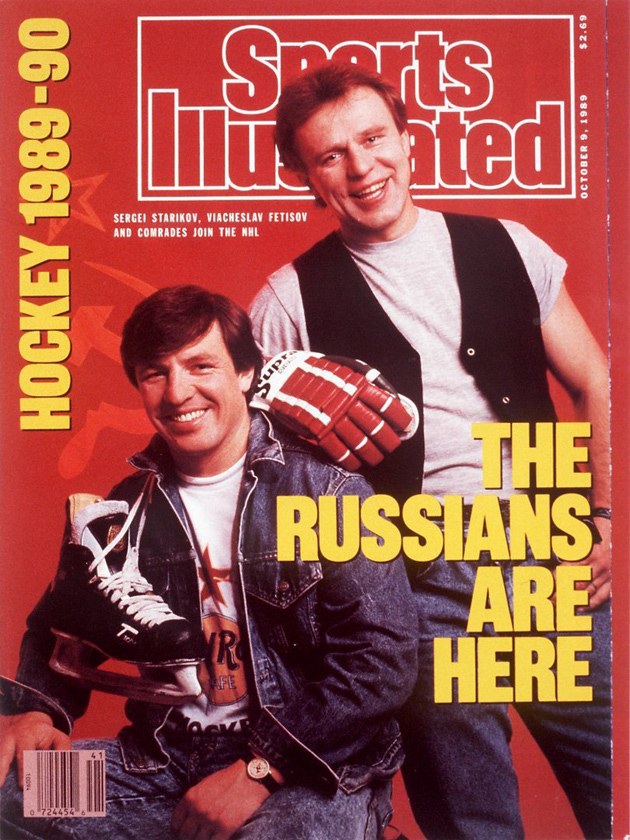
The film focuses on the glory days of Soviet hockey. It doesn’t focus so much on its first exposure of Soviet hockey prowess back during its early days starting with the 1956 Winter Olympics and continuing in the 1960’s. Its prime focus however was during the 70’s and 80’s when Soviet hockey was at its best and most dominating. This was the era of Vladislav Tretiak who is widely considered to be the best goalie in the history of ice hockey. This was also the era of Vyacheslav ‘Slava’ Fetisov and the magic five that included him, Igor Larionov, Alex Kazatanov, Sergei Makarov and Vladimir Krutov. As Canadians, we saw them as invincible machines who we all thought we’d lose to big time or have to put in a hell of a fight to win, as we did at the 1972 Summit Series and the 1984 Canada Cup.

The film also focuses on the team being instrumental during the Cold War. As many may remember, there was the ‘free world’ led by the United States and the Communist world led by the U. S. S. R. or Soviet Union as we commonly called it. Both countries were bitter enemies and both sought to defeat the other. The people were left paralyzed with fear feeling a war between the two might strike any day especially as each country increased its nuclear warheads. As far as sport went, it was in that arena where the Cold War was a common scene of rivalry. The Soviet Union as well as the other Soviet-allied nations of the Eastern Bloc wanted to use sport as a showcase of Communism’s superiority. The USA/USSR rivalry was always the biggest rivalry at any Olympics. The US had their winning sprinters, decathletes, boxers, wrestlers, swimmers and figure skaters. The Soviets had their gymnasts, throwers, weightlifters, cross country skiers, pairs figure skaters and especially its hockey team. The USSR saw their athletes as soldiers in the sports arena.

However the film does more than remind us of the times and the USSR’s dominance. It also showed life in the USSR. Life under the rationing system may have been fine before World War II but it was hard after the war especially with the country being devastated at a massive level. It didn’t rebuild well but rationing among its citizen’s still existed. It made for a hard life for most as people lived in crowded houses which might not have included running water. Even Slava Fetisov remembers receiving fish on Thursday. It also showed how the athletes were the privileged ones in the Soviet system while regular citizens had to stand in line-ups for their daily rations. It even showed the weakening of this system to the citizens in the 1980’s which paved the way to the reforms known as Glasnost and Perestroika and the eventual collapse of the USSR in 1991.

Of all the hockey players, the film focuses mostly on Slava Fetisov. Fetisov was discovered by sporting scouts of the government who were hired to search out talent at a young age to train up to Olympic level. That was sport in the Soviet Union: children were scouted out, analyzed physically for future athletic potential, and taken to central training facilities to train eleven months a year up to Olympic level. As cruel and inhumane it was for the USSR to do that, it worked and the USSR often had the biggest Olympic medal haul during that time. However the USSR cherished winning in ice hockey the most. In fact there was one propaganda song sung by boys about hockey where they sang lyrics like: “Real men play hockey. Substandard men don’t play hockey.” It was in the hockey stage where they could best show the world Communism’s prowess. It succeeded with winning a massive number of World Championships and eight Olympic golds out of the team’s ten Olympic appearances.

The documentary shows another side of the Soviet hockey team. We all saw the Soviets to play hockey like machines. What we would learn in that documentary is that the Soviets were not only prepared to have the brawn for the game but they were also prepared to have the smarts for the game as they were taught strategies by chess players. They were even taught ballet by some of the top ballet instructors. It wasn’t just tough training they went through but smart training too. What came of it was a play that was not only powerful and effective for winning but a play of style and finesse. Hard to believe none of us Canadians noticed that. Maybe if we weren’t so charmed by all this hockey fighting in the NHL, we would’ve noticed.

The documentary showed another aspect of the Soviet players that we missed all along. Sure, we saw the team as machines but the team was like a family. Slava Fetisov, Tretiak, Larionov, Makarov, Krutov, Kazatonov, they all saw each other as brothers. Of course when your taken from your own home and trained at a location thousands of miles away eleven months of the year, it should be natural to do so. It not only helped in making them better players but it helped with the players knowing their playing style inside out and make them a winning combination on the ice. A reminder that team chemistry was as essential to the success to the Soviet team as it is in practically any team sport. That was one of the qualities coach Anatoliy Tarasov— USSR hockey coach from the 1964 to 1972 Olympics– invested into the Soviet hockey team.

However the film also shows some darker sides of the Soviet team. It begins however on a positive note with Fetisov’s first experiences being coached by Tarasov in the 70’s. Tarasov wasn’t just simply a strict coach but he also played the role as a father figure to the team. Tarasov also helped develop key qualities in the team–speed, grace, teamwork, and patriotism– that became the blueprint of Soviet hockey and helped create their dynasty. However after Tarasov was fired, Viktor Tikhonov was brought in as coach. The Miracle On Ice game of 1980 really hit the Soviets hard not only as a loss of a gold medal but also what appears to be a turning point for Tikhonov. Tikhonov became a lot more ruthless to the players and trained them harder. You can understand why the Soviet players have a disgusted look on their face whenever you mention the Miracle On Ice game and don’t want to talk about it. It was not only a defeat for them but that also marked the time when Tikhonov became more ruthless. He dominated control over the players’ lives. He even cut players from the Soviet team if he sensed they might defect. One example of Tikhonov’s control was when one player’s father was dying. Tikhonov wouldn’t allow him to see his dying father. Things even got so frustrating for Slava at one point, he ran away from the national team to spend time with Tarasov. Here in the documentary none of the players have a positive thing to say about Tikhonov.

The documentary showed that even though the Soviet team was highly acclaimed by the government for their prowess, they were also under heavy scrutiny by the government. Tikhonov wasn’t the only one nervous about possible defections because of the temptation of the NHL. We should remember it was commonly expected that athletes from communist countries were expected to be proud to compete for national glory and reject temptations of money. The team as well as other elite Soviet athletes were allowed to hold Soviet passports: something most Soviet citizens were denied. They were however only allowed to hold them for when they were to attend a competition. Once they arrived back in the USSR, they had to hand them back. Members of the KGB traveled with them in case one member planned to defect. There was a fear that one defection could set off a wave.  It reminds us for all their glory and special treatment from the government, they were puppets under a system with a huge eagle eye over them. In fact Tretiak may have been the greatest goalie ever but he was never once allowed to play for the NHL in his whole career.

The sudden arrival of Soviet players into the NHL was greeted with excitement but adjusting to NHL play didn't come without difficulties.
The sudden arrival of Soviet players into the NHL was greeted with excitement but players like Fetisov (right) found adjusting to NHL play came with difficulties.

The documentary also shows when the bubble eventually did burst and Soviets eventually did find their way into the NHL. It all started when a junior player by the name of Alexander Mogilny decided to defect in May of 1989. Eight players including Fetisov soon followed. The arrival of such players was met with excitement for some NHL fans while others were more forbidding like Don Cherry who didn’t want any at all. However things weren’t easy. Even though Glasnost and Perestroika were starting to happen, Soviet athletes were still under scrutiny. Fetisov’s professional career in the NHL was monitored. As for play, Fetisov did not adjust too well to new life in the NHL. He learned right in his first game how the NHL was a different kind of play, especially when it came to fighting. His wife Ladlena had some challenges fitting in with the other wives of her husband’s NHL teammates. The struggle was common for a lot of Soviet players trying to adjust to NHL play. Nevertheless things eventually did pay off for Fetisov as he was with the Red Wings in 1997 the same time as Larionov and three other younger Russians. The team was able to get a chemistry of their own and they won the Stanley Cup. The team was able to bring the Stanley Cup to Moscow’s Red Square that year but not without challenges such as clearing things up after a post-victory limousine incident and negotiating with the Russian government.

The documentary ends with what has happened since. Fetisov has become a member of the Russian political party, a Minister of Sport in Russia and even part of Russia’s bidding team in 2007 for the Sochi Olympics in 2014. Tretiak is simultaneously the current President of the Russian Ice Hockey Federation and runs his own goalie school in Toronto which is considered physically punishing by most and very restrictive to whom is admitted. Tikhonov was given countless honors like the Orders of Honor and Merit in Russia and was even a nominee for the Olympic Order. The lives of all the hockey players living and deceased are also focused on at the end.

However the most notable end is the focus on the end of Soviet hockey. As you know the USSR collapsed in 1991. Surprisingly Tikhonov mellowed down in his coaching style afterward but it was still successful enough to bring the team of former Soviets under the name The Unified Team their last gold medal in 1992. The Soviet dynasty ended with as much of a bangs as it began with at the 1956 Olympics. Team Russia has been a different story. Russia continues to churn out top talents and top players. However Russia has never won Olympic gold. Silver in 1998 and bronze in 2002 but that’s it. They didn’t even have it together during Sochi when they lost their quarterfinal to Finland. Leaves you wondering when you remember that talk of the Soviet’s team chemistry if that’s what’s missing with the Russian team. The film ends showing Alexander Ovechkin, the current Russian phenomenon, playing a shootout game for a Washington TV station. A bit of trivia: Ovie was just two weeks short of his sixth birthday when the USSR collapsed. As he plays his game for the TV crew, we hear Slava saying something’s missing in Russian hockey. You’re left feeling that same way too.

One of the funny things of the documentary is that it will remind a lot of Canadians of the inferiority complex Canadians had to endure with in the 1980’s and maybe even the late 1970’s. Already Canadians were going through an inferiority complex of being made to feel second-fiddle to the Americans ever since the inclusion of cable TV bringing American entertainment into our living rooms. Adding to the feelings of inferiority to Canadians was seeing the Soviets excel in hockey. It was often a case of Olympic rules as the best Canadian players were professionals who were ineligible to compete in the Olympics. The best Soviet players however fit within the Olympic rules and were thus eligible to compete at the Olympics Games while the Canadian team at every Olympics during that era always fielded a diluted version of our very best. The Soviets almost always came on top while the Canadian team always fell short. Even when Canada got out its best pros for the Canada Cup, Canada would still face tough challenges from the Soviets as they were total machines and would almost always dominate over the Canadians. You can understand why Canadians cherish the memory of the victory at the 1972 Summit. You can also understand why the Americans hold the 1980 Miracle On Ice close to their hearts. Being second to the Soviets in what is ‘our game’ bit hard and left us down for a long time.

The film also brought back a lot of memories not just of the Soviet team but also how many of us remember the changes of Glasnost and Perestroika that were happening of the late-80’s and early 90’s. It even reminded us of the sports personalities at the time such as Brian Williams, Ron MacLean, Don Cherry, Don Wittman and Al Michaels. It also reminds us of many memorable moments in hockey. In fact it brought back the memories when I remember first hearing of Mogilny’s defection. Who would have thought that would be the beginning of the end?

Another unique thing is that it does something that was never done with the North American television stations before. It humanized the Soviet team. It reminded us behind the strong stoic Soviet team, they were human beings that went through a lot of difficulties. They had human heartbreak of their own. One example when Slava was in a car crash in 1985 that killed his 18 year-old brother. He went through a period of his live when e just didn’t want to live. Even Slava’s talk about his frustration with Tikhonov to the point he runs away to Tarasov showed that even these tough, stoic players had a breaking point of their own. To think all us North Americans saw in the Soviets were machines.

If there was one glitch in this documentary, it’s that Gabe Polsky sometimes does a bit of playing around with the interviews. In fact I remember seeing at the beginning him trying to ask Slava some questions while he’s on a phone call. It’s no wonder Slava flipped him the tweeter after the second question. We see Polsky do a few other stunts too. It’s a question if it was really worth it.

Another glitch is that the film was first released in the middle of 2014 and there was some information either missing or failed to update since. One missing piece of information is Tikhonov’s death in November of 2014. Another piece is of the Sochi Olympics where Fetisov was one of the Olympic flagbearers during the opening ceremony and Tretiak was the final torchbearer along with pairs figure skater Irina Rodnina whom herself is also a three-time Olympic champion and considered the best ever in an event known for Soviet dominance.

Red Army is an intriguing documentary that hockey fans will find worth watching. It takes you back to a stellar dynasty and a unique time. It will also show you a side of them you may have missed during their heyday.

Movie Review: Unbroken

Unbroken is the story of American Olympian Louis Zamperini (played by Jack O'Connell) and his ordeal as a POW in Japan.
Unbroken is the story of American Olympian Louis Zamperini (played by Jack O’Connell) and his ordeal as a POW in Japan.

One of the surprise hit movies of the winter was Unbroken. many would think it’s another World War II drama but it’s more of a biographical story. A story worth telling.

The story begins in 1943 with Louis Zamperini missioned an air battle against Japan over the Pacific Ocean. The plane he’s in is hit but they’re able to land safely. Louis isn’t just your typical soldier. Louis grew up in Torrance, California an outsider. The only Italian in his small town, Louie was subject to a lot of bullying as a child and spent much of time stealing, drinking alcohol or smoking. He was frequently arrested and his parents were very concerned if he’d turn out okay. His older brother noticed something as he tried to run from bullies: speed. His brother encouraged him to try track and field. It paid off as Louis became the talk of the town as he was winning race after race and soon became known as the Torrance Tornado. At the age of 18, he qualified for the 1936 Olympics in the 5000m. The race was won by Finnish runners as expected but Louis finished eighth with an incredible 56-second last lap: something unheard of at the time.

Soon after, Louis and surviving members of the crew are on a rescue mission on a plane military officials believe is suitable to fly but has noticeable faults. Over the Pacific Ocean, the plane breaks down and crashes. Only Louis, Mac and Phil from the plane survive and find refuge on two inflatable rafts. Alone at sea, the two try to live the best they can until relief finds them or they hit land. That would mean drinking rain water and fishing for food and avoiding having sharks try to eat them. Attempts at getting a rescue plane failed. The first, that happened on the third day, didn’t notice them. The second, on the 27th day, is a Japanese plane that sees them as the enemy and shoots at them. They survive by hiding under their raft. Unfortunately Mac dies on the 33rd day.

On the 47th day, they bump into a Japanese boat, where they’re taken on as prisoners of war. The Japanese demand fact but neither Louis nor Phil know anything. This leads them being sent to POW camps on the mainland. Zamperini is sent to a camp in Tokyo full of Americans and Australians and run by a sadistic young general who calls himself ‘The Bird.’ The Bird has especially singled out Louis because he’s an Olympic athlete and takes pleasure in beating him. The Bird also gets Louis to broadcast messages on radio that he’s okay and treated well. When he’s given an offer to speak anti-American propaganda, Louis refuses and is punished by having all the other POWs punch him in the face.

The Bird would torture Louis for two years until he is to be transferred elsewhere. Louis’ relief is short-lived as the camp is damaged by the American bombing in Tokyo. They’re all taken to a new camp which is run by The Bird and are made to work in a coal barge. Upon hearing Louis sprained his ankle, The Bird gets him to life a big piece of wood. If he drops it, The Bird will kill him. Louis holds it up for hours until The Bird can’t take it anymore and beats him in frustration. Soon World War II ends and the movie moves to Louis returning and makes mention of his life after the War.

This is an impressive story about one man and his ability to withstand torture. This is also an impressive story of a man who was singled out among other POW’s in being tortured by the leader only to triumph in the end. It even succeeds in the action moments and has the audience wondering what will happen next.

However the way the movie has been carried out, it’s nothing new, different or fresh. The story plays out like a common Hollywood against-all-odds story. There’s nothing wrong with that as long as it plays itself out well to the crowd and keeps the story true. However this is not going to work come Oscar time when the standards of what makes a movie among the ‘elite of the year’ change and evolve over time. This could be Best Picture material twenty years ago but it won’t cut it now. Unbroken makes better movie material than film material. There’s nothing wrong with it. It’s just the movie is better set for something like summer movie fare.

However the movie does have a notable positive factor. I may have mentioned in my review of Selma of how violence is made to look cowardly. Here in Unbroken, we have The Bird who loves to inflict pain on ‘the enemy’ and has taken Louis as his favorite person to assault. The Bird was looking for a chance to kill Louis with having him hold that block of wood up or else he’d kill him. When Louis succeeded it lifting it up again, it was there the Bird’s pride was damaged and he beats Louis with a bamboo pole in frustration. I can’t think of better revenge. Funny how it would assault The Bird’s pride forever as he would decline all the times Louis offered to make peace.

This also leads to another glitch in the movie. Louis is not only known for what he withstood during the war but also for making peace with the Japanese people and even the army over time. At the end, it’s only focused briefly through end-notes and video footage of Louis running with the torch in Japan during the 1998 Nagano Winter Olympics torch relay and not much else. I felt that should have be added in or given script because it is a significant part of Louis Zamperini’s life.

Angelina Jolie did an impressive job in directing. She didn’t really direct anything remarkable but she did an excellent job of directing a story that’s also a war thriller. Joel and Ethan Coen delivered a script with the help of William Nicholson and Richard La Gravenese that’s a surprise from the Coens. Usually you’d expect darker artsy work from them. This time they delivered on a thriller war story. Not what you’d expect from them but quite impressive. The acting was good if not spectacular. Jack O’Donnell was very good as Zamperini but the role could have been more developed. Miyavi was also very good as The Bird but I felt the role was missing something there too as it still seemed like your typical bad guy.

If there’s one place where the film is at its best, it’s in the technical categories. Alexandre Desplat again delivers another winning score. It should be no surprise Desplat is composer of the year. Roger Deakins again delivers another excellent cinematography job, the set areas were very realistic to the World War II era with its set time and with its war-like grittiness and the action sequences were also excellent.

Unbroken is a very good, very enjoyable movie about a remarkable story. However it would’ve been better released in the summer or the fall instead of Oscar time. Still very much worth watching.

Movie Review: Foxcatcher

John DuPont (Steve Carell) tries to be a wrestling mentor to Mark Schultz (Channing Tatum) in Foxcatcher.

Foxcatcher isn’t just simply an Olympic story with a tragically bizarre ending. It isn’t completely a crime story either. It’s about the people involved.

It’s 1987. Mark Schultz is an Olympic wrestling champion who’s about to do a talk at an elementary school substituting for his brother Dave who was expected to be the talker. The school gives him a small payment for his time. Dave is coach of the wrestling gym married with two small children and trainer of Mark. Although Dave tries to be a good mentor to Mark, you could tell something’s eating at him.

One day unsuspectingly, he’s greeted by John DuPont, heir to the E.I. DuPont family fortune. He offers to have Mark train at the Team Foxcatcher gym in Pennsylvania he created to promote wrestling. Mark agrees but John also wants Dave to coach. Dave turns it down because he has family commitments miles away. Despite that, Mark continues on with John coaching him even living in a DuPont guest house which John sometimes visits. The training pays off as Mark wins the World Championships later that year. John is even seen as a mentor to Mark and all the other wrestlers at Team Foxcatcher.

However something’s not right. John wants the wrestling trophies won by Team Foxcatcher to overtake one shelf of horseracing trophies his family have won over the years. Mark and John develop a friendship to the point John gets Mark to use cocaine. John even mentions his mother paid a boy to be his ‘friend’ when he was younger. His mother Jean who’s part of the DuPont legacy of horseracing is disapproving of his coaching wrestling feeling that it’s a ‘low’ sport. Then one day it happens. While Team Foxcatcher’s wrestlers take a day off to watch a Mixed Martial Arts event, John becomes furious especially when Mark insists Dave won’t join team Foxcatcher. John tells him he will get Dave by any means necessary.

Dave agrees to Team Foxcatcher where he even moves his wife and family over there. Mark however is going through self-esteem issues with the mental abusiveness of John and moves away to train for the 1988 Olympics. Just before the Olympic trials, John has his mother Jean escorted in her wheelchair to see what John has accomplished. She leaves in disgust after seeing John give his back to one of his students.

At the Olympic trials, you can tell something is bothering Mark. He loses his first match and in response cries, wrecks his room and goes on an eating binge. Dave is alarmed at discovering Mark in his condition in his hotel room and works to get him to lose weight in time for the weigh-in. As Mark competes on, he notices Dave prevent John from speaking to him. Mark wins the Olympic trials but both he and Dave notice John is absent. He returned home as his mother died. Mark lets Dave know he can’t stay with John and Team Foxcatcher after the Olympics and asks Dave to leave with him even though John created a promotional video of Team Foxcatcher with Dave asked to do a speech. Mark finishes sixth at the 1988 Olympics where he loses his last match 14-0. As he said, he leaves Team Foxcatcher for home while Dave agrees to remain training Team Foxcatcher in exchange for John giving Mark financial support.

It’s 1996. John watches the promotional video with the part of Mark’s speech about John. This would pave way to the depiction of the eventual murder. However the film ends showing what happened to Mark shortly after.

It’s funny how around Oscar time, it’s common to expect that most movies with big Oscar buzz would have some sort of political message or humanistic message. So it was quite natural for me to think that Foxcatcher might be a film with things to say about Olympic athletes or how they’re treated in the US. I don’t think it was but it did present a unique time in Olympic sport. Many older people remember that until the 80’s, you had to be a complete amateur in an Olympic sport. Even if you made a single penny off your sport, you were ineligible to compete at the Olympics. That all changed in the early 80’s when the IOC changed its constitution from allowing only ‘amateur’ athletes to allowing ‘eligible’ athletes to compete and it would be each sport’s respective federation decide who’s eligible. There were some sports like track and field, swimming and gymnastics that were the first to make the transition and the pay and sponsorship money was good albeit not the same level it is today. Wrestling was one of the sports to catch on later. In Mark’s time, wrestlers could not make a living off their sport unless you were also a coach like Dave. In fact I remember a quote from Olympic gymnast Bart Conner: “The big myth is that Olympic gold medalists can get rich off their gold medal. I know a lot of Olympic champions that are flipping burgers.” So it’s no wonder that Mark would find sponsorship from John DuPont and the state-of-the-art Team Foxcatcher wrestling gym a welcome relief.

I don’t even think it’s a statement about rich people in the United States. Sure, John was born into money as the DuPont family have a dynasty going all the way back to the 18th century. Sure, John appears to be spoiled living in the same gigantic mansion in the middle of nowhere as his parents. Sure, John has the money to make his dream of being a great wrestling coach come true. Sure, John had a sheltered childhood where he was the youngest of four and had a ‘paid friend’ during his childhood. And sure, John has a mother with a superficial attitude as made evident in her comment of wrestling being a ‘low sport.’ However I don’t feel it’s about the American rich.

What I do feel the movie is to do about are the people. Yes, it’s a crime story but it’s also about the people. John appears to be a person who may have been belittled all his life and dreamed of being a successful wrestling coach or manager. He has written successful books on birds but wanted to become successful as a wrestling coach. This is especially hard for him since his family has a tradition of horse racing. Throughout the movie, we get a sense that he felt that something was missing in him. Even after hiring Dave as the coach, we see friction between the two as they’re both training and managing Mark. Sure, it’s common for two coaches on the same team to have disputes but the disputes make you wonder. In fact that scene where John is watching the video of himself promoting him and his gym just before the shooting may be sending the message he always felt underrespected. Maybe it was because he felt like the misfit of the family. Maybe it was because his family never knew or honored his achievements. We’ll never know. There’s no question he shows his mental illness, especially at the end, but it’s just a wonder if his inferiority complex is what caused him to shoot Dave.

The film is not just about John. It’s about Mark too. The 1984 Olympics was of him and Dave winning gold but the time since then was a struggle. Dave was able to marry, become a father and continue as an athlete by coaching at the same time. He was well to do. Mark was the one who struggled. He lived single in a shabby home, he worked a measly job, he received spare cash from school appearances, he was always living in the shadow of Dave. Even though Dave was never the type of brother that would try to make Mark feel inferior, You could tell it was bothering him in that training scene at the beginning where he gives Dave a bad hit. It was easy for him to see John’s offer as a breakthrough for him but a struggle as he was trying to create his own identity while Dave and John had coaching disputes over him. It seemed more like a threesome rather than him. Possibly even sensing Dave was becoming the apple of John’s eye rather than him. Even after his win of the World Championship, you could tell the whole thing would take a toll on him especially seeing how he had to purge himself at the Olympic trials and struggled to make the team. Eventually it did take its toll right at the Seoul Olympics with his sixth-place finish and the threesome ended there. You can easily understand why when Mark moved out, he wanted to move without turning back.

The highlight of the film was the performance of Steve Carell. In fact even his biggest fans would be surprised to see Steve looking different and acting completely different from the way they’ve always known Steve to act. He embodied John DuPont well in terms of physicality and his mental illness but he also made us feel John’s feelings of inferiority which definitely added to the film. The film also has Channing Tatum’s best acting ever. He also embodies the character of Mark well in terms of his desire to succeed and in terms of his insecurities. Although the film focuses more on the characters of Mark and John than on Dave, it’s Mark Ruffalo’s performance that gives added dimension to a person who is both a coach and a father and tries to do the right thing but ends up an unsuspecting victim in the end. Even supporting performances from Sienna Miller as Dave’s wife and Vanessa Redgrave as John’s mother were done great despite being less than what they should be.

The directing of Bennett Miller was also impressive as he focused on both the story and insight into the people involved in the story. The script by E. Max Frye and Dan Futterman was also good in taking us to the right events even though it did feel slow at times. Even there, I think they were trying to make a murder story that didn’t just simply tell of the events but also give us portrayals of the characters. It’s not to say they haven’t experienced friction about it. There was a story that Mark felt the film made it look like John had a homosexual attraction to him. I didn’t notice it. Besides I later learned John was married for the first and only time at 45 and the divorce occurred just before he met Mark.

Foxcatcher is more than a murder story. It’s also a portrayal of the people involved in both their desires and their insecurities. Often it did feel more like the film was about who than what.

Sochi 2014: Seven Canadians To Watch

Canada Olympic

You all remember Vancouver 2010. Canada won the most ever Winter Olympic golds in a single games with 14. Canada is not the host nation for the Winter Olympics anymore. That pressure now belongs to Russia. Nevertheless Team Canada will face pressures of its own over in Sochi both as individuals and as a team. One thing we should take into account is how some countries perform in the Olympics after they were host nation. Below is a chart of host countries and their various medal hauls. The #/# guide is golds/total medals:

Olympic Chart 1

As noted in that chart, some get better like Canada in 1992. Some still stay the same and some do noticeably worse like Japan in 2002 and Italy in 2010. Sports Illustrated predicts Canada to win a total of 31 medals including eleven gold. That’s an awful lot but not impossible.

In the meantime, here’s a look at some Canadians favored to do well in Sochi, if not win:

Patrick Chan – Figure Skating: Canada has a proud legacy in figure skating. So proud you could say figure skating is rightfully third behind hockey and curling as our national sport. Our legacy is there. Canada has also left every Winter Olympics since 1984 with at least one medal in Figure Skating. Canada is one of only five countries to win twenty or more Olympic medals in figure skating. We have Olympic champions in three of the four returning figure skating categories. The only one we don’t have is in the Men’s Singles event. Four bronze medalists, two double-silver medalists but never a gold medalist. This could finally be the year.

Patrick Chan has Canada’s best chances. He’s been national champion since 2008 at the tender age of 17, a world Championships medalist every year since 2009 and a World Champion three times starting in 2011. He has looked good this season, winning two of his three international competitions this year losing only the Grand Prix of Figure Skating.

He has looked good in practice here in Sochi and appears confident he will win. However he will have rivalries from Kazakhstan’s Denis Ten who finished behind him at last year’s Worlds and Russia’s Evgeni Plushenko who’s making a comeback. Also expected to challenge is Spain’s Javier Fernandez and Japan’s Yuzuru Hanyu: the latter two of which are coached by Canadian double-silver medalist Brian Orser. In fact it was Hanyu who gave Chan his only defeat this year at the Grand Prix back in December. So will he be the first Canadian men’s champion or the seventh medalist? It will all be decided on the 13th and 14th.

Erik Guay – Alpine Skiing: Remember the Crazy Canucks? Yeah, Canada had an impressive legacy in Alpine Skiing on both the World Cup circuit and the Olympic Games in decades past. Nancy Greene, Kathy Kreiner, Ken Read, Steve Podborski, Kerrin Lee-Gartner, we all remember them. Problem is it seems like it’s all in the past. The last Olympic medal was a 1994 bronze in Men’s Downhill by Ed Podivinsky.

Canada’s top bet to get back on the Olympic podium is Erik Guay. Guay is 2010 World Cup winner in the Super-G and 2011 World Champion in the Downhill. This year he has ranked in the Top 3 in the men’s downhill on the World Cup circuit. However he was sidelined temporarily in January due to a minor knee injury. But he’s confident he will be ready to perform on February 9th. Actually Erik is not the only Canadian alpine skier with good chances to win a medal. Healthy medal chances also come with Marie-Michele Gagnon who is currently ranked fourth in World Cup standings in the slalom and just won her first ever World Cup race–a super-combined event–just last month in Austria. Will a new generation of Crazy Canucks arrive in Sochi? The Rosa Khutor Alpine Resort will set the stage.

Alexandre Bilodeau – Freestyle Skiing: Alexandre isn’t just simply the first Canadian to win gold during Vancouver 2010. He’s the first ever to win gold on Canadian soil as the 1976 Summer Games in Montreal and the 1988 Winter Games in Calgary failed to produce a Canadian Olympic champion.

Since Vancouver he has made many public appearances and has graduated from college. His competitive drive has not deterred. He has won moguls silver at the past two World Championships and has already won three of the six moguls events on the World Cup circuit. He is a big favorite to win at what he says will be his last Olympics but his top challenge will come from fellow Canadian Mikael Kingsbury who is 2012 and 2013 World Cup winner in moguls, World moguls champion in 2013 and has won the other three World Cup events from this year. In fact Sports Illustrated predicts Kingsbury to win gold and Bilodeau to win silver. The stage for Canadian vs. Canadian will take place February 10th.

Charles Hamelin – Short-Track Speed Skating: There’s a lot of talk for the possibility of the first ever Canadian four-time Olympic champion. One possibility, actually three, is in women’s hockey which I will talk about later. Another possibility is in men’s short track speed skating with Charles Hamelin.

You could say that short track is in his blood. His younger brother Francois was part of Canada’s gold medal-winning relay and his father Yves is the current national director of the national short track team. Hamelin has had an illustrious career which includes two Olympic golds from Vancouver and a silver from Turin in 2006 as well as 26 World Championship medals, eight of them gold. In fact at last year’s World Championships, Hamelin was part of the gold medal-winning relay and won three individual bronzes.

Charles comes to Sochi as the reigning leader in the overall World Cup standings as well as leading the 1000m and 1500m. His path to more gold will not go unchallenged. His top threats come from Russia’s Viktor Ahn and South Korea’s Sin Da-Woon. Plus there’s the sport itself which is known for its slipperiness and frequent falls. It will all be decided at the Iceberg Skating Palace.

Alex Harvey – Nordic Skiing: Skiing sure runs in the family. It was natural that Alex Harvey take up cross-country skiing. His father Pierre was Canada’s best ever cross country skier when he was competing during the 80’s. In fact I myself remember back during the Calgary Olympics Pierre was giving Canada its best-ever finishes in the cross country events. Sure they were between 14th and 20th but they were still new achievements for Canadian skiers.

Alex, who was actually born in September of that year, has taken achievement to new levels. He now has Canada’s best ever men’s finish at an Olympic Games: fourth in team sprint with teammate Devon Kershaw. He and Kershaw would become World Champions in that event in 2011. Harvey won bronze in the sprint at last year’s Worlds. This season he has won two World Cup races. Sports Illustrated predicts him to win bronze in the sprint. However he’s pressed to win Canada’s first even men’s cross country medal by teammate Devon Kershaw who finished second to Harvey in a World Cup sprint event. He will also be challenged in winning the sprint event by World Champion Nikita Kryukov of Russia, World Cup sprint leader Josef Wenzl of Germany and Italy’s Federico Pellegrino who’s ranked second in the sprints. The Laura Biathlon and Ski Complex is the stage.

The Dufour-LaPointe sisters (Justine, Maxime and Chloe) – Freestyle Skiing: It’s not uncommon that you have siblings competing together at the same Olympics. Sometimes in the same event. But three? And all three of them in the same event? That’s the case of the Dufour-Lapointe sisters in moguls: Maxime who turns 25 on the 9th, 22 year-old Chloe and 19 year-old Justine.

The first excitement came when Chloe qualified for the Vancouver Games. Bigger excitement came  when Justine won bronze at last year’s World Championships. However the excitement has been happening this year on the World Cup circuit. All six World Cup meets this year has seen at least one of the three on the podium with Justine winning two events and Chloe winning one. Currently on the World Cup circuit Justine ranks second, Maxime third and Chloe fourth. It’s possible the sisters could even sweep in Sochi. However blocking their path is defending Olympic champion, 2013 World Champion and World Cup leader Hannah Kearney of the U.S. American Heidi Kloser of the U.S. who is ranked fifth in the World Cup also poses a challenge as well as Japan’s Miki Ito who finished second at last year’s Worlds. It will all be decided February 8th.

Canada’s Hockey Team (men and women): Every Winter Olympics you can’t avoid the talk of Canada’s chances in hockey. Especially in men’s hockey. Hey, our national pride is at stake and winning it makes our OlympicsEver since NHL players were allowed to compete for the first time back in 1998, it’s always the challenge to prove themselves first among at least six equals. But we’ve succeeded with wins in 2002 and back in Vancouver. However we’ve found ourselves off the podium in 1998 and ousted in the quarterfinals in 2006.

Team Canada’s 24 members are all NHL players and eleven were part of Canada’s gold medal-winning team from 2010. Sidney Crosby who scored the ‘golden goal’ back in Vancouver is the captain this time. Team Canada has failed to win a World Championship medal ever since Vancouver but is predicted by Sports Illustrated to win bronze. They face challenges from 2013 World Champions Sweden whom SI predict to win and from the home country of Russia. It will all be decided at the Bolshoi Ice Dome by the 23rd.

As for the women, Canada has very good chances to win gold again. If they do, three women–Haylee Wickenheiser, Caroline Ouellette and Jayna Hefford–could become the first Canadians to win four Olympic golds. However their top rival as always is the United States. In fact the U.S. beat Canada for the 2011 and 2013 World Championships. It’s just a question of which of the two will take it on the 20th. Or a question of if a European team will upset. It’s possible.

So there you go. Those are some Canadians to look for at the Sochi Games. I know they’re more than seven but I couldn’t resist adding more. Besides people who like my Olympic writing probably don’t mind anyways. Besides since I wrote about the athletes from around the world yesterday, I figure you were due some Canadians.

They should provide for a lot of great moments and more national heroes. Interesting how ever since the 90’s Canada has become a superpower in winter sports like Austria and Norway. Before them we either had a lousy winter and a good summer or a good winter but a lousy summer. There have been one or two years where we had both a lousy winter and summer but that’s in the past. Anyways let the Games begin!