Oscars 2024 Best Picture Reviews: Part Four

The thing about the Oscars is that each year, there are Best Picture nominees for films of subject matter that most people would normally not want to see. In some cases, films of unwatchable subject matter end up Best Picture nominees. A lot of these unwatchable things are based on people or events that actually happened, like these two films. For these next two films, I wouldn’t say they’re unwatchable but they do treat on dark subject matter. They’re far from the topics or themes that would draw crowds. Some scenes many would find too disturbing to watch. All I can say is you be your own judge:
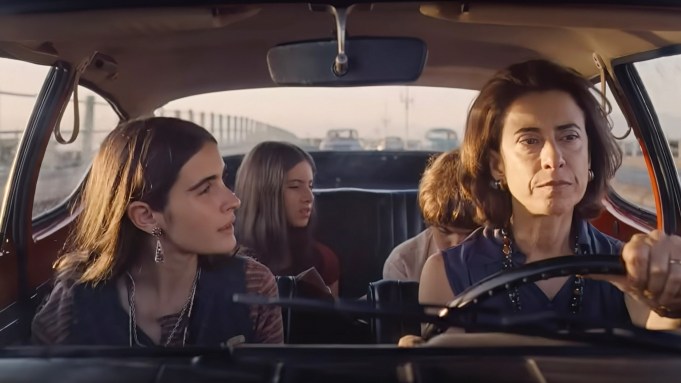
I’m Still Here (Ainda Estou Aqui )

When one thinks of a Brazilian film, one would think of a film that may have scenes of the carnival, the festivities or the beaches. I’m Still Here is a very different film as it presents a dark side of Brazil’s history that they’re still troubled by today. Even the angle from which the film tells its story is unique. We have heard of people kidnapped during political regimes but we rarely hear about how it affects families. It’s through Eunice Paiva that we see how sometimes being married to an enemy to a regime could lead one to being imprisoned. Through Paiva we also see her as she struggles to keep her family together, struggles hiding the truth from her youngest children, struggles with her relationship with her youngest daughter and struggle to get the answers she needs of what happened to her husband. Eunice’s story of being the wife of a kidnapped man really tells a lot. It also shows how it would shape her to be the social justice warrior she became.

The film begins with a beach trip with the Paiva family. Everyone has fun, they all pose together for a photo and Marcelo found a stray dog they can make their own. It’s after that when everything changes. Soon the interrogation of Rubens, Eunice and their daughter, Eunice’s days of imprisonment and the years of aftermath not knowing whether her husband will return alive or if she will be kidnapped again. Then the long wait hoping Reubens will return and the fear of spies outside her door hoping to get her and imprison her again. It’s after the dog Pimpao is run over by the spies’ car that she lashes out at them and she’s had enough. Soon, her desire to leave Rio and start a new life for her and her family in Sao Paulo. The film moves forward to 1996 where Eunice has become a social justice advocate in Brazil, which had returned to democracy in 1989. She shows the death certificate of her husband she achieved. Her family has changed. Especially son Marcelo who became a successful author, despite being confined to a wheelchair. The film ends in 2014, years before Eunice would die of symptoms of Alzheimers. She is connected to a news story about the abductions and the continued pursuit of justice before a family photo.

Looking at it, the film is as much about family unity as it is about injustice in Brazil. Eunice had the nice orderly happy family life before the political abductions happened but that all changed after the imprisonment of the three. Trying to hide the truth of what happened to her father and deal with her older daughters’ knowledge of what happened is not an easy task. Trying to get the answers to what happened to her husband during a political regime that refuses to do so and trying to raise a family is a hard task. That’s one thing we rarely think about. We hear of political abductions in the news but we hardly ever hear of how families cope and try to keep themselves together. It’s through Eunice we see a personal strength we often ignore. You can understand why the family photo at the end of the film was so important. She succeeded in keeping the family ties together as much as she succeeded in achieving justice. The effect on children is also noticed in the film as her daughters fear the worst and are frequently arguing with Eunice. They’re the children with the most truth of what happened. Also the scene in 1996 when Marcelo and Maria, the two youngest, ask each other when they knew their father died, even as Eunice tried to hide the truth.

This is an excellent work from director Walter Salles. He’s one of the most acclaimed Brazilian directors with films like Central Station, The Motorcycle Diaries, Paris je t’aime and the adaptation of On The Road. This film is an excellent accomplishment of telling a dark story and making it a personal story. Even having it end on a positive note is an achievement. With the script written by Murilo Hauser and Heitor Lorega adapted from the novel written by Eunice’s son Marcelo, he takes the story and makes it relatable even though most of us will never experience something this terrible. He makes us connect with Eunice Paiva’s story and tells it so most of us who don’t know Brazil’s history know of the amazing woman Eunice Paiva was.

Making the film work is actress Fernanda Torres. She succeeds in telling Eunice’s story and makes us feel for Eunice and hope for the best. She did a great job, as did her mother Fernanda Montenegro who plays the dying Eunice at the end. Selton Mello was also great as the husband who still tries to live his life daily knowing he could be a political target any minute and eventually becomes one. The cinematography by Adrian Teijido added to the telling of Eunice’s story.

I’m Still Here is both the retelling of a dark era of Brazil’s history and the personal strength that came out of a kidnapped politician’s wife. It’s a sad story, but positive and hopeful.

Nickel Boys

Let’s face it. A film about a reform school that is infamous for its racism, physical and sexual abuse, and even murder of minors will not make one want to watch it. In fact, Nickel Academy is the pseudonym for the now-closed Dozier School For Boys in Florida where graves of those killed were discovered and survivors are now receiving their justice. Those that have learned of the ugly news of Dozier of recent years will want to avoid seeing Nickel Boys, but it does give people reason to see it.

When it comes down to it, what happened at Dozier School should serve as something that should never happen again. What happened there needs to be told, but how? How can you make a place of abuse and murder watchable? RaMell Ross succeeds in doing it with the character of Elwood Curtis. The film flashes frequently in between Elwood’s time at the school to the adult Elwood who just learns of the truths unraveled in 2003 as he’s a successful businessman with a stable relationship. The film tells Elwood’s story as it starts before Martin Luther King’s civil rights movement and Florida still having Jim Crow laws. The film shows how as we fast forward 40 years later, Elwood is overcome with hurt and trauma as the secrets are unraveled with the finding of mass graves. In the flashback, we see Elwood bond with one of the boys named Turner he’s with and the two plan an escape while Elwood documents all that has happened in a diary. The escape fails for Elwood as he’s shot dead while Turner succeeds in escaping around the time of the Civil Rights Movement. In the flash forward, Turner adopted Elwood’s name to thank him for all he taught him.

Elwood and Turner are fictional characters, but they could be representative of any of the boys at Dozier School. It’s through Elwood’s and Turner’s friendship at Nickel that we’re shown of the corruption, abuse of various kinds and the murders that happened there. Through Nickel Academy, Dozier School was as much about racism as it was about abuse. White students got better facilities and a better education while the black students got bad facilities, a bad education, the most hazardous jobs, and even harmful punishments like the sweatbox. African American students got it harder and their death rate at the school was way bigger than that of white students. Even black students who didn’t do what the white superintendent says, like fix a boxing match, could be executed and the superintendent would never get arrested. You can understand why the story has Turner’s escape around the time of the Civil Rights Movement. It would be the beginning of the end for Nickel/Dozier.

This is a great work from RaMell Ross. The story he directs is based upon a 2019 novel of the same title that is the telling of that fictional friendship. The story he co-adapts with Joslyn Barnes is very good and very revealing. He succeeds in making a film about the abuse that is watchable and gets one to think. It’s a reminder of the ghosts of the past and how even if we do well in the present, it will come back to haunt us. Even as the guilty people are slowly brought to justice, we’re reminded it can’t erase the hurt and trauma. He does a good job in making it as much a story about two friends as it is about exposing the truth. Excellent work. Also great is the acting of Ethan Herisse and Brandon Wilson. Their performance as the friends caught in the drama did as much storytelling about the place as it did about them. Daveed Diggs is also very good as the adult Elwood who tries to hide his hurts of the past, but they eventually come out. Also great is the performance of Aunjanue Ellis-Taylor playing the grandmother who is hoping for the best for Elwood and tries with every chance and opportunity, only for every white ‘helper’ to fail her. Her mix of optimism and heartbreak adds to the story.

Nickel Boys succeeds in making what could be a film of unwatchable subject matter be watchable. The mix of a story of a friendship around a school with a notorious past exposes truths of the school while maintaining a sense of hope.

And that does it for now. That’s my review of the latest two Best Picture nominees of review. The last two will be coming very shortly.

2023 Oscars Best Picture Review: American Fiction

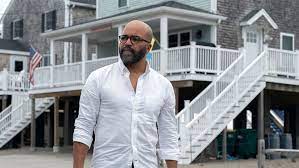
Jeffrey Wright portrays a serious African American writer who faces pressure from a white-dominated entertainment society in the comedy American Fiction.

DISCLAIMER: This is from a blog of four reviews I originally posted on March 2, 2024. The original blog has been removed.

Not that often are the Academy Awards friendly to comedy films. American Fiction is just the type of comedy that can do the trick.

Those of you on social media must be very familiar with the #OscarsSoWhite campaign. Despite there being seven acting nominees that are racial minorities this year, we need to have things more consistent over the years. Focusing back on the film, the Oscars and their lack of consistency in making their nominees diverse is just one of the problems with Hollywood and the entertainment system as a whole in dealing with racial minorities. Hollywood is gratefully responsible for this. Those who’ve seen classic films of the past will have seen a negative or mocking depiction of a racial minority. Awareness groups in the last decade have helped to make Hollywood think twice about how racial minorities are depicted in entertainment. Even though they won’t stop an insulting depiction from happening again, they will raise hell when it does and make people think twice.

In this film, it’s very obvious the theme of the film is about African-Americans depicted in all forms of arts and entertainment. It’s not only about how they’re depicted in entertainment. It’s also about an entertainment system where top sales and ratings are the bottom line. African Americans have various personalities and life goals and directions, but it’s always about the images that sell the most. And that’s the problem Thelonious “Monk” Ellison has to deal with. His novels are of excellent quality and good for how they give a good atypical depiction of African American life. Nevertheless there’s the problem of his works not selling. That frustrates him to the point he feels he has to sell out and do a “gangsta” novel. I’m sure many others feel the same pressure.

The film is a humorous look of an African-American author trying to get respect in the literary world which all-too-often seems to favor quantity over quality. It spoofs the whole system and how the white-dominated public treats works from African-Americans from his latest manuscript being rejected for not being “black enough” to his books being sold in the African-American section of a bookstore to his adding clout to his author’s guise as a criminal on the run from the law to a jury of a book festival consisting mostly of white limousine liberals lauding his upcoming novel. It also includes the irony of the one African-American member of the jury, rival author Sintara Golden, panning his novel as pandering. Meanwhile Monk himself finds her novel pandering.

Although the story is obviously about a significant topic, the story also has a lot of personal elements for Monk. This story is also about the author’s difficulty of trying to create and market his breakthrough novel right during a load of sudden complications in his life. He’s put on a sabbatical by his college because of his frequent confrontations with students. While reuniting with his family in Boston, his sister suddenly dies. His mother’s Alzheimer’s worsens and she needs to be placed in a care facility. The maid who he grew up with has to leave her job and eventually marries. His brother is going through a divorce and drug addiction after his wife caught him with another man. In addition, he is developing a relationship with an established lawyer named Coraline but the relationship ends as he disagrees with her about Sintara’s book. Try plugging a breakthrough novel with all this happening!

Top respect should go to director/writer Cord Jefferson. This film is actually based from a 2001 novel Erasure. Jefferson does a great job in satirizing the difficulty of trying to make it as a “black writer” from the difficulty of doing his work his way to the pressure of dropping his artistic integrity and selling out by writing a pandering “gangsta” work to the “liberal elite” (full of mostly white people) taking it as serious literature worthy of acclaim to the media machine building up the hype to Monk taking his pandering further to add to the hype. It’s both funny and smart at the same time. Mixed with its humor, it’s very much an eye opener about the pressures African-Americans go through to make it in arts and entertainment. It pokes fun at the expectations of what African-American literature is expected to be from the elite of the arts who are mostly not African-American and an entertainment industry where top sales have always been the bottom line. It also pokes fun at the “liberal elite” who are mostly of white people who want diversity but are clueless in how to do it right, despite being the ones pulling the strings. Despite the themes, it also includes the human elements like Monk’s connection with his family and love interest and how it helps him understand himself better as a writer and as a person. Even that element of Monk dealing with his ‘genius’ characteristic adds to the story.

Respect should also go to Jeffrey Wright in playing Monk Ellison. It’s not an easy thing to do a comedic performance with intelligence, even though the story does just that. Wright does a great job of a ‘genius’ writer who feels compelled to throw away his dignity as he’s on a sabbatical and just sell out with a pandering novel. At the same time, Wright adds dimension with his role as Monk tries to keep family ties together and tries to start a relationship with Coraline, only for his ‘genius’ characteristics to interfere. That’s quite an effort to do and to keep comedic for the sake of the film. There are some great supporting performances. First is from Sterling K. Brown as the brother dealing with the frustrating addiction and troubling changes in his life. There’s Lessie Uggams as the mother with Alzheimer’s robbing her of her quality of life but also able to say something to help Monk get a better focus of himself. There’s also Erika Alexander as the girlfriend who knows how to draw the line with Monk’s attitude and arrogance. With the musical score of Laura Karpman added in, you have a winning film.

American Fiction is just the intelligent comedy we need right now. It makes the difficulties of African Americans trying to make it in arts mixed with the attitudes of the mostly-white elites in the business look like the circus that it is. At the same time, it makes it as much about the author as a friend and a member of the family and his difficulty with his personality interfering with that. Already I declare this the Comedy Of The Year.

2022 Oscar Shorts Review: Animation and Live-Action

Did you think with this being an Oscar year I would miss my chance to see the films nominated in the short films categories? The chance was there and I took it again. All the films had a unique style about them and all appeared worthy of their nominations. So here I go. Here are my reviews for the nominated films in the Animation and Live-Action categories.

BEST ANIMATED SHORT FILM

The Boy, The Mole, The Fox And The Horse (dirs. Charles Mackesy and Matthew Freund) –

A boy is lost in the winter snows. A mole finds him. He hopes the mole will lead him home, a home he’s never had before, and wants to grow up to be kind. The two hope the river they find will lead them there, but they’re encountered by a fox. The fox wants to hunt them both down, but finds himself in a trap. The mole frees him and the fox runs away. The next day the mole falls into the river, but is saved by the fox. The fox joins the mole and the boy on the journey to the boy’s home. Along the journey, they encounter a white horse who is an outcast. The three welcome the horse along the journey. Soon they discover the horse has a special trait. He can fly like Pegasus! Soon they come to the village where the boy’s home is. The three animals say their good-byes, but the boy makes a surprising decision.

It seems like every year, there has to be at least one animated short from the UK that’s nominated. This is this year’s nomination. This is an adaptation o f a 2019 children’s book from Charlie Mackesy, who co-directs this short film. This is a 2D short that has been on Apple TV starting this Christmas. It has a quiet soft tone that’s more touching than sentimental. It makes the right moves and is able to be soft without getting too mushy or manipulative. This is one charmer that I give both my Should Win and Will Win pick.

The Flying Sailor (dirs. Wendy Tilby and Amanda Forbis) – It’s the morning of December 6, 1917 along the coast in Halifax. Two ships collide within each other with one catching on fire. A sailor thinks nothing of it and lights a cigarette. Only the burning ship soon explodes. The sailor goes flying naked in an out-of-body experience. His life flashes before his eyes from childhood to his life at sea as Halifax is engulfed by the blast. The blast sends him out of earth and even out of the galaxy. Then all of a sudden, he’s brought back down into the galaxy, then earth, then back into Halifax into a body of water. Miraculously he’s still alive. He even stares a shocked fish in the eyes.

As I was watching this, I asked myself “Is this about the Halifax Explosion?” Yes, it was. In fact the film makers dedicate the film to a sailor who flew 2 kilometers in the explosion and lived to tell! This film from the National Film Board of Canada is one of of two animated features from The New Yorker Screening Room to be nominated. It’s a clever story that doesn’t need any dialogue for us to get the message. It lets the images and the moments tell the story of a man who’s near a sudden death contemplate his existence. A fast film, but entertaining and even humorous from start to finish.

Ice Merchants (dirs. Joao Gonzalez and Bruno Caetano) – A widowed father and son run an ice selling business. The ice comes from a box they fill with water, let freeze overnight, and break up to sell the next day. They get their freezing temperature by being up on the very mountain they have their house upon. The house is thousands of feet above the ground hanging from ropes and requires a system of pulleys and ropes to get to. They have to skydive down together into the town to sell their wares. The flight always causes their hats to fall off. They use the money from sales to buy new hats. Then one day, the son notices the water in the box didn’t freeze. The temperature is above freezing. The high temperature of the snow is causing an avalanche and the house’s ropes are breaking. The parachute falls from the house. The father makes the decision to jump with his son. Fortunately a female skydiver finds the two in the air, grabs hold of them, and opens her parachute. The two survive, but in a surprising way!

This film from a Portuguese animation company is another film from The New Yorker Screening Room. It’s a good 2D film that is as much about its art as it is about telling its story. It uses only a few colors at a time for each of its scenes. It has the visuals and the music tell the story without having any dialogue. It also does a very good job in showing the drama of the climax. It also ends on a happy and humorous note that works well with the story.

My Year Of Dicks (dirs. Sara Gunnarsdottir and Pamela Ribon) – It’s 1991 in Houston and Pam seeks to lose her virginity as she is approaching womanhood. She, however, is undecided which boy she wants to lose her virginity with. She constantly trusts the opinions of her best friend Sam, who is male. The first boy she tries to lose it with is David, a skateboarder who thinks he’s a vampire. She’s attracted to his mystique, but soon learns what a jerk he is and of the little game he had with his guy friends. The second boy is Wally, who’s a theatre usher. They try to do it in a broom closet during work hours, but it doesn’t work out. Third boy is Robert, whom she finds as nice. She soon learns he’s gay and was interested in Sam. Pam tries a party hosted by her friend Karina. She meets a boy named Joey who appears to be orderly. The party comes to a sudden halt and Pam learns Joey is a Nazi! The story ends with a surprise that Pam learns what she was searching for was there all along.

It’s a story with both intrigue and humor. The rotoscope animation adds to the story and adds to the comedic elements of the story. Pam brings an intriguing story and Sara Gunnarsdottir does a great job of animating and directing it.

An Ostrich Told Me The World Is Fake And I Think I Believe It (dir. Lachlan Pendragon) – Neil is a telemarketer trying to sell toasters. His boss confronts him of his poor performance and threatens to fire him. As he continues working, he hallucinates and notices things missing from his cubicle. He wakes up and he sees an ostrich. The ostrich can speak and tells him this world is a ‘sham’ and advises him to get a better look at his surroundings. Neil soon finds his way out of the animation world and into a prop box full of his own mouths. The following day, Neil is shocked to see all the furniture removed. A co-worker named Gaven tells him it’s a corporate decision, but Neil rips his mouth off. The creator tries to intervene, but Neil falls off the set. With Neil’s body all broken up, the creator puts him back together and on the set. The next day, Neil is confronted by his boos, and quits.

This Australian short is an amusing stop-motion animated film. It goes from the animated story to the world of the production studio. It’s funny how the film knows it’s stop-motion and knows how to joke around about that fact. That adds to the humor of the story. It’s a funny film that goes from the animated story to the real world and back to the animated story. It seems odd at first, but it’s very likeable.

BEST LIVE-ACTION SHORT FILM

An Irish Goodbye (dirs. Tom Berkely and Ross White) – Two brothers from Belfast, Turlough and Lorcan, have lost their mother. The priest gives the sons the ashes and attempts to give them their mother’s ‘bucket list,’ but Turlough thinks its useless. Turlough, who works in London, wants to sell the farm and have Lorcan, who has Down’s Syndrome, live with his aunt. Lorcan wants nothing to do with it. Lorcan says he has the bucket list and still believes they can fulfill his mother’s wishes with her urn. The two agree to try all 100. However it’s the 99th, skydiving, that her urn smashes. Turlough soon finds out the truth about Lorcan’s bucket list the priest. That leads to even bigger friction, but a resolution does occur after they proceed with the 100th item.

This Irish short film is a well-acted film that’s mixes both tragedy and comedy with the intensity of family drama. It also deals with the issue of Down’s Syndrome in a humorous manner that doesn’t tread on being insulting or having mockery. It’s a story you anticipate to be sad, but instead turns out to be humorous, enjoyable, and even heart-warming. It’s worth seeing.

Ivalu (dirs. Anders Walter and Rebecca Pruzan) – It’s morning in Greenland. The Queen of Denmark is to visit. Pipaluk is looking for her older sister Ivalu. Her father, who acts like he doesn’t care, says she ran away. Pipaluk tries looking for Ivalu. She sees a raven and thinks Ivalu’s spirit is in the bird. As she continues the search, she remembers the conversations she had with Ivalu. It’s then she faces the facts of a lot of ugly secrets about Ivalu and how her father treated her. Pipaluk feels she has to confront the awful truth. In the end Pipaluk wears Ivalu’s dress for the Queen’s visit.

This is a story that touches on a taboo rarely discussed but is well-known among indigenous peoples. Child sexual abuse is also very common in the Inuit populations of Canada. Although this is touchy subject matter, it does a good job in adapting a short story into a watchable film. The film has visuals that are both mystic and disturbing. It’s a sad story that does come as life-affirming at the end. Its imagery is the film’s best quality.

Le Pupille (dirs. Alive Rohrwacher and Alfonso Cuaron) – The story revolves around a Roman Catholic boarding school in Italy during World War II. The central character of the story is a girl names Serafina. She’s an outcast at the school and the nuns are strict to all the girls, including Serafina. Mother Superior Fioralba is the strictest of them all. Christmas is fast approaching and the girls are to put on a Nativity play. The people in the town see the girls as darlings, but Fioralba always finds something to scold them about like singing a romantic song on the radio, which Fioralba describes as ‘filthy.’ She’s angry Serafina won’t admit to singing the lyrics and tells her what a bad girl she is. On Christmas, a rich socialite, who’s frustrated by her cheating boyfriend, gives the nuns a big red cake for the girls. Fiorabla thinks the cake is a bad thing as soldiers are starving. At the Christmas dinner, the girls are about to have dessert of the cake, but Fioralba tries to convince them not to have it. Serafina, shamed by her scolding, is able to get a slice. Fioralba hoped to use the cake for the Bishop’s visit. In the end a chimney sweep is given the cake which, thanks to him falling, is enough for everyone from the schoolgirls to his chimney sweep friends to the alley-way pets to have some of the cake.

It’s a charming story. I didn’t think Cuaron would be the type to do a short film for Disney. And in Italian. At first, you think with subject matter like this, it would be a dark story. Instead it turns out to be humorous and also turns out to be a good lesson in charity the girls and the chimney sweeps end up teaching a stern but dishonest nun like Fioralba. It’s also a story that shows how freeing yourself can even triumph over in a strict religious boarding school. And during World War II in Italy to boot! That’s why I give this film my Will Win pick.

Night Ride (dirs. Elrik Tveiten and Gaute Lid Larssen) – In a town in Norway, a woman with dwarfism named Ebba is waiting for a tram on a cold night. A tram arrives, but the driver is taking a half-hour’s break. Impatiently, Ebba sneaks her way on the tram as he’s in the washroom. She plays along with the buttons in conductor’s controls and is able to get the tram moving. The conductor leaves the washroom shocked to find the tram moving, but Ebba moves on wit the runaway tram. Two rude males board the train along with a woman named Ariel. One of the males hits on Ariel, only to learn she’s trans. The two males get confrontational with Ariel, even threatening, but Ebba stops the tram to face up the men to stop. Even as the men are rude to her about her height, she doesn’t back down. She then tells the men to lead the tram and Ebba and Ariel get off. It’s just Ebba and Ariel on the bus bench as they watch a police car chase the runaway tram. They both laugh together.

It’s very rare that a film can take the topic of transphobia and make a comical situation. Here we have a case of a woman with dwarfism who steals the train and the trans woman whom the woman prevents from being attacked. It’s almost as if the runaway tram was a miracle for Ariel as it prevented physical abuse from happening. Not to mention the eventual comeuppance of the transphobes as both Ebba and Ariel see the police car chasing the tram on a bench. Both are cold, but they’re both safe, unlike the transphobes. And an unlikely friendship to boot!

The Red Suitcase (dir. Cyrus Neshvad) – Ariane, a young woman from Iran, has just arrived at the Luxembourg airport. She looks fearful. She has her red suitcase but refuses to leave past security. This causes suspicion among the guards and they check her suitcase. All that’s inside is clothes, pencil drawings. and art supplies. Nothing threatening. The true threat is past security. A middle-aged man her father arranged for her to marry. Her father even instructs her to approach the man through text message. Ariane has to escape and try to avoid catching his eye. She tries to get her money exchanged for Euros. It doesn’t exchange to much. She then tries to go out to look for an escape. She sees an airport bus and boards it, using her exchanged money to get on. Meanwhile the man is impatient as he has a big wedding planned that day. He received a message from Ariane’s father that her flight has arrived. He notices her money envelope so he knows she is outside. He searches in the bus area. He boards the very bus Ariane is on. Ariane finds an escape. He sees her suitcase but can’t find her. Ariane hides herself in the baggage area of the bus and won’t leave until it’s safe. Even a text from her father promising if she returns home, she can have anything won’t calm her. Then the bus drives off with the man on board and Ariane still at the airport.

The theme over here has to be the subject of arranged marriages. This is especially an important film as the Iranian feminist movement has been fighting for their freedoms since October. Those scenes where Ariane takes off her hijab and one where she cuts her hair are definitely part of the message. Even though the film is important because of its subject matter, the way the film plays out as we see one side of the subject matter and we learn more as it goes along is a creative element. Even the scenes of near-misses add to the intensity. We all wants Ariane to avoid being with the husband she doesn’t want, but we fear for her safety. We get the relief at the very end. Ariane is alone at the airport with all her money spent and without her suitcase, but she is free. It’s because of this that I designate this film as my Should Win pick.

And there you have it. That sums it up for the Animated and Live-Action short films nominated for this year’s Oscars. Those that aren’t normally film buffs, watching these shorts are more worth it than you think!

Oscars 2013 Best Picture Review: Philomena

Judi Dench plays Philomena Lee, an Irish woman looking for he long lost son, in Philomena.
Judi Dench plays Philomena Lee, an Irish woman looking for her long lost son, in Philomena.

The premise of Philomena may make many people nervous about seeing it. The questions before watching it will be “Will it be too disturbing?” or “Will the Catholic Church get knocked on screen again?” There’s only one way to find out.

The film begins in 1951 with a teenage Philomena Lee. She meets a young boy at a town fair whom she completely falls for that one day. Fast forward to 2004. Martin Sixsmith is an unemployed journalist since the Labour Party, the party he works as a government advisor, is beset by scandal. He goes to a party and meets the daughter of Philomena Lee who encourages him to write a story about her mother who was forced to give up her baby boy Anthony more than 50 years ago. Martin is uninterested in writing a human interest story and is more intent on writing a book on Russian history. However it’s after he meets Philomena and hears her story about how it all happened that he changes his mind and investigates further.

Once she was pregnant, she was sent by her father to Sean Ross Abbey, a mother-and-baby home that young unwed pregnant girls were sent to. It was terrible to live there while under the orders of the strict Sister Hildegarde, especially if she was assigned to do the laundries for four year to cover her stay. Nevertheless she was able to see her baby Anthony whom grew attached to her friend’s girl Mary. Then one day Philomena saw Mary and Anthony adopted out of the house. All Philomena could do was watch in heartbreak 30 feet away as her infant son was taken away.

Philomena had tried for years to find out what happened to her son by visiting the convent to no avail. Martin goes with Philomena to the convent only to hear from the nuns the records were lost in a fire years earlier. It’s over at the pub they hear from locals that the records were purposely destroyed in a fire and the children were sold to rich Americans. It’s after Martin’s searches in Ireland coming to a dead end that he decides on an arduous task. He decides to get the answers by visiting the United States and having Philomena accompany him.

Upon arrival in the United States, he learns through various search sites that Anthony and Mary were adopted by Doc and Marge Hess who renamed him Michael. Michael grew up to be a lawyer and a senior official to the Republic Party during the administrations of Ronald Reagan and George Bush Sr. He also learns news of heartbreak. Michael died in 1995 at the age of 43. The news naturally breaks Philomena’s heart but soon she wants to meet with people who knew Michael.

She meets one colleague and learns Michael was gay and died of AIDS. She meets up with Mary who grew up with Michael and eventually became a mother. Mary reveals Michael had a boyfriend named Pete Olsson. Pete is unwilling to cooperate despite Martin’s please but it’s not until Philomena pleads face to face with Pete that he complies. The visit with Pete is warm as he tells her of Michael’s childhood and even shows home videos. It’s when Philomena sees a video of Michael at the Sean Ross Abbey that she learns Michael tried looking for her while he was dying. She also learns he was buried over at the Abbey.

It’s then when Martin and Philomena return to the Abbey where it all started. It’s there where Martin can confront Sister Hildegard for being strict on the girls and being deceptive to both Philomena and Michael, whom she told Michael he was abandoned and they lost contact with the mother. Hildegard is unrepentant but surprisingly Philomena approaches her and forgives her. It’s right at Michael’s grave that she can finally meet the son she’s always looked for and finally make peace with her past.

The best quality of the movie is its unpredictability for those who’ve never learned the story. There may be some who have already learned the story of Philomena Lee but most who haven’t. If you don’t, then this movie will surprise you in many areas. It’s not just about Philomena’s search but learning of her son and what happened in the end. The film is full of moments. Moments of happiness, moments of tension, moments of relief, moments of surprise, moments of sadness and moments of humor. The film shows that the trip Philomena went on was not just about leaning about what came of her son but also her own personal journey of healing. A healing that needed to happen and occurred in unexpected ways.

Another great quality is the portrayal of the characters themselves. Philomena comes across as a very likeable and charming woman. Nevertheless one would question how smart she is at times and even question her faith if it’s just routine or even strong. Philomena is seen as simple and sometimes blames herself for a lot of wrongs in her life. However she comes across at the end as a stronger person than one would originally think. The biggest surprise is it would be Martin who most seems to have problems and issues while Philomena, who is the one who actually endured trauma, who still smiles at life in the end despite the harshness she went through.

Martin himself comes across as your typical egotistical journalist who appears to want to destroy the Catholic Church with his pen but somehow has a softening of heart once Philomena comes into his life. He will first make one wonder what his true intentions of helping Philomena learn of her son is: to really help Philomena or to get a great story published. In the end, he comes off as rather likeable for a journalist. Proof that even a journalist can have a heart!

I know there may be some Catholic readers that may be hesitant about seeing this film and the way the Catholic Church is portrayed. Yes, it’s surprising that Catholics would be more concerned about their depiction of the Church in a film that’s not by Martin Scorsese than whether Scorsese’s latest has another slamming of the Catholic Church in his latest. Even I myself was a bit concerned about seeing this as I saw The Magdalene Sisters ten years ago and it really was a nasty depiction of nuns and priests as well as a harsh but true look at the abuse the girls received. Philomena doesn’t show the girls in the laundries suffering abuse. It shows then doing the laundry but it does show the heartbreak of a teenage Philomena as she sees Anthony taken away from a distant window. It also shows Sister Hildegard to be unapologetic for all she’s done, not even for the girls that died during childbirth.

Actually in retrospect, I think it makes the Catholic Church look like the bad guy while the Catholic faith comes across as a positive thing in the end. One will first think of Philomena’s Catholic faith as something too ritualistic or forced upon her and even prone to break at one point but one will see in the end that it’s her faith that helps her through her hard times. In fact Philomena’s response to why she forgives Sister Hildegard in from of Martin will astonish the audience and will surprise many about how forgiveness is actually a form of personal strength.  As for The Wolf Of Wall Street, Catholics should relax as the most there is in it is a joke about nuns which is the tamest taunting of the Catholic church I’ve seen is a Scorsese movie in years. I feel Philomena’s story of her search is an uplifting story of hurt and eventual healing.

Without a doubt, the standout of the film is the performance of Judi Dench. Judi is one of those actresses who really knows how to excel with age. I may have seen better acting performances from her but her portrayal of Philomena was excellent in showing the many dimensions of Philomena Lee as well as adding a charm to her. Steve Coogan was also very good in what I feel to be the best acting I’ve seen from him. His role as Martin didn’t have the same dimension as Philomena but it was a very good performance. Coogan also did a very good job of scriptwriting with Jeff Pope. The story keeps one interested especially for those who don’t know the story of Philomena Lee. Stephen Frears may not as done as spectacular job in directing as Judi did in acting and as Jeff and Steve did in writing but it is worthy of respect. It may not be as great as his Oscar-nominated directing in The Queen but it’s still a very good job. Finally, Alexandre Desplat does it again in making the film with his score composition.

Philomena may first appear like a harsh movie about a woman hurt by her past and finally looking for answers. In the end it turns out to be more bittersweet than harsh and will leave one feeling Philomena did win in the end.