VIFF 2016 Review: We Are The Flesh (Tenemos La Carne)

We Are The Flesh.png
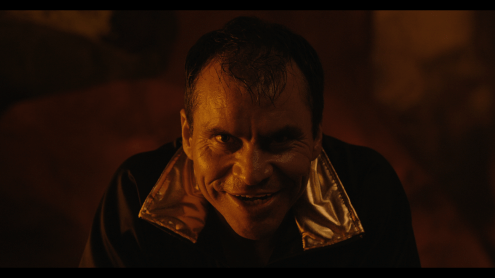
Noe Hernandez plays a svengali-like philosopher of a man with a warped desire for control in We Are The Flesh.

DISCLAIMER: This film review will mention of various explicit acts and may offend some readers. Reader discretion is advised.

“This is not your average party!”

Back in 2014, I ended the VIFF with a Mexican film that was part of the Altered States series called The Incident. I end my VIFF at the Rio Theatre again with another Mexican film part of Altered States called We Are The Flesh. And boy was it something!

The film begins with Mexico City in a completely ruined state. A recluse of a man taking shelter in a hidden location: one of the few livable locations left. Even without uttering a word, he displays some eccentric human behaviors. Even making a bizarre mix of batter, fish and human blood. He talks of the essential elements and of gas.

Two siblings find their way into his location. They’ve been out in the city’s ruins for years and are in need of food and shelter. The man, named Mariano, teaches the two his beliefs and his philosophies. He offers to help them but they must comply to his demands. First he wants them to help him build his domain. They agree, building the walls to his desires. Then he wants the two to have sex. It’s a world where there are no laws. Not even anti-incest laws. The sister complies, fellating the brother. The acts become even more explicit and Mariano dies while masturbating watching them.

The two try to find a place for Mariano’s body. After they find a place in the area, they’re left to their vices on how to fend for themselves. The sister has been mesmerized by Mariano and does things according to the way he wants it but the brother is hesitant. Suddenly Mariano appears again. It’s like he came back to life. But he’s not ready to die yet.

Mariano wants to make sure his world is created before he can die. Cannibalism is part of Mariano’s world. The first victim is a soldier who finds his way into Mariano’s domain. The soldier is scared for his life but Mariano is able to calm him down with his mesmerizing talk and even having him singing along to the Mexican national anthem before being killed by Mariano and the sister. Before Mariano is to sacrifice his own body as flesh to be eaten, he needs more people to be part of his world. Over time the number of people grow. Mariano is then ready to die and have his flesh consumed. The film ends with a man in a dress making his way out of the world and into Mexico City which has returned to its normal state.

Without a doubt the film creates another world: a deeply disturbing world. This world is to be a shelter from a ruined city but instead it’s a world completely devoid of morals and full of lust and animalistic desires. This is the world created by Mariano. This is the world he tries to incorporate the brother and sister into. This is the world he wants to incorporate others into before he decides to leave this earth for good. However it’s a sick world, a world where unspeakable things like incest and cannibalism are the norm because there are no earthly rules. The rules are all gone because Mexico City outside is a load of debris. The two have no choice but to help Mariano create his world and become a part of it.

To make this world work, it all boils down to the character of Mariano to work. Mariano isn’t just a svengali. He comes across as a crazy man full of his wild imagination at first. However he also comes across as a mesmerizing madman reminiscent of Charles Manson of how he’s able to convince the sister that it is the right thing to do all these things including kill the soldier. Mariano’s mind control goes as far as working on the soldier he’s about to kill. The soldier is first scared for his life but as Mariano sings the national anthem, the sister joins in as does the soldier and the soldier is then willing to be killed. That’s the type of mesmerizing mind-control of Mariano. However Mariano knows that if he was to die, it would have to be at the right time. It’s only after hundreds of people become a part of his world that he’s able to sacrifice his body for his feeding. He wanted it that way so that he could create a world of his own. He couldn’t stop at just the brother and sister.

One thing about this film, it’s obvious it’s done for artistic and experimental purposes. This film features countless elements that would make this film uninviting and unwatchable: incest, cannibalism, torture, murder and a demented insanity. It may not be as disturbing to watch as 1975’s Salo but it’s disturbing enough. The subject matter of incest and cannibalism is enough to deter lots of people from seeing this.

Obviously this is a film meant for the film festival circuit. In order for a film like this to get screened, it would need support. Emiliano Rocha Minter is a director who has earned acclaim from fellow Mexican directors Alfonso Cuaron and Alejandro Gonzalez Inarritu. Support of the director from elder Mexican directors is a definite boost for a film like this. However it would surprise me if a film like this does get a release in a box office anywhere. I know dildos were used in certain sex scenes and you can’t call it porn, but even knowing that doesn’t stop those scenes from being hard to stomach. Even with the film being hard to watch, there were some scenes that became confusing. One example: that batter that we see Mariano make at the beginning and then add more flesh to it in a later scene. It’s not clear what it’s for. Even the ending with a person who’s not one of the main characters being the first one to leave gets one questioning.

The film’s possibility of a box office release may be in question but it has actually won some acclaim at some film festivals. The film was nominated for one award at the East End Film Festival two awards at the Rotterdam Film Festival including a Bright Future Award. It even won Best Film at the Fantasia Film Festival.

This is the first feature-length film for writer/director Emiliano Rocha Minter. As I mentioned, Cuaron and Inarritu are already touting him as the next big thing from Mexico. I don’t know if a film like this is good enough to send a message that Minter could be the next big thing from Mexico but it definitely shows his fearlessness. The acting of Noe Hernandez is the highlight of the film. He did an excellent job in capturing Mariano with his eeriness, controllingness and insanity but also his creepy charisma and imagination. It took the right character choices for a lead character like Mariano to work for the film and Hernandez made it work. The next-biggest highlight is Maria Evoli who played the sister. Going from a naive young adult woman to a follower of Mariano is definitely a big effort. The music from Esteban Aldrede added to the eeriness and creepiness of the film.

We Are The Flesh can best be summed up as an ‘envelope pusher.’ It’s definitely an over-the-top film that’s meant for the film festival circuit as it has subject matter too discomforting for your average movie-goer. Even though it can cause many people to leave the cinema, those that stay will be as intrigued as they will be disgusted.

And there you have it. That’s a wrap for my experience at the 2016 Vancouver International Film Festival. Wrap-up blog coming soon with big news.
VIFF 2016 Review: Personal Shopper

personal-shopper
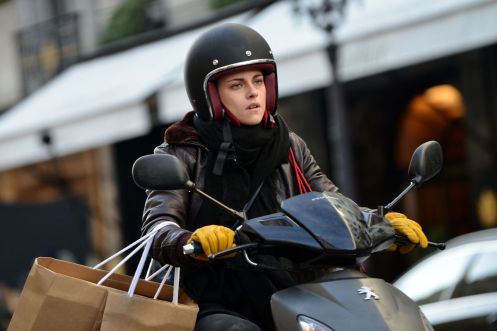
Kristen Stewart plays a young woman in Paris who seems to be haunted by something she can’t explain in Personal Shopper.

DISCLAIMER: I know the VIFF ended a month ago. I’ll admit I’ve been slow at posting reviews. This is mostly due to attending night classes at a community college. However my writing energy is slowly returning and I will post theses last three VIFF reviews in good time. Hopefully all done before Saturday.

Ghost stories usually make for some cheesy movies. Personal Shopper is one story about a ghost that actually works very well for the cinema.

Maureen has just arrived in Paris. She just accepted a job to be a personal shopper for a high-status fashion journalist in Paris named Kyra. She is able to live at her mansion during her job. She is still able to communicate with her boyfriend in the US despite her distance from him. One important note: Maureen has taken on this job just months after her twin brother died from a heart defect.

One night, Maureen notices something mysterious. Could it be a ghost? She carries on doing her shopping duties normally like nothing happened. However incidents keep coming. She starts to question them. Then one day, she gets a text message from a mysterious person. That could be the ghost. You know the texts are upsetting her each and every time. However, she does agree to play along with the requests of the mysterious texter. She even agrees to wear one of the dresses she bought for Kyra.

Maureen senses that this has something to do about her brother’s death. Could the ghost actually be her brother. The ghost even follows Maureen to the various locations she goes to. Then one day, she finds Kyra dead as if she was brutally murdered. Then she agrees to comply to the texter’s request to go to a hotel. The morning after, we see the ghost vacate the hotel. Maureen is still alive. Maureen decides to go on a vacation to a remote location is Saudi Arabia. Whatever happens, she’s prepared to meet the ghost whom she believes to be her brother.

There have been movies about ghost stories before but most come across as ridiculously cheesy. This is one ghost story that has substance to it, and a lot of it. We have Maureen dealing with the loss of her twin brother. She appears to be handling it well but imperfectly. You’re led to think that the ghost is exposing a truth about how her brother’s death is affecting Maureen. In addition, this is a ghost that affects her through the text messages he sends. It’s obvious he will do whatever it takes to get what he wants out of Maureen.

Basically the thing that gives this ghost movie its substance is that it does relate to human feelings. It’s obvious this ghost has a bearing on Maureen. However as the story progresses, it leaves the audience asking as many questions as Maureen is asking right now. This is no run-of-the-mill movie ghost. This is a ghost that has us intrigued and wondering what will happen next. Will Maureen learn of the ghost’s identity? Will Maureen get killed or hurt? The story keeps us intrigued.

If there’s one weakness, it’s that the story appears to end either twice or three times. I know most people would anticipate the hotel scene to be the climactic end but instead it leads to another story. It’s like the story goes places but stalls. Even the actual ending comes across as abrupt. I know a lot of directors try to end their films unexpectedly as a chance for the audience to draw their own conclusions but this ending was too abrupt and unclear.

The film is a very good effort from writer/director Olivier Assayas. He has created a very good story that keeps us all intrigued. However the flaws at the end are too obvious. Still a very good work. Kristen Stewart does a very good job of acting here. A lot of people have dismissed her acting since the Twilight movies. It turns out her bad acting was because of bad direction. Even before Twilight, she showed she can deliver a good acting job. Remember 2002’s Panic Room? It’s obvious Kristen has something to prove and she’s been proving it since starting with 2014’s Clouds Of Sils Maria, also directed by Olivier Assayas. Kristen delivers possibly her best and possibly deepest performance yet. A bit of ironic trivia: in Assayas’ next work, Idol’s Eye, he will be working with Kristen’s former Twilight co-star Robert Pattinson. Can he resuscitate his career too?

Back to the topic of the film, Stewart is the only person who’s given any real acting in the film. For the most part, the other actors are given comparatively lightweight work. That will happen when the protagonist is mostly acting off of a ghost throughout most of the film.

Personal Shopper is for the most part a one-person film that ends too abruptly. Nevertheless it has a lot of excellent qualities that give the film dimension and will keep the audience intrigued.

VIFF 2016 Review: Yourself And Yours (당신 자신과 당신의 것)

yourself-yours
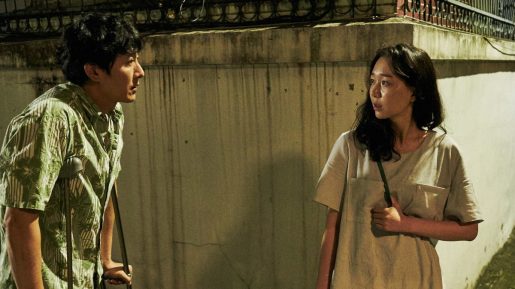
Kim Ju-Hyuck (left) and You-Young Lee play a couple who were meant to be but they don’t know it in Yourself And Yours.

Yourself And Yours isn’t just simply a Korean film that’s a love story. It’s a story about a couple and will leave you wondering whether the two are right as a couple.

The story begins with a young woman named Minjung flirting with men at a nearby soju bar. Some time before Minjung left her boyfriend Youngsoo. Youngsoo heard from someone Minjung was drinking with another man and the meeting ended in a fight. Minjung denies this but Youngsoo is still suspicious. Minjung decides that it’s best the two be apart for some time.

Minjung later meets with an older man. He’s a man Minjung met at a park one given day. Youngsoo hasn’t looked for another woman since Minjung left. Since the time, all Youngsoo can think about is Minjung. He knows he loves her and regrets the way he acted that night. He even goes to the house where he believes Minjung to be residing at with no luck.

Meanwhile Minjung eventually breaks up with the older man. Days later another older man thinks he recognizes Minjung. He believes he rank with her. Minjung denies it but does strike up a conversation with him. Then the older man who Minjung just broke up with returns but Minjung claims not to recognize him. The other man appears to start an argument with him only to later find out they were both classmates in high school many years ago. Both men strike up a friendly conversation completely forgetting about Minjung, who leaves in tears embarassed and heartbroken.

Coincidentally Youngsoo meets up with Minjung. Minjung doesn’t take to friendly towards him at first but she soon starts to warm up to him realizing how much he loves her. They then return back to Youngsoo’s house. Later Youngsoo wakes up without Minjung by his side. He wonders where she went. Then the film ends leaving you feeling this was meant to be.

The film is a bit of a play on both the couple and the two individuals. You see a single Minjung hitting on men and being this woman of mystery even denying past happenings. You see Youngsoo as a man who’s nothing without Minjung. He’s convinced of it. It’s in his heart. You see the moment that led to their split. You see them reconcile unexpectedly and you see the morning after. The film also allows the audient to have their own opinions of both Youngsoo and Minjung individually and as a couple. Youngsoo loves Minjung but should he love her? Especially since she’s the type to deny knowing past boyfriends or past incidents. You are even left wondering if that drunken incident that led to the split was true after all? Is Minjung too deceptive or manipulative of a woman for Youngsoo to love? No wonder the opening of the final scene of Youngsoo alone in bed will get one questioning what next.

The story itself is a good story with a lot of focus on the couple and the individuals. However the film also has many scenes that are too boring or too drawn out. There have been times in which I felt there were scenes that either appeared drawn out or lacked energy or even the proper opening. I think it could have been done better. I know the point of the film is to focus on the relations and present the scenarios but I believe it could have been done with more liveliness.

Writer/director Sang-soo Hong did a very good job with the film. It makes for a n interesting love story despite some scenes seeming to lack the energy. Lee Yoo Yeung was the standout as MinJung. She did a very convincing job of delivering a character of a young woman you could easily question. Kim Ju Hyeok was also good as Youngsoo but I feel his character could have been developed better.

Yourself And Yours is a love story that’s a unique look at love as well as a good focus on the two characters.

VIFF 2016 Review: 1:54

154
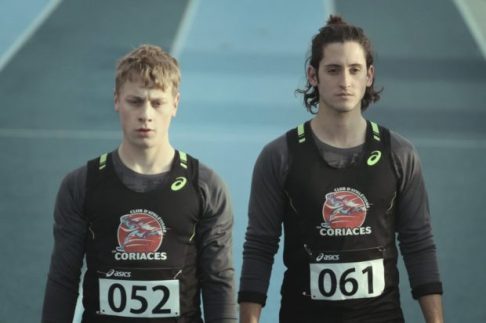
Antoine-Olivier Pilon (left) plays a gay teen who wants to settle a score with his bully (Lou-Pascal Trembley; right) in a track meet in 1:54.

As I’ve said countless times, Quebec is the leader in Canadian cinema. 1:54 is one of the latest to come from la belle provence and this is not your typical teen story.

The film begins with 16 year-old Tim returning to high school. The first back-to-school moment comes from Jeff, who has taunted him since the age of 12, throwing food at him and later posting the video of it on YouTube. It’s not easy for Tim to make new friends. He’s a gifted student who’s great at chemistry but it doesn’t attract too much appreciation despite the chemistry teacher’s encouragement. Life at home is difficult for Tim as he has been distant with his father since his mother died four years ago.

If there’s one escape from Tim’s problems, it’s with his friend Francis. He’s able to share Francis his second-biggest secret: he’s able to create a bomb. However Tim’s unable to share with Francis his biggest secret that he’s gay and attracted to Francis. Francis has been developing more security in being gay himself but that all changes after Jeff bullied Francis into admitting he’s gay. It upsets him to the point he jumps off a bridge, right in front of Tim.

Francis’ death affects Tim into questioning why he was always embarrassed about his sexuality. And right while a girl named Jen is taking an interest in him. Tim wants to get even with Jeff. Sure, he’s become friends with Jen who actually rejected a pass from him months ago. Tim actually decides the best way to get even is to get him where it hurts: in running. Jeff is a stellar half-miler who dreams of of making the National Championships. Tim was also a talented runner who even rivaled Jeff in the 800m at aged 12 but quit just after his mother’s death. Through the encouragement of a coach who knew him back then, Tim returns to running and to be the one qualifying for the Nationals instead of Jeff.

Finally we see a more positive side from Tim as he has something to chase. However it’s not without its troubles. Jeff still bullies him questioning his sexuality and it bothers Tim into making Jen look like his girlfriend in front of everyone, much to Jen’s discomfort. Tim is still distant with his father and has even kept his return to running a secret even from him. On top of that, Tim goes to a party where he receives a fellatio from another male and Jeff has it on videocamera.

Jeff thinks he can use the video to threaten Tim’s goals of beating him and it works, but temporarily as Tim resumes running with top-secret training drills from his coach and Jen as his training partner. The running goals even rekindle the closeness between Tim and his father as he’s back to supporting Tim in his running and delighted to see Tim happy again.

At the Provincial Championships, Jeff and Tim run separate heats and they both qualify for the finals both with the fastest times of the heats and only .02 seconds between them. This sets up for excitement for the final as the winner qualifies for the nationals. At the second turn, Jeff notices Tim in front of him and tells him to look to his friend. Standing by the side is the friend with the video waiting to download it. Tim is undeterred but before the final turn, the friend downloads the video right with Tim watching. The trick works. Tim slows down in embarrassment with Jeff coming through to win.

While Jeff is celebrating his win, the whole school’s track team gets the video on their phones. No doubt Tim is humiliated. There’s no way out. Even his father finds out. The father may be shocked to learn Tim is gay but he promises to be supportive of him. Despite Tim’s father, Jen and the coach trying to be supportive, Tim feels there’s no way out. Not while the video’s on YouTube and all over social media where Tim constantly gets taunted by everyone at school, including Jeff. Tim decides there’s only one way to end this all and it’s at Jeff’s celebration party at a night club. Tim decides it’s the perfect place to set off the bomb he showed Francis. The story leads into a heavily climactic ending that’s a surprise to all.

No doubt this film is full of topics. It’s about teen peer pressure, teen sexuality, depression, teen violence, teen competitiveness, but most noticeably bullying. A lot packed into one film. Yan England has even mentioned that he hopes this film stimulates a lot of discussion of the topics. No doubt it’s worth talking about.

It’s definitely a film that can bring back bad memories of high school to many. Especially me. I struggled with learning disabilities which were also behavioral disabilities. The behavior I displayed in a lot of cases would be cause for fellow teens to easily single me out. It doesn’t upset me as much but I’m still not happy about my past. In fact years ago, one person got on the topic of bullying and asked those in her conversation, including me, if we were bullied. I responded: “I was a bully’s delight,” with a smile of disgust. The craziest thing about the film is that it brought back a lot of the anger and frustration I had when I was a teen. Memories I thought I resolved those many years ago. What can I say? All I can say is high school never changes. Teens still think that mocking others different from the will make them look cool. Problem is it does make them look cool in front of their peers. I like the end when Jeff tells the police of the video: “It was a joke.” That common response from teens: “It was a joke.” They think it’s that easy to get off.

The frustrations Tim goes through are a lot of frustrations teens go through. Being bullied by someone for years can be a frustration one can have. The frustration of learning of one’s homosexuality can definitely be a frustration, especially since many teens are known to respond with hostility. Trying to be someone is a frustration most feel. It’s obvious Tim wanted to be somebody other than Jeff’s victim. Francis’ death made him want to get even with Jeff and he thought he could do it in track. He had what it took. Then the race. This was to be Tim’s chance to get even with Jeff for the many years of bullying and for Antoine’s suicide. Instead it became the creme de la creme of Jeff’s bullying and the biggest humiliation of Tim’s life.

You could easily see and feel Tim’s frustration at that moment. Even with the support of people like his coach, his father and Jen after the incident, it just bothered Tim so much, he snapped. I can easily remember about frustrations I went through as a teen and feeling like my situation was hopeless. It’s easy to forget your parents’ love for you or even support from your friends when this happens. It’s easy to see why Tim would snap and do this.

As for the film itself, this comes across as a conventional story at first and you think you know the ending when you see the track competition. However it’s right there when it becomes a new movie. That’s the best thing about the film: it’s like three films in one. Yan England is taking a lot of unorthodox, if not all that creative, steps in creating a film that’s unpredictable. The victory over Jeff we all hoped for all of a sudden turns into a worse situation for Tim. A surprise to all of us in the audience. That scene at the beginning where Tim shows Francis his bomb seems to be an irrelevant scene as time goes on until the very end. Even the scene at the end when we don’t know what will happen to Tim’s bomb will have you at the edge of your seats. However, I will say if the movie had the right scenes at the end. I’m thinking it could have ended better.

This is a very good first feature-length film for writer/director Yan England. Yan used to be a young actor in Quebec with the teen variety show Watatatow back in the 90’s. He’s moved into directing and writing. In fact his short Henry was nominated for an Academy Award years ago. Here he delivers a film relevant to what’s happening with teens and the subject of bullying. He shows how much bullying has ‘progressed,’ if you can truly call it that, with cybertechnology. He also does a very good job in creating three movies in one.

Antoine-Olivier Pilon delivers again in a character completely different from the one he played in Mommy. Instead of an eccentric, he plays a down-to-earth teen filled with anger and hurt but ambition. He also played the frustration parts in the last part of the film very believably. Another accomplishment for him. Sophie Nelisse was very good on playing the supportive friend. She shows a maturity since Monsieur Lazhar. David Boutin was very good as the father trying to be supportive and Lou-Pascal Tremblay was very convincing as Jeff. You will end up hating him! The techno music score in the film added to both the excitement and the drama.

1:54 is not your typical teen movie. It deals with a lot of serious issues very well, if imperfectly. It has some technical glitches but it does engage the audience and is worth seeing.

VIFF 2016 Review: All Of A Sudden (Auf Einmal)

all-of-a-sudden
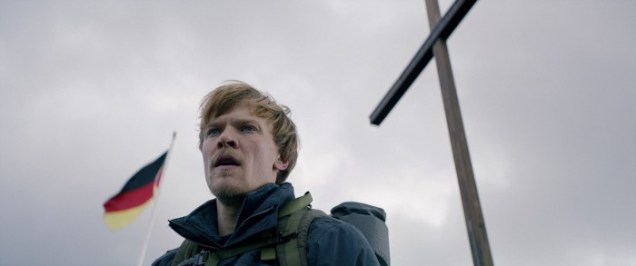
Sebastian Hulk plays a man accused and his world falling apart in All Of A Sudden.

All Of A Sudden is a story of a crime mystery that leaves you wondering what the truth is.

The film begins with a party with many adults. A man named Karsten sees a woman named Anna at his home. He gives her a cupcake with a candle and sings her Happy Birthday. Then she gets sick. Karsten runs to the town clinic to seek help but it’s closed. Upon returning home, it’s too late. She’s dead.

His parents offer him relief at their home along with his girlfriend Laura. Unfortunately more information unfolds.  Anna’s widower has Karsten charged with wrongful death. A video from a smartphone of Judith–one of the friends of Laura and Karsten–shows Karsten talking to Anna at the party just shortly before her death. Karsten is constantly questioned about why he left to run to a medical clinic instead of calling emergency. Because of the turn of events and sudden findings, Karsten is demoted at his job and Laura leaves him feeling she’s betrayed. Karsten’s relationship with his parents even becomes heated.

One day Karsten just leaves for a hike just to get away from it all only to be found by his best friend with the news. Anna’s husband has dropped the charges. Karsten is shocked and wonders why. He confronts her husband Andrej to find out why. Only Karsten knows why, much to Andrej’s disappointment. Karsten goes back to his job and demands he be returned to his original position or else he will sue. Karsten meets with Judith ‘intimately’ only to set the record straight with her and the video. Finally it looks like Karsten has his life back together.

The most unique thing about this film is how it tells the story. It presents the events as they unfold and it tosses the opinions from others around Karsten. It’s almost as if you’re a part of the situation yourself and you’re led to draw your own conclusions. I’ll admit that when I first saw this, I was ready to draw my conclusion that he was responsible for this. He appeared criminally negligent. Like why did he run to the clinic when he could have called 911 instead? Did he do it to hide from Laura that he was with another woman at the time? They’ll leave you questioning. Even that video Judith took of Anna during the night with Karsten will leave you guessing.

Just as unique about it is how it took that one break, when Andrej decides to drop the charges, that Karsten becomes a changed person. He first comes across as a man who’s all together at the beginning. Then he comes across as a victim, like the world is against him. Then after this sudden reversal, Karsten soon becomes a man who settles the score with those who did him wrong. It’s like a complete change of character and traits I didn’t see in Karsten before. In order to make such a major change of character, the actor had to make this work. I feel Karsten’s change of character came off well. It was drawn out longer than I feel it should have but it worked.

In retrospect I think this story of Karsten and Anna can come across as any crime story. Any situation can lead one to believe certain things. Any set of facts you know and facts you don’t know can cause you to draw your own conclusions. Anyone in the same situation like Karsten can easily be preyed upon by others. No surprisingly the victim in all this can easy ask themselves: “Why is the whole world against me?” However it just takes that one change of fortune for a person to become a changed person the same way it happened to Karsten. I guess that’s the trick of the film. It takes Karsten’s story and shows how it’s so much like many situations before it.

Turkish-German director Asli Ozge writes, directs and edits a very good thought-provoking film. Without a doubt, the film belonged to Sebastian Hulk. This was Karsten’s story and the whole film rested on Hulk delivering the performance of Sebastian in the right manner. Hulk did a very good job of acting without having to be overdramatic. There were also excellent performances by Julia Jentsch as the girlfriend struggling with the situation and Luise Heyer as two-faced Judith.

All Of A Sudden is a unique story. It presents a before-and- after story that will lead one to draw their own conclusion. It really makes you think.

VIFF 2016 Review: To Keep The Light

to-keep-the-light
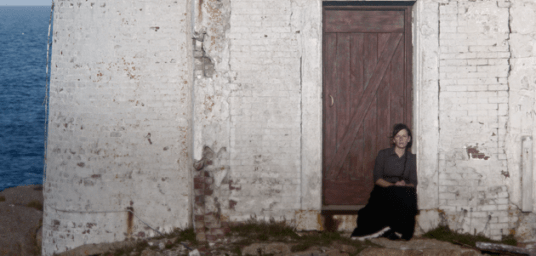
Erica Fae plays a Maine woman determined to keep her lighthouse in 1876 in To Keep The Light.

Here at the VIFF, you’ll see many films directed by female directors. One is To Keep The Light, directed by Erica Fae. It’s a very impressive work.

Abbie is the wife of Thomas, a lighthouse keeper in Maine in 1876. However Thomas has recently fallen ill and has become bedridden with a complete loss of appetite. That means Abbie will have to tend to the lighthouse while he is sick. She does everything Thomas does and keeps record of everything although she does commit one error.

One morning she sees a body of a man has washed ashore. The following day, she sees the man has not awaken so she assumes he’s dead. However just as she’s about to cast the body to sea, the man awakens. She gives him shelter and food as he’s about to recover. He tells her the story of how he ended up in the sea. As he’s recovering, she tells Thomas of this man: a Swede named Johan. It’s only a matter of days that Johan gets better. He’s even able to help Abbie with the lighthouse.

Abbie’s even able to go to town with Johan but the townpeople do not look fondly towards Abbie or Johan. Some are suspicious of the two considering Thomas is still bedridden. Even the postal lady Mrs. Williams has a suspicion towards Swedes as do many of the townfolks. It’s difficult enough since one family, the Eaton family, feels they should have owned the lighthouse only to have been outbid by Abbie and Thomas.

One day Abbie sees the breakfast eaten, assuming Thomas is starting recover and lies next to him, only to discover it’s Johan. Abbie soon learns the horrific news. Thomas is dead; he drowned himself. As if Thomas’ death isn’t hard enough, she knows she could lose the lighthouse to the Eatons. Troubles turn worse as the Chief Inspector conducts an inspection and gives it a scathing review, mostly because of his male chauvinism. Soon Johan reveals her love towards Abbie just around the time the Eatons are trying to claim her lighthouse. Abbie would have to make an important decision. She does, but not the decision most would expect.

Listening to the first five minutes of the Q&A with Erica Fae, I learned a lot more about women who looked after lighthouses in place of their ailing or deceased husbands. It’s documented but the times whitewashed their contributions those many years ago. Erica Fae is able to bring their achievements to full view and for us to finally see. Even though Abbie is a fictional character, it’s enlightening to see what they did during the time. I’m glad Erica has the chance through this film to finally tell us their story and finally commend their accomplishments.

If there’s one glitch about this film, it’s that it doesn’t appear like it’s solid in its intention as a film. It becomes obvious it’s about one woman’s struggle to keep the lighthouse she should rightfully own being the widow of the previous owner. However the story of Abbie’s struggle has the distraction of her romance with Johan. I’ll admit while watching this, I was left wondering if the film was intended to be a romance: a story about the man Abbie truly loved. I don’t have a problem at all with films conveying a message of women fighting for their rights but I think the romance from Abbie and Johan took away from the story’s message and would leave confused about what the main intention of the film is to be.

SPOILER ALERTDo Not Read This Paragraph IF You Dont Want To Know The Ending: Even the ending had me confused. It’s obvious Abbie loved Johan but it couldn’t be that she was thinking of marrying him to keep her lighthouse. Even if it was right after the death of Thomas, Abbie didn’t come across as that type of woman. If she were to marry Johan, it would be because she loved him. I admit I had different expectations in the film. I thought Johan would follow his heart and come back to her. I think that’s why the ending of her writing the letter to set her ownership of the lighthouse in stone left me confused.

I give a lot of respect to Erica Fae for this film. Fae is best known as an actress in the film Synecdoche, New York and a recurring character in Boardwalk Empire. She wrote, directed, researched and played the lead in the film. She does an excellent job in all the duties she takes on in the film but there are some noticeable flaws. I know I made mention of a story of a love mixed with a woman’s fight for her right as coming off as uneven. As far as Fae’s acting, she does an excellent job of playing the character but she doesn’t come across as too believable as a woman from the 1870’s in New England. She comes across as too 21st century in her movement and her speaking. Antti Reini did a good job of playing Johan. The other cast members also did very well in their parts. The cinematography by Wes Cardino was excellent and gives a great feel for the East Coast. The score by Caroline Shaw was also very fitting for the film.

To Keep The Light has its noticeable flaws. Nevertheless it is a good story about what certain women had to fight for that often goes overlooked. I thank Erica Fae for giving us this story.

VIFF 2016 Review: Quit Staring At My Plate (Ne gledaj mi u pijat)

quit_staring_at_my_plate-h_2016
Quit Staring At My Plate is the story of Marijana: a young Croatian woman who knows she deserves better.

Being a young adult may be loaded with fun but it also has its difficulties. Quit Staring At My Plate tells the story of a young Croatian woman with a difficult life and the choices she needs to make.

Marijana Petkovic is a 24 year-old with a difficult life in Sibenik. She lives in a cramped apartment with her parents and her older brother Zoran. She works at a hospital testing specimens. She is however the breadwinner of the family as she’s the only one with a job. Her family life is rough as her parents are known for slam-talking her and her brother. Her father is very controlling. Also her brother is either too irresponsible or too disheartened to find a job. Because of the family’s low income, most of the food they have is either cheap or old. Her job at the lab doesn’t look too promising as the staff are threatened by the potential of layoffs.

Then it happens. Her father has a stroke, leaving him in a bedridden catatonic state. Marijana now has to be a nurse to her father. She also has to be a parent-figure to her brother. It doesn’t leave much room for fun or even dating in her life. Things change as Marijana goes on a bus trip to the beach with Zoran and her mother. She meets Andjela: old classmate from medical school and learns she works as a maid for a rich American family. Her mother is forbidding of her to become a maid, preferring she stick to her job in the labs. However things change in Marijana’s life as she no longer has the control her father had on her. She starts going places she never went before, she starts seeing more men and even sleeping with them, she even meets up with Andjela and learns of her job. She accepts the job as she learns she can make more money that way, but secretly so her mother doesn’t know. She’s even part of Andjela’s clique of friends.

Once Marijana accepts the job and starts working with Andjela, she’s able to make life easier for the family as she’s able to afford more. One day, Marijana takes Zoran and her mother out for ice cream. Andjela is also at the ice cream bar. It’s after her mother hurls insults at Andjela that she learns the truth about Marijana. This leads to her mother berating her like never before. It’s after spending the night away from the family and staying with two men she never met before that she learns of opportunity in Zagreb: a city she’s never been to before. It’s right after learning one of her colleagues was fired that she makes it a goal to take off to Zagreb despite her mother begging her to stay. It leads to an ending that may be surprising to some but very personal too.

No doubt this story is focused on Marijana: 24 year-old Sibenik woman with an uncertain future. She goes from living in a cramped apartment with an unpromising job and no love life to being head of the household. Her mother disapproves of a job with better pay. You’d think she would explode any minute. She gets more freedom now that her father is bedridden and no longer browbeating her and her brother. However the freedoms come at a price as her mother smacks the heck out of her when she learns the news. You can easily see why she’d want to run away from it all and pursue better in Zagreb. She is a medical school grad; she deserves better than this.

The thing about this story is that it’s a very common story. I can remember when I was in my 20’s living in Winnipeg, I had just graduated from University but I was still living with my parents and I was working lousy jobs that didn’t give me enough hours. Yeah, that was Winnipeg in the 90’s for you. It was even more frustrating when others I knew had their independence. Eventually I did get better jobs, I did get more freedom in my life, I did establish my independence and I did move to Vancouver in 2000. I saw Marijana’s struggle similar to the struggle I faced when I was her age. I can easily see why she would want to leave it all behind especially after experiencing her new freedoms. Doors appear to open. Why stay in the same place?

One thing about the film is that I don’t think it did the city of Sibenik much justice. If you saw the film, you’d think Sibenik was a city where nothing happens, everything stays the same and that there’s not much promise in sight. I’ve never been to Sibenik so I can’t say. However the film may leave you thinking that. Even that scene of the rich wife who disses every woman she walks by makes you wonder about this town.

Top marks for the film go to writer/director Hana Jusic. This is the 32 year-old’s first feature-length film and it’s very impressive. It’s not that often you see a film from Croatia featured from a woman’s point of view. Hana does a very good job in capturing the silent frustrations and confusions of Marijana and created a story that is a reflection of many women just like her. Also top marks go to Mia Petricevic playing Marijana. What surprised me about the role is how much emotional control this role needed. I’ll admit I was expecting Marijana to explode or break down any minute. Mia had to make Marijana into a woman who was hurting and frustrated on the inside silently but still holding her head high. She did an excellent job especially with her moments of silence. You could tell what she was feeling. There were also good supporting performances from Niksa Butijer and Arijana Culina. The techno score also fit the film well. Techno scores have been more common in films lately.

Quit Staring At My Plate is a silent but honest look at the struggles of a young Croatian woman. You can easily see Marijana reflect many other young women of today.

VIFF 2016 Review: Under The Shadow (زیر سایه‎‎)

under-the-shadow
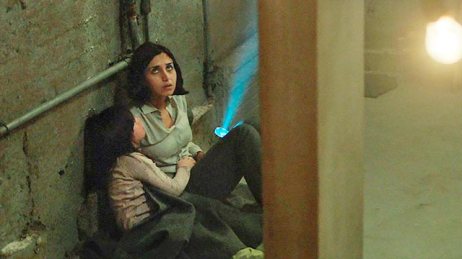
Under The Shadow is a film of a woman and her daughter who should leave their war-threatened apartment in Tehran but can’t for some mysterious reason.

One of the objectives of the VIFF is to show films each year that take us to another dimension or the supernatural. That’s shown in their Altered States film category/ The first Altered States film I saw was Under The Shadow which showcases a supernatural occurrence during a moment in world history.

This takes place in Tehran during the later 1980’s during the Iran/Iraq war. The war has been going on since 1980 with lots of lives lost, everyone in Iran threatened, and no end in sight. Shideh, just recently expelled from her law school for participating in a protest, has returned to her apartment as a housewife. Only she learns her husband has been drafted in the War. She’s left to tend to her daughter Dorsa alone. Her workout tape to Jane Fonda– forbidden under her country’s religious law along with the VCR hidden in a locked box– becomes her one escape from the stresses in her life.

One night, an Iraqi missile hits the apartment but doesn’t explode. There’s only one fatality but he dies of a heart attack. Mysteriously Dorsa won’t stop crying for her doll until she has it despite the wreckage to the apartment building.

Shideh decides to stay with Dorsa despite other tenant leaving the building for a safer place to live one by one. Dorsa mentions of a mysterious man, or djinn, and that’s what keeps her there. It’s not easy for Shideh to deal with this as she’s constantly being left behind by the tenants, worrying about her husband constantly, looking after Dorsa all alone and dealing with authorities in a country under strict religious law. Things take a turn for the worse as this djinn causes things to move out of place. It even rips up her Jane Fonda tape.

Soon the last of the other tenants– the daughter of the man who died in the missile hit– leaves the apartment with Shideh and Dorsa on their own. Nevertheless Shideh is determined to face the djinn before she leaves and despite the threat of a collapsing roof. Shideh does have her moment to finally confront the djinn and deal with it.

There are a lot of stories about the supernatural in the past. The unique thing about this film is that it features a supernatural character traditional to Arabic literature: the Djinn. The djinn are common in ancient Arabic mythology and are even mentioned in the Qu’ran. The most common form of the djinn in entertainment is the ‘genie in a bottle’ or the ‘genie in a lamp’ that’s common in the most popular Arabic stories. Yes, the genie we all commonly know originates from the djinn myth. However the djinn goes beyond the genie most of us commonly know. The djinn can be either good, evil or neutrally benevolent possessing the same free will of humans. In fact the word djinn comes from the primary meaning ‘to hide.’ It’s the ‘shaytan djinn’ that are the most demonic.

Here the djinn Shideh is dealing with is far from a genie that will grant you three wishes. It’s obvious that this djinn has something to do with Shideh’s personal issues. And she has a lot of them as seen in her life. Her education was cut short because she participated in something that’s a right in most other countries. Her husband has to fight in the war. She’s now on her own looking after her daughter. The only place she appears to find relief in is in her Jane Fonda workout tape which is banned by the government along with her VCR. However this is a djinn that goes beyond just appearing to Shideh. It also carries a sense that it’s present in Dorsa’s doll, too. It’s apparent Shideh has to deal with this djinn to the point she refuses to vacate the apartment with her daughter like all the others until she’s finished.

It’s interesting how this story intertwines with both the supernatural and both a moment in world history. You can notice how there are so many things mixed in with this story that tells of the times in Iran during the war. There’s the forbidden Jane Fonda tape, there’s Shideh punished for being in a demonstration, there’s the police threatening to arrest Shideh for not being in a hijab. You even hear it echoed by the police there: “This is not the same country. We now have our values back. We have men fighting for those values.” Sometimes you wonder if the times of Iran have a lot of influence in the djinn Shideh has to deal with. I often feel that’s what the filmmaker is trying to do here.

I will say one of the top things of the film is that it often succeeds at adding horror elements to the film. The djinn is a mysterious spirit but it does a good job at scaring Shideh in her dreams. It also does a good job in scaring the crowds. I know the film succeeded in scaring me a few times.

It may seem odd for the United Kingdom to submit a film in the Best Foreign Language Film category for this year’s Oscars but it can be done since Iranian-born director Babak Anvari lives in London. Anvari was actually born during the Iran/Iraq war so this is an incident in history that really touches upon him and has a lot to do with why he prefers to live in the UK. This is his first feature-length film and it’s an impressive work as it does a good job in capturing a moment in history and incorporating the supernatural into it. It was also successful in scaring me too at times. Narges Rashidi did a very good job of playing Shideh: a woman who’s both scared and angry. Rashidi herself was born in Iran and is familiar with the Iran/ Iraq war she had to endure with before escaping to Turkey. Young actress Avin Manshadi was also very good as Dorsa.

Under The Shadow is an intriguing story of a mysterious spirit that comes to a woman during wartime. It also makes for a fitting scary movie too.

VIFF 2016 Review: Barakah Meets Barakah (بركة يقابل بركة)

barakahmeetsbarakah_04
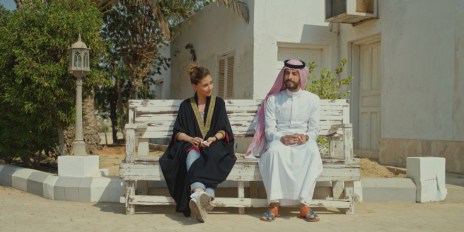
Barakah Meets Barakah is a Saudi film of a man and a woman from separate societies who fall in love.

On opening night of this year’s Vancouver International Film Festival, I had the good fortune to see Barakah Meets Barakah. It is Saudi Arabia’s official entry in the Best Foreign Language Film category for this year’s Oscars and proved to be an enjoyable film.

At the beginning of the film, we meet Barakah: a young man from a section of Jeddah full of tradition and religious values. However Barakah does have a liking for the arts and especially drama as he agrees to perform in a community production of Hamlet. We also meet Bibi: a young woman who’s a local celebrity in the city due to her popularity both on television and in social media where she commonly posts videos of her speaking a message. In fact her mother who adopted her is one of the heads of the network. Both are opposite personalities as Barakah is a civil servant obedient to tradition while Bibi is very liberal both in what she wears on television and what she says in her Instagram videos which feature just her mouth talking. Both however live in a time where religious law is strictly enforced in Saudi Arabia.

The two meet for the first time by a bizarre circumstance. Bibi has a modeling shoot out by the coast where her face, arms and chest are very visible. Barakah is commissioned to stop it because the shoot hasn’t been licensed on the property. However he does eventually compromise. The two later meet again by accident. This time it becomes something despite his dating skills being non-existent.

Despite their feelings for each other, dating would be next to impossible. Barakah lives in area full of common people and Bibi is more the high society of the town. On top of that, there’s the religious police who are very suspicious of unmarried unchaperoned pairs out on a date. There are criminal penalties for that under religious law. Their dates have to be completely secret. Over time, they become a lot more even with the help of Barakah’s friends.

Dating does become difficult as Barakah keeps his love secret from others. Even Bibi faces difficulties as her mother is disapproving. However the mother finds something positive out of this when she visits the townswoman in Barakah’s neighborhood, who plays a mother figure to Barakah, to ‘cure’ her of her infertility. It works as it is announced she will have a baby. Instead of it bringing Barakah and Bibi closer together, it causes more friction.

Eventually it does come to a point when the two do call it quits. They can’t handle it anymore. It’s not until Bibi learns a truth about herself and how her mother appears to treat her as ‘disposable’ that there’s the turning point. The film ends convincing us that it was meant to be after all.

It’s very obvious in this film writer/director Mahmoud Sabbagh has something to say about imposed religious values in Saudi Arabia. It’s not just about it causing a detriment to people’s daily lives but also how it has robbed the people of progress and hope they were anticipating in decades past. As a Catholic, I can understand this belief. I’ve seen how the Church has influenced strict moral laws on the people in a lot of countries in the past and now most people in those countries are sick of the Church. Just ask Ireland. I believe morals and values work better on people when they adopt them themselves rather than have them forced upon them.

Although the film makes Islamic law look more like a problem than a help, he is able to make his statement in a comedic way in this film. Yes, religious law in these countries has resulted in a lot of deaths and unnecessary imprisonments and has even led to a lot of friction and civil unrest. Nevertheless Sabbagh is able to make light of the problem by creating a romance that is both critical of imposed religious law in his country but also able to satirize it too. He satirizes it in the scene where Bibi is taking an Instagram photo of the henna tattoo of her belly by blurring her belly for all of us. He also sends a message when Barakah takes the mini-Koran dangling from his rear-view mirror and replaces it with the thing given to him by Bibi.

The film not only focuses on religious influence in Saudi Arabia but also about the classism there. The separation of the upper class and the common or lower class are commonly shown in films but Sabbagh shows what the gap is like in Saudi Arabia. It’s a common thing in most developing countries for the gap to be that much bigger. No wonder something like that would cause friction in a romance between Barakah and Bibi. Even knowing how her mother calls her Bibi instead of her real name Barakah possibly to hide Bibi’s poor past is there to send the message.

Sabbagh succeeds in delivering a comedy that’s both smart and thought-provoking. He does have a message to deliver but he delivers it in an entertaining way with the right moves and without it being overly preachy. The film has already won a special prize at this year’s Berlin Film Festival. Hisham Fageeh was very good as the common young man Barakah as was Fatima Al-Banawi as the progressive Bibi. There also good supporting performances from the actress playing the local townswoman and the actress playing Bibi’s mother.

Barakah Meets Barakah is a good comedy that will both make you laugh and get you thinking. Also in a time when ISIS has made a lot of bad news, it is welcome comic relief.

VIFF 2016 Review: Tales Of Two Who Dreamt

tales-website
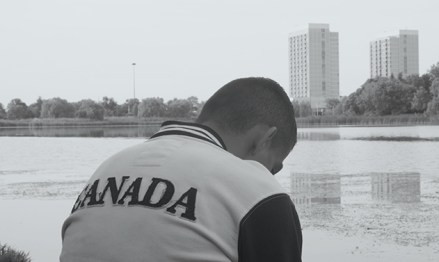
Tales Of Two Who Dreamt document the dreams of a Romani refugee family who dream of immigrating to Canada and hopefully doing a small film.

One thing about the VIFF is that it will show films done by Canadian directors or people close to home. In fact the VIFF credits itself as the film festival that shows the most Canadian films: shorts and feature-length. One example this year of a feature-length Canadian film shown at the VIFF was Tales Of Two Who Dreamt which was a unique documentary.

The film begins with a man, Sandor Laska, telling a story of a boy who turned into bird after a dream. Over time, we the director is planning to make a small film of this story. Even a makeup artists is seen putting a beak on the son Alexander.

What we get is something else. We hear the story of the father and the Laska family. They are refugees living in a tall apartment in Toronto specifically for refugees. They are Romani people from Hungary. They seek refuge in Canada because they are of an oppressed minority and often face discrimination.

As they live in the apartment awaiting approval of their status in Canada, we learn there are many Romani families also seeking refuge. Often they meet together and party together. The children play soccer on the apartment’s field together often with refugee kids from other countries.

Time passes as the family continues to pursue both dreams: the dream of doing the film and the dream of immigrating to Canada. In the end, neither happen. Their immigration case wasn’t approved and they have to return back to Hungary where they really have nothing to return to. The film that was to be made couldn’t be done. The family were deported back before it could be completed.

This film is a good eye opener to the Romani people that seek refuge. They are a people who number in the tens of millions spread across various countries of Europe. They are people whose lifestyle are considered questionable. They are a people who value their cultural roots in music and dance often to the point they neglect working a real job. They live their lives their own way; many of which are illiterate.

The Romanis are seen by the other people in the country as lazy, irresponsible or even the ‘scum of the earth.’ They are often referred to as ‘Bohemians’ or ‘gypsies’: the latter of which they consider to be a slur. They’ve had their discrimination over the decades and centuries. They were even one of the groups of people executed during the holocaust. Discrimination against them still continues today in various European countries. Some countries like Italy have passed anti-Romani laws. Some countries like Hungary let discrimination go freely. You can easily see why a family like the Laskas would try to seek refuge in Canada.

Sometimes when you see the struggle of the Laskas and other Romanis in the apartment as they seek their residency status, you sometimes think this film is about the refugee situation as a whole. What you see the Romanis struggling with is often what you see most refugees struggling with. That tall apartment with nets on the outside put on after the death of a six year-old boy who fell off his 19th floor balcony tells a lot about the place where refugees wait to hear their fates in Canada. At the end, you get thinking that the Laskas didn’t succeed in escaping what they attempted to escape. Sandor talks about how the interpreter didn’t state his case right to the judge and that had to be why his residency status was revoked. Sometimes it makes you sense could the interpreter have an anti-Romani attitude? Did he misinterpret purposefully so that the Laska did fail and then get sent back to Hungary to return to their discrimination? It does get you thinking.

Directors Nicolas Pareda and Andrea Bussmann turn the film into a docudrama. There are times when the film gets ready to film the ‘birdboy’ story, times when they focus on another family who are to be part of the skit, times when they focus on the apartment building as a whole, and times when they focus on the Laskas and their reality. It’s a mix of various shots from family struggles to kids playing to young adults holding a party. The two directors try to piece together the many stories. There are times when scenes are shown with a score of a Romani song sung a capella. There are even times when they include Timea’s scratchy violin-playing as score to a scene in the film. Sometimes it hits, sometimes it misses. There are times when the mixed organization appears to work and then there are times when the film feels disjointed. I think the film aimed to be creative in its documentation during times when it wasn’t supposed to be.

Despite the film’s noticeable imperfections, I would have to say the best thing about this film is that it gave a voice to a people. This was a chance for Romani refugees to tell their story of what they faced and why they came to Canada along with the hopes for their children. The adding in of the ‘birdboy’ story adds color to the film as it is a Romani tale. You can see why the film is called Tales Of Two Who Dreamt. The first dreamer was the ‘birdboy’ and the second dreamer was Sandor Laska. I’ll admit I was disappointed at the end to learn the ‘birdboy’ film was never finished. But it’s something that just happens and you saw why.

Tales Of Two Who Dreamt is a documentary that’s noticeably disjointed in a lot of areas. It is still very valuable as it gives an image of the refugee situation Canada is trying to deal with.