NHL Playoff Madness: Here We Go Again

Okay, many of you may remember my Canucks articles from last year. The reason for it was obvious: our third and possibly best chance to win the Stanley Cup. For those of you who want to read them again or have never read them, here are my articles: Confessions Of A Canucklehead, My Stanley Cup Experience, Stanley Cup Game Seven preview and aftermath.

Last year we won the Presidents Trophy. This year we do it again. It wasn’t entirely expected at first because October, the first month of regular season started on a down note with five wins, five losses and one overtime. Many Vancouverites were uncertain if we’d do it again but I reassured many that if the Lions can lose their first five games and then go on to win the Grey Cup, the Canucks still have a chance. The months became better over time as the Canucks would bag more wins and move up higher in the ranks to the point they appeared poised to repeat as Presidents Trophy winners.

However it would be a tight April 7th as the Canucks were one of four possible teams to win the Trophy and it took a final game that night. Their toughest rival for the Trophy, the New York Rangers, lost their final game. A win from the St. Louis Blues wasn’t enough to supersede the Canucks in the League standings. A win from the Pittsburgh Penguins meant that an overtime at the least would be what the Canucks would need at the least. It wasn’t like last year where the Canucks had a comfortable lead over the second-place team in the NHL by six wins. Nevertheless the Canucks won against Edmonton 3-0 and they repeated as Trophy winners. I remember the game well as I saw it at my cousin’s place. It was a fun time. It wasn’t just hockey action but the dogfights too. My cousin has two dogs–one that looks like Lassie and a puppy that looks like Toto–and they fought alot duing the games. The fights were even more entertaining than the actual hockey fights!

The funny thing is that even after the Canucks won, it wasn’t all over. There was still one last NHL game being played at the time: Los Angeles Kings vs. San Jose Sharks. It was an important one too as the Kings and Sharks were both #7 and #8 in the Western Conference and a loss from either team would make them #8 and thus the Canucks’ first Stanley Cup Playoff rival. The game went into overtime and ended with an overtime goal from the Sharks. The Kings are the Canucks’ first rival en route to the Stanley Cup.

Now it’s Playoffs time. It all starts April 11th and Vancouver will face Los Angeles. Vancouver has won two of the four regular season games against LA with one of their losses being an overtime. Vancouver has consistently played better against the Kings at home which is an advantage for this contest.

Anyways the sixteen Playoff berths have been decided and the match-ups are set. The whole playoff action begins on April 11th. Lots of fanfare and celebrations to be held. One thing’s for sure that I will not buy a ticket for a Finals game again if the Canucks do happen to make it. The amount I payed for a fourth-class seat at the game was ridiculous and I won’t do that again.

So enjoy the playoff action. There may be sixteen cities celebrating now but by June, there will only be one city still smiling. Let’s hope it’s Vancouver this time.

Oscar 2011: The Buzz And The Biz

Well how about it? Exactly thirty-four days have passed since the Academy has given out the golden statuettes. The box office results of the nine Best Picture nominees also have a lot to say too. Some good, some bad.

Box Office Mojo does it every year. They have charts of the Oscar nominees and winners. They also have a special Best Picture chart where they divide the grosses into Pre-Nom (before the nominations are announced), Post-Nom (after the nominations are announced) and Post-Awards: after the Oscars are decided. Here are the charts of reference:

    2011 Best Picture Nominees

    2011 Nominees: All Categories

This year’s charts shows some interesting stats involving the nominees. Four movies–The Tree of Life, Moneyball, The Help and Midnight In Paris–had already completed their box office runs long before the nominations. Some opened again after the nominations were announced but it attracted modest-size crowds compared to its heydays months earlier. War Horse opened late in the year but it had already neared its total gross just before the nominations were announced and the nominations had very little effect on its gross.

The movies with the biggest boosts of the Oscar nominations were Hugo, The Descendants, The Artist and Extremely Loud and Incredibly Close. Hugo grossed most of its total share before the nominations but the Oscar nominations helped increase its gross an additional $13 million before the Oscars. Oscar wins helped give Hugo an extra $4 million even though it was already on DVD just two days after the Oscars. The Descendants was another movie that was already doing well before the Oscars possibly because of George Clooney’s star power. Nevertheless this film had the biggest post-nominations gross of all nine Best Picture nominees with $31 million including an additional $3.9 million after the Oscars were awarded.

Extremely Loud And Incredibly Close and The Artist were the two Best Picture nominees whose grosses more than doubled after the nominations. Both films did so-so before the Oscar nominations with Extremely Loud grossing just under $12 million and The Artist grossing just over $12 million. The nominations would change lots as Extremely Loud has grossed an additional $20 million since the nominations. The Artist would also gross an additional $19.4 million between the nominations and awards but its Oscar wins including the Best Picture win would help give it an additional $11.4 million to date currently standing at $43.3 million. The Artist is the only Best Picture nominee this year to gross even as much as $5 million after the awards.

The biggest surprise about this year’s set of Best Picture nominees isn’t necessarily because there are nine instead of ten but that only one, The Help, has grossed more than $100 million either before or after the Oscars. Even last year, there were five that would at least have a total gross of more than $100 million. The average gross of this year’s Best Picture nominees of $69.6 million is actually the lowest average since the more-than-five nominees system was reintroduced at the 2009 Oscars and the lowest since the 2006 Oscars fivesome. This year’s hit movies were left out of the cold. There was no Disney/Pixar blockbuster that found itself in that group. There was no movie with a lot of Oscar buzz that caught on in a big way. Even the family-friendly Hugo didn’t hit the $100 million mark. A shame since the movie cost $170 million to make. Even seeing how The Artist hasn’t even hit the $50 million mark tells quite a bit about the box office crowds. Its gross isn’t as low as say the The Hurt Locker was two years ago but it still says a message not just about box office crowds but even the Academy and their voting, how nowadays crowd fanfare doesn’t mean an awful lot in choosing Best Picture.

So there you have it. The rundown of this year’s business involving the Oscar nominees and winners. Each year tells a different story on both the Academy’s voting and the box office outlook. Next year’s should also tell a lot too. Stay tuned.

Movie Review: John Carter

John Carter is not a superhero character invented for a movie. John Carter is actually a protagonist for an 11-volume series of novels by Edgar Rice Burroughs known as the Barsoom series. The first John Carter movie comes courtesy of Disney. Does it deliver?

The movie starts detailing that Mars is a dying planet with warring civilians. The live-action begins with a nephew of John Carter’s learning he’s dead, or maybe he’s not. He’s buried in a mausoleum that can be unlocked by a secret code.

Impressive beginning that leads to the origin of John Carter which actually comes across as too predictable. We learn that John, a citizen of the Confederate state of Virginia, is seen as an outlaw in New York. The opening shtick which leads John being a rebel in New York to being sent to Mars is all too common and formulaic for superheroes to be first learning of their superpowers.

The developing story of how John Carter learns of the race of four armed Martians and of the warring cities of Helium and Zodanga give promise to more climax. Additional climax is possible by possible cease fire if the princess of Helium being offered to marry the Jeddak of Zodanga. Often the quests that lead to battles and even gladiator matches become too predictable to a point. Even the gladiator-like scene looks like it was added in more for the sake of thrills than for the story.

If there’s one place that is out of the ordinary, it’s the ending. At first the triumph of John Carter at the end appears to be the ending but there is a surprise which leads us back to the framing story of John’s nephew that leads to an unexpected ending. That was one part that did impress me.

The problem with the movie is that it shifts too much. We don’t know if John Carter is supposed to be a superhero character or a gladiator-type character. Even seeing how it appears to have borrowed from too many movies also adds to the problem. John Carter landing on Mars appears like many superhero movies when they first learn of their superhuman trait. The gladiator scene comes across too much like Gladiator. There were even times I thought they borrowed a scene or two from Thor. The movie is good in terms of special effects and especially the costuming but its storyline’s confusing in terms of plot and character development. Even the acting appeared one-dimensional because the characters were mostly the stock type that one would come to expect from a superhero movie. They’re there to put on a show but lack depth. The script was what you’d expect for a superhero movie: stagy events thick on emphasizing the drama in the plot and full of high-climax moments but little depth. There was a bit of comic relief with the Martians calling John Carter “Virginia’ but not much else.

In terms of box office, John Carter is not looking all that good. The movie cost $250 million to make. Its opening weekend only amassed $30.2 million. Currently it sits at $62.4 million. It’s questionable how well it will finish. One thing to take into account is the record for the biggest money-losing movie of all time. It belongs to 2002’s Pluto Nash with a loss of $93 million. I hope John Carter doesn’t break that record. Already there’s talk that the movie will lose an additional $100 million it spent on advertising. Overseas things are looking better as it has so far grossed almost $172 million outside the US, according to Box Office Mojo. So all is not lost. Lots but not all. Nevertheless there’s probably no chance for a sequel. A bit of a shame because the ending looked like it was made to be the set up for the beginning of a sequel. Guess not. It’s even questionable whether this will be the star boost for Taylor Kitsch. Maybe his next big movie.

John Carter is an ambitious attempt from Disney at getting a new movie series off the ground but looks like it fell flat. If you’re going to start a movie series, a lot is expected, and it just didn’t deliver.

The Hunger Games Very Hungry For Hype

Jennifer Lawrence and Josh Hutcherson: stars of the upcoming The Hunger Games.

Have you seen stuff about The Hunger Games? How could you not? The trailer has been showing in theatres these past few months. Magazines have been having cover stories and even special commemorative issues to do about it, even though it doesn’t open until three days from now. Movie shows both on television and Youtube are all abuzz about it. This is the latest movie hypefest, and for good reason.

The Hunger Games is based on a popular young adult novel by Suzanne Collins released in 2008. It has since sold over 1 million copies and has been translated in 26 languages. The first novel has spawned off two more subsequent novels Catching Fire and Mockingjay: all part of what’s known as The Hunger Games trilogy.

The film version of the novel finally hits the big screen this weekend and already boasts an impressive line-up. First up is 21 year-old Jennifer Lawrence who plays Katniss. She is most famous on television for The Bill Engvall Show but her film career has taken off in the past couple of years with roles in Winter’s Bone, which she was nominated for an Academy Award for Best Actress, and for X-Men: First Class. Peeta will be played by 19 year-old Josh Hutcherson who has had an impressive acting career as a child with movies like Zathura and Bridge To Terabithia and has continued success as a young adult in The Kids Are All Right. Gale will be played by22 year-old Liam Hemsworth. He’s best known as the younger brother of Chris Hemsworth but Liam has a resume of his own with television experience in Australia and movie experience in the US with The Last Song.

The movie also has supporting roles played by some well-established adult actors like Woody Harrelson, Elizabeth Banks, Stanley Tucci, Lenny Kravitz and Donald Sutherland. The movie is directed by Gary Ross, most notable for directing Pleasantville and Seabiscuit. There’s lots of pressure for this movie to succeed as the success of the first movie should tell a lot about the future of the next two sequels. Hollywood is already expecting this to be the next hit movie series. And let’s face it.  The Harry Potter series is finished. The Lord Of The Rings series is history with one last Hobbit movie to come. Twilight has its last movie to come, hence its own twilight within a year. James Bond movies aren’t exactly one for the young clique. So this Hunger Games is seen as the next big movie series to propel the box office.

So far the hype seems to be paying off. The pre-sale tickets for the opening weekend have been on sale since February 22nd and has already sold almost 2000 shows in advance, a record according to the Huffington Post. Even the first Twilight movie’s pre-sales weren’t that high. The actual opening weekend total is still in question and to be determined this Sunday. Experts run the gamut over predicting the opening weekend to be anywhere from $85 million to $140 million. It could be possible to set an opening weekend record but it would be a bit of a surprise since March isn’t the best month for setting opening weekend records: the summer months are. So far the biggest opening weekend for a March movie is 2010’s Alice In Wonderland with $116.1 million: the tenth-highest opening weekend ever. Anyways for those keeping Box Office score, here are the records to focus on, according to Box Office Mojo:

  • Biggest Opening Weekend (All-Time): Harry Potter and the Deathly Hallows: Part 2 – $169.2 million
  • Biggest Total Gross (All-Time): Avatar – $760.5 million (U.S.)/ $2.782 billion (Worldwide)

So hang tight folks. The Hunger Games open Friday. Let the games–both The Hunger Games and the Box Office Games– begin!

UPDATE: I saw the movie and here’s my review!

2012 Box Office Shows Signs Of Improvement

You might remember I talked about a box office slump that happened over 2011. If there’s one thing looking up, it’s that January and February of 2012 have shown improvements from the previous year.

January started off well as 40 movies were to be released that month as compared to 33 the January before. January 2012 grossed $430.1 million, more than $100 more than January 2011. The highlights of that month were Contraband, Underworld Awakening, The Devil Inside and a 3D re-release of Beauty and The Beast. February 2012 was also significantly higher than that of 2011. This February grossed a total of $708.3 million, more than $120 million more than the previous year. That month’s biggest hits were The Vow, Safe House, Journey 2: The Mysterious Island, The Woman In Black and a 3D re-release of Star Wars: The Phantom Menace.

Overall it appears that 2012 is on pace to becoming the highest-grossing movie year. We should keep in mind there are ten more movie months this year. We should also take into fact that this is not the highest combined gross of January and February: 2009 has the highest and 2009 would go on to be the highest grossing movie year ever. March has already started strong with Dr. Seuss’ The Lorax grossing more than $70 million last weekend and has the heavily-hyped John Carter opening this weekend. 21 Jump Street is next week’s release with the biggest clout while the following weekend will have the heavily-promoted The Hunger Games opening. Having a fifth weekend in March helps as two movies with big buzz —Wrath of The Titans and Mirror, Mirror— open that weekend.

April also promises to have movies with a lot of buzz. Titanic will be released in 3D. Also vying for the opening weekend is American Reunion and The Cold Light Of Day. The following week will have The Cabin In The Woods and The Three Stooges. Romantic movies, both drama and comedy, dominate the following weekend with The Lucky One and Think Like A Man. The final weekend of April will see the release of The Five-Year Engagement, The Raven and the animated The Pirates! Band Of Misfits.

It still remains in question whether 2012 will break 2009’s box office record. Whatever the situation, 2012 shows that compared to 2011, the box office is picking up steam again.

WORK CITED:

 “Monthly Box Office Chart” BoxOfficeMojo.com. 2011. Box Office Mojo. Owned by IMDB.com. <http://www.boxofficemojo.com/monthly/&gt;

Movie Review: Monsieur Lazhar

If a Canadian movie has a Best Foreign Language Film nomination, do you think I’m going to go see it? Of course I’m going to go see it. For the second year in a row and for the sixth time ever, a Canadian film was nominated for an Oscar in that category. This year’s nominee is titled Monsieur Lazhar.

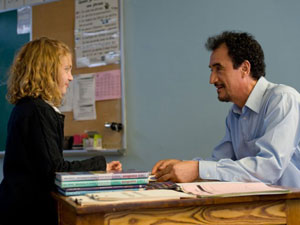
The film starts with what is to be a typical day at a Catholic elementary school. A boy named Simon is getting the milk for the day. As he walks into his classroom alone, he discovers his teacher Martine hanging. This is very hard for the students and the school. One of the difficulties is finding a new teacher for the students of the deceased teacher’s class. In walks Bachir Lazhar, an Algerian immigrant. They are hesitant at first but they agree to hire him.

Known to few is that Bachir’s immigration status is in question by the courts. A package he receives comes into question. The immigration court asks him why he won’t return since ‘Algeria is back to normal’ but he replies “Nothing is ever really normal in Algeria.” The interrogations eventually get frustrating to the point Bachir admits of the fire in Algiers that killed his wife and children back in the 90’s. That fire was no accident.

The class tries to move on as usual. For some students, it goes fine. For others like Simon and Alice, who witnessed their teacher hanging, it’s difficult and painful. Alice is more vocal about her difficulties. She makes a speech in class about violence and how the hanging has an effect. She also has a softer side and develops a liking for Monsieur Lazhar, even learning about his home city of Algiers. Simon is more reserved and difficult. He’s not the same since the hanging and appears like he has something to let out but can’t. He even resorts to fights with other students. Home life isn’t easy for him because his parents are rarely there. However something has to be done as it’s discovered he has a picture of Martine which he drew angel wings and a noose on.

Dealing with the students is not an easy task to do either. The elementary school is worried about the suicide being brought out into the open. Plus teachers are now under strict limits over what to deal with students’ issue and how to deal with them. The new laws set twenty years ago changed lots to how a teacher can function towards a student. This is hard for Bachir as he wants the students to heal from this trauma. Especially Simon, whom the teachers are considering expelling. We learn shortly before Martine hung herself, Simon was hugged by Martine while he was crying but told his parents she kissed him. The parents came down hard on her.

What happens in the end is one scenario ends on a bright note and another scenario ends on a low note for Bachir. In the end we get a turnaround that’s more valuable than Bachir keeping his job as a teacher. Something that the school board could never give the children.

The role of Monsieur Lazhar was that of a man who would help bring help when it was needed unexpectedly.  Right at the beginning of his teaching he would tell the meaning of his name:  “Lucky” and “Tell the good news,” In the end, he was the lucky one who would give the good news to the children. The students in turn would be the lucky ones as he would help the most troubled of the students heal from the trauma. He would succeed where the school board and the counselor would fail. Even in the end, his impulsive helping of the students would be too much for the school to handle. The ending would show the common belief that no good deed goes unpunished but it’s not without its rewards. Bachir Lazhar would give to the students and he would receive from them as well. His teaching of the students would also help him in terms of his own healing from the loss of his own family.

The best quality of the movie was in its gentle storytelling. We have a situation of a troubled school being taught by a teacher with a troubled past of his own. He faces two pressures of keeping his new-found job, keeping the peace of his classroom since the suicide, maintaining the peace of the school and being able to stay in Canada to avoid persecution back home in Algeria. All of this was told in a gentle manner that would keep the audience intrigued and hoping for the best for Bachir Lazhar and for Simon and Alice. That was its best quality.

The acting overall was excellent and stuck to their parts well without coming across as showy or phony. Mohammed Fellag was excellent playing a teacher with a troubled past thousands of miles away. The children were also good as they played genuine child roles instead of the typical cutesy acting Hollywood normally gives them. Their feelings, traumas and actions were not over-the-top either. The directing and scriptwriting of Phillippe Falardeau was also well-written, although not a standout. Known to few, Monsieur Lazhar is actually an adaptation of a one-man monologue. Falardeau did a very good job in creating and directing a script with a multitude of actors. He did a very smart job in making the story very real.

Intersting how Monsieur Lazhar gives Canadian film a unique achievement. This is the first time Canadian entries in the Best Foreign Language Film category has been nominated for two years in a row. Last year was Incendies. Interestingly two of the three producers of Monsieur Lazhar also produced Incendies. The Oscar nomination isn’t the only acclaim Monsieur Lazhar has received. The film also won the Viewers Choice Award for Best Canadian Film at the Toronto Film Festival, Best Film award at the Valladolid Film Festival and has been nominated for nine Genie Awards, Canada’s national award for filmmaking excellence. Surprisingly, it was not shown at the Vancouver Film Festival. It’s a shame because I would have liked to have seen it if it was out then.

Monsieur Lazhar is a film that starts out on a dark subject but it ends on a bittersweet positive note. The warmth of Monsieur Lazhar reminds us how people can succeed where the system fails. We need more people like Monsieur Lazhar out there.

Oscars 2011 Shorts Review

Now one would wonder why on earth would one want to see a reel of short films. First reason: They’re all nominated for an Oscar for Best Live Action Short Film or Best Animated Short Film. Second reason: a lot of winners of this category would go on to direct bigger and better things. Peter Cattaneo directed the Oscar nominated short Dear Rosie years before his big break with The Full Monty. Taylor Hackford won this category for Teenage Father 25 years before he directed the Oscar-nominated Ray. Most recently, Brutish director Andrea Arnold won seven years ago for Wasp and has gone on to direct two renowned British features: Red Road and Fish Tank.

Now 2011 has a crop of nominees for the categories of Best Animated Short Film and Best Live Action Short Film. I will review each and give my picks for what I feel should win and will win:

BEST LIVE-ACTION SHORT FILM

Pentecost – dir. Peter MacDonald and Eimear O’Kane -Interesting story about a boy–Damian– who’s a lousy altar boy and is punished by having no football for three months. He has the opportunity to redeem himself with a mass led by the Archbishop. Sure enough it’s in time for when Liverpool is playing the European Cup. Even the priest gives quite a pep talk to all participating in the mass. Will Damian do it right? A big surprise at the end!

Raju – dir. Max Zahle and Stefan Gieren-This is an excellent story about a German couple who adopt a boy from India only to lose him and find a dirty secret along the way. The story brings up the same moral dilemma Gone Baby Gone brings up. This is of a situation that could be quite real: an orphanage that gives away kidnapped children. The story will leave you wondering what side to choose and the ending will surprise you.

The Shore – dir. Terry George and Orrlagh George-The story is of two boyhood friends. One, Paddy,  stayed in Belfast, lost his arm and continues life as an illegal crab hunter. Another, Joe, moved to the US but returns to Belfast after being away for years. He wants to come and visit again and make peace with Paddy years after Paddy took his girlfriend, and married her. The story is as humorous as it is touching and it provides for a happy ending. I pick this as my Should Win pick.

Time Freak – dir. Andrew Bowler and Gigi Causey-There have been lots of stories about time travel but none as weird as this. A guy invents a time machine only to go back a few days into the past to correct things he’s done. And he does it again and again until he gets it right. Bizarre is right!

 –Tuba Atlantic – dir. Hallvar Witzo-A man has six days to live. A young woman is to be is death angel and help him before he dies. It won’t be easy because he’s quite eccentric: he hunts with a machine gun and fishes with dynamite. Then she learns he has a horn that can send a signal across the Atlantic. He hopes to use it to send a message to his brother whom he hasn’t seen in 30 years. She wants to be a successful death angel and he’s her third chance. It makes for a touching story with a surprise ending. I predict this for the Will Win in this category.

BEST ANIMATED SHORT FILM

Dimanche/Sunday – dir. Patrick Doyon/NFB of Canada – This is a charming 2D animation story that is coarsely drawn and has hardly any dialogue but tells a lot. It’s about a boy and the town he lives in and the places he visits. Not spectacular but charming and entertaining. One of two Canadian entries in this category this year.

The Fantastic Flying Books of Mr. Morris Lessmore – dir. William Joyce and Brandon Oldenberg- Morris Lessmore had everything fly by him in a windstorm. Then one day he sees a young woman flying with books instead of baloons, and that changes everything for him forever. Impressive use of 3D animation. Good use of music and of the animated story. I predict this Will Win the animated feature category.

La Luna – dir. Enrico Casarosa – Interesting that Disney/Pixar’s Cars 2 didn’t get a single nomination but this short that was played before Cars 2 did. While most of Disney/Pixar’s shorts feature a story done without dialogue, this story is mostly in the types of mumbling. As expected from Disney/Pixar, top notch animation and a very unique story about being able to touch the moon and its glitter.

A Morning Stroll – dir. Grant Orchard and Sue Goffe-Features a chicken’s stroll down a New York neighborhood in 1959, 2009 and 2059. In 1959, people say “How do you do?” don’t get too peeved if you bump into them and the chicken’s able to make it there safely. 2009 and people are too into Starbucks coffee and iPhone using. A bump into someone causes a big coffee spill and a chicken entering into a house is perfect moment for your iPhone video camera. Once again, the chicken makes it there safely. 2059 and New York is filled with zombies. The chicken makes it home but not after a big zombie chase. This was a good mix of 2D and 3D animation with a creative image of the future.

Wild Life – dir. Wendy Tilbe and Amanda Forbis- A British émigré tries to make his home in a small town in Alberta. While everyone else is either a cowboy or made themselves a villager, he continues to be an Englishman. Interesting and humorous. Plus me knowing Prairie life helped the sort to appeal to me. Both the dialogue from him and the villagers add to the humor of the story. The animation was excellent not just as 2D but as painting animation. The painting animation was its best quality and it makes it stand out from the five nominees. I pick this as my Should Win pick.

And there you have it. The nominated shorts for the 2011 Oscars. Stay tuned to find out the winners. Stay tuned to find out which directors move on to bigger and better things.

Oscars 2011 Best Picture Nominee: Extremely Loud And Incredibly Close

“If things were easy to find, they wouldn’t be worth finding.”

I know many of you would be nervous at first of attending a movie like Extremely Loud And Incredibly Close. 9/11 films aren’t exactly crowd-winners. Ever since United 93 and even up to now, it still isn’t. It’s still a tense topic to this day and doesn’t make for good subject matter for people to see a movie about. Nevertheless Extremely Loud And Incredibly Close is a good film of its own, if imperfect.
 
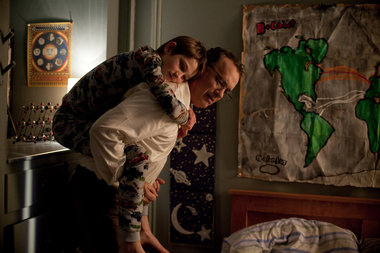
Oskar Schell is a young boy who’s a smart but fearful and eccentric brainiac often mistaken for having Asperger’s. However he’s dealing with an inner pain. His father Thomas died in the Twin Towers on 9/11, a day Oskar refers to as ‘the worst day’. His father was a jeweller who spent a lot of time with Oskar nurturing his creative and eccentric quest for knowledge. He would create puzzles, help him develop his own business cards (which lists him as inventor, Francophile and pacifist), have oxymoron challenges while practising karate, and even have scavenger hunts. You could tell Oskar is still very much an intellectual now. He keeps his collection of butterflies. He has his collection of facts and figures. He’s even intellectual in his lewd talk: “Succotash my Balzac, dipshiitake!” Yeah, real charming.
 
However his father’s death still upsets him. He died in the first tower and his body was never found. His mother held a fake funeral with an empty coffin in hopes that it would help them both heal. But Oskar is still hurting and lonely to the point he has distanced himself from his mother and even hurts himself physically. He still has the answering machine of the last six messages his father left before he was killed and replays all but the sixth and last one often, something he has hidden from his mother and replaced with a new answering machine on ‘the worst day’. The only person he talks to regularly is his grandmother who lives in an apartment next door..He feels that the missing ‘puzzle piece’ from the last scavenger hunt he had with his father could keep him from losing the spirit of his father altogether. The quest is to find out what to search for and find it.
 
One year later while Oskar goes through his father’s clothes and olf belongings, he accidentally breaks a vase. In it is a key inside a small envelope with the name black. Oskar believes this key may be the clue to the last scavenger hunt. He looks in the phone book for all the people in New York named Black: over 400 in total. He vows to search every Saturday for the person with the last name Black who knew his father and refuses to quit until its done. He won’t take any public transit, has a camera to keep a scrapbook of all the Blacks he sees, and he walks shaking his tambourine to keep his sanity while dealing with the world.
 
The first Black he sees is Abby Black, a woman just recently divorced form her husband. She says he doesn’t know his father. He visits other people named Black who don’t know his father but reach out to him: one hugs, one offers her prayer group to pray over him, another is a cross dresser, another gives him a ride upon her horse. One day, Oskar goes to visit his grandmother but meets the man his grandmother refers to as ‘the renter’.’The renter’ doesn’t talk because of witnessing a bombing during his childhood. The two become friends in the search and he learns from the man when to intervene and how to face his fears. Oskar stars to sens that the man is in fact his grandfather. Oskar even plays the messages from ‘the worst day’ for the stranger but he cannot bear to hear and demands it to stop before hearing the sixth and last message. The renter than moves out and begs Oskar not to search anymore.
 
When all seemed lost, Oskar notes a phone number on the newspaper clipping his father left a hint. It returns him to Abby Black. It turns out her ex-husband, whom she was divorcing the first time she met Oskar, may know about the key. He does meet with Mr. Black and learns about the key only to learn it’s not for Oskar at all. Disappointed and disheartened, Oskar destroys everything from his search until he learns that his mother was secretly helping him all along and even contacted all the Blacks even before Oskar had visited. Oskar compiles a scrapbook of his search and is able to find the last link of the scavenger hunt in the most overlooked of places. His fears had been conquered.
 
One strength of the movie is that it uses a creative puzzle and the Oskar’s intellectual way of thinking to help Oskar through the healing process and conquering the simplest of his fears. The scavenger hunt becomes like the journey to healing and along the way the healing comes in the moment he least expects it. The scavenger hunt is also that connection where Oskar searches for that connection that keeps him from being completely lost form his father. He finds it and learns that his bond with his father is still alive and something that ‘the worst day’ can never take away. Another thing Oskar receives is the love and care from people he never met before. It was all the people with the surname Black he encountered that shares some amount of care for him from the start of his journey to the end. It was also where his relationship with his mother heals. It was her own help with Oskar’s mission that showed the bond between the two never died. It also helped her heal too.
 
One glitch with the movie is that it doesn’t make the best of efforts of being watchable. Yes, the movie has the theme of healing but many times it focuses on the pain Oskar and his mother are going through. Especially the scenes where Oskar is shown with self-inflicted scabs. There were many times I was sitting there feeling that there would be many movie audients turned off this movie. People who have lost loved ones in 9/11 may themselves find the movie uncomfortable to watch too. Another glitch is that many feel this is a flawed look at autism. There’s no mention of autism in the movie but it has been sensed by many critics.
 
Tom Hanks did a good job of character acting as Thomas Schell, the intellectual father who always taught in character. Sandra Bullock was also very good as the grieving wife and mother. Max von Sydow was the biggest standout amongst the supporting actors playing the mute renter. Interesting how silence can make a role more that dialogue in a lot of cases. Without a doubt, the movie belonged to young Thomas Horn. This is his first ever acting role and he shines as the boy who’s both brilliant, puzzled, grieving, driven and eccentric. He doesn’t play a sugar-coated child character but one who’s very three-dimensional. Stephen Daldry is one lucky director. Ever since his first feature Billy Elliot, each of his four feature films have earned him either a Best Director Oscar nomination and/or receive Best Picture nomination. This is his fourth feature but the first one where he wasn’t nominated for Best Director. Nevertheless he does another excellent job in directing. Eric Roth does and excellent, if not glitchy, scriptwriting effort that makes this story as much our puzzle as it is Oskar’s puzzle. The score from Alexandre Desplat also fit the movie well.
 
Extremely Loud And Incredibly Close is a good adaptation of a 9/11 novel but it’s not the best at being a watchable 9/11 movie which has always been a difficult task. The effort to create a mostly watchable 9/11 movie continues.
 
And there you have it. I have now finished reviewing all the Best Picture nominees of 2011. My Oscar predictions are coming Friday.


Movie Review: A Separation

A Separation is an Iranian film with a lot of huge buzz. It won the Golden Bear Award at the Berlin Film Festival. It won the Rogers People’s Choice Award at the Vancouver Film Festival. It has already won the Golden Globe for Best Foreign Language Film. For this year’s Oscars, it was not only nominated in that category but Best Original Screenplay as well.

The film begins with Nader and Simin: a couple married for 14 years with an 11 year-old daughter filing for divorce. Simin wasn’t to pursue her career goals in another country and take her daughter with her. Nader wants to stay as he has a father with Alzheimer’s to deal with. The judge first rejects the grounds.

In the meantime, Simin moves in with her father and recommends Nader to employ Razieh; a young, pregnant and deeply religious woman from a poor area to look after his father. Nader can’t handle the father on his own as he has a buy job at a bank and he has to look after Termeh, his daughter. Meanwhile Razieh’s hot-tempered husband Houjat is unemployed for months and owes creditors a huge amount. Nader even has the opportunity to hire Houjat at the bank but is jailed the next day for what he owes. During the time nursing, Razieh learns that looking after Nader’s father is a big challenge, both physically and religiously. She can only do so much because of her pregnancy. She also has to consult a Muslim cleric if it’s a sin to do certain duties like change the father’s soiled pants.

One day Razieh finds the father out on the streets. She has to cross a dangerous intersection to get him back. We only see her take the father back. The next day, Nader returns home to find his father lying on the opposite side of the bed with his arm tied to the bed post. He’s alive but Nader is furious. He’s even angrier to learn that there’s missing money and accuses Razieh of stealing. He fires her despite her please. She comes back to plead again but Nader pushes her out of the door. We later hear some loud thumping outside and Razieh walking away.

The next day, Simin learns that Razieh is in the hospital. She and Nader go there to find out she suffered a miscarriage. A court is assigned to decide if Nader knew of her pregnancy and caused the miscarriage. If convicted, he could face from one to three years in prison. Accusations fly. Nader accuses Razieh of neglecting his father. Houjat is angry and threatens Nader and his family. We learn that Houjat is deeply depressed, self-destructive and on antidepressants. Razieh left the house that day because she had to see a doctor. This leaves Nader to think Houjat is abusive and may be the one to cause the miscarriage.

Termeh lies to protect Nader and Simin tries to arrange for a financial deal between the couple. Nader refutes because he feels it will be like admitting guilt. Nader later tells Termeh personally that he did in fact know of Razieh pregnancy. Razieh later reveals she was hit by a car the day before she was fired, questioning what really caused the miscarriage. Finally everyone meets at the home of Razieh and Houjat including the creditors. Nader is willing to make the cheque out to Houjat on one condition, that she swears by the Koran that his actions that day were the cause of the miscarriage. Razieh can’t do it because she believes it’s a sin and that causes Houjat to break down physically and emotionally.

The film’s last scene takes place in the courtroom as Nader and Simin’s separation is to be finalized. Termeh is given the option to decide which parent to live with. She says she made up her mind but wants her parents outside. The film ends with Nader and Simin waiting outside while families are shown out in the halls waiting.

I don’t have first-hand knowledge of the marriage situation in Iran but I believe that this film is trying to make a statement about the modern day difficulties of marriage and divorce in Iran. Divorce has been a common theme in a lot of films like Kramer vs. Kramer but it’s over here where we see an angle on divorce in Iran. We see one couple separating while another couple staying together but struggling with their issues. There’s a lot of things causing friction in both couples. One has a career pursuit in another country, another has a sick father to look after. One has to work as a nurse. Another has been unemployed for months. You see the friction happening throughout the movie. It starts with the scene of Nader and Simin in court getting the divorce started and it ends as the divorce is finalized. That ending scene with the credits rolling as Nader and Simin wait for their daughter’s decision while other families are out in the halls waiting and we could even hear shouts of another couple in court is probably a statement about the modern difficulties of marriage in Iran. Mind you it’s not completely about law and divorce. There are other examples where the law provides difficulties and not strictly in the area of divorce, like providing bail upon guilt to prove innocence and avoid a lengthy prison term. Even the scenes where Houjat has creditors to deal with paints a picture.

Another key element in the movie is the use of the Koran. As most of you know, I ran is a country with a strong Muslim ethic that’s even included in its own constitution. The Koran plays a huge role in the everyday lives of people in Iran. The influence of the Koran is very present in the movie. We see how the maid couldn’t clean the soiled clothes of the father because it was against her religion. We hear mention of the Koran and God in court. We see that Termeh has to attend and all-girls school. We see how Nader uses the Koran to get the whole truth out about the miscarriage. One thing we don’t see is the Koran solving the marriages. We see the couples either continue to be split apart or going through heavier friction.

Without a doubt, the standout qualities of the film were the direction and writing of Asghar Farhadi. He did an excellent job of creating a good story out of a hot topic. The acting of Peyman Maadi and Leila Hatami was excellent too. Very genuine without any showiness. Excellent supporting performances played by Sareh Beyat and Shahab Hosseini who played the other couple in the middle. There was also excellent acting from Sarina Farhadi, Asghar’s daughter, who played Termeh, the daughter caught in the middle. The use of no score until the very end worked as a benefit for the movie because it allowed the audience feel the intensity of the story.

A Separation shows how far Iranian cinema has come. Iran’s first breakthrough came back in 1998 when Children Of Heaven was a modest hit. It was Iran’s first nomination in the Best Foreign Language Film category and established director Majid Majidi as a top international director. Now A Separation is a huge favorite to win the Best Foreign Language Film category and Asghar Farhadi is the new name in Iranian cinema. It’s also surprising to see such subject matter portrayed in Iranian cinema. You think with Iran having law and order in such a strict fashion according to Muslim law, this film would’ve been banned or censored by the Ahmadinejad government. I’m not too familiar with free speech laws in Iran but I’m sure there’s a lot of censorship.

If you see A Separation, you can easily see why it’s a huge favorite to win the Best Foreign Language Film Oscar. It has a excellently-written, excellently-acted story of a hot topic in its own country. Very deserving of the win indeed.

Oscars 2011 Best Picture Nominee: The Descendants

“My friends think that just because we live in Hawaii, we live in paradise. We’re all just out here sipping Mai Tai’s, shaking our hips and catching waves. Are they insane? Do they think we’re immune to life? How can they possibly think our families are less screwed up? Our heartaches, less painful?”

The Descendants is a movie starring George Clooney which is set in Hawaii. But if you’re expecting this movie to be an escapist holiday getaway, you’re wrong. It’s about real-life pain and heartache happening in an island paradise.

Matt King is a Honolulu-based lawyer who has to deal with the fact that his wife Elizabeth is in a hospital comatose from a boat racing accident. On top of that he has the issue of dealing with being the sole family member in charge of 25,000 acres of land on Kauai owned by his family for generations which will expire in seven years. The King family decided to sell the land to a developer, something Matt supports. Matt was never really close with his two daughters and always considers himself to be the ‘back-up parent’. With Elizabeth in a coma, he now has to be the main parent and deal with things like youngest daughter Scottie’s inappropriate behavior with other children and teenage daughter Alex’s drinking. As if his ailing wife and the future of his family’s land isn’t enough to deal with.

Matt had always considered himself a lousy husband and make a mental promise to Elizabeth that he will be a better husband to her once she’s better. Then the news drops. She will never recover. She also has it in her will that she be disconnected shortly from her life support. Matt will no longer be the back-up parents. He decides to tell Alex before Scottie. Alex gives the shocking news that Elizabeth was in an affair just before the accident. He later learns the ‘other man’ is Brian Speer. Matt makes a surprising decision: to find Brian and give him the news the Elizabeth is dying and a chance to say goodbye. He learns that Matt is a real estate agent vacationing in Kauai.

After telling the family of Elizabeth’s eventual death, he goes to Kauai with his daughters and Alex’s slacker guy friend Sid to find Brian. He soon finds Brian jogging on a beach and entering into his family’s vacation resort. Matt also learns from Cousin Hugh that Brian has connections to the developer who they’re about to sell their land to. If sold, Brian Speer will gain a lot of money from commission once it’s developed.

Before confronting Brian, Matt introduces himself to Brian’s wife Judy. Soon Matt is able to meet alone with Brian. He drops him the news he’s Elizabeth’s husband and she will die soon. Brian is shocked of the whole thing. He apologizes for the grief it’s caused the family but that the affair was only a fling and he loves his wife and sons. The fate of the land is finally determined.. The cousins meet to vote on the land mostly in favor of the developer but Matt decides to keep the land for other reasons. He doesn’t regret it even if it means potential lawsuits from Hugh or other cousins.

With the issue of the land over, Matt can now focus solely on the last days of Elizabeth as she’s taken off life support. Scottie hears the news from a nurse. Sid, who first appeared like an idiot, is now a figure of moral support for the family. Elizabeth’s father tells Matt he should have been a more devoted husband and father and describes Elizabeth as ‘good and faithful’. Matt expects Brian Speer to show up but it’s wife Judy instead. Matt is shocked but Judy is now aware of the divorce. She gives Elizabeth flowers and says she forgives her even though she should hate her for destroying her happy home. Finally after Alex and Scottie say their last goodbyes to Elizabeth, Matt comes to terms with all that’s happened and all Elizabeth has done and gives her a goodbye kiss. The movie ends with a scene showing that Matt is now no longer the back-up parent.

The best quality of the movie is that it deals with a family problem very likely to happen, if not common enough already. A wife from a marriage that’s already failing is about to die. The husband finds out his wife cheated on her while she’s in a coma with only days remaining. A lot of times, Alexander Payne has focused on stories of people that were either failures or felt like failures. This is a story of a husband and father who is a success as a realtor but paid the price of his success with a failing marriage. Now with his wife dying, he has to confront the fact that she failed him as much as he failed her. He’s forced to confront the fact that he would have to be the full-time parents now that his wife will die. It’s also on the verge of what could be the biggest break of his Real Estate career and the biggest break for a family business. The impending tragedy mixed with lucrative opportunity mix well in creating a story that succeeds in telling a lot about ourselves and our own feelings. Maybe this situation could be happening to an audient who sees this movie.

It also has an important element about forgiveness. For so long Matt thought he was the bad guy and he failed Elizabeth. Then he learns that Elizabeth was the dishonest one. Confronting the sudden fact that one’s dying wife was cheating is not an easy thing to sort out. She’s dying but she was unfaithful. Matt makes a lot of surprising decisions in that factor both on the future of his family’s land and to do with Brian. It’s surprising to see the husband of the cheating wife confront the ‘other man’, tell him she’s dying and offer a chance to say goodbye. It’s also surprising to see Brian’s wife, the wife caught in the mess, confront the dying ‘other woman’ and say that she forgives her despite the pain she caused. Forgiveness is not easy. Necessary but not easy.

George Clooney again shines. This is the best effort I’ve seen him do that involved a multitude of emotions and feelings. This could be his best performance yet. Even though none of the supporting performances were at the same performance level as George, the two best supporting performances came from Shailene Woodley as the oldest daughter Alex and Judy Greer as the wife of Brian Speer. Alexander Payne did an excellent job of directing and co-writing the script with Nat Faxon and Jim Rash. Payne has always specialized in including the story’s region and its charms in stories of people’s failures and difficulties. About Schmidt captured the charm of the American prairies. Sideways captured the charm of California’s wine country. Now The Descendants captures the charm of Hawaii while dealing with the impending death of a cheating wife and mother. Again Payne directs it to perfection. That scene around the beginning which shows homelessness in Hawaii sure says something about a place we all call and ‘island paradise’. The script’s plot and atmosphere combine perfectly to make the story of family problems in an island paradise work.  The script’s mix with dramatic and comedic elements as well as some genuinely touching moments makes a situation like this easier to watch on the big screen. The addition of Hawaiian music to the movie also added to its charm. Those lucky enough to see it will be glad they did.

The Descendants is excellently well-acted, well-directed, well-adapted drama. It features a situation that could be more common than we think and it shines. Definitely worth seeing.