Movie Review: Thor

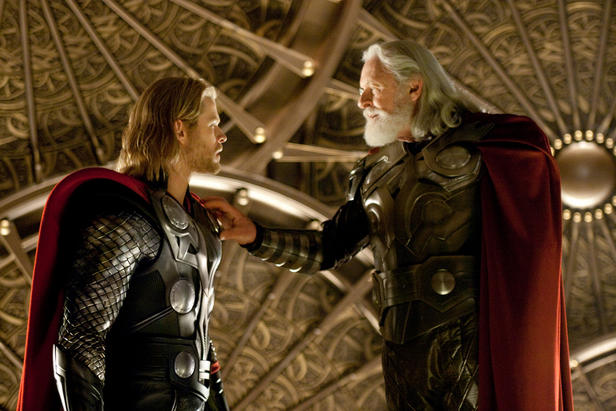
Once again, Marvel Comics had another superhero movie for release. This time it was Thor and it’s directed by Kenneth Branagh. The big question is does Thor stack up? And is Branagh able to direct sci-fi action?

Before I give my review, I have to confess that I’ve never read the Thor comic books so I am unable to compare the movie with the comics. I can just judge the movie for what it is.

The movie takes place between two worlds. The first is in the supernatural world of Asgard in 965 A.D. The second is in present day New Mexico. Odin, king of Asgard is in a war against the Frost Giants in their quest to conquer the Nine Realms, including Earth. The Asgardian army wins and seizes the Casket of Ancient Winters. Just as Odin is about to crown Thor the new king, Frost Giants attempt to retrieve the Casket. Against Odin’s order, Thor battles Laufey and the Giants along with his brother Loki, childhood friend and the Warriors Three. The battle destroys the fragile truce between the two races and Thor is stripped of his godly power by Odin for his arrogance. He is banished via a Bifrost to present day Earth along with his hammer–the source of his power–protected by an enchantment only allowing the worthy to wield it.

Thor lands in present-day New Mexico where he is found by astrophysicist Jane Parker, her assistant Darcy Lewis and her mentor Dr. Selvig. However Thor and the hammer also caught the attention of a S.H.I.E.L.D. agent who soon commandeers the hammer area building a security-tight shield and and forcibly acquires Jane’s data about the wormhole that delivered Thor to earth. Thor learns of his hammer inside the S.H.I.E.L.D. area and breaks in to retrieve it. He’s unable to lift it and is captured by the S.H.I.E.L.D. team. Selvig is able to break him free and is left exiled on Earth clueless of his surroundings. He does develop a romance with Jane.

In the supernatural world, Loki learns he is the son of Laufey, the leader of the Frost Giants who the king adopted after the war ended. Loki is able to manipulate his way to becoming king when a stressed-out Odin falls into a deep recuperating ‘Odinsleep’. He offers Laufey the chance to kill Odin and retrieve the Casket. His rule does not sit well with the Warriors Three and try to find a way to enter the Bifrost but Loki soon learns of the plan and sends a warrior to Earth to kill Thor. The Warriors find Thor, but the Destroyer attacks and defeats them, which prompts Thor to offer himself instead. After he’s hit by the the Destroyer by a potentially fatal strike, his self-sacrifice now makes him worthy to wield the hammer. As he finally retrieves his hammer, his powers return to him and allows him to defeat the Destroyer. Before he leaves back to Asgard with his fellow Asgardians, he kisses Jane goodbye and vows to return.

As Thor and the Asgardians return to Asgard, Loki kills Laufey in an attempt to destroy the Frost Giants land with the Bifrost Bridge to appear worthy of the crown to Odin. Thor arrives and fights Loki while destroying the Bifrost Bridge to destroy Loki’s plan. Thor is left to battle Loki stranded on Asgard in danger of falling into the Abyss.  Odin awakes and prevents the brothers from falling into the abyss, but Loki does a suicide fall. Before Odin coronates Thor, Thor admits he’s not ready to be king while back on Earth, Jane and her colleagues seek for a way to open the portal to Asgard.

Overall the movie has the predictable thick drama one would come to expect from a superhero movie. The special effects were excellent and top notch. The set design of the world of Thor was excellent. The action scenes were scenes that can keep one thrilled. The acting was the type of thick and casual acting one would expect from a popcorn movie, so no really bravado performance from Natalie Portman here. There’s no doubt the role of Thor was intended to make Chris Hemsworth a star. The directing was done right. Kenneth Branagh did a good job. The writing was also well done but sometimes went over the top during some of the more comical scenes. Overall Thor is the type of movie that would impress people who like action hero movies or your expected summer blockbuster fare.

Thor was a very good start to the summer movie season. It has what it takes to charm audiences of action movies and superhero movies as well as get summer movie crowds excited.

Is The End Of Gadhafi A New Beginning For Libya?

The news just broke days ago. After months of fighting, warfare and rebellion, the rebels deposed Libyan dictator Muammar Gadhafi and have just raided his compound as of now. Gadhafi is currently in hiding but refuses to believe he has been removed from power. The news of Gadhafi’s overthrow was expected over time. After 42 years, many feel this will be a new change for Libya but the question is will it be positive or negative?

Before 1969, Libya was a kingdom with increasing oil wealth. It adopted a constitution to model the freedoms and liberties similar to that of European and North American states. It also received huge foreign influence from countries like the United States, Italy and Great Britain in aiding increased levels of wealth and tourism. While most welcomed these contributions, there were many who saw it as a threat.

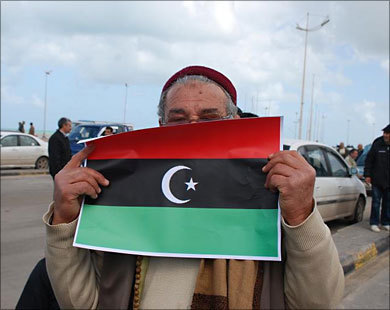
On September 1, 1969, a group of young soldiers led by 27 year-old Muammar Gadhafi staged a coup d’etat on King Idris and launched the Libyan revolution. In 1973 Gadhafi imposed Sharia law on all of Libya, purged of the ‘politically sick’ and a ‘people’s militia would ‘protect the revolution.’ The revolution was both in culture and administration. 20% of workers in Libya were under heavy surveillance by Gadhafi. Executions of dissidents were made public and broadcast on state television. In 1977 Gadhafi officially declared Libya the Great Socialist People’s Libyan Arab Jamahirya and adopted a national flag that was completely green. Gadhafi opposed any Arab country that sided with Israel and even declared a four day war on Egypt. He also supplied arms to any of its allies, both nations and terrorist groups.

Another key note is that Gadhafi was heavily influential in terrorism during the first two decades of his reign.  Some believe he was the tour de force of terrorism at the time that would pave the way for groups like Al Qaeda. He formed the Black September movement which caused many attack in the 1970’s including the Olympic Attack in Munich where 11 Israeli athletes were killed. His terrorists were also instrumental in hijacking airplanes which led to the tight security on airplanes that still continue and become stricter to this day. In 1985, it was discovered by the United States that Gadhafi harbored a camp for training terrorists. This led to President Ronald Reagan to declare an airstrike on Libya in 1986. The strike failed to kill or depose Gadhafi but killed his daughter. His terrorist activities died down soon after but not without one last infamous attack of a bomb on a flying plane exploding over Scotland in 1988, killing hundreds. Even despite his terrorist activities dying down, he still talked tough and sided with Arab leaders who were anti-Israel.

In 2011, people’s movements in Tunisia and Egypt led to the overthrow of their heads of state. The revolutionary spirit spread to other Arab countries including Libya starting in the month of February. Gadhafi quickly condemned the uprising and claimed it was being engineered by Western elements and Israel.  By March, much of Libya had tipped out of Gadhafi’s control where even members of the Libyan army were joining the revolt. Gadhafi loyalists were encouraged to kill the protesters. Soon international forces from the United States, the United Kingdom and France had joined forces to declare a military operation to remove Gadhafi. In June, the International Criminal Court issued an arrest warrant for systematically planning and implementing attacks on civilians. By August 22, 2011, rebel fighters had gained influence and control of Tripoli’s Martyr’s Square. Meanwhile Gadhafi asserts he’s still in Libya and will not concede power to the rebels.

Now the overthrow of Gadhafi is definite or eventual, if not official. There comes the big question. What will come of Libya in the future? Will it become a better stronger country? Or will it face its own problems?

The country is now mostly controlled by Mustafa Abdul Jalil, Gadhafi’s former justice minister who established the National Transitional Council shortly after the Libyan revolt began. The Declaration of the council includes many key aims like: ensuring safety of its citizens and liberating the rest of Libya, restoring normal civilian life, have the military council achieve a doctrine protecting Libyan citizens and defending the borders, draft a new constitution, pave the way for free elections and guide the conduct of foreign policy and international relations.

The policies appear promising but the big question is can it be attained over time? Many Arab countries that have established new freedoms and new liberties have faced the threat from dissidents, terrorists and loyalists of the former dictators. Afghanistan and Iraq have held elections and drafted new constitutions after their revolutions but have constantly faced attacks from many dissident factions that still happen to this day. Also it is possible of another coup d’etat in the future from a new dissident or Gadhafi loyalist with military power. The future of Libya has yet to be determined in the wake of the deposition of Gadhafi that continues as we speak.

Libya also has the 10th largest oil reserves in the world and the 17th highest petroleum production. It’s high petroleum production and low population has given it the fourth-highest GDP in Africa. During Gadhafi’s reign, the money was used to buy arms which led to many of the terrorist attacks. The wealth was not evenly spread out amongst the people. Under a new government in Libya, will the wealth be used more generously for the sake of developing the nation and the quality of life for its citizens? Or will it be a heated political debate in the future?

Since Gadhafi’s official overthrow is eventual, the future of Libya is a big question. The future of the country and the leadership that follows will be a new chapter in the country’s history but which direction it goes, and whether the new intended freedoms and liberties will be successfully carried out, still remains a question that only time can answer.

WORKS CITED:

WIKIPEDIA: Libya. Wikipedia.com. 2011. Wikimedia Foundation Inc. <http://en.wikipedia.org/wiki/Libya>

WIKIPEDIA: National Transitional Council. Wikipedia.com. 2011. Wikimedia Foundation Inc. <http://en.wikipedia.org/wiki/National_Transitional_Council>

Jack Layton: 1950 – 2011

It’s extremely rare when a major politician dies in the middle of his term. It’s also unfortunate that Jack Layton dies soon after the biggest success for himself and his political party. Nevertheless his influence in Canadian politics will always be remembered.

John Gilbert Layton was born in Montreal on July 18, 1950 to a family with a huge political background. His mother Doris Steeves was a grand-niece to a Father of Confederation. His father Robert Layton was a Progressive Conservative MP who served as a Cabinet Minster during the Mulroney administration. His grandfather was a cabinet minister in Quebec parliament. His great-grandfather was an activist for the blind. Naturally he would follow in his family’s footsteps. He was elected student council of his high school and studied Political Science at McGill University. In 1969-1970 he was a member of the Quebec Youth Parliament. In 1970, the family moved to Toronto where he attended York University and received his PhD in Political Science. He became a professor at Ryerson University, was a prominent activist and wrote many books on political issues and his beliefs.

He first entered politics on a civic level. He was elected to Toronto City Council in 1982 and soon became one of the most outspoken members of the council and a leader of the left wing. He was one of the first advocates for rights for AIDS patients and spoke his opposition to the building of the Skydome and Toronto’s bid for the 1996 Summer Olympics. In 1985 he moved on to the Metropolitan Toronto council. In 1988 he became returned for the election to Toronto City Council. He not only won but his reformist coalition for which he headed gained control of City Council. In 1991, he made the move to run for mayor of Toronto. His opposition to the Olympic bid and the low popularity of the NDP party at the time caused him to lose the election. Layton would return to teaching and later founded an environmental consulting business, the Green Catalyst Group. He ran for the House of Commons twice in the 90’s and lost both times.

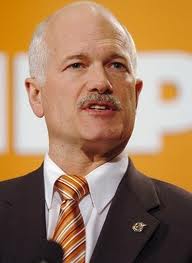
Then in January 2003 came the biggest breakthrough of his political career. He was elected leader of the federal NDP party. Before the 2004 election, Layton was already known for making some eyebrow-raising statements about the Liberal party led by Paul Martin shifting to being too right-wing. During the 2004 National Election, Layton accused the Liberal Party for the increase in homelessness and homeless deaths in Canada. Many people complained that it was negative campaigning. Layton caused another controversy during that election when he suggested the removal of the Clarity Act and allowing Quebec to declare independence upon a referendum vote. In that election the Layton-led NDP party had 15% of the popular vote, the highest in 15 years, and 19 seats in the House of Commons.

In the next federal election, in January 2006, Layton attempted to cast himself as the sole remaining champion of universal health care. Layton constantly repeated during the campaign to Canadian that they have a ‘third choice.’ Some conservative pundits mocked Layton and his stances. Some would paste Layton-styles moustaches on them and say things like ‘raise my taxes’ or ‘I’d like to pay higher gas prices.’ Layton also went all out in attacking the scandal-ridden Liberals at the time and pledged to use his minority clout to keep the Conservatives in check. The election resulted in 29 seats in the House of Commons for the NDP: 11 more than the previous election. Layton’s wife Olivia Chow was also elected to the House of Commons making them the first couple to be elected to the House.

During the 2008 Federal election, many were comparing Layton as trying to pass himself off as Canada’s Barack Obama. He shunned the comparisons and reminded people that he only simply shared the same views as him like the working class and the middle class. Layton also mentioned he told Obama and Hillary Clinton the North American Free Trade Agreement was hurting people on both sides of the border. Layton also spoke out about internet freedoms and his stance in favor of net neutrality, torrent sites, video-sharing sites and social networking sites. The NDP would go on to win a total of 37 seats in the House but would only be the fourth-most populous behind the Conservatives, Liberals and Bloc Quebecois. Shortly after the election in November 2008, Layton negotiated with Liberal leader Stephan Dion and Bloc leader Gilles Duceppe on forming a coalition to replace the Conservatives as the government. Prime Minister Stephen Harper responded by suspending parliament until January 2009. After Liberal leader Michael Ignatieff signed a budgetary agreement that would end the coalition, Layton declared: “If you oppose Mr. Harper and you want a new government, I urge you to support the NDP.”

In 2011, a new national election was called as the Conservative party was defeated in a Vote of Non-Confidence for contempt; the first time in the history of the Commonwealth for a government to receive a Vote on Non-Confidence. That resulted in Prime Minister Harper dissolving parliament for a new national election. During the election, appeal for the NDP started slow but Layton’s NDP party soon increased greatly in popularity after the leadership debates. The NDP moved past the Liberals into second place in the polls behind the Conservatives and first in Quebec. Soon after his popularity rose, a smear campaign came about as a retired police officer stated he saw Layton naked in a massage parlor back in 1996 but didn’t charge him. Layton responded that he was just simply getting a massage. In the end, no charges were laid against Layton. In the election, held May 2, 2011, the NDP won 103 Seats. That was the highest-ever total of seats for the NDP party and made the NDP the Official Opposition party to the Commons for the first time ever with Layton as the official opposition leader.

One thing known to few was of Jack Layton’s illness and the severity of it. In February 2010, he announced he had prostate cancer and vowed to beat it and continue to pursue his duties as the leader of the NDP. On July 25, almost three months since the national election, he announced he would take a temporary leave to fight an unspecified newly diagnosed cancer. He announced he planned to return as leader of the NDP once the House of Commons was to be resumed September 19, 2011 and recommended NDP caucus chair Nycole Turmel serve as interim leader. On the morning on August 22, 2011, Jack Layton died at his Toronto home. He was 61.

Jack Layton was a unique politician. He came from a family who had a lot of political experience. He rallied and campaigned for causes that were popular with the left and he strongly believed in as well. As a leader of a national party, he brought ideas and spoke of issues in ways unheard of before by leading Canadian politicians. He brought ideas unheard of before in Canadian parliament. Overall he was one p[politician who believed in a better Canada and wasn’t afraid to speak out about it. After his death, Prime Minister Stephen Harper said:  “On behalf of all Canadians, I salute Jack’s contribution to public life, a contribution that will be sorely missed. I know one thing: Jack gave his fight against cancer everything he had. Indeed, Jack never backed down from any fight.”

As a fitting final tribute, Jack wrote a letter two days before his death. His family released the letter the day of his death that ended with these final words:

“My friends, love is better than anger. Hope is better than fear. Optimism is better than despair. So let us be loving, hopeful and optimistic. And we’ll change the world.”

WORKS CITED:

WIKIPEDIA: Jack Layton. Wikipedia.com. 2011. Wikimedia Foundation Inc. < http://en.wikipedia.org/wiki/Jack_Layton&gt;

Movie Review: Kung Fu Panda 2

Yes, I’m playing catch-up with my movie reviews of the summer. Hope you like this late review.

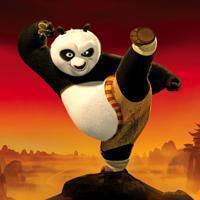
I’m sure you remember the first Kung Fu Panda. Po was the lumpy clumsy Panda who came from nowhere to become the Dragon Warrior. It charmed audiences, made people laugh and even rivaled Disney/Pixar in making 3D animated movies. Now Po’s back in Kung Fu Panda 2. But does this new version of Kung Fu Panda still have its kick?

We begin the movie learning of the clash between the peacock clan and their son Lord Shen stealing the power of the fireworks and using them as weapons. When Shen learned from a soothsayer that a warrior in black and white would defeat him, Shen exiled the pandas from the village. Shen’s parents exiled him soon after to which Shen swore revenge.

Flash forward 20 years, we see Po as the Dragon Warrior protecting the Valley Of Peace with the Furious Five who are now his friends and allies. Master Shifu senses Po lacks inner peace. At first Po doesn’t know what he meant until the five attack a band of wolf bandits. During the fight, Po is distracted by a symbol on the head wolf’s armor which causes a flashback to memories of his birthmother. He then learns from his father, the goose Mr. Ping, that he found him as a baby in a radish basket and adopted him since. Learning that truth leaves Po frustrated and upset.

Later Master Shifu learns that Master Thundering Rhino has been killed by Lord Shen with a cannon he build and plans to use to destroy kung fu tradition and conquer China. Po and the five go to Gongmen City to end Shen’s control. They come across two imprisoned council members and try to chase down Shen’s wofl pack, only to be captured. Upon being brought before Shen, Po and the Five break free and destroy Shen’s cannon. However Po is again distracted by the symbol that caused flashbacks of his mother which allows Shen to escape and destroy the tower with an arsenal of cannons. After escaping, a concerned Tigress confronts Po of his distraction. Po knows of Shen’s presence on the day he was separated from his parents and has to ask him about his past

Despite Tigress fearing for him, Po breaks into Shen’s cannon factory and confronts him. Shen tells Po his parents abandoned him before blasting him out of the factory and capturing the Five. Po finds himself rescued by an exiled Soothsayer in the city he was born in. The Soothsayer guides him to embrace his past where Po learns his village was raided at the time he was born as Shen’s forces killed every panda and burned the village. Po’s father was fighting the war and told Po’s mother to run and escape with their baby. Po’s mother ran throughout the snow and left him in a radish box at a place she knew he’d be safe, Mr. Ping’s place. It’s upon returning to his old home and finding his childhood toy that he learns he was given up out of love and raised out of love. Finally he attains inner peace.

Po then returns to Gongmen City to save the Five and stop Shen from conquering China. Po and the Five along with Ox and Croc block the gates to shop Shen but Shen’s cannon clears the way and lands them all in the ocean. While Shen attacks Po with his cannon, Po is able to use his inner peace to redirect Shen’s cannon fires to Shen’s cannon, destroying it. He then urges Shen to let go of his past, but Shen refuses and attacks Po. In the fight, Shen accidentally cuts the ropes to his own cannon and is crushed to death. Po achieves victory and freedom for Gongmen City. He returns to Mr. Ping and lovingly declares him as his father. The very end may hint to many that there may be a Kung Fu Panda 3.

While I’m not a big fan of most Holywood sequels, I have to say that I was impressed with Kung Fu Panda 2. It managed to have a story different from the first movie. Its fights and special effects were just as dazzling as the first. The characters still had their charm from the original and especially kept the appeal of Po. The movie had an excellent range of voice-over talent with renowned actors like Jack Black, Angelina Jolie, Dustin Hoffman, Jackie Chan, Michelle Yeoh and many others. The animation graphics were excellent and top notch to the slightest detail.

For the most part, I believe the movie would be fine for parents of children but not for most adults. It is a movie that doesn’t have the same level of adult appeal as a Disney/Pixar animated movie would. Some things that may appeal to parents is the actors doing the voiceovers. Overall, the movie, storyline and humor are more tailor made for families of young children.

 Overall Kung Fu Panda 2 makes for an enjoyable night out at the movies for families of young children. Even some older children or teenage fans of the first movie will enjoy it.

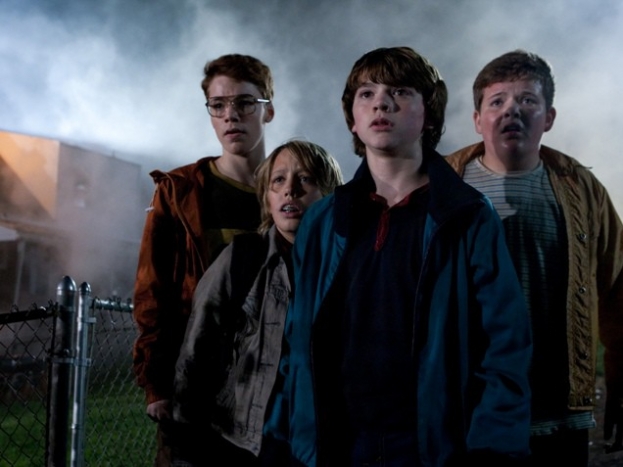
Move Review: Super 8

DISCLAIMER: Okay, I know I’m behind in my writing and my movie reviewing. This has been a summer where I’ve tried to relax as possible so please excuse while I play catch-up here.

It’s the summer: the time when Hollywood producers, directors and film companies compete for the #1 grossing movie and the top moneymaking film company. It’s always at the box office where they decide the tried-and-true from the tried-and-tired. Despite the intense competition, there’s always a movie that comes with modest expectations that surprises everyone and steals their attention in the end. Super 8 is a movie that came with no top billed cast, Steven Spielberg acting only as a producer, and directed by little-known J.J. Abrams. Nevertheless it surprised everyone who saw it and gave them more than their money’s worth.

The movie starts as Joe Lamb’s mother had died on the job at the steel mill in an Ohio town. His father, the town deputy, is not taking it that well and even arrests Louis Dainard, the town bad apple. Four months later, school’s out. Joe’s father wants to send him off to a baseball camp in Pennsylvania but Joe’s more interested in making a zombie movie with his friends. This is a film director Charles Kaznyk wants to make to win a Super 8 film competition. He convinces Alice Dainard, Louis’ daughter, to play the protagonist’s wife in the movie. Alice steals her father’s car and takes the group to a train station to film the scene. During the shoot, a train passes by which the crew hopes will add more to the story. During the passing, Joe notices a truck driving towards the train, colliding, and derailing the whole train. In the aftermath, the kids come across a lot of explosions from the train cars and unique white cubes amongst the debris. They also find out the man who hit the train was their biology teacher Mr. Woodward who instructs them never to talk of what they saw or they and their parents will be killed. Just before the children flee, they learn that the Super 8 camera was untouched during the crash. Later the U.S. Air Force arrives to take over the crash scene.

Over the next two days, strange paranormal phenomena occur like people and dogs disappearing, power lines vanishing, missing electronics and even a gas station destroyed by something unknown. Woodward, recovering from the accident, refuses to answer the Air Force any questions and he is poisoned by a soldier. The Air Force has complete control of the town and its people, even deliberately starting a wildfire to evacuate the whole town. The town relies on Joe’s father to assure them of their security and answer their questions.

In the meantime the kids try to use some of the events as catharsis for Charles’ film, including using one evacuation scene for shooting. They also try to look for clues to this whole mystery. The first clue comes in the developed film used at the train station shoot. They notice something bizarre, like bugs. Later after Alice is amongst the missing, they break into their school and search for any of Mr. Woodward’s items that may have clues to this creature. What they find is a film and audio recordings about a creature that crashed to Earth in 1958. The alien only wanted to rebuild its ship but the Force tortured and imprisoned it to take its technology. One film even showed Woodward attacked by the alien only to form a bond. Woodward crashed into the train to free the alien.

The Air Force capture the boys and place them on an Air Force bus heading back to the base only to be attacked by the alien. The alien kills the men from the Air Force bus with allows Joe and the boys to escape and return back to the town. The boys return to town which is under heavy fire from the malfunctioning military equipment. They find a subterranean lair near the cemetery where Joe’s mother is buried. They come across many missing people still alive, including Alice, in which the alien was planning to have for food. They also learn the town’s electronics are underneath the base of the water tower formed together in which the alien is hoping to build a machine to return him back to his planet. Joe rescues Alice but in the escape, Joe is caught by the alien. Joe tells the alien that he can still live on after the painful events. The alien understands him telepathically and allows Joe and his friends to escape.

Soon after, all the loose metal, including the cubes that break free from the Air Force transport truck, are attracted to the town’s water tower. The cubes align and a ship forms allowing the alien to enter and finally leave earth. During the end credits, we see the film in which Charles, Joe and his friends created. A fun zombie movie filled with simple effects and gory make-up.

The movie is not just about an alien breaking free from the Air Force captivity. It also has a lot of human elements and themes. One theme featured is about parent-child relations. The town sees Deputy Lamb as a hero but Joe sees him as someone who has alienated him ever since his mother’s death. Alice Dainard thinks her father’s a monster. Things turn for the worse as she befriends Joe and her father forbids him. Another theme is about trying to heal from the past. Deputy Lamb blames Louis Dainard for his wife’s death since he didn’t show up for his shift that day. Joe also keeps the locket of him as a baby in which his mother wore until her death. Another theme is about the growing pains of adolescence. Charles hoped using Alice in his film would attract her to him. Instead she develops a bond with Joe. That puts a hot spot in the friendship between Joe and Charles with Charles feeling like the misfit again because he’s overweight. This was one sci-fi film that had a lot of depth in its script that worked well with the movie.

One of the best things about this movie is that it will remind many people of Steven Spielberg’s thrillers of the past. I’m sure most of you have a favorite one: Jaws, Close Encounters of The Third Kind, Poltergeist, E.T.: The Extraterrestrial, Gremlins, The Goonies. They captured people’s imaginations and dazzled viewers looking for an escapist thrill. Here in Super 8, we can see a lot of the Spielberg magic captured with the storyline, the special effects and the thrilling sequence of events. That’s what makes for a winning story. Many people can already see many hints of Spielberg’s past movie’s in Super 8. I’m sure if you see it or have seen it, you might too.

The best thing about the movie has to be the lack of star-billing in this movie. Here the main characters are the children. The adults are in minor roles. They are all great individually but its their unselfish performances together where the acting shines best as a whole. J.J. Abrams’ direction is also excellent. He was very good at taking the story he wrote and turning it into a thrilling movie that is as generous with its storyline as it is with its thrilling effects. With Spielberg acting as producer, I’m sure that J.J. Abrams could rightfully label himself the heir apparent to Spielberg. The visual effects definitely could pass as some of the best of the year. The mix of music with 70’s hits and the original score of Michael Giacchino was also excellent. Overall this was an excellent movie.

In terms of its business, Super 8 cost surprisingly over $50 million to make and even had a video game released with it. As of now, the film has grossed $125 million in North America and just over $200 million worldwide; not enough to rank it even in the annual Top 10 list of highest grossing movies. I really enjoyed it. I feel sorry for those who missed out on it. It’s also surprising to see that something like this about an alien invasion of such would draw and captivate moviegoers in the late 70’s but doesn’t seem to do so now.

Super 8 is an excellent summer movie that the viewer would expect little of but would leave the theatre amazed. This definitely has to be one of the best summer movies you could see. It may not look like your type of movie but if you give it a chance, you might be surprised.
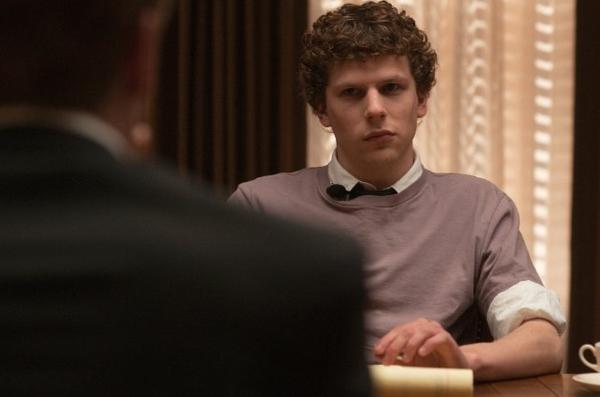
Movie Review: Midnight In Paris

Midnight In Paris turned out to be one of the most unlikely sleeper hits of the summer. Little was expected of it: Owen Wilson being the biggest name, a romance featuring characters older than the 20’s, a Paris setting and a trip back to the past. Somehow it was able to capture people’s imaginations and make moviegoers want to see it.

The story is about Gil: a Hollywood screenwriter who’s successful but easily distracted. He’s engaged to Inez, a daughter of wealthy conservative parents. While the four are vacationing in Paris, Gil is struggling to finish his first novel about a man working in a nostalgia shop; a novel for which he plans to give up his scriptwriting career and move to Paris for inspiration. This does not sit very well with Inez’s parents as they don’t favor the arts or Paris nor does it sit well with Inez herself as she intends to live in Malibu. Meanwhile Inez’s friend Paul who appears to know a lot of the artistic greats makes things more complicated as Gil finds him insufferable and even phony.

 After a wine tasking one night, Gil is drunk and alone outside the hotel. At midnight, Gil comes across a coach leading a group to a secret place. Gil joins the group and the people appear to be celebrating 1920’s couture. Later we see that the coach leads to a place where the 1920’s come alive with the Cole Porter, Josephine Baker, Ernest Hemingway, F. Scott Fitzgerald and wife Zelda. He even meets Gertrude Stein and offers her to look over his novel. One catch we learn as he returns to the hotel, he’s back in the present.

Gil goes to return the next night novel in hand and offers to bring Inez with him but she’s annoyed with what he says and returns to the hotel. The coach returns at midnight and this time Ernest Hemingway is inside. He gives Gertrude his novel and she introduces him to Picasso. Gil encounters Picasso’s mistress Adrianna whom he has become attracted to. The following day Paul  shows Gil and Inez Picasso’s painting of Adrianna at a museum and tells his story about it. Gil contradicts with the truth he just saw the other night, only to annoy both Paul and Inez.

Gil visits the past more often for inspiration for his novel which annoys Inez. Her father even hires a private investigator on him, only to be lead to the Versailles during the era of Louis XIV and never to be found again. Gil spends more time with Adrianna, who leaves Picasso for Hemingway. This confuses Gil as he feels he’s falling in love with her. Meanwhile he meets with surrealists like Salvador Dali, Man Ray and Luis Bunuel who see nothing strange about him coming from the future. Gil goes furniture shopping with Inez but comes across and an antiques dealer who’s selling Adrianna’s diary. He also learns from a conversation with the antiques dealer herself that she also has the same fondness for the 20’s Gil has. Later a guide from the Rodin Museum translates Adrianna’s diary and he learns she’s in love with him. Gil returns to the past and confesses his love to Adrianna. A coach leading them to the days of the Belle Epoque drives up and Adrianna opts to go in, talking of how she longs of the days of the Belle Epoque and how the 1920’s are so imaginative. It there that Gil learns about the illusionate lure of nostalgia and learns to accept the present for what it is. In the end, the romantic triangles between all involved take a surprising turn and Gil makes some surprising decisions.

I don’t think the movie is stressing too many points but rather telling an amusing love story where artistic inspiration and one’s passion are the top themes. It does pay an admiration for the writers and thinkers in the past but it reminds us to admire their influences rather than dwell back to their time.

Another theme that’s common in Woody Allen’s movies is about artists and their inspirations. It shows how a top Hollywood writer feels that burning desire to create a novel that no Hollywood millions can take the place of. Allen puts in many legendary artists, writers and filmmakers—including some from an American expatriate group in Paris at that time–who received their inspiration in Paris to make his point. It also reflects on Allen’s feelings of conservatism being stuffy, especially with the Tea Partiers. Interesting how Gil is an artist mesmerized by legends of the past while Inez’ father admires a political party known for its past thinking.

In terms of the movie’s acting, this is the best acting I’ve seen from Owen Wilson. He seems in these past few years to be leaving his past Slacker Pack schtick behind and is now doing more sensible roles. This is an excellent move for Wilson. Here he plays a man who’s smart but easily distracted. Very good job. The supporting roles were also excellent, especially the character acting. Most of the characters of people from the past are so well-acted, you easily forget who the actor is. It took me a while to recognize Adrien Brody as Salvador Dali, Marion Cotillard as Adrianna and Tom Hiddleston as F. Scott Fitzgerald. The most recognizable was Kathy Bates as Gertrude Stein. Nevertheless her acting was still top quality.

The best effort has to come from the directing and writing from Woody Allen. I will admit that Woody Allen’s humor and comedies are not as fresh as it was during the 70’s and Midnight isn’t that different. If there’s one thing I like, it’s that Woody Allen is able to keep quality and good effort in comedy. While most comedic writers rely on cheap shots, one-liners and slapstick to make hit comedies, Allen keeps the intelligence in his storylines and presents comedies with amusing situations, full characters and an ending that differs from your typical Hollywood endings. Here we have characters that make you laugh and think at the same time. Here we have a return back to the past that fits the story well. Here we have a romantic comedy that doesn’t end the way your typical Hollywood romantic comedy ends. in terms of box office, Midnight is Woody’s highest-grossing film in North America ever. Impressive.

Midnight In Paris is not a comedy for everyone. I don’t think a trip into the past in Paris at the stroke of midnight will draw everyone. Nevertheless it is a refreshing break from your typical predictable, formulaic Hollywood fare and will impress whoever is willing to view it.

South Sudan: The World’s Newest Nation

Hi. This is an article that I have delayed posting here for the longest time. Hope you like it.

It was declared on July 9, 2011. South Sudan was now an official independent nation of its own. Its population is an estimated 8,000,000. The capital city is Juba, a city of an estimated 400,000 people. Hearing about what the people of South Sudan went through, you’d feel their independence from the main Sudan was hard-earned.

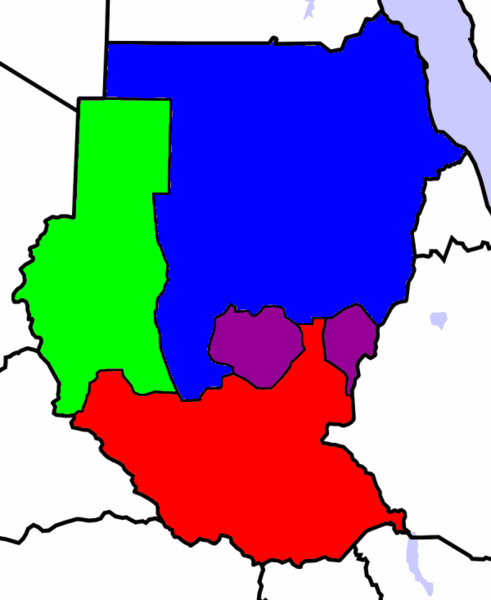
Map of Sudan and regions. Area declared South Sudan is in red.

Firstly Sudan was originally a joint condominium between Britain and Egypt until they declared independence in 1956 as the Republic of Sudan. Despite Sudan being independent, it was not unified. The northern and southern parts of Sudan were sharply divided.  The main divide between the two was based on ethnicity but also about religion; the northern part of Sudan was predominantly Muslim while the southern part of Sudan had a Christian majority. Conflict between Northern Sudan and Southern Sudan had already existed for a year and would continue until 1972. That war would be known as the First Sudanese Civil War. Half a million people were killed. It would take an agreement in Ethiopia in March 1972, known as the Addis Ababa Agreement, that would end that civil war. The goal of the Agreement was to address and appease concerns of the southern Sudan liberation and succession movement. This would help to give some autonomy to the Southern Sudanese region and would give peace to Sudan for almost a decade.

The one thing the Agreement failed to do is dispel the tensions that caused the first Sudanese Civil War. Then in 1983, Sudan’s President Gafar Nimeiry declared all Sudan an Islamic state, The Southern Sudan Autonomous Region was abolished on June 5, 1983 and the Addis Ababa Agreement was ended. This would lead to the Second Sudanese Civil War. This war would last from 1983 to 2005 and would have one of the highest civilian death tolls since World War II. Two million people were killed as a result of the warfare, famine and disease caused by the conflict. Four million people from Southern Sudan have been displaced during the times of the war. At the start of that war, the Sudanese People’s Liberation Movement was formed as both a rebel group and a political party in response to the crises.

The war finally ended in January 2005 after a comprehensive Peace Agreement was signed. The purpose of the agreement, known as the Naivasha Agreement, was to develop democratic governance countrywide and share oil revenues. It further set a timetable by which Southern Sudan would have a referendum on its independence. The referendum happened during the week of January 9-15, 2011. Almost 99% of South Sudanese voted for independence. Independence was declared on July 9, 2011 and the United Nations recognized South Sudan’s independence on July 14th.

Despite being the world’s newest nation, South Sudan still faces problems and challenges in the time ahead. One problem is that the famine that is occurring mostly in Somalia also includes South Sudan and other nations. Another problem is that conflict between Sudan arose again a month ago with the South Kordofan conflict that still exists today. Another problem is of possible intertribal enmity within the country. One challenge South Sudan will have to face in the future is organizing the nation and its rights amongst the people. It is currently on a human rights watch by the UN, and rightly so. The SPLA may have been able to get South Sudan its independence but is also known for human rights atrocities of their own. Even the CIA has suspected of genocide in southern Sudan last year. One thing the elected President of South Sudan, Salva Kiir Mayardit, has promised is respect to freedom of religion. Kiir himself is Catholic with a Muslim son.

South Sudan: the world’s newest nation. Will it be a better, wealthier, more developed, more just country that Sudan was and still is? Or will it have its own problems or atrocities? Only time will tell.

WORKS CITED

WIKIPEDIA: South Sudan. Wikipedia.com. 2011. Wikimedia Foundation Inc. < http://en.wikipedia.org/wiki/South_Sudan >

IMAGE CITED

WIKIMEDIA: Regions Of Sudan. Wikimedia.com. 2011. Wikimedia Foundation Inc. <http://commons.wikimedia.org/wiki/File:Regions_of_Sudan.png&gt;

HST Referendum: BC Votes On The Tax

Hi. I know it’s been a while since I wrote something, especially of substance. So here I am getting back into the swing of things with my latest article. Hope you like it.

If you’ve lived in BC this past year and a half, you may have known for a long time about the most heated three letters in the province: HST. The tax came from nowhere, became part of BC faster than you think and is now up for public vote after a year of existence. The tax and the craziness surrounding it is both frustrating for the citizen and cartoonish in the media’s eye. Even more surprising is that the referendum involving the HST isn’t your typical ballot-and-booth referendum but a mail-in referendum lasting a full month. Most BC residents may not know a whole lot about this Harmonized Sales Tax but it sure has been far from harmonious in BC.

What few people know is that British Columbia is currently one of five provinces with an HST. The others being New Brunswick, Newfoundland and Labrador, Nova Scotia and Ontario. Actually it was the Atlantic Provinces who worked back in 1996 in having a Harmonized Sales Tax implemented in order to lower the amount of tax a citizen would have to pay. This resulted in a 15% HST that came into existence on April 1, 1997. When the GST lowered to 6%, the HST went down 1% to 14% and would go down to 13% when the GST was reduced to 5%. It was noticed that the price of goods fell when the HST came in. In fact one of the things in changing from a cascading tax to a value-add tax was to reduce income taxes, and instituted direct transfer payments (refundable tax credits) to lower-income groups, resulting in lower tax burdens on the poor.

The benefits of the HST were appealing. Even Prime Minister Stephen Harper government said of tax harmonization: the single most important step provinces with retail sales taxes could take to improve the competitiveness of Canadian businesses.” However it was in 2010 when the HST was implemented in BC and Ontario that the drawbacks came to light. It made businesses hard to manage and property values hard to maintain. Many food expenses which had either to the one tax or neither tax became more expensive. The price of gas increased. Services like haircutting and dry cleaning which had only one tax saw the raised price. Some items in BC, like public transportation, ferry costs and toll-bridge tolls. Children’s clothing, child-care items and feminine hygiene items were also exempt. Nevertheless the expenses that were already added were noticed soon enough.

In BC, the brouhaha about this tax is not just simply its existence but its introduction and implementation. It was first reported back in June 23, 2009 that the BC government under the leadership of Gordon Campbell intended to harmonize the two taxes. Full attention to this tax didn’t come until after the 2010 Winter Olympics in Vancouver had ended. Before it was to be implemented on July 1, 2010, the raucous was not only raised by BC citizens but former premier Bill Vanderzalm in campaigning to get the HST abolished. After the HST was made official in BC, Vanderzalm still continued on his campaign while Gordon Campbell’s popularity soon dipped to single-digit percentages, leading him to retire.


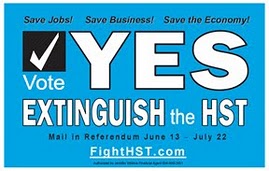
Now the fate of the HST lies in the hands of the citizen of British Columbia. All registered BC voters including myself were sent a mail-in yes/no ballot in which one is to vote not on keeping the HST but on abolishing the HST. The deadline for mailing in the vote was Friday July 22nd. During that time, there has been many pro-HST and anti-HST rhetoric. Those against the HST would speak of their drawbacks, most notably the increase in expenses for BC citizens and the businesses that have either faced huge economic difficulties or closed. The common citizen should also have its own experience with the HST in the past.


Those for the HST have come from economics or other sources that have studied the HST in the past. On May 4, 2011, an independent panel commissioned by the BC government released a report on the impact of the HST in BC. The report concluded that “Unless you are among the 15 per cent of families with an income under $10,000 a year, you’re paying more sales tax under the HST than you would under the PST/GST: On average about $350 per family.” The report also predicted that by 2020, the HST is anticipated to result in a BC economy that will “Be $2.5 billion larger than it would be under the PST. That’s about $480 per person or $830 per family.” There was even a prediction from the University of Calgary that the HST will lead to 600,000 more jobs in the next ten years. Economists have even spoken of the potential damages and drawbacks that could happen if the HST is abolished.


Anyways the referendum is over. If you didn’t mail your ballot in by now, tough cookies. Time will tell what the result of referendum will determine. Time will also tell which tax system was supported by the people and whether it will pay off in the long run. Stay tuned. The future of BC and its economy will be decided.

WORK CITED

WIKIPEDIA: Harmonized Sales Tax.Wikipedia.com. 2011. Wikimedia Foundation Inc.  <http://en.wikipedia.org/wiki/Harmonized_Sales_Tax>

Stanley Cup Game 7 Aftermath

Excitement Before The Big Game.

I don’t have to explain Game 7 for you; most of you know Boston won 4-0 and took the Stanley Cup with it. I don’t even have to explain the aftermath that happened immediately after. It’s worldwide news now. However I would like to tell what I experienced, why I’m not surprised and what has happened since.

I saw the event over around Robson and Beatty. It was in a building with 70 others. It was a fun time, even though we weren’t happy with the final score. We sat through watching the Stanley Cup being given out, despite our obvious disappointment. Afterwards many of us stuck around to help set the place up for tomorrow’s work day. As we were looking out the window, all we saw were people walking down the street. Within a matter of minutes, I heard someone say that two cars were being burned. Another short while later, I heard another say that a police car was set ablaze on Granville. Once we had the room completed, I talked with four others I would be leaving the building with that I felt it was best to go to the Yaletown SkyTrain. Just as we were leaving, we went outside and saw rising smoke from above a skyscraper. The skyscraper was blocking the view of where the smoke was coming from. Then we heard two explosions that sounded like gunshots only to see more smoke. It was after ten minutes of looking out to the rising smoke that we decided to walk the long route to Yaletown SkyTrain. While walking, we saw one cafe had a TV screen on and live coverage of a car burning outside the Post Office building; that area where we saw smoke rise. We were all shocked. Soon we boarded the Canada Line Skytrain, got off at the Langara station and took a bus to a Metrotown Restaurant to toast the Canucks.

 At home hours later, I didn’t know if I would be going to work the next morning. The next morning I was able to go to work but not without seeing some of the damage, destruction or repairs happening. It was all over the news. Reactions not just in Vancouver’s news but all across Canada and around the world poured in. The riot led to 150 injuries, 15 burned cars and millions in damages and stolen goods. Even a story of a Boston Bruins fan stabbed in the neck. Vancouver was officially defamed.

The craziest thing about these riots is that they were not completely unexpected. Some may remember that seventeen years ago, in 1994 when the Canucks lost the Stanley Cup to the New York Rangers in Game 7, there was rioting happening then too. Businesses were damaged, there were at least 100 injuries. Police had to rush in to stop the action. Remembering that, I was originally planning to title my article Vancouver Riots: The Next Generation. Recently I heard a story from my uncle that there was a riot in Vancouver back in the 60’s when they won the Grey Cup. Whatever the situation, it was the riot of 1994 that would make Vancouver the unofficial ‘riot capital of North America’. There would be further riots: 1997 at the time of the G8 summit, a multitude of pre-Olympic protests and clashes, and Olympic raids during 2010. Vancouver has also been known as a central meeting spot for anarchists from all over BC and even the Northwestern United States. Even many people knew that there would be a riot after Game 7, win or lose. Some made mention that there were people in the crowd of Georgia street dressed as fans but carrying pepper spray and goggles for the sake of wreaking havoc at the end. Mayor Gregor Robertson and the Chief Of Police even made mention in a news story that they learned from 1994 and would be prepared for a possible riot this time around. They couldn’t have been wronger.

Despite all the nasty things that happened, there was a ray of hope. As workers started cleaning up the glass from smashed-in windows, volunteers came in and helped with the clean-up. I saw many along the streets and even around the Post Office building cleaning where cars burned the night before. Groups on Facebook started support groups like: ‘Vancouver Spirit Rally,’ ‘Real Canucks Fans Don’t Riot!’ and ‘Canucks Fans Against the 2011 Riots.’ One Facebook page even encouraged volunteers to clean up from the night before. That may have to do with why there were volunteers cleaning the next day. There were even pages devoted to posting photos of people causing criminal activity like ‘Vancouver Riot Pics: Let’s Get These People Locked Up,’ and ‘Report Canucks Riot Morons.’ Pages like those has led to many arrests since. On the plywood held in place of the various business’ broken windows, people wrote messages of apology or messages condemning the rioting or support to Canucks and the city of Vancouver. It’s a given that when cowardice like the riot arises, humanity responds.

 It has been eleven days since the riots. A lot of rebuilding and replacing have happened since. A lot of support has happened since too. The reputation of Vancouver since the riots still has yet to be determined. Will new laws be passed to prevent further riots from happening? If Vancouver qualifies for another Stanley Cup finals, will there be another telecast on a big screen on Georgia Street? Win or lose, will things be better this next time? Or will we have another riot? And will the authorities be prepared this time around? Only time will tell.

My Statement To Be Made.

Stanley Cup Finals Game Seven: All Or Nothing

This is it. On Wednesday June 15th at Rogers Arena, the Stanley Cup will be decided in a single game. The two finalists–the Vancouver Canucks and the Boston Bruins–both have won three games apiece. Both have shown their strengths and both have shown their weaknesses. Both have some key players out, either by penalty or injury. Both have also been the subject of negative opinion and positive opinion. Whatever the situation, tomorrow decides it all. But who will win? Instead of predicting the winner for tomorrow, I decided to sum the two all up and break them all down:

VANCOUVER-Three wins on home ice. All of their wins have been very close: 1-0, 3-2 overtime and 1-0. One thing about the wins is that they may not have been big or spectacular but the Canucks knew how to play smart at home in order to make the wins happen. Yes, the wins were mostly conservative but their conservative play would pay off at home. Their losses to Boston have been a lot bigger: 8-1, 4-0 and 5-2. Part of the reason for their losses in Boston have to be with the lack of confidence many would display. It would be noticeable as they would miss many important plays. Also during the Boston games, there was a noticeable weakness in Roberto Luongo as he let in a total of fifteen goals. Whenever he was replaced by Cory Schneider, the Canucks would soon get their confidence back and start playing better hockey. Already two top players: Aaron Rome and Mason Raymond are out.

BOSTON-Also three wins on home ice. All three of their wins against the Canucks have been decisive: 8-1, 4-0 and 5-2. The Bruins definitely know how to go all out on them while at home but during the away games, they’re lacking. All three of their losses have been tight games. They’re not as good at scoring in Vancouver and despite having a lot of puck control, they don’t materialize it at Rogers Arena as well as they could. One thing about their big wins is that they’re hoping to use it to intimidate the Canucks en route to winning the Stanley Cup. The big wins didn’t intimidate the Canucks enough as they would win 1-0 on Game 5. Tim Thomas has been an excellent goalie conceding only eight goals in the final. However this would prove to be a weakness as there would be two Canuck wins of 1-0. Plus Boston’s big wins in Game 3 and 4 didn’t succeed in intimidating the Canucks as they would win Game 5 1-0, putting the embarrassments of Game 3 and 4 behind them.

Now there’s the overall play. The media are already calling this the ugliest Stanley Cup finals in recent years. It all started in Game 1 with the Burrows Bite. Then in Game 3 came the check from Canuck Aaron Rome to Bruin Nathan Horton. That left Horton hospitalized and out of Finals play. For Rome’s part, he was slapped with a four-game suspension also leaving him out of Finals play. Then came the ‘pumping his tires’ reference from Bruins goalie Tim Thomas to Roberto Luongo that has been well-published. Already the Canucks were labels the most hated team of the Finals by many. Then things took a worse for Boston. Game 6 saw a check to Canuck Mason Raymond which left him hospitalized with a fractured vertebrae. Also many on the web have suspected the Boston ice to be too soft and the Boston referees too ignorant to the Bruins own penalty-worthy misdoings. Already the Finals are memorable for a lot of wrong reasons.

With Game 7 just more than a day away, people are already giving out their predictions. There has even been some numerology and trivia bits floating about to hint who will win. Now I’m not one who completely believes in numerology or trivia odds and ends but I have been hearing some interesting facts that may lead to tomorrow’s fates. I heard that a Canadian host city of an Olympic Games would win the Stanley Cup the following year: Montreal hosted in 1976 and won in 1977; Calgary hosted in 1988 and won in 1989: Vancouver hosted last year and it’s just so close. Also in favor of Vancouver, there’s the fact that of the fifteen previous Game 7’s of the finals, all but two have been one in the Game 7 host city. However there’s also one going against Vancouver which I learned of during Game 5’s telecast. Of the previous fifteen Cup Finals that lead to a Game 7, all but four winners of Game 5 would not win the Cup.

Whatever the odds and ends, whatever play happened in the previous six Finals games, only tomorrow will decide the 2011 Stanley Cup Winner.. Will Vancouver’s conservative style of playing and winning at home pay off? Or will it take its toll in Game 7? Will Boston’s big wins succeed in intimidating the Canucks for Game 7? Or will it be like in Game 5 in which the Canucks were able to bounce back from humiliation and show the Bruins they weren’t so intimidated? It will all be decided when the puck drops in Rogers Arena tomorrow, Wednesday, June 15 at 5pm Pacific time. May the best team win!

Me with the Stanley Cup. Which team will hoist it tomorrow?