It’s VIFF Time Again

Cinema

Yes, the Vancouver International Film Festival starts again. Today begins the 35th installment of the Film Festival. This year will not only be exciting because of what to see but also what new additions are happening.

This year’s theme is: “Expand the frame.” Part of the aim of this year’s VIFF is to make the Festival more accessible and more creative. One of the new additions is the VIFF Hub. The Hub and surrounding area will be the location for lectures and exhibitions surrounding film and art. There will even be art exhibitions, virtual reality exhibits and music performances from DJs, local performers and performers from around the world. Some events are free of charge as long as you’re a VIFF member while some may be ticketed events. The VIFF website will explain it all.

Film is still the centre of it all. There will not only be films shown but lectures from industry professionals as well. Directors, producers and actors will appear at some showings for Q&A’s including an appearance of Tatiana Maslany. Deal-making will also be included in the process. This year, for the first time, there will be an IMAX film shown over at the Telus World of Science for the Closing Gala.

As for volunteering, this year there were 1100 volunteers signing up. Way higher than the usual 800 that serve the required 32 hours of work. Because of that, volunteer seating will be limited during many films or not allotted at all. Nevertheless I should be able to get in to see a lot of good films. This year promises to have hundreds of shorts and feature films from 73 countries, including five ‘globetrotting’ films. As of press time, 13 films are official submissions for  the category of Best Foreign Language Film for this year’s Oscars. A footnote worth adding is A Flickering Truth from last year’s VIFF is New Zealand’s official entry in the category for this year. Canadian films will remain the focus as has been in past Festivals. This year’s top sponsor is no longer Rogers but a more local big name in telecommunications: Telus. SuperChannel will take over the People’s Choice awards.

As for highlights, here’s a list of some of the films headlining the VIFF:

  • OPENING GALA: Maudie – A biographic film of Canadian folk artist Maude Lewis starring Sally Hawkins and Ethan Hawke.
  • CLOSING GALA:  Voyage of Time: The IMAX Experience – An IMAX spectacle of the universe from the beginning of time to today. Written and directed by Terrence Malick and narrated by Brad Pitt.
  • American Honey – A drama about a teenage orphan trying to grow up. Directed by Andrea Arnold and stars Shia LaBeouf.
  • The Birth Of A Nation – This Sundance’s hot ticket and the hottest thing to come from the fest in years. Nate Parker writes, directs and stars in this drama of a slave rebellion that occurred decades before the Civil War.
  • Elle – The latest black comedy from controversy-causing director Paul Verhoeven. Isabelle Huppert plays a video game CEO with a lust for power and revenge.
  • The Girl With All The Gifts – A British zombie drama directed by Colm McCarthy and stars Gemma Arterton and Glenn Close.
  • Graduation – A Romanian drama of a doctor doing what he can to insure his daughter gets into a presigious university. Director Cristian Mungiu won Best Director at this year’s Cannes Film Fest for this.
  • The Handmaiden – A Korean drama of a pickpocket who plays a Japanese maid of an heiress whose fortunes he plans to steal. Divided by chapters and loaded with sensuality.
  • Human – A documentary by French director Yann Arthus-Bertrand. It focuses on the world from on high from positive things like love to even negative things like murder.
  • I, Daniel Blake – This year’s Palme d’Or winner at Cannes, this film focuses on a man getting his disability status reassesses and denied benefits. Ken Loach’s look at one man rivaling the system.
  • Julieta – Pedro Almodovar is back! Spain’s submission for the Best Foreign Language film for this year’s Oscars, Almodovar returns to the heart-on-the sleeve melodramas with female lead characters he’s most famous for.
  • Manchester By The Sea – Another highlight from this year’s Sundance. Director Kenneth Lonergan showcases a story of a man (Casey Affleck) returning to his Massachusetts home after the death of his brother and trying to sort out his family’s past.
  • Milton’s Secret – A Canadian hot ticket directed by Barnet Bain, it’s a unique story of how a troubled 12 year-old teenager finds relief from the frustrations of his life through his grandfather. Stars Donald Sutherland and Michelle Rodriguez.
  • Moonlight – Director Barry Jenkins showcases a drama of an African-American man struggling to come out despite the past troubles that haunt him.
  • Toni Erdmann – Germany’s submission for the Best Foreign Language film for this year’s Oscars, the film tells the story of a woman frustrated with her conniving father and his female disguise that irritates her to the point of leaving him behind after her promotion.

So this is what this year’s VIFF has in store. It all starts September 29th and it all ends October 14th. Lots of excitement to come.



2015 VIFF Wrap-Up: An Excellent Year

CinemaDISCLAIMER: Okay, I know this is a month late but I’ve had some busy times and two colds plus I was waiting for some certain facts that took forever to come. Nevertheless I decided to finally publish this VIFF wrap-up today.

The Vancouver International Film Festival wrapped itself up the night of Friday, October 9th. The sixteen days were full of excitement throughout the city. It was also quite warm which allowed for some people to pass up films in favor of savoring whatever sunny weather we’ll have left for the year. Nevertheless this year’s VIFF was still bustling.  The format that worked the two previous years continued to work again this year. The three Tinseltown theatres gave the VIFF four extra days.

Volunteering was also good this year. Funny thing is this year we were only to do a single theatre this time around. I originally requested to volunteer for the VanCity theatre. Thing is it was loaded with volunteer requests. They asked me to do one of the other theatres. I obliged to do Tinseltown. That worked for the most part but the thing with me is I like to volunteer on both opening day and closing day: the two days Tinseltown isn’t part of the VIFF. That led me during the volunteer training to negotiate with one of the heads of volunteering and she gave me the option of doing Cinematheque those two days. I was happy with that, especially since I could get free popcorn.

Volunteering started off somewhat easy on opening day at the Cinematheque. Things became a bit more difficult when I worked the Tinseltown theatres. There one would have to deal with big crowds. Almost reminding me how busy it was over at the late Granville 7. There was even one time Tinseltown was so booked with volunteers, I was asked to volunteer the Sunday at the nearby SFU theatre. One film was a special event film where one corporate sponsor was giving people popcorn. Problem was food couldn’t be allowed in the theatre. You can imagine how peeved the people were. I also remember how busy closing Friday was. I had to do something over at the Centre for Performing Arts in between volunteering at the Cinematheque. Hey, film fests are busy things.

As for films I watched, I saw fourteen including the Reel Youth shorts fest. The feature-length films I saw came from Canada, USA, UK, Germany, Japan, South Korea, New Zealand, Greece, Ireland, India and Denmark. I saw a lot of good live-action movies as well as some good documentaries. I think the edgiest film I saw was Nina Forever. Hard to say what my favorite was. I found 100 Yen Love the most entertaining and A Flickering Truth to the the most eye-opening documentary I saw. I was hoping to see some Canadian live-action but it just wasn’t to be this year.

Anyways here is the 2015 Vancouver International Film Festival by the numbers:

140,000: estimated gated attendance

710+: Film and Television forum delegates

930+: hours of film screened

900+: volunteers

-520+ accredited industry guests

549: public screenings

370: films shown (shorts and feature length)

99: Canadian Films and shorts shown

85: countries entering films

114: Canadian premieres

  • 35: North American premieres
  • 24: International premieres (first screening outside home country)
  • 11: World Premieres

-198:  meetings with industry leaders and delegates at VIFF Industry Exchange

104: guest speakers

14: entries in the Best Foreign Language Film category for this year’s Oscars shown

16: days of showing films

9: screens showing films

7: theatres participating in the VIFF

Now I know some of you want to know the award winners. Here they are:

ROGERS PEOPLE’S CHOICE AWARD

-BROOKLYN (UK/Ireland/Canada), dir. John Crowley

VIFF MOST POPULAR INTERNATIONAL DOCUMENTARY FILM AWARD

-INGRID BERGMAN: IN HER OWN (Sweden), dir. Stig Bjorkman

VIFF MOST POPULAR CANADIAN DOCUMENTARY AWARD

-HAIDA GWAII: ON THE EDGE OF THE WORLD, dir. Charles Wilkinson

VIFF IMPACT: CANADIAN AUDIENCE AWARD

-FRACTURED LAND, dirs. Damien Gillis & Fiona Rayher

VIFF MOST POPULAR CANADIAN FILM AWARD

-ROOM (shared with Ireland), dir. Lenny Abrahamson

VIFF IMPACT: INTERNATIONAL AUDIENCE AWARD

-LANDFILL HARMONIC (USA, Paraguay), dir. Brad Algood

#mustseeBC Award (for most anticipated BC film)

-TRICKS ON THE DEAD, dir. Jordan Paterson

BEST CANADIAN FEATURE FILM AWARD

-SLEEPING GIANT, dir. Andrew Cividino

EMERGING CANADIAN DIRECTOR AWARD:

-THE SOUND OF TREES, dir. Francois Peloquin

BEST CANADIAN SHORT FILM AWARD

-BLUE-EYED BLONDE, dir. Pascal Plante

MOST PROMISING DIRECTOR OF A CANADIAN SHORT FILM:

-NEVER STEADY, NEVER STILL, dir. Kathleen Hepburn

BEST BC FILM:

-FRACTURED LAND, dirs. Damien Gillis & Fiona Rayher

BC EMERGING FILMMAKER AWARD:

-THE DEVOUT, dir. Connor Gaston

Those were awarded at Friday’s closing gala. After the VIFF closed, VIFF repeats happened at the VanCity theatre until Thursday the 15th. The volunteer party went from being held close to the end of the fest to being held on Halloween. It all started at the VanCity theatre as volunteers were treated to three circus-themed thriller films. The first one was held at 10 in the morning and was 1933’s Freaks which is frequently shown on Turner Classic Movies. The second was the 1960 British film Circus Of Horrors. The third and last was 1966’s Berserk starring Joan Crawford. Goodies and pastries were around for us to much on. Of course there were candies. There were prizes given away as well as prizes for costumes. Then the festivities ended with a three-hour dinner and dance at a nearby cabaret. It was a fun Halloween, that’s for sure. Great to see this year’s VIFF end on an exciting note.

So there you go. The 2015 Vancouver International Film Festival ended with continued success if not a record and fun for all volunteers. Next year’s VIFF is anticipated to be from September 23rd to October 8th, 2015 and should be bigger and better. It’s 10 months away but I still can’t wait. Anyways we’ll see how things go for next year’s VIFF. See you next year!

VIFF 2015 Review: Deathgasm

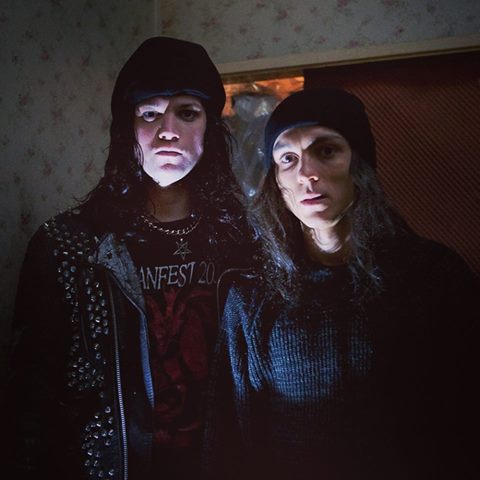
Deathgasm is a New Zealand horror comedy of metalheads taming up to save the day.

Deathgasm was one of those fringy movies shown at the VIFF that was shown at the Rio Theatre at 11pm on certain days. It was entertaining to watch after a long night and became a guilty pleasure of mine.

Brodie is a metalhead coming from a dysfunctional home. His mother was institutionalized and he is sent to live with his devoutly religious Uncle and Aunt and his obnoxious jock cousin David. Life at his new school isn’t the best and it’s only made worse by his cousin David’s bullying. However he is able to catch the eye of a classmate named Medina and he meets a few metalheads like him: Zakk, Dion and Giles. The band goes well and with good camaraderie but Brodie doesn’t know Zakk came onto Medina

Since the four of them all like heavy metal, they form their own band which Brodie names Deathgasm. One day, they break into an old house which they later find one of their heavy metal idols Ricky Daggers living there. Ricky gives them some magical sheet music but only before he’s killed by a cult leader after they left. The band plays the music only to find that one part of the song sends to send off demonic spells. Nevertheless they’re tempted to play it.

One day they play the ‘demonic’ part so intensely, it casts a curse on the neighborhood. Almost everyone outside of the band affected by the music has turned into a zombie. On top of it, the demon has been released and must be destroyed. It’s a gory battle trying to kill all the zombies in town. Fortunately David finds himself an eventual casualty. He had it coming! However that was just half the battle. They have to find the demon to end everything for once and for all. It ends on an entertaining note and leaves you thinking “That was fun!”

Overall it was a funny movie. It was an entertaining horror comedy to watch and it appeared like the real gruesome moments happened at the right time. I’ve seen a lot of horror movies that didn’t want to be comedies but ended up that way. This is one that tries to be a comedy and knows how and when to place the shots. In many ways, it reminds me of when I saw Housebound: a New Zealand movie that tries to mix thriller moments with comedy and succeeds as well. I’m sure most people will get the joke and treat the more gruesome moments as the jokes they’re intended to be. Scenes such as the airborne severed penis and one enemy strangled and decapitated with their bloody spinal column coming out, how can one not take it as a joke? I figure if people can sit through Saw, they can watch this.

The funny thing about this film is its inclusion of ‘metalheads’ in the story. Seeing the images of the metalheads, the ‘demonic’ heavy metal music and of the heavy metal fantasia brought back a lot of memories of the heavy metal phenomenon. It’s probably still in existence for some teens. You just have to look around. However this element is questionable if it could win over young people outside New Zealand. Would they be able to identify with metalheads or even get a lot of the humor? That’s something to think about.

I give credit to writer/director Jason Lei Howden for creating this comedy which happens to be his directorial debut. It was hilarious and enjoyable in a gory sort of way. Milo Cawthorne was funny and did his role as Brodie right. James Blake and Kimberly Crossman were great supporting players in this film. Even the minor supporting actors added to the humor of the film in their own way.

Deathgasm was a funny horror comedy from New Zealand that was a great entertaining way to end the VIFF with.

And there you go. Those are my reviews of the Vancouver Film Fest films I saw. Blog about how the VIFF went for the year coming soon.

VIFF 2015 Review: The Lobster

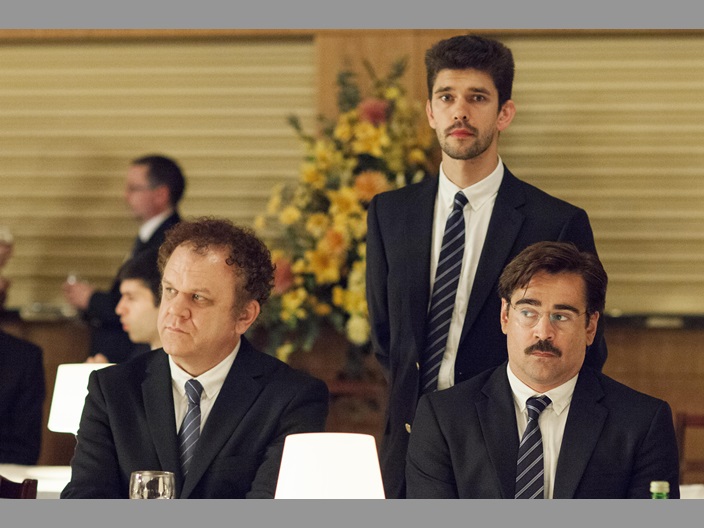
XColin Farrell, right, has bizarre experiences with being single, mating and being in love in The Lobster.
Colin Farrell, right, has bizarre experiences with being single, mating and being in love in The Lobster.

Once you see The Lobster, I’m sure it will make you think twice about going to one of those matchmaker hotels. Okay, maybe not but the whole scenario of matchmaking and the single life depicted in the film is downright bizarre.

The film is set in a dystopian future where single people are brought to a hotel in accordance to the rules of The City. The hotel gives people forty-five days to find a match. If they succeed, the couple is given a month to develop their relationship in a special section of the facility. After which, they are freed. If anyone fails in any which way, they are killed and reincarnated as an animal of their choice and sent into The Woods. People can extend their stay with The Hunt: people from The Hotel shoot tranquilizer darts at any of the ‘loners.’ One ‘loner’ capture gives one an extra day.

A man named David arrives at The Hotel. He brings with him a dog whom we learn to be his brother as he too was subject to The Hotel and failed to find a match in due time. David tries to get used to the hotel and its methods. He chooses to be a lobster if he does not succeed in finding a new woman. He even participates in The Hunt. He learns of the other leisurely activities at The Hotel. One awkward rule is masturbation is banned by painful punishment but stimulation from the maid is a requirement.

David first makes friends with The Limping Man and The Lisping Man. The Lisping Man would have to stick his hand in a toaster for masturbating one night. The Limping Man hopes to find a woman with a limp like him. Instead he’s attracted to a woman who has frequent nosebleeds. He fakes nosebleeds to win the love of The Nosebleed Woman.

David is inspired by this and first attempts to win the love of a woman whom everyone knows to have no heart. He’s impressed by her hunting skills and he’s attracted to her as she’s choking to death. He attempts to start a relationship with her but it turns out to be a disaster even to the point she kills the dog: David’s brother. He’s able to tranquilize her and bring her to the transformation room so she’ll be an animal forever.

It then gets to the point David can’t handle it anymore and escapes. He finds himself with the ‘loners:’ they live a wild life catching rabbits and hiding from the hunt. The rules are not as hard but they don’t permit any flirting or entanglement as they will punish it badly. David wins the affection of a short-sighted woman. This helps since he is short-sighted too. The loners give the two missions to go to The City and pose as a couple but it causes them to become more affectionate.

The loners go on a rampage where they try and split up the couples in The Hotel. David even goes as far as trying to split up The Limping Man and The Nosebleed Woman and others going as far as pulling a stunt with the Hotel Manager. Meanwhile the leader of the loners learns that David and the Shortsighted Woman are in love and blinds the woman. They attempt an escape. This leads to an ending as bizarre and unpredictable as the whole story.

It’s hard to see if this film was trying to make a point about dating life, being single and marrying. This is a very bizarre scenario from start to finish. Plus I would find it hard that such a situation would be for single people with our current human rights. Keep in mind this is set in the future. Hey, depictions of the future like that in The Hunger Games don’t paint a pretty picture. It’s interesting how the army of loners raid the Hotel. Makes you wonder if their mutiny is a form of rebellion or of personal anger.

I will have to say this is the most bizarre romantic movie I’ve seen since Eternal Sunshine Of The Spotless Mind. That movie was what you’d call the ‘romance of the absurd.’ I do feel it is about love and surrounding human emotions magnified 100 times. The time limit put on those at the hotel to find love could be seen as the personal time limits one puts on one’s self to find love. The case of the leader of the loners trying to split all the couples up could be a case of one’s unhappiness and how one could try to impose it on others. Even those that end up in the hotel like the limping man, lisping man, heartless woman, nosebleed woman and the short-sighted woman may reflect on people’s insecurities. Meanwhile David is in the centre of it all. He starts out as possibly the most normal of the bunch but it isn’t until the end that he resorts to eccentric extremes of his own for the sake of love.

This is the brainchild of Greek director Yorgos Lanthimos. He has accomplished a lot in his directing career. His film Dogtooth was nominated for an Oscar five years ago. This is his first English-language film. In directing and co-writing the story with Efthimis Filippou, he creates a set of worlds that could easily look ridiculous on screen but worked with careful writing and careful directing. I see many cases with the hunt, the transformation room, the mutiny and even the character of the Heartless Woman that could have easily come across as dumb but was done right and was sensibly done.

Colin Farrell did a good job of playing this bizarrely comedic role well that’s completely different from any of his blockbuster roles of the past. He had to portray a man who treats this bizarre situation as something sane and normal. Even going from the sanest person in the film to committing an insane act for love at the right moment. He does it very well and gives the comedy the right tone. Although Farrell owned the film, Rachel Weisz as the Shortsighted Woman and Lea Seydoux as the Loner Leader were the strongest supporting performers. Some of the other minor characters were also very good such as Ben Whitshaw as the Limping Man, Angeliki Papoulia as the Heartless Woman and Jessica Barden as the Nosebleed Woman.

The Lobster is a film collaboration of five nations:  UK, Greece, Ireland, Netherlands and France. It won the Jury Prize at the Cannes Film Festival and was a nominee for the Palme d’Or. It has also won top film awards at the Rotterdam and Ghent Film Festivals.

The Lobster is both bizarre and amusing in its depiction of a futuristic world and its ways of dealing with dating. It’s both bizarre and charming at the same time.

VIFF 2015 Review: Umrika

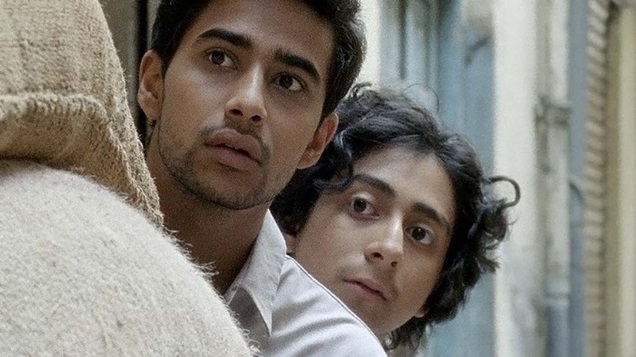
Suraj Sharma, left and Tony Revolori, right, go on a mission in Mumbai of truth and lies in Umrika.lies
Suraj Sharma, left and Tony Revolori, right, go on a mission in Mumbai of truth and lies in Umrika.

After the VIFF ended on October 9th, I managed to take in a few film festival repeats immediately after. The day after, I saw Umrika and I thought it was an amusing story.

The film begins with Udai, a young adult from India in the 1970’s, leaving his family and younger brother Ramakant for a better life in the USA. The whole village says their goodbyes to him. The family wait a long agonizing time for his first letter. When it comes, the whole village is excited. It’s a letter with pictures of how life is in ‘Umrika.’ The letters with pictures keep coming for years and they’re filled with more exciting stories and pictures. It gets the whole village dreaming. Then suddenly in 1985, Ramakant’s father is electrocuted to death. Shortly after, Rama learns that the letters are all forgeries created by his father and uncle to keep his mother from agonizing. The truth is Udai vanished without a trace in the port city of Mumbai. Ramakant is determined to find him, even if it means his own trip to Umrika.

Rama learns the best person who would have knowledge of the whereabouts of his brother is the man in charge of illegal immigration. However to reach him, one would have to be like a delivery driver or messenger. Rama is opportunistic enough to steal a bike belonging to a delivery driver of a sweets bakery. Rama is the new driver. He’s able to deliver as well as win the favoritism of the man with each delivery he makes. Rama also learns of the dark secret of him, that he’s involved in a crime ring. One deliver Rama made was of a gun used by one of his men to shoot wrongdoers.

Soon Rama finds himself living in an area owned by a restaurateur and his family. The youngest daughter who’s a waitress takes a big liking to Rama. Soon Rama’s friend Lalu comes to visit Mumbai to catch up with him. Lalu has been concerned with Rama since he left. Lalu agrees to help despite film making ambitions of his own. Soon Udai is discovered. He’s a barber working in Mumbai and married to the Himalayan girl of the village, something his mother never would have approved of. Udai revealed he never would have left because of how much it would break his mother’s heart. But the truth cannot be revealed to their mother as it would cause disgrace to the whole family and the village. In the end, Rama, Udai and Lalu devise a scheme to ‘make things right.’ It gives the impression the story ends on the right note.

The film is an impressive comedy-drama. It captures a lot of moments in the right sense. In the first half, it captures the essence of the excitement upon reading the ‘letters’ and it giving American dreams to the village children. It even captures some light humor as they insist on believing the wieners in the hot dogs are actually barbecued carrots. The film switches to drama at the right moment starting with the father’s death and then the truth revealed. I feel the film made good choices in setting the stage for the pursuit when the mother says: “It hurts me to know your brother wasn’t here to light the flame. It should be the oldest.” Despite switching to drama, it does keep the viewer intrigued with Rama’s each move from taking on a delivery job to trying to find his brother. At the same time, it highlights what it is to be young and full of dreams even when it’s faced with stiff opposition and challenges.

I don’t think the film was trying to make too huge of social commentary. However I do feel it did a good job of displaying the corruption and the shadiness happening in the big cities of India like Mumbai. I also found the time setting for the story interesting. Writer/director Prashant Nair starts the story in the 1970’s and then moves to 1985-1986. I thought that was intriguing and wondered why he chose that time period. One thing I especially noticed was the scene inside the restaurant where Rama and all the others saw images of the Space Shuttle Explosion as it happened. Looking back I think Nair was trying to say even devastating moments for the US like this doesn’t stop people from India from having their American dreams.

I feel this is an excellent comedy-drama from Prashant Nair. This is only his second feature-length film and it was very entertaining. It kept your hopes up but ended not how one would expect but on the right note. It’s unique as it becomes a story where Rama doesn’t just search for his brother but chart a path of his own. Suraj Sharma was excellent as the protagonist Ramakant. I will admit it’s not as good as his performance in the Life Of Pi but he played his part well and very believable. Tony Revolori was also good as Lalu and made a great supporting player.

Umrika has had impressive results since it debuted at this year’s Sundance Film Festival. At that Festival, it won the Audience Award for dramas and was nominated for the Grand Jury Prize in the world Cinema categories. Shortly after its premiere, the film was sold by Beta Cinema to a wide variety of countries and became the most widely distributed Indian movie ever.

Umrika is a delightful Indian film that mixes both comedy and drama well. It captures a positive essence and even keeps it alive during its negative moments.

VIFF 2015 Review – Painted Land: In Search Of The Group Of Seven

The artwork of the Group Of Seven, like the Sketch Of The Lovely North as seen above, is looked at and tracked over a trip through a group of people in Painted Land.

Seeing the documentary Painted Land reminded me just how much we Canadians lack the knowledge of our artistic history.

The film is more than a documentary of art. It’s also a documentary of three adventurers retracing the trips taken by the seven Canadian artists known as the Group of Seven. For those who don’t know, the Group Of Seven were a group of seven Canadian artists from Ontario whom in the 20’s and 30’s visited landscapes of Ontario and painted images of what they saw in their own way. Many can say they were the first artists to define Canadian art. The Seven still rank among Canada’s most renowned artists.

In this documentary are three adventurers: author Joanie McGuffin, photographer Gary McGuffin and art historian Michael Burtch. They go on a journey along the various trails, coastlines and waterlines to retrace the route taken by the Seven and even see for themselves the natural places of Canada depicted in their paintings. The trip would involve many years of research, canoeing, portaging, mountain climbing and bushwhacking to retrace their steps and learn of their inspiration. At times, they’d even bring people along like the McGuffin’s daughter or other teens interested in art.

Group-of-Seven
The Group Of Seven artists were the first artists to define Canada artistically although their art was not completely accepted at the time.

The documentary is a documentation of their trip as well as a history lesson of the Group of Seven. We’re introduced to Tom Thomson who influenced the Seven shortly before he died mysteriously in 1919. We’re taken on the same journey the Seven took as they took their art from place to place and painted what they saw in their own unique way. Frequently we see images of the landscapes and how they match the paintings they painted. We learn of how each of the Seven dealt with each part of the journey and each town or camp area they took up. We occasionally see some moments of the Seven re-enacted by actors. We’re even taken to a cabin they once held during their journey. It’s an interesting tale as we learn from each story, each trail, each visit and each assimilation of the landscape with the painting that would become the ‘painted land.’

We even learn about the negative reception they received as their art premiered. Some people were unhappy with what they saw. Oddly some thought Canada was not ready to have what defined Canadian Art. Keep in mind Canada was just slightly over 50 years old at the time. The most fascinating comment I heard from one art pundit was she hated the paintings so much, she was afraid if she looked any longer, she might love them! Odd.

I found this documentary very valuable. I feel this is a great lesson for anyone who’s into art, Canadian or not. I especially feel that Canadian artists should see this as this will give them a good sense of their artistic history, even if the painting style of the Group Of Seven is not their style at all. I feel we as Canadians lack the knowledge of our renowned artists. I myself only learned of the Group Of Seven just as I was watching this documentary. Here in B.C., we’re mostly familiar with Emily Carr, who is one of Canada’s best artists in her own right. Nevertheless I found learning of the Group Of Seven very valuable and informative. I give the documentary big kudos for that.

For the most part, I feel this is not really a big screen documentary. Even seeing TVO, which is for the educational channel TV Ontario, at the end credits makes it obvious this is a documentary meant for television airing. I think if it were to be aired on the big screen, it would have to be in an art gallery that has a theatre screen or a performance stage, like the Winnipeg Art Gallery. It’s possible to show it on an art gallery theatre screen whether or not there’s a Group Of Seven exhibit.

Painted Land: In Search Of The Group Of Seven may be more of a television documentary than a big screen documentary. Nevertheless it’s a good educational documentary for both art and history.

VIFF 2015 Review: The Classified File (극비수사)


The Classified File is a Korean drama that will keep you intrigued.

I’ll admit the Vancouver Film Festival ended on October 9th and the VIFF repeats ended October 15th. I was hoping to get most of my reviews done soon but many things happened, like an illness and other tasks of my own I was preoccupied. So you will be getting the last five of my VIFF reviews soon. In the meantime, here’s the latest: for the Korean film The Classified File.

In 1978 in Busan, a young girl to a wealthy family named Eun-Joo is kidnapped. Her abductor demands ransom money. The law enforcement team becomes frustrated as time goes on as there’s no further contact from the kidnapper over two weeks nor any more additional clues. Police assume she’s dead but the family refuse to believe so.

Eun-Joo’s mother turns to renowned fortune teller Kim Joong-San for reassurance. He tells her she’s fine but they will need the help of detective Gong Gil-Yong. Gong is reluctant to take on the case and even more reluctant to consult with the fortune teller but he agrees to take it on. Days go by as he has to wire conversations between Eun-Joo’s family and the abductor. There are even times they have to team up with the police force in Seoul but they face a reluctance from them feeling that this too is a hopeless case.

After four weeks Gong starts developing a sense that maybe Kim’s predictions are helping and could actually help to find Eun-Joo. However time is still moving on and they still don’t have Eun-Joo as the abductor continues to taunt them. Then they get a break. It leads to an exciting end of the story and an ending to the movie that wasn’t expected.

This is another example of foreign movie making. Here it’s a story of a crime drama based from evens almost four decades ago. It keeps one intrigued: a story about an abduction and it continues over a long period of time with consistent taunts from the abductor and wrong leads. The story does have an interesting element where a spiritual guide is ‘hired’ to help solve the crime. I’m sure there have been movies before about spiritual people who try to predict or sense where the victim is or where the criminal is. However very rarely is it a case when a real-life situation is depicted. I’m normally one who doesn’t believe in psychic powers but when I see all this on screen, and I know this is based on true events, I’m tempted to believe in it.

I will say that most films about using sorcery or psychic powers to solve a crime often come off as corny. This one didn’t. It did things right in showing the fortune teller’s purpose without the story becoming idiotic. It also kept the family of Eun-Joo in the story as it added to the drama and gave it a human sense. However the biggest glitch in the movie was the ending. I felt for a crime story full of drama, it ended too soft and mushy. I know it was to show the friendship between the fortune teller and the detective that occurs at the end but still I felt it became mush in the end.

Kwak Kyung-Taek did a good job as a director and co-writer. He’s one director with a big reputation in South Korea creating a lot of popular films. This should add to his resume. However I don’t see it getting too much release elsewhere. Kim Yoon-Seok did a good job as Gong despite not having a spectacular role. Yoo hae-Jin was also good as Kim and even stole a few scenes. The actors playing the family of Eun-Joo were also good. The role of the villain however was underdeveloped.

I will admit that I had expectations on this film. I read in the VIFF guide about how the politics of the time were included in the film. I was anticipated it would represent the politics of the time the same way Nameless Gangster did. It wasn’t to representative. Maybe I shouldn’t have placed that expectation on it.

There are many foreign films that made their international debut at the VIFF. The South Korean crime thriller The Classified File was one of them. It was a good, albeit imperfect, drama.

VIFF 2015 Review: 100 Yen Love (百円の恋)

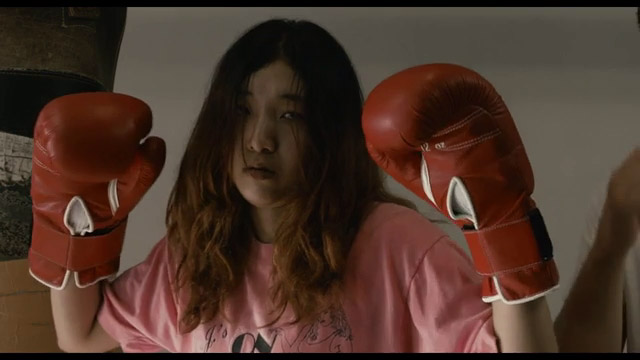
Ando sakura plays Ichiko: a slacker who suddenly has a desire to succeed at something in 100 Yen Love.
Ando Sakura plays Ichiko: a slacker who suddenly has a desire to succeed at something in 100 Yen Love.

Every VIFF I hope to see at least one film that’s a country’s official entry in the Best Foreign Language Film category for the Oscars. I had my first chance when I went to see 100 Yen Love: Japan’s official entry. It was not what I expected for a Japanese film. Nevertheless I was very impressed.

The story starts with Ichiko, a 32 year-old slacker. She became a downer with an I-don’t-care attitude since she dropped out of university. She lives at home with her mother who owns a restaurant and her yet-to-be-divorced sister and young son. For the heck of it, she applies for a job at the 100 Yen Store. During her nightshifts, she deals with her boss, a talkative creepy co-worker named Noma and a homeless woman who comes frequently in the back area to take food past the best before date.

Ichiko doesn’t expect much to happen but walking to work, she passes a boxing gym and there’s a man training there that catches her eye. His name is Yuji and he also visits the store frequently to buy bananas to which Noma calls him ‘Banana Boy.’ Yuji can sense Ichiko’s interest in him. One night Yuji buys the bananas but instead of paying, he gives Ichiko and Noma tickets to the fight. They go with Noma being a creepy partner and Yuji loses. At the dinner after the fight, Noma lies to Yuji claiming he’s her boyfriend. Then Noma goes all berserk overnight on as he rapes Ichiko and takes money from the 100 Yen Store till.

Ichiko changes after the rape. Still an employee at the 100 Yen store, she’s now Yuji’s girlfriend and she takes an interest in the boxing gym Yuji is no longer a part of as he had passed the maximum age of fighting at 37. At first she just goes there for the exercises. However things change after Yuji gets a job with a tofu delivery company and has an affair with a female carter. That infuriates Ichiko to move back with her mother and take her boxing lessons seriously. It even gives her a desire to want to be a fighter herself and even a hunger to win.

She’s given her first and possibly only fight as the maximum age for females is 33. She uses this as an opportunity for Yuji to prove his love to her. At the fight, family gather and Ichiko is hungry to win. However her opponent is one who’s already won four fights with a KO. This sets up for an ending that’s unexpected, bittersweet but positive and humorous.

I know I’ve talked a lot about foreign ‘movies’ being shown at this VIFF and other VIFFs. This goes to show that other countries are in the stage where they want to move away from strictly making films and move onto making movies that delight crowds. And not just movies of anything or something too simple, movies with something. I’m sure I was like a lot of people that think that when they go to see a film from Japan, we expect it to come from a director that wants to be the next Akira Kurosawa. I didn’t see anything in the film that made me think Masaharu Take wanted to follow in Kurosawa’s foot steeps. Guess I should adjust my expectations.

One thing that makes this film succeed as a movie is that there a lot of themes that are universal. There’s people that are slackers. There are slackers that ‘gave up’ because they slipped below expectations, including their own. There are jobs in which they hate doing and are ‘dead ends.’ There’s love and the complicated love triangles that come with it. And there’s the desire to want to move out of the shell of being a misfit and want to succeed. There’s even the 100 Yen Store which would be Japan’s equivalent to our Dollar Stores. I can see people in many countries, including here in North America, identifying with many of the themes in the film despite it taking place in Japan and in Japanese.

However the thing that grabs me most about the movie is that it consists of a lot of underachieve characters and underachiever scenarios but it’s taking place in Japan. I admit it I’m guilty like a lot of other people who have believed in the stereotype of the Japanese as people of high standards, people determined to succeed, people who go through strict competitive education programs to achieve great things. Here we have a slacker who appears done with life, a single-mother sister who returned to living at home, a convenience store owner, a loser who’s a fail at just about everything including making friends, a homeless woman, a person who sells food on a bike-cart and a person who wants to achieve in sports. These are people contrary to what we expect to see in Japan. It’s a reminder there are people like that in every country, even Japan. Sometimes I think that was the point that Take and scriptwriter Shin Adachi was to show the rest of the world. This is a story consisting of Japanese people we all forgot about.

Take and Adachi did a great job with a script that’s relatable and universal. However it was chancy too as including a rape scene in a comedy is very risky. Nevertheless they pulled it off well. Top nods however go to Sakura Ando for playing Ichiko. The whole story rested on her shoulders. She had to make it work. She even had to transform Ichiko from this 32 year-old slacker who couldn’t care less about the world to a woman with ambition and make it work. It paid off even to the point the sudden transition of Ichiko from the walking dead to a woman with a hunger worked. Sudden transitions like that don’t always work out well but Ichiko made it work. Additional kudos go to Hirofumi Arai as the boyfriend who is in the same boat as Ichiko but is romantically confused, Tadashi Sakata as the creepy Noma and Toshie Negishi as the entertaining homeless woman. The addition of a bluesy-sounding score adds to the story and even the humor.

100 Yen Love is an enjoyable Japanese movie. I didn’t know what to expect at first but I ended up enjoying it.


VIFF 2015 Review: A Syrian Love Story

A Syrian Love Story focuses on a Syrian couple from the start of 2011's Arab Spring to the present.
A Syrian Love Story focuses on a Syrian couple from the start of 2011’s Arab Spring to the present.

I saw quite a few documentaries at this year’s VIFF. A Syrian Love Story was one documentary that gets one thinking.

This is a documentary filmed year by year over five years. It starts in 2010 while Syria is going through its start of political turmoil. It had been under turmoil since the 1970’s when Hafez Al-Assad took power and any reforms promised by his son Bashar, who succeeded Hafez in presidency after his death almost ten years earlier, doesn’t deliver in the reforms he promised. Images of protest met with a violent response from government forces are too common. Caught in the middle is a married couple of Amer Daoud and Raghda Hasan. They have four sons from 6 to 22. Amer is living in Damascus being a father to the children. Raghda is in a prison for publishing a book about their relationship of all things. Amer and Raghda are no strangers to political oppression in their home country. Raghda has face imprisonment because she’s a communist revolutionary and Amer was once imprisoned with his ties to the PLO. In face they both first met in prison and fell in love through communicating through a prison wall.

Sean McAllister is in Syria looking for something about Syria’s crisis to film but something out of the ordinary. He finds it in Amer and Raghda. McAllister also shows us their four sons. The first year he films Amer’s phone conversations with Raghda while she’s in prison. He gets her sons to talk with her as well. McAllister was even imprisoned for a few days for a journalism crime and was able to listen first-hand to the torture in Syria’s prisons. He even meets the older son who broke up with his girlfriend because she was pro-Assad. Despite all this, McAllister does show a case of hope for the future, for all.

In 2012, Raghda is finally free. She is reunited with her husband, sons and the rest of her family. But they can’t stay in Syria, not while there’s civil war that started once Syrian people revolted against Assad during 2011’s Arab Spring. The family move to a refugee area in Lebanon. They do it not simply for the sake of themselves but their sons too. McAllister is nervous for the couple’s future since he knows behaviors of prisoners after they’ve been freed. He hopes Raghda doesn’t exhibit behavior that will hurt their marriage.

In 2013, they find themselves in Paris, France. Things are definitely better for the two youngest children Kaka and Bob. Bob is in a good school and Kaka is able to become a disc jockey at his high school. Things appear to go well for Amer and Raghda as they’re able to make a living for themselves but there’s a sense that something’s wrong. The children sense it.

In 2014, we get a good sense of what’s wrong. Amer and Raghda’s marriage is crumbling. Amer feels distant from Raghda and has a French girlfriend of his own. It upsets Raghda to the point she changes the password on his laptop. She even attempts suicide by cutting her wrists. No doubt it upsets everyone. She them admits she never had the chance to find herself and she feels that despite her  political freedom in France, she still feels she can do more for Syria or for others hurt by war.

The film ends in 2015. They two youngest sons have a promising future in France. Their older son reveals his pro-Assad former girlfriend was killed. Asad runs a chicken farm in France and is without Raghda. He wishes her well in whatever she does. Raghda is now in Turkey in a city 20 miles from the Syrian border. She works with refugees and is happier with her life now.

This is a unique story of love that starts with one hoping for a happy ending. We know Syria won’t turn out for the better but we hope that Raghda will be free and will return to her family and they’ll live happily ever after. We all want that storybook ending. Unfortunately it doesn’t end up that way. McAllister knows the problems prisoners exhibit after they’re free and he lets Amer and all of us know it. Over time, it shows after the moves, after Syria’s continued strife and after one senses the love between the two fading over time. It was unfortunate. The moment of hope doesn’t end up being when Raghda is free but rather when Amer is still in France and Raghda is in Turkey. That’s where the true scene of hope for the better is present.

The story is not just about the couple. It’s also about the surrounding family. This is especially noteworthy of the two youngest sons, Kaka and Bob. Bob is six at the beginning and the youngest. He tried to be a carefree child but the hurt of knowing his mother’s in prison is evident. Kaka is ten at the start and familiar with the realities in Syria. He’s able to tell Sean in good enough English his feeling of the situation, and of how he’d either like to fight or kill Assad. As they grow, the changes are present. Bob is getting bigger but has difficulties fitting into his school in Paris because his long hair causes other boys to call him a girl. Kaka is getting a better education but can’t ignore what’s happening to his parents. He can sense what’s happening and has his own opinions on what he feels should happen. Although the two are not the main protagonists, their presence in this story is vital.

One thing about this documentary is that the story focuses more on the fading marriage than it does in the strife in Syria from civil oppression to public outcry to a civil war to the eventual crisis with ISIS. However it does focus on the couple as they were fighting their own war with each other. They go from loving each other and having a closeness while Raghda’s in prison to the love fading over time after Raghda is free and they’re together again. It’s sad that they were closer together when Raghda was in prison. It’s even hard to pinpoint who’s the bad guy. Is it Amer for his fading commitment? Or is it Raghda for her inner strife? Amer appears like a jerk not even willing to try when he says things like “Syrians love prisoners,” but Raghda’s suicide attempt gets you wondering was she thinking of her family at the time?

Watching this documentary, I believe that this isn’t the type of documentary meant for the big screen. With the camera quality, editing and McAllister’s voice over, it fares much better as something for television broadcast. I’m sure that’s what it intends to be. I have to give McAllister credit for having the ability to do all this filming over time and to present a unique story. I also give Amer and Raghda credit for McAllister willing to film them while their marriage was hitting rock bottom and they were showing terrible behavior such as Amer threatening to smash his laptop and Raghda slitting her wrists. It surprises me that they were willing to show things that personal on camera.

A Syrian Love Story may not be a documentary meant for the big screen but it’s a very revealing story that reminds us not all love story has the fairytale ending. despite the hardships they show, it does end on a hopeful, if not happy, note.

VIFF 2015 Review: In Your Arms (I Dine Hænder)

In Your Arms is a Danish film that's about more than granting someone their wish to die.
In Your Arms is a Danish film that’s about more than granting someone their wish to die.

Let’s face it, films about euthanasia are rarely watchable. However Danish film In Your Arms (I Dine Hænder) succeeds in making a film that’s watchable and even entertaining and touching.

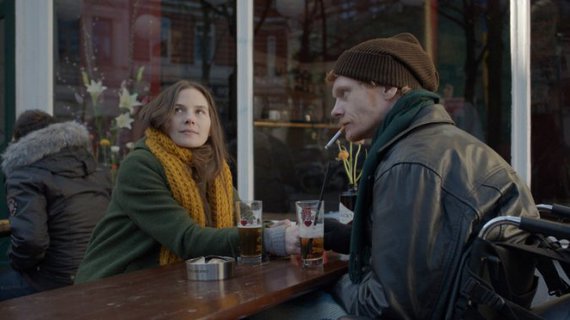
Niels is  a man with a debilitating illness. First it left his legs useless, then its making his arms more useless day by day, and Niels wants to die. Maria is a nurse at Niels’ hospital who longs for freedom, especially after the end of a troubling romance. Maria finds it very hard to be a nurse to Niels, one of her many patients. She finds him very stubborn and selfish, especially after he recently tried to slit his wrists.

Niels has a wish to die. He wants to be taken to a euthanasia clinic in Switzerland. His mother and brother don’t want it, feeling it’s just Niels being selfish again. Maria is reluctant at first but agrees to comply. She has decided to be the one to accompany Niels on his trip from Copenhagen to Switzerland which also consists of a stop in Hamburg, Germany.

After his family bids Niels good-bye, Niels and Maria board the train and it’s there that the two get to know more about each other, such as their likes and their personal lives. In Hamburg, Niels wants to be taken to places where he spent his younger years, especially the restaurants and bars.

During the time, he’s able to meet again with people from the past. Maria meets two key people. One is Niels ex-girlfriend from his ‘Hamburg Days.’ She learns he has a four year-old son. The other is the pub manager. He invites Maria to visit during the night. Maria agrees and it’s over at the pub that night it appears that Maria is able to live again. Unfortunately it comes at a price to Niels as she’s not there to help him first thing in the morning. Niels does not want his son to see him dying so she is able to make Niels watch his ex-girlfriend pick up his son so he can see him for the first and only time in his life.

During the trip, it appears as though the relation of Maria and Niels is growing. Often making one question it’s a friendship or even more. As Maria drives down the wide roads of Germany to the Swiss border, the two decide to take in the nature that they view. Maria even swims in the lake despite how snowy cold the day is. Then they finally reach Switzerland and visit the clinic where Niels wants to end his life. After receiving details of what the following day will entail, Maria spends one last night with Niels. The ending is somewhat predictable and melodramatic but done right.

I don’t think this film is trying to peddle the message of euthanasia, although it’s obvious the film maker has no qualms about it. As for me, I’ll save my view. However it appears the film is not about euthanasia. This looks like many film before it of a dying person spending their last days. Even still I believe it is to do about the relation between the two. At first, both Maria and Niels were polar opposites. He was an ailing patient in the care facility. She was a nurse who just happened to take care of him along with the others. The chances of the two being friends were slim to none but it was that trip that changed it. The film does question whether Niels did love Maria all along or if Maria did love Niels in any which way. The bond of friendship was obvious but was it more than that? I think the film maker wants to keep us guessing. Even despite whatever friendship occurred, Maria knew she still had to honor Niels’ wish even though it would hurt her dearly.

It’s not just about the two together but the two as individuals. Niels has had it with life. The disease has taken away all that he has to live for. Maria longs to live but her job and failures at relationships prevent her. It’s when the two join together on the trip that things become better for them. Niels is able to die content and Maria is able to discover her freedom within herself.

I will admit that this is a rather short film. Nevertheless this is a good melodrama that presents itself well. Samanou Acheche Sahlstrom has written and directed a good drama that centres on the characters both as individuals and as a pair. It’s the bond that occurs during the time of the trip that helps make the story. The acting from both Lisa Carlehed and Peter Palugborg made the story work as well as develop the necessary chemistry for the film. In Your Arms has won two awards at the Gothenburg Film Festival and was nominated for a producers award at the Hamburg Film Festival. Here at the VIFF, it made its North American debut.

In Your Arms may be short and may lack the qualities to make it a film of renown. What it achieves is honest sensitivity and a connection to the story and its main characters.