Oscars 2024 Best Picture Reviews: Part One

Ten is not a set number for the number of Best Pictures nominees. Nevertheless it’s still nice to have ten as the total of nominees.

This year, there are a wide variety of films nominated from science fiction to two musicals to a musicography to a dark comedy to a horror movie to many types of dramas. Here  are my first two reviews of the Best Pictures nominees:

Anora

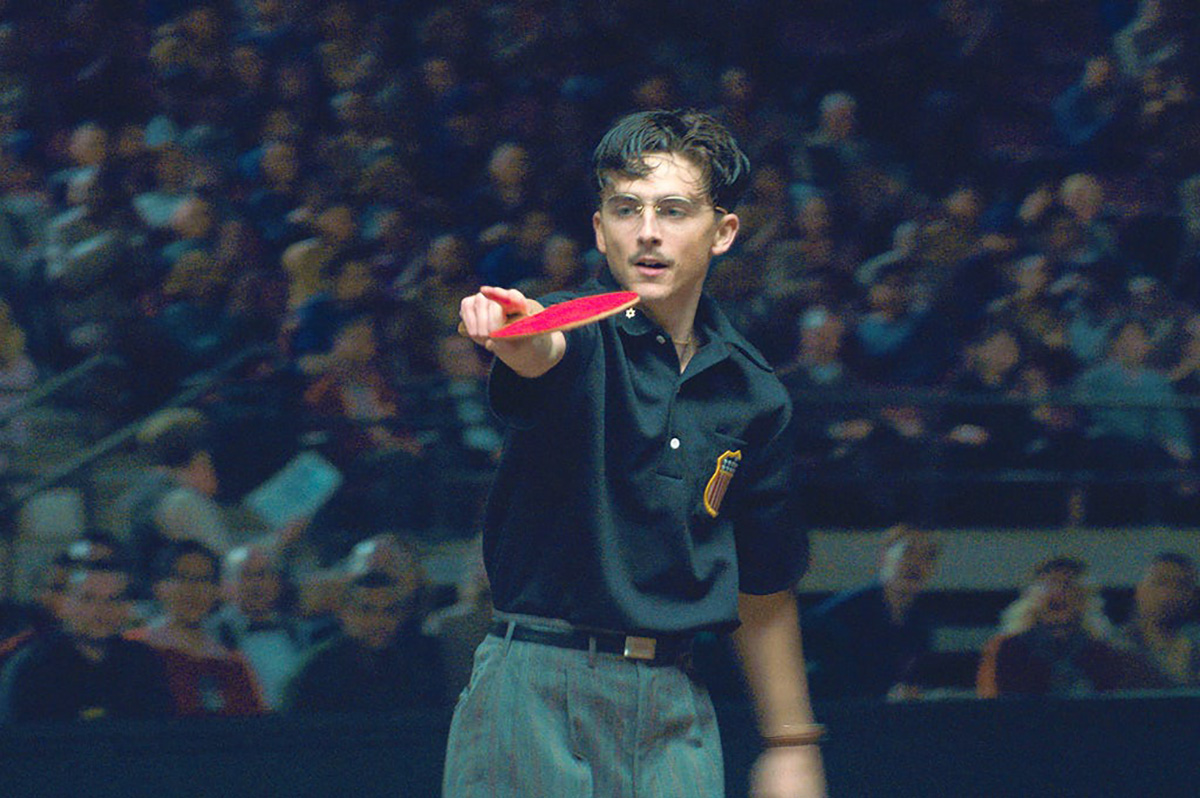
This is quite the unexpected comedy that delivers an unexpected sad ending. A sad ending was anticipated but the sad ending we got was not the one anticipated. It seems odd to have a story about a stripper/hooker marrying a rich kid to be one of the best films of the year but Sean Baker has developed a reputation for directing films about people in the sex trade. This is quite the story itself. We have a stripper who plays a ‘love kitten’ day after day for lusting men, but craves real love. We have a billionaire’s son who’s too spoiled, immature and careless to get it about life and love. He thinks marrying Anora is easy like that and he can live the same irresponsible life again, but he has a lot to learn. We have Igor, the henchman hired by the Zacharovs to have the marriage annulled, but Igor becomes the first person to see Anora as a human being throughout this whole ordeal. We also have the Zacharovs who are so obsessed with their money and power, they think they can do whatever they want. This is the kind of story that brings a lot to the table to talk about.

It’s hard to pinpoint the exact theme of the story because there’s so many topics and themes this story presents a point about. One could be the theme of sex workers. As I mentioned, Baker’s films often deal with sex workers. Here we see the case of a sex worker who is treated like a piece of meat and there are times her true feelings are shown. There are moments we stop seeing Anora as ‘this thing’ and start seeing her as a person. There’s also the case of wealth and privilege. Not only do we see wealthy people having the best luxuries but we see them having a privileged son living a careless irresponsible life, we see how the rich devalue marriage both with Vanja’s eloping of Anora and the Zacharov’s own marriage, we see how being a henchman to the Zacharovs means having to leave a christening of your godchild because your boss demands so, and we also see how the rich Zacharovs know that their money gives them power and uses it against Anora. Especially when the mother insists the family doesn’t apologize to anyone just as Igor points out Vanya owes Anora an apology for the eloping. It’s quite the irony when a stripper or prostitute has a better sense of what marriage is all about than a billionaire’s son. Or even his parents.

Often overlooked, I feel one of the top themes in the film is love. We have Anora, a stripper who pretends to love the men she sleeps with, but she craves real love. We have Vanya, whom Anora thinks she found love with as she spends weeks with him and easily falls for his marriage proposal. Anora is oblivious Vanya wants to marry an American so he doesn’t have to return to Russia and work his father’s business. Even the scenes as Vanya’s playing video games after the two marry hinds at Vanya’s irresponsibility. We also have Anora’s delusion with the marriage. Even though Vanya continues to play video games after they marry, she still thinks she met her love. We have the Zacharovs who view their son marrying a sex worker to be a disgrace to the family. We also see scenes which make you question the Zacharov’s own marriage. Finally we have Igor who becomes the first person to see Anora as a human being instead of ‘that thing.’ It was made obvious in the scene where Igor says Vanya owes Anora an apology. That ending where he allows her to stay at the Zacharovs one last night to sleep, bathe and pack and the ending scene as he’s about to drop her off is also an irony. He’s first hired as a henchman to stop the marriage, even if it means brute force, and now he actually has feelings for Anora. A shock to us all, and to a disheartened Anora as well.

This is the big breakthrough film Sean Baker has been waiting for. The film world has known Baker for a long time as one knocking on the door. He’s delivered small breakthrough films before with 2015’s Tangerine and 2017’s The Florida Project. Here, he directs a story that’s intriguing and unpredictable. It first seems like a film that would give us a cartoonish story but as the film progresses, the story is a lot deeper and it’s not the story we thought it was. Also worthy of top acclaim is lead actress Mikey Madison. If you thought you’d never shed tears for the character of a stripper, you will be wrong. It’s remarkable we have a film where the character of a stripper is shown to have real three-dimensional feelings, but Mikey’s performance of Anora was deep and revealing and we actually start feelings for her. He go from seeing her as ‘that thing’ to seeing her as a frail hurt person. Also excellent is Yura Borisov. Nobody expects any of the henchmen to have feelings for Anora, but Yura catches us by surprise. It’s also he who makes the movie into something we didn’t expect. Also good is Mark Eydelshteyn in playing Vanya. His portrayal as an immature irresponsible spoiled rich son makes you want to hate him in the end. Both Aleksey Serebryakov and Darya Ekamasova are great at Vanya’s parents. They also succeed in making you hate them as much as you’ll hate Vanya. We can see why Vanya is a spoiled brat.

Anora is not your typical story of a prostitute or a stripper. It’s a story of a love gone wrong and ends with a love you don’t know if it should be. Those who see it won’t forget it.

The Brutalist

We’ve seen stories about the difficulties of achieving the American Dream before. Some are harder than others. This film takes a cynical look at an architect who achieved his American Dream. We have a Jewish architect who left post-Holocaust Hungary to find refuge in the United States and achieve his success there. We see how he has to fight his demons like his infidelity, family members that are petty, harrowing memories that cause him to take heroin, a difficult market for his Bauhaus style, rival architects, people that want to use him and above all, his own egotism. It’s not at all a pretty sight to see but it does tell a good story of a man hoping to pursue his greatness in the United States.

The thing that makes this film is not just the telling of Laszlo Toth’s story, but how it’s presented. The film begins as Laszlo’s ship sails past Ellis Island and he sees the Statue Of Liberty, but from his angle, he has to look at it upside down. He has to struggle to achieve his dream by eating at soup kitchens, living at the YMCA, embraced and then neglected by a family member who’s a successful business man, and having to prostitute himself at times. His breakthrough comes by fluke as it was the renovation unapproved by Harrison Van Buren where they first meet, and the meeting is bad. It’s after Harrison discovers who Laszlo is and of Laszlo’s pre-war success in Hungary that he’s willing to take him on. It’s not an easy task as it involves years of work and labor, supplies cancellations, dirty work form Harrison, his friendship with Gordon put to the test and Laszlo’s own ego coming to light. Then there’s how Laszlo’s attempt on success threatens his marriage to Erszebet as she has now arrived in the United States. She knows his secrets and she says she’s fine with it, but it will become obvious she’s not. His success threatens family unity with the niece as the daughter adopted after the Holocaust.

The crazy thing about the film having a half-hour intermission may have some question its purpose. We should remember many decades ago, it was common for long movies to have intermissions. This film’s intermission is very successful not only in dividing the movie properly, but give you the feeling you’re watching two different films. The first half focuses on Laszlo’s arrival, his attempt to make it in the United States, the dirty obstacles he has to face and his big break. And right while he’s writing to Erzsebet with the hopes of her coming to the United States. At the end of the intermission comes a new scenario. As Erzsebet finally arrives in the United States with niece Zsofia, there’s the added pressure of keeping a family together. Especially since Laszlo can’t keep his secrets to Erzsebet any more and she has a disability to deal with. Over time, she senses things like Laszlo’s ego and how Harrison wants to make a pet out of him. Despite being confined to a wheelchair, Erzsebet is able to muster the strength to use her walker to confront Harrison about his mistreatment of Laszlo. The ending epilogue is also something as Laszlo is saluted for his work, in Italy. It’s like he achieved his American Dream but had to achieve it at a harrowing cost and he had to get his honor from outside the US.

This is an accomplishment from Brady Corbet. Younger adults may remember his teen actor days in films like Thirteen and Thunderbirds. Like a lot of young actors, Corbet felt the need to make films of his own. This is Corbet’s fourth feature film. This film that he directs and co-wrote the story with wife Mona Fastvold is definitely something. It mixes some classic film styles while telling the story of a Holocaust survivor’s pursuit of the American Dream. There have been films where the American Dream has been achieved at a big cost before, but this film meshes Laszlo’s pursuit with the shaping of the United States and most notably Pennsylvania after World War II. As the US shapes itself after the war, Laszlo attempts to shape his success in the US, but at a huge price that comes at the cost of him, his dignity and his marriage. Right at the end as they have the tribute gala in the epilogue, you wonder if this should be a happy occasion or not with what Laszlo has gone through.

Excellent performance from Adrien Brody. Remember him from 2003’s The Pianist? He appears to have kept it low-key since. This year, he comes back with another performance of a lifetime where he shows Laszlo to be a creative man and a troubled man. He will make you hate him as much as he will break your heart. Also great is Felicity Jones as Erzsebet. It’s the appearance of Erzsebet that most turns this film into two films in one. With her arrival comes the change of environment. She appears to be one who will most interfere with Laszlo’s success and even a victim of his own selfishness but in the end, she’s the best person Laszlo needs during his most troubling time. Guy Pearce is also great as the deceptive Harrison. He’s excellent in portraying an all-American businessman who welcomes Laszlo and his talents, but as long as something’s in it for him and is willing to make a toy of Laszlo. Additional excellent acting comes from Raffey Cassidy, as the niece Zsofia who’s mute at first but soon develops her ability to talk, and from Isaach de Bankole as Gordon, Laszlo’s first friend and business associate who Laszlo later turns on in his success. Excellent technical merits are the cinematography of Lol Crawley, the production design of Judy Becker and the musical score from Daniel Blumberg.

It’s easy to see why The Brutalist is a heavy favorite to win Best Picture. It combines a graphic disturbing story of one man’s pursuit of the the American Dream and shows it in a stylish artistic fashion. Hard to outdo it.

And there’s my look at the first two Best Picture nominees for this year. If you’ve seen them, you can understand why they’ve won most of the Best Picture awards.

2023 Oscars Best Picture Review: The Zone Of Interest

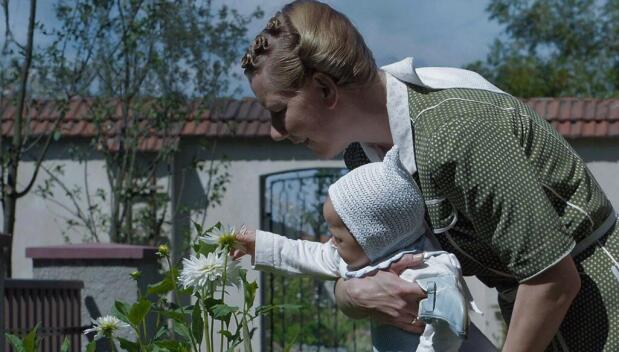
Sandra Huller plays the wife of a top Nazi in Auschwitz in the haunting The Zone Of Interest.

It would be naturally impulsive to dismiss The Zone Of Interest as ‘another Holocaust film.’ If you watch it, you will see it’s about more than just the Holocaust.

Many people will say that Holocaust films have done countless times before. Even if it is true, there are many angles one can see the Holocaust. This is a story of a different kind. There are a lot of things that will remind people of certain overlooked aspects of the Holocaust that will also disgust them further. First is the Höss’ house built just outside the walls of Auschwitz. I don’t know if there were ever houses built just outside the walls of Auschwitz, but having such in the film is very representative of the two worlds of Germany in World War II. There were the Nazis who had their day in the sun at the time and the Jews and other people Hitler deemed inferior being killed, tortured and even made slaves for the high-ranking Nazis.

Second is the Nazis lived very comfortably. What you see in the film is the Hoss family living their daily home life like a common family. You also see General Hoss following his genocidal Nazi orders and planning out methods and arrangements of the deaths of millions as your common “business as usual.” Seeing that in the film will bring back your feelings of disgust seeing people live “the good life” at the cost of human torture. Seeing how the Höss family sleeps comfortably while the sounds of gunshots and screaming coming from the behind the walls shows how close but far apart those two Germanys were. Even seeing how Hoss and the Nazis treat their genocidal plans to look like a simple day at the office shows the insensitivity at the time and how the Nazis felt that’s how it should be. Making all this destruction of a continent and the planning for genocide look like simplicity is all it’ll take to want to infuriate you.

Additional scenes include the train coming in and out of Auschwitz to drop new prisoners off, the smoke coming from the camp’s gas ovens and crematoriums, and the Höss’ ordering the prisoners they use as slaves around will add to your anger. We forget that the Nazis intended for most prisoners to be killed and a small percent to be used as slaves. Even seeing Hedwig threaten one of her servants to have her gassed will remind you of how remorseless they were.

Despite the Höss family representing the comfortable live from the torture of the War, there are signs of humanity still happening. The most notable is the two scenes of the Polish girl sneaking out and giving food for the prisoners to eat. It’s a reminder that even in the times of the worst of human activity, the values of humanity still existed. They were often hidden or done so at the risk of one’s life, but they did make themselves present at that time.

SPOILER PARAGRAPH: Another thing that will make some people made is that the film doesn’t have an ending with the Hoss’ and all the other Nazis get their day of reckoning. That’s frequently the case in Holocaust movies and that’s normally the ending we want in such a movie. Even though the ending of the Nazis getting a brutal defeat, there are signs on Rudolf that their comeuppance is looming. That the separate worlds of the Nazis living the good life and the torture at Auschwitz will collide. The first scene is when Rudolf and the children are swimming in the river. Soon they’re dirtied by the flow of bones and ash thrown from the camp into the river. Another sign comes when Rudolf gets a female prisoner to perform a favor of a fellatio on him. The third being right after Rudolf speaks to Hedwig after a phone call in Berlin and he gets sick in the empty hallways. Then as it fast forwards to the present where the cleaning women in the Auschwitz-Birkenau State Museum clean the gas ovens and the windows of displays, that scene shows the fate Rudolf sealed for himself. A fate of an executed criminal after the war ends and a name that will live in infamy.

Top respect should go to director/writer Jonathan Glazer. The film is based on a 2014 novel of the same title. Interestingly, the novel features the first half of an unnamed Nazi meant to mirror the life of Hoss and his family. In the second half, it’s the aftermath set in 1948. Here it appears the film is based completely on the first half. Nevertheless, it is a telling tale of a Nazi and his family living a normal daily life, making his work look like a typical day at the office and a feud between him and Hedwig about his promotion to Berlin look like a common husband/wife feud. Also raising eyebrows is how it mirrored Hoss’ life well from fathering five children, the last born in 1943, his orchestration in Auschwitz and even the months he was away in Berlin. It’s obvious in doing so, Glazer wanted to send a message about how people, especially the Nazis, can live next door to the evil they’ve created and live comfortably. He does an excellent job in doing that with the story and the various camera effects.

One thing about the acting is it’s very low-key compared to most of the acting in the other Best Picture nominees. The standout of this film is the storytelling. Nevertheless, the acting in the film is still very good. Christian Friedel did a very good portrayal of Rudolf Hoss. Despite his performance not being too showy, his acting added to the storytelling. Also great is Sandra Huller as Hedwig. Although her performance pales in comparison to that of Anatomy Of A Fall, she also does a good job in making a hateful Nazi seem like an everyday person and even a common wife. She’s even able to get you thinking at times the film is more about Hedwig than about Rudolf.

The technical elements of the film also add to the story and the message to get across. The cinematography from Lukasz Zal really added to the theme of the film. He features many scenes with unorthodox imagery in the film. Most noteworthy, the scenes of the Polish girl giving prisoners food done looking like a film negative added to the statement Glazer intended to make. The music from Mica Levi helps create the atmosphere for this dark subject matter. The sound crew have to have delivered possibly the most profound contribution to the film. The mixing of sounds like the gunshots and screaming mixed with scenes of the Hoss’ living the comfortable life serve as a reminder of the hidden things that are happening.

This film has had a lot of awards buzz in 2023. It first gained notice at the Cannes Film Festival. Although Anatomy Of A Fall won, this film was a nominee and director Glazer won the Grand Prix and the FIPRESCI Prize. How about that? Two films starring Sandra Huller at the 2023 Cannes Film Fest and both were the most lauded! Interestingly, this film is the UK’s third Oscar nomination in the Best International Feature Film award. It does seem odd for the UK to even have a submission, but Jonathan Glazer being British and the film being in German, Yiddish and Polish, the UK can submit I as their entry. Those other two nominations were back in the 1990’s and were for Welsh-language films. At the time, entries had to be in a language native to the nation. Not anymore. It’s now more about the citizenship of the director. Oscar rules are interesting, aren’t they?

The Zone Of Interest is not the Holocaust film you expect it to be. It’s a film about the Holocaust which Glazer has something to say and is often told through sights and sounds.

And there you go! That’s the last of my reviews of the ten Best Pictures nominees. My blog of my predictions for the Oscar wins coming soon!

2023 Oscars Best Picture Review: Past Lives

Teo Yoo and Great Lee star as two childhood sweethearts who could be destined to be for each other after all these years in Past Lives.

Do you believe in destiny? Do you believe in reincarnation? Past Lives is a story that examines it and how it pertains to love.

Reincarnation and a person’s belief they had a past life or many past lives is a topic popular with many. It’s also a topic of great skepticism. This story is unique as it shows the cultural significance of the topic of reincarnation. Specifically reincarnation commonly regarded through Korean people. This concept is called In-Yun. It’s hard to understand, but protagonist Nora Moon does a good example of simplifying it by saying a simple action could mean they’ve met before in a past life. Even a simple brush of each other’s clothing can send that message of In-Yun between two strangers that simply pass by and never see each other again. The concept of reincarnation itself is completely something someone will choose to accept or not, but something like In-Yun experienced through simple encounters like those are even harder for someone outside of Korea to understand and accept.

Nora is one who believes in In-Yun, despite her non-Korean husband being skeptical. What makes this story unique is how it relates in terms of romance. Could it be that destiny would make Hae Sung and Nora lovers in past lives?  Is it also destiny that they should be lovers in the present? And will it come at the cost of the end of Nora and Arthur? This is a romance story of a different kind! Also how does this belief of In-Yun sit well with Arthur who was never taught In-Yun? It’s not clear of Arthur’s beliefs himself but not being Korean, how will Arthur take to Nora’s belief of In-Yun? Will something he himself doesn’t understand mean this is something that is supernatural and beyond his control and something sending him the message he and Nora were not meant to be?

One thing I learned in my college courses of literature that for a work themed on the culture or popular attitudes of a region the protagonist lives in or a culture the protagonist comes from, it has to find ways to transcend the physical and cultural borders to make it understandable and relatable to “outsiders.” This concept of In-Yun is definitely something most people outside Korea can’t understand, but it gives the viewer a better understanding. Various scenes in the story like their reuniting online twelve years later or even Nora and Hae Sung visiting New York landmarks together, one’s Nora and Arthur didn’t go to together, will also stimulate your interest and question if these former schoolmates are soul mates. Making it not just a story about the two, but also about the man caught in the middle adds to the intrigue. If they’re soul mates, will it come at the cost of the man who loves her? It’s a story with a pace that’s slow and even quiet, but it succeeds in keeping your intrigue of the three involved and of the In-Yun most non-Koreans are just learning about.

This is an excellent film from director/writer Celine Song. A mostly fresh writer on the scene, Song has had experience writing for the stage and for television for The Wheel Of Time. This film is her first-ever work for film. The life of character Nora mirrors her own life as she herself  was born in South Korea in 1988, emigrated to Canada in 2000, achieved her MFA from New York University and worked her way to the New York theatre industry. Like Nora, she married a Jewish-American writer. Even the scenario mirrors her life as five years ago, a childhood sweetheart came to New York to visit. That must have been the making for this and it’s an excellent work.

The film starts with a lounge scene of Nora and Hae Sung talking happily while Arthur is looking down. You don’t hear them talking but you see them and hear the talk from two white observers. Then the story begins. Throughout the film, she takes this personal story and makes it into a story engaging for the audiences of all backgrounds. That’s another thing too. You might dismiss this as a “boring story” at first, but it will spark your intrigue over time. She helps the audience get a better standing and makes them a believer of In-Yun, if only during the film. Even the ending when Arthur gives Hae Sung a warm friendly goodbye seems right and fitting, even if it wouldn’t be your nature to do so. A very excellent film debut from Song.

Also excellent is the performance of Greta Lee. She has been active on the acting scene for the last ten years. She does a great performance as one who strongly believes in this In-Yun, even if it might threaten her marriage. Nevertheless she also exhibits confusion and heartbreak well. For a performance that’s not too demanding, Greta does a graceful job with it. Teo Yoo is also great as Hae Sung. It’s quite the effort playing someone whole heartedly believing in a soul mate only to learn right there it was not meant to be. Also great is John Magaro as Arthur. He played the frustration of being the man who might lose Nora to something she believes in and he doesn’t understand. He also makes the befriending of Hae Sung at the end believable.

Past Lives takes a love story about destiny some could dismiss as a joke and turns it into something great and something believable. It becomes a more engaging story as you continue watching.

VIFF 2019 Review: The Death Of Dick Long

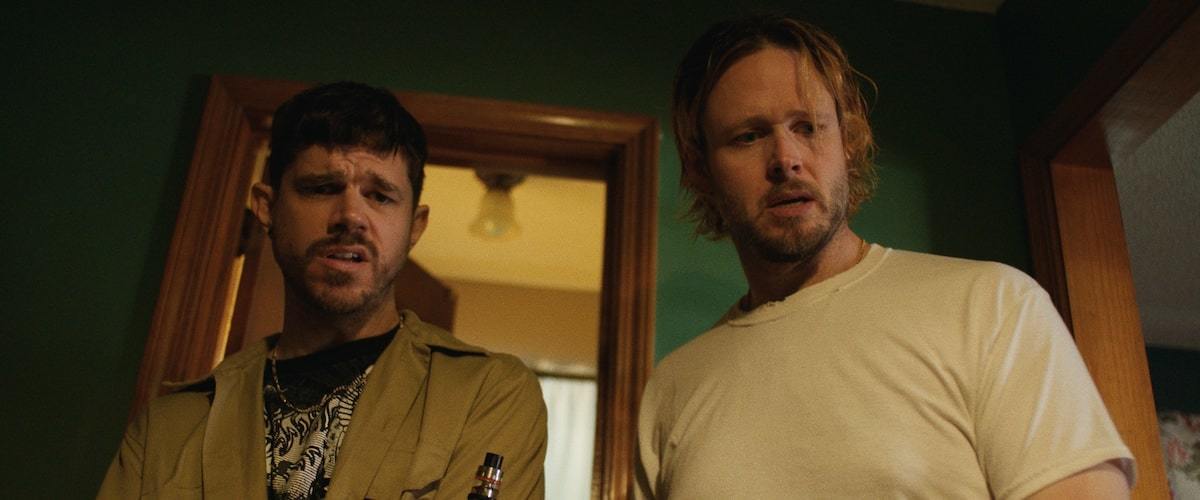
Death Dick Long
The Death Of Dick Long is a dark comedy of two friends trying to hide the truth about their friend’s death, and hilarious results abounding!


DISCLAIMER: VIFF 2019 has ended, but I will continue to post reviews of the films I’ve seen as many will be released in theatres later this year or next year.

At first you’ll think I saw The Death Of Dick Long because of the title. In actual fact, I’ve heard so many lewd jokes in my life, I’m no longer charmed by it. I’m actually more bored with lewd humor. As for the film, I found the film to be funny in a bizarre and dark sort of way.

The film begins with Dick Long playing in his band Pink Freud with his bandmates Zeke Olson and Earl. The night consists of playing and partying, especially with fireworks. However overnight, Zeke and Earl leave a severely-wounded Dick by the entrance of the emergency room of a hospital and take his wallet for the sake of ‘anonymity.’ It’s now up to Earl and Zeke to hide everything.

Earl loads up his truck with several items. He tells his casual girlfriend Lake that he’s leaving for a family emergency, but goes to work. Zeke showers to get all the blood off him and lies down next to his wife Lydia to think he slept the whole night with her. Upon waking up, Lydia asks Zeke to drive their daughter Cynthia to school. When she asks for cash, he accidentally pulls out Dick’s wallet . He gives her cash, but puts Dick’s driver’s license on the counter. Before he takes the daughter to school, he sees Dick’s blood from last night on the backseat. He covers it with a sheet to make like nothing’s happening.

Over at the hospital, Dr. Richter, the doctor who discovered Dick at the door, has learned that Dick has died overnight. He notices that his wounds are severe anal wounds and he calls the police over it. The case is handled and investigated by Sherriff Spenser, a vet in the town police department, and she enlists her young inexperienced trainee Officer Dudley to help solve the death.

However Zeke and Earl learn you can’t keep things secret for long. Zeke drives Cynthia to school, but stops to fill the car up with gas. Cynthia leaves the car to go the store and talks with Officer Dudley. Zeke notices Dick’s blood soaked through the cloth and onto Cynthia’s dress. Zeke then rushes in to take Cynthia without Dudley seeing and gives her the wallet.

Before dropping Cynthia off, he makes a call to Earl to see him immediately. Earl has to be away from his girlfriend Lake for the day. The two scrub all the blood off the seat from the car while Cynthia is bathing. Earl offers to drive Cynthia to school and then calls Dick’s widow Jane to see if she knows anything. She knows nothing and thinks Dick is either missing or just away for a long time. This allows Earl and Zeke to fake a scenario that the car was stolen. They try dumping it in the river, but the river is too shallow and it only falls in halfway.

Sherriff Spenser and Officer Dudley get into the case, which they assume it to be a murder, but are unable to keep it a secret from the rest of the town. Word hits Lydia and she calls Zeke in fear of her life. Zeke insists the car is stolen, but he still has to meet with the police. Spenser and Dudley arrive at his house to ask him the questions. The questioning is to be brief as forensics have turned up some positive results. However Cynthia’s in the room. Whenever Zeke tells a lie, Cynthia is the first to point it out and to correct. Lydia is there hearing it all. Lydia tells Cynthia to watch television as she tries to get to the bottom with Zeke about his inconsistencies and demands the truth. Zeke confesses the truth of Dick’s death, by breaking down. Lydia is heartbroken. However Lydia is soon horrified when she learns of the shocking details of Dick’s death and demands that Zeke leave.

Zeke meets up with Earl in a bar and the two resolve that they won’t run away. However there’s a need for tactics as they learn Spenser and Dudley will be heading over to the Olsons for further questioning and then to Jane’s house to tell the news of what happened to Dick. Zeke rushes over to Jane’s house and she finds him in the stable drunk and shirtless. Zeke reassures Jane that Dick’s not having an affair and agrees to take her to his house. There, Officer Dudley and Lydia are there demanding answers. Dudley even just noticed the drivers license of Richard Long on the counter. Zeke agrees to do so with Lydia and Dudley sitting at the dinner table. The various conflicting stories of Zeke and Lydia spiral out of control with Zeke running out with Dudley chasing after him. Lydia is the one to break the news to Jane. Meanwhile Zeke is at Dick’s stable attempting to free Dick’s horse Comet before he will surrender himself to Dudley.

The final scene shows the aftermath. The big shocker to Dudley from Spenser is that Zeke has been released, feeling keeping him incarcerated before the trial would cause more harm than good to Lydia, Cynthia and Jane. Zeke may be a released man before the trial, but he still tries to maintain a closeness with Cynthia despite Lydia wanting him out of their lives. Even Jane’s life is not the same. The film ends with Zeke meeting up at a hotel room with Earl and Lake. The two talk about what the next plan is for all three to survive the aftermath of all this.

This film is an ambitious attempt at a crime comedy. You have a man left for dead at a hospital and you wonder what’s going on. You have the two trying to cover it up and hide from the law, but fail in a spectacularly hilarious way. You have law enforcers that are two opposites– one experienced and relaxed and the other inexperienced and both excited but nervous– at getting the job done. It tries to do it in a slow-but-steady manner. It’s not the most entertaining, but it does it well and will keep your intrigue. Mind you the story of Dick’s death will keep you intrigued, if not weirded out. The whole story leaves you wondering from the very start what’s the main motive of the cover up? Is it their involvement in his death? Or is it because of Dick’s humiliating death? It is bizarre.

Now the redneck stereotype is one people often get a laugh out of. However there are many times in entertainment where the redneck stereotype is often reduced to cartoonish or stock characters. Here, the characters are more three-dimensional. Yes, they have their idiotic moments and comedic moments common with the ‘redneck’ we’re familiar with, but they are more down-to-earth and have more dimension. They come across as common people. One thing that’s surprising is you see a multi-racial couple. Usually redneck couples are nothing but white.

The rednecks aren’t the only characters with more dimension in this film. The police force whose lack of intellect doesn’t come across like your typical stocky ‘dumb cop.’ They are dim-witted, but they don’t cross the line as cartoonish either.

Finally another difference from your typical redneck comedy is the ending is very much in sync with human feelings. The story is about a hilarious way of covering up a friend’s humiliating death and failing, but the human factor is there at the very end. Zeke may have failed in spectacular fashion, but he still knows he has to deal with a daughter he loves very much and a wife who turns against him that faithful night. We have Jane, Dick’s widow, trying to live her life, but it’s hard. Everything changed that night. The film ends Earl and Lake: the two people in the world that understand Zeke and what happened that night best. I think the ending is what best made the film work in being a redneck comedy with actual dimension.

The film is directed well by Daniel Scheinert. He’s the director best known for Swiss Army Man. Here he doesn’t shine as a director, but he does piece together the story by Billy Chew in a way that works. The acting also made the story work. Janelle Cochran and Sarah Baker were good at playing their roles of the two officers with different personalities and different approaches. Michael Abbott Jr. and Andre Hyland were good at playing Zeke and Earl. They did a good job of playing rednecks that had dimension instead of coming off as cartoonish. Virginia Newcomb and Jess Weixler were also good as playing the redneck wives who did lack some smarts at first, but would appear headstrong but hurt in the end.

The Death Of Dick Long is a humorous redneck crime story that is able to make a comedy out of a manslaughter incident, but doesn’t forget the human factor either. This is the least cartoonish ‘redneck comedy’ I’ve seen, and it works.