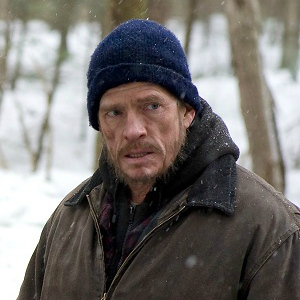
Mommy is an impressive story about a troubled son, a mother’s iron will and a friend willing to help them all out.
I was hoping to see Mommy at this year’s VIFF. It was one of those films I really wanted to see. Unfortunately there was only one showing–I think it was the only film that had a single showing– and this was not open to volunteers and tickets sold out days before. Fortunately I was able to see it when it came out in theatres shortly after. I’m very glad I did.
The film begins telling us it’s 2105 and Canada is under a newly elected administration that has passed a controversial new law. The law states that government agencies can now decide the fate of a minor with mental conditions and the parent has no control over it which includes transporting them to hospitals and facilities.
Diane ‘Die’ Despres, a 46 year-old widow of three years has been given the news. Her 16 year-old son Steve, an ADHD child with a history of violent behavior, has been sent to a long list of list of juvenile institutions over the years. His violent behavior has gotten him constantly kicked out and transferred to the next. However his actions at his most recent institution– setting fire to the cafeteria which left one boy badly burned– led to the final straw: transfer to a more restrictive detention centre where she knows he’ll never be rehabilitated. She goes against all judgment and takes Steve into her own hands.
Die has to be a toughy with Steve if she wants to make this work all on her own. She’s even willing to risk losing her job to keep Steve from the alternative, which does happen. She knows it will be very hard to keep Steve because of his behavior and it’s his first violent outburst since taking him on that’s her first test. She stops him by throwing a bookcase on him and that leads to Steve having a gash. She can’t take him to a hospital but she finds help from Kyla, a neighbor from across the street who’s always been so private and only seen with her husband and children. She gives Steve the stitches.
Die is impressed with Kyla’s nursing skills. The three form a friendship that’s very close as they do many things together. Kyla is especially beneficial as she’s a nurse who knows how to handle the behavior of people with ADHD like Steve. The three of them share many good times together. Die is finally smiling and happy, Steve is able to show off his enthusiasm and a passion for life, and Kyla is able to come out of her shell. Die is even impressed with how she knows how to handle Steve. She doesn’t have to do this alone. However all three know that they have to keep this top secret. Die even meets with a lawyer to work on their case against the institution. It appears to look good until Steve is mocked at a bar during karaoke night. he becomes violent and threatens the heckler with a broken beer bottle. Steve even gives a further outburst towards the lawyer which causes the lawyer to drop the two.
Despite it all, the three continue on even after Die is served. She is given the warning to give Steve up or she will be charged. The three hope to keep things hidden and things continue to go well until Steve tries to slit his wrist in a store. That was the final straw. Die can’t take it anymore and has to take Steve to the institution. Changes also come for Kyla as her husband has a job in Toronto. The film does end not how one would expect.
Once again this is another entertaining film from Dolan. Like many of his films, it gives a lot of focus on the madness of his protagonist’s minds. However this is not just simply that. This is also a focus on the protagonist’s behavior problems associated with the mental condition. It gives some good focus on the ‘wild imagination’ associated with people with ADHD, especially in scenes with Steve having fun in the parking lot and skateboarding feeling free. However it also focuses on behavior problems where Steve gets dangerously violent with his mother, verbally abusive with the lawyer who’s supposed to help the two out, impulsively suicidal in the store and even shows the lack of sexual restraint when Steve tries to come on to Kyla. The character of Steve does a good display of showing the positive side of ADHD but also its weaknesses, especially how many young people act like they don’t know their boundaries. We’re already made aware of the fire Steve set which left another teen badly burned at the beginning. However it’s in the film we get a better sense of the condition and a young person’s behavior patterns from sweet and loving to ruthless and nasty.
The film is also about a mother’s love for such a child and how it’s tested. I remember reading a book on parenting teenagers and it said a sentence that really stuck in my head: “If you can handle a teen with ADHD, you can handle any kid.” We know how much Die loves Steve to the point she’s willing to break the law to keep him. That opening scene when she unapologetically barges into Steve’s bedroom to wake him up even while she catches him masturbating already showed that she’s a tough-as-nails mother. However there’s no doubt that her love for him will be put to the test big time. The story shows the trials Die has to go to in order to keep Steve from his violent outbursts to the point of even throwing a bookcase on him. The story also shows how much sacrifice Die has to deal with to keep Steve such as losing her job and losing the lawyer that can help the two win the case. The story even shows how even the toughest of mothers like Die can just have enough of it all and turn Steve in.
It’s not even strictly about ADHD and a mother’s love. It’s also about the trio of a friendship. Kyla’s presence is also very vital as she is one of the few adults who know how to deal with Steve and she becomes Die’s first friend since the death. And to think Kyla was simply a loner wife and mother before the two met her. The film makes for a fascinating friendship between the three.
Interesting thing about this is that the story is in the near future but by a single year and talks of a law passed by the newly elected administration. The funny thing is that most Canadians, especially British Columbians, would expect a law like that to be passed by our current administration. Okay, enough of that. Back to focusing on the film, the one weakness about the film is that it gets us wrapped up in the story to the point we forget about this law that threatens to tear the two apart. And we’re only reminded of it near the end. I’m sure the law has a lot to do with Die keeping Steve to herself and Kyla keeping things hidden but the story makes it so easy to forget.
Once again, this is another triumph for Quebec wunderkind Xavier Dolan. I still remember five years ago when he burst on the scene as a 20 year-old with I Killed My Mother and caught loads of attention at that year’s Cannes. I saw it. Excellent film. Dolan has since proved he’s no one-trick-pony as he has delivered other consistent films like 2010’s Heartbeats, last year’s Tom At The Farm and this film. It’s no wonder he’s become all the buzz at Cannes these past few years and has even caught the attention of Brad Pitt. However this is something unique as this is the first Dolan film where Xavier does not act at all in it. It’s a very good film and another accomplishment from Xavier.
The funny thing about this film is that there have been times I wanted to compare it to his breakthrough film I Killed My Mother. It’s not an easy thing to do as both have a lot of things in common. I do admit that I Killed my Mother is still my favorite film from Dolan. Also looking back, I’ve been trying to see if Mommy shows a filmmaking maturity in Dolan in the five years since. It was very hard to pinpoint out in all the retrospective thinking I’ve been doing. Mind you for those who saw I Killed My Mother, I’m sure you were all surprised how well-directed it was. It easy makes you forget it was done by a 20 year-old.
Actually there were some differences and even some challenges between the two. And not simply because Xavier doesn’t act here. First was creating a story involving a character with a common mental condition. Dolan had to know it inside out and deliver a character that displayed those traits but didn’t come across as insulting to those that had it. Another difference was the focus of a teen boy’s heterosexual feelings. Most of Dolan’s films have focused on homosexuality. And another trait of the movie was Dolan trying to portray the essence of being a teenager even as Dolan was 24 at the time of making the film. Dolan shows she still hasn’t forgotten that essence five years later.
Antoine-Olivier Pilon did an excellent performance with a character very complex. It’s good to see someone that young do a great acting job. However Anne Dorval was the standout of the film. She also delivered well as a mother who is easily tested despite her rebel side. Suzanne Clement is also excellent as the friend who comes out of her shell. The three of them together had the right chemistry to make the film work. Even the minor characters added to the movie. Like Kyla’s husband added to it as one who could say a lot without speaking a word. The mix of music in the film was an excellent mix of common hits and neo-classical compositions and it fit the film well.
Mommy has already won some good accolades. It was nominated for the Palme d’Or at the Cannes Film Festival and won the Prix du Jury. It even won awards at a Francophone film festival in Namur, Belgium and has made almost $3 million at box offices around the world. It’s also Canada’s official entry in the Best Foreign language Film Category for this year’s Oscars.
Mommy also further confirms my belief about the Canadian motion picture system. For those who don’t know my belief about it, my belief is there are two different types of movies coming from Canada: the films from Quebec and the films from English Canada. The films from Quebec have their own distinct style and consistently display creativity and professionalism. The directors themselves have gained universal recognition and even won awards including an Oscar. The films from English Canada are also professional lack the eye-catching ability of Quebec and have to do lots of effort in order to win attention even in Canada. There isn’t even much of a legacy for the films of English Canada. I believe Mommy further adds to the legacy of Quebec filmmaking and further proves the films of English Canada have a lot of catching up to do.
Mommy is another accomplishment for Xavier Dolan. It quite possibly even makes him the biggest ‘young gun’ director in the world right now. Twenty-five years old and this is his fifth critically-renowned film. I can’t think of another young gun with as much accomplishments right now.
Change is good. So they say. Change is sometimes good, sometimes bad, but it’s unavoidable. There will be two notable changes–one in Greater Vancouver and the other all across Canada–that are products of the signs of the times.
CANADA POST’S FIVE-YEAR PLAN
Mailing a letter in Canada became a lot more expensive as of March 31st.
It’s been official since March 31st to be exact. However it was in November when the news hit the fan. Then Canada Post announced major changes that would take place: some that would take place within months and some within years. One was the reduction, if not the complete elimination, of mail home delivery and designating it to neighborhood post office boxes. This was something to affect 80% of Canadian households over a five year time. Another was a do-away with thousands of postal jobs. Canada Post plans to ‘retire’ jobs just as many of its employees are reaching retirement age rather than have huge layoffs. However the biggest news had to be huge increases to the price of postage–the biggest ever in Canada Post’s history– for the average customer. One example is the price of single Canadian stamp for a simple basic letter anywhere in Canada to be $1 each or $8.50 for a book of ten. That’s up from $.63 each the year before.
No kidding it was a shock to all those that heard it. But in all fairness, it’s pretty much a sign of the times, albeit a rude sign. When you look at it, less people–especially the young– send out lettermail. They send it via email, whether it be in the form or regular mail-style communication or greeting cards. Even payments are sent by cheque less often and have mostly been replaced by wired payments. In fact Canada Post announced the billions of dollars in total it has lost over the last few years. If you saw things through Canada Post’s point of view, you could understand why these shocking changes. One increase in postal use has occurred in recent years has been the increase in parcels and packages. You can thank modern technology for that too. More specifically online shopping that has resulted in the increased packages. that’s one thing that’s keeping the postal workers in business and working.
Before Canada Post would make changes they’ve been intending to do for a long time, they consulted the public. They had group meetings with people from all around the country. They even invited feedback via email. So this isn’t something that they did as run-of-the-mill. They actually paid attention to what was out there and took note. However it’s not to say they may have missed some details. The biggest flack came in concern of elderly people who can’t make it to those anticipated boxes, or not without huge effort.
If there’s one saving grace about this, it’s that businesses get a bigger break from this. Businesses also have their own dealings with the new postal rate increases. Fortunately Canada Post is very understanding how businesses rely on paper mail. I myself work for a business that sends out a lot of paper mail and I know of the graces given to businesses. One is postal rates given to businesses using indicia print mail. Businesses can pay anywhere between five to twenty percent less than what the average customer pays at the counter. One example is while the average person pays $.85 per stamp for a book of ten, businesses can pay $.75 per piece even if it’s just one to go. The savings get even better in terms of bulk mailing on the Electronic Shipping Tools (EST). Sending bulk mail via EST was already a good savings before as businesses could save two cents per piece as long as the batch was a minimum of 5000: a savings of at least $100 per batch. Now the price is $.70 per piece–a savings of five cents each– and the batch minimum for this savings has been reduced to 1000. It looks as though Canada Post was most prepared for businesses and did what it could so they wouldn’t take as huge a blow as the customer.
No doubt there have been complaints about this all. I cannot blame the people for complaining. In fact I don’t like paying $1 for a single stamp, and this is as a basic customer. Nevertheless I think of all the changes that have occurred on how people deal with mail, especially in terms of technology, and I sometimes feel like saying to them: “If you decrease the postal system’s usefulness to yourself and others, you have this coming.” Sometimes I really feel like saying just that. One more thing. American conservatives have liked the new system and some are considering it as a template for changes in the American postal system.
Oh, a footnote. You know how I mentioned Canada Post’s plans to ‘retire’ certain positions than lay off. Well there were was an announcement of a certain number of carriers in three major Canadian cities being laid off. I guess they didn’t want to wait.
TRANSLINK GOES ELECTRONIC
The Compass card from TransLink. The program was expected to start January 1st but still lacks a definite start date.
Okay, I’ve already talked about one change that’s already happened. Now I’ll talk about a change that was supposed to have happened fully already but is only happening partially. For those who don’t know Greater Vancouver transit system, people simply buy their tickets and board the trains. Sounds like a good opportunity for freeloading but Transit Police frequently board the trains to inspect. Those caught without proof of appropriate fare get fined $160. Buses are pretty regular where customers pay up front, allowing little opportunity for fare evasion.
Just two years ago, Greater Vancouver’s transit authority TransLink started set up of new turnstiles for the Skytrains. It’s not just for the sake of restricting access to people who have paid their fare but also to equip for for the new electronic way of boarding transit. TransLink announced plans to start the new Compass program where people use a computer sensor card to tap in and tap out of buses and trains. Compass cards and their value are paid for at special fare booths at Skytrain stations. The cards are a lot like how some use a chip credit card to tap in their charge at some terminals.
TransLink had plans for the program to start on January 1, 2014. However they invited people from the general public to become testers of the Compass card system during a three-week period starting in September 2013 and ending October 1st. I was one of the people who signed up to volunteer and I was selected to participate in the testing period. I received my card in the mail and used it tapping in and out of buses and SkyTrains. Tapping in wasn’t the hard part. Tapping out was as I forgot at least five times completely. There were a few times I’d forget to tap out of the SkyTrain and then head back to the turnstile to register.
One purpose was for TransLink to get an understanding of people’s transportation patterns. Another was to get a sense of how transit passengers dealt with and felt about the upcoming system. they even invited emails under usernames to get the feedback they wanted. It was a mixed bag of what to expect. Even before the testing period, I remember one bus driver saying that the Compass system is going to create mayhem. I take that with a grain of salt because I’ve lived in Vancouver long enough to know there are lots of Vancouverites that mourn “Doomsday!” over everything.Actually I’ve seen people in Quebec City use a fob-style method of payment on buses as far back as 2009. I’m sure there are many more cities in Canada and around the world that have adopted their own electronic fare system. So this Compass thing is actually something Vancouver and TransLink should have caught onto a long time ago. However I don’t feel Compass should replace fare payments as some people may not need the card due to infrequent TransLink travel. Compass is more for people like me who bus day in-day out.
One drawback about this is that TransLink users that were part of an employee pass program–where employees received passes for a monthly fee that was a 15% discount from monthly bus pass rates– were told the employee pass program would expire December 31st of the year. Many people, including myself, were disappointed but TransLink made it clear that this was a sale and sales do end. The public were told people would pay a monthly rate via Compass that’s less than that of the current regular bus passes.
Anyways it’s May, more than four months after the original planned date of the Compass changeover, and I’m still waiting. I’m also back to paying the regular monthly bus pass rate. Compass may not be available to the general public as of yet but it is open to certain people. Some people who are part of disability programs or assistance programs already have access to Compass as the general public are still waiting. TransLink even admits on their website that they’re ‘rolling out Compass one group at a time.’ Now that we’re talking about TransLink’s website, TransLink also has a section on their website devoted to Compass and their answers to FAQs like security and privacy concerns. One thing that’s still unanswered is the start date for the general public. They say the start will be spring/summer 2014. It’s already May and there’s no official start date yet. Guess it’s just the waiting game right now.
So there you have it. Changed happening in 2014. One nationwide, one strictly in Greater Vancouver. One partially for the better, one for the worse. One happened on their projected start date, one is still four months past it’s official start. Both however are signs of the changing times and changing needs of the public.
You all remember Vancouver 2010. Canada won the most ever Winter Olympic golds in a single games with 14. Canada is not the host nation for the Winter Olympics anymore. That pressure now belongs to Russia. Nevertheless Team Canada will face pressures of its own over in Sochi both as individuals and as a team. One thing we should take into account is how some countries perform in the Olympics after they were host nation. Below is a chart of host countries and their various medal hauls. The #/# guide is golds/total medals:
As noted in that chart, some get better like Canada in 1992. Some still stay the same and some do noticeably worse like Japan in 2002 and Italy in 2010. Sports Illustrated predicts Canada to win a total of 31 medals including eleven gold. That’s an awful lot but not impossible.
In the meantime, here’s a look at some Canadians favored to do well in Sochi, if not win:
Patrick Chan – Figure Skating: Canada has a proud legacy in figure skating. So proud you could say figure skating is rightfully third behind hockey and curling as our national sport. Our legacy is there. Canada has also left every Winter Olympics since 1984 with at least one medal in Figure Skating. Canada is one of only five countries to win twenty or more Olympic medals in figure skating. We have Olympic champions in three of the four returning figure skating categories. The only one we don’t have is in the Men’s Singles event. Four bronze medalists, two double-silver medalists but never a gold medalist. This could finally be the year.
Patrick Chan has Canada’s best chances. He’s been national champion since 2008 at the tender age of 17, a world Championships medalist every year since 2009 and a World Champion three times starting in 2011. He has looked good this season, winning two of his three international competitions this year losing only the Grand Prix of Figure Skating.
He has looked good in practice here in Sochi and appears confident he will win. However he will have rivalries from Kazakhstan’s Denis Ten who finished behind him at last year’s Worlds and Russia’s Evgeni Plushenko who’s making a comeback. Also expected to challenge is Spain’s Javier Fernandez and Japan’s Yuzuru Hanyu: the latter two of which are coached by Canadian double-silver medalist Brian Orser. In fact it was Hanyu who gave Chan his only defeat this year at the Grand Prix back in December. So will he be the first Canadian men’s champion or the seventh medalist? It will all be decided on the 13th and 14th.
Erik Guay – Alpine Skiing: Remember the Crazy Canucks? Yeah, Canada had an impressive legacy in Alpine Skiing on both the World Cup circuit and the Olympic Games in decades past. Nancy Greene, Kathy Kreiner, Ken Read, Steve Podborski, Kerrin Lee-Gartner, we all remember them. Problem is it seems like it’s all in the past. The last Olympic medal was a 1994 bronze in Men’s Downhill by Ed Podivinsky.
Canada’s top bet to get back on the Olympic podium is Erik Guay. Guay is 2010 World Cup winner in the Super-G and 2011 World Champion in the Downhill. This year he has ranked in the Top 3 in the men’s downhill on the World Cup circuit. However he was sidelined temporarily in January due to a minor knee injury. But he’s confident he will be ready to perform on February 9th. Actually Erik is not the only Canadian alpine skier with good chances to win a medal. Healthy medal chances also come with Marie-Michele Gagnon who is currently ranked fourth in World Cup standings in the slalom and just won her first ever World Cup race–a super-combined event–just last month in Austria. Will a new generation of Crazy Canucks arrive in Sochi? The Rosa Khutor Alpine Resort will set the stage.
Alexandre Bilodeau – Freestyle Skiing: Alexandre isn’t just simply the first Canadian to win gold during Vancouver 2010. He’s the first ever to win gold on Canadian soil as the 1976 Summer Games in Montreal and the 1988 Winter Games in Calgary failed to produce a Canadian Olympic champion.
Since Vancouver he has made many public appearances and has graduated from college. His competitive drive has not deterred. He has won moguls silver at the past two World Championships and has already won three of the six moguls events on the World Cup circuit. He is a big favorite to win at what he says will be his last Olympics but his top challenge will come from fellow Canadian Mikael Kingsbury who is 2012 and 2013 World Cup winner in moguls, World moguls champion in 2013 and has won the other three World Cup events from this year. In fact Sports Illustrated predicts Kingsbury to win gold and Bilodeau to win silver. The stage for Canadian vs. Canadian will take place February 10th.
Charles Hamelin – Short-Track Speed Skating: There’s a lot of talk for the possibility of the first ever Canadian four-time Olympic champion. One possibility, actually three, is in women’s hockey which I will talk about later. Another possibility is in men’s short track speed skating with Charles Hamelin.
You could say that short track is in his blood. His younger brother Francois was part of Canada’s gold medal-winning relay and his father Yves is the current national director of the national short track team. Hamelin has had an illustrious career which includes two Olympic golds from Vancouver and a silver from Turin in 2006 as well as 26 World Championship medals, eight of them gold. In fact at last year’s World Championships, Hamelin was part of the gold medal-winning relay and won three individual bronzes.
Charles comes to Sochi as the reigning leader in the overall World Cup standings as well as leading the 1000m and 1500m. His path to more gold will not go unchallenged. His top threats come from Russia’s Viktor Ahn and South Korea’s Sin Da-Woon. Plus there’s the sport itself which is known for its slipperiness and frequent falls. It will all be decided at the Iceberg Skating Palace.
Alex Harvey – Nordic Skiing: Skiing sure runs in the family. It was natural that Alex Harvey take up cross-country skiing. His father Pierre was Canada’s best ever cross country skier when he was competing during the 80’s. In fact I myself remember back during the Calgary Olympics Pierre was giving Canada its best-ever finishes in the cross country events. Sure they were between 14th and 20th but they were still new achievements for Canadian skiers.
Alex, who was actually born in September of that year, has taken achievement to new levels. He now has Canada’s best ever men’s finish at an Olympic Games: fourth in team sprint with teammate Devon Kershaw. He and Kershaw would become World Champions in that event in 2011. Harvey won bronze in the sprint at last year’s Worlds. This season he has won two World Cup races. Sports Illustrated predicts him to win bronze in the sprint. However he’s pressed to win Canada’s first even men’s cross country medal by teammate Devon Kershaw who finished second to Harvey in a World Cup sprint event. He will also be challenged in winning the sprint event by World Champion Nikita Kryukov of Russia, World Cup sprint leader Josef Wenzl of Germany and Italy’s Federico Pellegrino who’s ranked second in the sprints. The Laura Biathlon and Ski Complex is the stage.
The Dufour-LaPointe sisters (Justine, Maxime and Chloe) – Freestyle Skiing: It’s not uncommon that you have siblings competing together at the same Olympics. Sometimes in the same event. But three? And all three of them in the same event? That’s the case of the Dufour-Lapointe sisters in moguls: Maxime who turns 25 on the 9th, 22 year-old Chloe and 19 year-old Justine.
The first excitement came when Chloe qualified for the Vancouver Games. Bigger excitement came when Justine won bronze at last year’s World Championships. However the excitement has been happening this year on the World Cup circuit. All six World Cup meets this year has seen at least one of the three on the podium with Justine winning two events and Chloe winning one. Currently on the World Cup circuit Justine ranks second, Maxime third and Chloe fourth. It’s possible the sisters could even sweep in Sochi. However blocking their path is defending Olympic champion, 2013 World Champion and World Cup leader Hannah Kearney of the U.S. American Heidi Kloser of the U.S. who is ranked fifth in the World Cup also poses a challenge as well as Japan’s Miki Ito who finished second at last year’s Worlds. It will all be decided February 8th.
Canada’s Hockey Team (men and women): Every Winter Olympics you can’t avoid the talk of Canada’s chances in hockey. Especially in men’s hockey. Hey, our national pride is at stake and winning it makes our OlympicsEver since NHL players were allowed to compete for the first time back in 1998, it’s always the challenge to prove themselves first among at least six equals. But we’ve succeeded with wins in 2002 and back in Vancouver. However we’ve found ourselves off the podium in 1998 and ousted in the quarterfinals in 2006.
Team Canada’s 24 members are all NHL players and eleven were part of Canada’s gold medal-winning team from 2010. Sidney Crosby who scored the ‘golden goal’ back in Vancouver is the captain this time. Team Canada has failed to win a World Championship medal ever since Vancouver but is predicted by Sports Illustrated to win bronze. They face challenges from 2013 World Champions Sweden whom SI predict to win and from the home country of Russia. It will all be decided at the Bolshoi Ice Dome by the 23rd.
As for the women, Canada has very good chances to win gold again. If they do, three women–Haylee Wickenheiser, Caroline Ouellette and Jayna Hefford–could become the first Canadians to win four Olympic golds. However their top rival as always is the United States. In fact the U.S. beat Canada for the 2011 and 2013 World Championships. It’s just a question of which of the two will take it on the 20th. Or a question of if a European team will upset. It’s possible.
So there you go. Those are some Canadians to look for at the Sochi Games. I know they’re more than seven but I couldn’t resist adding more. Besides people who like my Olympic writing probably don’t mind anyways. Besides since I wrote about the athletes from around the world yesterday, I figure you were due some Canadians.
They should provide for a lot of great moments and more national heroes. Interesting how ever since the 90’s Canada has become a superpower in winter sports like Austria and Norway. Before them we either had a lousy winter and a good summer or a good winter but a lousy summer. There have been one or two years where we had both a lousy winter and summer but that’s in the past. Anyways let the Games begin!
Been to New Westminster lately? If you haven’t been there, what images first comes to mind? Are they positive or negative? If they’re negative, you’d be in for a surprise with the changes that have happened in the city. Big changes.
New Westminster was once the pride of British Columbia. It was proclaimed by Lieutenant Governor Richard Moody in 1859 to be the official capital of the Colony of British Columbia. It was official recognized as a city in 1861, exactly 25 years before Vancouver was established as a city. A lot of history is in that town which currently has a population of over 65,000.
It was seen as a great pathway with being located by the Fraser River. Excellent for transportation of goods through the waters and great links by rail service. It’s area rich in trees was especially beneficial for the logging industry and for the pulp and paper industry. Many pulp and paper mills were build around New Westminster and the Fraser River. Its railway system would also be built around the various mills.
As many of you have noticed in your own cities, the older buildings would face a neglect for some time. Much during the 60’s and 70’s. New Westminster faced a neglect during the 80’s and 90’s. A lot of the times the areas would be some of the sleazier areas of town often the scene of drug deals or crime. Even the older buildings would start to look shabby over time. The area around New Westminster Skytrain station used to be a popular hangout for young thugs. Some former residents of New West may remember that.
One thing many people will notice is the many improvements made in New Westminster over the last ten years. Columbia Street has definitely made big improvements in the last ten years. Before 1964, Columbia St. used to have many department stores and was the downtown attraction of New Westminster. The area consisting of the major stores around Columbia St. which also linked with South Burnaby and North Surrey was known as the Golden Mile. That changed after 1964 when the Highway #1 freeway was completed and allowed people to travel to Vancouver faster. Many of the department stores along Columbia St. closed up and moved themselves to the Uptown area. The nearby landmarks like Douglas College, the Courts and the City Hall were the places still keeping it active mostly.
Things really improved since Wayne Wright became mayor of New Westminster in 1999. Columbia St. has recently gone under a ‘facelift’ in the last ten years. One of the things Columbia St. is noted for is their array of wedding and bridal shops. It has become a major area for wedding planning and fashion. Housing along Columbia St. has also sprouted out with new developments happening. Even older buildings were renovated or given new life for attracting new and current businesses. There’s even an annual automobile festival in July, the ‘Key West Show & Shine’, that attracts people to the street.
The Plaza 88 Shopping Mall (shown here) and condo development has helped to give new life to the New Westminster Skytrain Station and Columbia St.
The biggest boost on Columbia St. was the Plaza 88 along the New Westminster Skytrain station. A multi-storied condo was built there five years ago with the anticipation of an adjacent outdoor shopping mall along the Skytrain levels. Back in winter 2011, the New Westminster Skytrain station opened Plaza 88 and has since become a common shopping place with a Safeway and a Shoppers Drug Mart. A movie theatre opened there last year as well as various other stores and medical businesses and new businesses continue to come in. Ten to even five years ago, the area was very run down full of old crumbly buildings and was a common hangout for people into drugs or causing trouble. Now the place makes for a for comfortable setting for people and even includes a play area for children.
Another bustling area is the New Westminster Quay market alongside the Fraser River. The Quay market had a slow period roughly six years ago as businesses left many vacancies behind. A major renovation of the market area from July 2007 until its reopening in September 2010 has succeeded in attracting new businesses in especially with having an ‘anchor store’ with Donald’s Market.
The addition of new buildings and new stores like Thrifty Foods has helped give new life to the Brewery District since the brewery closed in 2004.
Another redeveloped in New Westminster as of recent is the Brewery District. The Brewery District used to be the pride of the town of Sapperton after the Sapperton Brewery was opened in 1879. The brewery was owned by many brewing companies with Labatt’s Brewing Company being its last one in 1958. The brewery was closed in 2004 after Labatt’s decided to withdraw its business. The area that used to be part of the brewery has been redeveloped in the last few years. The area was recently revived with the opening of a Thrifty Foods and a Toronto Dominion bank. A Brown’s Social House restaurant and a Shopper’s Drug Mart were also opened months ago. Nearby is the office for the Greater Vancouver Transit Police and Translink with office room for more businesses. There’s already a condo area in existence to the surrounding area and more homes are planned in the years to come. Even with the surprising news in the past two months of Thrifty Foods being sold by its umbrella company Sobey’s, the area still shows potential for consumer business to increase over time.
It isn’t just new buildings and businesses that New Westminster is proud to show off. Recently it has also developed a sense of pride for its past. Back in 2009, the Royal City celebrated 150 years. The Irving House on Royal St., now a museum, is its most classic building and open to the public and even has a Victorian style Christmas. The New Westminster Heritage Centre runs guidelines for running and developing its classic homes and buildings. This allows for buildings like the BC Penitentiary to be converted into an office or even the CPR station on Columbia St. to be converted into a Keg Restaurant for some time. There are also tours of heritage homes which still keep their own facades and designs despite renovations and modernizations for current occupancy. The New Westminster Mayday festival started in 1870 and still continues today as a tradition with participating children still wearing the traditional uniform and dancing around the maypole.
The Anvil Centre situated across Plaza 88, slated to open later this year, is to be the city’s new civic centre.
It’s not only what has been completed in the last five years or past buildings and traditions revamped that has caught a lot of buzz for New Westminster but also what’s planned for the future. Being constructed nearby Plaza 88 will be the brand new New Westminster Civic Centre or the Anvil Centre as it’s commonly called now. That area too was once part of an area that had a lot of old buildings that were also looking run down and also a common spot for homeless people and drug addicts to loiter around. The centre is designed in the shape of an anvil commemorating the Anvil fired off annually during the Battery Salute of the annual Hyack Festival. The centre which is expected to open next year promises a 350-seat theatre, art studios, multi-purpose rooms for arts and performing arts development, a conference space with banquet seating for up to 500, a new location for Tourist New Westminster on ground level, and a new home for both the Canadian Lacrosse Hall of Fame and Museum of New Westminster.
There was one negative note. Back in October there was a fire that burned down the E.L. Lewis Building, one of Columbia St.’s older buildings still put to good use. The fire devastated the building and surrounding area leaving 30 businesses displaced. It was an unfortunate happening. This could however lead to promise of a new development in terms of businesses or housing.
New Westminster has developed a new sense over the years. It’s a city with a proud and celebrated past with a highly ambitious future. Despite the negative impact in the past 20 to 30 years, the city has made big improvements and promises more in the future. The Royal City is becoming Royal again.
For more information about New Westminster, click the link to the official website.
Antisocial is a Canadian-made bloody gory teen horror thriller that’s surprisingly high quality and entertaining.
I’ll admit that I didn’t see as many Canadian films as I hoped to see at the VIFF. Antisocial was one I did see. It was the very last movie of the official Film Festival shown: starting at 11:30pm at the Rio Theatre. It proved to be an ambitious work from Canadians at moviemaking, particularily at horror filmmaking.
The movie begins with an introduction of two girls filming what appears to be a simple video about clothing only for it be one torturing the other and killing her. Later on New Years Eve a college girl named Sam interacts with her boyfriend through a social website called The Social Redroom. It goes bad as he breaks up with her. That leads her to delete her account.
She tries to party it up with her friends to help try to forget the problem. Four of her five friends have active accounts with The Social Redroom. Unknown to them is that an epidemic is spreading outside of them out on just as they’re about to party. The epidemic gets worse and reporters show how this is affecting the world. They even trace it back to The Social Redroom. The founder of The Social Redroom even makes a video of his own warning people of a deadly tumor transmitted to its users. Then Sam and her friends get their first notice when one of their outside friends is a monster infected by this virus. The virus soon spreads throughout the campus. Those of the friends with accounts to The Social Redroom are most at risk. Now the infected are coming after their blood.
There is a way to rid one of this virus but it’s to come out of their bodies. So it’s up to Sam and her friends to try to protect each other. They try to look for everything. First the video of the original two girls to trace its origins. Then the warning video of The Social Redroom founder, in which he commits suicide. Then finding information to rid the tumor being transmitted via The Social Redroom. Then Sam to defend herself and then rid herself of the virus.
I don’t think the filmmakers intended on giving a negative message about social media sites. Anyone who sees this knows that The Social Redroom is a Facebook-like site. In fact looking at this movie, I feel it’s more of just an attempt at trying to make a teen horror movie. That’s it: nothing more than a teen horror movie meant to scare them for their entertainment pleasure. I will have to say this is a very good effort at putting one together. It features many ingredients that would make for your typical entertaining horror movie. There’s the paranormal, the action happening at a college dorm, and the all-too-common phenomenon of social media and giving everyone all the details. The visual effects, horror make-up and even the climactic moments of horror didn’t come across as too cheesy or amateurish. Even the ending didn’t look bad. It ended on the right ridiculous note. The musical score was also a good addition to the horror story as well.
I will admit that it doesn’t have the big-star fuel that Hollywood teen movies have nor does it have the mass marketing given from Hollywood to make it excel at the box office. Oh yeah, it also lacks the shirtless scenes of guys that have been standard ever since the Twilight movies. Nevertheless this is a very entertaining movie that was put together very well and very professionally. I had a hard time trying to find a moment that was very amateurish. I even found it hard to notice a moment from one of the actors that lacked believability. Michelle Mylett was good in what is her first acting role. Also good is Cody Calahan in his first ever direction of a feature-length film as well as co-writing with more experienced writer Chad Archibald. I felt it was kind of like The Ring mixed with 28 Days Later with Night Of The Living Dead mixed in.
Okay I’m sure a lot of you are wondering: “What’s a film like this doing in a Film Festival? Film festival films are supposed to take the art of filmmaking to new lengths.” True but not 100% true. The Vancouver Film Festival is an event that showcases filmmaking quality from around the world including Canada but it’s also an opportunity to have films for further distribution. Some films will go on to the big screen for bigger and better things. Some will find their way on DVD, Digital Movie Websites or movie television networks. And then there are some where the VIFF will be the furthest it gets. Antisocial made its debut at Montreal’s Fantasia Film Festival. It continues to make appearances at various film festivals. Good buzz for it can help it get picked up for further distribution. We should remember few English language Canadian-made movies make it to the big screen. Nevertheless I see good potential for this film. We’ll have to see.
Antisocial is a teen horror thriller that lacks the star-studded buzz but is excellently put together and goes beyond its modest expectations. All it needs is more film fest buzz to develop a crowd to give it a fair chance.
Every VIFF I have a goal of seeing at least one Canadian film. On Friday I chose to see Whitewash, a Quebec production. I didn’t get too big of an accomplishment of a movie but it was suspenseful.
The movie starts with a man walking down a street and a snowplow driving down the road. Then the shocker: the snowplow hits the man. The driver is shocked to see he’s dead. The driver then drives far north to drop the body off into a ditch and cover it with snow. Then the driver travels as far north as he can only to find him stuck in a forested area. The most he can do is make the plow his home and his shelter.
Soon we learn that collision was not a collision between strangers. It was his neighbor Paul. We also learn of the driver’s name: Bruce. Bruce does the first thing he can with whatever money Paul has. Go to a diner to eat. Unfortunately he learns that both he and Paul are in the news as missing people. It becomes apparent Bruce would have to use his stuck plow as a hideout. Over time, Bruce would use other places too like a store to buy all sorts of supplies and a house of a snowmobiling family whom he accidentally scares the daughter and pisses the father off.
It’s in flashbacks that we learn a dark secret of Paul. Paul has a gambling problem and he lost $15,000. He can’t tell his wife. Bruce has problems of his own. He lost his wife to cancer. He also lost his job as a plowman as he drove his plow into a building one night while drunk. He spent time in jail and was suspended from driving anything for one year, His only chance for making money right now are from wholeselling a set of decorations he owns.
It’s after Bruce steals a snowmobile that he accidentally spots a body of a woman frozen to death. Another body to hide, underneath a lake of breaking ice. Then we learn through a flashback of what Paul was doing inside Bruce’s house the night of the accident. This paves way to an ending that is surprising and gets a lot of people guessing their own end to Bruce’s situation.
I don’t think there’s any real social point to make in this film. All it does is tell the story from the protagonist’s point of view of how he’s hiding out and what events led to the fatal collision. Over time there becomes more that meets the eye. The film is mostly about Bruce but it’s also about Paul too. Sometimes it gets one questioning if that was an accident at all or an accident waiting to happen. Did Paul mean to avoid Bruce’s plow or did he think this was his chance for his suicide? The film has us asking.
Another thing to say about the ending is that it is unpredictable. Subtly humorous but unpredictable. We’re all expecting it to end either one way or the other. Instead it ends on a different note. Some will accept the ending for what it is but some will try to draw their own conclusions of what will happen later on. The unpredictable ending is one of the top highlights of the movie. Actually I believe that the unconventionality is the biggest quality of the movie. We all expect that this is one thing but it’s not. We think that the fatal collision was random but it was between two neighbors. We think that it was accidental but it’s possible Paul had a death wish. We all expect Bruce to face some sort of consequence in the end but it ends on a different note.
One thing about the Canadian film industry is that its in a confusing state: a state that’s been like that for decades. There’s the films of Quebec that have been able to chart its own territory and create its own legacy. Then there’s the films of English Canada which has a long way to catch up to Quebec’s level. English Canada knows how to hold its own in music and in television but it’d not able to do as well in film. All too often if they want to create a movie to get attention, they’d have to hire a big name even if it’s American or British. They do hire Canadian name actors but many who had their time in Hollywood that’s past. This is a unique situation where a Quebec director creates an English-language drama/comedy. He hires an American who’s made a name for himself–Thomas Haden Church: most famous for playing a villain in SpiderMan 3 and his Oscar-nominated performance in Sideways– as the protagonist. The rest of the cast are Quebec actors. Even the director and his brother play minor roles.
I don’t know how this will help cinema for English Canada. This may take things forward or this may be a repeat of what’s happening now. I will say it is a very good film in its own part. Emanuel Hoss-Desmarais does a very good job of directing this film. The script he co-wrote with Marc Tulin was very good, very honest and full of moments through both present moments and flashbacks that help make the film very good. In fact Hoss-Desmarais won an award at the Tribeca Film Fest for Best New Narrative Director for his effort. Thomas Haden Church gave a very good performance as Bruce that was very honest. Marc Labreche’s performance as Paul was also very good and honest but the writers could have made more of it. Supporting performances were also good too.
Whitewash is a very good film that may not do anything too new for film from English Canada but it’s a good story all of its own and will keep the audience intrigued from start to finish.
Ben Johnson taking the stand at the Dubin Inquiry in June 1989, eight months after testing positive for stanozolol at the Seoul Olympics.
“Sooner or later your ability to succeed on natural talent runs out when you run against a chemical barrier. The question became do you take drugs to try to win or do you content yourself with losing forever by staying away from them?”
– Charlie Francis
“I think about it for about three weeks before I say yes. Why should I train hard doing it clean and then these other guys are not clean? Face fear…I was young, in the business and (Jamie Astaphan) was a doctor and he said ‘If you don’t take it, you won’t make it.'”
– Ben Johnson
Back on Tuesday, I posted my memories and thoughts of the big run, the events leading up to it and the aftermath. It made sense since it was the 25th anniversary of that controversial run. Today is another 25th anniversary: the anniversary of the bad news hitting the fan. Here I will reflect on what I’ve learned from watching 9.79* and all that I’ve noticed in doping in the years since.
I know I talked a lot about the ESPN 30 For 30 Film 9.79* in my last article. For those who haven’t seen it, 9.79* is a very informative documentary about the Ben Johnson scandal that not only tells about the process of how Ben got into taking steroids but also about the changing world of track and field at the time as well as the widespread doping amongst those in the track world at the time too. It not only interviews Ben Johnson and Carl Lewis but all eight runners that participated in what’s commonly called ‘the dirtiest race in Olympic history:’
Lane 1: Robson da Silva – Brazil
Lane 2: Raymond Stewart – Jamaica
Lane 3: Carl Lewis – USA
Lane 4: Linford Christie – Great Britain
Lane 5: Calvin Smith – USA
Lane 6: Ben Johnson – Canada
Lane 7: Desai Williams – Canada
Lane 8: Dennis Mitchell – USA
It also interviews the coaches of Carl Lewis, Calvin Smith and even the coach of the US Olympic track team of 1988. Calvin Smith is of special focus too as he was the 100m dash World Record holder until Ben broke it at the 1987 Worlds. It also interviews two of Ben’s former teammates from the Scarborough Optimist Track Club: Angella Issajenko and Desai Williams who had stories of their own of what they saw around them and what they themselves did. It also interviews those associated with the USOC Doping programs like Dr. Robert Voy and Dr. Don Catlin from the UCLA lab during the 1984 Summer Olympics. Members of Canada’s Olympic Committee, Robert Armstrong from the Dubin Inquiry and a doping historian are also interviewed as well as Mary Ormsby: a Toronto Star journalist. Mary’s analysis of Ben Johnson and those associated with him as well as Canadian attitudes and even celebrations of Ben during those times really summed it up well and really struck me.
There are many key people who were not present in the film like Ben’s mother, Dr. Jamie Astaphan, human growth hormone Dr. Robert Kerr, Charles Dubin, Alexandre De Merode and Charlie Francis because they’re all now deceased. There is however one film footage of interview of Charlie from 2000. Also Andre Jackson, whose significance I will talk about later, is not interviewed either.
BEFORE IT ALL STARTED
Long before the whole Ben Johnson scandal, I knew about doping in sports. I first took an interest in the Olympic Games back in 1984 in the months leading up to the Los Angeles Olympics. I was a kid back then and with each preview show and each book I read, my curiosity grew and grew and I continued to learn more about the Games. Even seeing shows about Olympians past like The Olympiad widened my knowledge and excitement. However there was one Olympic preview show that focused on the subject of doping and anabolic steroids. They even made mention of athletes from the Pan American Games the year before that tested positive including two Canadian weightlifters.
Later on I’d learn just slightly more about doping. Actually I learned about an Olympic fatality from 1960. It was Danish cyclist Knud Enemark Jensen in the team road race. Two other members of the Danish team also dropped out of the race. The coach later admitted to giving his riders Roniacol. Amphetamines were also found in his autopsy. That would lead to the start of doping tests in 1968. The first athlete stripped of a gold medal for a doping violation was American swimmer Rick de Mont for using an asthma medication. Even though the substance is no longer on the banned list, the IOC won’t give back his gold medal. Steroid use was known in the 70’s and it was actually 1976 that the Olympic Games started testing for them. There were steroid positives in Montreal. Moscow in 1980 had no positive tests but some medalists including two track and field gold medalists had been banned for a positive steroid test in the past.
WHAT LED TO IT ALL
Back to the subject of Ben Johnson, I made mention of how Ben Johnson burst onto the international scene by winning bronze in the 100m dash at the 1984 Olympics. That was a great improvement from the World Championships a year before where we only got as far as the semifinals. His two bronze was rather quiet news for Canada’s athletes as they had their best Olympics ever with 44 medals. Ten of them gold. Our ten golds during those Games were not only a delight but a relief since our last Summer Olympics gold medal came back in 1968. Between that time we had to deal with the embarrassment in Montreal in 1976 of becoming the first and so far only host nation of a Summer Olympics to fail to win gold. We also had to deal with the heartache of our 1980 Summer Olympics team not even making it to Moscow as Canada joined the U.S. in boycotting those Olympics.
What was going on is that the sports world knew what was going on in terms of doping back during the 70’s and 80’s. Just like Calvin Smith said:”(Track athletes) know more than the public ever will.” I guess you can say that about every sport. Charlie Francis, Ben Johnson’s coach, would compete for Canada in the 100m dash at the 1972 Munich Olympics. He would hear rumors of how 80% of the field were on steroids. The crunch of sport being full of people on performance enhancing drugs would get heavier after the 1976 Olympics and the successes of athletes like the East German swimmers and weightlifters from various countries who many knew were doped but they won and passed the drug tests. When Charlie himself took to coaching, he was determined to make champions out of his athletes. However he had to deal with the challenge of an unlevel playing field and felt the only way to win was to encourage his own athletes to use steroids. That attitude: “If you don’t take it, you won’t make it.” He would give them drugs he knew the East Germans were taking at mass level. He even hired Dr. Jamie Astaphan after the 1984 Olympics to increase sophistication in his steroid program.
As for why Ben and his teammates agreed to take steroids, it was more than just about the desire to win. It also wasn’t until I saw the film that his athletes considered him not just a coach but a friend. Ben Johnson, Desai Williams and Angela Issajenko looked up to him very highly. They were Canadian immigrants from the Caribbean who felt like misfits and they took aback to Charlie how he made them feel like they belonged and how he helped them to succeed as athletes. In fact Francis helped coach all three of them to the 1984 Olympic Games where they all came home with Olympic medals. In addition to Ben’s two bronzes, Desai was part of Canada’s bronze medal-winning relay team and Angella was part of Canada’s silver medal-winning women’s 4*100m relay team. It’s that coach-athlete relationship thing that could have a lot to do with why they agreed to take the steroids at his encouragement. They looked up to him that much. Coach-athlete relationships are also of focus in 9.79* as it shows the relationships between Carl Lewis and Tom Tellez and Joe Douglas as well as Calvin Smith and his coach Wayne Williams. One thing the film showed me is that for all the show-off and braggart I always saw Carl Lewis to be, I admire him for the huge respect he had for his coaches and still has. Like he sang in his flop song: “You can’t win on your own.”
I’ll admit I knew a lot about doping even before the 1984 Summer Olympics. I’ll admit, as evident in my article from Tuesday, that I learned a lot of what was going on in the Scarborough Optimists Track Club and other athletic sources around that time. In watching the film 9.79*, the things that stuck most with me were the things I don’t remember or didn’t know about. The mention of the USOC and the drug testing programs back in 1983 were a surprise to me. Even as well the number of noticeable tampered or ‘chemically masked’ samples they attained and how none of the athletes were punished but warned instead. I’ll admit I didn’t pay much attention to the BALCO scandal that came to light in 2003. I knew only partial details and mention of Carl Lewis testing positive for a banned stimulant but I didn’t know all the facts. Also I didn’t know about the missing positive results from the last days of the 1984 Olympics. Nor did I know about Human Growth Hormone being untestable at the time. I’ve always known it to be testable but I forgot there was a time when it wasn’t.
This film gave more information about the doping programs created and the lightweight actions carried out. One of the things I was not surprised about was when Dr. Don Catlin talked about him asking the athletes why they were taking drugs. The answer was obvious: they want to win. Even as track and field was being professionalized, it became obvious that success was winning medals. In fact I remember the USOC conducted a survey in 1988 where they asked athletes who trained at the US Olympic Centre in Colorado Springs the survey question: “If you were given a pill that was guaranteed to make you Olympic champion but would kill you within five years, would you take it?” The result: 52% said “Yes.”
THERE’S MORE TO IT THAN DOPING
The film doesn’t just simply show you thoughts and opinions of those surrounding the event, and especially the subject of doping in track and field. The film also focuses on the sport of sprinting. It shows a lot of the training whether it be old videotapes of Ben’s workouts or even Dennis Mitchell coaching his young athletes. Ben will remind you in his conversations as demonstrated by Dennis Mitchell in his coaching that track athletes push their bodies beyond the human limits to be the best. Desai Williams summed it up well in his own words: “You work every single day, five or six days a week. You’re going to beat yourself into the ground. It’s tough: the sacrifice that every track person makes with no guarantee. None.”
The film also shows the times in which this was all happening too. The film also reminds us that this was happening at a huge turning point in track and field. Until 1980, professionals were not allowed to compete at the Olympics. If you wanted Olympic gold, you couldn’t make a single penny off your sport. Any money you made had to be a well-kept-secret. In fact track and field had separate amateur and professional leagues. Once professional athletes were given the green-light to compete in the Olympics in the early 80’s, things changed. Athletes who dreamed of Olympic gold didn’t have to accept under-the-table money anymore. Meets run by the IAAF could pay the athletes. Athletes in Olympic sports who had high profiles could hire agents. However professionalizing track and field it didn’t come without its growing pains. Meets hopping on the professional bandwagon had to market themselves. Hence Zurich’s Weltklasse being passed off as ‘The Olympics In One Night.’ Only athletes with big star status like Carl Lewis or Daley Thompson could command big appearance fees. The Carl Lewis/Ben Johnson rivalry was a great boost to the professionalizing of the sport and created a rivalry that drew crowds. Prize money per athlete varied anywhere from big money for the top finishers to chicken feed for the also-rans. It shouldn’t be a surprise that the prize money thing could cause problems in terms of doping.
That was quite an era for track. I don’t think there has been an athlete since Carl Lewis that could be that big of a draw, although I see a rival in Usain Bolt currently. There also hasn’t been a rivalry as exciting as the Carl Lewis/Ben Johnson rivalry. Not even the Carl Lewis/Mike Powell rivalry in the long jump that happened years later was as exciting, nor the rivalry of Carl Lewis vs. age during the mid-90’s. There isn’t a rivalry nowadays, not even Usain Bolt vs. Yohan Blake, that has the same excitement.
WHAT’S HAPPENED SINCE
Also remember how I talked about the East Germans and that being Angella Issajenko’s drive to hop on Charlie’s doping bandwagon? Well shortly after Germany reunified in 1990, just a year after the Dubin Inquiry concluded, the confessions were out that East Germany had a program of systematically administering steroid to their athletes headed by the Stasi, East Germany’s equal to the KGB. They knew which drugs to give which athletes, when to break them off to avoid detection, how often doses were needed to reach top performance and which drugs were undetectable at the time. After the confessions, many former East German Olympic champions have admitted to being part of the program. Some have asked their records be stripped and some are willing to give their medals back. One thing is many are reluctant to give their medals back, giving a common claim: “Yes, I was on steroids but I had the talent to win.” The thing is all of the records held by East Germans, even the world records, still stand and none of the medals have been demanded back by the IOC. That especially bites as a Canadian knowing that in three women’s swimming events in 1976, the fastest non-East German was a Canadian. It’s a shame. Three gold medals from Montreal that could’ve been and should be.
The thing was the intention of the Dubin Inquiry was not just to get to the bottom of Ben Johnson’s positive from Seoul. It was also to expose truths about doping in the sports world and hope to clean up sport not only in Canada but around the world too. If it did, it was quite minimal. You know how there are a lot of things that would eventually defeat their purpose over time like called ID and warning stickers on records? The Dubin Inquiry also defeated its purpose in a lot of aspects. This was the only time in history athletes confessed their doping use under oath. The subsequent punishments to the athletes who confessed caused many athletes to be a lot more protective of their innocence even after they test positive. Some would maintain their innocence to the point of taking their doping situation to court. They know that meets outside of the World Championships and the Olympic Games have doping labs that don’t have the same top-notch consistency and errors in procedures can result. They can use that to overturn their positive. There are even countries that know of positives in their own country but hide it around Olympic time so that the athlete can compete and win. A country like Canada can’t afford to do something like that, not after the embarrassment of Ben Johnson’s positive.
The 1996 Atlanta Games would present a new doping situation. There were many cases where athletes with positives outside of steroids would give explanations of taking medicine given by their team doctor. They’d be exonerated and they’d get their medals back. However it was made obvious at Sydney in 2000 that this kind of forgiveness was over when Romanian gymnast Andreea Raducan tested positive for a stimulant provided to her by the team doctor. Instead of exoneration, the stripping of her all-around gold medal stood and the doctor was suspended for two Olympic cycles. That was it. No more exonerations over a team doctor’s bad medicine. Enough was enough.
Doping still continues to be an issue in sport. New drug discoveries, new incentives or new needs to revamp the testing, new ways of dealing with doping, and even new commissions like WADA: the World Anti-Doping Agency, which was started in 1998 after officials believed the IOC lacked consistency in cracking down on dopers. WADA is headquartered in Montreal and headed by Canada’s Dick Pound who used to be the Vice-President of the IOC. In the 2000’s it was the Americans that were most under fire for doping in sport. If there were cover-ups during the 80’s, the cover-ups weren’t happening anymore as many sprinters were faced with positive drug tests. Marion Jones was the most famous as she would take years to confess her own steroid abuse since 2000. Even while two ex-husbands of hers had already tested positive during the times of her marriages, it still took her until 2007 to confess it all.
There are always new drugs. There are always new ways to try and get them and try to stay ahead of the tests. One thing is that there are some advancements. Out-of-competition testing has increased with surprise tests and even programs sponsored by the USOC where top runners volunteer to have themselves tested. One of which is sprinting star Allyson Felix. In addition, each Olympics takes doping tests to unprecedented levels than from before. Beijing 2008 introduced a new procedure where all tests would include samples frozen for four years and retested to crack down on athletes who thought they could be ‘ahead of the game.’ London 2012 had it so that every athlete in every sport that finished in the Top 5 in each event was tested. Also I don’t think we’ll ever see an equal to the sophistication of the East German doping program. That has to be the most successful systematic doping program of all time. China tried to copy that program in the 90’s but it wouldn’t work as positives resulted.
Steroid use isn’t just limited to sport. It’s also subject to professional wrestlers too and it was made a big issue in the wake of the murder-suicide of Chris Benoit and his family. Many believe ‘Roid Rage to be the cause. Steroid use is even rampant simply with men who go to the gym to work out. Ask anyone that works at a gym. There are even teenage boys and some as young as 11 going to guidance counselors and asking for steroids simply to look bigger. Even after they hear of the consequences, they still want it because they only care about their looks. I know there’s a lot of attention made to young girls and anorexia. I believe there should also be the same attention to young boys and steroids.
Interesting to note is that Track And Field is not the Olympic sport with the biggest doping problems. Weightlifting is. In fact just days before Ben Johnson would make the biggest doping news out of Seoul, two Bulgarian weightlifters who had won gold medals tested positive for diuretics, a drug possibly intended to be a masking agent. Funny how it could mask the steroids but failed to mask itself and caused the lifters to give back their gold medals, both receive the same sports ban as a steroid positive and cause the whole Bulgarian weightlifting team to return home prematurely and in embarrassment. Weightlifting has gotten tougher on doping. They have since changed the weights of weight classes and erased past records to start on a clean slate. They now give lifetime bans on the first steroid positive. They also place bans on nations who have multiple lifters that test positive consistently. One nation currently on that banned list is Bulgaria.
Funny thing is that the sprints are not the events in Track And Field with the biggest doping problem. It’s the throwing events. You’d be surprised how many Olympic medals have been given back in those events. The shot putters however have received the most doping positives and most returned medals. 9.79* presents the doping problem of the 1980’s and portrays it as the heyday of doping in sprints, or as Calvin Smith put it: “a time of big time drugs.” It doesn’t seem as rampant at first but 2013 shed light that it’s still a problem, if not at the same length as back in the 80’s. This year there were three doping positives from sprinters that made news which included former World Record holder Asafa Powell of Jamaica and former World Champion Tyson Gay of the US. In fact Powell tested positive for the same stimulant his Jamaican teammate Sherone Simpson tested positive for. This could cause suspicion over the Jamaican track program which has been so dominant in sprinting and hurdling over the past seven years.
ADDITIONAL NOTES ABOUT THE FINAL
Interesting thing about that final is that all of the runners in that final would have won Olympic medals in their careers. In fact you’ll see in 9.79* footage of the victory ceremony of the 1984 Men’s 4*100m relay: the US won gold with Jamaica silver and Canada bronze. There in that footage you’ll see five of the eight finalists: Lewis, Smith, Stewart, Johnson and Williams. As for the other three finalists:
Linford Christie who finished third would get his bronze upgraded to silver in the aftermath and would be Olympic 100m champion in 1992.
Robson da Silva won bronze in the 200m four days later.
Dennis Mitchell would have to wait until 1992 to win Olympic medals where he won bronze in the individual 100m and gold in the 4*100 relay which Carl Lewis anchored to a new world record.
Also interesting to note is the drug issues the other athletes faced after the 1988 Olympics:
Raymond Stewart: His doping issues came as a coach after he retired from running. It was made evident he was giving performance enhancing drugs to his athletes. The USADA banned him from coaching for life in 2010.
Carl Lewis: so far that banned stimulant was the only known violation he did. Had proper doping procedures been carried out, he would have been banned for three months including the 1988 Olympics. However the USOC exonerated Lewis when he showed an official the supplements he was taking and classified it as an ‘inadvertent positive.’
Linford Christie: he actually tested positive for a banned stimulant after the 100m dash final but was exonerated by the IOC’s disciplinary committee vote of 11 to 10 to keep him from sanctions. He wasn’t so lucky in 1999. An indoor meet in Germany tested him positive for Nandrolone and he was slapped with a two-year ban.
Dennis Mitchell: he was banned for two years in 1998 for showing high levels of testosterone.
You yourself would be interested seeing the reactions of them when they’re confronted by Gordon in 9.79* of their own doping issues. Raymond insists that what he was giving to athletes were Vitamin B12 and insists he’s innocent. Carl Lewis provided me with one of my favorite moments while watching 9.79* When confronted about his positive for the banned stimulant, he gets all defensive and even insists on the fact that the stimulant is no longer on the banned list. Looks like Carl isn’t completely the Mr. Clean he packages himself to be. Linford isn’t questioned about the stimulant from 1988 but he is about the nandrolone from 1999. He tries to make like he’s ‘Mr. Clean’ and denies his 1999 positive even though he never did anything to legally overturn the result. Dennis Mitchell appears to be the only one of the others with a positive test willing to confess his wrongdoings. He admits to making a bad coaching decision and bad choices along the way.
It looks as though the only athletes never to have any doping issues in their careers was Calvin Smith and Robson da Silva, just two. If I had my way, I’d give the gold to Smith, silver to da Silva, get all the semifinalists who failed to qualify together for a run-off and give the bronze to the winner. That should fix everything. That’s another thing about the film is that it shows Calvin to be the one that should’ve been Olympic champion and even the sprinting great that could’ve been. Makes you wonder what would’ve happened had the field been level. Also sad to see that he may have received the bronze medal after Johnson’s disqualification but there wasn’t a second medal ceremony. Reminds you that even after justice was done, that’s the one thing missing.
The crazy thing about the whole doping thing is that the most honest former athletes in 9.79* were the Canadians. Of course, the Dubin Inquiry exposed it all. Ben, Desai and Angella were all punished. The Canadian ones lost the most and they have nothing left to hide and no one left to hide it from. Ben however acts like he still feels he deserves respect for what he did. Almost like he feels that since the field was unlevel and he was just the one that didn’t get away, he should receive some sort of vindication. Even his mention of Andre Jackson and the sabotage he claims–he claims Andre slipped pills in his beers and training water and even admitted it to him years later–makes me question his character. I felt like saying to Ben: “Just admit the truth.” Besides the Dubin Inquiry exposed the facts that Astaphan injected Ben with stanazolol that was called Winstrol before the competition. I want to think that it was the injections from Astaphan that caused the positive in Seoul. For those that didn’t see the film, Jackson responded to Ben’s allegations with an uninterviewed answer: “Maybe I did, maybe I didn’t. What was carried out in 1998 cannot and will not be invalidated.” Nevertheless it does make me wonder how an athlete from the Santa Monica Track Club who never qualified for the Olympics was able to get Olympic credentials to be with the finalists and even be with Ben in the doping room. That claim from Douglas that he was there to see if Johnson was taking a masking agent to cover up steroids in his system even got me thinking.
Desai and Angella however made class acts of themselves in the film by being honest and setting the record straight about themselves, their own doping and about what it’s like to be an elite athlete. I don’t condone sports doping of any kind but can understand the pressure to win these athletes feel. However I now have more respect for Angella and Desai as they have appeared to get wiser over time.
Of the non-Canadians, the most honest Americans were the doping officials Voy and Catlin. Now that the BALCO scandal exposed the cover-up facts starting in 2003, they can tell the whole story. Funny how Carl and his coaches deny everything. Carl’s lifetime coach Tom Tellez insists: “As a coach I wouldn’t want to (encourage steroid use.)You’re not a coach anymore!” Yes, there’s no evidence to suggest Carl used steroids–even coach Douglas’ statement about Carl’s eyes suggest Carl’s innocence–but seeing how defensive Carl gets when the positive at the 1988 Olympic trials is brought up suggests Carl may have something to hide.
Calvin Smith however was a class act as he was able to tell it how he saw it. Robson was another class act too. I like how he made mention of the potential money he lost in that race and mentions: “…but I sleep very nice every night.” You probably can’t say that about those that doped, even those that passed every doping test in their career.
There are a lot of interesting notes about what has happened since that race. 9.79 is no longer the world’s fastest time. It would be 11 years until a runner was able to touch 9.79 and pass the drug tests. It was American Maurice Greene at the 1999 World Championships. For the record, Greene never tested positive in any of his drug tests. 9.79 his either been touched or surpassed by seven sprinters since. In fact 9.79 was only good enough for a bronze in the London Olympic final. The world record is now 9.58 set by Jamaica’s Usain Bolt in 2009. Bolt also holds the Olympic record with the 9.63 he ran in London last year. The Canadian Record is 9.84 and is owned by Donovan Bailey for his gold medal run in 1996 and Bruny Surin for his second-place finish at the 1999 Worlds.
There’s no record whether the Scarborough Optimists club still exists. It wouldn’t surprise me if it folded in the midst of the scandal. Charlie Francis returned to coaching after the Dubin inquiry but was later banned for life when he made it clear he would return to giving his athletes steroids. He would later become a respected personal trainer and in 2003 would secretly train American sprinters Tim Montgomery and Marion Jones who would later face heat for their own doping issues. Francis died in 2010 at the age of 61. Ben Johnson was a pallbearer at his funeral. Dr. Astaphan would continue to face doping and drug trafficking issues for years after the scandal. After a release from a US prison in 1996, he would return to St. Kitts where he practiced medicine until his death in 2006.
Angella Issajenko released a tell-all just two years after Johnson’s disqualification telling her story of how she got into sports and doping. She would later become a teaching assistant and a track coach. Desai Williams now works as a speed coach for the Toronto Argonauts football team and currently trains Olympic track athletes as well. Mark McKoy, who was not interviewed for 9.79*, would later move to Austria in the wake of his steroid admission and subsequent two year ban. He would continue to represent Canada until 1994 and would win gold in the 110m hurdles at the 1992 Olympics. He has since returned to Toronto where he now works as a personal athletics trainer and therapist.
Ben Johnson comes across in the film as a lonely person looking for vindication. Actually he’s not that lonely as he is both a father and a grandfather. Johnson may have tested positive three times as a runner in his career but he has found success on his own as a soccer trainer. He’s trained Diego Maradona and Muammar Gadhafi’s son. He also released an autobiography of his own in 2010: Seoul To Soul.
Many Canadians had felt that this moment made Canada look like a country that dopes to win. I myself didn’t really lose faith in my country’s athletes. In fact I was at the Summer Olympics in Barcelona where Canada won eighteen medals, seven of them gold. I will admit that the Ben Johnson incident did make me suspicious when I saw the men’s 400m hurdles and a new World record set by the US’s Kevin Young. I was also in Vancouver cheering on our winter athletes too. Many want to look at the Olympic athletes as noble people who compete for the honor of their country and that Ben Johnson’s positive scarred their dignity forever. We should also remember they face pressures we ourselves will never face like the pressure to win for their country or for prize money and even face a tainted playing field. Also they face the pressure of people saying they let us down if they don’t win gold. We the fans are guilty of that too. As for Olympians, I know for a fact that there was cheating in the ancient Olympics too. In fact cheaters during the ancient Olympics would have their names engraved on a stone wall to be disgraced for eternity.
Not all was lost since that infamous moment. The Canadian Olympic Team would eventually leave Seoul with ten medals. Three of them gold. Yeah, that’s one thing I didn’t like about the film. It made Canada look like a gold medal-starved country when in fact Montreal in 1976 would eventually become the last Summer Olympics where Canada failed to win a gold medal. Canada has left every Summer Olympics since with anywhere from the one gold won in London 2012 to ten golds won in Los Angeles in 1984. Canada would begin a strong anti-doping campaign of its own. One of the athletes within the infamous Scarborough Optimist ring, hurdler Mark McCoy would win gold in the 110m hurdles in 1992. The biggest treat came the following Olympics in Atlanta where Canada could again claim the World’s Fastest Man. This time it was Donovan Bailey. Like Ben Johnson, a Jamaican Émigré. Unlike Ben Johnson, he had a natural sprinter’s build. Combine that with excellent coaching and he won the 100m dash gold in a World Record time in 9.84. It only took two Olympics for a Canadian sprinter to redeem Canada’s reputation in the eyes of the sports world. Bailey then teamed up with three other Canadian teammates for the 4*100m relay and helped to win another gold. This was a remarkable feat as this Canadian team was the first 4*100 relay team to officially defeat the American team of the gold medal. Officially meaning cause the Americans to cross the finish line after the gold medal champions. Until then, the American team lost the gold only upon disqualifications and the 1980 boycott.
9.79* is one of those documentaries I watch over and over again. I know this blog looks like a mix of a 30 For 30 Film review with talk about doping but the film did remind me about the problem of doping in sport and even make me question a lot of the runners that didn’t test positive that race and still try to pass themselves off as clean even though there’s a lot of evidence suggesting otherwise. It also makes you question the braces on Carl Lewis from 1987 to 1988. Was he on Human Growth Hormone at the time? 9.79*not only gives us answers but it still leaves us with a lot of questions.
Hard to believe that it was 25 years ago the world was in shock. Canada was especially shocked. I too was shocked in disbelief even as I was watching the news that day. We would all receive more shocking news over the years about Ben Johnson, those associated with him and even his rivals at the time. You think that people would learn from this. They may have but probably not much. I remember going on Twitter to an account about sports quotes and one uncredited quote was: “It’s better to lose on principles than to win on lies.” Sadly most young athletes don’t feel that way.
Ben Johnson (6) beat Carl Lewis (3) in the heavily hyped 1988 Olympic final of the 100m. A shocking truth would be unraveled three days later.
“It’s one of those moments everyone remembered where they were when he won.”
-Toronto Star journalist Mary Ormsby
It’s funny how time passes. We always think that way whenever we remember a great moment in sports. It’s that same feel whenever we remember one of the more infamous moments in sports too. Today marks the 25th anniversary of the 1988 Olympic 100m dash final: a moment that would eventually become Canada’s most infamous moment at the Olympic Games. Any Canadian who was around at the time will remember that moment whenever you bring it up. However I was reminded of it two months ago when I saw an ESPN 30 For 30 film about it entitled 9.79* It was a film I watched repeatedly on Youtube. The film brought back a lot of memories for me but it also showed me there was more than met the eye at the time.
THE START OF IT ALL
Here in this blog I will reflect on my memories of that moment, the years leading up, the years since, and my own thoughts while watching 9.79*. I was a teenager around the time of the Ben Johnson/Carl Lewis rivalry. I was one who followed the rivalry rather closely. I still remember how it was first a case of Carl Lewis and how he matched Jesse Owens’ feat of four gold medals at the Los Angeles Games of 1984 in the same four event Jesse won gold in 1936. I knew of the Canadian named Ben Johnson who won bronze in the 100m dash during those Games. Back then, Ben Johnson’s bronze and the bronze of Canada’s 4*100 relay was good news but quiet news. Thanks to the boycott of the Eastern Bloc nations, Canada won 44 medals in Los Angeles including ten gold.
A RIVALRY IS BORN
I remember around 1985 reading about a Canadian named Ben Johnson who won a big 100m race and beat Carl Lewis along the way. Already that would catch some Canadians’ attention, including mine. A Canadian that could beat the great Carl Lewis. Attention from Canadians grew in 1986 when Ben Johnson continued his winning streak against Carl in 1986. I even remember reading of a meet Ben won with a time of 9.95 which was just .02 seconds shy of the world record. I sensed Johnson to be a possible Olympic champion in 1988 at that time and maybe a possible world record breaker.
Then came the 1987 World Championships in Rome. There are only two competitions in an Olympic sport where one can truly prove themselves the best in the world: the Olympic Games and the World Championships. It’s especially memorable not only for Ben Johnson’s win but for breaking the world record with a time of 9.83: one tenth of a second. I myself remember the World Championships of that year and CBC’s live broadcast. There was additional excitement to this showdown as Carl and Ben were assigned in side-by-side lanes which added more excitement. I was hoping to see the final live but I went away for something at the time. I don’t remember exactly what I left for. That night I saw the race at the end of a news broadcast. Before they were to show the race at the very end of the news show, the man made mention of the ‘9.83 seconds of Ben Johnson.’ I thought to myself: “9.83? That can’t be. You can’t break a 100m dash world record by a full tenth of a second. That’s too much. That has to be wind-aided.” I saw the rebroadcast of the race. I heard it was legit and I took it at face value at the time. For a year, I felt the same excitement as the rest of Canada knowing that we had the fastest man in the World. I think Ben even stole a lot of attention away from Wayne Gretzky. How often does a track athlete get more attention in Canada than a star hockey player? It made the anticipated Olympic showdown in Seoul that more exciting.
1988 AND THE BUZZ BEGINS
The Olympic showdown in Seoul was definitely something to wait for in big anticipation but it was still one year away. And a lot can happen in a year. First off was the Calgary Olympics. Canada again failed to win a gold medal. The months and weeks leading up to the Seoul Olympics would provide both excitement and drama. First there was excitement of the anticipated Johnson/Lewis duel. Then there was mention of another Canadian, Desai Williams who was also Johnson’s teammate from the Scarborough Optimists track club, being another potential threat to the field. There were the two Angelas–Bailey and Issajenko– who were both threats for the women’s 100m dash. For the record, the two Angelas did not get along well off the track. There was the CBC Olympic preview show Road To Seoul which showed the potential medalists for these Games, both Canadian and foreign in the various sports, and them telling their stories of their training, competing and their goals for the 1988 Olympics.
Then there was the drama of learning of Ben Johnson’s injury: a pulled hamstring. I didn’t learn about his injury until I was watching an Olympic preview show and it talked of Desai winning an international track meet as an injured Ben was a spectator in the stands. It left a big question mark whether Ben would heal in time for Seoul, not just for the sake of their own competition but drawing excitement and big-time attention to the Seoul Olympics. During Ben’s healing process came some more exciting news. In addition to Desai’s win, Angella Issajenko won the 100m at an international meet beating 1984 Olympic champion Evelyn Ashford of the US. The US Olympic trials also added to the excitement as Carl Lewis won the 100m in a wind-aided 9.78. Even though the time was not legit enough to be a world record, it sent a message to Ben which Ben naturally brushed aside. Another surprise moment at the US Olympic Trials was the 10.49 world record of Florence Griffith-Joyner in the 100m. It chopped more than a quarter of a second off the world record and is still questioned to this day, even though Griffith-Joyner’s autopsy results from 1998 declared nothing of steroid abuse.
Another note: I also remember one Olympic preview show talk about doping procedures and how they’re conducted. After a sporting event the athlete would produce their sample and it would be divided into two testing samples. If the first sample called the A-sample tests positive, only the athlete is notified and they are given two options. I forget what the first option was but I know the second option was reproducing a sample. If the second sample called the B-sample is positive, it’s confirmed and the necessary penalties and suspensions are carried out.
I was reminded in 9.79* of one key competition weeks before Seoul that would have a bearing on the story: the Weltklasse in Zurich. It’s funny how Zurich’s Weltklasse competition would provide a lot of key moments in the years of the Johnson/Lewis rivalry. In fact it was the 1985 Weltklasse where Ben’s first victory over Carl occurred. 1988’s Weltklasse was yet another focus of the Lewis/Johnson rivalry especially since this was Ben Johnson returning to competition since his hamstring injury. The Lewis/Johnson duel got even more attention than American sprinter Butch Reynolds breaking the 20 year-old world record in the 400m dash at that meet. I still remember CBC stopping broadcast of a soap opera at that time to show live telecast of that competition. I remember first seeing the warm ups and then seeing all of the runners shown lane-by-lane. Funny how the other sprinters who were in the same events of the Lewis/Johnson rivalry like Brit Linford Christie, American Calvin Smith and Jamaican Ray Stewart were frequently regarded by most as simply “lane-fillers” as Dennis Mitchell put it. I remember that Ben and Carl were again in opposite lanes and they both received the biggest cheers in the stadium when their names were announced. Then the run took place and Carl won with Ben third. That was Ben’s first loss to Lewis since 1985. I know it had some of us Canadian’s nervous. Hey, it was natural for us to want Ben to win in Seoul.
SEOUL 1988: THE MOMENT ARRIVES
Then came the Seoul Olympics. Sure enough the Lewis/Johnson rivalry was probably the most hyped-up rivalry before the Games. I can’t think of any other rivalry for Seoul that was more hyped-up. There were even the sentimental stories added to the hype of the rivalry. First was the constantly repeated story of Johnson being an immigrant and finding his place in track and field. As for Carl Lewis, his story was that his father died the year before and Carl put the 100m gold medal from 1984 into his coffin. He told his surprised family: “Don’t worry. I’ll win another.”
Even before the final, there was drama in the preliminary races. First was the quarterfinal Johnson ran in. Johnson finished third and with there being six quarterfinals, the Top 2 automatically qualified for the semi while the last four qualifiers would be the four fastest of those that finished between 3rd and 6th. Ben ran the first quarterfinal and would have to wait until all six were run to know if he qualified. You could bet it was an agonizing time not just for Ben but for Canada too. Even after it was clear Ben’s time was fast enough to qualify, many of us Canadians including myself were still nervous. After seven days of Olympic competition, Canada was still waiting for its first medal of any color at these Games and we didn’t know what to expect from Ben the next day. As for Carl, he not only won his quarterfinal easily but was the only one to run it under 10 seconds. Anyways Ben and Canada could breathe a sigh of relief in the semis the next day as Ben won his semifinal. However Carl also won his semi and just like in the quarterfinals, he was the only one to run it under ten seconds. The heavily-anticipated Lewis/Johnson rivalry in Seoul would finally be a reality in the final but the world would then have to wait an hour and a half for it to start.
THE FINAL: THE HYPE IS NOW A REALITY
I remember where I was during that exact moment too. It was a Saturday afternoon in Seoul when the event happened which meant because of the time difference, live broadcast took place late evening on a Friday for us Canadians. I don’t remember exactly too much about what I saw before the race started. I remember that my mother, my sister and I gathered around the television set. My father was at work doing overtime. Talk about hard luck that day. I remember the lane-by-lane rundown of all the finalists. I knew all their names but 9.79* reminded me of which runner was in which lane. I never forgot Carl was in Lane 3 and Ben was in Lane 6. I was also reminded by 9.79* of the starter and how he said “Take your marks” and “Set” in Korean. The film has made the memory hard to forget since.
Then the start. Surprisingly there was not a single false start beforehand: just one bang and it started. Then the race: I could remember Ben in the lead right at the start of the gun. All of us were glued to the television set in both excitement and nervousness. Once Ben crossed the finish line, we all jumped up and cheered loudly in celebration. I was also stunned to see the world record from Rome broken. My father even called from work as he heard it on the radio while working. I remember he asked me: “Did you see it?” in excitement. I remember going into a conversation though I forgot all we talked about. The following night I went to a party. We were all drinking and dancing. I remember one guy saying “Yeah! Ben Johnson!” Euphoria continued on the Sunday as well as relief that we were now winning more medals in other events.
THE TRUTH IS UNRAVELED
Then the bombshell. Everybody may remember where they were when they were when the final was contested and I’m sure most, if not everybody, may remember where they were when they heard the shocking news. I remember where I was when I received the first hint. It was late Monday afternoon and I returned home from school. My mother came and said: “I heard some bad news.” I didn’t know what she was talking about. Then she said: “There’s news of a positive drug test and they think it’s Ben Johnson.” I was surprised but I thought to myself; “It can’t be.” I then turned on the television. Within time I learned that it was true. Ben Johnson had tested positive for the anabolic steroid stanozolol. I believe at first I didn’t want to believe it. However it was there on the television right in front of my face.
I remember switching between the channels showing Olympic coverage that evening. It was all the same. Both CBC channels, the English and French-language ones, had the story. Even NBC was showing it. I also remember CBC’s live broadcast from the International Olympic Committee (IOC) Main Press Centre. It first started with an official announcing the sanctions to Ben: disqualification which included being stripped of his gold and a two-year ban from competition. It was followed by Alexandre de Merode, head of the IOC Medical Commission, being asked questions in various languages and responding in French. I was flicking between the three channels at that time. One station returned attention to the Olympic competition with the start of the men’s road race in cycling. Very ironically, it was won by Olaf Ludwig of East Germany. You’ll what I mean by ‘very ironically’ in my follow-up blog three days from now. That day did have some redeeming competition moments like Greg Louganis completing diving’s double-double of gold medals by winning platform diving and Canadian sailor Lawrence Lemieux receiving a porcelain box from the IOC for saving the life of a Singaporean sailor in danger of drowning days earlier.
The aftermath was ugly. I remember Ben’s sister constantly saying: “No! No! He would never do anything like this!” I remember many people were saying it’s possible to be sabotage. I remember news footage of Ben making his way to the Seoul airport and Ben’s arrival in Toronto. Both times he was met by news people that were both hungry and hostile. I remember hearing of all the professional companies that endorsed Ben Johnson including Diadora withdrawing their endorsements to him almost immediately. Most Canadian athletes tried to compete without letting the news affect their own performances. The Canadian team would leave Seoul with a total of ten medals, three of them gold. The Canadian track team struggled to compete in the wake of that debacle. Canada’s only legit medal in Track and Field was decathlete David Steen’s bronze. The sprinters just fell apart. Canada was medal favorites in both 4*100m relays but the scandal just caused the sprinters to fall apart. The women’s team failed to qualify for the final and the men’s team could only muster 7th.
Outside of Olympic competition, I remember a lot of news stories continuing. I remember Ben publicly declaring he had never knowingly taken steroids. Charlie Francis added to the alleged insistence of sabotage. But Angella held nothing back when she returned back to Canada. She declared that Ben took steroids and he knew about it. I remember news talk about Charlie’s team doctor Jamie Astaphan. I don’t remember of any mention of Dr. Astaphan before the news of the positive. If there was any, it may have been footnotes. After the news of the positive, you can bet there was focus on him. All this would pave way to an inquiry to get answers. Did Ben knowingly take steroids? Or was it sabotage? Who else was involved?
On a comedic note, I remember watching the first Saturday Night Live of that season. There was the Weekend Report with Dennis Miller and he did some post-Olympic humor. First was of the American Joyner family. The second was on Ben Johnson. You’d figure SNL wouldn’t dare miss a chance on this. And they delivered as they had a segment where Ben inspired the All-Drug Olympics. The competition was held naturally in Bogota, Colombia and there was ‘live footage’ of a Soviet weightlifter attempting to lift a huge weight. The sportscaster detailed all the drugs the lifter took and said: “but it’s legit, actually it’s enouraged, here at the All-Drug Olympics.” The lifter didn’t just simply fail in his lift but his arms fell off, leading him bleeding from the joints. Miller ended the segment cracking: “With the Games half-over, Canada leads in total medals.” Further cracks from SNL on Ben Johnson would continue over the episodes which would piss my teenage sister off a lot. I don’t think she got it at the time but the reason why Ben Johnson and Canada got a lot of pot shots on SNL was because creator-writer Lorne Michaels is Canadian.
AN INQUIRY GETS TO THE BOTTOM OF THIS
The Canadian government set up an official inquiry at the start of 1989 to get the answers on Ben’s positive results. The inquiry would be conducted by chief justice Charles Dubin and would be officially known as the Dubin Inquiry. The Inquiry turned out to expose more than just the answers to the Ben Johnson scandal. In fact I remember one of the athletes testifying one month before Charlie Francis was a Canadian weightlifter who had nothing to do with the Ben Johnson scandal. Even some doctors involved in outside doping cases were interviewed. Shows that the inquiry was more than about getting answers to a positive drug test at the Olympics.
In March 1989, almost five months since the test results were made public, Charlie Francis took the stand to testify. He admitted that he gave steroids to his athletes and that Ben knew all along that he was taking them. He even said that steroids gave a one-meter advantage in an event like the 100m dash. Simultaneously I remember reading that Desai Williams, who was preparing for a track meet in Europe, confessed his own participation in taking the steroids given by Charlie Francis. His reason: “If you can’t beat ’em, join ’em.” I also remember Carl Lewis’ reaction in response. He declared Ben: “a liar and a cheat. At least I have the world record by a clean athlete.” Angella Isajenko testified the following week. She even went as far as bringing her diary where she documented her steroid intake since 1979. I never saw live broadcast of the inquiry or even news coverage of that event. I did however read about it in the local newspaper. That’s the most I remember of that, and the tears she shed for her teammates the following day.
There was one athlete not directly connected to the Ben Johnson scandal that caught my attention. It was Canadian sprinter Tony Sharpe. He competed at the Los Angeles Olympics in 1984 and qualified for the 100m dash final and would run as part of Canada’s bronze medal-winning 4*100m relay team. He stated in his testimony that steroid abuse gave him physical complications and would eventually lead to his premature retirement from the sport back in 1985. Serves as a reminder that for all the physical advantages steroids give, they also cause a lot of physical problems too.
Funny thing is right when the Dubin Inquiry was happening, an American sprinter named Darrell Robinson said he saw Carl Lewis and Florence Griffith-Joyner purchase vials of steroids. I remember that story quite well. I also remember reading in Sports Illustrated that Robinson and Griffith-Joyner, who retired shortly after Seoul, were both interviewed on the Today show where Griffith-Joyner called Robinson a ‘lying lunatic.’ Robinson responded: “The truth will come out.” I remember hearing many stories about Carl threatening to sue Robinson but I don’t think it ever came about. I never did learn the end result.
Back to the Dubin Inquiry, Dr. Astaphan finally testified. He admitted of all the steroids he gave to Charlie Francis and his athletes but the biggest shocker is that he gave some steroidic medicines that were veterinarian medicines: not meant for humans! I also remember him talking frequently of Winstrol. The bizarre thing I remember about this was that after he talked of all that he administered, he said he was keeping in line with the Hippocratic Oath he swore under. Funny. Since when did giving athletes performance enhancing drugs become in allegiance with the Hippocratic Oath?
The crazy thing about this is that with every athlete or professional connected to the Ben Johnson scandal giving testimony, it made me more and more impatient in waiting for Ben himself to testify. Ben finally testified in June. I remember on that day, someone in my family was watching something else on television. It was the only television in the house at the time. I then turned on the radio and I could hear Ben Johnson examined by the justice. Later on he would admit to taking them. When asked why he said he never knowingly took them upon arriving home, he said it was because he was tired and frustrated from all that was happening. He also told the youth of Canada not to take steroids. Funny thing is even after Ben Johnson had completed his testimony, there were still people and doctors that testified some time after. Also I remember just shortly after Johnson’s testimony, Geraldo Rivera did a show about steroids on his talk show Geraldo. I remember at the conclusion of the inquiry, Justice Charles Dubin stated his conclusions and verdicts. He also blamed the cutthroat competitiveness of competitive sports and even things like the Olympic Games and high-payout athletic endorsements for the rampant use of steroids.
THE AFTERMATH
There were additional penalties after the Dubin Inquiry. Both Desai and Angella were banned from competition for two years and were stripped of all their records. They would retire in that time. Other Canadian runners such as Mark McCoy who didn’t run his relay leg in Seoul in the wake of the scandal also received a two year ban. Charlie Francis would soon be banned from coaching for life. He appeared to have come clean after he admitted giving his athletes steroids. However he’d be disgraced again when he announced that he’d continue giving his athletes steroids. Once that was made public, he was banned for life. Ben Johnson’s world record from the 1987 World Championships was also stripped from the record books. The new record was the 9.92 run by Carl Lewis in Seoul. Ben was however allowed to keep both of his Olympic bronzes from Los Angeles. Desai and Angella were allowed to keep their 1984 Olympic medals too.
There are some interesting footnotes. One is that there were three books released in a matter of two years since that were either about the scandal or made mention of the scandal. The most notable was Carl Lewis’ autobiography Inside Track released late in 1990. In that same time period Charlie Francis released his book Speed Traps. However the biggest one for me was Angella Issajenko and her book Running Risks which was released around the same time as Inside Track. I remember she even had a radio interview on a Winnipeg station while promoting her book. She made mention of a meet where Canada’s senior women’s relay team finished behind East Germany’s junior relay team. That’s when she made the decision to go on steroids. She also said she believed the world has learned nothing from this. I admire Angella for most telling it like it was.
For years after Seoul, there was the big question about Ben Johnson running again. For a long time, the Canadian Olympic Committee (COC) was saying he can’t run for Canada again. Jamaica said they didn’t want him back. That changed when Carol Anne Letheren was made head of the COC. Johnson was allowed to compete for Canada again. I even remember a news story of Ben Johnson with his new coach in 1990. Ben’s comeback began at an indoor meet in the winter of 1991. I remember tracing Ben’s comeback attempt at the time. Upon returning, Ben looked less bulky since Seoul. Ben lost the race by a close margin. Ben would continue competing. However reality sunk in when there was a meet in France which was to be the first Johnson/Lewis rivalry since Seoul. It was actually won by American Dennis Mitchell. Carl Lewis finished second and Ben finished eighth and last. I was really hoping for Ben to come back from this and I was starting to lose hope in him. Further hope was lost when I learned he finished fourth at the World Championship Trials. His only berth at the Worlds came on the men’s relay. For the record, Canada had a new national fastest man: Bruny Surin. Ben was still persistent. He would qualify for the 100m dash at the 1992 Summer Olympics in Barcelona while Carl Lewis was ill at the US Olympic Trials and missed qualifying. Johnson only got as far as the semifinals in Barcelona. At that time I sensed some hope for Ben in the future.
Unfortunately the Barcelona Olympics would be the last major competition Ben would appear in. Months later, he allegedly failed another drug test. This time he was banned for life. I was shocked myself because I wanted to see him come back a winner. He protested his innocence but declined to fight the charge since he was nearing the end of his career. He did fight the charges five years later and won only to test positive again in 1999. By then, I just shrugged it off. I didn’t have to worry. Canada already had a new World’s Fastest Man in Donovan Bailey and he never failed a doping test. It was obvious that steroids made Ben.
So there you go. Those are my memories of the final in Seoul and what happened in the years leading to it and the years leading since. If I wouldn’t have seen that film 9.79*, I wouldn’t have remembered that today’s the 25th Anniversary of that moment. My how time flies. Anyways you heard my thoughts on the big moment today. I also posted my thoughts on doping in sport on Friday.
Even though it is a good thing, Canada is not normally famous for its disasters. Yes we’ve had the Halifax Explosion, Hurricane Hazel and the Winnipeg Flood of 1950 but they don’t come that often. These past few weeks were a rare exception as Canada had three sudden disasters to deal with.
The Alberta Floods
Much of Calgary’s downtown including the Stampede racetrack and saddledome was flooded out in the worst flooding in Alberta’s history.
Alberta’s rivers are not known for their floods. However heavy rainfall throughout the province of Alberta from June 19th to 22nd led to the worst flooding in the province’s history. Seven major Alberta rivers including the Bow and Elbow Rivers were filled hard and were over flooded to the point they caused huge damage to surrounding cities. The damage done to the city of Calgary received the most coverage especially since the flooding damage hit the downtown core bad. That and the fact that the annual Calgary Stampede was about to start. The stampede grounds endured considerable damage. Even venues like the Scotiabank Saddledome reported flooding up to the tenth row. In fact 26 surrounding neighborhoods around the Calgary area were placed under a mandatory evacuation order for three straight days. The 75,000 evacuees made it the largest evacuation in the city’s history.
It wasn’t just Calgary. The town of High River had to evacuate. The Siksika First Nation east of Calgary had to declare evacuation. Even towns of Banff and Canmore had to be cut off after floods and mudslides cut off much of the Trans-Canada Highway. Even cities like Lethbridge, Red Deer and High River had to declare their states of emergency. The flooding resulted in four fatalities in total.
The towns and cities continue their clean-up in the aftermath. One thing that did happen is that the Calgary Stampede went on as planned. Events planned for the Saddledome however were either cancelled or relocated to other locations in the city.
Toronto Flash Flood
Soaking wet Go Train passengers are rafted to safety during a surprise flash flood in Metro Toronto.
Monday July 8, 2013 was expected to be like any other day in Toronto. If there was to be a thunderstorm, it was expected to be brief and pass by. However the afternoon provided some of the most serious thunderstorm activity faced by Toronto. Rain was delirious. Rainfalls ranging from 97mm in downtown Toronto to 126mm at Pearson Airport caused major flooding in many areas including the freeways and the subway stations. In fact news images showed a GO train with 1400 people that was caught in the floods. Power outages were rampant as 80% of Mississauga was without power as was 300,000 other people who received Toronto Hydro. A big surprise for a city that normally gets an average of 74mm of rain in the whole of July. Fortunately the floods have subsided and fortunately there were no fatalities.
Train Derailment In Quebec
I saved to worst for last. Until a week ago, Lac-Megantic was a simple small town in Quebec close to the Canada/U.S. border. Since the early morning of Saturday July 6th, it’s the centre of possibly the biggest train accident of the year and continues to make more bad news with each day.
It was a simple train trip done many times before: a trip transporting oil from the United States to New Brunswick. Lac Megantic was just simply a town where the train was to pass through without disturbance or incident of any kind. The train set consisted of 72 tanks each filled with 113,000 litres of crude oil and had been transferred from train system to train system.
Burned out buildings and burned out oil tankers lay in the aftermath of a train derailment in the downtown of Lac-Megantic, Quebec.
Two hours before the incident while the train was parked in Nantes, the engineer left the train as he was done his shift. He felt however that it was unsafe since it was spitting oil and thick black smoke and wanted to call an American official about directives for the situation. Actually drivers who were driving along the train 40 minutes earlier complained of thick black smoke coming from the train. The Nantes Fire Department put out the blaze at 11:30pm and the train company employees confirmed the train was safe. However one failed to notice that the locomotive was tampered with. The train tanks, detached from the locomotive, started moving downhill at witnesses considered a dangerous speed. Then the unmanned train derailed in an area of downtown Lac Megantic, the tanks collapsed spilling crude oil on the ground and cause a huge fire 91 to 121 meters in diameter. Between four to six explosions were heard and heat from the fire could be felt as far as two kilometers away. Over 1000 of the town’s 6000 residents had to be evacuated. People in the third floor of burning buildings jumped to avoid being caught in the blaze.
Even as of now, there are no final statistics and new information is being gathered every day. 35 people have been confirmed dead but 15 remain missing. Thirty buildings in the downtown of Lac Megantic have been destroyed by the blaze. Information has surfaced that the locomotive is believed to have been tampered with. I’m sure more clues will come up in the future.
The Aftermath
With every disaster comes action. Not just action from emergency crews but action from all those involved including officials from the various industries affected. Here’s some of the action that has been taken so far. Remember these incidents happened three weeks ago at the most so there is still more action to come:
-The province of Alberta has started to create new flood-mapping standards such as categorizing high-risk flood areas. Some homeowners in high-risk areas are offered to move from their current location with financial assistance from the province or risk being ineligible for any future Disaster Recovery Fund assistance. Homeowners will be given new regulations in the future such as notating homes for sale being in a possible flood-risk zone. Even developers will be made aware of high risk areas.
-The City of Toronto will have to do some rethinking and reassessing certain aspects of the city. Especially the drainage system. Also Toronto transit will have to organize a better system of escape from its trains and subways to avoid a worse scenario. One thing is train riders who had to travel on the still-wet trains the following day were given a $100 credit to cover whatever dry cleaning costs. Hydro One had most of its equipment underground. It will soon review its standards and practices in the aftermath including bringing some equipment above ground.
-Once the clean-up and other activities from the Lac Megantic derailment are completed, you can be sure there will be a full inquiry on this incident. Even without the death count being finalized, this has already become the deadliest train accident in Canada since 1864. Montreal, Maine and Atlantic Railway (MMA) will definitely face the biggest heat from this as well as Transport Canada. Already the Transport Safety Board of Canada has started an investigation on this. The Red Cross has started emergency efforts in the town. Lac Megantic will have to make efforts to rebuild and have makeshift locations for businesses that used to exist before the disaster. You can be sure that certain people will be prosecuted for criminal negligence and the government agencies will set new regulations for dealing with petroleum-filled tanks.
It is a shock to see all of this happening in Canada in the span of one month’s time but it was possible. Nevertheless it is Canadian nature to take immediate action towards something like this. In fact a roof collapse in an Ontario shopping mall last year that caused the deaths of two people made national news and brought fast action. In some countries, you’d need a bigger fatality result to get major action happening. Only time will tell what the end results are and what actions come of these incidents.
Michelle Giroux reads a letter from a secret ‘friend’ in the Canadian-made Blood Pressure.
Even though I’m excited about the summer fare in movies, I’m also interested in what the independent movies have to show. Blood Pressure is one. Shown at the VIFF Theatre in Vancouver, it’s Canadian-shot, Canadian-produced and Canadian-made. But is it one film for those who want to get off the beaten path?
The film begins with the reading of a letter addressed from ‘a friend.’ It’s to a woman named Nicole. The letter from this ‘friend’ appears to be one who knows a lot about her. The ‘friend’ knows she’s a pharmacist and married mother of two living in a Toronto suburb. The ‘friend’ even knows where she graduated from. The friend also knows she’s not too happy with her job and her family life. You’ll soon see the friend is right. She’s not happy with her marriage or her job at a pharmacy. The one person she can confide to is retiring from the pharmacy.
Interestingly the ‘friend’ knows what to give Nicole as this ‘friend’ gives her a card for a complimentary massage and a manicure. The friend even knows of her wishes as just days after talking to her husband about a vacation to Mexico, she follows a set of lights to a chair with a plane ticket to Mexico. And the friend gives her shooting range sessions and martial arts classes. The ‘friend’ then asks of her to do things to prove her loyalty such as set up a flyer in the mail a certain way. Then the requests get bigger as the ‘friend’ asks her to observe a young man with a cane in a cafe at a certain time. Then the requests become even more voyeuristic as the ‘friend’ asks Nicole to observe the man while talking on the phone without being noticed. It didn’t work and the friend asks her to view the man in his bed at a certain time and be very observant.
However this fixation of these letters starts to bear down on Nicole’s life. The shooting sessions and martial arts classes work for her and even improve her relationship with her daughter. However it’s leading to difficulties in her marriage and even disputes with her boss on the job. Then the moment when she can finally find out who the friend is: a request to give the man an envelope at the cafe. It’s there she finds out that he’s the friend but it’s at his hotel suite she finds out why. At the suite she learns of this man, Darryl Saunders, and of his debilitating physical handicap. He is impressed with her loyalty to him and gives her one last request: kill him.
Nicole doesn’t know how to take this request. She tried looking up his medical information only to learn of a Daria Saunders instead, who is Darryl’s deceased wife. Meanwhile she develops feelings for the man and has simultaneously won over the attraction of her pharmacy boss. This even has her husband suspecting an affair. This all leads to a surprise decision from Nicole which leads to finding out another surprising truth about Darryl. The end result is one that will surprise you and the movie ends on a note that can leave the audience deciding for themselves how it all ends.
This film is a very good example of a creative idea paying off. It all started with an idea from scriptwriter Bill Fugler from an idea while talking with writing friends at a café bookstore. Co-writer and director Sean Garrity added narrative elements to bring the story to the big screen. It was originally to be filmed in Winnipeg when a sudden career change with his wife led to shoot it in suburban Toronto: Richmond Hill to be exact. Jonas Chernick was cast to be Darryl. Michelle Giroux, a friend of Jonas Chernick, was a stage actor and originally only read with the male actors during pre-production. Garrity was so impressed by her reading, she was cast as the lead. It was an excellent choice as Giroux owned the film. She was given a very complex lead role that spoke volumes even when she wasn’t speaking at all and she delivered excellently. Jonas was also good as the hurting Darryl as was Jonah Katz as the struggling husband. Tatiana Maslany did an excellent job of portraying a teenage daughter despite being much older.
After seeing Before Midnight, I was tempted to think that Blood Pressure was about reaching middle age in today’s world and the emotions that run through people. Even though Nicole possessed a lot of feelings and frustrations one would have at middle age, it’s not what this movie’s about. It’s more of a psychological thriller that uses human emotions to keep the audience thrilled instead of special effects.
One thing unique about Blood Pressure is its surprise success. The film made its big screen debut at the Busan Film Festival. It was screened in Garrity’s home city of Winnipeg in February 2013 to sold out shows at Cinematheque cinema which led to a screening at the Grant Park Cinema weeks later. The film would soon have popular screenings in Toronto in March. Its success in Toronto and Winnipeg has led to other screening nationwide including Calgary screenings and a Vancouver debut on June 29th. I actually thought something like this would make its Vancouver debut at the VIFF. looks like its buzz made it happen faster.
Blood Pressure is a surprise for the summer but not on a large scale. Those interested in Canadian film will like this. This is an excellent triumph for Manitoba filmmakers.