2023 Oscars Short Films Review: Documentaries

Once again with the Academy Award nominations being awarded for the biggest feature-length films of the year, the AMPAS Academy also rewards the short films in three categories. I’m lucky to live in Vancouver where I can see the short films on the big screen.

The first set of films I will be focusing on is Documentaries. In each of my blogs about the short films, you will also get my predictions for which films Should Win and Will Win:

The ABC’s Of Book Banning (dirs. Sheila Nevins, Nazenet Habtezghi and Trish Adlesic) – This documentary focuses on recent regulations implemented in American school systems in the past ten years to ban certain children’s books. Most notably in Florida. There are three classifications: Restricted – disallowed to children unless permission from parent; Challenged – at risk of being banned from school libraries; and Banned – completely banned from school libraries. The books banned are mostly to do about the themes of racism and racial empowerment, sexism and female empowerment, and LGBT pride. The authors are unhappy and the children can’t fathom why they’re banned and are disappointed with the reading material they are allowed to read.

This is a smart documentary that highlights the problem from all angles. It doesn’t just show the classification system but also the books that have fallen prey to this system. We hear verses from the book and we sense why they’re banned, but still wonder what’s the problem? We hear from some of the authors of these banned books and what they have to say. We hear what the children have to say and how they can’t understand why they’re banned and what they’re left with are books with weak material. You’re left feeling for those children and the lack of knowledge they’ll be receiving. You’re also left wondering about how the USA — a nation that advertises itself as “the land of the free” — can allow for book banning to happen. I thought book banning and book burning were considered “Un-American!” Not anymore? That’s why I pick this as my Should Win and Will Win picks.

The Barber Of Little Rock (dirs. John Hoffman and Christine Turner) – In this documentary, we are introduced to Arlo Washington. He started as a barber in Little Rock, Arkansas to help raise and provide for his younger siblings after his mother died shortly after his graduation. Over time, he progressed to opening his own barber shop, then his own haircutting school, and then opening a loan company that gives loans to African Americans and other impoverished people the banks normally reject. The film not only showcases what Washington has accomplished but also interviews some of his loan customers from his bank and gets them to describe systemic racism.

The best thing about this documentary is its insightfulness. It touches on a topic we commonly hear about, but know very little of the stories of people who live it. We learn of the man who beat the odds, but he’s not hoarding all his wealth to himself. He’s a man who knows the problem and is willing to create things to empower people like never before and even fight a centuries-long problem like never before in the community. The film also reminds us that what he’s fighting is a nation-wide problem. The opinions from his interviewed clients about the topic of economic discrimination and systemic racism will open your eyes to the very people who have been hurt by this. Although Washington is doing a great job fighting it in Little Rock, he can’t fight it alone and there’s lots to be done nationwide. This documentary is very much an eye-opener.

Island In Between (dirs. S. Leo Chiang and Jean Tsien) – The film is about S. Leo Chiang, a Taiwanese-born American filmmaker, who returns to his nation of birth, but to an area he only knows from his family’s past military duties. The part of Taiwan he returns to is the Island of Kinmen. Kinmen is a set of Taiwanese islands that are closer to Mainland China than the main island of Taiwan. Actually the area of Kinmen he lives in has just a three-mile separation from the island city of Xiamen through the Tuyu Islet. As he sees this seemingly-short gap of water between the two islands and the rusty military guns that sit by the coast, he reflects how he was taught Taiwanese pride in his childhood and of anti-China propaganda he was taught. He talks of his confusion of his citizenship as he mentions of using his Taiwan passport to return to the US, but use his American passport to visit China. He talks of radio messages sending messages of freedom to the citizens of Xiamen and continue to be sent. He talks of the fear of war with Mainland China that could erupt and how tensions appeared to be easing in the last twenty years. One of the breakthroughs was a ferry system that could allow Taiwanese people to visit Mainland China that went well until the COVID pandemic hit.

This film serves as a reminder of the Cold War we forgot still exists. The Iron Curtain that was broken down in Eastern Europe in the early 1990’s overshadowed that hard-line Communism still exists in a few nations like the People’s Republic of China. Those unfamiliar with history will need to know China underwent a Cultural Revolution shortly after World War II which separated the Communist mainland from the capitalist Taiwan. The two nations have been bitter political enemies since the start. There was warfare between the two in the 1950’s. Despite the war ending many decades ago, the fear of another war still continues despite the guns rusting away on the coasts of the island. Chiang shows how all this has had a hard time for him establishing his identity. The national politics, the use of passports and the recent slow breakdown of political barriers leaving him wondering how should he identify himself? Chinese? Taiwanese? American? This is another documentary that’s insightful about a topic we so easily overlook.

The Last Repair Shop (dirs. Ben Proudfoot and Kris Bowers) – This film focuses on a shop in Los Angeles that repairs musical instruments. It’s not just any repair shop. This repair shop repairs musical instruments for the 80,000 school students in the Los Angeles Unified School District area free of charge. It’s the last shop of its kind left in LA. Featured are the repair people: Dana, who repairs stringed instruments; Paty, who repairs and cleans brass instruments; Duane, who takes care of woodwinds; and Steve, who repairs and tunes pianos. In the film we learn Dana is a gay man who had to be closeted in his early years, even as he did music in his prime. Paty, a single mother, first appeared to have a limited future as a music teacher until a chance to show her skills opened doors for her and a better income for her family. Duane used to be a banjo player who performed for the President of the United States. Steve learned music in his home nation of Armenia until a war in 1990 where his father was killed caused his family to flee to the US. The film also shows some of the students whom benefit from the repairs performed. Most are from underprivileged areas. The film ends with a final symphony with all.

This is one of the least heavy documentaries of the five nominated. This is a film that will remind you not to take things for granted. We learn of the students whom are benefiting from this. Students that value the music lessons and see ambition in their instruments and their lessons. Students that wouldn’t have much of a chance elsewhere, or would come at a cost. We learn of the people in charge of the shop. We learn of their backgrounds and how music either was always part of their life or changed their lives for the better. We learn of how some like Paty have this as an opportunity to beat the odds and have something better for herself and her family. As we watch the final symphony, we see how for all involved that music is not just music. It’s a crucial part of their lives and represents a future of promise for the young. This is not simply a documentary that’s light-hearted. It’s as much insightful as it is a delight to watch and enjoy.

Nǎi Nai & Wài Pó (dir. Sean Wang) – Two grandmothers. Both in-laws. One grandmother goes by the name Nǎi Nai. The other goes by the name Wài Pó. One is in her 80’s, but still feels young. The other is 94, but feels like she’s 100. They both live in the same house and sleep in the same bed. The two talk of their history and of how they first met. The two talk of how both of them, each different in their own way, manage aging and still do their best efforts to maintain a vital life. The two also talk about the fears of aging. Especially as one looks through an old personal phone list and notes how it has the numbers of those that are deceased.

This is a documentary that’s sweet, funny and sad at times. We see two grandmothers of the filmmaker who go by different names and live together. Their friendship is surprising since in-laws are known to be at odds with each other. They show how they continue to pursue vitality in their ages and will do it in their own way, whether by one doing cultural sword arts or one drinking shamelessly. They also show that they won’t shy away from some of the dark realities of aging. They know that despite the vitality they pursue and odds they aim to beat, there are some sad reminders of some realities around the corner. It’s a mix of bitter and sweet that is impressive to watch. Including the ending where one calls Sean a brat!

And there you have it. That’s my review of the five documentaries nominated in the category Best Documentary Short Film for this year’s Oscars. I know I described many of them as “insightful,” but all of them are eye-openers that will get you to see more about topics you may already be familiar with, topics you never know about or even topics you may have overlooked before.
Oscars 2016 Best Picture Summary: Part 1

I know I’ve done individual reviews of Best Picture nominees in the past. This year I thought I’d try something new. I thought I’d do summaries of the nominees. Three blogs analyzing three of the nominees. It’s something new this year and I hope you like it. For my first summary, I’ll be reviewing the first three Best Picture nominees I saw: Arrival, Hacksaw Ridge and Moonlight.

ARRIVAL

arrival
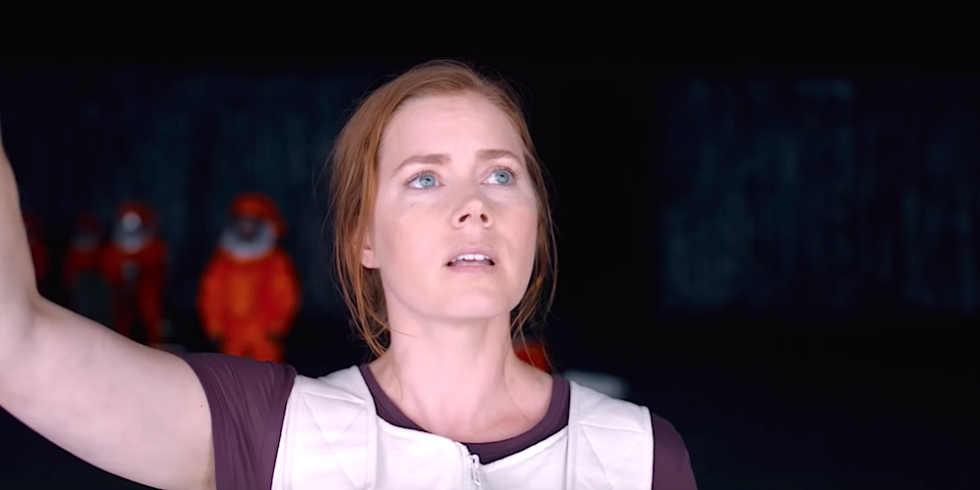
Amy Adams knows how to communicate with aliens in Arrival.

When you learn Arrival is about aliens, I’m sure you have an idea of what you’d anticipate what a movie about aliens would be about. However, you’re in for a big surprise.

This is probably the first movie about aliens to earn a Best Picture nomination. The film appears to set up for a story that would most likely lead to big-time action sequences. Instead we get a film that’s very intellectual in dealing with aliens. Don’t forget Louise is a linguistics professor who was hired for this duty because of her language expertise. In this film, the focus is on communication. Louise has a way to communicate with the aliens and earn their trust even while those around her grow more hostile to the beings. Louise’s gift for communication goes beyond the aliens and she’s able to say to General Shang the words his late wife said to her. It’s like she has a sense for this.

Even with all this, the film is not just about aliens and preventing a human-alien war. The film is about Louise trying to heal after her daughter’s death. Her marriage is no more as well and she’s looking for her purpose. It’s even about Louise and her ability to foresee the future and the possibilities they can unfold. Louise is the central protagonist whom the whole story revolves around. She finds her true gifts at a time she least expects it and she’s able to find her life again. It’s almost like this alien invasion is like a godsend to her life. Right after her daughter dies, she learns of her purpose to the world and to others.

Denis Villeneuve did a top job of directing this film. He already has a reputation for films like Maelstrom, Incendies and Sicario. He’s also been hired to do the Blade Runner sequel. This film he directs is very tricky but he does all the right work for it. The script by Eric Heisserer is very smart and very deep. It does a very good job of getting the right moments of action and the right moments of drama pieced out.

The story also rested on the performance of Amy Adams. She knew the story was primarily about Louise and she had to make it work. Although the role didn’t have too much in terms of character development, her performance was solid and it held the story together. The supporting performers may not have had as big of roles but they still did well with their performances. Jeremy Renner definitely could have had more depth in his role. The music from Johann Johannson and Max Richter fit the movie perfectly. The visual effects were also excellent and just what the movie needed.

Arrival is a very intelligent movie. It’s an alien movie not like one you’d anticipate at first but you will leave the theatre pleased.

HACKSAW RIDGE

hacksaw-ridge
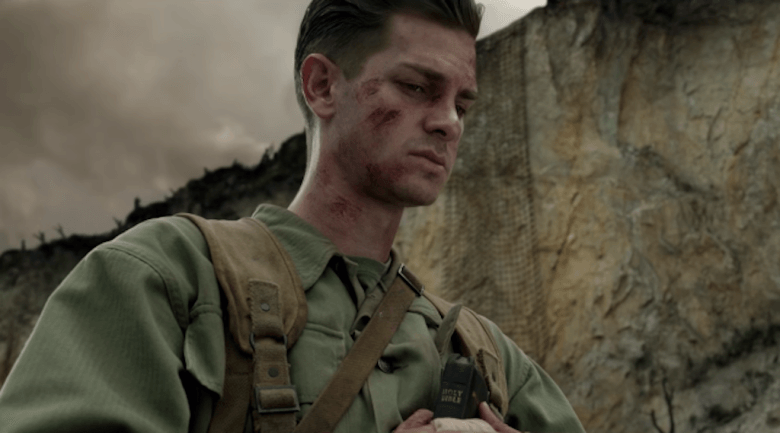
Hacksaw Ridge is about Desmond Doss (portrayed by Andrew Garfield) in both his convictions and his sacrifice.

Mel Gibson is back. This time he has Hacksaw Ridge. It’s a war drama that’s about more than just the war.

This film makes for an interesting topic: conscientious objection. I know all about it. For years I went to a Protestant church where the people were known for their anti-war beliefs. Conscientious objection is something that’s bound to make one question their morals and even act out of hostility. I know that we have conservative pundits who insist that fighting in a war is the definition of patriotism and will even use scriptures to justify why was is the right thing. Upon release of this film, I was anticipating a conservative backlash against it. So far no ‘Diss The Doss’ movement has happened. No movement to have his Medal Of Honor posthumously revoked. Nothing. It’s a good thing because the film does make one reconsider what defines a ‘patriot.’ I’m glad this story was told.

One of the biggest complaints from conservatives in the last 40 years has been either the negative depictions of religion or lack of positive depictions of religion in movies. True, this is not the Hollywood where the Hays Code calls the shots. For those that read my review of Of Gods And Men, I have a quote from Barbara Nicolosi about why that’s the problem. That explains why it’s hard to get a pro-religion movie to compete for Best Picture nowadays. There’s a fine line of showing a film with a positive depiction of Christianity without it being schmaltzy, hokey or overly sentimental. Plus with all the ‘game changers’ in the last few decades, writing a winning script or creating a winning film is just that much of a challenge.

I feel they did a very good job in Hacksaw Ridge. It was a very good story of the persecution Desmond Doss had to face for his beliefs. It was a very gritty story of the war and all the damage it caused. Some say the graphicness was comparable to Saving Private Ryan. It was an honest portrayal about someone’s faith. However there was one point when I felt it was borderlining on hokey during the scenes of: “Please, Lord. Help me find one more.” I know that was something Doss said in real life but I’m just wondering if it could have been done better.

This film is the first film directed by Mel Gibson in a decade. I know he had to take a break as he had a very public meltdown with the things he said about others and problems with alcohol. You could rightfully call this film the redemption of Mel Gibson. He directs an excellent film that took a lot of effort to make. 14 years to be exact even while Doss himself was still alive going from one writer to the next until finally they had the right script and right story thanks to Andrew Knight and Robert Schenkkan. Gibson and the writers did an excellent job with the film with the story and the depiction of war.

In addition, the story was made thanks to the performance of Andrew Garfield. This was more than just a war story. This was a story of a person’s heart and soul. Garfield knew he had to personify Doss in his convictions in order to make this story work. He did it excellently. It’s hard to pick out any supporting players who stood out. None of the roles of the supporting actors were as developed. However Teresa Palmer did a very good job as Dorothy Doss and portraying the concerned fiancee, as is Hugo Weaving as the father Tom Doss and Vince Vaughn as the hard Sargent Howell. The visual effects and the sound mixing were top notch, as it should be in a film like this. The score from Rupert Gregson-Williams fit the film excellently.

Hacksaw Ridge is a surprising film. Who would’ve thought that the best war movie in years would be about a man that didn’t fire a single bullet? Definitely a story worth telling.

MOONLIGHT


moonlight
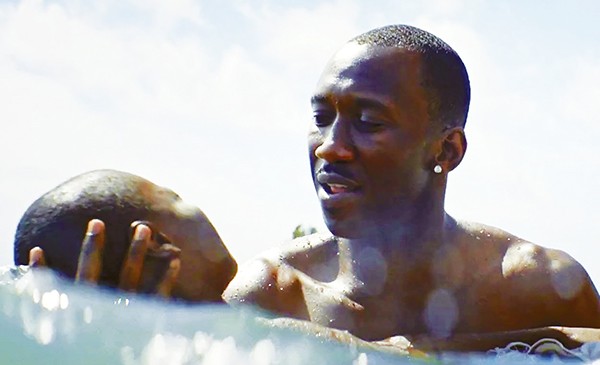
Mahershala Ali (right) portrays a mentor to a boy named Chiron (played by Alex Hibbert at left) in Moonight.

At some point, you gotta decide for yourself who you’re going to be. Can’t let nobody make that decision for you.

This year’s surprise critical success is Moonlight. It’s a very unique film like no other seen this year.

The film is unique as it sets itself around three key periods in the life of Chiron. There’s his childhood where he’s known as Little, there’s his teenagehood where he’s simply known as Chiron and there’s his adulthood where he’s known as Black. The film does tell a story of a man who you think would die young. He has all the ingredients: gay, living in inner city Miami, a verbally-abusive mother addicted to crack, arrested at a young age and a future of being a pusher himself. Somehow he finds the will to survive. He’s able to withstand the bullying he faces for being gay, he’s able to decide his life to the best of his abilities without his mother. Often it’s not the best choices he makes in his life but he finds the ability to survive. You wonder how does he do that? Was it from that brief time with Juan and his mentoring? Was it the love from Kevin he always knew was there? I remember that scene of Little in the school dancing classes dancing like he was in 7th heaven: his escape from the bullying. Was it a spark within Chiron himself? Whatever the situation, it results in beauty at the end.

The film is not just about Chiron. As one can see, it showcases the lives of many different African-American people living in the inner city. It may show some of the more negative depictions like drug dealers, poverty and drug addicts but it also shows positive images too like in the case of Juan and his girlfriend or even in music being played. It showcases some surprising things as well as how Juan the pusher can be a very smart man. It even dispels some myths we have of inner city people. Like how Juan was good at handling Chiron’s homosexuality and gave him words of comfort while Paula acted out in hostility. Usually you’d expect ‘gangstas’ to have a homophobic attitude. It showcases what it’s like to be black and gay in the inner city. It also showcases people’s insecurities. It is overall one man’s attempt to find himself in the harsh world that he lives in. Yet despite all its harshness, it becomes something beautiful in the end.

The film is a triumph for Barry Jenkins. This is actually his second feature as a director. His first film, 2008’s Medicine For Melancholy, won a lot of attention and even earned him many directorial debut awards. Moonlight is only his second feature. This film which he adapts a script from a drama school project from Tarell McCraney is a masterpiece in both the story and its direction. The script is also excellent that there is not too much dialogue but is able to say lots even in the silent parts. Another quality of the film; it says a lot while saying very little. Overall the film is a real delight to watch and leaves one wondering what Jenkins will have next.

The three actors who portrayed Chiron– Alex Hibbert, Ashton Sanders, and Trevante Rhodes- all did a very good job with the role and portraying him at the right ages. Mahershala Ali was excellent as Juan: the pusher who becomes a mentor to little Chiron for that brief period of time. Ali had to bring the right charisma and character for a role like Juan to work not just in his scenes but to have an influence throughout the whole film. He did a stellar job. Also excellent was Naomie Harris. Possibly the one actor or actress to be a part of all three scenes, Harris was excellent as the drug-addicted mother Paula. She had to go through three stages with her role from a simple crack user to a crack addict to recovering in rehab. Each time she had to give her role dimension and inner depth to keep it from being cardboard. She did excellent too. There were additional supporting roles that were also good like Janelle Monae as Teresa and Andre Holland as the adult Kevin.

The technical bits were also excellent. The film was edited very well, the cinematography from James Laxton was possibly the best of the year. The score from Nicholas Britell was excellent but the inclusion of track music from classical to Latin to funk to hip-hop to Aretha Franklin to Motown really added to the feel of the movie. Almost feels like an anthology. In fact that scene when Kevin sees Chiron (as Black) after so many years and plays the classic Hello Stranger is one of the best scenes of the film.

Moonlight is a story of a young black man coming of age in the big city but it’s a lot more too. Those who’ve seen it will know why this film is a masterpiece.

And there’s the first of my Best Picture summaries for this year. Next one coming up in a few days.