VIFF 2025 Review: Idiotka

Anna Baryshnikov plays a fashion designer looking for her big break on a reality TV contest in Idiotka.

The VIFF will be full of dramatic films this year, so it’s kind of understanding why I would want to look for a comedy break. I was lucky to get it with Idiotka. It’s an American comedic film that can make you laugh.

Margarita Levlansky is a woman who dreams of becoming a fashion designer. Trouble is she lives in the Russian section of West Hollywood where it’s hard to get notice. She also has a flimsy sewing machine. The only way she can make money from her fashions is when she sells them with a big-name designer label on them and sell on eBay. Margarita’s family are full of hard times in America. Her brother Nerses is an unsuccessful musician, het father Samuel was a doctor who spend eight years in prison because of medical fraud and was depressed enough to leave his practice, and grandmother Gita is physically unable to work thanks to chain-smoking. To complicate things, they’re waiting for a house being constructed and they’re five months behind in rent at their apartment. Their landlord, restaurant owner Vlad, is not happy at all about it.

One day, Margarita finds a chance for a big break. A fashion television channel is starting a new reality competition for fashion designers from underprivileged backgrounds called Slay, Serve and Survive. At the audition, she meets the shows top producer Nicol Garcia. She let’s Margarita know from the start that this fashion contest will involve a lot of playing to the camera. That will mean things like a likable personality, a relatable scenario and even exposing personal things about her family is she progresses in the rounds. Margarita accepts. Within time, she is one of the final five for the big prize of $100,000. The family is excited for Margarita. Finally, a chance for a way out of the financial mess for them.

At the start, Margarita is nervous when she learns who her four rivals are. They also have attention-getting backgrounds of their own. To add to it, she also learns of the flamboyancy and ego of the two other judges: Candy and Emma Wexler. The first round starts where they all have to take various types of yellow-colored pieces of clothing and work them to make something nice and eye catching. They all have a limited amount of time to make it work. At the end, all five show their works off. Then the judges decide. One has to go home. It’s not Margarita! She’s still in the running!

As each round progresses, the fashions get more and more personal and the competition gets that much tighter. They even go as far as showing off one’s ethnic background. The producers are looking for more chaos from Margarita but she’s reluctant. Grandmother Gita wants to be on camera but father Samuel is reluctant. He still doesn’t want to admit his failings. Soon bad news hits the family as Vlad is evicting them from the house and Gita has been diagnosed with lung cancer.

The two finalists have been narrowed down. It’s Margarita and Jung-soo. For the final episode, only one will walk away with the $100,000. In the days leading up, Margarita is still uncertain how things will go. Her father is still reluctant, she has no place to show her clothes, and her sewing machine works terrible. She’s just about to quit. The night before the main event, she has drinks with Jung-soo and he talks about his own nervousness for this contest. Soon things look up. Gita used her last money to buy Margarita a new sewing machine. One that works effortlessly! Vlad learned of Margarita on television and is willing to forgive the family of the money they owe as long his restaurant is shown in the final episode. Right just an hour before Margarita is to give her show, the father is finally willing to go along and be on camera.

The final show is on. Filming takes place in Vlad’s restaurant. All of Margarita’s family wear fashions showing off the shortcomings of their lives. Nerses shows himself off as the flop singer. Gita shows herself off as the smoking grandmother and tosses cigarettes to the hosts and producers. Samuel comes on with his MD uniform and takes it off to unveil a prison uniform. Finally Margarita comes out in one of her hand-made outfits with all the designer labels she uses sewn all about. Then it’s up to the judges to decide who the $100,000 winner is. The ending gives us a sense that things will get better for the family, but not without some heartbreak along the way.

It’s not that often I go to see a comedy at the VIFF. I just took the film because it was available at the time. I’m glad I did. This comedy does have a lot of relatable teams. A young budding fashion designer who longs for her big break. Her family that’s full of flaws and problems. A fashion contest/reality show that’s a chance to be her breakthrough. It gives a lot to identify with and laugh about. Especially for the young.

I know that films about a reality TV competition have been done very frequently in the past, so this comedy doesn’t offer anything too new. What this comedy does do is it gives a relatable situation about a family with problems and one person trying to find a way out of it. It will require family cooperation and it gets messy, but it does work out in the end. The story is also about how the child of the family has the biggest responsibilities with her being the breadwinner. To do all that she does and then risk it big time to win on reality TV, that is one big challenge. Nevertheless the story pulls itself off well. It may get messy at times in the story, but it succeeds in the end.

This is the first feature-length film for Nastasya Popov. She has directed short films including documentaries before. Here she delivers a compelling comedy about trying for a big break while hanging by a string. It’s a funny story, if it’s not always together. Popov has gotten some acclaim for this as she won a New Director award at the San Francisco film festival.

Anna Baryshnikov holds the film together as the protagonist. The daughter of legendary ballet dancer Mikhail Baryshnykov, she’s had a steady acting career for over eight years and she looks great here. She’s able to balance the humorous with the dramatic and be able to be the centre of a story of a messy family drama. The chemistry of the family also made the film work. Mark Ivanir is great as the father too prideful to fess up to the mistakes he made. Nerses Stamos is also good as the son who can’t get a break. Galina Jovovich often steals the film as Gita the fierce grandmother. Camila Mendes adds to the humor as Nicol as do both Julia Fox and Saweetie as exaggerated versions of themselves.

Idiotka may follow a common story line found in most comedies, but it succeeds in delivering its own story. It has a mix of relatable and unrelatable ingredients that will make you enjoy it.


Oscars 2015 Best Picture Review: Brooklyn

Brooklyn is the story of Irish girl Eilis (played by Saoirse Ronan) who comes to America and is swept away by a Brooklyn boy (played by Emory Cohen).

Brooklyn looks like a film that would be a favorite for a Best Picture Oscar, under traditional standards. Nevertheless it’s worth seeing.

It’s 1952 and Eilis Lacey is about to emigrate from Ireland to the United States through the arrangements of her sister Rose. It’s not like Eilis will miss much. Life in her hometown of Enniscorthy has been redundant as she works at the mercantile run by the spiteful Miss Kelly part-time and she’s also unable to win the affection of a man at the local dance hall while her best friend has better luck. So what does she have to lose?

She bids a tearful farewell to her mother and sister Rose as she departs. The ship ride is trying as she has to cope with rocky waves that make her seasick and cabin neighbors who lock her out of the bathroom. Nevertheless she finds a cabin mate whom she gets along with well. Her cabin mate is actually on her second trip to the United States returning home. She gives her advise on what to do at immigration and informs her of what to anticipate in the United States.

Once in New York she makes her home at an Irish boarding house in Brooklyn run by a traditionalist woman housing young women. She’s able to find a job at a Manhattan department store but is uneasy with it at first. She meets with Fr. Flood who helped her make her job arrangements and she’s able to enroll in bookkeeping classes. She goes to dances at the Irish hall but is surprised to learn the young man who’s interested in her is Italian. He’s smitten over her but she’s reluctant to admit she loves him. Eventually she finally does and meets his family.

Unfortunately tragedy in back in Ireland interrupts her stay in Brooklyn. Fr. Flood informs Eilis that her sister Rose died and her mother doesn’t know how to cope. Before returning to Ireland, Tony wants to marry Eilis. They wed secretly in a courthouse. Upon returning to Enniscorthy, Eilis already has a return to Brooklyn planned out but over time she feels more at home. Her best friend is about to marry, she gets offered an accounting job on an emergency basis at her sister’s business, and she wins the affections of Jim Farrell, an eligible bachelor who stands to inherit huge property.

Over time she wins the love of Jim, gets admiration from her workplace and starts falling in love with the town she left behind. It’s like the life that eluded her before she left has happened once she returned. Her feeling at home in Enniscorthy has left her comfortable to the point she doesn’t open the letters Tony send her. None of them. However a visit to Miss Kelly and what she has to say to Eilis seals her fate and where she makes her final decision.

This film is one that will remind one of Oscar winners or nominees of the past. Often you think you’re watching a film that would’ve had what it took to win Best Picture 20 years ago. However what it does is it helps bring back the magic of those films set in the past and takes one back to an easier time. Usually nostalgia pictures like these have become too cookie-cutter over the years especially as the critical ‘powers that be’ in the film world have recently been giving the lauds to more innovative fare. I will admit myself this looks like something the Weinstein brothers would have shelled out during their Miramax days. However the film succeed in making such a nostalgia film a refreshing alternative around the awards season. The film even adds a certain charm or magic that seemed to be missing in a lot of nostalgia films as of late.

It’s a question what the film’s best quality is. Whether it’s the story line or setting of the environment. However I think the best quality of the film has to be a very relatable story. Sure, we’ve seen many Ellis Island or ‘Coming To America’ stories before. What I feel is the movie’s best quality is a common story that’s relatable time over time. In fact just last week, a person I know who came here from Ireland years ago and just received her permanent residency just this month said she saw the film and it reminded her of her own homesickness and even her own frustrations of not knowing what will happen next or whether things will work out for the better. Reminiscing over the film, I think that’s it. I believe its magic is this is a common story that any Irish immigrant to the United States, whether they came early in the 20th century or in the 50’s like Eilis or even just recently, can relate to and even see themselves and their own stories in that film.

Saoirse Ronan is the perfect pick for Eilis Lacey. She has the grace and the youthfulness to play her well. She also does a very good job of playing a young woman from back in the 1950’s with the elegance and innocence coming with it. Overall, Ronan’s role of Eilis is the centerpiece of the film. Nevertheless there are good performances from the other actors despite not having as complex of roles. There’s Julie Walters who did a good job as Madge Kehoe as well as Jim Broadbent as Fr. Flood. There are even those that give comic relief like Emily Rickards and Eileen O’Higgins as Patty and Nancy, Eilis’ two laughing girl friends in Brooklyn, and James DiGiacomo as Tony’s littlest brother Frankie who knows how to steal the show. There were however roles that could have been more. Firstly, Emory Cohen was also good as Tony Fiorello and had the right charm to play him but the role lacked complexity. Also there were times I feel Jane Brennan’s role as Mrs. Lacey and Domhnall Gleeson’s role as Jim Farrell could have been more.

Nick Hornby wrote a very good adaptation for the screen despite having some underdeveloped roles. John Crowley also did a good job in direction. This film should be considered the Irish director’s North American breakthrough. The technical aspects of the film like the sets, the costuming, the hair and the make-up worked perfectly for the film as it fit the times and the cities perfectly. Michael Brook also gave a fitting score to the film.

Brooklyn may look like your common Ellis Island story but it’s a film that does all the right moves and captures the right feel that makes this film great.

VIFF 2014 Review: Advanced Style

Advanced Style is a documentary about elderly women who know style!
Advanced Style is a documentary about seven elderly women who know style!

Think high-end fashion is only for the young? Advanced Style proves that fashion is for the old too. And these seven elderly fashionistas could easily give Coco Chanel a run for her money.

The film begins as an introduction first to Ari Seth Cohen, co-writer and creator of the blog Advanced Style about fashionable seniors. Then we meet the seven senior women in focus: all from New York and aged between 62 to 95. The first part is an introduction of the seven about who they are and what they buy. The film continues focus on the women but soon these women don’t seem so cartoonish as one would first think. All the women seem to enjoy life and have a positive outlook on themselves. Some are grandmothers, some are widowed, one or two never married, one or two are with their husband or a new mate. Some live the relaxed life of a senior citizen while some stay active by singing, dancing and even teaching art classes.

When you watch the film, you can easily see your perception of elderly women change. You first think they’re nearing the end of their life but they’ll show you they’re living it as if they were youthful twenty-somethings. Seeing how they go about in terms of their choice of clothes, their socializing and their activities will really surprise you and make you rethink growing old.

It’s not to say that their uniqueness isn’t immune to some negative aspects out there. Once they made an appearance on the Ricki Lake show and 80 year-old Joyce Carpati is intoxicated by the red light and looks foolish while singing a song. Even the fact of death is unavoidable as the women attend a fashion show in New York by a leading fashion designer (whom of course has young thin models) and Zelda Kaplan, the eldest of the seven at 95, is taken to the hospital and later dies. Nevertheless it was fun to watch from start to finish. Even seeing one woman strut her stuff down Beverly Hills will make you want to say “You go girl!”

Ari Seth Cohen is of course the brains behind the film. He knows this subject from head to toe because it’s the subject of his blog inspired from the joie de vivre of his own grandmother. He even wrote an Advanced Style book. He shows them in a mostly positive manner in both what they wear and who they are. Even if some of the choices look ridiculous like some of the hats worn or the big Edith Head glasses or even the woman who makes eyelash extensions out of her own hair, he presents them as them being themselves and not caring. He made the right choice in picking fashion film director Lina Plioplyte to direct and co-write the film.

As far as a film, I don’t see it being too much of a big screen release. This looks like something that will mostly fare well on an educational channel like BC’s Knowledge network or a documentary channel. Also I believe this might be Ari’s only documentary unless he shells out a sequel with some new seniors to show their stuff.

Advanced Style is definitely a charming documentary of elderly women who are young at heart in both the way they dress but the way they live too. One said fashion is about confidence. You can bet they’re full of that.

Also those interested in the Advanced Style blog, here’s the link.

Oscars 2012 Best Picture Nominee: Les Miserables

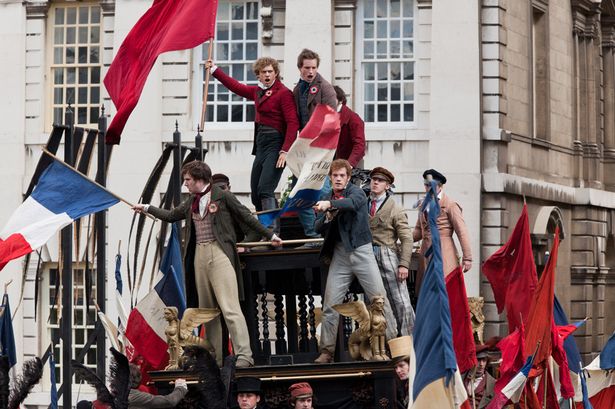
Les Miserables

How many of you are familiar with the Broadway musical Les Miserables? Lots of you, I’m sure. Yes, Les Miserables was the one Broadway musical phenomenon from the 1980’s that could even have Andrew Lloyd Webber looking over his shoulder. When you heard that the musical finally would have a film adaptation, how many of you looked forward to seeing it? I’m sure a lot of you have including me, but does it deliver to movie crowds and especially to fans of the musical?

One thing I’ve learned about hit musicals being adapted to the big screen is that it’s a very tricky job. The whole filmmaking crew has the job of dealing with the fact the fans of the musicals want something that won’t disappoint them. The scriptwriter has the duty to make a script that includes the musical’s most popular songs mixed with the emotions of the characters in each scene. The director has the duty of making the songs, the emotions, the setting and the theme fit into a 2 1/2 hour long movie. The actors have the duty of delivering a performance that’s both believable and entertaining in both their acting and their singing, especially when a camera is filming them up close and it will be seen by all.

For the record, I saw the stage musical when it came to Canada in 1995. Most of the numbers possessed the same energy, spirit and emotion that was present in the stage musical. The only number I thought was lacking the same spirit was “Master Of The House”. That was the one number that had the least spirit and flavor that was present in the musical. Also Gavroche didn’t make that grand of an introduction. I know he does so in the stage musical but he just didn’t seem to grab you attention at the beginning the way he does on stage.

One thing I have to say about the film version is that it gave me a better understanding of what the musical is all about. Back when I first saw it on stage, I didn’t fully understand it. Now that I’m older and my attention span is better, I can understand it’s about redemption and the triumph and trials of justice in a world devoid of morals and justice. It was entertaining to watch on stage but it was through seeing it on film that it’s like a story from a Dickens novel where a man makes a promise to a dying woman and keeps his promise despite his trials and rivals until the end.

We should remember that there are many loyalists of the musical Les Miserables who hold the stage production dearly to themselves. The musical version of the Victor Hugo novel began in Paris in 1980 by Claude-Michel Schonberg and Alain Boulbil and became a musical on Broadway in 1985 thanks to the translations of Herbert Kretzmer. If you remember Broadway back in 1985 there were two types of musicals: those of Andrew Lloyd Webber that go on to charm the word and every other musical. Ever since it’s been released it’s become a huge Broadway phenomenon that could even rival some of Webber’s most legendary musicals. Every city it touched, it drew huge crowds. So you can imagine that when the film version of the musical came out, there would be a lot of pressure placed by fans of the musicals. It’s like that with any musical where loyal fans expect it done excellently if not perfect. There have been many musical adaptations that have been hits and misses in terms of comparing it with the stage play. Chicago and Hairspray are two examples where the film version hit. Rent and Nine are two examples of the film version missing. I myself have seen the stage production. I personally was impressed by it and I don’t see anything that would let anyone loyal to the stage musical down. I feel Tom Hooper and the producers did a very good job with it. I talked earlier about the energy of most of the songs still there. That had to be the best quality in terms of keeping it true.

There has been some flack from Tweeters and some fans of the musical about the use of actors in the movie. You’ve heard the disses: “Actors trying to sing.” I do give them partial credit because many actors had to learn singing for the sake of getting acting jobs in musicals. In fact John Travolta even made it clear after Saturday Night Fever that if you wanted to get acting work in New York, you had to sing, dance and act. Don’t forget that if there were singers in the film, there would be disses like: ‘singers trying to act.’

Anyways getting to the nitty gritty, one can notice those that are able to sing their roles gracefully from the actors just trying to sing. Russell Crowe gave his best effort as Javert but often came across as too forced and sometimes uncomfortable at what he was doing. Eddie Redmayne also didn’t look too comfortable performing as Marius. That’s the risk when you take when you insist on singing your parts instead of ADR. Hugh Jackman did an excellent job not just in singing and acting as Jean Valjean but also for being consistent in having the biggest role in the musical. Anne Hathaway as Fantine was however the best at combining both singing and acting in their role and coming across the most gracefully. In fact it was her performance of “I Dreamed A Dream” that stood out above all others. It’s no surprise to me if she wins the Oscar. The lead actors were not the only ones who impressed. Helena Bonham Carter and Sacha Baron Cohen did a good job in their supporting roles. Daniel Huttlestone was a good scene stealer as Gavroche is supposed to be. If there’s any fresh face that could rival the veterans, it’s Samantha Barks that was excellent in her supporting performance as Eponine.

Tom Hooper was given the difficult task of taking the musical and putting it on screen and he succeeded very well in doing it. William Nicholson also had the challenge of turning the script and songs of the musical and turning it into something for the big screen. He did a very good job of it retaining the spirit of the musical and of the songs. Also noticeable is that there are some scenes of dialogue. The stage musical doesn’t have that. Good to see he added those small parts of dialogue without dulling or upsetting the musical. As I said before, the music was great with Schonberg, Boulbil and Kretzmer even composing a new song ‘Suddenly’. The technical aspects like the sets, costuming, cinematography and sound mixing were also top notch.

Les Miserables finally has its chance to hit the big screen and faced a huge whack of pressures expected on any adaptation of a legendary Broadway musical before opening. The end result is an accomplishment, if not a triumph.

2011 Oscars Best Picture Nominee: Hugo

Hugo is a delightful movie based on the book The Invention of Hugo Cabret by Brian Selznick. It’s a unique story about how a chance stealing by a young boy changed everything forever.

It all starts in a train station in Paris in 1930. Hugo Cabret has a life no child would want. He lives in the train station completely orphaned and with nothing but a bed and an automaton from his late father whom he hopes to repair. He ended up there after his widowed father was killed in a fire and taken by his alcoholic uncle who would look after the station clock. After his uncle died, Hugo steals food and runs the clock himself from revealing the death of his uncle. If the truth is found out, he will be sent to an orphanage.

One steal by Hugo of a toy part from the station’s toy store owner would change everything. Hugo was able to escape the station policeman thanks to his leg brace being caught in a train. Hugo however loses a book of animated drawings to the toy store owner. For Hugo to get it back, the toy store owner punishes Hugo by making fix his broken toys. The toy store owner is surprised to see that Hugo is very skilled at fixing toys thanks to his father’s teachings.

Soon Hugo catches the attention of Isabelle, the girl who frequently visits the train station. She is an orphan too who is being looked after by the toy store owner, whom she refers to as Papa Jacques. He notices the key she wears: it is heart-shaped. His automaton has a heart-shaped lock. Another link to the mystery. The two spend time together. She sees the clock area Hugo lives and the view of Paris. The two sneak into a movie theatre and see a movie, something Papa Jacques forbids her to see. Later Hugo uses Isabelle’s heart-shaped key on the automaton. The automaton draws a picture of the moon with a spaceship in his eye and the name Jacques Melies.

The two try and search further to see if Papa Jacques really is Jacques Melies. Upon a return visit to the house, they try to uncover the top drawer in his bedroom. Out comes a wide variety of imaginative artist images. Nevertheless Jacques is distraught to learn the children have learned of his secret. It’s only until the children bring a young film student to Jacques that Jacques finally reveals that he really is Jacques Melies, director extraordinaire of the early 20th Century. He explains to all why he became a recluse, because of his films failing as the First World War was taking place. He even burned most of the master copies of his films in a fit of rage during his downtime.  It is through Hugo and the film student that he’s able to receive an acclaim from a new generation of film enthusiasts. It is also where Hugo finally finds a family.

The movie is more than just a salute to Jacques Melies and his contribution to film in general. This movie is also a salute to moviemaking and movie watching. Movies achieved their greatness by making people’s fantasies come to life. They took them to worlds never before imagined. They took them to adventures and thrills they wouldn’t experience in their own lives. And to think it all started when a film of a train approaching the station made the audience duck for their lives. Nowadays movies face a lot of rivalry from many entertainment sources. Its biggest rival is now video games which allow the viewer to live the fantasy via an avatar, but movies still capture people’s attention and take them to worlds they never dreamed of.

Even though the movie is very much a salute to movies, it’s also a reminder that even then, great directors like Melies faced downtimes too. Jacques created hundreds of movies in his lifetime but as soon as most of the French public lost their liking for movies his fortune disappeared, his studio became useless, burned his films in anger and lived in obscurity for years. Nowadays we hear countless stories of people, especially greats, who had their moment but fade fast and die in obscurity without a penny. It happens to greats as often as it happens to ‘one-hit wonders’. Showbiz is cruel. Fortunately there does come a time long after their downfall when their achievements are recognized once again. It may be while they’re still alive or it may be post mortem but their greatness does become remembered and honored again.

Overall the movie was top-notch quality. That’s something you rarely see in most live-action family movies. There was no one acting performance that stood out or was spectacular but the performances of all worked excellently with the movie. Ben Kingsley was very good as Jacques. Sacha Baron Cohen who’s known for his comedic characters was great as the comic relief of the movie. The child actors of Asa Butterfield and Chloe Moretz did an excellent job in their lead roles. The story was very well-adapted and well-edited as it’s able to keep the audience excited, thrilled and interested from start to finish. Martin Scorsese did another excellent directing job. He’s tackled a lot of genres of film excellently and now he achieves another triumph in directing family movies. The score by Howard Shore fit the movie perfectly. The visual effects were also amongst the best of the year. The movie being shown in 3D worked. This was one of the rare times in which the 3D viewing appeared to be less in vain or for extra money and more for the delight of the crowd. It looked like Scorsese knew that if he was to have a movie in 3D, he should have the effects that make it work.

One thing that’s been unique in the film world of recent years is that a lot of well-renowned directors have started to make family movies. Seven years ago, Danny Boyle (Trainspotting, 28 Days Later, Slumdog Millionaire) released Millions: a story about a boy who encounters a bag of stolen money and consults patron saints for advice. Many years ago, Roman Polanski did his version of Oliver Twist to make a movie for his children who were twelve and under at the time. Two years ago, Spike Jonze directed the film adaptation of Where The Wild Things Are. Even Quentin Tarantino says he’s interested in doing a family film if the right idea comes around.

Now we have Martin Scorsese with a family movie out. It may come as a surprise since he has been renowned for his filmmaking of some of the grittiest legendary dramas. Nevertheless if Martin was to make a family movie, Hugo would be the perfect fit. The celebration of film in Hugo is something Martin would do well because Martin is known to have a love for film itself. Martin even did a documentary series for the BBC years ago where he narrated the history of film and its genres. In Hugo we see Martin’s love for film as much as we see the reasons why movies have become so beloved. Even Roger Ebert described the move as “in some ways, a mirror of his own life.” And the love of film started with Jacques Melies. Martin Scorsese does more than just make a family movie. He also makes a masterpiece that even adults can appreciate, especially those who love film. The film has been nominated for Best Picture and ten other categories at this year’s Oscars. It is the first live-action family movie since Babe to be nominated for Best Picture.

Hugo is a pleasant film not just in terms of family movies but all films. Very rarely is a family movie able to be referred to as a masterpiece. Very rarely does a family movie deserve to be referred to as a masterpiece. Hugo is that rare.

NOTE:  Usually around this time, I start my reviews of the Best Picture nominees. I have five more reviews coming. Best Picture nominees already reviewed are: Midnight In Paris, The Help and Moneyball.