I didn’t think I could do it but I did it. And this soon! All ten Best Picture nominees reviewed. And these are the last two. One just set an Oscars record for the most nominations (16) and the other was the big winner at the Independent Spirit Awards:
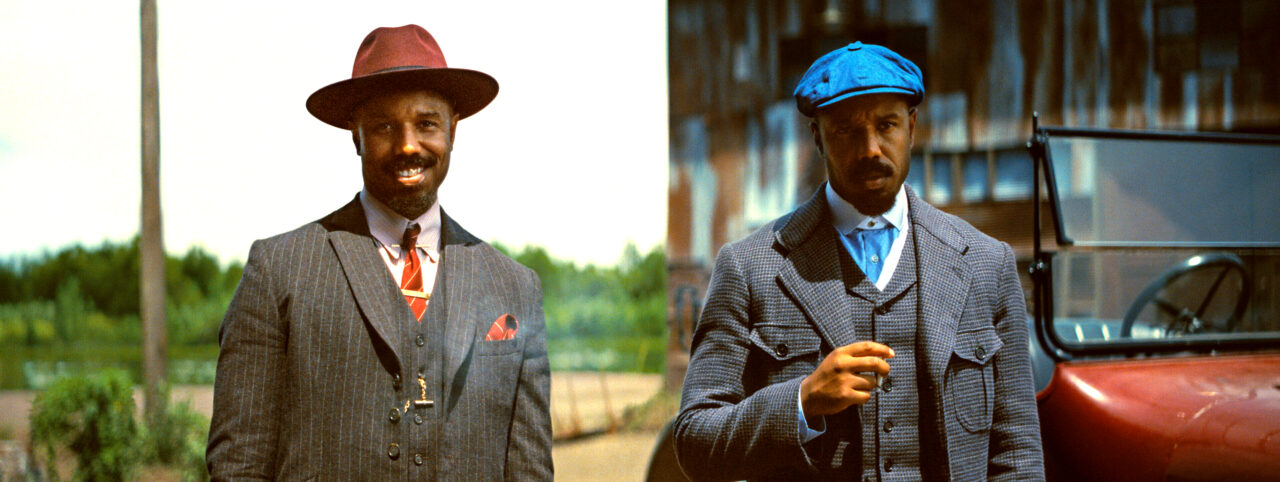
Sinners
The most unique thing about this film is that it goes on a common theme of how past generations of peoples would see music as a way to heal but also some music that is evil and is able to unleash demons. This story helps imagine of such a type of music or such musicians that can unleash a type of evil spirits or in this case, create a set of vampires. The setting appears to be right. Two African American twins, the Smokestack Twins, rent out a sawmill for a night of entertainment for their people. They do the dealing and inviting and even bring their younger cousin Sammie to play, despite his minister father’s religious objections. Meanwhile an Irish vampire is sheltered by a couple who belong to the KKK. The vampire infects them and they come to the event just as everyone’s partying. Despite their initial rejection, they find a way to infect those from the party and turn them into vampires themselves.
It’s the story of mixing the theme of music as something wicked and playing on that theme as white musical vampires use it to lure people to their spell and become vampires themselves where they become enslaved by the leader. It’s also the theme of music as something good as it helps connect with both generations past that adds to the theme of the overall story. Outside of music, it’s also the theme of racism in the film. Whites who are part of the KKK own this Mississippi land. The twins learned a thing or two about money and they try to prove they’re not inferior by proving their purchasing power to the white men. A group of singing white vampires, including two KKK members, who find a way to infect some attendees and turn them under their spell. This can definitely stimulate a lot of talk about racism and Jim Crow laws. And all this in a story about a young musician who gets his first break in a gig that will haunt him for the rest of his life, and have him decide his future.
Now this film became the surprise hit film of the summer. Normally horror films and films of the supernatural are good at winning crowds and stimulating intrigue, but most film critics look down upon the genre. These past ten years has helped in giving this genre its long overdue respect. This film helps add to the respect of the genre of various music styles. Mind you this is not your typical horror film. The twins thought their only problems they had to deal with was Jim Crow racism, but a bigger more supernatural threat was coming their way. Being a story about music bringing demons out, both in the spirit world and down to Earth, this horror story goes above and beyond what one would expect for a horror story. With music being a central theme, the film delivers on a lot of excellent songs that can make you appreciate the genre it represents. Easy to see why this film that was quietly released in the summer became one of the biggest hits.
Biggest acclaim has to go to writer/director Ryan Coogler. His illustrious career took off with 2013’s Fruitvale Station, which was also the breakthrough film for Michael B. Jordan. Further success would come with 2015’s Creed, 2018’s Black Panther and its 2022 sequel Wakanda Forever. This film is his masterpiece. It’s a film no one expected to be a hit and comes across as a difficult story to write and a difficult film to direct, but Coogler masters it. In the end comes the film of 2025 I can most label a masterpiece! Definitely a classic for the future.
One of the biggest strengths of the film is its acting. Top accolades should go to Michael B. Jordan. He’s worked with Coogler before with Fruitvale Station, Creed and the two Black Panther films. Here, he does the remarkable job of two twin brothers. He’s able to know the characterizations well and portrays Smoke as the serious one and Stack as the more playful one very well. Then to have Stack become a vampire and Smoke to fight the vampire spirits. To do the two roles and know what to play when is a job and a half. Especially for a film like this.
The supporting acting of the film really stands out. The top standout has to be Miles Caton as Sammie Moore. For a debut role as a young musician looking for his big moment and being horrified with all that happened, that is no easy task. Miles masters it like nobody’s business. Miles is also great at singing the blues. In fact, some of the best acting of this film comes from the performances that include singing. Delroy Lindo is very believable as Delta Slim. His delivery of the performance gets you believing he really is a blues legend. Wunmi Musaku gave an excellent performance as Smoke’s estranged wife and she can sing very well too. Other standout performances in the film include Hailee Steinfeld as Stack’s former girlfriend, Jayme Lawson as a singer who seduces Sammie, Jack O’Connell as the leader of the vampires, Li Jun LI as the shopkeeper’s wife, and the legendary Buddy Guy portraying the older Sammie at the end! Kudos to casting director Francine Maisler for making the right choices!
Just as equally deserved as praise and the reason for this film’s record-setting sixteen Oscar nominations are the technical efforts. If you take away the three Oscar categories for small films as well as the categories for Animated, Documentary and International Film, you’d see Sinners has a nomination in all those categories! The sound technicalities and the visual effects stand out. Hannah Beachler and Monique Champagne did a great job in the set designs and succeeded in turning back time. Also turning back time is Ruth E. Carter in costuming. Autumn Durald Arkapaw did a great job in cinematography.
The standout technical effort in this film has to be the music. Swedish composer Ludwig Goransson did a great job in delivering a score that respects the African American music styles and succeeds in creating the right mood for the film. Of the songs in the film “I Lied To You” which was written by Goransson and Raphael Saadiq stood out as it succeeds in making us believe it’s an old-time blues song. The whole film plays a wide variety of songs whether it’s sung by the actors or played as background music. When you watch the film and listen to the songs, it’s almost like the film is saluting music itself. The film magnifies the charm of the music styles. Even styles of music we come to dismiss as hokey, the film highlights the charming part of the style we didn’t bother to see the whole time. Music is the central theme of the film so it makes sense to have top-notch music.
Sinners is a film that’s indescribable. You could describe it as a horror movie or a drama set in the past or a musical. You can be both wrong and right. The film defies convention and delivers a masterpiece that’s unforgettable!
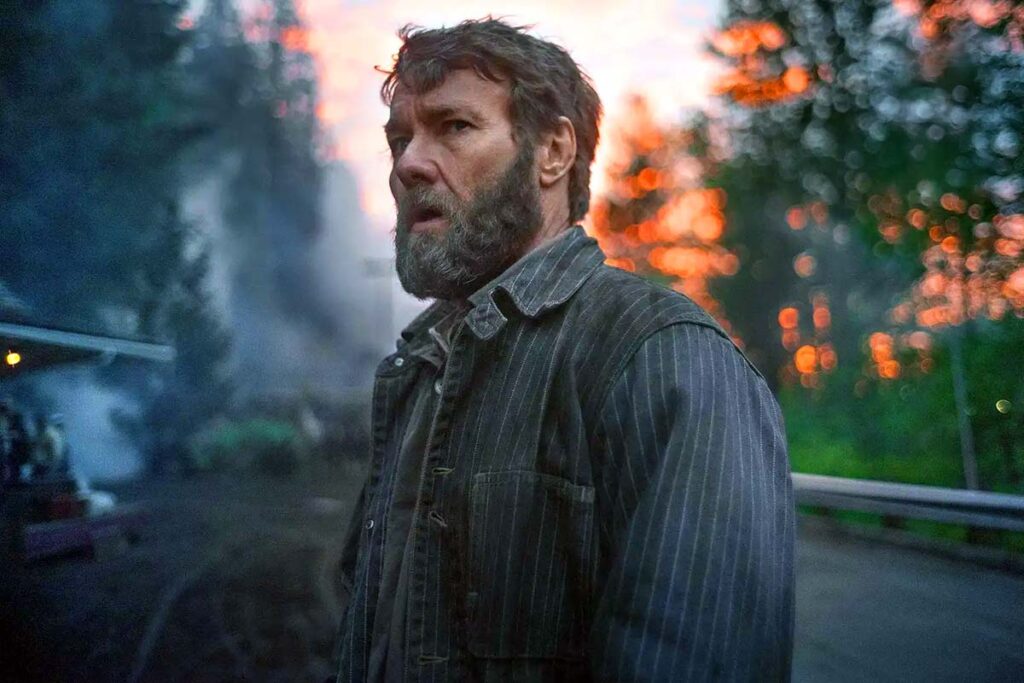
Train Dreams
A lot has changed in the film world over the last 25 years. The types of films that would find its way in film festivals and would find itself getting a chance at the box office would now find themselves on Netflix if they’re lucky. That doesn’t mean such films won’t be seen by the public or are out of chances for the Oscars. That was the case of Train Dreams as it made its debut at Sundance 2025, was shown in select theatres for Oscar eligibility and would become a Netflix film. A film about an 80 year-old hermit living in the forests of the Rocky Mountains a century ago doesn’t make for an attention-grabber of a film. How it attracts intrigue is it’s a story about one simple man and how he encompasses our own human feelings. Robert Grainier goes through the happiest of moments when he falls in love, marries and has a daughter. He goes through the hardest of heartbreaks when he loses them seemingly forever in a fire. He has feelings of hope as he hopes they may have survived and just moved off. Even feelings of hope as he meets Claire and the chance to start a new life for himself. He has feelings of hopelessness as his ageing no longer makes him physically able to do forestry work. He has images that haunt him like the Chinese worker who was killed, those in the forestry work who were killed on the job, or his wife Gladys and daughter Kate who give him haunting messages. He connects with all sorts of people from co-workers to people in town to people doing other work close by, even if it only appears to be a temporary connection with them. That seems to be it about the story of Robert Grainier. He’s a man whom people come and go in his life — even those closest to him — but he seems to find a purpose to his life. Having lost so many people, some tragically, he could do himself in and end it all, but he continues to live. And it’s all the better for him.
The unique thing about the film is not just about Robert Grainier and how he seems to be an ‘everyman’ character, but also happening in a time in the United States in the past. It’s a rare time to be in the forests of the American Northwest in the 1920’s. The film shows of a United States that used to be. A United States that was on the growth and Grainier was a part of it. It shows a nature of the United States that would soon fall prey to urbanisation. Grainier is part of both what nature gives to him generously and what nature takes form him cruelly. Even with urbanisation, Grainier doesn’t take himself away from the nature until his visit to Spokane in the 1960’s. The nature of the forests and the mountains Grainier is a part of is just as fascinating as the simple life of Grainier himself.
This film is another achievement for director Clint Bentley. He has only had four years of film work but he has created achievements like 2021’s Jockey and co-writing the script with Greg Kwedar for 2024’s Sing Sing. For this he directs, he collaborates again with Kwedar to adapt the 2011 novella form the late Denis Johnson. The novella received praise for its work and was a finalist for the Pulitzer Prize. Here, Bentley brings it to life and creates a story about the man and the time he lives in. He makes it a story that’s also about the people that come and go in his life and make it a story in which we the audience can find enriching. It’s an excellent achievement.
The film single-handedly belongs to Joel Edgerton. The whole story revolves around the life of Robert Grainier: a fictional man living in the forests of the American Northwest. Joel not only acts the role of Grainier out well but he also tells his story well. He tells his story and helps connect the characters of the story. The film is also as much about the people in Robert’s life as it is about him. Being the centrepiece, Edgerton makes the story of Grainier come alive.
Although the film is mostly Edgerton playing Grainier, the actors playing the supporting roles also add to the film very well. Felicity Jones did a great job of playing his wife Gladys who is able to win his heart. William H. Macy is also great as the explosives worker Arn Peeples who considers trees to be spirits. For a short period of time, Macy is able to steal the attention away. Kerry Condon is also great as Claire who is able to connect with him and share her loss with his. The film also features a lot of great technical achievements like the cinematography of Adolpho Veloso. His images really captured the region and helped to make the story. Malgosia Turganska made excellent decisions in the choice of costumes for the film’s costuming, fitting the eras well. The score from Bryce Dessner does a great job in capturing the atmosphere and drama of the film.
Train Dreams may come across as a slow film of boring subject matter but if you give it a fair chance, you will come to like the story it tells. It’s a story where one man can reflect our own feelings in his lifetime. It also feels like a piece of Americana.
And that does it. I am now complete in my reviews of the Best Picture contenders of 2025. It’s up for the winners to all be decided on Sunday March 15th.


 Jon The Blogcentric