Oscars 2024 Best Picture Reviews: Part Three

At first I intended for my Best Picture blogs to be three in total. When it became clear how much writing I did for the first two films, I decided dividing them into blogs of two reviews each is more worth it.  So in the meantime, here’s the third of my five Best Picture review blogs:
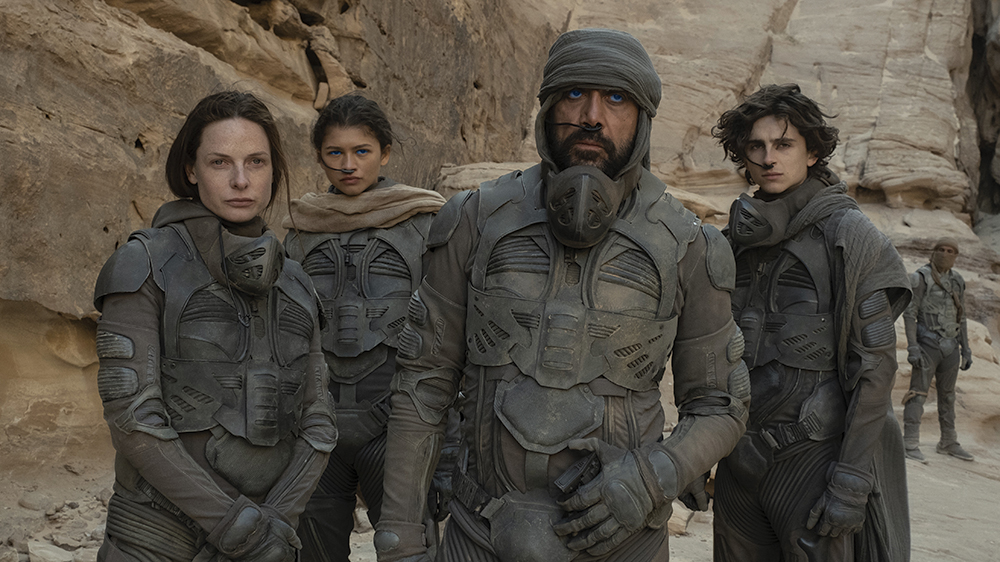
Dune: Part Two

The reboot of the Dune series has been so far the biggest movie action of the 2020’s. The re-adaptation of the Frank Herbert novel was a highly anticipated event in 2021 and hoped to get people back into the movie theatres after the relaxing of the strictest COVID precautions in history. It worked. Dune made over $400 million at the box office, was nominated for ten Academy Awards and won six. It was like what David Lynch got wrong, Denis Villeneuve got right. Originally, Villeneuve planned to divide the story into two films. This is what led to Dune: Part Two to be made.

The second Dune film continues with the drama left behind from the first. The second makes the stories of the dehumanizing Water Of Life, the installation of the young sadistic nephew of Arrakis as the ruler and heir to House Harkonnen, Paul’s romance interest to soldier Chani, the threat of holy war from Fremen fundamentalists, a spice trade at risk of smugglers, Paul’s consumption of the Water Of Life much to the disappointment of Chani, his dealing with his mother, his duel to battle the throne of the Harkonnen kingdom, his ascendancy to the role of king upon winning and the rejection of all as leader, including Chani. The drama continues, the excitement and thrills increase and the ending leaves the audience in suspense and the anticipation of what will follow in the sequel Dune: Messiah, set for release in the spring or summer of 2026.

Every year, there seems to be at least one ‘popcorn movie’ that seems to rack up enough buzz to eventually become a Best Picture nominee. Not only did Dune: Part Two get nominated for Best Picture, but the Dune franchise joins the Godfather, Lord Of The Rings, Going My Way and the Avatar franchise as the only five movie franchises to have two or more of its films nominated for Best Picture. It’s deserving of it because it succeeds in doing what a science fiction film should do. It takes people into another world. It creates an intense complex drama of the threat of the order of humanity and how it rests in the hands of one young man. It delivers in the action people go to expect form a film like Dune. On top of it, it succeeds in being the opposite of your typical movie sequel that ends up being a repeat of the first. Instead, we get a continuation of the chronologic drama and ends with the anticipation of the third and final part. Deserving of its Best Picture nomionation. And to think it was released back in March 2024. Talk about endurance!

Once again, top respect goes to Denis Villeneuve. You can trust Villeneuve to deliver in a sci-fi film. Both in his direction and his co-adaptation of the story with Jon Spaihts, he continues the excitement of the story well by keeping in the right parts, delivering on the action needed and making the smart decision to make his adaptation of Dune a three-film series instead of the two-film series he originally hoped for. He did things right and in winning fashion. Like most sci-fi films, the story is more focused on the special effects and action moments, but the film doesn’t stray away from its focus on the story and the characters. It is still there and still consistent. Even though Timothy Chalamet’s performance as Paul wasn’t too deep of a role, it is still consistent to the story and very believable. Zendaya’s performance as Chani added to the story. In the first Dune movie, Chani was a minor supporting role. Here, she’s the lead female protagonist and Zendaya does an excellent job in making her a key part of this chapter. There were also good performances of minor roles like Josh Brolin as Paul’s trainee and mentor, Rebecca Ferguson as Paul’s mother with whom Paul harbors resentment, Austin Butler as Paul’s fierce deadly rival to the throne and Christopher Walken as the emperor.

As is common with great science fiction films, the standout achievements are in the technical areas. You need it for a sci-fi film to excel and Dune: Part Two had some of the best of the year. Its top achievements are in the cinematography by Greig Fraser, the production design by Patrice Vermette and Shane Viau, the costuming by Jacqueline West, the editing by Joe Walker, the special effects by the film’s effects team, and the music from Hans Zimmer. All of it was successful in taking the audience into Dune’s futuristic world and enhancing the film’s action.

Dune: Part Two succeeds in keeping alive the drama, intensity and excitement of the first film and sets the audience up for anticipation of the third and final chapter. It succeeds in having the best qualities of a sci-fi film without the common watering down or cheapening of the quality.
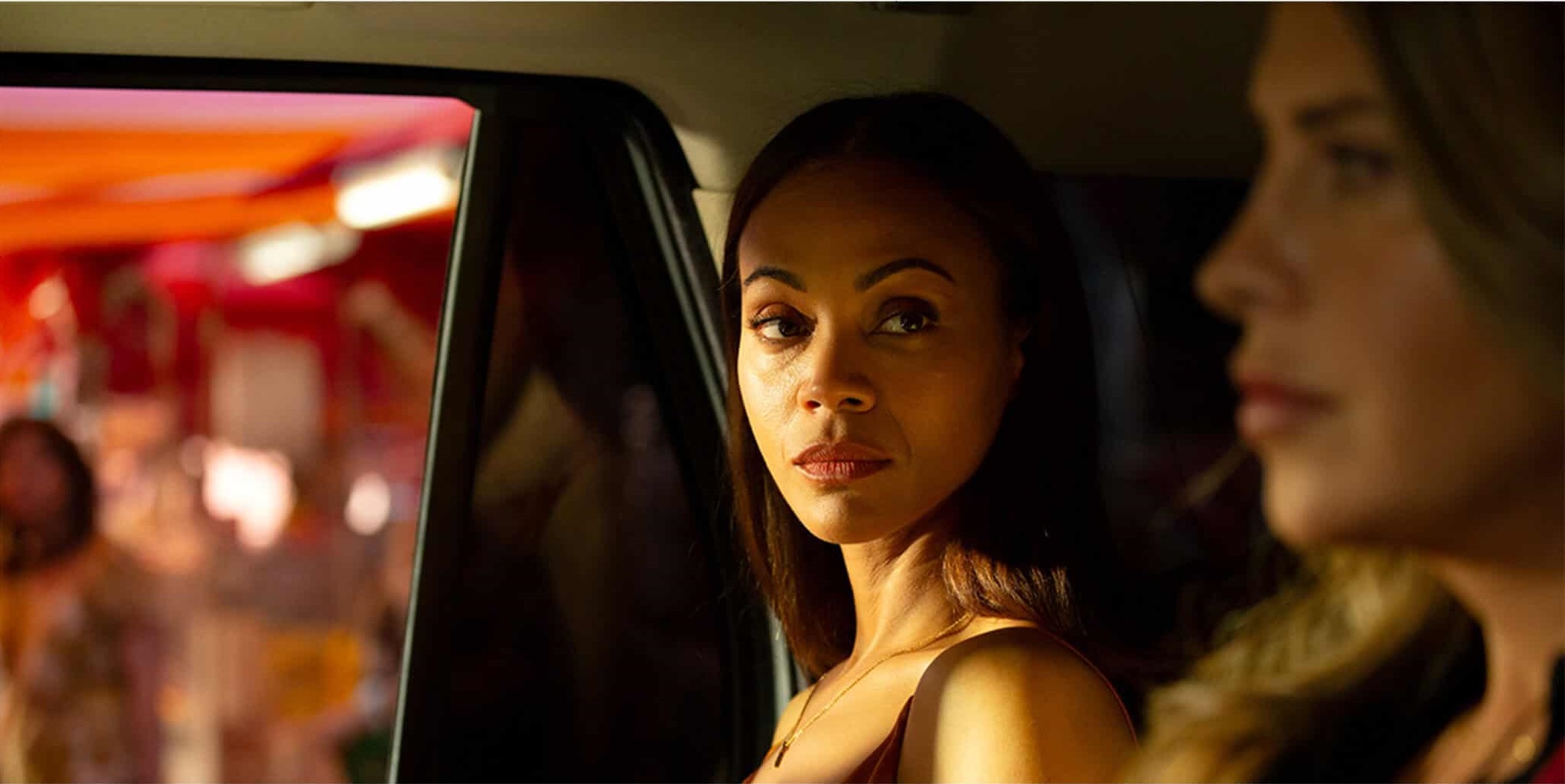
Emilia Perez

Now this film has been the subject of a lot of discussion, for better or for worse. In watching it, one would be shocked how a musical is made out of subject matter that would be the last themes and elements thought of as subject matter for a musical. Nevertheless, the mix of a musical with modern-day dark drama works as a film from start to finish. Despite that, this film is not for everybody. If you’re a person who welcomes experimentation in film like I do, then you will like it or respect it as a film. If you want to be entertained, that’s taking chances as a lot of people will be unhappy with a film like this. Trust me. A transsexual druglord and all the corruption in Mexico and the missing people that come with it does not make for an entertaining film. Making a musical out of it would seem quite the oddity.

From the start, it looked like the type of film that would get a lot of Oscar buzz. It had great acting, an eyebrow-raising story and quite the unconventional way of making a film. The film would achieve thirteen Oscar nominations and then the hate began. First, there are the complaints from the transsexual communities complaining of the transsexual character being a murderous drug lord before the operation. Then came complaints from the people of Mexico of how Mexico was depicted as a place of rabid crime. Additionally, it came to light past social media messages from Karla Sofia Gascon. Exposed in her messages were tweets that were Islamophobic, racist and even critical of her own co-stars. This only came to light just after all the nominations were revealed. I know there’s always at least one Best Picture contender that starts a load of controversy. Best Picture nominees often start some controversy or debate but there’s always one that stands out the most. This will have to be the biggest of the ten.

I’m not normally one to trash a film unless it’s really horrendous or really terrible either in quality or in its subject matter. While the film is definitely one of uncomfortable subject matter, I do give it credit for its experimentation. We should know that this film is originally a stage opera created by Jacques Audiard who adapted it from a chapter in a French book Ecoute. I will give Audiard credit for trying to make a musical out of out-of-the-ordinary subject matter. Watching it will make you question if the musical elements of the film work or not but there are many parts that stand out as great and will even blow you away. Don’t forget this isn’t a story about a transition from man to woman. It’s also a transition of personality going from leader of a drug cartel to a humanitarian. Also I feel the acting in the story works well. It’s the acting from the three main stars of the film that help make the film work on the screen and work as an unexpected musical. The funny thing is after you’ve finished watching, you will ask yourself if you liked it or not. Or if this worked or not. Despite its imperfections, I consider it a brave attempt.

Responsible for this film is French director Jacques Audiard. Audiard has had a decades-long reputation as a filmmaker in France and has directed many films outside the French language. This film, which was a Palme d’Or nominee at Cannes 2024, should be seen as an accomplishment in retrospect. A flawed accomplishment, a provocative accomplishment but an accomplishment nevertheless. It’s not just this being an unlikely musical but also adapting a stage opera to the big screen. As if adapting a musical isn’t hard enough. Despite its flaws, I give Audiard credit for that.

Also excellent is the performance of lead Karla Sofia Gascon. A transsexual woman herself, Gascon does a great job in both the male role of Manitas and the female role of Emilia Perez. It’s two different conflicting personalities of the same character and it needed to be done well, and Gascon succeeds in doing it. Also excellent is Zoe Saldana as the lawyer caught in the middle of it all. When watching the film, you wonder if the lead is Emilia or if the lead is Rita Castro. Zoe does a great job in making the film as much hers as it is Emilia’s. Selena Gomez’ performance was not all there. Nevertheless she did have some great moments and was believable in most scenes. Adriana Paz is also great in playing Emilia’s lover. I give top technical acclaim to Paul Guilhaume in the cinematography, the hair and makeup team for the convincing work on the pre-transition Manitas, and the collaboration of Clement Ducol and Camille on the standout music.

Emilia Perez is not everyone’s cup of tea. It gives a lot of reasons for you to hate it and a lot of reasons for you to like it. I consider it a film for myself to like and admire, despite its obvious flaws.

And there you go. This is my look at two more contenders for the Best Picture Oscar. With ten films, boy do you get a lot of different films.
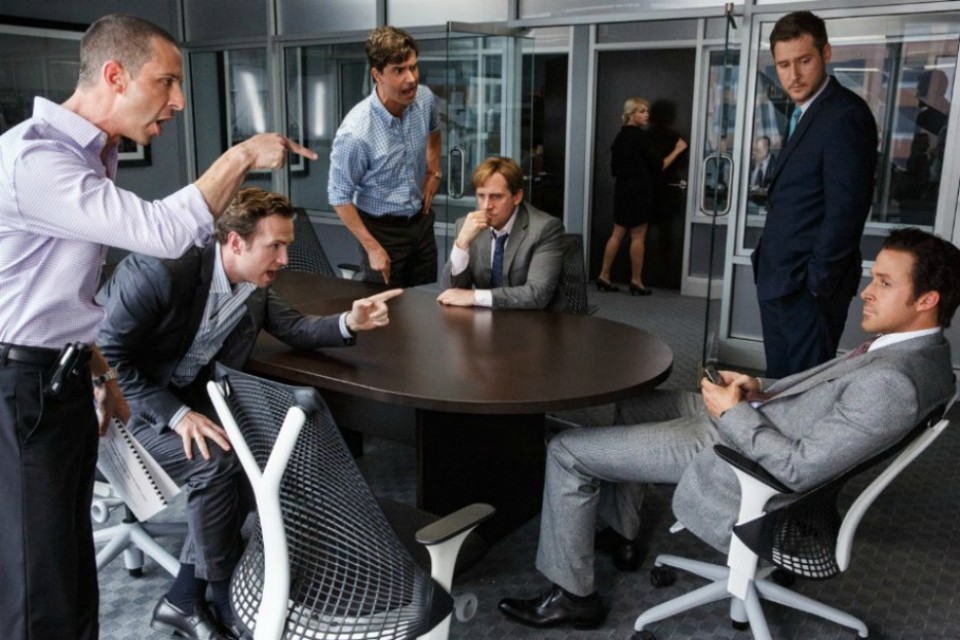
Oscars 2015 Best Picture Review: The Big Short

Big Short
The Big Short will make you lose all the respect you have in the banking system, if you’re even dumb enough to have any respect for it period.

We live in an era of fraud in America. Not just in banking, but in government, education, religion, food, even baseball… What bothers me isn’t that fraud is not nice. Or that fraud is mean. For fifteen thousand years, fraud and short sighted thinking have never, ever worked. Not once. Eventually you get caught, things go south. When the hell did we forget all that? I thought we were better than this, I really did.

The Big Short has been the surprise of this year’s awards season. It’s one of the Oscar entries with the least hype but is somehow coming out on top or pretty close. I decided to find out why.

The film begins in 2005 with Michael Burry, an eccentric hedge fund manager who’s socially flawed but very successful at what he does. He’s actually an M.D. but decided to go into the financial industry. One day he hears how housing prices have increased in Silicon Valley despite the decrease of jobs. He gets his answer. He finds out that the banks and financial industries are giving out subprime mortgages with big risk to underqualified people. The banks either don’t know about this or their too lazy to solve things.

Burry suspects this will lead to the collapse of the American economy within due time. However Burry is also creative. He knows how to ‘short’ the system by creating by creating a credit default swap market allowing him to bet against the housing market. He goes to the various banks offering megamillions to wager. The banks are willing to accept, feeling Burry will lose and the housing market is secure.

Burry’s deal catches the attention of Deutsche Bank trader Jared Vennett, whom the film is mostly scene through his point of view. Vennett hears about it from a banker he dealt with and investigates Burry’s claims for himself. Once he learns of the truth that the mortgages are high-risk, poorly-organized, sold-for-big-numbers and practically unsupervised by the banks and lending companies, he gets his own piece of the default swap action of his own.

An accidental phone call from Vennett to hedge fund manager Mark Baum catches Baum’s interest. Baum is a good businessman but is tough, cynical and isn’t afraid to let people know when something is going wrong. Heck, he was a Doubting Thomas since he was a child. Baum meets up with Vennett and is given a demonstration by Vennett and his assistant through a Jenga blocks set. Vennett demonstrates how the encroaching collapse is being further perpetuated by the sale of CDOs: Collateralized Debt Obligations. These poor loans are given incorrectly high loan ratings from A to AAA and B to BBB due to the dishonesty of the ratings agency. Baum is reluctant and this takes over his mind.

At the same time, Charlie Geller and Jamie Shipley are making their way into Wall Street. The two young Colorado men formed their own investment and trading business in Jamie’s garage where the two helped turn $100,000 into $40 million in four year. Now they want to take it to the next level by achieving on Wall Street but despite their promise, they lack the stuff to play with the big guns. At a bank where they failed to get assistance, Geller encountered a paper where he learns of Vennett’s attempt to short and they want a piece of the action. However they will need an IDSA and they lack the minimum capital to profit from this. They are able to get what they need from their friend and mentor Ben Rickert: a retired banker who now gardens for a living.

The time after is not business as usual. Burry’s story may have gotten a lot of notice but it’s also gotten to the ire of his clients. They feel the housing market is very secure and he’s wasting their money. Many demand he stop what he’s doing but he refuses. He even keeps the percentage increase in his ‘shorting’ in big red numbers on his whiteboard. Geller and Shipley consult with Rickert on making a future deal. Geller proposes a large amount of money despite Shipley’s reluctance.

Baum is frustrated by all this and he enlists two of his workers to check up on the housing situation by driving into neighborhoods. What they see is not pleasant: people with low incomes owning two-storied homes and one home rented out to a low income family by a landlord owing five months on his mortgage which he took out under his dog’s name! The landlord himself abandoned his own home to the point an alligator was able to crawl into the swimming pool. In addition, Baum learns of successful mortgage salesman who are going as far as selling mortgages to underqualified immigrants and even giving out NINJA mortgages (NINJA: NO Income No Job no Assests) as well as a banker for a major bank who’s willing to let it happen for fear clients will take their business to the competition and get their mortgage there.

Then comes the American Securitization Forum in Las Vegas. Burry isn’t there but Vennett and Baum are there together along with Geller, Shipley and Rickert to get their IDSA and their own piece of the default swap. Baum comes across a CDO manager who reveals much to Baum’s horror that he’s created synthetic CDOs: a chain of large bets on the faulty loans which actually total more money than the actual CDOs. It’s there where Baum’s business partners convince him to take this on. Geller and Shipley get their IDSA and they find their piece of the action in AA CDOs which have been overlooked by most of the bigwigs. They get their opportunity but they’re reminded by Rickert of the immense hurt that will happen to the American public once they win in their gamble. The celebration of the two ends right there.

Returning back to their business expecting the doomsday to happen any day soon, Baum wants to be the one settling the score as he himself tries to get the word out at public meetings. Geller and Shipley try to get the word out to the news but no one from a former college classmate who now works for the Wall Street Journal to Jamie’s brother’s ex-girlfriend who is a broker to even Charlie’s parents believe their doomsday claims. Burry’s investors still continue to refute his claims and want to pull out until Burry puts a moratorium on their withdrawals, much to their anger.

The stock market crash of 2008 eventually happens. Burry, Vennett and Baum were right all along. Businesses collapsed, the unemployment rate went up, the homelessness rate skyrocketed, trillions of dollars invested by the American people were lost. Not to mention many countries, especially in Europe, went through their economic crises that still exist today. In addition Burry’s investments increased fivefold from his original investment, Vennett made a nifty $77 million and Charlie and Jamie got the big financial break they sought. But no one’s smiling. Oh yeah, did I mention that there was no bank reform done and there was only one arrest from this whole mess?

This is a film that gets inside the world financial crisis of today. We should all be angry and outraged with the system for what it did with the people’s hard-earned money. We had a banking system that was too laxed and had next to no restrictions in giving out mortgages to people even if they weren’t qualified. We had people who saw the eventual doom but opted to get a piece of the action. We had bankers and mortgage dealers who were irresponsible enough to make salesmen of themselves and only care about getting big numbers for bonus checks. We had the bankers, investors and other financial professionals either negligent or ignorant to what’s happening. People’s hard-earned investments, funds and savings were treated like gambling money by these professionals. In the end, it led to the biggest collapse in the world’s economy since the stock market crash of 1928.

The film gives us what we should have to be angry with the system. However the film also does a good job in making a comedy out of it. I myself have come across a lot of situations that have been very nasty or very stressful but also very funny because of the stupidity behind it all. This is the magic of the film. It finds the humor of the stupidity that occurred in the system. While The Wolf Of Wall Street made Wall Street look like a jungle, this film made the banking and loan system look like they treated the system like it was a playground of people’s money. The film gives us many characters we find entertaining and funny but also types we just want to give the middle finger to. The film also makes us laugh at the stupidity that’s going on while having us leave the theatre infuriated in our afterthoughts.

In the end, the laughter ends and even those that profited big are disheartened. Burry’s not celebrating the big returns his investments got. Baum is left with a huge stomach ache and looks like his soul is crushed in the end. Geller and Shipley have possibly the biggest impact as you can see as they’re in the abandoned NYSE building and they’ve lost complete faith in the system.

Another quality of the film is that it helps the average person make sense of a complicated system. The story of how it all happened is a long and complicated story that consists of terms the average person hasn’t heard of and exists in a system only those inside can make sense of and understand why it happened. In making this film, they had to make a film that would help the average person make better sense of the banking system and the products and outside products that come with it. Who outside of banking or investing knows what a CDO is or how to ‘short’ the market when it’s doing business or even what an IDSA is? This film helps make sense of these complicated terms and showed how they worked in a business that is supposed to make things work. The vignettes from celebrities giving an explanation or a demonstration of how things worked added to the humor of the film as well as the quality. Even that flashback to the late 1970’s of how Lewis Ranieri changed the bank system, and our lives ‘more than Michael Jordan, the iPod and YouTube put together’ also added to the story and make more sense of the irresponsibility.

I have to say this is an accomplishment for director Adam McKay. Adam is not known for directing serious movies. For the most part, he’s most famous for writing and directing Will Ferrell comedies like Anchorman, Talladega Nights and Stepbrothers. This film is a completely different change of pace for him. However he succeeds in directing and co-writing with Charles Randolph an excellent film that’s as much a comedy as it is a tragedy.

It’s often a wonder why someone would take what is a terrible moment in American history and turn it into a comedy. I guess that’s what McKay and Randolph are doing is that they’re showing the bizarre stupidity that happened the whole time in a comedic way. They deliver a film that will have you laughing at the ridiculousness of it all and at the same time infuriate you for days or even weeks after leaving the theatre.

McKay and Randolph also succeed in delivering a film that defies convention which is all the better for it. The use of cameos from other people in an attempt to get the audience to understand banking methods and money-making methods adds to the movie. Most people would think something like this would subtract from the quality. Instead it adds. Additional tricks in the film that add to the quality are scenes and moments where the characters stop the drama in their scenes and face us explaining the real story.

Standout performance has to go to Christian Bale as an eccentric businessman whose socially flawed but smart enough to sense a danger and get rich off of it despite his anger. His social reclusiveness as well as his fixation on music adds to the character’s dimension. The other big standout from the film was Steve Carell. His character of a man who just can’t get the impending doom off his mind and is unapologetically frank but also troubled is another show-stealer. Actually there were a lot of eye catching characters including that from Ryan Gosling as Jared Vennett despite the role not being as complex as Bale’s Burry or Carell’s Baum. Additional scene stealers include John Magaro and Finn Wittrock as the two young and hungry businessmen who want a piece of the action but have a lot of learning to do. They first come off as the Tweedledee and Tweedledum of the film but it’s right at the end you see how much the realities have bit them.

The film doesn’t prove much in terms of outside things like a score or cinematography or effects. However the film put together unconventionally worked on so many levels. Besides other unconventional qualities I talked about previously, there’s also the added element of showing pictures and film clips of average Americans as they would be the ones paying the hardest price of it all. Even the addition of various news clips and music videos add to the film. The addition of a wide variety of music from hip-hop to rock is another added quality. I feel the film ending with Led Zeppelin’s When The Levee Breaks was the right choice because the levee broke here.

The Big Short is one film that will get a lot of people thinking. I may be Canadian but I was shocked at what I was seeing. I too was outraged at how irresponsible the American banking system was and how it appears to have learned nothing from this. I consider myself lucky to be Canadian after seeing this. For all its headaches, the Canadian banking system is a lot more responsible in terms of who it lends its products to and even declines if it feels it has to. However it does have some careless elements of its own. For my own experience, I signed up for a credit card the very first week I was in university while under NINJA status and I still got it. There was another time I was at my bank during company time but a credit card saleswoman wanted me to sign up for a Gold Visa card. Since she wouldn’t take no for an answer, I signed up for it hoping she would get off my case. I thought I wouldn’t get it since I didn’t have the minimum annual income for a Gold card. I got it to my surprise. I’m still unhappy about this. Makes you wonder how and why banks seem to have forgotten their standards. No wonder that British man in a pub said to Rickert: “$100 million? Are you a banker or a drug dealer? Because if you’re a banker, you can fuck right off!”

The Big Short will make you angry with the banking system but will also make you laugh at the stupidity as well. It’s part drama, part comedy, part history lesson and that is probably what makes it a winner.

Oh yes. Another year of watching all the Best Picture nominees. This makes it the fifteenth year in a row I’ve done so! Here’s to another Oscar year.