Oscars 2024 Best Picture Reviews: Part Three

At first I intended for my Best Picture blogs to be three in total. When it became clear how much writing I did for the first two films, I decided dividing them into blogs of two reviews each is more worth it.  So in the meantime, here’s the third of my five Best Picture review blogs:
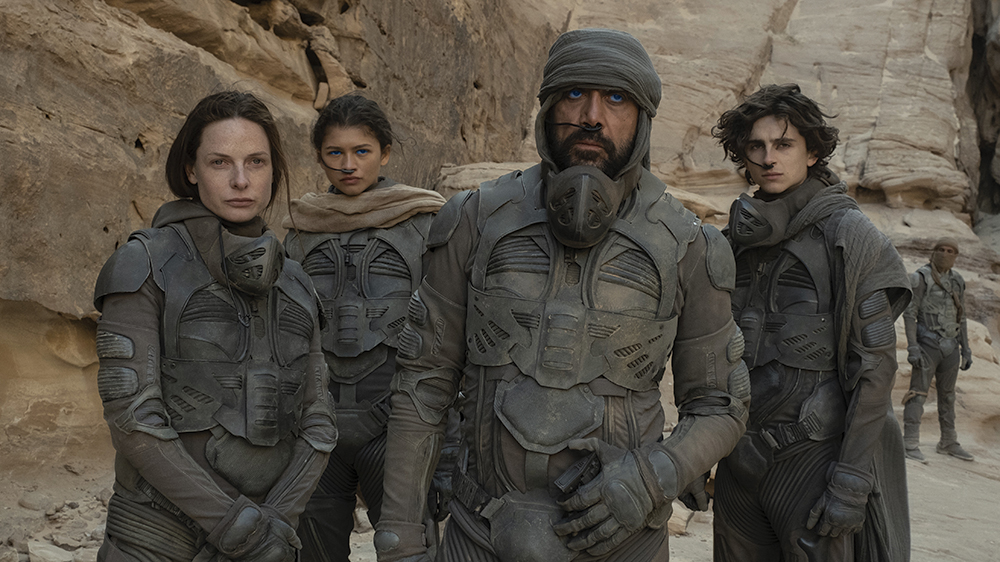
Dune: Part Two

The reboot of the Dune series has been so far the biggest movie action of the 2020’s. The re-adaptation of the Frank Herbert novel was a highly anticipated event in 2021 and hoped to get people back into the movie theatres after the relaxing of the strictest COVID precautions in history. It worked. Dune made over $400 million at the box office, was nominated for ten Academy Awards and won six. It was like what David Lynch got wrong, Denis Villeneuve got right. Originally, Villeneuve planned to divide the story into two films. This is what led to Dune: Part Two to be made.

The second Dune film continues with the drama left behind from the first. The second makes the stories of the dehumanizing Water Of Life, the installation of the young sadistic nephew of Arrakis as the ruler and heir to House Harkonnen, Paul’s romance interest to soldier Chani, the threat of holy war from Fremen fundamentalists, a spice trade at risk of smugglers, Paul’s consumption of the Water Of Life much to the disappointment of Chani, his dealing with his mother, his duel to battle the throne of the Harkonnen kingdom, his ascendancy to the role of king upon winning and the rejection of all as leader, including Chani. The drama continues, the excitement and thrills increase and the ending leaves the audience in suspense and the anticipation of what will follow in the sequel Dune: Messiah, set for release in the spring or summer of 2026.

Every year, there seems to be at least one ‘popcorn movie’ that seems to rack up enough buzz to eventually become a Best Picture nominee. Not only did Dune: Part Two get nominated for Best Picture, but the Dune franchise joins the Godfather, Lord Of The Rings, Going My Way and the Avatar franchise as the only five movie franchises to have two or more of its films nominated for Best Picture. It’s deserving of it because it succeeds in doing what a science fiction film should do. It takes people into another world. It creates an intense complex drama of the threat of the order of humanity and how it rests in the hands of one young man. It delivers in the action people go to expect form a film like Dune. On top of it, it succeeds in being the opposite of your typical movie sequel that ends up being a repeat of the first. Instead, we get a continuation of the chronologic drama and ends with the anticipation of the third and final part. Deserving of its Best Picture nomionation. And to think it was released back in March 2024. Talk about endurance!

Once again, top respect goes to Denis Villeneuve. You can trust Villeneuve to deliver in a sci-fi film. Both in his direction and his co-adaptation of the story with Jon Spaihts, he continues the excitement of the story well by keeping in the right parts, delivering on the action needed and making the smart decision to make his adaptation of Dune a three-film series instead of the two-film series he originally hoped for. He did things right and in winning fashion. Like most sci-fi films, the story is more focused on the special effects and action moments, but the film doesn’t stray away from its focus on the story and the characters. It is still there and still consistent. Even though Timothy Chalamet’s performance as Paul wasn’t too deep of a role, it is still consistent to the story and very believable. Zendaya’s performance as Chani added to the story. In the first Dune movie, Chani was a minor supporting role. Here, she’s the lead female protagonist and Zendaya does an excellent job in making her a key part of this chapter. There were also good performances of minor roles like Josh Brolin as Paul’s trainee and mentor, Rebecca Ferguson as Paul’s mother with whom Paul harbors resentment, Austin Butler as Paul’s fierce deadly rival to the throne and Christopher Walken as the emperor.

As is common with great science fiction films, the standout achievements are in the technical areas. You need it for a sci-fi film to excel and Dune: Part Two had some of the best of the year. Its top achievements are in the cinematography by Greig Fraser, the production design by Patrice Vermette and Shane Viau, the costuming by Jacqueline West, the editing by Joe Walker, the special effects by the film’s effects team, and the music from Hans Zimmer. All of it was successful in taking the audience into Dune’s futuristic world and enhancing the film’s action.

Dune: Part Two succeeds in keeping alive the drama, intensity and excitement of the first film and sets the audience up for anticipation of the third and final chapter. It succeeds in having the best qualities of a sci-fi film without the common watering down or cheapening of the quality.
Emilia Perez

Now this film has been the subject of a lot of discussion, for better or for worse. In watching it, one would be shocked how a musical is made out of subject matter that would be the last themes and elements thought of as subject matter for a musical. Nevertheless, the mix of a musical with modern-day dark drama works as a film from start to finish. Despite that, this film is not for everybody. If you’re a person who welcomes experimentation in film like I do, then you will like it or respect it as a film. If you want to be entertained, that’s taking chances as a lot of people will be unhappy with a film like this. Trust me. A transsexual druglord and all the corruption in Mexico and the missing people that come with it does not make for an entertaining film. Making a musical out of it would seem quite the oddity.

From the start, it looked like the type of film that would get a lot of Oscar buzz. It had great acting, an eyebrow-raising story and quite the unconventional way of making a film. The film would achieve thirteen Oscar nominations and then the hate began. First, there are the complaints from the transsexual communities complaining of the transsexual character being a murderous drug lord before the operation. Then came complaints from the people of Mexico of how Mexico was depicted as a place of rabid crime. Additionally, it came to light past social media messages from Karla Sofia Gascon. Exposed in her messages were tweets that were Islamophobic, racist and even critical of her own co-stars. This only came to light just after all the nominations were revealed. I know there’s always at least one Best Picture contender that starts a load of controversy. Best Picture nominees often start some controversy or debate but there’s always one that stands out the most. This will have to be the biggest of the ten.

I’m not normally one to trash a film unless it’s really horrendous or really terrible either in quality or in its subject matter. While the film is definitely one of uncomfortable subject matter, I do give it credit for its experimentation. We should know that this film is originally a stage opera created by Jacques Audiard who adapted it from a chapter in a French book Ecoute. I will give Audiard credit for trying to make a musical out of out-of-the-ordinary subject matter. Watching it will make you question if the musical elements of the film work or not but there are many parts that stand out as great and will even blow you away. Don’t forget this isn’t a story about a transition from man to woman. It’s also a transition of personality going from leader of a drug cartel to a humanitarian. Also I feel the acting in the story works well. It’s the acting from the three main stars of the film that help make the film work on the screen and work as an unexpected musical. The funny thing is after you’ve finished watching, you will ask yourself if you liked it or not. Or if this worked or not. Despite its imperfections, I consider it a brave attempt.

Responsible for this film is French director Jacques Audiard. Audiard has had a decades-long reputation as a filmmaker in France and has directed many films outside the French language. This film, which was a Palme d’Or nominee at Cannes 2024, should be seen as an accomplishment in retrospect. A flawed accomplishment, a provocative accomplishment but an accomplishment nevertheless. It’s not just this being an unlikely musical but also adapting a stage opera to the big screen. As if adapting a musical isn’t hard enough. Despite its flaws, I give Audiard credit for that.

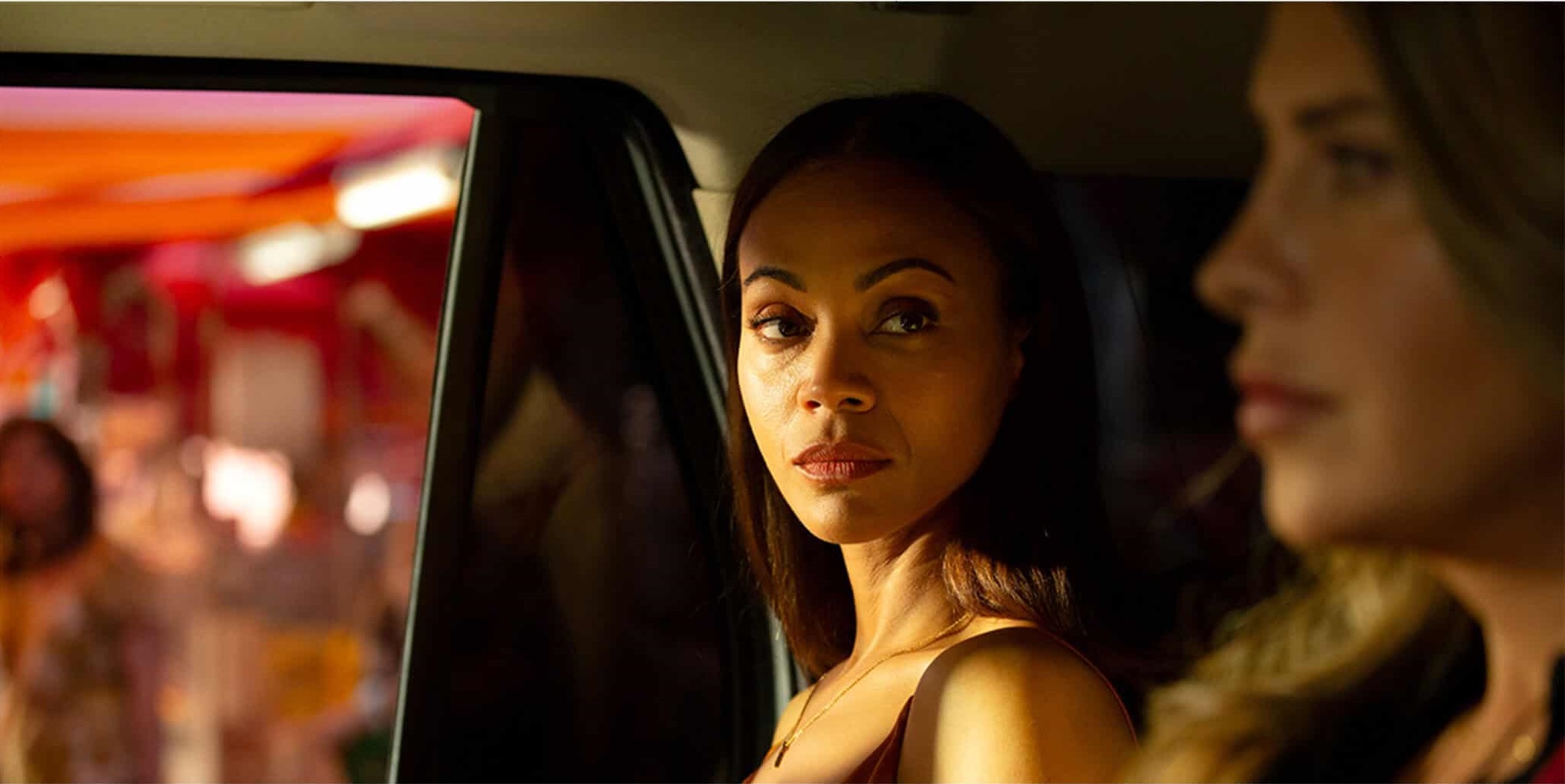
Also excellent is the performance of lead Karla Sofia Gascon. A transsexual woman herself, Gascon does a great job in both the male role of Manitas and the female role of Emilia Perez. It’s two different conflicting personalities of the same character and it needed to be done well, and Gascon succeeds in doing it. Also excellent is Zoe Saldana as the lawyer caught in the middle of it all. When watching the film, you wonder if the lead is Emilia or if the lead is Rita Castro. Zoe does a great job in making the film as much hers as it is Emilia’s. Selena Gomez’ performance was not all there. Nevertheless she did have some great moments and was believable in most scenes. Adriana Paz is also great in playing Emilia’s lover. I give top technical acclaim to Paul Guilhaume in the cinematography, the hair and makeup team for the convincing work on the pre-transition Manitas, and the collaboration of Clement Ducol and Camille on the standout music.

Emilia Perez is not everyone’s cup of tea. It gives a lot of reasons for you to hate it and a lot of reasons for you to like it. I consider it a film for myself to like and admire, despite its obvious flaws.

And there you go. This is my look at two more contenders for the Best Picture Oscar. With ten films, boy do you get a lot of different films.
VIFF 2015 Review: The Lobster

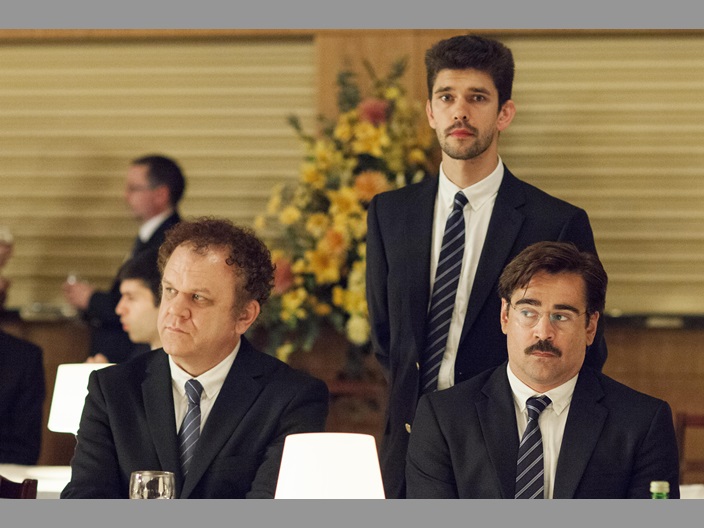
XColin Farrell, right, has bizarre experiences with being single, mating and being in love in The Lobster.
Colin Farrell, right, has bizarre experiences with being single, mating and being in love in The Lobster.

Once you see The Lobster, I’m sure it will make you think twice about going to one of those matchmaker hotels. Okay, maybe not but the whole scenario of matchmaking and the single life depicted in the film is downright bizarre.

The film is set in a dystopian future where single people are brought to a hotel in accordance to the rules of The City. The hotel gives people forty-five days to find a match. If they succeed, the couple is given a month to develop their relationship in a special section of the facility. After which, they are freed. If anyone fails in any which way, they are killed and reincarnated as an animal of their choice and sent into The Woods. People can extend their stay with The Hunt: people from The Hotel shoot tranquilizer darts at any of the ‘loners.’ One ‘loner’ capture gives one an extra day.

A man named David arrives at The Hotel. He brings with him a dog whom we learn to be his brother as he too was subject to The Hotel and failed to find a match in due time. David tries to get used to the hotel and its methods. He chooses to be a lobster if he does not succeed in finding a new woman. He even participates in The Hunt. He learns of the other leisurely activities at The Hotel. One awkward rule is masturbation is banned by painful punishment but stimulation from the maid is a requirement.

David first makes friends with The Limping Man and The Lisping Man. The Lisping Man would have to stick his hand in a toaster for masturbating one night. The Limping Man hopes to find a woman with a limp like him. Instead he’s attracted to a woman who has frequent nosebleeds. He fakes nosebleeds to win the love of The Nosebleed Woman.

David is inspired by this and first attempts to win the love of a woman whom everyone knows to have no heart. He’s impressed by her hunting skills and he’s attracted to her as she’s choking to death. He attempts to start a relationship with her but it turns out to be a disaster even to the point she kills the dog: David’s brother. He’s able to tranquilize her and bring her to the transformation room so she’ll be an animal forever.

It then gets to the point David can’t handle it anymore and escapes. He finds himself with the ‘loners:’ they live a wild life catching rabbits and hiding from the hunt. The rules are not as hard but they don’t permit any flirting or entanglement as they will punish it badly. David wins the affection of a short-sighted woman. This helps since he is short-sighted too. The loners give the two missions to go to The City and pose as a couple but it causes them to become more affectionate.

The loners go on a rampage where they try and split up the couples in The Hotel. David even goes as far as trying to split up The Limping Man and The Nosebleed Woman and others going as far as pulling a stunt with the Hotel Manager. Meanwhile the leader of the loners learns that David and the Shortsighted Woman are in love and blinds the woman. They attempt an escape. This leads to an ending as bizarre and unpredictable as the whole story.

It’s hard to see if this film was trying to make a point about dating life, being single and marrying. This is a very bizarre scenario from start to finish. Plus I would find it hard that such a situation would be for single people with our current human rights. Keep in mind this is set in the future. Hey, depictions of the future like that in The Hunger Games don’t paint a pretty picture. It’s interesting how the army of loners raid the Hotel. Makes you wonder if their mutiny is a form of rebellion or of personal anger.

I will have to say this is the most bizarre romantic movie I’ve seen since Eternal Sunshine Of The Spotless Mind. That movie was what you’d call the ‘romance of the absurd.’ I do feel it is about love and surrounding human emotions magnified 100 times. The time limit put on those at the hotel to find love could be seen as the personal time limits one puts on one’s self to find love. The case of the leader of the loners trying to split all the couples up could be a case of one’s unhappiness and how one could try to impose it on others. Even those that end up in the hotel like the limping man, lisping man, heartless woman, nosebleed woman and the short-sighted woman may reflect on people’s insecurities. Meanwhile David is in the centre of it all. He starts out as possibly the most normal of the bunch but it isn’t until the end that he resorts to eccentric extremes of his own for the sake of love.

This is the brainchild of Greek director Yorgos Lanthimos. He has accomplished a lot in his directing career. His film Dogtooth was nominated for an Oscar five years ago. This is his first English-language film. In directing and co-writing the story with Efthimis Filippou, he creates a set of worlds that could easily look ridiculous on screen but worked with careful writing and careful directing. I see many cases with the hunt, the transformation room, the mutiny and even the character of the Heartless Woman that could have easily come across as dumb but was done right and was sensibly done.

Colin Farrell did a good job of playing this bizarrely comedic role well that’s completely different from any of his blockbuster roles of the past. He had to portray a man who treats this bizarre situation as something sane and normal. Even going from the sanest person in the film to committing an insane act for love at the right moment. He does it very well and gives the comedy the right tone. Although Farrell owned the film, Rachel Weisz as the Shortsighted Woman and Lea Seydoux as the Loner Leader were the strongest supporting performers. Some of the other minor characters were also very good such as Ben Whitshaw as the Limping Man, Angeliki Papoulia as the Heartless Woman and Jessica Barden as the Nosebleed Woman.

The Lobster is a film collaboration of five nations:  UK, Greece, Ireland, Netherlands and France. It won the Jury Prize at the Cannes Film Festival and was a nominee for the Palme d’Or. It has also won top film awards at the Rotterdam and Ghent Film Festivals.

The Lobster is both bizarre and amusing in its depiction of a futuristic world and its ways of dealing with dating. It’s both bizarre and charming at the same time.

VIFF 2013 Review: Blue Is The Warmest Color (La Vie d’Adèle)

Blue Is The Warmest Color is a French lesbian love story that tells more than just a story.

One of the biggest attractions at this year’s Vancouver Film Festival is the French film Blue Is The Warmest Color. The win at the Palme d’Or at the Cannes Film festival will make it an attraction, no doubt. There are some that already know what it’s about and others that don’t. The question is will the crowds be satisfied?

The story starts with Adèle, a young high school student from Paris nearing adulthood and trying to decide what she wants to do with her life especially in times when Europe is going through economic troubles. She’s very involved with her job at day care, but lost in thought during school and unhappy in her relationship with Thomas. She soon leans of her lesbian attractions and starts trying to get as better understanding of it. She even breaks up with Thomas in the process.

Her gay friends from high school introduce her to Paris’ gay scene. She’s exposed to gay culture at one gay bar then visits a lesbian bar for the first time where she meet a tomboy woman with blue hair named Emma. Emma not only introduces Adèle to the lesbian scene but also to her work as an artist. Adèle’s high school friends are surprised with her relationship with Emma but over time the relationship goes from being simply Adèle being the subject of Emma’s art to a full intimate relationship. They share everything. Both are also good with each other’s parents. Both are also supportive as Emma helps with Adèle’s 18th birthday and Adèle cooks for Emma’s art party.

Things mark a turning point at Emma’s art party as Adèle senses something between Emma and Lise, her artistic colleague. Adèle also senses the advances of her boss from the daycare she works at. Eventually she does engage with her boss only for Emma to find out. Emma breaks up with Adèle in a rage leaving Adele frustrated and heartbroken. Months pass and Adèle is now a first grade schoolteacher. Emma is soon to have her first art exhibit opening. They meet again in a café to try and resolve what they can only for Adèle to learn a hard new truth. Adèle goes to the exhibit opening only to leave heartbroken but older and wiser.

The surprising thing about this is how this film tries to portray a relationship between two young girls. Its biggest quality was its truthfulness. It showed a girl-meets-girl scenario that’s often the common way two meet. It shows the relationship and how the two share so much with each other that almost mirrors other relationships. It also shows the friction in relationships with being attracted to another person, infidelity, break-up and aftermath that you will notice in other relationships. I believe that’s the biggest thing about this film. This is not a film that aims for heavy intense dramatic story but rather a film of a lesbian relationship between two young girls that mirrors most relationships people have or have had, possibly even one of your own.

It’s not only about the relationship in the film but also as much about the two main characters too. Adèle is turning 18 and in the midst of deciding what she wants to do with the rest of her life, eventually setting on teaching elementary school. Emma is an older art student and she’s disinterested in conforming to the expectations of the world nor to the art business. Adèle has just recently learned of her same-sex attraction. She slowly tries to learn about it and welcomes it when Emma comes into her life, but questions if she still has attractions and feeling to men. Emma on the other hand knew of her lesbian attraction at 14 and became very comfortable with it. The personality traits of both adds to the story of the relationship as it shows that opposites can attract. It also shows how the two personalities cause friction as Adèle has the common immaturities with an 18 year-old and Emma is a free person but with a fierce attitude.

One of the things of the movie is that it also brings up certain forms of thought. It should not be surprising because Adèle is a student just learning and it’s the student years where one tries to expand their mind. Emma makes mention of Sartre and him creating a intellectual revolution in saying we are ‘condemned to be free.’ Another time we’re in one of Adèle’s science classes seeing a lesson in gravity and one student talks of unavoidable vices and how the Catholic Church tells us that vices should be avoided. There’s also the division of the arts world and the business world that’s also present in the film. Adèle embraces the arts greatly in her own way but wants a career that’s stable especially since the future of the young of France looks uncertain and chooses teaching. Emma on the other hand wants to do what she wants to do and paint what she wants to paint and resists offers to ‘market’ her talent. That pressure of the dilemma of doing what one is born to do vs. doing what pays the rent is a common pressure in the minds of a lot of young people during those years. I remember it was even a pressure for me when I was a college student.

Without a doubt, the biggest thing that got me thinking were the graphic lesbian sex scenes. I know that sex scenes are choreographed but I was still surprised in seeing it’s explicitness. Even though I learned just now that fake genitalia were used, there’s no question that there will be many who will label it ‘pornography.’ In fact the producers refused to edit the film for release in the US and that got it an NC-17 rating.

In all frankness, I did find this a very revealing and intimate look at a lesbian couple but nevertheless I found this film to be too long. I believe if a film is going to be 3 hours long, it should justify its purpose. I really question whether 179 minutes is really necessary for that film because it didn’t appear to justify its length of time. I’m sure the film could’ve done as good a job of telling the story of the relationship if it was even two hours. There are even times when I question if that heavy-duty sexual activity, especially the impulsive activity in the café near the end, really added to the story or was included for shock value. That’s the problem with over-the-top sex scenes in movies: it may be intended for the story but could be taken the wrong way with the public. In fact there were times my ‘inner teenager’ felt like saying: “Owww! Get down!”

The best quality was the acting. Adèle Exarchopoulos did a very good job not just of portraying a young lesbian but also of a young teenage girl on the verge of womanhood. Her mix of a character who’s on the verge of adulthood trying to be more responsible but also dealing with her own immaturities, both behavioral and sexual, made Adèle very believable as a young woman. Lea Seydoux did a great job of playing Emma, the older freer one who’s in control. For those who didn’t notice, Lea is the one who won Owen Wilson’s heart in Midnight In Paris. It’s surprising how she’s completely unrecognizable here. She did a very good job of character transformation. Director/writer Abdelatif Kechiche was really daring in his subject matter and his adaptation of the story. I checked his Wikipedia profile and there’s no mention of himself being gay. Nevertheless He did an excellent job of taking the relationship and making it look so relatable.

The question will remain will Blue Is The Warmest Color go well with the movie-going public? Marketing gay-themes movies to the general public is not an easy task especially with the predominantly heterosexual crowd. Yes there have been films of gay characters and gay relationships that have scored well like Philadelphia, The Hours, Brokeback Mountain and Milk, but it’s still a chancy thing that’s still hit-and-miss with no proven consistent results. Even this being a French-language film may cause some difficulties. I even question if a film like this will score well with the LGBT populations in North America. We should also take in mind that living as a gay man or lesbian in Europe is a lot different that living as a gay man or lesbian in North America. Two different continents with two different social attitudes. Something I question.

Blue Is The Warmest Color is a unique film in its portrayal of a lesbian couple. It has a lot of good qualities that make it worth watching for some but not for others. It all boils down to the individual audient and their tastes and tolerances to decide if this is the right film for them or not.