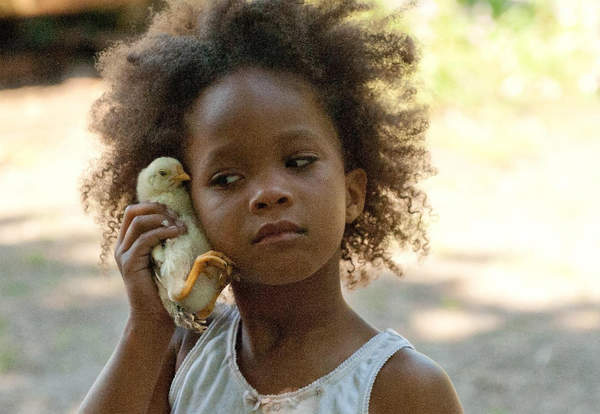
Oscars 2012 Best Picture Review: Beasts Of The Southern Wild

Beasts

” I see that I’m a little piece in a big, big universe. And that makes things right. When I die, the scientists of the future, they’re gonna find it all. They gonna know, once there was a Hushpuppy, and she live with her daddy in The Bathtub.”

Funny how back during the summer of 2012 there were two hit movies from the 2012 Sundance Film Festival that were released: Beasts Of The Southern Wild and Moonrise Kingdom. If you asked me which one would be most likely to be a Best Picture nominee for this year’s Oscars, I wouldn’t guessed Moonrise Kingdom would have the best chances. How wrong I was. I finally had my chance to see Beasts so I can see why it’s a Best Picture nominee and I now know why.

This film starts with Hushpuppy: a young girl living in an island community on the Louisiana bayou called ‘The Bathtub’. The Bathtub is a small community cut off from the rest of society by the water surrounding the island but it’s close-knit and shares in its bonds and celebrations. Hushpuppy and her father don’t have much but they’re optimistic for each other and share a close bond. The bond is threatened as Wink is missing and Hushpuppy has to fend for herself. Wink returns in a hospital gown and argues with Hushpuppy. Things get worse when Hushpuppy sets her house on fire. That leads to fight that starts with Wink slapping Hushpuppy and her responding with a punch to Wink’s heart that leaves him collapsing of cardiac arrest.

Meanwhile the ice caps are melting due to climate change and the melting ice unleashes the Aurochs: prehistoric ice-age creatures Hushpuppy learns of in school. A storm brews, threatening the Bathtub community. It’s then that Hushpuppy and Wink reunite and he keeps her shelter in his home. He even tries to calm her by shooting bullets in the sky to ‘scare off the storm’. After the storm, the two reunite with other people of the Bathtub community. Their attempt to rebuild the community is halted as saltwater has flooded the community. Even an attempt by Wink to detonate a bomb made out of an alligator carcass doesn’t succeed well enough and the residents are forced by authorities to evacuate the Bathtub to an emergency shelter and Wink to face further medical attention. All are resistant as the evacuees escape back to their homes and Wink is too violently stubborn to face surgery.

Hushpuppy knows her father will die despite whatever help he’s given and she goes searching for her mother whom her father has commonly reminisced over. She thinks she found her in an island restaurant as a waitress. Nevertheless the waitress tells her she can’t take care of her. This soon leads Hushpuppy to soon face the Aurochs and deal with her dying father. This leads to an ending that is both intense and solemn.

The film is a unique story of an environmental catastrophe threatening the life of a Louisiana bayou. A lot of images of people taking refuge may remind a lot of people about Hurricane Katrina from seven years ago. The best thing about this film is that it’s more than just an envirofiction story set in the present but also one styled to look like a folk story from the Southern US along the styles of a Mark Twain folk story. Without a doubt, the protagonist Hushpuppy is the spirit of the story and the characters surrounding her, both humans and other beings, area also as much a part of it. She was a little six year-old with a spirit of toughness. Even though she was five, she had to have a toughness for her age as life on the bayou was no ‘big easy.’ People, especially her father Wink, had to hold their own and faced constant threats. People had to be tough. This was something Hushpuppy took to heart as made evident when she tried to do her own cooking. Despite burning down her house, it showed how this was a thing Hushpuppy had to do at such a young age. That was also evident with the scene of the ‘alligator bomb’. This was something too dangerous but Hushpuppy was determined to aid because she felt it needed to be done.

Despite Hushpuppy being the lead protagonist, Wink was the key supporting role as he would have the best impact on Hushpuppy. The biggest key element of Wink was how key he was in another major theme of the movie: the sense of values most people in town in the South carried that most of us modern city folk either take for granted or overlook as we want to live however we want to. He knew how important in life it was to be tough and he passed on his beliefs to Hushpuppy because he wanted her to have that same toughness. He owned a domain that most people would label as a ‘hunk of junk’ but he always considered it his and he was determined to keep it even during times of disaster. He and the neighbors bonded together in a time of taking shelter and escaped because they all felt a huge bond of community. It was a stubborn sense of these values Wink possessed as he refused to let go of them even if he knew he was dying. These were values that he wanted to pass onto Hushpuppy. He wanted her to be tough including encouraging her not to cry. He wanted her to be responsible and hold her own. He wanted her to have a bond with the community. These were values he wanted to pass onto Hushpuppy as he knew that he would soon die and it would be her turn now. And it was evident as Hushpuppy would carry out her father’s last wish and also stay with her community until the bitter end.

The biggest efforts of the movie have to go to Benh Zeitlin with his many efforts. He directed it, he co-composed the music with Dan Romer, and he co-wrote the screenplay with Lucy Alibar: author of the one-act play Juicy And Delirious of which the film is inspired by. What he delivers is a major accomplishment in filmmaking that paints a picture of an area and of a people as it tells a story. It tells a story of a community fighting to stay alive and together despite huge environmental adversity. Interesting that his Wikipedia bio says he was born to folklorist parents and it becomes evident in this film as the film, as I mentioned earlier, also styles the protagonist of this drama to come across as a folk hero one could recognize from fiction set in the south in the 1800’s. Ben’s only 30 and this is his first feature-length film after directing three shorts but he appears to have a promising future ahead of him despite nothing upcoming listed on his IMDB profile. Time will tell if he either moves on to bigger and better things or if he becomes a one-hit wonder director.

Even though the movie’s accomplishments are mostly Zeitlin’s they are also greatly through the efforts of young Quvenzhane Wallis. She was actually six at the time of filming but she did her job excellently but also delivering a character as tough as nails as much as she was a happy spirit. Also a delight to see a child perform a character that isn’t too cutesy. I’ll admit she will make some people uncomfortable when she describes somebody as a ‘pussy’ but she delivers a character that’s not only tough but with the charm of those folk heroes of the southern US literature I keep talking about. Sure, Benh may have directed her to be such but took Wallis to be the perfect fit and to deliver.

Also as important is Dwight Henry. Being a non-actor is an advantage for him in portraying Wink. He delivers a character who’s gritty and stubborn but loving and gives Hushpuppy a tough bond that he wants to last even after he dies. The supporting actors didn’t have as strong of roles but their performances also added to the movie whether it was their performances or even their presence as non-actors as it made the story feel that much more realistic. Also they gave personalities to people one would normally call ‘rednecks’. People deemed ‘rednecks’ are the subject of jokes and humor form the light-hearted jokes of Jeff Foxworthy to the trashy faux-reality of Honey Boo Boo but this film shows them as people with needs just like everyday people. Kind of the same way Winter’s Bone portrayed people commonly known as ‘hillbillies.’ Interesting how this film was made on a budget of $1.8 million and it wins nominations from the Academy. Buzz and awards wins from both Sundance and Cannes definitely helped it. Funny how size matters where the little guy has an advantage.

Beast Of The Southern Wild is a piece of modern folklore by a director with a folklore upbringing that becomes an accomplishment through is directing and storytelling and Wallis’ portrayal of a pint-size heroine. Those who see it will never forget it.

And there you have it. This is now the thirteenth year in a row I’ve done my pursuit of seeing all the Best Picture winners before the Oscars. Hard to believe it myself. Yes it’s tiring but it becomes worth it both for the sake of my blog and for Oscar night.

Oscars 2012 Best Picture Review: Zero Dark Thirty

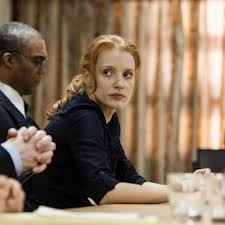
Jessica Chastain plays Maya, a woman who means business in Zero Dark Thirty.
Jessica Chastain plays Maya, a fearless CIA agent who means business in Zero Dark Thirty.

-So Patrick, be honest with me. You really believe this story? I mean…Osama bin Laden?

-Yeah.

-What part convinced you?

-Her confidence.

9/11 movies aren’t very successful and rarely are they good. I don’t know if Zero Dark Thirty can rightfully be called a 9/11 movie but boy does it deliver well. Many can argue it’s the best film of the year.

The film opens in 2003 as a prisoner Amar, who is believed to have connections to Saudi terrorists, is questioned brutally by CIA officer Dan at the US embassy in Pakistan on the whereabouts of Osama bin Laden. He is joined by a young CIA officer, Maya, who has spent her entire brief career on intelligence related to Osama. Maya assists Dan in his humiliating torture on Amar at the black site until he confesses the name of Osama’s personal courier: Abu Ahmed. Other detainees corroborate the claim with some claiming there’s a middle-man between the two named Abu Faraj. Abu Faraj is captured in 2005 and Maya is able to interrogate him under torturous conditions. He denies Abu Ahmed but Maya suspects a cover-up.

The whole scenario is one long puzzle from 2003 to 2011 where Maya is trying to connect the pieces. Maya is trying to determine the identity of Abu Ahmed and trying to track his whereabouts or even existence with every piece of communication she can find. She interrogates prisoners. She searches for clues with every further incident associated with al-Qaeda that happens. During the time she’s able to go from a rookie CIA officer to a veteran over that period.

However the dark cloud keeps on lingering. Osama is still at large and sending tapes to al-Qaeda of his latest messages for broadcast. Terrorist attacks continue like the 2005 London bombings and the 2008 Islamabad Marriott bombings in which Maya is actually in the hotel dining with her friend Jessica and colleague. Both survive despite the explosion blowing a massive hole in the street. Even Maya survives being shot at.

It isn’t until the 2009 Camp Chapman attacks where a suicide bomber kills nine CIA agents including Jessica that marks a turning point. It’s there in a meeting with all those involved including Jessica that the head is disappointed with all and even humiliated that these many years have passed and Osama is still not caught. Terrorist attacks continue. None of the traces come up positive. Agents even concluded that Maya’s claim of Abu Ahmed is long dead and now a false trail. Soon Maya receives a lead from a researcher of the identity of Abu Ahmed. It isn’t until Maya is able to get a trace to the mother’s phone and even a sense of the use of tradecraft that the man really is Abu Ahmed and residing in an urban compound near a Pakistani military academy.

Months of heavy surveillance by the CIA fail to prove that bin Laden is there. Even Maya writes the number of ongoing days on her boss’ window. Finally a mission is planned to capture bin Laden in the compound but can only receive approval from Obama if it’s confirmed he’s there. Most of the CIA agents give certainty estimates ranging from 60 to 80% but Maya is 100% certain he’s there. The raid is given approval by President Obama on May 2nd. What takes place is history in the making. What is shown in the film will surprise even those most knowledgeable of the hunt for bin Laden.

The best thing about this movie is that it’s many things in one. It’s the story of the trace for the most wanted man in the world. It’s the story of a nation on a mission that’s long, complicating and frustrating as time goes by without success. It’s the story of one woman and her search to find that man. This is a multifaceted story that packs a lot into it. We see with each passing year and each passing additional terrorist attack committed by al-Qaeda how the search for Osama has to be done and how frustrating it is. We see from the people inside the government agencies the frustration they go through to find Osama with each passing year and with each additional terrorist attack. We also see from Maya her pursuit to find Osama through her computer work, questioning of those connected with al-Qaeda and her mappings out. But we also see her own personal involvement in the matter. She witnesses and questions the tortured prisoner. She’s with her friend and colleague in a hotel when an explosion happens. She loses that friend in another bomb explosion. She’s at the camp site when the mission to catch Osama is launched. This is as much Maya’s story and the U.S.’s story as it is about the hunt for Osama.

The funny thing is no one knows the identity of Maya. Many say she’s a certain different woman. Some say Maya is actually a combination of characters. All I can say is after this movie, she will be to the hunt for bin Laden what Deep Throat was to Watergate and we may never know her true identity until 30 or 40 years or even after her death. Only time will tell.

One thing to say about Zero Dark Thirty is that it has a lot of furious message board activity wherever anything to do about the movie is discussed; not just IMDB. I myself believe that Osama bin Laden and al-Qaeda did in fact cause the 9/11 invasions and destruction. I refute the claims of the 9/11 ‘truthers’ because I’ve done my own research. I’ve known of terrorist acts before 9/11 committed by al-Qaeda ordered by Osama and of terrorist acts since. I have read the news and have kept on top of things from the start of 9/11 to the various intermittent terrorist attacks to al-Qaeda’s acknowledgement of the death of Osama bin Laden. I’m not afraid to dismiss the claims of “9/11 was an inside job” for the garbage that I see it to be.

I’m not sorry I believe this and I refuse to consider myself a sheep. In fact I consider the ‘truthers’ that declare 9/11 to be an inside job out loud to be propagandists instead of truthers. They care more about media attention through their opportunistic public demonstrations and violent destruction of public property than they do about the truth coming out. Sometimes it left me wondering if left-wingers love calling everything a lie. Hey I’m from Vancouver: the leftist crap-disturber capital of the world–Right, Harsha Walia?– and they’ve given me every reason to think that way about them. Osama and al-Qaeda carried the acts of 9/11 out. Osama was brought to justice by being killed May 1, 2011. They should keep their media whore cravings to themselves. Hey, don’t get me wrong; I’m all for free-thinking. But don’t shove it down my throat as the truth! I’ll decide the truth for myself. Besides I’ve been on message boards long enough to know message boards are so full of clowns, who needs a circus?

Also on message boards are people saying how the movie doesn’t denounce violence towards prisoners of war. Let me remind you this movie is to tell the story as it happens. It owes nobody an anti-prisoner violence message. Besides as far as war goes, we are living in a time with the closest to humane methods of war. We didn’t have ‘smart’ weapons back in the past as we do now. Up until 50 years ago we didn’t show concern for innocent civilian deaths. And back then we didn’t care how prisoners of war were treated. War was war, the enemy was the enemy and a POW was a POW. Osama had a huge network of colleagues carrying out his actions and torture was necessary. Besides have we forgotten this is prison?

Without a doubt the movie was all Jessica Chastain’s. Her performance of Maya was a very 3D role of a woman who had feelings but had to be tough both emotionally and mentally to find Osama after such a long search for him. That scene at the very end when she sees ‘her mission accomplished’ was especially remarkable. It will be no surprise if Jessica wins the Oscar this year. It’s not to say that Jessica was the only good performance. Jason Clarke’s performance as Dan and Jennifer Ehle’s performance as Jessica was also good too. Chastain’s brilliant performance however couldn’t have been done firstly without the excellent direction of Kathryn Bigelow and the writing of Mark Boal. I have to say that Kathryn Bigelow has to be the most fearless director in Hollywood and Zero Dark Thirty shows how fearless she can be in touching very touchy subject matter. Mark Boal is also just as fearless. He’s a former journalist who has written books and news articles on the Iraq War. He would also go on to write the screenplay for Bigelow’s other fearless film The Hurt Locker. Its critical accolades and Oscar success helped make a name for both Boal and Bigelow. Both team up again here and they both deliver excellently.

Another interesting note is Zero Dark Thirty’s box office run. The first Bigelow/Boal film The Hurt Locker won the 2009 Best Picture Oscar but only grossed $17 million at the US box office: the lowest gross for a Best Picture winner since 1960’s The Apartment. Zero Dark Thirty is another Bigelow/Boal film that packs a lot of punch and this time it pays off at the US box office as it currently has grossed $78.6 million as of press time and its chances of passing $100 million look healthy. Great to see.

Zero Dark Thirty takes a piece of history that we all know and gives us some things we didn’t know. The outcome is the most fearless film of 2012 and one of the best films of the year. Definitely worth seeing.

2012 Movie Year In Review: A Record-Setter

Movie (640x306)

As some of you have noticed over the year with my blog, I’ve been paying big attention to what has been happening at the box office in 2012. I’m sure those who’d want to see an increase in the annual box office total this year also would have paid such big attention. Anyways 2012 has ended and the movie year has ended on a positive note.

The reason for 2012’s big attention has to do with years past as I have pointed out in previous box office posts. 2009 not only set a box office record of almost $10.6 billion but became the first ever $10 billion year. The following years were not so impressive. 2010 just missed breaking the record by a measly $30 million but the bigger news was of the ticket sales being the lowest since 1996. 2011 was even more humbling by being over $400 million shy of 2009’s record and even less ticket sales than 2010.

For 2012, I was looking forward to see if it was going to break the record with both eagerness and nervousness. Eagerness because I wanted to see the new record set. Isn’t that the goal of every year to be the box office record-setter? Nervousness because if there was another dip in the box office or in ticket sales, who knows what that could mean for the future of movies? Especially in this multimedia universe?

January and February shows signs that the box office was improving. March and April showed the success to continue assuredly, if not spectacularly. May and June added to the promise of 2012 being the record breaking year. July to September showed the chance of finally breaking the record continuing well. With three months to go, 2012 was $240 million more than last year at that same time and $363 million more than the first nine months of 2009’s record-setting year.

October continued the steady success with continuation of Hotel Transylvania and the big opening of Taken 2. Success of the opening of Paranormal Activity 4 and the slow but steady building buzz of Argo also added to October’s success. October actually finished with $559.2 million: $13 million less than October 2011 and almost $60 million less than 2009. Not that much of a downer. November began with the big openings of Wreck-It Ralph and Flight. Further excitement came via the latest James Bond flick Skyfall opening at $88.3 million: the biggest opening weekend ever for a James Bond movie. However it was the opening of the final Twilight movie Breaking Dawn Pt. 2 and the steady climb of Lincoln that led November to a total gross of $1.423 billion to make it the highest-grossing November ever.

December however lacked the buzz. Excitement continued with the success of Breaking Dawn Pt. 2 but excitement was weak in the first weekend of December as the weekend of Breaking Dawn was only $17 million with Skyfall, Rise Of The Guardians, Lincoln and the Life Of Pi close behind. Further lack of excitement for an opener continued the following week as Skyfall found itself back at the top with a paltry $10.7 million. Excitement came back in the third weekend of December 2012 with the long awaited The Hobbit: An Unexpected Journey opening with $84 million. The Hobbit remained at the top of the box office until the end of 2012 despite challenges from opening from Jack Reacher, This Is 40, Django Unchained and Les Miserables. In the end, December 2012 ended rather weakly with a total gross of $988.5 million: the first December since 1999 to gross less than $1 billion.

Now that the year has ended, how does it all stack up for 2012? It actually stacks up quite well. 2012 had strong showings with excellent opening weekend including four opening weekends to rank in the all-time Top 10 and The Avengers setting the record with the first ever $200 million opening weekend. 2012 also produced two movies in the Top 10 list of all-time highest grossing movies with The Avengers at #3 with $623 million and The Dark Knight Rises at #7 with $448 million. The whole year brought a total record gross of $10.835 billion. Ticket sales were also the biggest in three year with a total of 1.364 billion sold.

Now that the record has been accomplished for 2012, this means a new challenge for 2013 to attempt to set a new record or sell more tickets. Will they do it? It all depends what the year has in store.

WORKS CITED:

“Monthly Box Office Chart” BoxOfficeMojo.com. 2013. Box Office Mojo. Owned by IMDB.com. http://www.boxofficemojo.com/monthly/

“Yearly Box Office Chart” BoxOfficeMojo.com. 2013. Box Office Mojo. Owned by IMDB.com. http://www.boxofficemojo.com/yearly/

Oscars 2012 Best Picture Nominee: Amour

Amour

Amour is the first foreign language film nominated for the Best Picture Oscar in 12 years. This film is also the second film by Austrian director Michael Haneke that won the Palme d’Or Award at the Cannes Film Festival. Watching it will surprise you how the saying that ‘less is more’ is true here.

The film actually opens with the ending at the very beginning. After the title’s flashed, the film sets up the events leading to its ending. The first event is a crowd of people at a concert hall gathering to watch a classical piano performance. In the crowd is an elderly couple: Anna and Georges. Both Anna and Georges are retired music teachers and the concert they see is of one of their former students. The next day Georges notices Anne catatonic at breakfast. Georges gets her help and she’s found to have had a stroke. She is to have surgery on a blocked carotid artery but the surgery goes wrong leaving her confined to a wheelchair with a paralyzed right side. Anne makes Georges promise her she’ll never go to a hospital or to a nursing home. She doesn’t even want to talk about it in conversation with one of her students.

Both continue life as well as they can but life becomes more difficult for Anne and she loses the desire to live further. A visit from their former student softens the mood but Anne however wants no reminder of her illness in conversation. Anne however suffers another stroke which causes further deterioration to her body. It’s serious to the point her daughter flies in from her home to see her.

Georges keeps his promise to Anne but with great difficulty and a lot of personal strain. He employs two nurses to look after her on separate days only to have one fired for mistreatment. Anne loses the ability to speak coherently to the point she can only shout “Hurt!” repetitively. Georges has to act as the nurse at certain times. There was even one time Georges has to get Anne to drink her water despite her refusal. It’s when Anne is crying in pain and Georges tries to comfort her with a childhood story that leads to the set up for the ending we saw at the beginning.

The film’s biggest asset has to be the truthfulness of the situation. It captures the silent intensities of the moment and the people struggling with it. It tells the story of Anne and her struggle with her illness as it slowly takes everything from her. She hangs onto the one thing the illness can’t take away: her love for her husband. Also this was more than just about Anne dying but the Georges’ relationship to her. His love is being tested too as her illness dehabilitated her and reduced her to a person he can’t recognize. He tries to be the loving husband. He tries to be the force that keeps her wanting to live. He tries to have her wishes followed. His successes don’t come without its difficulties. That has to be the biggest quality of the film. Not just simply telling the story but focusing on the relationship of the two. The relationship is what the story’s all about.

This is another accomplishment by director/writer Michael Haneke. Haneke is one director who has been able to make a big impact in the new century. He started making a name for himself with The Piano Teacher and has since gotten better with each additional film he sends out from Cache (Hidden) to The White Ribbon which won him his first Palme d’Or from Cannes to Amour. As in his previous works, he is successful at capturing the feel of the moment. He captures the tension of the situation and the emotions and relations of those involved. It’s a no-nonsense story-focused picture that Haneke succeeds in bringing out.

Emmanuelle Riva was excellent in her acting. This was a performance that wasn’t just about emotional acting but physical acting too. Her ability to play a stroke victim well was excellent technically. And all this done at the age of 84 makes it all the more admirable. Despite the great performance of Riva, we should not overlook the performance of Jean-Louis Trintignant. His performance as the husband dealing with it all is also excellent and worthy of respect. He too spoke volumes in his performance and also added to the story. The film also makes a great effort in playing out with no musical score in the background. This is common in Haneke’s films not to have a musical score. Having this film without a score adds to the intensity of the situation and adds to the focus of the relationship of the two.

You remember I talked about film eligibility in the Best Foreign Language Film category for the Academy Awards in my review of Rebelle. This adds more question to the discussion. Amour is a film representing Austria: the country of nationality of director Michael Haneke. Yet it is situated in France and completely consisting of French dialogue. The reason why I’m bring these facts up during these two foreign film nominees is that it does have me wondering what the rules are. I myself take Amour for what it is and am not insisting that Haneke should’ve done it in German. However it does have me wondering about what constitutes a country’s official submission to that category. I was told years ago that an entry of such had to consist of the country’s predominant language or languages. I also was told a multitude of years ago that it had to be set in the country of origin. All I know is the rules don’t make a lot of sense. I’m sure that Amour would have the same Oscar nomination success without being a country’s official submission for the foreign film category. Nevertheless it does get me thinking.

As of now, Amour is the one film with the least release of all the Best Picture nominees. Normally it’s common for films that make for the top contestants for the Best Foreign Language Film to wait until after the Academy Awards for a wider release rather than after the nominations. Amour is doing just that with a very limited release despite its nomination for Best Picture. This weekend saw the film playing at 64 screens across North America: 28 more than the previous weekend. The total gross has just surpassed $1.8 million. Could it be possible it too is waiting until after the Oscars for a wider release?

Amour is possibly the most no-nonsense of all the Best Picture nominees. Michael Haneke knows how to tell a story well and not only does he do it again but he delivers one of the best films of the year. Worth seeing if you have the chance.

Movie Review: War Witch (Rebelle)

Rebelle

This is the third year in a row a film representing Canada has been nominated for the Best Foreign Language Film Oscar. The film’s title is Rebelle (English title: War Witch) and it’s a surprisingly good film.

The film is set in Southern Africa: possibly the Congo. Komona is a young pregnant girl at fourteen telling her life story to her unborn baby. It all starts at 12 where she is captured by the rebel army and ordered to become a child soldier. The first order she’s given is to kill her parents. Since then she’s now the war lord’s. She’s constantly on the battlefront with the rebel squad’s killing missions. Her killing prowess wins her praise from the rebel leader Commandant-Rebelle and he even names her ‘War Witch’. However she’s haunted by the ghosts of those she killed. Including her parents.

At 13, she meets Magicien: a boy with albinism who will change her life forever. The two fall in love and agree to escape. Magicien wants to marry her but she insists on the promise she made to her uncle; if a man is to marry her, he must give her a white rooster. It almost appears to be an impossible task until Magicien comes across a community of people with albinism. There he finds a man willing to give him a white rooster. There’s just one catch. The rooster has to be let free and he has to catch it. Magicien accepts the challenge with the villagers watching. After a lengthy try, he does catch it. Komoma is his.

Soon the solitude and hope for a better future is under threat. She still has images of the ghosts of her parents. And the warlords capture Magicien and Komona. They order her to kill Magicien but she can’t bring herself to do so. Magicien is then killed by the war lords and she is kept captive. She knows she would have to kill her way out. She succeeds so just after the ‘rape trap’ she created works on the soldier who almost raped her. She escapes after killing him to the help of her uncle and aunt. It’s after the birth of her child she has to find a way to make peace with the past and rid herself of her parents’ ghosts for herself and her child.

A common theme shown in films and movies is seeing the images of beauty and hope in the midst of ugliness. This film features a modern ugliness in the world: child soldiers in African countries participating in fighting. It may be a civil war or a rebel mission but it’s ugly. Many like Komona are ordered to kill their parents and are a permanent part of the army. It’s a childhood stolen. Even some of the girl soldiers end up being victims of rape amongst the leaders. This film does show the ugliness that Komona experiences but it also shows moments of hope that she can break free from her captivity. We see it in her romance with Magicien. It’s a unique moment when two children ordered to be killers drop their guns and fall in love. We see it in the birth of her baby. We see it in the end as she’s on a truck full of people cradling her baby. Moments of beauty in the ugliest of time is the film’s biggest quality. We see it and feel it.

Another accomplishment of the film is its ability to make what’s normally unwatchable watchable. No one wants to see a child soldier who’s forced to kill her won parents. No one wants to see a child being raped, even though the actual act of intercourse is hidden. Nobody wants to see a young girl giving birth in the middle of nowhere. It’s realities but the type of realities that we don’t want to know about. What redeems it is the images of hope I just talked about. It’s those qualities in the movie that makes a movie full of unwatchable realities be watchable.

The direction and writing of Kim Nguyen is the best quality of the film. Born of a Vietnamese father and a Quebecois mother, this is only his fourth feature film but this looks to be the one he’s able to make a name for himself. This film shows all the right moments and presents the story excellently to the point that the images of the ghosts are seen as an important part of the film instead of something ridiculous. Also good is the acting of actress Rachel Mwanza. Interestingly is that she herself was abandoned by her parts and was a street child in the Congo. She did an excellent acting job here with no phoniness. The acting of Alain Lino Mic El Bastien and Serge Kanyinda was also very good. The inclusion of both a score and African folk music also added to the atmosphere of the film.

Rebelle has already generated a lot of buzz outside of its Oscar nomination. It was in competition for the Golden Bear award at last year’s Berlin Film Festival and Rachel Mwanza won a Silver Bear for her acting performance as well as a Best Actress award at the Tribeca Film Festival. Other accolades it has received are Best Film from the Cambridge Film Festival, ranked in the Top 5 foreign language films for the National Board of Review awards and nominated for five Canadian Screen Awards; Canada’s own Oscars formerly known as the Genies.

Seeing how a movie situated in Africa makes for some interesting discussion how it can become an official entry in the Best Foreign Language Film category for Canada. It is because director Kim Nguyen is from Quebec. If you have seen the film, you’d notice that none of it is situated in Canada nor is there any mention of Canada in the screenplay. There’s some dialogue in French with the rest being in Lingala but that’s it. The Best Foreign Language Film category is a category that is always under frequent debate. First there’s the imposed limit of one film for every country submitting an entry into that category. Then there’s the language question. I guess it will continue to be a topic of discussion over the years.

Rebelle is an excellent story of finding hope and the survival of the human spirit in one of the darkest situations in the world around right now. Its story of love and hope is its best quality and makes it all that more memorable.

Oscars 2012 Best Picture Nominee: Les Miserables

Les Miserables

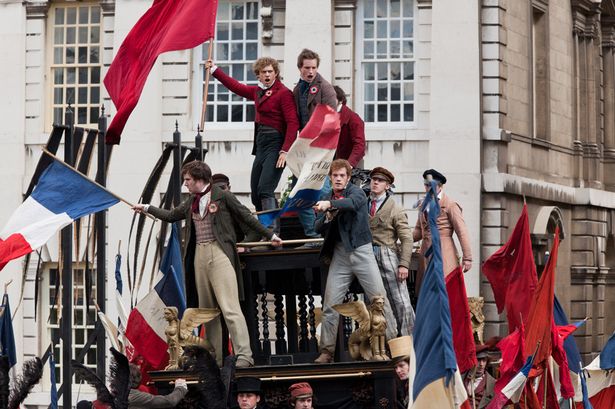
How many of you are familiar with the Broadway musical Les Miserables? Lots of you, I’m sure. Yes, Les Miserables was the one Broadway musical phenomenon from the 1980’s that could even have Andrew Lloyd Webber looking over his shoulder. When you heard that the musical finally would have a film adaptation, how many of you looked forward to seeing it? I’m sure a lot of you have including me, but does it deliver to movie crowds and especially to fans of the musical?

One thing I’ve learned about hit musicals being adapted to the big screen is that it’s a very tricky job. The whole filmmaking crew has the job of dealing with the fact the fans of the musicals want something that won’t disappoint them. The scriptwriter has the duty to make a script that includes the musical’s most popular songs mixed with the emotions of the characters in each scene. The director has the duty of making the songs, the emotions, the setting and the theme fit into a 2 1/2 hour long movie. The actors have the duty of delivering a performance that’s both believable and entertaining in both their acting and their singing, especially when a camera is filming them up close and it will be seen by all.

For the record, I saw the stage musical when it came to Canada in 1995. Most of the numbers possessed the same energy, spirit and emotion that was present in the stage musical. The only number I thought was lacking the same spirit was “Master Of The House”. That was the one number that had the least spirit and flavor that was present in the musical. Also Gavroche didn’t make that grand of an introduction. I know he does so in the stage musical but he just didn’t seem to grab you attention at the beginning the way he does on stage.

One thing I have to say about the film version is that it gave me a better understanding of what the musical is all about. Back when I first saw it on stage, I didn’t fully understand it. Now that I’m older and my attention span is better, I can understand it’s about redemption and the triumph and trials of justice in a world devoid of morals and justice. It was entertaining to watch on stage but it was through seeing it on film that it’s like a story from a Dickens novel where a man makes a promise to a dying woman and keeps his promise despite his trials and rivals until the end.

We should remember that there are many loyalists of the musical Les Miserables who hold the stage production dearly to themselves. The musical version of the Victor Hugo novel began in Paris in 1980 by Claude-Michel Schonberg and Alain Boulbil and became a musical on Broadway in 1985 thanks to the translations of Herbert Kretzmer. If you remember Broadway back in 1985 there were two types of musicals: those of Andrew Lloyd Webber that go on to charm the word and every other musical. Ever since it’s been released it’s become a huge Broadway phenomenon that could even rival some of Webber’s most legendary musicals. Every city it touched, it drew huge crowds. So you can imagine that when the film version of the musical came out, there would be a lot of pressure placed by fans of the musicals. It’s like that with any musical where loyal fans expect it done excellently if not perfect. There have been many musical adaptations that have been hits and misses in terms of comparing it with the stage play. Chicago and Hairspray are two examples where the film version hit. Rent and Nine are two examples of the film version missing. I myself have seen the stage production. I personally was impressed by it and I don’t see anything that would let anyone loyal to the stage musical down. I feel Tom Hooper and the producers did a very good job with it. I talked earlier about the energy of most of the songs still there. That had to be the best quality in terms of keeping it true.

There has been some flack from Tweeters and some fans of the musical about the use of actors in the movie. You’ve heard the disses: “Actors trying to sing.” I do give them partial credit because many actors had to learn singing for the sake of getting acting jobs in musicals. In fact John Travolta even made it clear after Saturday Night Fever that if you wanted to get acting work in New York, you had to sing, dance and act. Don’t forget that if there were singers in the film, there would be disses like: ‘singers trying to act.’

Anyways getting to the nitty gritty, one can notice those that are able to sing their roles gracefully from the actors just trying to sing. Russell Crowe gave his best effort as Javert but often came across as too forced and sometimes uncomfortable at what he was doing. Eddie Redmayne also didn’t look too comfortable performing as Marius. That’s the risk when you take when you insist on singing your parts instead of ADR. Hugh Jackman did an excellent job not just in singing and acting as Jean Valjean but also for being consistent in having the biggest role in the musical. Anne Hathaway as Fantine was however the best at combining both singing and acting in their role and coming across the most gracefully. In fact it was her performance of “I Dreamed A Dream” that stood out above all others. It’s no surprise to me if she wins the Oscar. The lead actors were not the only ones who impressed. Helena Bonham Carter and Sacha Baron Cohen did a good job in their supporting roles. Daniel Huttlestone was a good scene stealer as Gavroche is supposed to be. If there’s any fresh face that could rival the veterans, it’s Samantha Barks that was excellent in her supporting performance as Eponine.

Tom Hooper was given the difficult task of taking the musical and putting it on screen and he succeeded very well in doing it. William Nicholson also had the challenge of turning the script and songs of the musical and turning it into something for the big screen. He did a very good job of it retaining the spirit of the musical and of the songs. Also noticeable is that there are some scenes of dialogue. The stage musical doesn’t have that. Good to see he added those small parts of dialogue without dulling or upsetting the musical. As I said before, the music was great with Schonberg, Boulbil and Kretzmer even composing a new song ‘Suddenly’. The technical aspects like the sets, costuming, cinematography and sound mixing were also top notch.

Les Miserables finally has its chance to hit the big screen and faced a huge whack of pressures expected on any adaptation of a legendary Broadway musical before opening. The end result is an accomplishment, if not a triumph.

Movie Review: Django Unchained

Django Unchained movie still

If you’ve seen Lincoln already, you’ve already seen one man’s approach to slavery. Now Django Unchained is another man’s approach to slavery that’s more what Quentin Tarantino had in mind and not what you’d expect.

The film starts with the Speck brothers walking a group of male slaves down across Texas in 1858, three years before the Civil War. Their journey is interrupted by Dr. King Schultz who appears to be a traveling dentist. He offers to buy one of the slaves, Django Freemen. Before the Specks can refuse Schultz shoots one of the Speck brothers to death, shoots the other leaving him in pain and frees the other slaves to let them kill the wounded Speck.

Schultz confesses to Django he’s no longer a dentist but a bounty hunter who kills fugitives for reward money whenever the opportunity arises. He especially chose Django because he can help identify his next targets, the three ruthless Brittle brothers. Schultz admits he hates slavery and offers Django to help with freedom, $75 and a horse as a reward. Django assists successfully in helping Schultz shoot down the Brittles.

Not only does Django get his promised rewards but Schultz hires him as his bounty hunting associate. This comes as Schultz learns that Django has a wife: Broomhilda ‘Hildy’ von Shaft who is also a slave now owned by a separate owner. Schultz is hoping making Django his associate will reunite him with Hildy. Schultz does a good job in training him and Django is fully ready with the shooting skills and the desire for blood. His first operation on Smitty Bacall is a success from hundreds of feet above off a cliff. Django and Schultz are successful in other bounty shootings too and soon learn Hildy is owned by plantation owner Calvin Candie. Once arriving as his plantation, Candyland, we learn Calvin is a charming but brutal man who has his male ‘mandingo’ slaves fight to the death for his entertainment pleasure.

The two try to pose as ‘mandingo’ purchasers to Candie however the purchase turns real when they witness a slave mauled to death by angry dogs. They then ask for Hildy as an addition. Candie agrees to the sale but it raises the suspicion of Candie’s staunch slave Stephen who suspects Django knows Hildy and is up to something with this sale. Upon the advise of Stephen, a drunken ruthless Candie gives Schultz a deal: Hildy for $12,000 or death. Schultz agrees and shoots Candie after the offer. A shootout occurs with Schultz shot and Django shooting many of and many of Candie’s men dead only to end when Stephen threatens to kill Hildy is he doesn’t surrender.

Django is sent to punishment by Stephen and Candie’s sister working as a coal miner worked to his death. That’s what Stephen thinks as Django is able to outsmart the slave drivers, kill them and take their dynamite. This comes for the set up at the end for Django’s revenge on Stephen and all those at the plantation. Even though most people know what the ending will be, it’s the style that it’s done in that’s the treat of the movie.

One thing about this movie is that it’s not supposed to be the answer to slavery. It’s not supposed to be even a version of how slavery should have been solved all along. What this movie is basically is Quentin doing what he does best: a revenge movie done in his style. I’ve been an admirer of him since Pulp Fiction. I remember when I first saw it near the end of 1994. I was a college student of the time and Pulp Fiction was a movie that impressed people of my generation. I came from a generation that was strongly anti-censorship and looked at commercialism in movies as a downgrade in creativity and an attempt to soften the authentic. When Pulp Fiction came out, we were impressed. Finally a movie where the director/writer has complete creative control and it excels. Finally a movie that takes filmmaking to new levels as filmmaking should. Finally a film that pushes envelopes as us Generation Xers in college felt all art should. Finally a movie that makes original pay off at the box office. Finally an independent movie that could make the Hollywood fare at the time look like a laughing stock. Finally a film that doesn’t censor itself and doesn’t bow down to pressures of ratings boards or family values groups and it excels. In the end, Pulp Fiction has been hailed by most as the best film of the 1990’s.

Eighteen years have passed since Pulp Fiction has been released. While most directors have had a flare last for a number of years only to flare out over time, Tarantino never did. He still delivers movies that know how to charm and even enchant. Also while it appears that there’s a lack of taking film in new directions right now and more interest in creating a box office winner, Tarantino is still one who dares to stand out, take risks and do things his way. One thing I’ve come to know of Quentin Tarantino’s movies over the years is that he aims to deliver a film in style. It’s seen very clear in the films he shows that he attempts to tell a story via film noir or blaxploitation or spaghetti western style. He wants to deliver a stylized story as he’s done in his past movies and he does it again here.

Another thing Quentin does in his films that he does again here is deliver a movie with stylized characters with eerily charming personalities and deliver their acting with style. We see it with the characters of Django Freeman, Dr. Schultz, Calvin Candie, Hildy and Stephen. All of them have their personalities in their likeable traits and their hateable traits. All also deliver in their stylized acting without coming off as ridiculous. Few times can an actor get away with doing such a showy stylized character in movie performances without looking ridiculous or over-the-top. It’s here in Quentin Tarantino movies where it works the best. It’s funny because when I learned Django was about a slave getting revenge, I was expecting the actors to play characters with mannerisms from the 1850’s. Not in a Tarantino movie.

Also noticeable is how Quentin works to avoid the sentimental and touching in his films and it’s seen again here. The two where I got the biggest sense of this was firstly the scene where Django shot Smitty Bacall from a cliff and we see Smitty’s son coming to him on the ground. There’s no scene of the son’s reaction. The second was the scene where Hildy saw Django after being away from him for so long. I was expecting Hildy to be in tears and embrace him. Instead she faints at the sight of him. Not what I expected but should’ve in a Tarantino movie.

If there’s one glitch to comment about the movie, it’s that it’s yet another revenge flick from Tarantino. Back in the 90’s his films had the focus of the criminal mind. I was good with that. In the 21st Century, his movies have been focused on the theme of revenge, from the Kill Bill series to the Death Proof part of the Grindhouse movie to Inglourious Basterds. I didn’t have a problem with that because it was done entertainingly and even enchantingly at times in some scenes. Here it was a case where I went with the feel “Not another revenge story from Quentin Tarantino.” I’ll admit that it was a very stylishly done movie that delivers in entertainment value but seeing Tarantino toy around with the theme of revenge once again gives me the impression he’s masturbating to that theme a little too gratuitously.

Don’t get me wrong. I’m not trying to say in my review that this is the movie that is the turning point for my respect for Tarantino. In fact I still consider him one of the best filmmakers out right now. I would however like to see him work with other themes too. Like many people, I feel one trait that makes for a great director is one that can do many genres well. Steven Spielberg is an example of a director that can do a multitude of film genres. Martin Scorsese may be famous for gangster films but he showed he can do other styles of film well too, even family movies. Ang Lee is another filmmaker that has demonstrated versatility. I would like to see Tarantino become more versatile in the films he delivers. This may sound odd coming from a fan of his movies but I’d like to see him try it.

Okay, enough of me both praising and sacking Quentin. The film’s acting consists of character acting that knows how to be stylish without coming across as ridiculously showy. Jamie Foxx was impressive as Django Freeman. The only problem is that he was constantly upstaged by the supporting players. Christoph Waltz delivered excellently as King Schultz with all of his charming arrogance who somehow had a heart. Leonardo DiCaprio also was phenomenal as the charmingly hateable Calvin Candie. Samuel L. Jackson was excellent as the hateable Stephen: the former slave who now owns and beats his own. He makes you want his payback in the end. Kerry Washington was also good as Hildy but her character lacked the depth and style the leading male characters had. The sets were perfect in fitting the time. Even the springy tooth on Dr. Schultz’s coach looked less ridiculous over time. The music mix was also excellent. Another trait of Tarantino’s movies is the inclusion of music that enhances, stylizes and even enchants in the movie’s story and Quentin delivered again. It was a mix of original music and of songs from decades past that blend like magic into the film.

One would assume a movie like this would be one to cause controversy. And they’re right. This movie has had people speaking out against it on the subject of either the violence or the subject of slavery or the use of racial slurs. The most outspoken critic has been director Spike Lee. Spike has been critical of Quentin Tarantino in the past for the use of a certain racial slur in Pulp Fiction. Spike hasn’t really spoken about the use of that slur in Django but he has spoken about the movie itself and has declared it: “an insult to my ancestors.” This is particularly questionable since there are African American actors in leading roles. If they felt it was an insult to their ancestors, they would have refused to be in the movie. Besides I’ve always gotten the impression Spike Lee wants the world to think he’s the voice of all of black America simply because of Do The Right Thing. Fortunately the controversy hasn’t generated too much news overload.

It’s interesting while Lincoln showcased justice given to slavery, Django Unchained is about one slave’s revenge. Ironic how both are released in the same year and both have expectations to win the Best Picture Oscar. As for Django, it’s starting to feel redundant to see another Tarantino revenge flick but his stylized filmmaking compensates for that and delivers a winner of a movie for the most part. Not for all to see but it will entertain those that do see it.

Movie Review: Life Of Pi

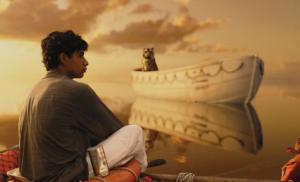
Pi Patel and the tiger Richard Parker learn to survive in Life Of Pi.
Pi Patel and the tiger Richard Parker learn to survive in the Pacific Ocean in Life Of Pi.

“I suppose in the end, the whole of life becomes an act of letting go. But what always hurts the most is not taking a moment to say goodbye.”

Life Of Pi is a novel by Yann Martel you may have already read or not. It now hits the big screen just eleven years after its publishing and is directed by Ang Lee. How well does it entertain?

Pi Patel is a man of fascination for a young Montreal writer. The writer was refered to him by a man in India named Mamaji and one day he’s fortunate to meet Pi in his own Montreal home and he tells him his story:

Pi Patel was born in India and named after the legendary French pool Piscine Molitor. Having the name Piscine Patel was not easy as he would have to endure taunts from his classmates. Then on the first day of school at the age of eleven, he decided he would be known as Pi from now on. He’d even try to recite all the numbers that make up pi to get it through to their heads.

Pi grew up with a wealthy family in India. His family owned a zoo and he experienced a love for the animals. Nevertheless he was taught to fear the wild ones. The zookeeper gave Pi a lesson in wild animals as a child after he tried to feed a bengal tiger who is named Richard Parker by the zookeeper.

Also during his childhood, Pi developed an interest in religion and experiencing God. He was born and raised a Hindu but would soon experience Roman Catholicism and Islam. As a teen he falls in love with a girl named Anandi. However all that has to change as Pi’s family has lost the zoo to land owners. The family decides to move to Canada and sell the zoo animals.

The family travel across the Pacific in a Japanese freighter named the Tsimtsum. The trip is mostly calm except for having a bigoted cook. However tragedy strikes as the ship is caught in a storm in the middle of the Marianas Trench. The ship sinks taking Pi’s family and the crew with them. Pi miraculously survives and manages to get himself in a lifeboat. Pi’s lifeboat overcomes the storm but there’s one surprise: his lifeboat includes a hyena, a zebra and orangutan. The hyena soon kills both the zebra and the orangutan only to find himself killed by the tiger Richard Parker who comes out of nowhere.

So that’s all it is: a lifeboat, Pi and the tiger Richard Parker. He’s able to retrieve the food and water supplies from the lifeboat. He builds a raft tied to the boat to keep a distance from Richard Parker. Pi soon loses much of the food supplies after a whale dives near them so Pi is left with no choice but to fish and collect rain water for Richard Parker and himself. The fish was hard as Pi is a vegetarian through his Hindu upbringing. Over time he realizes that Richard Parker is as vital to his survival as Pi is to Richard Parker’s.

After months at sea they find an island. It seems like a relief. It’s a floating island full of animals, a forest and fresh water. It seems like relief until they learn that the ‘fresh’ water turns acidic in the night and the island has carnivorous plants. They must return to sailing.

The lifeboat does reach land: the coast of Mexico after a total of 227 days. Richard Parker discovers a jungle for him to live in. Pi hopes Richard Parker will acknowledge him before entering but instead walks into the jungle without looking back. Mexican rescuers discover a weak exhausted Pi crying because Richard Parker walked away without him. Recovering in his hospital bed, Japanese insurance agents ask Pi for the story but don’t buy the story with the animals. Pi then gives a second story consisting of his mother, a sailor with a broken leg and the ship’s cook to the same story line. They’re left with the dilemma which story to believe as does the young novelist.

It does seem odd that the movie is tiled the Life Of Pi but the movie focuses mostly on Pi lost at sea for nine months. I think that was the point that there’s always one moment or one situation in a person’s life that seems to define them more than any other moment in their time. It turns out it was Pi surviving in the Pacific Ocean with Richard Parker in the boat. It seems appropriate that this was his moment especially since he was named after a swimming pool and it the Pacific Ocean–the biggest swimming pool in the world–that he’s able to prove what he’s made of. The movie is also a testament of Pi’s character as well. He wouldn’t put up with being mocked because of his name. He was determined to survive at sea despite losing all his family and despite dealing with a life boat with a wild tiger. And he appears to the local novelist as if he was never scathed. I think the incident did a lot to change Pi and helped him to tough things out and move past tragedy.

The movie may be about one boy’s will to survive but it’s also about Pi’s ability to tell a story. He’s good at telling stories about others and about his own life. It’s his storytelling ability at a young age where he gives the Japanese ship authorities two different stories of the sinking that shows Pi’s biggest gift. That could be the best reason for his survival. I will admit that the story overall does seem like an over-the-top story. A teenage boy surviving in a lifeboat with a tiger for over nine months in the Pacific Ocean, surviving typhoons and whale dives, finding temporary relief on an Atlantis-like island, and Richard Parker disappearing in the Mexican forest never to be seen again. Nevertheless this is what’s best about seeing a movie in a cinema. It makes you a believer of that story for two hours. I really enjoyed seeing that movie. It was escapism at its best.

The acting was quite good. Suraj Sharma did a very good job of acting for an actor so young and especially for a debut. You could bet the hardest part had to be simulating the tiger in the boat. I’m sure that in the scenes the actual tiger was used, the tiger had to be well-trained if he was to work in a movie. Ang Lee did a very good job of directing. I mentioned in my review of Hugo of how many renowned directors have done family movies in the last ten years and Ang is the latest. Directing a family fantasia like this and doing an excellent job of it adds to his versatility as a director. He’s already established himself as a maverick director with movies like Sense And Sensibility, Crouching Tiger, Hidden Dragon, Brokeback Mountain and now this.

David Magee did a very good job in adapting the book to screen. The storyline itself is one that can easily appeal to families as some of the most famous family movies have been animal stories. Magee does a good job in creating such a story to charm people of all ages. Claudio Miranda delivers some of the best cinematography of the year. The music of Mychael Danna adds to the film’s magic. The biggest ingredient of the film’s magic has to be the visual effects. The creation of storms, the simulating of the ship sinking, the simulating of animals, the mysterious island, that had to be the biggest and best quality in adding to the magic of the movie. And to have it in 3D is a bonus addition to the magic.

I hate to compare the Life Of Pi to Hugo in terms of which is the bigger family movie masterpiece. Life Of Pi is a masterpiece of its own and makes for a great escape for the whole family. Definitely worth seeing.

Movie Review: Silver Linings Playbook

Bradley Cooper and Jennifer Lawrence shine in Silver Linings Playbook.

“I was a big slut but I’m not anymore. There will always be a part of me that is dirty and sloppy, but I like that, just like all the other parts of myself. I can forgive. Can you say the same for yourself? Can you forgive? Are you capable of that?”

Do you think it’s possible to do a comedy about dealing with bipolar disorder? Silver Linings Playbook makes the attempt to make a comedy out of it and succeeds.

We meet Pat Solitano Jr.: a Philadelphia man with bipolar disorder who was just release form a mental institute after eight months following having given a brutal beating to the man who had an affair with his wife. The incident has hit him with hard consequences. Besides being institutionalized, he lost his job, his wife Nikki has put a restraining order on him thus him living with his parents. And adding to the difficulty, his father Pat Sr. is out of work and resorts on gambling for income and hopefully launching a restaurant. His parents give him strict orders to take his medicine and see a therapist. It starts off rocky as he neglects his medicine and throws violent raging fits such as two incidents at 3 in the morning in front of his parents and when he hears My Cherie Amour, the song played when he caught his wife with his coworker. He does however see his therapist Dr. Patel but doesn’t open up to him too much.

One night, he’s invited to dinner with his friend Ronnie and his wife. He meets Tiffany, a young widow who also has a neurosis condition of her own and also lost her job because of it. Over time, Pat and Tiffany develop a friendship and the friendship becomes closer when it’s obvious she can work with his condition for the better. He even offers to have her relay letters to Nikki. She agrees to as long as he’s willing to be a partner for her in an upcoming Latin dance contest. He also agrees and things get better. It’s through the friendship that Pat is able to open up to Tiffany. Tiffany is even willing to let Pat know that right after she lost her husband, she slept with ever man at her job, which explains why she lost it. Pat hopes that the dance competition will get him to win Nikki back. Tiffany even assists in motivation by giving him a typed letter from Nikki.

Things take a turn for the worse when Pat Sr. asks Pat to come to an Eagles game as a ‘good luck charm’ because he bet a lot of money. Pat agrees but that would mean missing out on the dance practice with Tiffany. It turns out to be a bad idea as Pat sees Dr. Patel with a group of Indo-American Eagles fans. Young males throw bigoted slurs at them, which leads to a fight where Pat gets involved and gets carried off by the police. The Eagles lose the game and Pat Sr. loses the bet big time. Tiffany then gets in on this by telling Pat Sr. and all that their dance practices together are better good luck charms for Philadelphia sports games. So a final bet is made: The Flyers win against the Dallas Cowboys and Pat and Tiffany score at least a 5 in the dance competition. Pat is nervous about it until he rereads the letter from Nikki. Tiffany even says Nikki will be at the competition and is willing to lift the restraining order if they score well.

The day of the game and the competition approaches. Both Pat and Tiffany are nervous, as expected. Nikki arrives to see the dance competition but Tiffany is horrified. Why? She said Nikki would be there, right? The family is busy paying attention to the game at first while Tiffany tries to calm herself down with drinks. Pat is able to spot her in time for the dance and before she could drink any more. The game ends with the Flyers winning and the two are able to score a 5.0 in the dance. Pat Sr. won the bet and will get the restaurant and Pat Jr will get his restraining order lifted. But just when you think things will end as you think it will, it doesn’t and leads to an ending that’s a lot happier and ending you feel it right.

This movie is a surprise. Normally you’d think that making a movie about dealing with bipolarism would not make for a good movie, never mind a comedy, but it does. I believe the biggest reason why this movie is so well is that it does show the negative sides of bipolarism and people reacting to personal tragedies but it shows a ray of light. It shows both the bipolar person and the person dealing with tragedy as 3D people instead of types. It shows them both as people struggling with their setbacks and weaknesses and people trying to fight it out. It shows the unique chemistry between the two that helps them triumph over their difficulties and eventually win both to the other in the end.

It was a big effort to make these two types main characters for a comedy but a romantic comedy… and it succeeds. Tiffany was the perfect one who knew how to make Pat overcome his condition. It was evident that Halloween night when Pat thought he was hearing My Cherie Amour again but Tiffany let him know he was not hearing that song. She was also able to get it through to his family that dance training with her was very helpful in winning the games Philadelphia played. She was also able to use a fake letter from Nikki to give him the motivation even thought it risked biting her in the end. You could tell that Tiffany was more for him than Nikki. A bipolar and a promiscuous widow makes for a bizarre pairing for a romantic comedy but it works here.

The best quality of the movie had to be the acting. Bradley Cooper has to have delivered the best performance of his career. He succeeded in making a 3-dimensional person with bipolarism and make him a character that first appears hateable but become more likeable later on and whom you want to succeed in the end. Jennifer Lawrence gives a performance nothing short of remarkable. It’s not just about doing a character who’s an emotionally-fragile person trying to be the one in control but also doing a character many years older than her (she’s 22) and look convincing, and she does it. If she wins the Oscar, I will not be surprised. Robert De Niro also did a good job as the struggling father who has problems of his own. Jacki Weaver also did an excellent job as the mother even though she didn’t have the showiest of roles. Good supporting turns from Anupam Kher and Chris Tucker add to one of the best acting ensembles of the year.

David O. Russell did a marvelous job in both writing the screenplay and directing the film. His follow-up to The Fighter also delivers excellently and has to be one of the best this year. What you think would be as expected doesn’t and works for the better in the film. Very good adaptation. The other standout feature in the movie is the music. There’s the score from Danny Elfman along with previously released songs. Many of which are already familiar. Its blend into the story works well.

Silver Linings Playbook makes an unlikely pair of characters for a romance movie turn out to be possibly the best romance of the year. Very smart, very sensible, very human and very winning. Definitely amongst the best of the year.

Movie Review: Anna Karenina

Keira Knightly plays Anna in the latest film adaptation of Anna Karenina.

How many of you are familiar with the novel Anna Karenina? I’m sure a lot of you are. Mostly because it was required reading in high school in a lot of schools. Did you know that Anna Karenina has been adapted to the cinema a total of thirteen times including twice starring Greta Garbo? Now Anna Karenina returns to the big screen again directed by Joe Wright and with Keira Knightly as Anna. The question is can you make a movie that’s been done twelve times before winsome to present crowds?

The films prime focus is on Anna living a privileged life thanks to her marriage to a government official but she is unhappy in her marriage. It showcases her fling with cavalry officer Count Vronsky whom she falls for at the train station which starts a fling that not only threatens her marriage but her social status and mostly chance of ever seeing her son again whom she dearly loves. She continues to see the count and even bear his child only to have her heart broken and ultimately fated to a tragic end.
 
The films subplot is on Kitty, Anna’s 18 year-old sister-in-law, and Kostya who prefers country life to the aristocracy. Kostya proposes to Kitty but she wants to have her fun at her young age, especially since she’s being pursued by other men like Count Vronsky. She becomes heartbroken when Vronsky leaves her for Anna and Kostya if left for months to labor in the country yards. It isn’t until months later that he is able to confront Kitty and convey his feelings to her. It is then that Kitty and Kostya were meant to be.

The point of the movie wasn’t simply to tell the story of Anna Karenina again but to tell it in a creative and styled manner. At the beginning you could tell that this would be a movie with a different twist to telling the novel. I mean a novel that’s already been adapted to the big screen twelve times before needs to have the latest adaptation anything but redundant. It presents the scenarios of Anna as a stage and frequently going from scene to scene as going from stage to stage. It creates a lot of the acting and dancing in a stand-out method, even quirky and eccentric. It gives the audience the impression of what’s really going on even if they’re dancing or ‘not really’ having sex.

I’m sure this unique twist is what the director and scriptwriter had in mind. Both of which have already established themselves. Joe Wright has been renowned for directing Pride And Prejudice, Atonement, The Soloist and Hanna. Tom Stoppard has established himself in writing with a multitude of plays and has even won an Oscar for writing the screenplay of Shakespeare In Love. The film’s styling and sometimes quirky way of playing out the novel would remind many of Moulin Rouge. The only thing is it makes it look like they’re trying too hard to make this adaptation stand out and be original. There are many times in which the quirkiness and the stylings don’t work their best and we’re unsure whether the film is trying to portray a message, tell the story or just simply put on a show.

One thing that went well was the acting. Keira again delivers a good performance even though I’ve seen better from her. She’s no stranger to Joe Wright’s movies as she played the leading female in Pride And Prejudice and Atonement. The latter earned her first and only Oscar nomination. Jude Law was also impressive even if a backdrop character. This is the most mature role I’ve seen Aaron Taylor-Johnson perform in and he was good. The cinematography by Seamus McGarvey was not 100%. But the music by Dario Marianelli fit the movie well.
 
The recent release of Anna Karenina tries to not be your typical film adaptation of the legendary novel but it tries too hard to be creative and unique. It becomes evident when the creative elements just don’t mix.