Oscars 2015 Best Picture Review: Bridge Of Spies

ST. JAMES PLACE
Tom Hanks plays James Donovan, a lawyer in the middle of the height of the Cold War, in Bridge Of Spies. Mark Rylance (centre) steals the show as his subject.

Bridge Of Spies is a Spielberg drama I missed out on seeing during its original theatrical release. I only saw it once it was a choice on a flight I took heading home. It was a good choice.

The film begins in 1957 with Rudolf Abel arrested by CIA agents as he’s trying to read a secret message. He is taken away but is able to keep the message. As Abel awaits trial, American lawyer James Donovan is assigned to defend him. The US government believes him to be a KGB spy but Donovan wants to have a fair trial because an unfair trial may be used as propaganda in the USSR. Donovan meets Abel whom is very welcoming to Donovan but will not cooperate with the US Government for any revelations in the intelligence world.

Donovan knows he has a heavy task in defending Abel. He’s serious about it but no one, not even his closest family, expects him to make a strong defense for Abel. Nevertheless Donovan is persistent and continues to seek acquittal for Abel despite an angry American public, persistent hate mail and threats on the lives of him and his family. Abel is found guilty on all charges. Before sentencing, Donovan asks the judge that Abel receive a prison sentence of 30 years instead of the death penalty because he feels Abel may become a bargaining chip with the Soviet Union. Further difficulties continue as Donovan is unable to win a Supreme Court case where evidence against Abel was tainted by an invalid search warrant.

Meanwhile two innocent Americans find themselves in the hands of Communists. One is US air force pilot Francis Powers whose plane is just shot down between the USSR-Turkish border. He’s able to escape his doomed plane and tries to steer his parachute into Turkey but fails and becomes captive. The other is Frederic Pryor, an American economics student studying in Germany just as the Berlin Wall is being built. He studies in West Berlin but has a girlfriend in East Berlin. He tried to bring her with him to the West but is arrested as a spy.

News gets to Donovan of the two men arrests. He’s even offered a deal from the USSR of the exchange of Abel for Powers. Donovan is insisting in a 2-for-1 deal of exchanging Abel for both Powers and Pryor. However he has the challenge of dealing with Soviet agents and a CIA that’s interested in only getting Powers back. The whole deal puts the governments of three nations– East Germany, the USA and the USSR– in a heated debate with Donovan make the outcome work out right. The end result is historic.

This is yet another film about war Steven Spielberg does focus on. There have been many films of the theme of war he’s done in his career. The wars he have depicted on screen have spanned time from World War II in Empire Of The Sun and Saving Private Ryan to World War I in The War Horse to the Civil War in Lincoln to even revenge missions in Munich.

Here he tackles a war that’s less about brutality but more about ideology and had victims of their own: the Cold War. Although there wasn’t as much blood shed, the Cold War did put a sense of paralyzing fear in the world, especially in the United States, with a possibility of nuclear war and armageddon. Thus the ‘duck and cover’ scene. Ask anyone over the age of 60 about doing all those ‘duck and cover’ practices at school. People were constantly being suspected as spies on both sides and there were reactions of hysteria to those accused of spying or treason. The construction of the Berlin Wall at a time when Germany was divided between the capitalist West and the Communist East is an example of the war.

The story takes us back to the 1950’s at a time when Cold War hysteria was at its highest. Neither side could be trusted if one from the other country came in to visit. That explains why even innocent visitors could be seen with suspicion. People arrested as spies for the other side were huge headline news. Most of the public wanted them dead with Julius and Ethel Rosenberg still fresh in their minds. It’s easy to see why someone like James Donovan would be so easily vilified by the American public and even face a possible shooting. The film shows why James’ efforts in the prisoner trade were necessary in the Cold War. It was something that was able to ease some tension on both sides.

Spielberg does a very good job of showing what the Cold War was like. Instead of showing fighting that’s common in the wars, he focuses on the more tense moments of the Cold War and captures its tense feel most people of that time felt. The screenwriting by Matt Charman and the Coen brothers was very good in providing insight to the moments in history and keeping the key elements of the situation. It didn’t focus too much on Jim’s personal life but it did focus on his efforts and even on the prisoners themselves. It may lack some historical accuracy but it does provide knowledge and keep the audience intrigued. Its one glitch is that it had too sweet of an ending. I don’t think it ended on the right note.

Tom Hanks was very good as Jim Donovan but it’s not at the same level as his most stellar roles. The biggest scene-stealer of the film was Mark Rylance as Rudolf Abel. He not only matched Abel physically but also gave him character with his love for art and his ability to say persuasive things. Other good supporting performances came from Amy Ryan as Jim’s wife and Alan Alda as Thomas Watters. Janusz Kaminski did a very good job of cinematography, the production designers did a very good job of recreating the 1950’s and 1960’s with their sets and Thomas Newman delivered a very good score to the film.

Bridge Of Spies is very much a story about a lawyer and his pursuits but also the times he had to deal with. Reminds you of some of the political tensions and paranoia that’s currently happening now. Spielberg does a good job of capturing the feel of the intensity as well as the political climate of the story.


Oscars 2015 Best Picture Review: Spotlight

Spotlight stars Rachel McAdams, Michael Keaton and MArk Ruffalo as journalists ready to settle the score.
Spotlight stars Rachel McAdams, Michael Keaton and Mark Ruffalo as journalists ready to settle the score.

I’ll admit I saw Spotlight two months ago and I’ve been procrastinating at writing my review. Now that the Oscar nominations are out–actually only an hour ago– this is a better time than ever.

The film begins in the 1970’s of a priest being fired from his job as a teacher at a Catholic elementary school in Boston. Fast forward to 2001. The Boston Globe has a new editor, Marty Baron. He first learns of the investigative Spotlight team of the paper headed by Walter ‘Robby’ Robinson.

Baron gives the Spotlight team a story to chase: a story of a priest sexual abusing children and Cardinal Bernard Law knowing about it and doing nothing about it. It first starts as a pursuit on a single priest who was continuously moved around from school to school. Over time it they would uncover that there were many priests who also committed acts of sexual abuse on school children and they were all covered up by the Archdiocese.

This is one story they had to get to the bottom of. However they’re limited in terms of resources. Plus they need permission to access sealed documents and have a trial or even an inquiry happen and they doubt they can get it from a Catholic judge. They talk with a head of a victims rights group who himself was abused, they talk to other abuse victims, they talk to a lawyer who’s handling the cases of some of the victims and they even find through an ex-priest who tried to rehabilitate pedophile priests that there could be as 90 sex offenders in the clergy. Further research uncovers additional priests moved about upon their actions being revealed and being listed as ‘relocated’ or ‘resigned.’

In September 2001 it appears the Spotlight team is finally ready to release the story. Then 9/11 happens which makes every other news story in the world take a backseat and cause even a further delay of the story being printed. However the wait works for the better as one of the Spotlight reporters, Michael Rezendes, uncovers proof through publicly available documents that Law knew all about the abuse going on and ignored it. Then a major victory. The judge grants them the right to look into sealed documents. Just as they are about to print the story, Robinson confesses he published a list of pedophile priests in 1993 but he never followed up on it. As the story is published, it creates history.

I’m sure that some people would be nervous about this film and declare it ‘anti-Catholic.’ In fact if I were a conservative conspiracy theorist, I would say Spotlight is a film released by an anti-Catholic director who wonders where all the Catholic hate from liberals went once Pope Francis came to power and wants Spotlight to bring it back. But I’m not a conspiracy theorist nor am I a conservative pundit. In fact the film has received positive feedback from Vatican Radio and even the current Cardinal of Boston praised it in showing how the Archdiocese had to confront its wrong.

I will say that I’ve seen bigger even more savage attacks on the Catholic Church in films in the past, especially from Martin Scorsese. In fact I remember watching 2002’s The Magdalene Sisters where the nuns were depicted as total monsters. I feel films nowadays are less anti-Catholic than that of 20 years ago or even 40 years ago. In fact one thing I give the film credit for is that it looks at all sides. It may portray Cardinal Law as a conniver but it wasn’t hard on depiction of the priests. In fact one scene that stuck out to me was when one of the alleged priests was interviewed. He not only appeared confused in how he didn’t know what sexual abuse was but admitted that he was raped as a boy. That not only shocked me but left me wondering how many of the abusive priests were themselves sexually abused as a boy?

On a personal note, I will admit that when I first saw the film, I left the theatre asking myself “Jon, why did you return to the Catholic Church?” It was a dilemma for days but it did solve itself over time. In fact shortly after, I wrote on my Facebook page: “I gave the Catholic Church a second chance in 2003 and it better not blow it this time.” I will never excuse a priest for sexually abusing any child. I believe they should be brought to justice. In fact, Pope Benedict clarified the issue when he said: “Forgiveness is not a replacement for justice.” I know you can’t take back the past however you can improve the future. The Catholic Church has not become blind to the issue of sexual abuse. In fact I learned from one man who tried to enter into education for the priesthood he had to get a criminal record check, an HIV test and a psychiatric assessment. I’m happy that the Catholic Church is taking the best preventative measures to ensure this doesn’t happen again.

In fact off topic from the film, I will admit that sexual abuse and the various Diocese’s and Archdiocese’s bad handling of it is a problem but I will also say that it’s a problem that goes far beyond the Catholic Church. It’s a problem that exists in other churches as well, it exists within certain families, it exists within school and it even exists within children’s sports programs. In fact this decade’s biggest sexual-abuse-and-cover-up story came not from a Catholic institution but from coach Jerry Sandusky and the cover up from Penn State university. Makes you wonder why the priesthood gets a lot of defamation from the sexual abuse of those while children’s sports coaches don’t get the same defamation. A sex offender is a sex offender no matter what their profession or even if it’s not to do with a profession at all.  Same thing with Universities, especially since it’s only come to light that colleges have a known rape problem but they’re doing next to nothing about it.

Back to the film, I think the biggest thing the film was focusing on was the bad marriage of church and state. Separation of church and state is enforced in the American constitution but it’s not to say it does find its way mixed into politics one way or the other. In fact I don’t think Spotlight attacks the Catholic Church as a whole but actually attack the Archdiocese of Boston. The film presents how the Archdiocese of Boston has such a huge influence over the city. We’re talking about a city with a huge percentage of Catholics and with a history of the Catholic Church giving, providing and influencing the city. No wonder a city like Boston would have such high regard for the Archdiocese. No wonder most Bostonians would look at priests as father figures. No wonder also would that present the biggest difficulty in terms of getting the ugly truth out, especially with people having a high regard for the Church in power and with a Cardinal sweet-talking those determined to get the truth.

The theme of sexual abuse may be very prevalent in the film but I think the biggest focal point of the film was to show a group of reporters uncovering a scandalous story and bringing it to print. One thing is the film doesn’t make like the Spotlight team are the blemish-free good guys of the film. It’s made known near the beginning of the film that this information was given to them five years earlier. They themselves made a big mistake of their own by delaying the story. Sure, they did a whole whack of effort to finally bring it to press in 2002 but they could have done it sooner. I think that was the whole thing of Spotlight is that it was a movie disinterested in making the image of a hero out of anybody. Besides we already hear of the mistakes of having an image of somebody is a bad thing as one abuse victim admitted he looked at priests to be like God. I’m sure millions more have had that deluded image of the priest being like God in their head. However it also shows how easily people can be feel a sense of betrayal by a Church when such atrocities occur. You can’t really blame them for being that disheartened.

I give top credit to director/writer Tom McCarthy and his co-writer Josh Singer for directing a complex film that’s like a bunch of pieces of a puzzle that had to be put together. This is a story that’s set in the Spotlight room of the Boston Globe and set in various other places throughout and they had to both show all the different parts of the story and make them come together from time to time. They did a good job of making this complex story come together without straying off into unimportant territory. Also they did a very good job of writing a story of sexual abuse that was watchable. I’ve seen other films of sexual abuse that were more explicit like 1992’s The Boys Of St. Vincent. Mind you it was a 90’s thing to do explicit entertainment because envelope-pushing was all the rage back then because 1; you could never put enough nails in the coffin of the Hays Code and 2; because back then softening of scenes or leaving such things out was considered a form of ‘denial’ in art. Anyways these are not the 90’s anymore and watchability is values more. I’m sure if they showed scenes of abuse in the film, it would make it somewhat unwatchable for many. I feel they made a good choice of limiting the topic of abuse to conversations of victims with the journalists. Especially since the top point of the film is how they brought the story to press. Besides I don’t consider compromising elements in a film for the sake of making it more watchable to be a filmmaking weakness. It’s not the 90’s anymore and Tom McCarthy’s not among the likes of Lars Von Trier.

As for acting, there were a lot of great individual performances most notably from Michael Keaton, Mark Ruffalo and Rachel McAdams but none of them owned the film. In fact another top quality of the film is that it’s a combined effort from all the actors to play parts that don’t steal the show and add to the story telling by making it look like a unified effort. Even acting of the smaller roles that that of the abuse victims were excellent and added to the story. Overall this not simply a film that’s well-crafted. This is a film that does capture your intrigue. It’s a combined accomplishment from McCarthy, Singer and the actors.

Spotlight isn’t strictly about the incident. It’s about getting the story to the presses and the battles the Boston Globe had to go through to break the silence and finally get the word out. Keeps you interested from start to finish.

Movie Review: Joy

jennifer-lawrence-joy-trailer
Joy stars Jennifer Lawrence as inventor and Home Shopping Network personality Joy Mangano.

Don’t ever think that the world owes you anything, because it doesn’t. The world doesn’t owe you a thing.

I’m sure before you go to see Joy, you’ll think you’ve seen all the rags-to-riches stories you’ve had to. However you’re in for a surprise.

The film is first set in the 1960’s when Joy Mangano is a child. She’s very creative and very inventive. Fast forward to 1989. Joy Mangano is the breadwinner to a household of four generations of family: her grandmother, her divorced mother and father, her overachieving half-sister, her ex-husband and her two children. She works as a ticket agent at a major airline. Not exactly an admirable job for someone that was valedictorian when she graduated.

“How did it go wrong?” Joy ponders. She was an inventive girl but that all changed when her mother and father divorced. It was like her creativity went with her. She married a wedding singer with high hopes but his dreams fell apart and so did their marriage, albeit left amicable enough for him to still live in Joy’s house. Hey, he’s broke! Actually all the family’s lives appear unchanging as her father is dating the wrong women and her mother escapes the pain of divorce by locking herself in her bedroom and watching soaps. The one thing that stayed solid and has kept on going right over they years was Joy’s friendship to Jackie, her best friend since grade school.

One day, her father dates a new woman: an Italian woman named Trudy. She comes from a wealthy background and takes the whole family on the family yacht. A wine bottle breaks and Joy is left to mop it. She gets her hands cut trying to remove the broken glass from the mop. While recovering from her cuts, that’s when her inventiveness comes back. She has an idea for a self-cleaning mop and she’s willing to design it with something as simple as paper and her daughter’s crayons. Her mother is discouraging of her to chase her dreams but her grandmother is more supportive.

However she knows the difficulties of making something and merchandising it. She knows there’s someone who has a patent for something similar and has to agree to pay a certain percentage. She knows she will need financial support. Trudy is willing to offer but she’s very stern with whom she’s willing to support. She knows she will need a place to get the mop made. Her father offers her space in his workshop and women hired to make the mop. She even finds a factory willing to make the parts.

Then comes the advertising. She’s unable to get a deal and is subject to advertising her mop in K-Mart parking lots which is illegal. However she catches the attention of Neil Walker, CEO of the shopping channel QVC. He is impressed with the product and is willing to get it advertised on the channel. However everything goes wrong when first advertised as the salesman, who is considered the top salesman of the channel, does everything wrong and there’s no sale. Joy however doesn’t quit and negotiates with Walker for her to sell the product herself on the channel. When she does the commercial, she is very nervous. However a helpful phone call from Jackie while live on the air is just the boost she needs and it works. Her mop is a hit and it succeeds in getting her mops sold and paying her off.

However it doesn’t end there. Her success happens as her grandmother, the person who believed in Joy all along, dies. Then there’s news about excessive production fees paid. Joy goes to the factory and finds out a lot of bad truths about what has been happening and what’s being planned. Feeling helpless, Joy is about to file for bankruptcy until she finds out a certain truth and settles the score.

The movie isn’t just simply about a rags-to-riches story about a woman who was able to make it as a tycoon. It’s also a reminder that even in tight economic times, the American Dream is still achievable. Even in cases where there are obstacles thrown in your face like an advertiser who doesn’t do their job right or even lawsuits left, right and centre, it can still be done. We shouldn’t forget that Joy Mangano was making this all happen during the recession of the 90’s. I remember that recession well as I remember young adults like myself at the time received a lot of neglect from the job markets. Joy was not only able to create a ‘better mousetrap’ but be able to make it sell. Sure she faced a lot of common business challenges and hard blow of the business world and yes, she may have thought of giving up but she prevailed in the end. Now she’s the one in control. The film shows that this is still very much possible today.

One thing I will have to say is that doing such a film of a person achieving the American Dream has been done countless times. For one to do such a story differently, they would have to make the right choices. David O. Russell tries to make some unique choices such as having the story told by the grandmother’s point of view, even in time periods when the grandmother is deceased. Even the ending where the story progresses to the present but flashes back to just after Joy won her legal dispute is another unique choice in storytelling. However it makes one question whether those were the right choices. I can understand the attempt to tell a story differently but did they work? I don’t think they were the best choices.

David O. Russell sure has made a name for himself in the last five years with films like The Fighter, Silver Linings Playbook and American Hustle. This is a new challenge for him to direct and co-write with Annie Mumolo a story about a female inventor and media personality. Not something I would normally associate with Russell. I will admit this is not his best work. There are times I even wondered if David O. Russell is the right director for such a movie. Nevertheless it’s still very professional despite some of the glitchy storytelling choices. I do give him and Mumolo kudos for telling this story of a woman who starts in a situation familiar with most Americans and turning it into a relatable success story. That is one of its best points. Even the human element of Joy Mangano is another excellent part of the film. The film is not just about a woman wanting to make a success of herself for her own purposes but also being someone for her own daughter to look up to. Joy goes from someone mocked by her half-sister in front of her own kids to being someone for her kids to look up to. That element is another plus.

No doubt Jennifer Lawrence owned the film. Of course the Hunger Games movies have made her a household name already at 25 but it’s Russell who knows how to bring out the best in Lawrence’s acting. In her third movie directed by Russell, she again masters a character many years older than her and comes out shining and in excellent style. Robert de Niro was also good as the trying father. However the biggest scene stealer of the supporting players had to be Isabella Rossellini as the new mother-in-law who means business. Actually all the actors in the film from those that played family members to Bradley Cooper as Neil Walker did a good job with their characters and made them entertaining to watch.

Joy is a good story about a woman who would not give up until she succeeds even after everything that could go against her was thrown at her. However it’s also a reminder that the American Dream is still possible even in the toughest of times. Not exactly the best film from David O. Russell but definitely worth seeing.

Movie Review: The Peanuts Movie

The Peanuts Movie is full of surprises. Especially for Charlie Brown.

Charlie Brown and the Peanuts characters are some of the most beloved cartoon characters in history. The Peanuts Movie brings them back into action in 2015. And in winning style.

It’s winter. While the kids are having fun skating and playing hockey on the ice, Charlie Brown is nervous. A family has moved into town and with them is a girl– the little Red Haired girl– he wants to win the attention of. However he has a track record of bad luck in the neighborhood and among his peers. He sees Lucy for ‘professional help.’ She advises him to make a winner of himself and be more confident.

First chance is at the school talent show. Charlie has a magic act planned with Snoopy and Woodstock assisting. Charlie’s last up. Sally is second -last up with her cowgirl act. However she gets ridiculed by the crowd. Charlie decides to help her win the contest at the expense of his own humiliation. It works. She wins and he makes a fool of himself.

Next chance is the school dance which consists of prizes going to the winning solo dances for both boys and girls. The little-red haired girl wins the female prize.  Charlie Brown appears to have winning form but a slip causes him to fall and disrupt the sprinkler system which disrupts the whole dance. Again a blockhead!

Next chance is a book report which he’s partnered with the little red-haired girl. Then comes aptitude testing which Charlie Brown is believed to score the highest. Just before Charlie Brown is to receive a medal for his perfect score, he learns the truth and declines his medal on stage. To make matters worse the book report Charlie Brown wrote for the little -red-haired girl is destroyed in the air by Snoopy’s plane.

Summer approaches and classmates are assigned to be pen pals. The little red-haired girl chooses Charlie Brown. The thing is she’s to spend the summer at camp. Charlie Brown has one last chance to meet up with her. Does he do it or doesn’t he? Those who saw the movie will know for sure.

What the filmmakers had in terms of bringing the Peanuts back to the big screen was a challenge. The first challenge was for possibly the first time, the Peanuts characters were 3D in a 3D world. The second challenge was what to include in the film. No doubt the film was to include the common traits of the characters as well as the common lines used by the characters throughout. The other challenge would be what kind of world would The Peanuts be in? Would they be in their past world consisting of common things like books, playing baseball and Snoopy using a typewriter? Or would they be in the modern world where kids use iPads, skateboard, hop onto Wikipedia for whatever info they want and save their essays as Word Documents?

I believe the writers and animators made the right choices to have the story situated in the traditional world of the Peanuts characters. That’s how fans of the cartoon series best remember them and converting them into the modern world would be very tricky stuff and may turn long-time fans off. Another element I liked is that it maintains a lot of familiar situations from Peanuts cartoon strips and Peanuts cartoon shows of the past. The humor of Charles Schulz had to be kept with the story as well as the familiar personality traits of all the characters.

However with this being a feature-length movie, it had to present a legible story with a beginning, middle and end. This was a challenge to write out such a story and mix in the common humor of the Peanuts characters and familiar moments of the Peanuts history. I feel it did an excellent job of creating a consistent story with mixing in the humor of the Peanuts franchise as well as giving all the other characters their moments too. It can’t all be about Charlie Brown. Plus I’m sure all of us wanted to see Charlie Brown win the ‘little red-haired girl.’

Kudos the Charles Schulz’ son Craig, grandson Bryan and Cornelius Uliano for writing an excellent story true to the Peanuts series as well as entertaining from start to finish. Additional kudos to director Steve Martino. To make such a movie work, they had to put it in the hands of someone who knows how to direct animation. Martino has proven himself in the past with Horton Hears A Who and Ice Age 2: Continental Drift. Here he delivers again. I also give the animators credit for making 3D characters of the peanuts characters for possibly the first time. That was another challenge: keep them 2D or make them 3D? They took the risk with 3D and it worked very well. I will admit I did see a few glitches in terms of speed but the form of the characters as well as the settings were flawless.

The vocal talent from the young actors were all there as they not only sounded like the characters but they personified them as we commonly knew them. Additional kudos for Christophe Back for providing the score familiar with Peanuts animation of the past as well as adding some things of his own.

The Peanuts Movie is an excellent movie with all the right moves to win over fans of Peanuts cartoons and introduce the Peanuts kids to a new generation of children.

Movie Review: Carol (2015)

carol-01-800
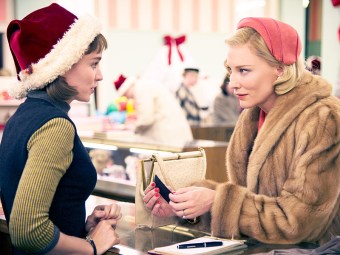
Rooney Mara (left) and Cate Blanchett (right) are lovers in a forbidden time in Todd Haynes’ Carol.

NOTE: I may have ‘published’ a previous version of this review. It was accidental as I meant to save instead of publish. Here’s the complete review.

There have been a lot of LGBTQ-themed films done in the past twenty years. Carol is the latest big film to be shown on the big screen. However it’s not your typical gay-themed film.

The film begins in a scene set in the future. Then flashes back to Therese, a young 20-something woman working the toy section of a Manhattan department store. A glamorous older woman, Carol Aird, consults her for what to buy her daughter for Christmas. Therese recommends the train set and she buys one. However Carol left her gloves behind in which Therese mails to her from the address on the sales slip.

Both women have difficult lives. Therese is in a relationship with a man and longs to be a photographer. Carol is in a marriage near divorce and in the midst of a tight custody battle with her daughter. However Carol is able to get Therese to meet up for lunch. The friendship starts to grow and Therese is able to take pictures of Carol for her photography habit. On Thanksgiving, Carol invites Therese over to her house but it does not go well with her husband Harge as he knows Carol had a relationship with a woman named Abby last year.

Carol visits Therese on Christmas and gives her a state-of-the art Canon camera. Carol also reveals to Therese the details of her divorce and how Harge plans on having a ‘morality clause’ against her in an attempt to win their daughter Rindy in a custody battle. Carol plans an escape for the two of them around New Year’s Day in a remote Iowa town to get away from the difficulties of their lives and to finally have time for the two of them together. It works on cultivating their relationship but it’s interrupted as it is learned an investigator was hired by her husband to track her lesbian relation. Therese is driven by Abby back to New York.

In the meantime Carol is in a difficult situation as she is to decide whether to love Therese or give it all up for the sake of winning custody of her daughter. Months pass and Therese is now working as a photographer with the New York Times and Carol is seeking psychotherapy for the sake of winning custody of Rindy. Carol attempts to reconnect with Therese at a lunch at The Ritz but is interrupted by a former co-worker of Therese’s. The film ends with the moment many believe was meant to be.

The thing about Carol is that it’s not only about love but about the times too. Cate Blanchett even describes the story as ‘like Romeo and Juliet, only Juliet and Juliet.’ Todd Haynes is a gay director himself and he has delivered films with gay-themed subjects. Here he presents a love story situated back in 1953. The story reminds us of the times of how GLBTQ people were limited in terms of rights if they even had any at all. We shouldn’t forget that homosexual acts were criminalized until the 1970’s and the homosexual attraction was considered a form of mental illness up to 1973. Knowing that would make one understand the situation Carol would have to face: to choose between custody of her daughter or pursue who she loves. Nowadays the courts would be more favoring towards the GLBTQ person but back then homosexuals always lost such a custody battle.

The film isn’t completely about presenting a gay scenario from back in the past. The film is as much about the two main characters Carol and Therese. Carol is of the more upper class but is longing to break free of her loveless marriage to pursue her heart’s desires and live the life she was meant to. Therese is a young 20-something looking for something better but finds it with Carol. It’s as the two find love through each other that they know there are better lives for them. However it’s not to be without obstacles like a boyfriend questioning, a suspicious husband and a judgmental society.

The film is actually based on a novel from Patricia Highsmith entitled The Price of Salt. I’ve never read the novel but I get a good understanding of it from seeing the film. Interestingly is that after reading over Highsmith’s biography, one could sense the film is about some of Highsmith’s own experiences. She herself was a lesbian who had relations with women during that very time set in the film. She even went under psychoanalysis while in her 20’s to marry a man but it didn’t work. Those were the times back then.

The film is excellently written out by Phyllis Nagy and directed very well by Todd Haynes. The only other two films from Haynes I ever saw was 2002’s Far From Heaven which also dealt with homosexuality in the 1950’s and I’m Not There which is something else. Remembering Far From Heaven has me convinced Haynes was the right choice to direct. Phyllis Nagy may only have one other script to her credit–HBO’s Mrs. Harris— but she does an excellent job in writing the story. The slow pace of the story succeeds in getting you to feel the characters and the situation. There have even been a few times I’ve thought that with this movie being released in 2015, the year the US Supreme Court legitimizes same-sex marriages in all 50 states, this film is a reminder of what they had to go through in order to achieve it.

The film also excels because of the acting. Cate Blanchett shines as Carol who possesses a shining confidence but struggles in a world that won’t accept people like her. Rooney Mara is also excellent as the young naive Therese who’s confused about herself but finds herself over time. Despite the two owning the film, there were other good supporting performances from the like of Kyle Chandler as the suspicious Harge and Sarah Paulson as Abby. The set design and costuming did an excellent job of taking the film back to the past. The cinematography added to it as well as the score from Carter Burwell which captures the intensity of the situation.

Carol is a story about a woman of her time who dared to be different and love even if it meant losing it all. It not only does a good job of telling the story but also the time of the story too.

Movie Review: The Martian

Matt Damon plays an astronaut stranded on Mars but determined to live in The Martian.

Hard to believe I saw The Martian just two months after it hit theatres. What took me so long? What took me so long to write this review? Anyways I’m glad I finally had the chance.

I’m sure by now most of you have seen the story of how Mark Watney got left behind on Mars. The sandstorm on Mars and the debris that hit him left everyone escaping mistaking him for dead. Mark would then have to survive by growing his own food and creating his own habitat. It would work to his advantage but NASA would eventually get the message he needed to be brought back home. It would take a connection with a mission, sheer determination and camaraderie with his fellow astronauts to bring him back to earth successfully.

The movie is based off the book by Andy Weir. I can’t judge for myself on how the film compares to the book. However I will say this is a very good adaptation of a story of a man and his fight to survive on a strange planet. One thing I will have to say is that even though this is a sci-fi fantasy, the film would still have to be true to fact in a lot of areas. It would have to know Mars’ oxygen levels or lack thereof, temperature levels, climates and terrain and even know how long transportation and even communication between Mars and Earth would take. Today’s audiences aren’t as welcoming towards cheap hypotheses of space like they used to be decades ago. Not only would they need those facts but they would have to be incorporated into the script and made to work into a story that was suspenseful but also entertaining. The Martian succeeds in doing just that and doesn’t lose its comedic edge in the process.

The Martian is a reminder of why films about space travel still fascinate us today. They remind us of why we like to imagine trips to outer space including domains humans have never set foot on. They even capture our intrigue when a mission fails and the astronaut’s lives are at threat. They get us wondering “Do they make it or don’t they?” You may remember how Gravity caught our imaginations just a couple of years ago. Now it’s The Martian with its story of an astronaut trying to stay alive yet eventually return back to earth.

Some may question the mix of humor into the story if it was a smart choice, especially with the inclusion of disco songs Mark hates but keeps him alive.  No doubt it was an entertaining choice as it entertained crowds. Comedy is all hit and miss and I feel it made the right choices in terms of adding in the comedic elements. In terms of drama, it didn’t make the more tense moments of life-or-death too tense for the audience. It kept us wondering and brought our hopes up with each positive moment but the intensity was not all that thick and that’s what made it win with the crowds.

No doubt it took the direction of Ridley Scott and the writing of Drew Goddard to make this film work. Ridley knows how to bring out the best in unique stories and make them win with movie crowds. The story however rested on the shoulders of Matt Damon. His performance where he mixes humor with the will to survive helped the film achieve the charm it needed. Despite Damon owning the movie, it’s not to say supporting performances from Jessica Chastain, Kristen Wiig, Jeff Daniels Michael Pena and Kate Mara didn’t have their importance. They helped too. Other top elements of the film included the music from Harry Gregson-Williams and the special effects team who were able to re-create life on Mars to a tee.

The Martian is a sci-fi comedy of the best caliber and has the best elements of a ‘popcorn movie.’ This is something only a director like Ridley Scott can pull off well. Very entertaining.

Movie Review: Room

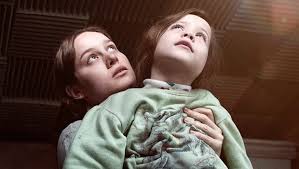
Room is a drama of a mother (Brie Larson) and a son (Jacob Tremblay) bonding in a difficult situation.

I’ll admit I was late in reviving my interest in the movies with Oscar buzz. Room was even at the VIFF and I ignored it thanks to not hitting the website AwardsDaily. However Room was out in November and I finally had my chance.

The film begins with Jack waking up in a room. The room is small and crowded with a television, small kitchen, beds, bathtub and a toilet. There are no windows but there is a skylight in the ceiling. The only other person who lives in this room is a young woman named Joy, his mother. Soon we learn the two are abduction victims held captive in a shed full of escape alarms by a man she calls Old Nick. We also learn that Joy has protected Jack from knowing the truth of the situation and tried to create a world of childhood wonder for him. She even gets him to hide from Old Nick fearing Nick will sexually assault Jack the way she’s been.

Joy has been calm about her abduction situation mostly as Old Nick has kept them both fed well and sheltered well despite his obvious sexual assault on Joy of which Jack was born from. However food, clothing and shelter supplies have been scarcer since Old Nick has been kept out of a job for six months. Joy has attempted to escape before but it failed. This time, she uses Jack where she gets him to fake having a fever. It doesn’t work. The next day she gets Jack to play dead in a rolled-up carpet and to run out of the back of Nick’s truck when he gets to a stop sign en route to ‘burying’ him somewhere. The plan works as Jack is able to get out in a residential area. Jack is rescued but police would have to pursue Old Nick back at the shed where he has Joy hostage temporarily. The two are soon reunited in freedom from Old Nick.

Once free, Jack and Joy are given medical treatment where Joy is reunited with her mother Nancy, stepfather Leo and father Robert. Jack is thanked by Nancy for taking care of Joy.

As the two are starting to embrace their new freedom from captivity, they realize that they are not completely free. There’s the general public that are so dazzled by the story, the media turns this into a circus. There is Joy dealing with her divorced parents and the fact Robert doesn’t want to accept Jack. There’s even Joy returning to her room and unpleasant reminders of her fun carefree life before the abduction. While Jack is embracing his grandmother and stepgrandfather, his new freedom and the whole new world for him that comes with it, Joy can’t handle her situation and she attempts suicide. Jack sends her a piece of his hair in hopes she gets better. Eventually Joy does recover and thanks Jack for giving her reason to live. However there’s one last thing to do.

This is a film based on a novel by a novel by Irish-Canadian author Emma Donoghue released five years ago. Filmmakers hired Emma to write the script for the film. Normally a situation like an abduction of a minor and a child coming from the abduction would make for something unwatchable. I wouldn’t blame any of you for feeling that way. What makes it watchable is that it’s mostly seen from the child’s point of view. Throughout the film we see the world through the eyes of Jack. Him and his sense of wonder at the small world around him as well as his hope for entering the world outside keeps this film from feeling the tense situation around it. I will say that most people would find the child’s sense of awe and wonder in the middle of an abduction would find it bizarre but it’s a creative twist that actually helps the story.

However the film is not without reminders of realities. First is the father who doesn’t want to look at Jack. While Joy sees Jack as his child and Nancy willfully accepts Jack as her grandson, grandfather Robert doesn’t want to accept him. Possibly because he may see Jack as a product of his daughter’s abduction and rape and would naturally be upset by it. Second is the media attention. No doubt the freedom achieved by Jack and Joy is a remarkable story but the media attention that came with it was too much, especially since Joy would just want to get back to her life again. Also just as Joy is getting use to life back at home, she’s reminded of her life before the abduction and of so many things that were cut short because of it.

The highlight of the film is actually the bond between Joy and Jack. No doubt Joy is a victim of her abduction. Her son Jack is where she’s able to forget her problem temporarily and feels like a mother instead of a victim. Plus she loves him back. She could have seen him as a product of her rape and neglected him but instead chooses to be a mother. Seeing her make a birthday cake for him and protect Jack from Old Nick shows how much she means to him. Even after they’re free, they still have a bond: a bond that gives Joy a reason to live after her suicide attempt.

The film I’ll admit is even a reminder of how both children and adults see situations differently. Joy sees the shed as her prison but Jack doesn’t. Joy is doing what she can to keep Jack from seeing this as a traumatizing time for the both of them and creates for him a world of joy, creativity and wonder for Jack. That’s why Jack feels an attachment to the shed to the point he even calls it ‘Room.’ Even the time in freedom is seen in different ways. Jack sees it as a time for new worlds and new explorations. Joy is supposed to see it as her time of the freedom she thought she’d never achieve but there are a lot of things that bother her like a father who doesn’t want to accept Jack and a future that was robbed from her. Even that scene at the end as the two see ‘Room’ one last time shows the difference in how the two feel. Jack willfully says goodbye to it–now a place of the police’s crime scene as is should be– but you can still see the trauma in Joy’s face. However seeing how Joy willfully says goodbye to it upon Jack’s request reminded me that if us adults handled their problems they way children like that do, we’d have much less trauma in our lives.

I will admit that I knew the film was shot in Vancouver. Whenever I see a film that was made in Vancouver, I try to identify the sites and sets in the film with areas of Vancouver I know well. I was able to do so. Even though the film is set in Ohio, it couldn’t fool me!

This film is the North American breakthrough for Irish director Lenny Abrahamson. His direction along with Donoghue’s screenplay adaptation of her own novel is the right mix and delivers a great story. I will admit the story of Room begins on an awkward note as we don’t fully understand the situation. The abduction and Joy’s impregnation of Jack from Old Nick becomes more obvious later on. I feel the two together made the right choices.

Brie Larson was the right pick for Joy. She displayed the right mix of compassion, trauma and frustration. It’s not easy to play a character who’s first a victim of abduction and rape and later adjusting to her freedom but she succeeded in playing Joy Newsome excellently. Just as excellent is Vancouver actor Jacob Tremblay. He was the right fit to play Jack with his naivety, his sense of wonder and his undying love for his mother. Joan Allen, William H. Macy and Tom McCamus were all good as the grandparents. Sean Bridgers was rather limited in his role of Old Nick. Mind you Old Nick wasn’t too be that big of a role anyways.

Room has to be the best film coming out of Vancouver this year. It’s a very unique story that makes what would normally be an unwatchable and even taboo situation very watchable. Even enlightening.

Movie Review: Black Mass

Johnny Depp is unrecognizable as James 'Whitey' Bulger in Black Mass.
Johnny Depp is unrecognizable as James ‘Whitey’ Bulger in Black Mass.

DISCLAIMER: Okay, I know I’m late in reviewing a lot of movies, including this one. I’m hoping to do some catching up in this time. So please bear with me.

James ‘Whitey’ Bulger is a man of infamy. Black Mass is a movie that attempts to reveal what type of person Bulger was and how he was able to get away with what he did all this time.

It’s 1975. The streets of South Boston are ruled by James ‘Whitey’ Bulger and his Irish-American Winter Hill Gang with Stephen Flemmi as his right-hand man, Kevin Weeks as his rising rookie and Johnny Martorano as his merciless hitman. However it’s rivaled by the Angiullo brothers who have ties to the New England Mafia family.

In the middle of this, former FBI Agent John Connolly returns to Boston in hopes of stopping the Angiullo brothers and does the tricky task of trying to get Whitey’s help to do so. Besides Whitey and brother Billy Bulger, who’s the president of the Massachusetts State Senate, are childhood friends. At first, Whitey is reluctant to be an informant but agrees after one of his Winter Hill Gang members is gunned down.

No kidding having Whitey as an informant for an FBI agent is touchy stuff and it even causes suspicion from Connolly’s boss. However it becomes a case where Bulger is the one pulling Connolly’s strings as he uses Connolly’s ‘protection’ for covering his crimes. Whitey becomes more violent after his six year-old son dies of an allergic reaction to aspirin. He even gains more success in achieving FBI control in terms of trying to down the Angiullos. Connolly however becomes more attached to Whitey which interferes with his marriage.

However the bond between Bulger and Connolly reach a turning point as Whitey orders one of his men to kill two men associated with a scheme Whitey was to profit over. One man in whitey’s ring, Brian Halloran, comes across as untrustworthy and senses him to be a possible rat. Fearing for his life, Halloran goes to the FBI for help but to no avail. Connolly informs Whitey of Halloran’s sayings and Halloran is killed.

Bulger’s lust for blood and his own menacing behavior only grow over time and it leads to a downfall in his relationship with Connolly. Over time a new district attorney, Fred Wyshak, is hired in Boston. Despite Connolly’s attempt to befriend the ‘bulldog’ attorney, Wyshak refuses and attempts to have Bulger arrested. Eventually the secrets are unraveled thanks to the help of the Boston Globe which leads to the arrests of Connolly and Bulger’s three other men. Bulger however is successful in avoiding arrest of his own however he would be arrested in 2011 after 16 years ‘on the run.’

I’m sure what most people would be interested in seeing when they watch this film is yet another character played by Johnny Depp. The weird thing is about how unrecognizable he comes across with his balding hair and blue eyes. However I’m sure he was chosen because of how he could embody the character of Whitey with his criminal mentality and his personal demons both on the street and within himself. Mind you Whitey was quite the character in real life to give himself his own exile before ultimately being brought to justice only as he was in his 80’s. Some may find Johnny’s hair and make-up rather distracting but it doesn’t take away from the story.

This is a story of intrigue. Those who know the story of Whitey Bulger, or even those who only know the name but not the whole story, will take an interest in why Whitey carried this all out and why an FBI agent was willing to assist. No doubt the story is mainly about Whitey. However the story is about Connolly too. It makes one wonder why a childhood friend would be so loyal to the point he’d be willing to go against his job in order to help him out despite the fact he’s carrying out such hideous crimes. No doubt the theme of loyalty is very present in the film as it is a common fact that loyalty to family and friends is something valued greatly in Boston. The theme of loyalty comes to the point where we see a scene of Bulger on the run but not before thanking Billy just before he and the other men are sentenced.

The make-up of Depp as Bulger may get a lot of attention but the highlight of the film was his performance of a man who is smart but troubled and very easy to infuriate. Depp also did a good job of conveying Bulger’s growing anger and personal motives in his carrying out in the crime activities but he also did a good job in showcasing Whitey’s mind in why Bulger felt it was right in doing all these hideous crimes and why he needed his men to carry it out and an FBI to be ahead of the game. Even showing how the accidental death of his son would be the turning point in Bulger and his lust for control and vengeance adds to the story and the character. The film rested predominantly on the story of James ‘Whitey’ Bulger but it was Depp’s ability to show Whitey the person that made the story work at its best.

Sure, Johnny Depp carried the film but the film did feature other good supporting performances as well like that of Joel Edgerton as Connolly whose loyalty is questioned, Benedict Cumberbatch as Billy. The performances of the wives caught in the middle–Erica McDermott as Mary Bulger and Julianne Nicholson as Marianne Connolly– added to the human element of the story and kept it from being your typical hard-story crime drama.

This actually Scott Cooper’s third film as a director. The former actor’s best film making feat up to now has been Crazy Heart about a faded country star on a comeback. I don’t know if it’s as good as Crazy Heart but this is a very good film done by Cooper and is definitely his commercial breakthrough. Writers Jez Butterworth and Mark Mallouk did a good job of keeping it from being your typical mob-leader story.

Black Mass isn’t simply about an infamous crime leader. It’s also about the codes of loyalty some people would do for their friends, even if it meant violating their duties as an FBI. Very insightful and full of intense moments.

Movie Review: The Assassin (刺客聶隱娘)

Qi Shu is The Assassin.

The Assassin is one movie from the VIFF I missed out on. It’s a shame because there’s a lot of buzz that it may be nominated for an Oscar in the Best Foreign language Film category. I had the good fortune to see it being repeated just two weeks later.

Nie Yinniang is a female assassin from the Tang Dynasty of the 8th Century A.D. Yinniang has always been good at carrying out her duties as an assassin and is very loyal to the orders given by Jiaxin, a nun who has raised her since the age of ten.

However she faces a new task as Jiaxin orders her to kill corrupt government officials. However each time she is sent, she displays mercy. Even if she assaults them, she does not kill them. This especially infuriates Jiaxin and she gives her a final assignment to test her loyalty. She is sent to the Northern Chinese province of Weibo where she is ordered to kill Tian Ji’an: her cousin she has once been betrothed to. Even before she is sent on that mission, she had heard news that Tian’s wife was pregnant. The ending does come as one would expect but it comes off as fitting for the film.

There was a time when the film was labeled reminiscent of Crouching Tiger, Hidden Dragon. I’ll admit before I myself came to the movie, I also had the same hopes. It is in a lot of ways where one is taken back to the China of the past, the film has a mythic feel of its own and the film has a female fighter. However the film isn’t as much of an epic, it isn’t full of a big score nor does it have the big fights featured in Crouching Tiger. Some people also expecting the same action may be disappointed and find the film moves at too slow of a pace.

Now enough of what The Assassin isn’t. What it is is a very picturesque film that is a reminder of many mythological tales of the ancient past set in ancient China. Here it is a story where an assassin trained to kill is tested between what she is commanded to do and what she knows is right in her heart. Yes, she’s capable of carrying out her actions in surely an action-packed manner but her true rival is actually her conscience. Some people may become a bit impatient in waiting for the next fight scene but the fights are not the top focus. It’s the story and the perceived slowness is actually meant to remind us of the intensity of the situation.

This is a very good work from veteran Taiwanese director Hou Hsiao-Hsien. He is already an accomplished director in his own right with A City of Sadness winning the Golden Lion at the 1989 Venice Film Festival and five previous films being entered at Cannes Film Festivals of the past. This film won him the Best Director award at this year’s Cannes Festival. It’s evident to see why as he makes careful decisions here both in directing and co-writing with three other writers on how to not just have the audience watch the story but also feel the feeling of the main protagonist. He did a very good job here.

Also adding to the quality of the story is Shu Qi. she is an accomplished actress back in Hong Kong and her experience is shown in her ability to make the character of Yinniang work for the story. Chang Chen also does a good job as the nun who seeks vengeance. The costuming and sets, both natural and constructed, fit the film beautifully and perfectly and give it the right setting for the story. Lim Giong didn’t have too much of a score in the film but it fit the film well.

I also chose to see The Assassin because it was a film with very good chances of earning and Oscar nomination in the Best Foreign Language Film category. It had already earned nominations in that category for the Golden Satellite and Critics Choice awards. Less than two weeks ago, the Oscar shortlist of nine for that category was revealed and it did not make the cut. However don’t rule it out in terms of the categories of Production Design, Cinematography, Costuming and Make-Up.

The Assassin isn’t an epic as Crouching Tiger, Hidden Dragon is nor is it as action-packed as many would hope. Nevertheless it is a very good story and it is put together well. I’m impressed.

Movie Review: Beeba Boys

Randeep Hooda plays Jeet Johar, a leader of an organized crime syndicate in Beeba Boys.

Back at this year’s VIFF, I was hoping to see at least one Canadian live-action feature. I didn’t have the luck. I was actually luckier after the VIFF ended as Beeba Boys hit theatres just a week after. I had the chance to finally see it for myself.

The story is about Jeet Johar, a Punjabi-Canadian mob boss who is seen as the big man in Greater Vancouver, especially Surrey. He’s seen by many in the Indo-Canadian community what many would see of a mob boss: a father figure, a leader, a man who helps his community and a man who tells other not to mess with their own.

However there’s another side to Jeet. Despite having a set of loyal men who carry out his actions, he’s a loyal father who’s concerned about his well-being. He’s very upset when his father drinks in front of his son and he’s concerned how his mother feels about him, even though he acts like it doesn’t bother him.

One time, Jeet is arrested for murder. The jury finds him not guilty and he wins the attraction of one of the jurors, the daughter of Polish immigrants. However the police know he’s guilty and they set up a man to join Jeet’s gang and have him set up for what they hope will be his capture.

Jeet faces a load of rivalry from other mob leaders, an Indo-Canadian business leader who has become hugely successful and various other Indo-Canadians trying to get a piece of their own crime action for their own gain. Meanwhile his love for Katya is growing despite her family’s opposition to her love to Jeet.

However with Jeet’s lust for power comes incidents along the way that send him a message he’s doomed to downfall. This comes from members of his gang being killed to even a shootout at his place, endangering his own family. This leads to an ending that is far from predictable but doesn’t make a lot of sense in retrospect.

The film has a lot of of good elements and ingredients brought by writer/director Deepa Mehta: the separation of the values held by the older Punjabis from the younger Punjabis who question and can even ridicule the values and loyalty held by older Punjabis. There’s even the perceived jealousy felt by a lot of young Punjabis towards those who have made it successfully and feel that they have to kill them to get ahead. There’s even the scene of how some children of those who have made it feel a distance from their parents and even feel neglected because of their parents’ focus on making it.

There’s also how one looks at the leader of organized crime as a positive thing, especially the young. That was especially seen in that young Punjabi boy at the beginning talking how Jeet tells others not to mess with them the same way Bruce Lee showed others not to mess with the Chinese. Typical young male with a ‘might is right’ attitude. There’s the feel of power associated by many with the might of the gun. That was shown when one of Jeet’s men gets a young boy to feel what a ‘real gun feels like.’ Even though he unloaded the gun before, it sends a message about how addicting the power of the gun can get. There’s even the feeling they have to rule the night club scenes as shown in many scenes in the film.

The film also includes many other unique and vital ingredients. One unique ingredients to the film include the mix of languages as it goes from English to Punjabi to ‘Punglish.’ Another good ingredient is not just the focus on Punjabi immigrants but also some minor focus on the Ukrainian aquacize teacher and Katya Drobot. Sometimes I think the film is not just showing the struggle of Punjabi-Canadians to exist socially in Canada but the struggles of many immigrants. I found it surprising since I live in Vancouver that is one of the most immigrant-friendly cities in the world.

There’s also the character of Jeet who’s trying to make like he’s the boss but struggles to be a responsible father and is easily infuriated when his father drinks. Soon Jeet would have to fess up as his son now thinks violence is cool.

However the main problem is that the film does not put it all together in a well-constructed manner. The film shows a lot of potential as it features a story within a topic that rarely gets proper focus and has offered few effective solutions in the past. However there are times in which the news stories and even the newscaster herself come off as too cartoonish. There are times when the story goes from telling a story of an Indo-Canadian mob boss turns into ‘preaching’ about the problem. I’ve seen other gangster films before that told a story that reflected a common problem in society without resorting to ‘preaching’ methods. There were even parts that came off as ridiculous such as mob rival Jamie being intruded upon during a fellatio by one of Jeet’s men. All I can say is for each Canadian gangster film like this, there are at least 50 American gangster films that are better.

Mehta brings an ambitious project with Beeba Boys however the problem is it’s not done in a well-edited, well-pieced manner and it comes off as unsteady, sometimes preachy and even confusing at times. I will however give Mehta credit. It’s obvious Mehta, whose 2005 film Water was nominated for an Oscar in the Best Foreign Language Film category, is presenting a topic very close to her concern: the rise in crime among young Indo-Canadians, especially around Surrey and other part of Greater Vancouver. Being a resident of Greater Vancouver myself, I often hear the news stories and concerns however I myself can’t really make a statement about this topic because I don’t have direct involvement with the Indo-Canadian communities in Greater Vancouver. Mehta however is very knowledgeable about this and she feels she has something to say about this. I give Mehta credit for presenting a topic on the big-screen that gets so little focus but I feel that it could have been done better as a big-screen film.

The acting was good but it wasn’t stellar. Randeep Hooda did a good job as playing Jeet Johar: a gangster leader who’s art tough guy, part concerned father and part troubled man. Balinder Johal was the best supporting player as the concerned mother. The mix of IndoPop or IndoRock were some of the best music that could have been added to the score while the more synthesized parts of the score didn’t fit well and took away from the professionalism.

Beeba Boys is an ambitions movie that attempt to send a message as it tells a story. However it makes a lot of noticeable mistakes and it doesn’t compare to many of the crime dramas before it.