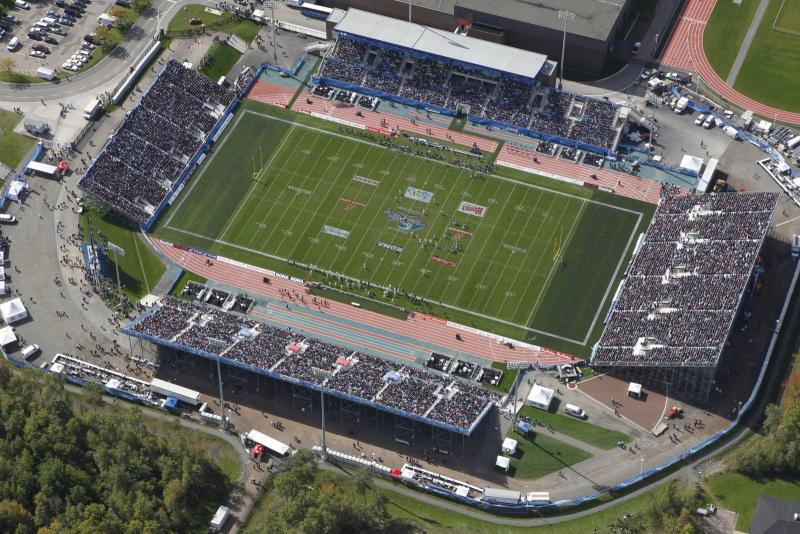
2015 Copa America: Group B Focus/ Grupo B Enfoque

The Copa is just two days away but the excitement still builds. This group should be especially exciting because there are two World Cup winners here. Hey, the Copa’s any country’s game. So here’s the run-down of Group B:

GROUP B:

argentina-Argentina (2): Argentina is one country that keeps on having a stellar reputation and a team full of talent. Argentina is also a team that is known to have legendary misses such as losing in the quarterfinals at the last Copa America in 2011. Even the shots in the World Cup final where they’ve could have won it but missed still linger in the memory of many. Since the World Cup, Argentina has had a mixed bag of results. They got their revenge on Germany in September 4-2 and they’ve have wins Against Croatia, Ecuador and Bolivia. However they’ve also endured losses to Brazil and Portugal. This Copa will be another proving point for Messi and the boys.

Uruguay-Uruguay (8): Uruguay looks great to repeat as Copa champions. However they still face the difficulty of playing without Luis Suarez as he will be suspended from the tournament because of the biting incident at the 2014 World Cup. Nevertheless we should remember that Uruguay is not just Suarez. It’s Edinson Cavani, Cristian Rodriguez and Maxi Pereira too. They also never official lost a game since the World Cup, only enduring a penalty kick loss to Costa Rica in November. I’m sure football’s ‘little giant’ can surprise us once again.

Paraguay-Paraguay (81): Paraguay appeared to have a stellar era starting back in the late 1990’s and ending just years ago. That included qualifying for four straight World Cups and even being runners-up at the Copa in 2011. However Paraguay is going through a difficult time now. They finished last in the CONMEBOL qualifiers for the 2014 World Cup. They’ve also only had two wins in the last twelve months: against Cameroon and Peru. Few players on their team play in leagues outside of Paraguay. However this tournament could be one where Paraguay can see it as a stepping stone for a comeback. No matter what they do, they can always grow.

Jamaica-Jamaica (74): Caribbean teams have been taken more seriously in the last few decades. In fact FIFA is thinking of expanding its World Cup to forty nations in hopes of making it more global and even including Caribbean countries. Jamaica has a big  part in it. They played in the 1998 World Cup. Even though they didn’t qualify for the next round, they did win over Japan. Trinidad and Tobago was the next Caribbean team to qualify for the World Cup. However it’s Jamaica that first caught the eyes of FIFA.

Currently their team has five players in England’s Premier League and five in the MLS. Their recent play has not been the most spectacular as they have endured some big losses in friendlies. However they did win against Venezuela and Cuba recently. This tournament will give another sign how the Reggae Boyz are doing.

PREDICTION:

This is a tough one. Argentina’s the leader but this competition has traditionally been Uruguay’s domain. I’ll pick Argentina to top the group with Uruguay second. Third to Jamaica.

And there you go. My summary of the Group B teams of the Copa. Only one more group to sum up and that’s Thursday.

La Copa está a sólo dos días de distancia, pero la emoción todavía construye. Este grupo debe ser especialmente emocionante porque hay dos campeones del mundo aquí. Oye, la Copa es el partido de cualquier país. Así que aquí está la decadencia del Grupo B:


GRUPO B:

argentina-Argentina (2): La Argentina es un país que sigue teniendo una reputación estelar y un equipo lleno de talento. Argentina también es un equipo que se sabe que tiene fallos legendarios como de perder en los cuartos de final en la última Copa América en 2011. Incluso los disparos en la final del Mundial donde han podrían haber ganado pero se perdió aún persisten en la memoria de muchos. Desde la Copa del Mundo, Argentina ha tenido una mezcla de resultados. Ellos consiguieron su venganza en Alemania en septiembre 4 a 2 y han tener victorias contra Croacia, Ecuador y Bolivia. Sin embargo, también han soportado pérdidas a Brasil y Portugal. Esta Copa será otro punto de prueba para Messi y los chicos.

Uruguay-Uruguay (8): Uruguay se ve muy bien para repetir como campeones de Copa. Sin embargo todavía se enfrentan a la dificultad de jugar sin Luis Suárez como será suspendido del torneo debido al incidente de morder en la Copa del Mundo de 2014. Sin embargo, debemos recordar que Uruguay no es sólo Suárez. Es Edinson Cavani, Cristian Rodríguez y Maxi Pereira también. También no oficial perdieron un partido desde la Copa Mundial, sólo soportar una pérdida de tiro penal a Costa Rica en noviembre. Estoy ‘pequeño gigante’ Seguro de fútbol nos puede sorprender una vez más.

Paraguay-Paraguay (81): Paraguay parecía tener una era estelar empezando de nuevo a finales de 1990 y terminando apenas hace años. Eso incluía clasificación para cuatro rectas Copas del Mundo y aun siendo subcampeón en la Copa en 2011. Sin embargo Paraguay está pasando por un momento difícil ahora. Terminaron última en las eliminatorias de la CONMEBOL para la Copa del Mundo de 2014. Han también sólo tenían dos victorias en los últimos doce meses: contra Camerún y Perú. Pocos jugadores de su equipo juegan en ligas fuera de Paraguay. Sin embargo este torneo podría ser aquella en Paraguay puede verlo como un trampolín para un regreso. No importa lo que hagan, siempre pueden crecer.

Jamaica-Jamaica (74): Los equipos del Caribe se han tomado más en serio en las últimas décadas. De hecho la FIFA está pensando en ampliar su Copa del Mundo de cuarenta naciones con la esperanza de lo que es más global e incluso incluyendo los países del Caribe. Jamaica tiene un papel importante en ello. Jugaron en el Mundial de 1998. A pesar de que no calificaron para la siguiente ronda, que ganaron sobre Japón. Trinidad y Tobago fue el siguiente equipo caribeño clasificarse para la Copa del Mundo. Sin embargo, es Jamaica, que primero llamó la atención de la FIFA.

Actualmente su equipo tiene cinco jugadores de la Premier League inglesa y cinco en la MLS. Su obra reciente no ha sido el más espectacular, ya que han sufrido algunas grandes pérdidas en los amistosos. Sin embargo ellos ganaron contra Venezuela y Cuba recientemente. Este torneo dará otra señal de cómo los Reggae Boyz están haciendo.

PREDICCIÓN:

Esta es una pregunta difícil. Argentina es el líder, pero esta competición ha sido tradicionalmente el dominio de Uruguay. Voy a recoger Argentina al principio el grupo con Uruguay segundos. Tercero a Jamaica.

Y ahí lo tienes. Mi resumen de los equipos del Grupo B de la Copa. Sólo un grupo más para resumir y que es jueves.

2015 Copa America: Tournament Intro and Group A Focus/ Torneo de Presentación y el Grupo A Enfoque

The Copa America has actually been contested longer than the World Cup. Since 1916 to be exact.

The biggest football tournament is the FIFA World Cup, right? The second-biggest men’s tournament is UEFA’s Euro, right? What’s the third-biggest? I don’t know either but I think the Copa America should be it. Here, it’s almost like a continental tournament the way the Euro is, adding in two CONCACAF teams. However knowing that the tournament consists mostly of South American teams should draw big football interest. Here we’re talking about a continent that has won nine of twenty FIFA World Cups and continues to show some of the top football prowess in the world today.

HISTORY:

The Copa America actually began fourteen years before the World Cup. The first competition was actually called the Campeonato Sudamericano de Football. It was contested in Argentina on July 2 and July 17, contested in two stadiums in Argentina and featured four teams competing: hosts Argentina, Brazil, Chile and Uruguay. The competition was decided strictly on round robin play between the four teams. The game results became that the final match, Argentina vs. Uruguay would be a contest to decide the Championship. Argentina needed a win and nothing less because of winning one game and tying another while Uruguay could afford to draw to win the Championship. A scoreless draw is what happened and Uruguay was the first ever Championship winner.

During that time the president of the Uruguayan Football Federation proposed that a continental federation be founded. On July 9, 1916, Argentinian Independence Day, the CONMEBOL was founded. Funny how while Europe and North America were fighting in World War I, South America made advances for football competitions.

The Championship was actually to be a yearly event and except for 1918 because of a flu epidemic in Brazil, it was an annual event until 1928. More countries would be added including Paraguay, Bolivia and Peru. However because of the creation of the World Cup and a bitter rivalry between Uruguay and Argentina, the Championship was no longer an annual event. It would then take a six-year break between 1929 and 1935 and re-emerge either bi-annually or irregularly such as two competitions in 1959. The inclusion of the Copa Libertadores that year affected how those saw the Championships.

The last Championships were held in 1967 but the idea of returning a continental championships for the CONMEBOL countries was still under consideration at the time. In 1975, the Copa America was born. There was no fixed country as round robin games were contested throughout the continent over a period of five months. Only the ten CONMEBOL countries competed and it consisted of round robins, two semi-finals, two finals and a grand final. The continental champion would earn a berth to the upcoming FIFA World Cup for the first and only time. Since then all previous continental championships have been official recognized as Copa Americas.

The Copa America would have its growing pains over the next two decades. It was originally to be a quadrennial event and the format from the 1975 tournament would continue to be the norm where competitions would be scattered throughout the countries and a grand final held in a country other than the finalists’. In 1987, the Copa would then be contested in a single host country. It was held in Argentina that year consisting of three groups of three. The winners of the three groups would qualify for the semifinals with the defending Copa champions automatically earning a semifinal berth. In 1989, the Copa changed to a bi-annual event and was held in Brazil. The Copa consisted of First Round group play of two groups of five. The Top 2 from each group would move to the Second Round of additional round robin play to decide the Copa winner upon play statistics. That would continue to be the format in 1991.

In 1993, the Copa underwent a new format that currently exists today. The Copa held in Ecuador would be the first ever Copa to include two invitees from the CONCACAF countries of North America, Central America and the Caribbean nations. There would be three groups of four with a maximum of one CONCACAF invitee per group, quarterfinals, a semifinal and a final to decide the Copa winner. The event would continue to be bi-annual until 2001 when the next Copa was played in 2004. It would be tri-annual only temporarily until 2007. Since then, the Copa is slated to be a quadrennial event like the Euro except for a commemorative Copa America to be contested in the United States next year to commemorate the event’s centennial.

Here’s something to take note of. As I’ve said in past blogs, sometimes it’s harder for a team to win a continental championship than it is to win the World Cup. Brazil has won eight Copas but the country that has won the most is Uruguay with a total of 15 including the last Copa America in 2011. Argentina has won fourteen. Countries that have never won the World Cup like Colombia, Bolivia, Paraguay and Peru have won a Copa America. Actually a total of seven countries have won the Copa. No country outside the CONMEBOL has won a Copa but Mexico has been a finalist twice.

Host country Chile has never won the Copa: one of three CONMEBOL countries that have never done so. They’ve been runner-up four times but they’re hoping to win for the first time ever this year. The winner of this year’s Copa America will represent the CONMEBOL at the 2017 Confederations Cup in Russia. So there’s some additional pressure here.

So without further ado, here is my review of the Group A teams. Number in brackets are the FIFA rankings of May 2015:

GROUP A:

Chile-Chile (16): Well, Chile is host this year. It’s actually a good time since Chile is experiencing one of its best eras in football. Chile is actually one South American country long overdue for a major international win. It’s been runner-up to the Copa four times: they’re one of only three CONMEBOL countries never to have won the Copa. Its best World Cup finish was third back in 1962 which they hosted. Nevertheless this could be their competition as anything can happen in football. They’ve had some good plays since the World Cup where they were ousted by Brazil once again. They still face a tough rivalry with Brazil as they lost to them in a March friendly 1-0. Other friendly results include ties with Mexico and Bolivia, a 2-1 loss to Uruguay and wins over Peru and Venezuela. But they also include losses to Iran and Uruguay. Nevertheless football is a game of surprises and they could just do it if they play right.

Mexico-Mexico (22): Mexico is the sleeping giant of football. A country loaded with talent but still waiting for their big breakthrough. The last World Cup didn’t help because they lost their Round of 16 match against the Netherlands on a controversial note. An interesting note: ever since the Copa America has allowed invitees from the CONCACAF to play starting back in 1993, Mexico has qualified every time. Mexico could pull an upset as the first ever non-CONMEBOL country to win the Copa. They’ve had a great 2015 with wins over Ecuador and Paraguay but they’ve also had a loss to the United States back in April. Mexico could be the big surprise of this Group and possibly the whole tournament.

Ecuador-Ecuador (34): The 21st century has definitely been good to Ecuador. They never qualified for a World Cup during the 20th century but this century has given Ecuador berths in three of the four World Cups. Copa America success is a different story as they’ve failed to advance past the first round in all four Copas this century. Their best Copa finish ever is fourth-place finishes in 1959 and 1993. The team is full of talent as they have five players playing in Europe and three in Mexico. However they’ve had a rocky 2015 as they’ve lost to Mexico and Argentina. Chile will be another proving point for them.

Bolivia-Bolivia (92): Bolivia is an on-again off-again team in terms of success. They’ve played in three World Cups: the last being in 1994. They have won the Copa before in 1963 as hosts and was runner-up when they hosted again in 1997. They’ve had greats before like Luis Cristaldo and Erwin ‘Platini’ Sanchez but their team lacks the depth they’ve had. Most of the team plays for Bolivian teams or for lesser celebrated European teams. Whatever the situation, this Copa should be a meet where the Bolivians learn to improve themselves en route to the next World Cup.

PREDICTION:

My prediction for this group is that Mexico will top it with Chile in second. Third will be Ecuador. Instead of predicting if the third-place team will be the wildcard qualifier, I’ll just leave it with a third-place pick.

That wraps up my first blog of the Copa America. Like the next two, I will just predict group finishes and wait until further into the tournament to predict the eventual Copa winner once each team’s performance give indications which ones have the edge. More on Tuesday.

WORK CITED:

WIKIPEDIA: Copa America. Wikipedia.com. 2015. Wikimedia Foundation Inc.<Wikipedia: Copa America>

BONUS: Also you’re in for a treat. I have included a Spanish translation of my blog courtesy of Google Translate!

BONUS: También estás de enhorabuena. He incluido una traducción al español de mi blog cortesía de Google Translate!

¿El torneo de fútbol más importante es la Copa Mundial de la FIFA, verdad? ¿El segundo mayor torneo de los hombres es de la UEFA Euro, verdad? ¿Cuál es la tercer mayor? Yo tampoco lo sé, pero creo que la Copa América debe ser la misma. Aquí, es casi como un torneo continental de la forma en que el euro es, añadiendo en dos equipos de CONCACAF. Sin embargo, sabiendo que el torneo se compone principalmente de los equipos sudamericanos deben atraer el interés de fútbol grande. Aquí estamos hablando de un continente que ha ganado nueve de veinte Copas Mundiales de la FIFA y continúa para mostrar algunas de las proezas de fútbol más importantes del mundo en la actualidad. 

HISTORIA: 

La Copa América comenzó en realidad catorce años antes de la Copa del Mundo. La primera competición se llamaba en realidad el Campeonato Sudamericano de Fútbol. Se disputó en Argentina el 2 de julio y 17 de julio, impugnada en dos estadios en la Argentina y contó con cuatro equipos que compiten: los ejércitos de Argentina, Brasil, Chile y Uruguay. La competición se decidió estrictamente en juego del round robin entre los cuatro equipos. Los resultados de los juegos se hicieron que el partido final, Argentina vs Uruguay sería un concurso para decidir el campeonato. Argentina necesitaba una victoria y nada menos porque de ganar un partido y empatar otro, mientras que Uruguay podía permitirse el lujo de sacar para ganar el campeonato. Un empate sin goles es lo que pasó y Uruguay fue el primer ganador del campeonato. 

Durante ese tiempo el presidente de la Federación Uruguaya de Fútbol propuso que se fundó una federación continental. El 9 de julio de 1916, Día de la Independencia argentina, la CONMEBOL se fundó. Es curioso cómo, mientras que Europa y América del Norte estaban luchando en la Primera Guerra Mundial, América del Sur hizo avances para las competiciones de fútbol. 

El campeonato fue en realidad ser un evento anual y con excepción de 1918 a causa de una epidemia de gripe en Brasil, fue un evento anual hasta que se añadirían 1928. Más países incluyendo Paraguay, Bolivia y Perú. Sin embargo, debido a la creación de la Copa del Mundo y una amarga rivalidad entre Uruguay y Argentina, el Campeonato ya no era un evento anual. Luego tomaría un descanso de seis años entre 1929 y 1935 y re-emerger ya sea dos veces al año o irregularmente como dos competiciones en 1959. La inclusión de la Copa Libertadores de ese año afectó cómo los vio a los Campeonatos. 

Los últimos Campeonatos se celebraron en 1967, pero la idea de volver a los campeonatos continentales de los países CONMEBOL todavía estaba bajo consideración en el momento. En 1975, la Copa América nació. No había ningún país fija como juegos del round robin fueron impugnadas en todo el continente en un periodo de cinco meses. Sólo los diez países de la CONMEBOL compitieron y consistieron en round robin, dos semifinales, dos finales y un gran final. El campeón continental ganaría un puesto para la próxima Copa Mundial de la FIFA por primera y única vez. Desde entonces todos los campeonatos continentales anteriores han sido reconocidos como oficial de Copa América. 

La Copa América tendría sus dolores de crecimiento en los próximos dos decenios. Fue originalmente para ser un evento cuatrienal y el formato del torneo 1975 seguirían siendo la norma en competiciones estarían dispersos por los países y una gran final que tuvo lugar en un país distinto de los finalistas. En 1987, la Copa y luego se disputó en un solo país de acogida. Se llevó a cabo en la Argentina ese año que consiste en tres grupos de tres. Los ganadores de los tres grupos calificarían para las semifinales con los campeones defensores de la Copa ganando automáticamente una plaza en semifinales. En 1989, la Copa cambió a un evento bianual y se llevó a cabo en Brasil. La Copa constaba de Primera Ronda de juego en grupo de dos grupos de cinco. El Top 2 de cada grupo se trasladaría a la Segunda Ronda de juego del round robin adicional para decidir el ganador de la Copa en las estadísticas de juego. Eso seguirá siendo el formato en el 1991. 

En 1993, la Copa se sometió a un nuevo formato que actualmente existe en la actualidad. La Copa celebrada en Ecuador sería la primera Copa de incluir dos invitados de los países de la CONCACAF de América del Norte, América Central y los países del Caribe. Habría tres grupos de cuatro, con un máximo de un invitado de la CONCACAF por grupo, cuartos de final, una semifinal y una final para decidir el ganador de la Copa. El evento seguirá siendo semestral hasta el año 2001 cuando la próxima Copa se jugó en 2004. Sería trianual sólo temporalmente hasta 2007. Desde entonces, la Copa está programado para ser un evento cuatrienal como el Euro a excepción de un conmemorativa Copa América que se disputará en Estados Unidos el próximo año, para conmemorar el centenario del evento. 

Aquí hay algo para tomar nota. Como he dicho en blogs anteriores, a veces es más difícil para un equipo para ganar un campeonato continental de lo que es ganar la Copa del Mundo. Brasil ha ganado ocho Copas pero el país que ha ganado la mayoría es Uruguay con un total de 15 incluyendo la última Copa América en 2011. Argentina ha ganado catorce. Los países que nunca han ganado la Copa del Mundo como Colombia, Bolivia, Paraguay y Perú han ganado una Copa América. En realidad, un total de siete países han ganado la Copa. Ningún país fuera de la CONMEBOL ha ganado una Copa, pero México ha sido finalista en dos ocasiones. 

País anfitrión Chile nunca ha ganado la Copa: uno de los tres países de la CONMEBOL, que nunca lo han hecho. Han sido finalista cuatro veces, pero que están esperando ganar por primera vez en la historia de este año. El ganador de la Copa América de este año representará a la CONMEBOL en la Copa Confederaciones 2017 en Rusia. Así que hay un poco de presión adicional aquí. 

Así que sin más preámbulos, aquí está mi crítica de los equipos del Grupo A. Número entre paréntesis son los ranking de la FIFA de mayo 2015: 

GRUPO A: 

ChileChile (16): Bueno, Chile es sede de este año. De hecho, es un buen momento ya que Chile está viviendo uno de sus mejores épocas en el fútbol. Chile es realmente un país de América del Sur desde hace mucho tiempo para una importante victoria internacional. Ha sido finalista de la Copa de cuatro tiempos: son uno de los únicos tres países CONMEBOL nunca han ganado la Copa. Su mejor resultado en la Copa del Mundo fue tercero en 1962 que se organizó. Sin embargo esto podría ser su competencia como cualquier cosa puede suceder en el fútbol. Han tenido algunas buenas jugadas desde la Copa del Mundo donde fueron expulsados ​​por Brasil, una vez más. Ellos todavía se enfrentan a una dura rivalidad con Brasil, ya que perdió a ellos en un amistoso 1-0 de marzo. Otros resultados incluyen amistosas relaciones con México y Bolivia, una derrota por 2-1 a Uruguay y victorias sobre Perú y Venezuela. Pero también incluyen las pérdidas a Irán y Uruguay. Sin embargo el fútbol es un juego de sorpresas y que sólo podría hacerlo si juegan bien. 

MexicoMéxico (22): México es el gigante dormido del fútbol. Un país lleno de talento, pero a la espera de su gran avance. El último Mundial no ayudó porque perdieron su ronda de 16 partido contra los Países Bajos con una nota polémica. Una nota interesante: desde que la Copa América ha permitido a los invitados de la CONCACAF para jugar a partir en 1993, México ha calificado cada vez. México podría tirar una sorpresa como el primer país no CONMEBOL para ganar la Copa. Han tenido un gran 2015 con triunfos sobre Ecuador y Paraguay, pero también han tenido una pérdida para los Estados Unidos en abril. México podría ser la gran sorpresa de este Grupo y posiblemente todo el torneo. 

EcuadorEcuador (34): El siglo 21 sin duda ha sido bueno para el Ecuador. Nunca se clasificaron para la Copa del Mundo durante el siglo 20, pero este siglo ha dado literas Ecuador en tres de las cuatro Copas del Mundo. El éxito de la Copa América es una historia diferente, ya que han fallado para avanzar más allá de la primera ronda en las cuatro Copas de este siglo. Su mejor final de Copa siempre es el cuarto lugar acabados en 1959 y 1993. El equipo está lleno de talento, ya que tienen cinco jugadores que juegan en Europa y tres en México. Sin embargo han tenido una rocosa 2015, ya que han perdido a México y Argentina. Chile será otro punto de prueba para ellos. 

BoliviaBolivia (92): Bolivia es un en-otra vez de nuevo fuera del equipo en términos de éxito. Han jugado en tres Copas del Mundo: la última de ellas en 1994. Ellos han ganado la Copa antes en 1963 como anfitriones y fue subcampeón cuando acogido de nuevo en 1997. Han tenido grandes antes como Luis Cristaldo y Erwin ‘Platini ‘Sánchez, pero su equipo carece de la profundidad que han tenido. La mayoría del equipo juega para los equipos bolivianos o para los equipos europeos célebres menores. Sea cual sea la situación, esta Copa debe ser un encuentro donde los bolivianos aprenden a mejorarse a sí mismos en el camino a la próxima Copa del Mundo. 

PREDICCIÓN: 

Mi predicción para este grupo es que México superará con Chile en la segunda. En tercer lugar será Ecuador. En lugar de predecir si el equipo de tercer lugar será el calificador comodín, sólo voy a dejarlo con un tercer puesto de recogida. 

Que envuelve mi primer blog de la Copa América. Al igual que los dos siguientes, me limitaré a predecir acabados de grupo y esperar hasta más lejos en el torneo de predecir el eventual ganador de la Copa una vez que el rendimiento de cada equipo da indicaciones cuáles tienen el borde. Más el martes.

Canada 2015 Shows How Far Women’s Football Has Come

The Women's World Cup only started 24 years ago.
The Women’s World Cup was contested for the first time only 24 years ago.

The 2015 FIFA Women’s World Cup starts today. It will be a competition between 24 countries and broadcast to billions worldwide. An enormous event and a huge celebration of the sport but it was a long time coming.

ITS ROUGH BUT HOPEFUL START

Back in the early centuries when football was just invented and games were being played for leisure, women were welcomed participants. There was even the British Ladies Football Club founded in 1894 but was frowned upon by the predominantly male society and received no financial support. Men saw it as a threat to the ‘masculinity’ of the game. A stigma that surprisingly still exists today.

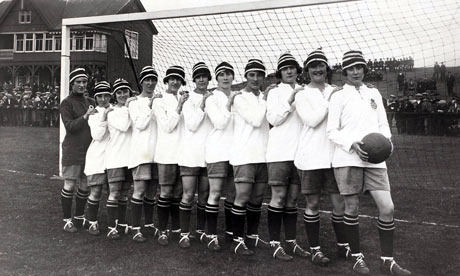
An English women's football team from 1920. Hard to believe the FA banned them for decades!
An English women’s football team from 1920. Hard to believe the FA banned them for decades!

Women’s football saw an increase during World War I and the men were off and fighting. However women’s football received a blow in 1921 when the Football Association (the FA), outlaws the play of women’s games on FA-associated pitches. Despite that, the English Ladies Football Association was formed after the ban was instituted.

It wasn’t just England that looked down upon women’s football. Many other countries would look down too. Once again the stigma of the ‘masculinity’ of the game. Even Brazil had a case where women’s football was growing up to 40 teams in the 1940’s until it too was banned. The ban wasn’t lifted until 1979.

WOMEN’S FOOTBALL  GAINS STRENGTH

You can’t keep the desire down. The FA’s ban on women was eventually dropped in 1971 shortly after the Women’s FA was founded in 1969. In North America while soccer was starting to grow in popularity around the beginning of the 1970’s, girls teams were organized along with boys teams. That may explain why the US and Canada do well. In the 1980’s, women’s national teams were formed like the U.S. team in 1985 and the Canadian team in Winnipeg on Canada Day 1986 (July 1st). Japan became the first country to have a female semi-professional league: the L-League founded in 1989 that still exists today.

A WORLD CUP AND OLYMPIC GOLD EMERGE

As women’s national teams were emerging, FIFA knew they had to do something to encourage the competition but were reluctant to give women their own World Cup. In fact FIFA organized the FIFA Women’s Invitational Tournament in Taiwan in 1988. It was actually a test to see how successful of a competition it would be. Contested over two weeks, it was a success and weeks later, FIFA approved implementing a Women’s World Cup competition.

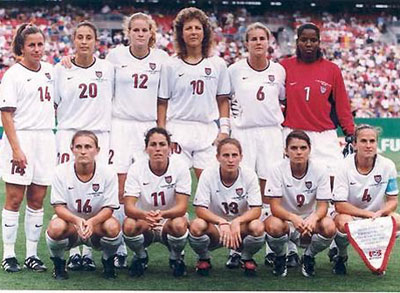
The 1991 US women's World Cup team: the first ever Women's World Cup winners.
The 1991 US women’s World Cup team: the first ever Women’s World Cup winners.

The first FIFA Women’s World Cup was held in China back in 1991. FIFA was still reluctant to call it the World Cup so it was called the 1st FIFA World Championship for Women’s Football for the M&Ms Cup. Twelve countries competed in six venues across the country. Ticket sales were a success with a total of over 50,000–an average of almost 20,000 per match–and the U.S. won the Cup with their teammate Michelle Akers the highest scorer of the tournament with 10 goals.

The success of the 1995 tournament helped paved the way for further World Cup competitions and women’s football being added to the Olympic program starting in 1996. The 1995 World Cup in Sweden however was met with lackluster success as ticket sales were only above 112,000: a sign that women’s football had a long way to go in Europe. Things looked a lot more positive with women’s football contested at the Atlanta Olympics the following year. Despite having only eight teams playing for the gold, ticket sales totaled almost 700,000 including 76,489 for the final which the U.S. won.

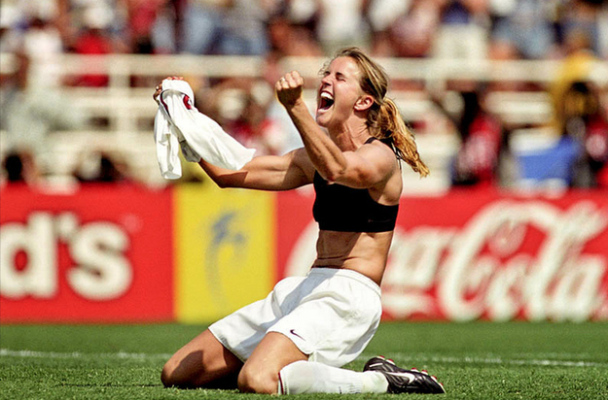
Brandi Chastain's shirtless celebration from USA 1999. One of the most iconic images of the Women's World Cup.
Brandi Chastain’s shirtless celebration from USA 1999. One of the most iconic images of the Women’s World Cup.

It’s no wonder the U.S. hosted the next World Cup in 1999. The U.S. really did an intense job of marketing the event and it paid off. Ticket sales totaled over 1.2 million– more than double that of China 1991 and ten times that of Sweden 1995– and the Rose Bowl Stadium was sold out for both the third-place match and the final for the Cup with 90,185 each.

The Women’s World Cup would have continued success over the years. Even if none of the successive tournaments have broken the attendance record of USA 1999, they’ve still given impressive results such as the 1.156 million who saw games in China in 2007. The 845,000 tickets sold during Germany 2011 showed Europe’s increasing welcoming of women’s football even though the top male continents like Europe and South America still lag behind that of Asia and North America.

PRESENT AND FUTURE

Despite the increase of fanfare and support in women’s football, it’s still lagging behind in terms of parity with the men’s sport. It’s not like tennis, golf, athletics or swimming where female athletes are almost on par with the men. Nor is it like figure skating or gymnastics where the women actually steal the show from the men. There are many countries that still see football as a ‘men’s sport’ and the women are given lackluster attention. There was even a row last week when EA sports video games announced in their FIFA 16 game, women’s players would be included for the first time. There were a lot of sexist tweets on Twitter, overshadowing the 98% of tweets that were positive and welcoming of women’s inclusion in the game.

Nevertheless great strides have been made over the years. Since the 1990’s there have been women’s continental tournaments like the Women’s Euro and the Copa America Feminina. Professional leagues in Europe like the Bundesliga, Premier League and France’s Division 1 have included a women’s league and top men’s team have included women’s braches of their team. England even contests the FA Women’s Cup annually. Women’s football is still supported well with high school teams and NCAA college teams. The MLS has also included female branches of teams. In Brazil, Marta has become a beloved athlete of the country and has even received welcome from other male players like Pele and Neymar whom describes Marta as ‘craque’ (Portuguese for phenomenal).

FIFA also has a special section of their organization focusing on women’s football dedicated to improving the game and its availability to young girls and women around the globe. Every World Cup since 1995 there has been a symposium on women’s football and this year’s symposium is slated for Vancouver from July 3rd-5th. This year FIFA included campaigns such as the Live Your Goals social media campaign through the #LiveYourGoals hashtag. Another FIFA campaign is the ‘No Barriers’ campaign through video commercials. Its goal is to increase the global number of young girls and women playing football form 30 million to 45 million by the 2019 Women’s World Cup.

There’s no question man’s football has no further to go. It’s already universal and the most popular sport in the world. Women’s football is still growing but never before has the future of women’s football looked more ambitious and more promising.

WORKS CITED:

WIKIPEDIA: Women’s Association Football. Wikipedia.com. 2015. Wikimedia Foundation Inc.<Women’s Association Football>

Oxenham, Gwendolyn. “Pele With A Skirt: The Unequal Fortunes Of Brazil’s Soccer Stars” The Atlantic. 4 June 2015<Atlantic Article: Neymar and Marta>

2015 FIFA Women’s World Cup: Group F Focus

Okay. I just have one last group to go. But before I head into it, I’ll give you the links to my other Group reviews for those that missed:

And now here is my last group review for the 2015 FIFA Women’s World Cup:

GROUP F:

France fixed-France (3): France is one team loaded with talent and prowess but still looking for their first big break in a major international competition. The highest ‘Les Bleues’ have ever finished at a World Cup or an Olympics is fourth and they’ve never made it past the quarterfinal of a Women’s Euro.

No doubt they come to this World Cup with something to prove and the hopes of finally proving it here and now. France has been very impressive in their play these past two months. They’ve only lost to the United States. This could be their year.

England fixed-England (6): England is one of those countries that has constantly seen football as a man’s game leaving the women getting the short end of the stick. That was made evident in the 2003 movie Bend It Like Beckham. Things have gotten better as many Premier League teams have their own women’s teams like Everton, Aston Villa, Arsenal, Chelsea and Liverpool to name a few. They even have their own league, the WSL. Heck, even Prince William gave the national team a royal send-off before they left for Canada. However as they improve, so does women’s football as a whole and they struggle to show their greatness. They’ve only gotten as far as the quarterfinals in the World Cup. The ‘Three Lionesses’ did however make the finals of the 2009 Women’s Euro.

Play for the national team has been a struggle in recent years. They failed to advance past the group stage of the 2013 Women’s Euro. They also suffered a blow knowing that there won’t be a Great Britain team for the 2016 Olympics remembering the difficulties getting Great Britain teams were for London 2012. So it’s no wonder they’ll be looking for Canada for glory. They did however win the Cyprus Cup back in March where they beat Canada in the final as well as Finland and Australia. The last eighteen months have also been consistent for England as they’ve won most of their matches, losing only to France, Germany and the U.S. Their reputation can increase after this World Cup which will be a plus because at last year’s World Cup, the men failed to advance past the group stage for the first time since 1958. Trust the girls to give England that well-needed upper.

Colombia

-Colombia (28): Colombia is an emerging nation in women’s football. They competed in their first World Cup in 2011 and they’ve finished second in the last two Copa America Femininas. They even have a berth in the 2016 Olympics upon their second-place finish at last year’s Copa and with winners Brazil automatically competing as host nation.

However ‘Las Cafetaras’ are still relatively inexperienced in terms of international play. The only UEFA team they’ve ever won against is Wales and they’ve never won against Mexico. They have some good talent that even plays in American and European leagues but they still have along ways to go to contend for bigger things. Nevertheless it’s all uphill from here. It would be interesting to see how far they go over time.

Mexico-Mexico (25): Mexico is one team on the move in women’s football. They’ve competed in two previous World Cups and one Olympics. They’ve been runner-up at the CONCACAF Cup twice and medalists at the Pan Am Games three out of four times.

‘El Tricolor’ have a talented line-up with no less than twelve players playing for American or European leagues. This is the team that is most likely to pull an upset as they have drawn against England in their last meeting. Their qualifying chances are very good. They could also progress well but they have a mixed record from the past twelve months. They’ve won against Italy, Czech Republic and Colombia but lost to Canada, U.S., Costa Rica and South Korea. Nevertheless whatever happens in Canada, El Tricolor have a bright future.

MY PREDICTION:

I feel France will take the top spot in this group. I feel England will most likely be second but Mexico could surprise. Mexico will definitely be third at the least.

STADIUM SPOTLIGHT

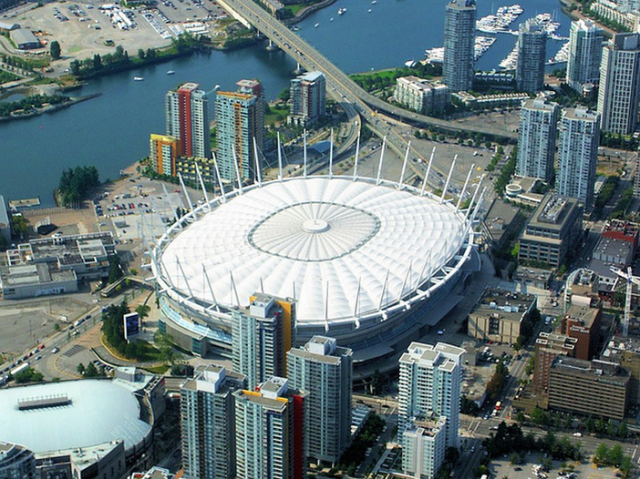
-VANCOUVER: BC Place StadiumBC Place

Year Opened: 1983

World Cup Capacity: 54,500

World Cup Groups Hosting: C,D,

Additional World Cup Matches Contested: Round of 16, Quarterfinals, Final

The stadium was built with the intention of being a highlight during Expo 86.It consisted of a unique air-supported dome until 2010. Highlights of its use have primarily been CFL games and concerts. Noteworthy use in the past include Vancouver Canadians baseball games, the Pope’s visit in 1984, and ceremonies venue for the 2010 Winter Olympics and Winter Paralympics.

Vancouver however has a special liking to the sport of football. BC Place’s first ever event in June of 1983 was actually a soccer match starring the Vancouver Whitecaps who were then part of the NASL. The Whitecaps have had a loyal following over four decades and whatever name changes over the years and their transfer to the MLS five years ago were met with open arms. The Whitecaps have since gone on to be the fifth-most attended team of the MLS. It’s no wonder with this kind of football support Vancouver was easily chosen as a venue for the 2015 Women’s World Cup. One noteworthy item: all the tickets for the final at BC Place are sold out.

And there you have it. My last Women’s World Cup group review. More WWC blogs to come like my experience at the Trophy Tour, tournament analyses and my own experience at a Round of 16 game (Yes, I have a ticket!). The Cup all beings in Edmonton on Saturday the 6th!

2015 FIFA Women’s World Cup: Group E Focus

I’m sure that when some of you hear me talk about a controversy about this World Cup, it’s about the recent bombshell about the arrests of FIFA members. It’s not. I’m going to save that for another blog just like I’m saving the topic of women’s football for a separate blog. In this blog, here’s my review of Group E with another stadium focus and another issue focus:

GROUP E:

Spain Fixed-Spain (14): This will be Spain’s first Women’s World Cup. Spain’s women are relatively inexperienced to  major competition. They’ve never played in an Olympics before either. Nevertheless ‘La Roja’ do have some accolades like a third-place finish at the 1997 Women’s Euro and a quarterfinals finish at the last one in 2013. They’ve also had an impressive play record in the past two years with only a single loss to Norway in 2013 and wins against Italy, the Czech Republic and Belgium. Spain may just be a future power in women’s football.

Brazil-Brazil (7): When women’s football started making a name for itself in the 1990’s, it was North America and Asia that were the leaders. Countries from South America and most European countries still thought of football as strictly a man’s game and had lackluster women’s teams to show for it. Since then the continents have been taking women’s football more seriously. If there’s one country that has shown the most progress, it’s Brazil.

The Brazilian men without a doubt have the biggest legacy of any football country. The Brazilian women have really made strides to become one of the best in the world these last 15 years. They were finalists at the 2007 World Cup and achieved 3rd place in 1999. They also have two Olympic silver medals and have won the Copa America Feminina all but once. They even produced a player that can be called ‘The Female Pele,’ Marta, with five FIFA Women’s World Player Of The Year awards.

Even though Brazil has become one of the best in the last couple of decades, they still have some noticeable ‘weak spots.’ For starters, they’ve never won against England or France. Secondly, they lost to Germany twice this year. Nevertheless Brazil has been impressive these past twelve months. They’ve ties the U.S. and they’ve had wins against China, Sweden and Switzerland. Canada will be both another proving point for Brazil and a learning experience for Rio 2016.

Costa Rica-Costa Rica (37): Another of the two debut teams of this Group E. True, Costa Rica have never played in a world Cup or an Olympics before but they are a team whose cred is growing slowly but surely. They’ve been impressive during the CONCACAF Women’s Gold Cup with three semi-final finishes and were finalists at the last one in 2014.Despite their lack of experience on the world stage, they do have a promising team with four players playing for either American professional teams or American colleges.

I know I’ve talked a lot about countries here to learn. We shouldn’t forget women’s football is still growing, especially in continents where play has been denied a lot in the past. We should keep in mind Costa Rica is the first Central American country to qualify for the Women’s World Cup. Like the other ‘learning’ teams, Costa Rica really has nothing to lose and everything to gain.

Korea-South Korea (18): South Korea’s men are the tops of Asian countries in football. South Korea’s women have long been relegated to second-fiddle to China and Japan but they’re seeking to improve over the years. They’ve never qualified for an Olympics and they’ve made only one previous World Cup appearance back in 2003. However they have some accolades of their own like four semi-final finishes at the AFC Asian Cup and bronze medals at the last two Asian Games.

Their play has been 50/50 this year as they beat Russia and tied Belgium but lost to Canada and Scotland. 2015 should help boost the team for a brighter future.

MY PREDICTION: I predict Brazil to win Group E with South Korea coming in second. Third-place was a tough prediction. I predict Spain, based on their experience. Mind you anything can happen.

STADIUM SPOTLIGHT

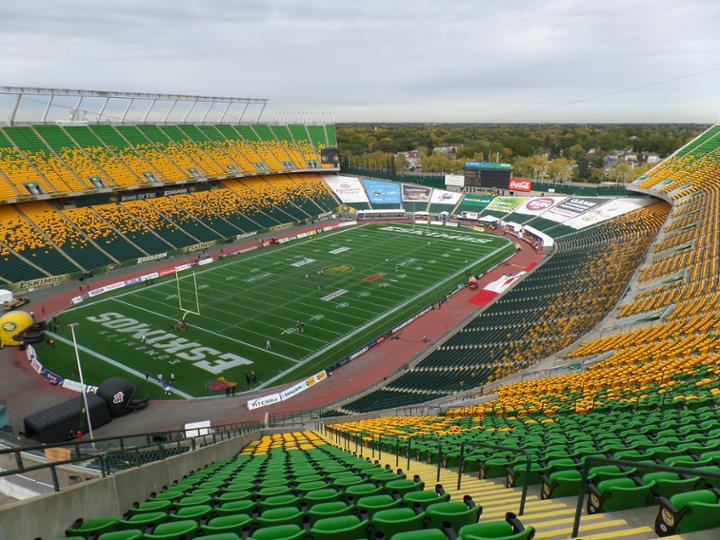
-EDMONTON: Commonwealth StadiumEskimos

Year Opened: 1978

World Cup Capacity: 56,302

World Cup Groups Hosting: A,C,D

Additional World Cup Matches Contested: Round of 16, Quarterfinal, Semifinal, Third-Place

The Stadium was opened in 1978 in time for the Commonwealth Games Edmonton hosted. Since then it has served as the venue for the Edmonton Eskimos football team and occasionally the FC Edmonton soccer team. The Stadium is the biggest of the six hosting matches for the FIFA World Cup which explains why Canada’s first two Group Stage matches will be held here. The stadium has undergone two renovations: the first in 2001 in time for the World Athletic Championships which included a new scoreboard, an enlarged concourse and a new track. The second in 2008 which experienced a reconfiguration and a turf replacement. Outside of their main sports teams, the stadium has hosted many concerts and has also hosted many soccer friendlies for both Canada’s men’s and women’s teams.

THE TURF ISSUE

The World Cup may be building in excitement but hard to believe a year ago there was a controversy brewing with threats of boycotts. The reason was because all six stadiums will be using some form of artificial turf. why does it matter? Many believe artificial turf makes players more prone to injuries. 50 players protested the use of turf on the basis of gender discrimination. Seems odd to me to think that getting them to play on turf is a form of discrimination. Keep in mind it’s FIFA regulation that the men’s World Cup matches all be contested on grass.

There was even a lawsuit claiming FIFA would never have the men play on ‘unsafe’ artificial turf and is a violation of the Canadian Human Rights Charter. The suit filed in October 2014 in Ontario even pointed how FIFA demanded stadiums in the United States to replace the artificial turf with grass even if it meant extra millions in expenses. The lawsuit had supporters like Tom Hanks, Kobe Bryant and U.S. men’s team goalkeeper Tim Howard. FIFA’s head of women’s competitions Tatjana Haenni made it firm: “We play on artificial turf and there’s no Plan B.” The lawsuit was eventually dropped in January of this year. All the stadiums have kept the turfs they had.

Despite its firm stance, FIFA has not hesitated to discuss the issue. In fact FIFA.com did an interview with Professor Eric Harrison. Harrison, who was assigned by FIFA to inspect the pitches of the six stadiums between September 29th to October 8th of last year, was given a Q&A about his findings, the various football turfs and even injury rick. He gave his answers on why Canadians stadiums have artificial turf (Canada’s extreme weather conditions), the various turfs classified by FIFA and if there’s any difference int he frequency of injury (Harrison claims there’s no real difference). For the complete interview, click here.

And there you go. My focus on Group E and bonuses. That only means one last group to review. Coming Sunday.

WORKS CITED:

FIFA.com Staff. “Harrison: Football Turf is Integral to Canada 2015” FIFA.com. 23 October 2014<http://www.fifa.com/womensworldcup/news/y=2014/m=10/news=harrison-football-turf-is-integral-to-canada-2015-2461003.html>
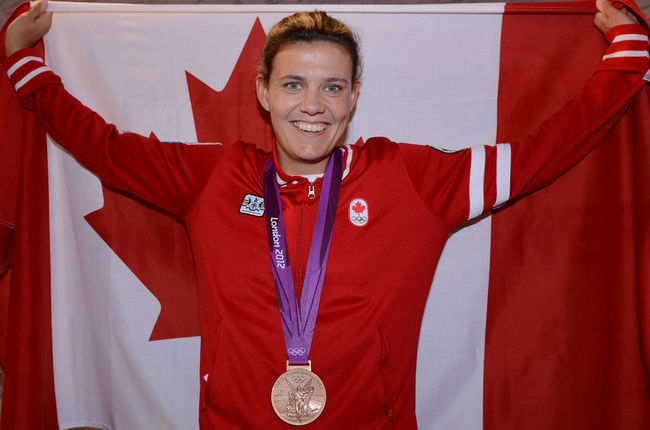
WIKIPEDIA: 2015 FIFA Women’s World Cup. Wikipedia.com. 2015. Wikimedia Foundation Inc.<http://en.wikipedia.org/wiki/2015_FIFA_Women%27s_World_Cup>

2015 FIFA Women’s World Cup: Group D Focus

You’re probably wondering how do the berths at this World Cup get decided? Firstly, the number per continent is decided by FIFA. Often the continents with more berths have better prowess in women’s football. You’ll notice as North America and Asia have a bigger presence than at the men’s World Cup. So here’s the continental breakdown of the 24 berths at this year’s World Cup:

  • Host Nation – 1
  • North and Central America, Caribbean countries under CONCACAF- 3
  • Europe or UEFA-Allied countries – 8
  • Africa or CAF-allied countries – 3
  • Asia or AFC-allied countries – 5
  • South America or CONMEBOL-allied countries – 2
  • Oceania countries under the OFC – 1
  • CONCACAF/CONMEBOL playoff – 1

That’s how FIFA sets the Women’s World Cup for an even distribution among the continents. Now that it’s all explained, here’s the latest group in review. Funny thing is that it’s already being called a ‘group of death’ because of how all four teams have significant cred to themselves. Heck, what do three teams in the FIFA Top 10 tell you about this group? Without further ado, here’s my review, along with another stadium focus and a bonus where you can have a ball:

GROUP D:

USA-United States (2): There’s no doubting the legacy the United States have in women’s football. While the men struggle to make it past the Round of 16, the   U.S. excel like no other country having won two World Cups–they’ve never finished worse than third at a Women’s World Cup– and Olympic gold in four of the five Games women’s soccer has been contested. They’ve churned out legends of their sport in the past like Kristine Lilly, Mia Hamm, Julie Foudy and Brandi Chastain and they continue to churn out current greats like Christie Rampone, Abby Wambach, Megan Rapinoe and Hope Solo.

The U.S. may excel like no other country but they’re not invincible. 1999 is the last year the women have won a World Cup. Even play this past year has shown their imperfections as they’ve lost to Brazil and France and tied against China and Canada. They’re not even guaranteed to finish top of their group as they lost to Sweden in their last meeting with them March of last year. Remember that they lost to Sweden in the Group Stage of Germany 2011. Even though Coach Jillian Ellis is hoping to lead them to their first World Cup in sixteen years, she will acknowledge this will be a tough group. If they’re all together here in Canada, they can do it. They do have what it takes.

Australia-Australia (10): You know how the men are called the ‘Socceroos?’ The women are called the ‘Matildas!’ Australia’s women have competed in all but the first World Cup. They had very good success under the OFC as they competed in two Olympics and even earned a 5th place finish in 2004. Switching from the OFC to the AFC have helped them in terms of World Cup play as they were able to qualify for the quarterfinals for the first time back in 2007 and win the Asian Cup in 2010.

Australia is looking for its first big breakthrough on the world stage. However it will have to come with a fight. They’ve been playing very well against Asian teams but have struggled against teams from outside the AFC such as a 3-0 loss to England back in March. Their group chances also look questionable as they’ve lost their most recent meetings against Sweden and the U.S. and they’ve never played Nigeria before. Whatever the situation, this World Cup could be either new glory for Australia or another learning experience for the future.

Sweden Fixed-Sweden (5): If there’s one team that can prevent the U.S. from finishing atop Group D, it’s Sweden. They beat the U.S. in their last meeting. They also have a reputation of their own to match. Sure, their best Olympic finish is fourth and sure, Germany has hoarded all but one of the Women’s Euros. However they have finished in the Top 3 at three World Cups including third in 2011 and they’ve had many second and third place finishes at the Women’s Euro.

They’ve had a good play record since the least World Cup but it has been imperfect. This year they’ve had wins against Germany, China and Norway but they’ve also had losses to Germany, Brazil and Switzerland. Whatever the situation, Canada will be another proving point for them. They could just emerge the winners if they play right each time.

Nigeria-Nigeria (33): Nigeria is one of only seven teams that have competed at ever Women’s World Cup. Clinching the African berth is a cinch for them. Just as the men have possibly the most illustrious success among African football teams, the women are consistently tops of Africa too. They’ve won the CAF Women’s Championship all but twice. They’ve even made the quarterfinals of both a World Cup and an Olympic Games once before.

However Nigeria has the difficulty of being in the toughest group. Yes, they have a good reputation but this is a tight group and they know they will have to be very tough against the U.S. and Sweden because they’ve beaten Nigeria very often in the past. One advantage is that they’ve never played Australia so that game can be a proving point for them. Whatever happens in Canada, I’m sure it will be a benefit to the Nigerian team either as a plus to their reputation or as an opportunity to learn more.

MY PREDICTION: This is the hardest group to decide all the places. First and second will be a toughie. I’ll take a risk and predict Sweden to finish first and the U.S. to finish second. I expect third to go to Nigeria. Predicting third was a toughie too.

STADIUM SPOTLIGHT:

-OTTAWA: Lansdowne StadiumOttawa

Year Opened: 2014

World Cup Capacity: 40,000

World Cup Groups Hosting: B,E,F

Additional World Cup Matches Contested: Round of 16, quarterfinals

Talk about name changes. The stadium was first named Frank Clair Stadium, then chanced to TD Place Stadium and will be known as Lansdowne Stadium due to FIFA’s orders.

The actual playing field dates back to the 1870’s. The first event stands were added in 1908. Lansdowne Park has gone through numerous ramps and revamps over time. It had played host to Ottawa’s CFL teams and college football teams as well as many concerts. However it wasn’t until September 2007 when the lower-south side was showing cracks in the concrete that it was clear a new stadium was needed. Unfortunately it could not be done until there were plans to return a CFL team to Ottawa; Ottawa lost their CFL team in 2005. An agreement was reached in 2008 to have a new CFL team for Ottawa once a new stadium was created. The ‘Design Lansdowne’ program was launched to construct a new stadium over Lansdowne Park. By July 2014, the stadium was completed and Ottawa was ready to welcome their new CFL team, the RedBlacks, in July. The new stadium is also home to Ottawa’s NASL team Ottawa Fury.

BALL FOR THE WORLD CUP: CONEXT15conext15

We see it every men’s World Cup. Adidas doesn’t just simply launch a ball specific to the World Cup for the sake of a nice design. It does so with the hopes of adding a new technological innovation to the football. You don’t hear of the football for the Women’s World Cup adding an innovation to the football. However it will be the case for the Conext15.

The Conext15 features a new design inspired by the three elements of nature: earth, wind and fire. The flowing green, red and blue design will reflect the perfect balance of the three natural forces. It will include many elements from the Brazuca, the ball from the 2014 World Cup, but will have an innovation of its own: designed for never-before-seen power, swerve and control. Its structural innovation is a unique symmetry of six identical panels alongside a different surface structure that provides improved grip, touch, stability and aerodynamics on the pitch. Guaranteed to be more player-friendly than the Jabulani of 2010, that’s for sure.

And there you go. My review of Group D and many more WWC bonuses. Just ten days to go and two more groups to review.

WORK CITED:

Byrne, Bryan. “Official WWC Match Ball Released – Adidias Conext15” Soccer Cleats 101. 5 December 2014<http://www.soccercleats101.com/2014/12/05/official-wwc-match-ball-released-adidas-conext15/>

2015 FIFA Women’s World Cup: Group C Focus

I think Group C will be the hardest group to make predictions for. Why? Because none of the teams have ever played each other in the past. I think the fact that Japan is the only country here who’s played in a past World Cup may have a lot to do with it. For these predictions, I had to rely on stats involving past achievements and recent play results. So without further ado, here are my Group C predictions along with my latest stadium focus and a bonus feature:

GROUP C:

Japan-Japan (4): What can I say? Japan have been at every Women’s World Cup since it began in 1991. Japan are also defending Cup champions. The win of the Cup was definitely an upper for Japan since the only other World Cup they were able to make it past the Group Stage was back in 1995. They’ve also won the Olympic silver medal in 2012 and their first ever AFC Asian Cup in 2014. Much of it has to do with the football boom in Japan over the past 25 years. Before that, Japan didn’t have much interest. Over time the sport has boomed thanks to the big success of the J-League for men and the L-League for women.

Their chances of winning again here are quite good. I cannot see any other team in Group C that could rob them of a 1st place finish. It’s questionable once they move into the knockout rounds. They have had a lot of good wins in this past year but they’ve also endured losses to France, Denmark and North Korea. Canada’s the stage for another chapter for the team.

Switzerland-Switzerland (19): This is not only Swizerland’s first ever World Cup. This is their first ever major international tournament. They’ve never qualified for an Olympic Games or even a Women’s Euro in the past. No doubt they’re looking to this World Cup to make a name for themselves. Already they’ve shown signs of coming of age. Last May they had their biggest win ever: against Malta 11-0. Although I don’t think they’ll win, I feel they’ll fare well. Switzerland has some players who play for women’s teams of the Bundesliga and that will be an advantage here.

Cameroon-Cameroon (53): This may be Cameroon’s first ever World Cup but they’ve already been developing a reputation for themselves. They competed at the 2012 London Olympics and they’ve been runners-up three times at the CAF Women’s Championship including last year. However women’s soccer in all of Africa is still growing and learning. Nevertheless I feel Cameroon will fare well due to their past experience and the fact some of their players are playing in European leagues, especially France. Cameroon have a lot to learn and a lot of talent to deliver.

Ecuador-Ecuador (48): Ecuador was lucky to host the 2014 Copa America Feminina. It sure helped them as they finished third thanks to a 3-2 win over Argentina in the final Copa America game and winning the playoff against Trinidad and Tobago thanks to a last-minute goal. Ecuador, like most of South America, have just started to accept women’s football in recent years. Like Cameroon and Switzerland, this World Cup will be a learning experience for Ecuador no matter how they finish.

MY PREDICTION: Without a doubt, Japan will win the group. The rest of the spots will be harder to predict. I will predict Switzerland for second and Cameroon for third. I chose Cameroon because they have more international experience including an Olympic appearance.

STADIUM SPOTLIGHT:

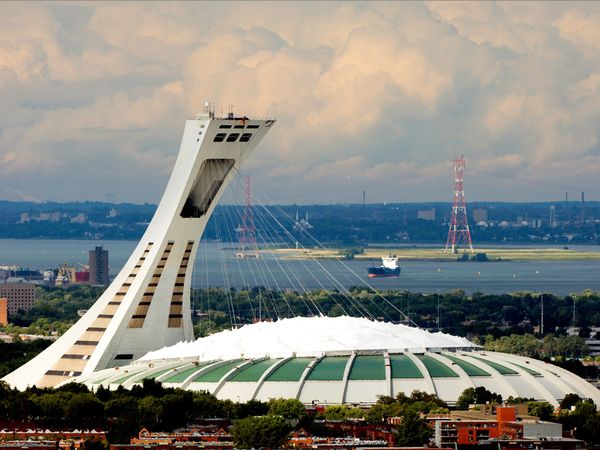
-MONTREAL: Olympic Stadiummontreal

Year Opened: 1976

World Cup Capacity: 61,004

World Cup Groups Hosting: E,A,F

Additional World Cup Matches Contested: Round of 16, Quarterfinal, Semi-final

Us Canadians are very familiar with Montreal’s Olympic Stadium. The whole stadium–roof, tower and all– was to be completed by the 1976 summer Olympics. However construction problems and budget problems caused its delay leaving the Olympics with a stadium but no tower or roof. The Olympic left Montreal with such a debt the roof and tower didn’t get completed until 1987.

Since then, things have had easier moments in the early decades. After the Olympics, the Stadium became the main home of the CFL football team Montreal Allouettes and the MLB baseball team Montreal Expos. However ever since the Expos moved to Washington, D.C. in 2004 and since the Allouettes moved to a new stadium and use this one part-time, they’ve lacked a full-time tenant. The venue still does host the CFL’s Grey Cup and host bigger games for the Montreal Impact of the MLS. The venue hosted the visit of Pope John Paul II when he came in 1984 and has hosted many large concerts.

BONUS – MEET THE MASCOT: SHUEME

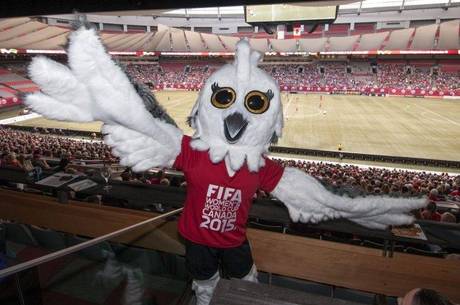
Shuéme, a Great White Owl, is the mascot for the 2015 FIFA Women's World Cup.
Shuéme, a Great White Owl, is the mascot for the 2015 FIFA Women’s World Cup.

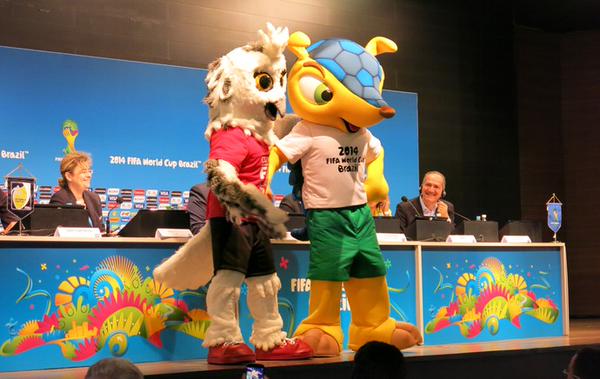
Shuéme (pronounced shwe-MAY) was first unveiled on June 17, 2014 at the Canadian Museum of Nature in Ottawa introduced by Laureen Harper, wife of Prime Minister Stephen Harper. She would also make an appearance in Brazil last year during the men’s World Cup where she was greeted warmly by Brazil mascot Fuleco and Brazilian football player Marta. She has made many appearances since including the World Cup Group Draw in Ottawa back in December and has toured the country promoting the World Cup event.

Shueme was warmly greeted by Fuleco in Brazil during the Men's World Cup last year.
Shueme was warmly greeted by Fuleco in Brazil during the Men’s World Cup last year.

Shuéme is a great white owl: a bird common to Canada. In fact the name Shuéme is based off the French word for owl: ‘chouette.’ Her name pays tribute to the bilingualism, multiculturalism and inclusiveness of Canada. She was inspired by the strength and the elegance of the game. Her colors inspire peace and fair play while her hair exudes self-confidence and pride. Her contours denote her ability to grace under pressure and her wings and tail provide precise control and agility needed to play the game well. No doubt Shuéme will make appearances at all the games in Canada and make a good impression at the World Cup.

And there you go. My review of Group C. I’m already at the halfway point. Just three more groups to go.

WORK CITED:

VanCity Buzz Staff. “Meet Shuéme, the FIFA Women’s World Cup 2015 Canada Mascot” VANCITY BUZZ. 16 July 2014<http://www.vancitybuzz.com/2014/07/meet-shueme-fifa-womens-world-cup-2015-canada-mascot/>

2015 FIFA Women’s World Cup: Group B Focus

Oh man. If I would have known that yesterday as Woman’s Football Day, I would’ve posted this blog yesterday. Well the start of the Women’s World Cup is getting closer and closer. With it the excitement is building. I just walked into a local grocery store and I saw a display of soft drink cases saluting Team Canada. So upon the building excitement, here’s my look at Group B:

GROUP B:

Germany fixed-Germany (1): Germany is like a lot of European countries that’s just slowly starting to accept women’s football. Actually Germany’s more welcoming than most and with good reason. As you know, Germany’s men, The Mannschaft, are on top of the world right now. Germany’s women, the Nationalelf (National Eleven), have a legacy of their own too. They’ve won two World Cups in the past and have won all Women’s Euros except the inaugural in 1993. They’ve even won FIFA’s Women’s Player of the Year these past two years: Nadine Kessler in 2014 and Nadine Angerer in 2013. However they have some imperfections of their own. One is that they’ve only won three Olympic bronzes. The second is that they hosted the last World Cup and were ousted in the quarterfinals on penalty kicks. Penalty kicks? The German men are penalty kick aces with a near-flawless record! That loss also meant they missed qualifying for the Olympics for the first time ever.

However the team really wants to have this World Cup as the one where they can rebound, if not win. The team consists of many members of female teams of the Bundesliga. Yes, the Bundesliga is one of many football leagues that includes female teams: 12 in total. The team looks like they have a very good chance to come out on top. Norway may be its closest threat to take #1 from them. As for winning the Cup, their chances look good too but they’re not perfect. These past twelve months they’ve had wins against Sweden, China, Brazil and England. However they’ve also had losses to Sweden and France. Canada’s the proving point. They have what it takes to win again but they have some weak spots. They will have to rise to the occasion.

Ivory Coast-Ivory Coast (67): The Ivory Coast is another one of the eight newbies at this World Cup. The men have already made a name for themselves with three world Cup appearances and churning out big names like Didier Drogba and Yaya Toure. The women hope to follow in their footsteps. They’ve already won a bronze at last year’s CAF Women’s Championships. However it will be hard for me to predict how well they’ll do in the Group Stage since they’ve never played any of the other three countries before. Whatever happens will be a big learning experience for the team.

Norway-Norway (11): Norway is another country that could easily be dismissed as a ‘blast from the past’ in women’s football. Winners of the 1995 World Cup and having won the only Olympic gold not won by the U.S.: back in 2000. They were definitely top when women’s football was starting to emerge but they’ve faded since. Failing to qualify for the 2004 and 2012 Olympics and being ousted in the Group Stage at the last World Cup. However they have shown signs of making a comeback. They were finalists at the last Women’s Euro back in 2013. Here in the Group Stage, Germany looks to be the only team that can beat them and even they have the ability to surprise Germany. Canada is the stage where they seek to redeem their reputation.

Thailand-Thailand (29): Thailand is one country which has never landed a men’s team at the World Cup but has landed a women’s team. And for the first time this year. It’s hard for me to predict how well Thailand will do in the Group Stage. The only team they’ve played before was Norway and that was all the way back in 1988. However Thailand has been impressive in their play over the past year. Sure they’ve mostly played Asian teams but they’ve delivered some very impressive wins even though they’ve also lost to China, South Korea and the Netherlands. Like the Ivory Coast, Thailand will also have a learning experience here as this will be their first World Cup.

MY PREDICTION: Without a doubt, Germany will come out on top in this group. Norway will definitely be second. Third will be a hard guess as both Ivory Coast and Thailand lack international experience. I’ll go with Thailand because of their impressive play in friendlies these past few months.

STADIUM SPOTLIGHT:

Moncton Stadium-MONCTON: Moncton Stadium

Year Opened: 2010

World Cup Capacity: 20,000

World Cup Groups Hosting: B,E,F

Additional World Cup Matches Contested: Round of 16

Of all the six stadiums that are hosting this year’s World Cup, this is the only one that is not a host site for a CFL team. Moncton was included as a host city for one of two possible reasons: either to include participation of a maritime city in the Cup or because Toronto couldn’t be a host city as they’re busy preparing for the Pan American Games later this summer. Whatever the situation, it’s good to have Moncton. This stadium was originally planned to have 28,000 seats in hopes of attracting a CFL team. Instead it was reduced for 10,000 for the current needs of a local football team. It has hosted the World Junior Athletics Championships and three CFL Touchdown Atlantic Games where expansion to 20,000 proved to be successful.

And there’s my focus on Group B. Group C is next and it’s coming hopefully Tuesday.

2015 FIFA Women’s World Cup: Intro and Group A Focus

Canada will host the sixth edition of the FIFA Women's World Cup.
Canada will host the sixth edition of the FIFA Women’s World Cup.

The FIFA Women’s World Cup is coming and Canada is to be the host nation. This is to be an exciting time for both the country and the sport of women’s football.

This marks the first time Canada has ever hosted a World Cup. Canada has hosted past soccer tournaments for FIFA like the 1987 U-16 World Championships, 2002 U-19 Women’s World Championships, 2007 Men’s U-20 World Cup and last year’s U-20 Women’s World Cup. It’s up to the challenge. And a new challenge for the Women’s World Cup as this year the number of competing teams have been expanded from 16 to 24.

Throughout the next two weeks, I will be doing an analysis of each first round group and even making judgments on who I think will come out on top, come second and even come third. I don’t think I’ll predict the wildcard advancers as that will be too tricky. I’ll just limit to a third-place prediction. The number in brackets below is the FIFA Women’s Ranking for May 2015.

GROUP A:

Canada

Christine Sinclair will captain possibly Canada's greatest women's soccer team ever. They already have an Olympic bronze to their feats.
Christine Sinclair will captain possibly Canada’s greatest women’s soccer team ever. They already have an Olympic bronze to their feats.

-Canada (8): The Women’s World Cup is where Canada can show off its football prowess. Our men have only qualified for a single World Cup all the way back in 1986 which leaves us cheering for whoever during the World Cup; most of the time the country of our ethnic background. As for our women, the only World Cup they didn’t qualify for was the inaugural one back in 1991. Canadian women have an impressive resume of their own such as two CONCACAF Championships and an Olympic bronze medal from 2012. In fact their bronze was Canada’s favorite memory of those Olympics. Even I remember the excitement I felt and even referred to them as ‘our girls.’ Naturally so since soccer is probably the team sport in Canada with the most female participation. Even more than hockey. In fact this World Cup should make Canada proud as it is one nation that has one of the best instances female participation in soccer. Heck, our female stars like Christine Sinclair and Melissa Tancredi are bigger household names than our male stars!

However it’s not to say the women are looking for their own World Cup glory. This may be our sixth World Cup but Canada has only advanced past the Group Stage once back in 2003 where they finished fourth. In fact Canada lost all three of their Group Stage matches at the last World Cup back in 2011. Things changed after Canada recruited English coach John Herdman after he finished coaching New Zealand. After that, he helped guide Canada to gold at the Pan American Games and the bronze in London.

Canada’s chances to qualify to the knockout rounds are not only great but they also have good chances to come out on top. They beat China in their last game. They’ve won against New Zealand in six of their ten meetings and won against the Netherlands in ten of their eleven meetings. They also look good to win their Round of 16 match but things look to get tougher around the quarterfinals. Nevertheless this World Cup is anyone’s game. Women’s football has progressed to the point that there are now many equals at the top rather than one to rule them all. Canada could just provide the surprise.

China-China, People’s Republic of (16): Is it too soon in women’s football to call China a ‘blast from the past?’ It’s easy to dismiss it as one. The ‘Steel Roses’ have an Olympic silver medal from its first Olympic contest in 1996 and were runners-up to the Cup in 1999 where they lost to the US on penalty kicks. China hosted the World Cup twice during the very first in 1991 and in 2007. However they had a recent setback when they did not qualify for either the 2011 World Cup or the 2012 Olympics. Even their dominance of the AFC Asian Cup in the 90’s have faded and even finished out of the medals for the first time back in 2010. Nevertheless China are determined to comeback. They had good moments such as beating many top Asian teams last year and even winning against Argentina 6-0. However Argentina was their last win back in December of 2014. Right now it’s safe to say China’s in comeback mode but it will take a lot of effort for them to come back. A lot has changed in women’s football since their glory days of the 90’s.

NZL-New Zealand (17): How ironic is it that John Herdman’s team from the last World Cup is pitted against Canada in the Group Stage? This will be the fourth World Cup for the ‘Football Ferns’ however they have yet to establish themselves. They have not made it past the Group Stage in their three appearances. They haven’t even won a World Cup game yet. They did make it to the quarterfinals at the London Olympics showing improvement already. This World Cup looks to be one where the women want to show how much they’ve improved. They may have had recent losses to the bigger countries like the U.S., Japan, France and Norway but they have tied Brazil and Spain and even won against Denmark. This World Cup is another proving point for them. Also with the potential of three teams from each group advancing, chances look better than ever.

Netherlands Fixed-Netherlands (12): The Netherlands is one of eight teams competing in their very first World Cup here in Canada. The women, whom like the men are also called ‘Oranje,’ do not have a legacy but they have developed a reputation in recent years. In 2009, they qualified for their first-ever Women’s Euro and finished third. Even though they still lack the experience of the other three teams in Group A, they should look at this as a learning experience. It’s even possible the Netherlands will be a top challenger in the future. They could even cement their name here. They have never won against Canada and have more losses than wins against China and New Zealand but they have won their most recent meetings with both teams. Netherlands could pull an upset.

NOTE: This Women’s World Cup will act as a meet for European teams to earn berths for the 2016 Summer Olympics. The top three European teams here qualify for Rio.

MY GROUP PLAY PREDICTIONS:

This looks to be Canada’s best World Cup. The team looks in good shape, especially with Christine Sinclair as captain. I strongly believe they’ll come out on top. It’s harder to predict second or third. It can go to any of the other three. For this group, I predict China to be second and the Netherlands to be third.

STADIUM SPOTLIGHT:

Okay, just like I did with the men’s World Cup from last year, I will again do a Stadium Spotlight.  One good thing about this World Cup is you remember how during last year’s men’s World Cup the groups were ‘scrambled’ across stadiums during the group play? The women’s are more organized as the teams of all six groups will be allocated in the same stadium during their first two games. It’s only the third game for all teams where they’ll go to a different stadium. The other good thing about this World Cup is that no new stadiums were required to be built. Whatever new stadiums build or renovated were done so for the sake of its current purposes. Only two stadiums are less than five years old. And the first of the two will be focused in this blog:

WINNIPEG: Winnipeg StadiumWpg Stadium

Year Opened: 2013

World Cup Capacity: 40,000

World Cup Groups Hosting: A,B,C,D

This stadium was actually opened just two years ago. It was needed because the 50+ year old Winnipeg Stadium was long past its prime. Actually it was to be opened in 2012 but construction delays pushed opening to the following year. The stadium, which is actually anmes as the Investors Group Field, is home to the Canadian Football team Winnipeg Blue Bombers and will actually host the Grey Cup in November this year. The new stadium was also the stage for concerts by Taylor Swift, Paul McCartney, Beyonce and Jay-Z and have One Direction coming in July. They even held their first soccer match in May 2014: a women’s match of Canada vs. the U.S.

And there’s my first preview of the 2015 FIFA Women’s World Cup. Five more preview blogs to go before it all begins Saturday June 6th in Edmonton’s Commonwealth Stadium.

World Cup 2014: Now That It’s All Over

Netherlands v Spain: 2010 FIFA World Cup FinalOkay, the 2014 FIFA World Cup in Brazil ended two weeks ago. After 64 matches over a total of 32 days, the winner of this year’s Cup has been determined and crowned. Meanwhile there were a ton of surprises, delights, disappointments and shocks along the way. With it over, the 32 teams had their experience for another tournament with Germany coming out as the winner.

The German players are of course celebrating with the whole country. All the players however are now taking a break from their international teams and are mostly focusing on the upcoming club play. But the crazy thing about the end of the World Cup is the reminder that the next one is four years away. And the focus shouldn’t begin the year before the World Cup begins but as soon as international team play resumes again, like as early as this September.

Anyways here are my cheers, disappointments and neutrals for this year’s World Cup teams. Also I may offer some unprofessional advise of my own for them for World Cup 2018:

World Cup Winners

CHEERS:

Germany- Germany did it! After 24 years, they found themselves back on top with their fourth World Cup. Germany owes its success to a restructuring of its program following their disappointing Group Stage exit during Euro 2000 with innovative focusing on their youth system. It has obviously paid off, and with a team full of young players. Nine of which including five-time goal scorer Thomas Muller were under the age of 25. Germany has an additional 12 players under 25 that have been called up to represent Germany internationally in the past twelve months. So there’s no doubt that Germany has a future in football.

This comes especially handy as World Cup captain Philip Lahm has announced his retirement from international play and 36 year-old scoring sensation Miroslav Klose has left a big question mark for World Cup 2018. Another recent question mark is coach Joachim Loew announcing his plan to step down as head coach of Germany after Euro 2016. Whatever the situation, it’s going to take the same team unity that gave Germany its success here in Brazil. Yes, they have the Cup now and they should celebrate but the celebrating will have to stop soon and they will have to get their team focus back. Let’s not forget rival countries could be copying Germany’s success method soon to give themselves their own success. Four years may come sooner than you think.

Argentina- Most teams believe you should only truly be happy if you win the World Cup. Argentina may have won it twice before but they should also be happy as this is only their fifth time ever in a World Cup final. The disappointment of not winning the Cup will bite for a while but Argentina and all thirty other teams that didn’t win the Cup will have to focus again. Coach Alejandro Sabella announced the day before the World Cup final he would step down as coach of Argentina. Nothing whether it be of Sabella’s resignation or a successor signed on has been confirmed as of yet. A successor will have to be found in time before international play resumes, with a September 3rd friendly rematch of the World Cup final in Dusseldorf.

The line-up will also be in question. The youngest player of Argentina’s World Cup roster, Marcus Rojo, was 24. Sure veterans like Gonzalo Higuain, Lionel Messi, Sergio Romero and Angel di Maria look like they may be strong enough to play for World Cup 2018 at ages 30-31 but Argentina will have to look to its younger talent for its future and especially pay close attention to their national age-group teams for potential rising stars if they want to win in Russia.

Netherlands- They didn’t make it to the final this time around. Nevertheless this is a big improvement from a team that in recent World Cups have become to be known as the Dirty Dutch. Back in 2006, their Round of 16 match against Portugal resulted in the most carded game in World Cup history with sixteen yellow and four red cars between the two teams. Then in 2010, the Dutch again made World Cup infamy by helping make the final between Spain to be the most carded World Cup final ever with fourteen yellow cards and one red. Even I considered it the ugliest World Cup final I’ve ever seen. This year, the Dutch did amass eleven yellow cards in total but no red. Also none of their matches resulted in more than six cardings. Quite the difference.

This World Cup they not only had to focus on their play behavior but also on their world ranking. We should remember the Netherlands had a big disappointment in Euro 2012 with losing all their Group Stage games. They did the right thing in hiring Louis van Gaal. However van Gall has since resigned and has brought back Guus Huddink who led them to the 1998 semifinals. We’ll see how that works out in the future.

Colombia- Here in 2014, Colombia finally had its breakthrough with its best ever performance, breaking through to the quarterfinals for the first time. Extra icing on the cake was James Rodriguez being the only player at the Cup to score six goals. Excellent since the team is full of young talent including six players born in the 1990’s. Colombia has a lot of potential to go further in the future but it’s going to take the right guidance and the right team chemistry in the future. However coach Jose Pekermans should now congratulate himself for a job well-done and a Colombian comeback well overdue.

Costa Rica- Hands down Costa Rica was the Cinderella team of the tournament. The World Cup ‘minnows’ that went further than anyone expected. Their Cinderella success however should not be dismissed as luck. They were in the toughest of the eight groups being paired up against past World Cup winners like Uruguay, Italy and England and they came out on top without a loss and leaving the others wondering what went wrong. They followed it up with a Round of 16 win against Greece on penalty kicks after a 1-1 draw and even bringing the Netherlands to a scoreless draw in their first-ever quarterfinals before losing on penalty kicks. So a team from a small country in Central America is deserving of nothing short of respect, especially for proving itself a tough adversary to some of the biggest powers in football. The future looks very good since six of the players are under 25. However recent news is that Jorge Pinto has stepped down as head coach. We have yet to see if Costa Rica can take it as far, if not further, with a new coach. Only time will tell.

Belgium- This World Cup is the comeback of Belgium for their first World Cup appearance since 2002 and their best World Cup finish since 1986. Signing on Marc Wilmots, who played for Belgium in three World Cups, as coach in 2012 was the best thing for the team as it helped propel the team to achieve World Cup qualification in 2013 in convincing fashion and go straight wins at the World Cup before falling 0-1 to Argentina in the quarterfinals. There’s no doubt that Wilmots will be kept as coach; he’s actually assigned to stay as coach until 2018. The team also shows promise of continued success as seven members of the World Cup roster are under 25. These next four years will define how further Belgium can take their new-found success. Anything can happen in the next four years but for now, the Red Devils are back!

Chile- Not too many people would consider going as far as the Round of 16 worthy of a ‘cheer’ but Chile deserve it. It’s not just advancing past the Group Stage for the fourth time in their ninth World Cup appearance but also bringing Brazil to a 1-1 draw in the Round of 16 before succumbing to a penalty shoot out. The simple draw showed that Chile is a team competent enough to expose Brazil’s weak spots on a World stage. Chile just keeps on getting better and better. However you can bet they not only want to qualify for the next World Cup but hopefully not meet up with Brazil in the knockout stages. It must be annoying having Brazil bring their World Cup trip to an end after happening all four times they’ve advanced. Chile has a bright future and next year they’re hosting the Copa America. Another chance to improve over time.

Algeria- Another ‘cheer’ for a Round of 16 team has to go to Algeria. After three previous World Cup appearances being eliminated in the Group Stage, it took a 4-2 win against South Korea and a 1-1 draw against Russia to help Algeria advance for the first time ever. Even though they lost to eventual World Cup champions Germany 2-1 in extra time, they gave them a great challenge keeping the game scoreless in regulation time. Algeria along with Nigeria made World Cup history by making this the first World Cup where two African teams advanced past the group stage. The team shows promise for the future as eight players are under 25.  One thing is that Algeria’s coach Vahid Halilhodzic has stepped down since the World Cup and has been replaced by Frenchman Christian Gourcuff who is very experienced in club coaching but will be a national coach for the first time. Only the next four years will tell.

Goal-Line Technology- There were new technologies introduced at this World Cup. The most notable one being one that was a long-time coming: goal-line technology. This came through popular demand as a goal from England in a Round of 16 match against Germany that was shown on countless replays to be a legitimate goal wasn’t counted. For years, FIFA president Sepp Blatter was against goal-line technology, believing calls should be done by ‘a man, not a machine.’ At last year’s Confederations Cup, goal-line technology was finally introduced. Here at the World Cup was featured the Goal Control system consisting of fourteen high-speed cameras with seven directed to each of the goals and data sent to an image-processing centre to accurately determine if a goal or not. A watch owned by referees only that vibrated if a legit goal was also part of the technology. It proved to work at it was necessary to declare France’s second goal against Honduras. That you Blatter for finally doing something right!

NEUTRALS:

France- You may feel that a country like France that has won the World Cup in the past should do better than the quarterfinals. That may be true but their finish should be respected as well. If you remember World Cup 2010, France was the team that collapsed the biggest as infighting with the players, federation and the head coach led to the team to just fall apart. France has since rebuilt itself hiring Didier Deschamps, captain of France’s World Cup-winning 1998 team, after Euro 2012 and the results have been successful. France was successful in the group stage winning their group, winning their Round of 16 match against Nigeria 2-0 before losing to eventual champions Germany 1-0 in the quarterfinal. A major factor of France’s comeback is not just with Deschamps’ guidance but with its wealth of young talent. Nine players on the World Cup roster were under 25 and Paul Pogba won the FIFA Young Player award and Raphael Varane an additional nominee. Their future looks bright but the next four years will tell the tale.

Mexico- Up to 1986, the only times Mexico ever made it past the group stage what when they hosted. Since 1994, they’ve made it past the group stage every World Cup they’ve been in including this one.Mexico continued to impress in this World Cup by winning against Croatia and Cameroon as well as bringing Brazil to a scoreless draw. Mexico also gave Netherlands a great play in the Round of 16 and could have tied or possibly won in extra time had that controversial dive from Arjen Robben not happened. Mexico is on the right track with coach Miguel Herrera. A relief since they went through a multitude of coaches before sticking with Herrera just before qualifying for the Cup. The team also appears in good shape with a good amount of young players. However it will take consistent play from them to qualify again and possibly have their best World Cup ever in 2018.

United States- It seems like with every World Cup, it’s another chapter for the American national team. With each passing quadrennial, the US is being taken more and more seriously. Hiring former Germany coach Jurgen Klinsmann was a huge boost to the team. Even with Landon Donovan being dropped from the 2014 line-up, the US accomplished a lot of feats. Firstly, they became the second consecutive American team to advance past the group stage. Second there’s Clint Dempsey scoring in the first 30 seconds against Ghana: the fasted goal of the 2014 World Cup and the fifth-fastest World Cup goal ever. Third there’s goalkeeper Tim Howard  who made sixteen saves against Belgium, the most ever in a recorded World Cup game. Fourth there’s 19 year-old Julian Green whose goal against Belgium made him the youngest goal-scorer at the 2014 World Cup.

The U.S. shows potential for World Cup 2018. Seven members of this World Cup’s team are under 25 and Klinsmann plans on staying on as coach. However with the World Cup being held in Russia, they have to overcome their ‘Europe Curse.’ It’s a fact that the U.S. has never won a World Cup game held in Europe. It’s very possible that the curse can be broken as they’ve become a lot more competent since Germany in 2006. Russia will be another proving point for the Americans.

Nigeria- None of the African countries here got further than the Round of 16.  Nigeria deserves some acclaim. Firstly because their trip to the Round of 16 made them the first African team to achieve that in a total of three World Cups. Secondly for playing with dignity for their country while the Nigerian Football Federation was under FIFA investigation as many top members are to be prosecuted in Nigeria’s high court which would mean Nigeria’s national teams could be banned from playing. Thirdly for playing in a Round of 16 match against France where the American referee appeared to show favoritism to France possibly resulting in their win 2-0. The ban has been lifted a few days ago and the federation’s membership has not been determined. However this will be questionable how Nigeria’s teams will do in the near future. Hopefully a controversy like this should not appear during international play or even World Cup qualifying as controversies in the past have led to teams being banned from upcoming World Cups.

Bosnia-Hercegovina- Bosnia may have expired in the group stage but they actually have nothing to apologize for. This was their first ever World Cup. Sure they did well in qualifying for their World Cup berth but you should remember Bosnia is a very young team. They’re a team that had to recover from a brutal war that ended in 1995. Bosnia is already very experienced in playing against European teams but they lack experience playing against teams from other continents. In fact they’ve only ever played against 22 non-European teams. Bosnia is a team that will grow in knowledge and experience over time. The World Cup was an excellent learning experience for them and they can only get better over time. Also it’s easy to feel for Bosnia after the disallowed goal by Dzeko which could have been a draw and allowed Bosnia to advance past the group stage. I’m confident they will have their time.

Ecuador- It may not be easy being the only South American team that didn’t advance past the group stage and sure, Ecuador did do it in 2006. Nevertheless Ecuador did deliver a performance worth admiration. Firstly for competing in the honor and memory of their teammate Christian ‘Chucho’ Benitez. Secondly for delivering a great effort that included winning against Honduras, bringing France to a scoreless draw and scoring first during their loss to Switzerland. It’s not fair to call Ecuador’s performance in 2014 as the ‘Enner Valencia show,’ despite how great he was. The team itself did an excellent job as a whole. Nevertheless the national team is awaiting a new coach in preparation for the next World Cup and for next year’s Copa America.

Croatia- Ever since Croatia finished third at the 1998 World Cup, they’ve been struggling since to prove they’re no World Cup ‘minnows.’ 2014 was another continuation of the struggle as they only won one game: against Cameroon 4-0. The other games to Brazil and Mexico were both 3-1 losses. However this is the big improvement since 2006 back when they had a single draw and two losses. Croatia will be keeping coach Niko Kovac and the team possesses a lot of good young talent. Also Croatia is familiar on the European circuit but has only played sixteen teams from other continents. Croatia should get better over time.

Brazil: As Host Country- There was huge debate whether Brazil was doing a good job as host country. Construction of venues and infrastructure were behind schedule and of huge concern to FIFA. The expense of $14 billion was also a huge concern and much of the heat was placed on President Dilma Rousseff. However when the World Cup started, it was the party it was hoped to be. Games were very well-attended if not filled to capacity. The FIFA Fan Fests set up in cities’ locations just outside host venues drew huge crowds. Even the final at the Maracana was well-attended despite Brazil not qualifying. The Brazilian tourism authority reported that the Cup generated $15 billion in incoming tourism money which will be used to create 1,000,000 additional jobs.

DISAPPOINTMENTS:

Brazil: As Host Team- I am not going to go into the number of ignominious records Brazil set during their last two games of the World Cup. Enough is enough. We should remember last World Cup’s hosts South Africa failed to advance past the Group Stage. And Germany had a substandard team when it hosted the World Cup back in 2006 but was able to go as far as the semifinals.

Brazil has always had successes throughout the decades. They have also had their ruts over the years but would find a way to shine through over time. To put it subtly, the biggest thing Brazil’s losses proved is that it needs to change its ways to get back on top.  This will require not only an improvement of the national team, whether it being hiring new members or improving members kept on, but also of the whole Brazilian Football system. It’s not to say it can’t be done. Back in the 70’s and 80’s, Brazil had to deal with the fact their best players were offered big money to play for European clubs and that would cause problems in the team unity. Brazil was able to overcome it in the 90’s and early 2000’s. Now it’s dealing with the new situation of young talents taken and trained by those clubs at an early age: an increasingly common and increasingly global practice over the years. This is a new challenge to the Brazilian team. I’m sure there are more challenges ahead like newer training methods and newer talent spotting. I’m confident Brazil will be back on top but it will have to take the right moves to make it happen.

Spain- If you thought Brazil’s big loss was a shocker, how about Spain’s ouster from the Group Stage.  This comes after an impressively stellar record of wins and losses over the four-year period between the two World Cups. Even coach Vicente del Bosque couldn’t answer how a team that consistent can suddenly choke at the World Cup. Whatever the situation, del Bosque has not been dropped as coach. Most of the team from the World Cup are still members of the national team. The team however will have a lot of proving to do in the wake of their debacle. The friendlies start again in September and Euro qualifying will start around that same time. Competing as world champion is one thing but competing after such a humiliation is another. Only time will tell if Spain will come back.

Uruguay- The disappointment shouldn’t come simply because of the insane actions of one man. The disappointment should come upon the struggle to play after. Uruguay is not just Luis Suarez. It’s also Diego Forlan, Diego Lugano and Edinson Cavani. In the meantime, we’ll see what happens to ‘Chewy Louie’ and his ban. Will his ban hurt him as much as many experts predict? We’ll also see how well the national team does as a whole. Oscar Tabarez is going to be staying on as coach. In the meantime, it’s still great to see a comeback form one of the classic greats.

Cameroon- I usually would have at least one good thing to say about every team at the World Cup, even the worst, but not in the case of Cameroon. It finished last amongst the 32 countries and for good reason. It’s not just simply because they’ve really headed downhill since their quarterfinal finish in 1990 but they did it here in very violent fashion. The most noticeable was during their 4-0 loss to Croatia. There was Alex Song elbowing Croatian Mario Mandzukic in the back and getting a red card for it. There was also the infighting of Benoit Assou-Ekotto and Benjamin Moukandjo. In the end, they lost all three of their games and their only goal came in their last match against Brazil. No doubt if Cameroon want to get their winning form back, they should definitely improve and restructure their team. However there has not yet been any word of whether coach Volker Finke will be kept or dropped. Only time will tell.

Italy- It was a shock at first when Italy, the defending Cup champions, failed to win a game and advance past the Group Stage. It was a shock again this time around when Italy again failed to advance. And this comes two years after Italy made the finals at Euro 2012 and just a year after finishing third at the Confederations Cup. It’s not to say Italy is now fading in terms of their greatness. Mario Balotelli has become the latest new star of the Azzuri. And there are seven total players under 25 on the national team. It’s just a matter of restructuring the Italian Football Federation (FIGC) so that they can bring back Italy’s winning ways. Right now they have to find a new coach as Cesare Prandelli has resigned since the World Cup.

England- It’s interesting Group D was the ‘Group Of Death’ with three powerhouse teams and one ‘minnow’ who surprised them all. However it came as a shock that of all the countries, it was England that would succumb to the pressure biggest. Here in Brazil, England had what could be rightfully called their worst-ever World Cup performance. No question that the English team will have to improve over the years. One surprise is that Roy Hodgson has been kept on as coach. It’s interesting that while some countries that performed poorly have either dropped their coach or had them resign, there are countries like England and Spain that are keeping theirs.

Also there’s another possible factor to England’s poor performance this time around. A friend of mine mentioned that England had a team with a lot of young inexperienced players. That was a good point since England had eight players in their lineup born in the 1990’s and even two under the age of 20. It’s a wonder if they formed their 2014 team with World Cup 2018 in mind. Whatever the situation, the federations and coaches should know that any team formed for any World Cup is expected to deliver during that World Cup and not simply learn for the sake of the next.

Portugal- If any country has had a bigger-than-ever success run in this new century, it’s Portugal. Before the 21st century, it only qualified for the 1966 and 1986 World Cups. Portugal has since qualified for all four World Cups in this century including finishing fourth in 2006. However Portugal found itself back in 2014 where it started  in 2002: conking out in the Group Stage. Sure enough it was thanks to a 4-0 blitzkrieg from Germany. What it is about Portuguese-speaking teams getting a blitzkrieg from Germany this year? Whatever the situation, it was enough for Portugal to miss out on the second Group G berth for the knockout round to the U.S. upon goal differentials. However the big disappointments were not just the play but also the violent conduct of Pepe against Germany’s Thomas Muller and the egotism of Cristiano Ronaldo. Even Ronaldo’s game-winning goal against Ghana came too much too late.

The future of Portugal’s team comes in question as Paulo Bento will be kept on as coach. Also only three players on the World Cup team were under 25. That won’t be good as their star player Cristiano Ronaldo will be 33 come the next World Cup. Portugal has to work on its future if it wants to continue its winning ways.

Russia- You’d figure that after being dropped by England in 2010, Fabio Capello would have it easier coaching Russia to World Cup success, right? Actually not so as Russia not only failed to advanced past the Group Stage but failed to win a game. That was the first time as the Russian Federation that they failed to do so. This is especially frustrating after the critical final game against Algeria who advanced. Russia had to deal with spectators carrying laser pointers which are not allowed at FIFA games. Whatever the situation, Russia really have to train well for 2018 as they will host the next World Cup. Capello has not been dropped as of yet so it may be possible Russia will continue with him. However they will have to make things work. Already Russia had to deal with two Dutch coaches in the six years before hiring Capello. They might even have to rethink the hiring of foreign coaches as Russia have been criticized about the team being moulded ‘Italian style’ not just with Capello but two assistant coaches also from Italy. They also have to focus on their young talent too. Already their World Cup team had seven players under 25. Whatever happens, the world will be watching in 2018.

The Asian Teams- It’s not just that none of the Asian teams were able to make it past the group stage.This World Cup is the first since 1990 where not a single team represented under the Asian Football Confederation (AFC) were able to win a single game.Even Australia, which transferred to Asia’s confederation after being ruled too big for the Oceania Football Confederation, lost all their games. This is not just a case where all four teams need changes in their nation’s federation but the AFC needs revamping too in order to make the Asian countries a challenger on the World football scene again.

Brazil’s Construction Crews- I’m glad I’m writing this after talking to a Brazilian yesterday. The laxed construction works of Brazil is common place mostly because of corrupting and bribery which cause buildings to finish later than they should and also most triple their originally-estimated expense. Here Brazil’s stadiums took up a significant chuck of the $14 billion price tag. That can be blamed for it. Also to blame can be FIFA for placing such demands on Brazil. However Brazil itself can be blamed for the laxed time it took to finish the stadiums. Some were only completed within hours of their first World Cup contest. And the problems didn’t even stop there. There came with the infrastructure around it that was supposed to help not only the stadiums but the cities to make things easier in the future. That proved the opposite for Belo Horizonte as a piece of freeway collapsed just two days before the Mineirazo. Two people were killed and 23 others were injured. And now there’s the 2016 Summer Olympics in Rio coming up and construction crews are so behind–IOC representatives are claiming Rio facilities are only 10% completed– the IOC is thinking of moving the Games to another city if preparations don’t improve. Did Brazil’s presidents know what they were in for when they had so many events to host from 2013 to 2016? All I can say is I hope all this construction doesn’t end up making white elephants out of the finished products or else Dilma will have a lot of explaining to do.

Well the next World Cup is four years away. No doubt the 32 teams will be focused on qualifying and hopefully winning the Cup. Teams that did not qualify also have goals and plans of their own. In the meantime, I wish all national football teams best of luck in qualifying and hopefully winning.