
Oscars 2025 Shorts Review: Animation and Live-Action

Once again, the Oscar short films are back to watch in a reel of the nominees. Over the last few months, I learned there are film festivals either dedicated to short films or show a lot of them and the winners they decide have some impact on deciding the Oscar-nominated films. Here’s my look at this year’s nominated short films in animation and live-action:

BEST ANIMATED SHORT FILM:

Papillon/Butterfly (dirs. Florence Miailhe and Ron Dyens) – The film begins with an older man named Alfred swimming off the coast. As he swims, his life flashes by. We learn as a child in Algeria, he was too afraid to swim at first but became bolder as he grew up. As a young male in France, Alfred became world class but experienced a lot of anti-Semitism because he was Jewish. He won the affection of a Jewish diver and they had a daughter. He qualified for the Olympics, but it was the 1936 Nazi Olympics in Berlin. The French teammates treated him like a brother. As the years passed, France became more anti-Semitic as they faced pressure of possible invasion, but his teammates were there. During World War II, Alfred and his family were imprisoned during the Holocaust and shipped to Auschwitz. Alfred participated in a resistance movement and miraculously survived. His family was killed. Nevertheless he still was able to live his life and became seen as a swimming mentor on the coast.

This is a story of real-life French Olympic swimmer Alfred Nakache whom the father of director Florence Miailhe used to know. The story is told through a style of animation that looks like painting animate and about with colors. The images are dazzling to see and the colors mix delightfully. It’s an excellent blend of imagery and storytelling. That’s why I make it both my Should Win pick and my Will Win pick.

Forevergreen (dirs. Nathan Engelhardt and Jeremy Spears) – A young cub is lost in the woods. His path is broken apart by a valley. He’s lost his mother. A tree decides to lay the role of parent. He shelters him and feeds him. He treats the cub as if he’s his own. The tree, who I will call Father Tree, also plants a pine cone in front of the cub and promises him it will grow up to be a big tree like him. As the cub grows, he turns into an impatient teenage jerk and is unhappy with the slow growth of the pinecone. He even shows sass to Father Tree. One day, he decides he’s a grown bear and leaves Father Tree to go across to the other side of the valley. There, he meets other young bears like him and has fun eating up other people’s garbage. Unfortunately, he accidentally starts a forest fire. All the bears run away and his life is in danger. Fortunately father tree creates a bridge of himself allowing the bear to cross. Unfortunately, Father Tree dies in the blaze. He sees baby tree has grown up into a full tree. There he’s able to create a home for his wife and children.

It’s a charming story based off a bible verse done to stop-motion animation. The stop motion isn’t as smooth but it adds to the charm to the film as is a delight to watch. The story is charming and entertaining from start to finish. It does seem more like it’s aimed for young children but some adults can take a delight in this tory and the imagery.

The Girl Who Cried Pearls/La jeune fille qui pleurait des perles (dirs. Chris Lavis and Maciek Szczerbowski) – An elderly man tells a young girl his story as a child in old Montreal. He was an orphan child who found shelter in the room of a store. The room was right across from another room a family lived in. The family situation was terrible as the father was mentally ill and the mother was verbally abusive. It was especially terrible for the young daughter. One day, the boy noticed loose pearls coming from the room. How did they come? He learned the girl cries pearls. He takes two of the pearls to the pawn shop. The pawner suspects him to be a thief. The rabbi he consults uses the Genesis story of Eve crying pearls. The pawner reluctantly accepts and gives the boy two dollars. The most he’s seen. The pawner wants him to get more pearls, but that will mean seeing the girl cry more. He doesn’t want to but the greedy pawner is angry with his sentiments. He’s able to win her love by buying her chocolate and promise her a trip to Paris. Then one day, her father is killed by a streetcar. She cries endlessly and its able to give him enough pearls to give him hundreds of dollars. As he leaves for Paris, he notices a ship crate from Japan breaking and fake pearls spilling out. As it goes back to the old man, he tells her it’s about the story rather than the object. That causes her to question the truthfulness of it all.

This is another stop motion animation film. This film from the National Film Board Of Canada is more about telling a story artistically. Narrated by Colm Feore, the story is told through the magic of its images. Though the figures appear coarsely done, it’s part of the art. The endearing story is mixed with the charming images and makes the story a delight to see from start to finish.

Retirement Plan (dirs. John Kelly and Andrew Freedman) – A young man talks about his plan for retirement. He visualizes and talks of all the things he will catch up on. Lots of things undone. He visualizes also the things he will leave behind in the process. He visualizes all the life goals he plans to achieve before he dies. He also visualizes some of the plans he has for his afterlife! Including a haunting or two!

Narrated by Domnhall Gleeson, this film plays out in what appears to be coarsely-drawn two dimensional images but the coarse drawing is part of the film’s charm. As the man talks of his plans, all the images play out of his desires, shortcomings and fantasies. It’s both charming and humorous to watch. Despite it being a brief film, it makes for a nice film to enjoy.

The Three Sisters (dir. Konstantin Bronzit) – Three sisters live on a remote island with their own separate rooms to their house. They get a delivery of food and money on a Sunday but most of it is either eaten by the seagulls and the money is accidentally lost in the deep water. One sister, the shortest, decides to rent her room out to make the money back. On the Monday, an uncooked sailor arrives to make himself at home. The small sister then goes into the middle-height sister’s room. The middle-height sister will have to live with the tall sister. Tuesday, the sisters try to compete for the sailor’s love. One gives him coffee, the other washes his clothes and the other gives him his pipe. That leads to squabbling among the sisters.  Wednesday, the fighting gets more intense but he finds the money they lost off the coast. Thursday, more fun and dancing but the women are shocked that he sees them naked. Friday, he leaves the island. What are the sisters to do? February, three men arrive, all differing heights, as they came across the rental ad!

This 2D film has its charm in the drawings but the bigger highlight is the story it tells. It tells its story without dialogue. Just minor sound effects are spoken of the people. The story will tell what they’re saying so you will get the message. It’s fun to watch from start to finish with humor anyone can understand.

BEST LIVE-ACTION SHORT FILM:

Butcher’s Stain (dirs. Meyer Levinson-Blount and Oron Caspi) – Samir is an Arab-Israeli who works as a butcher in a Tel Aviv supermarket. He serves his customers professionally and with courtesy. One day, the manager brings him into the office. She mentions of the poster of kidnapped Israelis in the break room on the floor. She claims someone said it was him. She mentions surveillance cameras are broken. This comes as he has to work extra time which interferes with a family occasion. One with his sister, her Israeli husband, and their mixed son. Over time, Samir becomes more suspicious and questions who of his co-workers would do it. He goes undercover to see what goes on.  He notices one stealing items and one making the accusation and the boss admitting firing him will be hard because he’s minimum wage. In the butcher area, he confronts his co-worker who told the lies. That’s where the manager fires him. As he arrives home early he lets out his anger at his family situation. The film ends as he makes the effort to find peace.

The Israel-Palestine conflict has become a hot topic. This story tells a lot about the prejudice and increased suspicion from Israelis Palestinians face as they try to live their daily lives. It tells a story of the prejudice faced by the butcher as what he went through was something set up in the end. It also shows how it threatens peace with his family, but he chooses to go about his life peacefully. Something hard to do. The story makes you see his side of the story and what is happening now.

A Friend of Dorothy (dirs. Lee Knight and James Dean) -The film begins with the reading of an estate of an older woman. The grandson Scott is there and he’s shocked that this young man of African immigrants named JJ is here. He never knew him. The film flashes back. One day, JJ lost his football in a yard. He thinks it’s this elderly woman’s yard. He knocks to try to retrieve it. She is surprised by him. Also that he doesn’t know for sure if the football is actually in her yard. She asks him instead to help her open a can of prunes. That day, she’s impressed by his service. She also notices he has an interest in her books of plays. She makes aa deal with him. He opens her prunes on a daily basis and he can read her books. Over time he reads more. Also he notices his affection for his kind. One day she talks of how her son moved away a long time ago to another country and rarely talks to her. One day, Scott and JJ meet at her place and he’s surprised. During her daily meeting, she mentions her grandson Scott is just there to fill the void, but all Scott does is talk on his phone, does what he can and goes back to business. She also reveals her name is Dorothy. Like in The Wizard Of Oz. As the estate is read, the father inherits the house, grandson Scott inherits £50,000 to his dismay, and JJ inherits the drama collection, and something more.

This is a story about elderly neglect. Something that seems to be very common in today’s world. Nowadays it seems a lot more children are more concerned about their career pursuits in this unforgiving world and they often forget about their own parents. Despite the theme, it is a heartwarming story. The young man JJ may have come to her house to get his football, but he gets a lot more. He gets a woman who’s not afraid to let him be who he wants to. Drama instead of football and willing to admit he’s gay. Over that brief time, he becomes more of a son to Dorothy than her son and grandson are. While they’re self-absorbed, JJ gives himself to her. It makes for a nice warm story that still makes you think. That is why I declare this film my Should Win pick.

Jane Austen’s Period Drama (dirs. Julia Aks and Steve Pinder) – The film begins in a Jane Austen-style romance. Miss Talbot is finally proposed to her longtime lover Mr. Dickley. Unfortunately she menstruated and the blood spills on her white dress. Mr. Dickley thinks she was injured, but her sisters try to hide the truth from him as he appears unfamiliar with what menstruation is. Annoyed with it all, Miss Talbot takes it upon herself to tell the naive Mr. Dickley about menstruation herself, even if it means she might lose him. Miss Talbot talks to Mr. Dickley alone in a room as her family and servants eavesdrops through the door. Miss Talbot does her best to explain, but it’s hit and miss with Mr. Dickley. Then the final decision, Mr. Dickley is fine with Miss Talbot’s menstruation and will marry her. The family immediately celebrates, where we learn her name is Estrogenia!

Now menstruation humor is a very touchy subject. As a male, I refuse to tell menstruation jokes. Nevertheless, I’m fine if women joke about it. The story isn’t simply ‘period jokes.’ It is also about the naivety of the times and how people were protected from what were taboos back then. It does it in a humorous way. Some oof it may be shock humor, but most of the humor plays out well and doesn’t really. cross the line of vulgar. It’s a guilt-free guilty pleasure.

The Singers (dirs. Sam A. Davis and Jack Piatt) – A bar is full. Full of all sorts. Most of the men look like they’re weary of life. One man pesters others for either money or a drink. The bartender has had it and he says he’ll give the man a free drink if he outings an elder. The competition then spreads throughout the bar: $100 and free drinks for the best singer. Most of the patrons participate with the exception of a shy young man who actually has a good voice. The older patrons perform well without hesitation. A surprise abounds as the construction worker shows himself to be a good singer and pianist. Then the bartender delivers a moving version of ‘Unchained Melody’ that leads to a group hug from the bar. Then a surprise from one of the patrons still seated.

This is based off a 1852 short story from Russian writer Ivan Turgenev. Director Sam Davis does a great job of adapting it in the modern world and makes for an entertaining film. It makes for a great single-location short film that keeps audiences both intrigued and entertained. It can even make some feel like they’re part of the bar! Remarkable how it takes a singing contest to turn a bar full of down-on-life patrons into a celebration and a closeness with each other.

Two People Exchanging Saliva (dirs. Natalie Musteata and Alexandre Singh) – The film begins in a dystopian world with a carboard box with a living woman is tossed over a cliff by two men. The film goes back a few days. Malaise is a young woman working at a high-class department store just days before her 25th birthday. It’s a job that doesn’t look tough, but it is. All women must pass a human breathalyzer test before working. Malaise first starts serving patrons champagne. One day, she’s promoted in the women’s dress department. A wealthy housewife Angine goes looking for a dress. Malaise finds the right dress, but Angine is impressed with a lot more. Angine pays her, but not in cash. In this world, slaps taken to the face are currency. Her manager Petulante will let Malaise do her work. Over time, Petulante notices Angine coming back and coming back to Malaise. Petulant grows jealous. Angine also keeps photographs and artwork of kisses as public kissing is outlawed in this world. Soon, a woman gets arrested for public kissing. She is placed in a box sent out. A shocked Angine accidentally drops the pictures of kisses she collected. Then one day, Petulante finds out the connection between the two and has Malaise is ordered in the box. It’s as Angine goes to the clifffside where all the thrown boxes are. She finds Malaise’s body and is heartbroken. The film flashes back to a past moment of what could have been.

The story is told through black and white imagery and its dystopian world resembles the taboos and prudence of the past mixed with bizarre humor. It’s a story of two lesbians living in a prudent society where slaps are currency and public kissing is forbidden. It’s also a story of a bizarre love triangle where a boss wants to win the affection of her young worker but she’s being swayed more by her customer. Angry with her, she frames her for kissing. It’s a story told in bizarre humor of love kept private and jealous caught in the way. That’s why I pick this as my Will Win pick.

And there you have it! That’s my look at this year’s short films for the Oscars. I didn’t have the time this year to see the nominees for the documentary short but I’m sure I’ll have better luck next year.

Oscars 2015 Best Picture Review: The Revenant

Revenant
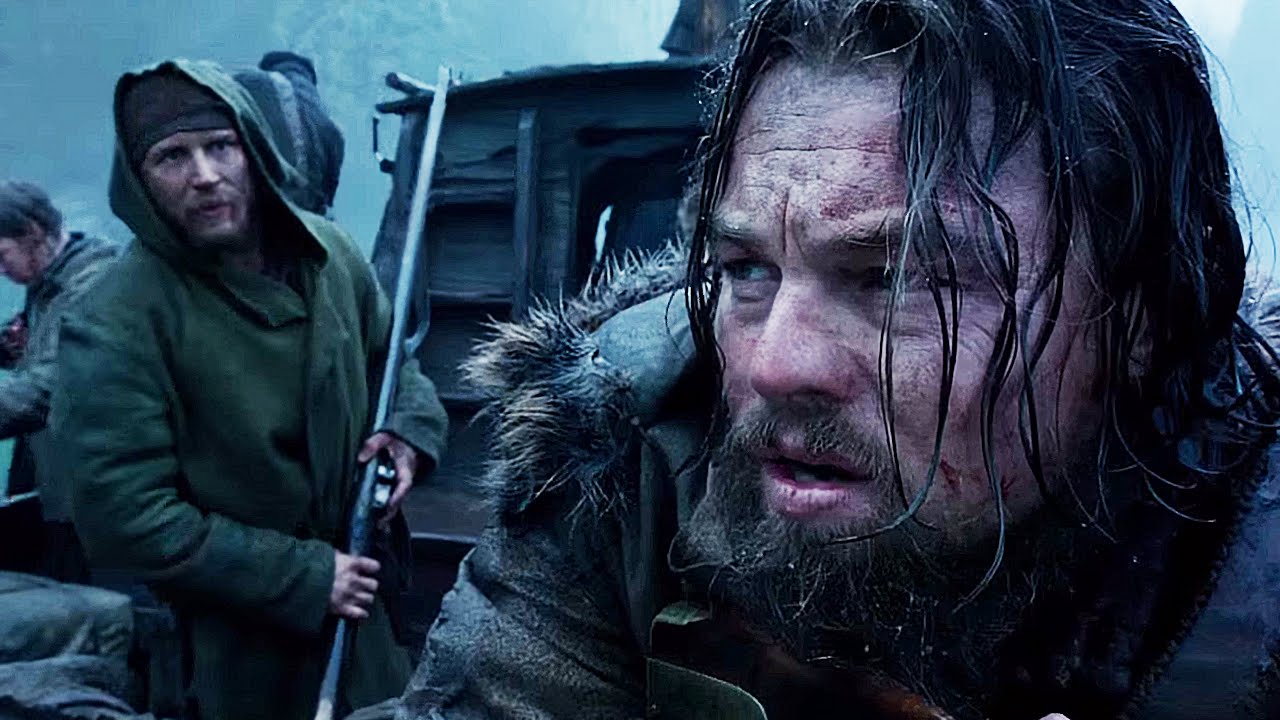
Hugh Glass (played by Leonardo DiCaprio) will soon find himself at odds with his former trapping partner John Fitzgerald (played by Tom Hardy at left) in The Revenant.

If there’s one movie that’s had its box office results significantly after the nominations, It’s The Revenant. If you’ve seen it already, you’ll easily see why it could have done excellently even without the Oscar buzz.

It’s 1823 in an unsettled wilderness part of the northern area of the Louisiana Purchase. A group of trappers under the command of Captain Andrew Henry search for pelts until a surprise attack from Arikara Native Americans kills many from the camp and cause the survivors to flee on a boat. Part of the camp is Hugh Glass who is on friendly terms with the Natives–even being a widow to a Native American woman and fathering their ‘half-breed’ son Hawk who’s part of the camp– and knows the area well. At Glass’ recommendation, they abandon ship and walk on foot to return to their outpost Fort Kiowa. This does not settle well with some of the trappers including John Fitzgerald who has a hostile attitude towards Natives after being scalped years ago. He is noticeably hostile to Hawk.

Glass scouts ahead alone for a while but he is mauled by a mother bear protecting her cubs. The attack is brutal and Glass is severely mauled but he’s able to stab the bear. The other people in the camp find Glass but doubt his chances for survival. Henry commands to three men in the camp–Hawk, Fitzgerald and the young Jim Bridger–to stay with Glass until he dies and give him a proper burial. Fitzgerald tries to smother Glass when alone but Hawk stops him. Unfortunately stabbed is killed by Fitzgerald as Glass can only lie and watch. Fitzgerald attempts to bury Glass prematurely but stops when he sees Bridger flee and follows.

Abandoned with only a canteen, Glass is somehow able to survive and slowly heal. Days later, he’s able to heal to the point he can move, then crawl, then walk. As he heals he’s haunted by visions of his deceased wife. He even sees visions of her as he comes across an abandoned church. However he also has to deal with the Arikara whose chief is searching for his kidnapped daughter Powaqa and trusts no white man.

Both Fitzgerald and Bridger are heading to Fort Kiowa but Fitzgerald scares Bridger into being fully under his control. One at the Fort, Fitzgerald tells Henry that Glass died and Hawk was attacked by the Arikara. Henry gives both Fitzgerald and Bridger a cash reward. Fitzgerald accepts without guilt but Bridger refuses.

Glass encounters Hicuk, a friendly Pawnee who gives him food and shelter and helps him along the path back to Fort Kiowa. Hikuc has also lost his family. Upon hearing from Glass his intent for revenge, he tells Glass “Revenge is in the Creator’s hands.” The day after the blizzard, Glass wakes to find Hikuc hanged by French pelters. Not only that, he finds Powaqa being raped by leader of the French pelters. He’s able to kill the two leaders and free Powaqa but has to escape with Hikuc’s horse and Bridger’s canteen. An ambush by the Arikara causes Glass to flee on horse only to fall off a cliff. Glass survives but the horse is dead. Glass uses the horse’s carcass as a shelter overnight.

Meanwhile word has gotten around to Fort Kiowa that Glass is in fact alive. This is known as a French hunter brings Bridger’s canteen there. Henry however thinks it’s stolen from Hawk and organizes a search party but Fitzgerald knows the truth and flees. Henry finds Glass alive in the search. Infuriated, he charges Bridger with treason after returning to the Fort but Glass insists it’s all Fitzgerald’s doing.

The operation then goes to find Fitzgerald and bring him to justice. Henry however is caught by Fitzgerald in an ambush and is killed and scalped. It’s now up to Glass who hatches a plan to finally get his revenge. It works in catching Fitzgerald and having him shot but not without Fitzgerald being able to run off. It then comes down to a fight between the two for Glass to get his revenge. It ends with Glass making a decision and an ending we’re all left to decide for ourselves Glass’ fate.

Now just to get things straight, this is not the true story of Hugh Glass getting revenge on John Fitzgerald. In fact historic documentation shows Glass let Fitzgerald live because he knew the heavy penalty of killing a soldier in the U.S. Army. Fitzgerald became a soldier in the U.S. army and was stationed in Fort Atkinson, Nebraska. Fitzgerald did give Glass his rifle back.

This film is actually a revenge story adapted from the 2002 novel The Revenant: A Story Of Revenge by Michael Punke. I think the focus of the film is more about telling the story than it is about retelling history. I have not read Punke’s novel but I’m sure that was how Punke would have wanted Fitzgerald to face the music upon abandoning Glass to die. There is actually very little information about who John Fitzgerald was or even what type of person he was in real life. We have the historical documentation of what happened to Glass and what happened in his pursuit of Fitzgerald but not much else. The novel was not only Punke’s chance of creating his own revenge fantasy in Fitzgerald but giving Fitzgerald a character of his own. The film helps Punke’s story come alive and even paint a picture of Glass, Fitzgerald, the times, the terrain and the domain of all that happened.

This revenge story is not your typical revenge story you’d see in your typical Hollywood movies or even from the likes of Quentin Tarantino. This revenge story is also a story of survival and also shows a human side of the perpetrator Hugh Glass. Yes, he was as tough as a frontiersman and a trapper of the time should be. However he did have a soft side. He still has feelings towards his deceased wife who was a Native American woman and he truly loved his son despite others seeing him as a ‘half-breed.’ He also had to be tough as he needed to survive the brutal bear attack and recover from his wounds in order to pursue Fitzgerald. He also had to develop the will to live knowing that his son was killed by Fitzgerald. He also had to be right in his mind in deciding what he had to do to Fitzgerald in the end.

I will admit there were times when I questioned if this film was becoming too much of a tall tale. One example is when seeing Glass pursue Fitzgerald in what appeared to be just days before his attack. I often asked: “Would someone who suffered such a brutal bear attack recover in that fast of a time?” Even that scene where Glass and his horse fall off a cliff. The snowy tree broke Glass’ fall and helped him live without any severe bodily damage but the horse died. That scene also had me scratching my head. Maybe those scenes and the elapsed time were also part of Punke’s novel. Nevertheless it still had me questioning its believability.

First off I’d like to give respect to Alejandro Gonzalez Inarritu for delivering an excellent movie. He may be renowned for his ‘filmwork’ but here he takes his first steps in directing a movie intended to draw big crowds while still maintaining some top film making qualities. Very little was compromised and the end result was excellent as it both succeeds as a film and as a movie. I’ll admit I was unhappy about Birdman winning Best Picture last year because it didn’t give much for a film audience to either enjoy or appreciate. Yes, it had top-notch acting, directing and scriptwriting but who truly enjoyed it?  This is ten times more enjoyable while still maintaining top acting and directing. Yes, there were some scenes that can scare many. In fact I’ll admit the film made me hope I never walk in the woods again. Nevertheless it was a very good movie full of drama and thrills. As I said, I have never read Punke’s novel but the script Inarritu co-wrote with Mark L. Smith definitely makes the novel come alive. I know the script was not nominated for an Oscar. However the unspoken scenes in the movie told as much as the scripted scenes.

The film would simply be a popcorn movie if it weren’t for the acting. Leonardo DiCaprio did an excellent job of Hugh Glass. He said a lot especially in the scenes where Hugh Glass was unable to speak. His performance was as much about telling a lot through physical actions as it was through dialogue. Hey, it’s been said 80% of communication is non-verbal and Leo was able to say a lot in those scenes. That’s why I’d be shocked if he doesn’t win the Oscar. Also just as excellent is Tom Hardy. He didn’t play your typical rotten-to-the-core villain. He gave John Fitzgerald some fears and insecurities to the role and conveyed them well. Nevertheless he also made Fitzgerald hateable as a remorseless villain who even calls the dead Hawk a ‘pussy’ in Glass’ face. Additional performances of respect include Bill Poulter as Jim Bridger, the young trapper who possesses the conscience Fitzgerald lacks, and Forrest Goodluck as Hawk.

Additional qualities of acclaim is the cinematography from Emmanuel Lubezki, the costuming by Jacqueline West including its use of furs and hides, the film editing by Stephen Mirrione, the visual effects including that of the bear attack, the excellent use of both natural settings and constructed sets that fit the times and scenes perfectly and the film’s score by Ryuichi Sakamoto, Carsten Nicolai and Bryce Dessner.

An additional note. I also give the film respect for its treatment of Native Americans. I may have been a baby when Sacheen Littlefeather refuted Marlon Brando’s Oscar on his behalf and spoke of his protest to the on-screen depiction of Native Americans or First Nations peoples as Canadians commonly refer to them as. However I already know of Hollywood’s past and how they’re famous for shelling out ‘cowboys and indians’ movies from decades past. I can completely understand why Brando would have been angry with that depiction as Brando has had a history of activism in the 1970’s on behalf of people of various races. I will admit Hollywood has been better at its depiction of indigenous Americans from films like 1990’s Dances With Wolves and even the character of Chief in One Flew Over The Cuckoo’s Nest that was shown in theatres a mere three years after Brando’s Oscar protest. I’m sure there are some people that can spot imperfections in Hollywood’s current treatment of Native Americans including in this film but I found it hard to pinpoint a scene that was insulting to them. Sure there were battles with tribes and there were bigoted attitudes among many white characters but there were many positive Native American characters in this movie. In addition the main protagonist Hugh Glass had positive interaction with the Native people including marrying one and treating his son with love while many despised him as a ‘half-breed.’

The Revenant isn’t just a dazzling movie. It’s one that will keep you intrigued from start to finish and not know what to expect next.

Oscars 2015 Best Picture Review: Brooklyn

Brooklyn is the story of Irish girl Eilis (played by Saoirse Ronan) who comes to America and is swept away by a Brooklyn boy (played by Emory Cohen).

Brooklyn looks like a film that would be a favorite for a Best Picture Oscar, under traditional standards. Nevertheless it’s worth seeing.

It’s 1952 and Eilis Lacey is about to emigrate from Ireland to the United States through the arrangements of her sister Rose. It’s not like Eilis will miss much. Life in her hometown of Enniscorthy has been redundant as she works at the mercantile run by the spiteful Miss Kelly part-time and she’s also unable to win the affection of a man at the local dance hall while her best friend has better luck. So what does she have to lose?

She bids a tearful farewell to her mother and sister Rose as she departs. The ship ride is trying as she has to cope with rocky waves that make her seasick and cabin neighbors who lock her out of the bathroom. Nevertheless she finds a cabin mate whom she gets along with well. Her cabin mate is actually on her second trip to the United States returning home. She gives her advise on what to do at immigration and informs her of what to anticipate in the United States.

Once in New York she makes her home at an Irish boarding house in Brooklyn run by a traditionalist woman housing young women. She’s able to find a job at a Manhattan department store but is uneasy with it at first. She meets with Fr. Flood who helped her make her job arrangements and she’s able to enroll in bookkeeping classes. She goes to dances at the Irish hall but is surprised to learn the young man who’s interested in her is Italian. He’s smitten over her but she’s reluctant to admit she loves him. Eventually she finally does and meets his family.

Unfortunately tragedy in back in Ireland interrupts her stay in Brooklyn. Fr. Flood informs Eilis that her sister Rose died and her mother doesn’t know how to cope. Before returning to Ireland, Tony wants to marry Eilis. They wed secretly in a courthouse. Upon returning to Enniscorthy, Eilis already has a return to Brooklyn planned out but over time she feels more at home. Her best friend is about to marry, she gets offered an accounting job on an emergency basis at her sister’s business, and she wins the affections of Jim Farrell, an eligible bachelor who stands to inherit huge property.

Over time she wins the love of Jim, gets admiration from her workplace and starts falling in love with the town she left behind. It’s like the life that eluded her before she left has happened once she returned. Her feeling at home in Enniscorthy has left her comfortable to the point she doesn’t open the letters Tony send her. None of them. However a visit to Miss Kelly and what she has to say to Eilis seals her fate and where she makes her final decision.

This film is one that will remind one of Oscar winners or nominees of the past. Often you think you’re watching a film that would’ve had what it took to win Best Picture 20 years ago. However what it does is it helps bring back the magic of those films set in the past and takes one back to an easier time. Usually nostalgia pictures like these have become too cookie-cutter over the years especially as the critical ‘powers that be’ in the film world have recently been giving the lauds to more innovative fare. I will admit myself this looks like something the Weinstein brothers would have shelled out during their Miramax days. However the film succeed in making such a nostalgia film a refreshing alternative around the awards season. The film even adds a certain charm or magic that seemed to be missing in a lot of nostalgia films as of late.

It’s a question what the film’s best quality is. Whether it’s the story line or setting of the environment. However I think the best quality of the film has to be a very relatable story. Sure, we’ve seen many Ellis Island or ‘Coming To America’ stories before. What I feel is the movie’s best quality is a common story that’s relatable time over time. In fact just last week, a person I know who came here from Ireland years ago and just received her permanent residency just this month said she saw the film and it reminded her of her own homesickness and even her own frustrations of not knowing what will happen next or whether things will work out for the better. Reminiscing over the film, I think that’s it. I believe its magic is this is a common story that any Irish immigrant to the United States, whether they came early in the 20th century or in the 50’s like Eilis or even just recently, can relate to and even see themselves and their own stories in that film.

Saoirse Ronan is the perfect pick for Eilis Lacey. She has the grace and the youthfulness to play her well. She also does a very good job of playing a young woman from back in the 1950’s with the elegance and innocence coming with it. Overall, Ronan’s role of Eilis is the centerpiece of the film. Nevertheless there are good performances from the other actors despite not having as complex of roles. There’s Julie Walters who did a good job as Madge Kehoe as well as Jim Broadbent as Fr. Flood. There are even those that give comic relief like Emily Rickards and Eileen O’Higgins as Patty and Nancy, Eilis’ two laughing girl friends in Brooklyn, and James DiGiacomo as Tony’s littlest brother Frankie who knows how to steal the show. There were however roles that could have been more. Firstly, Emory Cohen was also good as Tony Fiorello and had the right charm to play him but the role lacked complexity. Also there were times I feel Jane Brennan’s role as Mrs. Lacey and Domhnall Gleeson’s role as Jim Farrell could have been more.

Nick Hornby wrote a very good adaptation for the screen despite having some underdeveloped roles. John Crowley also did a good job in direction. This film should be considered the Irish director’s North American breakthrough. The technical aspects of the film like the sets, the costuming, the hair and the make-up worked perfectly for the film as it fit the times and the cities perfectly. Michael Brook also gave a fitting score to the film.

Brooklyn may look like your common Ellis Island story but it’s a film that does all the right moves and captures the right feel that makes this film great.

Movie Review: Ex Machina

Meet Ava: a female A.I. robot who is the subject of Ex Machina.
Meet Ava: a female A.I. robot who captures the intrigue of a young computer tech in Ex Machina.

Ex Machina didn’t seem like a movie that would win a lot of people over. However it did capture a lot of people’s intrigue both with the story and its subject.

The movie begins at the office of Bluebook, the world’s most popular search engine. A worker named Caleb has won a prize. He’s excited and everyone’s excited. Later on we learn what his prize was. A trip to his boss Nathan’s laboratory in a remote location up north with no cellphone use available. His boss Nathan is there with Kyoko his maid the only other person. Nathan mentions that he is working on artificial intelligence persona and wants Caleb to assist in the studies. Specifically to focus on if robots can be human and have feelings and a conscious. In a sense, pass the Turing Test where the barrier between humans and computers are broken.  Nathan wants this thing to be a friend-friend atmosphere instead of boss-worker. Caleb nervously agrees.

He is told he would meet with the subject named Ava. Ava is a robot with a female face and voice and Caleb is to first sense if Ava has a conscious. Caleb is introduced to Ava who has muscle-like arms and legs but very human-like skin and a very human-like voice. Caleb and Ava have a conversation. Nathan admits he constructed Ava’s images, behavior and motions from information and photos he hacked from people’ data searches through Bluebook.

Caleb’s study of Ava is not confined to one-on-one meetings in a special room. He can view Ava in her small ‘apartment’ where he notices her sitting and moving around. Caleb also notes of power outages that happen at the place and happen for only a few minutes at most. It’s claimed to be because of Ava charging herself and that Nathan has bad wiring due to the system. The next day Caleb and Ava develop a conversation that’s more personal. Then another blackout occurs where Ava tells Caleb that Nathan is a liar and not to be trusted.

Over time, Ava becomes more like a human and Caleb noticeable develops a bond with her. However he sees Ava’s confinement by Nathan as a form of abuse, especially since Ava talks of how she wants to go out in the work. Nathan adds to the drama by saying Ava will be reprogrammed in the future which will effectively kill her.

Thins become more frustrating for Caleb. He notices how Kyoko goes from being Nathan’s maid to being his party person. It becomes frustrating to the point when Nathan passes out drunk, Caleb steals his card to look up information of any other robots. He learns of other robots Nathan created and eventually did away with. They’re all there in a storage section. All were very human in behavior in their use. During an outage while in conversation with Ava, Caleb mentions his escape plan to her and tells her to be ready by a certain time. Caleb also learns the truth about Kyoko: she’s a robot too. It frustrates Caleb to the point he cuts himself to see if he’s still human.

The plan to escape is foiled. Nathan knew the information of the escape because of videotaping during the blackout. Nathan even tells Caleb that Ava is the user as she wants to use Caleb to escape. Right at the moment of the planned escape, Nathan knocks Caleb out and goes to destroy Ava only to have Kyoko kill him. On the day Caleb is scheduled to leave, another backfiring happens. This time with Ava in an ending nobody expected.

This is another film dealing with A.I. and people interacting with computerized machines. Seeing the movie made me think of the movies this century of people interacting with A.I. personas. There was 2001’s A.I.: Artificial Inteliligence where a woman assumed the role of a mother with a child-like robot programmed with human emotions. There’s 2013’s Her of a man interacting with a ‘virtual girlfriend.’ And now we have Ex Machina. At first, movies of humans interacting with computers or robots didn’t appear to be the material for smart movie making. However it has gotten way better over time. Ex Machina is an example of a thriller that succeeds in getting the audience intrigued over Caleb’s involvement with Ava while leaving us nervous what will happen next at the same time.

SPOILER WARNING IN PARAGRAPH: Human interaction with robots isn’t the only reason why people would be so fascinated by this film. Other elements include how Nathan is like this svengali-like master of the show who eventually becomes a victim to his own game. There’s even the question of who is being the true user to Caleb? Nathan or Ava? Even all the talk between Caleb, Nathan and Ava of various philosophers, scientists and artists would have us interested as it deals with the human mind and how Nathan creates these types. Also as fascinating is how Caleb tells his story to Ava about the girl who wants to escape and does. In the end, it becomes what happens to Ava as she does just that leaving Caleb behind with a dead Nathan and a dead Kyoko.

Alex Garland did an excellent movie that has us both thrilled and nervous, and possibly even thinking about ourselves. Would we be fooled by robot types or feel a human connection to those types in the future? Alex has done an excellent job in his directorial debut. He already has a reputation as a scriptwriter for British movies like 28 Days Later. This film which he directs and writes is an excellent accomplishment as it succeeds in making a smartly-done movie about human-like robots and delivers with unexpected twists and turns. It’s also good to see how other countries are also getting into the sci-fi genre. It’s not just Hollywood anymore. And to think Hollywood could never do human/robot movies this well.

Domhnall Gleeson was very good as Caleb however his performance was overshadowed by the roles of Ava and Nathan. Alicia Vikander did an excellent performance as Ava. She had the challenge to come across appearing as a believable robot at first that becomes more human over time. That was no easy task and she accomplished it. Oscar Isaac was also excellent as Nathan. He does an excellent job of portraying the eccentric genius with a svengali-like persona quite well. His character could remind you of some other eccentric geniuses of the past. Isaac even gets you wondering whether Nathan created all those robots for the sake of a technological breakthrough for the public or simply for sex toys for himself. He adds that intrigue. The visual effects were excellent and fit flawlessly with the film and the music from Ben Salisbury and Geoff Barrow fit with the intensity of the film.

The summer movie season is still young but Ex Machina is already a surprise winner for this year. This is one movie of 2015 that goes beyond what one will first expect.