VIFF 2024 Review: Paying For It

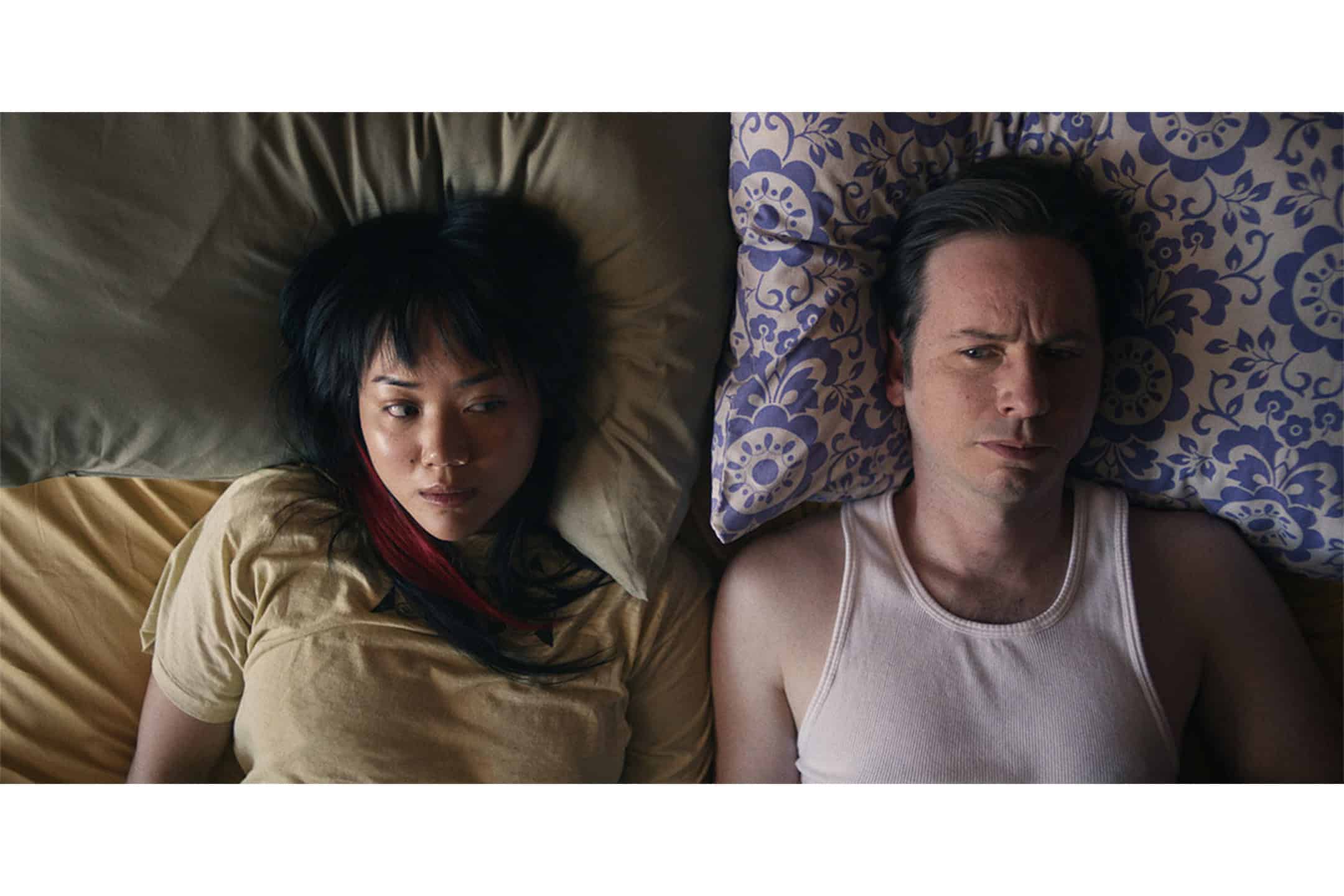
Emily Le and Dan Beirne play a couple who try open love and go in unorthodox directions in the oddball romance Paying For It.

I first took an interest to Paying For It knowing it’s directed by Sook-Yin Lee. I had no clue of what to expect. Boy was I in for a surprise!

Chester Brown and Sonny Lee are a Toronto couple in a tough situation. They’ve had a romantic relationship together for years and do a lot together, but they haven’t had sex in a long time. Both Chester and Sonny come from two different worlds in the arts. Sonny is a video jockey on the music channel Max Music and Chester is an illustrator/author of cartoon books that detail his personal life. Sonny has a few friends at her place of work while Chester frequently meets with his work colleagues from the same writing community and has a close friendship bond with them. Sonny has a lot of success but Chester is struggling to make a name for himself. Chester is quite introverted and keeps to his circle while Sonny’s not afraid to meet new people.

Sonny recommends they try open love. Maybe they were or weren’t meant for each other and maybe they need time away to figure it out. Sonny being famous on national television has no problem finding other men. Chester on the other hand struggles. His author friends warn him jealousy will sink in pretty soon. Chester does become frustrated how Sonny is able to find many a nightly partner. It even reflects in his illustrations. Chester tries an unorthodox route advised from one of his writer friends: prostitutes. Besides, he’s given up on romantic love.

Over time, both find a lot of pleasure from what they get into but they struggle to find the one. Every other man Sonny hitches up with, he’s a great passionate lover but they’re not as fun as Chester and they don’t relate to her as well. Also at work, she learns one of her female colleagues is attracted to her. Meanwhile each prostitute and escort Chester gets involved with involves something complicating or some kind of discomfort. Many are willing to give Chester what he wants that night but most of them completely back off of any commitment. Some even have demands of their own. Despite it all, Chester is finding a quality in this he feels is missing in monogamy.

Simultaneously, both have difficulties and challenges at their own jobs. Sonny had no problem being a VJ while the alternative rock wave of the 90’s was riding high, but the wave has become a ripple and in came the tsunami of boy bands and other teenpop acts Sonny does not like introducing at all. Over time, Chester and his friends question about what’s going on with his many hook-ups and it affects the art for his latest literature. Especially since Chester hasn’t found ‘the one’ and it’s frustrating for him.

Then things change over time. Chester’s writing career and the careers of his writer-colleagues get a boost. Chester also spends the night with an escort who’s her own madam and it changes his life. Sonny, on the other hand, won’t be silent about the frustration with her job and her life, even on live TV. That eventually leads her to be dropped form Max Music. The two eventually reunite during a tragic moment. The death of her dog. It’s as they mourn together they learn they had something so special, no new love of theirs can replace that, even though they have to move on.

The film is about this complicated thing called love. I’m sure a lot of you look at the situation in your relationships and find yourselves asking why can’t we just love? Why do we have to make it complicated? This film itself is about that human fallibility of making love more complicated than it should. In this case, it’s not just creating the freedom of an open relationship but also the types of people both of them date during that time. Then there’s the mix of the two professions that are similar that they’re both in art or entertainment, but very different. Then there’s the talking with friends. The people they most trust to confide into and divulge their personal feelings. Then there are the changes in their lives. Then there are human idiocies and their attitudes. All that is what makes love more complicated than it should be.

Basically this is a story about a relationship that was doomed to end. Chester and Sonny are close, but complicated. The expired birth control should send that message. Eventually Chester and Sonny grew as different people and learned in the end, they were best as friends. Chester may have found a new love with an escort who’s her own madam but his relationship with Sonny made clear he’ll never have a closeness with another that’s the same. Sonny may have found men that were better at making love, but she learned they all made lousy partners. It was Chester who had no problem with her squirt gun or her dog or any of her other oddities. The ending gave a message I have seen often enough where two in a relationship couldn’t succeed as a couple but they could succeed as soul mates.

The film does give a lot of humor and in a lot of ways is somewhat biographical of both Brown and Lee. For those that remember MuchMusic during the 80’s and 90’s, you will remember Sook-Yin Lee as one of the VJ’s in the 1990’s. Yep, Canadian Generation Xer’s like me and early Millennials will have fond memories of her. Those of us who remember her from that and see the film will see the humor in how what’s happening in the film mirrors her own life and will laugh at the humor involved. Those who have read the book Paying For It will know that Brown and Lee were romantically linked and it detailed the complications. The film does some changes with the dates as it has the film taking place as Sonny’s career is bustling while Brown’s is struggling. In real life, Brown started his relationship with Sook-Yin in 1992, before she was signed onto MuchMusic and the relationship ended in 1996 just shortly as Sook-Yin’s MuchMusic fame took off.

This is a great alternative comedy from director Sook Yin-Lee. It is a very personal story to her and she’s able to show the comedy in it in this story she co-wrote with writer Joanne Sarazen. She’s also able to make some of the changes in chronology work for the flow of the film. There were some elements of shock in the film, but the story and settings made the shock humor work. Emily Le is great as Sonny Lee. She’s great at doing the comically side of the story as well as some of the more serious moments. She may not be Sook-Yin’s twin as far as personality goes but she knows how to do it well. Dan Beirne was also great as Chester Brown. I myself never knew Chester or read his works so I’m judging his performance for how well Dan did his role. Beirne was very good at playing an introvert engaging in a sexual activity most introverts wouldn’t normally try and it changes him. His awkward traits made the character and the story. The addition of the other supporting characters like Chester’s writer friends or Sonny’s ‘other men’ also added to the storytelling and the comedy of the film.

Paying For It isn’t just a sex comedy full of sex humor and some shock humor. It’s also quite a smart comedy about a couple that could no longer be but have a special bond. It’s even a comedy that tells about our own idiocies when it comes to love.

2023 Oscars Best Picture Review: Oppenheimer

Oppenheimer will get you questioning whether J. Robert Oppenheimer (played by Cillian Murphy) deserves to seen as a hero or villain, or neither.

Would a film about J. Robert Oppenheimer attract crowds to the cinema this summer? Oppenheimer proved to have the right stuff to make it happen.

When the film first arrived, there was the big question. Would a film about the inventor of the atomic bomb fly or would it flop? Would today’s audience care about a story of the inventor of the atomic bomb? Especially with this being a film with a budget of almost $100 million. Would it be a box office hit during the summer? In addition, does the film justify its three-hour running time? Oppenheimer surprised all naysayers by answering “yes” in all cases. It even succeeded in being a hit right while the Barbie phenomenon was in full-swing. No wonder 2023 will be remembered as the summer of “Barbenheimer!”

This film succeeds in justifying it’s importance. It’s easy to develop a fascination for the man who pioneered the “Nuclear Age.” Hiroshima and Nagasaki are still as intriguing and haunting today as they were when the bombs were dropped in August 1945. Even how this would pave the way for the introduction of the nuclear bomb and how it would cause the most intense moments of the Cold War of the past can make people intrigued in the man that started it all. Even though the most intense days are gone, it doesn’t mean the threat is no longer. There’s still Communist China, North Korea and even Putin taunting the world with threats. As long as nuclear bombs exist and are ready to use, J. Robert Oppenheimer will remain a man of intrigue.

The film can’t just be about building the nuclear bomb. The film is about the man himself. Oppenheimer himself started his career off as an aggressively ambition physics professor who had a clever and creative way of describing complicated things. It’s after he learns of nuclear fission in 1938 that he senses that it’s something that can be weaponized. The timing of this comes just as World War II dawns. The Manhattan Project is commissioned in 1942 to create such a weapon. J. Robert, who was Jewish himself, knew of the importance of stopping the Nazis. J. Robert didn’t simply agree to create such a bomb for the sake of having one created. He created one because he sensed the Germans themselves could learn of this and create one of their own. The war ends in Germany without a single use of such a weapon, but as its relevance is questioned, J. Robert suggests it could end the war in the Pacific. The bomb is tested successfully and that prompts President Truman to order them used in the war.

Then Hiroshima and Nagasaki happen. Everything changes for Oppenheimer. He is now ridden with guilt, feeling responsible for all the deaths that happened. The American people, on the other hand, see him as a hero for ending the war. President Truman, full of excitement with winning the war, taunts J. Robert’s empathy and rejects his wish to end further atomic development. It’s at the 1954 hearings that J. Robert, his legacy and his ties to communists are put under question and he has to confront himself on who he is. Eventually his arrogance and competitiveness would take his toll on him in the end. He’d have to face the music of the new world order he helped pioneer.

It’s also about the personal side of the man. J. Robert was a man of ambition in his early days of studies. He was also a man who thrived on knowledge and frequently consulted with Albert Einstein many times, relying on his knowledge. He was a man who liked difficult things and took an interest in the mystical and the cryptic. He was also the husband of Kitty Puening, but the marriage was rocky and riddled with J. Robert’s infidelity. His ties to communists in the intellectual community, and even with wife Kitty being a former writer for a communist newspaper, is something that could easily cause the suspicion in the 1950’s communist crackdown. J. Robert Oppenheimer was as much a complicated person as he was an important part of history.

This film should be seen as the crowning achievement of writer/director Christopher Nolan. His career has spanned over half a century starting in 1998 with Following, making his North American breakthrough with 2001’s Memento. His career would be full of landmark films like The Prestige, The Dark Knight, Inception, Interstellar, and Dunkirk. Until this film, only the latter has earned him an Oscar nomination in directing. He’s frequently delivered remarkable storytelling and has often found big box-office success, but many feel he’s missing the big renown he deserves. This film, which is an adaptation of the 2005 book American Prometheus, not only makes us take interest in the man who pioneered the nuclear age, but take us into the times and in the person Oppenheimer was. He succeeds greatly in creating a film that keeps out intrigue in the man himself as our intrigue into the creation of his bomb. Definitely the best film in an illustrious career he’s created.

We should also give many top accolades to Cillian Murphy. As much as this is Nolan’s masterpiece, we should also admire Cillian for making the film work for his portrayal of J. Robert. He does a great job in portraying the man and his genius, his weaknesses, his arrogance, and his hidden frailties. Definitely one of the film’s biggest highlights. Also excellent is the performance of Emily Blunt as Kitty Oppenheimer. Not only does she show her struggles with J. Robert’s infidelity and the potentially-destructive work he’s carrying out, but she’s able to tell J. Robert bluntly some awful truths about him, the world and all he caused. Also excellent is Robert Downey Jr. playing Lewis Strauss, the former colleague who turns against him and vilifies him in the end. Additional excellent performances come from Matt Damon as Ge. Leslie Groves who’s cynical and fearful of J. Robert’s work, Florence Pugh as J. Robert’s “other woman,” and Tom Conti as Albert Einstein, whom J. Robert often confides in and confesses to.

The technical feats of Oppenheimer are also excellent. There’s the cinematography of Hoyte van Hoytema, a frequent collaborator of Nolan’s, who did a great job of using the black-and-white and color imagery to showcase the two sides of the story. There’s the excellent editing from Jennifer Lame which showcased the story well and justified the film’s three-hour length. There’s also the costuming, hairstylists and makeup personnel that did a great job in recreating the looks of the past. The production design team also did a great job in their recreation of past buildings and the empty town meant to test the bomb’s effects. There’s also the great musical score from composer Ludwig Goransson that adds to the suspense and eeriness of the film and the sound team that delivers the right sound mixing needed for the story.

Oppenheimer is a deserving summer movie hit, an accomplishment for Christopher Nolan, and one of the best films of 2023. It’s a film that can get you feeling sorry for a historical person we should really hate and also show how important the story of his invention is for our times.

VIFF 2023 Review: It’s Only Life After All

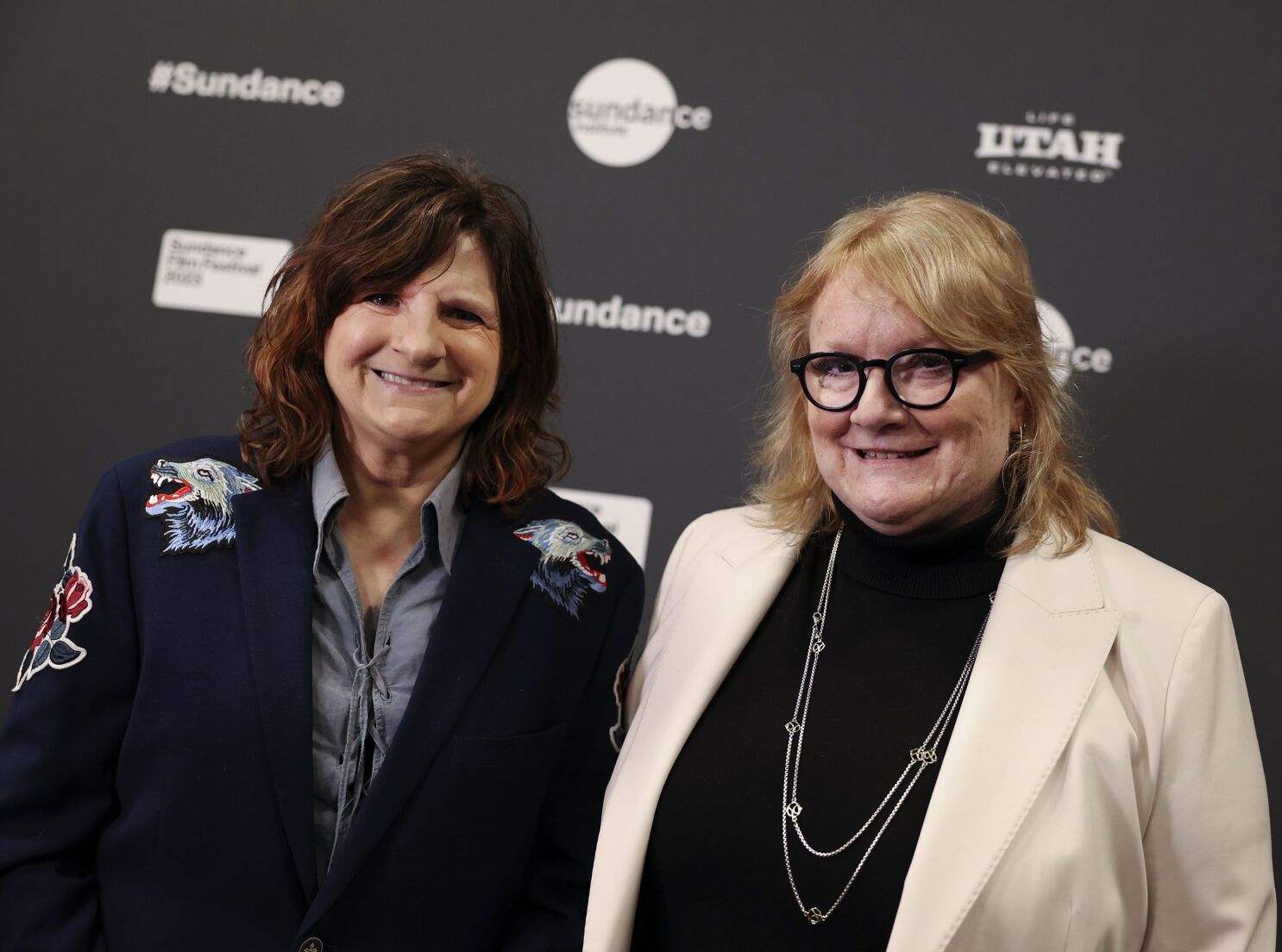
It’s Only Life After All is an intimate and personal look at the Indigo Girls and their long career of establishing themselves as musicians. Not just female musicians.

Before I saw the documentary It’s Only Life After All, I wasn’t really a fan of the music of the Indigo Girls. If you like music, this is a documentary that will keep you intrigued.

The film begins with Amy Ray and Emily Saliers, the two women making up the Indigo Girls, meeting with Alexandria Bombach and bringing out a lot of old audio tapes, video tapes, old magazine articles and various pictures. They wonder what this documentary will be like. First we learn that Amy and Emily first met in elementary school but it wasn’t until attending Shamrock High School in DeKalb County, Georgia that they both learned the other likes music. A friendship began and the musical companionship started soon after. At the same time, they discovered through their own ways, they’re lesbians. Both had differing initial reactions to it as well as initial reactions from family.

As both graduated in different years and went to colleges in separate states, they both eventually became homesick and dropped out. The music led them back together. The two went through various names at first but decided on The Indigo Girls in 1985. Over time they began to draw bigger crowds in their home state of Georgia and started cutting records. First a single, then an EP in 1986 and then a full-length album Strange Fire in 1987 recorded in a studio in the ‘college rock’ town of Athens, Georgia. Their album attracted the attention of music manager Russell Carter who first dismissed their music as too ‘immature’ to get a record deal. The album changed his mind about the two and Carter agreed to be their manager which he still is to this day.

Their success grew in the coming years but they did face some difficulties in terms of establishing themselves. Folk music had commonly been known as stoic and serious. The Indigo Girls were more light-hearted and cheerful on stage. Then there’s the fact that they’re two lesbians which was becoming more acceptable, but still seen as a taboo by most. The AIDS epidemic and how it increased the public’s hostility towards LGBT people in the late-1980’s didn’t help much either.

One thing is the two did have a source of luck on their side. In the late-80’s, there came this boom in folk music. Possibly as a backlack to the loud heavily-distorted guitars of the heavy metal phenomenon from years earlier. It was also a boost for female folk acts like 10,000 Maniacs, Suzanne Vega and Tracy Chapman. The folk phenomenon also led the two to be signed on to Epic Records in 1988. Their self-titled release with Epic included participation with REM’s Michael Stipe and Irish band Hothouse Flowers. After its release in 1989, it has since gone double-platinum and spawned their biggest hit “Closer To Fine.”

Their overnight success came with both perks and problems. The perks included appearances on MTV and VH-1, a Grammy win for Best Contemporary Folk Recording, praise from critics and a growing fan base. The problems included fame coming too fast, not being a feature in Rolling Stone or musical guests on Saturday Night Live, some negative reviews from male critics whose reviews sounded more like sexism than critiquing. Even the big question or concern about whether their fame will turn them into a ‘product’ or not was of concern.

As their sudden fame cooled off, they continued making music together. They also ventured into activism. Their causes include feminism and indigenous rights but their most notable activism has been LGBT rights. With them being two lesbians from Georgia and having established a big LGBT following, they have been active in being active in LGBT issues. From dealing with AIDS, whom they lost a lot of musical friends to, to military participation, marriage and adoption, The Indigo Girls have been very vocal on many LGBT issues. The two also made a cameo appearance in an Ellen episode in 1997. Even some LGBT fans have gone as far as crediting The Indigo Girls for saving their lives.

In the 21st Century, the two started to focus more on themselves as individuals. They wanted to start families. Both married another woman and have daughters of their own. Amy did solo recordings and started exploring her gender identity more. Emily encountered a struggle with alcoholism for years and needed time to recover. Despite it all, both came back to each other and got performing again. They also have their own record label. The film ends with a recent post-COVID concert.

This is a film that will capture one’s intrigue if they like biographies about music and musicians. This is a telling story about two friends who have had a career together going on almost 40 years. Like most musician’s careers, it has not been smooth and it has had its fair share of hurdles. The Indigo Girls being two women who play folk will undoubtedly face obstacles more than just facing a general public that may accept them or not. They face the sexism that’s common to women in music. They face the homophobia of them being two lesbians. They face the music business which frequently pressure musical acts, established and rising, to make a product of themselves. They face unwelcomed intrigue of them being two lesbians who never dated each other. They even have to face their own personal demons and their own personal obstacles. It’s not just about music that they face obstacles and frustrations with.

Even though it is about a folk duo who rose to fame and are still going strong after all these years, it’s about the two as people. It shows through images and their words about what it was like growing up as lesbian teens in the late-70’s and early-80’s. It shows how the two still worked to keep themselves together as a duo and still keep themselves grounded and avoid the common pitfalls of the music business. It shows Emily’s struggle with alcoholism, It shows Amy’s path to starting her own family. It shows personal sides to them known to few including Amy’s spiritual side. It shows the close personal relations they have with family, fellow musicians and close friends. It shows the duo’s move towards activism towards various causes. This film is very in depth about showcasing the two.

This is an excellent work from director Alexandria Bombach. Bombach’s documentaries have commonly been about feminist topics. Her most renowned works involve stories of women in Islamic countries. Here, her subject matter is less intense. Nevertheless the documentary she delivers presents The Indigo Girls as musicians, as temporary celebrities, as activists, as crusaders, as mothers and as people. It’s a good documentary featuring footage on media, footage never seen before and filming during their more private moments. It does an excellent job of being three-dimensional and going beyond.

This documentary has had awards acclaim at film festivals. Nominations for Best Documentary include Seattle, Cleveland, Atlanta and the South By SouthWest (SXSW) Film Festivals. The Sidewalk Film Festival awarded it their Audience Award for Best Documentary and The Film Club made it their winner of their Lost Weekend Award for documentaries.

It’s Only Life After All is a telling look at the Indigo Girls through all the ups and downs and struggles they had to go through from their formation to now. It succeeds in getting you to respect them and what they do.

Movie Review: If Beale Street Could Talk

IBSCT_09450_R_CROP
Stephan James (left) and KiKi Layne are Fonny and Tish: a young couple in love in If Beale Street Could Talk.

There have been some adaptations of James Baldwin’s literature in the past, but I don’t think there’s ever been one ever to hit the big screen. Director Barry Jenkins brings If Beale Street Could Talk to the big screen and it’s quite the experience.

The film opens with a quote from James Baldwin of how most of America’s African-Americans were ‘born’ on the Beale Street of Memphis. The story opens in a prison just outside New York City in the late-1960’s with 19 year-old Tish visiting 22 year-old Fonny behind glass and communicating via telephone. She announces to Fonny she’s pregnant. Fonny is overjoyed and looks forward to being a loving husband and a good father once he’s proven innocent. The crime Fonny is charged for is rape of a Puerto Rican woman: Victoria Rogers. She knows Fonny didn’t do it because he was three blocks away with his friend Daniel when the rape happens. She knew he was arrested because of the racist Officer Bell.

Tish always knew Fonny was the right man for her. They were friends since childhood. Then months earlier Fonny wanted to take the friendship to the next level and date. She agreed. Both Fonny and Tish are people willing to work for a living. Fonny went to community college and had plans of going into woodworking. Tish found a job as a perfume saleswoman at a department store, which considered hiring a black woman in that role to be progressive.

Tish announces the news to her parents and sister. She’s very nervous about it, even though the family see Fonny in high regard. She first announces to her father, and he’s happy. Soon the mother Sharon and sister Ernestine are happy, though nervous as the trial is coming. Fonny’s family, who call him by his real name Alonzo, come to visit. The mother and Fonny’s sisters always had contempt for Tish. When the news is announced, Fonny’s father is happy, but the mother is the complete opposite. The sisters look down upon her and the highly-religious mother even goes as far as saying the child will be a child of sin because he’s conceived out of wedlock. The mother and sisters leave in disgust.

The film goes frequently from the present of the story to the past quite often. Tish reflects back to when they were walking the street and the feelings of love they had for each other. She reflects on the Mexican restaurant and the waiter Pedrocito that made them feel welcome there. She even remembers the time when she and Fonny were searching for an apartment. Fonny came across a loft being sold by a Jewish developer. She didn’t like the idea of a loft, but Fonny saw potential. They were both surprised that the owner had no problem with them being black, but he just loves seeing couples in love.

Soon Tish flashes back to the present. There is a trial they have to work on. The lawyer claims that this is a difficult case to manage, but they feel this white lawyer just doesn’t care about justice for a black man like Fonny. Tish’s and Fonny’s father team up to do illegal trading in order to raise the right money for Fonny’s case. Victoria Rogers returned to Puerto Rico because she couldn’t handle the reminders of her rape in NYC. Sharon has a mission to go to Puerto Rico to get Victoria to come back to New York and testify for Fonny’s innocence, but it will be very costly. In the meantime, the months add up and the child inside Tish is developing. Tish goes to see Fonny again at the prison, but Fonny has gone through months of torture there. He wants to get out so he can live the life he was meant to live and love Tish.

Memories go back to the harder memories. The first is when Fonny is reunited with his friend Daniel. Daniel had just come out of prison for grant theft auto; the result of a plea bargain after being arrested for marijuana possession. Daniel tells him how it’s hell in prison and how he knows how racist the justice system is. She also flashes back to when she and Fonny were just shopping at a grocery store. Tish is harassed by a man and Fonny throws him out. The throwout is witnessed by Officer Bell, who things that Fonny has committed aggravated assault. However the white storeowner comes out and vouches for Fonny that Officer Bell lets him go, but not without that look of the desire to arrest in his eye.

Sharon did it. She was able to get enough money to confront Victoria Rogers and convince her to come back to New York for the sake of Fonny’s freedom. Victoria’s long stay in Puerto Rico is what’s delaying the trial. Victoria is not happy to see Sharon. The rape is the whole reason she left NYC and has no plans to go back. It’s too upsetting for her. Sharon tries pleading to Victoria to come back and give the true story for the sake of Fonny’s innocence, but that just causes Victoria to break down mentally and emotionally. Sharon returns back to NYC and the trial is still delayed. Tish gives birth to the baby in a bathtub with Sharon’s help while Fonny is still in prison. It’s a boy. As the wait drags on, Fonny accepts a plea deal. Years later, Tish and Alonzo Jr. visit Fonny in jail as they all hope for Fonny’s eventual release.

James Baldwin has been known to be an outspoken civil rights leader as well as a renowned author and poet. Racism is one of his biggest themes in his works. The film which is based on his novel of the same title definitely focuses on racism. It’s set in the mid- to late-1960’s just after more civil rights for blacks had been championed. However it was still a struggle as a lot of rights were limited, a lot of racial riots were happening, and many wrongful arrests were taking place. The novel and the film give a depiction of what it was like at the time. Especially with a black man in jail for a crime he didn’t commit as seen through his pregnant fiancee. The film also shows the hopes and dreams of a young black couple in love. They will have a future previous generations before them couldn’t have, but it would still take a fight. Very often, you hear Tish and others having negative things to say about white people. Even having a mistrusting attitude towards them. Those who saw the documentary I Am Not Your Negro will know about the mistrust towards white people had back then. I’m sure it was a mistrust shared by many African Americans at the time and we hear it echoed in the characters, mostly from Tish

However the novel and film are about more than that. It’s about undying love through hard times. Tish knows Fonny is innocent and she and her family team up to get Fonny free in time for the birth of their son. We see that Fonny is a good honest man. She’s known Fonny since she was a child. She knows Fonny would never hurt anyone like that. When they started dating months before the arrest, she knew right there and then she was the right man for her. We feel that love in the film. Interesting how a gay author like James Baldwin can deliver a better sense of love between a man and a woman than most straight authors. The novel and film however isn’t all ‘whites are bad’ and ‘all blacks are good.’ That meeting between Tish’s family and Fonny’s family showed a certain friction. While the fathers got along well, the mother’s, especially Fonny’s, looked down upon Tish’s family and the sisters had the same snooty attitude. It’s possible that scene was meant to send a message about how certain African Americans aren’t all unified or there’s a superficiality between certain types.

The film does a very good job in adapting the novel, but it does more than that. Barry Jenkins adds his own unique flair to the film. One flair he has in the film just like his previous success Moonlight is the inclusion of a lot of music. The film is a good mix of original score and songs from years past. It fits the movie well. However one thing he does that’s different from Moonlight is he includes a lot of imagery to set the theme of the time. He also includes a lot of scenes where many of the characters involved in the story have their own shots where they face the camera standing still. That adds to the film. Also what Jenkins does is during many scenes, he slows the moment down and softens it so that one can get a feel of the moment. That happens many times during scenes with Fonny and Tish, the scene with Tish working the perfume counter, and the scene with Fonny and Daniel. Sometimes it’s half-muted and we hear Tish’s narration, but we get a very good sense of the situation. I think Jenkins made some good choices in making the film.

Barry Jenkins does it again. It’s hard to say if it’s as good as Moonlight, but the film is nothing short of excellent. He not only plays out the novel on film, he allows us to feel the story. I feel James Baldwin would be very proud. KiKi Layne was very good as Tish as was Stephan James as Fonny. The whole cast was excellent, but the standout was Regina King as the mother. She really did an excellent job as the mother-in-law going out of her way for Fonny’s innocence. For the technical, James Laxton did a great job with the cinematography, Joi McMillon and Nat Sanders made the right editing moves and Nicholas Britell delivered a great score that fit with the film and blended in with the tracks of past songs.

If Beale Street Could Talk is more than about racism and social injustice. It’s also about the undying love of two. It’s a love no prison system or injustice can destroy.

VIFF 2017 Review: The Party

The Party
Patricia Clarkson (left) and Kristin Scott Thomas face the chaos at what is supposed to be a celebration in The Party.

Can you imagine a party where everything that could go wrong does? The British comedy The Party is a film that shows exactly that!

The film begins with Janet waiting for her party to begin. She just won a seat in parliament. The party is expected to be a private one with her husband Bill, best friend April and her husband Gottfried, close couple Martha and Jinny and her son Tom. Bill is frail and not in the most pleasant of moods. April has a very blunt mouth and isn’t afraid to say what she believes to be true, no matter how spiteful. Gottfried appears not to be with his wits. Tom is trying to keep his cocaine habit a secret. The couple of Martha and Jinny appear to be the only guests who have it together. Of course, they’re happy as they’re expecting triplets.

The party is supposed to go smooth, but April appears to be saying something to start a spat anytime soon. Gottfried is always embarrassing April. Tom’s frustrations about his marriage are becoming obvious. Nevertheless Janet is toasted by all.

Then the chaos begins. Janet first receives a text from a man wanting her back in her life, to which she declines. Bill announces he’s dying to all. Janet is broken, but he’s vague on what his condition is.  Only Gottfried appears to believe him and is willing to help him. Then unfaithfulness has been revealed about both Martha and Jinny and it threatens not just their relationship, but the birth of their children. Then Bill admits to Janet, he’s been seeing another woman. Janet is infuriated. Only Gottfried stands by his side. Tom does more coke and contemplates hosting himself, but later throws the gun in the garbage. Janet is upset by the whole thing with no one but April to give her words of comfort. However Janet soon finds Tom’s gun in the garbage. Then Bill reveals to Tom the ‘other woman’ is his wife. Tom responds by punching Bill. Bill appears dead on the floor and is being resuscitated. Martha and Jinny try to look like the happy couple they were. Then Janet goes to the door after hearing the doorbell. It’s the other man. To which, she points the gun at him: “You said you loved me. You liar!”

At first, I thought The Party would be a political film. I was tempted to think that at first glance. Instead it became the perfect location for a single-location film. It does a very good job in packing in just about anything and everything that can destroy all seven involved in the story. One thing does lead to another and the results are crazy. However a story like this about a party where everything goes wrong for everybody has to have situations that don’t come across as ridiculous. You have enough slapstick movies doing that.

To make a party where everything goes wrong, but still look intelligent takes a lot of effort in writing. It succeeds in doing that. The characters in which the actors adapt had to make the comedic situations work. The situations looked quite believable, despite the banality of all of them happening at once. Even the most bizarre situations didn’t come across as looking stupid. This is one of the best over-the-top comedies I’ve seen in a long time. The over-the-top elements aren’t even physical or slapstick; it’s all about the story and characters. Even filming this comedy in black and white added to the film.

The biggest accolades in making this bizarre story work goes to writer/director Sally Potter. This story packs in a lot of comedic punch that appears to work every time and does not cross over the line into stupidity and ridiculous. It takes a lot of effort to create something like that and make it work, and Potter made it work. Everyone who saw it the same time I saw it was laughing a lot. It’s hard to pick who the biggest performer was. Kristin Scott Thomas was definitely the protagonist, but Patricia Clarkson was able to steal the show with whatever she said each time. Bruno Ganz and Timothy Spall owned their moments by playing their characters well. Cherry Jones and Emily Mortimer also grabbed their moments, and Cillian Murphy knew how to come out of nowhere to get his moments too. Basically it’s not on the strength of a single actor, but of all seven in the ensemble. They all made this comedy work with whatever they did or said.

The Party is 71 minutes of tragicomedy energy of the best kind. It’s a reminder of how writing rather than cheap one-liners is what works best in comedy. I guarantee you will be laughing.

Movie Review: Into The Woods


Meryl Streep plays a witch in control of the fates of fairy tales in the film adaptation of Into The Woods.

Into The Woods is the latest Broadway musical to hit the big screen. The question is does it entertain and charm well enough for moviegoers?

The film begins just as the fairy tales do so: Little Red Riding Hood is about to go to grandma’s with her basket, Jack has to sell the cow as she’s getting old, Cinderella is being mistreated by her stepmother and stepsisters, a lonely couple want a child, and Rapunzel is imprisoned in a castle by the Witch. The Witch puts a request on the couple. You first thing it’s just Rapunzel’s hair but she also asks for a red cape, a white cow and a golden slipper.

As they search the stories proceed: Riding Hood is lured off the path by a wolf, Jack goers to market but will only accept an offer that would mean the return of his cow, Cinderella arrives at the ball. However the couple find their way into the story or pass by it: Jack receives magic beans from the husband, the wife tries to swipe Cinderella’s slipper off her feet after running from the ball, the husband passes the tower Rapunzel is kept captive in, and both notice Riding Hood’s cape.

After a series of misadventures, the couple has all the items needed to produce the spell to receive their baby, all the fairy tale characters have their expected happy endings and the witch is able to regain her beauty with the potion. However the ‘Happily ever after’ endings don’t end up being so happy after all. The Baker worries he might end up being a poor father to his son just like his own father, Cinderella loses her charm for prince charming and the lavish life with it, Rapunzel is scared by the outside world, the witch loses her powers with her returned youth and Jack is pursued by the giant’s wife –ahem, widow– who came down to earth via a second beanstalk and demands Jack or she will destroy the village and its inhabitants.

Soon everything goes opposite to what’s planned. Casualties include the Baker’s wife who fell for Prince Charming before her accidental death, Rapunzel as she ran off forever with her prince, Riding Hood’s mother and grandmother, and Jack’s mother. The latter three killed in the Giant’s Wife’s rampage. On top of it, Cinderella and Prince Charming part ways. At first those still standing–the Baker, Cinderella, Jack and Red Riding Hood– think that Jack should be offered back only for them to blame each other. Nevertheless they do work things out, defend against the Giant and there’s the genesis of a new fairy tale the Baker reads to his son.

I have to say as a musical, Into The Woods was probably not the first time fairy tales have been mixed together to surround a main plot. It’s not even the first in motion pictures. Remember Shrek? What it needed to do was stay true to the fables while mixing the story of the baker and his wife as well as the haunting of the Witch during the first half and then allow for a believable twist to the fables we all know to occur in the second half. Even though the twist occurred starting with the giant’s wife appearing, all the twists of the stories had to appear sensible and pertinent to the original story. Some of the twists were very surprising and even tragic but it did come together in the end. That’s how the stage musical of Into The Woods worked.

The next trick was to bring Sondheim’s musical to the screen. Putting a stage musical to screen is a very difficult thing. There’s a lot of decision-making on what from the stage play to leave in and what to leave out. That would fall into the hands of director Rob Marshall and scriptwriter James Lapine who wrote the original Broadway version. However when it’s Disney that buys the rights, you think it would be a big break but there was an added challenge. Naturally with this being a musical about a mish mash of fairy tales, Disney would want to make this a family film and that could be intrusive to the control Sondheim and Lapine have over the play. This was not the case as both Sondheim and Lapine insisted to Disney that any changes would have to be approved by them. Even then, they would have to work within time constraints and keep it to a respectable running length.

In the end, Sondheim, Marshall, Lapine and the production company were able to create a finished adaptation 125 minutes in length that brings the musical to a big screen audience with big-name stars and additional musical talents. I myself cannot compare the film to the stage version since I’ve never seen the stage version. I will start by saying it doesn’t surprise me that Disney acquired the rights to adapting the musical to film as Disney is world famous for bringing fairy tales to life. I will say that one can do a good job differentiating the actors who know how to do musical acting and those who don’t. You just know it. There were some like Chris Pine and Mackenzie Mauzy who struggled, there were some like Billy Magnussen and James Corden who could have done a better job, there are some like Daniel Huttlestone, Lilla Crawford and Tracey Ullman who know how to deliver both singing and acting and then there are actors like Emily Blunt and Meryl Streep who are able to deliver a performance in a musical. Meryl was especially excellent as she had the role that would hold the film all together. Musical film is another genre she can add to her list of accomplishments.

I will say that the film adaptation did very well in terms of special effects and set design to give the fell like there really was one terrain in the world where all the original stories happen at once. Colleen Atwood once again knows how to create the right costumes for the movie. The music was not a problem at all as the songs were well-sung and fit the scenes well. The film also did a good job of handling the story where all the fables get their twist in the end. However the film does leave some noticeable things out. There are some times where it felt the story had key scenes left out like the big bad wolf living in the tree about to eat Red or Jack in the giant’s house or Cinderella’s fairy godmother creating her clothes for the ball. There were even some times when one could easily forget that this is a musical and it would take a song some time later to remind you. There were even a couple of scenes that made you wonder if it should have been kept in. I can’t think of a better way to do it but I’m sure there are areas that could have been done better. Rob Marshall did a very good job of directing. It’s fair to say this is his best work since Chicago but there are some areas I feel he could have been better, like not having us forget this is a musical in some areas. It may not completely be his fault as the script was written by James Lepine. Lepine may be an accomplished scriptwriter and director in musical theatre and this may be Lepine’s best musical ever but somehow he could have done a better job at a stage-to-screen adaptation.

The film adaptation of Into The Woods has been long awaited. Now that it’s here, it’s imperfect but very enjoyable and entertaining.

VIFF 2014 Review: God Help The Girl

God Help The Girl is an original musical by Stuart Murdoch of three young Glasgow adults who form their own band.

Musicals are always very chancy in terms of putting them on screen, especially if they’re an adaptation of a legendary musical. Try putting an original musical on screen. That’s what God Help the Girl does. It comes off surprisingly well.

The film starts with Eve singing about the difficulties of being young. Mind you Eve does have her problems as she has an eating disorder which brings her to a psychiatric hospital. Her counselor there tells her she needs guidance to make it out in the world. Eve is defiant and breaks out of the hospital to head to Glasgow to make music.

Over in a Glasgow pub, she meets up with James who leaves his band after an on-stage fight with the drummer. James is an aspiring songwriter who works part-time as a lifeguard and teaches guitar to Cassie, a naive daughter of a rich family. A relationship cooks up with James over time. After meeting Cassie, the three of them spend a lot of time together and compose songs.

Eve is also looking for exposure and hopes to get it through Anton, a singer of the band Wobbly-Legged Rat who’s star is on the rise thanks to a local radio station promoting them. Eve gives Anton her tape hoping it will make it to the radio station and a relationship is brews between the two. The three form a band after James convinces Eve she needs a bass and drum for her songs. They call their band God Help The Girl and they perform a gig and knock the socks of the crowd.

However not all is well as Eve learns that Anton, who’s too arrogant for his own good, never gave the tape to the station, claiming her music lacks professionalism. The two argue and Eve walks off. To make matters worse James finds out about her relationship with Anton and is distraught to the point of distancing himself from her. That leads Eve back to taking pills and returning to the hospital. She meets again with the counselor who tells her she warned her about rushing out into the world on her own. Eventually Eve decides on her own path. The ending is not what one would expect but is fittingly appropriate for the film.

I have to say this is is a brave attempt from Stuart Murdoch to create an original musical and bring it to the big screen. It’s been a long time since there has been something like this. Musicals are always a risk to bring to the big screen whether they’re original or adapted. It’s obvious that God Help The Girl had some risks of their own. There are a few times that leave you wondering is the film lulls back into being a story and makes you forget it’s a musical until the next song comes on. Those who know big-screen musicals know about the feel of a musical on screen. There were a few times I felt the film lost its feel. The musical parts were very good and were able to stay away from crossing the line of  cheesy most of the time but I did notice some imperfections. Even having Eve with an eating disorder makes you wonder if that would make fans of musicals uncomfortable.

One thing I liked about this musical is that it had a lot of songs that gives one the look and feel of the excitement of 60’s rock ‘n roll. The songs for the most part are loaded with energy and really capture the essence of what it is to be young. Another unique thing about this musical is that it musically showed how a lot of the best songs are inspired. We see a lot of themes in God Help The Girl that are quite common in rock and roll songs such as the frustration of fitting in this world, feelings of love and the bizarre love triangles that arise. We also get another reminder about rock and roll. Just after Eve left for college to pursue music, James declares “I think she wrote her best music here.”

The funny thing about this film is that it includes the music from a group called God Help The Girl. For those who don’t know, God Help The Girl was an all-girl group formed by Belle and Sebastian lead singer Stuart Murdoch. They were formed for one time only in 2008 for an album that was eventually released in 2009. The film God Help The Girl is a musical set to those songs and is directed by Murdoch.

I don’t want to go into the subject of ego-tripping but Murdoch puts together a well-constructed and well-written musical that is entertaining. There are some noticeable imperfections in the choreography and editing but the film is mostly together. I also think this will be Murdoch’s only directing effort as I don’t see him directing any other movies in the future. Emily Browning is very good as the protagonist and is able to sing well in her first on screen singing role. Olly Alexander was also very good. He’s the opposite of Emily where he’s actually a singer in a band rather than an actor. Nevertheless he did very well. Hannah Murray was very convincing as the young naive Cassie. The three of them made an excellent trio full of chemistry. Pierre Boulanger was good but his role as Anton was underdeveloped and could have been more.

God Help The Girl was nominated at the Sundance Film Festival for the World Cinema Grand Jury Prize and won a Special Jury award for the ensemble. It was even nominated for the Crystal Bear award at the Berlin Film Festival. It has just been released in the US the last weekend of September and has just fizzled out with just grossing over $100,000. I blame it on the lack of promotion. I think it will develop a better afterlife as a Broadway musical. There’s no talk of a musical version of the film yet but I feel it has a lot of potential of being a hit in that format.

God Help The Girl is a flawed but entertaining original made-for-the-big-screen musical. Oddly enough I think I sensed a bit of Beatlemania there.