Oscars 2015 Best Picture Review: Spotlight

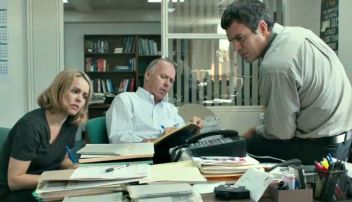
Spotlight stars Rachel McAdams, Michael Keaton and MArk Ruffalo as journalists ready to settle the score.
Spotlight stars Rachel McAdams, Michael Keaton and Mark Ruffalo as journalists ready to settle the score.

I’ll admit I saw Spotlight two months ago and I’ve been procrastinating at writing my review. Now that the Oscar nominations are out–actually only an hour ago– this is a better time than ever.

The film begins in the 1970’s of a priest being fired from his job as a teacher at a Catholic elementary school in Boston. Fast forward to 2001. The Boston Globe has a new editor, Marty Baron. He first learns of the investigative Spotlight team of the paper headed by Walter ‘Robby’ Robinson.

Baron gives the Spotlight team a story to chase: a story of a priest sexual abusing children and Cardinal Bernard Law knowing about it and doing nothing about it. It first starts as a pursuit on a single priest who was continuously moved around from school to school. Over time it they would uncover that there were many priests who also committed acts of sexual abuse on school children and they were all covered up by the Archdiocese.

This is one story they had to get to the bottom of. However they’re limited in terms of resources. Plus they need permission to access sealed documents and have a trial or even an inquiry happen and they doubt they can get it from a Catholic judge. They talk with a head of a victims rights group who himself was abused, they talk to other abuse victims, they talk to a lawyer who’s handling the cases of some of the victims and they even find through an ex-priest who tried to rehabilitate pedophile priests that there could be as 90 sex offenders in the clergy. Further research uncovers additional priests moved about upon their actions being revealed and being listed as ‘relocated’ or ‘resigned.’

In September 2001 it appears the Spotlight team is finally ready to release the story. Then 9/11 happens which makes every other news story in the world take a backseat and cause even a further delay of the story being printed. However the wait works for the better as one of the Spotlight reporters, Michael Rezendes, uncovers proof through publicly available documents that Law knew all about the abuse going on and ignored it. Then a major victory. The judge grants them the right to look into sealed documents. Just as they are about to print the story, Robinson confesses he published a list of pedophile priests in 1993 but he never followed up on it. As the story is published, it creates history.

I’m sure that some people would be nervous about this film and declare it ‘anti-Catholic.’ In fact if I were a conservative conspiracy theorist, I would say Spotlight is a film released by an anti-Catholic director who wonders where all the Catholic hate from liberals went once Pope Francis came to power and wants Spotlight to bring it back. But I’m not a conspiracy theorist nor am I a conservative pundit. In fact the film has received positive feedback from Vatican Radio and even the current Cardinal of Boston praised it in showing how the Archdiocese had to confront its wrong.

I will say that I’ve seen bigger even more savage attacks on the Catholic Church in films in the past, especially from Martin Scorsese. In fact I remember watching 2002’s The Magdalene Sisters where the nuns were depicted as total monsters. I feel films nowadays are less anti-Catholic than that of 20 years ago or even 40 years ago. In fact one thing I give the film credit for is that it looks at all sides. It may portray Cardinal Law as a conniver but it wasn’t hard on depiction of the priests. In fact one scene that stuck out to me was when one of the alleged priests was interviewed. He not only appeared confused in how he didn’t know what sexual abuse was but admitted that he was raped as a boy. That not only shocked me but left me wondering how many of the abusive priests were themselves sexually abused as a boy?

On a personal note, I will admit that when I first saw the film, I left the theatre asking myself “Jon, why did you return to the Catholic Church?” It was a dilemma for days but it did solve itself over time. In fact shortly after, I wrote on my Facebook page: “I gave the Catholic Church a second chance in 2003 and it better not blow it this time.” I will never excuse a priest for sexually abusing any child. I believe they should be brought to justice. In fact, Pope Benedict clarified the issue when he said: “Forgiveness is not a replacement for justice.” I know you can’t take back the past however you can improve the future. The Catholic Church has not become blind to the issue of sexual abuse. In fact I learned from one man who tried to enter into education for the priesthood he had to get a criminal record check, an HIV test and a psychiatric assessment. I’m happy that the Catholic Church is taking the best preventative measures to ensure this doesn’t happen again.

In fact off topic from the film, I will admit that sexual abuse and the various Diocese’s and Archdiocese’s bad handling of it is a problem but I will also say that it’s a problem that goes far beyond the Catholic Church. It’s a problem that exists in other churches as well, it exists within certain families, it exists within school and it even exists within children’s sports programs. In fact this decade’s biggest sexual-abuse-and-cover-up story came not from a Catholic institution but from coach Jerry Sandusky and the cover up from Penn State university. Makes you wonder why the priesthood gets a lot of defamation from the sexual abuse of those while children’s sports coaches don’t get the same defamation. A sex offender is a sex offender no matter what their profession or even if it’s not to do with a profession at all.  Same thing with Universities, especially since it’s only come to light that colleges have a known rape problem but they’re doing next to nothing about it.

Back to the film, I think the biggest thing the film was focusing on was the bad marriage of church and state. Separation of church and state is enforced in the American constitution but it’s not to say it does find its way mixed into politics one way or the other. In fact I don’t think Spotlight attacks the Catholic Church as a whole but actually attack the Archdiocese of Boston. The film presents how the Archdiocese of Boston has such a huge influence over the city. We’re talking about a city with a huge percentage of Catholics and with a history of the Catholic Church giving, providing and influencing the city. No wonder a city like Boston would have such high regard for the Archdiocese. No wonder most Bostonians would look at priests as father figures. No wonder also would that present the biggest difficulty in terms of getting the ugly truth out, especially with people having a high regard for the Church in power and with a Cardinal sweet-talking those determined to get the truth.

The theme of sexual abuse may be very prevalent in the film but I think the biggest focal point of the film was to show a group of reporters uncovering a scandalous story and bringing it to print. One thing is the film doesn’t make like the Spotlight team are the blemish-free good guys of the film. It’s made known near the beginning of the film that this information was given to them five years earlier. They themselves made a big mistake of their own by delaying the story. Sure, they did a whole whack of effort to finally bring it to press in 2002 but they could have done it sooner. I think that was the whole thing of Spotlight is that it was a movie disinterested in making the image of a hero out of anybody. Besides we already hear of the mistakes of having an image of somebody is a bad thing as one abuse victim admitted he looked at priests to be like God. I’m sure millions more have had that deluded image of the priest being like God in their head. However it also shows how easily people can be feel a sense of betrayal by a Church when such atrocities occur. You can’t really blame them for being that disheartened.

I give top credit to director/writer Tom McCarthy and his co-writer Josh Singer for directing a complex film that’s like a bunch of pieces of a puzzle that had to be put together. This is a story that’s set in the Spotlight room of the Boston Globe and set in various other places throughout and they had to both show all the different parts of the story and make them come together from time to time. They did a good job of making this complex story come together without straying off into unimportant territory. Also they did a very good job of writing a story of sexual abuse that was watchable. I’ve seen other films of sexual abuse that were more explicit like 1992’s The Boys Of St. Vincent. Mind you it was a 90’s thing to do explicit entertainment because envelope-pushing was all the rage back then because 1; you could never put enough nails in the coffin of the Hays Code and 2; because back then softening of scenes or leaving such things out was considered a form of ‘denial’ in art. Anyways these are not the 90’s anymore and watchability is values more. I’m sure if they showed scenes of abuse in the film, it would make it somewhat unwatchable for many. I feel they made a good choice of limiting the topic of abuse to conversations of victims with the journalists. Especially since the top point of the film is how they brought the story to press. Besides I don’t consider compromising elements in a film for the sake of making it more watchable to be a filmmaking weakness. It’s not the 90’s anymore and Tom McCarthy’s not among the likes of Lars Von Trier.

As for acting, there were a lot of great individual performances most notably from Michael Keaton, Mark Ruffalo and Rachel McAdams but none of them owned the film. In fact another top quality of the film is that it’s a combined effort from all the actors to play parts that don’t steal the show and add to the story telling by making it look like a unified effort. Even acting of the smaller roles that that of the abuse victims were excellent and added to the story. Overall this not simply a film that’s well-crafted. This is a film that does capture your intrigue. It’s a combined accomplishment from McCarthy, Singer and the actors.

Spotlight isn’t strictly about the incident. It’s about getting the story to the presses and the battles the Boston Globe had to go through to break the silence and finally get the word out. Keeps you interested from start to finish.

Film Review: Slow West

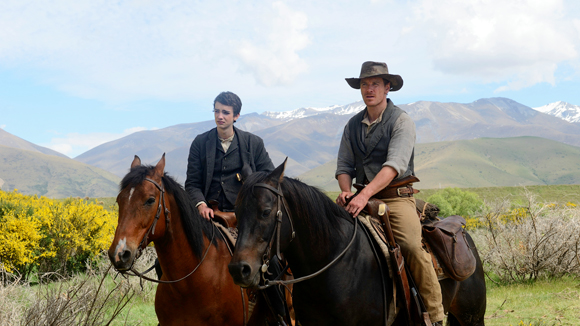
Slow West is of a bounty hunter, played by Michael Fassbender (right), helping a Scottish émigré, played by Kodi Smit-McPhee (left), reunite with the woman he loves.

Slow West is not your typical western. It also comes off as a love story that’s more than meets the eye.

Jay Cavendish is a sixteen year-old Scottish boy in the frontiers of America. He recently arrived over there in pursuit of Rose Ross, his love from back home who also fled to America along with her father. The frontiers are deadly but Jay is determined to find her. Jay finds himself prey by strangers who were first trying to kill a Native American but is stopped by a bounty hunter named Silas Selleck.

Jay tells Silas his story of his pursuit and even pays him for protection. Silas cooperates at first but when he sees the wanted poster for Rose and her father, he decides to use it for his own pursuit for the bounty of $2,000 and use Jay to get it. During the time, Silas tells Jay about the importance of keeping his guard and why killing is necessary out there. It then becomes evident when a Swedish couple try to rob a store Jay and Silas are shopping at. The man and the owner are shot while Jay is up against the woman. He shoots her, his first murder. That wasn’t all. The couple had their children with them to which Jay and Silas give them food and clothes before leaving them behind.

In the flashback to before Jay and Rose came to America, we learn Jay was a boy of noble birth in Scotland and had a huge love for common girl Rose but deep down Rose thought of him more to be like a ‘little brother.’ One day an intense argument between Rose’s father and Jay’s uncle, the Lord Cavendish, led to the uncle being killed. That’s what led Rose and her father to flee to America with the bounty on their heads.

In a conversation, Jay finds Silas a brute because he doesn’t appear to care about love and seems to only care about ‘surviving.’ Jay leaves one night with his horse and goods but meets up with a writer named Werner who appears to befriend him only to rob him overnight. Silas is able to find Jay and the two return only to be confronted by the gang Silas used to belong to and its leader Payne who plans to beat Silas to catching Rose and her father. Payne even steals their weapons overnight. Unbeknown to Jay and Silas is that Payne and the gang have the orphaned children of the Swedish couple from the robbery.

SPOILER WARNING: The ending will be revealed in the below paragraph.

The two continue on unarmed until they enter a forest. They find themselves prey among a Native American tribe but are saved by the luck of them falling off horses. In the meantime, Payne and the gang pursue Rose and her father who are living in a desolate farm house protected. However the father is shot to death and Silas wants to pursue Payne and his gang alone tying Jay to a tree for his protection. Jay is able to free himself but finds himself in the battle where he is shot by Rose who doesn’t recognize him at first. After a gritty gun battle Silas kills Payne’s gang while a dying Jay is able to kill Payne while comforted by Rose. Silas is shocked to find Jay dead but later on becomes Rose’s love and adopts the orphaned Swedish children.

When you see the whole film, you could easily see it`s not your typical western. Yes, there is gunshooting going on. However the film focuses on motives of the shooting. It focuses on the people and why they`re committing these murders. It can be either for personal greed or vengeance or simply to help themselves and their loved ones survive. Another interesting thing the film focuses on is the wide variety of characters involved in this Wild West scenario. There were your typical villains but there were others like the immigrant couple robbing a store to feed themselves and their starving children. This was a reminder that even the first immigrants the US in the 1800`s had to fight to survive in the New World.

Mind you the shooting in the film isn’t meant to stir up the excitement you’d normally acquire while watching a Western. Instead it focuses on the gun battle’s intensity and gets the audience feel the heat of the friction instead of being dazzled away by the gunslinging. In each case, you’re left with an aftermath that’s ugly. Seeing the bodies on the ground is more disheartening to the viewer instead of satisfaction that the job is done. I guess that’s why the film is called Slow West, because the ruthlessness and friction of the Wild West here is slowed down and the intensity is felt instead of just seen.

The film also focuses on the theme of love during a time and place where it appears people have no heart of soul. Jay is so determined to get back to his love Rose even though her and her father have a bounty on them. It took Jay to convince a bounty hunter who was only interested in using Jay as bait for Rose and her father about what love is. Over time they see the fight to survive and the lack of scruples in the people that surround them during their trip. However it`s Jay that convinced Silas of the power of love even if Jay appeared to be too naïve and deluded for his own good. It`s a common theme in a lot of films that show love in what appears to be a moral wasteland. I’ve seen it before in City Of God where love and hope exist in one of the most brutal favelas of Brazil. Here in Slow West we see love in the lawlessness of the Wild West. Even if Jay`s heart `beat in the wrong places,` he changed the older bounty hunter Silas and his heart. You know it when he says at the end: “There’s more to life than survival. Jay Cavendish taught me that. I owe him my life.”

This is actually the first feature-length film directed and written British director John Maclean. He does a very impressive job by packing a lot of intensity into an 85-minute story. For those who don’t know, John is actually a former guitarist for the Beat Band and The Aliens before turning to film directing. Michael Fassbender does a great job of character acting in his supporting role and Kodi Smit-McPhee is also excellent as the young Jay in capturing both his acquiring of the necessary ruthless grit over time while still keeping his passion and innocence. Impressive supporting performances come from Ben Mendelsohn as Payne and Caren Pistorius as Rose. Even minor performances like the Swedish couple committing the robbery and the Congolese singers add to the story.

The film has already won the World Cinema Grand Jury Prize at the Sundance Film Festival in the Dramatic category and has above 90% on Rotten Tomatoes but the film has not been successful in winning a crowd. Not even $250,000. It`s not fair to say Sundance winners are declining at the box office, even though such films have shown a lack of buzz compared to 20 years ago or even 15 years ago. However this film was overshadowed by the Sundance hit comedy Me And Earl And The Dying Girl which ad no star power at all. It`s always hard to predict what will win with the crowds. Right now there’s no data on how much online viewing of the film has happened.

Slow West doesn’t have the fast-pace action one would expect from a Western. Instead its slowness and intensity are its best qualities which allows the audient to feel the grit of the situation and the feelings of its main characters. Qualities that make the story.

Movie Review: Love & Mercy

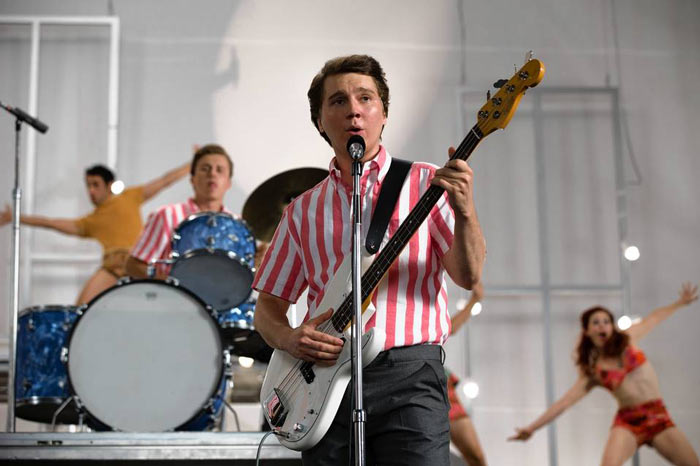
Love & Mercy is about the music and troubles of Beach Boy Brian Wilson (played by Paul Dano set in the 60`s).

Summertime may be the perfect time for Beach Boys music but the film Love & Mercy isn’t one to give you that summery feeling that comes with their music. Actually it’s a lot deeper.

The film alternates between two time periods: between the mid-60`s and 1987. In the 60`s, the Beach Boys, consisting of brothers Brian, Dennis and Carl Wilson, cousin Mike Love and high-school friend Al Jardine have hit the big time. Their California sound of girls, cars, beaches and surf have made them a phenomenon. However it`s not to say they face competition from the British Invasion, especially the Beatles.

However something`s not right despite their success. It becomes evident when Brian has a panic attack on an airplane. After the incident, he resigns from touring with the band and goes into seclusion into an attempt to make `the best album ever made.` During the time, he continues to make music but it becomes more his music rather than music of the Beach Boys. Often Brian hires other musicians and usually features the other Beach Boys only in vocals. This leads to a lot of disharmony among the band sensing this may be a vainglorious Brian Wilson solo project. Brian also does other unorthodox things like build a sandbox around his piano and experiment with LSD which even his own wife is comfortable with.

The end result is the album Pet Sounds which received a lot of critical praise but was a commercial failure despite two Top 10 hits. The lack of commercial success is especially rubbed in by his father Murry who acts as their manager and expects the band to succeed just like it was any other act he owned.`  He even announces to Brian that the Beach Boys are fired and he manages a new band which he feels has better chart-topping potential. Even after The Beach Boys resume their top-selling ways with songs like Good Vibrations, that changes nothing especially since some of Brian`s other creations are rejected. Brian goes into seclusion after a mental breakdown to the point he alienates everyone including his wife and newborn daughter Carnie.

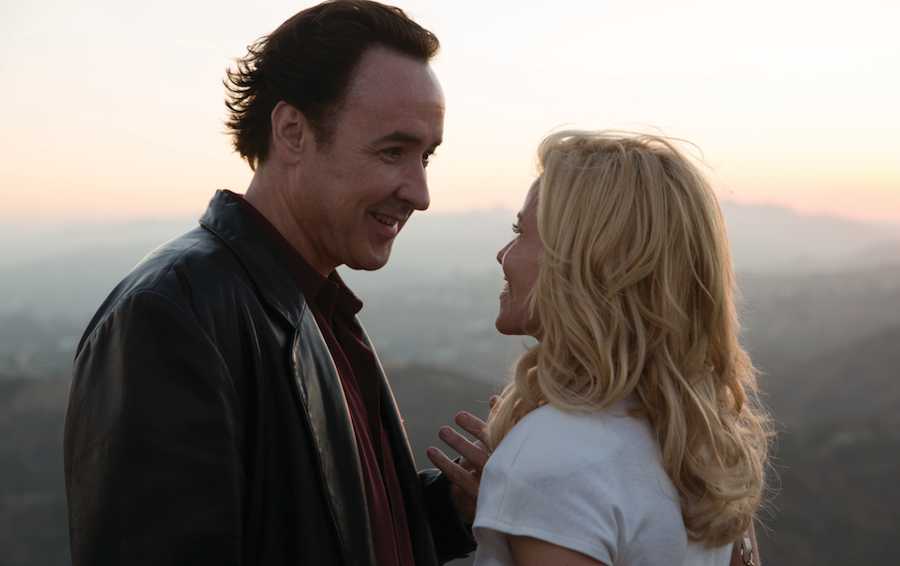
Flash forward to 1987. It was a chance meeting between Wilson (played by John Cusack) and Melinda (played by Elizabeth Banks) that changes for the better happened.
Flash forward to 1987. It was a chance meeting between Wilson (played by John Cusack) and Melinda (played by Elizabeth Banks) that changed his life.

In 1987, Brian is in a Cadillac store in California where he appears to be shopping for a new car. He stumbles across attractive saleswoman Melinda Ledbetter. However his psychiatrist Dr. Eugene Landy stops him. Brian is able to give Melinda his number. He goes on dates with her in which he was surprisingly honest to the point he even revealed his father`s abusiveness to him and his brothers. It`s obvious Brian is still as troubled mentally as he was back in the 60`s. The accidental death of brother Dennis three years earlier only added to his distress.

Over time, Landy demands more supervision of Brian. Melinda is already sending Landy becoming overbearing and even controlling when he tells Brian out loud to wait for food at a barbecue. Landy`s controlling nature becomes even harsher when Landy supervises his music and even demands that no visitors be with Brian. It becomes especially evident that he has a certain contempt towards Melinda. Melinda tries to get Brian to turn away on many occasions but Brian is too mentally weak to drop Landy. It comes down to Melinda threatening a legal suit to put an end to this and she gets what she needs. The ending tells us that Melinda is the best thing to ever happen to Brian.

The film is not just about Brian`s mental condition but also about the Beach Boys music at the time and even the time in music history when it was happening. Hard to believe the whole time the Beach Boys appeared as the epitome of surfing culture in the early 60`s, only Dennis surfed. They were an act packaged by their father Murry and it paid off into hit record after hit record. However Brian had other creative juices of his own and he felt he had to put it to record.

It showed the inspiration he transpired into the record studio but it also showed the conflict he had with other band members and the commercial pressures expected with every big name act. We often think of the mid-60`s as a time when rock bands did away with the typical `bubble gum` sounds that made them chart-toppers and started getting more creative and changed rock `n roll forever in all angles. True, but it didn`t make them immune to the commercial expectations they faced. Sure, there were albums like Sgt. Pepper that paid off commercially and changed music forever. However there were albums like Pet Sounds that were just as creative but flopped. It`s a gamble no matter how you put it. Even that scene where Murry tells Brian he fired the Beach Boys in favor of a new act, you could tell by the look on Brian`s face it appeared like a case of a father disowning his sons. It sure looked like it.

Without a doubt the mental illness ordeal of Brian Wilson is the focal point of the film. His ordeal is something most of us already know but only few knew the full details. The film gives the story of how it all started especially with Brian`s upbringing and what all happened at its start and most noticeable troubles during the 1960`s. The film also showed why it took so long for it to be resolved. You could easily see why a doctor like Eugene Hardy would make the situation worse than better. It makes you wonder why was Eugene so controlling to Brian? His star status? Landy`s own psychiatrist ego? Or Landy`s own problems?

It also made you wonder why was Brian afraid to leave Landy? Was it because he trusted him? Or was it because Landy appeared to him as the father figure he didn`t get from Murry? Even though the story is about Brian`s mental condition, it`s also a love story as it was Melinda whom Brian meets by chance that becomes the best thing for him. For his life and for his mental well-being. You`re left feeling that way at the end that love really does conquer all.

Director Bill Pohlad and scriptwriters Oren Moverman and Michael Alan Lerner succeed in creating a film that`s both autobiographical and also about the music of the Beach Boys and the time when Pet Sounds and Good Vibrations were released and also about how persistent love solved a decades-long psychological issue. The story however could not shine without the phenomenal acting. Paul Dano was excellent as the younger Brian who was full of music but very troubled and couldn`t be helped. John Cusack was excellent as the older Brian who was still troubled and too afraid to break free from Landy. Also excellent was Elizabeth Banks as Melinda. She was excellent for portraying the one who knew nothing about psychology but knew how to solve Brian with love. Paul Giamatti was good as Eugene Landy but his performance was as typical as most of the other characters he`s done in past films.

Love & Mercy is  a biographical film of a musician but it`s a lot more. It`s about the music of the time and a reminder that one who loves you enough to care can see through hard situations.

Movie Review: Birdman

Michael Keaton plays a movie star trying to escape the image he was famous for en route to a comeback on Broadway in Birdman.

I know the awards season is just starting to declare winners en route to the Oscars. I will have a lot of movie watching to catch up with. I finally did see Birdman, one movie with a lot of big buzz, and I’m glad I did.

Riggan Thomson is a former Hollywood movie star who hit the big time as Birdman: a movie that propelled his fame and had him act in two more sequels. However he soon became yesterday’s news after he left the Birdman franchise and he’s aiming for a Broadway comeback. His plan is a stage adaptation of Raymond Carver’s What We Talk About When We Talk About Love which he plays lead, directs and writes. However something is knwing at him. He hears a voice and he has telekinetic powers.

Upon rehearsal, he is pissed off with the male lead actor. Suddenly a stage light lands on his head. Everyone is shocked and fearing for his life except Riggan, who just walks away. He soon admits to his lawyer friend Jake that he rigged the light to fall on him to get popular stage actor Michael Shiner into the play. Getting Michael came from him refinancing a house that should belong to Sam, his recovering drug-addict daughter and assistant.

However friction eventually happens. Riggan is unhappy with how Mike does a scene during rehearsal and he storms off violently. Even Mike’s suggestion of using a more realistic gun for the suicide scene doesn’t sit well with him. The feelings are justified when Mike is scene in a news story and how he mentions Raymond Carver made him want to become an actor. On top of it, reviews of the dress rehearsal are not impressive at all and it hits Mike bad.  Meanwhile the voice inside his head is either supporting him or mocking him for turning his back on Birdman. Adding to it, Sam is unhappy with him and tells him that his play is garbage and that he doesn’t matter. Not in this day and age of Facebook and Twitter, media streams he consistently rejects.

Things actually take a turn for the better but through some of the most unlikely of methods. Right in the middle of a preview, Riggan accidentally locks himself out of the theatre with the door accidentally catching hold of his robe. He impulsively walks around Times Square in nothing but his underwear to get back to the theatre and catches the notice of everyone whom he walks by and even enters the theatre leaving the audience confused and delighted. After the show, he gets drunk and encounters theatre critic Tabitha Dickinson who says she will crucify his play because of her detest of Hollywood movie stars trying to pass themselves off as legitimate actors. The next day, a drunken Riggan actually has a hallucinative conversation with Birdman and he gains powers including flight. It’s like he became Birdman again as he’s flying all around Manhattan.

Then opening night for the play happens. Riggan uses a real gun for the suicide scene shooting himself in the head in front of the audience. Everyone in the audience gives him a standing ovation but Tabitha just walks out without emotion or applause. Turns out Riggan didn’t kill himself. He survives but wakes up in a hospital bed learning the bullet badly damaged his nose. On top of that, he learns from Jake that Tabitha gave the play rave reviews. He’s even able to spend a poignant moment with Sam in his hospital bed. After Riggan is left alone, the film ends in a way I don’t think most people will understand. I guess the point was to have you the audience decide the ending. You’ll have to see it for yourself.

This film is a unique method of telling a story and giving portraits of the characters. The film’s method of following characters around and often appearing like one non-stop shoot adds to the film and can make the audience curious to what will happen next. However the most striking thing for me about the film is how it shows actors and even those involved in the whole showbiz scene. We have a lead actor who’s a former movie star now struggling to re-establish himself. We have a daughter who’s loving but ill-tempered and frequently at odds with him. We have a supporting actor who isn’t as big a name but well-respected and tries to use this opportunity to promote himself further. We have both an ex-wife and a current flame struggling with personal issues with him. We have a theatre system that demands the movie be a hit for the sake of the show, the sake of the theatre and for the sake of Thomson’s finances. We have the fame system which has had major changes in the ‘fame game’ in recent years thanks to online technology giving us video sites and personal homepages. We have media critics who not only make judgments about plays but are egotistical enough to unapologetically trash a work if they see fit. It’s no wonder an actor/director like Riggan Thomson drinks a lot. Heck I’ve frequently said: “Actors and drinking go together like ham and eggs.” Here I’m finally shown why!

The funniest thing about the film is that while I was watching, I was constantly sensing that Birdman may be about Michael Keaton himself. For those that don’t know, Michael Keaton was the first Batman when the franchise was revived on the big screen in a big way back in 1989. He also starred in the second Batman movie Batman Returns from 1992. The role of Batman has since gone onto Val Kilmer and now Christian Bale. Michael Keaton had some continued commercial success for a few years after his last Batman movie. Actually he even had some healthy commercial success before thanks to 80’s movies like Mr. Mom and Beetlejuice. So it had me wondering if Riggan’s struggle of coming back while having the baggage of being famous as Birdman was a parallel reflection of Michael Keaton being famous as Batman. I found it odd because I’ve never heard of Michael having a struggle with it. I even looked over his biography and info of his personal life at Wikipedia to see if it was. Although I saw some parallels, I was still left without a conclusion. I haven’t even seen an interview of Michael Keaton where he publicly declared it synonymous.

I will say that Keaton did an excellent performance as Riggan. This is not like any performance I’ve seen from Keaton and this is the best acting I’ve seen from him. Possibly the best acting performance of the year. Edward Norton was also great as Michael Shiner and did a great job of showing ego conflict between actors. Emma Stone also delivered her best ever performance as a daughter who’s also an assistant with the same showbiz-style nastiness to her own father. Zach Galifianakis gave what I feel to be his best acting performance and one where I actually end up liking him in a film. Additional standout supporting performances are Amy Ryan as the ex-wife, Andrea Riseborough as the new girlfriend and Lindsay Duncan as the theatre critic who did a lot in that one scene of hers.

The technical aspects are also excellent and one-of-a-kind for this film. Emmanuel Lubezki did a smart job with having the follow-around method of filming. Usually such a method is risky in the storytelling aspect of film making but it works to near-perfection here. Douglas Crise and Stephen Mirrione also did an excellent editing job especially in how they made it look like there was a single non-stop scene for over an hour. Of course modern technology can do the film fakery to make it look like a non-stop scene but Crise and Mirrione did it all right and made it work. Also kudos to composer Antonio Sanchez. I like how he delivered a score that was a jazzy style of music for the stageplay scenes and then our typical grandiose orchestrated score for the Birdman scenes. That score that corresponded with the themes was an excellent choice for the film.

Birdman is not your typical Hollywood fare but it’s all the better for it. It doesn’t make sense to a lot of people but would make more sense to those who see it twice or even those that know acting or showbiz as a whole.

DVD Review: Blue Jasmine

Cate Blanchett plays Jasmine, a socialite with all the wrong moves, in Blue Jasmine.

I’ll admit I did not see Blue Jasmine when it first came out in theatres. The Oscar buzz for it prompted me to watch the DVD. I’m glad it did and now I know why it’s buzzing.

Jasmine comes off a plane from New York to San Francisco. She tells the elderly female passenger next to her the story of how she used to be a top socialite in New York but is near broke and hoping to start a new life. She appears to have impressed the passenger but we learn in a conversation to her husband she didn’t welcome herself to Jasmine. Jasmine then goes to her sister Ginger’s apartment. The bizarre thing is Jasmine hardly ever gives Ginger any contact but is now seeing her because of her dire straits. It’s funny since Ginger–whom is actually sister to Jasmine via her parents’ adoption–always credited Jasmine as having the good genes. The problem is that even though Jasmine is drowning in debt, she’s still set in her opulent ways.

Frequently Jasmine flashes back to her luxurious past with her husband Hal and her stepson Danny. Life was good for Jasmine and Hal appeared to be very successful as an investor It’s years ago when Ginger and her original husband Augie come to visit her in New York that things started to decline. First Jasmine offers an investment opportunity for Augie through Hal with the $200,000 he won in the lottery: money Augie was planning to use to start a business opportunity for himself. Augie and Ginger thought they’re being treated by Jasmine with a stay at the Marriott and their car and driver but Jasmine put them there because they cramped her style. It’s right during one of their sightseeing tours they noticed Hal kissing another woman.

It later became clear that Hal is a fraudster who would eventually get arrested, convicted of fraud, sentenced to prison and later committing suicide. Augie’s money was lost and it led to Augie and Ginger’s divorce. Ginger forgives Jasmine even though Augie is still resentful but is now dating a mechanic named Chili, a man Jasmine resents at first sight and gives Ginger snide remarks about him. The remarks cause Ginger to leave Chili much to his hurt.

Jasmine comes to San Francisco in hopes of starting a new life. She missed completing her anthropology degree because she fell for Hal. She wants to become an interior designer but has to take courses online and lacks computer skills. She reluctantly takes a job as a receptionist at a dentist’s office. Nevertheless it does not work out as Jasmine finds the job too stressful for her and receives unwelcomed sexual advances from the dentist.

Things do improve for Jasmine as she falls in love with a wealthy widower named Dwight who’s a diplomat with plans to become a congressman. Ginger also meets a new love named Al at the same party. Jasmine is able to win Dwight’s affection through lies of her being married to a doctor who died of a heart attack. The lies fall through when Augie bumps into them on the street and tells the whole story, including the details that her stepson Danny is working in a record store in Oakland. Right in the car ride home Dwight calls off the engagement and leaves Jasmine on the street. She visits Danny at the record store to no avail. Danny didn’t even want Jasmine to know his whereabouts. He wants to leave the past behind which means never seeing Jasmine again.

It’s right in a flashback at the end we learn of when Jasmine confronted Hal of his many affairs. Hal confesses he wants to divorce her in favor of a teenage maid for Danny. That was when she called the police and had Hal arrested for fraud which led to his imprisonment and suicide. In the end, Jasmine has to face the music for what she did to Danny, to Augie, for her interference with the love between Ginger and Chili, and herself in general.

It seems odd at first to see a Woody Allen movie classified as a drama. We’re all used to Woody Allen doing comedies. Mind you it’s after seeing this movie that there are a lot of elements that are darker than what one would expect in a Woody Allen film. It succeeds in not being too comical and even serious in some of the harsher parts of the movie. Nevertheless there are a lot of comical elements in this film despite the situation.

If there’s one thing that it does have in common with Woody Allen movies, it’s that it ends completely unexpectedly. It’s bizarre that you think things are going to go better for Jasmine in the end. Instead it all ends up worse, she fails at making peace with whatever wrongs of the past she did, whatever improvements in her own life fell through the cracks and she’s left all alone. She’s even confronted of her real name: Jeanette. She is the type of rich phony whom could easily charm and impress anyone but had a lot to hide and hid it well at the time. In the end, she has nothing left to hide and no one left to charm. She goes from being the life of the party to a person not even one on a park bench would want to be around. It’s also surprising since Jasmine would remind some of Scarlet O’Hara in Gone with The Wind. Sure, Scarlett lost it all in the end too but she still held her head high at the very end with a sense of hope. Here, you don’t see a hint of ‘Tomorrow is another day’ in Jasmine.

Sometimes I think it’s not just a story to do about a socialite who gets a reality check but sometimes I think it’s a message from Woody Allen. For all intents and purposes, you’d probably know that Woody Allen is not the type who likes to go to big Hollywood parties. He hardly even makes visits to the Academy Awards. Sometimes I think his is his statement about the social scene and the phonies involved with it. It’s also a story with a lot of good relevance. It may have been more relevant had it been done ten years ago as Paris Hilton was constantly embarrassing moment after embarrassing moment upon herself, and getting more famous off of it in the meantime. Nevertheless it still does show relevance as Kim Kardashian’s exploits still make a lot of copy, if not the same hugeness of copy as say two years ago.

Yes, Woody Allen did a very good job of directing and writing this story but it was Cate Blanchett who did the greatest effort in making the character of Jasmine. The interesting thing is that Cate succeeds in making Jasmine to be the charismatic but snooty, phony, superficial, self-indulgent, materialistic socialite who deserves to be looked down upon. But she does something else. Right at the very end, she succeeds in making us actually feel from sympathy for Jasmine. Sure she went from impressing everybody to causing great personal and financial harm to others and ending up with nobody. But for some reason, the end scene actually succeeds in making us feel for Jasmine. What was it? Her willingness to try to do better? Her coming to her senses too much too late? Whatever it was, that was something hard to do and I give Cate great kudos for pulling that off. I think that’s why she has that edge in the Oscar race.

The best supporting performance has to go to Sally Hawkins as Ginger: the sister that’s supposedly the inferior one but comes off as the winner in the end. Sally also did a very good job of character acting and made Ginger into a believable and colorful personality. Finally we see which sister has the ‘good genes.’ The female leading roles were the best of the film but the male roles were also great from Alec Baldwin playing the scamming superficial Hal, to Bobby Canavale as the ‘inferior’ Chili, to Michael Stuhlbarg as the sleazy dentist, to Peter Saarsgard as the politician Jasmine has a second-chance with to Andrew Dice Clay as the distraught ex-husband of Ginger (and I hardly noticed any of the ‘Dice Man’ in him). The women ruled the movie but the male supporting roles also added to the story and contained character flares of their own. The movie didn’t really have too many stand-out technical aspects but the scenic cinematography and the music tracks added to the movies charm.

Blue Jasmine has all the ingredients of a Woody Allen movie. Only it’s more of a drama than a comedy. Nevertheless it’s something Woody and the actors pull off excellently to make it work.

Oscars 2013 Best Picture Review: Philomena

Judi Dench plays Philomena Lee, an Irish woman looking for he long lost son, in Philomena.
Judi Dench plays Philomena Lee, an Irish woman looking for her long lost son, in Philomena.

The premise of Philomena may make many people nervous about seeing it. The questions before watching it will be “Will it be too disturbing?” or “Will the Catholic Church get knocked on screen again?” There’s only one way to find out.

The film begins in 1951 with a teenage Philomena Lee. She meets a young boy at a town fair whom she completely falls for that one day. Fast forward to 2004. Martin Sixsmith is an unemployed journalist since the Labour Party, the party he works as a government advisor, is beset by scandal. He goes to a party and meets the daughter of Philomena Lee who encourages him to write a story about her mother who was forced to give up her baby boy Anthony more than 50 years ago. Martin is uninterested in writing a human interest story and is more intent on writing a book on Russian history. However it’s after he meets Philomena and hears her story about how it all happened that he changes his mind and investigates further.

Once she was pregnant, she was sent by her father to Sean Ross Abbey, a mother-and-baby home that young unwed pregnant girls were sent to. It was terrible to live there while under the orders of the strict Sister Hildegarde, especially if she was assigned to do the laundries for four year to cover her stay. Nevertheless she was able to see her baby Anthony whom grew attached to her friend’s girl Mary. Then one day Philomena saw Mary and Anthony adopted out of the house. All Philomena could do was watch in heartbreak 30 feet away as her infant son was taken away.

Philomena had tried for years to find out what happened to her son by visiting the convent to no avail. Martin goes with Philomena to the convent only to hear from the nuns the records were lost in a fire years earlier. It’s over at the pub they hear from locals that the records were purposely destroyed in a fire and the children were sold to rich Americans. It’s after Martin’s searches in Ireland coming to a dead end that he decides on an arduous task. He decides to get the answers by visiting the United States and having Philomena accompany him.

Upon arrival in the United States, he learns through various search sites that Anthony and Mary were adopted by Doc and Marge Hess who renamed him Michael. Michael grew up to be a lawyer and a senior official to the Republic Party during the administrations of Ronald Reagan and George Bush Sr. He also learns news of heartbreak. Michael died in 1995 at the age of 43. The news naturally breaks Philomena’s heart but soon she wants to meet with people who knew Michael.

She meets one colleague and learns Michael was gay and died of AIDS. She meets up with Mary who grew up with Michael and eventually became a mother. Mary reveals Michael had a boyfriend named Pete Olsson. Pete is unwilling to cooperate despite Martin’s please but it’s not until Philomena pleads face to face with Pete that he complies. The visit with Pete is warm as he tells her of Michael’s childhood and even shows home videos. It’s when Philomena sees a video of Michael at the Sean Ross Abbey that she learns Michael tried looking for her while he was dying. She also learns he was buried over at the Abbey.

It’s then when Martin and Philomena return to the Abbey where it all started. It’s there where Martin can confront Sister Hildegard for being strict on the girls and being deceptive to both Philomena and Michael, whom she told Michael he was abandoned and they lost contact with the mother. Hildegard is unrepentant but surprisingly Philomena approaches her and forgives her. It’s right at Michael’s grave that she can finally meet the son she’s always looked for and finally make peace with her past.

The best quality of the movie is its unpredictability for those who’ve never learned the story. There may be some who have already learned the story of Philomena Lee but most who haven’t. If you don’t, then this movie will surprise you in many areas. It’s not just about Philomena’s search but learning of her son and what happened in the end. The film is full of moments. Moments of happiness, moments of tension, moments of relief, moments of surprise, moments of sadness and moments of humor. The film shows that the trip Philomena went on was not just about leaning about what came of her son but also her own personal journey of healing. A healing that needed to happen and occurred in unexpected ways.

Another great quality is the portrayal of the characters themselves. Philomena comes across as a very likeable and charming woman. Nevertheless one would question how smart she is at times and even question her faith if it’s just routine or even strong. Philomena is seen as simple and sometimes blames herself for a lot of wrongs in her life. However she comes across at the end as a stronger person than one would originally think. The biggest surprise is it would be Martin who most seems to have problems and issues while Philomena, who is the one who actually endured trauma, who still smiles at life in the end despite the harshness she went through.

Martin himself comes across as your typical egotistical journalist who appears to want to destroy the Catholic Church with his pen but somehow has a softening of heart once Philomena comes into his life. He will first make one wonder what his true intentions of helping Philomena learn of her son is: to really help Philomena or to get a great story published. In the end, he comes off as rather likeable for a journalist. Proof that even a journalist can have a heart!

I know there may be some Catholic readers that may be hesitant about seeing this film and the way the Catholic Church is portrayed. Yes, it’s surprising that Catholics would be more concerned about their depiction of the Church in a film that’s not by Martin Scorsese than whether Scorsese’s latest has another slamming of the Catholic Church in his latest. Even I myself was a bit concerned about seeing this as I saw The Magdalene Sisters ten years ago and it really was a nasty depiction of nuns and priests as well as a harsh but true look at the abuse the girls received. Philomena doesn’t show the girls in the laundries suffering abuse. It shows then doing the laundry but it does show the heartbreak of a teenage Philomena as she sees Anthony taken away from a distant window. It also shows Sister Hildegard to be unapologetic for all she’s done, not even for the girls that died during childbirth.

Actually in retrospect, I think it makes the Catholic Church look like the bad guy while the Catholic faith comes across as a positive thing in the end. One will first think of Philomena’s Catholic faith as something too ritualistic or forced upon her and even prone to break at one point but one will see in the end that it’s her faith that helps her through her hard times. In fact Philomena’s response to why she forgives Sister Hildegard in from of Martin will astonish the audience and will surprise many about how forgiveness is actually a form of personal strength.  As for The Wolf Of Wall Street, Catholics should relax as the most there is in it is a joke about nuns which is the tamest taunting of the Catholic church I’ve seen is a Scorsese movie in years. I feel Philomena’s story of her search is an uplifting story of hurt and eventual healing.

Without a doubt, the standout of the film is the performance of Judi Dench. Judi is one of those actresses who really knows how to excel with age. I may have seen better acting performances from her but her portrayal of Philomena was excellent in showing the many dimensions of Philomena Lee as well as adding a charm to her. Steve Coogan was also very good in what I feel to be the best acting I’ve seen from him. His role as Martin didn’t have the same dimension as Philomena but it was a very good performance. Coogan also did a very good job of scriptwriting with Jeff Pope. The story keeps one interested especially for those who don’t know the story of Philomena Lee. Stephen Frears may not as done as spectacular job in directing as Judi did in acting and as Jeff and Steve did in writing but it is worthy of respect. It may not be as great as his Oscar-nominated directing in The Queen but it’s still a very good job. Finally, Alexandre Desplat does it again in making the film with his score composition.

Philomena may first appear like a harsh movie about a woman hurt by her past and finally looking for answers. In the end it turns out to be more bittersweet than harsh and will leave one feeling Philomena did win in the end.

Movie Review: Twelve Years A Slave

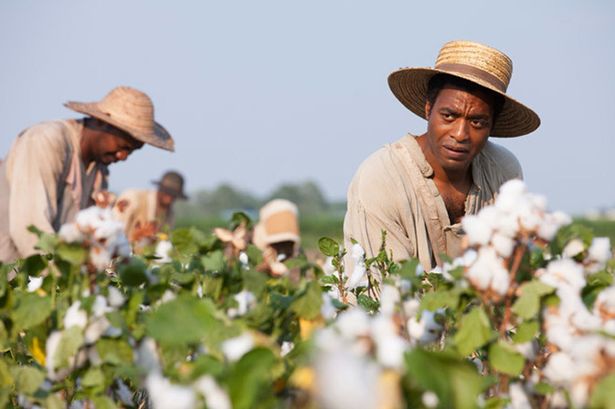
Chiwetel Ejoifor (right) recreates Solomon Northup's slavery expereince with brutal honsety in Twelve Years A Slave.
Chiwetel Ejiofor (right) recreates Solomon Northup’s slavery experience with brutal honesty in the film adaptation of Twelve Years A Slave.

Twelve Years A Slave is a landmark book for what it helped to overthrow. Adapting it to the big screen is a new challenge. Did the attempt from British director Steve McQueen work?

The movie begins with Solomon Northup in captivity. However it flashes back to when he lived as a free man in a town in New York. New York was a free state during the days of slavery and blacks were free even to the point where they could be businessmen. However he was tricked during a trip one day by slavetraders into touring with the circus. He was drunk that night and the following morning he finds himself chained to a floor and beaten. He was forced through brutal punishment to accept the name Platt and was sold in New Orleans to plantation owner William Ford.

His first experiences as a slave were not bad under Ford. Ford actually treats him with enough respect for Northup to give him a violin in gratitude. However things change when his boss becomes carpenter John Tibeats. Tibeats is terrible as he mocks all his slaves but takes a special dislike to Northup. Tensions go from Tibeats harassing Northup to the two fighting to Tibeats getting his men to hang Northup. Ford notices this and sells Northup away from Tibeats to cotton planter Edwin Epps.

Both Ford and Northup know Epps is cruel to his slaves and believes his right to be cruel to them is in the Bible. Northup insists to Ford that he’s a free man but Ford believes it’s not for him to say because he has a debt to pay. Epps places a demand on all his slaves they pick 200 pounds of cotton a day or be whipped. Throughout his stay, he is subject to brutal treatment from the Eppses and even a plague of the cotton worm where he and the other slaves are sent away to a temporary field. He is even betrayed in his attempts to freedom and has his letter to New York burned by Epps.

Meanwhile Epps is observant to the other brutality going on. Most notably to the female slave Patsey. She is excellent at picking cotton but has caught the jealous of Edwin Epps’ wife who repeatedly beats her. Edwin himself rapes her repeatedly and worsens over time. Patsey’s mental condition worsens to the point where she wants a suicide and even welcomes a whipping from Solomon ordered by Mistress Epps.

There is a ray of hope as Northup works construction along with a Canadian named Bass. Northup knows of Bass’ opposition to slavery by how much it disgusts Edwin Epps. Northup confides to Bass of his experiences. Northup again attempts a letter to pass on but Bass agrees to do so despite that being a risk to his life. The movie ends on a bittersweet positive note and provides information on what happened after the novel was published.

I’ll admit I’ve never read the actual book ‘Twelve Years A Slave.’ Nevertheless I consider it an accomplishment to bring it to the big screen for the first time. It gave an excellent depiction of the horrors and brutalities the slaves went through during the times of slavery. Those who don’t know all the details of what was all involved with slavery other than simply owning black people don’t know all the details. The movie in itself was a recreation of the slave life Northup experienced. This is a life that Northup experienced and witnessed and was a life with thousands or even millions of slaves experienced in the United States. It will shed quite a light and will give all the reason why slavery had to be ended. It will also surprise you with the fact that Solomon was one of the few slaves to escape to freedom. It will even cause you to think of the slaves that weren’t lucky enough to be free.

One thing that made me question was the state of slavery laws at the time. I may be Canadian but I knew of the Dred Scott Decision that had a bearing to the Civil War and the eventual end of slavery. What surprised me is that Northup was a free man living in New York State when he was kidnapped and sold off to Southern slave owners. That had me thinking there must have been some laws against kidnappings and even selling of African Americans from free states. I’m actually surprised to see that kidnappings of free black people by Southern slave traders happened back then. Makes me wonder if there were those that unlike Northup never got their freedom back.

Another thing that caught my attention was the scene where Edwin Epps whips Solomon mercilessly. A white man tries to stop him but he rejects, saying; “he’s my property.” It’s a reminder of the reason why African-American slaves were treated so abhorrently. The white owners looked at them as property that they can do whatever they wanted to them. They could whip them all they wanted or even kill them. They could even be raped in the case of Patsey. None of it would matter because they weren’t considered people. They were considered ‘property.’ And one thing that will strike you once you leave the theatre was how much the Southern states treasured slavery. This was something they valued to the point that when it became clear slavery would end in the United States, they declared their own nation: The Confederate States of America. They would even fight a brutal Civil War over four years with hundreds of thousands of soldiers killed for the sake of keeping their slavery, in which they’d eventually lose. Really makes you think.

The biggest accolade for the efforts given to the film have to be given to director Steve McQueen. Steve is actually a mostly unknown director in the past who had previously directed two previous feature-length films and 23 shorts. Watching Twelve Years A Slave will cause many including myself not to believe this is only his third feature-length. This is excellent and impressive. He did an excellent job of recreating the story and also bringing out excellent performances of actors famous, well-accomplished and those short on experience. What’s also surprising is that Steve McQueen is not African-American but British of Grenadian descent. I too find it surprising that it’s a black British director that has best depicted American slavery to the big screen. He already looks poised to become the third black director to be nominated for a Best Director Oscar. Not even Spike Lee was nominated in that category. The big buzz is will he win? If he does, he’ll be the first black director to do so.

The acting was also excellent. Chiwetel Ejiofor was excellent as Solomon Northup. It was not only of what he said and what he did but also what he witnessed that made his performance of Solomon. Supporting performances were also excellent too. Lupita Nyong’o was the one that stood the most out as Patsey: a slave that’s as tortured inside as outside. This is actually Lupita’s feature-length film debut. Excellent work. Michael Fassbender was also excellent as Edwin Epps. His jerk attitude made him that hateable. Sarah Paulson was also excellent as Mistress Epps. Even though her role didn’t have as much dimension as Edwin, she was just as hateable. Both made it look like the Eppses had a lust for blood and abuse. Even the performances from Benedict Cumberbatch, Brad Pitt and Paul Dano added to the film.

John Ridley did an excellent job of adapting Northup’s biography to the big screen. This is surprising as Ridley has more of a reputation for writing for television comedy. However he did write the story for 1999’s Three Kings. This was an excellent job for him. Sean Bobbitt did an excellent job of cinematography and Hans Zimmer did a great job for composing original music.

Twelve Years A Slave is an accomplishment of a film. An accomplishment in both acting and directing. The story may be too unwatchable for some but its brutal honesty is its best quality and help make it one of the best films of 2013.

Oscars 2012 Best Picture Nominee: Amour

Amour

Amour is the first foreign language film nominated for the Best Picture Oscar in 12 years. This film is also the second film by Austrian director Michael Haneke that won the Palme d’Or Award at the Cannes Film Festival. Watching it will surprise you how the saying that ‘less is more’ is true here.

The film actually opens with the ending at the very beginning. After the title’s flashed, the film sets up the events leading to its ending. The first event is a crowd of people at a concert hall gathering to watch a classical piano performance. In the crowd is an elderly couple: Anna and Georges. Both Anna and Georges are retired music teachers and the concert they see is of one of their former students. The next day Georges notices Anne catatonic at breakfast. Georges gets her help and she’s found to have had a stroke. She is to have surgery on a blocked carotid artery but the surgery goes wrong leaving her confined to a wheelchair with a paralyzed right side. Anne makes Georges promise her she’ll never go to a hospital or to a nursing home. She doesn’t even want to talk about it in conversation with one of her students.

Both continue life as well as they can but life becomes more difficult for Anne and she loses the desire to live further. A visit from their former student softens the mood but Anne however wants no reminder of her illness in conversation. Anne however suffers another stroke which causes further deterioration to her body. It’s serious to the point her daughter flies in from her home to see her.

Georges keeps his promise to Anne but with great difficulty and a lot of personal strain. He employs two nurses to look after her on separate days only to have one fired for mistreatment. Anne loses the ability to speak coherently to the point she can only shout “Hurt!” repetitively. Georges has to act as the nurse at certain times. There was even one time Georges has to get Anne to drink her water despite her refusal. It’s when Anne is crying in pain and Georges tries to comfort her with a childhood story that leads to the set up for the ending we saw at the beginning.

The film’s biggest asset has to be the truthfulness of the situation. It captures the silent intensities of the moment and the people struggling with it. It tells the story of Anne and her struggle with her illness as it slowly takes everything from her. She hangs onto the one thing the illness can’t take away: her love for her husband. Also this was more than just about Anne dying but the Georges’ relationship to her. His love is being tested too as her illness dehabilitated her and reduced her to a person he can’t recognize. He tries to be the loving husband. He tries to be the force that keeps her wanting to live. He tries to have her wishes followed. His successes don’t come without its difficulties. That has to be the biggest quality of the film. Not just simply telling the story but focusing on the relationship of the two. The relationship is what the story’s all about.

This is another accomplishment by director/writer Michael Haneke. Haneke is one director who has been able to make a big impact in the new century. He started making a name for himself with The Piano Teacher and has since gotten better with each additional film he sends out from Cache (Hidden) to The White Ribbon which won him his first Palme d’Or from Cannes to Amour. As in his previous works, he is successful at capturing the feel of the moment. He captures the tension of the situation and the emotions and relations of those involved. It’s a no-nonsense story-focused picture that Haneke succeeds in bringing out.

Emmanuelle Riva was excellent in her acting. This was a performance that wasn’t just about emotional acting but physical acting too. Her ability to play a stroke victim well was excellent technically. And all this done at the age of 84 makes it all the more admirable. Despite the great performance of Riva, we should not overlook the performance of Jean-Louis Trintignant. His performance as the husband dealing with it all is also excellent and worthy of respect. He too spoke volumes in his performance and also added to the story. The film also makes a great effort in playing out with no musical score in the background. This is common in Haneke’s films not to have a musical score. Having this film without a score adds to the intensity of the situation and adds to the focus of the relationship of the two.

You remember I talked about film eligibility in the Best Foreign Language Film category for the Academy Awards in my review of Rebelle. This adds more question to the discussion. Amour is a film representing Austria: the country of nationality of director Michael Haneke. Yet it is situated in France and completely consisting of French dialogue. The reason why I’m bring these facts up during these two foreign film nominees is that it does have me wondering what the rules are. I myself take Amour for what it is and am not insisting that Haneke should’ve done it in German. However it does have me wondering about what constitutes a country’s official submission to that category. I was told years ago that an entry of such had to consist of the country’s predominant language or languages. I also was told a multitude of years ago that it had to be set in the country of origin. All I know is the rules don’t make a lot of sense. I’m sure that Amour would have the same Oscar nomination success without being a country’s official submission for the foreign film category. Nevertheless it does get me thinking.

As of now, Amour is the one film with the least release of all the Best Picture nominees. Normally it’s common for films that make for the top contestants for the Best Foreign Language Film to wait until after the Academy Awards for a wider release rather than after the nominations. Amour is doing just that with a very limited release despite its nomination for Best Picture. This weekend saw the film playing at 64 screens across North America: 28 more than the previous weekend. The total gross has just surpassed $1.8 million. Could it be possible it too is waiting until after the Oscars for a wider release?

Amour is possibly the most no-nonsense of all the Best Picture nominees. Michael Haneke knows how to tell a story well and not only does he do it again but he delivers one of the best films of the year. Worth seeing if you have the chance.

Movie Review: Prometheus

Prometheus is a movie many would compare to 1979 Alien, and tightly so. It’s intended to be a prequel to the Alien series despite being released 33 years after and directed by Alien director Ridley Scott. But does it succeed both on its own and as a prequel?

The movie begins with an alien disintegrating after drinking a liquid. A biogenetic reaction occurs as his remains fall into a waterfall. In the meantime a trip to a distant moon is planned after an archeological discovery in Scotland of a star map connecting several unconnected ancient cultures. The archeologists, Elizabeth Shaw and Charlie Holloway, interpret it as humanity’s ‘forerunners’ or ‘engineers’. The trip to that moon is a four-year trip via a spacecraft called ‘The Prometheus’ though Weyland Corporations monitored by a human-like android named David and instructed to find and study ‘the Engineers’.

Upon arriving on the moon they find many key artifacts as well as alien bodies and assume the alien Engineers are extinct. One of the artifacts, cylinders, leaks a dark liquid which David and Holloway later drink. Meanwhile a storm causes many to return to the stranded ship and Millburn and Fifield stranded in the structure the ship is resting by. Meanwhile in the structure, snake-like creatures start acting up, killing Millburn and melting Fifield’s helmet. After the others discover Fifield and Millburn’s body, David finds a control room with evidence of a surviving Engineer and a star map highlighting Earth. The black liquid Holloway drank now starts to attack his body badly enough for mission director Vickers to refuse him back on the ship and has his body burned. Shaw discovers she’s pregnant with an alien baby and attempts to abort it herself.

As the elder Weyland prepares to depart the planet on his craft, a mutated Fifield attacks and kills several crew members before he himself is killed. We learn the structure was part of a base that lost control because of the dark liquid. After learning the structure is part of a spacecraft, the crew run to an Engineer for help only for the Engineer to kill crew members, decapitate David and take control of the spaceship only to crash it. The crash prevents the Engineer from releasing any of the liquid on Earth. Even as Shaw gets away in a lifeboat, she learns that the Engineer survived the crash and her aborted alien baby is alive and grew to full-size. The departure of Shaw and David, whose head is still active after decapitation, won’t come without a fight and it leaves an ending that either sets up for a prequel or sets up for the actual Alien.

What should be noted is that Scott had planned as far back as 2002 in creating a prequel to Alien. However it was sidelined as Alien vs. Predator came up and would be released in 2004. Interest in this wouldn’t resume until 2009. One of the risks of prequels is that those who are familiar with the movie series will have expectations of it. Also there are those moviegoers who are unfamiliar with the series and just see the movie for what it is. Prometheus won’t answer all the big questions Alien fans will give but it will give some satisfaction to fans of Alien as well as thrill the unfamiliar moviegoers. Ridley Scott had a big task on his hand when he was to make a prequel to his famous Alien movie. He may not have succeeded completely but he did a respectable job of his own in this project.

Although the acting was mostly unspectacular as is to be expected in a SciFi movie, it was Michael Fassbender’s performance of android David that stood out as the best effort. Noomi Rapace may have given a good acting performance, if not great, but gave a good job at delivering a strong and determined, albeit vulnerable, heroine. The script was good but it still had a lot of predictable and unresolved plot elements and as I said before, it still leaves a lot of questions unanswered to fans of Alien. As expected in a SciFi movie, its best qualities were the visual effects and the set designs. It did an excellent job of recreating a fictional planet with excellent special effects, especially the alien effects. The score by Marc Streitenfeld also added to the drama of the movie.

Prometheus did have a lot of expectations put on it. Although it didn’t succeed at achieving them all, it still made for a good thriller of a movie. Whether there will be another prequel or not still remains in question.

Election 2011: Canada Votes

Okay, some of you who don’t live in Canada have heard that we have a National Election—the 41st Canadian General Election– in which we will be voting on May 2nd, but don’t know all the details of what’s going on. Here are the details about what’s been happening and what to anticipate.

For those unfamiliar with how Canadian elections work compared to American elections, Canadian elections are held on any given date instead of the first Tuesday of November. A Prime Minister’s term can be any length of time instead of the solid four years of an American President’s term, even though most Prime Minister terms are between three to five years. While Presidential Elections are decided by electoral votes based on which Party wins the most votes per state, Canadian Prime Ministers are decided by the most won seats with each voting district or region deciding its own winning Member of Parliament per Seat. In other words, while citizens vote for electors in the Presidential election and the winning Party in the state wins all the state’s electors, Canadians vote for MP seats in the Prime Minister election. While an American President is decided by the most electoral votes, even if he doesn’t have the highest total of votes, A Canadian Prime Minister can be declared upon winning the most seats even if they don’t have the highest total of votes. So there are some similarities between Canadian elections and American elections but a lot of differences.

Now for the current political scenario in Canada. Politics in Canada has gone through a lot of chaos over the past few years; so chaotic this is the FOURTH National Election in seven years. The most recent National Election was declared in the aftermath of a political scandal. Stephen Harper’s Conservative party was long considered to be in contempt of parliament at the beginning of March upon refusing to meet Opposition requests for details of proposed bills and their cost estimates. The Liberal Party responded by declaring a motion of non-confidence against the Government and on March 25, 2011, the House voted agreeing 156-145 to the motion. This marked the first time in the history of Canada or any nation in the Commonwealth of Nations that a cabinet has been found in contempt of Parliament. Following a meeting with Stephen Harper, Governor-General David Johnston agrees to dissolve the 40th Canadian Parliament and a Federal Election was declared.

Even before the most recent election was declared, Canadian politics has already been known for its chaos in the last seven years. Back in 2005, the Liberal Party under then-Prime Minister Paul Martin faced a sponsorship scandal of what would be documented in the Gomery Report. Even though Paul Martin had been Prime Minister for less than a year, an election was declared and in January 2006 Conservative Party Leader Stephen Harper won the election with a minority of seats. The Conservative Party victory was considered an arrival for political conservatives in Canada who struggled during the 90’s after the eventual decline of the Progressive Conservative party upon the resignation of Brian Mulroney.

 Another national election was held less than three years later in October 2008 and Harper’s Conservatives again won the election with a minority with Liberals, Bloc Quebecois and NDP making up most of the remaining seats. Shortly after the 2008 Federal Election, the Liberals and NDPs banded together for an overthrow of the Conservative government through a unified vote of non-confidence. Some may call it the right thing, others political mutiny. Whatever the situation, the coalition didn’t succeed and the Harper-led Conservatives remained the leading party of Canada. Since then, many Liberals have tried to distance themselves from the coalition.

Now it’s Stephen Harper’s try for a third term as Prime Minister. He comes in the election with the scandal creating baggage for him, but not a lot. Before the scandal, the Conservatives were tops in the polls and they still remain on top. One thing Stephen Harper is hoping for is a Conservative majority, especially with the 2008 attempted coalition still in his Party’s memory. The most surprising fact of the polls is that the Liberal Party is not the party with the second-highest ratings but the NDP. The Jack Layton-led NDP surpassed the Liberals in the April 20th poll and the most recent polls have the NDPs at an average of 31.4% in comparison with 3% for the Conservatives and the Liberals at 20%. This has many believing that the NDP could be setting up for a possible upset for Monday’s election; maybe even a Prime Minister Layton. Mind you the polls only represent popular voting patterns. It will all be decided when the ridings vote for the MP’s and their parties.

Win or lose, Jack Layton appears poised to have the biggest National Election result for the NDP party ever. The biggest ever result for the NDP Party is 43 seats in the 1988 election while the Party was led by Ed Broadbent. Even its founder, Tommy Douglas, never experienced the success Ed received. One difficulty of Layton’s, especially after the coalition, is for the NDP to distinguish its political platform from that of the Liberal Party. Too many voters label the NDP to be like the Liberals since they are on the same left stance. This may be seen good for liberal-siding voters but not so good for the NDP’s own identity. Whether Jack Layton wins or loses, he will have to prove the NDP’s distinction from the Liberals politically. Otherwise voters will continue to believe the NDP and Liberals are two choices of the same stance.

Then there’s the Bloc Quebecois. The Bloc was started in response to a resurgence of Quebec nationalism felt after the decline of the Parti Quebecois and after the Meech Lake Accord, which was intended to grant Quebec distinct constitutional status, was overturned in 1990. The party has attracted Quebec nationalists and even prompted a second referendum in 1995 in which Quebec nationalism lost again. Despite Quebec nationalism being voted down, the party has always won at least 50% of the Seats open to Quebec. The Bloc had 49 Seats in the last election–47 are still current– with 10% of the popular vote in Canada and 38.1% of the vote in Quebec. However recent polls have them at 7%. Could this mark a decline of the Bloc?

Party aspects aside, One thing about the election is that the parties are hoping for a better voter turnout than what happened during the 2008 election. Then, the voter turnout was 58.8%, the lowest turnout percentage ever for a National Election. Parties have been making the effort to urge voters out. Even campuses have had young people out to drum out support. Interesting how around the time I first became an adult, MTV started a ‘Rock The Vote’ campaign around the time of the 1992 Presidential election and MuchMusic started ‘Vote With A Vengeance’ for the 1993 Federal Election. This election, there’s no ‘Vote With A Vengeance’ campaign. Funny. Doesn’t Much care anymore?

The big day is May 2nd, tomorrow to be exact. Canadian history will be decided by the people. The election results and its aftermath will further shape Canadian democracy in the years to come. Stay tuned. As for Canadians, get out and vote!

WORKS CITED:

WIKIPEDIA: Canadian Federal Election, 2011.Wikipedia.com. 2011. Wikimedia Foundation Inc. <http://en.wikipedia.org/wiki/Canadian_federal_election_2011>

WIKIPEDIA: New Democratic Party.Wikipedia.com. 2011. Wikimedia Foundation Inc. <http://en.wikipedia.org/wiki/New_Democratic_Party>

 WIKIPEDIA:Opinion Polling in the Canadian Federal Election, 2011.Wikipedia.com. 2011. Wikimedia Foundation Inc. <http://en.wikipedia.org/wiki/Opinion_polling_in_the_Canadian_federal_election,_2011>

WIKIPEDIA: Bloc Quebecois. Wikipedia.com. 2011. Wikimedia Foundation Inc. <http://en.wikipedia.org/wiki/Bloc_Qu%C3%A9b%C3%A9cois>