2023 Oscars Short Films Review: Live-Action

It’s interesting when the Academy deliver their nominations for feature-length films, they’re mostly for English-language films. Most of them being American films. Yet the nominees for the short films categories are often multilingual. For the films nominated for the live-action category, we have  films in French and Danish. We also have three English-language films, but two are from the UK. Not as much foreign language as the animated films but still it tells how these categories are among the most international of them all.

What’s interesting about the short films in the live-action is that many are from up-and-coming directors, as is the common case in this category, but we also have one British film directed by Wes Anderson! Also in the film are renowned star actors like Benedict Cumberbatch, Ben Kingsley, Dev Patel, Ralph Fiennes and Richard Ayoade. The other films also show actors of renown like Brittany Snow, Leif Andree and David Oyelowo. So there’s something about short films that make well-known actors want to pursue them.

Without further ado, here are my thoughts on the Live-Action short films nominated for the Oscars:

The After (dir. Misan Harriman) – Dayo is a successful businessman in London. One day, he drives his daughter to the top floor of a parkade to meet up with his wife. Suddenly a man wielding a knife commits a massacre all over the parkade. The man stabs his daughter to death. The wife, heartbroken, jumps to her death as Dayo fights to restrain him for the police. Time passes. Dayo is resigned from his position and makes his pay an Uber driver. He has cut off all contact from his friends and colleagues and won’t even meet with crisis management counselors. Although he keeps to himself, it’s obvious he’s still hurting on the inside. As he waits for his latest customers at the airport, he takes the picture of his family and sings “Happy Birthday.” The daughter of the family he’s to drive looks very much like his own late daughter. He tries to restrain his emotions at first as the parents make their way to the car. During the drive, the couple are consistently arguing in front of the child, but the daughter is sensing something is wrong with Dayo. Dayo still tries to keep his cool. As he gets out lets the family off at their house, the daughter goes to hug Dayo and Dayo just breaks down. The parents are shocked by what they see and leave him, but Dayo picks himself up.

How do you live again after you’ve lost it all? This is the type of question we don’t normally ask ourselves or don’t want to think about but unfortunately, there are some people who have to do exactly that? This is a story that does a great job of showing the before-and-after of a tragic incident that claims the lives of Dayo’s wife and daughter. Throughout the story, Dayo is the storyteller through his actions and his emotions. Even without dialogue, you can sense what Dayo is saying through his body language. He doesn’t know how to live again or deal with his emotions. It’s right after the breakdown he has after the daughter hugs him that Dayo knows he has to continue on, despite how hard it will be. This film which is the directorial debut film for Misan Harriman tells a gripping story with a profound message. David Oyelowo does an excellent job in his performance in both scenarios of the story. If they could give Oscar nominations for performances in short films, I’d say give one to David!

Invincible (dir. Vincent René-Lortie) – The film begins with a young boy in the driver’s seat in a car named Marc who telephones his mother, but doesn’t say a word. His mother tells him to come home, but police lights flash. Rather than surrender to the police, Marc drives the car off the cliff into the water. Going back weeks earlier, Marc is on a family vacation having fun with his family at the lake. He plays with his little sister but is embarrassed of how she chickens out with her finger over his lighter. This is the last set of fun Marc will spend with him before being sent to the youth detention centre. The first day, Marc can’t stand being in a sweltering room with no way to cool off. He ignites the sprinkler system which the officials put him on a stern warning. A councillor tries to deal with Marc and tells him how he has what it takes to be a smart positive influence on others and can’t understand why he’s always getting in trouble. One day, the official sees progress in Marc and how he helps others. The officials decide to take the boys to a nearby community pool. it appears Marc is having fun with all of them but when the councillor isn’t looking, Marc does his latest escape. Marc runs into a car but as the woman enters a store to call the ambulance, Marc steals it, attempting to take his escape further. As Marc stops, he calls his family. The mother, aware the police are pursuing Marc, pleads for him to return as the sister tests her pain with the candle.

This is a story inspired by a troubled 14 year-old boy from Quebec who killed himself as he drove into a lake in 2008. The story haunted the people in the area for many years. The boy, Marc-Antoine Bernier, was a friend to the director. Here, it appears the director is using his film to bring some respect back to Marc. Marc was an intelligent boy capable of a lot of good, but kept on getting into trouble. We all have known a kid like that in our childhood. Although this is a story inspired by a real-life person and based on true events, there may have been events or happening added to the story. Only Marc knows what really happened. Nevertheless Vincent makes a good effort to redeem Marc from the story he tells and even tries to get us to feel some empathy for him. We’ve all had those years when we were younger when we all felt we were trapped mentally, if not physically. If Vincent doesn’t make you feel empathy for Marc, he does make for an intriguing story. That’s why I make this film my Should Win pick.

Knight Of Fortune (dir. Lasse Lyskjær Noer) – Karl is at a multi-chapel funeral home where he comes to mourn his wife. Left alone, he can’t bring himself to open the casket. He tries to adjust a light but it breaks. Frustrated, he goes to a bathroom where he encounters another widower named Torben. Torben claims he can’t open the casket for his wife. Karl goes with Torben to the chapel and helps open the casket. As Torben attempts to say his “last words,” a family comes in. They’re the real family of the deceased woman including the real widower. They allow Torben and Karl to stay. When the widower is at a loss for words, Torben is able to say the right words as if the woman really was his wife. Karl leaves Torben angrily but he later learns from the funeral directors that Torben lost his wife in a boating accident three years ago and never had a real chance to say goodbye. Outside in a nearby bench, Karl notices Torben. Instead of anger, Karl laughs and invites Torben to the chapel where his wife is. Torben is able to open the casket and Karl is able to say his last goodbyes. As Karl gives his wife one last kiss Torben sings “Knights Of Fortune.”

Another story of loss and coping. Although this story deals with the subject of death in a gentler manner, and even includes humor, We all know that loss is never an easy thing to deal with, but it needs to be dealt with. This is a story of a widower struggling to properly say goodbye encountering an imposter who knows the right words to say goodbye to a woman he’s never really met, but makes like she was his wife. Once Karl learns about Torben that he’s not simply an imposter, but a hurting man who uses funerals of wives to say the goodbyes he always wanted to say to his own wife, could Torben be the very person to help Karl deal with his grief? This is a story of grieving, healing and saying goodbye that is greatly different from other stories. Nevertheless it does offer a message of healing and hope. It’s ironic how this imposter is exactly what Karl needs to properly deal with is loss and say goodbye, and a friendship that really shouldn’t be, happens.

Red, White and Blue (dir. Nazrin Choudhury) – Rachel, a waitress in a diner, looks at a pregnancy test and sees a positive result. Rachel is a single mother who has difficulty to support her two children. She also lives in Arkansas where abortion is illegal, thanks to the overturning of Roe v. Wade. She plans a trip for an abortion procedure in Illinois where it is legal, but it’s more than she can afford. One day, a woman customer who somehow knows what Rachel is dealing with leaves her a tip which makes up the remainder for her abortion trip. Soon, she leaves her son Jake with a friend as she takes her daughter Maddy on this trip. This is the first time out of Arkansas for both of them. Before they go to the clinic, they go to a carnival as it’s just before Maddy’s birthday. Maddy wants a merry-go-round ride, but it’s more than Rachel can afford. She agrees to one ride and Maddy chooses the elephant. At the clinic, Rachel learns she’s late for her appointment but through past recollections and as the receptionist learns the dirty facts, she tries to make it urgent.

No doubt this story is about abortion. Especially in post-Roe v. Wade United States. The thing is this story is more than that. You know the story is about the pursuit of an abortion, but it’s not what you originally think at first. You think it’s about an impoverished mother getting an abortion because she’s two-and-through, but things change as you learn more information. You wonder why on earth would a mother take her young daughter on an abortion trip? Soon you learn there’s more to the reality of unexpected pregnancy and abortion that meets the eye. Including a lot of upsetting truths. It’s also surprising how in a story that has a theme that hits close to home and presents a story that many would find upsetting, it is still able to have a heart-warming ending that works. That is something in film that is very tricky to do, but Choudhury accomplishes it!

The Wonderful Story Of Henry Sugar (dir. Wes Anderson) – Based on a short story written by Roald Dahl, Henry Sugar is the pseudonym of a wealthy bachelor who loves to gamble away his inherited riches. Thing is he never seems to have enough and wonders how can he get more money? He learns the legend of a man from India named Imdad Khan who learned the fine art of levitating and seeing with is eyes closed, thanks to the teachings of a Great Yogi. Thing is as the doctors were studying Imdad, Imdad tells his story and dies suddenly. Henry tries through great lengths to master this technique through all he can learn. Once he finally masters the sight trick, he goes out gambling and wins big! Problem is all this money isn’t making him any happier. At first he thinks the right way to give the money away is to throw it off a balcony. After it causes a riot, police recommend Henry develop a better method. Henry then spends the next twenty years traveling the world, gambling, and donating his winnings to hospitals and orphanages.

This is the last of the five shorts shown in the shorts.tv reel. After seeing four stories that were either depressing, too serious or had dark subject matter, it was refreshing to end the reel with a light-hearted comedy. The story succeeds in making the tale amusing. Already we have a major director directing it and four major actors — Cumberbatch, Kingsley, Fiennes and Patel — acting in it. Nevertheless the story telling, set changes, and the acting of all make it a delight to watch. It makes for a “guilt-free guilty pleasure” as I like to call such things. That’s why I make this film my Will Win pick!

And there you have it. Those are my reviews of the five films nominated in the Oscar category Best Live-Action Short Film for this year. That also completes all my reviews for the Oscar-nominated short films. Those short film categories are usually the hardest to pick a winner. You think you know what will win, but end up surprised in the end. We’ll see how it all goes on March 10th.
Oscars 2014 Best Picture Review: Selma

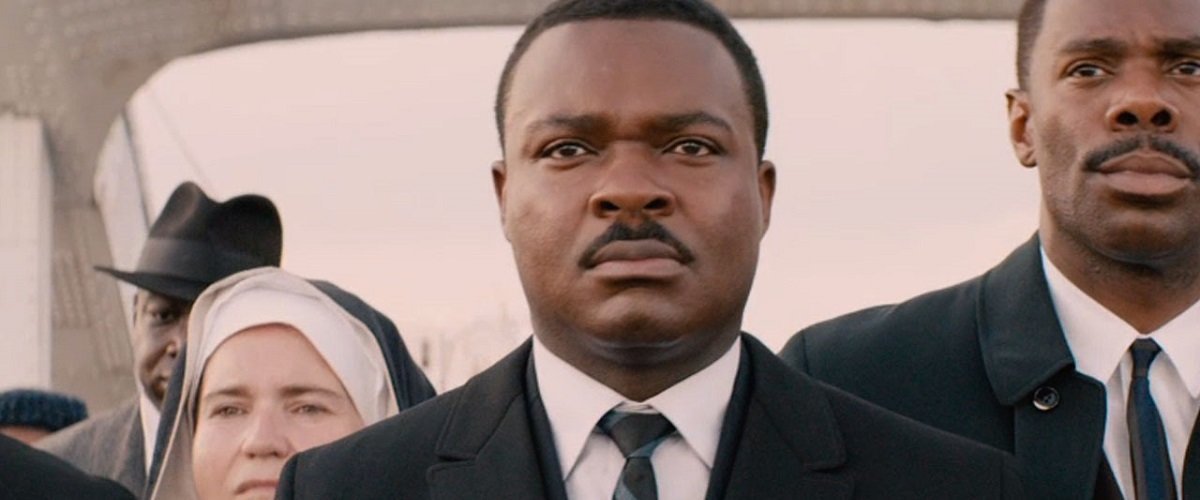
David Oyelowo (centre) plays Martin Luther King in Selma.
David Oyelowo (centre) plays Martin Luther King in Selma about an important part of American history.

Selma appears to be about an important time in US history. However it tells more than what we’ve learned about the whole story including those involved.

The film is about the march from Selma to Montgomery in 1965 led by Martin Luther King Jr. that would pave way to President Lyndon Johnson signing the Voting Rights Act of 1965. But it was more than that. It starts with Martin receiving his Nobel Peace Prize in 1964. However it’s just the beginning for Martin. A black church in Alabama explodes killing four young girls. Annie Lee Cooper has been denied the right to vote like most black people in Alabama before her. Meanwhile King is unsuccessful in convincing Johnson to pass a law allowing black citizens to vote.

Instead of accepting defeat, King is undeterred and determined to achieve this. Selma, Alabama is the meeting place for King and other activists to organize efforts to achieve this law. However both Johnson and FBI head J. Edgar Hoover are nervous about this. Hoover uses phone calls to disrupt his marriage to Coretta. Undeterred, King and black residents of Selma march to the registration office only to be confronted by a mob of police and a riot ensues where King and Cooper are arrested.

Things get even harder as state governor George Wallace, a pro-segregationist, speaks out against the marches and even calls police in Marion, Alabama to use force from state troopers during a planned night march. An assault by troopers does occur during the march where Jimmie Lee Jackson, who hid in a restaurant for the safety of him and his family, is shot to death by the police. Jimmie’s death only prompts King to tell people to stick to fighting for their rights. However the Kings receive threats on their children and activist groups are becoming unhappy with him.

A march from Selma to Montgomery to make their message heard is planned especially with the hopes of having all of the United states watching and paying attention, especially as working on ‘white consciousness’ is one of King’s objectives. At first King is hesitant but is convinced by his colleague Andrew Young. The original march takes place with all African-Americans. Right on the Edmund Pettis Bridge they’re stopped by police and attacked. The news goes nationwide. A second march is planned. This time King not only has blacks from other cities but white supporters too from regulars to religious clergy. Just before the marchers reach the end of the bridge, the chief officer and his group are back again. This time they’re allowed to proceed but King kneels in prayer and goes back. The reason was because King was suspicious. He doesn’t trust the mob of police and wants legal permission for them to march. The push for permission is especially stressed as one of the white allies, Rev. James Reeb, was beaten to death. The permission is granted by Alabama Judge Frank Minis Johnson. Lyndon Johnson, Martin Luther King and the marchers make history.

There’s no question that this is to do about an important moment in American history. Actually coming from Canada, I was never taught about Selma. I knew about the I Have A Dream speech but was never taught about Selma. However the film is also about Martin Luther King himself. The movie begins with him accepting his Nobel Peace Prize which came months after his I Have A Dream speech. However we would be reminded that King had more work to be done. Selma was a new challenge for him as his people needed the right to vote. However there was the constant threat of police brutality and even death. He stood firm in his non-violence stance and his plan was to work on ‘white consciousness’ and he knew it was the only way to work. He also knew he had to work with the tough minds of President Johnson and other politicians including Alabama Governor George Wallace. Each death linked to the marches would make him more fearful but it would make him more convinced this is something that needs to be done. We all know it was achieved but this is a reminder of how King and his people had to achieve their right.

The film also takes us back to the time and place. It reminds us just how hard it was to be black in southern US states like Alabama. Living in segregation was one thing. Being denied the right to vote was another. The only time in my life I knew of black people being denied the right to vote was in South Africa up to 1994. Apartheid riots were common news stories in the 80’s. I was shocked to learn that it was happening to black people in the 60’s in the Southern US. I always thought the US was supposed to be the ‘land of the free.’ It showed the red tape black people had to face in the justice system and especially with the police. We are all shocked and disgusted to hear about the fatal shootings of Michael Brown and Trayvon Martin in recent years and their killers getting away with it. This was happening in Alabama in the 60’s all the time. Especially shootings by police on young unarmed black men like Jimmie Lee Jackson. You couldn’t blame them for having had it. They couldn’t be denied this anymore and this was a must-win situation for them and King.

Just as much of a focal point as blacks fighting for their right to vote is also the focus of the bigoted attitude of the whites in Alabama. King made it his duty to work on ‘white consciousness’ in order to achieve this victory. Alabama, especially in the city of Selma, showed what type of ‘racial battleground’ they had to deal with. The first sign was the church explosion but we’d see it all throughout. We’d see it in the police brutality, we’d see it as a restaurant proudly advertises itself as ‘a whites-only restaurant since 1883,’ we’d see it as a white man ‘introduces’ himself to King and punches him in the face, we’d see it in the taunting of white people from all around. That’s the type of environment the black people had to fight. We should forget that Alabama has segregation removed years ago but the white people weren’t happy. They felt that segregation was right and they reacted in frustration with taunting and even violence. Even when white people joined the blacks in their march, that didn’t change a lot of people’s minds. In fact they found white supporters to be a threat and reacted with the same violence on them, even killing some. Another reminder that white supporters of the Selma marches would also be at risk to the same violent reactions as blacks. The film takes us back to the time, place and the hostile attitudes at the time. An ugly reminder but necessary to show.

Even though the film was about Martin Luther King, his crusade for human rights and the bigoted attitudes in the area, the film also showed another factor: the strength of non-violence. King’s use of non-violent means to achieve human rights may appear radical to many and even ridiculous to some at first. In fact it explains why he had a rivalry with Malcolm X as seen near the beginning of the film. Because Malcolm believed: “by any means necessary.” However it was shown to be successful in the actual event and in the film. In fact I noticed the film to also show violent means to look cowardly. We see it in the police who try to use it to strike fear in the protesters in hoping they’d quit. We see it in the white Alabamans as they use it to strike fear in the blacks and their supporters. Most of the times it’s seen they do it on impulse because they just don’t know how to deal with the situation. Funny how we’ve seen a lot of Hollywood movies, especially in the action movies of the 80’s and 90’s, where the leading man uses vengeance and violence to become the hero. Here violence looks very cowardly.

Without a doubt, this film has to belong to Ava DuVernay in directing and co-writing the story with Paul Webb. She did an excellent job in recreating the story of the marches, the people involved with them and the atmosphere of the time and place. The end result is an excellent film that won’t leave you. It’s not without controversy. There are many questioning the depiction of Lyndon Johnson in the film. Historical documents show he was actually supportive of Martin Luther King and his mission. Even I myself believed for a second that Johnson may have had some difficulty at first, knowing Johnson was originally from Texas: a state that formerly had segregation. DuVernay simply responded: “I’m a storyteller. Not a historian.” Whatever the situation, it was still a very good film put together.

David Oyelowo was excellent as Martin Luther King Jr. as she showed him in both his convictions, his inner strength and even his own personal frailties at times, like that time he relied on Andrew Young to go through with the march. Even that scene where he calls gospel singer Mahalia Jackson for inspiration and she sings to him shows that King did have fears which he needed support for. Tom Wilkinson was also very good as Johnson. Even if you feel his depiction of Johnson wasn’t that truthful, it was still a very good performance. Carmen Ejogo was excellent as Coretta. She did more than just simply play Martin Luther King’s wife. She played a young woman who herself grew in courage: a courage Coretta would need after Martin’s assassination. Oprah was also surprisingly well as Annie Lee Cooper. Right at the beginning we could see a character completely opposite to the Oprah we know. A character that looks like she’s been through the hardest life offered her. You could see it in her face. The cinematography and music added to the environment of the story. You could feel that this was a struggle worth winning.

Selma is a film retelling an important moment in history. It gives us insight into the people involved and the environment they had to fight in order to achieve their rights.

Movie Review: Lee Daniels’ The Butler

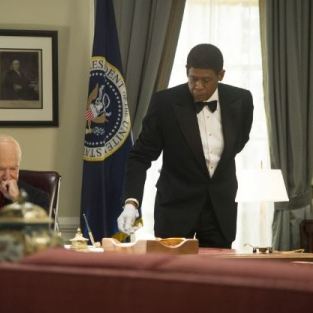
Forest Whitaker plays a butler in The Butler who serves the White House and includes himself in history.

Lee Daniels’ The Butler is another surprise hit movie of the summer. It doesn’t feature the typical fare for what one would call a ‘summer movie.’ Actually it features more mature fair that’s meant for a release around October, November or even December. So how did it manage to become a hit this summer?

The Butler is a unique story of Cecil Gaines. Born in a cotton field, he was forced into labor by the Westfalls, a Georgia family who owned the plantation. Even though slavery was out of existence, it didn’t stop people from treating their black employees like slaves. The son raped Cecil’s mother and shot his father dead. The state’s caretaker, the mother, takes Cecil out of the farms and assigns him to be a house servant. However it would be a businessman whom encounters Cecil after he breaks into a bakery and steals a cake after running away. The businessman turns him into a successful butler who’s able to provide a good income for his wife and children. Something very rare for an African-American man to be able to do before 1960.

A breakthrough occurs when Cecil is offered a job as a butler at the White House. This is a big breakthrough for the Gaines family as they can improve their way of life. However it does not come without its prices as Gloria feels alienated from Cecil and his workaholic manner and turns to adultery. His son Louis becomes very involved with political activism and the Civil Rights Movement from restaurant sit-ins to the Black Panthers movement. That doesn’t sit well to Cecil at all to the point they fight and they don’t speak for years. His 34 year career as a butler in the White House takes some turns as he’s able to converse with the president and even influence many on how they deal with African-Americans. Cecil is also involved in other incidents such as the riots after Martin Luther King’s assassination to losing his son in the Vietnam War. The story intertwines with his career with social changes for Black America during that time period with his own family life from his childhood to his career to Obama’s inauguration.

A short while back when I was doing a Wikipedia search on the movie, I learned that this film is loosely based on Eugene Allen: an African-American butler who first served in the White House in 1952, advanced to Maitre d’Hotel in his career and finally retired in 1986. The movie admits that this is inspired by a true story rather than actually being a true story. Though one can doubt the truthfulness of the story, the script by Danny Strong does capture one’s attention and is able to mix the White House life of Cecil with moments of history and even the struggle of one family dealing with the changes and trying to make life better for themselves and for their race. It’s almost like Cecil could be labeled the ‘Black Forrest Gump.’ The relationship between Cecil and Louis also highlights the divisiveness between two generations of African Americans. One learned he had to work hard to get places. Another adopted the new attitudes of Black pride during the 60’s. The clashes between the two represent the clashes of the two generations of Black America. Lee Daniels also does a very good job of directing the movie with its complexities. This is a big move for him to go from something like Precious to something more polished. Nevertheless it’s a very good move and can allow him to replace Spike Lee as the top African American director in the business.

The actors were also excellent, especially Forest Whitaker as Cecil. I’m not sure if Forest is trying to imitate Eugene Allen or trying to make Cecil into his own character–I admit that I myself have never seen video footage of Eugene Allen–but he gave an excellent performance both in terms of the character’s personality and his aging. Oprah Winfrey also gave an excellent performance as Gloria encompassing the struggles of maintaining family unity while dealing with a husband that seems too preoccupied with success. David Oyelowo achieves a personal breakthrough here as Louis Gaines. He does a very good job of representing the new black attitude of his times in both life and personal political attitude through Louis Gaines. Supporting acting was also very good from star actors like Terrence Howard, Lenny Kravitz, Vanessa Redgrave, Mariah Carey and Jane Fonda. The supporting acting performances from the lesser-known actors like Mika Kelly, Nelsan Ellis, Elijah Kelley, Clarence Williams III and Yaya da Costa were also very good and added to the ensemble cast. One thing that struck me about Yaya da Costa’s performance of Louis’ girlfriend is the Black Panthers scene where she has a big afro and admits her desire to kill. Didn’t she remind you of Angela Davis in that scene?

There’s one glitch in the movie, it’s the casting for those who portray presidents in the past. At first I thought Robin Williams as Eisenhower was a good choice but the others didn’t seem so.  John Cusack made Richard Nixon seem awfully young as did Liev Schreiber as Lyndon Johnson and James Marsden as John F. Kennedy. All three of them were at least ten years younger than the presidents they played when they assumed office. I feel the biggest miscast was Alan Rickman as Ronald Reagan. Reagan had a charming personality and Reagan was not seen as charming at all in the film but rather a toughie. Makes me wonder what was with this? Was it miscasting? Or were those the ways the presidents looked to Lee Daniels or through the eyes of Cecil Gaines?

One final note of the movie. This was the scene near the end showing Obama’s election to the Presidency in 2008. I know that there has been a ton of flack given to Obama over what he’s done or what he’s failed to do as President of the United States. One thing you can’t deny is that even in the five year’s since his election, he’s still the face of hope for a race and other racial minorities. That’s one thing that can’t be taken away.

Lee Daniels’ The Butler is an excellent movie worth watching. I have sometimes co-related to movie to Forrest Gump where a man is part of history. Despite some of its flaws, it was an excellent intelligent alternative to the hyped-up summer stuff and still draws audiences now.