Oscars 2024 Best Picture Reviews: Part Five

All this writing does get tiring after awhile. Despite it, I have no problem blogging my thoughts on the Best Picture nominees. So here’s my fifth and last blog on the nominees:
The Substance

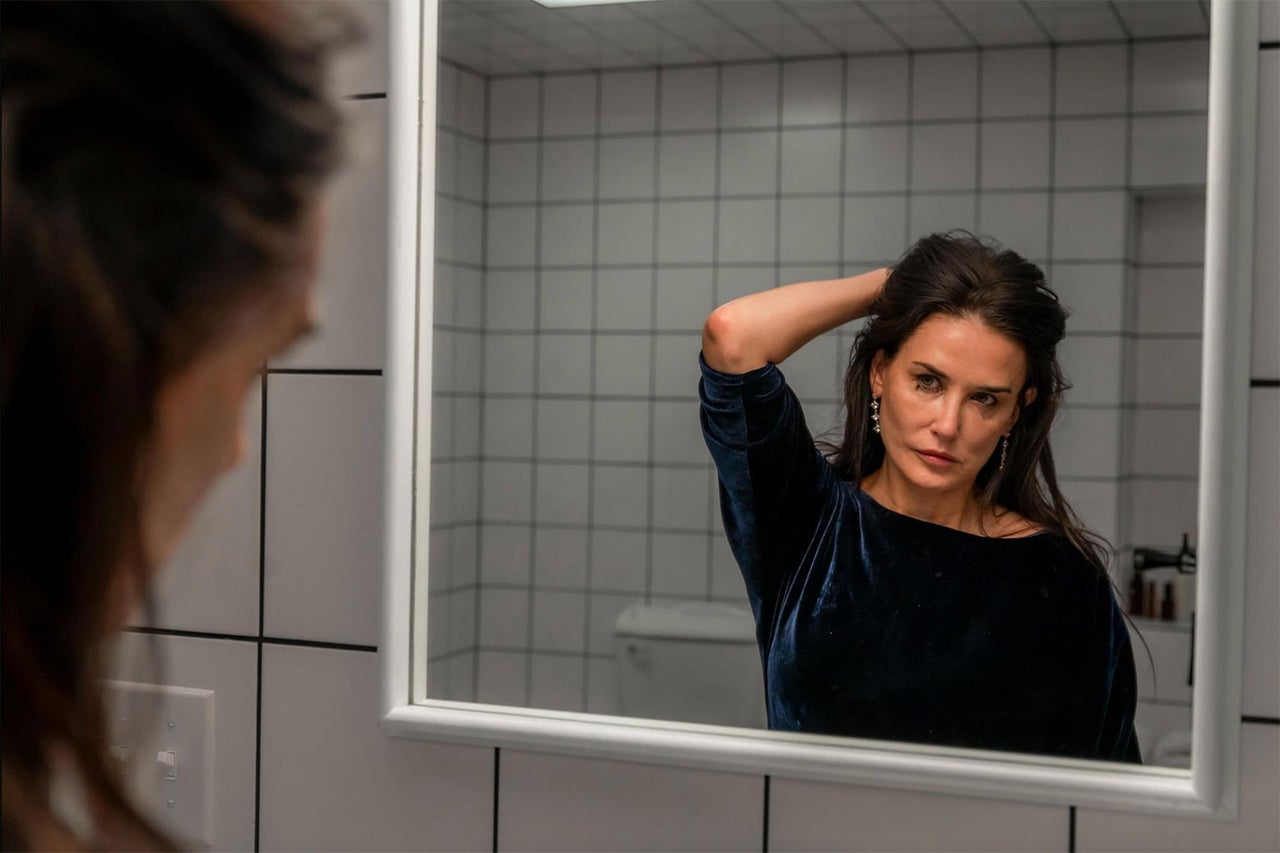
If you were to have a debate on the one genre of film that the Oscars seems to neglect the most, I’ll bet horror will come out on top. Only seven horror films have been good enough to get nominated for Best Picture. The Substance becomes the latest. Actually it was also a nominee for the Palme d’Or at Cannes. It tells the story of movie star Elisabeth Sparkle whose career has ended and feels a certain substance recommended from a doctor can do that very trick. It gives her another person coming out of her: Sue. The other person is half her age and the two are to switch lives every seven days. Problem is the other person is getting all the benefits her life used to have, like her old job back and attracting rich men. Sue also starts violating the directions of the medicines and using Elisabeth more and more. As New Year’s is coming and Sue is expected to be the star of the New Year’s Eve special, mayhem erupts. I can’t describe any more of the bizarreness without delivering a spoiler or two.

What makes this horror film better than most horror films is that it has a common theme. The theme is of the ageism and sexism women face in showbusiness from managers dealing with show’s ratings to stakeholders who expect to win to crowds who expect a picture-perfect princess and will throw her away when they get bored  with her, replacing her with a new next big thing. That is very evident throughout the film as we hear what her boss Harvey says, of what casting directors say and of what the crowd expects. The thing is Elisabeth takes her rejection badly because we soon learn her stardom is the only thing in her life. She has nothing else. She feels if she takes this substance, she can get her life back. Problem is she gets another life. Instead of it being a case like the two are one, as instructed from that substance, one vies for control of the other and it’s reduced to hate between the two. I gotta say carrying on a habit of one is active one week while the other is active the next week, that would be something hard to keep up without error. There’s bound to be a slip-up and boy will it be messy.

Now I know most of you will say you’ve seen all sorts of horror movies and that you’ve been shocked by this stuff before. I guarantee you that you will be either shocked or surprised. You have a feeling that this switching of bodies will have a ness-up sooner or later but I’m sure the mess-up you thought would happen didn’t or went a different way. Even that New Year’s Eve show, you probably expected it to wreak some sort of havoc, but I’ll bet it’s not the havoc you expected to happen. It also seems the New Year’s Eve show incident with all its goriness is a case of Elisabeth getting revenge with those who threw her away. The story has a lot of common elements you have seen in past horror movies but it succeeds in having many an unpredictable or unexpected moment. That’s what makes this horror film special. The shocks and gory scenes you anticipated but didn’t expect it to play out the way you thought it would. Even the ending, which I will not spoil at all, plays itself out in unexpected fashion.

Top accolades have to go to director/writer Coralie Fargeat. Upon Fargeat’s nomination, the 2020’s five female nominations in the Best Director category equal the total of all previous years combined. This is actually the second feature-length film Fargeat has directed. Here, Fargeat succeeds in delivering a thriller of a horror film that says a lot about its theme and has many of the silent scenes do a lot of talking of the story. Fargeat proves that women can do horror films! And a gory bloodbath of one to boot!

Making the film work is Demi Moore. She does an excellent job of playing an insecure movie star whose career is her life and takes a medicine that could end up being the death of her. Her character switch to the tormented monster of herself was also incredible. It would not surprise me if she wins the Oscar. Also great is Margaret Qualley for playing Sue who’s supposed to be one with Elisabeth but her new-found fame prevents her and starts using Elisabeth, only to pay in the end. Also great is Dennis Quaid. His performance as Harvey the manager is cartoonish, but Fargeat wants it that way for the vibe of the movie. He did a great job in being both comical and hateable at the same time. For the technical achievements, there’s Benjamin Kracun and his cinematography which adds to the storytelling, make-up artist Pierre-Olivier Persin delivering the right makeup for the right gory scenes, the visual effects team for the insane special effects and Raffertie for the perfect techno score for the film.

The Substance is just the horror film you need. It’s a way better story than most horror films you’ve seen and it will deliver the unexpected. I guarantee you.
Wicked: Part One

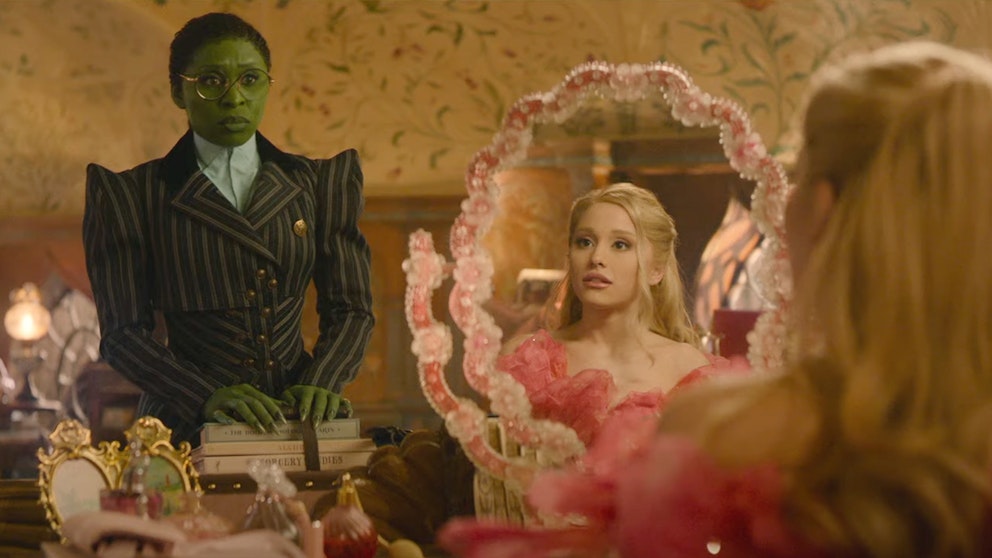
This movie is bound to attract two standout audiences: those that liked the musical in its theatrical run and those Wizard Of Oz fans that are intrigued of a prequel. It’s interesting how The Wizard Of Oz story has enchanted people for over a century. To have a prequel-like story of how the witch and Glinda met in school is bound to catch people’s intrigue. Even ask questions. Like was the witch’s name really Elphaba? Even the character who would become the wicked witch of the east would have a name: Nessarose. Was high school just as bad in Oz as it is in real life? You mean the witch didn’t really start as evil? You mean Glinda’s real name is Galinda? How was Glinda able to befriend the witch? It really has you thinking. It will even have you thinking about the Wizard Of Oz too. Since the musical has been popular for twenty years, I feel the film adaptation came out at the right time. It does make one wonder why the film is billed as Wicked: Part One and if a Part Two is needed instead of the whole musical in one film.

In watching part one, it begins with the people of Oz celebrating the witch’s death and Glinda given a hero’s welcome. Then the revelation of the secret that Glinda knew the witch in high school. That’s where Glinda tells her story. Throughout the story, we learn how the witch was born the black sheep, or in this case green sheep, of the family while her younger sister was seen as a princess. Even the wheelchair didn’t harm Nessarose’s princess image. When high school begins, Elphaba gets singled out and nobody wants to befriend. As Glinda unintentionally becomes Elphaba’s roommate, Glinda becomes a positive influence on Elphaba and helps her find her true self, use her intelligence to be a force for good, and ultimately bring down the corruption happening in Oz. The film ends with Elphaba singing about her turn to fly and it sets up for a ‘To Be Continued’ ending.

Although this film is just a part one of a musical, the film itself is a good story of the popular girl befriending the misfit girl and bringing out the best in her. It’s also a good nerd-to-queen story for Elphaba. Even having the ability popular boy Fiyero. Near the end where we learn of how Oz is imprisoning animals and Elphaba learns of the corruption going on from the Wizard, it’s there where she learns to take a stand for what she believes in and her rebellious side comes out of her shell. It’s right at the end she flies off and celebrates her personal identity and her new-found confidence in herself as Glinda supports her on. As a film itself instead of a Part One, it works as a story about finding one’s confidence, learning to embrace being different and make your best qualities winning qualities. As a musical, it’s entertaining and colorful from start to finish. It may not have the same vibe as the classic Wizard Of Oz but it will entertain you.

And there’s the film as the Wizard Of Oz prequel. Many of us who have seen or read The Wizard Of Oz but never seen Wicked onstage, like myself, will know how it all turned out. The sister is killed by Dorothy’s house, Glinda makes Dorothy a hero, the witch (who doesn’t have the name Elphaba) wants revenge on Dorothy and to get her sister’s ruby slippers, chases Dorothy down her trip to Oz and threatens her and her friends along the way, and is killed by a splash of water. If you have not seen the musical like I have, the film will get you thinking how did Elphaba become evil? Did Nessarose also become evil? If Elphaba and Glinda befriended each other in high school, how did they have their eventual falling out? This film succeeds in getting us to anticipate it all in the ‘prequel sequel’ which is expected in Winter 2025 and will be titled Wicked: For Good.

This is a great accomplishment for director Jon M. Chu. In the last fifteen years, the films he has directed have been a wide range like dance films like the two Step Up sequels, action film G.I. Joe: Retaliation, music film Jem And The Holograms and romantic comedy Crazy Rich Asians. Here he tries his luck with a Broadway musical with the screenplay adapted by Winnie Holzman and Dana Fox. He succeeds greatly in making it entertaining for audiences to watch and for making for a dazzling story. It’s not an easy task to adapt a musical to the screen but he does it very well.

Top credit goes to Cynthia Erivo for playing Elphaba. Cynthia has established herself as a triple-threat in entertainment and one of the biggest rising talents around. Here, she does it again as she not only captures the role well but is also able to play young convincingly and sing excellently. This should add to her achievements. Also great is Ariana Grande. Although I’m not a fan of her or her music, she appeared to be the best choice to play Glinda in this movie adaptation. She is very good at capturing Glinda’s princess side, sings the songs very well, and plays the part excellently as well. Also great is newcomer Jonathan Bailey. Although he doesn’t stand out as much as Elphaba or Glinda, he does a great job of playing popular rebel Fiyero and makes his singing and dancing look effortless. The supporting performances of Michelle Yeoh as Madame Morrible and Jeff Goldblum as the Wizard, added to the film despite the small amount of screen time.

You can’t give accolades to Wicked if you don’t include the top technical qualities. There’s the editing work of Myron Kerstein which makes the film work right. There’s the costuming from Paul Tazewell which goes beyond what one would expect to being costumes and outfits you’d see in Oz. There’s also the makeup and hairstyling team that makes for the dazzling hairstyles, the original score from John Powell and Stephen Schwartz that blends in excellently with the songs and the visual effects team that does a great job in bringing back the magic of Oz, and then some.

Wicked is a great adaptation of a musical that will dazzle many a crowd. Whether you’re a fan of musicals, or a fan of Wicked, a fan of The Wizard Of Oz or even a fan of the stars, you will enjoy it.

And there you have it! This is my last blog of reviews of the Best Picture contenders for the 2024 Academy Awards. My blogs where I review the nominated short films are coming soon.

Oscars 2024 Best Picture Reviews: Part Four

The thing about the Oscars is that each year, there are Best Picture nominees for films of subject matter that most people would normally not want to see. In some cases, films of unwatchable subject matter end up Best Picture nominees. A lot of these unwatchable things are based on people or events that actually happened, like these two films. For these next two films, I wouldn’t say they’re unwatchable but they do treat on dark subject matter. They’re far from the topics or themes that would draw crowds. Some scenes many would find too disturbing to watch. All I can say is you be your own judge:

I’m Still Here (Ainda Estou Aqui )

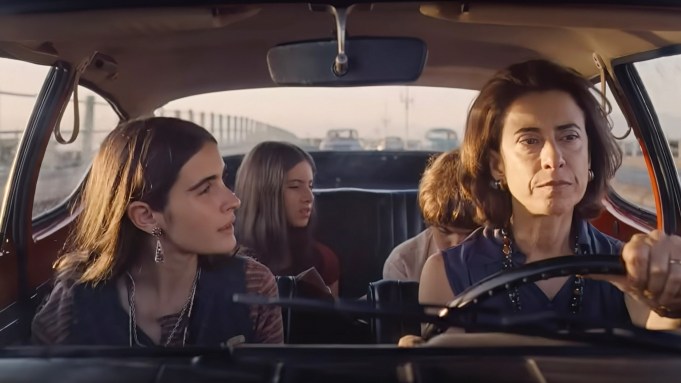
When one thinks of a Brazilian film, one would think of a film that may have scenes of the carnival, the festivities or the beaches. I’m Still Here is a very different film as it presents a dark side of Brazil’s history that they’re still troubled by today. Even the angle from which the film tells its story is unique. We have heard of people kidnapped during political regimes but we rarely hear about how it affects families. It’s through Eunice Paiva that we see how sometimes being married to an enemy to a regime could lead one to being imprisoned. Through Paiva we also see her as she struggles to keep her family together, struggles hiding the truth from her youngest children, struggles with her relationship with her youngest daughter and struggle to get the answers she needs of what happened to her husband. Eunice’s story of being the wife of a kidnapped man really tells a lot. It also shows how it would shape her to be the social justice warrior she became.

The film begins with a beach trip with the Paiva family. Everyone has fun, they all pose together for a photo and Marcelo found a stray dog they can make their own. It’s after that when everything changes. Soon the interrogation of Rubens, Eunice and their daughter, Eunice’s days of imprisonment and the years of aftermath not knowing whether her husband will return alive or if she will be kidnapped again. Then the long wait hoping Reubens will return and the fear of spies outside her door hoping to get her and imprison her again. It’s after the dog Pimpao is run over by the spies’ car that she lashes out at them and she’s had enough. Soon, her desire to leave Rio and start a new life for her and her family in Sao Paulo. The film moves forward to 1996 where Eunice has become a social justice advocate in Brazil, which had returned to democracy in 1989. She shows the death certificate of her husband she achieved. Her family has changed. Especially son Marcelo who became a successful author, despite being confined to a wheelchair. The film ends in 2014, years before Eunice would die of symptoms of Alzheimers. She is connected to a news story about the abductions and the continued pursuit of justice before a family photo.

Looking at it, the film is as much about family unity as it is about injustice in Brazil. Eunice had the nice orderly happy family life before the political abductions happened but that all changed after the imprisonment of the three. Trying to hide the truth of what happened to her father and deal with her older daughters’ knowledge of what happened is not an easy task. Trying to get the answers to what happened to her husband during a political regime that refuses to do so and trying to raise a family is a hard task. That’s one thing we rarely think about. We hear of political abductions in the news but we hardly ever hear of how families cope and try to keep themselves together. It’s through Eunice we see a personal strength we often ignore. You can understand why the family photo at the end of the film was so important. She succeeded in keeping the family ties together as much as she succeeded in achieving justice. The effect on children is also noticed in the film as her daughters fear the worst and are frequently arguing with Eunice. They’re the children with the most truth of what happened. Also the scene in 1996 when Marcelo and Maria, the two youngest, ask each other when they knew their father died, even as Eunice tried to hide the truth.

This is an excellent work from director Walter Salles. He’s one of the most acclaimed Brazilian directors with films like Central Station, The Motorcycle Diaries, Paris je t’aime and the adaptation of On The Road. This film is an excellent accomplishment of telling a dark story and making it a personal story. Even having it end on a positive note is an achievement. With the script written by Murilo Hauser and Heitor Lorega adapted from the novel written by Eunice’s son Marcelo, he takes the story and makes it relatable even though most of us will never experience something this terrible. He makes us connect with Eunice Paiva’s story and tells it so most of us who don’t know Brazil’s history know of the amazing woman Eunice Paiva was.

Making the film work is actress Fernanda Torres. She succeeds in telling Eunice’s story and makes us feel for Eunice and hope for the best. She did a great job, as did her mother Fernanda Montenegro who plays the dying Eunice at the end. Selton Mello was also great as the husband who still tries to live his life daily knowing he could be a political target any minute and eventually becomes one. The cinematography by Adrian Teijido added to the telling of Eunice’s story.

I’m Still Here is both the retelling of a dark era of Brazil’s history and the personal strength that came out of a kidnapped politician’s wife. It’s a sad story, but positive and hopeful.

Nickel Boys

Let’s face it. A film about a reform school that is infamous for its racism, physical and sexual abuse, and even murder of minors will not make one want to watch it. In fact, Nickel Academy is the pseudonym for the now-closed Dozier School For Boys in Florida where graves of those killed were discovered and survivors are now receiving their justice. Those that have learned of the ugly news of Dozier of recent years will want to avoid seeing Nickel Boys, but it does give people reason to see it.

When it comes down to it, what happened at Dozier School should serve as something that should never happen again. What happened there needs to be told, but how? How can you make a place of abuse and murder watchable? RaMell Ross succeeds in doing it with the character of Elwood Curtis. The film flashes frequently in between Elwood’s time at the school to the adult Elwood who just learns of the truths unraveled in 2003 as he’s a successful businessman with a stable relationship. The film tells Elwood’s story as it starts before Martin Luther King’s civil rights movement and Florida still having Jim Crow laws. The film shows how as we fast forward 40 years later, Elwood is overcome with hurt and trauma as the secrets are unraveled with the finding of mass graves. In the flashback, we see Elwood bond with one of the boys named Turner he’s with and the two plan an escape while Elwood documents all that has happened in a diary. The escape fails for Elwood as he’s shot dead while Turner succeeds in escaping around the time of the Civil Rights Movement. In the flash forward, Turner adopted Elwood’s name to thank him for all he taught him.

Elwood and Turner are fictional characters, but they could be representative of any of the boys at Dozier School. It’s through Elwood’s and Turner’s friendship at Nickel that we’re shown of the corruption, abuse of various kinds and the murders that happened there. Through Nickel Academy, Dozier School was as much about racism as it was about abuse. White students got better facilities and a better education while the black students got bad facilities, a bad education, the most hazardous jobs, and even harmful punishments like the sweatbox. African American students got it harder and their death rate at the school was way bigger than that of white students. Even black students who didn’t do what the white superintendent says, like fix a boxing match, could be executed and the superintendent would never get arrested. You can understand why the story has Turner’s escape around the time of the Civil Rights Movement. It would be the beginning of the end for Nickel/Dozier.

This is a great work from RaMell Ross. The story he directs is based upon a 2019 novel of the same title that is the telling of that fictional friendship. The story he co-adapts with Joslyn Barnes is very good and very revealing. He succeeds in making a film about the abuse that is watchable and gets one to think. It’s a reminder of the ghosts of the past and how even if we do well in the present, it will come back to haunt us. Even as the guilty people are slowly brought to justice, we’re reminded it can’t erase the hurt and trauma. He does a good job in making it as much a story about two friends as it is about exposing the truth. Excellent work. Also great is the acting of Ethan Herisse and Brandon Wilson. Their performance as the friends caught in the drama did as much storytelling about the place as it did about them. Daveed Diggs is also very good as the adult Elwood who tries to hide his hurts of the past, but they eventually come out. Also great is the performance of Aunjanue Ellis-Taylor playing the grandmother who is hoping for the best for Elwood and tries with every chance and opportunity, only for every white ‘helper’ to fail her. Her mix of optimism and heartbreak adds to the story.

Nickel Boys succeeds in making what could be a film of unwatchable subject matter be watchable. The mix of a story of a friendship around a school with a notorious past exposes truths of the school while maintaining a sense of hope.

And that does it for now. That’s my review of the latest two Best Picture nominees of review. The last two will be coming very shortly.

Oscars 2024 Best Picture Reviews: Part Three

At first I intended for my Best Picture blogs to be three in total. When it became clear how much writing I did for the first two films, I decided dividing them into blogs of two reviews each is more worth it.  So in the meantime, here’s the third of my five Best Picture review blogs:

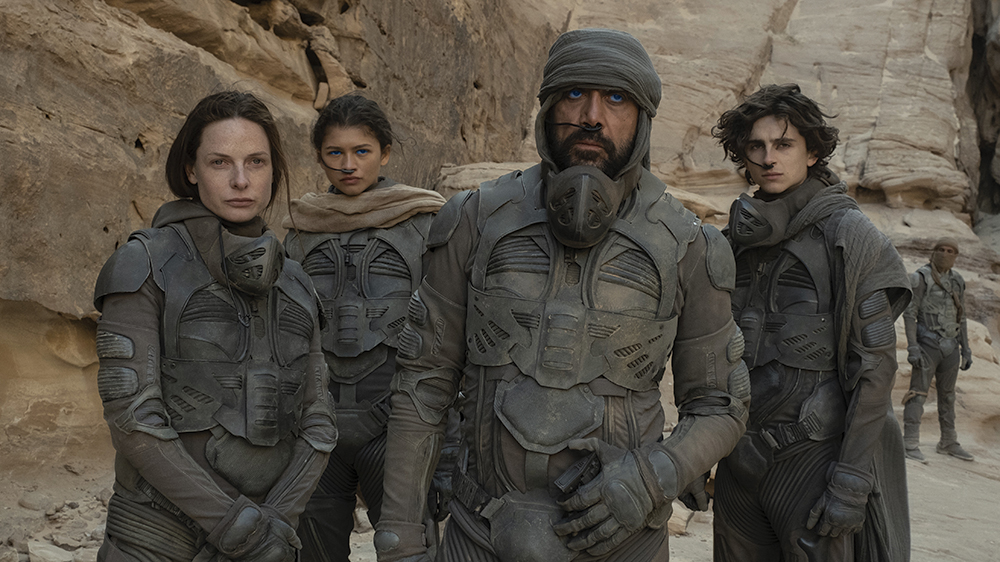
Dune: Part Two

The reboot of the Dune series has been so far the biggest movie action of the 2020’s. The re-adaptation of the Frank Herbert novel was a highly anticipated event in 2021 and hoped to get people back into the movie theatres after the relaxing of the strictest COVID precautions in history. It worked. Dune made over $400 million at the box office, was nominated for ten Academy Awards and won six. It was like what David Lynch got wrong, Denis Villeneuve got right. Originally, Villeneuve planned to divide the story into two films. This is what led to Dune: Part Two to be made.

The second Dune film continues with the drama left behind from the first. The second makes the stories of the dehumanizing Water Of Life, the installation of the young sadistic nephew of Arrakis as the ruler and heir to House Harkonnen, Paul’s romance interest to soldier Chani, the threat of holy war from Fremen fundamentalists, a spice trade at risk of smugglers, Paul’s consumption of the Water Of Life much to the disappointment of Chani, his dealing with his mother, his duel to battle the throne of the Harkonnen kingdom, his ascendancy to the role of king upon winning and the rejection of all as leader, including Chani. The drama continues, the excitement and thrills increase and the ending leaves the audience in suspense and the anticipation of what will follow in the sequel Dune: Messiah, set for release in the spring or summer of 2026.

Every year, there seems to be at least one ‘popcorn movie’ that seems to rack up enough buzz to eventually become a Best Picture nominee. Not only did Dune: Part Two get nominated for Best Picture, but the Dune franchise joins the Godfather, Lord Of The Rings, Going My Way and the Avatar franchise as the only five movie franchises to have two or more of its films nominated for Best Picture. It’s deserving of it because it succeeds in doing what a science fiction film should do. It takes people into another world. It creates an intense complex drama of the threat of the order of humanity and how it rests in the hands of one young man. It delivers in the action people go to expect form a film like Dune. On top of it, it succeeds in being the opposite of your typical movie sequel that ends up being a repeat of the first. Instead, we get a continuation of the chronologic drama and ends with the anticipation of the third and final part. Deserving of its Best Picture nomionation. And to think it was released back in March 2024. Talk about endurance!

Once again, top respect goes to Denis Villeneuve. You can trust Villeneuve to deliver in a sci-fi film. Both in his direction and his co-adaptation of the story with Jon Spaihts, he continues the excitement of the story well by keeping in the right parts, delivering on the action needed and making the smart decision to make his adaptation of Dune a three-film series instead of the two-film series he originally hoped for. He did things right and in winning fashion. Like most sci-fi films, the story is more focused on the special effects and action moments, but the film doesn’t stray away from its focus on the story and the characters. It is still there and still consistent. Even though Timothy Chalamet’s performance as Paul wasn’t too deep of a role, it is still consistent to the story and very believable. Zendaya’s performance as Chani added to the story. In the first Dune movie, Chani was a minor supporting role. Here, she’s the lead female protagonist and Zendaya does an excellent job in making her a key part of this chapter. There were also good performances of minor roles like Josh Brolin as Paul’s trainee and mentor, Rebecca Ferguson as Paul’s mother with whom Paul harbors resentment, Austin Butler as Paul’s fierce deadly rival to the throne and Christopher Walken as the emperor.

As is common with great science fiction films, the standout achievements are in the technical areas. You need it for a sci-fi film to excel and Dune: Part Two had some of the best of the year. Its top achievements are in the cinematography by Greig Fraser, the production design by Patrice Vermette and Shane Viau, the costuming by Jacqueline West, the editing by Joe Walker, the special effects by the film’s effects team, and the music from Hans Zimmer. All of it was successful in taking the audience into Dune’s futuristic world and enhancing the film’s action.

Dune: Part Two succeeds in keeping alive the drama, intensity and excitement of the first film and sets the audience up for anticipation of the third and final chapter. It succeeds in having the best qualities of a sci-fi film without the common watering down or cheapening of the quality.

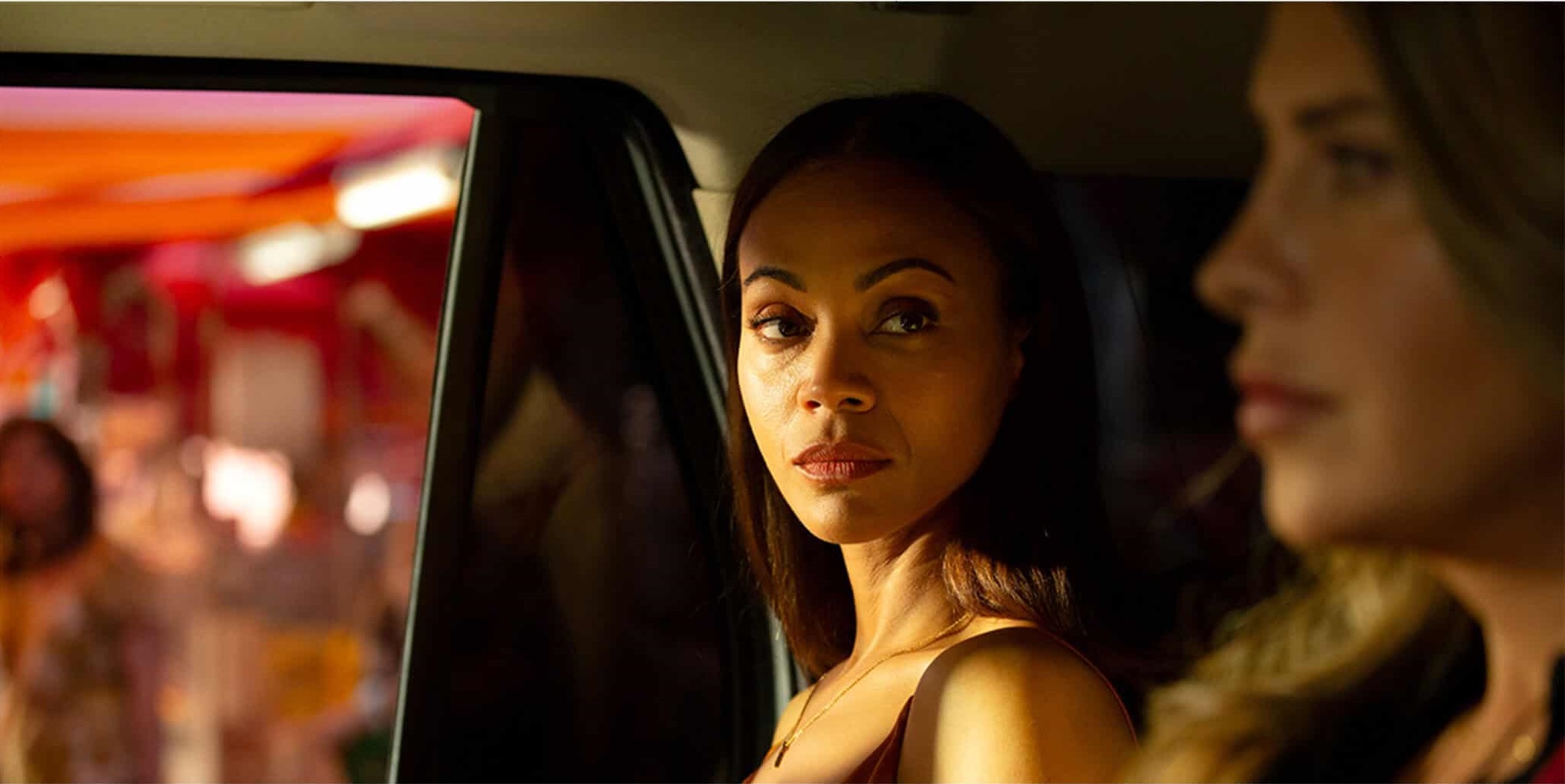
Emilia Perez

Now this film has been the subject of a lot of discussion, for better or for worse. In watching it, one would be shocked how a musical is made out of subject matter that would be the last themes and elements thought of as subject matter for a musical. Nevertheless, the mix of a musical with modern-day dark drama works as a film from start to finish. Despite that, this film is not for everybody. If you’re a person who welcomes experimentation in film like I do, then you will like it or respect it as a film. If you want to be entertained, that’s taking chances as a lot of people will be unhappy with a film like this. Trust me. A transsexual druglord and all the corruption in Mexico and the missing people that come with it does not make for an entertaining film. Making a musical out of it would seem quite the oddity.

From the start, it looked like the type of film that would get a lot of Oscar buzz. It had great acting, an eyebrow-raising story and quite the unconventional way of making a film. The film would achieve thirteen Oscar nominations and then the hate began. First, there are the complaints from the transsexual communities complaining of the transsexual character being a murderous drug lord before the operation. Then came complaints from the people of Mexico of how Mexico was depicted as a place of rabid crime. Additionally, it came to light past social media messages from Karla Sofia Gascon. Exposed in her messages were tweets that were Islamophobic, racist and even critical of her own co-stars. This only came to light just after all the nominations were revealed. I know there’s always at least one Best Picture contender that starts a load of controversy. Best Picture nominees often start some controversy or debate but there’s always one that stands out the most. This will have to be the biggest of the ten.

I’m not normally one to trash a film unless it’s really horrendous or really terrible either in quality or in its subject matter. While the film is definitely one of uncomfortable subject matter, I do give it credit for its experimentation. We should know that this film is originally a stage opera created by Jacques Audiard who adapted it from a chapter in a French book Ecoute. I will give Audiard credit for trying to make a musical out of out-of-the-ordinary subject matter. Watching it will make you question if the musical elements of the film work or not but there are many parts that stand out as great and will even blow you away. Don’t forget this isn’t a story about a transition from man to woman. It’s also a transition of personality going from leader of a drug cartel to a humanitarian. Also I feel the acting in the story works well. It’s the acting from the three main stars of the film that help make the film work on the screen and work as an unexpected musical. The funny thing is after you’ve finished watching, you will ask yourself if you liked it or not. Or if this worked or not. Despite its imperfections, I consider it a brave attempt.

Responsible for this film is French director Jacques Audiard. Audiard has had a decades-long reputation as a filmmaker in France and has directed many films outside the French language. This film, which was a Palme d’Or nominee at Cannes 2024, should be seen as an accomplishment in retrospect. A flawed accomplishment, a provocative accomplishment but an accomplishment nevertheless. It’s not just this being an unlikely musical but also adapting a stage opera to the big screen. As if adapting a musical isn’t hard enough. Despite its flaws, I give Audiard credit for that.

Also excellent is the performance of lead Karla Sofia Gascon. A transsexual woman herself, Gascon does a great job in both the male role of Manitas and the female role of Emilia Perez. It’s two different conflicting personalities of the same character and it needed to be done well, and Gascon succeeds in doing it. Also excellent is Zoe Saldana as the lawyer caught in the middle of it all. When watching the film, you wonder if the lead is Emilia or if the lead is Rita Castro. Zoe does a great job in making the film as much hers as it is Emilia’s. Selena Gomez’ performance was not all there. Nevertheless she did have some great moments and was believable in most scenes. Adriana Paz is also great in playing Emilia’s lover. I give top technical acclaim to Paul Guilhaume in the cinematography, the hair and makeup team for the convincing work on the pre-transition Manitas, and the collaboration of Clement Ducol and Camille on the standout music.

Emilia Perez is not everyone’s cup of tea. It gives a lot of reasons for you to hate it and a lot of reasons for you to like it. I consider it a film for myself to like and admire, despite its obvious flaws.

And there you go. This is my look at two more contenders for the Best Picture Oscar. With ten films, boy do you get a lot of different films.

Oscars 2024 Best Pictures Reviews: Part Two

It does seem awkward for me to do five blogs of Best Picture contenders. It’s all about my writing. Last year my writing was so over the top, I had to post individual reviews instead of all ten within three blogs. This time as I was writing, I felt doing blogs consisting of two reviews each is a nice steady dose of my writing. Hope you like them. Now on with my next two reviews:

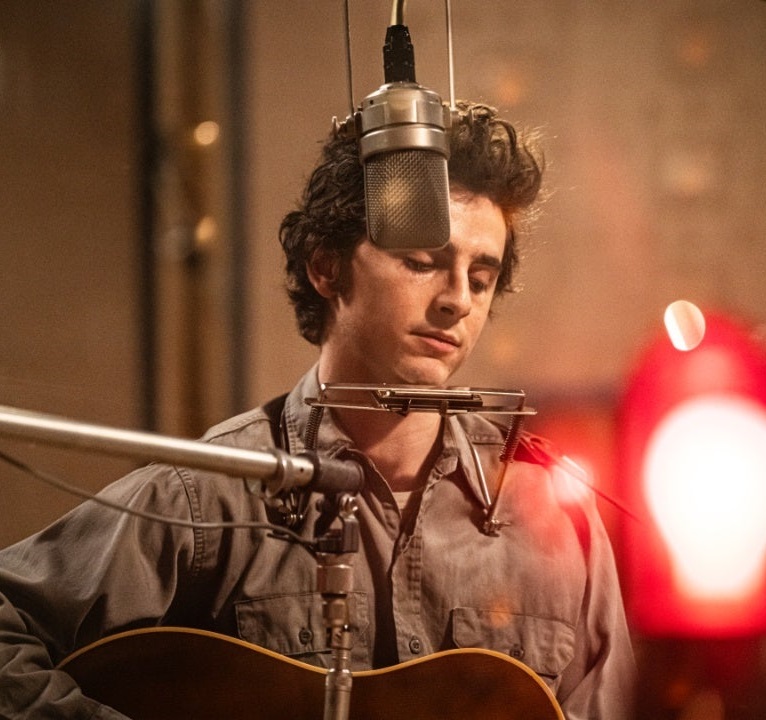
A Complete Unknown

I’ve seen musicographies before. I’ve seen how they told the story of the musician or even show one part of the musician’s life. This film is a case of telling a part of Bob Dylan’s life. It tells of how he goes from an unknown folk singer in Greenwich Village to being part of the main folk scene of the time to branching out on his own. One thing we often forget about is that in the early-1960’s folk music was seen by many young people as the antidote to Rock ‘N Roll. Rock ‘N Roll music was seen by them as filled with scandals, fabricated acts, and music done for money’s sake. Folk was regarded by them as the opposite. It was regarded as self-composed music, honest feeling and even having a word to say to the powers that be. Bob, having a liking to Rock ‘N Roll, did not sit well with fans of folk music. To add, the Folk scene was becoming as much like showbiz as Rock ‘N Roll itself. You could easily see why folk fans would be outraged by his Rock ‘N Roll schtick. Looking back, it leaves me wondering after that moment did Rock ‘N Roll change Folk or did Folk change Rock ‘N Roll? Neither genres have been the same since.

The unique thing about this film is that it’s as much about the person as the musician. Most of us have known Dylan through his music. He always spoke his mind in his music. The film shows things most of us have overlooked. There’s the time Bob is torn between the love of Joan Baez and Suzy Rosso and finds it hard to hold a relationship with either. There’s Bob desire to expand and grow as a musician while the folk scene wanted to her him perform his more legendary hits. There’s how Bob found guidance from Johnny Cash and regarded Woody Guthrie as a musical father figure. There’s how the folk scene became just as much of a clique as even the most commercial music scene. We see that in how the folk scene was all about those connected to Pete Seeger and the shows he helped organize. You can understand why Bob would rebel and do his electric show. Bob always wanted to do his own thing. At the end of it all, he was still Bob.

This is quite possibly the best work from James Mangold. For so long he’s created films in which have received Oscar nominations and wins, but left him empty handed. Films like Girl, Interrupted, Walk The Line, 3:10 To Yuma, Logan and Ford vs. Ferrari. He did get a scriptwriting nomination for Logan but it’s this film he finally gets nominated for Direction. Having directed Walk The Line, Mangold knows how to direct a musicography. With the story he co-adapts with Jay Cocks, Mangold shows Dylan as a musician, artist, flawed lover and rebel. He also captures the essence of what folk music was to do about, the folk music scene of the 60’s and the times very well. It’s easy to see why he has received this acclaim.

The film also excels through the excellence of the performance of Timothee Chalamet. I’ll admit I first thought Chalamet playing Bob Dylan was a bad idea. I could not see him doing it. He accomplished it very well by making it a three-dimensional performance when it could have been wooden or cartoonish. I’m impressed with his work. Also really great is Edward Norton as Pete Seeger. I know Edward knows how to get into character. Here he makes a very convincing performance as Seeger. Newcomer Monica Barbaro is also excellent as Joan Baez. The film is, in a way, also showing us the Joan Baez we never knew. Very different from her on-stage persona we’re so familiar with. Elle Fanning was also great as Sylvie Russo who faces a hard time trying to love Bob as his fame was starting to take off. Boyd Holbrook was also very convincing as Johnny Cash and Scoot McNairy was also great as woody Guthrie. Even though both performances had a short amount of screen time, they were still both good and convincing.

A Complete Unknown is not your typical musicography. It presents a Bob Dylan we never knew, a Joan Baez we never knew and a folk scene different from what we thought it was. It’s as revealing as it is great.

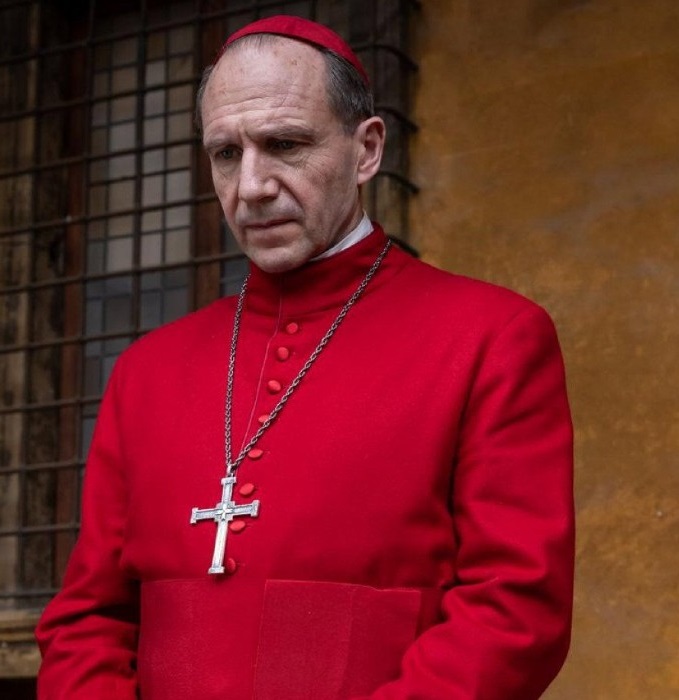
Conclave

There has been a lot of unhappy talk from a lot of Catholic people about the film. One thing we need to talk in mind is that this story is a fictional story based on the adaptation of a book. Watching it, the cardinals did not act very priest-like. It made the whole conclave look like a joyless sect. Throughout the film, there’s hardly any focus on the spirituality of the cardinals. As the election of a new Pope is happening, it appears they are all rivals against each other with animosity. It almost makes the election of the Pope look like a political election where candidates look to expose the dirt of their rivals in order to win votes. Maybe that’s the point of the film. To make a papal election look similar to that of a political election. Although they do a good job of making that connection, I’m still unhappy about how the bishops and cardinals were portrayed.

Although I was unhappy of how the conclave is depicted, I am not angry as I am well aware this is a fictional story. Besides none of us knows what goes on behind the scenes of electing a new Pope. One thing the film does do well is that it shows the complications of being inside the Catholic Church. Although the film doesn’t know much about the faith of the bishops and cardinals and makes them look similar to dirty politicians, each of the bishops and cardinals represent ways of thinking most common among Catholic leaders. I myself have complained that the Catholic Church feels more like an institution than a church, but we forget how big the Church is. The Catholic Church is almost 2,000 years old and has 1.3 billion members and has churches on all the world’s continents. In some nations, Roman Catholicism is the religion of the majority. With a church that big, there is bound to be differing opinions on various issues. Some have Bible-based answers for various issues, some base their opinions on Church-based teachings, and some just give their own rational thought. You can understand why a church this big will have a lot of conflicting opinions among its members and leaders. The various debates among the College of Cardinals are reflective of that. Then there’s the powers that be. As you can see in the film, the electing of a new Pope is not an easy thing. There’s knowing that the Pope they elect with become the epitome of the image and the morality of the Catholic Church. You can understand why choosing the right bishop or cardinal to be Pope will be a difficult.

This film is good at making the election of a new Pope look like an intense drama. It succeeds in doing it by inventing a clever ‘behind the scenes’ story and making it into an intense drama that will keep you focused. It may overdo it in terms of the various conflicts between the bishops and cardinals but the conflicts reflect the common mixed beliefs held by Catholics. Sometimes the squabbles over certain bishops in the running are reflective of squabbles of the various beliefs of many Catholics. A Church of 1.3 billion is too big to have everyone believing the same thing on each issue. Also the film reflects on difficulties, scandals and controversies that the Church has left unfixed over the years. Even how secrets unraveled behind the Church walls are representing how the Church has a lot of hidden secrets. The film also succeeds how getting the problem of the Papal election solved is best assisted by two people least expected. It’s first done by Sister Agnes who, by being a nun, is to exist in the background but she can’t hide her silence anymore on all that has happened. The second is Cardinal Benitez who seems like the candidate least likely to win, but after he made his powerful speech, he appeared to be the best choice to be Pope, only for his secret to be revealed after his election. The film gives an ending that leaves us with questions of what will happen next. That’s what a film should do.

This film is an excellent work from Edward Berger. With the script Peter Straughan adapted from the novel, Berger directs a film that takes a world event and turns it into a behind-the-scenes drama that will keep you intrigued in the drama more than you thought you would be. Although it’s off in its depiction of priests and bishops, it’s still a great work.

Also great is Ralph Fiennes as Cardinal Lawrence. He performs the role of a priest whose spirituality is clashing with his role of leading the College Of Cardinals. He makes the stress look obvious. The performances of the various bishops from John Lithgow, Stanley Tucci and others were very good, despite more focus on the Cardinals’ arrogances. Isabella Rossellini is the surprise of the film. Playing Sister Agnes who can’t hide her silence anymore, she really provides needed impact to the story and her silent moments are as good at storytelling as her talking parts. Carlos Diehz is also great as the Cardinal who’s the best most mortal choice for Pope, but has a hidden secret. The film also has a lot of great technical merits like set designers Suze Davies and Cynthia Sleiter for creating a set that looks very much like the Vatican, costuming Lisy Christl in making the clergy costuming look perfect and composer Volker Bertelmann delivering a score that adds to the intensity of the drama.

Conclave may be off in their depiction of cardinals and the Church itself but it succeed in bringing up hot topics surrounding the Church as it succeeds in making an intense drama of a Papal election.

And there you go. Those two films are my second look at the Best Picture contenders of this years. More reviews of Best Picture nominees to come.

Oscars 2024 Best Picture Reviews: Part One

Ten is not a set number for the number of Best Pictures nominees. Nevertheless it’s still nice to have ten as the total of nominees.

This year, there are a wide variety of films nominated from science fiction to two musicals to a musicography to a dark comedy to a horror movie to many types of dramas. Here  are my first two reviews of the Best Pictures nominees:

Anora

This is quite the unexpected comedy that delivers an unexpected sad ending. A sad ending was anticipated but the sad ending we got was not the one anticipated. It seems odd to have a story about a stripper/hooker marrying a rich kid to be one of the best films of the year but Sean Baker has developed a reputation for directing films about people in the sex trade. This is quite the story itself. We have a stripper who plays a ‘love kitten’ day after day for lusting men, but craves real love. We have a billionaire’s son who’s too spoiled, immature and careless to get it about life and love. He thinks marrying Anora is easy like that and he can live the same irresponsible life again, but he has a lot to learn. We have Igor, the henchman hired by the Zacharovs to have the marriage annulled, but Igor becomes the first person to see Anora as a human being throughout this whole ordeal. We also have the Zacharovs who are so obsessed with their money and power, they think they can do whatever they want. This is the kind of story that brings a lot to the table to talk about.

It’s hard to pinpoint the exact theme of the story because there’s so many topics and themes this story presents a point about. One could be the theme of sex workers. As I mentioned, Baker’s films often deal with sex workers. Here we see the case of a sex worker who is treated like a piece of meat and there are times her true feelings are shown. There are moments we stop seeing Anora as ‘this thing’ and start seeing her as a person. There’s also the case of wealth and privilege. Not only do we see wealthy people having the best luxuries but we see them having a privileged son living a careless irresponsible life, we see how the rich devalue marriage both with Vanja’s eloping of Anora and the Zacharov’s own marriage, we see how being a henchman to the Zacharovs means having to leave a christening of your godchild because your boss demands so, and we also see how the rich Zacharovs know that their money gives them power and uses it against Anora. Especially when the mother insists the family doesn’t apologize to anyone just as Igor points out Vanya owes Anora an apology for the eloping. It’s quite the irony when a stripper or prostitute has a better sense of what marriage is all about than a billionaire’s son. Or even his parents.

Often overlooked, I feel one of the top themes in the film is love. We have Anora, a stripper who pretends to love the men she sleeps with, but she craves real love. We have Vanya, whom Anora thinks she found love with as she spends weeks with him and easily falls for his marriage proposal. Anora is oblivious Vanya wants to marry an American so he doesn’t have to return to Russia and work his father’s business. Even the scenes as Vanya’s playing video games after the two marry hinds at Vanya’s irresponsibility. We also have Anora’s delusion with the marriage. Even though Vanya continues to play video games after they marry, she still thinks she met her love. We have the Zacharovs who view their son marrying a sex worker to be a disgrace to the family. We also see scenes which make you question the Zacharov’s own marriage. Finally we have Igor who becomes the first person to see Anora as a human being instead of ‘that thing.’ It was made obvious in the scene where Igor says Vanya owes Anora an apology. That ending where he allows her to stay at the Zacharovs one last night to sleep, bathe and pack and the ending scene as he’s about to drop her off is also an irony. He’s first hired as a henchman to stop the marriage, even if it means brute force, and now he actually has feelings for Anora. A shock to us all, and to a disheartened Anora as well.

This is the big breakthrough film Sean Baker has been waiting for. The film world has known Baker for a long time as one knocking on the door. He’s delivered small breakthrough films before with 2015’s Tangerine and 2017’s The Florida Project. Here, he directs a story that’s intriguing and unpredictable. It first seems like a film that would give us a cartoonish story but as the film progresses, the story is a lot deeper and it’s not the story we thought it was. Also worthy of top acclaim is lead actress Mikey Madison. If you thought you’d never shed tears for the character of a stripper, you will be wrong. It’s remarkable we have a film where the character of a stripper is shown to have real three-dimensional feelings, but Mikey’s performance of Anora was deep and revealing and we actually start feelings for her. He go from seeing her as ‘that thing’ to seeing her as a frail hurt person. Also excellent is Yura Borisov. Nobody expects any of the henchmen to have feelings for Anora, but Yura catches us by surprise. It’s also he who makes the movie into something we didn’t expect. Also good is Mark Eydelshteyn in playing Vanya. His portrayal as an immature irresponsible spoiled rich son makes you want to hate him in the end. Both Aleksey Serebryakov and Darya Ekamasova are great at Vanya’s parents. They also succeed in making you hate them as much as you’ll hate Vanya. We can see why Vanya is a spoiled brat.

Anora is not your typical story of a prostitute or a stripper. It’s a story of a love gone wrong and ends with a love you don’t know if it should be. Those who see it won’t forget it.

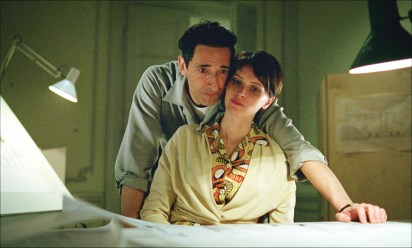
The Brutalist

We’ve seen stories about the difficulties of achieving the American Dream before. Some are harder than others. This film takes a cynical look at an architect who achieved his American Dream. We have a Jewish architect who left post-Holocaust Hungary to find refuge in the United States and achieve his success there. We see how he has to fight his demons like his infidelity, family members that are petty, harrowing memories that cause him to take heroin, a difficult market for his Bauhaus style, rival architects, people that want to use him and above all, his own egotism. It’s not at all a pretty sight to see but it does tell a good story of a man hoping to pursue his greatness in the United States.

The thing that makes this film is not just the telling of Laszlo Toth’s story, but how it’s presented. The film begins as Laszlo’s ship sails past Ellis Island and he sees the Statue Of Liberty, but from his angle, he has to look at it upside down. He has to struggle to achieve his dream by eating at soup kitchens, living at the YMCA, embraced and then neglected by a family member who’s a successful business man, and having to prostitute himself at times. His breakthrough comes by fluke as it was the renovation unapproved by Harrison Van Buren where they first meet, and the meeting is bad. It’s after Harrison discovers who Laszlo is and of Laszlo’s pre-war success in Hungary that he’s willing to take him on. It’s not an easy task as it involves years of work and labor, supplies cancellations, dirty work form Harrison, his friendship with Gordon put to the test and Laszlo’s own ego coming to light. Then there’s how Laszlo’s attempt on success threatens his marriage to Erszebet as she has now arrived in the United States. She knows his secrets and she says she’s fine with it, but it will become obvious she’s not. His success threatens family unity with the niece as the daughter adopted after the Holocaust.

The crazy thing about the film having a half-hour intermission may have some question its purpose. We should remember many decades ago, it was common for long movies to have intermissions. This film’s intermission is very successful not only in dividing the movie properly, but give you the feeling you’re watching two different films. The first half focuses on Laszlo’s arrival, his attempt to make it in the United States, the dirty obstacles he has to face and his big break. And right while he’s writing to Erzsebet with the hopes of her coming to the United States. At the end of the intermission comes a new scenario. As Erzsebet finally arrives in the United States with niece Zsofia, there’s the added pressure of keeping a family together. Especially since Laszlo can’t keep his secrets to Erzsebet any more and she has a disability to deal with. Over time, she senses things like Laszlo’s ego and how Harrison wants to make a pet out of him. Despite being confined to a wheelchair, Erzsebet is able to muster the strength to use her walker to confront Harrison about his mistreatment of Laszlo. The ending epilogue is also something as Laszlo is saluted for his work, in Italy. It’s like he achieved his American Dream but had to achieve it at a harrowing cost and he had to get his honor from outside the US.

This is an accomplishment from Brady Corbet. Younger adults may remember his teen actor days in films like Thirteen and Thunderbirds. Like a lot of young actors, Corbet felt the need to make films of his own. This is Corbet’s fourth feature film. This film that he directs and co-wrote the story with wife Mona Fastvold is definitely something. It mixes some classic film styles while telling the story of a Holocaust survivor’s pursuit of the American Dream. There have been films where the American Dream has been achieved at a big cost before, but this film meshes Laszlo’s pursuit with the shaping of the United States and most notably Pennsylvania after World War II. As the US shapes itself after the war, Laszlo attempts to shape his success in the US, but at a huge price that comes at the cost of him, his dignity and his marriage. Right at the end as they have the tribute gala in the epilogue, you wonder if this should be a happy occasion or not with what Laszlo has gone through.

Excellent performance from Adrien Brody. Remember him from 2003’s The Pianist? He appears to have kept it low-key since. This year, he comes back with another performance of a lifetime where he shows Laszlo to be a creative man and a troubled man. He will make you hate him as much as he will break your heart. Also great is Felicity Jones as Erzsebet. It’s the appearance of Erzsebet that most turns this film into two films in one. With her arrival comes the change of environment. She appears to be one who will most interfere with Laszlo’s success and even a victim of his own selfishness but in the end, she’s the best person Laszlo needs during his most troubling time. Guy Pearce is also great as the deceptive Harrison. He’s excellent in portraying an all-American businessman who welcomes Laszlo and his talents, but as long as something’s in it for him and is willing to make a toy of Laszlo. Additional excellent acting comes from Raffey Cassidy, as the niece Zsofia who’s mute at first but soon develops her ability to talk, and from Isaach de Bankole as Gordon, Laszlo’s first friend and business associate who Laszlo later turns on in his success. Excellent technical merits are the cinematography of Lol Crawley, the production design of Judy Becker and the musical score from Daniel Blumberg.

It’s easy to see why The Brutalist is a heavy favorite to win Best Picture. It combines a graphic disturbing story of one man’s pursuit of the the American Dream and shows it in a stylish artistic fashion. Hard to outdo it.

And there’s my look at the first two Best Picture nominees for this year. If you’ve seen them, you can understand why they’ve won most of the Best Picture awards.