Has it been five years since I last saw the Reel Youth Film Festival? It’s been a long time. Nevertheless having VIFF online gave me the chance to see it again.
This year’s films were a mix of films that looked like they were done by youth and films that were obviously directed by 20+. Some looked very professionally done while some make the amateurishness obvious. All of them did have themes and messages that appeared to be directed to the youth or would be of youth interest.
This year, there were eighteen films. There were five Canadian films, but only two local. Film entries for this year came from the United States, Brazil, India, Bulgaria, Spain, Australia, Romania, China, Ethiopia, Switzerland, Iraq and the UK. Films were a mix of animation, documentary to live-action fiction. They ranged from drama to comedy to informative.
Topics were of a wide range. Even with this pandemic, there was one Canadian film by a teen girl about the struggles of physical isolation and only being able to reach out through a computer. There was another from India of a woman using her creativity to work from home. There were other themes of focus like breaking social barriers, generation gaps, regaining silence in a world full of noise, choices that can change one’s life, a future of pollution, overcoming loneliness with your passion, dealing with post-war trauma, and dealing with autism. There were also some light-hearted films like an animated film about monkeys and baby aliens.
The two themes that most stood out among the short films were themes involving racism and racial identity, and sexuality. With racism being a hot topic in 2020, the Fest didn’t stray away from it this year. One film was about a black girl admitted into an all-white private school and made to feel inferior. Another is of a Mexican-American girl and how she deals with the identity of herself and her people at a time with calls of ‘build the wall’ from Trump and his supporters. There were two films of Inuit people. One was of an elder from Nunavut who passes down to the younger generation hunting skills, cultural traditions and the language. Another film focuses on Inuit youth and what culture means to them. The film ends with them doing traditional throat singing.
As for films about sexuality, there were three. One was a documentary about a Vancouver drag performer who performs by the rule “Don’t do drag for free.” Another was a drama of a girl from China returning home after her grandmother’s death; a grandmother who rejected her after she spoke of her orientation. The third was a comedy about a girl who never had a first kiss from a boy. She realizes she’s a lesbian and gets her first kiss from a girl during the first snowfall.
They again had the ballot for the three favorite films of this year. This year’s ballot was completely online. I had lots of problems trying to access the online ballot. So it looks like I will have to post the picks of my Top 3 here:
Monochrome – The story of Essence, a 17 year-old girl who’s the only black student in an all-white private school. The teens and students don’t hesitate to make her feel like a misfit. She feels like the only way to fit in is to assimilate herself. It’s a very powerful message about the racism we don’t always notice.
Little Swallow Coming Home – A Chinese film about a young girl who returns home after her grandmother died. The memories of how her grandmother rejected her when she came out as a lesbian flood her mind and make her nervous. Then she notices a photo with a message from her grandmother saying she always loved her. It’s a reminder that LGBT struggles are universal. Not just at home.
Dayo – A man named Dayo is lonely at home. But when he walks into the kitchen, he’s an artist and beloved for his culinary confections by the customers and his co-workers. It’s a brief three-minute animated film, but it packs in the charm in its time.
This year’s Reel Youth Film Festival didn’t offer too much in terms of local film. Nevertheless the Festival was very good at providing a wide variety of films from around the world with common themes relating to young people.
Inconvenient Indian allows author Thomas King tell his side of history with his thoughts present, and showcase Indigenous artists paving their own self-controlled direction for the future.
“You have to be careful of the stories you tell, and you have to watch out for the stories you are told.”
-Thomas King
Inconvenient Indian is another documentary I saw at the VIFF. It was another documentary that had something to say.
The film begins with an Indigenous man wearing body makeup and a traditional headdress is on top of a horse in grassland just outside Toronto. He looks onto the buildings of the city. He is not happy. The story then goes to Thomas King in a vintage taxicab driven around downtown Toronto. The theme is the same in both scenes: stolen land. His driver wears a coyote headdress and occasionally glances at the camera. This is a scene that will return many times as the legend moves forward throughout the documentary. During its scenes, it will include King’s parable about a cunning coyote who envies a flock of ducks and plies them with promises, only to continuously ask for more.
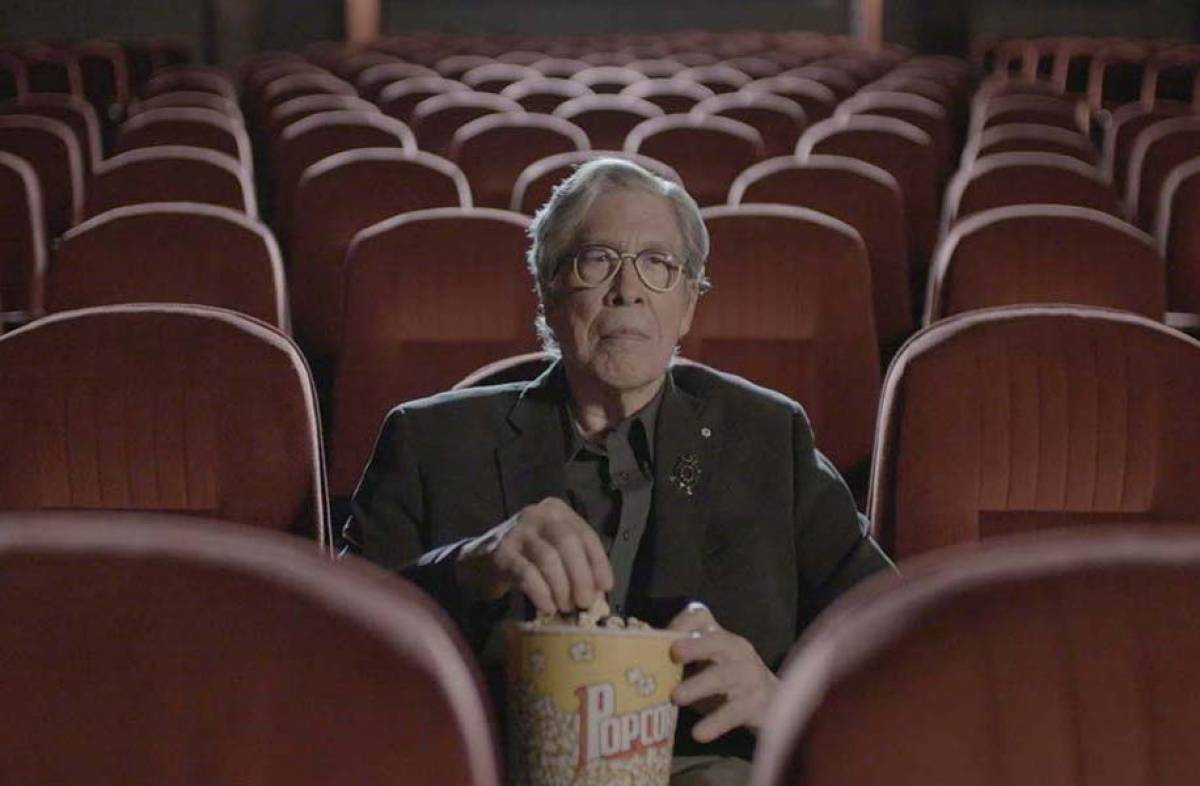
We see King at his destination: a vintage cinema. King seats himself in the middle row alone, popcorn in hand. As King watches the screen diligently, many young Indigenous people also enter the theatre soon after. What they see on screen is beyond displeasing, but infuriating. They see past depictions of Indigenous people that are rude, mocking and insulting. They see Nanook Of The North, which was really a fake documentary where the Inuit played stereotypes. They see various scenes from old ‘Cowboys and Indians’ movies from Hollywood’s Golden Age where the Indigenous person is always seen as the bad guy to fight. The lines from the films are especially abhorrent to hear like ‘Indian on the warpath,’ or ‘The only good Indian is a dead Indian!’
King reminds us: “History is a story we tell about the past.” We’re reminded that elements of popular culture are part of a war against the white powers that be in North America. It’s a battle that goes back centuries when people left the ‘old country’ to create settlements in the New World. They set up their settlements often by fighting Indigenous tribes through wars over their land. I don’t have to explain what happened to their land. One thing to note is that various types of Indigenous people’s ways of life died off. Some tribes of Indigenous peoples died completely. King even regards Indigenous artifacts in museums as, “voiceless objects from the past, unthreatening and without agency.”
Even if it’s not the wars and stolen land, it’s also about a National Government’s past attempts to suppress Indigenous peoples’ identities, languages, heritages and ways of life. The most infamous being the Residential School system. For those outside Canada who don’t know, the Residential School system was a Government-run system where Indigenous children were taken from their homes and brought to white-run schools where they were taught to speak English and live the way of white Canadians. The schools were run by religious clergy: mostly priests and nuns. The children who didn’t do away with the Indigenous language or traits, or found it hard to, were subject to physical and verbal abuse by the teachers. Many children suffered neglect over their well-being (including fatal neglect) and many were also victims of sexual abuse. I myself have come to see residential schools as a form of apartheid.
Problems still continue. The Indian Wars and Residential Schools are a thing of the past, but we’re now dealing with the aftermath. Today you’ll see in the news stories of Indigenous peoples try to battle police and politicians over developments or plans to be done on their land with their protest blockades. Residential Schools created an aftermath of people unable to parent well because they were taken from their homes. The countless abuse they suffered led many of them to alcoholism, drug abuse, crime and suicides. The last twenty years have brought the past of Residential Schools to the forefront of national discussion and efforts for reconciliation to be made. Present problems still continue with lack of clean drinking water and additional poverty on reserves, continued high crime rates and substance abuse rates, and a higher-than-average dropout rate in schools. The documentary reminds you of this.
The documentary also shows you something else. It shows you young Indigenous people in the arts who are taking their culture and the pasts of their people, and even their own pasts, and adapting it into their own artistic expressions. The artists in focus are a Metis cultural painter, a Cree artistic painter, an Innu filmmaker and documentarian, an Inuit filmmaker and VR creator, and a rap duo of various First Nations:
Christi Belcourt – Metis artist who specializes in beadwork art and floral patterns. Her patterns carry on the traditions of the Metis and First Nations people, but they’re not all just to please eyes. Some of her art have political messages. She herself is the daughter of a Metis activist and has published some books on First Nations/Metis issues.
Kent Monkman – A Cree painter who specializes in painting historical narrative from his point of view. In the film, he speaks his anger of how his people have been treated since European settlements and especially of the creation of Canada in 1867. The paintings in his 2017 exhibition, a response to the Canada 150 celebrations, resemble Baroque or Renaissance Era paintings, but they speak of his anger and wrath of the past history and of the mistrust he has towards today’s powers that be.
Alethia Arnaquq-Baril – An Inuk filmmaker. Her films range from short animated films to feature-length documentaries to live-action storytelling. Her films speak volumes of the discrimination, struggles and hardships of the various Indigenous peoples. One of her films, The Grizzlies, played at the VIFF two years ago. Devoted to keeping tradition alive, the film shows her getting a traditional Inuk tattoo applied on her forehead.
Nyla Innuksuk – Inuit Film maker and VR creator. Past films include short fiction like a hunter using traditional skills to survive and a short documentary with singer Susan Aglukark. VR work includes work on a VR series allowing the viewer to envision Indigenous life in the future with futuristic characters. The film shows her working on her first feature-length film: a sci-fi story of teen Inuit girls fighting off an alien invasion.
A Tribe Called Red – A rap duo whose members are of the Mohawk and Cayuga nations. Rap has always had a reputation of being the voice of the voiceless and A Tribe Called Red use it to speak their voices. Their songs mix modern hip-hop and dance sounds with traditional Indigenous music and beats. Their songs also carry a political message. They themselves are also Indigenous activists who were part of the Canadian Pipeline and Railway Protests from February of this year.
The stories of the above artists and their works are mixed in with images of King’s tale of the coyote with the cab scenes, the images of the Indigenous man riding a horse into Toronto and an Inuit man hunting a seal and making use of everything from the seal he hunted including meat, blood, intestines and fur. A mix of screen narrative, storytelling and real life presented as one.
The final scene of the film shows the young adults and Thomas watching the Indigenous images created by Indigenous actors, directors and writers. They’re happy to an extent. The film then shifts to Indigenous issues and disputes that have happened in recent time. This represents the fight is still ongoing.
Thomas King wrote his narrative The Inconvenient Indian back in 2012. The film isn’t an exact adaptation of the book, but passages of what King says in the book are voiced over in the film. The book itself is an examination of North American history. King even presents the point of view as if Columbus didn’t discover America, America discovered Columbus. He also comes across an eyebrow-raising conclusion ‘White people want land.” Essentially the film reminds us that history seen from two different eyes will have two different points of views. Most white people have been taught the history of North America with the white Colonials looking like the good guys and the Indigenous looking like the savages. We’re reminded of that when we see the predominantly white crowd watch the re-enactment of the Battle Of Little Bighorn leading to Custer’s Last Stand. The film reminds you Indigenous people will see history from a very different outlook. That it’s really the white soldiers that are the savages.
The film does shed a lot of the negative moments of the past; moments many white people in North America still consider triumphs. The film shows how white North American’s and others still like to ‘toy around’ with Indigenous culture. We saw that almost a full year ago how the wealthy Park family in South Korea ‘toyed around’ with it in Parasite. However the film then shifts to Indigenous showing their side of the story and spreading their message through art. Seeing it leaves you convinced this is more than just Indigenous people creating their own art. It’s also them responding to the art and history told by white people in the past. Now they have the power to tell their stories. Now they can speak how they really feel. Now they can tell their version of history through their eyes. Now they can create characters that are a true example of their peoples. Now they can be empowered to create and manage their own media. Now they can create their own visions for the future.
You’re left convinced while watching the documentary that only Indigenous peoples can best create Indigenous stories and Indigenous characters. And understandably so. You watch all the insulting depictions of Indigenous peoples in past Hollywood movies and you’re reminded of this. Even getting an uncomfortable reminder you actually enjoyed seeing that. Even I was uncomfortably reminded of the days as a kid when I played ‘Cowboys And Indians.’ It’s no wonder Marlon Brando had Sacheen Littlefeather refuse the Oscar on his behalf back in 1973. When I think of how we no longer see ‘Cowboys And Indians’ movies anymore, I think Sacheen’s refusal has a lot to do with it. People won’t tolerate insulting or mocking depictions of their race anymore. They will be in the audience and they will let you know it if you dare try.
The film is unique that it blends the history of oppression and genocide with the mix of art created by the Indigenous peoples. A lot of feeling goes into what they create. It’s a lot of feeling that they have from what they’ve experienced in their own lives and what they’ve seen happen to their families and neighbors. The film also shows how art created by Indigenous people can lead to something better in the future for the people. You have the current generation of adults 20-50 who are reviving cultural heritages and languages past generations of their family were forbidden to have. You’ll have young people getting a positive image of Indigenous people instead of always seeing them vilified. The film is as much about hope as it is about outrage.
Top respect should go to Michelle Latimer with adapting King’s narrative and showcasing the various arts. Latimer herself is Metis/Algonquin. She mixed King’s narrative with the showcased arts and artists and the moments of history and infamy very well to create not just a documentary and an exhibition, but a vision for the future. Also I admire the National Film Board of Canada for contributing to this. Usually national film bords will only endorse films that only showcase the positive of their nation. NFB won’t shy away from a film that showcases the negative aspects of a nation, like racism. The film comes straight from the TIFF after winning the Best Canadian Feature Film Award and the Grolsch People’s Choice Award for Best Documentary.
In a year where racism is a hot topic, Inconvenient Indian is a documentary worth seeing. It shows what the powerful effect of a depiction of a race in entertainment media can do to a race. And how a race responds with their own art.
Time is a documentary of how Sibil Fox Richardson (left) fights for the freedom of her husband Robert (right).
Normally I don’t like to see documentaries. I’ve seen enough one-sided documentaries in the previous decade to turn me off them. However I took an interest in Time. Injustice to African-Americans has been a heated topic this year and I felt Time was worth seeing.
The documentary consists mostly of filmed footage from court appearances, church appearances and camera phone videos of various moments and shown in black and white. The film begins with Sibil Fox Richardson trying to get a result back from the legal system for the freedom of her husband Robert. Robert was sentenced to prison for 60 years for an armed robbery he committed. It was his first offence. It’s a sentence many, including Sybil, feel is unjust and she’s working to get him freed.
The story is a long process as Sibil is trying to get a result or even a simple answer from the Louisiana Justice Department. It’s been a long wait over years. Each time she’s been calling, she gets a message that they don’t have a result or even an answer for her. Even when they give Sibil a due date when they’ll have it ready, it’s the same response: no answer.
You may ask how did this all start? It was in the 1990’s when Robert and Sibil had plans to start a business of their own. They planned on starting a sportswear store of their own in Lafayette. It seemed destined for promise as sportswear was all the rage in the 1990’s and Lafayette is a big football town. However business didn’t go as well as they hoped. The two decided to rob a bank in 1997; Robert did the robbery and Sibil drove the getaway car. They were eventually caught and convicted. Robert’s sentence was 60 years in prison and Sibil’s was 2 1/2 years.
Since Sibil’s release, she’s been able to get her life together. She’s been able to maintain a successful career, become a responsible member of the community, and has had six children — all boys including two twins — through Robert. She’s also done a very good job of raising her sons. Her oldest son graduated from a medical college. Her twins are also very good academically. One son is on the school debating team and plans to pursue a career in justice.
One thing is still missing. Robert is not free from prison. His prison sentence was excessive. Sibil has stayed loyally married to Robert during the time and it has been her goal to get him out of prison. It’s a goal in which she’s been struggling with for years involving lawyers, court appearances, legal department negotiations, and even media interviews. She even has a life-sized picture of Robert in his prison uniform glued to a cardboard cutout in the kitchen. It’s a reminder to her and her sons what she’s fighting for.
The battle is undoubtedly a personal one. She loves Robert unconditionally, but it’s hard seeing him imprisoned. It’s hard for her to see it both as a wife and as a mother. She knows how hard it is for her sons to see their father imprisoned. It’s hard when the Justice Department promises something by a certain date, and even has a time limit by law, but they don’t have the answers and it is delayed. She’s polite about it over the phone to whoever she calls about it, but her angry feelings become obvious once she hangs up. It’s also a personal burden for her with her being the getaway driver of the robbery. She served her time, raised her family well, received forgiveness from others, but something’s missing. She may have been forgiven by others, but she never asked her own mother for forgiveness. She’s even seen at her local church during a service asking for forgiveness from her community.
SPOILER WARNING: Do not read this paragraph if you don’t want to know the ending. However at long last, Robert is free. We see the video of the day Robert is released and driven home by Sibil. The trip ends with a kiss: the first kiss during Robert’s freedom! The family celebrates with a backyard barbecue. The final act of the celebration is the family can take the cardboard picture of Robert and burn it on the barbecue.
This is a case of the right documentary at the right time. Systemic racism has been a very heated topic of 2020. George Floyd isn’t the first African-American to be killed at the hands of police. Police brutality has caused the deaths of many African Americans for decades. However when the news and video hit the public eye, the outrage grew. It was like the outrage over a common injustice had been hidden for so long and just exploded at that moment. Like a bubble bursting. It’s especially frustrating when they live in a country with a president who denies the wrongdoing and wants to label protesters ‘thugs’ and ‘extremists’ all for the sake of winning the upcoming Presidential Election. And talk from right-wing media pundits who remind the public of crime statistics involving African Americans aren’t helping to put out the fire either. The outrage was not restricted to the United States. Protests were worldwide as people were united in solidarity not only of what happened in the US but of racism in their own countries.
This documentary is about another failure of the system towards African-Americans: the justice system. In the 1980’s, a lot of Tough On Crime acts were enforced into law. This has especially hurt African Americans as prison populations escalated and African Americans make up more of the percentage of prisoners that white prisoners. Much of the problem is predominantly black neighborhoods being overpoliced and black convicts receiving harsher prison sentences. While crime by whites have gone either overlooked or underpunished.
The documentary gives a very good example of this injustice. It puts a human face on what it’s like to be the wife of a husband of a harsh prison sentence. Times like these make you wonder what they’d give a white man who committed the same crime. Sibil comes across as a strong woman who’s determined to beat the odds on the outside, but her inner frailty soon becomes obvious. She ends a phone call with the justice board politely despite the disappointing news, but speaks her anger about how she feels about it. She isn’t afraid to speak her mind about the racism she senses once the call ends. She’s proud of how her sons have grown up but she is still upset that they’ve all only known their father behind bars. She talks of how difficult, but necessary, it is to keep her family intact. She even wrestles with the personal demon of being part of the crime. She served her full sentence long ago and appears to have more than made up for it, but personal things like repentance to those she hasn’t repented to still bother her. The use of personal camera work is best at showing the human side of the matter because it gets the honesty of what’s happening.
The film focuses on the injustice, but it also focuses on rays of hope. Getting Robert freed from prison isn’t the only ray of hope in the film. The first ray of hope is seen in Sibil’s own life and parenting. Sibil is an oddsbeater. She refuses to make a repeat offender of herself. She’s become a responsible person in her community and church. She acknowledges the past wrongs she and her husband did and wants to move forward. As for parenting, statistics state children of parents in prison most likely grow up to become criminals themselves. That’s not the case for her sons. Their oldest graduates from a medical college. Both of her twins do well in high school and one is active on the school debating team. He plans on pursuing a career in justice. I’m sure seeing the unfairness his father endured is probably what fuels his ambition. The husband’s freedom is also a symbol of why it’s important never to quit on doing the right thing. There are a lot of injustices to overcome, but it’s worth it no matter how hard it gets.
The biggest praise should go to director Garrett Bradley. This film won the Best Director award in the US Documentary competition at the Sundance Film Festival (the first African American director to win this award), the Charles Guggenheim Emerging Artist Award and the Filmmaker Award at the Full Frame Documentary Film Festival.
Bradley does an excellent job in showing the images that tell the story. With straight film footage that doesn’t have a voiceover and allows the main subject do most of the talking, we get a no-nonsense undistorted story and a proper unmanipulated point of view. Filming takes places from multiple angles and we get the truth exposed. It presents the solution, but also with the huge problems it overcomes. Showing the images in black and white is appropriate because while justice shouldn’t be black and white, the system has turned it into a black and white issue. Even titling the film Time adds to the film’s quality. It’s about time served, time to rebuild your life, time to make a family happen, time to raise your children, more-that-necessary time behind bars and the seemingly-endless time to make justice for your husband happen. Above all, the time to tell the whole story and time to expose the problems in achieving the solution.
Time is more than just an excellent non-nonsense documentary that does an honest portrayal of its theme. It’s the exact documentary we need at a time like this. Also it’s a reminder that ‘Liberty and Justice for all,’ should mean all! No exceptions!
Monkey Beach is about a young Indigenous woman, played by Grace Dove (left), who possesses a supernatural gift that’s as much of a curse as it is a blessing.
DISCLAIMER: I know you’re all getting my first VIFF review just after it ended on October 7th. Thing is I’ve been bogged down with work and taking online courses which left me with little energy to do reviews. Now imagine me adding film-watching to the mix. Yes, that would take all my energy away! Now that VIFF is over, I can finally post reviews over time. Most of the films I believe would still be accessible via streaming services.
Lots of people who are into VIFF have a lot of reasons to want to see Monkey Beach. I wanted to see it because it’s a novel I studied in an online University course fifteen years ago. Those that see it will be happy with what they saw.
The film begins in East Vancouver. Lisamarie Hill thought she could get somewhere after leaving her town in the reserve, but she’s ended up rock bottom. Her friend tells her she needs to return to get her life back together…and then disappears.
Lisa returns back home. It’s like a prodigal daughter welcome. The parents are happy to see her back, her brother Jimmy is happy to see her back, relatives are happy to see her back, old friends are mostly happy to see her back. Her grandmother ‘MaMa-oo’ is happy to see her back. However she’s uncomfortable with returning. She knows of problems going around the reserve plus it doesn’t offer too much of a promising future. Even her younger brother Jimmy, who showed huge potential to be an Olympic swimmer, missed the Olympic trials because a work accident broke his collarbone.
One night while she is sleeping, she notices the trickster come to send her a message. She is haunted by the trickster. She knows because she inherited a gift where she can sense future events to others, including dreadful events. It’s a gift she first learned of as a child. She learned of it during a family vacation during her childhood at Monkey Beach. She remembers the vacation well. It was her family, Ma-ma-oo, and Uncle Mick. It was a vacation full of many warm memories of family togetherness, but also of a memory that haunts her. She remembers that of a mythical creature in the woods. Something mysterious and she can’t remember what he looks like, but she knows he’s haunting.
Returning to the reserve reminds her of a lot of uncomfortable things. First, Uncle Mick is long gone. He had a big influence on her life where she was taught to be proud of her Indigenous heritage. It’s a pride Mick taught out of anger as he was taught in a residential school and suffered the abuse at the hands of the priests and the system. Mick taught Lisa and Jimmy how to be defiantly proud to be Indigenous, but Lisa shouting “**** the oppressors,” at school didn’t go well with her parents. Also missing is Ma-ma-oo. Ma-ma-oo was key in teaching Lisamarie many Haisla skills and traditions.
It’s not just of those deceased. It’s also in the reserve. She’s noticed how many of her friends had lives that fell apart. She noticed the hostility of Josh, one of the older young adults, towards others. On top of it, Jimmy is dating Karaoke: Josh’s ex-girlfriend, and Karaoke is pregnant. Jimmy has been playing it cool, but she senses something’s not right.
Over time, the visions become a lot more frightening. Lisa has every reason to be concerned. She had frightening images of the deaths of Mick and Ma-Ma-oo before they died. She has visions of something terrible about to happen to Jimmy. Her parents however don’t want to hear about her visions. Soon she learns of bad things waiting to happen. It becomes evident as Josh disrupts a rap performance at a party with his angry rant. Plus Karaoke reveals the shocking secret that the baby is not Jimmy’s but Josh’s, out of a rape. On top of that, the images of the trickster become more and more frequent.
Lis then decides to take the boat out to the ocean. Her parents are nervous, but she is insistent as she senses something bad will happen to Jimmy out on a fishing boat. She has every reason too because Josh is on the boat too. She’s able to sense that Josh is about to fight Jimmy and is out of control. She makes her rush trying to find Jimmy, but has to return to Monkey Beach to face the demon who’s been haunting her. She comes prepared with a mask made by Uncle Mick and a drum. She is ready to meet the being head-on and face whatever comes to her. Part of her battle includes making a trip to the underworld. The film ends in surprising, but positive, fashion.
This is a unique story. It’s a story of a young woman dealing with the harsh realities of the world she’s living in as well as dealing with a supernatural gift that risks being a curse. It’s a story of a young Indigenous woman struggling to exist when the two most influential people in her life have passed. Ultimately it becomes a story of triumph when she learns that she ultimately learns she is a person of strength and she has the support of her deceased ancestors behind her.
Indigenous culture is very present in the story. Culture is most present during scenes of Lisamarie being taught the ways of her peoples from Ma-Ma-oo. It’s like a rite of passage to pass on the traditional ways to the granddaughter. Culture is also present in the appearance of the mythical ‘trickster.’ However the harsh realities of Indigenous communities and Indigenous peoples are also very present. We see it in Uncle Mick when he talks of his time at residential schools. One can often assume it’s this racist abuse that fuels his defiance and Indigenous pride. We see it in the reserve as there appears to be so little future available for the young and they’re left confused which direction to pursue. We see that in the angry attitudes, especially in Josh. It’s a story that does not stray away from realities. In fact the realities shown at the reserve in the film are common realities sees in many reserves.
The film will have people interested in the storyline coming to see it. The film will also have some people in the audience who have already read the novel. For those that don’t know, the novel Monkey Beach by Eden Robinson was released in 2000. It won the Ethel Wilson Fiction Prize of 2001 and was shortlisted for a Governor General’s award in fiction. Way back, I took an online University course in Canadian literature and Monkey Beach was one of the novels we studied. I liked the story because it was set as Lisa was a teenager in the 1980’s. I’m not Indigenous but some memories of that period of my time reminded me of some moments of my own teenagehood. There were even times while reading I had the feeling Ma-ma-oo was my own grandmother.
For someone that’s read the novel, I came in with my own expectations of what I was most expecting to see included in the story. I know it’s a challenge to adapt a 300-page novel to film. I know it’\s a matter of including some things, but also leaving other things out. I was figuring since most of the novel is about Lisa in her teen years, I was anticipating most of the film story would also be about Lisa’s teen years. Instead they went for a bigger focus on her time as a young adult returning to the reserve. The film did focus on her years as a young girl and as a teenager, but less than I hoped. Also the novel did more focus on Jimmy and his swimming pursuits, but was only seen briefly in the film. The film was also too brief on the focusing of Ma-ma-oo’s death.
I think in retrospect I’ve still been doing a lot of questioning whether they put in the right parts for the story or if they left out a lot of parts I feel were crucial. I think a lot of people who have read the novel would also be left questioning if the film adapted the novel well, if not properly.
I admire the work done by director Loretta Todd. She did a very good job in directing and co-writing with Johnny Darrell and Andrew Duncan the story for the film. The film’s imperfections are noticeable, but it doesn’t take away from the better parts of the film. There are more positive qualities of the film than flaws. Grace Dove did an excellent job as Lisamarie. Grace has had professional experience before as the host of a television show and acting in The Revenant. She does very well as the young protagonist struggling to make sense and to find herself. Adam Beach was also excellent as Uncle Mick. He delivers a role excellent of a man divided between pride and hurt. Tina Lameman was also good as Ma-ma-oo, but I feel her role could have been more developed and had more presence in the film. On the negative, I felt the role of child Lisa was underplayed by the young actress. That could have been directed better.
In short, Monkey Beach is an imperfect depiction of the novel. It leaves wondering if certain scenes can be done better. Nevertheless it does have a lot of positive qualities and makes for a film, and a story, worth seeing.
This has been an unusual year. A pandemic has led to the cancellation of various events or had them be conducted under strict limits. The Olympic Games and Euro 2020 were cancelled but league sports continue in spectatorless stadiums. Movie theatres started the pandemic closed off and then to limited attendance with precautions. Most film festivals have had to resort to doing their events online. This is what the Vancouver International Film Festival will be doing this year.
The Show Must Go On
Looking to other film festivals as to how they decided to do their festival during the pandemic, the VIFF has seen how to make a film festival work during the pandemic. The TIFF in Toronto was a strong indicator as it too had most of their films for viewing online with a select few films for viewing in cinema. For those that were to view films in cinema, they had to have face coverings. It was mandatory.
I’m sure that will be the case in the Vancity Theatre and the Cinematheque as well as any hall where there will be lectures. Eighteen of the estimated 95 films of the VIFF will be shown in theatres. All films including those with a theatre showing can be viewed online. Tickets are $9 each. However it’s the VIFF Connect passes that are the best deal. They consist of:
VIFF Connect Festival Subscription: can view any online film once, can watch any bonus features, and can take part in any online Creator Talk. Membership is included in the subscription. Price: $60 ($30 for full-time students)
VIFF Connect GOLD Subscription: All the features of the Festival subscription plus access to specially-curated online content during the festival, a free annualyear-round suscription to VIFF Connect and a free VIFF+ Gold membership that’s valid for a full year. Price: $95
It’s not just film happening with VIFF. There are talks and lectures this year too focusing on the craft of filmmaking and film music. For this year there will be:
VIFF Talks and Masterclasses: For this year’s VIFF talks, there will be documentarians, animators, HBO cinematographers, creators of comedy series, actors, production designers and even Charlie Kaufman. Some of the events will focus on the craft of writing, storytelling and cinematography. Others will talk about the issues surrounding the stories of the films or documentaries they created. There’s another Meet The Showrunners event this year where the focus is on diversity as well as a special talk about increasing diversity and inclusion in the film industry. Some events are live-streamed while others are pre-recorded. Check the VIFF website for more details.
VIFF Amp: Again the focus is on music in film. It will consist of three straight days of lectures opening with a lecture from jazz trumpeter Terence Blanchard. Topics of focus for this year are music in animation, music supervision, song placement and sync licensing, marketing music to filmmakers, composition and production. AMP Passes are $45.
VIFF Immersed: Modern technology meets filmmaking and storytelling in this selection of lectures. The lectures will range from dealing with new technologies and new directions as well as focus on the more artistic focuses of film including a special focus on Indigenous XR creation. There’s even a flashback to 2019’s Immersed sessions.
VIFF Totally Indie Day: September 26th is the day and it all starts at 10am! Three films in focus will be a documentary, semi-documentary and a live-action film. All films will have a Q&A with the creators. In addition, there will be a special Q&A session with independent filmmakers and how they managed to proceed with filmwork despite the setback of the COVID pandemic. Day Pass is $45/$30 for Students.
Of course the big focus is on the films. Usually I’d have a guidebook to tell you most of the highlighted films. However I’m not so lucky this year. I will pick eight I think will stand out:
Monkey Beach – Based on the novel by Eden Robinson and directed by Loretta Sara Todd, this story is about a young Haisla girl who possesses a supernatural gift that is as much of a curse as it is a blessing.
There Is No Evil – This film by Iranian filmmaker Mohamad Rasoulof won the Golden Bear at the Berlin Film Festival. Banned from filmmaking for life, this film focusses on life in a repressive regime with special focus on the death penalty.
Inconvenient Indian – This docudrama from Michelle Latimer won the People’s Choice Documentary Award at the TIFF. The film promises to be more about giving an expression about being Indigenous rather than telling a story.
The Curse Of Willow Song – directed by Karen Lam, this looks like a film for Altered States. It’s the story of a young female arsonist just released from prison. Trying to make her way back in the world, she receives supernatural forces from a spirit of the past.
Falling – Viggo Mortensen stars and directs in this film about a son taking in his cantankerous father after learning he has dementia. He tries to make peace with his father and the family but it’s a challenge that may prove too hard.
The Father – Another story about a father with dementia. This time the director is Florian Zeller (adaptation of his own stage play) and the father is played by Anthony Hopkins and the daughter by Olivia Colman.
Ammonite – This stars Kate Winslet and Saoirse Ronan and is directed by Francis Lee. Set in 1840’s England, a female paleontologist tends to an unhappy young bride of privilege class. A bond soon comes and then grows into something much more.
Time – African-American injustice has been a hot topic this year. This documentary by Garrett Bradley focuses on a woman and her struggle to keep her family together as she challenges the justice system over their dealing with her husband sentenced for 60 years for armed robbery.
Those eight films are just a small sample of what to expect at the VIFF this year. The festival is fourteen days instead of the usual sixteen and runs September 24th to October 7th. I’ll be doing a lot of watching from my computer but I hope to have a chance to see at least one in a theatre. Don’t worry. I have my own mask!
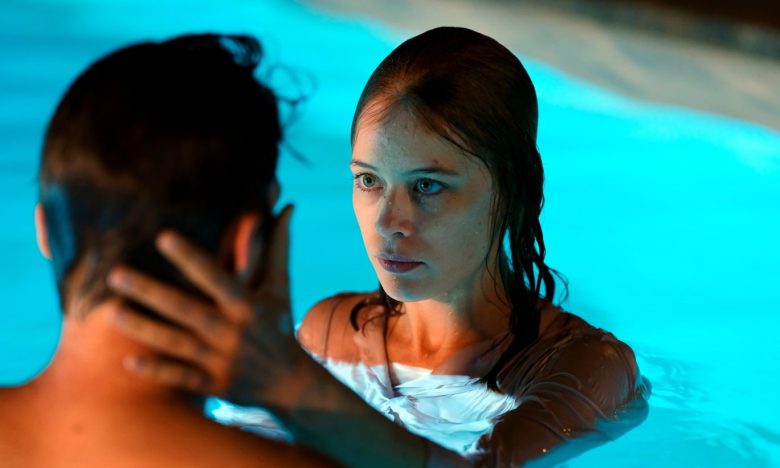
Portrait Of A Lady On Fire is a story about a painter, played by Noemie Merlant (right) and her hurting subject, played by Adele Haenel (left).
With all this free time thanks to the COVID pandemic, it gave me a good chance to catch up on a lot of things undone. One of which was write reviews for films I didn’t review soon enough the first time. One such film is Portrait Of A Lady On Fire. I saw it in its entirety shortly after the Oscars. It’s a film that’s intriguing to watch.
The film begins with a painting class for young women. The teacher is Marianne, an acclaimed painter. The students are to paint a portrait of her. One of her students notices one of her paintings: that of a woman with her dress on fire. She asks Marianne what it’s titled. She responds “Portrait of a lady on fire.”
The film flashes to years earlier, when a man in a rowboat rows Marianne to a remote island in Brittany. She is commissioned to paint a portrait of a noblewoman named Heloise who is to be married off to Milanese nobleman. Her mother, the Countess, will allow her to stay in the building and be served by the maid Sophie. Painting Heloise will be a tricky thing. She does not want to pose for paintings as she does not want to be married off. She attended a convent, but her sister’s suicide prompted her return and her engagement.
Marianne decides it is possible. She just has to act as her companion and remember her features in order to paint her in secret. However Marianne notices the hurt inside Heloise as Heloise tries to jump off a cliff to her death. Marianne successfully stops her. Over time, Heloise learns of Marianne’s artistic passions including playing on the harpsichord. Marianne plays her the Presto of summer for Vivaldi’s Four Seasons. Heloise is captivated with it.
Marianne finishes the portrait, but feels she has to let Heloise know the truth of why she’s here. Heloise is critical of the painting and Marianne destroys it promptly. To the surprise of her mother, who is about to leave for Italy for some time, Heloise is willing to have Marianne do a portrait of her.
Over time as Marianne paints the portrait of Heloise, their bond grows. Especially over the reading of Orpheus and Eurydice. The maid Sophie reveals she’s pregnant and doesn’t want the baby. The two help her have an abortion through violent exercise. Sophie is included in the friendship with the two. The three go to a bonfire surrounded by women as they sing. It’s there Marianne sees Heloise with her dress on fire. Overnight, Marianne is haunted by images of Heloise in a wedding dress.
It’s when the two are alone together in a cave that Marianne confesses her love to Heloise. The two share their first kiss. The romance grows as Marianne continues with the portrait of Heloise. Marianne does other artwork too like sketching the performing of the abortion on Sophie and even sketching a naked picture of herself on page 28 in one of Heloise’s books, by her request. However the fun is cut short as Heloise’s mother returns. The portrait is completed and both Heloise and the Countess are happy with what they see.
SPOILER WARNING: Ending Revealed In This Paragraph. Marianne is about to leave with her work being completed, but then sees Heloise one last time: in a wedding dress just like in her dream. Marianne says she did see her twice since. The first time in a painting of her with her child and a book open to page 28. The second time was from a distance at a symphony concert. She could see from a distance she was overcome with emotion when the Summer suite of Vivaldi’s Four Seasons was played.
There’s no question the film is LGBT themed. The film is a fictional story. Nevertheless it does tell a lot in what it shows. It’s a chance meeting between a painter and her reluctant hurting subject. It’s after the mother leaves that the place goes from a place under control to the place the three women can live out the lives they were meant to live. It’s there Heloise can reveal she’s a lesbian like Marianne and she loves her. It’s there when a pregnant Sophie can have her baby aborted at her will. It’s also a place where the common women all gather together at a bonfire and sing. It almost feels like a ‘womyn’s’ film. However it tells more. The women know that once the mother returns, everything will be back to the way it was. Marianne knows her love that was meant to be can’t be. And so does Heloise. We shouldn’t forget that even though this is a fictional story, this was a time when same-sex love was criminalized and abortion was illegal.
Another element of the film is how the story tells itself through art. It may be about a painter who’s hired to paint her subject, but it’s like art of all kind is important for the storytelling. It’s also music that stirs emotion. It’s the discussion about Orpheus and Eurydice between the two. It’s the various drawings Marianne did. It’s of the painting of Heloise that would reveal who her true love was. The mix of various forms of art and feeling, both of passion and of hurt, come into telling the story of this film. Even the bonfire song where the women celebrate, but Heloise makes obvious is still hurting inside, plays an important role. The scene where Heloise’s dress is burning, but she acts like she’s unaffected will remind you why it’s not the dress on fire but the lady on fire.
This film was out during the VIFF. I only saw the last half of it because I was busy during ushering during the first half. That’s why I don’t include it as part of my VIFF reviews. It was only in February just after the Oscars that I finally saw it in its entirety. I’m glad there was a second chance to see it. It’s too bad it was completely snubbed out of the Oscars. For those wondering what France’s entry for the Oscar of Best Foreign Language Film was, it was Les Miserables and it was nominated. This film however was a nominee for the Palme d’Or at the Cannes Film Festival and won the Best Screenplay Award.
Top acclaim should be given to director/writer Celine Sciamma. A lesbian herself, she did a very good job not just bringing her story to life but also creating an array of imagery and adding an atmosphere to it. It’s quite an experience to watch. The acting from the two main actresses, Noemie Merlant and Adele Haenel were excellent too. You could tell as much from their moments of silence as you can from their moments of dialogue. It will also leave you undecided which of the two is the lead actress, or if they’re both the lead actresses. Luama Bajrami is also a good addition to the film. She slowly makes her presence in. The biggest quality of the film is the cinematography from Claire Mathon. Her cinematography added the color and the feel to the film and has a lot to do with its excellence.
Portrait Of A Lady On Fire is a one-of-a-kind film that showcases great cinematography and allows for the images to contribute a lot to the storytelling. It’s a fictional story that’s very picturesque and worth admiring.
Until the number of new cases drops considerably, physical distancing is the new norm.
COVID-19 still affects our daily lives. However some may not have the same effects they had like say just a month ago. Some things are starting to open up more, but some still remain closed. Even those that have opened up have set restrictions and limits. I will highlight in this blog how much has changed since my first COVID-19 blog.
Reopenings, But With Restrictions
I don’t know how soon we’ll ever get back to normal; the ‘normal’ we had before this pandemic hit. One thing I know is it won’t be anytime soon. Keep in mind that reopening of indoor things and places will be done in phases. I’m sure phases will be based on the maximum capacity allowable with the given square-footage. Statistics of new COVID infections and active infections will also play a factor geographically.
Restaurants are starting to open up more. Even during the worst of the pandemic, restaurants that could offer delivery service still functioned. There were even two walk-in places — a local fast-food place and a Domino’s Pizza outlet — that were open for people to walk in and order. Both times I placed my order, I was told to stand outside to wait for my food to be ready. I didn’t mind because this is a pandemic. However lately restaurants have started to allow people to dine at, if not dine in. When I mean ‘dine at,’ I mean the patio areas of restaurants are set up and open for customers to dine. Outdoors has a way-lower rate of contagion. The restaurants that could allow dining inside had to have a big capacity and I’m sure they had to limit the number of dine-in patrons.
Most stores that were open from mid-March to the end of May did so with the number of people in at one time. However there were some popular stores in Canada that were closed completely during Phase One of the pandemic like Best Buy, Winners and Ikea. Winners reopened, but there was a maximum number of people allowed for a long time. I remember on the day of reopening, I had to stand in a lengthy line and it took fifteen minutes. The maximum allowable was 75 at once.
I had to wait 30 minutes in line to get into an Ikea.
When Ikea reopened at the beginning of June, it came at the right time as I was planning to put up new curtains. I went on a Sunday 14 days after it reopened to purchase a curtain rod. When I arrived at 4pm, there were gates to mark the line-up where people could stand in line and where to be separate. It wasn’t just on one side. They had that line-up but the opposite side too. That was annoying since the line I was in was lengthy enough. Funny thing is there’s a third line-up area if the line-up gets even longer! Anyways theirs was a situation where there was a maximum and they could only let in ten at a time just after ten were seen exiting. That left me waiting in line for around thirty minutes! Also don’t ask about the returns line-up. I had to wait an hour to return something small!
Medical offices started to reopen at the beginning of June. The only medical office I could enter during the big closings was the blood clinic for donation. Even then, they had to limit the number of donors at once and it was strictly by appointment. Booking appointments were hard as availability could be anywhere from one day three weeks from now to the other option which would be two weeks later. Once I was able to donate, they still had to take my temperature from a distance and have me wear a face mask.
At least they allowed me in. When I had a really painful ordeal with gout in May, I didn’t walk to the drop-in clinic 300m away. I limped there! Only to learn the doors are locked and can only take over the phone. Even when I called, they still had to book an appointment with the drop-in doctor for me and they had to call me at that time. That’s the way it was with a lot of doctors’ offices during Phase One of the pandemic. It had to be either strictly phone appointments or they had to use their smartphone to send images or videotapes of the problem. Mine was strictly a phone call with the doctor. She did forward the prescription to the pharmacy. You can imagine my relief once I got the pills!
They may be a day late and strictly phone only, but it was way timelier than my dental ordeal. My tooth broke in the middle of May. I called up the emergency line and left a message. The dentist then called back and said they can’t work on it until the dental offices open up again. They didn’t open until June 1st. The problem was annoying because the tooth would scrape against my tongue. It was that annoying. You can imagine how relieved I was for my appointment. But even then, I was warned that there was the chance of catching COVID. I had four questions to answer before I could be done. All had to be the No answer. I also had to get my temperature checked from a distance. Then I could get my tooth done.
Reopening With Regulations
To be among the maximum 50 to attend service at my church, you need to let the priest know and answer a questionnaire before you can enter.
Some places have reopened with set limits. Firstly churches are limited in terms of capacity. My own church has two services on Sunday. Anyone who wants to attend has to let the priest know by the day before because there is a maximum of 50 people allowed in the church building and parking lot at one time. Even after you let them know and he says it’s good to come in, there’s still four yes/no questions to answer about your health. Only if you answer no to all four are you fine to enter the church for mass. For those that can’t attend mass, they can view it on the Facebook page or the YouTube channel just like we all did at the start of the pandemic. In addition, the summer used to be a case where there would be a single mass in both languages. Possibly because of the pandemic and to keep as many people from being left out, the two separate masses in English and Ukrainian will continue.
My COVID hair: four months in the making!
Secondly, it’s not just churches that are reopening with regulations. Barbershops and hair salons reopened at the start of June too. Yeah, we’ve all heard the term ‘COVID hair’ or ‘Corona hair.’ That’s what happens when the hair salons all close. You either have one of your family members cut your hair (One you can trust, I hope!) or you wait. I waited and boy was my hair long and hard to control. After the long wait, I finally got my hair cut in the second Friday of June.
The barbershop I often go to reopened. A lot changed. The barber wears a face mask, clients have to wear a face mask too, and he has to clean and sanitize the seats after every person he works on. On top of it, the price is raised an extra $5 to deal with the new methods of sanitizing.
To get my hair cut, my barber demands you wear a face mask, like most hair salons demand now.
I have no problem with paying the extra money. I was sensing there would be something like this. The news weeks earlier talked about reopening but charging a ‘COVID tax.’
Libraries closed during the pandemic. I remember well because I was to attend an info session on cryptocurrency in the middle of March. The session was cancelled because the library had to close. Any books to be taken out or viewed had to be online books. Libraries reopened during the last week of May, but it was limited to book pick-up at the entrance. I went to pay an overdue fine but they are not taking it right now. I’m sure even if the library building does open to the public again, there will be a limit on the number of people who can enter and it will be months before the internet computers for public use will be allowed to be used again.
Open But Still Closed Enough
On my last visit to White Rock beach, not as many people on the beach in many areas.
Over time, playgrounds would slowly start to open up for children to play. Swings, spinning wheels and slides are now back and active again. Many natural tourist attractions and natural parks have been reopened. However there are still some closures. I noticed when I went to White Rock a month ago. White Rock is known for having a long beach and many walk-in food huts mostly for ice cream and fish and ships. It also has a lot of dine-in restaurants. At that time, most dine-in places weren’t open. I don’t think many could allow for dining in with that little of space. The small huts for ice cream and fish and chips were good, but there had to be distances in the line-ups. I was able to get an ice cream. For parking, half of the lots were closed off. For beach access, most of the walk-on access was gated and there were limited ways to enter for most of the beach. Also the White Rock Pier was completely closed off due to the pandemic. It’s a narrow pier of eight feet of distance so you can understand.
The White Rock Pier is closed off because of the pandemic.
You remember how in my original COVID blog I talked about cancellations of events? That’s the same thing with July 1st which is Canada Day. Usually there would be parties and picnics and fireworks blown off. This was not the case this year. Instead there were ‘virtual’ Canada Day events for people to do online. There were fireworks shows but they all had to be livestreamed. If there were any fireworks shows for us to visit, they would have to be private. Also any Canada Day picnics would have to be private get-togethers. What can I say? When a pandemic happens, that’s all you can do.
My Own Daily Life
As many of you know, I was put on a leave of absence from my job back in April. It will end this Monday. That makes it a good three months in which I’ve been away from my job. During the time, I’ve kept in contact with my supervisor from my job. She likes to keep in touch. We had two socially-distant get-togethers. I had occasional get-togethers with my cousin. We had to be distant each time. I also had coffee with another cousin. Each time we all had to sit eight feet away. Getting together is possible as long as you’re distant.
A lot of places I like to go to, like libraries and dine-in restaurants, have mostly been closed or delivery only. I only dined out at one place: on Canada Day. Even with dining allowed in the patio, there were chair placements and table separations due to COVID restrictions including the maximum of two at a table. There were also restrictions in the indoor dining room. Whenever I go shopping or for any other errand, I still wear my gloves. Wearing a mask depends on the situation. If it’s a crowded place or there’s a noticeably big amount of people, of course I’ll put it on.
Buses started resuming regular service on June 1st and back to fare paid. I remember going on a bus trip from Surrey to White Rock. It wasn’t packed to standing room only, but all the seats filled up. This was one of those cases I’d put on my face mask. Especially since there was a shady-looking man who sat near me and made a phone call about drugs. I was hoping he’d get off the bus soon. I did get off five minutes after he did. Nevertheless, it becomes nervous when a person with a shady personality is close to you. I’ve seen some shady types who appear like they don’t care if there’s a pandemic or not.
Looking Ahead
Re-openings and lifting of restrictions happen in phases, and the phases are reliant on statistics. I’m sure no matter where you are in the world you are, the COVID-related restrictions that have happened relate to the deceleration of the frequency of new COVID cases and decline of active cases and will continue to do so as numbers change. There are some places where because of the numbers not being reduced, COVID restrictions remain unchanged. There are even some places like Brazil that have just recently experienced their own COVID ordeal.
Canada is lucky that the numbers of new COVID cases are declining. We did have some increases over the past week, but they are not as big as the new-case statistics of April and May. There were provinces that were hit hard and still have an impact. In BC and Manitoba where my parents live, the COVID cases were not the hugest of impact and experienced excellent rates of decline. That allowed for better phased openings.
I know I talked about being away from my job. During that time, I made some good use out of it. Actually I was lazy the first week. I felt I owed it to myself for working a lot of hours in my life. Just to wake up without an alarm and do whatever I want for a full week. I didn’t sleep in as much as I hoped. It’s hard to sleep in a place with no air conditioning. Nevertheless during the time, I used it as chances to visit as many outdoor places I’ve never seen before or outdoor places I enjoy going to. It worked out great. I added some new photos on Google Maps.
When people are laid off from their jobs during the pandemic, people do a lot of various things with their time. Some did baking, some spent more time with their family, some even resorted to indoor workouts. I did a wide variety of things. Online, I did some teleconferencing with people from a home business I recently took an interested in. I will be taking an online course on mutual funds in two weeks. I was ‘late to the ball’ for other teleconferencing. I received emails from ARMA (Association of Records Management and Administration) about info sessions on Zoom. I only started seeing them in June. Basically the biggest thing I did was apartment repairs. Over the years I left a lot undone. With all this free time, I finally had the chance to do it. I accomplished a lot. Of course there’s more I’d like to do, but I’ll see if I still have the drive, and the money to buy the stuff.
As for entertainment, you could tell with so many cancellations, television and YouTube replayed a lot of classic events. The NFL channel did a lot of virtual games, NBA replayed a lot of great moments and did stats, UEFA did a lot of ‘virtual’ Euro games, and FIFA has #WorldCupAtHome where they replay a lot of great past World Cup games. Right now is World Cup 1990. Even entertainment channels are replaying a lot of past shows. The Eurovision channel has #EurovisionAgain where they replay a Grand Final of the past, get people to vote for their favorites, and have a charity at the end to donate to. All of which remind you if you’re confined inside, you don’t have to compromise fun. Also during this time I’ve become a big fan of the show Ridiculousness. It’s become my new ‘guilty pleasure’ show!
The good news is my leave of absence will end as of Monday. Work at my full-time place has slowly but surely become busier and busier over time. I look forward to starting again. My work computer has been sitting in a box for three months! They say laziness is addictive. I hope that doesn’t happen to me. I hope I can readjust fine. I’m sure it will start as mostly working at home with the possible odd day or two working from the office. I’m sure any place that does have office work will have to have a lot of restrictions and precautions to protect people or they will be fined. Inaddition, I was told that I will be having some new duties to take care of. I’m willing to change or learn new duties, as long as I learn at a pace I can handle. Also you remember I told you about the CERB payments in my last blog? I received two such payments. I’m glad I don’t have to apply for more. Actually if you apply for CERB and you are actively involved, you can be charged criminally. I was reminded right when I applied for my first of the conditions required to eligible and that making a false claim can be subject to criminal penalty. I also heard from one person that with CERB, you will have to pay 20% of it back come next tax time. I have the money in savings set aside in case.
One clothing mega-store is half-full of merchandise. Shortages will be common for months due to the lack of shipped goods.
At least I’m working again. If there’s one thing this pandemic has taught me, it’s that there’s no guarantee of work back. The pandemic has left a lot of uncertainty behind. A lot of small businesses and a lot of big businesses have had to either file bankruptcy or also completely close. Many have reopened, but it’s a question about how hard did the pandemic hit their business? Will they be able to continue? We’ve seen ads encouraging people to support small businesses. I have mostly shopped at small businesses that I’m familiar with. I hope they stay strong. Even big businesses will have problems as they may get less shipments of items customers demand. I recently went to a major clothing store near where I lived. The aisles and racks are normally loaded, but they weren’t that time. I talked with one of the cashiers and she said that incoming merchandise is less frequent. It used to be daily but not anymore. Something like furniture to sell comes in every week or two. I’m sure that business isn’t the only big business experiencing this. This economic recovery won’t be easy. I think every nation got hit hard.
Cancellation of events still continue, even locally. The fireworks festival of Celebration Of Light that’s held in late-July is cancelled. The Concours d’Elegance classic car show I like to see just before Labor Day is cancelled for the year. My retreat to Palm Springs in August is cancelled. Makes sense because of big-time travel restrictions. The Vancouver Film Festival, or VIFF, will continue but it will be completely virtual with the films they will be showing. I’m going to miss volunteering this year, but I will support the online VIFF.
Since I’m talking about VIFF, there’s a lot of talk about the arts suffering because of the pandemic. It’s easy to see with a lot of planned shows being cancelled and a lot of schools or training centres having to rehearse or work online. That’s become the new norm. Even the choir I sing for had to cancel out its show for June. We did rehearsals via Zoom every Wednesday evening starting in March in hopes of doing a show. When it became obvious a show wouldn’t be possible, our rehearsals became sing-alongs with our favorite songs over the years. My situation with the choir may be minor compared to the more organized arts companies, but this pandemic has the arts communities calling out for help in keeping things alive and active for the future. I don’t think the arts will completely die. I’m sure the arts have taken worse hits in history and have still triumphed. Nevertheless, it will be a fight for the future.
Also there’s talk from health professionals and medical board leaders that there is a big possibility of a Second Wave of COVID that could come in the fall and it could be worse. I hope not with all the prevention we’ve been doing. That will really cause a lot of financial damage that would definitely be irreparable. There’s already a lot of crazy things happening right now. Like just this week as the US saw a steady drop in new COVID cases for the past weeks, there’s now a sudden jump in cases that have reached record highs! Times like these make me glad my Palm Springs retreat was cancelled. Also airlines in Canada and the US have resumed more of their regular business and are accepting up to capacity. I just hope they have regulations like all wearing a mask and the right air filtering on board.
That’s all I have to say for my COVID update for now. There’s a mix of things that either look optimistic or look pessimistic or fearful. Only time will tell what happens as far as how the pandemic goes and its impact on the economy and people’s own lives. Me, I just want them to find a cure and a vaccine fast. Enough is enough!
When COVID-19 hit the outside world, everything ground to a halt. This is what Downtown Vancouver looked like on a Sunday in April.
I’m sure the COVID-19 virus, or as most would call the ‘Corona Virus,’ has changed your life to one almost unrecognizable to the way it was when March started. I know mine has had a lot of changes. However it’s a crazy time we’re living in now. Not as crazy as it was in March or April, but still crazy enough and showing no signs of immediate relief. A virus that seemed to exist in a city half a world away has now infected six million people worldwide. Here’s what I noticed over the time.
I know this will be the wordiest blog I’ve ever written, but I have to get all this off my chest.
The Pandemic Looming
The news of COVID-19 was catching our eyes as far back as February. It made brief news in January, but the news in February was about a pandemic in the Wuhan province of China that was looming. There was the fear that it might be carried to the outside world. Eventually it did hit the outside world and we’re now still fighting it!
News had already hit Canada of our first cases. Our first death happened in the second week of March and it was a 78 year-old in a Richmond hospital. It was evident that our lives would soon change. That would become the case the following week. It was then when things like social distancing, working remotely and the closure or limit of non-essential services. I even remember the last time I ate out. It was a get-together of former employees of my job at a pub just a ten-minute walk away. It was on March 14th and pretty much the last weekend where people could meet inside a restaurant. Then everything changed the following week.
This was a concern for me. For a long time, I’ve compared to COVID to other pandemics or epidemics of the past like the Spanish Flu or the Bubonic Plague or the Plague of Justinian. When we had our social restrictions– actually there are still regulations in BC as I speak– I often wondered “Did they handle it the same way back during influenza?”
Cancellations, Cancellations, Cancellations
To the disappointment of almost everyone, it appears every event worldwide had to be cancelled because of the pandemic. At that dinner with former co-workers, I remember the pub had their television on one sports channel and one golf channel. The news of first the NBA cancelling the rest of their season and then the news of the NHL cancelling the rest of their season sent a message about how serious this problem is. Even the golf channel talked of PGA and LPGA events that were cancelled. Interesting how nowadays, the sports channels have been replaying past sports events. That has been successful in lifting the mood of things, to an extent.
More cancellations were on the way. The Eurovision Song Contest was cancelled, the Euro 2020 football event had to be postponed for the following year. Pressure became a case that the Tokyo Olympics that were slated this summer were also postponed until 2021. Cancellations are also happening locally too. In Greater Vancouver, events like the Scandinavian Midsummer Festival in June, the Celebration Of Light in July and the Pacific National Exhibition for around Labor Day had to cancel out as there’s no certainty the pandemic would end around their times. Winnipeg’s Folklorama had to cancel out their festival for August completely. It’s a pain and a headache, but it’s best to do so as right now no relief is currently guaranteed for their times.
Occupational Shock
I’ll bet there may be just 10% of the world where COVID-19 has not changed their job situation one bit this whole time. They must be few and far between or just plain hermits. If you haven’t lost your own business, or lost your job because of a temporary layoff, then your work setting will definitely have changed.
How many of you have had to move your desks from your office to you own home? How many of you still working use Zoom to communicate with your meetings? If you work for a small restaurant or even a big franchise, has it shut down or is it now just strictly pick-up or delivery? That’s what the normal has been under this time.
As for me, I was informed through my job that I would have to work from home. We would have to have all our computers set up with the right VPNs and the right communicative software to work from home. I remember my supervisor drove me in the afternoon to my home with all my computer equipment in a box. It was a unique three-week experience using all the software. The most I’ll say about my job is that I work for a financial agency that works on behalf of various clients. One thing is that the work slowed down because of restrictions placed in dealing with customers. We all noticed the work getting less and less as the Inbox had little work to do. Eventually I received the call I was placed on a Leave Of Absense. My banked vacation time had to be paid out before I could go into the unpaid part four weeks later. As of now, I’m still waiting for the call back to work. I’m not expecting things to resume once clients want us working for them again.
Right now I’m not too worried about my job. My work computer has been shut down and I have it sitting in a box. I still have my work badge. I also still have my medical and dental happening. Also, I don’t know if your country gives out emergency benefits during a State Of Emergency, but Canada has a wide variety of assistance programs implemented during this time. I applied for the CERB (Canada Emergency Response Benefit) which is a monthly income supplement for people that have been either laid off or receiving less than $1000 in a month’s period. Currently that’s my income. We’ll see what time holds.
Social Distancing: You’re Lucky To Get Around
In March, lines were made with tape and paper for markers.
You hear it all the time nowadays: lines like ‘Stay Home’ or ‘Stay two metres apart.’ To think at the beginning of the 2020, there was no such term as ‘Social Distancing.’ However that’s one of the things about this outbreak. Most of us never had to wear a surgical mask in public. That all changed when health officials made speeches recommending us to wear them.
Businesses sure changed. I mentioned about my time in the pub. That was the last dine-in weekend. Now restaurants have either closed completely or they make it strictly pick-up or a delivery service like Skip The Dishes. Fast food or coffee chains like McDonald’s or Starbucks have closed their restaurants and only allowed for drive-thru pick up. Few stores were open, except for those with essential services. Grocery stores and pharmacies were open. Furniture stores or clothing stores were not. Hair salons were closed off completely. Drop-in doctors offices were closed and they could only be a case where the doctor phones you. In some cases, you would have to send a video of your condition or ailment to your doctor. I know I had to do an appointment over the phone when I had a case of gout in my foot and it was too painful to walk.
To keep buses at half-capacity and passengers distant, signs like these were put on seats to prevent sitting.
Also how many of you go into a store and see lines or marks on the floor requesting you to stand 6 1/2 feet or 2 metres apart? I saw that in stores right in the middle of March just shortly when my work-at-home situation started. Even some entrances placed limits on the number of people who can be inside a store and had markers outside signaling where in line to stand. I’m sure there are some buildings that would demand you wear a mask to enter, like hospitals I’m sure.
Bus transportation is still there, but it has limited capacity. For two weeks, I would not get on a bus until I was invited by a family member to visit them. I was nervous when I got on. I didn’t have a face mask so I used my scarf if I had to. Plus I would almost always go outside wearing leather gloves. Buses in Greater Vancouver are free until June 1st. Skytrains and Seabuses are still fare paid. The buses would only allow for entry on the side door and were half-capacity to limit the number of people riding and the space in between them. There were even markers on the chairs which were not to have people sit upon. Skytrains and Seabuses did not have the same signs on seats to limit people, but the capacities were smaller than usual.
Playtime Is Over
The crazy thing about all these social distancing measures imposed by civic, regional or even federal laws is that they kept on getting stricter and stricter as the numbers got bigger and bigger. That’s the nature when a ‘state of emergency’ is declared. I remember leading to the end of the second week of March, the law was that places should have no more than 250 people gathering in one place. Then it became a case of no more than 50 people in one place. It’s not as severe as some places that demanded lockdowns or even a limit of 10 people in one place, but it was still crazy enough to put a limit on things.
I also remember when I went for mass at a Ukrainian church that weekend, the priest gave the option to use a disposable wooden spoon to put into the mouths of people. He was willing to use the common metal spoon used for everyone, but their mouths had to be opened wide. Also at the Roman church that Sunday’s evening, the church was half-filled with people sitting far apart from each other. That was the same in the Ukrainian church with only immediates sitting close to each other. Since then, churches have limited their services to online services. That was the case even during Easter. I know because I’ve watched many a mass online.
Caution tapes on a park swing sets is a familiar site during this pandemic.
However the biggest area you’ll notice it most is in parks and playgrounds. Ever since the pandemic, swing sets, spinning wheels, monkey bars and sandboxes have been closed off. If anyone is to be in a park, they are to do it in the natural areas or on one of the benches. The pandemic was that much of a threat. Even now the swing sets are showing no signs of reopening.
Shopping: All You Can Hoard
It never fails. A pandemic or a problem happens, and then people flood to grocery stores to hoard all that they can. I got my first experience of this type while living on my own not during a pandemic or outbreak, but of a water crisis. Many years ago, Greater Vancouver had a problem with E-coli in the drinking water. People had to boil their water for some time or buy bottled water. You can imagine people would rush to stores to hoard bottled water during that period.
This is all the paper products that was left at a grocery store Monday March 16th.
Now we have the COVID-19 outbreak. As a result, a lot of stores have had their shelves ransacked for various items. The biggest of this pandemic pandemonium was three to four weeks ago. There was the hoarding of drinking water, of pasta, or rice and of meat. However the hoarding that got the most notice was toilet paper. People rushed in to hoard toilet paper more than any other item during that period. The hoarding of three to four weeks ago got so bad, stores posted signs that said ‘Limit 1 (or 2) per Customer.’ Even then, that was still not enough to prevent the hoarding. I remember going into a pharmacy looking for paper towels two weeks ago. Even a set of two rolls of ‘PT’ was enough for me. When I got there, the store had the ‘Limit 1 per customer’ sign, but a two-pack of paper towels was the only paper product on the shelf! That’s right! All the toilet paper and facial tissue were sold out and this two-pack of paper towels was all that was left. Talk about lucking out!
Now things are a far cry from the hoarding. Toilet paper have found their way back on the shelves, but they still go quite fast as well as paper towels. Cleaning products are one item that aren’t necessarily hoarded as much as they were in March but they still go faster than they did before. Leave it to a pandemic to change everything!
Attention To The Statistics
Paying attention to the daily statistics changes at Worldometers is a daily habit of mine.
It’s a question whether paying attention to the daily COVID-19 statistics is a smart idea or not. It could be smart because you need to know where you’re area stands in terms of probability of infection. It could not be smart because it can promote fear and panic. As if this pandemic hasn’t caused enough fear and panic already!
It first started with the live facts on YouTube back in the middle of March. I came across a live video from NAV MED VIDEOS which features live videos of COVID-19 statistics that were constantly updated once each nation released more facts. The NAV MED VIDEOS live video is still live and is still active in updating. However over time, I switched to the Worldometers site. I find a site with the stats more convenient than a Youtube video. Worldometers also gives constant updates about the latest statistics and the latest numbers. They’re also still active. They do a good job of updating the stats for Canada, but I don’t like how they don’t break it down province-by-province the same way they break it down for the US state-by-state.
The biggest reason why I pay attention to the statistics is to get a good sense on how soon things will get back to normal and how soon the numbers will go down. Another reason is also to see just how big of a threat the virus would be. Numbers of cases per population is very telling. I admit the numbers during March and April looked very distressing. However the number of new cases reported on a daily basis have showed an unsteady but sure decline. If there’s one positive thing to say about the overall statistics, it’s that there are more cases of people fully recovered than active cases. Another positive thing is in terms of closed cases, we have an 87% survival rate. Nevertheless we can’t be sitting pretty yet. Actually there’s no such thing as ‘sitting pretty’ as far as COVID statistics go. In fact right now, Canada ranks 11th overall in terms of total number of deaths. All of us have to wait for numbers of active cases and new cases to get lower to resume more activities we used to do.
COVID In My Dreams
Now this is something totally crazy, but it should be seen as eventual. You know a pandemic or an outbreak is a part of your life when it’s in your dreams at night. It happened to me twice during the third week of March:
During the evening of Monday that week leading into the morning of Tuesday (St. Patrick’s Day), I dreamt I was traveling by automobile through various areas of the city of Vancouver. I then found myself about to enter a library in a new building in South Vancouver. When I enter the library, I found it very hard to breathe; almost impossible to inhale. I think I struggled in taking three breaths. Then my alarm clock went off. I woke up and I was breathing normally. You can imagine my relief! Looking back, I don’t think it was exactly a dream about me having COVID-19 exactly, but shortness of breath is a COVID symptom.
The evening of the Friday that week leading into the morning of the Saturday, I dreamt I was going to a community college of various buildings and floors. The whole time, I attempt to practice social distancing despite having to move fast from place to place. I’m by the elevator of the second floor of some building. The door opens up and a young woman comes to me in a hostile manner: “You! You bumped me! You jerk! Don’t you know it’s dangerous? You could’ve infected me!” You can imagine my relief when I woke up.
I haven’t had any other memorable dreams of COVID-19 since then, but it’s interesting how an outbreak can be part of your dreams so soon.
Those Risking Themselves
For the first 2 1/2 months, almost everything was closed down or in limited function. The biggest business that did not see business decline with the pandemic is the health system. Now more than ever, nations need health officials and hospitals functioning like never before. The problem is it’s extremely tiring for health officials and nurses constantly tending to patients. I’ve heard of hospitals reserving a single floor as a COVID ward. Those nurses would be working the most hours, be under the most stress and would be under the most threat to catch the virus themselves.
Nurses aren’t the only ones who face threats of COVID on the job. Despite seating restrictions on public transit, bus drivers also face threats of contagion. That was especially highlighted in April when Detroit bus driver Jason Hargrove died of COVID. Just a week and a half before his death, the 50 year-old Hargrove posted a video where he talks of the difficulties doing his job during this pandemic. He even talked of a female passenger coughing without covering her mouth. I was upset with his death but I was most shocked to hear of a full-grown adult not covering their mouth when they cough.
Grocery stores, pharmacies and convenience stores still operated during the pandemic, but they had to take precautions and limit their hours. Cashiers would have to work behind a plastic protector or wear a see-through visor to protect themselves. They would only handle cash if they wear gloves. If you have a credit card, you had to run it through yourself with no putting it through any plastic. Some places won’t even allow paper or coin money for fear of contagion. Also at convenience stores and gas bars, no more self-serve coffee. The cashier does it for you. That’s what happens when a contagious disease hits.
The COVIDiocy Of COVIDiots
I don’t know what you’ve been doing for precautions. As for me, I’ve been doing my utmost. I think it was the dreams I had that most did it to me. Or it could be because I know a COVID test involves inserting a cotton swab far into your nasal passage. I sure as hell don’t want something like that! That explains why I’ve been doing my best to keep 2 metres apart. When I meet up with people, I keep the space standard of 2 metres. I try to be preventative instead of afraid. I take my vitamins as I normally do, I still go out shopping, I still jog down the sidewalks of Burnaby and New Westminster, but I make sure I’m a good distance away from others each time. Plus I still wear my leather gloves when I’m outdoors.
I will admit I do get nervous especially if I’m in a crowded area with a lot of people. I’ve seen it many a times. I see groups of people at a beach or park. Whenever I see that, I think ‘I hope they all live together in the same house.’ I also still see people either crowding or too close to each other at bus stops, I see some grocery stores with too many people inside. Whenever I’m in such a place, I make sure I get away from it as soon as I can as well as avoid close contact to others. Even when a single person goes in the same direction I’m going in an indoor place, it makes me nervous. I impulsively think they have disregard to social distancing measures and I feel like saying to them: “What the hell is wrong with you?” I don’t say it to them, but I’m tempted to.
And then there are those that are either careless, ignorant, or defiantly rebellious. Those are the subject of the new word created for 2020: COVIDiot! Some of the most noteworthy is young people. Now don’t think I’m knocking this generation of young people; the belief of ‘Live fast, die young, leave a pretty memory’ has transcended generation after generation. However the constant belief of being young and invincible doesn’t even change during a pandemic. We see it as groups of young adult crowd close together at a beach or public place. Just two weeks ago, I saw a group of twelve teens meet together outside my apartment building door. Only two live inside any of the apartments.
However the biggest news of the ignorance of COVIDiocy has to be during March when spring break in Florida still continued and beaches were still crowded. Further firestorm came when one of the partiers said in a news interview: “If I get corona, I get corona. At the end of the day, it won’t stop me from partying.” The news stories also showed how the reporter was talking to the partiers about the possibility of contagion. The young man said “Well, let us handle it in our own way.” I know young people don’t want to stop partying, but a pandemic should make one think twice.
And COVIDiots include the pundits, the fringe media and conspiracy theorists. They’re a class of COVIDiocy of their own. They include American religious ministers who say this pandemic is God punishing America for tolerating abortion and same-sex marriage. Please, COVID is a virus! Not a punishment! There are even people that are denying COVID exists and that it’s all a conspiracy to hoard rights. Alex Jones must be desperate for a crowd. It’s sick he brings his own children to the rally and hugs supporters. Besides, some that claimed it to be a hoax have made themselves sick of COVID, and some even died. There are those that stormed state halls to protest the social restrictions, claiming it’s unconstitutional. There are a lot of right-wing types that believe that state and federal laws protecting from a health hazard is a threat to constitutional rights. And finally there are religious ministers who violate state regulations on indoor gatherings and open their doors to their churches. Some number to over 1000 and there’s no social distancing at all. I take it they forgot the scripture “Thou shall not put the Lord God to the test.”
First Signs Of Relief
This past month of May, we’ve been seeing the statistics of new contagion go down steadily. The daily statistics are still high enough to keep certain restrictions active, but allow some restrictions to loosened. This week, churches will reopen, but to a maximum capacity of 50. Transit will resume to regular fare paid, but with seating restrictions still implemented. Hair salons are reopening, but some will charge a COVID tax and all will demand their clients wear a mask. Some non-essential stores like Winners opened last week, but with limitations on how many can enter. The number of people allowed depends on the square footage of the store. Dental offices will reopen starting June 1st. That’s beneficial for me because I have a cracked tooth and I will get it fixed on Friday the 5th.
Reopenings are not immediate. In a pandemic, they have to be gradual. I’ll admit it has been annoying having such a limit of places to go to and waiting outside. I’ll admit it’s annoying not being able to have a haircut. I even dream of the day I can return to dining in at a restaurant. However I will gladly comply as this is about preventing a pandemic from reaching devastating numbers at home.
Despite all the chaos and bad news that has happened, there has been a lot of good during this pandemic. People and companies have become more charitable and groups have supplied food donations to others. There have been nations during frightening contagion rates put under lockdowns or confinements to their homes and buildings. The confined responded by singing from their balconies or even doing aerobic classes to other tenants across to the other apartment. The human spirit won’t die! There’s also a greater appreciation for nurses and health professionals. They, more than anyone else, have the hardest duty of fighting the pandemic up front with the patients they see. They have to work longer hours and under harsher conditions. Here in Canada, we have a habit of thanking them every evening at 7pm when we go out and bang the drum or clank the pots. We want them to know how thankful we are for them. I’m sure there are other salutes of ‘thank you’ done differently around the world.
So for my concluding paragraph, I just have to say the COVID-19 pandemic continues. It shows signs of waning down, but reopening things will be a slow steady process. Despite things not being as bad or as fearful as it was in March, it’s still something worth taking seriously. We may not have the same big numbers of daily new cases, but the new case rates are still worth taking seriously. Plus it’s only now they’re testing out possible cures or vaccines for COVID-19. It’s frustrating trying to protect yourself. It’s also frustrating for the doctors, nurses and hospitals too. It’s most frustrating for those with the COVID-19 and their families. Nevertheless it’s important to stay strong right now. The statistics of COVID-19 have been ugly and are still worth keeping an eye out for, but we should remember all this is to protect ourselves until a cure and a vaccine is found. We also shouldn’t forget that the human race has been through worse. There was the Influenza epidemic of 1918 to 1919 that killed around 100 million. There have been smallpox epidemics many times in history including one in Japan in the 8th Century that killed 1/3 of the nation’s population. There were Cholera pandemics in Asia in the 19th Century that killed millions of people. There’s especially the Bubonic Plague or Black Death in 14th Century Europe that killed 1/3 of the continent. Or even the Plague of Justinian that ended the Roman Empire.
We all have to stay strong and be as preventative as we can. We have the chance to prevent COVID-19 from claiming even its FIRST million lives. There have been excellent efforts of people doing their parts and there have been people acting careless with a false sense of invincibility. We should all work to make this pandemic a thing of the past. When they stay at home and you live in a high-risk area, you stay at home! All I can say right now is whatever the situation is in your home country right now, stay cautious and continue to protect yourself.
It’s interesting that this year’s Oscars are being held the second Sunday of February. Usually they’re held the last Sunday or the first Sunday of March in a Winter Olympic year. It was pretty evident will all my cramming of my Best Picture reviews. I didn’t start until three weeks to go and I didn’t think I could review all nine in time. But I did! The last of the Best Picture reviews I posted on Wednesday. Next year they’ll be going back to the last Sunday of February. So hopefully reviewing them all will be a lot more relaxed.
Anyways I’m able to make predictions for this year’s Oscars. I’m even able to make some calls for what should win in some categories. I’ve seen enough films to make up 96 of the 124 nominations. They range from single-nomination films like Knives Out to Joker with the most nominations with eleven in total. Most categories have been very predictable with the same film or same effort winning film award after film award. That could help me with my Oscar bingo I’ll be playing once again this Sunday! However there are a few that appear unpredictable. So without further ado, here are my predictions for the 2019 Academy Awards:
BEST PICTURE
All credit to Olly Gibbs for that excellent image of this year’s nominees. This year has a wide range of film among the nine nominees. Two are set during World Wars. Two are written and directed by a Hollywood couple. Four have had a domestic gross at the box office of over $100 million. Two are films that got moved to NetFlix after an initial box-office release. One is done by a master of gangster movies and another is done by his heir apparent, but not a gangster movie at all. One is a modern-day adaptation of a classic novel. One is a fictional account of a cartoon villain. One is of car racing. One is of a failing marriage. One if of classic Hollywood. One is of Hitler through a child’s eyes. One is a possible answer to a popular whodunit. One is of a journey during war. And one is of an impoverished family trying to break free. All are seen worthy of being nominated in the Best Picture category this year. So here is my rundown of the Best Picture nominees:
1917 – War movies usually win the Academy over, as long as they’re done well. This has been the darling of most awards shows. I predict this as my Will Win pick. I myself admire it for its cinematography and it’s storytelling, but it’s not the film I most want to win Best Picture. Usually for Best Picture, I feel it should have much of the best of the year in the three top categories: acting, directing and writing.
Ford v Ferrari – Very rarely do auto racing movies get nominated for Best Picture. This is more than an auto racing film. It’s about those that were behind the big moment and the family relation of the racer who was shunned behind. Definitely a crowd-pleaser, but it doesn’t look like an Academy-pleaser.
The Irishman – What can I say? This is the film in which I most want to win because this is a film that went above and beyond what I expected out of it. I admire films that go above and beyond what I expect. Plus it had top-notch acting, directing and writing. However it lost a lot of its energy it had back in November. That’s why I think it won’t win.
Jojo Rabbit – This is one movie that would normally not be Best Picture material. I have to say of all nine Best Picture nominees, this is my favorite. This is the most entertaining of the nine. However I know how to separate my personal favorite from the films I feel are the best. Besides I know how stodgy the Academy is towards comedies.
Joker – Last year was something how a superhero movie finally got a Best Picture nomination. This year is a case of a story of the genesis of a villain won crowds and won movie awards. This is an impressive story too. However I feel that it faces stiff competition in the Best Picture race from other films.
Little Women – To think this is the first Little Women adaptation to be nominated for Best Picture! I can’t complain at all as the film took some different twists and it came out a winning story. I admire the way it was directed, written and acted, but there are films that have more boost in this competition.
Marriage Story – Sometimes all it takes to win people is a story that connects with people. That’s the magic of Marriage Story. This film’s best qualities are the acting and writing. However this is another film that appears prone to fall under the weight of bigger competition. Plus this being on NetFlix may be an additional reason why its chances were hurt.
Once Upon A Time In Hollywood – This is one salute to the Golden Age of Hollywood with a twist. Also it will cause a lot of people to reassess their definition of what a Quentin Tarantino movie is. I know my parents still think Tarantino movies are all ‘blood and guts’ but this film shows a side of Quentin most people overlook. I do rank this as a film in the Top 3 most expected to win, but it’s not my top pick. I think its summer release may have caused it to lose much of its buzz.
Parasite – This is definitely the foreign-language film of the year. Undisputed! This is my Should Win pick because this film has accomplished more than any of the other nine Best Picture nominees. It’s a case once again that the best film of the year is not in the English-language. However I’m very doubtful it will win. I remember last year Roma was the best film but it lost out to Green Book. That solidified my belief the Academy will never make a foreign-language film a Best Picture winner.
I know a lot of people often think the Academy Awards are a case of Hollywood patting itself on the back. One can say an excellent example of this was last year when Roma lost Best Picture to Green Book. If Once Upon A Time In Hollywood wins this, then it will further prove their point. I am very doubtful Parasite will win. However if 1917 wins, it won’t look like Hollywood patting itself on the back because it’s a British film!
BEST DIRECTOR
Should Win: Bong Joon-ho – Parasite
Will Win: Sam Mendes – 1917
I chose Bong Joon-ho naturally. Most people feel the common belief that The winner for Best Director should be the director of the Best Picture winner. It happens over 70% of the time at the Oscars. As a result my Best Director pick for Should Win is from the same film as my Should Win for Best Picture. I feel it’s right since Parasite is the film I admire most and it’s Bong who made it happen. I feel it will go to Sam Mendes because of his past awards success this year. Nevertheless I would not be disappointed if it did because 1917 is a film that’s worth admiring.
BEST ACTOR
Should Win and Will Win: Joaquin Phoenix – Joker
What can I say? It’s not just about being widely praised as the acting performance of the year but of the movie role of the year. Nobody — not even the most loyal of Batman fans — expected Joker to be the film that it is. It’s a film that not only tells the story of the emergence of the Joker, the chaos of Gotham City and the genesis of Batman, but it takes one into the mind of Arthur Fleck. One knew that Arthur would snap any minute. What can I say? One could argue that it’s Joaquin that single-handedly made the work!
BEST ACTRESS
Should Win and Will Win: Renee Zellweger – Judy
I never reviewed Judy in my blog after I saw it back in November. It’s an excellent story of a period in the last year of Judy Garland’s life. It focuses on her attempt for a comeback and how it appeared showbiz took everything out of her. It also flashed back to her childhood and how she was raised to think that a normal life that the other girls were having is for mortals. Renee was excellent in embodying Judy as she looked like a person who just couldn’t come to terms with herself and even feared what she would mostly be remembered for. Renee was spot on in epitomizing Judy from the voice, to the singing to the hostile attitude to the troubled personality to even writing left-handed.
BEST SUPPORTING ACTOR
Should Win: Joe Pesci – The Irishman
Will Win: Brad Pitt – Once Upon A Time In Hollywood
One thing about this year’s acting nominees. A lot of people talked about the lack of racial diversity. That is true, and I even reminded people in social media of Spielberg saying the Academy is like a member-only club.
As for actors, another lack of diversity is that only six nominations went to performances from five actors who were never nominated before. For Supporting Actor, this is normally a ‘newbie-friendly’ category but all five have been nominated before in the past and only Brad Pitt has never won an Oscar. That appears likely to change as he is the heavy favorite to win for his scene-stealing in Once Upon A Time In Hollywood. Actually Brad has enough screen time to qualify for the Best LEAD Actor category! However I would be likely to go with Joe Pesci for his portrayal as a mob boss who appears like a father figure. Nevertheless Sunday will be Brad’s moment.
BEST SUPPORTING ACTRESS
Should Win and Will Win: Laura Dern – Marriage Story
Some performances nominated for Supporting Actor/Actress are usually lead roles that are ‘politicked’ as supporting roles, like I I mentioned about Brad Pitt earlier. Some supporting acting nominations and wins are because they’re good at stealing the show from the lead actors. And some nominations and wins in the supporting acting categories can also be because they do an excellent job of character acting. That’s why I have no problem with Laura Dern winning. She made you hate Nora! She did an excellent job as the manipulative sly-talking lawyer and she made her character of Nora almost look like she was a snake! Actors are taught about even using animal-like behaviors to enhance characters. This award is Laura’s for the taking. And on the day before her 53rd birthday to boot!
BEST ORIGINAL SCREENPLAY
Should Win: Boon Jong-ho – Parasite
Will Win: Quentin Tarantino – Once Upon A Time In Hollywood
If there’s one major category that I feel will be the hardest to predict, it’s actually both screenplay categories. Lately some of the award shows have given alternating views on who they think is the best. I agree with what Bong Joon-ho said in his acceptance speech at the Golden Globes: “Once you overcome the one-inch-tall barrier of subtitles, you’ll be introduced to so many more amazing films.” I agree, but I doubt if the Academy agrees. Roma may have won last year, but I don’t think they’ll make it two in a row.
BEST ADAPTED SCREENPLAY
Should Win: Steve Zaillian – The Irishman
Will Win: Greta Gerwig – Little Women
It’s interesting that Greta and her common-law partner Noah Baumbach are both nominated for screenplays this year. I had to go with The Irishman on this one because it’s a complex story that Zaillian is able to make work. I think they will give it to Great for putting a new twist to a story that’s been adapted numerous times. I think the biggest upset could come from Jojo Rabbit, but I’m still set on Little Women.
BEST ANIMATED FEATURE
Will Win:Toy Story 4
This year I did not see any of the nominated films. I only saw three animated films and none of them got nominated here. Even though Klaus won the Annie Award and the BAFTA, I have a feeling Disney is going to take it again. This is the one category Disney wants to win most. wouldn’t that be something if Toy Story 4 loses to a NetFlix film?
BEST INTERNATIONAL FEATURE FILM
Should Win and Will Win:Parasite (South Korea)
For those wondering, this is a new title for the category that used to be called Best Foreign Language Film. This year I saw four of the five nominees in this category, which is extremely rare for me. The others I saw are Pain And Glory, Honeylandand Corpus Christi. That means I can also make a ‘should win’ judgement in this category. It’s safe to say Parasite is the foreign-language film of the year. Also Honeyland makes history as the first documentary to be nominated in this category.
BEST CINEMATOGRAPHY
Will Win: Roger Deakins – 1917
BEST COSTUME DESIGN
Will Win: Jacqueline Durran – Little Women
BEST DOCUMENTARY FEATURE
Will Win:Honeyland
BEST FILM EDITING
Will Win: Yang Jin-mo – Parasite
BEST HAIR AND MAKE-UP
Will Win: Kazu Hiro, Anne Morgan and Vivian Baker – Bombshell
BEST ORIGINAL SCORE
Will Win: Hildur Guðnadóttir – Joker
BEST ORIGINAL SONG
Will Win: “(I’m Gonna) Love Me Again” – Rocketman
BEST PRODUCTION DESIGN
Will Win: Barbara Ling & Nancy Haigh – Once Upon A Time In Hollywood
Here are the five upsets I anticipate are most likely to happen. In category order:
Taika Waititi for Best Adapted Screenplay for Jojo Rabbit
Klaus for Best Animated Feature
Michael McCusker and Andrew Buckland for Best Film Editing for Ford v Ferrari
American Factory for Best Documentary Feature
The Lion King for Best Visual Effects
And there you go. My predictions for the winners, and possible upsetters of the 92nd Academy Awards. Having a hostless Oscars last year was such a success, they did it again this year. Will it be as entertaining? Will there be some shock winners like Olivia Colman was last year? It will all be decided Sunday night.
This year marked another year I was able to see the Oscar-nominated shorts in the Animation and Live-Action categories. This year was also the very first year I was able to see the nominated Documentary shorts. That’s my Oscar milestone for this year. Here are my reviews of the films:
LIVE-ACTION SHORT FILMS
Two films are set in Middle eastern countries. One is set in Central America. One is set in Belgium while one is set in New York City. Three are dramas from start to finish. One starts as a comedy, but ends in dramatic fashion. One is a comedy from start to finish. Here are my thoughts on the live-action shorts nominees:
Brotherhood: dirs. Meryam Joobeur and Maria Gracia Turgeon – This is a story set in Tunisia. Two brothers are awaiting their older brother Aladinne to return from Syria. The father Muhamad appears to be looking forward to this. The brother returns. However he reveals Aladinne’s now married to a teenaged Syrian woman who is pregnant. The father is suspicious of Aladinne, fearing he may have joined ISIL in Syria. Muhamad makes a phone call Over time though, truths come out from both Aladinne to his other brothers over by the beach and to Muhamad though the wife. Including the truth about her pregnancy. The ending will leave one asking questions.
This is a relevant story as it is a situation that’s possibly happening in families in the Middle East now. It leads one thinking which brotherhood Aladinne is part of: his blood brothers or the ‘brotherhood’ of a terrorist group. It’s a story that gets one thinking. That’s why I predict it as my Will Win pick.
Nefta Football Club: dirs. Yves Piat and Damien Megherbi – The film begins with two men in the hills of Algeria who lost a donkey. It then leads into two brothers on a motor bike arguing over who the best footballer is. Then to a group of boys playing in a nearby football club. The boys get into an argument where the out-of-bounds is as there are no lines. The younger brother has to stop to urinate. After he’s finished, he notices the stray donkey who has earphones tuned into Saharan music. The older brother notices bags of cocaine with the donkey. The older brother decides to sell it but keep it secret. The two men are baffled. Especially one man who put the music onto Hadel instead of Adele. The older brother tries to sell it but something goes wrong. The ending will leave all surprised, and delighted.
This short was actually the last of the five that were shown. Knowing how the previous four had dark or tragic stories, you will expect something terrible or tragic to happen. You might even anticipate a social message out of this. I think those of us watching all needed some comic relief! It will make you glad this film is last in running order. End on a positive note.
The Neighbors’ Window: dir. Marshall Curry – Alli and Jacob are a middle-aged couple with two preschool-aged children and expecting a third soon. They live in a block of apartments in New York. They notice there is a young couple that moved into the apartment right across from them. Their window is a view to their apartment and they notice the two naked and making love. Did they forget to put up the drapes already? Three months pass. Alli gave birth to their third child. Jacob works from home and has a perfect view to watch the couple from the window as he works. That gets on Alli’s nerves. During Christmas, the Alli and Jacob have a family Christmas while that couple have a big party. Soon Alli becomes the voyeur. She notices the man has a bald head. Jacob thinks she shaved it. Soon it becomes evident he’s sick as he can be seen from his bed. Eventually Alli and the woman connect, but through unfortunate circumstances.
This is a film of a story where time elapses over eighteen months. It starts simply as a story of two voyeurs. Then it leads into a story of a couple who get reminded how much they miss their young-and-stupid days when they see those two having fun. The fun ends when sadder truths become obvious. I think the point of the story is to remind us of our own judgementality and even how prone we are to compare ourselves to others and making ourselves feel inferior without knowing the truth. It speaks volumes.
Saria: dirs. Bryan Buckley and Matt Lefebvre – The film begins in an orphanage one day in March 2017 in Guatemala. The fifty-one girls are woken up by the leader. The leader acts as the teacher. Before classes Saria learns that her sister has fallen in love with a male from the orphanage named Appo. During class Saria says a comment of defiance. This angers the teacher so much, she commands her to the guard who has her raped and beaten. Ximena learns from Saria that she and Appo have a plan to escape and walk to the United States for freedom. The opportunity arises when the girls hold a protest over the dirty and unsafe conditions of the orphanage. During police action, Saria and Ximena make their escape with Appo. However it’s a hopeless cause as the police have then cornered by dogs. Appo decides to throw himself to the dogs for the girls’ safety. All the 51 girls are brought back into a single room with just mattresses and the woman guarding. Two girls plan an escape by using fire, but it fails as the guard ignores them all.
This is a story based on real events. There was a protest over the conditions of the orphanage on March 7, 2017 and there was a planned escape. The girls were locked in that room and there was an escape plan that involved fire. The guard, who was a female, ignored them all until after ten minutes. 41 girls died. There were only ten girls who survived and they exposed the story. It’s not meant to be a true story. Instead it gives the girls who were victims characters and personalities. It exposes a truth of what’s happening in Guatemala while also reminding us these orphan girls were girls with hopes and dreams. I like the humanistic approach to the story. That’s why I call it my Should Win pick.
A Sister: dir. Delphine Girard – The film begins inside a car. The man is driving and the woman appears to be a passenger making a phone call to her sister. The film then goes to the emergency call centre. A woman is picking p this very call. She sorts out the confusion. It’s evident the woman in the car is making an emergency call and disguising it to look like it’s a call to her sister. The woman on the other end tries to work with her and even poses as the sister when the man talks on the line. This sets up for a climactic, but positive, end.
This is a film that keeps the viewer in the moment. There’s what one knows at the start and then what one knows as time goes on. At the same time, it puts the viewer in the intensity of the situation. You know it’s an abduction but the last thing you want is the worst. Throughout the film it’s a case of scenes of the woman and the man in the car and the woman at emergency control. It’s a story that will get you interested once you fully understand it and then keep you in the intensity of the story until the end.
BEST ANIMATED SHORT FILM
Interesting how not a single nominated short is 3D computerized animation. Even the computerized ones are 2D. The 3D ones are all stop-motion. All of them are unique in the stories they have to tell and the styles of animation they display.
Dcera (Daughter): dir. Daria Kashcheeva – The daughter watches her ailing father from his hospital bed. Suddenly a bird crashes through the window of the room. That still bird reminds her of the time she saw a dying bird and tried to get her father to resuscitate it. He was too busy cooking. She was in tears, but it inspired her to make a bird mask. She then remembers the time she was on a subway to a festival where she had to wear red makeup. She refuted and left the subway. He has the mask she made and decides to wear it. Then the film flashes to the present. He’s not in his bed. She then notices he slept with the mask she made. She goes to meet up with her father, who is being taken to surgery. Suddenly he becomes all better and the bird that crashed through is alive, just like that bird in her childhood.
I think the motif of birds can be interpreted in one of two ways: either the girl loves birds or she want to be free as a bird in her life pursuits. The story is told with marvelous artistry through stop motion on knit dolls and paper eyes. The animation style makes the artistry of the film and magnifies the beauty of the story.
Hair Love: dirs. Matthew Cherry and Karen Rupert Toliver – A young African-American girl in an apartment wants to style her hair just like the woman in the YouTube video styles it. The man, a neighbor, however tries to style it differently. The girl leaves crying. It isn’t until he sees the drawing and learning that the woman in the instruction video is the girl’s mother that he agrees to do it that way. He watches and does her hair at the same time, and the result is perfection. Then he takes the girl to see her mother in the hospital, in a wheelchair, and bald from chemotherapy.
This is a story that starts as being entertaining during the first half. Then you see the human moments at the very end of the story. The story goes from fun to touching deep down inside with surprising results. This is definitely a heart-warmer for anyone. You have to be hard-hearted not to like it. It will touch anyone who has gone through cancer or knows someone close who is going through cancer. That’s why I give it my Will Win pick.
Kitbull: dirs. Rosanna Sullivan and Kathryn Hendrickson – The film starts with a black stray kitten going throughout the neighborhood. He finds an area near a house full of boxes and wood blocks to make his own shelter. He also learns the owners own a big vicious dog and they keep him chained outside. The dog first wants to make food out of the kitten, but the kitten shows the dog he stands his ground and can fight vicious when provoked. Soon the kitten notices the dog is being abused by the owner. The kitten then sends the message to the dog that he can help him find a way out. Then the two plan their escape together. Soon the dog’s wounds heal and they find themselves adopted by an interracial couple.
This is a film from Pixar that was on the Disney+ channel. I find it surprising that Pixar created a 2D story! Usually they do 3D, but I still like it nevertheless. I’ve seen stories in animation before of how the cat and the dog go from enemies to the best of pals. This is unique as it tells that story with the theme of interracial relations. I admire how they do that in this story. It makes for a story that crosses from the humorous to the serious. However it still ends on a happy note, as we all hope it will.
Memorable: dirs. Bruno Collet and Jean-Francois le Corre – A painter gets into an argument with his wife, or so it appears. It turns out he has either dementia or Alzheimers and his wife has died. The conversations he has with his wife are in his mind. He still continues to paint, but it’s not easy to do. Then one day he decides to do a simple painting of simple unattached strokes. The strokes come alive and it’s in the shape of his wife. They even speak with her voice. It’s like she’s alive through the painting. The two share one dance together and it’s a dance full of color.
This is a dark story. However it’s told in touching form and even through a positive tone through the animation. This animation style is claymation and brush-stroke on glass. It’s like the story about the painting is trying to be like paintings themselves. It’s as much about the style in which the story is told as it is about the story. I make this my Should Win pick because this is the most unique and colorful of the nominees.
Sister: dir. Siqi Song – This is a story told by an adult male of how he experienced his baby sister: when she was born and when she was growing up. Boy did she have bratty behavior. Then you learn this is just a story of his. The sister he was supposed to have was aborted because of China’s One-Child policy. The story is just his story of how he fantasizes of what his baby sister would have been like. Somehow the film ends on a positive note.
Some would rush to dismiss this story as pro-life propaganda. I won’t state my stance but I don’t consider this propaganda. Keep in mind the sister was aborted because of China’s One-Child policy. The abortion was not the mother’s choice. The story is told in a unique way as it’s told through stop-motion animation and through knitted dolls. I have seen similar animation. At first I didn’t think an Oscar-nominated film could come through this style of animation, but it does here. I find it unique for the animator to tell a dark story with some humor into it. It’s worth admiring.
BEST DOCUMENTARY SHORT SUBJECT
Some of you may ask why haven’t I seen the Documentary Shorts in past year? It’s hard to say. Money? Lack of interest? Time? Those were the most likely reasons. However I did have the time and money this year, and I made myself interested in them. So here are my thoughts of this year’s nominated documentary shorts:
In The Absence: dirs. Yi Seung-jun and Gary Byung-seok Kam – This is a story that focuses on the sinking of the Sewol ferry off the waters off the coast of South Korea on April 16, 2014. 304 people of the 476 on board perished. Most were high school students. The documentary shows a lot of film footage from the day of the accident which includes news footage, rescue footage and footage from passenger smartphones. The film includes hearing dialogue between the Coast Guard, the transportation office and President Park Geun-hye. The film also includes footage of the inquiry and of footage when the Sewol was raised out of the sea three years later.
This film is good in letting the moments of the accident tell the story as well as expose a lot of ugly truths that people already knew. The film showcases the root of the problem: negligence on many parts. It shows the negligence and lack of action of the coast guards, the negligence of the transportation board, the negligence of the captain who instructed passengers to stay in before he escaped, and the negligence of the government. There are some interviews with parents of fatalities, survivors, and volunteer divers who dove to bring bodies up. I liked how this film used a combined set of video, film and audio to expose the truth of the matter. It also proved insightful as I believe this is the first disaster I know of leading to the overthrow of a world leader. That’s why I pick it as my Should Win pick.
Learning To Skate In A Warzone (If You’re A Girl): dirs. Carol Dysinger and Elena Andreicheva – The film shows girls in Kabul, Afghanistan who attend a school privately after boys leave the school. This is in an area of Afghanistan that is strongly against girls going to school. Not only do they go to school, they also learn skateboarding at a park called Skateistan. The film interviews the young girls about their family background, what they like about school and what their ambitions are. The film also interviews the teachers and instructors throughout the whole year.
This is an excellent documentary reminding us of the threats women in Afghanistan still face. However it also shows us the hope of a better tomorrow. The film shows the girls as they learn the five basics of skateboarding over time. It also shows how their skateboarding lessons aren’t simply for fun. They’re life skills along with their education for a better tomorrow. The film includes the interviews as well as footage of the girls at school and at their skateboarding lessons. The film also includes audio of news stories of bomb blasts in Kabul reminding us that they still face threats to their future. The film then ends with an image of hope. Overall an excellent short documentary, which is why I make it my Will Win pick.
Life Overtakes Me: dirs. John Haptas and Kristine Samuelson – This film is of a dark subject matter: Resignation Syndrome. It’s a coma-like psychological problem that mostly happens in children and is common in Sweden. The film shows three children who have suffered this syndrome for many months. All lay in bed most of the time and are fed by tubes and syringes. The film also shows how the families work to resuscitate the child out of the illness by giving them exercises and taking them out in the open. The film allows the parents to tell the stories of what led them to flee their countries. The film also includes doctors showing their insights into the problem.
This film is good at exposing a problem that exists in many countries but is rarely talked about. It presents the examples and even shows how the syndrome happens most when the parents are facing a distressful situation regarding their refugee status. The film shows the children and their families in one time setting and the follow-up many months later. Two of the children show progress in their recovery while the other shows that her sister is showing signs she will soon suffer from it too. The main child at the start is given a third filming where she’s seen fully recovered. The film also presents a puzzling situation of why Sweden is the country with the highest rate of of Resignation Syndrome. This is a very insightful informative film that ends with a ray of hope.
St. Louis Superman: dirs. Smriti Mundhra and Sami Khan – The film opens with Bruce Franks Jr. talking with his son who’s about to turn five. The son was born on the same day African-American Michael Brown was shot to death by a white policeman in Ferguson, Missouri: a suburb of St. Louis. That event shapes Bruce into joining the St. Louis chapter of Black Lives Matter. That also made Bruce run as a State Representative and win. As Bruce is now a lawmaker and judges laws being passed in state congress, Bruce now has a new battle as he seeks to have passed laws labeling youth violence as a public epidemic and having Christopher Harris Day on June 7: the day in 1992 Christopher, his nine-year-old brother, was shot by someone using him as a human shield.
The film is a telling of Bruce’s life. It shows him as a congressman, a lawmaker, a rapper by night, an activist, a youth leader, and a family man. It showcases the many battles he goes through with getting his bill passed both by debate through the opposition and even other African-Americans who see him as a conformist to ‘the system.’ This film is also a ray of hope and a reminder at even in the days of Trump’s America where there appears to be a lot of ignorance and red tape, that efforts for the better can happen and that the marginalized can have a hope for a better future. Excellently done.
Walk Run Cha-Cha: dirs. Laura Nix and Colette Sandstedt – The film begins with a Cha-Cha lesson taught in a dance hall in a Los Angeles neighborhood. The students are Asian and middle-aged and the teachers are Ukrainian emigres Maksym Kapitanchuka and Elena Krifuks. The film focuses on the couple Paul and Millie Cao. Paul and Millie first met each other in Vietnam back in the 1970’s. Communism took over and both had to leave for the United States, albeit six years apart. They’ve become successful professionals but have taken dance as a way to rediscover themselves. Maksym and Elena even work with them privately for a competition dance.
This is a story where we get to learn about a couple and their life experience about what brought them to the United States. We learn about their love back home, their loss of connection as both left Vietnam at different times, their families who also emigrated to the United States to their dance number. This film reminds us that for many, dance is more than just a hobby or an activity. It’s a chance for one to rediscover themselves. The film doesn’t end with the Caos in a competition. Instead it ends with their performance to a cover of We’ve Only Just Begun. Even though the two were reunited decades earlier, the film makes the dance performance look like the two are truly reunited at that moment. Not just a delight to watch, but insightful.
It’s interesting watching the documentary nominees for the first time. They all tell a lot in their limited time. Even for those that focus on a certain issue, it makes its point very well in that time. It even adds the human element to add to their point. Usually I’m skeptical to documentary films because all too often, it shows an issue through one side and one side only. You can thank Michael Moore for that suspicion of mine. However I was impressed with what I saw. It was hard to detect them as one-sided. They all made their point well.
And there you have it! Those are my reviews and predictions of the short films nominated at this year’s Academy Awards. It should be interesting to see the winners. Also it will be interesting to see how far these directors go in the future.