VIFF 2015 Review: A Syrian Love Story

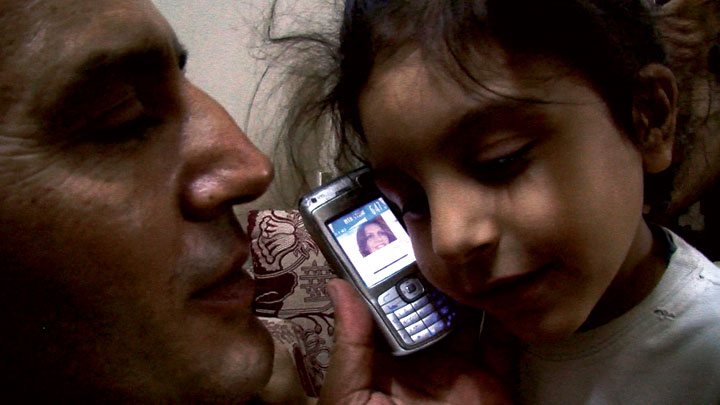
A Syrian Love Story focuses on a Syrian couple from the start of 2011's Arab Spring to the present.
A Syrian Love Story focuses on a Syrian couple from the start of 2011’s Arab Spring to the present.

I saw quite a few documentaries at this year’s VIFF. A Syrian Love Story was one documentary that gets one thinking.

This is a documentary filmed year by year over five years. It starts in 2010 while Syria is going through its start of political turmoil. It had been under turmoil since the 1970’s when Hafez Al-Assad took power and any reforms promised by his son Bashar, who succeeded Hafez in presidency after his death almost ten years earlier, doesn’t deliver in the reforms he promised. Images of protest met with a violent response from government forces are too common. Caught in the middle is a married couple of Amer Daoud and Raghda Hasan. They have four sons from 6 to 22. Amer is living in Damascus being a father to the children. Raghda is in a prison for publishing a book about their relationship of all things. Amer and Raghda are no strangers to political oppression in their home country. Raghda has face imprisonment because she’s a communist revolutionary and Amer was once imprisoned with his ties to the PLO. In face they both first met in prison and fell in love through communicating through a prison wall.

Sean McAllister is in Syria looking for something about Syria’s crisis to film but something out of the ordinary. He finds it in Amer and Raghda. McAllister also shows us their four sons. The first year he films Amer’s phone conversations with Raghda while she’s in prison. He gets her sons to talk with her as well. McAllister was even imprisoned for a few days for a journalism crime and was able to listen first-hand to the torture in Syria’s prisons. He even meets the older son who broke up with his girlfriend because she was pro-Assad. Despite all this, McAllister does show a case of hope for the future, for all.

In 2012, Raghda is finally free. She is reunited with her husband, sons and the rest of her family. But they can’t stay in Syria, not while there’s civil war that started once Syrian people revolted against Assad during 2011’s Arab Spring. The family move to a refugee area in Lebanon. They do it not simply for the sake of themselves but their sons too. McAllister is nervous for the couple’s future since he knows behaviors of prisoners after they’ve been freed. He hopes Raghda doesn’t exhibit behavior that will hurt their marriage.

In 2013, they find themselves in Paris, France. Things are definitely better for the two youngest children Kaka and Bob. Bob is in a good school and Kaka is able to become a disc jockey at his high school. Things appear to go well for Amer and Raghda as they’re able to make a living for themselves but there’s a sense that something’s wrong. The children sense it.

In 2014, we get a good sense of what’s wrong. Amer and Raghda’s marriage is crumbling. Amer feels distant from Raghda and has a French girlfriend of his own. It upsets Raghda to the point she changes the password on his laptop. She even attempts suicide by cutting her wrists. No doubt it upsets everyone. She them admits she never had the chance to find herself and she feels that despite her  political freedom in France, she still feels she can do more for Syria or for others hurt by war.

The film ends in 2015. They two youngest sons have a promising future in France. Their older son reveals his pro-Assad former girlfriend was killed. Asad runs a chicken farm in France and is without Raghda. He wishes her well in whatever she does. Raghda is now in Turkey in a city 20 miles from the Syrian border. She works with refugees and is happier with her life now.

This is a unique story of love that starts with one hoping for a happy ending. We know Syria won’t turn out for the better but we hope that Raghda will be free and will return to her family and they’ll live happily ever after. We all want that storybook ending. Unfortunately it doesn’t end up that way. McAllister knows the problems prisoners exhibit after they’re free and he lets Amer and all of us know it. Over time, it shows after the moves, after Syria’s continued strife and after one senses the love between the two fading over time. It was unfortunate. The moment of hope doesn’t end up being when Raghda is free but rather when Amer is still in France and Raghda is in Turkey. That’s where the true scene of hope for the better is present.

The story is not just about the couple. It’s also about the surrounding family. This is especially noteworthy of the two youngest sons, Kaka and Bob. Bob is six at the beginning and the youngest. He tried to be a carefree child but the hurt of knowing his mother’s in prison is evident. Kaka is ten at the start and familiar with the realities in Syria. He’s able to tell Sean in good enough English his feeling of the situation, and of how he’d either like to fight or kill Assad. As they grow, the changes are present. Bob is getting bigger but has difficulties fitting into his school in Paris because his long hair causes other boys to call him a girl. Kaka is getting a better education but can’t ignore what’s happening to his parents. He can sense what’s happening and has his own opinions on what he feels should happen. Although the two are not the main protagonists, their presence in this story is vital.

One thing about this documentary is that the story focuses more on the fading marriage than it does in the strife in Syria from civil oppression to public outcry to a civil war to the eventual crisis with ISIS. However it does focus on the couple as they were fighting their own war with each other. They go from loving each other and having a closeness while Raghda’s in prison to the love fading over time after Raghda is free and they’re together again. It’s sad that they were closer together when Raghda was in prison. It’s even hard to pinpoint who’s the bad guy. Is it Amer for his fading commitment? Or is it Raghda for her inner strife? Amer appears like a jerk not even willing to try when he says things like “Syrians love prisoners,” but Raghda’s suicide attempt gets you wondering was she thinking of her family at the time?

Watching this documentary, I believe that this isn’t the type of documentary meant for the big screen. With the camera quality, editing and McAllister’s voice over, it fares much better as something for television broadcast. I’m sure that’s what it intends to be. I have to give McAllister credit for having the ability to do all this filming over time and to present a unique story. I also give Amer and Raghda credit for McAllister willing to film them while their marriage was hitting rock bottom and they were showing terrible behavior such as Amer threatening to smash his laptop and Raghda slitting her wrists. It surprises me that they were willing to show things that personal on camera.

A Syrian Love Story may not be a documentary meant for the big screen but it’s a very revealing story that reminds us not all love story has the fairytale ending. despite the hardships they show, it does end on a hopeful, if not happy, note.

VIFF 2015 Review: In Your Arms (I Dine Hænder)

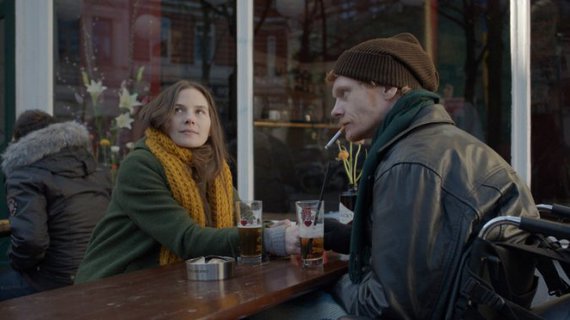
In Your Arms is a Danish film that's about more than granting someone their wish to die.
In Your Arms is a Danish film that’s about more than granting someone their wish to die.

Let’s face it, films about euthanasia are rarely watchable. However Danish film In Your Arms (I Dine Hænder) succeeds in making a film that’s watchable and even entertaining and touching.

Niels is  a man with a debilitating illness. First it left his legs useless, then its making his arms more useless day by day, and Niels wants to die. Maria is a nurse at Niels’ hospital who longs for freedom, especially after the end of a troubling romance. Maria finds it very hard to be a nurse to Niels, one of her many patients. She finds him very stubborn and selfish, especially after he recently tried to slit his wrists.

Niels has a wish to die. He wants to be taken to a euthanasia clinic in Switzerland. His mother and brother don’t want it, feeling it’s just Niels being selfish again. Maria is reluctant at first but agrees to comply. She has decided to be the one to accompany Niels on his trip from Copenhagen to Switzerland which also consists of a stop in Hamburg, Germany.

After his family bids Niels good-bye, Niels and Maria board the train and it’s there that the two get to know more about each other, such as their likes and their personal lives. In Hamburg, Niels wants to be taken to places where he spent his younger years, especially the restaurants and bars.

During the time, he’s able to meet again with people from the past. Maria meets two key people. One is Niels ex-girlfriend from his ‘Hamburg Days.’ She learns he has a four year-old son. The other is the pub manager. He invites Maria to visit during the night. Maria agrees and it’s over at the pub that night it appears that Maria is able to live again. Unfortunately it comes at a price to Niels as she’s not there to help him first thing in the morning. Niels does not want his son to see him dying so she is able to make Niels watch his ex-girlfriend pick up his son so he can see him for the first and only time in his life.

During the trip, it appears as though the relation of Maria and Niels is growing. Often making one question it’s a friendship or even more. As Maria drives down the wide roads of Germany to the Swiss border, the two decide to take in the nature that they view. Maria even swims in the lake despite how snowy cold the day is. Then they finally reach Switzerland and visit the clinic where Niels wants to end his life. After receiving details of what the following day will entail, Maria spends one last night with Niels. The ending is somewhat predictable and melodramatic but done right.

I don’t think this film is trying to peddle the message of euthanasia, although it’s obvious the film maker has no qualms about it. As for me, I’ll save my view. However it appears the film is not about euthanasia. This looks like many film before it of a dying person spending their last days. Even still I believe it is to do about the relation between the two. At first, both Maria and Niels were polar opposites. He was an ailing patient in the care facility. She was a nurse who just happened to take care of him along with the others. The chances of the two being friends were slim to none but it was that trip that changed it. The film does question whether Niels did love Maria all along or if Maria did love Niels in any which way. The bond of friendship was obvious but was it more than that? I think the film maker wants to keep us guessing. Even despite whatever friendship occurred, Maria knew she still had to honor Niels’ wish even though it would hurt her dearly.

It’s not just about the two together but the two as individuals. Niels has had it with life. The disease has taken away all that he has to live for. Maria longs to live but her job and failures at relationships prevent her. It’s when the two join together on the trip that things become better for them. Niels is able to die content and Maria is able to discover her freedom within herself.

I will admit that this is a rather short film. Nevertheless this is a good melodrama that presents itself well. Samanou Acheche Sahlstrom has written and directed a good drama that centres on the characters both as individuals and as a pair. It’s the bond that occurs during the time of the trip that helps make the story. The acting from both Lisa Carlehed and Peter Palugborg made the story work as well as develop the necessary chemistry for the film. In Your Arms has won two awards at the Gothenburg Film Festival and was nominated for a producers award at the Hamburg Film Festival. Here at the VIFF, it made its North American debut.

In Your Arms may be short and may lack the qualities to make it a film of renown. What it achieves is honest sensitivity and a connection to the story and its main characters.

VIFF 2015 Review: Reel Youth Film Festival

Movie (640x306)

I’ve been to the Reel Youth Film Festivals of 2013 and 2014. I went to this Year’s Reel Youth Film Festival to see what they had to offer. I was impressed.

2013 was a focus more on young film makers. 2014 was still a majority of young filmmakers but did more focus on film directed to young people rather than focus on the age of the directors. Films made for young people by directors 20+ in age were more welcome that year than the previous one. This year was return to more focus on filmmakers up to age 19 and less focus on films by directors 20 or older.

This year there were 19 films. Seven were from Canada with four from BC. Six were from the United States with entries from Latvia, Kosovo, Iran, Georgia, India and Australia. Films focused on issues but they also had some fun too. The fun films included an animated short of a man and his dog on a stranded island, a boy asking another boy out and redoing it until he gets it right, a dating situation that can best be described as ‘a gas,’ human life from a dog’s eye view, life that starts in a smalltown and takes you back there, an animated film of a mantis’ first date and a simple task of getting a selfie with a 20 foot pink elephant that’s not so simple.

Issues however was the top focus of the festival and the shorts did speak about their issues. Issues included homelessness, bullying, missing indigenous women in Canada that often go overlooked, harassment at work, youth poverty in Canada and young disabled people.

Some of the films included dramatic settings such as a friendship between a man and a dog in tough times, emotional states relating to colors, a young person’s journey through life and the unfriendliness of our modern times, especially in urban India. There were some films that were biographical or focal like the homeless shelter cook from San Antonio, teenage musicians from BC with dreams that seem ignored by the school system and an 85 year-old woman with the self-confidence of a movie star.

Despite a lot of issues, there were films with messages of hope. Messages focused on homelessness in San Antonio, finding joy in pain the way Charlie Chaplin did, being comfortable in your own skin and making a disabled child feel like they’re not a misfit. Even a plotless short from Iran of a young grandson in a house with a leaky roof trying to keep the rain off his sleeping grandmother seemed like it had a message to say.

I think that was the point of this year’s selected shorts. These were films that focused on life, on emotions, on issues of concern, on problems and on hope. They all had something to say whether it be humorous or whether it be serious. Some had top-notch cameras or animation quality. Some were amateurish in writing, acting or even conveying their issue. Nevertheless all had their qualities that made it worth showing to the audience.

Once again, we were given our ballots to select our three favorite films and our favorite local film. Here were my picks:

  1. Love On Wheels – A Georgian film of a wheelchair-bound boy who’s accompanied by his father (actually played by his brother) who’s also in a wheelchair so that he doesn’t feel cut off from the world.
  2. Priorities – An animated short from Latvia of a man and his dog stranded on a deserted island during a rainstorm. Excellent animation quality.
  3. The Second Right Off Main Street – An Ontario short of an adolescent growing up in a small town, moving away to pursue bigger and better things and finding himself back in his town.
  • Local1 in 5 – About a bully a teen girl can’t seem to stand up for herself against: poverty. Title reflects the statistic of youth poverty in BC. Filmed in New Westminster.

And there you go. That’s my look at this year’s selection of shorts at the Reel Youth Film Festival. If you know a young filmmaker, I recommend you let them know of the Reel Youth film society.

VIFF 2015 Review: Hadwin’s Judgement

Hadwin's Judgement is about Grant Hadwin and why he committed his act of what some would call 'ecoterrorism.'
Hadwin’s Judgement is about Grant Hadwin and why he committed his act of what some would call ‘ecoterrorism.’

British Columbia, especially Greater Vancouver, is known for people using radical and even destructive methods to make their statement heard on an issue. One such person who’s lesser known in Grant Hadwin who cut down a beloved tree on the Queen Charlotte Islands in 1997. The documentary Hadwin’s Judgement traces Hadwin’s path from logger to radical to his mysterious disappearance.

The film is almost like a biography of Grant Hadwin and the moments in his life that changed him forever. Grant Hadwin was born in West Vancouver. He came from a logging family and eventually found himself working on the Queen Charlotte Islands. However he soon developed an anger when he saw how much forest was being cut down from the island and how fast with the modern cutting methods. He writes letters of complaints to businesses. He even tries to start his own business which makes products out of decayed wood or wood long cut down but it doesn’t succeed.

Doug Chjapman plays Grant Hadwin in re-enactments with no dialogue but says it all with his mind.
Doug Chapman plays Grant Hadwin in re-enactments with no dialogue but says it all with his mind.

The deforestation of the area along with his mental instability takes his toll on him and he cuts down the sacred tree of the island– the 1000 year-old Kiidk’yaas (The Golden Spruce)— to send his message. He awaited trial with many a person angry at him. However Grant pursues a kayaking trip up the Boeing Strait. He is never seen again although his broken kayak, letter in lamination and tools have been found intact. He has still never been found dead or alive.

The film is mostly a documentary featuring people who mostly knew Grant during his lifetime. It features co-workers to friends to a local photographer who photographed him swimming just before his disappearance to John Vaillant who wrote an award-winning book on him. It also interviews people of the Haida Gwaii who knew the tree. The Haida Gwaii consider trees to be sacred so it’s no wonder the chopping of that tree would hurt them deeply.

However the film doesn’t just present people interviewed. It also provides people first-hand knowledge of the Haida Gwaii people, their legends and their beliefs. It provides insight to Grant’s feelings around the time and includes narration of the letters he wrote in his protests. It even includes moments in Grant’s life re-enacted by actor Doug Chapman playing Grant. Doug never utters a word of dialogue in his acting but it’s like you’re reading Grant’s mind just with the looks on his face. You could see why Grant would lose his patience with what was happening and do what he did. It still remains a question. Was it Grant’s attitude to the deforestation of the area? Or was it a mental imbalance? Or both? Even I myself wondered if he valued trees so much why would he cut the sacred Golden Spruce down? I later assumed Grant did it possibly to say to all those logging companies: “You want wood so bad? Here’s your wood, bastards!” That’s my belief to why he did it. People snap.

Despite the storytelling, narration and re-enacting of Grant’s moments, the best attribute of the documentary has to be the cinematography. Right from the start, you see images of the rain forest, an aerial view of Queen Charlotte Island and a panoramic shot of the forest. Already images of beauty that tell what this island is all about and why the island’s natural features are important. It’s not just beautiful images like those that make the film but the uglier images too. The film includes footage of the tree cutting mechanisms through all angles. You can see just how they can cut down a whole tree in seconds. You can see why through such mechanisms looms the threat of deforestation. So much cutting in so little time. The film also shows the ugly aftermaths of all the trees cut down. There’s one panoramic view that not only shows a wide forest but of a cut-down area. That’s one of the many eyesores. Other eyesores include closer shots of land that used to be forests, images of piles of dry dead wood and the biggest of all: the Golden Spruce down on the ground with its leaves soaking in the river. Even single images like that of a freighter full of logs tells the story of the land and why Grant Hadwin was compelled to make such a judgement. Shots that included Grant also provided for the storytelling including the site of his broken kayak.

Sasha Snow did a great job in creating a documentary that gives people’s opinions of Grant through all angles and even re-enacts some of his key moments. Sasha not only includes those that know him but the local Haida Gwaii and author Vaillant. Sasha made a lot of smart choices in telling the story such as having an actor act out Grant’s moments instead of showing photographs. In fact we only see one photograph of Grant in the film right at the very end.

Hadwin’s Judgement is more than a documentary. It takes you inside the person, the land, the people of the land and the economic pressures of the times. I don’t know if the film completely supports Hadwin’s decision but it provides the reasons why he did it.


VIFF 2015 Review: Tough Love (Härte)

Tough Love is a docudrama of the rough past of World karate champion Andreas Marquardt (right) who is played by Hanno Koffler (left) in his younger days.
Tough Love is a docudrama of the rough past of Andreas Marquardt (right) who is played by Hanno Koffler (left) in his younger days.

Tough Love is a film that tells a story of a life no one would want to have but turns out shining in the end.

The film begins with 59 year-old Andreas Marquardt heading a karate school in Berlin. He’s a former World champion and he enjoys teaching young children.  Parents are very trustworthy of him despite his past. It’s after this introduction that we learn of his shady past.

Andreas was born in Berlin in 1956. His father was abusive to the point he poured a bucket of cold water on him on a winter’s day when he was an infant. His mother divorced his father but that didn’t prevent his father from abusing him again. One time his father taught him how to handshake and squeezed his hand so hard he broke three of Andreas’ bones. Abuse wasn’t just with his father. He lived with his mother and grandparents. His mother would ask him to do sexual favors that were, in a word, unspeakable.

It’s not to say, Andreas was devoid of a proper parent figure. His grandparents played that role. At sixteen, Andreas finally moved out on his own. He pursued a job of pimping as a way to provide a living and pay for his karate training. He also took a job at a funeral home as a way to hide his pimp money from the taxman. One day in the late 70’s, there was a 16 year-old girl who would change his life. Her name was Marion. At first Andreas asked her to do sexual favors and even be one of his hookers under his wing. She agreed however had the feeling she would win his love one day.

This would go on for many years. Marion would continue to work for Andreas but also try to win his love. There were two instances like a Christmas and a breakfast in bed that Marion tried to send him the message of her love but Andreas reacts violently to it and insists she works the business. Later on, Marion takes the witness stand against her father for sexual abuse. Andreas is in the stands and he is surprised to see how her abuse story almost mirrors his own. He’s even given a wake-up call when he sees Marion lying on the streets one night after nearly being beaten to death.

However Andreas’ problems don’t end there. Eventually the police do catch up with his antics and he is arrested in 1994 and put into prison for four years. Marion is able to run a gym that he owns and even sends him a message outside the prison walls that she’s on his mind. Another incident leads Andreas to an additional four years in prison. During that time, he sees his mother for the last time and tells her off just weeks before she dies. Once released from prison, Andreas begins a change of heart and leaves the prostitution business behind. The one thing of it that wasn’t left behind was Marion. It became clear to him she was his soul mate. To this day Andreas doesn’t miss his pimping business.

The thing with this film is that it appears like it’s trying to be both a documentary and a live-action drama. It flashes from Andreas talking of his shady past, in which he also wrote a book on in which this film is based, to the past being acted out by actors. It may have been done before but it’s a question on whether it was done right. I know the director Rosa von Praunheim also included some other creative choices like images of furniture painted on the walls of the setting rather than actual furniture props. I feel that was presented well. I don’t know if the images of furniture worked with this film.

Another choice that had me wondering was if it was a smart choice not to have the actors playing Andy and Marion–Hanno Koffler and Luise Heyer– age. As you probably saw, the actors don’t age chronologically as the timeline passed over the 25 year span. I just wonder in von Praunheim had that as a point to the film.

One choice of von Praunheim’s in which I give her credit for is making the audience Andy during the childhood drama scenes instead of hiring an actor to play Andy. Like how we see Andy’s father looking at us as he gives Andy his bone braking handshake or how his mother looks at us as she’s molesting him or eve oralizing him. Yes, I’m sure people don’t like seeing those kinds of images of children abused whether in fiction or real life. I think it was decided to have the audience be Andy instead for the sake of the sensitive nature. It had to be told but it had to be made watchable.

One thing I think von Praunheim is trying to do in the film is not just tell Andy’s story but also to show how this story is all too common. We hear the story all the time of children who are sexually abused by their parents or other people and they grow up to make the bad choice of going into jobs of ill repute. It’s a story we see all too often. Even seeing what his mother did to him makes you think that where he got his misogyny from. I myself believe that a lot of misogynist men probably adopted that attitude or a hatred toward women from an unhealthy home life. Including Andy’s feelings into the film adds to the theme. You can see in his face why he can’t forgive his parents for what they did to him. Hard feelings run deep. You could easily see in the drama why Andy has feelings to his grandfather when he dies but none to his mother.

However there are times I think of this film to be as much about Marion as it is about Andreas. Andreas became a shady person but it was Marion who felt love for him from the start and knew she would be his one day. It was surprising she was willing to make a prostitute for him of herself during that time. It’s also very unfortunate she had to deal with the verbal and physical abuse from Andreas all those years. Most people would say it would be foolish for a woman to stay with such an abusive man. Even I would want Marion to leave him. However she saw something in him that she knew he was worth loving and worth staying with. The film left me convinced Marion was a godsend to Andreas. The film even left me thinking as well this may be Andreas’ love letter to Marion.

The film does an ambitious job of trying to mesh drama pieces and interview pieces to both make the story come alive and tell the facts. Even taking Andreas back to key places in his life like the prison or the street corner of his arrest or even the cemetery grass area where he scattered his mother’s ashes is another ambitions technique too. I will admit I did question the choices and even the frequency as it goes from drama to documentary. However I would find it hard for me to make better choices. Hanno Koffler and Luise Hayer were good choices to play Andy and Marion. They did well in their roles but they could have aged physically as the time line progressed. Katy Karrenbauer was good as Andy’s mother. She made you want to hate her.

Tough Love tells a story of a life damaged, of a life causing hurt and of a life redeemed, and of the woman that saw the beauty inside the beast. It’s a story that mixes documentary-style interviewing with drama to deliver a story that’s dark and ugly but ends on a beautiful note.

VIFF 2015 Review: Cop Car

A corrupt cop (Kevin Bacon) had his car stolen by two eight year-old boys in the dark comedy Cop Car.

What do you get when you mix two eight year-old boys, a corrupt cop, a crooked man, a female witness and an empty cop car all out in the middle of Colorado? You get a bizarre dark comedy called Cop Car.

The film starts with two eight year-old boys, Harrison and Travis, walking along the Colorado farm land cussing and having fun. During their fun, they notice an empty sheriff car not running and nobody inside. They go in to check it out and find the keys. They’re able to turn it on and the two start their fun.

We found out how it got there. A corrupt sheriff named Kretzer appears to have killed two men; there’s one lifeless in the trunk and one Kretzer buries in a hole. Kretzer returns to where his car was parked only to find it gone. All that remains is his empty beer bottle. He goes to town to try and steal a car for himself. Nobody can know of his plot. Once he steals one, he goes to town and alerts the police of what happened. Meanwhile the boys are driving superfast on the highway and catches the eye of a passing motorist who questions what she sees. She reports it to police but they think she’s crazy. Even she’s seen sitting at a diner questioning what she saw.

Kretzer believes it and sends the boys a radio message letting them know they’re in trouble. But they don’t hear it because they’re playing around with the police tape and assault rifles in the car. All of a sudden, they hear a thump coming from the trunk. The other man is alive and scared as hell. However he’s shocked to see two boys looking at him. The two help free the man from his ‘shackles.’ Sheriff Kretzer sends another message to the two boys, this time more comforting. They boys say to meet him at a location but it’s at the gunpoint of the man who threatens them and their families if they don’t do as he says. Then he goes with the two assault rifles hiding behind the windmill right in the remote rural highway.

SPOILER ALERT: The ending of the movie will be revealed from this point on. If you want it a complete surprise, do not read any further.

Sheriff Kretzer arrives. He sees the two boys in the car but suspects something suspicious. Coincidentally the witness is driving on that same highway and bumps into the sheriff car again. She gets out relieved that she is not as crazy as they say she is but ready to give those two boys a good talking to. However she’s shot and that’s when the shootout between Kretzer and his hostage occur. The hostage is dead. Kretzer is badly injured and the two boys are scared as hell. They shoot the car window down by accident and Travis is accidentally shot. It’s up to Harrison to drive back to town for safety. But not without one last pursuit by Kretzer which proves fatal for him. The film ends with Harrison still driving over 70 mph with the lights flashing and the sirens on.

I don’t think the film was intended to give a social message. I don’t need to see this film to know how corrupt a lot of cops can get. What I think director Jon Watts and co-writer Christopher Ford are trying to do is tell a story and have fun with it. They have fun showing the wonders of what it’s like to be a child to the point their cussing and diarrhea joke seem like a disgusting but charmingly funny reminder of how we were kids. They have fun showing the two boys having fun in this bizarre and even dangerous situation. They have fun with a corrupt policeman whose stuck in the middle of his crime right and tries to ‘set things right.’ They have fun with the witness who questions what she saw. They have fun with the hostage in the trunk who doesn’t seem to have a clue what’s going on.

They also have fun with the audience. One of the elements in making it a dark comedy is that they have us at the edge of our seats. They show two boys driving off in the sheriff’s car shouting ‘this is our cop car!’ and leaving us the audience nervous and afraid of what will happen next. They show police tape by the car as Sheriff Kretzer sends the boys a message only for us to learn the two boys are having fun with it. They show the boys playing with the guns, even the assault rifles, leaving us afraid a bullet will go off any minute but it doesn’t. They show the hostage threatening the boys and demanding they relay Kretzer a message only to appear clueless in what he’s about to do. I think that’s one thing Watts and Ford try to do: play with our fears. I know I was afraid as hell what would happen next. Even that scene at the beginning of the boys trying to crush the snakes in the snakehole was the first sign of the fun Watts and Ford were going to have with us.

However both Watts and Ford do set a moment where the fun ends and things become more serious: right at the shootout. The carefree fun even ends for the boys as it finally sinks into them the danger they’re about to face. I think the moment when it gets darkly serious was timed right.

The film shows a lot of surprises. Firstly we’re all surprised not to see the two boys land the car in any dangerous hill. We’re also surprised the hostage in the trunk is alive right while the boys are playing around. We’re surprised to see the witness actually bump into the site of where the boys are with the car. We’re surprised of the hostage’s plans of his own on Kretzer. We’re surprised the sheriff not only survives the shootout but is fit enough to drive. We’re surprises that Harrison is able to turn to avoid the truck while Kretzer smashes into it. We’re also surprised to see despite playing around with the car and the guns, the moment Travis gets shot is when he uses it for help. We’re also surprised to see the best driving of the boys come from Harrison as he’s rushing back to town for safety in the pitch dark and the police lights flashing.

The film is full of ironies. However one of the best qualities of the film is not just of what we know but of what we don’t know. In fact the film will leave us asking a lot of questions. Why did Kretzer kill one man and hold another hostage? What exactly was the hostage after that he was trying to kill Kretzer? Why did the witness have to get shot? I think it’s trying to have us decide for yourself why things were this way. Even the ending leaves us asking a lot of questions. Will Travis be okay? Will Harrison drive back to town safely? I think that was the quality of the ending. I believe it lets us create our own ending to the story.

Watts and Ford delivered a good fun dark comedy. I wouldn’t call it a stellar movie but it’s hard to notice the imperfections. Kevin Bacon’s performance as the corrupt Sheriff Kretzer may be Golden Globe worthy but I don’t think it’s Oscar worthy. He made the right comedic choices in his character for it to work and fit with the story. Shea Whigham was funny as the bumbling hostage. Camryn Mannheim made the most of her brief appearances in her minor role. The two boys, Hays Wellford and James Freedson-Jackson, owned the show. It’s funny how they cussed, played dangerously and told a crude joke but still managed to maintain the innocence of childhood.

Cop Car first got a lot of good buzz at the Sundance Film Fes5tival and has been an attraction at various film festivals this year. It was given a box office release in August but only grossed up to $150,000. That’s odd for a film starring Kevin Bacon.

Cop Car is a surprise treat. I’ll admit the movie left me so nervous and afraid of what will happen next, I wanted to walk out. Nevertheless it was a delight to watch.

VIFF 2015 Review: Nina Forever

Nina ForeverMy first taste of the more edgy film making shown at the VIFF was the British movie Nina Forever. You don’t know whether it’s a horror movie or a romance!

The story begins with what we think is a dead body on the road after an accident. Instead it appears to come alive again and get up. We meet Holly, a young paramedic student who breaks up with her boyfriend because he thinks she’s too nice. While working at her part-time job at a pharmacy, she meets Rob as she comes to help him after an on-the-job accident.

Holly and Rob start a relationship and have sex together but are interrupted all of a sudden by Rob’s deceased girlfriend Nina now undead and bloody. Holly is shocked and Rob is trying to make like nothing happened. They try and go about it and move on but Nina returns again while the two have sex. Holly tries playing seductively with Nina in order to win the battle but it doesn’t work. Holly tries to learn more about Nina and even meets her parents. Holly even tries to get a ‘Nina Forever’ tattoo like Rob’s but Nina keeps on returning. Even the two having sex on Nina’s grave fails to end her recurrences. Moving in with Rob and changing everything about the house every time she returns fails to fix the problem.

It’s then Holly decides she’s had enough and wants out. Holly goes for on-the-job training as a paramedic and a car crash victim she helps save changes her. She even catches the interest of one of her students. She takes him to her place to have sex with him, thinking Nina’s as far gone as Rob only for her and the audience to get a big surprise. The film ends on a confusing note.

I’ve seen films done before of one person in a relationship trying to rid themselves of a past beau before. However this film is something different. This is a case of one person in a relationship trying to move on past his deceased beau. This is no easy task as Nina would even make clear: “We never really ended it.” That adds to the situation and adds to the story. However the story is something funny that it becomes a case of the undead girlfriend unearthing itself. I know the movie is trying to show a bizarre and humorous story on the theme of the difficulties of moving past a deceased beau but this story takes a bizarre and humorous twist.

Overall the film comes across as bizarrely funny and often unpredictable. Even at the beginning, you don’t expect an undead ex-girlfriend to come up from under the bed. You expect the new girlfriend to play along with the undead girlfriend even less. It’s humorous because it’s trying to mesh a romance with a horror movie with a message about human nature. A very unique combination by the Blaine brothers. However there were many areas in the film that didn’t appear to make sense, especially the ending. There were times I had my head scratching. There were even a few times I may have mistaken Rob’s parents as Nina’s parents or if it was a trick from the film makers the whole time.

This is Ben and Chris Blaine’s first attempt at a feature-length film. Both are better known for their television work. Their first effort is good but imperfect and its flaws show. The acting from Abigail Hardingham, Cian Barry and Fiona O’Shaughnessy are very good. They pull all the right moves in making this bizarre film work. Especially the character work of Fiona portraying an undead woman with sexual desires unfaded. The parents were a good addition, especially with them being the ones away from all the supernatural weirdness. The music added to the film also blended in well with the film.

Nina Forever is an original comedy horror film that will get you laughing and even freak you out. However it does have some noticeable imperfections like moments that don’t make a lot of sense. Nevertheless a good first feature film from the Blaine brothers.

VIFF 2015 Review: A Flickering Truth

Reels of Afghani film hidden from decades of warfare and political regimes are uncovered for restoration in A Flickering Truth.

“When Winston Churchill was asked to cut arts funding in favour of the war effort, he simply replied “then what are we fighting for?”

-popular internet quote

A Flickering Truth is the first documentary I saw at the VIFF. I’m a bit mistrustful of documentaries but this was an eye opener.

The film opens with some Afghani men looking for a job. The job pays lousy even with their pay boosted 4 times the amount of their original offer. The boss, Ibrahim Arify, seems like a dictator giving orders and belittling his workers and his abilities. Then you see what business this is: Afghan Film. Over time, you see what their mission is. Their job is to restore many old films to show the Afghani people on a national tour.

Over time you will see this is no vanity effort. Afghan Film is more than just a film company. It’s a building archiving both the entertainment films and film footage of news events. Inside the building of Afghan Film are films that had to be kept in private rooms and hiding places. We’re dealing with film in a country that has gone through corrupt tyrannous rule for about half a century. The company came about while Afghanistan had a king. The king was friendly and helped the Afghani people mostly live well despite their impoverished conditions. Then he was deposed in a coup d’etat by his uncle in 1973 and it was downhill from then on. More than five years later his uncle was hanged and the Soviets invaded. The Soviets left in 1987 and the Mujahideen took over. Then the Taliban in 1996. After war was declared to oust the Taliban, Afghanistan became a democracy and more freedoms were restored. But not without daily threats on people’s lives that continue today. Even standing in a line-up to vote in an election is a threat on your life. That’s Afghanistan.

Afghan Film was a company that was under thread of the constant regimes and the tyranny that came with it. As we watch Arify get the project under way, we learn what type of films Afghan Film has kept hidden and has ready to show. They show archived footage, mostly in black and white of Afghanistan’s moments of history from military marches on camelback in the 1930’s to footage of the king’s visit to Washington in 1963 and a warm reception from President Kennedy to footage of the royal family swimming at the palace to even the most brutal aftermaths of war and political upheaval. Their final film footage was of the 1996 hanging of President Najibullah by the Taliban.

Afghan Film is not just film footage. They also have archived many entertainment films they’ve had hidden. Many of the films were of war dramas but there were also many romance films. They even archive Afghani films made during the silent era of the 1920’s and even a drama made back in 1936: films that came to be long before Afghan Film was founded.

What Afghan Film was saving this whole time was a part of Afghanistan’s cultural and historical identity. What their saving it all from and why becomes very obvious over time. Seeing of what the films of archive and entertainment contain are easy to see why the various political regimes and especially the Taliban would consider it a threat. We see films of kings and rulers, of luxury, of fields of poppies, of feelings of love, of conscientious thought, and even women without burkas or veils. Seeing the images and one’s knowledge of the Taliban can easily see why the Taliban would consider it a threat. In fact, film or even television entertainment of any kind was not allowed during their control of the entire country. Much of the film we see in the documentary is only a small portion of the film from Afghanistan. Most of Afghanistan’s films have been burned by the Taliban. All those hidden films they bring out and even recover in hiding places are the lucky ones.

We see the importance of saving the films. We also see the huge task of restoring the films and having them ready to show the crowds. It’s a challenge as they can only do so much themselves. Sending them off to foreign countries to do it for them is also a challenge as restoration is not always guaranteed. There’s one scene where one film which was sent to South Korea for restoration makes it back unrestored because the company was too busy The company did send a letter of apology. They show the difficulty of planning the national tour. Sure, the Taliban doesn’t control the whole of Afghanistan anymore but there are many areas especially around the border of Pakistan where Taliban control remains. We’re even reminded of the current situation of Afghanistan when we see the shattered glass of the former Afghan Films president’s apartment from a bomb blast.

The restoration and national exhibition of the films are not just simply a mission but also a mission of personal nature for the past president Isaaq Yousif and his successor Ibrahim Arify. Yousif has been president of the company for many decades. He was orphaned at 13 and was never matched with a woman in his lifetime. The film was his life. We see films he acted in when he was younger. He’s one who has survived the various regimes and civil wars in the country. There was a time the Afghan Film office was even his personal home. Ibrahim Arify was luckier as he fled Afghanistan in the 1980’s to live in Germany. He married an Afghani woman and had three children. His wife and two of his children are afraid to set foot in Afghanistan. Life in Germany helped make Arify a good business man and admires those of his colleagues that stayed behind, even those that were killed. The mission is almost like a ‘passing of the torch’ from Yousif to Arify especially since this happens during the last year of Yousif’s life. We even see Yousif’s grave.

The restoration is completed and the films make their tour. Arify has to return to Germany as Afghanistan is holding an election and foreigners risk having their lives threatened. The tour starts in Kabul and will be an outdoor showing. Security is there. Popcorn is popped. The crowd enjoys what their seeing. The tour visits many town halls and schools and is a huge success and shows promise for the future.

The most revealing moment of the documentary comes at the end when the people are watching the films. All this that has survived regimes and destructive wars. As the films are shown, the cameras focus on the people viewing. The most profound images are those of the children. They’re watching images of times when Afghanistan was prosperous, films of people not afraid to speak their emotions and women not restricted to what they wore. As the children watch, who knows what confidence it will give them towards their own future?

This documentary is a revealing introspect from Pietra Brettkelly. She not only shows us the films but the people behind restoring them and the country that’s it’s taking place. It’s like we’re looking inside-out into Afghanistan, what the country is been through and why this is so important. Hearing Arify and Yousif talk about the country and its history in both its positive and negative aspects sheds a light on what we’re dealing with. Hearing Arify describe the Afghani people as lazy by nature does get you thinking too: “If the Afghani people weren’t so lazy, the Taliban wouldn’t have lasted a week. People think I act like a dictator. You have to be like a dictator to get the people to do their job right.”

Actually that was a quality Brettkelly included where she lets the men in the film tell their story. Even the female actors of films past give a unique introspect. The film is an excellent documentary that appears put together very well. I don’t know if it tells the whole history of Afghani film but it tells a lot. It even presents the events leading to the exhibition in a very good manner. It may appear a bit disorganized at times but it does it very well.

A Flickering Truth may not stand out from many documentaries as we know it but it does show something unique and a story that deserves to be told. It almost makes those words from Churchill, whether he really said them or not, look very true here.

It’s VIFF Time Once Again

CinemaYes, it’s that time when I volunteer for the Vancouver International Film Festival and see movies for free. At least when I have that lucky chance during my usher duties.

The festival opens Thursday September 24th and runs until Friday October 9th. This year’s festival looks full of energy. If you remember last year, it set a per-screen attendance record. Hopefully they can break it again or even break the total attendance record this year too. This is especially relieving since the future of the VIFF was questioned when the Granville 7 theatre closed. The last two VIFFs have been able to run very successfully under the new format and set-up. Having many theatres within various areas of the downtown and even including the Rio has not hurt attendance.

There aren’t that many changes in terms of screening of films. One minor change for the Rio is that they will be showing films on five nights at 11pm instead of 11:30. Another difference is that there’s an increase in the number of days films at the three screens of the International Village will be shown. It used to end on the last Sunday of the fest. Instead it will end the day before the fest closes: four more days. That will allow for more showings.

As for this year’s lineup, there will be 375 films shown over nine screens and sixteen days. Films with big buzz include:

Brooklyn – John Crowley directs this drama/comedy starring Saoirse Ronan that is loaded with buzz. Opening Gala film.

I Saw The Light – Tom Hiddleston takes a break from playing Loki and plays Hank Williams in this biopic. Closing Gala film.

Arabian Nights – Portuguese director Miguel Gomes directs a trilogy of films inspired by, but not adapted from, the novel.

Beeba Boys – Deepa Mehta directs a crime drama. Definitely one to raise eyebrows, especially among Indo-Canadian communities.

Dheepan – This year’s Palme d’Or winner from Cannes. Spotlights Sri Lankan refugees trying to make a living in Paris.

High-Rise – Ben Wheatley’s adaptation of J.G. Ballard’s novel that seems like a 70’s version of 50 Shades Of Grey.

Ingrid Bergman: In Her Own Words – Ingrid Bergman like you’ve never seen her before in rare film footage and an intimate look at the legend.

Louder Than Bombs – A family melodrama starring Jesse Eisenberg and Amy Ryan that can get overheated but touches on human emotions.

Room – Stars Brie Larson and William H. Macy. This Irish-Canadian drama may seem like a focus on one family until you learn its ugly truth.

A Tale Of Three Cities – A Chinese romance/drama directed by Mabel Cheung that is based on the real life story of Jackie Chan’s parents.

This Changes Everything – a documentary where Naomi Klein puts the right-wing pundit and other global warming critics in their place.

Youth – Remember how I did The Great Beauty? Director Paolo Sorrentino makes his English-language debut of a retiring director reflecting on his past. Stars Michael Caine, Harvey Keitel, Jane Fonda and Paul Dano.

As for volunteering this year, we’re now back to doing a single venue. However there are exceptions such as advertised jobs at certain venues such as in the case of disassembling and various other duties. Or my case where I work the International Village but want to volunteer on the two days it’s not operating such as yesterday. Fortunately I was given the bonus option of volunteering for Cinematheque. It was a good first night where I ushered and I was able to see a film. Review coming soon.

Anyways the VIFF has begun again. Be prepared for more films, fun and excitement.

Double Movie Review: Inside Out and The Minions Movie

You saw I did a triple-movie review yesterday. That’s what I plan to do as far as reviewing summer movies. Review two or three summer movies that are in the same genre. Yesterday was a review of three summer comedies. Today is the review of the two hit animated movies of the summer: Inside Out and The Minions Movie. Both were two of the biggest hit movies this 2015 and both were different but both also had their own qualities.

Inside Out features five characters of human feelings and takes one to an amazing world of the subconscious.

INSIDE OUT

This is actually Pixar’s first original movie since Brave. It’s been awhile and it was commonly assumed that the buzz of Pixar–the buzz of quality and creativity–was fading with movies like Cars 2 and Planes. They also had to face the fact in recent years they were no longer alone at the top with Illumination Entertainment emerging and Walt Disney Studios returning to their winning ways. However Pixar did come back with a vengeance this year with Inside Out.

Pixar went once again to its dream team with Up director Pete Docter doing the direction as well as co-writing the script with Josh Cooley and Meg Le Fauve. Michael Giacchino returns to do the music and vocal talent comes from the likes of Amy Poehler, Lewis Black, Diane Lane, Bill Hader and John Ratzenberger.

The biggest achievement of the film is that it doesn’t just simply deliver a great story that can keep the audience intrigued but it creates a unique and dazzling world of the human mind. Here they invented the world of the human brain called Headquarters, creates characters related to human emotions, creates a system where emotions are delivered by Headquarters subconsciously via a control console that any of the five emotions can control, has memories kept in colored orbs in its own storage system and has islands that reflect the most dominant aspects of a person’s personality connected by the train of thought which is an actual locomotive.

That already looks like creative stuff on pen and paper. However it took Pixar’s animators to make this world come alive. If you’ve seen Inside Out, you too would be dazzled to see the world inside the mind of Riley Anderson, the main character. It’s one thing to think up this world. It’s another thing to have this world come alive on screen and be good enough to dazzle and even mesmerize the audience. Were you mesmerized? I was.

However despite the mesmerizing world, it still had to have a solid and entertaining story to go with it. The story consists of five characters representing the five core emotions. Those emotional characters are inside the mind of Riley Anderson: a hockey-loving 11 year-old girl who is trying to adjust to a move from Minnesota to San Francisco. Promising enough. However it also took the right juggling of the story to go from focus on Riley to focus on the emotions and their world inside Riley’s head. It was a balancing act.

The story had to make Riley a likeable and identifiable character. It also had to make the emotions likeable characters too. Like it couldn’t make Anger as an abusive brute or Sadness into a manic depressant. C’mon, this is a family film for people to enjoy rather than see characters that cut deep. I’ll admit I did find the story rather confusing at first. However it starts to make more sense over time long after you leave the theatre. Inside Out is like a lot of Pixar movies where the focus is more on the story or the world rather than it being too character-driven or too entertainment-driven. That’s how Pixar has created some of the best animated movies of the past 20 years and that’s how they succeed here again.

Inside Out isn’t simply another charming animated story from Pixar but an escape to a world that will leave you dazzled. The ending will even get you thinking you have five characters in your head just like them!

The Minions movie is about Stuart, Kevin and Bob searching for a master of evil to serve.

MINIONS

Without a doubt, this decade’s top movie stars are not of flesh and blood but yellow and pill-shaped. Yes, the Minions who have been the aces at stealing the show from Gru in all the Despicable Me movies. Their popularity over time made the possibility of their own movie eventual. However it was to be a big question of The Minions Movie. Yes, they can steal the show from Gru but can the hold their own? Or will people become sick of an hour and a half of Minions?

Firstly in order to do a 90 minute-long film about Minions, one should have a solid but entertaining story to go with it. Interestingly enough they didn’t pick Despicable Me writers Cinco Paul and Ken Daurio to write the story. It went to newcomer Brian Lynch who actually wrote for the Minions Mayhem short three years ago. Despicable Me co-director Pierre Coffin returns to direct this but his co-director this time is Kyle Balda, who co-directed The Lorax with Despicable Me co-director Chris Renaud. Renaud is Executive Producer of the Minions movie. Hmmm, looks like Pixar’s not the only animation team in town.

The story does seem a bit formulaic as they try to look for a master of evil to serve. The master they think they found turning on them isn’t that original either. Even the ending where they eventually find themselves the master of Gru was not unexpected. The strength of the story was for it to have a decent plot but put major emphasis on the entertainment factor. Let’s face it, people are in love with the Minion characters. If one writes a story that’s very plot-centred like most Pixar movies, the flavor of the Minion characters would be lost. People love the goofy nature of the Minions. They story could not be two plot-centred if the Minions had to have their hyper but cute charm maintained.

Nevertheless they had to have a good story not just to keep it going to a feature-length but to entertain as well. That was achieved well with the story of Scarlet Overkill having them under their wing. Sandra Bullock made Scarlet fun to watch. Even if you knew the Minions would turn out okay with whatever Scarlet plotted against them, the movie still kept you wondering and hoping that they’d come out alright.

I give the writers and directors credit to writing and directing an entertainingly good story of how the Minions found Gru. However like most other movies, I usually question the choices made or if it could have been done better. Sometimes I wonder was it a good idea to pick three Minion characters as the lead Minions instead of maybe more? Was there too little time spent on how they met Gru at the end? Was Bob more idiotic than he should be? Actually I can’t really judge because I’m not a Hollywood writer. However I do feel that the ‘Hair’ number shouldn’t have been the only Minion musical number.

Minions is a mission accomplished: making a feature-length film of the top scene stealers in Hollywood right now. However it is imperfect and can make some people think it could have been done better.

As for the two movies, they both turned out to be the two biggest money makers of the year. Sure, Jurassic World is #1 but both are comfortably in this year’s Top 5 with Inside Out grossing $352.8 million and Minions grossing $332.8 million. It looks like animated movies are among the strongest films out there right now. Often they’re better at making favorite characters than most live-action movies. What Pixar and the other animation teams have up their sleeves has yet to be seen.

Inside Out and Minions are two of the biggest winners of the summer. they not only entertained but they also showed why animated movies are one of the tour de forces in moviemaking right now.