Movie Review: Argo

“So you want to come to Hollywood, act like a big shot without actually doing anything? You’ll fit right in.”

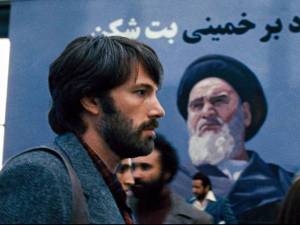
Argo is a story about an important moment in American History: The Iran Hostage Crisis. This focuses on the part that would be known as The Canadian Caper. What we get is more than just a reenactment of history.

The film starts in November of 1979. Iran has gone through its Islamic Revolution. The Shah had been dethroned. Ayatollah Khomeini was the figure of a revolution of Islam in the country and the people wanted justice. They wanted the Shah tried and hanged and were outraged he was housed in the United States, which was already denounced by Khomeini as ‘The Great Satan’. On November 4th, Iranians stormed the American embassy, captured at least 50 Americans and held them hostage. Some managed to escape and six were given refuge in the Canadian embassy under Ken Taylor.

More than ten weeks would pass and the Americans held hostage were still held captive facing an unknown fate with a kangaroo court of Iranian students. Those six in the Canadian embassy were still being sheltered with a future just as uncertain. Now it was a matter of finding them ways of getting them all out safe and sound. Some Americans thought military intervention and even a war was the thing to do but it would cause more bloodshed to the American and even could lead to the embassy being bombed. This was an embarrassment weighing heavily on the entire United States at the time. President Jimmy Carter made it clear he will not back down to terrorist demands. That left the CIA to decide what actions to pursue especially as time was running out and the fates of all were uncertain.

Enter CIA Tony Mendez. He hears about the six from people at the CIA table trying to devise rescue plans for the six. None come up as good ideas. It’s when he’s talking to his son from his failing marriage that his son’s talk of science fiction entertainment sparks an idea about a fake film production as the rescue mission. First: find the right Hollywood people for the idea. He finds it in makeup artist John Chambers and film producer Lester Siegel. Second: find the right movie title and subject line. Siegel finds it in a rejected script titled Argo. Third: give all those in refuge Canadian identities and a trial run through the local bazaar. Tony himself poses as the director. Fourth: know the ins and outs of how to make it out of Iran. One thing we’re reminded is there are guards at the airport who could arrest any American or even a citizen with an American name in their documents for possible connection to the Shah. It all sounds good but it’s not going to be easy. CIA may feel this mission is not as important as the main issues to deal with. Cooperation from the Canadian government would have to occur. President Carter giving the okay on the Swissair plane tickets to get them out would have to happen. The Hollywood people would have to be there whenever a guard questions Kevin, Tony’s guise. And this all has to be done before the Iranian people find out the secret of the hidden Americans and they eventually will. Will this mission succeed? History has already told us so. Nevertheless it’s all how it plays out in the film.

The best quality of the movie is not just its redirectioning of the events of the time but capturing the pressure of the moment. I was a child when the hostage crisis occurred and I knew that the six would all make it out alive. I knew the Shah would eventually be moved to Egypt where he’d spend his last months. I knew that all the other American hostages would be freed almost a full year after the six escaped. Nevertheless watching the movie made me forget all the facts I knew and made me wonder what will happen next? Will they succeed in their mission? Will something go wrong? It captures the sense of everything that was happening at the moment. It also captures the reasons why such an operation was necessary instead of an act of war. It captured the reasons why a war would only escalate the situation. This was not a simple political situation. This was a moment in history almost reminiscent to the French Revolution of 1789 where it was a revolution of the people consisting of a kangaroo court of trial, verdict and sentencing of even death. Anything more than the Canadian Caper would be disastrous and bloody. Anything less would be disastrous and humiliating.

Meanwhile it’s not just about a rescue mission. It’s also about people and what they mean to others. There’s Tony, a CIA agent who has the responsibility of these Americans in their hand. He’s also a father who values his time with his son even though it’s not often. There are the hostages who are fearing for their lives and nervous if this mission will fail. Especially the Lijeks, a married couple. There are all those involved in the mission–Tony, the six Americans, the film producers and the CIA–that feel the weight of this mission and know it’s can’t fail. Not with the eyes and hopes of all the USA watching. This was as much a human story as it was a thriller.

Often when a piece of history is reenacted on the big screen, it’s often a question if this moment is relevant today. I feel it is. Khomeini may have died in 1989 but anti-American sentiment is still present in many of the predominantly Muslim countries. The Iranian people have calmed down a lot since the Islamic Revolution of the late 70’s and have become somewhat more American-friendly, if imperfect. Nevertheless Mahmoud Ahmadinejad, the current President of Iran, is a man who idolizes Khomeini and his beliefs. We should keep in mind Ahmadinejad was 22 when the shah was overthrown and the Islamic Revolution began. Ahmadinejad has spoken narcissistically and even eccentrically about the ‘end of the American empire’ and has spoken openly about his nuclear ambitions. Most Iranians do not accept Ahmadinejad’s views but they’re either too afraid to speak or they’ve been punished criminally. This comes at a tense time as the US is trying to improve relations with the Muslim world. So I can see what happened in Argo quite possible to happen again now.

Ben Affleck did an excellent job in directing the movie. He took a smart script from Chris Terrio and directed an excellent movie out of it that was as much thought provoking as it was thrilling. He did a very good job of acting too. I liked how right during the very first scene I saw Ben play a role instead of coming across in typical Ben Affleck style. Mind you Ben was not the complete standout. Alan Arkin gave a great turn as Lester Siegel that stole the show many times. John Goodman was also a show stealer as John Chambers. Victor Garber also held his own as Canadian ambassador Ken Taylor.The script from Chris Terrio was also smart, funny at times, touching and thrilling. It also did a very good job of capturing the chaos of the times from the riots in the town to people being hanged from cranes. The inclusion of news footage added to the drama both before and after. Even hearing Jimmy carter speak during the credits added to the story and its significance in history. Other standout efforts are Rodrigo Prieto in cinematography and Alexandre Desplat in film scoring.

Argo is a movie about a piece of history that we often forget but is very relevant towards the poitical situation in the world now. Seeing it played out on screen does more than just retell history.

Movie Review: The Master

The Master looks like it’s meant as a depiction of a religious leader of a controversial religion. The question is how true is it? And does it succeed in getting the message across?

Freddie Quell is a Navy veteran who returns home from World War II with an uncertain future and unsettled behavior. How unsettled? He gets violent at the drop of a hat. He’s an easy drunk whose favorite drink is a personal mix of alcohol and other various chemicals. He’s sexually obsessed with sex to the point he masturbates frequently and loves making women out of beach sand just to seduce. Life back in the US is not easy for him to get back to normal. He loses his job as a photographer after starting a fight with one of his customers. He loses a farming job after one of the elderly farmhands gets poisoned from his drinking concoction. Is there any chance for him?

One day he stows away on a ship but it’s not just any ship. This ship is a yacht owned by Lancaster Dodd, a religious leader of a philosophical movement called ‘The Cause’. Dodd allows Freddie to watch the marriage of Dodd’s daughter as long as he makes his mysterious brew for him. Dodd sees a way of getting Freddie into the movement. Dodd asks some deep questions about Freddie and his past, called Processing, which he hopes to heal Freddie’s traumas. Freddie tells Dodd some dark truths about his past and Dodd doesn’t flinch like most. Freddie is blown away by Dodd while Dodd takes a liking to Freddie. Dodd agrees to make Freddie part of The Cause and Freddie becomes an active member in it recruiting other people.

The one problem is that members of The Cause are hoping to improve Freddie’s irrational behavior and he shows no signs of improvement. One example is Freddie assaults a man at a hotel some time after he questions Dodd for his beliefs. Dodd’s wife Peggy tries to make a deal with him that he quits drinking if he wishes to stay. He agrees but shows no intention to quit. Freddie even criticizes Dodd’s son for rejecting his father’s teaching but the son believes he makes it up as he goes along. Dodd is later arrested for practicing medicine without a license and Freddie is arrested for assaulting the officers pursuing Dodd. The time in the jail cell is hard as Dodd and Freddie are in opposite cells. Dodd tries to calm a violent Freddie down but Freddie questions him in a tirade and accuses him of being a fake. Both trade insults in the end. Freddie and Dodd reconcile upon release but those in ‘The Cause’ become more suspicious of him.

Freddie continues with The Cause and its exercises but becomes more frustrated when the results don’t work. Freddie helps Dodd in spreading the word on the street and on the radio. However things turn nasty when Freddie assaults a book publisher who criticizes Dodd’s book. Dodd himself event becomes temperamental around critics of his books.

Already there are strong signals that Freddie is ready to leave The Cause. It came when Dodd gave his colleagues an exercise of motorcycling in the desert to an object in the distance and Freddie cycles away. Freddie returns home to rekindle his relationship with Doris, his girlfriend he wrote to during the war, but learns she married and started a family in the seven years since she lost contact with Freddie. However Freddie has a dream of Dodd telephoning him in a movie theatre and telling him he’s in England and Freddie must join as soon as possible. Freddie goes to England and finds Dodd with wife Peggy. Peggy believes Freddie should leave The Cause since he’s made no improvement. Dodd agrees but still taking a liking to Freddie and gives him an ultimatum: stay and devote his whole life to The Cause or leave and never come back. Freddie leaves and is left to follow his own path.

The film appears to be a depiction of the Church of Scientology and its leader L. Ron Hubbard. There are a lot of similarities to it: Hoffman’s resemblance to Hubbard and the film set in 1950, the same year Hubbard set up his church. Anderson will admit that Lancaster Dodd is a lot like L. Ron Hubbard but not intended to be a direct depiction of him: “This is not the L. Ron Hubbard story.” Some people in the Church Of Scientology had spoken concerns of the film. Anderson even screened the film for Tom Cruise who had acted in Anderson’s Magnolia and had concerns of his own. Nevertheless there has been no talk of lawsuits from the Church of Scientology. Whatever the situation, I can’t say because I never attended the Church of Scientology in my lifetime.

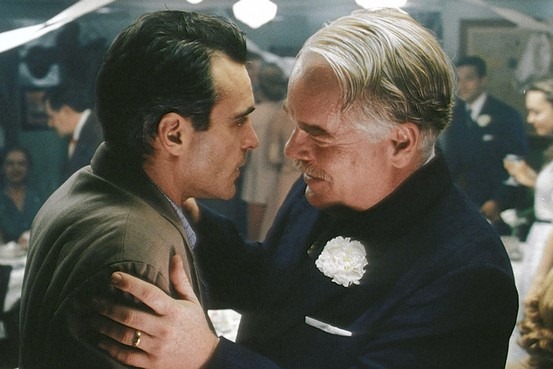
Once again Paul Thomas Anderson writes and directs an excellent effort. Ever since he burst onto the filmmaking scene with Boogie Nights, he was continued to impress with Magnolia, Punch Drunk Love, There Will Be Blood and now again with The Master. One thing Paul Thomas Anderson succeeds in doing again is captivating a svengali-like character. We’ve seen it before in There Will Be Blood where he was able to capture Daniel Plainview and his desire to use and manipulate his way to the top and ultimately face a downfall. We see it here again in Lancaster Dodd who succeeds in being the one in control and convince his followers to his sayings, even if they know they’re a lie. Philip Seymour Hoffman does his own part in making this svengali-like character come to life. He fills the character up with the charming controllingness very common in many svengali-like figures or leader-like characters. That’s a common trait of Philip Seymour Hoffman to embody the character completely. He’s done it in the past to exceptional results and he does it again here.

Just as good at capturing a character is Joaquin Phoenix. He did a good job of playing a very lost character: a navy officer returning from World War II disturbed and uncoothed in behavior. This movie is just as much about the controlled as it is about the controller and Joaquin did a great job in holding his own well despite the easy upstagings of Hoffman. Also good at stealing the scene was Amy Adams. She did an excellent job of playing the wife who was both a controller and the controlled. Another standout effort of the film was the original music of Radiohead’s Jonny Greenwood. He has done music before for There Will Be Blood and he does another excellent work.

As for the movie, it wasn’t that big of a hit at the box office. That’s one of the difficulties of films around the Oscar period from now leading up to the beginning of the new year. Most of the top contending movies for the Academy Awards consist of movies with standout efforts in acting, directing and  scriptwriting. However they face the difficulties of trying to win a crowd at the box office which is loaded with mostly commercial fare and the stuff to attract big crowds. It’s trying to compete for that attention amongst the noise. The Master hasn’t been so fortunate. It has only made $15 million at the box office. That’s part of the trials of putting serious fare out.

The Master is a very intriguing movie resembling a popular religious movement and its founder. It could shed a light on the movement and even capture what the founder may be like but it does more, and that’s its best quality.

The Grey Cup Plays Its 100th Game

This Sunday will have the 100th contesting of the Grey Cup, the most prestigious prize of Canadian football. It will be an exciting time not just for fans of Canadian football but fans of the Cup itself.

A CUP FULL OF HISTORY

I’ve already talked about the Grey Cup partially back in a post from last year but I’ll elaborate more here. The Grey Cup has more history than the Super Bowl: 58 more years to be exact. Before there was a CFL, the Grey Cup was open to Canadian football teams from all sorts of leagues. The very first Grey Cup was played in 1909 by the University of Toronto Varsity Blues and the Toronto Parkdale Canoe Club at Toronto’s Rosedale Field to a crowd of just over 3,800. Yeah, that small. The winner was the Blues 26-6. From 1909 to 1915 the Grey Cup was often a contest between Toronto and Hamilton teams. World War I led to the postponement of four straight Grey Cups until it was revised back in 1920. Those would be the only years the Grey Cup was not contested.

It wasn’t until 1921 that the Grey Cup stopped being a contest strictly of Ontario teams when the Edmonton Eskimos qualified for the final. It would pave the way for teams from Regina and Winnipeg to qualify for the final. 1931 was a history-maker for the Grey Cup as it was contested in Montreal’s Molson Stadium: the first time ever the Grey Cup was contested outside of Ontario. Just as historic was the match as it featured two teams outside of Ontario: the Regina Roughriders and the Montreal AAA Winged Wheelers. Montreal won 22-0, making them the first team outside of Ontario to win the Grey Cup. The first team from Western Canada to win the Grey Cup was the Winnipeg ‘Pegs back in 1935. While the Grey Cup was cancelled during World War I, it was not cancelled during World War II where teams from branches of Canada’s armed forces qualified for the finals.

The Grey Cup’s popularity grew after World War II as 1948 saw the first Grey Cup with a crowd of 20,000 in attendance for the first time. Then the Canadian Football Council (CFC) became the Canadian Football League (CFL) in 1958 which would propel the Grey Cup to further popularity. Since then, Grey Cup Sunday has become a permanent fixture in Canadiana with the top team from the East competing against the top team from the West. An average crowd of over 50,000 gather to watch the big final in the stadium and millions more watch from their house.

A MILESTONE WORTH CELEBRATING

This year marks the 100th contesting of the Grey Cup. To celebrate, there has been a Grey Cup 100 Train Tour with the Cup touring various cities of Canada with three CFL themed railway coaches: a museum car, a railcar with contemporary memorabilia, and a car containing the Grey Cup itself. It started September 9th in an official ceremony in Vancouver, traveled across Canada for ten weeks visiting various Canadian cities including all cities with CFL teams, and ended in Toronto on November 17th. The 100th Grey Cup has also been celebrated through Canada Post. Canada Post has issued commemorative stamps of all the teams and the Cup itself. It has also issued 8*10 pictures of the various Grey Cup stamps and many other gift sets. Rosedale Field–which has had its spectator seats removed years ago and now functions as a field for festivals and community events as part of Rosedale Park– was commemorated during the celebrations in Toronto with a commemorative plaque from Heritage Toronto for its role as host field for the first-ever Grey Cup.

THIS YEAR’S CUP

As for this year’s Cup, the event will be held at the Rogers Centre, formerly SkyDome, tomorrow night. This is the 46th time Toronto will host it. There will be a fan parade from Varsity Stadium to Rogers Centre. The coin toss of the game will consist of the first 100th commemorative Grey Cup coin struck by the Royal Canadian Mint executed by Governor General David Johnston. There will be various musical acts for both the pre-game show and the halftime show. Pre-game show acts include the Guess Who’s Burton Cummings and country singer Johnny Reid. Halftime show performers include Justin Bieber, Carly Rae Jepsen, Marianas Trench and Gordon Lightfoot.

As for game itself, it will be a face-off between the Toronto Argonauts representing the East and the Calgary Stampeders representing the West. So who will win? Here’s the breakdown:

EAST – Toronto Argonauts: The Argonauts have not looked like the team most likely to win the berth for the East. They have both won and lost nine games during regular season play and it was looked to be Montreal that would represent the East. Nevertheless Toronto has played brilliantly in their Division playoff games firstly against the Eskimos 42-26 and recently against the Allouettes 27-20. Toronto has an advantage leading into the Cup having won both its regular season games against Calgary. Their veteran quarterback Ricky Ray has been consistently strong and looks strong leading into tomorrow’s game. Nevertheless Toronto knows Calgary has a strong defense and they won’t overlook it for tomorrow’s game. Kevin Huntley even admitted their game against Saskatchewan, which I will talk about later, sent them the message. Nevertheless they have been taking note on Calgary’s strengths and weaknesses. They know that Kevin Glenn and Jon Cornish are the ones they have to maintain if they want to win tomorrow. Will they win it again or will it be a change in the game plan?

WEST – Calgary Stampeders: Like Toronto, Calgary was second in their division leading up to the playoffs. The Stampeders have has a better season with twelve wins and six losses. They too have been brilliant in the playoff games winning against Saskatchewan 36-30 and BC 34-29. Their consistency has been their biggest strength. They’re not flashy showmen, just a strong team. One important statistic to remember is that Calgary lost both of its regular season games against Toronto. Nevertheless they showed they can come from behind by winning a game against Saskatchewan where they were originally trailing by 17 points with six minutes to go. Quarterback Kevin Glenn has been getting better and stronger as of recent. Their other strong players have played well. Nevertheless they know the Argo’s star quarterback Ricky Ray has returned from surgery back in October and is playing strong. Also the Stamps know the Argos have been good at holding Cornish back. Tomorrow could go either way for the Stamps.

MY PREDICTION:

So what’s my say? This is a hard one to call. both have their strengths and weaknesses. Both have shown they know how to perform when it matters. I have to give the win to Toronto. It’s not just about their play against Calgary this year but also balancing things out. Kevin Glenn has become a stronger quarterback but Ricky Ray has returned in a strong way. Also Toronto knows how to hold down Cornish and they have a special edge with Chad Owens winning the CFL award for Most Outstanding Player. So I have to hand it to Toronto. They have the edge but it’s going to be a tight game.

Anyways everything will be decided tomorrow in Rogers Centre and it promises to be a great game and a great show. In the end, one city will be left smiling. So may the best team win!

WORK CITED:

WIKIPEDIA: List Of Grey Cup Champions. Wikipedia.com. 2012. Wikimedia Foundation Inc. <http://en.wikipedia.org/wiki/List_of_Grey_Cup_champions>

Movie Review: Frankenweenie

DISCLAIMER: Okay I know this is a delayed review but I have lacked ambition in the last while with so much happening. Now I’m glad to be back and posting.

You’ve heard of Frankenstein? How about Frankenweenie? Tim Burton goes animated but can it charm like his other movies?

Victor Frankenstein is a creative boy growing up in New Holland. An only child who spends a lot of time with his dog Sparky making films and doing science experiments, his parents wonder if he’s able to make friends. His father encourages him to play baseball. it turns out to be a bad decision as Sparky chases the ball and gets hit by a car. Victor is heartbroken but not down. He still remembers the science class where his teacher Mr. Rzykruski showed the power of electricity on a dead frog. He digs up Sparky one day in hopes of bringing him back to life via electricity. It works!

However secrets don’t stay secret for long. Victor’s classmate Edgar wants to learn from Victor how to bring the dead back and even promising to keep it as a secret, albeit with fingers crossed. The two perform the experiment and the goldfish are revived but invisible due to doing something wrong. Edgar shows the other students and that sparks interest in reanimation of their own.

The children get the chance to learn about reanimation as Sparky goes missing around town. They discover Victor’s reanimation technique in the science room and attempt reanimating of their own on dead animals: Nassor on his mummified hamster, Edgar on a dead rat he found, Toshiaki’s turtle Shelley, Bob’s sea monkeys, and a dead bat Weird Girl’s cat found. The experiments go badly wrong. Edgar’s dead rat becomes a were-rat, Bob’s sea monkeys become amphibious monsters, Shelley is covered in a huge growth formula and becomes like a huge monster turtle, Colossus becomes a giant monster and Weird Girl’s cat bites the dead bat while electrocuted becoming a vampire cat.  This is especially hellish as New Holland is preparing to have its town festival.

Victor finds Sparky but notices the monsters causing havoc around the town fair. In the meantime the parents are angry at what the children have learned and Mr. Rzykruski is fired. The townspeople blame Sparky for all this madness and chase him to the town windmill. It’s all up to Victor to make things right. He does succeed in the end with results both surprising and thrilling.

One thing people will like about this animated movie is that it has the familiar charm of Tim Burton’s movies. Right at the beginning when you think ‘not another story about a creative boy who has trouble making friends’, you’ll know why. The main reason why Victor can’t make friend is because he’s one of the few normal kids while almost every other kid acts like they belong in a haunted house. This is very much a trademark of Burton and nothing new. Sure he’s done animated movies before and Halloween-style characters seem to be his specialty but he succeeds in keeping it enjoyable and entertaining. The story of Frankenweenie succeeds in being charming, haunting and entertaining.

Frankenweenie is something of Burton’s own but this animated version is not something fresh. Frankenweenie was originally a live-action 30-minute film Burton did back for Disney way back in 1984. It was intended to be both a spoof and a homage to the monster movies of the 1930’s. However this did not sit that well with Disney as they originally fired him because the movie was considered too disturbing for kids. Funny how 28 years have passed and Disney actually welcomed him back to remake Frankenweenie.

Mind you it’s not just about Tim Burton’s style of filmmaking and storytelling that makes it so appealing. It’s the way that it will oddly remind you of many of the monster movies of the past. As has been stated before, this is both a satire and a homage to the 1931 movie of Mary Shelley’s Frankenstein. There are additional tributes in the movie too: Elsa’s pet poodle has a hairstyle similar to the Bride Of Frankenstein; Nassor has a voice and face resembling Boris Karloff; Mr. Rzykruski is inspired by Vincent Price. Even with its stop-motion animated style all in black-and-white, it has its charm with it being entertaining to today’s kids. Adults will also find it enjoyable too.

Frankenweenie is not just another animated movie. It’s a movie from Tim Burton that offers a lot more. Fans of monster movies will like it and admire it.

2012 Box Office – With Three Months To Go

NOTE: This blog was meant for the beginning of October but was put on hold because of my writings for the Vancouver International Film Festival. And just right after the VIFF concluded, my RAM dies on me. Now that things are back to normal, I can post this.

Another three months have passes. Two months of summer heat featuring a September that usually slumps but they still want to give people reasons to go. Meanwhile people eyeballing the box office stats are hoping 2012 will be a record-setting year. Already I talked about 2011’s grief as well as the upswings of January and February, March and April, and May and June. Even if the months didn’t set records it still added to 2012’s consistency. The big question is how did July to September stack up?

July had the big struggle of trying to cope with the shootings that happened in the midnight screening of The Dark Knight Rises in Aurora, Colorado. Despite the tragedy, it did not deter moviegoers. The month started off strong with Ted being the sleeper hit of the summer and one of the biggest hits of the month. Strong showings by Brave and Magic Mike and a strong Top 10 ending by The Avengers also started the month off well. The following week saw a healthy opening for The Amazing Spider-Man followed by a good opening with Ice Age: Continental Drift. The tragic shooting in Aurora didn’t prevent The Dark Knight Rises from achieving the third-highest grossing opening weekend ever. The monster success continued into the following weekend. Overall this year’s July ended up being only the sixth-highest grossing July ever and almost $200 million less than last July. It’s unknown whether the shooting in Aurora had much to do with the drop but I’m sure most people knew this was a one-in-a-billion incident.

August showed some slight improvement. Action or adventure movies ruled the month as it began with The Dark Knight Rises continuing with its reign on top and the remake of Total Recall debuting at #2 in the first weekend of August. The following weekend saw The Bourne Legacy on top with some comic relief at #2 in the form of political goofballs in The Campaign. The following weekend had The Expendables 2 open on top but not without family movies like ParaNorman and The Odd Life Of Timothy Green opening strongly that weekend. The following week was weak in debuts as Premium Rush was the strongest debuter that weekend and it was only #8. The Expendables continued to be on top. Overall 2012 grossed more than $40 million more than August 2011. It stands as the second-highest grossing August ever with only 2009 being the highest.

In September, there’s always the mark of the slowdown of the movie season with the summer wrapping up and the remaining weekends having lukewarm results. The Possession opened the month on top that Labor Day weekend and continued to be on top the following week. The third weekend in September featured more excitement with strong debuts from Resident Evil: Retribution on top and the 3D re-release of Finding Nemo opening strongly in second. The fourth weekend saw three debuting movies on top–End Of Watch, House At The End Of The Street and Trouble With The Curve–but their opening weekend grosses were between $12.2 million and $13.1 million. It was the fifth and final weekend of September that added more excitement with the animated Hotel Transylvania opening with $42.5 million–the biggest opening weekend ever for a September release–and Looper in second with an opening of $20.8 million. September ended with a total of $532.4 million, almost $75 million less than last year’s September.

So with nine of the twelve months of 2011 completed, it appears that 2012 is poised to be a record-braking year: $240 million more than last year and $363 million ahead of 2009’s record-setting pace. However don’t get excited too soon. We should not forget that these last three months were what helped propel 2009 to the record and the milestone of being the first $10 billion movie year. That quarter’s total gross of over $3.5 billion is still the highest total gross for that quarter. 2010 failed to overtake it and just missed the record. And 2011 was on record-breaking pace by $120 million but a weak fourth quarter even with a Twilight movie failed to break the record. A fourth quarter of over $3.15 billion will finally do it. So let’s hang tight.

Also you notice I left October out. As I said at the beginning, this article was meant to be published weeks ago so that’s why it’s not there. Plus with Box Office Mojo not complete in totaling up October, I think waiting is a good thing.

WORKS CITED:

“Monthly Box Office Chart” BoxOfficeMojo.com. 2012. Box Office Mojo. Owned by IMDB.com. http://www.boxofficemojo.com/monthly/

“Quarterly Box Office Chart” BoxOfficeMojo.com. 2012. Box Office Mojo. Owned by IMDB.com. http://www.boxofficemojo.com/quarterly/

A VIFF 2012 Wrap-Up

By now you’ve probably read the reviews of all eleven of the films I saw at this years’ Vancouver International Film Festival. The Festival ended its sixteen days of films and festivities on Friday October 12th. I was working at the Granville 7 theatre at the time. The following Sunday all volunteers were treated to a volunteer appreciation luncheon at the Fan Club Cabaret in downtown Vancouver. The luncheon consisted of a live jazzy blues performance and a good lunch buffet. I was able to talk with people I volunteered with during the Festival.

As for the Festival itself, the festival did not succeed in breaking its 2011 record in ticket sales. The number of tickets went down 8% to 140,000. That can be blamed in part due to record-breaking hot Vancouver weather at that time. Yeah, it was a milestone ‘Indian summer’.  Nevertheless there were excellent turnouts and even filled crowds at many shows, even at special showings at the Vogue Theatre. If you want to read up about last-year’s success, which includes details about how film festival income is made, read here.

Here is this year’s VIFF by the numbers:

-140,000 – total admissions

-750 – volunteers

-643 – screenings

-392 – total films shown

  • 235 – feature length (60+ minutes)

-800 – number of Canadian films entered for the VIFF

-108 – Canadian Films shown

  • 37 – feature length
  • 51 – shorts
  • 20 – mid-length
  • 15 – co-productions

-96 – non-fiction films shown

  • 83 – feature length
  • 17 – Canadian

-75 – countries entering films

-64 – Canadian premieres

-51 – North American premieres

-37 – International premieres (first screening outside home country)

-21 – World Premieres

-16 – days of showing films

-12 – entries in the Best Foreign Language Film category for this year’s Oscars shown

-10 – screens showing films

-4 – theatres participating in the VIFF

Very impressive numbers for this year. Anyways I’m sure most of you want to know what film won what award, right? Well let’s say it had to be tough from the multitude of ballots filled out at this year’s Festival. An impressive 87% of the films shown were mostly rated ‘very good’ to ‘excellent’ so you could understand this would be quite the tough call for both the VIFF juries and the ballot tally. Nevertheless winners have been declared and here goes it:

ROGERS PEOPLE’S CHOICE AWARD

-THE HUNT/Jagten (Denmark/Sweden) dir. Thomas Vinterberg,

VIFF MOST POPULAR INTERNATIONAL DOCUMENTARY FILM AWARD

-NUALA (Ireland) dir. Patrick Farrelly, Kate O’Callaghan

VIFF MOST POPULAR CANADIAN DOCUMENTARY AWARD

-BLOOD RELATIVE, dir. Nimisha Mukerji

VIFF MOST POPULAR ENVIRONMENTAL FILM AWARD

-REVOLUTION(Canada) dir. Rob Stewart

VIFF MOST POPULAR INTERNATIONAL FIRST FEATURE

-I, ANNA (UK/Germany/France), dir. Barnaby Southcombe

VIFF MOST POPULAR CANADIAN FILM AWARD

-BECOMING REDWOOD, dir. Jesse James Miller

Women in Film and Television Artistic Merit Award

-LIVERPOOL (Canada) dir. Manon Briand

DRAGONS & TIGERS AWARD for YOUNG CINEMA

-EMPEROR VISITS THE HELL (China) dir. Li Luo

Honorable Mentions:

-A FISH (South Korea), dir. Park Hongmin

-PECULIAR VACATION AND OTHER ILLNESSES(Indonesia), dir. Yosep Anggi Noen

BEST CANADIAN FEATURE FILM AWARD

– BLACKBIRD, dir. Jason Buxton

Honorable Mention: BECOMING REDWOOD, dir. Jesse James Miller

MOST PROMISING DIRECTOR OF A CANADIAN SHORT FILM

– Juan Riedinger for FLOAT

Honorable Mention: PEACH JUICE, dirs. Brian Lye, Callum Paterson and Nathan Gilliss

So there you have it. Those are the winners of this year’s Vancouver international Film Festival. Great to see the Festival end on a great note. I myself had a good time seeing films. I saw eleven, as I reviewed at this site in the last while. I wanted a mix of films and I got a good mix out of it: four documentaries, two shorts programs (all by Canadians), three foreign-language films, one country’s entry in the Oscar category for Best Foreign Language Film and three Canadian features. I feel I had a good mix.

One thing about this year’s festival is it did mark the end of an era for the VIFF. This is the 11th Vancouver Film Festival held at the seven-screen Granville 7 Theatre in Downtown Vancouver. As of November 4th, the Granville 7 will cease to exist as it will be constructed into a condominium building. It was a shock to all of us but for years we kept on hearing “It’s closing within the year” and we’d come back there each and every year. This time it’s for real and even Empire Theatres that owns the Granville 7 made it official in an email to Granville 7 patrons.

The Vancouver Sun and Province didn’t shy away from that fact and even wrote stories that it will mark doomsday for the VIFF in the future. It first seemed believable since the Granville 7 was key to the VIFF’s growth over the years and its location being central to most of the other theatres showing films during the VIFF. The actual fact is most of us won’t believe it to be doomsday. If you know Vancouver media, they love moaning ‘doomsday’ about everything. In fact they kept on shouting ‘doomsday’ in the years leading up to the Vancouver Olympics and they ended up being the best thing that happened to the city. So what does that tell you? Finding a new theatre facility will be a challenge for next year’s film festival. I myself predict it may be either the Tinseltown in downtown Vancouver or the Fifth Avenue Cinema near Kitsilano. Nevertheless I’m confident that a new location for next year’s VIFF will not hurt the festival. In fact those who have VIFF email subscriptions will learn of the new location in the spring of 2013. Also they pointed out in that email that with the healthy attendance at this year’s Festival and 60,000 year–round members, the future of the Festival is bright and secure. Plus the Festival continued its reputation as one of the Top 5 Film Festivals in North America. So no reason to mourn doomsday. Besides if Canadian cities smaller than us in population continue to hold their own International Film Festival, there’s no reason Vancouver can’t.

Here’s to the continued success of the Vancouver International Film Festival and to a new era starting next year. I haven’t been given a start date of VIFF 2013 so I assume it will either be September 26th or October 3rd. I’m looking forward to next year.

VIFF 2012 Review: How To Grow A Band

Bluegrass phenom Chris Thile (extreme right) launches his new band The Punch Brothers (background) in How To Grow A Band.

Okay, you’re probably asking why I’m still doing reviews from the Vancouver International Film Festival when it ended ten days ago, right? Well this review will be the last one. A wrap-up of the festival will follow the next day.

How To Grow A Band isn’t about a rock band. It’s about a bluegrass band that brings a unique sound to bluegrass music. It’s an eye-opener of the challenges of starting a new band in any style of music.

The documentary starts as mandolinist Chris Thile is starting the show for his band The Punch Brothers. The film then goes to the early years of Chris Thile. It first starts back to Chris in 1989 at the age of 8. His father Scott was a bluegrass musician and Chris easily followed in his footsteps. He soon became what you’d call a ‘bluegrass prodigy’, winning mandolin competitions at a very young age.

His father performed at That Pizza Place, a popular bluegrass hangout in Southern California. There he met the Watkins siblings Sean and Sara whose parents also performed there. The three along with Scott formed the band Nickel Creek. They started off playing traditional bluegrass but they switched in their teens to ‘progressive bluegrass’ by mixing traditional bluegrass sounds to alternative rock. They had a career that included being featured on recordings from Dolly Parton, the Chieftains and Glen Phillips as the Mutual Admiration Society. They opened five 2003 shows for John Mayer and two of their albums were produced by Allison Krauss; both of which hit Gold status. They had a career that included six albums and four Grammy nominations including a 2001 win in the Best Bluegrass Album category for This Side. In 2006, the members decided to part different ways because they wanted to expand their musical horizons and held their Farewell (For Now) Tour that ended in 2007.

For Chris Thile, it was exiting Nickel Creek and entering the Punch Brothers who were firstly Chris’s backup band as a solo artist and called How To Grow A Band up until 2008. The Punch Brothers were to take bluegrass in another new direction as part of the ‘newgrass’ movement. The direction they wanted to take bluegrass in was in the direction of ‘chamber music’: a fusion of bluegrass with modern classical. The band consisted of his childhood friend Gabe Witcher on fiddle, Chris Eldridge on guitar, Noam Pikelny on banjo and Greg Garrison on bass.

The documentary takes the viewer through the first two years of the band when they were first recording together to when they first perform together to the periods when they want to take their talent and creativity in new directions for the group. It not only shows them performing together in their sessions but it also shows the radio interviews they gave for BBC radio for their first live performance together, in Glasgow, Scotland in 2006. They’d continue to tour much of England before reaching the United States. They’d perform their The Blind Leaving The Blind suite at Carnegie Hall in 2007. They’d then change their name to the Punch Brothers once signed onto Nonesuch Records.

The documentary showcases the good times they have together performing, signing autographs and being together. It also showed the tensions and arguments the members had while on tour and preparing for recording. It reminds us that even though they are a unified band, they are also five musicians with creative wants and needs of their own. The members even had side projects of their own two. It’s a matter of them finding a balance between personal needs and group needs in order to function well both as individuals and group members. The documentary also features interviews and opinions with the industry professionals the Punch Brothers work with along the way. The things they say about working as a group and of showbiz demands are words that could be said for any group of any music genre. The documentary doesn’t shy away when bassist Greg Garrison makes the decision to leave the band for family responsibilities. It’s sudden but the group is understanding. The group then hire Paul Kowert as the replacement bassists, as seen at the end.

The documentary is a good outlook on a band that’s just starting out. We’re reminded that even when there are musicians with famed reputations, starting a new band is not an easy thing to do. It’s still as risky work as when they tried to get their very first big break. One thing the documentary leaves out of the picture is the personal lives of the members, especially the fact that Chris married at 21 and divorced 18 months later. In fact it was Chris’ messy divorce that inspired their The Blind Leaving The Blind suite. The only one where there was some significant focus on was that of Greg because that would be the reason why he’d eventually leave the Punch Brothers. I guess it was the director’s choice to focus on the members as band members rather than showcase their personal lives.

The documentary not only shows the life of a band but also shows what being a bluegrass musician is like too. There’s not only home videos of Chris Thile as a child but of the other members too. Chris wasn’t the only one who started out young. All of the other members share similarities with Chris in their childhoods. Some were young professional performers at a young age too and Gabe was even a Star Search contestant at 9. Chris Eldridge’s father Ben Eldridge was a banjoist for the 70’s bluegrass band The Seldom Scene. Former Nickel Creek violinist Sara Watkins even talks about the importance of starting out young and performing like a pro as a child. This documentary is as much about the music and musicians as it is about a band in forming and developing.

This documentary also showed some ironies too. Chris and Gabe were part of a tight-knit bluegrass community from Southern California. In fact none of the Punch Brothers hail from Kentucky and the band currently base themselves in New York City. Also as ironic is that it’s Britain that first welcome the music and sound of the Punch Brothers before the Americans do. I always knew the British are more welcoming towards creativity and new sounds but it surprised me how welcoming they were to bluegrass. I will admit that I myself can’t tell the difference between basic country music and bluegrass country. One thing I will say is that the documentary made me like bluegrass music a lot more.

In case you wondered what has happened to the Punch Brothers since 2008 when this documentary ends its footage, they released the albums Antifogmatic in 2010 and Who’s Feeling Young Now? in 2012. They also recorded the track Dark Days for the soundtrack to The Hunger Games and have made appearances on the Late Show With David Letterman and the Tonight Show With Jay Leno. They’re very popular in Europe and are currently touring there as of press time. They’ve also done work with their own side projects too. Most notably Gabe has performed backup with many notable country musicians, provided the violin for the Brokeback Mountain soundtrack and performed with the Dave Rawlings Machine. As for Chris, he’s been the busiest. He completed a mandolin concerto in 2009 which has since been performed by a consortium of orchestras in the United States. He  recorded The Great Rodeo Sessions in 2011 with famed cellist Yo-Yo Ma, bassist Edgar Meyer and fiddle player Stuart Duncan and they even performed together on the Tonight Show With Jay Leno. Most recently he won a $500,000 grant from the annual MacArthur Fellows program.

I was actually designated to be an usher for this documentary leading people to their seats in the dark. This was only the second film I saw in its entirety as an usher. Great film. Right after my ushering duties for the movie were done, I was to distribute ads in promoting their Vancouver show. I took an interest in the Punch Brothers after seeing this documentary and learn more about what they’ve done since the documentary. It’s great seeing what they do and I wish them all the best in the future.

How To Grow A Band is as much a story of the Punch Brothers from the birth of the band to their fruition as it is a story about the music business and a statement about being a bluegrass musician. Anyone who’s interested in getting their band off the ground in any genre of music should see this.

BONUS: If my review got you interested in the Punch Brothers, here’s their official website: http://www.punchbrothers.com/home/

BONUS FOR VANCOUVERITES: As for their Vancouver show I was talking about, the Punch Brothers are coming to Vancouver on November 24th. They will be performing at the Chan Centre for the Performing Arts. Here’s where to go to buy tickets: http://www.chancentre.com/whats-on/punch-brothers

VIFF 2012 Review: The Disappeared

The Disappeared is a story about six men in two boats in the middle of nowhere in the Atlantic and nothing else. To your surprise, it succeeds in being entertaining.

The film begins with the six men in two boats just waking up. They range from a young twentysomething like Little Dickie to an older man like Captain Gerald. They get up and they row along to shore together. It isn’t until later we learn that the men are in lifeboats having survived a shipwreck from their fishing boat hundreds of miles from shore. In fact one is badly injured in the arm. All six stick together and row together even tying a rope to each other’s boats. They survive with little food and whatever to drink. They have to rely on fishing and hunting skills for any extra food. Sometimes the weather is unpredictable and even dangerous. Any chances of hope are either missed, a mirage or less hopeful than expected.

Things change as the wounded man becomes sicker and then dies. They first leave him in the boat with the two others but eventually becomes just one boat with the five. There are moments of closeness between some but moments of friction too even as Merv becomes downright angry and has a miserable attitude. Eventually all come to terms with what has happened and what may be. They’re still willing to chance it back to coast but they all put their last thoughts in writings in a bottle. They still continue rowing despite all hope waning. The ending ends as it does with the men rowing and still missing. It leaves imagery unclear exactly what happened to the five men. I guess that was the point of the film: for the audience to draw their own conclusion.

I have to commend the filmmakers for succeeding in making an entertaining story taking place between one or two boats, six men and nothing else but the vast ocean. The story had a lot of elements in it: humor, tragedy, drama, tense moments, moments of hope, moments that define the human spirit, sea shanties of both fun and pain, basically a lot with what they present.  It was not an easy task to do, especially with it being 86 minutes in length, but it does.

I will have to admit that while watching it, I questioned the circumstances with modern thinking. Like would any of them have some sort of cellphone communication with help? Also since they’re in lifeboats, wouldn’t there be coast guard helicopters circling the ocean area looking for survivors? Yes, thoughts like those did cross my mind. Despite my modern thinking, I will admit it didn’t affect my feelings of how well played out the film was. I guess the point of the film was about human emotions during times of crises.

I have to commend writer/director Shandi Mitchell for succeeding in making a watchable entertaining film with such limits. Well done, especially since this is her first feature-length film: Yes, her! It’s also great to see a female director succeed in conveying the thoughts and emotions of Nova Scotia men on screen. She was as good at having Nova Scotia machismo down to a tee as she was at giving the male characters their own deep sensitive feelings. Great job. Also good were the acting efforts of all six men. It’s hard to say if there was one actor that stood out from the six. None of them looked like they were trying to steal the show, even though the most well-known was Billy Campbell. All of them did a very good effort in creating dimension and including character and emotion in their roles from the beginning to the end. The characters and their feelings could say a lot about us as they do about the six men. Another set of efforts worth commending.

I went to see The Disappeared on the second-last day of the VIFF. I was hoping to see a Canadian live-action feature during the festival and hadn’t yet. I’ve seen many Canadian documentaries and shorts programs but no live-action feature. This caught my attention in the VIFF programme not just for that reason but also because it was listed being from Nova Scotia. Great to see some of the smaller provinces making a contribution to Canada’s film industry this year and The Disappeared is an excellent work. It was filmed off the coast of Lunenberg and filed with financial assistance from Film Nova Scotia, TeleFilm Canada and The Movie Network/MovieCentral. It is now making its way in the Canadian film festival circuit. How much further it goes is yet to be determined.

The Disappeared accomplishes a lot with what little it has. It brings six characters in the same local into a story that’s entertaining and thought provoking. Excellent effort from all those involved.

VIFF 2012 Review: Our Children (À Perdre La Raison)

A movie about a mother scorned is very rare. Our Children is a rare chance to make such a big-screen movie on that subject. The question is does it succeed at making such a movie watchable?

SPOILER WARNING: Many incidents including the ending will be mentioned in this review. So if you want it a complete surprise, please do not read any further.

The film is actually one that begins with the end of the story at the beginning. We see a woman in a hospital bed saying to have her children buried in Morocco. After we see four red coffins being brought onto a plane. Hey, don’t say I didn’t give you a spoiler warning!

We first see a young Murielle in love with a Moroccan medical student named Mounir. He wants to marry but feels he have to have the blessing not of his father but of Dr. Pinget: a Belgian doctor who has helped him out financially and morally to study medicine. The marriage is successful even receiving the blessing of Mounir’s mother. However there’s one catch. Dr. Pinget is to live in the same house. Murielle reluctantly goes along with it. Meanwhile Mounir has to deal with the feeling of animosity from his brother.

Murielle continues on with her job as a teacher and Mounir starts practicing medicine. They have two daughters. They go through the usual ups and downs of having a family. Dr. Pinget is not that much of an interference although he is strict with the couple that he is the only doctor they see. However it’s obvious about Pinget’s control when Murielle is pregnant with her third child. Mounir thinks of moving to Morocco as it would be less stressful with the couple. Pinget is infuriated and takes it as an insult.

The couple do spend time in Morocco and it helps with Murielle as it alleviates her stress. Mounir’s mother even makes her feel like one of the family. Murielle’s sister even falls in love with Mounir’s brother and they marry.

The stress returns to Murielle as she returns back to Belgium. Pinget is back into her life. The stress of managing three children is catching up to her and a fourth child is expected on the way. The stress has gotten to the point she even takes it out on a student who misbehaves in class. On top of that her husband is always under Pinget’s wing and controlling in his own way. She sees a psychiatrist, Docteur De Clerk, who’s very helpful with her psychological condition even after the birth of her fourth child. However Pinget finds out and is very angry towards her, even threatening. It’s then that Murielle finally decides to commit a rash act to ‘end her troubles’ once and for all.

At first when I saw this, I wondered why on earth would someone try to make a big-screen movie about a mother killing her children. It isn’t until later on I read that this film is based on a story that actually happened in Belgium where a young mother couldn’t take it anymore and she killed all five of her children. This movie attempts to parallel that very story. After reading up more on the story of the event, I could see a lot of parallels: the relationship, the doctor that was controlling and how the children were killed one by one.

I think that’s it about this movie. It echoes a common story we hear many times before: a mother murdering her children. North Americans are familiar with the stories of Susan Smith, Tarajee Maynor and Andrea Yates. A story like this is not that common in Europe but it does happen. The thing about this film is that it is done primarily from the mother’s point of view. I think that was the attempt of the filmmakers: to make such a film that people could relate to. I don’t think people seeing this would want to kill their children but I think people could relate to the struggles of young motherhood and someone interloping into their life and having control over what they do. There have been many murder movies where the murderer is shown as a person that possesses dark personality traits that are inside all of us. I think that may be why this story was done; to show the killer that personality traits and weaknesses we too possess.

Also I have to commend the filmmakers for not crossing the line and making it unwatchable. No one wants to see children murdered on a big screen, especially in a story close to the truth. It made a smart move by making it similar as she called the children one by one but kept the killing part hidden off-screen and completely silent. Even in the aftermath, all we see is a house with her phone call to the police. I remember taking an acting course where a teacher said people like simulation as opposed to the real thing. Good to see them holding off there.

The movie does answer some questions but it also opens for other questions too, especially about the murders that story is based upon. Why did she kill her children? I don’t condone murder of any kind but why didn’t she kill the doctor instead? He was the controlling one. I guess I’ll never know and there’s only one person in the world that can answer those questions. Also the position of Dr. Pinget in the relationship. Why was he that controlling? Was it because of Belgian law? Was it because of his belief that since he was a mentor to Mounir, Mornir’s whole family should do everything he says? Was it Mounir’s own feelings of loyalty for all the mentoring he gave him? We shouldn’t forget Dr. Pinget was as controlling to Mounir as he was to Murielle. That question remains unanswered too.

Emilie Duquenne did an excellent job in her acting as Murielle from the young girl in love to the mother breaking down. That scene where she’s behind the car singing a song and breaking into tears is a very powerful scene and was excellently acted. North American audiences are not familiar with Duquenne but European filmgoers know her as the young teen lead in the Cannes Palme d’Or winning Rosetta from 1999. Tahar Rahim was also very good in his role as Mounir, the one caught in the middle. Niels Arestup was also excellent in his supporting role as the controlling Dr. Pinget. Interesting is that Tahar and Niels have worked with director Joachim Lafosse before in the film Un Prophete. The three are back together with something different. Lafosse does a good job in making a normally-unwatchable story watchable not only with his direction but also co-writing the script with Matthieu Raynart and Thomas Bidegain who also wrote Rust And Bone and co-wrote Un Prophete. The directing and writing did a good job in sending the message to the audience through what was unsaid and silent more than most films can send through dialogue.

Our Children is Belgium’s official entry in the Best Foreign Language Film category for the upcoming Academy awards: one of twelve films at the VIFF that are their respective country’s official entry in that category. The film was nominated for the ‘Un Certain Regard’ award at this year’s Cannes Film Festival and Dequenne’s performance won the Best Actress award in the ‘Un Certain Regard’ category.

I don’t know if Our Children is really all that watchable of a movie about a mother scorned but it does make efforts to be watchable without losing the story and relatable as far as human emotions go.

VIFF 2012 Review: Stories We Tell

Stories We Tell was one film that was added to the VIFF at the last minute. I was expecting this to be more of a live-action film but it turned out to be a documentary to my surprise. And quite an intriguing one.

The documentary is directed by famed Canadian actor/director Sarah Polley. The documentary first appears to be her father, siblings and other friends and loved ones talking about her mother Diane Polley, from her career as an actor and a singer to her work in a Montreal play around the time her pregnancy with Sarah was starting (April 1978) to the abortion that wasn’t to the birth of Sarah to Diane’s death. All of those involved tell their story with reenacted images appearing in the style of Super-8 home movies. Some even receive direction from Sarah in telling their story and Rebecca Jenkins is cast to play Diane in the Super-8 re-enactments and fake television footage.

After more than half an hour, you think it’s a chronology of the Polley family, or at least the mother. It turns out to be a lot more: a ‘family secret.’ After the death of her mother, Sarah began to question her birth father. Could it really be Diane’s husband Michael Polley or was it another man? It even became a bit of a family joke at the dinner table when Sarah was a young teenager. Eventually the jokes died down and Sarah did some serious business about it. She learned about the actors her mother was acting within that play. She tried to look up one whom many in her family joke as the father but it’s not. Later she learns through conversations of those with the play and through a paternity test her father was Harry Gulkin, Canadian actor and film producer.

The story about searching for the truth of her birth father is seen and heard from the various angles interviewed for the movie: Sarah, her four siblings, Michael Polley, Harry, Harry’s daughter from a previous marriage, and castmates of that fateful Montreal show. The interviews are real in their retelling of the story but some interview dialogue is dramatized for the sake of the film. Possibly to show how a story that happens turns into a story told. I think that was the point Sarah was trying to get across in this is how people take the experiences of their lives and turning them into stories. That explains why we see Sarah giving those she interviews direction at times.

One thing about this documentary is that despite the re-enactment of events on Super-8 film (which had me fooled into thinking they were actually home movies) and the facts being told dramatically by some of the interviewees is that the drama does stop. There is a point where Michael does admit that there was a time in the late 70’s when the marriage seemed to be going dry: he had ambitions of being a playwright but settled on becoming an insurance salesman. He even confesses he told Diane during that time it’s okay for her to romance another man. Another point near the end, Michael cuts away from his cheery personality and his ability to laugh off the situation into showing the hurt he feels knowing he’s not Sarah’s biological father. It’s like that for all the others interviewed too where they all have a calm face or are smiling when they tell the story throughout but it’s near the end when they’re deep in thought that the hurt comes to them. You can see it in their faces.

This is not just a documentary that exposes a family secret of a popular Canadian celebrity. It’s also about Sarah’s relation to the people around her, both family and friends. New people came into her life after learning the truth. Most of her personal relations with others remained unchanged. She still has a healthy relationship with her siblings from her mother’s side as well as the father she always knew. She also has developed a healthy relationship with her biological father and her daughter: people that just came into her life years ago. Another angle of the documentary is it shows how despite laughing off the story, there are still some that feel hurt knowing the truth about the story. Siblings she always knew as full-siblings are now half-siblings. Even the half-siblings from her mother’s first marriage are hurt knowing the truth. The father has hurt behind the laughter. Harry occasionally thinks of the years he missed seeing Sarah grow up.

The thing that surprises me most about this is how successfully the family and others involved were in their ability to keep it secret and away from the media. We shouldn’t forget that this was all happening when Sarah was a public figure. The first secrets were unraveling during her days as Sarah Stanley in Road To Avonlea. It accelerated just as she was becoming the it-girl of Sundance in the late 90’s. The truth was finally revealed just as she was making a name for herself as a director in Away From Her. If this secret had been let out earlier, this could have put a big dent in her career and her image as ‘Canada’s Sweetheart’ during her child actor days could have been tarnished. It’s good to see the family and those who knew the truth kept quiet about this and that only Sarah herself could allow this to be exposed through this film only now. In a world that’s tabloid-obsessed and loves celebrity scandal, it’s good to see this was kept quiet enough to give Sarah the privacy she wanted.

THREE BITS OF TRIVIA: First, Diane Polley was a casting director for two made-for-TV movies of Anne Of Green Gables: the Canadian novel series the family drama Road To Avonlea was spun off of. Second, Diane died only three days after the pilot episode of Road To Avonlea was aired across Canada. Third, Sarah notes on the National Film Board of Canada (NFB) website that at least two journalists knew of the story for years but respected her wishes to keep it private and for her to be the first to let the truth out.

Once again, Sarah can add another accomplishment to her resume. She has already accomplished television acting as a child, movie acting as a teenage adult, directing and scriptwriting just years ago and now documentary director. It’s interesting how back during the late 90’s, Sarah turned her back on Hollywood in an attempt to be taken more seriously despite being referred to as the Sundance it-girl. It was a risky move that has paid off over the years. That’s something to admire especially since we’re in a time when people are mostly willing to become famous however they can, even if it doesn’t involve talent at all.

This is one documentary I saw at the VIFF that works well as a big-screen film. I myself saw it at the 1100-seat Vogue stage theatre in Vancouver. However this is one documentary that would best draw a crowd with Canadians or those into arthouse films. Those are the filmgoers who recognize Sarah best.  Outside of that, it’s still a documentary that can touch one who may have a similar story like this in their own family. For the record, American film company Roadside Attractions has purchased the film and plans to release it in the US in early 2013. No word yet on Canadian theatrical release. It’s all in the hands of the NFB.

Stories We Tell is an amusing and touching documentary about the retelling of a family secret within Sarah Polley’s family. It’s as charming and witty as it is intimate, touching and even heartbreaking. Definitely worth seeing.