Oscars 2024 Best Picture Reviews: Part Three

At first I intended for my Best Picture blogs to be three in total. When it became clear how much writing I did for the first two films, I decided dividing them into blogs of two reviews each is more worth it.  So in the meantime, here’s the third of my five Best Picture review blogs:
Dune: Part Two

The reboot of the Dune series has been so far the biggest movie action of the 2020’s. The re-adaptation of the Frank Herbert novel was a highly anticipated event in 2021 and hoped to get people back into the movie theatres after the relaxing of the strictest COVID precautions in history. It worked. Dune made over $400 million at the box office, was nominated for ten Academy Awards and won six. It was like what David Lynch got wrong, Denis Villeneuve got right. Originally, Villeneuve planned to divide the story into two films. This is what led to Dune: Part Two to be made.

The second Dune film continues with the drama left behind from the first. The second makes the stories of the dehumanizing Water Of Life, the installation of the young sadistic nephew of Arrakis as the ruler and heir to House Harkonnen, Paul’s romance interest to soldier Chani, the threat of holy war from Fremen fundamentalists, a spice trade at risk of smugglers, Paul’s consumption of the Water Of Life much to the disappointment of Chani, his dealing with his mother, his duel to battle the throne of the Harkonnen kingdom, his ascendancy to the role of king upon winning and the rejection of all as leader, including Chani. The drama continues, the excitement and thrills increase and the ending leaves the audience in suspense and the anticipation of what will follow in the sequel Dune: Messiah, set for release in the spring or summer of 2026.

Every year, there seems to be at least one ‘popcorn movie’ that seems to rack up enough buzz to eventually become a Best Picture nominee. Not only did Dune: Part Two get nominated for Best Picture, but the Dune franchise joins the Godfather, Lord Of The Rings, Going My Way and the Avatar franchise as the only five movie franchises to have two or more of its films nominated for Best Picture. It’s deserving of it because it succeeds in doing what a science fiction film should do. It takes people into another world. It creates an intense complex drama of the threat of the order of humanity and how it rests in the hands of one young man. It delivers in the action people go to expect form a film like Dune. On top of it, it succeeds in being the opposite of your typical movie sequel that ends up being a repeat of the first. Instead, we get a continuation of the chronologic drama and ends with the anticipation of the third and final part. Deserving of its Best Picture nomionation. And to think it was released back in March 2024. Talk about endurance!

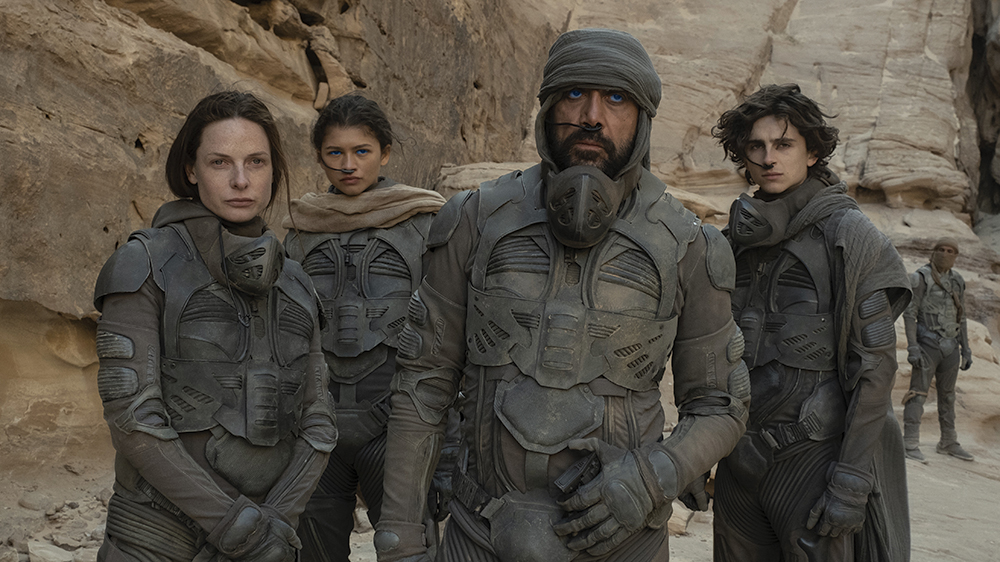
Once again, top respect goes to Denis Villeneuve. You can trust Villeneuve to deliver in a sci-fi film. Both in his direction and his co-adaptation of the story with Jon Spaihts, he continues the excitement of the story well by keeping in the right parts, delivering on the action needed and making the smart decision to make his adaptation of Dune a three-film series instead of the two-film series he originally hoped for. He did things right and in winning fashion. Like most sci-fi films, the story is more focused on the special effects and action moments, but the film doesn’t stray away from its focus on the story and the characters. It is still there and still consistent. Even though Timothy Chalamet’s performance as Paul wasn’t too deep of a role, it is still consistent to the story and very believable. Zendaya’s performance as Chani added to the story. In the first Dune movie, Chani was a minor supporting role. Here, she’s the lead female protagonist and Zendaya does an excellent job in making her a key part of this chapter. There were also good performances of minor roles like Josh Brolin as Paul’s trainee and mentor, Rebecca Ferguson as Paul’s mother with whom Paul harbors resentment, Austin Butler as Paul’s fierce deadly rival to the throne and Christopher Walken as the emperor.

As is common with great science fiction films, the standout achievements are in the technical areas. You need it for a sci-fi film to excel and Dune: Part Two had some of the best of the year. Its top achievements are in the cinematography by Greig Fraser, the production design by Patrice Vermette and Shane Viau, the costuming by Jacqueline West, the editing by Joe Walker, the special effects by the film’s effects team, and the music from Hans Zimmer. All of it was successful in taking the audience into Dune’s futuristic world and enhancing the film’s action.

Dune: Part Two succeeds in keeping alive the drama, intensity and excitement of the first film and sets the audience up for anticipation of the third and final chapter. It succeeds in having the best qualities of a sci-fi film without the common watering down or cheapening of the quality.
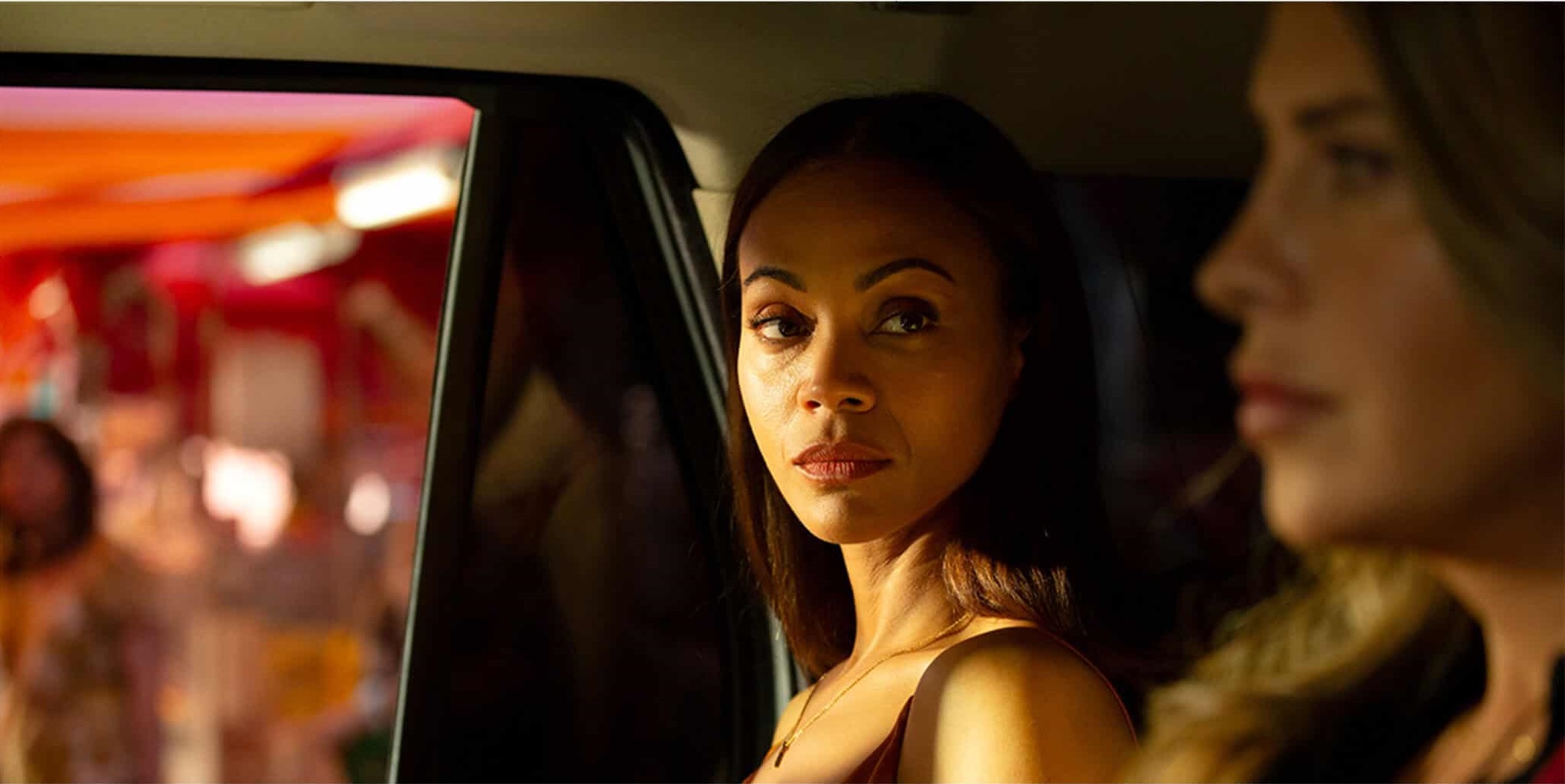
Emilia Perez

Now this film has been the subject of a lot of discussion, for better or for worse. In watching it, one would be shocked how a musical is made out of subject matter that would be the last themes and elements thought of as subject matter for a musical. Nevertheless, the mix of a musical with modern-day dark drama works as a film from start to finish. Despite that, this film is not for everybody. If you’re a person who welcomes experimentation in film like I do, then you will like it or respect it as a film. If you want to be entertained, that’s taking chances as a lot of people will be unhappy with a film like this. Trust me. A transsexual druglord and all the corruption in Mexico and the missing people that come with it does not make for an entertaining film. Making a musical out of it would seem quite the oddity.

From the start, it looked like the type of film that would get a lot of Oscar buzz. It had great acting, an eyebrow-raising story and quite the unconventional way of making a film. The film would achieve thirteen Oscar nominations and then the hate began. First, there are the complaints from the transsexual communities complaining of the transsexual character being a murderous drug lord before the operation. Then came complaints from the people of Mexico of how Mexico was depicted as a place of rabid crime. Additionally, it came to light past social media messages from Karla Sofia Gascon. Exposed in her messages were tweets that were Islamophobic, racist and even critical of her own co-stars. This only came to light just after all the nominations were revealed. I know there’s always at least one Best Picture contender that starts a load of controversy. Best Picture nominees often start some controversy or debate but there’s always one that stands out the most. This will have to be the biggest of the ten.

I’m not normally one to trash a film unless it’s really horrendous or really terrible either in quality or in its subject matter. While the film is definitely one of uncomfortable subject matter, I do give it credit for its experimentation. We should know that this film is originally a stage opera created by Jacques Audiard who adapted it from a chapter in a French book Ecoute. I will give Audiard credit for trying to make a musical out of out-of-the-ordinary subject matter. Watching it will make you question if the musical elements of the film work or not but there are many parts that stand out as great and will even blow you away. Don’t forget this isn’t a story about a transition from man to woman. It’s also a transition of personality going from leader of a drug cartel to a humanitarian. Also I feel the acting in the story works well. It’s the acting from the three main stars of the film that help make the film work on the screen and work as an unexpected musical. The funny thing is after you’ve finished watching, you will ask yourself if you liked it or not. Or if this worked or not. Despite its imperfections, I consider it a brave attempt.

Responsible for this film is French director Jacques Audiard. Audiard has had a decades-long reputation as a filmmaker in France and has directed many films outside the French language. This film, which was a Palme d’Or nominee at Cannes 2024, should be seen as an accomplishment in retrospect. A flawed accomplishment, a provocative accomplishment but an accomplishment nevertheless. It’s not just this being an unlikely musical but also adapting a stage opera to the big screen. As if adapting a musical isn’t hard enough. Despite its flaws, I give Audiard credit for that.

Also excellent is the performance of lead Karla Sofia Gascon. A transsexual woman herself, Gascon does a great job in both the male role of Manitas and the female role of Emilia Perez. It’s two different conflicting personalities of the same character and it needed to be done well, and Gascon succeeds in doing it. Also excellent is Zoe Saldana as the lawyer caught in the middle of it all. When watching the film, you wonder if the lead is Emilia or if the lead is Rita Castro. Zoe does a great job in making the film as much hers as it is Emilia’s. Selena Gomez’ performance was not all there. Nevertheless she did have some great moments and was believable in most scenes. Adriana Paz is also great in playing Emilia’s lover. I give top technical acclaim to Paul Guilhaume in the cinematography, the hair and makeup team for the convincing work on the pre-transition Manitas, and the collaboration of Clement Ducol and Camille on the standout music.

Emilia Perez is not everyone’s cup of tea. It gives a lot of reasons for you to hate it and a lot of reasons for you to like it. I consider it a film for myself to like and admire, despite its obvious flaws.

And there you go. This is my look at two more contenders for the Best Picture Oscar. With ten films, boy do you get a lot of different films.
Oscars 2024 Best Pictures Reviews: Part Two

It does seem awkward for me to do five blogs of Best Picture contenders. It’s all about my writing. Last year my writing was so over the top, I had to post individual reviews instead of all ten within three blogs. This time as I was writing, I felt doing blogs consisting of two reviews each is a nice steady dose of my writing. Hope you like them. Now on with my next two reviews:

A Complete Unknown

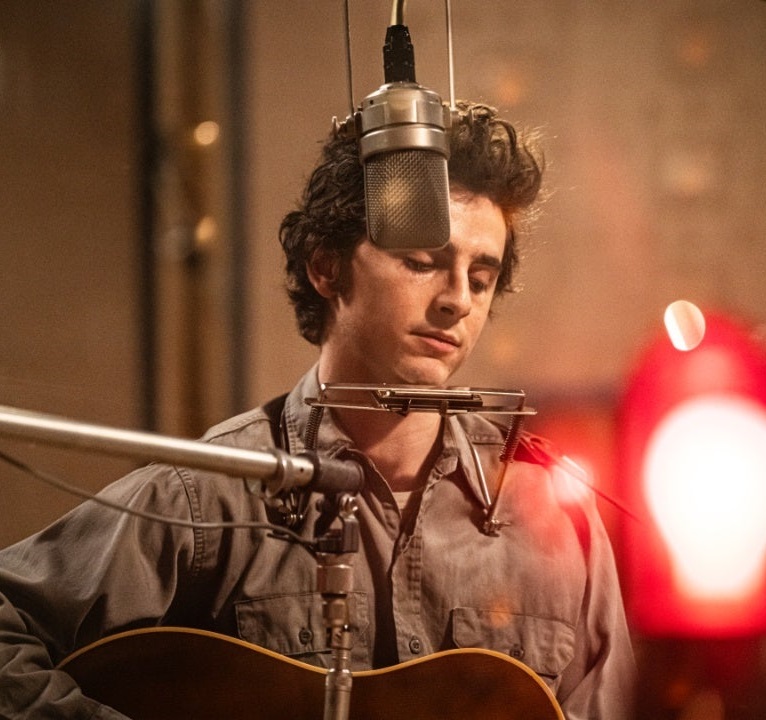
I’ve seen musicographies before. I’ve seen how they told the story of the musician or even show one part of the musician’s life. This film is a case of telling a part of Bob Dylan’s life. It tells of how he goes from an unknown folk singer in Greenwich Village to being part of the main folk scene of the time to branching out on his own. One thing we often forget about is that in the early-1960’s folk music was seen by many young people as the antidote to Rock ‘N Roll. Rock ‘N Roll music was seen by them as filled with scandals, fabricated acts, and music done for money’s sake. Folk was regarded by them as the opposite. It was regarded as self-composed music, honest feeling and even having a word to say to the powers that be. Bob, having a liking to Rock ‘N Roll, did not sit well with fans of folk music. To add, the Folk scene was becoming as much like showbiz as Rock ‘N Roll itself. You could easily see why folk fans would be outraged by his Rock ‘N Roll schtick. Looking back, it leaves me wondering after that moment did Rock ‘N Roll change Folk or did Folk change Rock ‘N Roll? Neither genres have been the same since.

The unique thing about this film is that it’s as much about the person as the musician. Most of us have known Dylan through his music. He always spoke his mind in his music. The film shows things most of us have overlooked. There’s the time Bob is torn between the love of Joan Baez and Suzy Rosso and finds it hard to hold a relationship with either. There’s Bob desire to expand and grow as a musician while the folk scene wanted to her him perform his more legendary hits. There’s how Bob found guidance from Johnny Cash and regarded Woody Guthrie as a musical father figure. There’s how the folk scene became just as much of a clique as even the most commercial music scene. We see that in how the folk scene was all about those connected to Pete Seeger and the shows he helped organize. You can understand why Bob would rebel and do his electric show. Bob always wanted to do his own thing. At the end of it all, he was still Bob.

This is quite possibly the best work from James Mangold. For so long he’s created films in which have received Oscar nominations and wins, but left him empty handed. Films like Girl, Interrupted, Walk The Line, 3:10 To Yuma, Logan and Ford vs. Ferrari. He did get a scriptwriting nomination for Logan but it’s this film he finally gets nominated for Direction. Having directed Walk The Line, Mangold knows how to direct a musicography. With the story he co-adapts with Jay Cocks, Mangold shows Dylan as a musician, artist, flawed lover and rebel. He also captures the essence of what folk music was to do about, the folk music scene of the 60’s and the times very well. It’s easy to see why he has received this acclaim.

The film also excels through the excellence of the performance of Timothee Chalamet. I’ll admit I first thought Chalamet playing Bob Dylan was a bad idea. I could not see him doing it. He accomplished it very well by making it a three-dimensional performance when it could have been wooden or cartoonish. I’m impressed with his work. Also really great is Edward Norton as Pete Seeger. I know Edward knows how to get into character. Here he makes a very convincing performance as Seeger. Newcomer Monica Barbaro is also excellent as Joan Baez. The film is, in a way, also showing us the Joan Baez we never knew. Very different from her on-stage persona we’re so familiar with. Elle Fanning was also great as Sylvie Russo who faces a hard time trying to love Bob as his fame was starting to take off. Boyd Holbrook was also very convincing as Johnny Cash and Scoot McNairy was also great as woody Guthrie. Even though both performances had a short amount of screen time, they were still both good and convincing.

A Complete Unknown is not your typical musicography. It presents a Bob Dylan we never knew, a Joan Baez we never knew and a folk scene different from what we thought it was. It’s as revealing as it is great.

Conclave

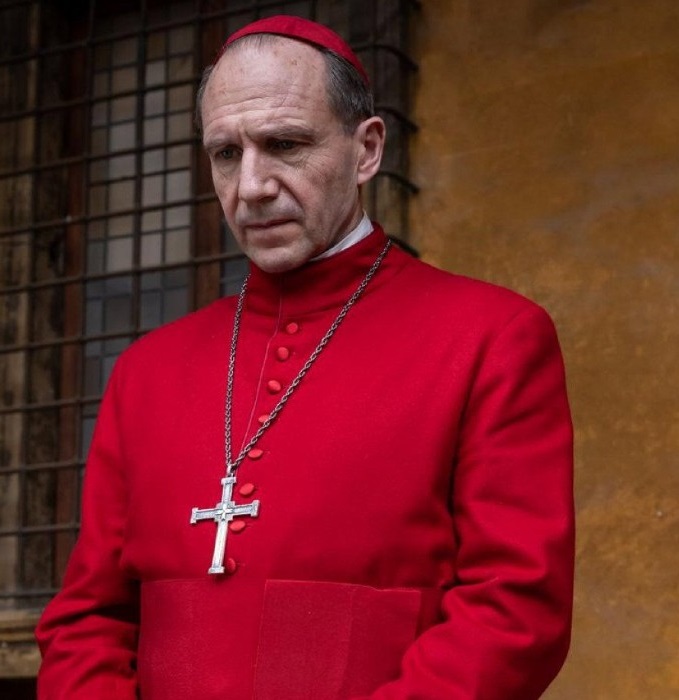
There has been a lot of unhappy talk from a lot of Catholic people about the film. One thing we need to talk in mind is that this story is a fictional story based on the adaptation of a book. Watching it, the cardinals did not act very priest-like. It made the whole conclave look like a joyless sect. Throughout the film, there’s hardly any focus on the spirituality of the cardinals. As the election of a new Pope is happening, it appears they are all rivals against each other with animosity. It almost makes the election of the Pope look like a political election where candidates look to expose the dirt of their rivals in order to win votes. Maybe that’s the point of the film. To make a papal election look similar to that of a political election. Although they do a good job of making that connection, I’m still unhappy about how the bishops and cardinals were portrayed.

Although I was unhappy of how the conclave is depicted, I am not angry as I am well aware this is a fictional story. Besides none of us knows what goes on behind the scenes of electing a new Pope. One thing the film does do well is that it shows the complications of being inside the Catholic Church. Although the film doesn’t know much about the faith of the bishops and cardinals and makes them look similar to dirty politicians, each of the bishops and cardinals represent ways of thinking most common among Catholic leaders. I myself have complained that the Catholic Church feels more like an institution than a church, but we forget how big the Church is. The Catholic Church is almost 2,000 years old and has 1.3 billion members and has churches on all the world’s continents. In some nations, Roman Catholicism is the religion of the majority. With a church that big, there is bound to be differing opinions on various issues. Some have Bible-based answers for various issues, some base their opinions on Church-based teachings, and some just give their own rational thought. You can understand why a church this big will have a lot of conflicting opinions among its members and leaders. The various debates among the College of Cardinals are reflective of that. Then there’s the powers that be. As you can see in the film, the electing of a new Pope is not an easy thing. There’s knowing that the Pope they elect with become the epitome of the image and the morality of the Catholic Church. You can understand why choosing the right bishop or cardinal to be Pope will be a difficult.

This film is good at making the election of a new Pope look like an intense drama. It succeeds in doing it by inventing a clever ‘behind the scenes’ story and making it into an intense drama that will keep you focused. It may overdo it in terms of the various conflicts between the bishops and cardinals but the conflicts reflect the common mixed beliefs held by Catholics. Sometimes the squabbles over certain bishops in the running are reflective of squabbles of the various beliefs of many Catholics. A Church of 1.3 billion is too big to have everyone believing the same thing on each issue. Also the film reflects on difficulties, scandals and controversies that the Church has left unfixed over the years. Even how secrets unraveled behind the Church walls are representing how the Church has a lot of hidden secrets. The film also succeeds how getting the problem of the Papal election solved is best assisted by two people least expected. It’s first done by Sister Agnes who, by being a nun, is to exist in the background but she can’t hide her silence anymore on all that has happened. The second is Cardinal Benitez who seems like the candidate least likely to win, but after he made his powerful speech, he appeared to be the best choice to be Pope, only for his secret to be revealed after his election. The film gives an ending that leaves us with questions of what will happen next. That’s what a film should do.

This film is an excellent work from Edward Berger. With the script Peter Straughan adapted from the novel, Berger directs a film that takes a world event and turns it into a behind-the-scenes drama that will keep you intrigued in the drama more than you thought you would be. Although it’s off in its depiction of priests and bishops, it’s still a great work.

Also great is Ralph Fiennes as Cardinal Lawrence. He performs the role of a priest whose spirituality is clashing with his role of leading the College Of Cardinals. He makes the stress look obvious. The performances of the various bishops from John Lithgow, Stanley Tucci and others were very good, despite more focus on the Cardinals’ arrogances. Isabella Rossellini is the surprise of the film. Playing Sister Agnes who can’t hide her silence anymore, she really provides needed impact to the story and her silent moments are as good at storytelling as her talking parts. Carlos Diehz is also great as the Cardinal who’s the best most mortal choice for Pope, but has a hidden secret. The film also has a lot of great technical merits like set designers Suze Davies and Cynthia Sleiter for creating a set that looks very much like the Vatican, costuming Lisy Christl in making the clergy costuming look perfect and composer Volker Bertelmann delivering a score that adds to the intensity of the drama.

Conclave may be off in their depiction of cardinals and the Church itself but it succeed in bringing up hot topics surrounding the Church as it succeeds in making an intense drama of a Papal election.

And there you go. Those two films are my second look at the Best Picture contenders of this years. More reviews of Best Picture nominees to come.

Oscars 2019 Best Picture Review: Little Women

Little women
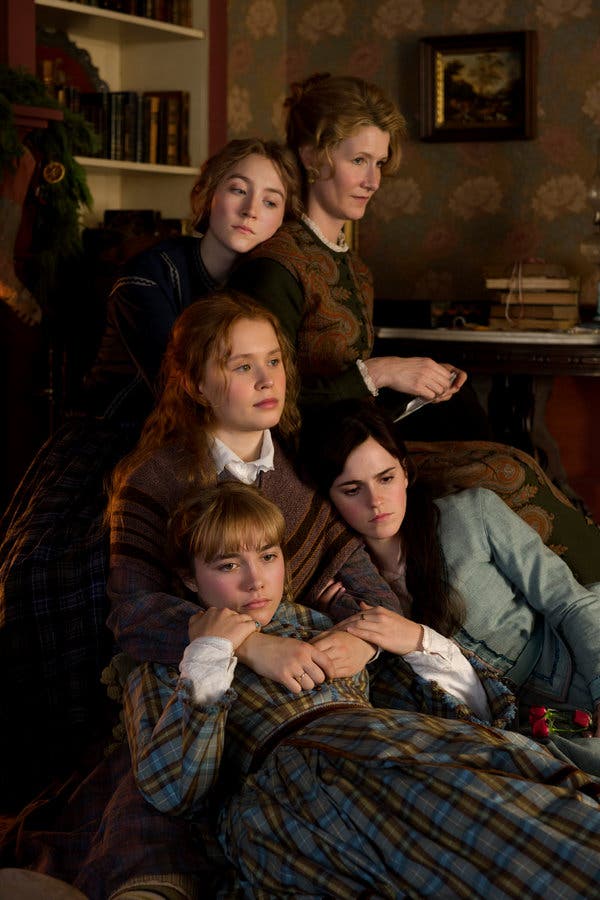
The latest adaptation of Little Women stars Saoirse Ronan (top left) as Jo March and is adapted and directed by Greta Gerwig.


I’m sure when most of you learned of Little Women about to be released, I bet most of you thought ‘not another Little Women adaptation.’ I admit I had those feelings at the start. However I was surprised to see how well it turned out.

In 1868, Jo March is a teacher in New York City. She has writing ambitions and takes her writing frequently to Mr. Dashwood who will publish her writing… under considerable editing. Her younger sister Amy is in Paris under the guidance of her elder Aunt March who never married and despises the idea of marriage. She meets her love from back home, Laurie and invites her to a party, in which he gets drunk to her dismay. Jo’s writing ambitions are kept alive by a professor named Friedrich Bhaer who supports her work but is constructive but blunt in his critiquing of her works. However Jo has to put everything on hold when she receives a letter that her younger sister Beth is sick. She has to return back home.

The film flashes back to the winter of 1861 in Massachusetts, just after the March’s father goes off to the Civil War, and the March sisters all dress up and prepare for a party where Jo meets Laurie, the grandson of their neighbor Mr. Laurence, for the first time. Just before Christmas dinner, the mother Marmee encourages the girls to give their food to their Mrs. Hummer and her group of hungry children. The girls return with a plentiful Christmas dinner thanks to Mr. Laurence and a letter from their father who just started fighting. During the trip, Jo is invited by her single elder Aunt March to come to Paris with her. Also during that winter, Amy is strapped by a teacher for her drawing in class and Laurie takes her in to his Latin lesson before her family arrives.

It’s obvious as Amy has artistic ambitions and Jo has writing ambitions, their ambitions clash, often violently. One night as Jo is out with the family for an occasion, Amy burns the notes to her novel. Jo discovers upon returning, and a violent fight ensued. However all animosity ends when on an occasion while skating, the ice breaks under Amy and is in danger of drowning. Jo saves her. Also during that winter, Mr. Laurence invites Beth to play on his piano as she reminds him of his late daughter.

Returning to 1868, Laurie apologizes to Amy for his drunken behavior the night before. He also begs Amy not to marry Fred Vaughn but marry him instead. That only makes Amy unhappy as she feels she’s ‘second to Jo’ at everything, including Laurie. Amy later rejects Fred’s proposal after she learns Laurie returned to London. Returning back to the past, there was a period of time when Marmee left to visit their father who was wounded during the War. During that time, Beth received a gift from Mr. Laurence: his piano! However she becomes ill with scarlet fever. With a weak heart, it means she might die. Her mother rushes home with their father, already recovered. All come home in time for Christmas and Amy is all better. However returning back to 1868, Amy dies shortly after Jo arrives from her train trip.

The film flashes back to the past on the day Meg is about to be married. Jo doesn’t want her to marry, feeling Meg doesn’t want to marry, but Meg reminds her Jo’s ambitions may be different from Meg’s ambitions, but they’re still her ambitions. It’s on the day of the wedding Aunt March announces she will take Amy to Paris instead of Jo. Laurie admits his feelings for Jo after the wedding, but Jo insists she doesn’t have the same feelings.

Returning back to 1868, a devastated Amy returns home with a dying Aunt March. Jo starts to wonder if she has second thoughts of her love to Laurie. She writes a letter confessing her feelings, but she soon learns Amy accepted Laurie’s proposal and rejected Fred Vaughn’s proposal. Jo later agrees with Laurie to just be friends. After she throws her letter of love to Laurie in the river, she’s inspired to write her novel about her and her sisters.

She takes the novel to Mr. Dashwood who dismisses it because he believes a lead protagonist female who marries is what sells novels. Mr. Dashwood is given a change of heart when he learns his own young daughters love the story. However he’s still skeptical and wants Jo to make the lead protagonist marry. Jo is at first against it as it is sacrilegious to her work. However she compromises, but on one condition. She gets a $500 up-front publishing payment and more than the original 5% profits promised. She starts at 10% but compromises at 6.6%. The novel Little Women is set to be published and the school Jo and her sisters wanted to open is opened in what was Aunt March’s house with Bhaer teaching children at the school.

This may be a film adapted from a novel written in 1868, but as one watches, one would be surprised to see its relevance for today. This may be a story set around the time of the US Civil War and in New England, but there are a lot of similarities to the present. One common theme is the competitiveness of sisters. We still have that. Ask any woman who comes from a family with a lot of girls! There’s also the story of women with desires and ambitions. Today’s young women have possibly the biggest ever ambitions for their future. Women may have had it rougher a century and a half ago, but it makes clear the ambitions the women shared, whether it be career ambitions, romance ambitions or artistic ambitions. We should remember from history that women had to work during the war while the men were fighting and that started suffrage groups and the first feminist groups. There’s dealing with dashing but stupid men, as seen in Laurie. There’s support and encouragement from others. There’s also the bond of the family. First of the March girls all live with their mother Marmee as they’re waiting for their father to come home from the war. Even dealing with the heartbreak of a sister that died too soon.

For those that read the novel Little Women, I feel the reason why it became so popular is that women could see mirror images of themselves in the March sisters. They shared similar goals, similar trials, similar ambitions and similar dreams. Here in the film, I felt the characters of the March girls were made to look very relatable to most young females of today.

Now Little Women has already been adapted into a film many times before. In fact this is the seventh film adaptation of the novel if you even include adaptations as far back as the silent era. To make people welcome a film adaptation of this in the present, there would have to be a freshness or a twist that works. Having it a case where Beth is one with no intentions to marry is a risky thing. I feel it did the smart thing by having it a case where Jo is the author of Little Women and trying to market it, and using the money to build the school, is a brave decision. I don’t think it does anything too sacrilegious to the book. In fact the character of Jo is to mirror that of Louisa. What the film does is actually give two alternatives of Jo: the Jo that’s common in the novel and the Jo who’s more of a reflection of Louisa’s own life and strong will when she deals with Mr. Dashwood. It’s a unique twist for Greta to make it happen. Plus instead of it defying the story, it actually adds a unique twist to it that works.

Top accolades of the film should go to director Greta Gerwig. This could have been another rehash of a commonly-adapted novel. Instead Greta adapts the story to make it very relatable to young women in today’s world and even adding a twist to the story without ruining the dignity of the original story. Gerwig bends instead of breaks. Even the constant flashes between the past and present work well. The best acting comes from Saoirse Ronan. Again she does an excellent acting performance that adds dimension and charm and speaks to the audience. Florence Pugh is also great as Amy: Jo’s most rivalrous sister and very good at stealing the show from Jo at times. Emma Watson and Eliza Scanlen are also very good as sisters Meg and Beth. Laura Dern is also good as Marmee, but her role is limited in dimension. Meryl Streep is also given a brief role as Miss March, but she delivers a character that commands your attention each time. Timothee Chalamet was good as the idiotic Laurie, but I feel he didn’t act 1860’s-ish enough.

The film also has a lot of great standout technical efforts too. There’s the costuming of Jacqueline Durran, there’s the score composition from Alexandre Desplat, the set design from Jess Gonchor and Claire Kaufman and there’s the cinematography of Yorick Le Saux.

The most recent adaptation of Little Women does the book justice, but it adds a twist at the end. I’m sure even the biggest fans of the novel will be happy how the film turns out.

Oscars 2017 Best Picture Review: Call Me By Your Name

Call Me By
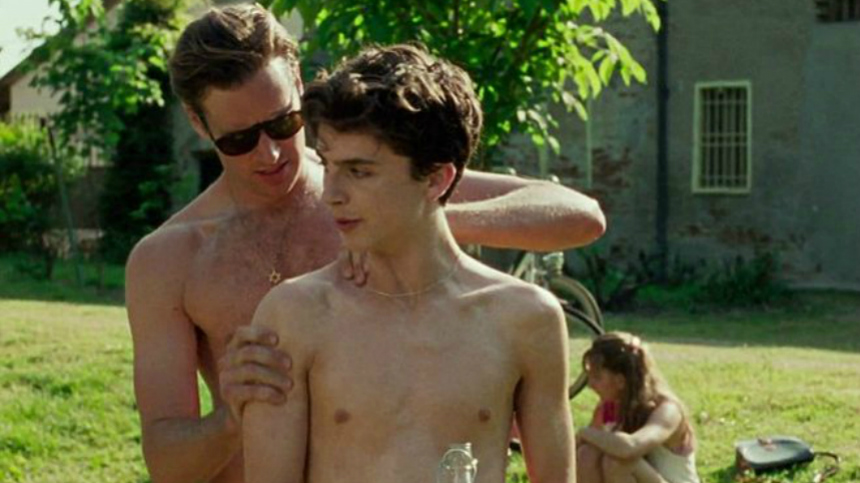
Call Me By Your Name is the story of a son of a professor (played by Timothee Chalamet; right) who falls in love with an academic (played by Armie Hammer).

Call me by your name,

And I’ll call you by mine.

This year’s Best Picture nominees feature a wide variety of themes and subjects. Call Me By Your Name may get note about its gay subject matter, but it’s a lot more.

Elio is a 17 year-old American boy living with his father, a Jewish-American archaeology professor, and his Italian mother in his father’s summer getaway in Northern Italy in the summer of 1983. He has a passion for reading and is prodigious in playing the piano. During the summer, his father invites Oliver, a 24 year-old Jewish American graduate student, up for three months to help with his academic paperwork.

Elio’s first impressions of Oliver are not the best, especially since Elio has to give up his bedroom for him. He finds him arrogant, a show-off, and it annoys Elio when Oliver flirts with one of the local Italian girls he knows. Why should it matter to Elio? He has a girlfriend named Marzia.

However Elio and Oliver develop a friendship as the two spend a lot of time together. You don’t know if something’s happening between them or not. You’re tempted to think the latter as Elio is trying to get more sexual with Marzia and even talks about it at the dinner table. However it becomes obvious Elio is attracted to Oliver as Elio smells his swimsuit and masturbates. Elio makes the first move, but Oliver tells Elio he should not act on his feelings. Even a kiss at the post office doesn’t work on Oliver.

After being distant for a few days, Oliver gives Elio a note to meet him at a tree by midnight. The two kiss. The relationship grows more intimate and more sexual, but they have to keep it a secret, not knowing how their Jewish families will react. Meanwhile Marzia notices Elio has become more distant with her.

Then the time comes when Oliver’s stay is nearing its end. They don’t know what to do. The parents sense the relationship with them, but recommend the two spend a three-day trip in Bergamo. The trip eventually becomes their last intimate time together. Oliver leaves for the US and Elio returns home brokenhearted. Marzia gives him sympathy and agrees to stay friends and his father tells him he should be lucky because a true love like that is rare. A phone call from Oliver on Hanukah where Oliver discloses that he is to marry a woman, leaves Elio with mixed feelings over what should be but will never be.

The story is not as thick on the drama as the other Best Picture nominees. This is a story that simply unravels itself slowly and quietly. Nevertheless the events are consistent and they all fit within the story. This story bears a lot of similarities with Blue Is The Warmest Color where the protagonist is just becoming an adult and just learning of their same-sex attraction after believing they were hetero the whole time. Like Blue, the story is as much about the protagonist’s progression into adulthood and meeting their first same-sex love. Like Blue, the protagonist struggles with their same-sex attraction even as they pursue love with someone of the opposite sex. Also like Blue, it’s about a person of the same gender that sweeps them of their feet. Another element where it’s like Blue is that the story takes place along an artistic setting. While Blue is about Adele becoming infatuated with Emma through her paintings, it’s Elio becoming infatuated with Oliver in Northern Italy in an environment full of art: both natural and man-made. It’s also Oliver becoming infatuated with Elio through his readings and his piano playing. It’s a unique story how two young men– one who’s artistically-inclined and one who’s academically-inclined– both feel like polar opposites at the beginning, but come to love each other over time.

Another element in common with Blue is that it features a lot of elements one would commonly find in French films. We see how the imagery of the Northern Italian country side and even all the art and artifacts in the more urban areas play in with the story. We see how the elements of Oliver’s academia and Elio’s passion for the arts also help colorize the story and even heat up the romance. We also see the environment of the 1980’s and the music in the film adds to the story line. And we especially see how the theme of apricots plays into the romance. It goes from simple academia discussion to an element of their love. The film could have simply been titled Love And Apricots! Such background elements found here are common in French films as it helps provide a lot of value and background to the story and even the themes of the film.

However the biggest difference between Blue and Call Me By Your Name is that the story of Adele meeting Emma is more about meeting her first same-sex love and Emma being more like a chapter in Adele’s life. Call Me By Your Name is different because it’s a case where Olivier is more than Elio’s first same-sex love, Oliver becomes his soul-mate. The film is also a sad love story because it’s a case of what was meant to be can’t be. We don’t learn of the true divide of the two until the very end. While Mr. Perlman is supportive of Elio’s love to Oliver, Oliver has to marry as he knows his parents not only would disapprove, but send him to a psychiatrist for therapy. I won’t say the reason being because Oliver’s family’s Jewish, but more because the US in the early 1980’s was still very hostile towards homosexuality. That was it. Two soul mates from two different worlds that would face their big divide at the end.

The film is the accomplishment of the collaboration of director Luca Guadagnino and scriptwriter James Ivory. Both openly gay, they did a very good job of creating a story about meeting the love of one’s life and placing it in a glorious picturesque background that gives the story its charm and its feel. The film is also an accomplishment for young actor Timothee Chalamet. Most of the film revolved around Elio and Chalamet delivered an excellent job of a 17 year-old who learns of his sexuality through meeting the love of his life. That end scene where the film focuses on his face and his various emotions is as much the best part of Chalamet’s acting as it is a heartbreak for the audience to see.

Also excellent is the acting of Armie Hammer as Oliver. He portrays a man who first appears arrogant, but possesses an excellent gift of making his academia sound almost like poetry. It’s easy to see why Elio would be charmed to him. Also very good is Michael Stuhbarg. He first just appears in the movie simply as the father and a professor, but his characters fruition comes out at the end as he tells Elio of how happy he is Elio loved Oliver. The choreography by Sayombhu Mukdeeprom was spot-on as it was the various camera angles and capturing the Italian beauty that was needed to make the story.

It’s funny how most people thought that Sherwin and Johnathan from the viral animated short In A Heartbeat were to be 2017’s top gay pair on film. Looks like Elio and Oliver overtook them in the end. They may not be as cute-as-a-button as Sherwin and Johnathan, but they are better at giving the romantic feel to their respective film.

Call Me By Your Name may be a gay-themed film, but it’s a lot more. It’s a film that will charm those who see it with its beauty and its story.

Oscars 2017 Best Picture Review: Lady Bird

Lady Bird
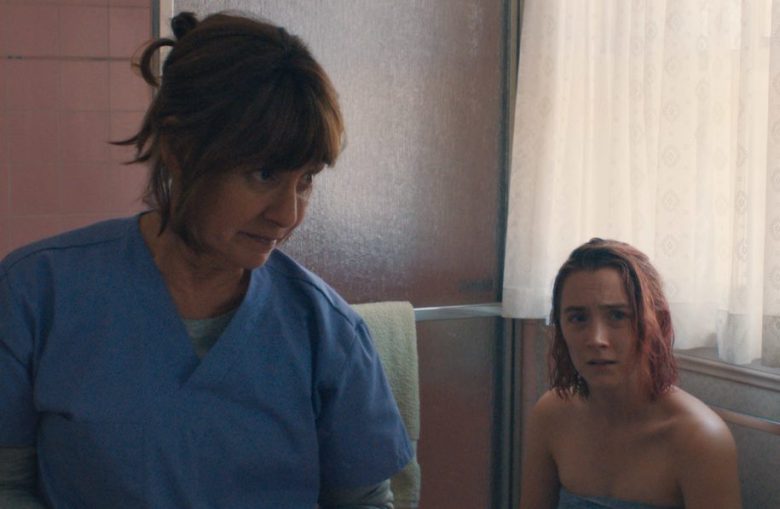
Lady Bird is about a 17 year-old girl (played by Saoirse Ronan) dealing with her life and her future, and her mother (played by Laurie Metcalf) trying to steer her in the right direction.

Lady Bird is a top contender for this year’s Academy Awards. If you’ve seen it, you can see how this film is not a typical ‘teen movie’ and actually a story with a lot packed in.

Christine McPherson is a frustrated 17 year-old girl living in Sacramento in 2002. She has a stormy relationship with her parents as well as her adoptive brother and his girlfriend. To make things more frustrating, she’s put in Catholic school for Grade 12 because there was a shooting at her public school. She appears unclear about her life direction and frequently insists that all people refer to her as ‘Lady Bird,’ including family.

Starting school, she has a close friendship with Julie Steffans whom she joins the drama club with. Through the club, she meets a sweet talented boy named Danny O’Neill. They soon start dating and they appear to be a match made in heaven until Lady Bird catches Danny in a bathroom stall kissing another boy.

Throughout her time at the school, Lady Bird develops a mean streak of rebelliousness. One minute, she’s consuming Eucharist wafers with Julie. The next, she vandalizes the nuns’ car with a sing saying “Just married to Jesus.” Another moment, she lashes out at a pro-life speaker who visits her school, which leads to a two-week suspension. This leads to a lot of friction with her friend Julie who sees her as one who does things for attention.

During this time, it all leads to a lot of friction with her mother Marion, who has a lot of high expectations for Lady Bird and her life, especially with applying for colleges. Marion often feels that Lady Bird lacks goals or appears like she doesn’t want to do anything meaningful with her life. Marion feels that way because she had to work hard to achieve. This generation gap appears to Lady Bird that her mother is an interference to her life and her own goals. To make family struggles worse, her father loses his job and is struggling with depression.

Lady Bird tries to escape from those headaches. She gets a job at a cafe where she meets Kyle Schieble, a boy from school she knows is part of a rock band. She strays away from Julie and starts hanging out with popular girl Jenna Walton. She sees opportunity after Jenna was reprimanded by the school for wearing short skirts. Thus Lady Bird bring Jenna into the ‘just married to Jesus’ prank. However none of her efforts to mix with the ‘cool kids’ works out. She lied to Jenna about her house so she can fit in, but Jenna finds the truth out. Also she agrees to have sex with Kyle, believing his claim that he’s a virgin, only to find out he’s had other girls before.

As graduation nears, things change for the better for Lady Bird. She gets a letter from a college in New York saying she’s on the waiting list, though she tells her mother she’s been accepted. She’s willing to go shopping for a prom dress with her mother. Her relationship with her brother and his girlfriend gets better as he gets a major job. On prom night, she forsakes a party with Jenna and Kyle to meet up with Julie. There, she rekindles the friendship and they go to the prom together. She even attends Danny’s school performance.

Over at the graduation party, Lady Bird admits to her mother that she was on the waiting list to the university in New York, to which Marion appears either hurt or angry. Lady Bird’s 18th birthday comes soon after. Marion has a letter written for Lady Bird to read when she’s settled in her college dorm. Then it’s the flight to New York. Marion does not talk to Lady Bird, appearing like she’s disappointed with her. Marion even drives away when Lady Bird enters the airport, but cries soon after. It’s in her first month in New York after reading the letter and a near-fatal bout of alcohol poisoning that she leaves a heartfelt message to her mother.

The biggest quality of this film is that it’s a story many people can relate to. Sure, it’s about a 17-year-old tart-tongued girl from Sacramento who’s clueless about which direction to go, but one will find themselves relating to this story. Many can watch what Lady Bird is going through at school, through her job, through falling in love, or through her stormy relationship with her mother and say: “That’s also what I went through,” or “That was my attitude at 17,” or “I knew someone like that.”

One of the things is about the character of Lady Bird is that despite her eccentricities, it also captures the essence of being a seventeen year-old well. Seventeen is that bizarre age where one is just a year away from becoming an adult. It’s a bumpy road as they are in the process of defining one’s self and making choices of what direction in life they want to pursue. We see that in all of the seventeen year-old characters in the film like Julie, the best friend who’s a social misfit, Jenna who thinks she’s too cool, Kyle who thinks he’s all that just like every rock star, and Danny who’s struggling with being gay in a conservative Catholic family.

Lady Bird is at the centre of being seventeen. The character of Lady Bird captures being 17 in a lot of its best traits, but also in some of its worst traits too. Lady Bird is all about her self-definition where she feels she has to find herself in the drama club. Lady Bird is one who also still feels social pressures despite her individualism and tries to fit in with the cool students despite leaving close friends behind. Lady Bird is also about her spiritual confusion too. She wants to be an individual and think for herself, even rebel against the Catholic Church at times, but somehow shows that she longs to believe in a god despite her rebellion.

Lady Bird is also about having that teen frustration towards her parents, especially her mother. In fact, the mother-daughter relationship between Lady Bird and Marion has to be one of the biggest elements of the film, if not the biggest. Lady Bird has desires for her life, but Marion has goals for her. Often Lady Bird feels she has to explode at Marion, but she learns to calm down and have the normal frustration a 17 year-old has to their mother. As for parent-teen relations, the film is also about Marion too. The personalities of Marion and Lady Bird are like oil and water trying to mix. Marion had her own upbringing and her own difficulties resonate in her personality and even how she raises Lady Bird. Marion feels that the best way she can steer Lady Bird down the right path is to tell her off about her misdoings and wrong directions. She has expectations for Lady Bird, but often feels she falls short. Over time, Marion becomes more accepting of Lady Bird, but she does show disappointment when she finds out Lady Bird lied about her application. That scene near the end where Marion is unemotional in the ride to the airport but cries after dropping Lady Bird off is an example of her personality.

I’m sure many people first thought that this film would be about Lady Bird Johnson. The funniest thing about this film is that there is not a single reference to the former First Lady! Not even a case of one of her classmates uttering out: “Hey Lady Bird, where’s LBJ?”

The true star of the film isn’t exactly an actor, but writer/director Greta Gerwig. After years of having an acting career of mixed results, she came up with this story that is not completely biographical. There are some similarities in Lady Bird that tie into Greta’s own teenage years, but Gerwig insists it’s its own story. Whatever the situation, Gerwig did an excellent job of constructing an entertaining story about a 17 year-old that anyone could relate to. I’m sure anyone no matter what race or gender can identify with moments in Lady Bird to moments in their own life at 17.

Additional top kudos go to Saoirse Ronan for delivering a character that is quirky, but shares a lot of common traits of teens. She does an excellent job of making the role of Lady Bird multi-dimensional. Also worthy of praise is the performance of Laurie Metcalf. She succeeds in turning this film into Marion’s story as much as it is Lady Bird’s story. She’s good at capturing the essence of the mother of a teenager both inside and out. She also does a good job of blending in Marion’s own personality traits of hardship and having a hard attitude. Laurie’s also very good at leaving out all traces of Jackie from Roseanne. Fans of the show would be surprised how different she acts here.

The actors in their supporting roles also did a great job of owning their moment. The most noticeable being Beanie Feldstein as the best friend who sometimes appears to be Lady Bird’s better half, Lucas Hedges as a boy who loves to act but is troubled by his sexuality in school, Timothee Chalamet as the teenage bad boy girls drool over but parents hate, Stephen McKinley Henderson as the priest that’s troubled on the inside, Jordan Rodrigues as the brother caught in the middle, and Tracy Letts as the father trying to make sense of it all.

Lady Bird is a quirky and humorous film about a mother-daughter relationship and the difficulties of being seventeen. Despite its off-the-wall humor, it’s also deep and touching and will resonate with the audience.