Oscars 2024 Best Picture Reviews: Part Three

At first I intended for my Best Picture blogs to be three in total. When it became clear how much writing I did for the first two films, I decided dividing them into blogs of two reviews each is more worth it.  So in the meantime, here’s the third of my five Best Picture review blogs:
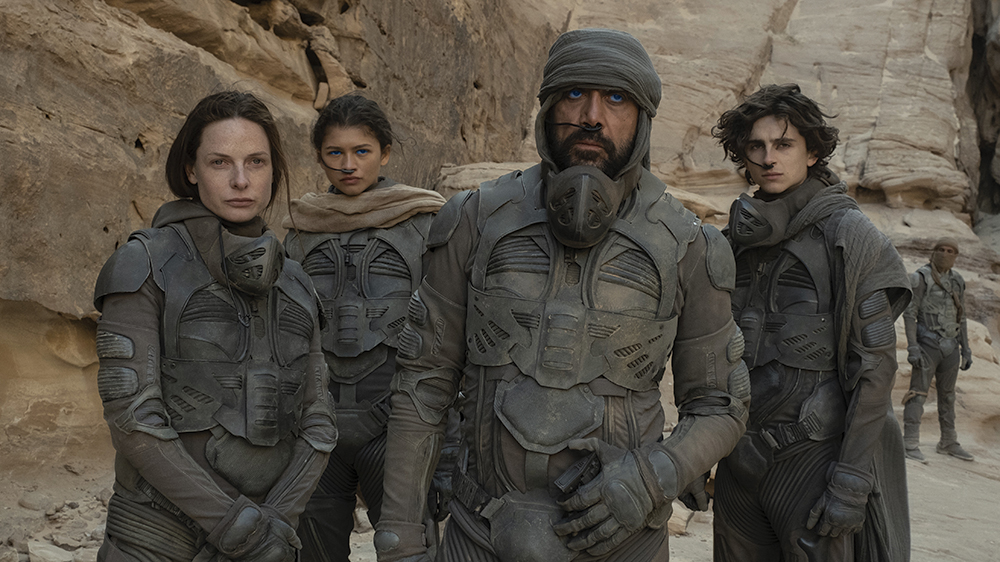
Dune: Part Two

The reboot of the Dune series has been so far the biggest movie action of the 2020’s. The re-adaptation of the Frank Herbert novel was a highly anticipated event in 2021 and hoped to get people back into the movie theatres after the relaxing of the strictest COVID precautions in history. It worked. Dune made over $400 million at the box office, was nominated for ten Academy Awards and won six. It was like what David Lynch got wrong, Denis Villeneuve got right. Originally, Villeneuve planned to divide the story into two films. This is what led to Dune: Part Two to be made.

The second Dune film continues with the drama left behind from the first. The second makes the stories of the dehumanizing Water Of Life, the installation of the young sadistic nephew of Arrakis as the ruler and heir to House Harkonnen, Paul’s romance interest to soldier Chani, the threat of holy war from Fremen fundamentalists, a spice trade at risk of smugglers, Paul’s consumption of the Water Of Life much to the disappointment of Chani, his dealing with his mother, his duel to battle the throne of the Harkonnen kingdom, his ascendancy to the role of king upon winning and the rejection of all as leader, including Chani. The drama continues, the excitement and thrills increase and the ending leaves the audience in suspense and the anticipation of what will follow in the sequel Dune: Messiah, set for release in the spring or summer of 2026.

Every year, there seems to be at least one ‘popcorn movie’ that seems to rack up enough buzz to eventually become a Best Picture nominee. Not only did Dune: Part Two get nominated for Best Picture, but the Dune franchise joins the Godfather, Lord Of The Rings, Going My Way and the Avatar franchise as the only five movie franchises to have two or more of its films nominated for Best Picture. It’s deserving of it because it succeeds in doing what a science fiction film should do. It takes people into another world. It creates an intense complex drama of the threat of the order of humanity and how it rests in the hands of one young man. It delivers in the action people go to expect form a film like Dune. On top of it, it succeeds in being the opposite of your typical movie sequel that ends up being a repeat of the first. Instead, we get a continuation of the chronologic drama and ends with the anticipation of the third and final part. Deserving of its Best Picture nomionation. And to think it was released back in March 2024. Talk about endurance!

Once again, top respect goes to Denis Villeneuve. You can trust Villeneuve to deliver in a sci-fi film. Both in his direction and his co-adaptation of the story with Jon Spaihts, he continues the excitement of the story well by keeping in the right parts, delivering on the action needed and making the smart decision to make his adaptation of Dune a three-film series instead of the two-film series he originally hoped for. He did things right and in winning fashion. Like most sci-fi films, the story is more focused on the special effects and action moments, but the film doesn’t stray away from its focus on the story and the characters. It is still there and still consistent. Even though Timothy Chalamet’s performance as Paul wasn’t too deep of a role, it is still consistent to the story and very believable. Zendaya’s performance as Chani added to the story. In the first Dune movie, Chani was a minor supporting role. Here, she’s the lead female protagonist and Zendaya does an excellent job in making her a key part of this chapter. There were also good performances of minor roles like Josh Brolin as Paul’s trainee and mentor, Rebecca Ferguson as Paul’s mother with whom Paul harbors resentment, Austin Butler as Paul’s fierce deadly rival to the throne and Christopher Walken as the emperor.

As is common with great science fiction films, the standout achievements are in the technical areas. You need it for a sci-fi film to excel and Dune: Part Two had some of the best of the year. Its top achievements are in the cinematography by Greig Fraser, the production design by Patrice Vermette and Shane Viau, the costuming by Jacqueline West, the editing by Joe Walker, the special effects by the film’s effects team, and the music from Hans Zimmer. All of it was successful in taking the audience into Dune’s futuristic world and enhancing the film’s action.

Dune: Part Two succeeds in keeping alive the drama, intensity and excitement of the first film and sets the audience up for anticipation of the third and final chapter. It succeeds in having the best qualities of a sci-fi film without the common watering down or cheapening of the quality.
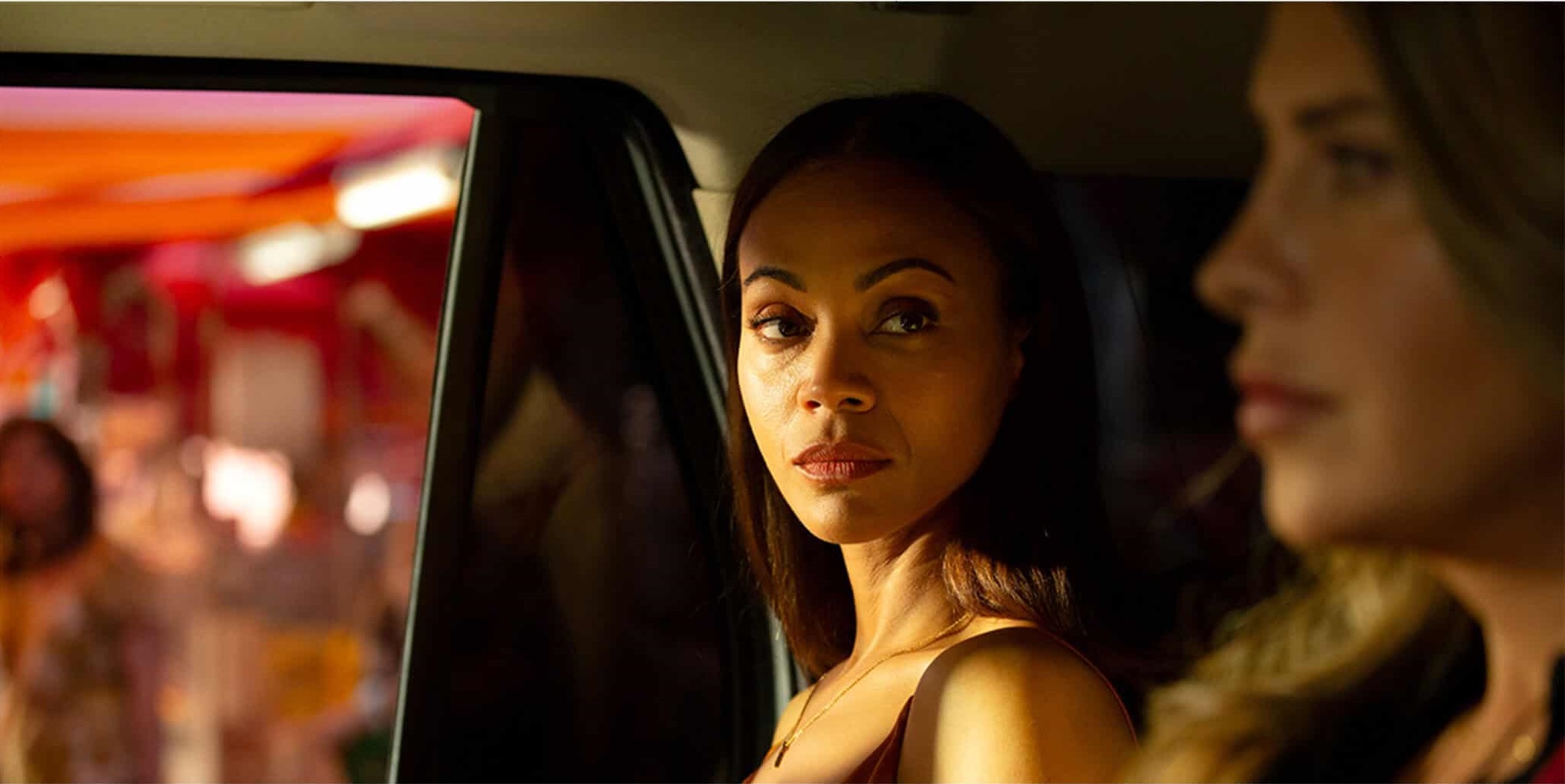
Emilia Perez

Now this film has been the subject of a lot of discussion, for better or for worse. In watching it, one would be shocked how a musical is made out of subject matter that would be the last themes and elements thought of as subject matter for a musical. Nevertheless, the mix of a musical with modern-day dark drama works as a film from start to finish. Despite that, this film is not for everybody. If you’re a person who welcomes experimentation in film like I do, then you will like it or respect it as a film. If you want to be entertained, that’s taking chances as a lot of people will be unhappy with a film like this. Trust me. A transsexual druglord and all the corruption in Mexico and the missing people that come with it does not make for an entertaining film. Making a musical out of it would seem quite the oddity.

From the start, it looked like the type of film that would get a lot of Oscar buzz. It had great acting, an eyebrow-raising story and quite the unconventional way of making a film. The film would achieve thirteen Oscar nominations and then the hate began. First, there are the complaints from the transsexual communities complaining of the transsexual character being a murderous drug lord before the operation. Then came complaints from the people of Mexico of how Mexico was depicted as a place of rabid crime. Additionally, it came to light past social media messages from Karla Sofia Gascon. Exposed in her messages were tweets that were Islamophobic, racist and even critical of her own co-stars. This only came to light just after all the nominations were revealed. I know there’s always at least one Best Picture contender that starts a load of controversy. Best Picture nominees often start some controversy or debate but there’s always one that stands out the most. This will have to be the biggest of the ten.

I’m not normally one to trash a film unless it’s really horrendous or really terrible either in quality or in its subject matter. While the film is definitely one of uncomfortable subject matter, I do give it credit for its experimentation. We should know that this film is originally a stage opera created by Jacques Audiard who adapted it from a chapter in a French book Ecoute. I will give Audiard credit for trying to make a musical out of out-of-the-ordinary subject matter. Watching it will make you question if the musical elements of the film work or not but there are many parts that stand out as great and will even blow you away. Don’t forget this isn’t a story about a transition from man to woman. It’s also a transition of personality going from leader of a drug cartel to a humanitarian. Also I feel the acting in the story works well. It’s the acting from the three main stars of the film that help make the film work on the screen and work as an unexpected musical. The funny thing is after you’ve finished watching, you will ask yourself if you liked it or not. Or if this worked or not. Despite its imperfections, I consider it a brave attempt.

Responsible for this film is French director Jacques Audiard. Audiard has had a decades-long reputation as a filmmaker in France and has directed many films outside the French language. This film, which was a Palme d’Or nominee at Cannes 2024, should be seen as an accomplishment in retrospect. A flawed accomplishment, a provocative accomplishment but an accomplishment nevertheless. It’s not just this being an unlikely musical but also adapting a stage opera to the big screen. As if adapting a musical isn’t hard enough. Despite its flaws, I give Audiard credit for that.

Also excellent is the performance of lead Karla Sofia Gascon. A transsexual woman herself, Gascon does a great job in both the male role of Manitas and the female role of Emilia Perez. It’s two different conflicting personalities of the same character and it needed to be done well, and Gascon succeeds in doing it. Also excellent is Zoe Saldana as the lawyer caught in the middle of it all. When watching the film, you wonder if the lead is Emilia or if the lead is Rita Castro. Zoe does a great job in making the film as much hers as it is Emilia’s. Selena Gomez’ performance was not all there. Nevertheless she did have some great moments and was believable in most scenes. Adriana Paz is also great in playing Emilia’s lover. I give top technical acclaim to Paul Guilhaume in the cinematography, the hair and makeup team for the convincing work on the pre-transition Manitas, and the collaboration of Clement Ducol and Camille on the standout music.

Emilia Perez is not everyone’s cup of tea. It gives a lot of reasons for you to hate it and a lot of reasons for you to like it. I consider it a film for myself to like and admire, despite its obvious flaws.

And there you go. This is my look at two more contenders for the Best Picture Oscar. With ten films, boy do you get a lot of different films.


2023 Oscars Short Films Review: Animation

It’s interesting with seeing the reels of the shorts films, the Animation nominees are often the ones with the least total running time. They go by so fast, the shorts.tv reel add in a couple of other shortlisted films that got their honorable mention.

Anyways without further chit-chat, here are my reviews of the nominated animated shorts:

Letter To A Pig (dir. Tai Kantor) – The story begins telling of a boy hiding in a pig sty from Nazis who seek to put him in a concentration camp. The Nazis can’t find him. Fast-forward many decades later. The man tells his story to school students on Holocaust Memorial Day. He tells of how he credits the pigs in the pig sty for saving his life. He even wrote a letter to the pig. As he reads it aloud, one boy gives a taunting “oink,” while a female student listens intensely. As she engages herself in the story, she imagines herself and her classmates coming across a giant almost monstrous pig and them holding him prisoner in a trap. As they hold the pig prisoner, she can feel her nose metamorphose into a pig snout. Soon she feels sympathy for the pig and lets the pig go. As the pig is set free, he shrinks into a piglet and she hugs him.

This is an impressive story. It’s a story of a man who tells how a sty of pigs — animals he had been taught his whole life to regard as filthy and disgusting — helped spare him from dying in the Holocaust. As the young girl hears the story, she reflects on her own feelings of human hatred directed towards a pig in her mind and how she develops sympathy soon after and learns to love the pig. The story has its themes of collective trauma, fear and identity. It’s done in an impressive style that consists of a mix of 2D pencil drawings with minor colorization and mixing it with live-action images. The film is as much about the imagery as it is about the story. That’s why I give it my Will Win pick.

Ninety-Five Senses (dirs. Jared and Jerusha Hess) – The story begins with a man telling his views of human senses and colorful images about from the words he tells. At first you get the impression, this man is friendly. Then you hear his story. This man is on death row having his last meal. The capital offence he committed was arson of a repair shop he was fired from. He loved the jobs, but couldn’t handle being fired. He responded by setting it ablaze, forgetting the shop was also a house where the family lived above. As he anticipates his last meal, he looks over his past with regret, but also a sign of hope in the afterlife. He even has an outlook of how all once a person died, each of the five senses fade in their own way one by one. After a life of only five senses, he looks forward to the 95 senses in the afterlife.

It’s very rare you hear a story of a man awaiting execution to be told with a light-hearted spirit or even with some optimism. Never mind including humor. The man, voiced by Tim Blake Nelson, does a great job in telling his story without it becoming a common “Sob Story” you’d expect from a Death Row inmate. The story comes with some surprises for those who watch, like you wonder how a man that sounds so friendly would end up on Death Row. The film even ends on a humorous note. The story not only tells of the incident and of his observations and hope, but it does so in including in all five of the human senses. The story is told through six different animation styles and a multitude of colors that’s a delight to watch, despite the dark subject matter.

Our Uniform (dir. Yegane Moghaddam) – This film is where Yegane tells her story of growing up as a girl in Iran right after the Islamic Revolution. She talks of how the female teachers taught the girls to shout anti-American, anti-Israel and anti-UK messages on a daily basis. She talks of the uniform she was required to wear at school and of how the women there were firm in how all girls should wear their clothes in a proper manner and have all their hair hidden in a hijab. She talks of the difficulty she had in the hijab covering her hair that was longer than the hijab cloth, which got on the women’s nerves. She reflects on how growing up, she was taught under the new revolution to feel like she was inferior to men or below men.

No question this is a film of how a girl was indoctrinated with sexism not simply at a school, but from a system implemented by the ruling regime. The theme of the story is to do about clothing and the strict religious regulations of how girls should wear their clothing according to the new regime. The story is told with stop-motion imagery using clothes or fabrics of the clothes she wore as a child. The images drawn or painted on the clothes as well as the stop-motion movements of the clothes do a great job of telling her story. The use of clothing in the animation of telling the story is vital since clothing has a lot to do with what life was like under the regime. It makes the images as vital to the story as Yegane’s retelling. Hiding all your hair in a hijab and wearing a dress that covered everything was the new law in Iran and the film shows it in a unique way.

Pachyderme (dir. Stephanie Clement) – A woman retells her story of how as a young girl, she would often stay at the cabin of her grandparents. Her grandfather’s stern manner leaves her with a feel of fear and discomfort. The cabin was located by a lake. The cabin bedroom she sleeps in has a displayed elephant tusk the grandfather names “Pachyderme,” pointing in its direction in the hall. The room would give the girl and eerie sense about it through the wood imagery and the creaking of the boards. Even though the grandparents would say there’s nothing to fear, she felt there were monsters to take her. She goes to a lake where a woman had drowned some time earlier and feels spirits drawing her to its depths. Some time later, the grandfather dies and Pachyderme is split in two. As she returns to the cabin following her grandmother’s death, she takes both pieces of Pachyderme to the lake to bury it in the water. One of the two pieces is not completely immersed.

This film has to be the darkest of the five. In reading articles about it, it deals with the subject of incest. Incest itself is disturbing enough for audiences so it makes sense that it’s told through subtle imagery and storytelling that hides the actual facts. The theme of how she regards her grandfather as a monster and how it’s represented in Pachyderme adds to the storytelling, including the burial at sea. The ending where she attempts to bury the two pieces of Pachyderme in the water remind us she can bury a horrific memory like her grandfather’s terrible ways, but the small piece sticking out reminds us the bad memory can’t completely be buried. The imagery of the story is told through 2D images that appear as common images one would remember from storybooks they read. Possibly the monster that is her grandfather is epitomized through the common images of monsters we read in our children’s books of the past. It’s charming in its imagery as it is disturbing to see and listen to the harrowing story.

War Is Over! Inspired By The Music Of John And Yoko (dir. Dave Mullins) – The film starts in a battlefield of war. One soldier has a chess set where he appears to play by himself. After he makes his move, he writes his move on a piece of paper and attaches it to the leg of a messenger bird. The bird flies to “enemy territory” and gives the message to an “enemy” soldier who also has a chessboard and looks like he’s playing by himself. After he makes his move, he writes his move to a message for the messenger bird to deliver. Over time, the intrigue grows with the soldiers on both camps. As the bird delivers message after message, the anticipation on what the next move will be or who will win appears to quell the enmity between both sides. Then checkmate! But the sergeant is disgusted by what he sees. He reminds the camp they’re enemies and the battle must begin now. The soldiers on both sides line up with bayonets and all ready to do battle against the “enemy.” The battle begins and bloodshed ensues. On the field one soldier notices the messenger bird is shot dead. Just as the two soldiers from the chess game confront each other, it’s there from a message that slips out that one realizes the other is his chess rival. They drop their guns. All drop their guns when they see the written message “War Is Over.”

This is a creative story Dave Mullins directs and co-wrote with Sean Ono Lennon and Brad Booker produces through the inspiration of John Lennon’s legendary Christmas song and the message “War is over if you want it.” The one 3D-computer animated film nominated in this category this year, this is a film with a montage appearing to have a World War I setting and sends a message that still matters today. There may be a winner in a chess game but there are no winners in war. The scene where all the soldiers are intrigued and excited by a chess game against a player from the “enemy” side sends the message that enmity is something war creates and provokes, and is often unnecessary. The ending where the bloody battle is instantly ended with the written message “War Is Over” also sends a message of how many battles are in vain. The story first seems to be a story that’s either cute or “fluffy,” but the ending of the bloody battle with “Merry Christmas (War Is Over)” sends a significant message that is as important today as it was when John and Yoko recorded it back then. That’s why I give it my Should Win pick.

And there you have it. That’s my review of the five films nominated for Best Animated Short Film. Interesting that in a time where animated features appear to be dominated by 3D computer animation, only one of the five nominated films is such. That’s what I like best about this category. It opens itself up to various styles of animation, rather than going with one that’s all the rage.

Movie Review: Mommy

Mommy is an impressive story about a troubled son, a mother's iron will and a friend willing to help them all out.
Mommy is an impressive story about a troubled son, a mother’s iron will and a friend willing to help them all out.

I was hoping to see Mommy at this year’s VIFF. It was one of those films I really wanted to see. Unfortunately there was only one showing–I think it was the only film that had a single showing– and this was not open to volunteers and tickets sold out days before. Fortunately I was able to see it when it came out in theatres shortly after. I’m very glad I did.

The film begins telling us it’s 2105 and Canada is under a newly elected administration that has passed a controversial new law. The law states that government agencies can now decide the fate of a minor with mental conditions and the parent has no control over it which includes transporting them to hospitals and facilities.

Diane ‘Die’ Despres, a 46 year-old widow of three years has been given the news. Her 16 year-old son Steve, an ADHD child with a history of violent behavior, has been sent to a long list of list of juvenile institutions over the years. His violent behavior has gotten him constantly kicked out and transferred to the next. However his actions at his most recent institution– setting fire to the cafeteria which left one boy badly burned– led to the final straw: transfer to a more restrictive detention centre where she knows he’ll never be rehabilitated. She goes against all judgment and takes Steve into her own hands.

Die has to be a toughy with Steve if she wants to make this work all on her own. She’s even willing to risk losing her job to keep Steve from the alternative, which does happen. She knows it will be very hard to keep Steve because of his behavior and it’s his first violent outburst since taking him on that’s her first test. She stops him by throwing a bookcase on him and that leads to Steve having a gash. She can’t take him to a hospital but she finds help from Kyla, a neighbor from across the street who’s always been so private and only seen with her husband and children. She gives Steve the stitches.

Die is impressed with Kyla’s nursing skills.  The three form a friendship that’s very close as they do many things together. Kyla is especially beneficial as she’s a nurse who knows how to handle the behavior of people with ADHD like Steve. The three of them share many good times together. Die is finally smiling and happy, Steve is able to show off his enthusiasm and a passion for life, and Kyla is able to come out of her shell. Die is even impressed with how she knows how to handle Steve. She doesn’t have to do this alone. However all three know that they have to keep this top secret.  Die even meets with a lawyer to work on their case against the institution. It appears to look good until Steve is mocked at a bar during karaoke night. he becomes violent and threatens the heckler with a broken beer bottle. Steve even gives a further outburst towards the lawyer which causes the lawyer to drop the two.

Despite it all, the three continue on even after Die is served. She is given the warning to give Steve up or she will be charged. The three hope to keep things hidden and things continue to go well until Steve tries to slit his wrist in a store. That was the final straw. Die can’t take it anymore and has to take Steve to the institution. Changes also come for Kyla as her husband has a job in Toronto. The film does end not how one would expect.

Once again this is another entertaining film from Dolan. Like many of his films, it gives a lot of focus on the madness of his protagonist’s minds. However this is not just simply that. This is also a focus on the protagonist’s behavior problems associated with the mental condition. It gives some good focus on the ‘wild imagination’ associated with people with ADHD, especially in scenes with Steve having fun in the parking lot and skateboarding feeling free.  However it also focuses on behavior problems where Steve gets dangerously violent with his mother, verbally abusive with the lawyer who’s supposed to help the two out, impulsively suicidal in the store and even shows the lack of sexual restraint when Steve tries to come on to Kyla. The character of Steve does a good display of showing the positive side of ADHD but also its weaknesses, especially how many young people act like they don’t know their boundaries. We’re already made aware of the fire Steve set which left another teen badly burned at the beginning. However it’s in the film we get a better sense of the condition and a young person’s behavior patterns from sweet and loving to ruthless and nasty.

The film is also about a mother’s love for such a child and how it’s tested. I remember reading a book on parenting teenagers and it said a sentence that really stuck in my head: “If you can handle a teen with ADHD, you can handle any kid.” We know how much Die loves Steve to the point she’s willing to break the law to keep him. That opening scene when she unapologetically barges into Steve’s bedroom to wake him up even while she catches him masturbating already showed that she’s a tough-as-nails mother. However there’s no doubt that her love for him will be put to the test big time. The story shows the trials Die has to go to in order to keep Steve from his violent outbursts to the point of even throwing a bookcase on him. The story also shows how much sacrifice Die has to deal with to keep Steve such as losing her job and losing the lawyer that can help the two win the case. The story even shows how even the toughest of mothers like Die can just have enough of it all and turn Steve in.

It’s not even strictly about ADHD and a mother’s love. It’s also about the trio of a friendship. Kyla’s presence is also very vital as she is one of the few adults who know how to deal with Steve and she becomes Die’s first friend since the death. And to think Kyla was simply a loner wife and mother before the two met her. The film makes for a fascinating friendship between the three.

Interesting thing about this is that the story is in the near future but by a single year and talks of a law passed by the newly elected administration. The funny thing is that most Canadians, especially British Columbians, would expect a law like that to be passed by our current administration. Okay, enough of that. Back to focusing on the film, the one weakness about the film is that it gets us wrapped up in the story to the point we forget about this law that threatens to tear the two apart. And we’re only reminded of it near the end. I’m sure the law has a lot to do with Die keeping Steve to herself and Kyla keeping things hidden but the story makes it so easy to forget.

Once again, this is another triumph for Quebec wunderkind Xavier Dolan. I still remember five years ago when he burst on the scene as a 20 year-old with I Killed My Mother and caught loads of attention at that year’s Cannes. I saw it. Excellent film. Dolan has since proved he’s no one-trick-pony as he has delivered other consistent films like 2010’s Heartbeats, last year’s Tom At The Farm and this film. It’s no wonder he’s become all the buzz at Cannes these past few years and has even caught the attention of Brad Pitt. However this is something unique as this is the first Dolan film where Xavier does not act at all in it. It’s a very good film and another accomplishment from Xavier.

The funny thing about this film is that there have been times I wanted to compare it to his breakthrough film I Killed My Mother. It’s not an easy thing to do as both have a lot of things in common. I do admit that I Killed my Mother is still my favorite film from Dolan. Also looking back, I’ve been trying to see if Mommy shows a filmmaking maturity in Dolan in the five years since. It was very hard to pinpoint out in all the retrospective thinking I’ve been doing. Mind you for those who saw I Killed My Mother, I’m sure you were all surprised how well-directed it was. It easy makes you forget it was done by a 20 year-old.

Actually there were some differences and even some challenges between the two. And not simply because Xavier doesn’t act here. First was creating a story involving a character with a common mental condition. Dolan had to know it inside out and deliver a character that displayed those traits but didn’t come across as insulting to those that had it. Another difference was the focus of a teen boy’s heterosexual feelings. Most of Dolan’s films have focused on homosexuality. And another trait of the movie was Dolan trying to portray the essence of being a teenager even as Dolan was 24 at the time of making the film. Dolan shows she still hasn’t forgotten that essence five years later.

Antoine-Olivier Pilon did an excellent performance with a character very complex. It’s good to see someone that young do a great acting job. However Anne Dorval was the standout of the film. She also delivered well as a mother who is easily tested despite her rebel side. Suzanne Clement is also excellent as the friend who comes out of her shell. The three of them together had the right chemistry to make the film work. Even the minor characters added to the movie. Like Kyla’s husband added to it as one who could say a lot without speaking a word. The mix of music in the film was an excellent mix of common hits and neo-classical compositions and it fit the film well.

Mommy has already won some good accolades. It was nominated for the Palme d’Or at the Cannes Film Festival and won the Prix du Jury. It even won awards at a Francophone film festival in Namur, Belgium and has made almost $3 million at box offices around the world.  It’s also Canada’s official entry in the Best Foreign language Film Category for this year’s Oscars.

Mommy also further confirms my belief about the Canadian motion picture system. For those who don’t know my belief about it, my belief is there are two different types of movies coming from Canada: the films from Quebec and the films from English Canada. The films from Quebec have their own distinct style and consistently display creativity and professionalism. The directors themselves have gained universal recognition and even won awards including an Oscar. The films from English Canada are also professional lack the eye-catching ability of Quebec and have to do lots of effort in order to win attention even in Canada. There isn’t even much of a legacy for the films of English Canada. I believe Mommy further adds to the legacy of Quebec filmmaking and further proves the films of English Canada have a lot of catching up to do.

Mommy is another accomplishment for Xavier Dolan. It quite possibly even makes him the biggest ‘young gun’ director in the world right now. Twenty-five years old and this is his fifth critically-renowned film. I can’t think of another young gun with as much accomplishments right now.