Oscars 2025 Best Picture Reviews: Part Three

My next pair of Best Picture reviews is for two films that have two nominations in common: Best Actor and Best Director. They’re also both comedies. Usually the Academy isn’t too fond of comedies but these two films are among the most heralded and have a lot of buzz for big Oscar wins. One film is directed by one of the business’ top directors and features one of the biggest leading men in the past two decades. The other is by an emerging director featuring a young actor whom many tout to be the next great one. One is set in the present and features a very political topic. The other is less about politics and more about a person seen as a joke trying to shed his skin. Here’s my look at them.
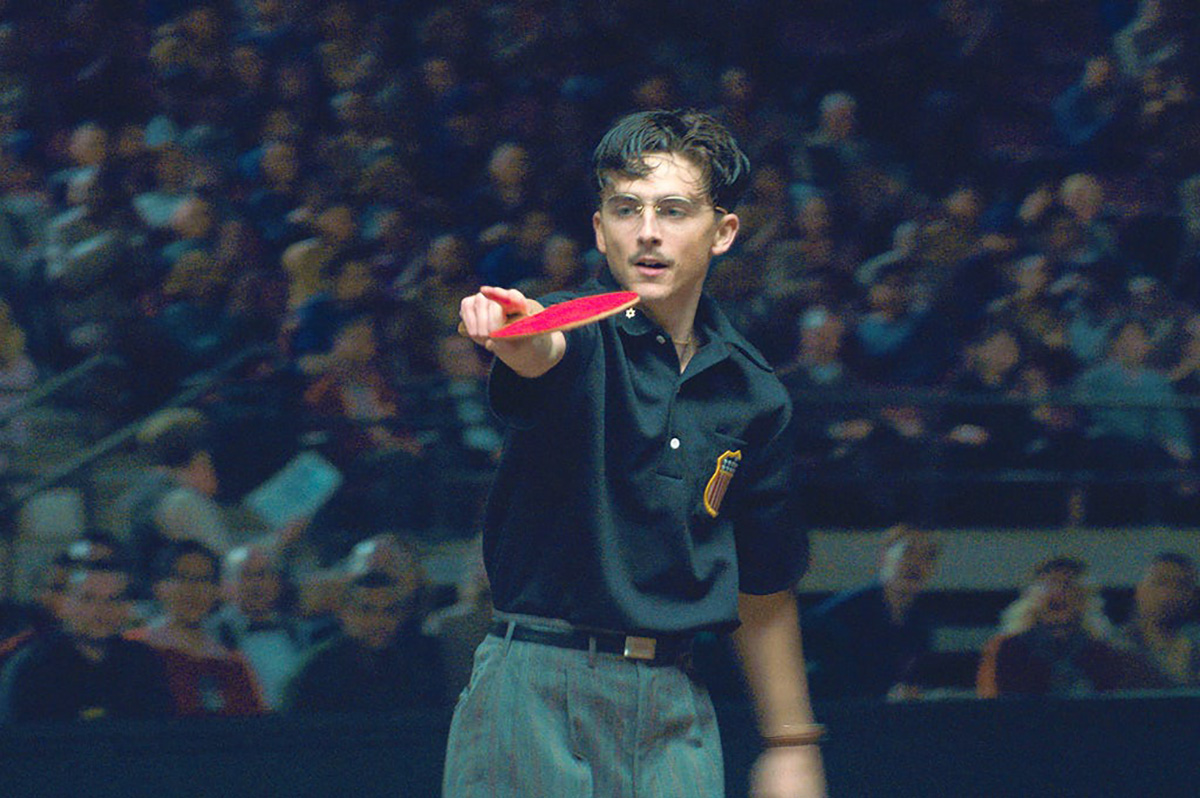
Marty Supreme

It’s interesting how this film doesn’t simply focus on a table tennis player but also the times he was in. We should keep in mind that table tennis didn’t become an Olympic sport until 1988. The International Table Tennis Foundation was founded in 1926 and in the time set in the film, the early 1950’s, it was fine for a player to be paid in their sport, unlike those in Olympic sports at the time. Despite that, we should also know that table tennis players were not paid very much for their wins back then. You could understand how the federations were hoping to use many methods to try to popularise the sport at that time. So it should not be a surprise to see Marty try to use the money from his shoe salesman job to pay for his entries, trips, and equipment, and it still wouldn’t be enough. A New York table tennis player like Marty, he would have to hustle or swindle or even use his playing skills to win gambling money to get the money he needs. That’s how it was for Marty Reisman: the table tennis player Marty Mauser is loosely based on. In his 1974 memoir The Money Player, Reisman said top table tennis players back in the day had to be ‘gamblers and smugglers.’

I’m sure at first, you’ll wonder who would watch a film about a table tennis player from the 50’s, even with Timothee Chalamet starring in it? This story is not just about a table tennis player, but a player who had a bizarre year between a key tournament and the World Championships. Basically, Marty would be regarded commonly as a loser. He lost the British Open to a Japanese player and wants to be the World Champion. His only options to help pay for his training, equipment and tournament trips is selling shoes, making a novelty act of himself touring with the Harlem Globetrotters, have his gambling matches at the bowling alley or a lot of illegal hustling. Other options come along the way with a businessman striking a deal with ping pong balls in his name and having an affair with his movie star wife to get help. Very risky indeed. Adding to the risky moves of he reunites with an already-married childhood friend, having an affair with her and making her pregnant. Then damaging a mobster’s suite and he gives him a dog to look after, which eventually becomes the property of a trigger-happy farmer. You can see how this would catch the attention of many people. All the messes Marty gets in and he has a World Championship to compete in. A loser of a person who wants to be a winner in what he lives for, a woman he loves and a baby to be. That can make for a thrill ride of a story.

The story is a unique timepiece that it takes Marty Mauser from one situation or another. It takes him into his sports world, it takes him into his world at home, it takes him into his world of opportunities made and opportunities lost, and it takes him into his world of constant troubles. The story is more about Marty trying to win for once instead of constantly being seen as a loser. It’s about a man trying to get his way out of troubles that he constantly gets himself into. It’s about the women in his life and how being the man they have an affair with will cause a lot of problems. Especially the businessman Rockwell who knows of the affair and loves seeing him humiliated publicly. The story also provides a unique filmmaking element where it’s set in a specific time period but often features music from another time period. I did not expect a film set in the 1950’s have songs from the 1980’s included in many of the scenes. That is something that is becoming more common in films. It works in this film as well.

This film is an achievement for director Josh Safdie. Almost ten years ago, the Safdie brothers, Josh and Benny, were seen as rising talents in film making with films like Good Time, Uncut Gems andFunny Pages. Back in 2024, the two brothers split to pursue their own film making directions. This film is Josh’s first film as a solo director. The story he directs and co-wrote with Ronald Bronstein takes the audience back to a time when things were both glamorous and shady and a man who can be both a hero and an anti-hero. He succeeds not only in presenting the story in a creative way, but also in an entertaining way. He succeeds in making a ping pong hustler fascinate the audience and his misdoings and potential troubles keep us intrigued. It’s an excellent accomplishment.

Making the film most come alive is actor Timothee Chalamet. Ten years ago, he was seen as yet another young rising face in the film world. The last few years, we’ve seen Chalamet become a top box office draw and deliver in challenging acting roles. This film is the latest film where he shows his acting maturity. He does a great job of making a troubled young man look comical and at the same time, get us to see him as a 3D person who just wants to be taken seriously and try to get his dignity back. Chalamet does a great job in making us root for Marty.

Of the supporting performances, Odessa A’Zion stands out as the girlfriend who is just as troubling as Marty. She will make you hate Rachel but also hope for the best for her. Also great is Kevin O’Leary as Rockwell. We may remember him from the television show Shark Tank. This is his first film role and he succeeds in making his character both likeable and hateable. You could easily see why Marty would want to get even with him. Gwyneth Paltrow is also great as the movie star Kay Stone. She succeeds in replicating the charm of a movie star of the time. Tyler Okonma, most commonly known as Tyler The Creator, does a great job in playing Wally the cab driver. With Marty having so many people he shouldn’t trust, Tyler succeeds in making Wally look like a person Marty can trust.

This film also has a lot of great technical achievements as well. Safdie and Bronstein also did the editing for the film and they deliver the right moves. Cinematographer Darius Khondji delivers a lot of great scene shots. The costuming from Miyako Bellizzi and the set designers succeed very well in physically setting the film back to the past. Composer Daniel Lopatin delivers a fitting score for the film that blends in with the songs used in the film.

Marty Supreme succeeds in being a film about a ping pong player that makes you want to see it. It also succeeds in making a hero out of a man whom you wouldn’t want to make a hero of any kind. It will make you like it.
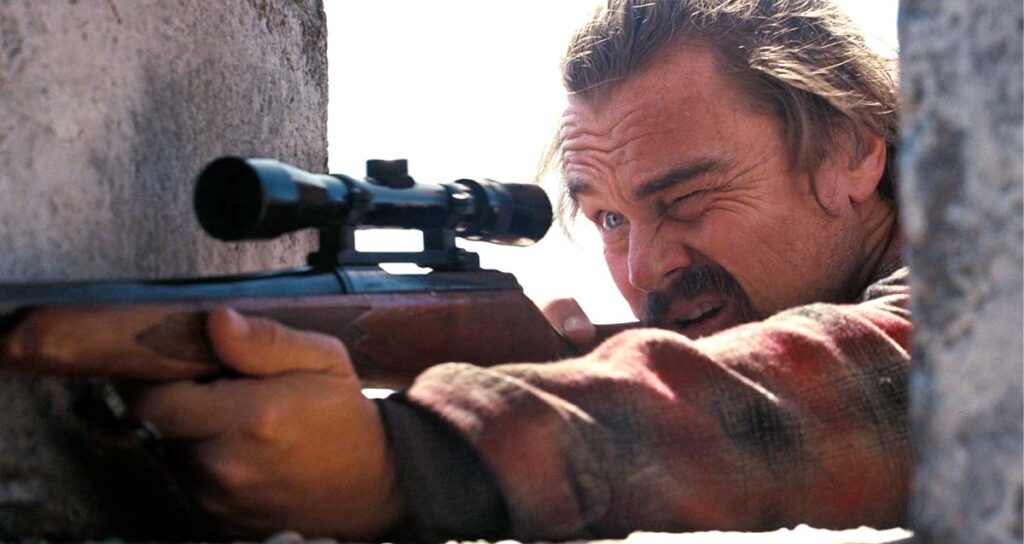
One Battle After Another

Usually around Oscar time, one can expect to have a film that’s very political as one of the top contenders. This year, there aren’t as many political films among the Best Picture contenders and those that are aren’t that heavy into the politics. This film is not only very political but it seems to come out at the right time. We see all that’s going on right now in the United States. We have a right-wing government whom many fear will threaten people’s civil liberties and their democratic system. We have the anti-immigration force ICE brutally abducting people and treating both the people they arrest and bystanders like garbage. With all this, it’s easy to understand why a film like this would come out.

In this film, it starts out as a left-wing militia rivalling the powers that be at the time and a right-wing militia. In the middle of it is a player in the left-wing group who uses sex to entice and manipulate her enemies. She bares the daughter of the white supremacist and her husband agrees to take care of her as she flees for refuge. Sixteen years later, secrets unravel, the daughter is grown, the father needs to sober up and join his group again to protect his wife’s child and the white supremacist father is trying to hunt the daughter down. When you watch all that unfolds and you learn of the scenarios, you can sense that this film has a lot to tell. Some say one can see far-left militias like the French 75 happening. We know of far-right militias. It should come as no surprise if one on the far-left arises with what’s going on now. And to have a child who’s the daughter of the racist colonel and the black revolutionary getting exposed to what happened around the time of her birth and learning she’s a target, it’s possible something like that could happen in real life. It’s a possibility Americans can’t avoid.

This film is based on a book from 1990 called Vineland where radicals from the 1960’s deal with the complexities in Ronald Reagan’s 1980’s. This film modernises the story and makes it more reflective of what is happening in our contemporary political landscape. The film will remind us of how many feared of what would happen during the Reagan Era was nothing compared to what is happening during the Trump Era. The film is also a mirror to our current society as we have all learned about extremist militias and about governments stimulating hate and racism. We’ve all seen in the recent ten years how racist groups have become more emboldened. The film creates the scenario of what would happen if a militant racist had a mixed-race child with ‘the enemy?’ How will it end up? The film makes for a drama that will have you at the edge of your seat as one hopes for the safety of Willa. The film also delivers comedy as we see Ghetto Pat become a fail of a person and try to get his life together and the racist Lockjaw face the music of what he did in surprising ways. To make such a film that’s both a drama and a comedy, that is no easy task, but it succeeds in doing it.

This film is another achievement for director/writer Paul Thomas Anderson. Hard to believe it was almost thirty years ago when he first made a name for himself with 1997’s Boogie Nights. He’s had many an acclaimed film since and this film gives him his fourth Best Director nomination. Anderson succeeds in modernising the story and making it reflective of what could happen in present-day United States. He also succeeds in making what should be an intense drama a comedy with shocker after shocker happening. It would be very difficult to make an intense story like this to be a comedy, but Anderson succeeds in achieving it.

Leading the film is Leonardo di Caprio. Delivering a character like Ghetto Pat who’s become an irresponsible father but the best father for Willa was no easy achievement. He succeeds in delivering the dramatic parts and the comedic parts in a good balance. Creating good chemistry with di Caprio is Chase Infiniti as Willa. This being her film debut performance, she shines greatly and makes the film as much a story about Willa, if not more, as it is about Ghetto Pat. Of the supporting performances, Teyana Taylor shines most as Perfidia Beverly Hills. Her performance as a modern-day Mata Hari-like soldier who knows how to take command of men steals the show and makes her character still felt long after she’s gone. Benicio del Toro is also great as Sergio in his duty to protect both Pat and Willa. Sean Penn is also great as a corrupt racist who faces a shocking truth and feels his only solution is killing Willa.

The film also features a lot of great technical achievements. Michael Bauman pulls the right moves in cinematography to deliver the best shots for telling the story. The film editing of Andy Jurgensen and the sound editing from the sound team give the right mix and the right placings to make it all work for the story for it to deliver well. The production design team does a great job in creating places like the militia hideouts and plotting scenes such as the convents. Composer Jonny Greenwood meets again for another Anderson film and delivers a score that’s fitting mixed in with popular songs from decades back.

One Battle After Another is a film that’s both a mirror to our society and an ironic comedy. It’s a story we can see happening, now but also be shocked with all that happens in the story. Not everyone will like it but it will please its crowd.

And that completes my third pair of reviews of the Best Picture nominees. Glad to see many of them are still in theatres and many of them are doing quite well this year.
Oscars 2017 Best Picture Review: Phantom Thread

Phantom Thread
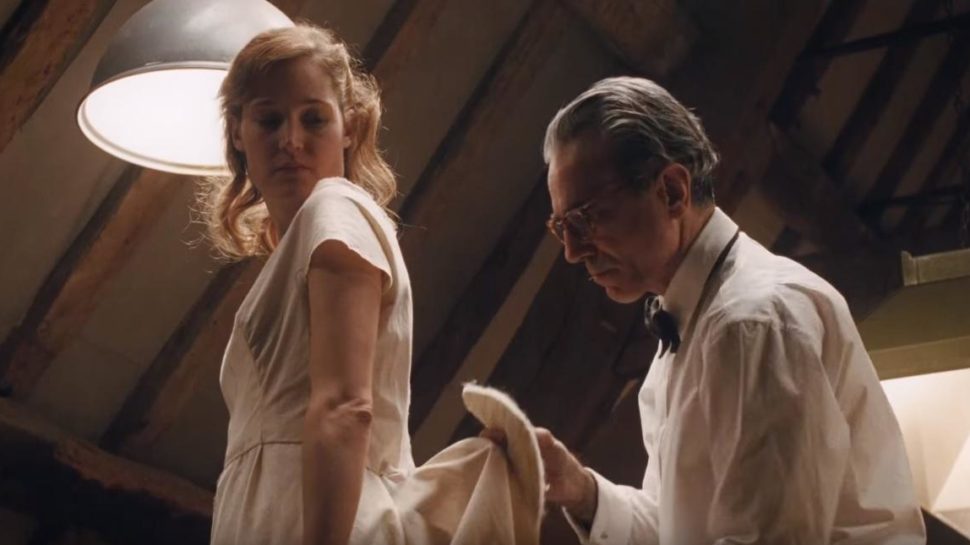
Fashion designer  Reynolds Woodcock (Daniel Day_lewis) is about to be swept away by his ‘assistant’ (played by Vicky Kreips) in Phantom Thread.


This year, there have been some good romances and some not-so-charming romances. Phantom Thread is one of those romances that is quite off the wall, but also one of the most beautiful of the year.

Reynolds Woodcock is a top British fashion designer of the 1950’s. His fashions attract the high society with its charm, originality and impressive design. Reynolds, however, is unmarried in his 50’s. His sister Cyril, who manages his business in a very controlling manner, knows this too well. She knows it may have to do with his pride, but she senses it may be to do about his mother’s death, which he constantly thinks of. Reynolds is also noted for stitching hidden messages into his fashions.

One day, he drives off from his business and goes to a restaurant for breakfast. He meets a charming young waitress named Alma. He asks her out and she accepts. As the relationship grows, Alma moves in, but wants to act as his muse and his assistant as well as be his love interest. Reynolds is mistrustful at first, but he grows to earn her trust.

Alma actually becomes one of his best helps to his business and helping to put on fashion shows. She also works well as a cook, dealing with Reynolds’ hard-to-please picky demands. However, Alma wants more than just to be a cook and assistant. She wants Reynolds’ love. She cooks him a romantic dinner, but Reynolds just lashes out how the meal is prepared and insists he will not put up with any deviations.

Alma is hurt, but knows just the thing to get back her control. Just while Reynolds is getting a wedding dress prepared for the Belgian royal family, she takes some of the poisonous mushrooms, crushes them, and mixes it in with his tea. Soon Reynolds begins to hallucinate the ghost of his mother and collapses over the wedding dress. Alma agrees to take care of him, despite the chance the mushrooms may be revealed. As Reynolds recovers, he is deeply moved by Alma’s devotion and asks her to marry her.

Alma and Reynolds are married. The marriage begins wonderfully, but it soon leads to bickering and fighting. Reynolds even makes it clear he feels Alma is becoming an interference to his business. Not even Alma leaving the place to go to a New Years Eve ball changes his mind. One day, Alma creates an omelet made with the poisonous mushrooms. Reynolds knows they are poisonous. Alma confesses to him she wants him to be weak and vulnerable so she can take care of him, help him recover, and then poison him again. Reynolds accept. She then envisions her future with Reynolds as he’s sick in bed and she’s confessing everything to the doctor.

This is definitely a bizarre romance. It’s about the feelings of love and love-sickness. It’s about a young common woman wanting to win the love of a fashion designer who’s a control freak and a man of immense pride. It’s about the battle of control between the two. Those don’t exactly sound like the elements of a winning romance, but Paul Thomas Anderson makes it work.

He sets it in an atmosphere of high society and high fashion. He creates the appropriate atmosphere for both the romance, the tension and the madness. Despite all that happens, in all the craziness and the differences between the two people, the movie ends with you feeling this love is so right. The two were actually made for each other, even though he’s poisoned and in bed. I think that’s it. I think Anderson wanted to create a romance about love sickness and make it oddly charming and oddly fitting. Sure, she’s going to poison him constantly from then on, but she seems like the right woman for him. She’s definitely the one woman who knows how to take his immense pride away from him. It’s very odd how a woman as sinister as her ends up being his fitting soul mate! The film even gives an appropriate ending where Alma envisions the future of the two together. Perhaps it’s for us the audience to envision our own future of the romance.

Top credits go to writer/director Paul Thomas Anderson. I’ve never thought of a director like Anderson to be able to create a good romance. Here he doesn’t simply create a good romance, but also a story loaded with charm despite its eccentricities. He does a good job of capturing the feelings of romance as well as the feel of tension within the marriage and makes it work on screen. Also excellent is the acting from Daniel Day-Lewis of a fashion designer torn between love and his pride towards his status. Some say this may be Day-Lewis’ acting role as he is talking of retirement. If that holds out to be true, this role will definitely be one of his best portrayals of an original character. Vicky Krieps is very good as the sinister yet charming love interest, but the one actress who upstages Day-Lewis is Lesley Manvile. Playing the sister, she works well both when she’s the observant one who says nothing and when she’s one who has something to say. She does a lot with a part that appears to be very little at first.

For technical credits, top credits go to costume designer Mark Bridges. For a romance about a big-name fashion designer, you need to have dresses that stand out and show why he’s the best in his field, and Bridges delivers! Also excellent is the composed music of Radiohead’s Jonny Greenwood that captures both the dramatic elements and romantic elements of the film.

Phantom Thread does make it look odd for a story like this to work as a romance, but Paul Thomas Anderson made it work. He makes the sinister side of love sickness work.

Oscars 2017 Best Picture Review: The Post

Post
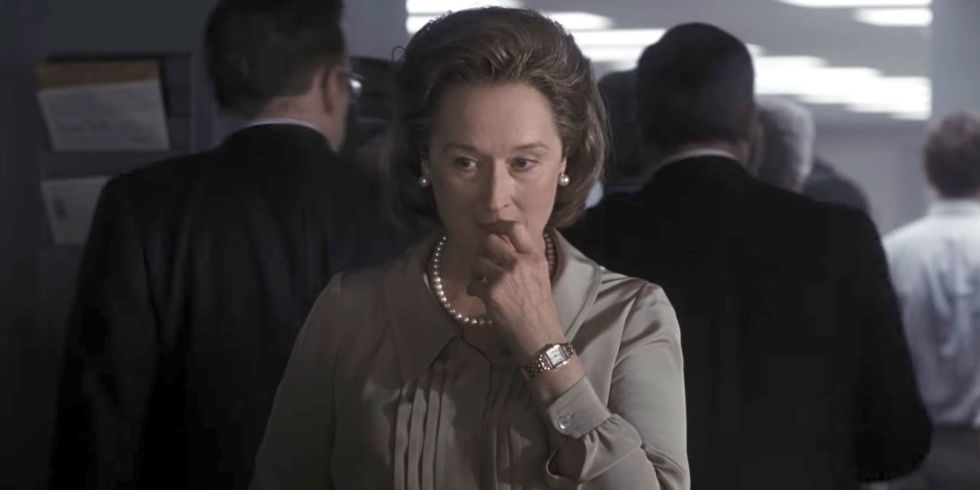
Merly Streep plays newspaper head Katharine Graham in The Post.

The subject matter of The Post doesn’t sound like the type of subject matter that would win a big crowd, but it is a film worth seeing.

The story goes back in 1966 during the Vietnam War. Military analyst Daniel Ellsberg is in Vietnam with General Robert McNamara to document the progress of the war. McNamara admits to Ellsberg and President Johnson that the war is hopeless but has confidence in the effort, leaving Ellsberg disillusioned.

Years later, Ellsberg is now working for a military contractor and comes across classified documents showing the US’s decades-long involvement in the conflict in Vietnam going back to just a few years after World War II ended. Ellsberg discloses the documents to the New York Times.

It’s 1971. Katharine Graham is head of the Washington Post. It’s been a position she mastered with a lot of difficulty as it’s commonly seen as a ‘man’s position.’ Even though her family founded the Post, the position of the head went to her husband Philip instead of her. It was right after Philip’s suicide that Katharine became head. It’s not easy for a female to be head of a newspaper. Especially someone like Graham who has a good work ethic, but lacks experience and is constantly overruled by the aggressiveness of the men of the Post. On top of that, she seeks to gain an IPO for a stock market launch to propel the Post to greater strength. The Washington Post however is second-fiddle to the New York Times which always has the biggest news scoops, even the scoops of what’s happening in Washington.

Editor-in-chief Ben Bradlee is one of the men who work for her. He tries in vain to be one step ahead of the New York Times in coming up with the latest scoops, but falls short each time. Meanwhile McNamara, who is a friend of Graham’s, confesses to her of how he’s the subject of bad news in the New York Times. It’s through their constant expose of the government’s deception of the American public. However a court injunction blockades any further publication of such news by the Times.

Ellsberg is willing to provide the documents and opportunity to the Post to publish the stories. As they look through the stories to publish, lawyers to the Post advise against publishing the story, fearing the Nixon administration will press criminal charges. Graham seeks advice from McNamara, Bradlee and Post chairman Fritz Beebe of whether to publish. It’s made even more frustrating when the lawyer note that since  the sources are the same as the New York Times, Graham herself could be charged with contempt of court. It’s a gamble. Graham risks terminating the newspaper her family established. Alternatively, the Post won such a legal battle, it would establish itself as a major journalism source, much on the same level as the New York Times.

She agrees to have the story published. The White House retaliated by taking both the Times and the Post to the Supreme Court to argue their case of publishing classified document information being a First Amendment Right. Both newspapers receive almost unanimous support from the other newspapers in the US and they win their Supreme Court battle 6-3. An infuriated Nixon bans the Post from the White House. And the rest is infamy… for Nixon.

The film is more than just about a top secret story that needed to be exposed and makes journalism history. The story is also about the newspaper behind the story. We shouldn’t forget that this came at a time when The New York Times was the newspaper that delivered the biggest news about what was happening in the Oval Office and the ones to do it first. Even though the Washington Post was the newspaper of Washington, DC, it was more of a second-fiddle newspaper like the newspapers of the rest of the cities. The New York Times lead and all other newspapers, including the Washington Post followed. This story allowed the Washington Post take pole position towards what was happening in Washington. This would also allow for the Washington Post to be the prime newspaper to go to upon the breaking of the Watergate Scandal. Even despite the Post competing against the Times, they united when they faced the heat of the freedom-of-speech debate and won together.

The film is not simply about a history-making story, a legal breakthrough or even a milestone for a newspaper. It’s also the personal story of Katharine Graham and how she had to achieve greatness for herself. Katharine Graham was born into the paper and assumed control of it right after her husband died. It was always tradition that a man headed the newspaper. After the suicide of her husband, she headed it. The paper her ancestors founded and the paper she wants to propel into marketability. This news story could help be the boost she needed, but the court injunction against the New York Times causes her to put it on hold. Basically she’s gambling everything with this touchy story: the Times, her status as a leader, her role as a woman with power, her role as a mother, even her own personal freedom. In the end, that one decision caused left all of us convinced she did the right thing. She did more than just allow a story. She did more than boost the profile of the Washington Post. She created a breakthrough in freedom of speech and freedom of press. On top of that, she earned the respect from her male colleagues. That was rare back in the early 70’s.

This story is very relevant to the present. We always hear those words ‘fake news.’ We have a feeling that Donald Trump is like a big brother monster who wants to control everything. There are often times in which I wonder if the times of Nixon were worse than the times of Trump. I know all about Nixon and his lust for control. Whatever the times, the story and the court ruling against government censorship of the press serves as a reminder to all citizens that the press has the right to publish the truth to the public. The ruling of the New York Times vs. The United States of America back then was clear: “‘In the First Amendment the Founding Fathers gave the free press the protection it must have to fulfill its essential role in our democracy. The press was to serve the governed, not the governors.” That ruling still applies today.

Leave it to Steven Spielberg to direct a story that will capture our intrigue. Some would describe this type of story as a ‘boring story.’ Steven Spielberg knows how to direct it into something interesting and have us glued to the screens. The screenplay by Josh Singer and Liz Hannah also creates the right interest and intrigue. They’re able to take the chain of events surrounding the publishing of the story and turn it into a story of intrigue. Even a story from a humanist side.

Once again, Meryl Streep delivers in creating depth in a public figure. She gave Katharine Graham the right dimension and the right humanistic tone to make the story work. Tom Hanks also does an excellent job in his role as Ben Bradlee. He delivers in the character very well as he adds some dimension to Bradlee too. The supporting actors may have minor or limited roles, but they add to the film too. Janusz Kaminski does an excellent job of cinematography and John Williams again delivers a fitting score.

The Post is a journalism story that will keep one intrigued. It’s a story that’s very relevant today as it’s also about our own right to know the truth.

Movie Review: Star Trek Into Darkness

Captain Kirk and Spock bring the villain Khan (Benedict Cumberbatch) in Star Trek Into Darkness.
Captain Kirk and Spock bring Khan (Benedict Cumberbatch) to justice in Star Trek Into Darkness.

The Star Trek franchise has really come a long way since its days as a television series, hasn’t it? Movies, a new series in the 90’s, a loyal following of Trekkies and even a 2009 remake of the original. Now Star Trek returns to the big screen with a remake of the sequel entitled Star Trek Into Darkness. Does it still entertain current audiences?

The movie opens with Captain Kirk defamed and demoted from his Captain position after Spock’s life is jeopardized while prevent a volcano from erupting on the planet Nibiru that would have wiped out all civilization and would have exposed all of Nibiru’s lives to the Enterprise. Admiral Pike has been reinstated but believes Kirk deserves a second chance and successfully lobbies for Kirk to be his first Officer.

The movie moves forward to London two centuries from now. A bomb has just exploded and the perpetrator is believed to be Starfleet agent John Harrison. The meeting about how to deal with Harrison is disturbed by Harrison’s jumpship. Kirk destroys the jumpship but Harrison is able to escape to the Klingon planet of Kronos. Meanwhile Pike was killed in the attack which promotes Kirk back to captain of the Enterprise. Kirk is left in charge of dealing with the Enterprise and Harrison whether to have Harrison killed by the torpedoes on board the Enterprise or brought to justice.

Their first attempt at capturing Harrison is by arriving on the Klingon planet even though they know Klingons are set to attack them. Harrison kills the Klingons but appears to surrender when aware of the torpedoes against him. It’s when Khan is held inside the Enterprise that is true identity is learned, Khan: a genetically engineered superhuman designed as a weapon 300 years ago for a war between the Federation and the Klingon Empire. On top of that, the torpedoes each have one of Khan’s crew cryogenically frozen inside. In the meantime Admiral Marcus, engineer of Khan and captain of the USS Vengeance which Khan designed, demands Khan’s release. The Enterprise refuses and that leads to a war leaving the Enterprise severely damaged.

Soon after many giveaways happen to the intentions of both Khan and Marcus which almost leads to the destruction of the Enterprise had it not been for Scotty’s fast thinking on the Vengeance. A confrontation between Kirk, Spock, Marcus’ daughter Carol and Khan leads to Khan succeeding and gaining control of the Vengeance. Khan will only allow the crew of the Enterprise free if given the torpedoes. They agree but just when it’s thought that Khan has the advantage, a surprise occurs. This leads to a battle between Khan and leaders of the Enterprise with a not-so-typical ending to the movie.

This is a continuation from what started in 2009 when the first Star Trek was remade. If you remember then, they attempted to remake the very first Star Trek movie with a modern faced cast and with modern special effects. The end result was one popcorn movie remake that worked well not just with audiences but critics alike. it even became the first Star Trek movie to win an Oscar: winning Best Makeup. Here in 2013 comes a new challenge of remaking The Wrath Of Khan with the new modern cast and the new special effects.

I’ll admit that I have not seen the original Wrath Of Khan so I cannot compare it to Into Darkness. What I can do is compare it with the 2009 remake of the original. The original was good as it was able to remake and even modernize the original well with good writing, good acting and excellent effects.  Into Darkness was also very good in its own way with the acting and the directing and especially the effects. There were times where the original actors (William Shatner and Leonard Nimoy) make appearances in the movie with is not uncommon for Hollywood to do in terms of movie remakes and movie versions of TV shows. However Shatner was given a good role that was atypical. As for the story, it was your typical Hollywood formulas in the story but what it lacks in original it, it makes up for in entertainment. It succeeds in being a thrill ride for those who see it with battles and even an ending that it not your typical predictable Hollywood ending.

The acting from the actors was also good. One thing I liked about the 2009 remake is that none of the actors were trying to fill the shoes of the actors past. Chris Pine knew he wasn’t to be a copy of William Shatner. Zachary Quinto knew he wasn’t to fill the shoes of Leonard Nimoy. John Cho knew that he’s not in George Takei’s shadow. Anton Yelchin knew not to compare himself to Walter Koenig. And Zoe Saldana was not trying to be Nichelle Nichols either.  Each had their part to do and doing it made it work. The actors again continue to do it in Into Darkness. Mind you the role of Spock was given a new challenge by having him convey emotion despite being a Vulcan. Even Benedict Cumberbatch did a very good job in playing Kahn, even if Khan came across as an unoriginal Hollywood villain.

J.J. Abrams can add this movie to his cloud as one of the top sci-fi directors in Hollywood. He started well with Mission Impossible III, progressed with the first Star Trek in 2009 and did it again in Super 8. Although Into Darkness doesn’t compare to the first Star Trek, it does not hurt his reputation at all and even adds to his consistency. The highlights of the movie of course were the visual effects as should be expected with any sci fi movie. People don’t go to a sci fi movie for the script. They go to escape to another world. And Star Trek Into Darkness succeeds into taking us into our world two centuries from now and into the many worlds in the Star Trek universe. It was a very good trip into escapism that most will enjoy.

Star Trek Into Darkness is a sequel remake that puts its most emphasis in the escapism and the excitement of the action. It succeeds again in giving the audience a trip to another world while staying true to the Star Trek theme. The big question is if there’s to be a remake of The Search For Spock in the future, how soon will it come out and what will the end result be?