Movie Review: Beeba Boys

Randeep Hooda plays Jeet Johar, a leader of an organized crime syndicate in Beeba Boys.

Back at this year’s VIFF, I was hoping to see at least one Canadian live-action feature. I didn’t have the luck. I was actually luckier after the VIFF ended as Beeba Boys hit theatres just a week after. I had the chance to finally see it for myself.

The story is about Jeet Johar, a Punjabi-Canadian mob boss who is seen as the big man in Greater Vancouver, especially Surrey. He’s seen by many in the Indo-Canadian community what many would see of a mob boss: a father figure, a leader, a man who helps his community and a man who tells other not to mess with their own.

However there’s another side to Jeet. Despite having a set of loyal men who carry out his actions, he’s a loyal father who’s concerned about his well-being. He’s very upset when his father drinks in front of his son and he’s concerned how his mother feels about him, even though he acts like it doesn’t bother him.

One time, Jeet is arrested for murder. The jury finds him not guilty and he wins the attraction of one of the jurors, the daughter of Polish immigrants. However the police know he’s guilty and they set up a man to join Jeet’s gang and have him set up for what they hope will be his capture.

Jeet faces a load of rivalry from other mob leaders, an Indo-Canadian business leader who has become hugely successful and various other Indo-Canadians trying to get a piece of their own crime action for their own gain. Meanwhile his love for Katya is growing despite her family’s opposition to her love to Jeet.

However with Jeet’s lust for power comes incidents along the way that send him a message he’s doomed to downfall. This comes from members of his gang being killed to even a shootout at his place, endangering his own family. This leads to an ending that is far from predictable but doesn’t make a lot of sense in retrospect.

The film has a lot of of good elements and ingredients brought by writer/director Deepa Mehta: the separation of the values held by the older Punjabis from the younger Punjabis who question and can even ridicule the values and loyalty held by older Punjabis. There’s even the perceived jealousy felt by a lot of young Punjabis towards those who have made it successfully and feel that they have to kill them to get ahead. There’s even the scene of how some children of those who have made it feel a distance from their parents and even feel neglected because of their parents’ focus on making it.

There’s also how one looks at the leader of organized crime as a positive thing, especially the young. That was especially seen in that young Punjabi boy at the beginning talking how Jeet tells others not to mess with them the same way Bruce Lee showed others not to mess with the Chinese. Typical young male with a ‘might is right’ attitude. There’s the feel of power associated by many with the might of the gun. That was shown when one of Jeet’s men gets a young boy to feel what a ‘real gun feels like.’ Even though he unloaded the gun before, it sends a message about how addicting the power of the gun can get. There’s even the feeling they have to rule the night club scenes as shown in many scenes in the film.

The film also includes many other unique and vital ingredients. One unique ingredients to the film include the mix of languages as it goes from English to Punjabi to ‘Punglish.’ Another good ingredient is not just the focus on Punjabi immigrants but also some minor focus on the Ukrainian aquacize teacher and Katya Drobot. Sometimes I think the film is not just showing the struggle of Punjabi-Canadians to exist socially in Canada but the struggles of many immigrants. I found it surprising since I live in Vancouver that is one of the most immigrant-friendly cities in the world.

There’s also the character of Jeet who’s trying to make like he’s the boss but struggles to be a responsible father and is easily infuriated when his father drinks. Soon Jeet would have to fess up as his son now thinks violence is cool.

However the main problem is that the film does not put it all together in a well-constructed manner. The film shows a lot of potential as it features a story within a topic that rarely gets proper focus and has offered few effective solutions in the past. However there are times in which the news stories and even the newscaster herself come off as too cartoonish. There are times when the story goes from telling a story of an Indo-Canadian mob boss turns into ‘preaching’ about the problem. I’ve seen other gangster films before that told a story that reflected a common problem in society without resorting to ‘preaching’ methods. There were even parts that came off as ridiculous such as mob rival Jamie being intruded upon during a fellatio by one of Jeet’s men. All I can say is for each Canadian gangster film like this, there are at least 50 American gangster films that are better.

Mehta brings an ambitious project with Beeba Boys however the problem is it’s not done in a well-edited, well-pieced manner and it comes off as unsteady, sometimes preachy and even confusing at times. I will however give Mehta credit. It’s obvious Mehta, whose 2005 film Water was nominated for an Oscar in the Best Foreign Language Film category, is presenting a topic very close to her concern: the rise in crime among young Indo-Canadians, especially around Surrey and other part of Greater Vancouver. Being a resident of Greater Vancouver myself, I often hear the news stories and concerns however I myself can’t really make a statement about this topic because I don’t have direct involvement with the Indo-Canadian communities in Greater Vancouver. Mehta however is very knowledgeable about this and she feels she has something to say about this. I give Mehta credit for presenting a topic on the big-screen that gets so little focus but I feel that it could have been done better as a big-screen film.

The acting was good but it wasn’t stellar. Randeep Hooda did a good job as playing Jeet Johar: a gangster leader who’s art tough guy, part concerned father and part troubled man. Balinder Johal was the best supporting player as the concerned mother. The mix of IndoPop or IndoRock were some of the best music that could have been added to the score while the more synthesized parts of the score didn’t fit well and took away from the professionalism.

Beeba Boys is an ambitions movie that attempt to send a message as it tells a story. However it makes a lot of noticeable mistakes and it doesn’t compare to many of the crime dramas before it.

Summer Movie Spotlight: Superhero Movies

This was to be a triple-movie review I had planned to release shortly after the end of the summer.  The VIFF, feeling tired, and two illnesses kept it from publishing in due time. Even though most of the films here are on DVD, Blu-Ray or on NetFlix, I still feel this is a focus on summer movies worth publishing even now. Especially since many will be eligible for the technical categories of the Oscars. Hey, don’t rule them out.

And this one is on superhero movies, and rightly so as they’ve become the creme de la creme of the summer movie season. You can easily see why. Their popularity, their ability to bring in a wide range of an audience from children who love superheroes to action movie fans to thriller lovers. No doubt their the hype of the summer. I saw three such movies this summer– The Avengers: Age Of Ultron, Ant-Man, and The Fantastic Four — and all three had something to say about them in either their successes or failures.

THE AVENGERS: AGE OF ULTRON

The Avengers returned opening up the summer movie season with Age Of Ultron.

The Avengers blew us away in their first movie back in 2012. It even set a box-office record for the first ever movie to open with a $200 million weekend. It was right that there be another Avengers movie in due time. Sure enough the sequel came this summer and it was the Age Of Ultron.

It’s one thing to bring a set of superheroes together as one team but also to have one of the superheroes’ main villains to be the bad guy of this Avengers movie is something else. I wasn’t expecting Loki to be the villain. Another thing I liked about this is that in the first Avengers movie, it looked like Tony Stark was stealing the show too often. This time it appeared like there was less of a case of one hero trying to steal the show.

Overall I feel the story worked as it delivered the excitement one would normally expect from a superhero movie. You know that when Joss Whedon tackles a Marvel script, he will deliver. That and dazzling special effects of course. The interesting thing is that the ending leaves one to think that there will be a new generation of Avengers and the original Avengers have retired from their duties as a team. Nevertheless there is talk of the next Avengers sequel — actually the sequel is divided into two parts– and that all the original Avengers will be back. Should be interesting.

The box office results for Avengers: Age Of Ultron are quite interesting. Their opening weekend of $191.3 million made it second only to the first Avengers movie’s $207.4 million as the highest ever. Both would eventually be bumped down a spot six weeks later thanks to Jurassic World’s record-setting $208.8 million. Eventually it would gross a total of $459 million in North America and $1.4 billion worldwide. Its totals make it the eighth-highest ever in North America and sixth-highest ever Worldwide.

The Avengers: Age Of Ultron show some common traits of the first Avengers movie but have some noticeable differences of their own. Nevertheless they still deliver on excitement.

ANT-MAN

Paul Rudd proves in Ant-Man size does matter. The smaller the better.

Last year Marvel was able to unleash a superhero ensemble no one had ever heard of, The Guardians Of The Galaxy, and they became household names. Marvel attempted to unleash another unknown superhero to the public named Ant-Man. Although it didn’t have the same buzz as the Guardians, it was impressive and succeeded in making it well-known to the public.

Ant-Man is no recent superhero of Marvel’s. Ant-Man has actually been around since 1962. Here was Ant-Man’s first crack at the big screen.  It follows a formula familiar to Marvel superhero movies intended to be the first one of the superhero. It creates a clever opening scenario involving an humorous introduction to the person who will become the hero as well as an opening scene of the person to become the villain. That is to be expected in such Marvel movies as they are shelling these movies out to people of various ages from children to adult sci-fi fans. However it risks being a disappointment if not done right. It was not exactly done wrong but I did feel the beginning emphasized on the humor too much and the scenes involving Scott Lang and Luis started the movie on a cornball note. There were even scenes where Scott–ant-sized as he just discovers the Ant-Man suit–gets himself in humorously troubling situations. I know it’s natural for Marvel to add humor to their films for family viewing and enjoyment but I felt they overdid it there.

I do commend director Peyton Reed and the four scriptwriters for creating a good story that knows how to entertain and thrill. I also admire the special effects team for creating dazzling effects that fit the film well. I also commend the good acting from Paul Rudd, Corey Stoll, Evangeline Lilly, Bobby Canavale and the other actors in the film. However I felt there was something missing in this film. I can’t exactly say what. Maybe because I can’t see of a superhero the size of Ant-Man being that believable. Whatever the situation, I felt it lacked a certain shining quality one would find in some of Marvel’s best movies like X-Men or even Guardians Of The Galaxy. Once again I reiterate Ant-Man was no disappointment. It was just lacking a certain flare.

Ant-Man didn’t have the same box-office success as the Guardians Of The Galaxy did last year. It made $179.5 million in North America but also scored an impressive additional $337.9 million internationally. The film’s success has prompted plans for a sequel in either 2017 and 2018. Rudd will be returning.

Ant-Man doesn’t have the same flare as Guardians Of The Galaxy but it is an impressive introduction to a previously unfamiliar Marvel superhero.

THE FANTASTIC FOUR

The revamp of The Fantastic Four fell short of expectations and enjoyment.

If there’s one film that failed to live up to people’s expectations this summer, it has to be this year’s revamped version of The Fantastic Four. If you saw it yourself, you could easily see why it was a disappointment.

The opening scene where Reed Richards and Ben Grimm first meet in elementary school and develop a friendship opens the movie on a promising and intriguing note. However whatever intrigue one has in the story is put to the test throughout the movie. The story when the four eventually adopt their superhero personas appears to take forever. I even remember one time around the halfway point, I had to check my watch asking “Are they the Fantastic Four yet?” Even the moments in the story that attempted to stimulate excitement and intrigue didn’t keep me from asking that.

Even after the four have adopted their superhero personas, it appeared that they weren’t together and not yet the team of the Fantastic Four. The middle of the movie does make obvious that the four have their superhero personas and their elements of action to go with it but it left me confused. Even as the four do eventually meet together and do battle against Doom on another planet, I was still left wondering when the four became The Fantastic Four. I felt leaving it until the very end was not a smart thing to do.

It’s not fair to say it’s a terrible movie. When I saw it had less than 10% at Rotten Tomatoes, I wondered how unwatchable it would be. I was expecting a disappointment or a clumsy disaster. It wasn’t. It was very watchable as a movie. In fact I consider Vacation a way worse movie from this summer. Even the young actors of Miles Teller, Jamie Bell, Michael B. Jordan and Kata Mara did nothing wrong and did well in their acting jobs. The problem is the movie made a lot of noticeable mistakes. The special effects of the film were excellent and one-of-a-kind but they could not hide just how off the story was.

You can bet that just before the movie’s release and even after, the bad news came out and in various forms. Later on I read stories of how the director Josh Trank lost interest in the project and that it caused problems in terms of finishing the story. If that’s the case, it shows. Even despite the lackluster story, I felt ten years was too soon to release a revamp of The Fantastic Four. I remember the first one. It was a fun story that was enjoyable and a thrill to watch. It appeared Marvel did the right moves. Here, it looks like it’s aiming for a darker story with less comedy which makes it less enjoyable than the first. I can understand the aim for more drama than entertainment but this is a movie that really tests our patience despite the top notch special effects.

The box office results showed how disappointing this Fantastic Four was. It cost $120 million to make but didn’t even make half of it back in North America: $56.1 million to be exact which is less what the two previous Fantastic Four movies made in their respective opening weekends. The foreign box office of $111.6 million kept it from being a complete flop. There was talk of plans to be a sequel at first but the box office numbers definitely will put it in question.

Yes, superhero movies were one of the tour-de-forces of the summer box office as has been in recent years. The Avengers: Age Of Ultron prove they’ve still got it, Ant-Man proves that introducing a new superhero is still a challenge and The Fantastic Four proves even Marvel is not infallible to shelling out flops. We’ll see how next summer’s crop of superhero movies fares.

Movie Review: Love & Mercy

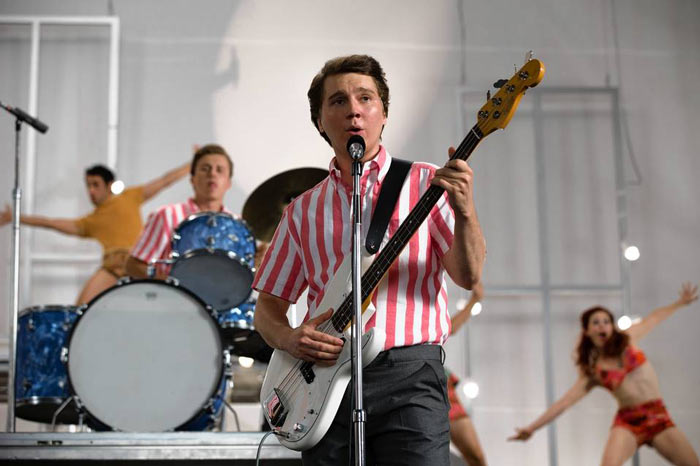
Love & Mercy is about the music and troubles of Beach Boy Brian Wilson (played by Paul Dano set in the 60`s).

Summertime may be the perfect time for Beach Boys music but the film Love & Mercy isn’t one to give you that summery feeling that comes with their music. Actually it’s a lot deeper.

The film alternates between two time periods: between the mid-60`s and 1987. In the 60`s, the Beach Boys, consisting of brothers Brian, Dennis and Carl Wilson, cousin Mike Love and high-school friend Al Jardine have hit the big time. Their California sound of girls, cars, beaches and surf have made them a phenomenon. However it`s not to say they face competition from the British Invasion, especially the Beatles.

However something`s not right despite their success. It becomes evident when Brian has a panic attack on an airplane. After the incident, he resigns from touring with the band and goes into seclusion into an attempt to make `the best album ever made.` During the time, he continues to make music but it becomes more his music rather than music of the Beach Boys. Often Brian hires other musicians and usually features the other Beach Boys only in vocals. This leads to a lot of disharmony among the band sensing this may be a vainglorious Brian Wilson solo project. Brian also does other unorthodox things like build a sandbox around his piano and experiment with LSD which even his own wife is comfortable with.

The end result is the album Pet Sounds which received a lot of critical praise but was a commercial failure despite two Top 10 hits. The lack of commercial success is especially rubbed in by his father Murry who acts as their manager and expects the band to succeed just like it was any other act he owned.`  He even announces to Brian that the Beach Boys are fired and he manages a new band which he feels has better chart-topping potential. Even after The Beach Boys resume their top-selling ways with songs like Good Vibrations, that changes nothing especially since some of Brian`s other creations are rejected. Brian goes into seclusion after a mental breakdown to the point he alienates everyone including his wife and newborn daughter Carnie.

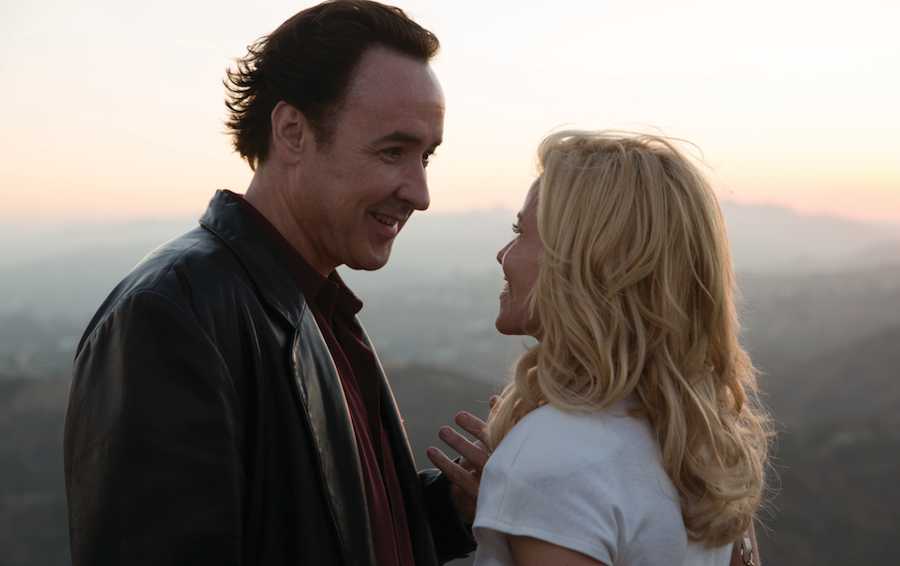
Flash forward to 1987. It was a chance meeting between Wilson (played by John Cusack) and Melinda (played by Elizabeth Banks) that changes for the better happened.
Flash forward to 1987. It was a chance meeting between Wilson (played by John Cusack) and Melinda (played by Elizabeth Banks) that changed his life.

In 1987, Brian is in a Cadillac store in California where he appears to be shopping for a new car. He stumbles across attractive saleswoman Melinda Ledbetter. However his psychiatrist Dr. Eugene Landy stops him. Brian is able to give Melinda his number. He goes on dates with her in which he was surprisingly honest to the point he even revealed his father`s abusiveness to him and his brothers. It`s obvious Brian is still as troubled mentally as he was back in the 60`s. The accidental death of brother Dennis three years earlier only added to his distress.

Over time, Landy demands more supervision of Brian. Melinda is already sending Landy becoming overbearing and even controlling when he tells Brian out loud to wait for food at a barbecue. Landy`s controlling nature becomes even harsher when Landy supervises his music and even demands that no visitors be with Brian. It becomes especially evident that he has a certain contempt towards Melinda. Melinda tries to get Brian to turn away on many occasions but Brian is too mentally weak to drop Landy. It comes down to Melinda threatening a legal suit to put an end to this and she gets what she needs. The ending tells us that Melinda is the best thing to ever happen to Brian.

The film is not just about Brian`s mental condition but also about the Beach Boys music at the time and even the time in music history when it was happening. Hard to believe the whole time the Beach Boys appeared as the epitome of surfing culture in the early 60`s, only Dennis surfed. They were an act packaged by their father Murry and it paid off into hit record after hit record. However Brian had other creative juices of his own and he felt he had to put it to record.

It showed the inspiration he transpired into the record studio but it also showed the conflict he had with other band members and the commercial pressures expected with every big name act. We often think of the mid-60`s as a time when rock bands did away with the typical `bubble gum` sounds that made them chart-toppers and started getting more creative and changed rock `n roll forever in all angles. True, but it didn`t make them immune to the commercial expectations they faced. Sure, there were albums like Sgt. Pepper that paid off commercially and changed music forever. However there were albums like Pet Sounds that were just as creative but flopped. It`s a gamble no matter how you put it. Even that scene where Murry tells Brian he fired the Beach Boys in favor of a new act, you could tell by the look on Brian`s face it appeared like a case of a father disowning his sons. It sure looked like it.

Without a doubt the mental illness ordeal of Brian Wilson is the focal point of the film. His ordeal is something most of us already know but only few knew the full details. The film gives the story of how it all started especially with Brian`s upbringing and what all happened at its start and most noticeable troubles during the 1960`s. The film also showed why it took so long for it to be resolved. You could easily see why a doctor like Eugene Hardy would make the situation worse than better. It makes you wonder why was Eugene so controlling to Brian? His star status? Landy`s own psychiatrist ego? Or Landy`s own problems?

It also made you wonder why was Brian afraid to leave Landy? Was it because he trusted him? Or was it because Landy appeared to him as the father figure he didn`t get from Murry? Even though the story is about Brian`s mental condition, it`s also a love story as it was Melinda whom Brian meets by chance that becomes the best thing for him. For his life and for his mental well-being. You`re left feeling that way at the end that love really does conquer all.

Director Bill Pohlad and scriptwriters Oren Moverman and Michael Alan Lerner succeed in creating a film that`s both autobiographical and also about the music of the Beach Boys and the time when Pet Sounds and Good Vibrations were released and also about how persistent love solved a decades-long psychological issue. The story however could not shine without the phenomenal acting. Paul Dano was excellent as the younger Brian who was full of music but very troubled and couldn`t be helped. John Cusack was excellent as the older Brian who was still troubled and too afraid to break free from Landy. Also excellent was Elizabeth Banks as Melinda. She was excellent for portraying the one who knew nothing about psychology but knew how to solve Brian with love. Paul Giamatti was good as Eugene Landy but his performance was as typical as most of the other characters he`s done in past films.

Love & Mercy is  a biographical film of a musician but it`s a lot more. It`s about the music of the time and a reminder that one who loves you enough to care can see through hard situations.

Movie Review: Furious Seven

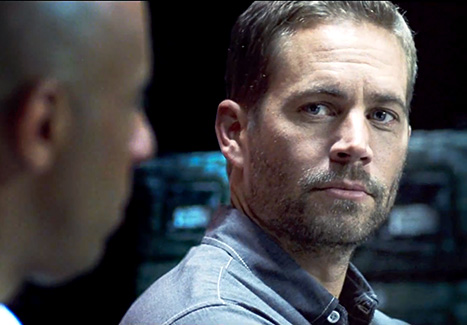
Furious 7 was Paul Walker's last hurrah. But was it done right?
Furious 7 was both a continuation of the Furious series and a final farewell to Paul Walker. But was it done right?

Sure, Furious Seven is another sequel. However it is one that has been anticipated hotly. Particularly of a star’s death. Nevertheless does it hold up as a movie?

I admit that the only previous Fast and The Furious movie I’ve seen was the very first one. I can’t really judge it against the ones I haven’t seen. What I can say is that it is for the most part a very cliched movie. There were some notable moments that made the story unique with some cred like Dominic’s love to Letty and Brian’s struggle of being a family man while simultaneously being part of the ‘mission.’ However it had the typical thick action you’d come to expect from an action movie. The plot is nothing you haven’t seen before. It also includes scenes where you’d feel it’s too over-the-top. It’s especially notable when you see Dwayne Johnson come on from out of the hospital with his machine gun. You can see the Mr. Heavy Testosterone acting there. Even the comedic parts from Roman looked too ridiculous and question if it was too over-the-top for this movie. Many times I asked myself during his ‘song and dance’ at the Dubai party “Is this really necessary?”

Despite all this, there are some relevant qualities to the movie. Vin Diesel did well as Dominic. Actually he made the role of Dominic in the franchise. I was better at stomaching him than Dwayne Johnson as he was better at playing a macho character that doesn’t come across as Mr. Testosterone. Michelle Rodriguez was also impressive as Letty as her acting wasn’t as showy or over-the-top. And Ludacris as Tej knew how to keep Tyrese Gibson from unnecessarily stealing the show. And Paul Walker, whom I will focus on later in this review, did a respectable job as Brian.

As I mentioned at the beginning, I’ve only seen the first of the series. The first Furious movie was a good adrenaline rush, especially for those who like to street-race, but had a formula too similar to what you’d find in popcorn movies. I remember turning 2 Fast 2 Furious down because Vin Diesel wasn’t in it. Being a person who’s only seen the first and the last, I have to say the films other biggest quality is showing how far this film series has come. When The Fast And The Furious started, it started as street racers who would find themselves involved in fighting criminal activity Most of which are at high speed. The film ended with a street race. Six sequels later, the street-racing days are over but the fighting crime has continued and even progressed to the point of the type of action you’d come to expect in superhero movies. High speed action scenes continue to occur but this will surprise anyone who has only seen the first Furious movie. I’m sure I’m not the only one. I usually pass on Hollywood sequels because for all intents and purposes, I consider most Hollywood sequels the actors, directors and producers playing around for two hours. This sequel was common to expect from a Hollywood sequel but it did have some positive traits. Showing how far this franchise has come since the first is one of them. When I saw the first, I didn’t expect it to grow this big.

Finally I’ll focus on the memorializing of Paul Walker in the film. It’s no question that the Fast and The Furious series was what made Paul Walker. Sure, he had experience as a child actor in TV and movie bit parts, sure he had a major role in the renowned Flags Of Our Fathers, but it is his role as Brian O’Conner in the Fast and The Furious franchise that he will most be remembered for. Of course the first movie was a product featuring Vin Diesel and hoping to propel his stardom further. Even though it did, it also made a star out of the supporting player: Paul Walker. It was the breakthrough Paul had hoped for. Otherwise his movie career’s peak would have been the Disney Schmalzfest Meet The Deedles. Paul would go to star in all but one of the Fast And The Furious movies. It seems like a bizarrely tragic irony that Paul’s death at the age of 40 came as he was street racing along with his friend and crashed his car at a high speed. The death could even add to the stigma of Paul Walker being Brian O’Conner. So it shouldn’t be that big of a surprise that Furious 7 opened huge, albeit a bigger-than-expected $140 million on opening weekend. That set a record for biggest opening weekend for an April release.

As for this movie being a fitting ‘last hurrah’ for Paul Walker, his acting was fine. Nothing spectacular but nothing out of what you’d expect for the role of Brian O’Conner. The ending first seems like a good tribute to Paul and a nice final salute to him. However it would not be too long until the secret was given out that Paul’s look-alike brother was used to film the final screen and that his face was computer enhanced to look more like Paul. Knowing that will make the final tribute to Paul very questionable. Even seen as tacky. It’s also a question whether this movie was intended to be Paul’s last Furious movie right from the start. Right into the plot Paul talks about the challenges of putting his past behind and moving onto family life. That could be a hint this may have been intended to be his last movie. Even the ending of the beach scene will make one wonder if it was planned before his death or after. Something to think about, especially as they’re in the works of making Furious 8.

Furious 7 is your typical Hollywood sequel continuing and building on the formula made popular. It also tries to be a good farewell to Paul Walker. Despite it being off in a lot of areas and leaves Paul’s farewell questionable, it does have some positive qualities and succeeds in entertaining its core audience and pleasing fans of the franchise.

Movie Review: Whiplash

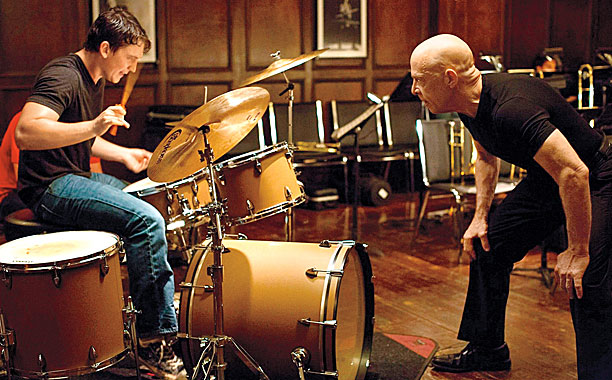
J.K. Simmons plays a jazz instructor inflicting tyrannical teaching methods on Miles Teller in Whiplash.
J.K. Simmons plays a jazz instructor inflicting tyrannical teaching methods on a drumming student played by Miles Teller in Whiplash.

There are no two words in the English language more harmful that good job.

One of the year’s biggest surprises has to be Whiplash. You think a movie about a jazz drumming student and his teacher wouldn’t be one to win people over but you’ll have to see it for yourself.

Andrew Neiman is a 19 year-old jazz drummer who has been accepted into the Shaffer Conservatory to pursue his dream of being one of the greats like Buddy Rich.  Despite practicing long hours, he does take time to take things easy watching movies with his father and even dating the girl working at concessions.

That all changes one day when during class, instructor Terence Fletcher who already has an infamous reputation among students substitutes for one instructor. It’s more than instruction as Fletcher is looking for a new drum alternate for the school band he conducts. Sure enough, Andrew catches his eye. Actually Andrew caught his eye days before while practicing alone.

On the first session, Neiman learns that part of Fletcher’s rehearsal methods is manipulating emotions out of his students. It is while rehearsing the Hank Levy song ‘Whiplash’ that Fletcher makes Andrew his target of attacks including berating him verbally especially when Andrew is brought to tears, throwing a chair at him and even slapping him for going off tempo. The rehearsal ends with Andrew being the alternate drummer and relegated to page turner for the lead drummer.

Instead of quitting, Andrew is determined to win over Fletcher and master ‘Whiplash.’ He listens intensely to its drumline and studies videoclips of the drummers. He even cuts his movie time with his father and breaks up with Nicole to intensely pursue his ambition. Then bad luck happens during a competition when Andrew misplaces the drummer’s sheet music. However Andrew is determined to perform ‘Whiplash’ without the notes. To the astonishment of all including Fletcher, he does it perfectly and becomes Fletcher’s new lead drummer.

However it’s short-lived as Ryan a drummer from Fletcher’s former class, is promoted to lead drummer. Andrew is frustrated to the point he confronts Fletcher only to learn Fletcher decides who has earned the part. That only drives Andrew to practice intensely to the point his hands bleed. Just before Fletcher starts rehearsal one day in tears, he reveals to all that one of his former students from six years ago Sean Casey, whom he describes as a ‘marvelous musician,’ died in a car accident. He starts rehearsal on ‘Caravan’, the next competition piece, but has a hard time picking out the right drummer for the song. Fletcher gets all three drummers including Andrew continually trying out the piece for several brutal hours until he makes his final decision at 2:30 am. He decides it to be Andrew.

Andrew buses to the competition but the bus suffers a flat tire. Andrew’s determined to be there on time to the point he rents a car but forgets his drumsticks at the rental office. Andrew only finds that out once he arrives and Fletcher dismisses him for not having his drumsticks. Determined to play, Andrew rushed back to the agency to get the sticks. Speeding to the concert hall and talking to Fletcher on his phone, Andrew is hit by a car. Despite the car flipping over and Andrew bloody and injured, Andrew rushes to the hall to play. A stunned Fletcher lets him play but it’s obvious Andrew is off as his injuries cause him to drop his drumsticks continuously. Fletcher gives him the words onstage: “You’re finished.” That causes Andrew to attack Fletcher onstage in front of the audience.

The attack caused Andrew to get expelled form the school. Soon Andrew learns from the lawyer of Sean Casey’s parents that Casey actually committed suicide and believes it was because of the personal torment endured by Fletcher’s teaching methods right from when he first started. Andrew agrees to testify, leading Fletcher to be dismissed from the school. Just when it seemed to be all over for Andrew, he learns months later Fletcher is performing in a club. Andrew and Fletcher meet up again and it’s during a drink together that Andrew learns why Fletcher teaches the way he does. Because he drives his students to be the next jazz great. And he saw it in Andrew more than the other two. Fletcher agrees to have Andrew as part of the band he’s conducting for the upcoming JVC festival where they will be playing the same songs. Andrew agrees. However things do not go as planned as Fletcher tells Andrew he knew he got him out. On top of it, the band opens with a piece Andrew never rehearsed. This leads to an ending that’s unpredictable and entertaining.

One can simply say it’s a story about a student with the drive and the teacher determined to make him succeed no matter how soul-crushing his teaching methods. I myself saw a lot more to it. I see it as about music and arts in general. We see and hear a lot of great pieces of music, great acting performances and great pieces of art. One thing we don’t often see is that it takes everything out of a person, especially their heart and soul. We also see that here in teaching as Fletcher verbally beats his students into the ground to bring out the best in them. He feels he’s doing the right thing even as he was blamed for Sean Casey’s suicide. He even brings up the example of Charlie Parker who was a substandard saxophone player until his bandleader threw a cymbal at his head. That was the turning point. I myself have taken acting courses and there have been times in which I was encouraged to dig deep into my soul even to the point of remembering some of the more upsetting moments of my life. It’s not uncommon for teacher sin the art to be that tyrannical to their students to bring out the best in them.

It’s not just about a teacher putting his students through such agonizing torturous methods to better his students and bring the best out of them. It’s also about the drive of a student. Andrew is determined to be the best drummer ever. In his mind, he thinks it’s better to be a success even if it means dying in his 30’s and having no friends than it is to be not so successful but live a long life and be beloved. Andrew is willing to practice drumming until his hands bleed, willing to give up his girlfriend and even determined to make a competition even if he’s in a car accident and the car flips over. The crazy thing is that there are a lot of people in the arts that feel that same way. That success in their art is better than being loved and even worth dying for. We see that in Andrew.

Even there, it’s not just about the teacher and about the student, it’s the relationship between the two. Fletcher can be brutal and abusive both verbally and physically but he pushes Andrew because he sees a quality in him he has not seen in a student before. Andrew is driven to succeed but he sees something in Fletcher’s tutelage that he feels he can’t get anywhere else. He senses Fletcher and only Fletcher can help him to be the best jazz drummer ever. And he’s willing to take it on even with the physical, verbal and emotional abuse. Even after both Andrew and Fletcher are both dismissed from Shaffer, Andrew still relies on Fletcher’s judgment on his abilities. Often Fletcher’s teaching and pushing Andrew can remind a lot of people of sports coaches who are that tough on their athletes but are determined to bring out the best in them. Andrew willing to endure it all to be the great he wants to be will remind you of athletes who wholeheartedly trust their coach to the point that they’ll willing to do illegal things like steroids upon their urging.

Without a doubt, J.K. Simmons owned the movie. His portrayal of Fletcher determined to bring out the best in his students even if it requires him to deliver physical or verbal abuse stole the movie. His focus on perfectionism, his love for jazz music and the greats, his portrayal of that kind of teacher will keep you glued to your seat. Even though Simmons owned the film, credit should be given to Miles Teller. He as well delivered an excellent performance of a student with a dream and determined to succeed even if it means taking physical abuse from a teacher. He also did an excellent job of showing how Andrew’s determination to succeed almost destroys him at times. Miles himself also drummed as a kid so it’s kind of natural he was chosen. Plus if director Damien Chazelle was interested in making his film bankable, he could have chosen Nick Jonas as Andrew. Miles was one who could both drum and act.

The film is actually the brainchild of director/writer Damien Chazelle. Chazelle wanted to become a successful jazz drummer in high school. He was in a very competitive jazz band in high school and had an intense music teacher who would become the inspiration of Terence Fletcher. However unlike Andrew, Chazelle knew he wasn’t good enough to excel in jazz drumming and turned to film making instead. You could rightfully call this film his baby. This film has won the Sundance Audience and Jury Award for Best Drama and the reception has been excellent.

 Whiplash is as much about the punishing training and studying music students go through to pursue their dreams as it is about the determined teacher, the driven student and the turbulent but solid chemistry between the two. It will also remind all you young ones with musical dreams that if you think chasing your musical dreams is a cakewalk, you couldn’t be wronger.

Movie Review: Saving Mr. Banks

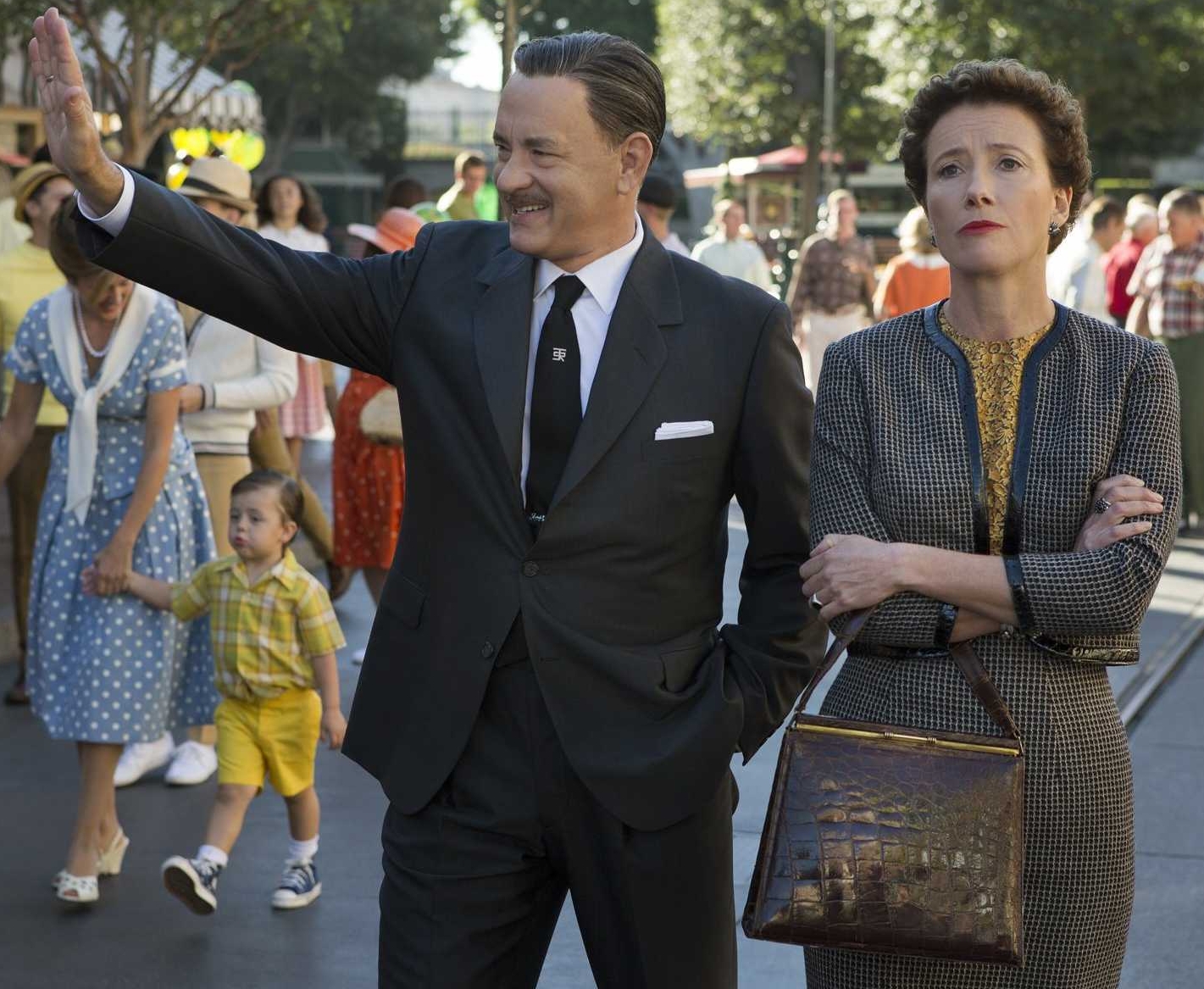
Emma Thompson portrays the author of Mary Poppins to be like someone we never expected her to be at all in Saving Mr. Banks.
Walt Disney (Tom Hanks) tries to get a stubborn P.L. Travers (Emma Thompson)  to agree to a movie version of Mary Poppins in Saving Mr. Banks.

Saving Mr. Banks is to be the story of how Walt Disney was able to bring Mary Poppins to the big screen. The question is not just will it bring the story to life but will it make people want to see it on the big screen?

It’s 1961 and Mary Poppins author P.L. Travers is struggling financially. Walt Disney has been trying to get Travers to agree to allow him to adapt Mary Poppins to the big screen for 20 years on account of a promise he made to his daughter. Travers finally agrees, albeit reluctantly but she’s extremely distrustful of Walt. She has stern expectations of Mary being adapted to the big screen such as no musical numbers, no Dick Van Dyke, none of the Disney frilliness and no animation.

Things do not start well for Mrs. Travers. She’s unhappy in Los Angeles with the carefree attitude of the city and by the happy ways Walt Disney, his co-workers and even Ralph the chauffeur do business. Not even Walt’s familiar manners warm up well to Travers.  Things get harder as Don DaGradi does the script, the Sherman brothers compose the music and Walt designs the characters. She even has a problem with Mary Poppins being the epitome of sentiment and whimsy, believing she’s the opposite of that. That surprises the Disney crew as they’ve always viewed Poppins as fantastical and known Travers to have a fantastical childhood, as seen through flashbacks.

However things take a turn for the worse when Travers sees the depiction of George Banks. She believes he is completely off-base  and leaves distraught. It’s then where the Disney studio realizes that Mary Poppins and its characters are very personal to Travers. It’s through flashbacks that we learn that Travers Goff, her father and the inspiration of George Banks, was indeed a banker but valued his imagination more than work in the real world. Things became too crushing for Travers and he would lose his job and his sanity to alcoholism. Her mother was the stern one of the family who even attempted suicide once.

The Disney team are persistent and try to work things out. Walt even offers to take Ms. Travers to Disneyland to lighten her mood. Things improve. The trip to Disneyland improves her embrace of the imagination, albeit slightly. Travers also has an unlikely friendship with Ralph the chauffeur as he tells her his handicapped daughter loves the novel. Things really improve when she walks in and hears George Banks is given a happier manner and has him singing ‘Let’s Go Fly A Kite’ at the end. But just when things seem to be working out, she learns of dancing penguins in a scene. That infuriates Travers to the point she refuses to Walt the film rites and flies back to London.

Once Disney learns that P.L. Travers is actually an Australian names Helen Goff, he departs to London for one last chance. Walt arrives at Travers’ home and opens up to her during his visit. He tells her that he too had a troubling childhood with a stern father and growing up poor. It was through his animation and his happy characters that he was able to heal and he tells Travers that having a creative imagination would also help in her healing of her disappointment with the world. She eventually agrees but she’s not invited to the 1964 premiere for fear of her panning it. Once news hits her, she shows up at Disney studios demanding to be invited. Her reactions at the premiere are unexpected but those of us who’ve seen Mary Poppins would know the movie would have a happy ending.

There have been movies before about the making some of the most famous children’s stories. I even remember seeing Finding Neverland a few years ago. The film of an adaptation of a novel to movie is not something one would call a fresh idea. Nevertheless it is unique this case of adapting the Mary Poppins novel to the big screen.

We should keep in mind that to make a film like this, it would have to be entertaining and keep audiences interested. It succeeds with some surprises. First is the personality of P.L. Travers. It’s funny that we see this uppity personally and we’re left thinking: “Are you sure this prig is the author of Mary Poppins?” Second is Travers’ feelings towards Disney’s style of creativity and how on earth it would ever be adapted. Crazy thing is we all know it was adapted. Even still the film makes you forget that and wonder if it will, even as the Sherman brothers sing the movie’s songs we all know. Third is that the biggest issue wasn’t the depiction of Mary but of George Banks. Travers designed George to be kind like her own father while Walt was in favor of a stern George Banks like his own father. You could understand how this would cause the two to collide.

The movie isn’t just of the dealmaking for the adaptation. The film is also of Travers’ own inspiration of Mary Poppins from her own childhood. We see how over time Travers had a nanny she thought as magical as her father was dying. We also see her father as a banker but one who believed in fantasy and the imagination. Even after he died, the spirit of his imagination lived on in Travers, even as she tended to her younger sisters and dealt with a troubled mother. Many of us are already familiar with Walt Disney and his fun ways. However we learn more of P.L. Travers and of her upbringing and her own imagination. That’s a good thing because I don’t think most of us ever did. None of us ever expected the author of Mary Poppins to be the stern type. However she was one who would try to come to terms with her imagination as noted in a scene where she’s in bed and confides to hugging a stuffed Pluto.

People should not be fooled too easily. There are many people who think this will be a family movie since this is done by Disney and since this a depiction of Walt trying to convince Mary Poppins to agree to let him adapt the novel to screen. However the film’s depiction of Travers’ troubled childhood as Ginty is what keeps it from being family friendly. Elements like an alcoholic father and a suicidal mother are not entirely for a family audience. It may be okay to bring older children to the film but younger ones are not a good idea.

It’s very rare for a female lead to steal a movie from Tom Hanks but Emma Thompson does just that. She was excellent in embodying P.L. Travers as an uptight prig who still harbored a love for the imagination, though only Walt knew it. She also depicted Travers as a person who still struggled with the memory of the father she cherished. We should be reminded that people that produced some of the most delightful entertainment came from troubled childhood, even Walt himself. Tom Hanks delivers a performance that is more a case of character acting than say mastering a difficult part like he did in Captain Phillips. He was very good at capturing Walt’s fun imaginative way of doing business and he made Walt seem like the Wizard Of Oz at times.

Colin Farrell also did a good job as Travers Goff, the father who was troubled by his job but valued his imagination. Paul Giamatti’s role as Ralph the chauffeur was small but he was able to get notice of his own. The other actors with smaller roles, especially those in Walt’s office, added their own pieces and elements to the movie as well. John Lee Hancock did a good job in directing but nothing that really stood out for this film year. Kelly Marcel and Sue Smith do their best in making a story for family audiences with their script. Technical items like the set design and costumes were excellently done in fitting the times they were made in. And Thomas Newman did a great job with the score.

Saving Mr. Banks is a delightful movie despite being too polished and ‘safe’ to excel amongst the top Oscar contenders of the year. It’s biggest success is the acting of its actors and the telling of the story of an author we never new. Even with scenes of the author’s troubled childhood, it succeeds in entertaining young and old.

Movie Review: Twelve Years A Slave

Chiwetel Ejoifor (right) recreates Solomon Northup's slavery expereince with brutal honsety in Twelve Years A Slave.
Chiwetel Ejiofor (right) recreates Solomon Northup’s slavery experience with brutal honesty in the film adaptation of Twelve Years A Slave.

Twelve Years A Slave is a landmark book for what it helped to overthrow. Adapting it to the big screen is a new challenge. Did the attempt from British director Steve McQueen work?

The movie begins with Solomon Northup in captivity. However it flashes back to when he lived as a free man in a town in New York. New York was a free state during the days of slavery and blacks were free even to the point where they could be businessmen. However he was tricked during a trip one day by slavetraders into touring with the circus. He was drunk that night and the following morning he finds himself chained to a floor and beaten. He was forced through brutal punishment to accept the name Platt and was sold in New Orleans to plantation owner William Ford.

His first experiences as a slave were not bad under Ford. Ford actually treats him with enough respect for Northup to give him a violin in gratitude. However things change when his boss becomes carpenter John Tibeats. Tibeats is terrible as he mocks all his slaves but takes a special dislike to Northup. Tensions go from Tibeats harassing Northup to the two fighting to Tibeats getting his men to hang Northup. Ford notices this and sells Northup away from Tibeats to cotton planter Edwin Epps.

Both Ford and Northup know Epps is cruel to his slaves and believes his right to be cruel to them is in the Bible. Northup insists to Ford that he’s a free man but Ford believes it’s not for him to say because he has a debt to pay. Epps places a demand on all his slaves they pick 200 pounds of cotton a day or be whipped. Throughout his stay, he is subject to brutal treatment from the Eppses and even a plague of the cotton worm where he and the other slaves are sent away to a temporary field. He is even betrayed in his attempts to freedom and has his letter to New York burned by Epps.

Meanwhile Epps is observant to the other brutality going on. Most notably to the female slave Patsey. She is excellent at picking cotton but has caught the jealous of Edwin Epps’ wife who repeatedly beats her. Edwin himself rapes her repeatedly and worsens over time. Patsey’s mental condition worsens to the point where she wants a suicide and even welcomes a whipping from Solomon ordered by Mistress Epps.

There is a ray of hope as Northup works construction along with a Canadian named Bass. Northup knows of Bass’ opposition to slavery by how much it disgusts Edwin Epps. Northup confides to Bass of his experiences. Northup again attempts a letter to pass on but Bass agrees to do so despite that being a risk to his life. The movie ends on a bittersweet positive note and provides information on what happened after the novel was published.

I’ll admit I’ve never read the actual book ‘Twelve Years A Slave.’ Nevertheless I consider it an accomplishment to bring it to the big screen for the first time. It gave an excellent depiction of the horrors and brutalities the slaves went through during the times of slavery. Those who don’t know all the details of what was all involved with slavery other than simply owning black people don’t know all the details. The movie in itself was a recreation of the slave life Northup experienced. This is a life that Northup experienced and witnessed and was a life with thousands or even millions of slaves experienced in the United States. It will shed quite a light and will give all the reason why slavery had to be ended. It will also surprise you with the fact that Solomon was one of the few slaves to escape to freedom. It will even cause you to think of the slaves that weren’t lucky enough to be free.

One thing that made me question was the state of slavery laws at the time. I may be Canadian but I knew of the Dred Scott Decision that had a bearing to the Civil War and the eventual end of slavery. What surprised me is that Northup was a free man living in New York State when he was kidnapped and sold off to Southern slave owners. That had me thinking there must have been some laws against kidnappings and even selling of African Americans from free states. I’m actually surprised to see that kidnappings of free black people by Southern slave traders happened back then. Makes me wonder if there were those that unlike Northup never got their freedom back.

Another thing that caught my attention was the scene where Edwin Epps whips Solomon mercilessly. A white man tries to stop him but he rejects, saying; “he’s my property.” It’s a reminder of the reason why African-American slaves were treated so abhorrently. The white owners looked at them as property that they can do whatever they wanted to them. They could whip them all they wanted or even kill them. They could even be raped in the case of Patsey. None of it would matter because they weren’t considered people. They were considered ‘property.’ And one thing that will strike you once you leave the theatre was how much the Southern states treasured slavery. This was something they valued to the point that when it became clear slavery would end in the United States, they declared their own nation: The Confederate States of America. They would even fight a brutal Civil War over four years with hundreds of thousands of soldiers killed for the sake of keeping their slavery, in which they’d eventually lose. Really makes you think.

The biggest accolade for the efforts given to the film have to be given to director Steve McQueen. Steve is actually a mostly unknown director in the past who had previously directed two previous feature-length films and 23 shorts. Watching Twelve Years A Slave will cause many including myself not to believe this is only his third feature-length. This is excellent and impressive. He did an excellent job of recreating the story and also bringing out excellent performances of actors famous, well-accomplished and those short on experience. What’s also surprising is that Steve McQueen is not African-American but British of Grenadian descent. I too find it surprising that it’s a black British director that has best depicted American slavery to the big screen. He already looks poised to become the third black director to be nominated for a Best Director Oscar. Not even Spike Lee was nominated in that category. The big buzz is will he win? If he does, he’ll be the first black director to do so.

The acting was also excellent. Chiwetel Ejiofor was excellent as Solomon Northup. It was not only of what he said and what he did but also what he witnessed that made his performance of Solomon. Supporting performances were also excellent too. Lupita Nyong’o was the one that stood the most out as Patsey: a slave that’s as tortured inside as outside. This is actually Lupita’s feature-length film debut. Excellent work. Michael Fassbender was also excellent as Edwin Epps. His jerk attitude made him that hateable. Sarah Paulson was also excellent as Mistress Epps. Even though her role didn’t have as much dimension as Edwin, she was just as hateable. Both made it look like the Eppses had a lust for blood and abuse. Even the performances from Benedict Cumberbatch, Brad Pitt and Paul Dano added to the film.

John Ridley did an excellent job of adapting Northup’s biography to the big screen. This is surprising as Ridley has more of a reputation for writing for television comedy. However he did write the story for 1999’s Three Kings. This was an excellent job for him. Sean Bobbitt did an excellent job of cinematography and Hans Zimmer did a great job for composing original music.

Twelve Years A Slave is an accomplishment of a film. An accomplishment in both acting and directing. The story may be too unwatchable for some but its brutal honesty is its best quality and help make it one of the best films of 2013.

Movie Review: Captain Phillips

Captain Phillips

Captain Phillips is a recreation of a moment of recent history. It’s as much about the man involved in this moment as the moment itself.

Richard Phillips is a captain of freighter ships who lives in Vermont but pilots his freighter ships mostly in the Arabian Sea. One day in April 2009, he’s assigned to be a captain of a freighter bringing relief supplies from Oman to Mombasa, Kenya. He accepts the duty but is well aware of the risk of pirates from Somalia once he sails around the horn of Africa. Meanwhile in Somalia, a group of pirate leaders recruit young men for their next sting. It could be big, it could be small, it’s all in a day’s work.

Captain Phillips is sailing the freighter Maersk Alabama through the Arabian Sea. He’s also taking all precautions to prevent a pirate attack including getting the ship to participate in a drill. The pirates are hungry not just for a simple ship but bigger stuff. Their small rusty motor boats, or skiffs, have ship radar. They see the Maersk Alabama within their view and they chase after it. Fortunately Captain Phillips and the crew are prepared. The first day, the pirates’ motor blows on their boat. Captain Phillips and the crew think the have it solved. What they don’t know is that the pirates are fixing the motor in the boat overnight.

The next day the pirates try again. Captain Phillips and the crew again take precautions like using the hose system to prevent them from coming on board. The pirates notice an area where a hose isn’t working. Perfect opportunity to climb aboard the ship and hold the crew hostage. It’s there where pirate Muse and Captain Phillips meet eye to eye. Phillips tries to get them to leave by offering $30,000 but they want more: millions. The ship is able to shut the power down and able to make the pirates fail in their attempt. However the US forces have received word and have arrived. They try to negotiate with Muse only the have the pirates get away in a lifeboat with Captain Phillips as hostage. They hope Phillips will be their ticket for ransom.

That night the lifeboat is surrounded by navy ships and the crew is too frustrated and start turning on each other. Muse is stubborn with Phillips feeling he can’t go after going this far. The end scene adds to the intensity as it shows the whole standoff between the pirates, the Navy and the SEAL team. You’d be surprised to see how close Phillips was to being executed by the pirates. And even after you think it’s over, it’s not.

The most remarkable thing about the movie is that this is one that really depicts pirates for the negative people that they are. Admit it. We’ve all been charmed by pirate stories: Captain Hook, Captain Kidd, Jack Sparrow, Blackbeard, you get the idea. Even the popular lines like: “Arrrrgh Matey;” “Shiver me timbers” and “Yo ho ho and a bottle of rum!” show how charmed we are with them. However the news about Somali pirates have given us a reality check about pirates and what they do. This film even shows pirate really are: dirty, merciless thieves who threaten people on ships for their riches.

Another remarkable aspect the movie shows us is the sheer determination of those four pirates. You’d think that a group of four young Somali pirates not even 21 would not stand a chance against a huge freighter like the Maersk Alabama with all their devices and a prepared captain. However they were stubborn enough to fix a motor overnight, find a dry gap in the ship’s hosings, use a ladder to get to the deck, try a getaway with a lifeboat and even resist arrest with the US Armed Forces. The film is very focal on the pirates’ determination and their false sense of invincibility. It even shows how sometimes small has a competitive advantage over the big guy. It’s like that way in the animal kingdom too where insects can find their way into large prey.

Just as much as it focuses on the Somali pirates and their determination, it also focuses on Captain Rich Phillips himself. It especially focuses on Rich’s smarts as he knows about Somali pirates before the attack and even prepares his crew just in case, his smarts when he’s under attack on board and his smarts during the attempted getaway. Even the assault by the navy and the aftermath had Rich Phillips in focus. It was as much about Richard Phillips as it was about the pirates.

Tom Hanks once again delivered a remarkable performance: his best since Cast Away. It’s great to see him perform well in a movie that’s the least Hollywood-like I’ve seen him in. His performance really had a lot of range and was as much about Captain Phillips the person as it was about Captain Phillips the hostage. Equally as spectacular is the direction of Paul Greengrass. Actually It shouldn’t be that Greengrass, who made a name for himself with United 93 about a 9/11 terrorist operation botched by vigilante passengers, directs it. It’s like the film reminds us that the pirates of the seas are like the terrorists on airlines. Always were. Billy Ray did an excellent job of scriptwriting. Surprising that the writer of The Hunger Games is the scriptwriter here.

It’s not to say the movie’s all Tom Hanks, Paul Greengrass and Billy Ray. Barkhad Abdi was also excellent as pirate Muse. He makes Muse look like a pirate who didn’t have much of a clue to what he got himself into. Barkhad Abdirahman was also great as the vicious pirate Bilal who possessed a false sense of invincibility. The emsemble of lesser-known American actors added to the quality of the film. The only other well-known actor in the film is Catherine Keener. Actually it’s surprising to see the role of Andrea Phillips, Captain Phillips’ wife, as such a small role. The music of Henry Jackman and the cinematography of Barry Ackroyd also added to the quality of the film.

Captain Phillips is an excellent recreation of a moment in recent history that’s both about the moment and the man involved. Both Hanks and Greengrass do it again.

Movie Review: The Master

The Master looks like it’s meant as a depiction of a religious leader of a controversial religion. The question is how true is it? And does it succeed in getting the message across?

Freddie Quell is a Navy veteran who returns home from World War II with an uncertain future and unsettled behavior. How unsettled? He gets violent at the drop of a hat. He’s an easy drunk whose favorite drink is a personal mix of alcohol and other various chemicals. He’s sexually obsessed with sex to the point he masturbates frequently and loves making women out of beach sand just to seduce. Life back in the US is not easy for him to get back to normal. He loses his job as a photographer after starting a fight with one of his customers. He loses a farming job after one of the elderly farmhands gets poisoned from his drinking concoction. Is there any chance for him?

One day he stows away on a ship but it’s not just any ship. This ship is a yacht owned by Lancaster Dodd, a religious leader of a philosophical movement called ‘The Cause’. Dodd allows Freddie to watch the marriage of Dodd’s daughter as long as he makes his mysterious brew for him. Dodd sees a way of getting Freddie into the movement. Dodd asks some deep questions about Freddie and his past, called Processing, which he hopes to heal Freddie’s traumas. Freddie tells Dodd some dark truths about his past and Dodd doesn’t flinch like most. Freddie is blown away by Dodd while Dodd takes a liking to Freddie. Dodd agrees to make Freddie part of The Cause and Freddie becomes an active member in it recruiting other people.

The one problem is that members of The Cause are hoping to improve Freddie’s irrational behavior and he shows no signs of improvement. One example is Freddie assaults a man at a hotel some time after he questions Dodd for his beliefs. Dodd’s wife Peggy tries to make a deal with him that he quits drinking if he wishes to stay. He agrees but shows no intention to quit. Freddie even criticizes Dodd’s son for rejecting his father’s teaching but the son believes he makes it up as he goes along. Dodd is later arrested for practicing medicine without a license and Freddie is arrested for assaulting the officers pursuing Dodd. The time in the jail cell is hard as Dodd and Freddie are in opposite cells. Dodd tries to calm a violent Freddie down but Freddie questions him in a tirade and accuses him of being a fake. Both trade insults in the end. Freddie and Dodd reconcile upon release but those in ‘The Cause’ become more suspicious of him.

Freddie continues with The Cause and its exercises but becomes more frustrated when the results don’t work. Freddie helps Dodd in spreading the word on the street and on the radio. However things turn nasty when Freddie assaults a book publisher who criticizes Dodd’s book. Dodd himself event becomes temperamental around critics of his books.

Already there are strong signals that Freddie is ready to leave The Cause. It came when Dodd gave his colleagues an exercise of motorcycling in the desert to an object in the distance and Freddie cycles away. Freddie returns home to rekindle his relationship with Doris, his girlfriend he wrote to during the war, but learns she married and started a family in the seven years since she lost contact with Freddie. However Freddie has a dream of Dodd telephoning him in a movie theatre and telling him he’s in England and Freddie must join as soon as possible. Freddie goes to England and finds Dodd with wife Peggy. Peggy believes Freddie should leave The Cause since he’s made no improvement. Dodd agrees but still taking a liking to Freddie and gives him an ultimatum: stay and devote his whole life to The Cause or leave and never come back. Freddie leaves and is left to follow his own path.

The film appears to be a depiction of the Church of Scientology and its leader L. Ron Hubbard. There are a lot of similarities to it: Hoffman’s resemblance to Hubbard and the film set in 1950, the same year Hubbard set up his church. Anderson will admit that Lancaster Dodd is a lot like L. Ron Hubbard but not intended to be a direct depiction of him: “This is not the L. Ron Hubbard story.” Some people in the Church Of Scientology had spoken concerns of the film. Anderson even screened the film for Tom Cruise who had acted in Anderson’s Magnolia and had concerns of his own. Nevertheless there has been no talk of lawsuits from the Church of Scientology. Whatever the situation, I can’t say because I never attended the Church of Scientology in my lifetime.

Once again Paul Thomas Anderson writes and directs an excellent effort. Ever since he burst onto the filmmaking scene with Boogie Nights, he was continued to impress with Magnolia, Punch Drunk Love, There Will Be Blood and now again with The Master. One thing Paul Thomas Anderson succeeds in doing again is captivating a svengali-like character. We’ve seen it before in There Will Be Blood where he was able to capture Daniel Plainview and his desire to use and manipulate his way to the top and ultimately face a downfall. We see it here again in Lancaster Dodd who succeeds in being the one in control and convince his followers to his sayings, even if they know they’re a lie. Philip Seymour Hoffman does his own part in making this svengali-like character come to life. He fills the character up with the charming controllingness very common in many svengali-like figures or leader-like characters. That’s a common trait of Philip Seymour Hoffman to embody the character completely. He’s done it in the past to exceptional results and he does it again here.

Just as good at capturing a character is Joaquin Phoenix. He did a good job of playing a very lost character: a navy officer returning from World War II disturbed and uncoothed in behavior. This movie is just as much about the controlled as it is about the controller and Joaquin did a great job in holding his own well despite the easy upstagings of Hoffman. Also good at stealing the scene was Amy Adams. She did an excellent job of playing the wife who was both a controller and the controlled. Another standout effort of the film was the original music of Radiohead’s Jonny Greenwood. He has done music before for There Will Be Blood and he does another excellent work.

As for the movie, it wasn’t that big of a hit at the box office. That’s one of the difficulties of films around the Oscar period from now leading up to the beginning of the new year. Most of the top contending movies for the Academy Awards consist of movies with standout efforts in acting, directing and  scriptwriting. However they face the difficulties of trying to win a crowd at the box office which is loaded with mostly commercial fare and the stuff to attract big crowds. It’s trying to compete for that attention amongst the noise. The Master hasn’t been so fortunate. It has only made $15 million at the box office. That’s part of the trials of putting serious fare out.

The Master is a very intriguing movie resembling a popular religious movement and its founder. It could shed a light on the movement and even capture what the founder may be like but it does more, and that’s its best quality.

Movie Review: Paul

Okay, you’re probably wondering why on earth am I just posting this review now when Paul has been out for at least a month? Here’s the thing. I don’t immediately rush out to the theatres whenever a movie comes out. I see them when I see them. Often when there’s a big hit movie, I wait weeks until the crowds die down to go see it. So that explains why you get my review of Paul later than most. So after explaining all that…

Who is Paul? He’s a fugitive. He’s a celebrity. He’s a slacker. He’s a joker…He’s an alien. Paul is all those things, and the subject of a recent comedy movie. The latest concoction of the British writing/acting collaboration of Simon Pegg and Nick Frost. So how does this close encounter of the funny kind end up?

Graeme Willy and Clive Gollings are two British comic book dweebs with a passion for sci-fi and alien encounters. The love it so much, they rent an RV and take it from San Diego’s Comic-Con all across the US for their own alien encounter tour. Little do they know they’d find themselves in trouble. First they come across some homophobic hunters who suspect them to be a couple. They head off, accidentally denting their truck. On the run, they get hit by a car driven by, among other things, an alien named Paul. The two bring Paul along in the RV. Little do they know that Paul is actually in pursuit by a shady government agent named Zoil who even recruits two inept FBI agents in the capture.

Later during a campfire over at a campground run by Moses, a strict Christian and his daughter Ruth, Paul tells the twosome that while captured by the government, he helped with Spielberg’s E.T. and the X-Files’ Mulder. Ever since he learned the government planned to dissect his brain, he’s been on the run since. Ruth is then kidnapped by the two. Once in the RV, she learns of Paul and refuses to trust him as it contradicts her devout beliefs. Once Paul heals her blind eye, blind since she was four, she trusts him to the point she becomes eager to sin.

Meanwhile Zoil and the two agents question Moses who says she was abducted by demons. Graeme, Ruth and Willy once again meet up with the homophobic hunters, but Paul comes to the rescue. Upon pursuit of Paul, Zoil and the agents come across him. Once Paul makes his escape, all three are after him but for their own separate pursuits each. Meanwhile Moses is chasing for Ruth.

Paul finds refuge in an old house which is owned by Tara, a young girl who saved his live back in 1947 and is all grown up, reclusive because of the ostracism she received throughout her life. Tara is relieved to find that Paul is real. After turning on the stove, a shootout ensues at her house, causing it to explode with Paul, Graeme, Clive, Ruth and Tara on the run. The three agents go on their pursuits again but only Zoil survives in meeting up with Paul, who is in a field waiting for his UFO to take him home. Instead, it’s a helicopter with ‘The Big Guy’, Zoil’s superior. Zoil reveals he was the one who helped Paul get away. Zoil disarms the men but is shot in the shoulder. Tara punches out ‘The Big Guy’. Moses shoots Clive dead. Paul heals him but his healing powers come at the risk of his own life. After Clive is revived, it appears Paul is dead but he’s just exhausted. Paul’s ship arrives, crushing ‘The Big Guy’. Heading for home, he invites Tara to come with him and finally live a life. Two years later, Clive, Graeme and Ruth return to Comic-Con. This time, they are on stage as successful comic book writers thanks to their comic book Paul.

I have to say the biggest overall glitch with this movie is that it often appears to rely on the crude and rude one-liners in many parts. It has enough humorous subject matter and comedic characters without having to resort too often to such lines. First off,  the incorporation of the subject lines of many alien shows of past, like Star Wars, Close Encounters, E.T. and the X-Files. Second off, there are already a lot of talented actors that have been able to prove of recent that they can do comedy well. Kristin Wiig and Bill Hader have proved their humor in Saturday Night Live and other movies they’ve acted in. Blythe Danner, Sigourney Weaver and Jason Bateman were also able to make their roles work in the movie. Seth Rogen, already a reputed funny man himself, did a good job in the voice over as Paul. Pegg and Frost are already known for their comedic acting as well as their writing for Shaun Of The Dead and Hot Fuzz. They don’t have to resort too often to such low brow material.

Outside of that, the movie was a good job of meshing 3D animation with live-action, an alien encounter story with comedy, and even romance with sci-fi dweebs. Pegg and Frost once again show that they’re at their best when they’re together. They also showed they can do a good job with an American story line for the first time. Also it was unique to see a comedy not just revolve around an alien encounter but also with San Diego’s Comic-Con, which has grown in popularity in recent years to the point even A-listers make appearances.

Simon Pegg and Nick Frost, who both wrote and star in Paul, describe it as a ‘love letter to Steven Spielberg’. You could describe their two previous big-screen comedies, Shaun OIf The Dead and Hot Fuzz, as ‘love letters’ too. If you saw Shaun Of The Dead, you’d tell it was a love letter to all those zombie movies. If you saw Hot Fuzz, you’d definitely know it was a love letter to all those gunslinger action movies of the 80’s and 90’s. I don’t think Paul is so much a love letter to Spielberg as much as it is a love letter to sci-fi as a whole. Good mesh of stories but I feel this movie is more of a salute to sci-fi dweebs and comic books geeks the world over.

Paul is an enjoyable movie. Even though I felt it could be better with the humor in the script, it is a delight to watch. Pegg and Forst know how to do enjoyable movies and they do it again here.