VIFF 2025 Review: The Things You Kill (Öldürdüğün Şeyler)

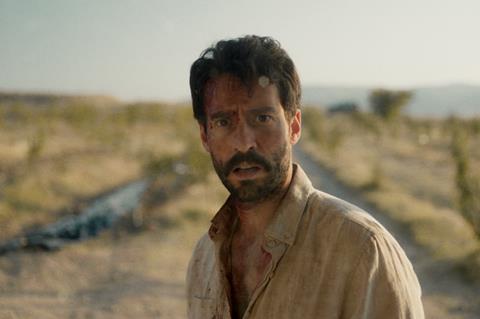
Ekin Koc plays a son whose dark family secrets are unraveled after his mother’s death in The Things You Kill.

For the 2025 Oscar race, Canada’s official entry for the category of Best International Feature Film is a Turkish-language film: The Things You Kill. The film is both a psychological drama and a supernatural story.

Ali appears to live a somewhat stable life in Turkey with problems no worse than anyone else. He returned to teach English in Turkey after spending fourteen years in the United States as a literature professor. His wife Hazar wants to start a family but he learns of a low sperm count he tries to keep hidden. He lives in a well-to-do house and has a garden miles away he wants to make active again. He hires a new gardener named Reza to help. He notices his mother’s house is in need of great repair. Repairs the father neglects to carry out.

Then one day, the mother dies. After the funeral, the father Hamit puts all the blame on Ali for spending all those years in the United States. More bad news in Ali’s case comes as he’s told they can’t afford to have his program taught at the University. To add to it, he never told his wife about the low sperm count result. Soon his sister privately tells him a dark secret. The mother had head injuries at the time of her death and Hamit was seen with a bandaged arm. Ali suspects the worst. He tries to get an official account of her death, but it will take days.

Ali soon develops a mentality of rage. First he hires Reza to help dig a hole in an unknown place in the Turkish valley. Both men help in leading Hamit there and killing him. After the incident, Ali soon enslaves Reza and keeps him at the garden where he treats him like a dog, even leashing him with a chain. Ali also tries to keep all the secrets of what he conducted away from his sisters and Hazar as a nationwide search is conducted. Hazar is suspecting the marriage is falling apart. Hamit’s mother, Ali’s grandmother, is hugely concerned. Ali also receives a rude surprise as one of the people heavily concerned with Hamit missing is his mistress. To which, Ali responds with nasty insults to her.

One day, Ali returns to the burial site of his father only to find it all dug up. He goes back to the garden hoping to check up on Reza, only to get a surprise retaliation from him. Now Reza is filling in the places of Ali’s life Ali used to have, including that of teacher. It’s in a flashback to an interview with the Turkish college that we learn of the biggest reason why Ali chose to teach in the United States because of the abuse he and his family suffered at the hands of his father. The film ends just as Reza has it good for him, and he receives a shocking surprise at his door one night.

This film makes for a compelling drama. The incidents that take place over time will get one questioning of what really happened. Did his mother die at the hands of Hamit? The film also makes you question Ali. He is angered over the death of his mother and believes it’s his father’s fault, but he now turns into a person who is hungry for blood. He kills his father with Reza and then enslaves Reza like a dog. You’re left to wonder what’s with Ali? Is something supernatural taking over him?

The film does succeed in being a drama, but the film succeeds better as a puzzle pieced together over time. Throughout the film, there’s what we know and what we don’t know. This is something that will take time as the story will unravel facts hidden from us. It’s as it nears the end that we learn of what was hidden from us the whole time. Even though many questions are unanswered, you could see why Ali suspects this from Hamit. At the same time, this film does become a supernatural story as Reza acts like a dog as Ali treats him like a dog. It’s after Reza gets revenge on Ali that he acts human again. Even the ending of what Reza faces is supernatural. I just wonder if genres are trying to be mixed in the film.

This is a great film from Iranian-Canadian director/writer Alireza Khatami. His latest feature film, he creates a drama that will connect with you and keep you intrigued with what’s happening. The story may puzzle you, but he connects things all together at the very end. It’s a great work form him. Ekin Koc does a great job in his role of Ali. Going from the troubled son in the family to the one committing sinister acts is a big change of character and he does it well. Although Ali is the lead role, there are also great supporting performances. Hazar Erguclu is great as the wife Hazar. She is the one who’s able to maintain some control over Ali as he’s going out of control. Erkan Kostendil is also great as Reza. To go from human to animal-like back to a human character and make it look believable is no easy feat. Erkan does a great job of it.

The film’s accolades not only include the Oscar entry, but was also nominated for seven awards at the Istanbul Film Festival, nominated for Best Film at the SXSW London Film Festival and won a Sundance award for directing for Khatami in the World Cinema – Director category.

The Things You Kill is more than just Oscar bait. It’s a story that gets you thinking. It gets you trying to make sense of the story after you leave the theatre long after.

UEFA Euro 2024: Group Stage With One Game To Go

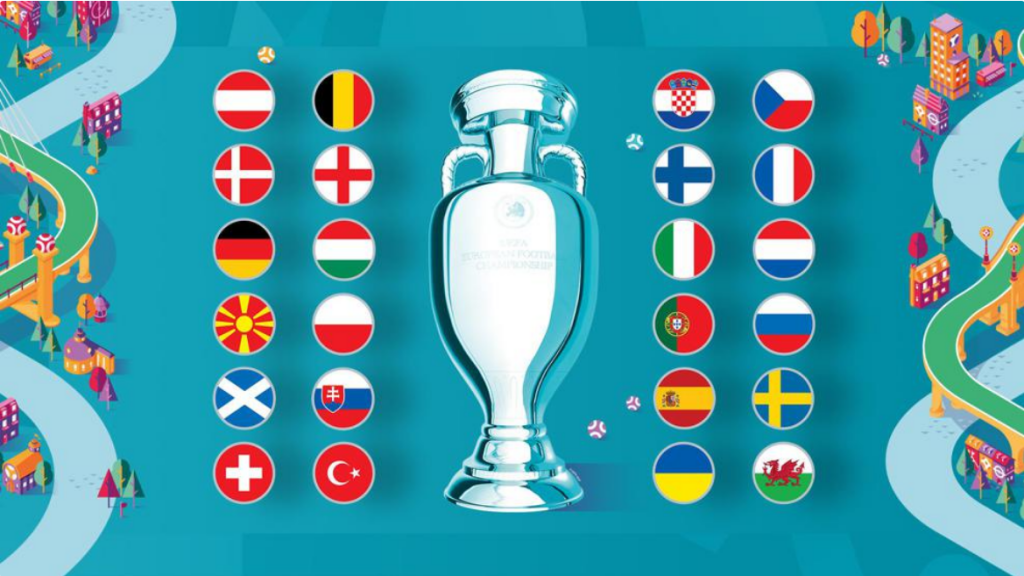
How about that? All 24 teams have completed their second game, or Matchday 2. There’s only one last group game to play and that will finalize the Group Stage standings and determine the qualifiers for the knockout rounds.

This year, there is an interesting allotment of the types of teams playing, but there are certain types of teams here in Germany that have stood out the most. We have teams who appeared to have lost their greatness before now playing hard to get it back. We have teams demonstrating their known consistency. We have underdogs surprising fans with wins over big guns. We also have teams that had a “Golden Generation” for many years that looks like their luster is running out and the younger players haven’t been well-trained to keep their team’s prowess active.

Now there’s only one game remaining in the Group Stage. That’s commonly referred to as ‘Matchday 3.’ Three teams right now have already guaranteed qualification by winning their first two games. With more than two groups having at least one draw game, two wins are a guarantee for qualification at this stage. Two of those teams have also already guaranteed a first-place finish in their group because of their win over the team in second place. Here at Euro, head-to-head results supersede goal differentials which the World Cup uses to to be the top tie-breaker in group rankings. In addition, only one team is guaranteed elimination already. Right now, the fates of twenty teams are still unknown and they will all need Matchday 3 to decide everything.

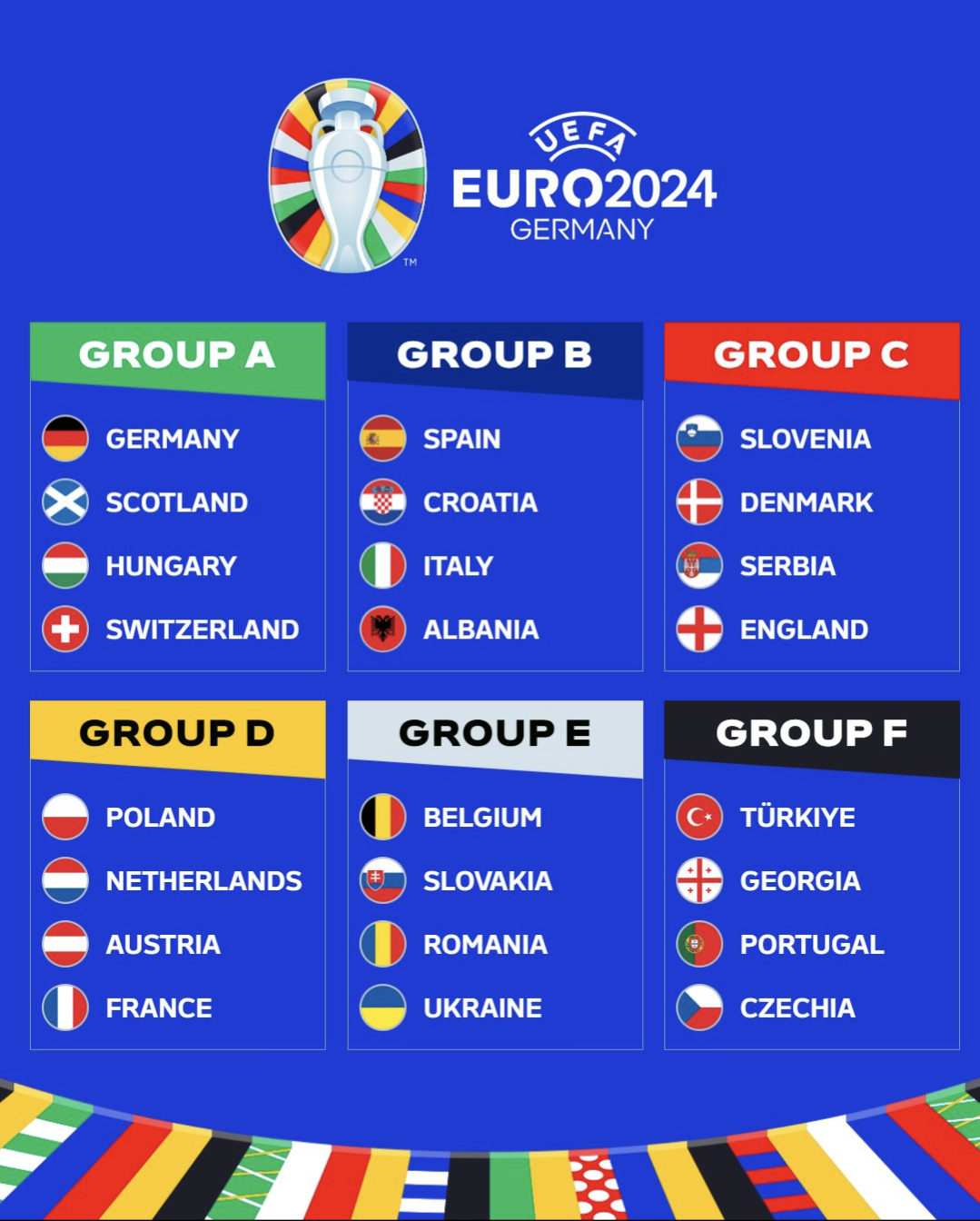
With one game to go, here’s my look at the teams in each of the Euro 2024 groups and what they need to qualify. Teams that have already qualified will be bolded. Group titles will contain links to my original group blogs:

Group A:

Some could say Germany did it in the very opening game. That remains to be seen. What is a fact is Germany won both their opening games and the hosts have guaranteed themselves qualification to the knockout round! A 5-1 against Scotland in the opener and their 2-0 win over Hungary did it. Second in the standings is Switzerland with their 3-1 win over Hungary and a 1-1 draw against Scotland. Germany and Switzerland meet for their last game. Switzerland can guarantee qualification with a draw. Even if they lose, the are still assured a top-three finish and are in conformable standings to qualify, though it’s not guaranteed. Their play against Germany will decide it all.

Of the teams in Group A that have not won a match, Scotland is third with a 5-1 loss to Germany and a 1-1 draw to Switzerland. At the bottom is Hungary with a 3-1 loss to Switzerland and a 2-0 loss to Germany. Both teams will face each other Sunday. No doubt that in order to have qualifying chances for the knockout round, either team must win. Despite the advantage of a draw to Switzerland, a draw against Hungary will not be enough for Scotland to qualify with two draws and a big loss. Even if Hungary wins over Scotland, it’s game results and goal differentials that will decide if their among the four wildcard teams that advance.

Group B:

Spain did it! They opened with a 3-0 win over Croatia and a 1-0 win against Italy thanks to an own goal from Riccardo Calafiore. Their two wins guarantee them qualification no matter what happens in Game 3. Their win over Italy guarantees them first place in Group B! Although Italy’s qualification is not guaranteed, the Azzurri are second with their 2-1 win over Albania. A draw against Croatia is all they need to qualify.

For the two teams at the bottom, Albania and Croatia, they still have qualification chances with both having a loss and a draw but for both teams, they need nothing less than a win to qualify. That will be a nail biter especially because both teams will face a highly touted opponent on Matchday 3; Albania will face Spain and Croatia will face Italy. After that 2-2 draw, Albania has an advantage because they have less of a goal differential. Nevertheless it’s down to the wire for both teams in a must-win situation. I don’t call Group B the Group Of Death for nothing!

Group C:

Sometimes in group play, you can get some groups that are quite decisive in who are the biggest and best in the group. Other times, the play in the group will be hard to decipher who are the powers of the group. Group C is that group as it’s hard to tell who are the better teams. Four games have been played and three of them were 1-1 draws. The only game where a winner was declared was England’s 1-0 win over Serbia. That lone win puts England at the top of the group and with very comfortable chances to qualify. I’ve been calling Group B the “Group Of Death” because of the caliber of the teams but it looks like with the closeness of play at Euro 2024, Group C should be called the “Group Of Death.”

Actually right now, none of the teams have enough points to qualify, but none of the teams are out. All four are still eligible. Despite England having it best, both Slovenia and Denmark have it good with two tie games each. A win from either will solidify qualifying. At the very least, a draw could help either of them for a wildcard berth as three draws is three game points and even goal differentials. Serbia still has qualifying chances but being the one team in Group C to take a loss, they will need nothing less than a win to qualify. Two draws and a loss won’t cut it in the wildcard third-place runoff.

Group D:

Group D has a unique situation. None of the teams have guaranteed qualification and one team is out of contention. The three teams that still have chances will need Matchday 3 to decide anything and everything. Leading the group are the Netherlands and France with a win and a draw each. The Netherlands opened well with a 2-1 win over Poland while France won over Austria 1-0 thanks to an own-goal by Maximilian Wober. The two teams played each other on Friday but it ended a scoreless draw. If you ask me, there are a lot of big name teams that are not playing like they want it. A simple draw can guarantee qualification for either team.

Austria opened up with the hard luck of a 1-0 loss to France thanks to Wober’s own goal. When they faced Poland, it was a surprise 3-1 win for Austria. That win is crucial for Austria’s qualifying chances, but their match against the Netherlands will decide things. As for Poland, they’re out. They lost 2-1 to the Netherlands and 3-1 to Austria. Even if they win their game against France and Austria loses, Austria will still have the advantage for their win over Poland. The head-to-head factor.

Group E:

Sigh. That subject about the ‘Group Of Death’ again! Group E is another group worthy of being labeled the Group Of Death because of the play so far. Talk about tight play! All four teams of Group E are even. All four had a win and a loss. Teams most people thought would not be among contenders delivered surprise wins at the start and keep their qualifying chances healthy. I’m not sure if there are any specific head-to-head rules that explain the current rankings, but the goal differentials look to be what’s deciding the current rankings. Despite losing to Belgium 2-0, Romania leads thanks to their 3-0 win over Ukraine while Belgium takes second due to their 1-0 loss to Slovakia. Slovakia is third because of even goal differentials after their 2-1 loss to Ukraine and Ukraine is at the bottom as the one nation with negative goal differentials thanks to their 3-0 loss to Romania.

Any of the four can qualify. Thanks to all four having a win and a loss, none have guaranteed qualification and none are out and it will take Matchday 3 to decide everything. Slovakia will play Romania and Ukraine will play Belgium. If both games are draws, only then would the current standings factor in qualification. It will have to be a case of either both games having a winner and a loser or the case of one game having a winner and the other drawing in order to decide the qualifiers to the next round.

Group F:

There must be something about being a team from the Iberian Peninsula this year because Portugal not only qualified but like Spain, they too guaranteed top of their group! It took a 2-1 win over Czechia and a 3-0 win over Turkey to solidify it! Even if they lose to Georgia on Wednesday and Turkey wins, Portugal will still finish first because of their win over Turkey.

Despite the loss, Turkey is second in the group and has good chances to qualify. Turkey can still qualify if they draw, even if Georgia wins. For both Czechia and Georgia, both teams will need nothing less than a win to qualify. Their 1-1 draw against each other keeps them in contention but a win needs to happen for either to qualify. Especially for the third-place wildcard berths because the two third-place teams with the lowest game results will join the fourth-place teams from each group packing for home sooner than they hoped!

And there you have it! That’s my summary for the Euro 2024 groups with Matchday 3 being all that’s left for all 24 teams. It will be interesting to learn of the other thirteen that advance and the seven others that get an earlier-than-hoped return home!

UEFA Euro 2024: Group D Focus

I’ll admit some of my talk outside the team talk in my last blog was pretty boring. For this blog, I will try something new. After my focus on the teams, I will give a focus on the ten venues that will be used to contest the games of this Euro. To save space and time, I will just talk about the venues with ‘fast facts.’

Anyways to start my blog off, here now is my look at the teams of Group D. Crazy thing is two teams in Group D played each other in the same qualifying group! Crazy that they meet again here! Who does these draws?:

– Poland (28): Poland is a team with a good reputation. The Orly or Biało-czerwon have finished third at two World Cups and weer Olympic champions in 1972. At Euro 2016, they made it to the quarterfinals for the first time. One of the problems with Poland is that the current team is big on talent but has a reputation of underperforming at big tournaments. They ended in the group stage at the last Euro and at the last two World Cups, they were out in group play in 2018 and out in the Round Of 16 in 2022.

Since World Cup 2022, the team has dropped Fernando Santos as coach and has gone back to a coach from their own nation: Michal Probierz. Robert Lewandowski, the most capped Polish player ever, is back, but Lewandowski can’t do it alone. The team has a lot of young talent 25 and under, but they also have some other established veterans like midfielders Kamil Grosicki and Piotr Zielinski and goalkeeper Wojciech Szczesny. In play since the World Cup, they’ve had wins to Germany, Ukraine, Estonia, Turkey and Latvia. They’ve had a win and a loss to Albania and two cases of a draw and a loss to Moldova and Czechia. Here in Germany, it’s a chance to write another chapter for the Polish team.

-Netherlands (7): The Oranje are considered to be the best team in the world to never have won a World Cup. At the Euro, they won in 1988 and have finished third four times. Since 2020, they’ve been underperforming. Euro 2020 saw them lose their Round of 16 match to Czechia 2-0, and after winning all three of their group play games! The last World Cup saw them lose to eventual champions Argentina on penalty kicks in the quarterfinals. Even losses in their recent play are quite telling.

Since the 2022 World Cup, they’ve dropped Louis Van Gaal as coach and are now back to being headed by Ronald Koeman who has played in two World Cups and was a key part of Oranje’s win of Euro 1988! The team’s stars include defender Daley Blind, midfielder Georginio Wijnaldum and forward Memphis Depay. Since World Cup 2022, they’ve had wins against Scotland, Greece, Canada and Ireland. They’ve also had losses to France, Croatia, Germany and Italy. Anything can happen at Euro. Germany offers the stage for a possible second win.

-Austria (25): There was a time The Burschen were one of the top teams in the world. They made the semifinals of World Cup 1934. World Cup 1954 saw them finish third. They last qualified for a World Cup in 1998. Austria only competed in their first Euro in 2008 when they hosted. Since then, they’ve worked to come back as a stronger team. At the last Euro, they made it to the Round of 16 for the first time ever.

Austria is coached by Germany’s Ralf Rangnick who was hired in April 2022. The team members mostly play in clubs with Germany’s Bundesliga or Austria’s own Bundesliga. Star players include goalkeeper Heinz Lindner, midfielder Marcel Sabitzer and forward Marko Amautovic, who is Austria’s most capped player. Since World Cup 2022 ended, they’ve had wins to Turkey, Slovakia, Sweden, Estonia and Serbia. They’ve also had a draw to Switzerland and a draw and a loss to Belgium. Anything can happen this month in June and Austria has the opportunity to prove themselves again.

-France (2): One thing about the lats ten years has been about the rebounding of Les Bleus. Sure, they’ve won the Euro before in 1984 and 2000, but their excitement these last ten years have ben remarkable. Finalists in Euro 2016 which they hosted, World Cup winners in 2018 and World Cup finalists in 2022. Their play in the final of the 2022 World Cup should be admired since many members were recovering from food poisoning.

The team is coached by Didier Deschamps, a former player for the 1998 World Cup winning team, who has coached since Euro 2012. His coaching has a lot to do with France regaining their form as the best in the world. Star players include defender Benjamin Pavard, midfielder N’Golo Kante and forwards Antoine Griezmann, Olivier Giroud and Kylian Mbappe. Since the World Cup final, they’ve had wins over Ireland, Scotland and the Netherlands. They’ve also endured a win and a draw to Greece, a draw to Canada, and losses to Germany. It’s very possible France could win their third Euro here in 2024. It’s all about the team being all together.

My Predictions: That’s often it. Four great teams, but they will have to be ranked in the end. I think the qualifiers here will be France and The Netherlands with Poland being the wildcard qualifier.

VENUES OF EURO 2024

It should be no surprise that Germany should have the venues to host a twenty-four nation major football tournament on its own. A nation who Bundesliga could be a challenge to the Premier League can do it. Germany has ten venues. They range in age from a few years old to 101 years old! Of course some of the older venues have had renovations, even one completely demolished to rebuild, but they still stand strong. Four are in the North Rhine-Westphalia region (with very little travel time between them), one is in the former East Germany and one hosted an Olympic Games. For this Euro, all of them will have group play games and at least one knockout match as well. For most of them, their Euro capacity is smaller than their respective team’s game capacity because standing areas are not allowed in the Euro.

This focus here is a brief focus. My focus is only giving a brief telling of the venues and its main facts like which city, year first completed, capacity and tenant team. I’ll be starting with venues that will only go as far as the Round Of 16 progressing to venues playing additional knockout matches to the Grand Venue which is to hold the final for the cup:

Venues Up To Round Of 16

  • Cologne Stadium: City – Cologne (Koln)
    Year Opened: 1923
    Euro Capacity: 46,922
    Current Tenant: Viktoria Koln
  • Leipzig Stadium: City – Leipzig
    Year Opened: 2004
    Euro Capacity: 46,635
    Current Tenant: RB Leipzig
  • Frankfurt Arena: City – Frankfurt
    Year Opened: 1925
    Euro Capacity: 48,057
    Current Tenant: Eintracht Frankfurt
  • Arena AufSchalke: City – Gelsenkirchen
    Year Opened: 2001
    Euro Capacity: 49,471
    Current Tenant: FC Schalke 04

Venues For Further Matches

  • Dusseldorf Arena: City – Dusseldorf
    Year Opened: 2004
    Euro Capacity: 46,264
    Current Tenant: Fortuna Dusseldorf
  • Volksparkstadion: City – Hamburg
    Year Opened: 1953
    Euro Capacity: 50,215
    Current Tenant: Hamburger SV
  • Stuttgart Arena: City – Stuttgart
    Year Opened: 1933
    Euro Capacity: 50,998
    Current Tenant: V1B Stuttgart
  • Westfalenstadion: City – Dortmund
    Year Opened: 1974
    Euro Capacity: 61,524
    Current Tenant: Borussia Dortmund
  • Fussball Arena Munchen: City – Munich (Munchen)
    Year Opened: 2005
    Euro Capacity: 66,026
    Current Tenant: Bayern Munich

GRAND VENUE

  • Olympiastadion Berlin: City – Berlin
    Year Opened: 1936
    Capacity: 70,023
    Current Tenant: Hertha BSC

And there you go. This is my look at the teams of Group D as well as a look at the ten venues for Germany 2024. Only two more groups left to review.

WORK CITED:

WIKIPEDIA: UEFA Euro 2024. Wikipedia.com. 2024. Wikimedia Foundation Inc. <https://en.wikipedia.org/wiki/UEFA_Euro_2024>

VIFF 2023 Review: Apolonia, Apolonia

French painter Apolonia Sokol and her attempt to make a career as an artist is the subject of the documentary Apolonia, Apolonia.

Those of you who are into the new artists may or may not know who French painter Apolonia Sokol is. The documentary Apolonia, Apolonia appears to be a documentary about Sokol, but becomes a lot more.

The film starts in 2013 as Apolonia gets herself ready for her art exhibit. The film then flashes back to 2009 when Danish film maker Lea Glob first meet the young Apolonia after just graduating from the Ecole National Superior de Beaux-Arts de Paris. She talks of her childhood of just growing up, the daughter of two actors, with her mother in an artist’s flat owned by a Parisian theatre company. She also reveals she had cancer as a child and was not expected to survive but the nuns prayed over her and she made it. As Apolonia has graduated, she decides she wants to be a professional artist. She feels it’s in her. She’s grown up her whole life around the artistic friends. Her artistic influence throughout her life is inseparable from her. Though it comes right after her professor tells her that her paintings are less interesting than her personality.

Undaunted, she starts her first works in Paris. She decides with her first paintings what her art will be about. They won’t simply be portraits of people, mostly women. She aims to get to know the subjects she paints more intimately and wants that reflected in her paintings. For painting women, she has a goal of redefining the modern woman through her paintings. She sets up her works in her flat which she continues to hold parties with many artistic types. Soon the theatre building she’s lived in her whole life is repossessed and her mother has to find a new apartment. One woman she meets from a party, a Ukrainian woman named Oksana, soon becomes Apolonia’s girlfriend and she starts living in her apartment with the mother. Oksana, who formed a feminist activist group at her college called Femen, is very understanding of Apolonia’s artistic goals, unlike Apolonia’s recent ex-boyfriend. Early in her pursuits, she has many art exhibitions in Paris and various cities in France. Apolonia continues her works just as both Oksana and her mother are living in the apartment and it makes things cramped.

It’s only a matter of time until Apolonia captures the eye of someone big in the arts world. His name is Stefan Simchowitz and he is famous for being a renowned art collector. Simchowitz sees promise in Apolonia’s works and he offers her a ‘big break’ where she can have her art viewed in Los Angeles by some of the biggest names in the art world. There is one catch; the deal includes a minimum number of paintings to create. This becomes a case of both ambition and frustration for Apolonia. She struggles with that demand with the number of paintings she tries to do simultaneously, with the expense of her flat in Los Angeles, with the expense of her painting materials, and her loved ones being thousands of miles away. When the works are finally launched on display, her works get a lot of good reviews. She also gets some critiques including one critic saying that her works look more forced than inspired.

Over time, Apolonia continues to paint and continues to showcase her works around the world in France, Denmark, other American cities, Argentina and Turkey. As her exposure grows, things become more difficult for her. She questions her artistry and if it should even submit to commercial pressures. Things also stand in the way with the relations with people closest to her. The relationship with Oksana ends and her new love is a man. She’s still insistent on not being a mother, and even has an abortion. Then in 2018 while doing an exhibit in another country, Oksana commits suicide. It breaks Apolonia’s heart, but she paints her memory in her next paintings. Then suddenly, the filmmaker herself becomes hospitalized after giving birth. Lea, the director, is not supposed to make it, but she recovers. Flashing forward to the 2020’s, Apolonia has been honored for her works by the artistic board of the French government. She reflects on all it took for her to make it to this level.

This is a telling documentary. It is very rare for a documentary to showcase an artist and their attempt to make it in the arts work from their very start to when they finally make it. As we follow the artist’s path, we can easily see why Apolonia would want to be an artist. She was surrounded by the arts and artistic people throughout her life. It eventually becomes her turn to express herself. We get a look at all the works she creates and why she paints she does. We see all the difficulties Apolonia goes through to achieve her renown such as her first exhibitions, her first contract, the cost of creating the many works expected of her, the critics she has to deal with, the sexism in the arts world, the loss of her former girlfriend. Even family situations as her father wants her to become a mother but her grandmother is fine if she doesn’t have children. It’s a long 13 year struggle that comes with the triumph in the end. Anyone who’s interested in making it as an artist should see this. It will show them a lot and remind others familiar with the arts world it’s still hard to make it as an artist. Always was.

Those who watch this documentary will also see it’s not just about Apolonia Sokol. The film is also about the documentarian herself. As she continues to film Apolonia and her life, she grows as a human. Apolonia’s emergence as a great in the world of art coincides with Lea’s emergence as a documentarian and also as she grows as a person. In a bizarre twist of fate, Lea also cheats death as she was given a low chance of surviving after her child’s birth. Just like Apolonia was given a low chance of surviving her childhood bout with cancer. Sometimes it seems the two were fated to be together.

This documentary is unique that it mixes three different stories into one and somehow pieces it together well. It first comes as a film that follows a young emerging artist as she works to establish herself. It shows the works she does, her inspiration, her free personality and the sexist hurdles she tries to overcome. It also shows her in her personal life. It shows her as she tries to establish herself as an adult and faces the pressures from family and others to find someone she can commit herself to or even the pressure to become a mother. It also shows her relationships: first with a Ukrainian woman named Oksana, then with a French man. There’s also dealing with Oksana’s suicide which hurts Apolonia to this day. Finally there’s the filmmaker herself Lea Glob. Just as Lea helps make Apolonia in her film, it becomes a case where Apolonia makes Lea. Definitely a documentary that goes beyond its original mission.

Top accolades belong to Lea Glob. From first meeting Apolonia in 2009 to constantly coming back to her to tracing her career’s biggest moments, she captures an artist in the making. She captures an artist’s soul with a fierce feminist attitude that she includes in her works. She captures the difficulties Apolonia faces to make it as an artist, especially sexism and capitalism. She captures Apolonia’s relationships with the people around her and some of the heartbreak she experiences. She also captures her own unity with Apolonia as she is also an against-all-odds survivor story too. One could joke the two may be long lost sisters!

This film has already won many a documentary award at film festivals. Among them, wins in documentary categories at the Amsterdam International Documentary Festival, Hong Kong Film Festival, the CPH: DOX Festival, the Goteberg Film Fest and the One World International Human Rights film Festival

Apolonia, Apolonia is a documentary intended to track the growth and progress of a rising artist, but it also tracks the growth and progress of the film maker herself. It’s rare to see and it captures your intrigue too.

World Cup 2022 Preview: Group C

It’s crazy that this World Cup will be taking place in November. This is the first World Cup ever to take place in the months of November and December. Why so late in the year? Well, the COVID pandemic delaying a lot of athletic events could have a lot to do with it. But I feel it has more to do about the weather. With the average maximum temperatures in June, July and August being above 40 Celsius, it’s no wonder this desert climate would have the World Cup put on hold until November with an average maximum just being under 30 Celsius and a December maximum average just under 25. Which makes pure sense.

Now my next group of focus is Group C. With two of the teams being in FIFA’s Top 15, many think the two qualifiers to the knockout stage are the most obvious, but anything is possible in football. Favorites can be surprised in the end and team you thought we long shots actually get in. So here’s my run-down:

-Argentina (3): Even though Argentina has a lot of top calibre players over the years, all the attention seems to be focused on Lionel Messi. It’s always been about how a major championship has always stood in his way. He missed the World Cup by that much. He missed the Copa America by that much. When will he win one? He and his Argentinean teammates finally won a Copa America last year! As well as a CONMEBOL-UEFA Cup of Champions back in June.

Joining Messi in his fifth pursuit of a World Cup is star midfielder Angel Di Maria and defender Nicolas Otamendi who also rank in Argentina’s ten most capped players ever. The Albiceleste has a lot of seasoned veterans and has included some new young blood as part of their lineup for Qatar. Argentina has a history of firing coaches after the World Cup. Since World Cup 2018, the team has been coached by Lionel Scaloni who actually played on the very first World Cup team for Argentina that Messi played for: 2006! Since the Copa America, Argentina have not had a loss. They’ve had notable wins against Brazil, Chile and Italy, and draws against Ecuador and Paraguay. They come to Qatar as the team most expected to win and Messi’s last chance for a World Cup. Their moment is theirs to prove.

-Saudi Arabia (51): This is Saudi Arabia’s sixth World Cup appearance. Their best-ever result is a Round-of-Sixteen finish in the 1994 World Cup. Most recently in 2019, they were runners-up in the Arabian Gulf Cup. Expectations are not high for Saudi Arabia, but one advantage they have over most other teams is that they’re best conditioned in playing in desert climates. That’s an advantage that could pay off unexpectedly.

The Green Falcons are an interesting lineup. The Saudi team will often be coached by a foreign coach while the players won’t be allowed to play for foreign teams. The coach is currently Frenchman Herve Renard. The team has racked up recent wins against North Macedonia and Iceland, draws against United States, Ecuador and Australia, and losses against Colombia and Japan. Qatar is another chance to prove that they have what it takes.

-Mexico (13): Mexico is commonly seen as a sleeping giant. They’re a team capable of going far, but waiting for their World Cup moment. Only once did they ever win a knockout round game at the World Cup and that was back in 1986 when they hosted! They’ve all lost out in the Round-of-Sixteen these past seven World Cups. Since Russia 2018, they’ve won the 2019 CONCACAF Gold Cup and were runners-up to the US in 2021. They look forward to being co-hosts with the United hosting in 2026. However they come looking for glory here in Qatar.

The current Mexican team play in a mix of clubs in Mexico, Europe and the United States. Their coach is an Argentinean: Gerardo Martino. This should be interesting when El Tri play Argentina. Recently they acquired wins against Peru, Nigeria and Jamaica. They’ve also drawn against Ecuador, Costa Rica and the United States. They’ve also endured losses this year to Uruguay and Colombia. 2022 could be the year Mexico takes their team in a new direction.

-Poland (26): This century, Poland has been known as a team to blow a lot of their chances. At the 2002 World Cup, they were expected to go far, but lost out in the group stage. They made it to the quarterfinals of Euro 2016 and expectations were big for them at World Cup 2018, but again they were ousted in the group stage. Bad luck continued as they wer out in the group stage of Euro 2020.

Robert Lewandowski is the captain of the team. Already he holds the team records for most caps and most goals. Joining him will be star defender Kamil Glik and top midfielder Grzegorz Krychowiak. Since their Euro 2020 disappointment, they’ve been coached by Czeslaw Michniewicz. Since Euro 2020, they’ve had notable wins against Wales and Sweden, draws against the Netherlands and Scotland, and notable losses against Belgium, the Netherlands and Hungary. 2022 is a chance to go beyond expectations.

MY PREDICTION: And now that moment where I will have to do the eventual. And that’s make two predictions for the teams that will advance to the knockout stage. I believe it to be Argentina and Mexico.

And there you have it. My review and predictions for Group C. Hard to believe it will all start in 12 days. The excitement never dies, does it?

2021 Oscars Shorts Review: Animation and Live-Action

Last year, I was only able to see the Oscar-nominated short films online through VIFF Connect. This year, they returned back to the theatre. I had the good fortune to see the nominated films for both the Animated and Live-Action categories. All the films are unique and deserving of their nominations. Here’s my review of the nominated films for Animation and Live-Action:

BEST ANIMATED SHORT FILM

Affairs Of The Art (dir. Joanna Quinn) – Beryl is a struggling artist. She comes from an eccentric family. She has a sister whom, as a younger child, had a fixation with deceased animals and dissecting them. It paid off for her as her sister has done a very profitable post mortem business in Los Angeles and has attracted many big name celebrities. Beryl has always had an obsession with drawing and colors and has a goal of being an ‘artiste of note,’ but it’s only paid off very humbly for her. How can she make it work?

This is a charming animated film. Full of quirky drawings with a quirky story and charming characters. Not to mention very colorful 2D animation. It’s a story that will get you either laughing or weirded out. You will find yourself liking it in the end.

Bestia (dir. Hugo Covarrubias) – This stop-motion animated film tells the story of a Chilean woman. She has a good relationship with her dog. The outside world on the other hand, she is savage to. She is cold and calculated in every move she does. She cuts her meat in sinister fashion. Whenever she plays music, it’s in cold fashion. And she’s cold to the people she meets. She just comes as a very sadistic emotionless person.

The character is inspired by a female prison guard who is one of the most infamous Chileans ever. The film in stop-motion is done excellently giving a cold feel of the story. Although most of us outside of Chile may never know this person, it does an excellent job in capturing someone cold, merciless and emotionless. Also a reminder of how Chile still harbors silent wrath over some of its past infamy.

BoxBallet (dir. Anton Dyakov) – The film is a story of two people. One is a female ballet dancer, slender and graceful. The other is a male boxer, rough and laden with visible scars. Boy meets girl and opposites attract. But can it result in love? What unfolds is a love story between two people that one would not expect to see happen.

This is another charming 2D animation story. It has its own quirky style of animating and telling the story. The visuals are comedic and entertaining to watch. The story does seem odd at first, but the relationship and the story does come across as right in the end. Very enjoyable.

Robin Robin (dirs. Dan Ojari and Mikey Please) – This is a sweet fable of a robin who is raised by mice since birth. The mice have a habit of stealing from humans houses. But every time they attempt stealing, the robin gets the ‘who-mans’ angry and after them. It happens every time. The Robin breaks the top rule of their stealing: “Don’t attract attention.” And now they’re down to the last house in the neighborhood. On Christmas, the robin wants to prove to the mice, and a cat who’s pursuing her, that she can be a good mouse and steal the Christmas Star. In her attempt she fails again, but she later learns a lesson of self-acceptance.

This is a charming story, a fable put to good visuals, Kind of what most of us expect of animation. Aardman Animations, the studio famous for the Wallace and Gromit and Shaun The Sheep movies, does an excellent job in telling the story with great visuals and great characters in its short time. A charming delight for all to see. It’s because of this I give it my Should Win and Will Win picks.

The Windshield Wiper (dir. Alberto Mielgo) – Inside a cafe, a man is smoking a whole pack of cigarettes and reading a newspaper. Then he poses a question he asks all of us: “What is love?” The film then goes over his narrative of how humans view love along with visual images of dates, encounters and even dating apps.

The film is a 2D film full of visuals that are key to telling the story. It gives us colors and various images that we can identify with and also add more significance to what the man is talking about. Funny thing is in these 2D images, we can see us. Sometimes it makes it look like humans nowadays are more clueless about love than ever!

To sum up the five nominated films, all are good in their storytelling. Some are 2D and some 3D. All have their own different style. No two are alike. What’s most surprising is that none of the films shown before the Disney Studios or Disney Pixar films were nominated this year! Most years, one of the films is nominated. That’s a surprise!

BEST LIVE-ACTION SHORT FILM

Ala Kachuu: Take And Run (dir. Maria Brendle) – Sezim is a young girl in a village in Kyrgyzstan who dreams of going to college. Her friend Aksana is supportive of her and arranges an interview with the college for her. She even gives her a brief driving lesson. This does not sit well with Sezim’s mother who wants her to be more traditional. One day while working at the bakery, three men come looking for one of her female co workers. The co-worker is absent for her shift. They first leave, but then return to abduct her and have her married off to a man she never met before. This breaks Sezim’s heart because she had so many future goals. Her mother is very approving. The village is supportive of this and her husband acts loving to her. However Sezim is frustrated and needs to find a way to escape. Can she seize the opportunity?

This is an excellent film from director Maria Brendle. It deals with the taboo of marriage-by-capture or “bridenappings.” This is something that is happening in many countries. In most of them, they’re illegal, but law officials are too laxed to enforce the law. Traditionalists often embrace it as the way to be. Often the woman is pressured to stay in the marriage by the society and even her families. This story puts a human image to this taboo issue. Even seeing of how her mother is approving of this sends a message of one of the barriers to stop it. That scene where Oksana is searching for Sezim, but her mother talks scornfully to her about her independent way of living also adds to how traditionalism adds to this problem. Even the attitude of traditionalists to “city girls” says a lot about this issue. It’s because of how a hot but taboo topic is tackled is why I give it my Should Win pick.

The Dress (dir. Tadeusz Lysiak) – Julia is a woman with dwarfism in her thirties who works cleaning motel rooms. She’s been single all her life. Her best friend, Renata, her co-worker for years, is a full-grown divorced woman and the mother of three. Julia often confides to Renata her personal feelings. Julia hates feeling like a misfit. She strongly feels if she was “normal-sized,” she’d have a man in her life. One day, she attracts a patron named Bogdan. She later learns Bogdan lives in the same building as her. Bogdan has been showing attraction to her, but it’s hard to date since he has a trucking job where he frequently goes to Kyiv and back. Could she finally have a chance at love? Julia always dreamed of having a nice dress. Renata helps assemble a dress for her for the big night. The big night between her and Bogdan finally happens, but it turns out to end not how she expected at all.

This is a story you want to have a happy ending. Like finally Julia meeting the man of her dreams. Finally Julia’s in love. Instead, Bogdan turns out to be a misogynist. The ending of the film leaves you wondering if the overall message of the film is about the way women are treated. Julia learned Bogdan gets misogynist in his lust, but Renata has an abusive husband. Maybe the message is saying that it doesn’t matter whether a woman is full sized or small like Julia. Women share the same struggle with their treatment from men. I mean the story appears to be one about a woman with dwarfism searching for a purpose or a belonging but maybe it was meant to be something else.

The Long Goodbye (dirs. Aniel Karia and Riz Ahmed) – The film begins with an Indian family in the UK getting ready for a wedding. Everyone in the house is excited and panicking at the same time. They all want to look their best but will they be ready? However the simple concerns about being dressed properly end as they notice a group of white nationalists enter their area with a van and a gun. Riz is the first to notice and warn the family, but it’s too late. The nationalists enter and demand the family get out of the house where they are lying down on the street. Then one of the men shoots five of his family. Riz gets up and does a rap full of anger about British imperialism and how his people have been treated by the UK in history.

White nationalism is on the rise in many countries, including the UK. Something that many were hoping to see become a thing of the past has seen a recent resurgence as many right-leaning politicians in the world have help embolden racists and stimulated in them a will to be more vocal. Most threatened are the racial minorities. Like families from India who come to settle in the UK. And this is where Riz starts his angry rap about where he’s from. They came to the UK to get a better life only to get this racist incident. He doesn’t know whether to see the UK as a country of opportunity or this monster who’s constantly running his people through the mud time and time again. The mix of drama and Riz’s rap really makes a strong angry statement. He concludes it well when he says “Where I’m from is not your problem, bro.” That’s why I give it my Will Win pick.

On My Mind (dir. Martin Strange-Hansen) – It’s morning in a bar in Denmark owned by a husband and wife named Preben and Louise. Louise doesn’t have too many customers to serve which allows Preben to do accounting of all the receipts from the previous night. A depressed-looking disheveled man comes into the bar and asks for a large amount of a whisky. His name is Henrik. As he’s drinking, he notices the bar has a karaoke microphone. He asks Louise if he can do a song for his wife: the country song “Always On My Mind.” The problem is the karaoke system isn’t on until the evening. Henrik can’t wait until the evening. He has to do it now. He even gives the two 500 Krone to do it. Preben is stingy about it, but Louise is more willing. Preben begrudgingly allows him one chance. Henrik starts singing and Louise records his singing on his smartphone, but it’s interrupted by a message. Henrik attempts to do it again, but Preben cuts the power to the screen. He’s had it with him, especially since running the karaoke machine is costly. He even gives Henrik his money back, but it’s there when Henrik explains the reason why this is so important; his wife doesn’t even have an hour to live. It’s there when Preben is willing. Henrik is finally able to complete his rendition of the song and play for his wife to hear, even if she’s brain-dead when he plays it for her.

At the end of the showing of the shorts, I was with some Danish students who said it’s very common in Danish student movies to have it set in a bar. I never knew that. Whatever the situation, this is a good story. You think it’s one thing but it turns out to be something more instead. You think it’s a simple karaoke song, but instead it’s Henrik’s last opportunity to tell his wife he loves her. Even though she’s brain-dead, he senses she got the message. The film gets you believing in the human soul and it convinces you the love between Henrik and his wife is eternal. Not just “til death do us part.”

Please Hold (dirs. K. D. Davila and Levin Menekse) – A young man named Matteo is just living his life normally when all of a sudden, a police drone, gun and all, has let him know he’s under arrest. He’s ordered to enter the automated police car which takes him to the automated holding centre. He’s instructed to go to his cell, where he’s unattended and supervised by video cameras. He can see a lawyer, but it’s through an online legal service where lawyers meet through Zoom-style meetings. Making phone calls to anyone is very costly and credits can be earned back through time or hobbies automatically delivered. That’s especially frustrating since Matteo is in danger of being sentenced to over 20 years in prison. He needs a lawyer bad. He takes a knitting hobby which he slowly earns credit. He does get the lawyer money he needs from his mother, but the appointment fizzles out, leaving him extremely frustrated. However there is a light at the end of the tunnel.

This is a very unique “What If” scenario. We have computers and Zoom meetings taking care of a lot of our duties. Can we really trust an automated justice system or police drones? Sure, the flesh-and-blood police have lost a lot of our trust, but replaced by computers? This film seems to think computerized technology can’t replace human interaction. Also Matteo’s scenario of being in a prison where he can only communicate through automation could even remind a lot of people of the pandemic and of its tightest days of how people had to confine themselves to their houses. A lot of ways you can look at this film.

To sum up the nominated Live-Action Shorts nominees, all of them are very good films. There are a lot of stories that are well thought-out and some stories that end up being more than what one originally expects. Some have topics that are very relevant to what’s happening now, like about racism and sexism. There’s one that focuses on a futuristic topic and fancies what the future of justice will be like, which is nothing to fancy over. And there’s one about a universal topic of love beyond death that has always been one of thought and continues to be one of thought.

And there you go. This is my summary of the films nominated for the Oscars for Best Animated Short Film and Best Live Action Short Film. Hope you’re lucky enough to catch them in the movie theatre like I did. Some may be seen on streaming services or YouTube, but the big screen experience can’t be beat.
UEFA EURO 2020: Group Stage With One Game To Go

To be among the 16 to qualify, it takes two wins to guarantee. The only way it could ever be possible for a team with two wins not qualifying is if all six groups had three teams with two wins and a loss. And that’s extremely unlikely. Whatever the situation, all four teams of each of the six groups have played two games and there are a lot of telling stats. Three have qualified already while twenty others still have the last game as one last chance, and only one is officially out. Here’s how the groups look so far. Those who have already qualified are bolded:

GROUP A:

Italy came to Euro 2020 with the hope of redeeming their reputation in the football world. They delivered 3-0 wins against Turkey and Switzerland to guarantee themselves qualification for the Round of 16. Wales’ 2-0 win over Turkey and 1-1 draw against Switzerland put them in very good chances of qualifying.

For the next game, Italy could lose to Wales and they’d still qualify, but I’m sure they’d want to win or at least draw so that they can keep their #1 status. Wales’ chances of qualifying are healthy, but they would have to win to take the lead in Group A, draw to guarantee 2nd place, or rely on their game stats and goal differentials if they were to lose to Italy. Switzerland will have to win over Turkey if they want to qualify. A draw won’t cut it as game stats and goal differentials decide the four third-placers that qualify. And Turkey will need nothing less than a win for them to have a chance. They’ve lost to Italy and Wales. Only a win against Switzerland will do if they are to have any chance of qualifying.

GROUP B

Many touted Belgium as the team most likely to win Group B based on their third-place finish at the 2018 World Cup. With two wins, they’ve already guaranteed a qualification no matter how bad their game against Finland goes. They haven’t completely guaranteed the #1 spot. If Finland beats Belgium they will be the #1 team as a result of head-to-head play.

With Russia and Finland having a win under their belts, drawing can guarantee a 2nd place for Russia and a 3rd-place for Finland which would have to rely on their wildcard stats to qualify. However I’m sure Neither of the teams simply want to draw in their last matches on Monday. Denmark is in the uncomfortable position that they will need to win against Russia if they are to have any chance to qualify. It would not surprise me if the Danish team has been shaken since the collapse of Christian Eriksen. That’s a shocker he was dead for five minutes. It’s very good fortune that the first aid on the field did all the right stuff to resuscitate him and have him taken to a hospital. Actually since Eriksen’s cardiac arrest, it’s a reminder to us all that living is more important than winning.

GROUP C

Most groups would normally have a simple qualifier if they have two wins by now. Group C has an official first-place with the Netherlands! It was their two wins and big goal differential that did it! And I doubt if they will want to lose to North Macedonia in their last game!

The game of Ukraine vs. Austria will be the game for second-place in the group. If there’s a draw, Ukraine will have the advantage because of bigger scoring. Austria could qualify due to the combination of game results and goal differentials. If both qualify for the Round of 16, or either one, it will be their first time ever at the Euro that they do. As for North Macedonia, they have the misfortune of being the first team eliminated. Even if they win against the Netherlands and by a big margin, it won’t matter because of their head-to-head losses to Ukraine and Austria.

GROUP D

Interesting that Groups A to C already have a qualifier guaranteed while Groups D to F don’t have anything decided and it will take Matchday 3 to not just decide it all but decide anything. If if any team in those groups is guaranteed a Top 3 finish, that still doesn’t completely guarantee them qualification. Focusing on Group D, Both first-matches for the group’s teams resulted in wins, but both second-matches on Friday resulted in draws. That means with two teams having a win and a draw and two teams with a loss and a draw, none of the four have secured qualification and all four still have a chance in their third-matches on Tuesday.

In the match of the Czech Republic vs. England, the winner will naturally claim the #1 spot of Group D. If there’s a draw, the Czech Republic has the advantage with better goal differentials. However I’m sure both teams want to win. Croatia and Scotland both have a win and a draw. Croatia leads because of goal differentials and a draw would solidify Croatia to finish in third place, but that most likely won’t be enough to qualify. The six third-place teams will be ranked by game stats and goal differentials. Only the top four will qualify for the Round of 16, and two draws and a loss will most likely make Croatia one of the two third-place packing sooner than they hoped. So either Croatia or Scotland will have to win and nothing less if they want to secure qualification.

GROUP E

Like Group D, Group E has the difficulty of two draws causing the statistics to remain completely undecided for who will qualify. One thing that is certain is that all four still have chances to qualify and it’s up to Matchday 3 to decide it. Sweden has the best luck so far with a 1-0 win over Slovakia despite their scoreless draw against Spain. Despite the loss, Slovakia is second in ranks thanks to their 2-1 win over Poland. Spain, normally a powerhouse, has just two draws while Poland looks like their still waiting to deliver. They’re lucky they saved themselves against Spain 1-1.

Sweden has the luxury that they can qualify simply by drawing, but I doubt if they want a simple draw. Especially since Poland will be hungry for the win. The winner of Slovakia vs Spain will definitely qualify, but Slovakia will have better qualifying chances if they lose because of their win over Poland. You can be sure Spain want to win this. Attempting to qualify on a wildcard with three draws is pushing it. Possible, but pushing it. Also Poland requires nothing less than a win if they want to qualify. Two draws and a loss has very low chances of cutting it. Plus they’d have the added bonus that is they win over Sweden, they’d overtake Sweden in standings because of the head-to-head result!

GROUP F

Group F looked to be the Group Of Death. However a lot of lopsided play has turned a lot of things around unexpectedly. France is one team that has underperformed. One would usually expect a lot of big play from the team that are the reigning World Cup holders. However their 1-0 win over Germany came thanks to an own-goal from Germany’s Hummels and they drew 1-1 to Hungary. Drawing against Portugal will guarantee them qualification, but they will have to win if they want to prove themselves a worthy winner. Isn’t that something? A rematch of the Euro 2016 final happening in group play?

Germany has had it most interesting. They got a loss to France because of an own-goal, but a 4-2 win over Portugal thanks to two own-goals from the Portuguese! A draw against Hungary will guarantee them qualification, but Hungary won’t make it easy as they will want to win. Despite the loss, Portugal are still in good contention after their 3-0 win over Hungary. They can still qualify if they lose to France, but they would have to rely on goal differentials to see if their stats are good enough for the wildcard berth. Finally Hungary proved themselves strong players by drawing 1-1 against France, but they need nothing less than a win against Germany if they want to qualify. That’s how it is for them with just a loss and a draw.

And there you go. This is how things look right now with the teams of Euro 2020 with only one game to go. Matchday Three will finalize everything to decide the thirteen others who will advance and the seven others who will be packing for home sooner than they hoped. Looking forward to it!

UEFA EURO 2020: Group E and Group F Review

Interesting to note for this year’s qualifying teams, there are only two new teams competing this year: Finland and North Macedonia. Also this year are nine of the ten countries that have one at least one Euro title. Greece is the only former winner that didn’t qualify. The funny thing about football is that any team can win the Euro. There have been surprise victories before when the underdog came out the winner like Denmark in 1992 and Greece in 2004. It’s very possible a country that has never won a Euro before can win here.

Continuing on with my group reviews, I focus on Group E and Group F today.

GROUP E

For this group, this looks to be the most unpredictable. This group consists of two teams that are known for great play, but frequently fall short. It also has two teams that can go further than most people expect them to.

Spain (6) – La Furia Roja are an enigma. For so long they had been known as football’s greatest underachievers. However that all changed around the time of the late-noughts, early-2010’s. During that time, Spain won two straight Euros (2008 and 2012) and finally clinched the World Cup in 2010. After that, Spain lost their winning edge. They were stopped in the Group Stage of the 2014 World Cup and since then it’s been the Round of 16 at both Euro 2016 and the 2018 World Cup.

Spain have been in a struggle to get their winning ways back. The current team has an all-Spanish team of coaches. Most of the players play for La Liga with six playing in England’s Premier League teams. Since the start of 2020, they’ve only had a single loss, to Ukraine. They would also beat Ukraine in that time as well as Germany, Switzerland and Lithuania. They also had draws against Greece and Portugal. Chances are Euro 2020 could be the domain for Spain to redeem itself.

Sweden (18) – One thing about football is never underestimate the Blågult. After a disappointing Group Stage ouster at Euro 2016, they came back with a World Cup qualifying surprise against Italy in the playoff round and would then go on to finish in the quarterfinals of the Cup. And this is after superstar Zlatan Ibrahimovic retired from the national team!

You can thank coach Janne Andersson for the turnaround. Team Sweden’s players play for various leagues around Europe. They arrive at the Euro competition with a set of mixed results since the beginning of 2020. They’ve had losses to France, Portugal and Denmark, but they’ve also had wins against Russia, Croatia and Denmark. Whatever Sweden does here in Euro 2020, they have what it takes to deliver the unexpected.

Poland (21) – Making it to the quarterfinals of Euro 2016 has been Poland’s biggest Euro success ever. This is a team that has finished as high as third at two World Cups and three Olympic medals including gold in 1972. Unfortunately Poland didn’t get the breakthrough they were hoping for at the 2018 World Cup as they were out in the Group Stage. Robert Lewandowski didn’t even score a goal.

The current Polish team consists of players who mostly belong to teams in England’s Premier League and Italy’s Serie A. Poland has had mixed results in its play since the beginning of 2020. They’ve won against Bosnia, Finland and Ukraine, both also lost to England, Italy and the Netherlands. The Euro 2020 arena will be another chance for Poland to prove itself and what it’s made of.

Slovakia (36) – Slovakia is a team that is constantly under low expectations, but will surprise many of their naysayers. They’ve only qualified for a single World Cup back in 2010 and their first-ever Euro was the Euro 2016. In both cases, they progressed past the Group Stage into the Round of 16.

Here in Euro 2020, The Falcons hope to do much better. Their coaching staff is completely of Slovakian coaches and the players play for a wide variety of leagues throughout Europe. Slovakia have had a mixed set of results since the beginning of 2020. They’ve won over Russia, Scotland and Northern Ireland, drawn against Cyprus and R. O. Ireland, and lost to Israel and the Czech Republic. Anything can happen in Euro 2020 and the Slovaks have what it takes to pull a surprise.

My Prediction: For this group, I anticipate that Spain will top it and Sweden will come in second. I have a feeling Poland will come in third but may not have enough to earn the wildcard qualifying berth.

GROUP F

Of all the groups in Euro, this is the group most deserving of the title the Group Of Death. Two of them have won the World Cup in the past ten years, one is the defending Euro champion and the other is a former great looking to reclaim its greatness.

Hungary (37) – The Magyars have been hoping to regain the success their team used to have from the 1930’s to the 1960’s that carried them to two World Cup finals and three Olympic gold medals. For those that don’t know, the Euro began in 1960 and Hungary’s best-ever result is a third back in 1964. For a long time it seemed like their era was long over. However Euro 2016 showed signs of a comeback as the team qualified for the first time since 1972 and made the Round of 16.

The head coach is Italian Marco Rossi whose been hired since the 2018 World Cup. A majority of the players play for teams in the Hungarian league. Since 2020, they’ve only had a single loss to Russia, a single draw to Poland, and wins against Iceland, Serbia and Turkey. Not much is expected of Hungary here but they have what it takes to pull an upset in Euro 2020.

Portugal (5) – Portugal comes to Euro 2020 as the defending champions. They started the Group Stage with straight draws but came on in the knockout round winning all their games en route to the win. Unfortunately, they followed it up at the 2018 World Cup with an ouster in the Round of 16.

Fernando Santos, who coached them at Euro 2016 is still their head coach. Cristiano Ronaldo is their captain, but they also have a lot of other greats with the team like Pepe, Joao Moutinho and Rui Patricio. Since the start of 2020, they’ve only had a single loss, to France. They’ve had draws to Spain and Serbia, and wins against Croatia, Sweden and Israel. Portugal has made it as far as the semi-finals in four of the last five Euros. It’s highly likely the magic of the Navigators will be back in Euro 2020.

France (2) – France is a case of a success story that rose over time. They started after humiliation at the 2010 World Cup. Then became slow-and-steady progression with a quarterfinal finish at the 2014 World Cup to becoming runners-up at Euro 2016 to winning the World Cup in 2018.

Les Bleus is still coached by Didier DesChamps who has coached them since the 2012 Euro. Ironically there are more players on France’s team that play for Spain’s La Liga and England’s Premier League than in France’s Ligue 1! Goalkeeper Hugo Lloris, who is the team captain, plays for Tottenham Hotspur! For play, France has only had a single loss since the beginning of 2020, to Finland. They’ve won against Croatia, Sweden and Wales, but also had both a win and a draw against both Portugal and Ukraine. Euro 2020 could be the stage where France can claim their third title.

Germany (12) – The Mannschaft have always been known as a top contender in football, whether it be the World Cup or the Euro. Their win at the 2014 World Cup kept their reputation of consistency alive. However their reputation took a severe beating at the 2018 World Cup when they were ousted in the Group Stage. That made it the first World Cup in 80 years Germany failed to progress past the opening round. Some say it was because of a team that wasn’t together. Some even say it’s the ‘curse’ of the defending World Cup champion. Germany’s disappointment would continue as they struggled during the first year of the UEFA Nation’s League.
Despite the setbacks, Joachim Low is still the national coach. The current team features some of the 2014 World Cup alumni but mostly consists of a lot of new younger players. A majority of players play for Germany’s Bundesliga. Since the beginning of 2020, Germany have only had two losses: to Spain and North Macedonia. They’ve also drawn against Spain as well as Switzerland and Denmark and they’ve achieved wins over Ukraine, the Czech Republic and Iceland. A recent 7-1 win over Latvia shows the Mannschaft have something to prove. Euro 2020 could prove to be the domain for Germany to redeem themselves.

My Prediction: This is a tough one as even the best teams have shown some visible weaknesses. I predict Spain to top the group with Portugal second and Germany third, but with enough game stats to qualify as a wildcard.

And there you have it. That’s the last of my predictions for Euro 2020. Sure, a lot could be told. However we should remember that lots have changed since the pandemic and that could also mean the prowess of some teams. Those expected to fare well might now here. That’s why whenever I make my predictions, I tell people not to use them for gambling bets! Anyways this should be an exciting month with a lot of exciting play.

Movie Review: Corpus Christi (Boże Ciało)

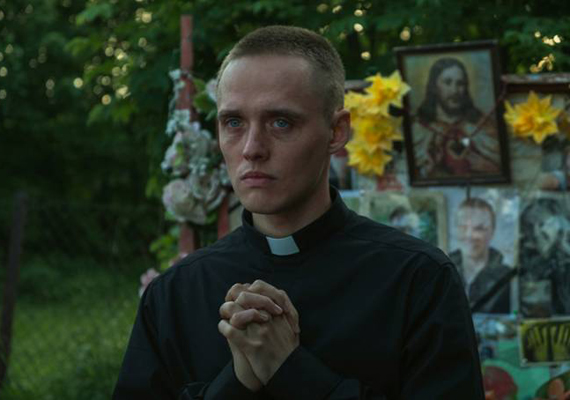
Corpus Christi
Bartosz Bielenia plays a parolee who poses as a priest in a small town in Corpus Christi.

Just around this time with the Oscars drawing closer, you would’ve thought my interest in the foreign films would be finished, right? When I saw Polish film Corpus Christi was playing, it caught my intrigue with the story. I thought it was worth seeing.

The film begins in a juvenile prison. Prisoners are prone to the same harsh actions, beatings and retaliations of other prisoners. 20 year-old Daniel knows he could be one. He killed someone when he was a teenager and was sentenced to juvenile prison, or ‘juvie’ as it’s commonly called, for manslaughter. Daniel has found a personal escape in religion. A priest, Father Tomasz, performs mass at the prison every Sunday. Daniel is the most willing participant as he even sings Psalm 23 for the mass. Every night he prays the rosary. Parole is nearing for him, which is a relief as one of his fellow prisoners named ‘Pinczer’ is threatening him. He wants to become a priest, but Father Tomasz says he can’t because of his criminal past. They’re not allowed in the seminary. As soon as Daniel achieves parole, it’s obvious he’s not ready for the priesthood as he happily does drugs and has sex at parties. He does however own a priest’s shirt.

For his parole, Daniel has to do sawmill work at a mill in a small Polish town specifically for parolees. He notices a church and introduces himself as ‘Father Tomasz’ to a young girl praying named Eliza and introduces himself as ‘Father Tomasz.’ He’s then introduced to her mother Lidia, the church secretary, and the ailing priest. Daniel is given the job to perform priestly duties. Daniel’s first mass goes excellently, and people believe him to be the temporary priest. Daniel soon notices as he walks around town people praying to a memorial to six young people. They died in a car accident which the driver hit them head-on. The image of the driver, who also died, is not on the memorial.

Over time, Daniel becomes more involved in the community with each mass he serves. He even wins the liking of the town mayor. Daniel even takes the opportunity to help those that constantly pray by the memorial to help overcome their feelings. Eliza and Lidia are among those as Jakub, Lidia’s son and Eliza’s brother, was one of the fatalities. He also notices how some people shout ‘the whore’ when dealing with their grief. He finds out people have been directing their anger to the driver’s widow. When meeting with the widow, he learns that people have been sending her hate-mail.

Daniel tries to think of a solution, but he later learns Pinczer, one of his rivals from prison who was called ‘Bonus,’ knows he’s posing as a priest. He demands 5000 Euros or else he will expose the truth of ‘Father Tomasz.’ Daniel tries to continue on as a priest and even works at making the town confront their unnecessary anger to the widow by showing them all the hate-mail they sent her. Soon her husband is given a proper burial and is attended by all: even those that lost a child in the accident. However it soon becomes apparent that Daniel’s secret will be exposed. It does happen and the aftermath becomes a case where you can watch and draw your own conclusions about the town, Eliza and Daniel.

One thing that caught my attention is that this film is based on true events. It may not be a true story, but it is of a collection of true events. Director Jan Komasa made mention in a Los Angeles Times interview that he has taken notice that there are several unordained men who have posed as priests. Many of those men believe they are doing priestly duties for the right reasons. The issue of fake priests is one that the clergy in Poland know of, but they sweep the issue under the rug. Scriptwriter Mateusz Pacewicz said in the same interview that he became very fixated about the idea of these fake priests and their spiritual passion. He even wrote a short story of it and that would lead him to write the screenplay for this film.

This is a film that will cause a lot of people with strong Catholic values to think a lot about. Some may even be outraged of a positive depiction of a fake priest. What we have here is a young man who found himself in God possibly through prison ministry. Daniel has this problem with him as he’s a killer and he’s reminded his past crimes will not allow him into the seminary. However he sees the town where he is to do his parole duties as his chance to be a priest. We should remember during his short time as a priest, he didn’t do anything to hurt the citizens of the town. He didn’t rob from the people, he didn’t disturb any masses. Instead he became a symbol of help and hope. He helped the townspeople overcome the losses they were enduring. He got the people to stop with their unnecessary hostilities towards the widow of the killer. He even helped the widow get back to being accepted rather than be the subject of a town’s wrath.

The film allows to both question and even make your own judgments about what happens in the story. First off it makes you wonder if Daniel posed as a priest because he feels he was meant to be one or to avoid an act of vengeance from the other parolees at the sawmill. It’s not made obvious but one can even sense in the film that Eliza always knew Daniel was not ‘Father Tomasz.’ I sensed that in the scene where Daniel was asked for his priest card and she says it’s in the laundry she was working with. Even that sex scene between Eliza and Daniel suggests that; an ordained priest would not have sex or else we would be forced to resign. However Eliza knew Daniel was the right man to bring peace to the town. Eliza also wanted healing along with the people of the town, including hard-hearted Lidia. Eliza felt she knew Tomasz could bring healing and was the only other person who felt making peace with the killer’s widow and allowing a dignified burial of his ashes can make the town heal.

The ending will especially get one thinking as what has happened and what has happened next for Eliza and Daniel. Even as Daniel learns after being recaptured that he was meant to be a criminal, he should be thankful he was able to be a priest and had the chance to do the right things while doing so. It’s possible being a priest during that time brought out his best personal traits while prison brought out his worst traits. It’s interesting to see that a killer who poses as a priest was the one that got the town to heal from the tragedy.

I commend the direction of the film by Komasa and the script by Pacewicz. This is a story that will keep you interested from start to finish. It has a lot to say and will allow one to draw their own conclusions of what the overall message of the film is. I don’t think the film is too critical of religion. We should remember Poland is a very religious country and the only European country where more than half of the population (65% to be exact) attends religious service at least once a month. Showing an anti-Catholic film in Poland is sure to spark outrage. I do feel both Komasa and Pacewicz were trying to make a critical statement without being disrespectful to the Roman Catholic Church. The statement being in Poland, anyone can be a priest.

Also excellent acting from Bartosz Bielenia. He did a great job as a man with immense faith but had something to hide. Eliza Rycembel was also very good at playing Eliza. She was good at knowing the truth of Daniel but being supportive in silent manner. Also very good was Alexandra Konieczna. Her best parts were the moments where she didn’t speak, but you call tell her emotions by her body language. Actually the acting from all involved was very believable and very good at telling the story. They were all very good at showing extreme emotion without going over the top.

Corpus Christi is the twelfth film representing Poland to be nominated for the Academy Award for Best International Feature Film (formerly Best Foreign Language Film).’ It was a highlight at last year’s Toronto Film Festival, it won the Edipo Re Award at last year’s Venice Film Festival, and Bielenia won the FIPRESCI Prize for Best Actor at this past Palm Springs Film Festival as well as the Best Actor award at the Stockholm Film Festival.

Corpus Christi is remarkable as it’s a film that will leave you asking more questions than giving you answers about the story. The film will also get you thinking about morality and how people judge others, or how flawed people deal with their feelings. You will be left thinking at the end.

WORK CITED:

Ellwood, Gregory. “Scammers or spiritually motivated, fake priests figure in Poland’s ‘Corpus Christi.'” Los Angeles Times. 1 Jan 2020. <https://www.latimes.com/entertainment-arts/movies/story/2020-01-01/corpus-christi-delves-into-fake-priest-trend-in-poland>

VIFF 2019 Review: Mr. Jones

Gareth-Jones
Mr. Jones is about journalist Gareth Jones, played by James Norton (left) who seeks to expose a tragedy in Ukraine the USSR is determined to hide from the outside world.

I was interested in seeing Mr. Jones at the VIFF as it’s based on a topic of my interest: the Holodomor or Ukrainian famine of 1932-1933. It’s an intriguing story with a relevant message for today’s world.

In 1933, Gareth Jones is a 28 year-old Welsh journalist who is very good at getting stories. He was the first foreign journalist to fly with Hitler and Goebbels at the start of Hitler’s regime while working as an advisor for British statesman Herman Lloyd George. During the time, he discovered of Hitler’s intentions to wage war. His story fell to deaf ears in the press and his job as advisor is dropped due to budget cuts. Despite being dropped, George gave Jones a letter of recommendation. He hopes to use it to go to the USSR to find an investigative journalist. Before he does, he gets a phone call from a friend named Paul Kleb in the USSR. He talks of how the economy is booming in Russia, but he is about to tell of something terrible happening in Ukraine… and then he gets disconnected.

Jones arrives in Moscow. His trip is regulated from start to finish: what he does, how long he stays and where he goes. That’s how things are in the USSR. In fact his job as a foreign journalist is under heavy scrutiny by national officials during his stay and no foreign journalist is allowed outside of Moscow. He arrives at the hotel in Moscow of New York Times bureau chief Walter Duranty. Duranty welcomes him and introduces him to his assistant Ada Brooks. Jones is expected to be in the USSR for seven days but he can only stay at the hotel for two days. Duranty offers Jones to stay and partake in the late-night partying. At the parties is all kinds of debauchery from prostitutes to heroin shooting to even homosexual advances. Jones wants none of this as he knows Paul Kleb was killed in Ukraine and has to find out why.

Jones finds a train headed to Eastern Ukraine. He breezes past security to stow away on it. When he arrives in Ukraine, he steps off to see the farmed grains loaded onto trucks by the Soviet army, but people dead in the snow and farmers starving. He tries to get answers. He goes to soldiers putting the bagged grain in a truck. He asks in English where it’s going, but is suspected as a spy. Soldiers go out chasing and shooting after him. Fortunately, Jones is able to evade the pursuit. He comes across some children who sing a haunting song to him of the death and starvation happening around him. He goes to a house which is in a photograph he holds, but sees the residents dead in their beds. Jones goes into a town where he sees the Soviet army take the dead bodies in the snow and pile them in a sled to be buried in a mass grave. They even take a baby that’s alive and still crying. Jones goes into a house where he is able to find living residents. They give him something to eat, which appears to be meat, and from Kolya. He soon learns they’re staying alive by cannibalism, and Kolya is a famine fatality.

Soon Jones is captured by Soviet forces. The Communist government commands him to be silent by using the lives of six British auto workers as hostages. Jones tries to plead with Walter Duranty to expose the truth of what’s happening, but Duranty is ‘in bed’ with the Soviet regime. Duranty has a habit of writing of the ‘Worker’s Revolution’ in the USSR like he romanticizing it. In fact Duranty has the reputation of being known as ‘Our Man In Moscow.’ Ada however is more supportive towards Jones and believes he has to get the story out. This can’t be hidden and knowing that Jones is to be sent back to the UK, she encourages him to make the truth known.

Back in the UK, Jones can’t get any British paper to buy into his revelations of a man-made famine. The government either doesn’t want to believe it, or fear it will jeopardize diplomatic relations with the USSR. This upsets Jones as he knows this must be stopped. The events upset him so much, he can’t stop himself from breaking down in tears in his hometown. However he has an opportunity to talk to William Randolph Hearst while at a newspaper office. Hearst, however is extremely busy and will only allow Jones thirty seconds to state his case. However when he mentions of the death of Paul Kleb, that grabs Hearst’s ear and makes Hearst want to hear everything Jones saw. Finally the story ‘Famine In Ukraine’ makes the front page of the New York Times. Jones is defamed. He is not allowed in the USSR again. Duranty is also defamed, but never had his Pulitzer Prize rescinded. Nevertheless George Orwell is caught in the intrigue of Jones’ pursuits and it inspires him to write ‘Animal Farm’ published ten years after Jones was shot to death.

I’ll admit any story about the Holodomor catches my interest. I’m of Ukrainian ancestry. My great-grandparents arrived in Canada around the 1890’s-early 1900’s. They came here long before World War I even started, before Ukrainian land was annexed as part of the USSR and before the Holodomor. This film showcases the Holodomor and is possibly one of the best cinematic depictions of it, but the Holodomor is not the biggest theme of the film. The biggest theme of the film is about censorship in the USSR at the time. All the censorship that happened in the film is an example of the censorship that happened in the USSR since it began after World War II until it broke down in the mid-80’s to when it dissolved in 1991. All news was censored. Nothing but good news was to be published in Soviet newspapers and whatever negative news could not hit either Soviet news nor news to the outside world. Phone wires were tapped and letters were opened and investigated by authorities before it reached the mailboxes of the citizens or outsiders. Even speaking negative words of the Communist government would get one a jail sentence. The Soviet media promoted propaganda to glorify itself and its Communist system and vilify the capitalist system in the United States.

As seen through Gareth, the Soviet system was also restrictive to outsiders. The system decided if a person from an outside country could visit, where they could go and stay and for how long. There were already six British autoworkers who were treated like hostages at the time and threatened with death to have the UK comply to their demands. You can understand just what Jones had to face in order to get the truth out.

Gareth had good reason to pursue the story. It’s not just trying to find out why Paul Kleb died, but Ukraine had personal interest to him as his mother taught English in Ukraine in the 1890’s. Gareth even had barriers in journalism to overcome once he had his story. He had top journalist Walter Duranty to deal with. Duranty had a big reputation at stake and kept insisting that the Holodomor isn’t happening. It isn’t until Jones meets with William Randolph Hearst that he finally gets a willing ear. The big feud between Duranty and Jones shows how even in what is supposed to be the ‘free world,’ there is still a lot of truths that are suppressed or even denied. Seeing all that goes on can make one wonder if this is happening today in what is supposed to be free countries. If we are really getting this freedom of speech or if we’re getting a lot of concocted stories.

This film is great in making a point about journalism and getting the truth out. There are a lot of truth even in today’s world that need to be exposed, but are covered up. The film does a good job in making a moment of past history, and the journalistic feuding surrounding it, make for a relevant message for today. Even the fact that Gareth was shot to death in 1935 while investigating a story in Chinese territory bordering Russia (which many consider to be a Soviet plot of revenge) reminds us of how many journalists risk their lives to uncover truths.

The film was very good at making its point. However the story didn’t seem to be heading on a straight path. There were times when moments that only deserved a certain time, like all the debauchery at Duranty’s hotel party, was slowed down and given more screen time than necessary. Even the moments of the journalistic feuding and political feuding appeared to take too long. The moments involving Jones witnessing the Holodomor in Ukraine were given the best screen time and the best on-screen depiction. It showed a lot of brutal honesty of the Holodomor, including that of cannibalism. It may have taken over less than half the screen-time, but it was done in excellent detail and gave the right haunting feel to this moment of tragedy.

Veteran director Agnieszka Holland teams up with emerging writer Andrea Chalupa to bring this story to the big screen. The story is one of great personal interest to Holland as she is well-knowledged of the Holodomor. Holland also has renown for her depictions of the Holocaust in some of her films. She does a very good job in directing the story, even if there are some moments of irrelevance or moments drawn out longer than they should be. James Norton does a good job in his portrayal of journalist Gareth Jones, but his part could have been developed more. Most of the parts didn’t have too much development and could have had more done with it. Nevertheless, Peter Saarsgard was able to make Walter Duranty hateable on the big screen. Vanessa Kirby was able to make her role of Ada gain more dimension over time.

Mr. Jones is about more than just about the Holodomor. It’s also about the topic of censorship that is just as relevant now with the ‘freedom of speech’ we’re led to believe we have in the ‘free world.’