Oscars 2014 Best Picture Review: Selma

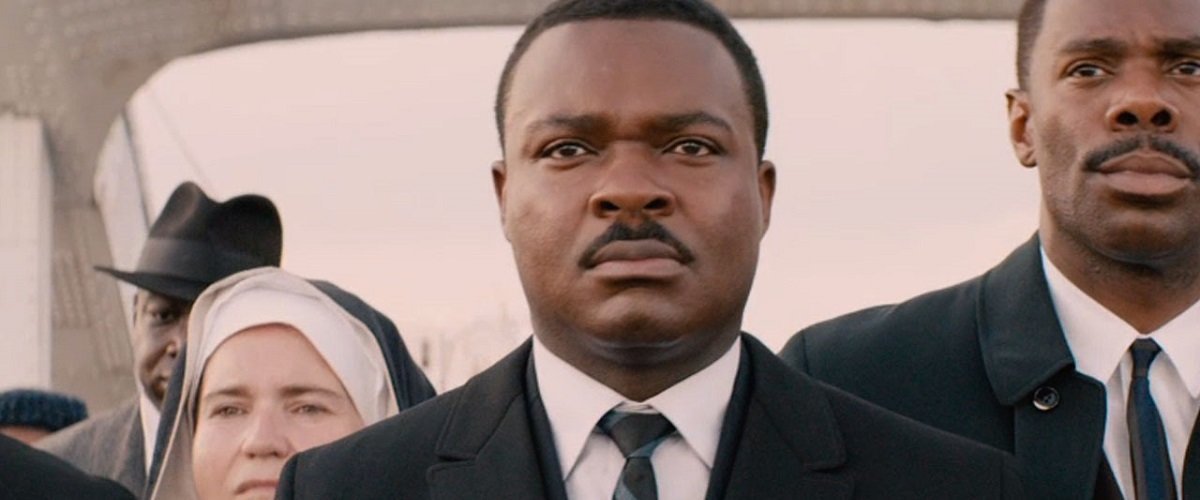
David Oyelowo (centre) plays Martin Luther King in Selma.
David Oyelowo (centre) plays Martin Luther King in Selma about an important part of American history.

Selma appears to be about an important time in US history. However it tells more than what we’ve learned about the whole story including those involved.

The film is about the march from Selma to Montgomery in 1965 led by Martin Luther King Jr. that would pave way to President Lyndon Johnson signing the Voting Rights Act of 1965. But it was more than that. It starts with Martin receiving his Nobel Peace Prize in 1964. However it’s just the beginning for Martin. A black church in Alabama explodes killing four young girls. Annie Lee Cooper has been denied the right to vote like most black people in Alabama before her. Meanwhile King is unsuccessful in convincing Johnson to pass a law allowing black citizens to vote.

Instead of accepting defeat, King is undeterred and determined to achieve this. Selma, Alabama is the meeting place for King and other activists to organize efforts to achieve this law. However both Johnson and FBI head J. Edgar Hoover are nervous about this. Hoover uses phone calls to disrupt his marriage to Coretta. Undeterred, King and black residents of Selma march to the registration office only to be confronted by a mob of police and a riot ensues where King and Cooper are arrested.

Things get even harder as state governor George Wallace, a pro-segregationist, speaks out against the marches and even calls police in Marion, Alabama to use force from state troopers during a planned night march. An assault by troopers does occur during the march where Jimmie Lee Jackson, who hid in a restaurant for the safety of him and his family, is shot to death by the police. Jimmie’s death only prompts King to tell people to stick to fighting for their rights. However the Kings receive threats on their children and activist groups are becoming unhappy with him.

A march from Selma to Montgomery to make their message heard is planned especially with the hopes of having all of the United states watching and paying attention, especially as working on ‘white consciousness’ is one of King’s objectives. At first King is hesitant but is convinced by his colleague Andrew Young. The original march takes place with all African-Americans. Right on the Edmund Pettis Bridge they’re stopped by police and attacked. The news goes nationwide. A second march is planned. This time King not only has blacks from other cities but white supporters too from regulars to religious clergy. Just before the marchers reach the end of the bridge, the chief officer and his group are back again. This time they’re allowed to proceed but King kneels in prayer and goes back. The reason was because King was suspicious. He doesn’t trust the mob of police and wants legal permission for them to march. The push for permission is especially stressed as one of the white allies, Rev. James Reeb, was beaten to death. The permission is granted by Alabama Judge Frank Minis Johnson. Lyndon Johnson, Martin Luther King and the marchers make history.

There’s no question that this is to do about an important moment in American history. Actually coming from Canada, I was never taught about Selma. I knew about the I Have A Dream speech but was never taught about Selma. However the film is also about Martin Luther King himself. The movie begins with him accepting his Nobel Peace Prize which came months after his I Have A Dream speech. However we would be reminded that King had more work to be done. Selma was a new challenge for him as his people needed the right to vote. However there was the constant threat of police brutality and even death. He stood firm in his non-violence stance and his plan was to work on ‘white consciousness’ and he knew it was the only way to work. He also knew he had to work with the tough minds of President Johnson and other politicians including Alabama Governor George Wallace. Each death linked to the marches would make him more fearful but it would make him more convinced this is something that needs to be done. We all know it was achieved but this is a reminder of how King and his people had to achieve their right.

The film also takes us back to the time and place. It reminds us just how hard it was to be black in southern US states like Alabama. Living in segregation was one thing. Being denied the right to vote was another. The only time in my life I knew of black people being denied the right to vote was in South Africa up to 1994. Apartheid riots were common news stories in the 80’s. I was shocked to learn that it was happening to black people in the 60’s in the Southern US. I always thought the US was supposed to be the ‘land of the free.’ It showed the red tape black people had to face in the justice system and especially with the police. We are all shocked and disgusted to hear about the fatal shootings of Michael Brown and Trayvon Martin in recent years and their killers getting away with it. This was happening in Alabama in the 60’s all the time. Especially shootings by police on young unarmed black men like Jimmie Lee Jackson. You couldn’t blame them for having had it. They couldn’t be denied this anymore and this was a must-win situation for them and King.

Just as much of a focal point as blacks fighting for their right to vote is also the focus of the bigoted attitude of the whites in Alabama. King made it his duty to work on ‘white consciousness’ in order to achieve this victory. Alabama, especially in the city of Selma, showed what type of ‘racial battleground’ they had to deal with. The first sign was the church explosion but we’d see it all throughout. We’d see it in the police brutality, we’d see it as a restaurant proudly advertises itself as ‘a whites-only restaurant since 1883,’ we’d see it as a white man ‘introduces’ himself to King and punches him in the face, we’d see it in the taunting of white people from all around. That’s the type of environment the black people had to fight. We should forget that Alabama has segregation removed years ago but the white people weren’t happy. They felt that segregation was right and they reacted in frustration with taunting and even violence. Even when white people joined the blacks in their march, that didn’t change a lot of people’s minds. In fact they found white supporters to be a threat and reacted with the same violence on them, even killing some. Another reminder that white supporters of the Selma marches would also be at risk to the same violent reactions as blacks. The film takes us back to the time, place and the hostile attitudes at the time. An ugly reminder but necessary to show.

Even though the film was about Martin Luther King, his crusade for human rights and the bigoted attitudes in the area, the film also showed another factor: the strength of non-violence. King’s use of non-violent means to achieve human rights may appear radical to many and even ridiculous to some at first. In fact it explains why he had a rivalry with Malcolm X as seen near the beginning of the film. Because Malcolm believed: “by any means necessary.” However it was shown to be successful in the actual event and in the film. In fact I noticed the film to also show violent means to look cowardly. We see it in the police who try to use it to strike fear in the protesters in hoping they’d quit. We see it in the white Alabamans as they use it to strike fear in the blacks and their supporters. Most of the times it’s seen they do it on impulse because they just don’t know how to deal with the situation. Funny how we’ve seen a lot of Hollywood movies, especially in the action movies of the 80’s and 90’s, where the leading man uses vengeance and violence to become the hero. Here violence looks very cowardly.

Without a doubt, this film has to belong to Ava DuVernay in directing and co-writing the story with Paul Webb. She did an excellent job in recreating the story of the marches, the people involved with them and the atmosphere of the time and place. The end result is an excellent film that won’t leave you. It’s not without controversy. There are many questioning the depiction of Lyndon Johnson in the film. Historical documents show he was actually supportive of Martin Luther King and his mission. Even I myself believed for a second that Johnson may have had some difficulty at first, knowing Johnson was originally from Texas: a state that formerly had segregation. DuVernay simply responded: “I’m a storyteller. Not a historian.” Whatever the situation, it was still a very good film put together.

David Oyelowo was excellent as Martin Luther King Jr. as she showed him in both his convictions, his inner strength and even his own personal frailties at times, like that time he relied on Andrew Young to go through with the march. Even that scene where he calls gospel singer Mahalia Jackson for inspiration and she sings to him shows that King did have fears which he needed support for. Tom Wilkinson was also very good as Johnson. Even if you feel his depiction of Johnson wasn’t that truthful, it was still a very good performance. Carmen Ejogo was excellent as Coretta. She did more than just simply play Martin Luther King’s wife. She played a young woman who herself grew in courage: a courage Coretta would need after Martin’s assassination. Oprah was also surprisingly well as Annie Lee Cooper. Right at the beginning we could see a character completely opposite to the Oprah we know. A character that looks like she’s been through the hardest life offered her. You could see it in her face. The cinematography and music added to the environment of the story. You could feel that this was a struggle worth winning.

Selma is a film retelling an important moment in history. It gives us insight into the people involved and the environment they had to fight in order to achieve their rights.

Movie Review: Wild


Wild is about Cheryl Strayed (played by Reese Witherspoon) who goes on a hiking trip in 1995 to heal herself from her troubled past.

Before you label Wild a ‘Reese Witherspoon movie,’ you have to see it from start to end. You’d be surprise that it’s not your typical movie from her. It’s more.

The story begins in 1995 with Cheryl Strayed, a young twentysomething, about to start a hike down the Pacific Crest Trail. This comes right after her divorce from Paul, her husband of seven years. One of the many troubles in Cheryl’s life. Cheryl looks to hiking the trail as a chance to reshape her life and gain inner strength. But at first, you will think Cheryl doesn’t have what it takes to do this long hike. It’s an 1,100 mile journey and on top of it, Cheryl is struggling to simply put on her 40-pound backpack, never mind walk with it. And on uneven terrain that includes mountains? Can she do it? Even her best friend Aimee feels she can’t do it.

The hike starts with great difficulty. Walking with the heavy backpack, she has difficulties on the first day such as not even hiking ten miles, being without cooking fuel and being unable to set up a tent properly. The days get stronger over time but it’s still very gradual as the second day she’s made aware of the type of wild animals she would have to deal with.

Over time she would have to find help. On the third day, she asks a farmer for help. He offers to take her to her house but she’s nervous about it, especially since she sees a gun in his car. She later learns he’s a married man and the couple offer her to stay overnight. Over time she meets other people that offer her help from a father and his teenage son to full families to people at various camping goods stores and retailers to hippies in a local California town who pay tribute to Jerry Garcia upon his recent death at the time to three college guys out having a fun hike together to even hikers that also plan to do the trail but eventually fail. Not all were helpful. One was a journalist for a magazine who just took pictures of her and interviewed her. Another was a group of snowboarders on a mountain top who just leave her. Another was a pair of threatening-looking men she met at a well only to be encountered by the bowhunter later looking like he would want to do something harmful to her. Fortunately it doesn’t happen as his colleague tells him to return.

However it’s the alone times of the hike that are the most crucial. In between the times she signs a name on the hike log that includes using a quote or line of poetry from a famous poet, Cheryl is all alone and has the moments of her past come back to her. Moments like a childhood with an abusive father her mother leaves taking her younger brother and her at age 6, going through high school while her mother was returning to complete her graduation, marrying Paul a successful restaurant owner while young, learning her mother has cancer and her dying sooner than expected, having her mother’s cherished horse put down, leaving Paul and hitting the inner city of Portland where she adopts a drug habit and even has an abortion. Those are the memories Cheryl is trying to wrestle with in her hike. Her cheap therapy hasn’t helped but maybe this hike will.

The thing with this film is that it’s not just to show the trip Cheryl took but also the flashbacks to the moments of her life that both trouble her and define her. We don’t just see the bad memories she’s dealing with but we feel them too. We may first just see Cheryl right after she finished her divorce at the beginning but as the trip progresses, we start feeling her situation. We learn of the bond she had with her mother and why her death hurt her terribly. We learn of how her marriage to Paul fell apart. We learn of her drug abuse. We learn of her abusive father she hasn’t seen since she was a small girl. We learn of the cheap therapy she tried at first but didn’t work. We learn of her no-so-close relationship with her brother. Over time, we see why Cheryl wants to use this trip to heal herself and it comes to appear as the right thing for her to do.

The film gives a good sense of inner strength Cheryl acquires over time with the hike. At first Cheryl appears to be a completely amateur camper who can’t get her backpack on right, can’t put up a tent well and can’t cook a proper dinner outdoors. You think she doesn’t have a chance in completing it. You’d think even more so when she comes across threatening creatures like rattlesnakes and cougars along the way. You’d also think that way in seeing she can’t even cover ten miles a day during the beginning of her trip. Sometimes you think she might become a victim of crime as there would be some threatening people she’d encounter, especially that bowhunter. Nevertheless she gets stronger with each and every mile.

However the film also succeeds in conveying the popular saying ‘the journey is the destination.’ It shows Cheryl being enriched by her experience while mentally fighting her troubles of the past. That’s not just acquired from her hiking but also from the people she meets. It’s people like the farmer who first appears threatening but becomes helpful along with his wife, like the hippies she encounters upon the death of Jerry Garcia, like the men at the store who help her reduce her packing, like the various hikers she comes across, and people like the grandson who sings ‘Red River Valley.’ There are many people that enrich her experience. Even those that seem insignificant like that journalist on the road or the three young college boys hiking together and goofing off appear to give some extra richness to her experience. Even the quotes from various authors and poets Cheryl puts in the logbooks add to the richness of the journey.

Another key aspect the film focuses on is people’s attitudes, especially in dealing with the hardships of life. We see Cheryl as she went through a self-destructive path after her mother died and needed a way out. She took the Trail in hopes that it would help her recover. We also see her mother who had also been through hardships of her own but still holds her head high. That scene where she says she doesn’t regret marrying Ronald because she had her and Leif. You think people that are constantly positive are naive and foolish but she shows strength in positive thinking. Even seeing her on her deathbed laughing how she finally gets a ‘room with a view,’ it takes a special kind of person to hold their head high during difficult times. I think it was because of her mother’s positive attitude that Cheryl knew she couldn’t be a victim anymore and needed to heal herself. That’s why she took that hike. Interesting how there are some people like Bobbi who just have that ability to stay strong in hard times and there are people like Cheryl who need to acquire that inner strength.

Without a doubt, the film belonged to Reese Witherspoon. This is not the typical Reese Witherspoon movie. This is Reese playing someone completely different from roles she’s played before in the past and it’s a role with immense depth. Even playing Cheryl at various ages in the film. She comes out shining. Even though this appears to be a one-person film, it’s Laura Dern who does an excellent job as Bobbi and even steals the film at times. She makes being positive in difficult times look smart and strong instead of naive and foolish. Thomas Sadoski did good playing Paul but his role could have been developed more as could have the role of her brother Leif played by Keene McRae and the role of best friend Aimee played by Gaby Hoffman. The various supporting performances were also excellent and added to the film. Even the briefest of performances.

Jean-Marc Vallee does it again. He really made a name for himself last year with the Dallas Buyers Club and he adds to his reputation here. He succeeds in making it the personal story of Cheryl’s it’s supposed to be while adding to the environment of the story. Nick Hornby did a very good job of writing out the story from Cheryl’s memoirs keeping in the key parts of her hike and of her life. The film made a wise choice in keeping the story mostly score-free and let the sounds of the wild and even the chill of silence add to the story. That scene of the bowhunter appearing to either want to rape or murder Cheryl wouldn’t have worked as well with a score. The inclusion of the Simon and Garfunkel song ‘El Condor Pasa‘ is an excellent addition. It’s almost like it becomes Cheryl’s own personal anthem. Also noteworthy are the contributions by Strayed herself where she’s the associate producer and even plays a woman in a truck in the film. Her daughter Bobbi Lindstrom even plays Cheryl as a child.

Wild is a bit of a melodrama but it’s not the least bit boring. It’s a very deep, very enriching story of one woman using a hike to fight her inner troubles. We not only witness her gain inner strength from it, we experience it.

Oscars 2014 Best Animated Shorts Review

Cinema

Normally each year I’d see the Oscar nominated shorts for both animation and live-action on the same day. Because of my crazy schedule, I actually seized the chance to see the animated nominees on Saturday. I arrived in decent time and was able to see all five nominees plus four additional shortlisted films. Here are my thoughts on the nominees.

Me And My Moulton – dir. Torill Kove – Kove has already won the Oscar in this category before for The Danish Poet. I haven’t seen it so I can’t compare the two. Nevertheless it is a charming short with 2D drawings telling of a personal story of a troubling time in Kove’s childhood for her and her family that ended on a happy note. It’s a good story that shows the differences between the world through a child’s eye and the world through adults’ eyes. It gives you a happy ending you hope for despite the troubles you see. Interesting how it’s the National Film Board of Canada that that produced it this time.

Feast – dirs. Patrick Osborne and Kristina Reed – If you’ve seen Big Hero 6, then you’ve already seen this short that was screened before. It’s another Disney short where you don’t need very much dialogue to get the story. Even with the little dialogue in there, you’ll get it. You just have to let Winston the dog to the talking and the acting. However it’s the ending that turns out to be a surprise. You think it will end one way like Winston really is man’s best friend but instead ends on a funnier note that’s very fitting. Excellent animation and enjoyable for all ages. However I’m kind of pessimistic that it will win. Usually shorts shown before Disney features don’t win.

The Bigger Picture – dirs. Daisy Jacobs and Chris Hees – This is a film where the focus is more on the animation than it is on the actual story. Yes, there’s the story of the two brothers discussing the fate of their elderly mother and the ensuing squabble after squabble. However you can tell that with this story looking like oil paintings coming to life, you can tell it’s the art which is given more focus. The style is very unique and the story has an enjoyable humor to it.

A Single Life – dir. Joris Oprins – It’s just three minutes but this 3D story really entertains. You think the girl is playing a simple vinyl single but surprise surprise, her life elapses as the song plays on from beginning to end. Cute, bizarre and entertaining where even her timely death at at the end–a death that’s surprising but you should expect– is funny and surprising. Seeing how this film packs in so much in three minutes and successfully entertains, I pick this as my Should Win pick.

The Dam Keeper – dirs. Robert Kondo and Daisuke ‘Dice’ Tsutsumi – It’s the longest of the five nominees. It’s a story that starts off sad where the pig both works the dam’s windmill and goes to school ridiculed by all the other animal students. Things change when a new student, a fox with a knack for drawing, joins the class. Soon a friendship builds. However things change for the worse one day as the pig sees what he suspects to be a mockative drawing of him and the fog overtakes the city. The story ends with how it should. The short is charming as the caricatures can remind many of Richard Scarry books. The story is rather dark but it does end with a fairy tale-like ending that remains true to the story instead of a lopsided ending. That’s why I predict it for the Will Win pick.

It’s always entertaining and interesting when watching the nominated shorts. The interesting part is seeing the various styles of animation in the film. We have the 2D style of drawings of Torill Kove’s style, 3D style common in Disney/Pixar films, paintings coming to life, humorous 3D style and painting style 2D caricatures. This allows for a lot of diversity in the nominees. Also noteworthy are the ‘commended’ shorts that didn’t get nominated: Sweet Cocoon, Footprints, Duet and Bus Story. Especially with the latter being a Canadian story that’s charming. They were all also very impressive and had a unique style about them.

And there you go. Those are my thoughts on the Best Animated Short Film nominees. There’s hardly ever a sure favorite and it’s always hard to predict the winner. Nevertheless it’s still enjoyable to watch and I’ll just have to wait a couple of more weeks to see who wins.

Movie Review: Foxcatcher

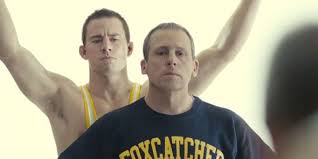
John DuPont (Steve Carell) tries to be a wrestling mentor to Mark Schultz (Channing Tatum) in Foxcatcher.

Foxcatcher isn’t just simply an Olympic story with a tragically bizarre ending. It isn’t completely a crime story either. It’s about the people involved.

It’s 1987. Mark Schultz is an Olympic wrestling champion who’s about to do a talk at an elementary school substituting for his brother Dave who was expected to be the talker. The school gives him a small payment for his time. Dave is coach of the wrestling gym married with two small children and trainer of Mark. Although Dave tries to be a good mentor to Mark, you could tell something’s eating at him.

One day unsuspectingly, he’s greeted by John DuPont, heir to the E.I. DuPont family fortune. He offers to have Mark train at the Team Foxcatcher gym in Pennsylvania he created to promote wrestling. Mark agrees but John also wants Dave to coach. Dave turns it down because he has family commitments miles away. Despite that, Mark continues on with John coaching him even living in a DuPont guest house which John sometimes visits. The training pays off as Mark wins the World Championships later that year. John is even seen as a mentor to Mark and all the other wrestlers at Team Foxcatcher.

However something’s not right. John wants the wrestling trophies won by Team Foxcatcher to overtake one shelf of horseracing trophies his family have won over the years. Mark and John develop a friendship to the point John gets Mark to use cocaine. John even mentions his mother paid a boy to be his ‘friend’ when he was younger. His mother Jean who’s part of the DuPont legacy of horseracing is disapproving of his coaching wrestling feeling that it’s a ‘low’ sport. Then one day it happens. While Team Foxcatcher’s wrestlers take a day off to watch a Mixed Martial Arts event, John becomes furious especially when Mark insists Dave won’t join team Foxcatcher. John tells him he will get Dave by any means necessary.

Dave agrees to Team Foxcatcher where he even moves his wife and family over there. Mark however is going through self-esteem issues with the mental abusiveness of John and moves away to train for the 1988 Olympics. Just before the Olympic trials, John has his mother Jean escorted in her wheelchair to see what John has accomplished. She leaves in disgust after seeing John give his back to one of his students.

At the Olympic trials, you can tell something is bothering Mark. He loses his first match and in response cries, wrecks his room and goes on an eating binge. Dave is alarmed at discovering Mark in his condition in his hotel room and works to get him to lose weight in time for the weigh-in. As Mark competes on, he notices Dave prevent John from speaking to him. Mark wins the Olympic trials but both he and Dave notice John is absent. He returned home as his mother died. Mark lets Dave know he can’t stay with John and Team Foxcatcher after the Olympics and asks Dave to leave with him even though John created a promotional video of Team Foxcatcher with Dave asked to do a speech. Mark finishes sixth at the 1988 Olympics where he loses his last match 14-0. As he said, he leaves Team Foxcatcher for home while Dave agrees to remain training Team Foxcatcher in exchange for John giving Mark financial support.

It’s 1996. John watches the promotional video with the part of Mark’s speech about John. This would pave way to the depiction of the eventual murder. However the film ends showing what happened to Mark shortly after.

It’s funny how around Oscar time, it’s common to expect that most movies with big Oscar buzz would have some sort of political message or humanistic message. So it was quite natural for me to think that Foxcatcher might be a film with things to say about Olympic athletes or how they’re treated in the US. I don’t think it was but it did present a unique time in Olympic sport. Many older people remember that until the 80’s, you had to be a complete amateur in an Olympic sport. Even if you made a single penny off your sport, you were ineligible to compete at the Olympics. That all changed in the early 80’s when the IOC changed its constitution from allowing only ‘amateur’ athletes to allowing ‘eligible’ athletes to compete and it would be each sport’s respective federation decide who’s eligible. There were some sports like track and field, swimming and gymnastics that were the first to make the transition and the pay and sponsorship money was good albeit not the same level it is today. Wrestling was one of the sports to catch on later. In Mark’s time, wrestlers could not make a living off their sport unless you were also a coach like Dave. In fact I remember a quote from Olympic gymnast Bart Conner: “The big myth is that Olympic gold medalists can get rich off their gold medal. I know a lot of Olympic champions that are flipping burgers.” So it’s no wonder that Mark would find sponsorship from John DuPont and the state-of-the-art Team Foxcatcher wrestling gym a welcome relief.

I don’t even think it’s a statement about rich people in the United States. Sure, John was born into money as the DuPont family have a dynasty going all the way back to the 18th century. Sure, John appears to be spoiled living in the same gigantic mansion in the middle of nowhere as his parents. Sure, John has the money to make his dream of being a great wrestling coach come true. Sure, John had a sheltered childhood where he was the youngest of four and had a ‘paid friend’ during his childhood. And sure, John has a mother with a superficial attitude as made evident in her comment of wrestling being a ‘low sport.’ However I don’t feel it’s about the American rich.

What I do feel the movie is to do about are the people. Yes, it’s a crime story but it’s also about the people. John appears to be a person who may have been belittled all his life and dreamed of being a successful wrestling coach or manager. He has written successful books on birds but wanted to become successful as a wrestling coach. This is especially hard for him since his family has a tradition of horse racing. Throughout the movie, we get a sense that he felt that something was missing in him. Even after hiring Dave as the coach, we see friction between the two as they’re both training and managing Mark. Sure, it’s common for two coaches on the same team to have disputes but the disputes make you wonder. In fact that scene where John is watching the video of himself promoting him and his gym just before the shooting may be sending the message he always felt underrespected. Maybe it was because he felt like the misfit of the family. Maybe it was because his family never knew or honored his achievements. We’ll never know. There’s no question he shows his mental illness, especially at the end, but it’s just a wonder if his inferiority complex is what caused him to shoot Dave.

The film is not just about John. It’s about Mark too. The 1984 Olympics was of him and Dave winning gold but the time since then was a struggle. Dave was able to marry, become a father and continue as an athlete by coaching at the same time. He was well to do. Mark was the one who struggled. He lived single in a shabby home, he worked a measly job, he received spare cash from school appearances, he was always living in the shadow of Dave. Even though Dave was never the type of brother that would try to make Mark feel inferior, You could tell it was bothering him in that training scene at the beginning where he gives Dave a bad hit. It was easy for him to see John’s offer as a breakthrough for him but a struggle as he was trying to create his own identity while Dave and John had coaching disputes over him. It seemed more like a threesome rather than him. Possibly even sensing Dave was becoming the apple of John’s eye rather than him. Even after his win of the World Championship, you could tell the whole thing would take a toll on him especially seeing how he had to purge himself at the Olympic trials and struggled to make the team. Eventually it did take its toll right at the Seoul Olympics with his sixth-place finish and the threesome ended there. You can easily understand why when Mark moved out, he wanted to move without turning back.

The highlight of the film was the performance of Steve Carell. In fact even his biggest fans would be surprised to see Steve looking different and acting completely different from the way they’ve always known Steve to act. He embodied John DuPont well in terms of physicality and his mental illness but he also made us feel John’s feelings of inferiority which definitely added to the film. The film also has Channing Tatum’s best acting ever. He also embodies the character of Mark well in terms of his desire to succeed and in terms of his insecurities. Although the film focuses more on the characters of Mark and John than on Dave, it’s Mark Ruffalo’s performance that gives added dimension to a person who is both a coach and a father and tries to do the right thing but ends up an unsuspecting victim in the end. Even supporting performances from Sienna Miller as Dave’s wife and Vanessa Redgrave as John’s mother were done great despite being less than what they should be.

The directing of Bennett Miller was also impressive as he focused on both the story and insight into the people involved in the story. The script by E. Max Frye and Dan Futterman was also good in taking us to the right events even though it did feel slow at times. Even there, I think they were trying to make a murder story that didn’t just simply tell of the events but also give us portrayals of the characters. It’s not to say they haven’t experienced friction about it. There was a story that Mark felt the film made it look like John had a homosexual attraction to him. I didn’t notice it. Besides I later learned John was married for the first and only time at 45 and the divorce occurred just before he met Mark.

Foxcatcher is more than a murder story. It’s also a portrayal of the people involved in both their desires and their insecurities. Often it did feel more like the film was about who than what.

Oscars 2014 Best Picture Review: The Theory Of Everything

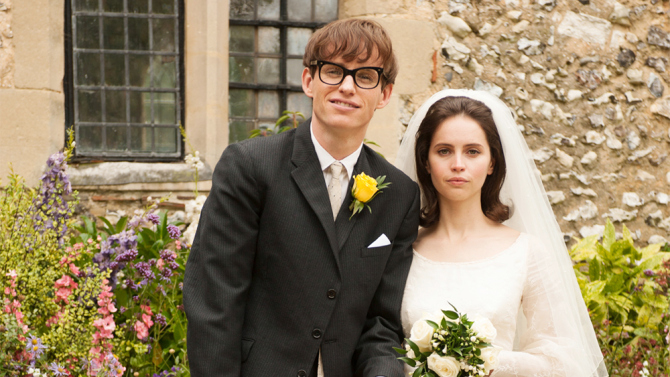
The Theory Of Everything is as much about Jane Hawking (played by Felicity Jones) as it is about Stephen (played by Eddie Redmayne).

When you hear about The Theory of Everything being about Stephen Hawking, you’d probably assume it’s about his scientific conclusions. You will actually be quite surprised.

Stephen Hawking is an astrophysics student at Cambridge in 1963. Stephen is awkward-looking, rather clumsy and already his imaginative thinking is being noticed by students and professors with varying reactions. One night, he meets Jane Wilde, a literature student. They form an unlikely couple with Jane actually taking an interest and liking in Stephen’s imagination.

The following year, there are two incidents that will change Stephen’s life: the first being a lecture on black holes which inspires him to write a thesis about time; the second being when he learns he has ALS–Lou Gehrig’s disease– and is given two years to live. Stephen becomes a recluse upon hearing the news but Jane tells him he loves him and will marry him. The two marry and they have a son Robert.

Stephen continues giving lectures as his condition deteriorates from using crutches to needing a motorized wheelchair and even talking with great difficulty. Jane is always there to help him but it’s becoming very hard on her. Nevertheless he continues to give lectures about black holes, evolution and time to top professors. Some professors find it erroneous while others praise it and give him an honorary doctorate.

Over time Hawking continues to win more acclaim in the science world including becoming a world-renowned physicist. Nevertheless the fame and his physical condition is making it hard for Jane both as a wife and as an educator. Upon her mother’s advice, she joins the church choir where she meets conductor Jonathan Hellyer Jones. Jonathan becomes a friend of the family but the birth of her third child causes suspicion from her mother if Jonathan is simply a friend. Jonathan senses the suspicion and leaves the family for a bit but Stephen tells Jonathan himself she needs him.

While Stephen’s in Bordeaux, Jane has a camping trip with Jonathan and the children and it’s obvious their feeling for each other are shown. The trip ends as Jane learns Stephen contracted pneumonia and needs a tracheotomy in order to fight this. Jane agrees. However Jane finds dealing with Stephen too difficult and hires a helper named Elaine. Elaine works well with him on the letter board. Then computerized technology comes in play and Stephen is able to communicate with a talking machine. He’s able to speak better with the machine than he did when he still had his own voice. It enables him to write a book where he dictates and Jane and Elaine type. The book, A Brief History Of Time, becomes a best-seller and wins Stephen worldwide renown. However it does mark the end of the marriage as he plans to accept an award in the US with Elaine instead of Jane. Nevertheless the film ends on a positive note leaving one to believe Jane and Stephen are still soul mates despite no longer being married.

The remarkable thing about the film is that it shows Stephen Hawking in a light we don’t normally notice. Yes, it shows Stephen and his scientific thoughts. Yes, it shows Stephen in his wild imagination. In fact there are times when it makes Stephen look like the Albert Einstein of our times. However it also shows other aspects of Stephen like how ALS can paralyze his body but not his mind. It’s safe to assume ALS made him a stronger person and the movie shows him acquiring his personal strength over time. He was expected to live only two years when he was first diagnosed and he’s still alive today. It shows how he won’t even let ALS stop him from getting a Penthouse subscription. It also shows him as a father and a husband but also a man with some personal weaknesses such as being sucked into his new-found fame and falling for his assistant Elaine.

But somehow it often appears the movie is not about Stephen. It appears more like it’s about Jane. We shouldn’t forget the film is based off of Jane’s memoirs of being Stephen’s wife. It shows Jane as she’s first attracted to Stephen despite being nerdy and having an eccentric mind. It shows her as the one who got Stephen out and living right after he learns he has ALS and even marries him. It shows her as the one that stood behind Stephen every time he gave a lecture on his Black Holes Theory even when top professors would dismiss it as rubbish. It also shows her as the one who helped Stephen write his legendary book with his talking machine. It almost appears like she was his arms and legs.

The film however does make Jane out to be a saint. It does show Jane’s struggle of being both a wife to a man with a disability. In fact it was the scene when Stephen is playing croquet just after his diagnosis and Jane sees how much it’s deteriorated him that sent me the message this movie could be about Jane. Despite Jane doing her best to be a supporting wife, there are times she can’t hide the frustration and it upsets her. Her frustration is a common frustration people who are spouses with disabilities go through. The film also shows Jane in another flawed light when she falls in love with Jonathan and has a long affair. This film highlights Jane’s own flaws as it highlights Stephen’s.

Without a doubt, the highlight of the film has to be the performances of the two leads. Eddie Redmayne was beyond dead-on as Stephen. In fact it’s the scene of the divorce where Eddie playing Stephen said more with  his face than his talking machine did that caught my attention. There were many times in the film Eddie was able to say more in silence as Stephen than when he was talking. From beginning to end he was excellent and embodied the ALS flawlessly. It wasn’t just the ALS. Eddie also gave us an inside look into Stephen’s imagination which adds to the character. Imaginative minds must be something for a topic for film this year. First Alan Turing and now Stephen Hawking. Felicity Jones was not only excellent but also did a great job of stealing the show. Her embodiment of Jane Hawking helps you get to know Jane better as well as have a new found respect for her. In terms of acting, this is mostly a two-person film. Nevertheless there were some good supporting performances from Charlie Cox as Jonathan and Maxine Peake as Elaine that added color to the story. Even the minor appearances of Stephen’s college mates and Stephen’s family added to the story too.

James Marsh did a very good job in directing, especially since he’s more of a documentarian (Man On Wire). This is his second feature-length film that isn’t a documentary and he does a great job of directing the story and bringing out the characters. Anthony McCarten did a great job of adapting Jane Hawking’s memoirs into a good story with great character depth. However it did often come across as a two-actor screenplay and could have added more depth to the other actors. The film had other great efforts too such as Benoit Delhomme’s cinematography, the score from Johan Johannson and added visual effects that dazzled.

The Theory Of Everything isn’t a perfect depiction of Stephen Hawking and his marriage to Jane but it is entertaining. We get to know the two better and feel for them both.

Oscars 2014 Best Picture Review: The Imitation Game

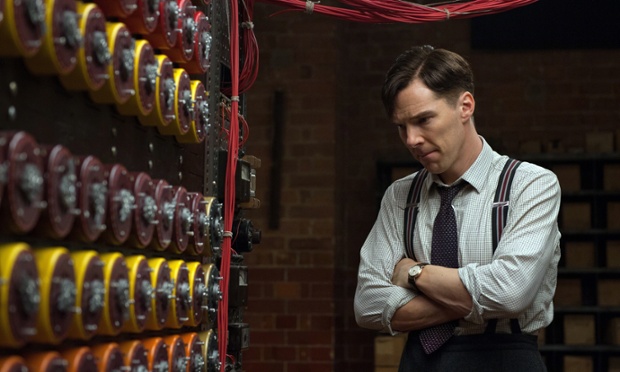
Benedict Cumberbatch plays mathematician/inventor Alan Turing through many angles in The Imitation Game.

“Am I a machine? Am I a war hero? Am I a criminal?”

The Imitation Game is a film that presents us a story of legendary scientist Alan Turing. It shows who he is and his life but also sheds light on many things we didn’t know.

The film opens in 1951 with Alan being investigated by detectives Nock and Staehl. This takes the film back to moments of the past starting in 1939. World War II has started and Turing applies to become part of the cryptography team at Bletchley Park. His ability to decode things and his knowledge that the Nazis use a code called Enigma impressed Commander Alasdair Dennison so much, he brings him on with the team of Hugh Alexander, John Cairncross, Peter Hilton, Keith Furman and Charles Richards.

Turing is difficult to work with as he distances himself from his colleagues. He has an idea for a machine to decipher Enigma but Commander Dennison doesn’t approve. Turing writes to Winston Churchill asking for assistance. Churchill is so impressed with Turing’s idea, he declares him the leader upon which he fires Furman and Richards. He uses a crossword puzzle to find his replacement. Upon which he hires a woman, Cambridge graduate Joan Clarke. Joan however has to deal with her overbearing parents as they don’t want her to work with men and marry immediately. However Turing is convinced enough she’s the right person for the job to the point he provides her a room to stay and work with female clerks while he shares his plans with her.

Difficulties continue as the code of Enigma needs to be reached. First the Germans change the code daily so that the enemies don’t succeed in breaking it. Secondly, Dennison is infuriated with the machine which Turing names Christopher and wants it destroyed and Turing fired. It’s only after the team threaten to leave if Turing is fired that he’s able to continue. Joan is pressured by her parents to either marry or leave her job, to which Turing proposes to her. On top of it, Turing’s team know of his homosexuality but promise to keep it secret.

Even after results happen and Christopher is able to successfully decipher Enigma, the solutions don’t start there. They can’t make it obvious to the Germans that they know Enigma so they have to carefully plan their strategies of attack even if it means considerable time later. Turing learns Cairncross is a spy for the Soviets but is told to keep it a secret or else Cairncross will expose his homosexuality. The place becomes too dangerous for Joan to stay and Turing tells her to leave, outing himself to her and even saying he was only interested in her as a co-worker. Joan leaves angrily. World War II was won and the cryptographers plans are burned.

The film progresses to the 1950’s when Turing was arrested first pursued for hiding confidential information only for them to uncover his homosexuality. His homosexuality was as much of a challenge as his eccentric way of thinking even as far back as his school days when he would be bullied. Fortunately a boy named Christopher befriended him and encouraged him with his coding and shared feelings with him. Unfortunately Christopher died before Alan had a chance to tell him he loved him. At the end, he’s shown with his final struggle with his homosexuality just before his eventual suicide as he’s sentenced to chemical castration: a sentence he chose over two years prison time. In his home where he secludes himself with his own concocted version of the machine Christopher, it’s Joan who comes to him in the end offering moral support and reminding him how significant he was because he was ‘not normal.’

Some would first come to the movie thinking it’s about him and his lifestyle. Some would first think this is autobiographical. It’s more. It presents the story of Alan and his eccentrically intelligent and creative thinking. It presents Alan’s side of the story from beginning to end focusing on the three biggest events in his life: in 1928 as a teenager when he’s first given support of his eccentric imaginative thinking and first learns of his homosexuality; during World War II and the story of the moment and invention that defined him; and in 1951 with Scotland Yard’s trying to link him of a crime only to discover his secret that would lead to his tragic fate. The focus of the story is especially clear at the beginning when Alan asks us: “Are you paying attention?” The film also presents why it was so important for this machine to crack Enigma had to be created as Alan would remind us it wasn’t simply against the War but against time. Especially for the UK which was suffering terribly. It also presents their strategy for helping to win the war as soon as they could.

It’s also very much about Alan the person as it is about Alan and the team working to crack the code. It presents Alan’s intelligence as creative in which he can decipher things through his work on crossword puzzles. It presents Alan as one who also has a very unlikable side including a ruthlessness his coworkers found hard to deal with though they stick with him because they feel he’s the only one who can succeed at cracking the code. They can’t stand him but they believe in him. It especially presents Alan’s homosexuality as for why he was about to go on trial. As he is about to be tried, he looks back on his life for when he was part of the mission to his schoolboy days and his encouragement from Christopher: the one person who truly understood him. It ends with Joan, the one colleague who knew him best and deserves to desert him after what he said to her but comes in the end to remind him of his significance to this world.

It’s obvious that Alan was able to solve Enigma in time but appeared unable to solve himself and even doubt his self-worth just after his sentencing of ‘chemical castration.’ A common thing as we see all too often in history how some of history’s biggest heroes would eventually become rejected by the people and even die lonely. Nevertheless we’re reminded that he still had people willing to stand by him even as he felt worthless. Especially Joan as she reminds him after he becomes a recluse after his defamation: “Do you know, this morning I was on a train that went through a city that wouldn’t exist if it wasn’t for you. I bought a ticket from a man who would likely be dead if it wasn’t for you. I read up, on my work, a whole field of scientific inquiry that only exists because of you.”

The movie tries to show more of what Alan Turing did as an effort to combat the war rather than focus on his lifestyle. Actually the movie does show about the struggle with his homosexuality throughout his life. His first difficulty came in high school as he fell in love with his friend Christopher and had to pass notes in his special code to him. We should remember that Alan was not beaten up in high school because he was gay but because of his intellectual eccentricities where it first showed its presence. He had continued difficulty during his work as even though his colleagues were supportive of him, they did remind him he could lose his job and be imprisoned because of it. Joan appeared to be the one who dealt with it best as she was not afraid to be in a sham marriage with him especially since it would help get her parents off her case. Then we see at the end as Alan has to deal with his ‘chemical castration’ which would eventually lead to his suicide at 41. We should remember those were the times. It’s because of the criminalization of homosexuality in the past that we had the pride movements that spawned out of the 70’s and are what they are today.

Benedict Cumberbatch did an excellent job in his portrayal of Turing. His performance was full of dimension for a person who was hard to like and had quite an imagination but quite smart and even troubled in the end. It’s a role where he not only acts off of his actors but us the audience too filling us in on all the details and making us think too. You can tell when Alan as narrator tells us to pay attention. Of the supporting players, it’s Keira Knightly as Joan who shines the best as the one who not only helps decipher Enigma but is the one person who can decipher Alan as a person in the end. The actors making up the cryptography team–Matthew Beard, Matthew Goode and Allen Leech– did great both as a team unit and in their own individual moments. Other standout supporting performances came from Rory Kinnear as detective Nick and young Alex Lawther who did a remarkable job playing the young Alan Turing.

Also deserving of acclaim is director Morten Tyldum. Very experienced in his home-country of Norway, this is actually his first direction of a English language feature and it’s an excellent first-effort. Also excellent is the script from Graham Moore. He did an excellent job in creating the story off of Andrew Hodges’ biography setting the three periods of Alan’s life that defined him most and piecing it all together. It succeeds in keeping us interested. Technical aspects were also excellent such as the set design, costuming, cinematography and the composed score by Alexandre Desplat.

The Imitation Game is a unique story about a scientist who went from a hero to a criminal of his time. It tells the story through his eyes and leaves us both interested and getting us to think as well. That’s the movie’s best quality.

Oscars 2014 Best Picture Review: The Grand Budapest Hotel

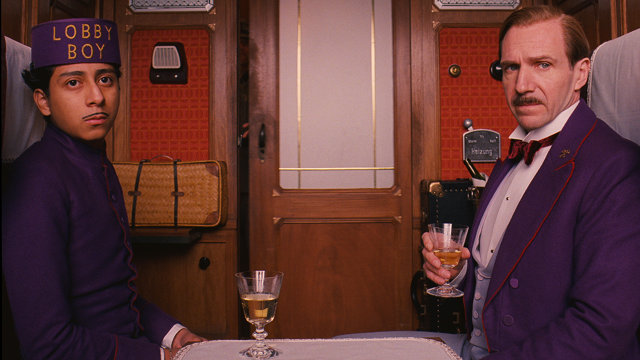
A hotel owner and his lobby boy (played by Tony Revoloro and Ralph Fiennes) go on a bizarre adventure in The Grand Budapest Hotel.

Anyone else here who missed seeing The Grand Budapest Hotel back when it was released in the spring? Yes, I’m guilty of that too. I can blame it on things like me being tired right after last year’s Oscar season to having a lot of preoccupations in my life at that time. This year’s Oscar race sent me the message of what I missed out on the first time. I finally saw it on DVD a few days ago and I now finally see why it ranks among one of the best of 2014.

This is another review of mine where I won’t give an analysis of the plot. Instead I will put focus on the movie’s strengths and possible flaws.

This film is quite typical of what to expect from a Wes Anderson film. It has an eccentric situation along with eccentric characters and a lot of comedy along the way. However this movie has its charm: the common charming eccentricity with Wes Anderson movies that continuously attract fans of his movies and moviegoers looking for something different. It’s also a trademark charm of the director that does not run stale with their movies time after time and continues to be enjoyable.

This too is a film that offers a lot and doesn’t make a whole lot of sense at first but makes sense as it goes along. It starts with a young girl paying honor to a writer in the present. Then flashing back to the writer in 1985 talking about hearing from Zero the owner of the practically lifeless Grand Budapest Hotel in 1968 about why he won’t close it down and Zero flashing back to 1932 to explain the whole story why. Wow, a lot of flashing back!

The story itself unravels itself over time with its various chapters from Zero joining the hotel as an orphaned lobby boy to the fictional country of Zubrowska nearing war to the owner Monsieur Gustave’s affair with Madame D to inheriting her most coveted painting much to the anger of her own family who hoped to have it to being framed for her murder. Yes, already bizarre. However the colorfulness comes with Zero’s love for the cakemaker Agatha whom he eventually becomes engaged to and helps bake cakes with escape tools.

The situation gets weirder as an assassin is on pursuit for him and the hotel needs to be managed, especially since news about a second will from Madame D is in existence somewhere. It’s after a pursuit while at a winter sport’s to kill off the assassin that the can return to the hotel only to find it overtaken by soldiers in the war and police on the hunt for Gustave.

As you can tell, this all makes for a bizarre confusing story and even leave you wondering about why the hotel is still in existence.  Understanding it means having to see the story for itself from beginning to end. There may be some confusing moments along the way and even a lot of eccentric humor but you will understand it and even the reason why a mountaintop hotel that’s completely useless is still in existence. You’ll even understand why the lobby boy is the only person in the world Gustave can trust wholeheartedly and would eventually own it. It’s no wonder Wes had to write a story along with his writing partner Hugo Guinness in order to bring this to the screen and make it work.

There are even times when I felt the story resembled Farewell To Arms, albeit with Wes Anderson’s dark humor intertwined into the story. Actually the credits in the end say the film was inspired by the readings of Stefan Zweig. I’ve never read Zweig’s writings so it’s hard for me to judge on that factor. Nevertheless the fact that Zweig was an Austrian Jew who fled to Brazil for refuge where he died may have some bearing on this. Even seeing how the character of The Writer looks like Zweig gives a hint.  Whatever the situation and even if the story does not go as well as you hoped it would, it does leave you feeling that it does end as it should.

Despite this film being another excellent work from Wes Anderson, we shouldn’t forget that this is also because of the excellent ensemble of actors. Many of which have already acted in Wes Anderson movies of the past. Here they deliver well as a whole to make the movie enjoyable and true to Anderson’s style of humor and style of film making. However it also succeeds well with those who have never acted in a Wes Anderson movie before, like lead Ralph Fiennes. He delivers a character that’s humorous and true to the humor of the movie. Newcomer Tony Revolori also adds to the charm of the movie as the young bellboy who becomes Gustave’s partner in crime as does Saoirse Ronan as Agatha. You can easily see why she won his heart. Even minor roles from other Anderson first-timers like Jude Law and F. Murray Abraham add to the story.

Even the technical aspects of the story are excellent. The costumes designed by Milena Canonero are perfect to a T in this movie as is the set design and the makeup and hair. All these elements fit the times they’re set in and add to the film’s charm. The cinematography by Robert Yeoman fit the story well and the music from Alexandre Desplat also fit the film.

The interesting thing to note is that The Grand Budapest Hotel is Wes Anderson’s highest-grossing film ever with $59.1 million in North America and almost $175 million worldwide. Buzz for the film first started after it won the Silver Bear at the Berlin Film Festival. Buzz continued after it continuously impressed film festival after film festival. Although his box office total in North America is not too impressive, it should be seen as respectable as it opened around the same time as the summer movie phenomenon that was happening. It made for a nice humorous alternative to the overhyped summer schlock.

The Grand Budapest Hotel is a DVD worth watching. We all didn’t know what we were missing during the summer and now we can finally see why.

Movie Review: Interstellar

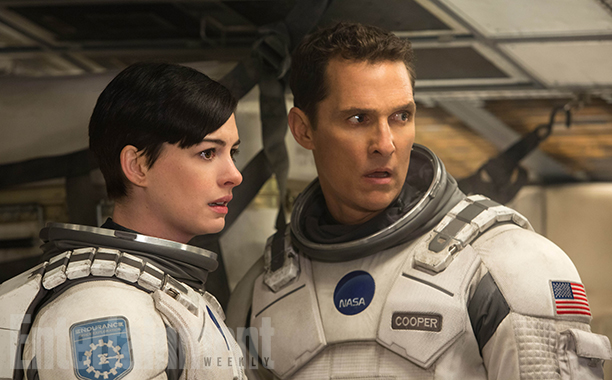
Matthew McConaughey and Anne Hathaway are on an intergalactic mission to save civilization on Earth in Interstellar.

Interstellar is one of those movies one would not expect to be too big of a success especially with a November release but it has really caught on. I had my chance to find out why just a short time ago.

Normally I would go into an analysis of the plot but I decided to skip it since it was so widely seen by now. Instead I will focus on how the film did as a film and as a sci-fi movie.

I will admit that this is not an original concept. A story of a civilization in danger requiring a trip to save it has been done before. I haven’t seen a movie where it required a space trip to do so but I’m sure it’s been done. In order for a movie like Interstellar to work those themes, it had to have a well-thought out story. Especially with the situation where saving civilization meant travelling to another planet or even another galaxy. Already at the beginning we see aspects of a hopeless world with crop blight and dust storms. We see further chaos at the school as Murphy’s teachers teach liberal conspiracy theories as the truth and Tom’s grades are great for his career pursuit but not competitive enough to get into a university.

A story like this also would have to make the time delay between space and earth work rather than look stupid and schlocky. Even for a space mission that’s doomed from the start to succeed, it has to be well-written and thought out with precision. One element that was rightfully included was the human element of the film. Cooper was to go on a mission to preserve the human race from a future of doom. It’s a trip where he ages one month for every seven years humans on earth age. It’s Cooper’s connection with his family over the spans of time–especially with Murph– that keeps the focus on why this mission has to be a success. It’s at the very end where Cooper who appears not to have aged a bit finally meets up with Murphy, elderly and on her deathbed surrounded by her family, that we see why this mission was so important. Even the images where Cooper talks with Tom and sees his grandson is an element that shows why this mission is necessary and why they have to succeed even when it seems all hope is lost.

The mission itself had to be smartly written from launch to activity to failures to battles and to returning to Earth in order for this film to be successful. The inclusion of TARS had to work. He can have his humorous moments but he can’t come off looking ridiculous as if he was trying to be a rip-off of C3P0 or Johnny Five. Also outer space and the terrain of the other planets had to look like a world unlike any other. That’s what makes a space movie: the ability to thrill as well as capture people’s imagination.

Overall, this is what Christopher Nolan had to do both as director and co-writer along with his brother Jonathan in order to make a film like this work. They not only had to show the hopeless state of the world but also make the mission work out even with its doomed failings and it had to keep Cooper’s connection with this family on earth while this aging gap was happening along the way. They had to deliver a film that was smart but also entertaining and mesmerizing like a film about space travel should be. They succeeded. Having a mission that was smartly planned out, making the staggered time lapsing happen and keeping Cooper connected with his family a galaxy away is what made this film not only work but win over audiences. It shouldn’t really be all that surprising that a smart sci-fi thriller should come from Christopher Nolan. He showed he can do a thriller that’s both intelligent and a box office winner with Inception. He does it again here.

The excellence of the film is not just that of Jonathan and Christopher Nolan. It also involved great acting from Matthew McConaughey, Anne Hathaway, Michael Caine, Jessica Chastain and even minor performances from Casey Affleck, John Lithgow and Matt Damon. I’ve seen better acting from all of them in the past but they all did very well here. Newcomer Mackenzie Foy was also very good in portraying the daughter with her love for her father and her anger for him.

Other standouts of the film were the top notch visual effects. A space movie is supposed to capture people’s imaginations and take the audience to a different world and it succeeded here. The cinematography from Hoyte van Hoytema delivered and the music from Hans Zimmer added to the feel and experience of the film.

Interstellar is a sci-fi movie that’s both imaginative and intelligent. It combines a smart story with a dazzling space mission and comes out a winner.

Super Bowl XLIX Preview

Super-BowlNOTE (Added Jan. 18/2016): Thank you to all the visitors to this post. I didn’t know I’d get so many all of a sudden. To thank you all for hitting this blog, I published my preview of Super Bowl 50 sooner than planned and it’s ready for you here.

Yes, Sunday February 1st will be Super Bowl Sunday. The game that’s both a major event for football fans and a media hype will feature the Seattle Seahawks against the New England Patriots at the University of Phoenix Stadium. Here’s what’s expected:

IT’S SHOWTIME

The XLIX Super Bowl was originally planned to be held in Arrowhead Stadium, home of the Kansas City Chiefs. However this was reliant on the installation of a retractable roof dependent on two sales taxes up for vote. That became something the Kansas City Chamber of Commerce and several civic and business groups voted against. It took until 2011 to decide the host site of the University of Phoenix Stadium with an expandable capacity of 72,000. Idina Menzel, or ‘Adela Nazim’ as John Travolta pronounced it, will sing the national anthem.

The halftime show was a bit of a struggle to assemble performers together. Their original choices for the show sponsored by Pepsi Cola were Coldplay, Katy Perry and Rihanna. However difficulties arose when league representatives asked their agent if they would provide financial compensation in the form of an up-front fee or a cut from their post-Super Bowl concert revenue. At least that’s what the wall Street Journal tells us, as was the ‘chilly’ response from those involved. And NFL spokeswoman denied this but Katy Perry was the only one of the three who has agreed to perform at the halftime show. She will be headlining the show along with special guests Lenny Kravitz and Missy Elliot.

AND NOW A WORD…

With the Super Bowl comes the tradition of their one-of-a-kind commercialfest. It’s been a buzz for three decades possibly starting with Apple’s 1984 ad. Airing a 30-second commercial will cost $4.5 million: $500,000 more than last year and the year before. Although it’s to be expected for auto advertisers to have much of the air time, there will be a lot more first-time Super Bowl advertisers like Skittles, Carnival Cruise Lines, Loctite, Morphie and Wix.com amongst the ten newbies. Movie previews will be another major advertising commodity as Paramount, Universal, Walt Disney, 20th Century Fox and Lionsgate will be showcasing trailers for movies like Terminator Genesys, Jurassic World, Minions, The Fantastic Four and Tomorrowland.

Super Bowl Fi

THE LOW-DOWN

One team is the last to win back-to-back championships back in 2005. One appears poised to become the first team since. Here’s how they fared this season:

New England Patriots

The Patriots began their regular season with a loss and ended with a loss. In between was an excellent season consisting of a total of twelve wins and four losses. That put them on par with the Denver Broncos on game stats but came out on top of the AFC because of point differentials. However they didn’t have as many decisive wins as the Seahawks did. Their playoffs started with a close 35-31 win over the Baltimore Ravens but their AFC Championship was a very decisive 45-7: their most decisive victory all year. That was enough to send a message to the Seahawks that they could just block their path to being repeat Super Bowl champions.

Seattle Seahawks

The Hawks were last year’s winners with the most decisive win since 1993. As for 2014, like the Patriots, the Seahawks had twelve wins and four losses. So did two other teams in the NFC but the Hawks came out on top because of point differentials, just like the Patriots. Their wins in the regular season have had wider margins than that of the Patriots. However things were different for the Hawks during playoff games. They had a 31-17 win over the Carolina Panthers for the Divisional championships and a 28-22 win in overtime over the Packers for the NFC Championships. That could put the Seahawks consistency in question and have people wondering if their luck.

MY PREDICTION FOR THE WIN

I’ll admit this is hard. It’s not like the CFL where all the teams play each other at least twice during the regular season. This is the NFL that’s loaded with more teams and is most often the case that the two Super Bowl contenders never met during the season, just like this year.

This is often the case where I would have to do a lot of reading up to decide. One thing to take note of is that both teams have had some key losses of players. Seahawks have lost Percy Harvin to trades and both Brandon Mebane and Jordan Hill to injury. Their replacement players don’t have the same defensive tackle and that could hurt if the Patriots are strong in the offense. The Patriots lost Jerod Mayo and Stevan Ridley to injury but have backup players can fill their shoes. On top of it, LeGarrette Blount has returned to the Patriots, giving the team a much-needed boost. I will have to give the win to the New England Patriots but I believe it will be a tight game that could result in low scoring. I predict the score to be 15-12.

So there you have it. My thoughts on tomorrow’s Super Bowl. The champion will be decided tomorrow night. Stay toond.

Movie Review: Whiplash

J.K. Simmons plays a jazz instructor inflicting tyrannical teaching methods on Miles Teller in Whiplash.
J.K. Simmons plays a jazz instructor inflicting tyrannical teaching methods on a drumming student played by Miles Teller in Whiplash.

There are no two words in the English language more harmful that good job.

One of the year’s biggest surprises has to be Whiplash. You think a movie about a jazz drumming student and his teacher wouldn’t be one to win people over but you’ll have to see it for yourself.

Andrew Neiman is a 19 year-old jazz drummer who has been accepted into the Shaffer Conservatory to pursue his dream of being one of the greats like Buddy Rich.  Despite practicing long hours, he does take time to take things easy watching movies with his father and even dating the girl working at concessions.

That all changes one day when during class, instructor Terence Fletcher who already has an infamous reputation among students substitutes for one instructor. It’s more than instruction as Fletcher is looking for a new drum alternate for the school band he conducts. Sure enough, Andrew catches his eye. Actually Andrew caught his eye days before while practicing alone.

On the first session, Neiman learns that part of Fletcher’s rehearsal methods is manipulating emotions out of his students. It is while rehearsing the Hank Levy song ‘Whiplash’ that Fletcher makes Andrew his target of attacks including berating him verbally especially when Andrew is brought to tears, throwing a chair at him and even slapping him for going off tempo. The rehearsal ends with Andrew being the alternate drummer and relegated to page turner for the lead drummer.

Instead of quitting, Andrew is determined to win over Fletcher and master ‘Whiplash.’ He listens intensely to its drumline and studies videoclips of the drummers. He even cuts his movie time with his father and breaks up with Nicole to intensely pursue his ambition. Then bad luck happens during a competition when Andrew misplaces the drummer’s sheet music. However Andrew is determined to perform ‘Whiplash’ without the notes. To the astonishment of all including Fletcher, he does it perfectly and becomes Fletcher’s new lead drummer.

However it’s short-lived as Ryan a drummer from Fletcher’s former class, is promoted to lead drummer. Andrew is frustrated to the point he confronts Fletcher only to learn Fletcher decides who has earned the part. That only drives Andrew to practice intensely to the point his hands bleed. Just before Fletcher starts rehearsal one day in tears, he reveals to all that one of his former students from six years ago Sean Casey, whom he describes as a ‘marvelous musician,’ died in a car accident. He starts rehearsal on ‘Caravan’, the next competition piece, but has a hard time picking out the right drummer for the song. Fletcher gets all three drummers including Andrew continually trying out the piece for several brutal hours until he makes his final decision at 2:30 am. He decides it to be Andrew.

Andrew buses to the competition but the bus suffers a flat tire. Andrew’s determined to be there on time to the point he rents a car but forgets his drumsticks at the rental office. Andrew only finds that out once he arrives and Fletcher dismisses him for not having his drumsticks. Determined to play, Andrew rushed back to the agency to get the sticks. Speeding to the concert hall and talking to Fletcher on his phone, Andrew is hit by a car. Despite the car flipping over and Andrew bloody and injured, Andrew rushes to the hall to play. A stunned Fletcher lets him play but it’s obvious Andrew is off as his injuries cause him to drop his drumsticks continuously. Fletcher gives him the words onstage: “You’re finished.” That causes Andrew to attack Fletcher onstage in front of the audience.

The attack caused Andrew to get expelled form the school. Soon Andrew learns from the lawyer of Sean Casey’s parents that Casey actually committed suicide and believes it was because of the personal torment endured by Fletcher’s teaching methods right from when he first started. Andrew agrees to testify, leading Fletcher to be dismissed from the school. Just when it seemed to be all over for Andrew, he learns months later Fletcher is performing in a club. Andrew and Fletcher meet up again and it’s during a drink together that Andrew learns why Fletcher teaches the way he does. Because he drives his students to be the next jazz great. And he saw it in Andrew more than the other two. Fletcher agrees to have Andrew as part of the band he’s conducting for the upcoming JVC festival where they will be playing the same songs. Andrew agrees. However things do not go as planned as Fletcher tells Andrew he knew he got him out. On top of it, the band opens with a piece Andrew never rehearsed. This leads to an ending that’s unpredictable and entertaining.

One can simply say it’s a story about a student with the drive and the teacher determined to make him succeed no matter how soul-crushing his teaching methods. I myself saw a lot more to it. I see it as about music and arts in general. We see and hear a lot of great pieces of music, great acting performances and great pieces of art. One thing we don’t often see is that it takes everything out of a person, especially their heart and soul. We also see that here in teaching as Fletcher verbally beats his students into the ground to bring out the best in them. He feels he’s doing the right thing even as he was blamed for Sean Casey’s suicide. He even brings up the example of Charlie Parker who was a substandard saxophone player until his bandleader threw a cymbal at his head. That was the turning point. I myself have taken acting courses and there have been times in which I was encouraged to dig deep into my soul even to the point of remembering some of the more upsetting moments of my life. It’s not uncommon for teacher sin the art to be that tyrannical to their students to bring out the best in them.

It’s not just about a teacher putting his students through such agonizing torturous methods to better his students and bring the best out of them. It’s also about the drive of a student. Andrew is determined to be the best drummer ever. In his mind, he thinks it’s better to be a success even if it means dying in his 30’s and having no friends than it is to be not so successful but live a long life and be beloved. Andrew is willing to practice drumming until his hands bleed, willing to give up his girlfriend and even determined to make a competition even if he’s in a car accident and the car flips over. The crazy thing is that there are a lot of people in the arts that feel that same way. That success in their art is better than being loved and even worth dying for. We see that in Andrew.

Even there, it’s not just about the teacher and about the student, it’s the relationship between the two. Fletcher can be brutal and abusive both verbally and physically but he pushes Andrew because he sees a quality in him he has not seen in a student before. Andrew is driven to succeed but he sees something in Fletcher’s tutelage that he feels he can’t get anywhere else. He senses Fletcher and only Fletcher can help him to be the best jazz drummer ever. And he’s willing to take it on even with the physical, verbal and emotional abuse. Even after both Andrew and Fletcher are both dismissed from Shaffer, Andrew still relies on Fletcher’s judgment on his abilities. Often Fletcher’s teaching and pushing Andrew can remind a lot of people of sports coaches who are that tough on their athletes but are determined to bring out the best in them. Andrew willing to endure it all to be the great he wants to be will remind you of athletes who wholeheartedly trust their coach to the point that they’ll willing to do illegal things like steroids upon their urging.

Without a doubt, J.K. Simmons owned the movie. His portrayal of Fletcher determined to bring out the best in his students even if it requires him to deliver physical or verbal abuse stole the movie. His focus on perfectionism, his love for jazz music and the greats, his portrayal of that kind of teacher will keep you glued to your seat. Even though Simmons owned the film, credit should be given to Miles Teller. He as well delivered an excellent performance of a student with a dream and determined to succeed even if it means taking physical abuse from a teacher. He also did an excellent job of showing how Andrew’s determination to succeed almost destroys him at times. Miles himself also drummed as a kid so it’s kind of natural he was chosen. Plus if director Damien Chazelle was interested in making his film bankable, he could have chosen Nick Jonas as Andrew. Miles was one who could both drum and act.

The film is actually the brainchild of director/writer Damien Chazelle. Chazelle wanted to become a successful jazz drummer in high school. He was in a very competitive jazz band in high school and had an intense music teacher who would become the inspiration of Terence Fletcher. However unlike Andrew, Chazelle knew he wasn’t good enough to excel in jazz drumming and turned to film making instead. You could rightfully call this film his baby. This film has won the Sundance Audience and Jury Award for Best Drama and the reception has been excellent.

 Whiplash is as much about the punishing training and studying music students go through to pursue their dreams as it is about the determined teacher, the driven student and the turbulent but solid chemistry between the two. It will also remind all you young ones with musical dreams that if you think chasing your musical dreams is a cakewalk, you couldn’t be wronger.