Normally I don’t see live-action family movies unless the renown for it catches my eye. In the last three months, there were two that caught my eye: Paddington and Cinderella. I’m glad I had the chance to see them.
PADDINGTON
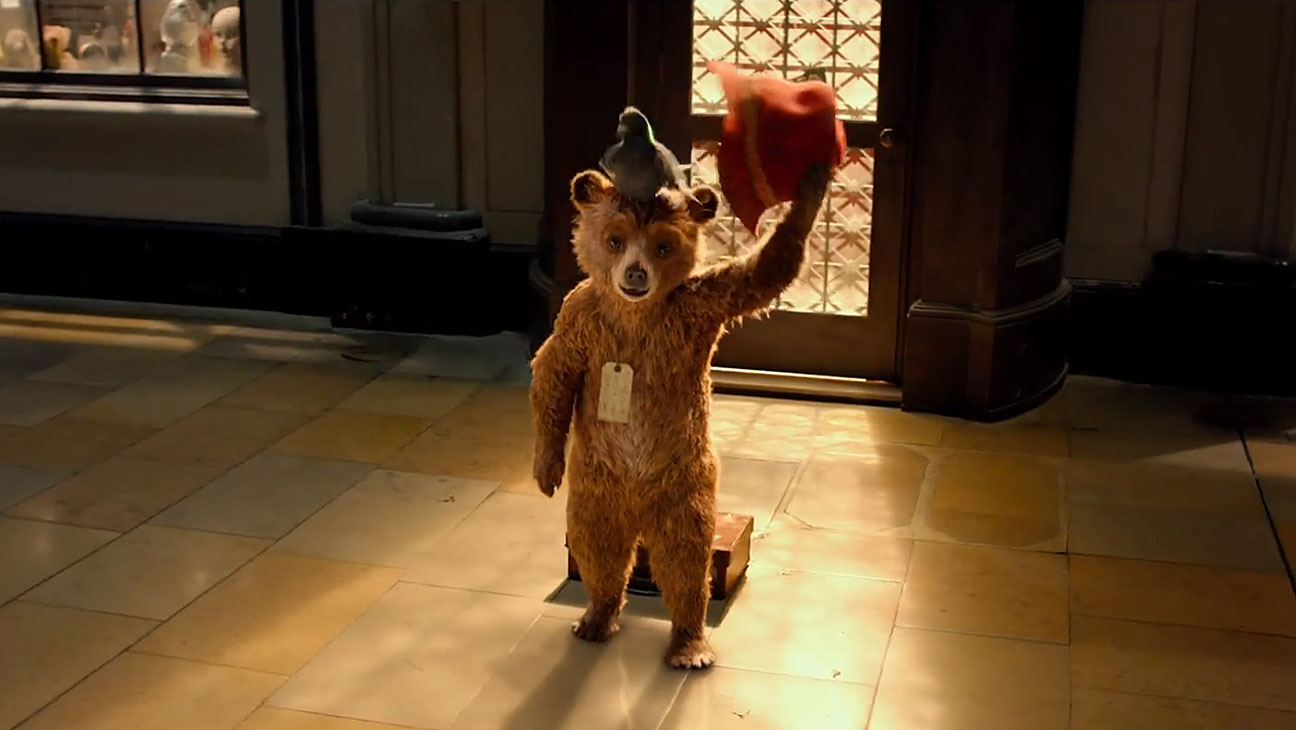
Paddington Bear was adapted into a movie for the first time. The movie is an impressive result.
For the first time, Paddington Bear comes to the big screen. And in live-action format rather than animation. However this did involve taking some chances. The first chance was making a movie that could entertain today’s children. The second was not having to mess with the Paddington Bear people know and love.
The film does a good job of keeping many aspects of Paddington such as his love of all things British, especially marmalade. The film also does a decent job of not trying to resort to too many cheap laughs like one would come to expect in today’s children’s films. It’s not to say there were some questionable moments, like the scene where Paddington thinks the toothbrushes are ‘earbrushes.’ The film also does a good job in presenting Paddington in today’s world and meeting the Brown family who are actually reluctant to adopt at first.
I give kudos to director/writer Paul King and co-writer Hamish McColl for coming up with a very good adaptation of Paddington Bear into a feature-length film. It was no easy task to make such a film especially when Paddington has resorted to being simple children’s books since the 1950’s. The plot where Paddington boats from Peru to London only to find a cold country, a reluctance to adopt from the Brown family and being pursued by the daughter of a poacher whose goal was to make him hers to kill and stuff worked well to entertain crowds. The inclusion of the effects in the film couldn’t be avoided as nowadays family movies have to have some special effects to win crowds. Even though Paddington wouldn’t be the type of movie for a lot of visual effects, the effects included did things right without messing with the story.
I also give them credit for not messing with the spirit of Paddington whose sweet charm is the reason why he has become one of the most beloved children’s book characters in recent decades. He’s even so beloved in England to the point there’s a bronze statue of Paddington Bear at Paddington Station where he got his name from. I also give them kudos for adding character to the Brown family. They may not be much like the Browns in the Paddington books but the character of the Browns do fit well in the movie.
Just as much deserving of respect are the performances of the actors. Hugh Bonneville and Sally Hawkins did a very good job playing the Brown parents. Madeleine Harris and Samuel Joslin also did well as playing the Brown children. They both played their roles well without being too overly-cutesy. Julie Walters succeeded in stealing scenes as the wise Mrs. Bird. Nicole Kidman also did a good job of playing the evil Millicent Clyde without becoming too hateable. Actually Millicent Clyde was rather entertaining as a villain. Finally Ben Whishaw did a very good voice-over as the voice of Paddington. Paddington needed a sweetness in order to make the story work and Whishaw was the right fit.
Paddington is now out on DVD and BluRay. For those that didn’t see it in theatres, it’s worth seeing. I don’t know if it’s the type of family movie one won’t need to see with a family of their own but it is entertaining and very good quality entertainment.
CINDERELLA
The live-action version of Cinderella had a lot of expectations placed on it but it delivered.
If you think making a film about Paddington Bear is difficult, try making a live-action version of Cinderella. And knowing that it will be Disney doing the work, you can understand they’d be under a lot of pressure. We’re talking about the film company that made their 1950 animated version a staple into many people’s hearts. So it would not be surprising that there would be a lot of questions surrounding the make of the new live action version. Will it have the same Disney spirit? Will it stray too much from the animated version that lives on in the hearts of millions? Or even the book? How will the sets and costumes be done? And will it entertain crowds of today?
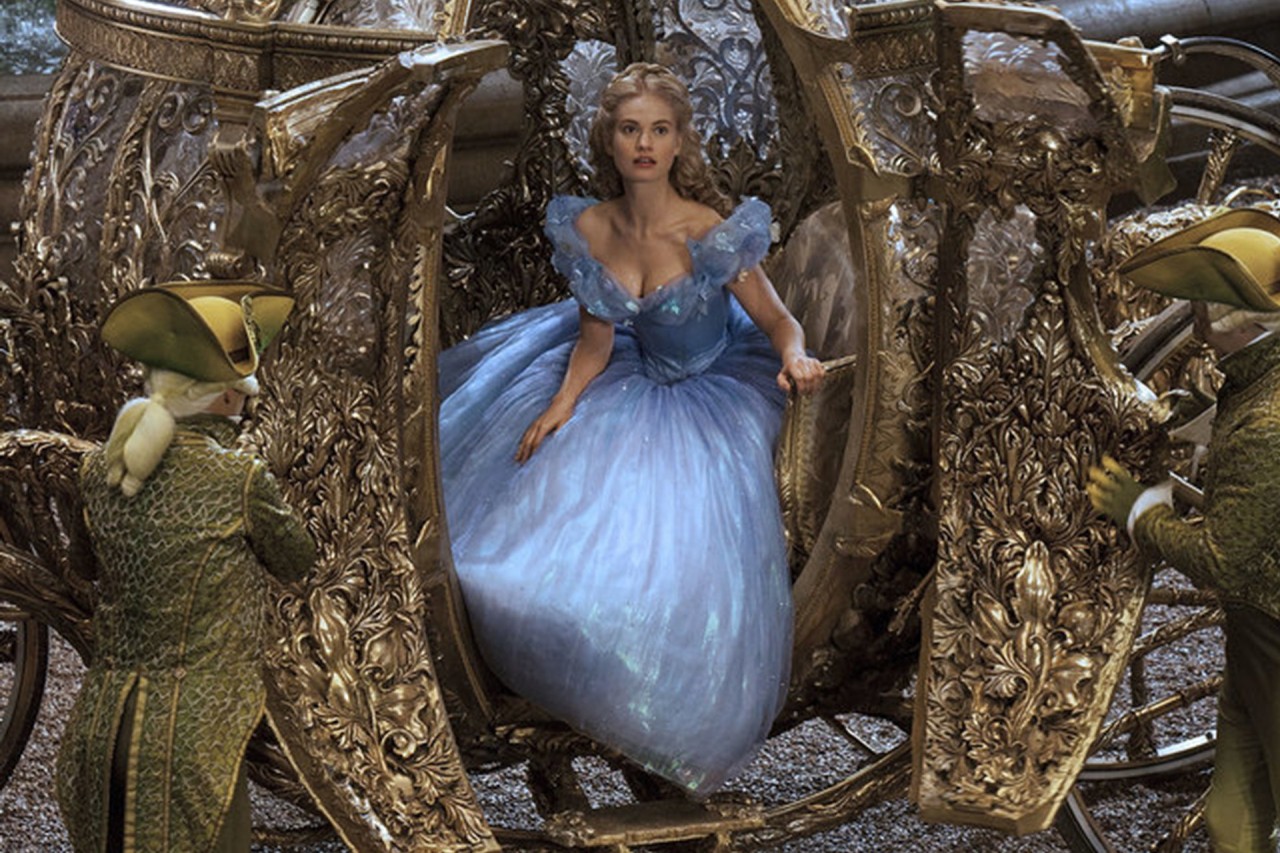
There’s no question that making a live-action version of a fairy tale can be expensive in production. Cinderella wasn’t too expensive to make but $95 million is expensive enough. For a film like Cinderella to work, there’s no question that one of the top aspects to focus on would be the technical areas like set design and costuming. Dante Ferretti was a top choice for set design. We’re talking about a set designer whose works have earned him nine Oscar nominations and three wins for The Aviator, Sweeney Todd and Hugo. Ferretti did not let anyone down. In fact his set designs in all scenes worked perfectly for the movie. It was hard to notice a glitch.
Costumer Sandy Powell was another top pick with loads of cred including ten Oscar nominations and three wins. Here she again adds to the reputation by making costumes perfect not only for Cinderella but for all characters in the movie. My favorite costumes were actually the bratty looking outfits for Drisella and Anastasia. It fit their brattiness perfectly. However Cinderella’s glass slippers really caught my eye. They looked more like crystal slippers. The visual effects team also did a top job in adding the necessary visual effects for the film and giving them the magic that will remind people of the magic Disney movies are famous for. They even succeed in making the mice and lizards human enough without being too ridiculously cartoonish.
Credit should also be given to director Kenneth Branagh and writer Chris Weitz. People easily forget that Branagh is as much of a director as he is an actor directing films from Shakespeare (Henry V) to comedy (Love’s Labor’s Lost) to superhero action flicks (Thor). Now he ventures into the territory of fantasy films. The result is excellent. Just as excellent is the writing from scriptwriter from Chris Weitz. He does a very good adaptation by retaining the spirit of Disney and even including some aspects not included in the original. Actually his writing makes you forget he wrote American Pie!
Despite all those efforts, the success of the movie would have to bow down to the roles being done right. The inclusion of the king, the prince’s father, added to the story as did the appearances of Cinderella’s parents. The characterizations of the mice and lizards were well done and didn’t go over the top or even cheesy. The characters of the two stepsisters were very good depictions. They were nasty and bratty but you’ll actually find yourself laughing at how stupid they are rather than hating them. If there’s one character you will hate, it’s the stepmother Lady Tremaine. Cate Blanchett did an excellent job of depicting Lady Tremaine as both cruel and hurting on the inside to the point she feels she should hurt Cinderella. Her depiction also fits within the common Disney theme of featuring a female villain who’s beautiful rather than ugly. Blanchett’s depiction actually seems more like the queen from Snow White rather than the stepmother of the animated version.
There were some radical choices for character depictions in the movie. The first was the prince as being more of an awkward young adult rather than the flawless Prince Charming we come to expect. Even referring to himself as ‘an apprentice’ during the casual contact with Cinderella is something no one would have expected. The most radical of character depictions has to be Helena Bonham Carter as the fairy godmother. I found it very different to have a clumsy fairy godmother this time around. I wasn’t expecting another fairy godmother that sang ‘Bibbity Bobbity Boo’ but this was way different from what I expected.
Finally I focus on the character of Cinderella. Lily James did a very good job as Ella. She’s already an experienced actress in her native England and she does a very good portrayal here. She portrays Ella as a young woman who doesn’t make having an imagination look like a weakness. We shouldn’t forget her imagination has kept her holding her head high during the toughest of times such as the deaths of her parents and keeps her going strong with her stepmother and stepsisters whom even her father described as ‘trying.’ Hah, ‘trying’ is an understatement! However she does not come across as naive as most would come to expect of her or anyone with an active imagination. In fact it’s the scene where she says to her stepmother: “You were never my mother and you never will be.” shows Cinderella to have more inner strength than most thought.
Focusing on Cinderella lastly seems appropriate because she is essentially the epitome of the theme of the movie. The movie showed two people who had a lot of tragedy in their lives: Cinderella and Lady Tremaine. One was bitter about it. The other did what her mother said: “Have courage and be kind.” Cinderella’s courageous positivity upset Lady Tremaine to the point she had to hurt her however she can. Cinderella stayed strong. There were some points where her courage was tested but she still stayed strong. I guess that’s what this version of Cinderella was trying to say. That staying positive is not being oblivious. That having an imagination is not a weakness. That’s what was not only shown in Cinderella but almost every Disney movie.
Both movies have had their own box office success stories. Cinderella has grossed $197 million in North America and over $500 million worldwide. Paddington was not as big of a hit but it did have its own success with $76 million in North America and $259 million Worldwide. Impressive since it was done with a $55 million budget. The marketers of Paddington did a common job but a smart job in releasing it in most of Europe, South America and Asia first during the latter weeks of 2014 before releasing it in the US on January 16th. That’s a common technique used to plug movies with characters common in European pop culture. They did that with Tintin back in 2012.
Paddington and Cinderella are two family movies that have pleased the critics and will also please audiences alike. Both have what it takes to entertain children but they both also have elements that will please adults.
Furious 7 was both a continuation of the Furious series and a final farewell to Paul Walker. But was it done right?
Sure, Furious Seven is another sequel. However it is one that has been anticipated hotly. Particularly of a star’s death. Nevertheless does it hold up as a movie?
I admit that the only previous Fast and The Furious movie I’ve seen was the very first one. I can’t really judge it against the ones I haven’t seen. What I can say is that it is for the most part a very cliched movie. There were some notable moments that made the story unique with some cred like Dominic’s love to Letty and Brian’s struggle of being a family man while simultaneously being part of the ‘mission.’ However it had the typical thick action you’d come to expect from an action movie. The plot is nothing you haven’t seen before. It also includes scenes where you’d feel it’s too over-the-top. It’s especially notable when you see Dwayne Johnson come on from out of the hospital with his machine gun. You can see the Mr. Heavy Testosterone acting there. Even the comedic parts from Roman looked too ridiculous and question if it was too over-the-top for this movie. Many times I asked myself during his ‘song and dance’ at the Dubai party “Is this really necessary?”
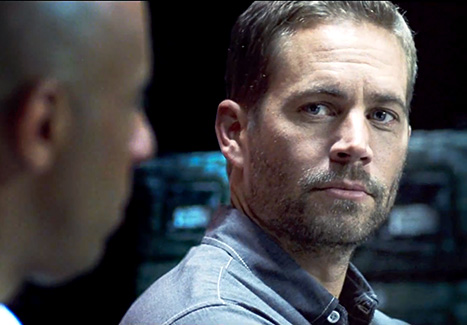
Despite all this, there are some relevant qualities to the movie. Vin Diesel did well as Dominic. Actually he made the role of Dominic in the franchise. I was better at stomaching him than Dwayne Johnson as he was better at playing a macho character that doesn’t come across as Mr. Testosterone. Michelle Rodriguez was also impressive as Letty as her acting wasn’t as showy or over-the-top. And Ludacris as Tej knew how to keep Tyrese Gibson from unnecessarily stealing the show. And Paul Walker, whom I will focus on later in this review, did a respectable job as Brian.
As I mentioned at the beginning, I’ve only seen the first of the series. The first Furious movie was a good adrenaline rush, especially for those who like to street-race, but had a formula too similar to what you’d find in popcorn movies. I remember turning 2 Fast 2 Furious down because Vin Diesel wasn’t in it. Being a person who’s only seen the first and the last, I have to say the films other biggest quality is showing how far this film series has come. When The Fast And The Furious started, it started as street racers who would find themselves involved in fighting criminal activity Most of which are at high speed. The film ended with a street race. Six sequels later, the street-racing days are over but the fighting crime has continued and even progressed to the point of the type of action you’d come to expect in superhero movies. High speed action scenes continue to occur but this will surprise anyone who has only seen the first Furious movie. I’m sure I’m not the only one. I usually pass on Hollywood sequels because for all intents and purposes, I consider most Hollywood sequels the actors, directors and producers playing around for two hours. This sequel was common to expect from a Hollywood sequel but it did have some positive traits. Showing how far this franchise has come since the first is one of them. When I saw the first, I didn’t expect it to grow this big.
Finally I’ll focus on the memorializing of Paul Walker in the film. It’s no question that the Fast and The Furious series was what made Paul Walker. Sure, he had experience as a child actor in TV and movie bit parts, sure he had a major role in the renowned Flags Of Our Fathers, but it is his role as Brian O’Conner in the Fast and The Furious franchise that he will most be remembered for. Of course the first movie was a product featuring Vin Diesel and hoping to propel his stardom further. Even though it did, it also made a star out of the supporting player: Paul Walker. It was the breakthrough Paul had hoped for. Otherwise his movie career’s peak would have been the Disney Schmalzfest Meet The Deedles. Paul would go to star in all but one of the Fast And The Furious movies. It seems like a bizarrely tragic irony that Paul’s death at the age of 40 came as he was street racing along with his friend and crashed his car at a high speed. The death could even add to the stigma of Paul Walker being Brian O’Conner. So it shouldn’t be that big of a surprise that Furious 7 opened huge, albeit a bigger-than-expected $140 million on opening weekend. That set a record for biggest opening weekend for an April release.
As for this movie being a fitting ‘last hurrah’ for Paul Walker, his acting was fine. Nothing spectacular but nothing out of what you’d expect for the role of Brian O’Conner. The ending first seems like a good tribute to Paul and a nice final salute to him. However it would not be too long until the secret was given out that Paul’s look-alike brother was used to film the final screen and that his face was computer enhanced to look more like Paul. Knowing that will make the final tribute to Paul very questionable. Even seen as tacky. It’s also a question whether this movie was intended to be Paul’s last Furious movie right from the start. Right into the plot Paul talks about the challenges of putting his past behind and moving onto family life. That could be a hint this may have been intended to be his last movie. Even the ending of the beach scene will make one wonder if it was planned before his death or after. Something to think about, especially as they’re in the works of making Furious 8.
Furious 7 is your typical Hollywood sequel continuing and building on the formula made popular. It also tries to be a good farewell to Paul Walker. Despite it being off in a lot of areas and leaves Paul’s farewell questionable, it does have some positive qualities and succeeds in entertaining its core audience and pleasing fans of the franchise.
Of course I’m better at predicting Oscar winners than MTV Movie Awards winners. Nevertheless it’s still fun to predict and it would be interesting to see who wins.
MTV Movie Awards have always a ‘people’s choice’ type of awards and they can go to anyone. Even the surest of the sure don’t always happen. One example is in 1998 right when Titanicmania was happening, Leo & Kate’s kiss in Titanic lost to the kiss between Adam Sandler and Drew Barrymore in The Wedding Singer. Even though the MTV Movie Awards hail themselves as an awards show ‘about movies, not films,’ independent films like Menace 2 Society and Napoleon Dynamite would win the Best Movie award. Even though sure bets have won, there have been some sure bets that weren’t really all that sure.
Anyways before I predict the nominees for the 24th MTV Movie Awards for Sunday, my comments about the nominees. The MTV Movie Awards have been commonly known in the past as the ‘Anti-Oscars’ for the show to give awards and nominations favoring towards popcorn movies with big fanfare that normally get Oscar accolades in the more technical categories like sound mixing or visual effects. Even categories like Best Kiss, Best Villain, Best Hero and most recently Best WTF Moment are an element that separates the MTV’s from the more stuffy Oscars.
This year I’m surprised to see a lot of Oscar fare among the nominations. Just look at the movies with nominations: Selma, Whiplash, Foxcatcher, American Sniper, even Birdman has some nominations. Sure there’s popcorn flavor like Guardians of the Galaxy, The Fault In Our Stars, The Hobbit and of course the latest Hunger Games movie but seeing more Oscar fare than usual this year is a surprise. I often feel it’s because it’s a reflection of the movie year that just passed. If you remember the 2014 movie year, it didn’t give the most memorable of movies. Good fare but not much that would remain beloved over time. I have to say that if there were people complaining about how lackluster this year’s Oscar fare was, they should remember how lackluster the popcorn fare of 2014 was.
Anyways without further ado, here are my predictions for the 2015 MTV Movie Awards. My prediction who I feel will win the bucket of popcorn will be marked with an * and my prediction for the most likely upsetter will be marked with an +. So here goes:
Movie of the Year
“American Sniper” (Warner Bros.)
*“The Hunger Games: Mockingjay – Part 1″ (Lionsgate)*
+“Guardians of the Galaxy” (Disney)+
“Gone Girl” (20th Century Fox)
“The Fault in Our Stars” (20th Century Fox)
“Boyhood” (IFC Films)
“Whiplash” (Sony Pictures Classics)
“Selma” (Paramount Pictures)
While the Academy has eight Best Picture nominees, MTV has eight Movie Of The Year nominees. This year there are four that stick out: Mockingjay because of the Hunger Games following, The Fault In Our Stars because this is the mushy romance with the biggest following since The Notebook, Boyhood because of a story that is a reflection of so many young people and Guardians Of The Galaxy, the summer movie of 2014. I would still have to go with Mockingjay as the buzz is still active despite lower box office take-in.
Best Female Performance
*Jennifer Lawrence – “The Hunger Games: Mockingjay – Part 1″*
Emma Stone – “Birdman”
+Shailene Woodley – “Fault in Our Stars”+
Reese Witherspoon – “Wild”
Scarlett Johansson – “Lucy”
Jennifer lawrence has been going strong. I think her only real threat would have to be Shailene Woodley as The Fault In Our Stars turned out to have a bigger following than expected. Nevertheless I expect Jennifer to hang on strong.
Best Male Performance
Bradley Cooper – “American Sniper”
+Chris Pratt – “Guardians of the Galaxy”+
*Ansel Elgort – “Fault in Our Stars”*
Miles Teller – “Whiplash”
Channing Tatum – “Foxcatcher”
No doubt about it. This has been the year for newcomer Ansel Elgort. Already I’ve seen his face on magazines and The Fault In Our Stars still has the buzz that it first had when it hit the theatres. It’s his for the taking.
Best Scared-as-S*** Performance
+Rosamund Pike – “Gone Girl”+
Annabelle Wallis – “Annabelle”
Jennifer Lopez – “The Boy Next Door”
*Dylan O’Brien – “The Maze Runner”*
Zach Gilford – “The Purge: Anarchy”
I admit I’ve only seen one performance: Rosamund Pike. So this has to be a random guess. I predict Dylan O’Brien because of the young following of The Maze Runner. Like I say, don’t take my word on these predictions.
Breakthrough Performance
*Ansel Elgort – “The Fault in Our Stars”*
+Rosamund Pike – “Gone Girl”+
David Oyelowo – “Selma”
Dylan O’Brien – “The Maze Runner”
Ellar Coltrane – “Boyhood”
Let’s face it. Ansel is definitely the breakthrough of the year. Even Rosamund doesn’t stand too much of a chance.
Best Shirtless Performance
+Zac Efron – “Neighbors”+
Chris Pratt – “Guardians of the Galaxy
Channing Tatum – “Foxcatcher”
*Ansel Elgort – “Fault in Our Stars”*
Kate Upton – “The Other Woman”
Ansel again. Besides Zach is becoming yesreday’s news according to the young set and Channing is neither a superhero nor Magic Mike.
Best Duo
Channing Tatum & Jonah Hill – “22 Jump Street”
Zac Efron & Dave Franco – “Neighbors”
+Shailene Woodley & Ansel Elgort – “The Fault in Our Stars”+
*Bradley Cooper & Vin Diesel – “Guardians of the Galaxy”*
James Franco & Seth Rogen – “The Interview”
Duos are always a hard call. Couples, partners in crime, partners in biz or buds? I went with the Guardians duo here.
Best Fight
Jonah Hill vs. Jillian Bell – “22 Jump Street”
Chris Evans vs. Sebastian Stan – “Captain America: The Winter Soldier”
+Dylan O’Brien vs. Will Poulter – “The Maze Runner”+
*Seth Rogen vs. Zac Efron – “Neighbors”*
Edward Norton vs. Michael Keaton – “Birdman”
Admit it. Often comedic fights win us more than the intense fights. So I went with the Neighbors fight.
Best Kiss
*Ansel Elgort & Shailene Woodley – “Fault in Our Stars”*
+James Franco & Seth Rogen – “The Interview”+
Andrew Garfield & Emma Stone – “The Amazing Spider-Man 2″
Scarlett Johansson & Chris Evans – “Captain America: The Winter Soldier”
Rose Byrne & Halston Sage – “Neighbors”
This is one where you don’t know where it will go. Will it go to the more romantic kisses or will it go to the more humorous kisses? I still have a feeling the Ansel & Shailene kiss will win.
Best WTF Moment
*Seth Rogen & Rose Byrne – “Neighbors”*
Jonah Hill – “22 Jump Street”
+Jason Sudeikis & Charlie Day – “Horrible Bosses 2″+
Miles Teller – “Whiplash”
Rosario Dawson & Anders Holm – “Top Five”
Best Villain
*Rosamund Pike – “Gone Girl”*
J.K. Simmons – “Whiplash”
Jillian Bell – “22 Jump Street”
Meryl Streep – “Into the Woods”
+Peter Dinklage – “X-Men: Days of Future Past”+
It’s hard to pick out which villain most kept moviegoers spellbound. I picked Rosamund for Gone Girl because it was her story of how clever she was that really had people at the edge of their seats.
Best Musical Moment
Jennifer Lawrence – “The Hunger Games: Mockingjay – Part 1″
*Chris Pratt – “Guardians of the Galaxy”*
+Seth Rogen & Zac Efron – “Neighbors”+
Bill Hader & Kristen Wiig – “The Skeleton Twins”
Miles Teller – “Whiplash”
Musical moment doesn’t necessarily mean singing or performing a straigh number. That explains why none of the numbers of Into The woods are nominated. It can include goofy karaoke or just dancing around. That’s why I went with Chris in Guardians. He had us all laughing.
Best Comedic Performance
Channing Tatum – “22 Jump Street”
Chris Pratt – “Guardians of the Galaxy”
Rose Byrne – “Neighbors”
+Chris Rock – “Top Five”+
*Kevin Hart – “The Wedding Ringer”*
Hard call between Chris Rock and the man many believe to be his heir apparent. I’ll go with Kevin.
Best On-Screen Transformation
Eddie Redmayne – “The Theory of Everything”
Elizabeth Banks – “The Hunger Games: Mockingjay – Part 1″
+Zoe Saldana – “Guardians of the Galaxy”+
Steve Carell – “Foxcatcher”
*Ellar Coltrane – “Boyhood”*
This is interesting to see who will win. My best hunches are with either Ellar and Zoe. I think Ellar because of how Boyhood has a following with the young.
Additional category added after original nominees announced:
Best Hero
Shailene Woodley – The Divergent Series: Insurgent
*Jennifer Lawrence – The Hunger Games: Mockingjay – Part 1*
Dylan O’Brien – The Maze Runner
Martin Freeman – The Hobbit: The Battle of the Five Armies
+Chris Pratt – Guardians of the Galaxy+
The buzz over Jennifer Lawrence and the Hunger Games hasn’t died yet so I assume a win here.
And there you have it for my predictions. There will also be three additional awards given out:
MTV Trailblazer Award: Shailene Woodley
Comedic Genius Award: Kevin Hart
MTV Generation Award: Robert Downey Jr.
Anyways stay tuned for the winners. Comedy Central star Amy Schumer will host. There are five musical performances lined up. Tomorrow should be an exciting night.
Red Army spotlights the Soviet hockey dynasty both on the ice and off the ice and reveals things we never knew.
If you like hockey, you may be interested in watching Red Army. It takes you back to a dynasty in sports history hockey fans will remember well.
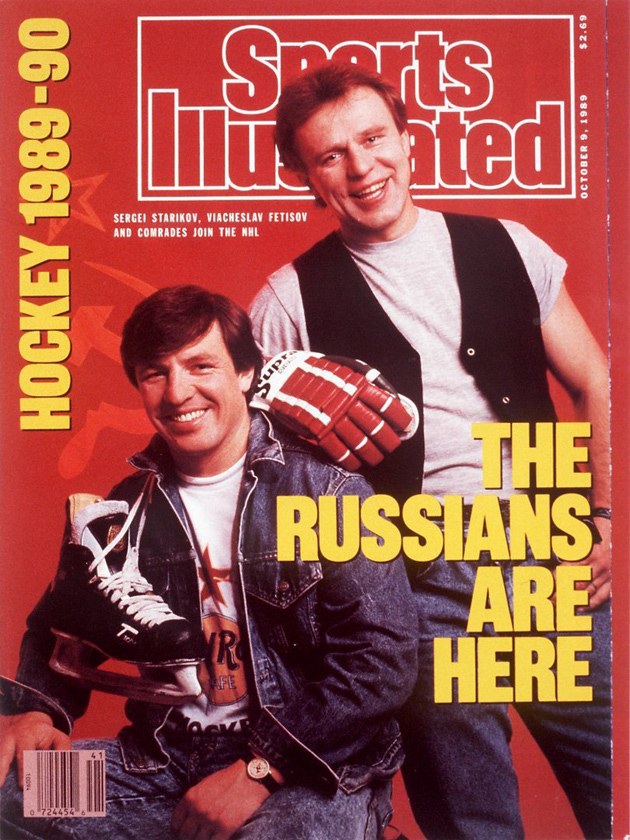
The film focuses on the glory days of Soviet hockey. It doesn’t focus so much on its first exposure of Soviet hockey prowess back during its early days starting with the 1956 Winter Olympics and continuing in the 1960’s. Its prime focus however was during the 70’s and 80’s when Soviet hockey was at its best and most dominating. This was the era of Vladislav Tretiak who is widely considered to be the best goalie in the history of ice hockey. This was also the era of Vyacheslav ‘Slava’ Fetisov and the magic five that included him, Igor Larionov, Alex Kazatanov, Sergei Makarov and Vladimir Krutov. As Canadians, we saw them as invincible machines who we all thought we’d lose to big time or have to put in a hell of a fight to win, as we did at the 1972 Summit Series and the 1984 Canada Cup.
The film also focuses on the team being instrumental during the Cold War. As many may remember, there was the ‘free world’ led by the United States and the Communist world led by the U. S. S. R. or Soviet Union as we commonly called it. Both countries were bitter enemies and both sought to defeat the other. The people were left paralyzed with fear feeling a war between the two might strike any day especially as each country increased its nuclear warheads. As far as sport went, it was in that arena where the Cold War was a common scene of rivalry. The Soviet Union as well as the other Soviet-allied nations of the Eastern Bloc wanted to use sport as a showcase of Communism’s superiority. The USA/USSR rivalry was always the biggest rivalry at any Olympics. The US had their winning sprinters, decathletes, boxers, wrestlers, swimmers and figure skaters. The Soviets had their gymnasts, throwers, weightlifters, cross country skiers, pairs figure skaters and especially its hockey team. The USSR saw their athletes as soldiers in the sports arena.
However the film does more than remind us of the times and the USSR’s dominance. It also showed life in the USSR. Life under the rationing system may have been fine before World War II but it was hard after the war especially with the country being devastated at a massive level. It didn’t rebuild well but rationing among its citizen’s still existed. It made for a hard life for most as people lived in crowded houses which might not have included running water. Even Slava Fetisov remembers receiving fish on Thursday. It also showed how the athletes were the privileged ones in the Soviet system while regular citizens had to stand in line-ups for their daily rations. It even showed the weakening of this system to the citizens in the 1980’s which paved the way to the reforms known as Glasnost and Perestroika and the eventual collapse of the USSR in 1991.
Of all the hockey players, the film focuses mostly on Slava Fetisov. Fetisov was discovered by sporting scouts of the government who were hired to search out talent at a young age to train up to Olympic level. That was sport in the Soviet Union: children were scouted out, analyzed physically for future athletic potential, and taken to central training facilities to train eleven months a year up to Olympic level. As cruel and inhumane it was for the USSR to do that, it worked and the USSR often had the biggest Olympic medal haul during that time. However the USSR cherished winning in ice hockey the most. In fact there was one propaganda song sung by boys about hockey where they sang lyrics like: “Real men play hockey. Substandard men don’t play hockey.” It was in the hockey stage where they could best show the world Communism’s prowess. It succeeded with winning a massive number of World Championships and eight Olympic golds out of the team’s ten Olympic appearances.
The documentary shows another side of the Soviet hockey team. We all saw the Soviets to play hockey like machines. What we would learn in that documentary is that the Soviets were not only prepared to have the brawn for the game but they were also prepared to have the smarts for the game as they were taught strategies by chess players. They were even taught ballet by some of the top ballet instructors. It wasn’t just tough training they went through but smart training too. What came of it was a play that was not only powerful and effective for winning but a play of style and finesse. Hard to believe none of us Canadians noticed that. Maybe if we weren’t so charmed by all this hockey fighting in the NHL, we would’ve noticed.
The documentary showed another aspect of the Soviet players that we missed all along. Sure, we saw the team as machines but the team was like a family. Slava Fetisov, Tretiak, Larionov, Makarov, Krutov, Kazatonov, they all saw each other as brothers. Of course when your taken from your own home and trained at a location thousands of miles away eleven months of the year, it should be natural to do so. It not only helped in making them better players but it helped with the players knowing their playing style inside out and make them a winning combination on the ice. A reminder that team chemistry was as essential to the success to the Soviet team as it is in practically any team sport. That was one of the qualities coach Anatoliy Tarasov— USSR hockey coach from the 1964 to 1972 Olympics– invested into the Soviet hockey team.
However the film also shows some darker sides of the Soviet team. It begins however on a positive note with Fetisov’s first experiences being coached by Tarasov in the 70’s. Tarasov wasn’t just simply a strict coach but he also played the role as a father figure to the team. Tarasov also helped develop key qualities in the team–speed, grace, teamwork, and patriotism– that became the blueprint of Soviet hockey and helped create their dynasty. However after Tarasov was fired, Viktor Tikhonov was brought in as coach. The Miracle On Ice game of 1980 really hit the Soviets hard not only as a loss of a gold medal but also what appears to be a turning point for Tikhonov. Tikhonov became a lot more ruthless to the players and trained them harder. You can understand why the Soviet players have a disgusted look on their face whenever you mention the Miracle On Ice game and don’t want to talk about it. It was not only a defeat for them but that also marked the time when Tikhonov became more ruthless. He dominated control over the players’ lives. He even cut players from the Soviet team if he sensed they might defect. One example of Tikhonov’s control was when one player’s father was dying. Tikhonov wouldn’t allow him to see his dying father. Things even got so frustrating for Slava at one point, he ran away from the national team to spend time with Tarasov. Here in the documentary none of the players have a positive thing to say about Tikhonov.
The documentary showed that even though the Soviet team was highly acclaimed by the government for their prowess, they were also under heavy scrutiny by the government. Tikhonov wasn’t the only one nervous about possible defections because of the temptation of the NHL. We should remember it was commonly expected that athletes from communist countries were expected to be proud to compete for national glory and reject temptations of money. The team as well as other elite Soviet athletes were allowed to hold Soviet passports: something most Soviet citizens were denied. They were however only allowed to hold them for when they were to attend a competition. Once they arrived back in the USSR, they had to hand them back. Members of the KGB traveled with them in case one member planned to defect. There was a fear that one defection could set off a wave. It reminds us for all their glory and special treatment from the government, they were puppets under a system with a huge eagle eye over them. In fact Tretiak may have been the greatest goalie ever but he was never once allowed to play for the NHL in his whole career.
The sudden arrival of Soviet players into the NHL was greeted with excitement but players like Fetisov (right) found adjusting to NHL play came with difficulties.
The documentary also shows when the bubble eventually did burst and Soviets eventually did find their way into the NHL. It all started when a junior player by the name of Alexander Mogilny decided to defect in May of 1989. Eight players including Fetisov soon followed. The arrival of such players was met with excitement for some NHL fans while others were more forbidding like Don Cherry who didn’t want any at all. However things weren’t easy. Even though Glasnost and Perestroika were starting to happen, Soviet athletes were still under scrutiny. Fetisov’s professional career in the NHL was monitored. As for play, Fetisov did not adjust too well to new life in the NHL. He learned right in his first game how the NHL was a different kind of play, especially when it came to fighting. His wife Ladlena had some challenges fitting in with the other wives of her husband’s NHL teammates. The struggle was common for a lot of Soviet players trying to adjust to NHL play. Nevertheless things eventually did pay off for Fetisov as he was with the Red Wings in 1997 the same time as Larionov and three other younger Russians. The team was able to get a chemistry of their own and they won the Stanley Cup. The team was able to bring the Stanley Cup to Moscow’s Red Square that year but not without challenges such as clearing things up after a post-victory limousine incident and negotiating with the Russian government.
The documentary ends with what has happened since. Fetisov has become a member of the Russian political party, a Minister of Sport in Russia and even part of Russia’s bidding team in 2007 for the Sochi Olympics in 2014. Tretiak is simultaneously the current President of the Russian Ice Hockey Federation and runs his own goalie school in Toronto which is considered physically punishing by most and very restrictive to whom is admitted. Tikhonov was given countless honors like the Orders of Honor and Merit in Russia and was even a nominee for the Olympic Order. The lives of all the hockey players living and deceased are also focused on at the end.
However the most notable end is the focus on the end of Soviet hockey. As you know the USSR collapsed in 1991. Surprisingly Tikhonov mellowed down in his coaching style afterward but it was still successful enough to bring the team of former Soviets under the name The Unified Team their last gold medal in 1992. The Soviet dynasty ended with as much of a bangs as it began with at the 1956 Olympics. Team Russia has been a different story. Russia continues to churn out top talents and top players. However Russia has never won Olympic gold. Silver in 1998 and bronze in 2002 but that’s it. They didn’t even have it together during Sochi when they lost their quarterfinal to Finland. Leaves you wondering when you remember that talk of the Soviet’s team chemistry if that’s what’s missing with the Russian team. The film ends showing Alexander Ovechkin, the current Russian phenomenon, playing a shootout game for a Washington TV station. A bit of trivia: Ovie was just two weeks short of his sixth birthday when the USSR collapsed. As he plays his game for the TV crew, we hear Slava saying something’s missing in Russian hockey. You’re left feeling that same way too.
One of the funny things of the documentary is that it will remind a lot of Canadians of the inferiority complex Canadians had to endure with in the 1980’s and maybe even the late 1970’s. Already Canadians were going through an inferiority complex of being made to feel second-fiddle to the Americans ever since the inclusion of cable TV bringing American entertainment into our living rooms. Adding to the feelings of inferiority to Canadians was seeing the Soviets excel in hockey. It was often a case of Olympic rules as the best Canadian players were professionals who were ineligible to compete in the Olympics. The best Soviet players however fit within the Olympic rules and were thus eligible to compete at the Olympics Games while the Canadian team at every Olympics during that era always fielded a diluted version of our very best. The Soviets almost always came on top while the Canadian team always fell short. Even when Canada got out its best pros for the Canada Cup, Canada would still face tough challenges from the Soviets as they were total machines and would almost always dominate over the Canadians. You can understand why Canadians cherish the memory of the victory at the 1972 Summit. You can also understand why the Americans hold the 1980 Miracle On Ice close to their hearts. Being second to the Soviets in what is ‘our game’ bit hard and left us down for a long time.
The film also brought back a lot of memories not just of the Soviet team but also how many of us remember the changes of Glasnost and Perestroika that were happening of the late-80’s and early 90’s. It even reminded us of the sports personalities at the time such as Brian Williams, Ron MacLean, Don Cherry, Don Wittman and Al Michaels. It also reminds us of many memorable moments in hockey. In fact it brought back the memories when I remember first hearing of Mogilny’s defection. Who would have thought that would be the beginning of the end?
Another unique thing is that it does something that was never done with the North American television stations before. It humanized the Soviet team. It reminded us behind the strong stoic Soviet team, they were human beings that went through a lot of difficulties. They had human heartbreak of their own. One example when Slava was in a car crash in 1985 that killed his 18 year-old brother. He went through a period of his live when e just didn’t want to live. Even Slava’s talk about his frustration with Tikhonov to the point he runs away to Tarasov showed that even these tough, stoic players had a breaking point of their own. To think all us North Americans saw in the Soviets were machines.
If there was one glitch in this documentary, it’s that Gabe Polsky sometimes does a bit of playing around with the interviews. In fact I remember seeing at the beginning him trying to ask Slava some questions while he’s on a phone call. It’s no wonder Slava flipped him the tweeter after the second question. We see Polsky do a few other stunts too. It’s a question if it was really worth it.
Another glitch is that the film was first released in the middle of 2014 and there was some information either missing or failed to update since. One missing piece of information is Tikhonov’s death in November of 2014. Another piece is of the Sochi Olympics where Fetisov was one of the Olympic flagbearers during the opening ceremony and Tretiak was the final torchbearer along with pairs figure skater Irina Rodnina whom herself is also a three-time Olympic champion and considered the best ever in an event known for Soviet dominance.
Red Army is an intriguing documentary that hockey fans will find worth watching. It takes you back to a stellar dynasty and a unique time. It will also show you a side of them you may have missed during their heyday.
DISCLAIMER: Some of you may wonder about the lateness of this blog. True, I could have posted this around the time of the nominations or around the time the winners were announced. However I was busy enough with watching and reviewing films around Oscar time. Also I was tired of blogging for a long time after the Oscars were awarded. This is something long-time subscribers of mine are familiar with where I take time out from blogging after the Awards. Nevertheless this is a subject that is relevant any time and is worth posting even now.
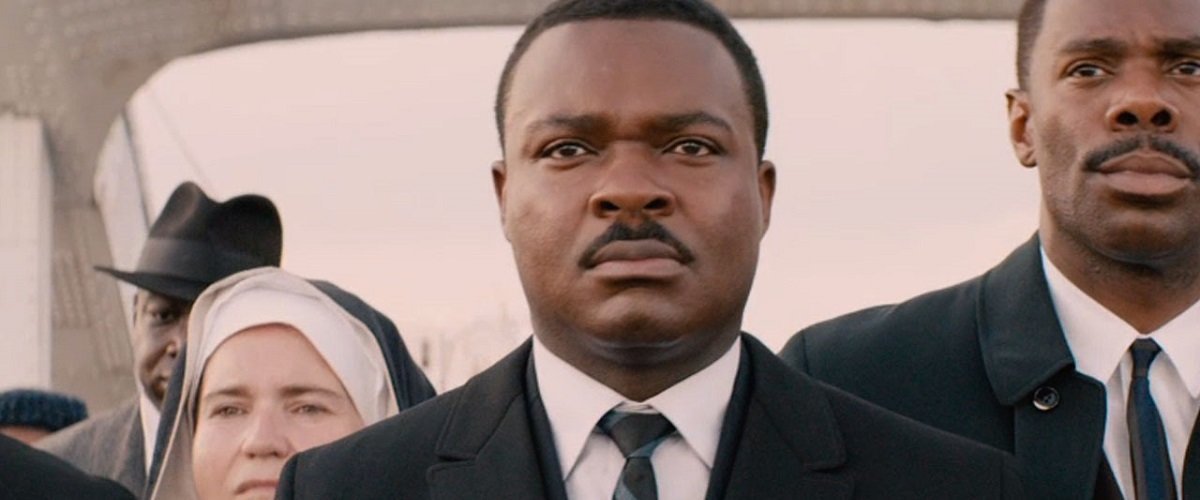
The Academy’s lack of diversity was exposed this year with the subbing of David Oyelowo’s performance of Martin Luther King in Selma from a Best Actor nomination and director Ava DuVernay’s snub of a Best Director nomination.
When the Oscar nominations came out Thursday January 15th, with it came the ranting and complaining from people. The Hollywood Reporter is right that if there’s one thing we love more than watching the Oscars, it’s complaining about them. Every year, there are complaints from people about nominations that deserved to happen but didn’t. The biggest example for this year would be The LEGO Movie snubbed in the Best Animated Feature category. There’s also the possible complaint from people, especially Republicans, that none of the eight Best Picture nominees had grossed even $60 million at that time. One such to raise eyebrows, especially at Box Office Mojo. However the biggest noise came over the lack of racial diversity among the nominees, especially the acting nominees. It was all over social media. It even appeared in a speech by Jessica Chastain at this year’s Critics Choice awards. The question being how legitimate is this claim? And what does this say of the film industry.
How The Oscar Race Works
One thing I’ve been doing in my fifteen years of paying close attention to the Oscar race is learning how nominations are won. One thing I already know that having a phenomenal performance or effort in a critically-renowned film is good to get the buzz started. Then it involves having it taken to all those Critics Circle awards, film body awards, Top 10 films of the year charts from critics, the Hollywood Foreign Press, the respective various guilds and members of the Academy through various DVDs with ‘for your consideration’ stamped all over it and even ‘for your consideration’ posters. Even things of merit like Oscar nominations require marketing to success in this lovely industry called showbiz.
Then it’s up for the Academy members to vote. How does one become a member? The easiest way– or should I say the most guaranteed way as nothing’s easy in showbiz– is be nominated for an Oscar. That’s the sure-fire method. The harder method is to earn consistent acclaim over the years with your efforts and performances. There are a lot of members that were never nominated for an Oscar so there must be some merit system towards achieving Academy membership. Performances and efforts get a lot of Oscar buzz and a load of acclaim from critics, critics’ boards and awards juries. It’s now up for the members of the Academy to vote for the nominees. One thing we need to remember is that nominating operates branch-by-branch. Actors nominate actors, directors nominate directors, scriptwriters nominate scripts, documentarians nominate documentaries, and so forth. One thing’s that’s certain is all members vote for Best Picture.
The funny thing is how many performances and efforts each year that are labeled Oscar-worthy. It’s like I always describe the nominations race: “Lots of performances deserving of the win. Only room for five nominees.” You can tell how hard it is to be among what should be called the ‘elite of the year.’ I even describe that by saying “Sometimes even excellent isn’t good enough.” It’s obvious why a lot of actors and other people in film rely on such buzz and advertising to get a nomination because they can’t rely on just their performance as-is. This is showbiz and it’s about that push and about politicking and advertising and cash pumping that lead to all these nominations and nothing is completely guaranteed. Even The LEGO Movie looked like a sure bet for the Best Animated Feature nomination but it didn’t get it. That to me was the biggest snub this year.
Then the nominations came. Selma was among the eight films to earn nominations for Best Picture. However the big shock came in the latter categories. Selma also had its best hopes in earning nominations in the Best Actor category for David Oyelowo and the Best Director category for Ava DuVernay. Both were already Golden Globe nominees and Critics Choice award nominees. However neither of the nominations happened. The only other nomination that Selma received was in the Best Original Song category for ‘Glory’ which had already won the Golden Globe.
The snubs bit. Ava’s bit especially since this would have made her the fourth black director and the fifth female director to clinch a Best Director nomination. Just as irritating is who was nominated in their place. For Best Actor, Redmayne, Keaton, Cumberbatch and Carell had enough buzz to sit pretty. David Oyelowo and Jake Gyllenhall of Nightcrawler looked like to be the tightest race for the fifth spot. For Best Director, Inarritu, Tyldum, Linklater and Anderson had the biggest buzz while DuVernay appeared to have her biggest competition for the fifth sport from Clint Eastwood for American Sniper. As what should have been expected for Best Actor, it went to a peer: Bradley Cooper for American Sniper. This was the third year in a row he was nominated for an Oscar. Unexpectedly in Best Director, the directors went for a lesser-celebrated peer: Bennett Miller for Foxcatcher. This is his second nomination, first being for Capote in 2005.
As much as the snubs bit, it’s not that unusual for more celebrated performances to be snubbed out in favor of lesser-hailed performances and efforts by Academy ‘peers.’ I first learned that in 2000, the very first year I paid serious attention to the Oscar race, when after I saw Billy Elliot, I was rooting for young Jamie Bell to get a Best Actor nomination. I even said: “If Billy Elliot gets a Best Picture nomination, then Jamie better get a Best Actor nomination.” The Academy granted my wish by making neither nomination happen. Favored over Jamie in the Best Actor category was the performance of Ed Harris, who had two previous Oscar nominations, in his self-directed Pollock: a movie and performance whose buzz either slipped under the radar or was kept low key because it wasn’t as heralded by previous awards. I saw it repeated in 2004 in the Best Actor category when Clint Eastwood was nominated for Million Dollar Baby. Sure his directing work was hugely heralded and his Best Director nomination was expected but his Best Actor nomination was completely out of the blue as it neither won nor was nominated for any other awards, major or minor. I continue to see it on a yearly basis in the Best Original Score category. It’s a given that whenever John Williams composes a score for a film, he’s guaranteed to get nominated. Even if it’s mostly unnoticed, it will find itself on the nominees lists even over more lauded scores by lesser known composers. Surprise nominees have happened in other categories over the years too. Rarely but often enough to take notice.
You can bet the outrage would start after the snubbing of Selma. All the acting and directing nominees were white. All the directing and writing nominees were white males. Additional irritation came when the script of Gone Girl was not nominated. This would have made Gillian Flynn the lone female writer among screenplay nominees. The anger came fast. Sasha Stone at the Awards Daily website was fuming. Bill Maher lampooned it. Jessica Chastain talked about the importance of diversity among Oscar nominees in her Critics Choice award acceptance speech. There was even the hashtag #OscarsSoWhite. The craziest news came from the Rev. Al Sharpton and his plan to start up a diversity task force on the Academy. Actually Al’s remarks were the least of my concern. Al Sharpton is less of a civil rights leader than he is a drama queen.
However it was later exposed in an Entertainment Weekly article where DuVernay herself was personally interviewed by the magazine the real facts. It wasn’t racism as so many want to believe. It wasn’t even the controversy of her portrayal of LBJ. Nor was it even her involvement in raising activism over the not-guilty verdict over the shooting of Michael Brown or her promotion of the ‘I Can’t Breathe’ campaign. It was however marketing. Even though she had a Golden Globe nomination as did Oyelowo, the film was shunned out of the Screen Actors Guild awards, Directors Guild awards and the Producers Guild’s Golden Laurel awards, weakening Selma‘s chances for Oscar nominations. Even her own late distribution of the promotional DVD to Academy members, meaning members wouldn’t get it until later-December with little time to spare for nomination voting, decreased Selma‘s chances even further. Who you know doesn’t just involve getting acting jobs. It can even involve awards nominations too. In the end, Selma was nominated for Best Picture but its only other nomination was for Best Original Song for ‘Glory,’ which would go on to win the Oscar. However Selma became the first Best Picture nominee since 2002’s Lord Of The Rings: The Two Towers without additional nominations in acting, directing or scriptwriting.
Whatever happened, it did expose a lot of holes in the Academy. Having a group of peers declaring nominees does leave for a lot of subjectivity in its choices. You can describe a lot of performances as ‘deserving’ of an Oscar win or even a nomination but the reality is this is showbiz. As much as there are a lot of performances and efforts deserving of nominations, I’m also well aware that showbiz is one domain where you won’t get what you deserve no matter how hard you work. Being able to command at least $1,000,000 per film, getting the big break of a lifetime and even getting an Oscar nomination are all as much about luck as even making it as an actor, especially in Hollywood. And it’s not uncommon to see peer favoritism in terms of Oscar nominations and seeing a deserving performance from an up-and-comer snubbed out.
Such snubs especially bite when it happens to a minority. People magazine even did a 1996 cover article entitled ‘Hollywood Black-Out’ about how black actors and other blacks in the film industry are shunned out. It’s not just blacks. Seeing the rare times when an actor/actress of a different race is nominated brings up reminders how their race is also given too little acclaim from the Academy. Having black celebrities like Whoopi Goldberg and Chris Rock host the Oscars has done little to quell this controversy. The fact that the AMPAS Academy is headed by a black woman, Cheryl Boone-Isaacs, still did little to ease whatever tensions over diversity pop up. Even the awarding of Best Picture to Twelve Years A Slave last year was instantly forgotten. Even though I’ve faced the fact that this is showbiz and there’s really no such thing as unfair, I too would like to see more diversity happen.
Diversity Not Just Black And White
It’s not just a case of black actors or directors or other African-American filmworkers of various trades. We should also remember about Latin Americans. The last fifteen years has seen a good number of nominations going to actors from the Latin American countries or Americans of Latin American ancestry but even those are very rare as are the wins. I think Benicio del Toro is the only winner for this century. Just as excluded are Asian actors. I remember there wasn’t a single acting nomination for Crouching Tiger, Hidden Dragon despite its many nominations. There have only been two winners in the history of the Oscars: Miyoshi Umeki and Haing Ngor. Even actors of other races have been shunned aside or given limited acclaim.
Even gender is a diversity issue. Four women have been nominated for Best Director. The first being Lina Wertmuller in 1975. The fourth and most recent being Kathryn Bigelow in 2009 who became the first woman to win the Oscar in that category for The Hurt Locker. Scriptwriting has been more friendly with more female nominees but still predominantly male. Nevertheless this year bit when the script from the hugely successful Gone Girl which was adapted to film by the novel’s own author Gillian Flynn was shunned out of the nominations. Gender diversity is more active in the technical nominations like Best Costume Design or Best Film Editing and even in the short film categories. Nevertheless seeing missing nominations in the higher categories does cause one to notice the exclusivity.
New Century, Bigger Diversity
The biggest surprise of it all is that the 21st century has either equaled, or has come close to equaling, the diversity numbers of the 20th century. On the subject of black actors and actresses, they have achieved five wins and thirty-one total nominations in the whole 20th century and amassed a total of nine wins and twenty-nine nominations in the 21st century. The 21st century has also included breakthroughs like Halle Berry being the first to win Best Actress and Denzel Washington becoming the first ever to win two Oscars. Even in the Best Director category there was only one black director ever nominated in the 20th century: John Singleton for Boyz ‘N Tha Hood. This century there were two: Lee Daniels for Precious and Steve McQueen for 12 Years A Slave. It’s not just African-Americans getting nominations and wins but black actors from many countries being nominated in this century like Djimon Hounsou from Benin, Sophie Okonedo and Chitewel Ejiofor from the UK and Mexican-born Kenyan actress Lupita Nyong’o.
On the subject of other races, one bright light was that 2003 had the most racially diverse set of acting nominees with nine non-white actors nominated including New Zealand Maori Keshia Castle-Hughes, Iranian Shohreh Aghdashloo, half-Indian British actor Ben Kingsley and Japanese actor Ken Watanabe among the many.
Some of you may be shocked to know that 2014 is only the second year in the 21st century that the acting nominations went all to white actors. Makes you wonder what’s more shocking? The fact that all were white or the fact that this is only the second year in the 21st century to do such? The only other year that this has been the case was 2010. Only back then there were no performances by racial minorities that garnered significant buzz to stimulate Oscar buzz. Not like this year where efforts from Selma achieved noticeable buzz.
Diversity is slowly but surely opening up in the directing categories. The last three Best Director wins have been won by racial minorities: Ang Lee, Alfonso Cuaron and Alejandro Gonzalez Inarritu. The 21st century may have had only two female Best Director nominees including one winner but there were only two in the whole 20th century. The 21st century has also opened up to female writers more. I even noticed in 2007 that three of the five scripts nominated for Best Original Screenplay were written by women including the winning script from Juno by Diablo Cody.
The Future Of Diversity In Hollywood
Despite the improvement in diversity over the last few decades, we have to look at the big picture of diversity not just in the Academy but Hollywood as a whole. I will admit that minorities are underserved in terms of box office fare. It’s not like the 90’s or the noughts where there were bigger box office stars of different races. Actually this last century has been an enigma in terms of defining a movie star’s success altogether. However I will say there was noticeably more movies back during those decades where a minority was the main star. We all remember a lot of those hip hop movies from long ago? Or even rappers taking on acting roles? Sometimes you wonder if we should blame Hollywood or the movie-going public? Like why does it seem the most racial diversity we see in terms of blockbuster fare nowadays are Tyler Perry movies?
Back on the topic of the Oscars, I wanted to delay my blog about this because I wanted the firestorm after the nominations to die down. Yes, there were a lot of people angry about the lack of diversity this year. There even some angry enough to dismiss past diversity of Oscar nominees, including AwardsDaily’s Sasha Stone dismissing it as an “Illusion of inclusion,” which is typical of Sasha’s ranting. There were some critics however who pointed out there were a lot of other snubs from deserving efforts from non-minorities reminding us how chancy it is to get nominated. Even one anonymous blogger said “You can’t simply give a nomination to them because they’re a minority. You should nominate them because you feel their performance deserves it.” It is true. Even though I would love to see diversity happen amongst Oscar nominees, I am aware of the harsh realities of showbiz including that of the Academy. In actual fact, the Academy actually does not owe anyone diversity. Same as Hollywood doesn’t really owe anybody anything. The only thing the Academy really owes on ‘Nomination Day’ are nominations to the five best performances and efforts of the year.
One thing I do feel the Academy should do is reorganize itself. It should especially reorganize its ability in selecting members of the Academy. It’s not clear how members of the Academy outside of past Oscar nominees are selected. One thing it should do is allow for more fair rules for allowing for diversity. Whatever panel that selects Academy members should go to more film events like the various film festivals for selecting new members including those with focus on minorities. It should go to more media events as well. I’m even tempted to suggest the Academy should expand its nominees per category from five to seven but that’s up for the Academy to decide.
Since I mentioned film festivals, this is my next focus on how to increase opportunities for minorities, and this isn’t simply for Oscar nominations. Film festivals have to be the most minority-friendly of opportunities. I know because I’ve attended the Vancouver Film festival for many years. I’ve seen films from various countries directed by a diverse variety of people including many films directed by women. Minorities of both race and gender should seize every channel they can to get their works out into the public eye and film festivals are their best bet. There are even ‘specific’ film festivals dedicated to race and ethnicity and even women’s film festivals including one festival that advertises ‘by women for everyone.’ That’s why I said after the Oscar nominations: “You want diversity? Go to a film festival. There you’ll get diversity in film making.”
Since I’m on the topic, that’s another thing I feel minorities should overcome: beating out false stigmas associated with their works. I know I’ve talked a lot about changes and improvements certain professionals should make. I can’t really say the same about minority actors and directors because they’re not really doing anything wrong. They should all keep doing what they’re doing and follow their dreams. Even David and Ava did nothing wrong really and they should keep on chasing their dreams. However they are sometimes given a stigma with their works and efforts that’s not entirely true in which they should fight off. I often feel that most of the film world thinks of black directors to be like Spike Lee who always has an angry view of white people. It’s not 100% true as Selma showed the white supporters of the Selma marches in a positive light. As for female directors, I feel there’s a bit of a myth that sometimes female directors can either direct ‘chick movies’ or be the type that mocks men just like Roseanne Barr used to. It’s not true as I’ve seen films directed by women at the VIFF that depicted men in a fair light. Plus I never saw Ava try to give a negative impression of men in Selma. Yes, these stigmas are an undeserved burden for them but they should fight it by letting their works speak for themselves.
In conclusion, the lack of diversity among the 2014 Oscar nominees not only exposed a big hole in the Academy but also in Hollywood. As if showbiz isn’t unfair enough. 2015 is only three months old. The 2014 Oscars were decided a month ago and the nominations for 2015 are 9 1/2 months away. There have already been film festivals like Sundance, SXSW and Berlin showcasing films for this year. There will be more film festivals this year like Cannes, Venice and Toronto and even smaller film festivals showcasing a multitude of films locally and around the world. Time will tell which will receive Oscar buzz. Time will also pay close attention to potential nominees. However tracing improvements or declines in diversity can’t be traced in a single year. This is something that will have to take at least a decade or two to see if progress in terms of diversity has been achieved. Even though Hollywood and the Academy is as much of a clique as any other channel of showbiz and even smaller film communities, barriers still should be broken and diversity of newcomers should still be welcomed.
2014 was definitely a year when minorities of both race and gender were overlooked in terms of Oscar acclaim. Despite the Academy being more open in the last two decades, most people were left with the common impression: “The more things change, the more they stay the same.” Only time will tell if improvements in diversity within the Academy and film making as a whole have been made.
After five and a half weeks of promos and buzz, all the winners will be decided…and 90% of us will only be paying attention to who wears what. Even 2005 winner Reese Witherspoon who’s nominated again this year will admit it: “It’s funny that it all becomes about clothes. It’s bizarre. You work your butt off and then you win an award and it’s all about your dress. You can’t get away from it.”
Nevertheless there are lots of us who care who wins what as an ABC commercial for the Oscars used the tagline: “It’s where stars become legends.” Even with the awards cementing cinematic immortality, there are also those of us curious about the Best Picture winner or who will win the most awards or even which hugely-nominated film will be the most shunned.
Whatever the situation, I’m sure you will be entertained with the Oscars. Neil Patrick Harris will host for the first time. We’ll see how he scores as host. We’ll also see what the show has in store for performances and tributes. And us cinemaphiles and Oscarphiles who pay close attention to what many consider to be ‘the biggest horserace outside of the Presidential election.’ Me, I continued my ‘relaxed’ approach again this year where I paid attention to the major award winners and calmly went out to see all the Best Picture nominees. It paid off again this year as I was able to do it with less stress. This makes it the fourteenth year in a row I’ve seen all the Best Picture nominees before the awards.
Now enough about my watching. Most of you will want to know about my predictions. This year I saw enough films and shorts that make up 86 of this year’s 121 total nominations. I’ll bet that’s more than most actual members of the Academy. Maybe I should become an AMPAS member simply because of that! Until then, here are my predictions for the winners for Sunday starting with a Best Picture rundown:
BEST PICTURE:
For this, I will give a brief review of the nominees one by one. As I said earlier, if you click on the titles you’ll get my full reviews:
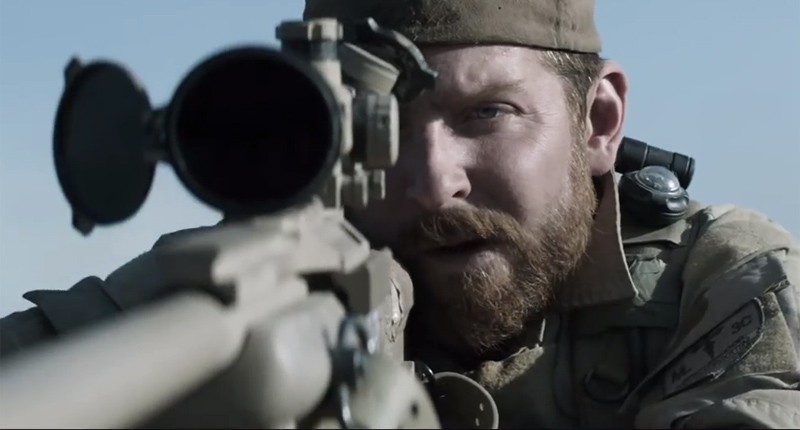
American Sniper– This movie is one that went beyond a lot of people’s expectations. Including mine. Also it presented a very provocative message which Academy members usually like. However its late buzz in the year could hurt its chances for Best Picture. I don’t think it’s as pumped or as awarded as many of the other movies to win Best Picture here. Even though I wouldn’t mind at all if it did.
Birdman – It seems like this Best Picture race has been two at the top: Boyhood and Birdman. Now Birdman appears to be a clever but eccentric film. However you will start to understand Birdman if you understand the career of Michael Keaton. This could have you guessing. Although I feel Boyhood will win Best Picture, I feel Birdman has the best chances of being the Most Likely Upsetter. It looks like this year’s Best Picture race may end up being as too close to call as last year’s.
Boyhood – Boyhood is a major accomplishment. Not only for what it accomplished cinematically but also for those that saw it. It had a certain charm to it that was common in a lot of independent films from the late-80’s early 90’s. I was reminded of that charm when I saw a replay of Mystic Pizza. The charm I’m talking about is not because it introduced the world to a 21 year-old Julia Roberts. The charm was the film and its characters had hopes, dreams and heartaches that were similar to ours. That’s the charm: films that were pieces of us. That charm was also very present in Linklater’s Dazed And Confused from 1993. They were teens from 1976 with similar desires and dreams and typical teen ordeals that were pieces of us. And we see that charm again in Boyhood as watching Mason Jr’s boyhood was almost like watching my own boyhood in a lot of ways. And that is why this film and American Sniper are the two movies that blew me away the most this year. That’s why Boyhood is my Should Win pick and my Will Win pick.
The Grand Budapest Hotel – What can I say? This is Was Anderson’s masterpiece. For years he’s given us quirky comedies that have charmed us. This time The Grand Budapest Hotel is not only his masterpiece but also the comedic masterpiece of the year. Even though Birdman is close on its heels, this made the better comedy. However I don’t think it will win Best Picture. Comedies rarely do. In fact of the fourteen Best Picture winners in this century, only two were a comedy or musical. And even if this would be the year for a third one, I think the Academy will take kinder to Birdman.
The Imitation Game – This film also has a lot for the making of a Best Picture winner. Top notch acting, directing and writing makes for a winner here. Even the box office draw is neither a help nor a hindrance. However it’s been made obvious that there are two movies that reign supreme this Oscar race and unfortunately The Imitation Game is one of those that’s so close but so far.
Selma – Selma has made more news for its snub of supporting nominations that it has for how good the film itself is. Many have used this opportunity to talk about how the Academy is full of ‘white men’ and tried passing it off as the reason for its snubs but an Entertainment Weekly article told what really happened. Ava DuVernay was late in submitting all those For Your Consideration DVDs to the various guild members and members of the Academy. Thus the huge snub-out. Having only a single Best Song nomination will definitely put its Best Picture chances to rest.
The Theory Of Everything – This would normally be considered a Best Picture contender. It has two of the best acting performances of the year and one heavily favored to win Best Actor. However I feel that the lack of directing accolades for this movie will hurt its chances.
Whiplash – This has to be the film from nowhere that did. And this is only Damien Chazelle’s second feature-length film. For those who like jazz music, this will entertain you. Those who’ve never taken a fine arts course or have never been involved with showbiz will end up hating Fletcher. But I believe it is the part of Fletcher that made this movie a surprise hit. However it is lacking the juice to be a top contender for Best Picture.
BEST DIRECTOR:
-Should Win and Will Win: Richard Linklater – Boyhood – What can I say? Do you know of anybody else that has done a film that films its characters over twelve consecutive years? This was a huge gamble and it paid off big time into one of the best movies of the year if not the very best. I will admit Dazed and Confused is still my favorite Richard Linklater movie but Boyhood is his triumph. An experimental piece that payed off big time!
BEST ACTOR:
-Should Win: Eddie Redmayne – The Theory Of Everything – A lot of people criticize the Academy for giving Oscars to performances of people with disabilities. Hey, it takes a lot of study and a lot of body preparation in order to achieve a completely believable performance. However Eddie went beyond imitating a famous person or portraying a person with a debilitating illness. He gave Stephen human emotions in many scenes even when he said nothing or was talking with his talking machine. He went above and beyond what I expected.
-Will Win: Michael Keaton – Birdman – Rarely do comedic performances win Best Actor. This performance was different. This was deep and reminded you just how uncomfortable life as an actor is, especially as a former A-lister who’s constantly reminded of the role from 20 years ago that made them a superstar. Also this was completely different from the Michael Keaton I’ve always known and seen. So that performance really grabbed me.
BEST ACTRESS:
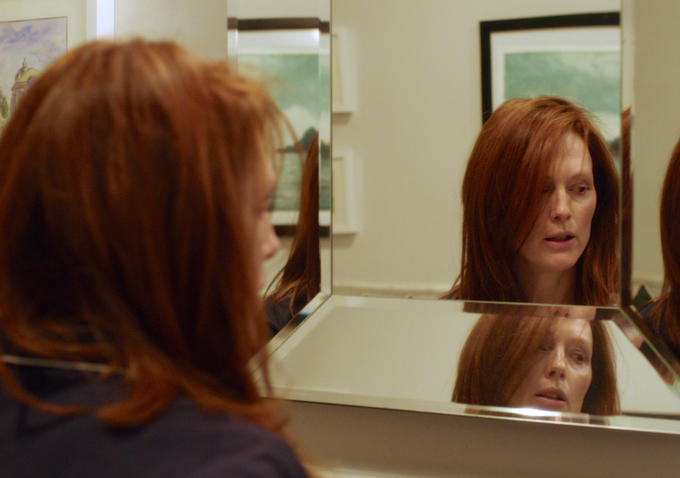
-Should Win and Will Win: Julianne Moore – Still Alice – What can I say? Julianne Moore has the actress performance of the year. It wasn’t about portraying a woman with Alzheimer’s and showing her deteriorate over time but also the character of Alice Howland that made the film as well. It was so full of dimension, it blew me away.
BEST SUPPORTING ACTOR:
-Should Win and Will Win: J.K. Simmons – Whiplash – Sure, you will find Fletcher dislikable even to the point you want to punch him yourself but I heard from an interview with an anonymous Academy voter: “There are many people in Hollywood that would model themselves after him.” Scary thought but just reminds you of what showbiz is like. Simmons was so dead-on in his role, I’d be hard-pressed to find an equal this year. Heck, he could have even been the lead actor.
BEST SUPPORTING ACTRESS:
-Should Win and Will Win: Patricia Arquette – Boyhood – There’s just no other competition this year. Sure, she ages 12 years like Ellar, Ethan and Lorelei but the neat thing about her role is that sometimes you think the movie could be more about her than Mason Jr. It’s easy to think that. Plus as she ages, she grows as a person too just like Mason Jr.
BEST ORIGINAL SCREENPLAY:
-Should Win: Alejandro Gonzalez Inarritu, Nicolas Giacobone, Alexander Dinelaris & Armando Bo – Birdman – Yes, Birdman was quirky and even eccentric but so is my Will Win pick. Nevertheless I think it was great to conceive a script that follows characters around and fits within a time frame of just about 48 hours.
-Will Win: Wes Anderson & Hugo Guinness – The Grand Budapest Hotel – Wes Anderson has always been known for creating some delightfully eccentric, or eccentrically delightful, films that charm us in the end. You could rightfully call The Grand Budapest Hotel his masterpiece.
BEST ADAPTED SCREENPLAY:
-Should Win: Jason Hall – American Sniper – I admit it. Ever since I saw American Sniper, I was blown away. Nevertheless this is an excellent script as it not only tells the story of all that happened but really gives a good perspective on Chris Kyle.
-Will Win: Graham Moore – The Imitation Game – Deserving in its own right. It took the biography of Alan Turing and turned it into a story told by Turing to all of us just as he was facing his downfall. Just the first line “Are you paying attention?” will have us paying attention.
Just OneMore:
BEST ANIMATED FEATURE:
-Should Win: Big Hero 6– With The LEGO Movie inexplicably snubbed from that category, there’s already one clear favorite as seen below. However I preferred Big Hero 6 because it added more to the fantasy element of animated films and plus it was a lot more fun and creative in its animation.
-Will Win: How To Train Your Dragon 2- Thanks to the snub of The LEGO Movie, this film is now the heavy favorite. Rare case that the first film didn’t win in this category but the sequel has way better chances. Nevertheless this is a rare case where a sequel to an animated movie didn’t lose its charm. It makes for a deserving winner. However upsets are possible. Not just from Big Hero 6 but also from The Tale Of The Princess Kaguya.
Here are some of my predictions for the other categories. In these, here’s who I think Will Win:
BEST ART DIRECTION:
– The Grand Budapest Hotel
BEST CINEMATOGRAPHY:
-Emmanuel Lubezki – Birdman
BEST COSTUME DESIGN:
-Milena Canonero – The Grand Budapest Hotel
BEST DOCUMENTARY FEATURE:
–Citizen Four
BEST FILM EDITING:
-Sandra Adair – Boyhood
BEST FOREIGN LANGUAGE FILM:
–Ida – Poland
Some of you may wonder I’m not adding a Should Win prediction in this category this year. Simple, because I haven’t seen a single one of the nominees. Yeah, first year since 2008 that has been the case.
And there you have it. My predictions for Sunday’s Oscars. It’s not easy predicting even after all these fifteen years of paying close attention to the Oscar race in both nominees and winners. The more I get a better understanding of the Academy over time, the more I’m still left confused. Anyways winners to be decided there and then. Let’s hope the wins go to the right movies. Also let’s hope Neil delivers a great rookie performance that will make him be in demand for future Oscar shows.
Unbroken is the story of American Olympian Louis Zamperini (played by Jack O’Connell) and his ordeal as a POW in Japan.
One of the surprise hit movies of the winter was Unbroken. many would think it’s another World War II drama but it’s more of a biographical story. A story worth telling.
The story begins in 1943 with Louis Zamperini missioned an air battle against Japan over the Pacific Ocean. The plane he’s in is hit but they’re able to land safely. Louis isn’t just your typical soldier. Louis grew up in Torrance, California an outsider. The only Italian in his small town, Louie was subject to a lot of bullying as a child and spent much of time stealing, drinking alcohol or smoking. He was frequently arrested and his parents were very concerned if he’d turn out okay. His older brother noticed something as he tried to run from bullies: speed. His brother encouraged him to try track and field. It paid off as Louis became the talk of the town as he was winning race after race and soon became known as the Torrance Tornado. At the age of 18, he qualified for the 1936 Olympics in the 5000m. The race was won by Finnish runners as expected but Louis finished eighth with an incredible 56-second last lap: something unheard of at the time.
Soon after, Louis and surviving members of the crew are on a rescue mission on a plane military officials believe is suitable to fly but has noticeable faults. Over the Pacific Ocean, the plane breaks down and crashes. Only Louis, Mac and Phil from the plane survive and find refuge on two inflatable rafts. Alone at sea, the two try to live the best they can until relief finds them or they hit land. That would mean drinking rain water and fishing for food and avoiding having sharks try to eat them. Attempts at getting a rescue plane failed. The first, that happened on the third day, didn’t notice them. The second, on the 27th day, is a Japanese plane that sees them as the enemy and shoots at them. They survive by hiding under their raft. Unfortunately Mac dies on the 33rd day.
On the 47th day, they bump into a Japanese boat, where they’re taken on as prisoners of war. The Japanese demand fact but neither Louis nor Phil know anything. This leads them being sent to POW camps on the mainland. Zamperini is sent to a camp in Tokyo full of Americans and Australians and run by a sadistic young general who calls himself ‘The Bird.’ The Bird has especially singled out Louis because he’s an Olympic athlete and takes pleasure in beating him. The Bird also gets Louis to broadcast messages on radio that he’s okay and treated well. When he’s given an offer to speak anti-American propaganda, Louis refuses and is punished by having all the other POWs punch him in the face.
The Bird would torture Louis for two years until he is to be transferred elsewhere. Louis’ relief is short-lived as the camp is damaged by the American bombing in Tokyo. They’re all taken to a new camp which is run by The Bird and are made to work in a coal barge. Upon hearing Louis sprained his ankle, The Bird gets him to life a big piece of wood. If he drops it, The Bird will kill him. Louis holds it up for hours until The Bird can’t take it anymore and beats him in frustration. Soon World War II ends and the movie moves to Louis returning and makes mention of his life after the War.
This is an impressive story about one man and his ability to withstand torture. This is also an impressive story of a man who was singled out among other POW’s in being tortured by the leader only to triumph in the end. It even succeeds in the action moments and has the audience wondering what will happen next.
However the way the movie has been carried out, it’s nothing new, different or fresh. The story plays out like a common Hollywood against-all-odds story. There’s nothing wrong with that as long as it plays itself out well to the crowd and keeps the story true. However this is not going to work come Oscar time when the standards of what makes a movie among the ‘elite of the year’ change and evolve over time. This could be Best Picture material twenty years ago but it won’t cut it now. Unbroken makes better movie material than film material. There’s nothing wrong with it. It’s just the movie is better set for something like summer movie fare.
However the movie does have a notable positive factor. I may have mentioned in my review of Selmaof how violence is made to look cowardly. Here in Unbroken, we have The Bird who loves to inflict pain on ‘the enemy’ and has taken Louis as his favorite person to assault. The Bird was looking for a chance to kill Louis with having him hold that block of wood up or else he’d kill him. When Louis succeeded it lifting it up again, it was there the Bird’s pride was damaged and he beats Louis with a bamboo pole in frustration. I can’t think of better revenge. Funny how it would assault The Bird’s pride forever as he would decline all the times Louis offered to make peace.
This also leads to another glitch in the movie. Louis is not only known for what he withstood during the war but also for making peace with the Japanese people and even the army over time. At the end, it’s only focused briefly through end-notes and video footage of Louis running with the torch in Japan during the 1998 Nagano Winter Olympics torch relay and not much else. I felt that should have be added in or given script because it is a significant part of Louis Zamperini’s life.
Angelina Jolie did an impressive job in directing. She didn’t really direct anything remarkable but she did an excellent job of directing a story that’s also a war thriller. Joel and Ethan Coen delivered a script with the help of William Nicholson and Richard La Gravenese that’s a surprise from the Coens. Usually you’d expect darker artsy work from them. This time they delivered on a thriller war story. Not what you’d expect from them but quite impressive. The acting was good if not spectacular. Jack O’Donnell was very good as Zamperini but the role could have been more developed. Miyavi was also very good as The Bird but I felt the role was missing something there too as it still seemed like your typical bad guy.
If there’s one place where the film is at its best, it’s in the technical categories. Alexandre Desplat again delivers another winning score. It should be no surprise Desplat is composer of the year. Roger Deakins again delivers another excellent cinematography job, the set areas were very realistic to the World War II era with its set time and with its war-like grittiness and the action sequences were also excellent.
Unbroken is a very good, very enjoyable movie about a remarkable story. However it would’ve been better released in the summer or the fall instead of Oscar time. Still very much worth watching.
Julianne Moore plays Alice Howland, a 50 year-old woman coping with Alzheimer’s in Still Alice.
“I wish I had cancer. At least then people wear pink ribbons for you, and they go on long walks.”
It’s always a question whether it’s possible to have a film about Alzheimer’s Disease that’s watchable. The latest film making that attempt is Still Alice. I believe it does so.
Alice Howland is a 50 year-old woman who appears to have it made: a college professor who just published a book on linguistics, an active person recreationally, a wife to a loving and supportive husband and a mother to three adult children. One of which is married and about to be a mother to twins. However something goes noticeably wrong during a lecture about her book. She has a mental lapse she mistakes for an effect of alcohol. Soon there are more mental lapses, especially while jogging around campus and while giving lectures. Even reintroducing herself to Tom’s girlfriend causes people to wonder. Alice seeks a doctor’s attention immediately. She’s given the news: Alzheimer’s. She’s victim to a gene that brings on Alzheimer’s at an early age.
The family is devastated to hear the news. The children even have to get tested to see if they carry the gene. Anna bares the gene but her yet-to-be-born twins are immune. Nevertheless the family tries to go about the best they can while trying to be a help to Alice. However the changes are as hard for them as it is for Alice herself. Firstly Alice will have to give up her professor job. Going to an Alzheimer’s ward in a nursing and witnessing the patients leaves her upset about her future to the point she plans her own suicide using a marked bottle full of pills and a video file on her computer named ‘Butterfly’ of herself instructing her to take all the pills in the bottle. Family friction happens over time as her husband John notices changes in her thinking and Lydia overreacts after she learns Alice went through her theatre notes.
However things get better over time. John learns how to work with her fading abilities and become patient with her even in the case of her cellphone she misplaced a month earlier. Anna gives birth to the twins and she’s able to hold one of them. Her relationship with Lydia grows as Lydia shares her plays with her and gets Alice to see her perform in Angels In America where Alice feels the play. Even Alice is able to give a lecture to the local Alzheimer’s association where she delivers a speech she wrote herself and uses a highlighter to mark the notes she read as John and her son Tom watch. The speech is near perfect.
Over time she continues to acquire inner strength just as the disease is continuing to impair her brain even further to the point she needs a caretaker while John is gone. However it’s by chance that while her caretaker is away, she comes across the ‘Butterfly’ video on her laptop. She obeys the video and even takes the laptop with her as she searches for the bottle. However the suicide attempt fails as the pills still all over the bathroom floor. The film ends with her still alive but will get you questioning if it ended right.
The film is more than just about Alzheimer’s. It’s about having it at a very young age and trying to be able to deal with it and its debilitating effects. You can’t blame Alice for being distraught on hearing the news, especially when she has so much going for her. Just a bit of trivia here: even though 50 seems awfully young to have Alzheimer’s, we should remember the first subject Dr. Alois Alzheimer studied in the disease that bears his name was a 51 year-old German woman. It almost seems understandable to some that Alice sets her own suicide up to happen when the time appears right. However it’s about acquiring inner strength over time. Yes, Alice’s years are numbered and the disease is taking a toll on her mind and her body but she becomes a stronger person over time. It makes like the suicide attempt look like the wrong thing to do after what she’s fought out.
The movie is also about family relations during Alzheimer’s. For those who have a loved one with this disease, you would know how much it affects the whole family and even hurts deeply. It’s even harder to bear when the gene that causes early Alzheimer’s is present in other family members, just like how it’s also present in Alice’s oldest daughter Anna. The frustrations are there in the Howlands as Lydia doesn’t know what to make when she learns Alice went through her script notes. Even John feels the frustration as being the husband. Nevertheless the family unit becomes stronger over time and they continue to function the best ways that they can. Lydia’s connection with Alice through her theatre work helps Alice still keep in touch with the world even as the disease continues to take its toll. Anna even tries to let the fact she bares the gene not bother her and continue to live her life as a wife and mother of newborn twins. That scene where Alice is holding her grandchild is one of the more poignant moments of the film.
Without a question, the film belongs to Julianne Moore. Her ability to give an Alzheimer’s victim a personality and a will of her own while fighting the destructive nature of the disease has to be the actress performance of the year without an equal. She did a top notch job and deserves the Oscar. None of the supporting performances can pare up to the caliber of Julianne’s performance but Kristen Stewart’s performance of the actress daughter with extreme emotions who connects with her mother through the art of theatre has to be the best of the supporting performances and has more range than even the character of John, despite how good of a job Alec Baldwin does. Kate Bosworth was good as the daughter with the same gene trying to live her life normally but it could have been developed more. Hunter Parrish’s role as Tom the son was the most underdeveloped role in the film but he does a very good job with what little he has. Richard Glatzer and Wash Westmoreland do a good job of directing and writing despite making this film appear to be a film of a single acting role dominating for the most part. I’ll admit I haven’t read the novel by Lisa Genova so I can’t say if they adapted it right or not.
SPOILER ALERT: They say the ending is one of the trickiest things to do in a film. I will have to say the scene of the suicide attempt ended rather flat and led into scenes that will leave one wondering if the film makes it look like a good thing the attempt failed or a bad thing. That scene where Alice is with John having ice cream dwelling on how she used to be very smart will have you wondering as will the end scene where she’s with Lydia and she can hardly talk. It also makes you wonder if it ended right. But I think that may have been the point. I think Richard and Wash ended the film that way so we can make our own judgment whether Alice continuing to live is the right thing or the wrong thing.
Still Alice makes for a very watchable movie about Alzheimer’s even if it does appear at times to be dominated by Julianne Moore’s acting. Nevertheless her role is one that leads to a performance meant to shine and she does just that.
American Sniper appears to be the story of Navy SEAL Chris Kyle (played by Bradley Cooper) but it’s a lot more.
If you think that this war isn’t changing you, you’re wrong. You can only circle the flames so long.
It’s easy to dismiss American Sniper as a pro-war movie at first. Especially when you see the attitude of its protagonist. However if you watch it from beginning to end you will see that it’s a lot more than a tale of a sharpshooter and may not be as pro-war as you think.
The film begins in 2003 during the Iraq war where US Navy SEAL Chris Kyle sees a civilian woman pass a huge grenade to her 8 year-old son and is about to shoot. Before he pulls the trigger, we flash back to an 11 year-old Chris who impresses his father with his ability to shoot a deer from long range. His father teaches him about the three types of people in this world: sheep, wolves and sheepdogs. Chris decides to be a sheepdog, especially to his lamb-like younger brother. In his early 20’s, Chris decides to be a rodeo cowboy until a bullriding accident leaves him with injuries he can’t recover from.
While sidelined, he witnesses on the TV news an incident that will change his life: the 1998 bombings of the US embassies in Kenya and Tanzania by al-Qaeda. It’s then he decides to become a Navy SEAL. At first they were reluctant to accept him but agreed upon being impressed with his shooting skills. During his training he bumps into Taya Renee at a bar. Taya is not interested because her sister dated a Navy SEAL and he ended up being a complete asshole. Nevertheless he impresses Taya to the point she dates him. Soon after, 9/11 happens. Chris marries Taya soon after and is deployed as a Navy SEAL sniper in Iraq during the start of Operation Iraqi Freedom. It’s there where it really begins.
At the beginning of his first mission comes the mother and son as seen at the beginning. Kyle shoots the son first only to see the mother take the grenade and carry on. He has to shoot her, causing her to throw the grenade while shot causing an explosion. The experience of shooting the two leaves Chris upset to the point of tears but he has to continue his duty. Kill after kill earns him the nickname ‘The Legend’ by his US comrades. It also makes himself a target of al-Qaeda’s where they offer for $80,000 for anyone who kills him. Al-Qaeda even have a top sniper of their own in Iraq after him and he uses and SVD. During his first mission, he is given the mission to hunt for an al-Qaeda leader named al-Zarqawi and hunts house after house for information leading to him or his second-in-command nicknamed ‘the Butcher.’ A father and son give helpful information but plans go chaotic as The Butcher locates the father and son and drills into their heads leaving them for dead. Chris was unable to defend because of sniper fire, overheard by a pregnant Taya during a phone call, preventing him from performing any action of rescue.
Chris returns to Taya in time for the birth of his son Colton. Chris tries to be a family man at home but Taya notices he’s distraught by the memories and even watching bootleg videos of marines shot in battle. Taya tells him she wants him to commit to his family. But Chris feels he has to serve again where he’s now promoted to Chief Petty Officer. This time he’s involved in a battle with The Butcher. After killing him, Chris returns home to Taya, Colton and his newborn daughter. However it’s obvious the war has affected Chris with his hostile reaction in the maternity ward when her daughter’s crying. Chris becomes increasingly distant with his family. He leaves for a third mission and his brother Jeff is also part of it too. However Chris is hugely affected by the injuries sustained by one of his US comrades part of the unit. The mission continues but Chris witnesses his fellow SEAL shot to death in the gunfire.
Chris returns home but not to his wife and family. He returns for the funeral of his fallen SEAL. Much to the heartbreak of his wife, Chris feels he has to return again in his fellow SEAL’s honor and complete the mission. During the fourth mission, the team learns the alias of the al-Qaeda sniper after them and Chris: Mustafa. Chris is assigned to take him out and is placed on the roof of a building in enemy territory. It’s very risky since killing Mustafa could put Chris and his comrades in enemy firestorm. Nevertheless Chris must do it, especially since a sandstorm is sensed from miles away. Chris spots Mustafa from almost two kilometers away and shoots. It’s a hit: the eighth-longest sniper kill of all-time ever recorded. But the enemy gunfire occurs just as the sandstorm approaches and while Chris is talking to Taya. Right during the sandstorm, Chris struggles to jump on the jeep but succeeds in time and tells Taya: “I’m coming home.”
Chris’ mission is completed. His military efforts of 255 kills, 160 confirmed, Kyle is officially the deadliest American marksman in US military history. He returns home trying to adjust to home life but it’s apparent the war is still affecting him mentally. Even Taya lets him know that. Upon the advice through psychiatric help, he volunteers his time to help veterans return to home life and overcome their own post-traumatic stress syndrome. After five years, Chris is well-adjusted and has successfully become a family man to his wife and children. The movie closes to the last morning of Chris’ life where he leaves for his volunteering with veterans. He would be killed by a veteran he was helping that day. The movie ends with footage of his funeral.
From beginning to end I had to watch it with a very observant eye. I wanted to see what types of messages it would be sending and if it was a pro-war stance or anti-war. I personally cannot see it as a pro-war movie. Sure, you see Chris’ attitude about patriotism and his determination to think that those he shot were soldiers, not people. Even seeing video footage of the funeral of the real Chris Kyle with those saluting his coffin as he went by, funeral held in a stadium and his casket covered with medals would cause some to impulsively think the film is trying to make Chris a hero. But oddly enough I don’t think it’s trying to make Chris a hero. Instead I think it showed Chris’ weaknesses as well as his strengths. We see how Chris was taught the values he held by his father including being told to be a ‘sheepdog,’ we see how he becomes hostile as he sees his newborn daughter crying in the maternity ward, we see how the death of a comrade only prompts Chris to extend his ‘duty’ despite how much his wife can’t take it, we also see it as Chris is about to punch a dog at a birthday party.
Recently I came across a quote from Clint Eastwood: “The biggest anti-war statement any film can make is to show the fact of what it does to the family and the people who have to go back into civilian life like Chris Kyle did.” I feel that American Sniper does just that because I sensed right from the start, this movie actually looks at war and Chris Kyle’s hero status through a cynical eye. I felt that as the film first shows a young Chris being taught about: ‘lambs, wolves and sheepdogs.’ Then again as Chris goes to war with the Bible he stole from church and admits he never opened it. Other scenes that added to the suspected cynicism were his hostile acts at home and even that scene as he sees a therapist and says his guilt is not at all because of the people he killed but because of his fallen fellow soldiers he failed to save. That scene had me wondering if Chris really did feel that way or if it’s because he felt that’s the way he’s supposed to think, especially upon remembering he was in tears after he shot that little boy at the very beginning. Even that ending scene where they show video footage of Chris’ funeral with people lining the streets waving the American flag as his hearse passes him, the stadium where his funeral was held filled, and his casket covered with military medals made me think Clint was putting Chris’ hero status and a common belief in the United States that ‘soldier = patriot’ on the hot seat. I really sense that.
As for what it does for the family, you can bet there’s a lot of focus on that in the film, especially in scenes involving Taya. The first scene that has to send that message has to be when she’s on a phone conversation with Chris but a shootout ensues. Chris drops his phone on the street as the shootout happens with Taya listening on the other ends. Taya’s distraught crying as she’s hearing the bullet fire on the other end has to be the scene that sends that message. Even in conversation with Chris, Taya is the one reminding him how stressful and hurtful it is to her every time he goes back off. She even reminds him about how he’s not the same ever since his fighting: “You’re my husband, you’re the father of my children. Even when you’re here, you’re not here. I see you, I feel you, but you’re not here.” Even outside of Chris and Taya, we get this message at the funeral of the soldier shot during Chris’s first mission. That scene where the officer gives the mother the folded flag from his casket and the tears in her eyes also sends that message. It doesn’t matter if it’s World War II, the Vietnam War or Operation Iraqi Freedom, a lost child is a lost child and the family will hurt for a long time about it, if not for the rest of their lives.
Even if it isn’t about war and how it hurts the soldiers and their families, it also gives a cynical look at the war itself. We see it in Kyle first ever shooting during the war. A woman that looks like a civilian with her son passes him a big grenade. As terrible as it was to see them shot, Chris knew both had to be shot. That scene sends the message that this war is not your typical war. This is a war that can take everyday civilians and turn them into players. Even that scene where a young boy picks up a grenade launcher and appears to fire shows that even children are not immune. We should also remember this is a war where soldiers will either disguise themselves as civilians or even use them as human shields. This is a war where people from the ‘enemy’ side will torture people who give secrets away. That scene where an ‘enemy’ soldier drills into the heads of both the father and young son shows just how ugly and brutal this war is. Sure, it may not have the same total number of fatalities as Vietnam but it’s ugly enough and unpredictable enough.
Clint Eastwood does it again. If you notice one thing about his movies over the past two decades, it’s that he approaches his stories by putting certain subjects on the hot seats. We see it again here where he puts the labels of ‘man’ or ‘patriot’ associated with a soldier in war. This comes especially remembering what Clint’s character in Gran Torino, a dying Korean war vet, said: “You wanna know what it’s like to kill a man? Well, it’s goddamn awful, that’s what it is. The only thing worse is getting a medal… for killing some poor kid that wanted to just give up, that’s all. Not a day goes by that I don’t think about it, and you don’t want that on your soul.” Clint’s directing of the story was dead on and will get you thinking. A lot of people talk about the violence in the movie. I feel what’s said and done outside the warfare says way more. Kudos to Jason Hall for adapting Kyle’s memoirs. I believe Jason too sensed something about Kyle through reading his memoirs and adapted into what he thinks is really the situation and through an equally cynical eye.
As much as it is the product of Clint and Jason, I give high praise to Bradley Cooper for making Chris into the three-dimensional depiction they intended. He delivered an excellent performance and also appeared like he had ideas of his own about what Chris Kyle was like. The only other role in the movie that was of major significance was that of Taya Kyle but Sienna Miller did a great job of portraying the wife caught in the middle. She made Taya the one who could best settle the score with Chris. She was the one who was best at getting him back down to Earth. She was also very good at epitomizing what most ‘war wives’ go through with their husbands in battle. Right at the wedding, Taya appeared happy to be married to a Navy SEAL like Chris. It’s during the war and after she found out exactly what she had to deal with. I feel Miller’s performance was one of the most underacclaimed performances of the year. The other supporting actors were also very good, even though there were many roles that could have been developed better. Also I feel it was a smart decision to have the movie with as little musical score as possible. It adds to the realistic depiction of the war throughout the movie. Even that scene of the bullet that kills Mustafa wasn’t too much of a distraction to the story.
American Sniper is not your typical war movie. It goes above and beyond your expectations and shows you an outlook on both Chris Kyle and the war you might not have thought of before. Whether you consider Chris a hero, villain or victim is all up to your own judgment.
Most years I have the luxury of seeing both the animated and live-action shorts nominees back-to-back. This year I didn’t have that much of a luxury because of how tightly scheduled my life is right now. Actually I could’ve waited to see the ‘double feature’ the day before the Oscars but why should I wait when I have many chances in the days and weeks leading up? I had the good luck of seeing the animated nominees last week. I had my chance to see the live-action ones just a couple of days ago. I’m glad so I can make my predictions well ahead of time. So here’s my review of the shorts and my predictions:
Parvaneh – dirs. Talkhon Hamzavi and Stefan Eichenberger – Parvaneh is a teenage Afghani girl living in the Swiss alps trying to make money for her family, especially her ailing father to afford medicine. It’s hard enough staying in refugee housing away from her family and being around young sleazy guys. It’s not clear whether she’s a legal emigre or illegal. However it’s hard to get good work. It’s also hard for her to send money since she doesn’t have the right ID to send and she’s under 18.
While in Zurich where she traveled to in order to send money via Western Union, she asks a street girl for help. She’s willing to but at a percentage: she starts at 50% but is negotiated down to 10%. At first the girl decides to just simply help Parvaneh or ‘Pari’ by just having her at her mother’s, whom she’s not on good terms with, while she’s showering. Both arrive too late as the Western Union is closed.
The girl decides to take Pari out to a party while she’s staying overnight. Pari is reluctant at first but starts getting more comfortable over time to the point she is enjoying herself. The girl has her own fun but doesn’t let Pari out of her sights. Unfortunately more drinking than Pari can handle leaves her feeling sick. Outside she’s approached by a young male trying to seduce her. Her refusal to accept only leads him to get even more invasive with her. It isn’t until the other girl comes out and attacks the male that he stops and runs off, only for Pari to find out her money was stolen by him. They are able to get the money back. The film ends on a delightful note.
The film can be seen by having a lot of themes about it. One theme could be of all the young males who think they’re God’s gift to women and hit on a girl like Parvaneh. Another could be on the theme of the relation between native Swiss and emigres. I don’t know how the native Swiss population treat emigres or foreigners so I can’t say. However seeing what became of two young girls who are complete strangers– an Afghani emigre and a Swiss street girl — and cultivate into a friendship overnight feel this may be a story with a social message. And one with a happy ending. Very well-written and well-acted. That’s why I feel this Should Win the Oscar.
Butter Lamp – dirs. Wei Hu and Julien Feret – Two Chinese men are taking portraits in a Tibetan village. They’re of various Tibetan families, children, people of authority and even a newlywed Chinese couple that live there. Many of the Tibetans wear traditional clothes. Some wear modern clothes. Some pose with props like their yak, their religious items and even a motor scooter for the couple. They pose by the various backdrop that include Tiananmen Square, Tibetan Himalayas, downtown Shanghai, gardens, the inside of the Beijing 2008 stadium (where children pose on a podium wearing plastic medals and a paper torch) and Jokhang Temple whom an elderly woman mistakes as the real thing. Most of the time it works well. In one case, a man walked off because they thought a jacket he was wearing wasn’t right. It turns out it belonged to his late mother.
During the various photo shoots, you feel that the film is trying to send a message about Tibetans in China. You feel like it’s confirmed at the end as they shut down for the day, take down the backdrop setting exposing a bridged highway under construction in the mountain area, and talk about ‘authorities’ coming the next day. It’s a very impressive short as this short does send a statement about the mistreatment of Tibetans by the People’s Republic and the encroachment of modernization in their region, especially with various Chinese peoples coming to the ‘province.’ Very good short that says a lot just by showing a common situation.
The Phone Call – dirs. Matt Kirkby and James Lucas – It stars Sally Hawkins and James Broadbent. Heather is a shy woman who works as a helpline call centre respondent with Daniel who’s just simply her co-worker. Her first call of the day comes from a man names Stan. Stan is in tears as he is a widowed man for two years. He has just taken a load of pills. Heather does what she can to find help for him but he refuses as he wants to die. Heather tries to develop conversation in hopes of getting results. She finds out more about his history with his late wife Joan and even learns about their one child, a stillborn daughter. Just as things get friendlier and there appears to be a ray of hope that he’ll want to live, a surprise happens. It leads to an unexpected ending that appears to turn for the better for both.
It’s hard to tell if it’s giving a social message or not. You could assume it’s to do about the lonely people in England or even depression. You could even assume at the end as Stan (whose real name is John) and Joan are reunited in death that the filmmaker is saying this is how it’s supposed to be or even about true love forever. Even at the end as Heather has wine with Daniel could send a message about love that’s meant to be. Nevertheless it does make for a good story that keeps you paying attention and wondering what will happen next.
-Aya – dirs. Oded Binnun and Mihal Brezis – Aya is a 29 year-old woman at Tel Aviv airport waiting for a family to arrive. A chauffer to a Jerusalem hotel who’s waiting for a Danish man named Mr. Overby to arrive has to leave and gives Aya the sign while he’s gone temporarily. As Mr. Overby arrives, Aya doesn’t tell him to wait for his chauffeur. Instead she acts as the chauffeur and even has a dinner with him. As she drives him to the hotel, which she doesn’t know how to drive to, the conversation gets more personal as she learns he’s a musical judge in Jerusalem for a competition. It even gets more personal for her as she wants his attention. She does eventually reveal she’s not his driver and welcomes an intimate moment with him. You think that she has met a new love but you get a surprise ending.
I will admit I thought this would end up being political. It’s hard to blame me as year by year, many of the nominated shorts in this category end up having a political message. However this turns out to be something different. It’s entertaining too because how the story of a mismatch appears to lead to something romantic. This is my prediction on which short Will Win the Oscar.
-Boogaloo and Graham – dirs. Michael Lennox and Ronan Blaney – The story is set in Belfast in 1978 and narrated by a grown-up Jamesy. Back then, Jamesy and Malachy are two brothers growing up in Belfast. Their father is a bit of a dreamer and lousy at keeping jobs and the mother is unhappy with the marriage, even constantly calling him a ‘fool.’ One day the father brings the two baby chicks. The boys immediately fall in love with the two and the chicks become the best of friends. They’d much rather have the chicks than a dog because ‘everybody has a dog.’ They’ll even make themselves partial vegetarians because of their friendship with the chicks whom they named Boogaloo and Graham.
Months pass by, Boogaloo and Graham grow up to be full-grown chickens but the brothers’ friendship with them is still as thriving as ever. However their parents announce that they’re expecting a new baby and the chickens will have to be killed. The boys refuse to accept this to the point they’ll even run away right in the middle of the dangerous inner city streets of Belfast. However just as the chickens are about to be killed, they all learns Boogaloo’s a female that lays eggs. Renamed Boogalooloo, the parents change their mind.
No question there is a political message. It’s a reminder of children that grow up in political hot spots that they face a load of dangers and ugly realities most children don’t have to face and grow up too fast. Jamesy and Malachy are boys growing up in Belfast in 1978 when political tension was at its most heated. Bombings and shootings between Catholics and Protestants were all too common at the time and children like Jamesy and Malachy were not immune. However it was a story where Jamesy and Malachy found an escape from it and they found it with Boogaloo and Graham. Having Boogaloo and Graham as pets and even friends helped Jamesy and Malachy stay children during that time. It’s a funny charming story which allowed the children to be cute without being hard to stomach. Even the boys’ talk about sex will have you laughing. A charming comedy. Also the inclusion of the song ‘Why Do Fools Fall In Love’ may seem odd in a film like this but later on you’ll think it fit the film well.
This is a unique selection of short films this year. Some were political while some just wanted to tell a simple story. Some did have a dark story to it while some were more comedic. It’s always hard to predict which short will win or whether they will choose a political one or non-political one. We’ll have to see on Sunday which one wins.