VIFF 2017 Review: Summer 1993 (Estiu 1993)

Summer 1993
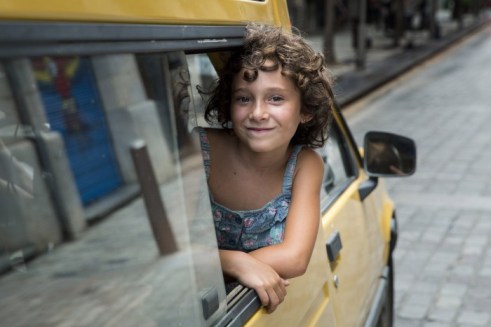
Summer 1993 is an autobiographical story of young Frida (played by Laia Artigas) trying to adjust to her new family after being recently orphaned.

Summer 1993 is a unique Spanish film for its depiction of childhood. It’s also a unique story about a girl that’s semi-autobiographical.

The story begins with a young six year-old girl named Frida who’s recently orphaned. She has lost both her parents to AIDS with her mother dying in the summer of 1993. The whole family including the mother is hugely concerned for Frida’s well-being. Her mother’s brother Esteve agrees to take care of her. Frida is taken to their mountainside pueblo in the Catalan Pyrenees to like with him, his wife Marga and 3 year-old daughter Anna.

It’s taking a long time for Frida to get adjusted to her new surroundings. She feels like a misfit in the town and very rarely socializes with anyone else. On top of it, she feels uncomfortable around the chickens. AIDS isn’t spoken around her and her family. When in conversation, they simply refer to it as ‘that illness.’ It does become apparent what ‘that illness’ is when Frida cuts herself and her family panics.

She also misses her mother, but doesn’t know how to grieve about it. Every day, she goes to the tiny grotto near the farm and prays to her mother. There’s even a time she places a pack of cigarettes to her mother by the Madonna. That’s the best way Frida knows how to grieve.

Over time, Frida appears to be developing a friendship to Anna; possibly even a sisterhood. It would become apparent Frida’s acting out when she plays a game with Anna in the woods only to leave Anna behind. Anna is found, but with a broken arm. The family is infuriated with the way Frida is acting, feeling she has no morals. Unknown to Esteve and Marga, Frida hears it all. Frida starts feeling like she’s unloved and decides the thing to do is to run away. It’s there as the family comes to search for her that Frida is reminded that she is loved. It becomes a turning point for her as she now feels like an accepted person at home and in the community.

This isn’t your typical film from Spain. Usually most fans of ‘arthouse’ film think of Pedro Almodovar when the word Spanish film comes to mind. Here, Carla Simon is not aiming to be the artist Pedro Almodovar is reputed to be. This film is actually autobiographical of Simon. She herself lost her mother to AIDS in the summer of 1993. Her father died some time before. The summer of 1993 was the first summer she spent with her new family. Basically Simon wanted to send a message with this film: “With the movie, I wanted to express the fact that children can suffer a thing so cruel but they are still able to understand death. That we have to talk to them about death, because a six year-old child can understand. The question/thing/issue is how they manage their feelings. We talk also about children’s ability to adapt, how they can survive and keep going, and the fact that children are more able than adults.

It wasn’t mentioned whether Frida’s actions in the film mirrored Carla’s actions in real life. However Frida did exhibit a lot of common behavior traits common in children that have lost a parent at their young ages. The film shows how Frida goes from being a child who exhibits behavior relatives don’t know what to make of to soon belonging to a family and even grieving at the end.

Carla Simon directs and co-writes with Valentina Viso a story that’s intriguing, but also very natural and without overdoing the drama. It plays the events out as they come without trying to grab hold of attention. All the better for it. On top of it, the story is shown through the child’s point of view, which makes it that more autobiographical. Young Laia Atrigas does a very good job of playing Frida. She does a no-nonsense job of playing a six-year old girl and doesn’t try to be cutesy. She just does what she needs to do. The adult actors in the film, especially David Verdaguer and Bruna Cusi, also do a very good job in their parts as the concerned but confused foster parents. The film is set very well in its Catalan settings with scenes in both the pueblo and in the Catalan village. The film gives the feel of being in Catalonia. The film also included something noteworthy of the time as we see Frida wearing a T-shirt with Cobi: the mascot of the 1992 Summer Olympics from Barcelona.

A bit of trivia. Summer 1993 is Spain’s entry this year in the Academy Award category for Best Foreign language Film. It is the second film in the Catalan language to be submitted as Spain’s entry in that category. The first ever is Black Bread.

Summer 1993 is a story about a young girl’s change of surroundings and how she responds to it. It’s autobiographical depiction works well as it plays out in a no-nonsense fashion. The better for it.

WORK CITED: Zorita, Kristina. “Interview With Director Carla Simon” European Women’s Audiovisual Network. 6 March 2017<http://www.ewawomen.com/en/events/interview-with-director-carla-simon.html>
VIFF 2017 Review: Tehran Taboo

Tehran Taboo
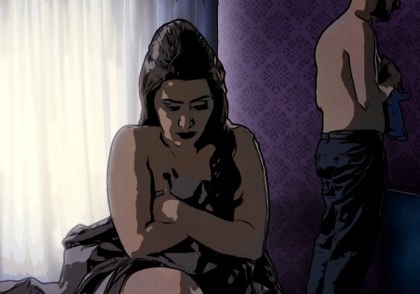
Tehran Taboo is an animated look at the business of prostitution in modern-day Iran.

I started my trip to the Vancouver International Film Festival seeing an animated film called Tehran Taboo. This film is a very telling film in its subject matter and how it plays out in animation.

The story begins with Pari. She’s recently separated from her drug-addicted husband who’s now in prison. To get anywhere in Iran, including getting better things for her 5 year-old mute son Elias, she needs her husband’s signature on documents. She pleads to a judge with religious connections to no avail, but makes her an offer for her to be a ‘madam’ under his system. She refuses at first, but soon changes her mind. She is introduced to the prostitution business and is even given residency for her and her son.

Sara appears to have a happy marriage with her banker husband Mohsen, but it’s not. She finds the marriage discomforting especially since her in-laws are in the way. She finds a way into the system of prostitution. She even ‘works’ with Pari.

Babak is a traditional musician trying to make a name for himself. One night after a lousy show, he has sex with a woman she dances with. The next day, she comes to him saying she needs an operation in her vagina to make her appear like a virgin. She claims she’s getting married in five days. If her fiance finds out, he’ll have her killed. It’s up to Babak to get the money for the operation or find a serum. He even meets up with a hard man she claims to be her fiance.

All three situations criss-cross in the middle of Tehran. All three meet different endings. In the end, the truth about Sara is revealed to Mohsen. It’s right after she makes a phone call for a prostitution request to a man of high government ranking. The man then orders her number traced by the morality police. Sara eventually loses it all. Babak would also lose it all. Just as he is on the verge of coming across the money needed for the operations, he witnesses public hangings. That could be an omen of his own demise. We also learn that the woman was not to be married, but part of a prostitution business where virgins are paid higher money. Despite the difficulties, things work out for Pari. She’s able to make a good income and be able to send Elias to a good school.

This animated film– animated through rotoscope– is an impressive story about three situations all intersecting with the world of prostitution. They all face their own challenges as all have to deal with the laws in Iran: both law-based and religion-based. The influence of religion is seen throughout the film as there’s cases where the husband is required to authorize along with the wife, religious clerics hold high jobs, and the morality police all around ready to arrest even on public signs of affection. Even the fact that there’s such thing as a Morality Police gives an insight of what type of system Iran has been under since the Islamic Revolution of 1978.

Prostitution is very much a hush-hush business almost universally but you can bet it is especially secretive in Iran. We’re talking about a country where adultery is considered grounds for execution. However it’s seen by these three women as a chance to make a higher income. This is especially beneficial since the income for the average Iranian is very low. Pari has a chance to receive a better life for herself and her son thanks to her work, and the red tape of a judge involved. Sara sees prostitution as a chance to escape the strain of her marriage, especially with pushy in-laws. However this ring of prostitution is a detriment for Babak as he finds himself dealing in this business without him knowing. We learn that ‘fiance’ is actually part of the business too much too late for Babak.

This is a story that takes three situations in Tehran and often has them criss-crossing together through each of the characters. Even the protagonists in one of the sub-plots will find themselves involved in the other two plots too. The three stories intersect with both the photo studio where the photographer would take pictures of those involved and Elias the mute son who says nothing, but is a witness to all that goes on. The story plays itself out both as a story with a lot of intrigue and even some comedic moments, like when they have to deal with a gynecologist with poor personal hygiene or the photographer always changing backgrounds.

SPOILER WARNING: In the end, it’s Pari who’s the one that benefits most from this system of prostitution, if not the only one benefiting at all. Babak finds himself stuck in the middle of what would become what many believe to be his tragic fate in the end. Sara loses it all in the end, and it’s obvious her drug-induced jump at the end is a suicide. It’s evident she feels like she has nothing to live for. Pari, on the other hand, had the unfairness in her favor. She struggled with the unfairness of the Iranian legal system demanding her husband’s signature for many things; that’s the law in Iran. How could she when her ex-husband is in prison? But when the Iranian judge offered her an entry into the prostitution business, it opened doors for her and Elias. It even allowed her to achieve things without her husband’s signature. Despite the struggles, it appears Pari is the only one who won.

This is the first feature-length animated film for Ali Soozandeh. Ali was born in Iran but would emigrate to Germany. It’s easy to see why the film’s countries of production are listed as Germany and Austria. There’s no way Iran would allow for a film like this to be released! The film which he directed and co-wrote with Grit Kienzlen is a very good story of intrigue and will raise a lot of eyebrows about what’s going on ‘underground’ in a country like Iran. All the actors did their parts very well, whether it be doing their voices or acting for their rotoscope images. I feel the rotoscope method of animation fits the film very well in terms of telling its story. Rotoscope also helped well with Waltz With Bashir a few years ago.

Tehran Taboo is an excellent animated film about the secrets of Iran few know about. The stories of those involved, and why they do it, are made very clear.

VIFF 2017 Review: Forest Movie

ForestMovie

This year seems like the year I’ve seen more experimental film at the VIFF than ever before. The latest experimental feature I saw was Forest Movie. It was shot all in  Vancouver and it does a lot with the 65 minutes it has.

The film begins with images of a forest and then phases into a young woman sleeping. The young woman was actually dreaming of the forest. She sends a text message to her friend that she can’t meet up: she’s sick. The friend accepts.

What she does right after is put on a jacket and bring along her bag and portable chair. She simply leaves from her apartment suite near Powell St. and Nanaimo St. and walks to a forest inside the city. The visit is simple as she walks across the paved trails over the rocks and branches with her cellphone turned off. A complete getaway. There are times she takes breaks like for when she eats something or feels she needs to write poetry or prose in her notebook. Other than that, just simply walking through the forest.

Then she finds a grassy spot that’s open and surrounded by the trees. She uses that spot as a place to set up her chair and relax. There’s a twenty-minute shot of the area of the forest she witnesses from her chair. It just consists of that view, changes of sunshine or cloud, and the surrounding sounds of the outdoors or her dealing with her chair, bag or notebook.

Night soon falls. She actually fell asleep during her time sitting in the forest. Night approaches. She’s all alone in the dark relying on her cellphone as a flashlight. She rushes to find the exit to the forest, but is lost. Images of her attempt to exit consist of her cellphone light shining or complete darkness with nothing but sound. Morning breaks and we see her walking back to her apartment as if nothing dreadful happened.

No question this film can be defined as experimental. The film is what it is. It’s a story about a young woman seeking tranquility in a forest and is willing to deal with whatever comes to her. The director Matthew Taylor Blais was in the audience and would later hold a Q&A after. Before the film started, he said: “No two people will have the same impression of this film.”

I got what he was after in this film: he wanted us to create our own thoughts, impressions and opinions about this film. That explains why actress Ana Escorse is given no dialogue at all in this film. The film is all about what we see and what we hear. I was open to this. The film gives us images and scenes that try to get us to form our own opinions. For starters, I actually thought the woman really was sick from the texts she sent. I though she went to the forest possibly for natural healing therapy. That scene in her apartment that shows an Aboriginal dream catcher could may have made some, including myself,  believe she’s into Aboriginal spirituality and may see the forest as the medicine she needs. Even the scene where you see trees just outside a condo leads you to think this is an urban forest close to downtown Vancouver in Stanley Park, when it’s actually shot in Pacific Spirit Regional Park close to UBC.

Later shots add into the opinions we form about this film. The scenes where she takes out her notebook and writes or draws might get one to think she’s using the forest for creative inspiration. That twenty-minute shot of the forest’s view is an attempt to get us to rely on the background sounds to form our own opinions about what’s happening from this view. The end scene of her trying to leave the forest at night is also one that gets us to rely on our thoughts of what’s happening. The scene with the biggest impact is the scene where the camera makes like we see her escape through her eyes. It consists of the background sounds and the cellphone light cutting in and out. It’s actually the scene with the most drama as one would wonder will she make it? Will she get lost?

Matthew Taylor Blais does a very good job with this film. I was more welcoming with the experimentation in this film than I was in PROTOTYPE. I think Blais’ intro before it began helped me to be more welcoming.  It’s an experimental film that pays off and allows the audience to create their own impression. It allowed me to create mine. However it is to say that it does take some creative risks that would be questionable. I welcomed that twenty-minute shot of the forest scenery, but some were not so welcoming. In fact I saw a few people leave the theatre during that scene, including a group of four. That’s one of the risks of creating an experimental film like this. Not everyone is as welcoming as me to such experimentation.

Forest Movie is an experimental film that allows the audience to exercise their imagination and make their own judgements about what’s happening in the story. This is experimental film that pays off greatly.

VIFF 2017 Shorts Segment: New Skins And Old Ceremonies

CinemaOne thing of the VIFF I consider to be a treat is whenever I attend a shorts segment. The segment I saw entitled New Skins And Old Ceremonies was a selection of seven shorts from Canadian directors. They were all unique in their own way.
Lost Paradise Lost: dir. Yan Groulx- Two people named Julie and Victor are out of love and find themselves boarding a bus full of strangers to anywhere. Where it takes them is a bizarre place for those out of love and rivals and threats to deal with. An eccentric short nonetheless, but it captures the feel well and makes sense in the end.

Flood: dir. Amanda Strong- It’s an animated short about an indigenous person and how the Canadian system did what it could to make them and their people feel inferior. It’s a story worth telling. The mix of stop-motion for modern images and traditional indigenous art adds to the story. The film ends with a renewed sense of pride.

Cherry Cola: dir. Joseph Amenta- Two drag queens are out on a night to dress up, have fun, and get revenge on an ex-boyfriend. It seems confusing at first, despite being intriguing to watch. You first think it’s a comedy, but the story ends on a dark note. It exposes an overlooked heartache some transvestites have.

The Good Fight: dir. Mintie Pardoe- A young woman goes into a sex toy shop to buy a toy. This woman is a nun about to be ordained. She struggles with her sworn commitment to celibacy, but the secret does get exposed. And with a surprising ending. Directed by a recent UBC graduate, the story is basically for the sake of shock value as it appears no actually research on the Catholic Church and vocations were done. Basically that’s all it is: entertainment for hedonists.

Sea Monster: dirs. Daniel Rocque and Kassandra Tomczyk- Tomczyk co-wrote, co-directed and stars in this short. Charley and Aria are a couple cooped up in a hotel madly in love, but both are coping with trauma. Aria dreams of a squid. Then the two make out on night in the fashion of a squid, followed by a bizarre aftermath. This is a film that’s nothing short of experimental. This film is good at getting creative in its time frame and setting.

Thug: dir. Daniel Boos- We first see how three friends– Eman, Simon and Josh– are shooting a low-budget gangsta film. Director Josh recommends to Eman that he creates a hold-up scene on Simon unexpectedly to make the film more ‘real.’ Eman agrees, despite the risk to their friendship. It does a lot more; it arouses suspicion from the local police. Later, Eman and Simon talk about roles they wish they could play before Eman auditions for a role as a gangster thug. This short film sends a message about how minorities in acting get the short end of the stick in terms of the roles they are offered and are often limited to racial stereotypes.

Let Your Heart Be Light: dirs. Deragh Campbell and Sophy Romvari- Both Deragh and Sophy write, direct and act in opposite names in this short. Sophy is confined to spend Christmas alone after a break-up. Deragh pays a visit and makes her Christmas. The film is slow and lacking in energy, but it does a good job of making use of its time and keeping with the Christmas vibe.

In summary, all seven were different in their own way it terms of both style and quality. There were a couple that were either inconsistent in story or lacking in energy. There were a couple that were eccentric, but the eccentricities worked for the film. There were also some films that made you think. The ones that made me think were my favorites as the messages came across very well and very effectively.

New Skins And Old Ceremonies makes for a unique array of seven shorts by Canadian directors. Some were good, some were bad, but all were an opportunity for the directors to make names for themselves.

VIFF 2017 Review: PROTOTYPE

Prototype

PROTOTYPE is a film by Blake Williams about the Galveston hurricane of 1900. It’s to be his depiction and his thoughts and images of the event.

The film begins with images of the aftermath if the Galveston hurricane of 1900: a disaster where 8000 people died. The film progresses into images depicting what happened during the storm, like waves in the water, various images of people and television screens, various images of color, all featured against disjointed music in the background. The film then focuses on what happens three weeks later with even further images of people, television screens, lucid colors and even computer images of automobiles. The film ends with images of Galveston today where natural images of the city and of the Gulf of Mexico are shown along with blended-in images.

When I first came to this film, I was told this would be a documentary. I was also understanding abut this since hurricanes have been big news in 2017 with two or three big-name hurricanes hitting North America. The film is less of a documentary and more of an experimental film. There’s no narrator and we get disjointed music as the score for the film. I will have to say that I admit that when I first came for this film, I didn’t know what to expect. When the film talked about the Galveston Hurricane, I had my own expectations about what this ‘documentary’ would be and it didn’t turn out that way. I was disappointed in this for a long time.

The biggest reason why I was disappointed was because this film didn’t make much sense. Sure, I know there are a lot of films that try to be experimental–this is an experimental 3D film– but its use of various film images in relating them to the Galveston hurricane didn’t make a lot of sense. Like I wondered what the computer graphics of an SUV had to do with what happened three weeks after a hurricane in 1900. I could understand pictures of strong waves shown at the beginning and the end of each film segment because of the Gulf Of Mexico. However other images like that of computer screens or of all these lucid colors did not make sense at all to why they’re in a film about this disaster in 1900.

We should not forget that here at the Vancouver Film Festival, we will be having a lot of experimental films. There will be a lot of films that will try to be different and eccentric for the sake of stretching the boundaries of artistry. It becomes evident that director Blake Williams is trying to stretch artistry or use artistic expression for his own detailing of this event. I have no objection to that; I’m welcoming to that. However I’m welcoming to  it as long as it’s done in a way that would make sense. I’m sure Blake would give his explanations for why all these images and why they relate to the events of that disaster, but most of it would not be made apparent to the audience.

I think at best, this film is a film that’s meant more for those who welcome different approaches to film and welcome all types of artistic eccentricities. Especially in art galleries where there are all sorts of films with all sorts of elements and imagery. However I don’t like things that give the impression that it doesn’t know what it wants to be. I’m sure it does know, but it doesn’t make it obvious enough. It gives the impression only Blake Williams knows what it is.

PROTOTYPE first appears to be a 3D documentary, but is actually more of an experimental film. This appears to be a film that would belong more in an art gallery.

It’s VIFF Time Again

Cinema

Yes, the Vancouver International Film Festival is back for 2017. Today begins the 36th installment of the Film Festival. This year promises more excitement, more films and more events.

The biggest thing VIFF will have for this year is its Films+ talks. This is where there will be talks and lectures on film and its technicalities. The Creator Talk events promise big names and top experts in the field such as: Carlton Cuse, showrunner for Bates Motel; director Jeremy Podeswa and cinematographer Greg Middleton from Game Of Thrones; and costume designer Ane Crabtree from The Handmaid’s Tail. The festival also includes Industry Hub events which are full-day events focusing on industry activity and promoting film in the future. Such events include VR: Expanding frontiers In Storytelling, one day focused on the indie film industry, industry exchange events and a Buffer Festival.

As for volunteering, this year there were 1100 volunteers signing up. That is as big as it was during last year. Because of that, they’ve developed a new system for how volunteers can see a film for free. They would now have to wait in the rush line and wait until availability is know in order to get a seat for the film. Makes sense since it is quite common for volunteers to horde a lot of free showings during the fest. There is a plus: volunteers that serve their shift in its entirety can receive a voucher to get their own free ticket for certain films. It has to be done online. That makes better sense. I anticipate to see a lot of good films. I’m doing something new for volunteering. This year, I’ll be a driver. I am to drive people from the Sutton Hotel to the cinemas, the hotel to the airport, or pick people up from the airport to the Sutton Hotel or wherever they want to be dropped off. They will range from actors to directors to film crew to special guests. This is something new to look forward to. And I drive a Lexus SUV!

This year’s roster of films promises a lot of attractions This year’s VIFF claims to show over 300 shorts and feature films from 84 countries or regions. As of press time, 11 films are official submissions for the category of Best Foreign Language Film for this year’s Oscars. A footnote worth adding is Quit Staring At My Plate from last year’s VIFF is Croatia’s official entry in the category for this year. Canadian films will remain the focus as has been in past Festivals.

This year’s top sponsors include Telus, Telefilm Canada (which is celebrating its 50th year), Christie screens, Delta Airlines, Lexus and Creative BC. SuperChannel will take over the People’s Choice awards again.

As for highlights, here’s a list of some of the films headlining the VIFF:

  • OPENING GALA: Meditation park – Chinese Canadian director Mina Shum directs a live-action story set in Vancouver. Stars Sandra Oh..
  • CLOSING GALA:  Wonderstruck – Todd Haynes worked with Julianne Moore in 2002’s Far From Heaven. Here, Haynes and Moore return in a film that promises to be another delight.
  • Borg vs. McEnroe – A film starring Shia LaBeouf about one of the greatest tennis rivalries of all-time.
  • Breathe – Andy Serkis’ directorial debut about a young couple (Andrew Garfield and Claire Foy) whose young marriage is threatened by the husband’s sudden disability.
  • Call Me By Your Name – Stars Armie Hammer. A story about sexual awakening in the 1980’s.
  • A Fantastic Woman – A Spanish film of a trans woman dealing with life after losing the man she loves. won Best Screenplay at the Berlin Film Festival
  • The Florida Project – Willem Dafoe stars in this film about a hotel manager with a hard heart who changes thanks to a six year-old girl.
  • Happy End – Michael Haneke is back! This is a story of a privileged family living alone in their estate with their fortunes threatened over time.
  • The Hidden Sword– Considered to be the biggest highlight of Asian film in the festival. This promises a lot of sword action.
  • Indian Horse– This is a Canadian story that’s far-reaching. It focuses on a boy who’s a victim of the Canadian Residential School System but finds an escape in dance.
  • The Killing Of A Sacred Deer – Yorgos Lanthimos, director of The Lobster,  is back along with Colin Farrell to create another dark comedy. This time Nicole Kidman joins in this bizarre dark story. won Best Screenplay at Cannes.
  • Loving Vincent – An animated film with a focus on the artwork of Vincent Van Gogh. More than 120 paintings are involved in this film.
  • Okja–  A South Korean drama about a young girl who develops a friendship with a giant animal in the mountains.
  • The Square – Winner of the Palme d’Or at Cannes this year, this is a bizarre comedy about an artist who creates his own eccentric world and bounds.
  • The Party – British film about a politician (Kristin Scott Thomas) who holds a dinner for her contemporaries, only to wreak a lot of verbal havoc.

So this is what this year’s VIFF has in store. It all starts September 28th and it all ends October 13th. Looking forward to it.

VIFF 2016 Wrap-Up And Introduction To My New Blog

Cinema
I’ll admit I’ve been delaying my wrap-up to this year’s Vancouver Film Festival for the longest time. Heck, VIFF 2016 ended exactly two months ago! Hey I’ve been bogged down with work, school and this surprisingly blizzard-like weather which is extremely rare in Vancouver. On top of it, VIFF stats I was hoping to get after the Fest didn’t come. Nevertheless I feel a wrap-up is still worth publishing even if it’s this late.

The 2016 Vancouver Film Fest ended on Friday, October 13th. This was the first VIFF since 2011 that took place during Thanksgiving weekend. Crowds came again and again. There was a lot to offer with over 300 films from 70+ countries. There were even VIFF late night Hubs around the VIFF theatre held during the first ten days of the festival. I missed my chance because I was thinking of catching a hub during the second week. I didn’t know they ended that soon. Maybe next year.

The award winners were announced at the closing gala on Friday:

BC Spotlight Awards

Best BC Film Award
Presented by the Harold Greenberg Fund, Encore by Deluxe
WINNER: Window Horses (dir. Ann Marie Fleming)

BC Emerging Filmmaker Award
Presented by UBCP/ACTRA & William F. White
WINNER: Hello Destroyer (dir. Kevan Funk)

Ignite Award
Recognizes the outstanding work of a female key creative on a BC-produced feature or short.
Presented by TELUS
WINNER: Cabbie (dirs. Jessica Parsons, Jennifer Chiu)
Honourable Mention: Here Nor There (dir. Julia Hutchings)

Canadian Film Awards

Narrative Features

Best Canadian Film
Presented by Directors’ Guild of Canada
WINNER: Window Horses (dir. Ann Marie Fleming)

Emerging Canadian Director
Presented by Directors’ Guild of Canada
WINNER: Never Eat Alone (dir. Sofia Bohdanowicz)

Documentary Features

Best Canadian Documentary
Presented by the Rogers Documentary Fund
WINNER: Living With Giants (dirs. Sebastien Rist, Aude Leroux-Lévesque)
Honourable Mention: Quebec My Country Mon Pays (dir. John Walker)

Short Film Awards
Best BC Short Film
Presented by CreativeBC
WINNER: Here Nor There (dir. Julia Hutchings)
Honourable Mention: Srorrim (dir. Wayne Wapeemukwa)

Best Canadian Short Film
Presented by Lexus
WINNER: Ceux qui restent/Those Who Remains (dir. Mathieu Vachon)
Honourable Mention: Fish (dir. Heather Young)

Most Promising Director of a Canadian Short Film
WINNER: Parent, Teacher (dir. Roman Tchjen)
Honourable Mention: Old Man (dir. Alicia Eisen)

Impact Awards

Radcliffe Foundation Refugee Crisis Awareness Short Film Competition
Presented by The Radcliffe Foundation
WINNER: Helpful Hand (dir. Alex Nagy)

VIFF Impact Award
Presented by Leonard Schein to one of the nine issue-oriented documentary films in the Impact Stream

WINNER: Power to Change – The Energy Rebellion (dir. Carl-A. Fechner)

VIFF Industry Builder Award
Presented by MPPIA to celebrate BC Creates with support from Western Economic Diversification and CreativeBC

2016 Honoree: Chris Carter

Audience Awards

Super Channel People’s Choice Award
WINNER: Maudie (dir. Aisling Walsh)

VIFF Most Popular International Feature
WINNER: I, Daniel Blake (dir. Ken Loach)
Runner up: The Salesman (dir. Asghar Farhadi)

VIFF Most Popular International Documentary
WINNER: Human (dir. Yann Arthus-Bertrand)

VIFF Most Popular Canadian Documentary
WINNER: Spirit Unforgettable (dir. Pete McCormack)

#mustseebc Presented by TELUS Optik Local
WINNER: Cadence (dir. Alex Lasheras)

As for my volunteer experience, it was all at the International Village this year and it was a good experience. I had a mix of shifts from early morning to late evening to middle of the day. I volunteered both during the Sunday and Monday of thanksgiving. I also volunteered all day Thursday the 12th. I had more chances this year to watch films than I did last year. Last year, I only had the luck of seeing one during my volunteer work. If you can ask me what my favorite film of the ones I saw was, I would have to say it was the first one I saw: Barakah Meets Barakah. It was entertaining and very intelligent.

For the end of the VIFF, there was a volunteer party held the Saturday before Halloween. Volunteers were treated to films shown at this year’s VIFF. Three of the best. After that, they were treated to a Jackrabbit Slims party which consisted of the VanCity Theatre turned into a 1950’s diner, like in Pulp Fiction, and people treated to hamburgers, cupcakes, a complimentary drink and dancing to a jukebox. It was fun and it had me looking forward to next year.

My New Blog

One of the things I’ve been thinking about this year is the way I do blogging. This is nearing my sixth year. I’m not getting the amount of hits I was hoping to this year. Blog topics that normally get a lot of hits on my site didn’t this time. In fact this year is set to have the least amount of total hits for the year since 2011. I won’t quit blogging but the lack of hits have taken away from my ambition and I don’t post as often as I normally do, as you may have noticed.

One thing I’ve thought of doing is setting up one blog focused on a single topic. The first single-topic blog I’m starting is about the Vancouver Film Festival and it’s called VIFFin’ It Up. It will consist of reviews I’ve seen at the VIFF and reviews of VIFF films I saw after the fest. It will also consist of news related to the Fest and the usual annual previews and wrap-ups. If you want to follow it or enter your email to subscribe, just click here. Right now I just have the intro. Over the days, I will post reviews and previews of past VIFFs starting with 2011: the first VIFF I blogged about.

So there you go. The 2016 Vancouver International Film Festival ended with continued success if not a record and fun for all volunteers. Next year’s VIFF is anticipated to be from September 28th to October 12th, 2017 and should be bigger and better. Hopefully next year I’ll attend a hub. See you next year!


VIFF 2016 Review: Harold And Lillian: A Hollywood Love Story

harold-lillian
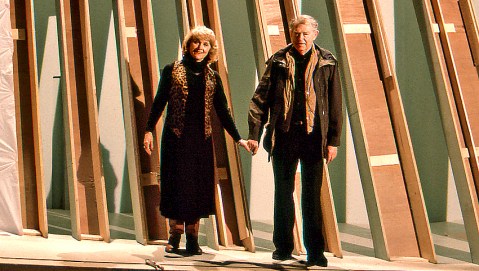
Film researcher Lillian Michelson and storyboard artist/set designer Harold Michelson are the subject of the documentary Harold And Lillian: A Hollywood Love Story.

Yes, we know too much about Hollywood couples. Harold and Lillian Michelson are a couple that won’t come to most people’s minds. Nevertheless they’re worth knowing in Harold And Lillian: A Hollywood Love Story.

Harold and Lilian Michelson were a power couple in Hollywood, but a couple the masses never knew. Those in Hollywood not only knew them, they wanted them for their movies. Harold was a storyboard artist who drew the images for most of Hollywood’s best movies from the 50’s, 60’s and 70’s continuing into the 80’s.The start of his legend began with The Ten Commandments and led to even bigger films like Ben-Hur, The Apartment, Cleopatra, The Birds, Who’s Afraid Of Virginia Woolf, The Graduate, Catch-22, Fiddler On The Roof, Hair, Spaceballs, and ending with 2003’s Duplex. Harold was also a set designer for Star Trek: The Movie (for which he received his first of two Oscar nominations), Terms Of Endearment, Spaceballs and Dick Tracy.

Lillian Michelson was a film researcher. Her research helped contribute to films like Fiddler On The Roof1941, Reds, Scarface and Rain Man to name a few. Her research was very intense as she would go searching about all information related to the place and time of the story including as far as what people would wear in a certain time. One example of how far she’d go for her research: Lillian even interviewed an actual drug lord from Colombia for Scarface. She was that fearless. She even owned a library full of research materials for films she worked on: a library she would constantly have to fight for a space to have it all kept.

Harold and Lillian were also a dedicated couple who kept a solid marriage for 60 years. Harold was well to do but Lillian was raised an orphan. The age gap of 11 years didn’t stop Harold from taking a liking to her and they married in 1947 when Harold was 28 and Lillian was 17. Harold decided to pursue life as a storyboard artist in Hollywood after returning from the war. An Army Sargent saw the drawings Harold drew of the war and thought he would make an excellent artist. Lillian had nothing really to lose as her first pregnancy cost her a telephone company job; this happened during a time women didn’t have the right to sue for their job back. Lillian would mother three children including an autistic son. Harold was frequently away at work and this caused friction in their marriage. Lillian, bored with motherhood, found an opportunity to become a film researcher and the rest is history. Their marriage was strong and committed and went through the ups and downs until Harold died in 2007. Lillian retired in 2010 and now lives in a Hollywood retirement home.

This documentary is a mix of things. This film mixes the love of Harold and Lillian with their accomplishments in Hollywood. It takes you into what they achieved in film and fits it with the films they were a part of. Sometimes you’re led to think they helped make the film’s greatness. The film tells of the times where they were getting their start in the business: Harold having to spend time as an apprentice in the Hollywood system before his rise and Lillian chasing an opportunity because of the limited chances for women at the time. This film also tells the stories of their own lives where they had to both play spouse and parent, including a parent to an autistic son. We also see how Harold would take his storyboard illustration style he used for his Hollywood books and include it in his own personal diary of his marriage and family life in all its triumphs and struggles.

It’s interesting how when you watch this film, you learn how much these two are responsible for some of the best films to come out of Hollywood. You’d be shocked to see how many films Harold was a storyboard illustrator for: Ben-Hur, The Graduate, The Birds, Cleopatra, Fiddle On The Roof, Who’s Afraid Of Virginia Woolf, etc. You often feel he helped make that era of Hollywood. Learning about all the films Lillian did research for starting with Fiddler On The Roof, and most notably Scarface and Rain Man, you not only develop an appreciation for her too but her profession. The words of gratitude from such big names like Danny De Vito, Mel Brooks and Francis Ford Coppola leave you convinced they may have been the best ever. Even learning about all the research materials she had and continuously fought have a space for, you feel it deserves its own permanent library.

Kudos to Danial Raim for making a very intriguing, very entertaining documentary. This is the third documentary he directed, wrote, edited, produced and cinematographed. This documentary finally exposes Hollywood’s best kept secret in both the films they made and the love they had. However I will admit there are some areas where I felt the editing could have been done better. Most of the time, it goes from the story to the movie they created to the people they worked with in the right order. Nevertheless there are times when the order doesn’t seem to go right. Rare in the film but noticeable. I personally feel this would be a good film to release at the box office. However I’m a person who’s interested in some of the stories of Hollywood movies past. It’s hard to know what exactly makes for a documentary that has what it takes for a box office release. Even those nominated for the Oscars and win don’t exactly explain it all. I think this documentary is best for channels like B.C.’s Knowledge Network or TCM.

Harold And Lillian: A Hollywood Love Story is more than just a story about a Hollywood couple. It’s also a film that gets you understanding their behind-the-scenes jobs and leaves you thinking they were the best ever in their professions.

VIFF 2016 Review: The Eyes Of My Mother

eyesofmymo
The Eyes Of My Mother tells a story of how a young girl named Francisca inherits a blood lust.

I knew with The Eyes Of My Mother being an Altered states film, I would be taken into the world of either the bizarre, sinister or paranormal. I got sinister this time but I was not too impressed.

The film begins with a truck driver stopping to what appears to be a body in the road. The woman is very much alive but tortured physically. Flashback to at least 25 years earlier. Young Francesca is the young daughter of a Portuguese farming couple. The parents used to be cow ranchers back in their home.

One day, they’re visited by a man named Charlie who needs to use the phone. You can tell by Charlie’s face that he’s not worth your trust. Francisca witnesses Charlie bludgeoning her mother in the bathtub. The father responds by keeping Charlie captive and tortured in the barn. Francisca asked Charlie what it was like killing her mother. He responds: “It’s amazing.”

Many years pass. Francisca develops a blood lust of her own. She keeps Charlie tortured. However she also kills her old ailing father in the bathtub. She kills a stranger named Lucy. She appears to kill a mother named Kimiko and has taken to looking after Kimiko’s son Antonio. Actually Kimiko is alive but tortured in the barn the same way Charlie is: shackled and eyes dug out. Somehow Kimiko develops the strength and the willpower to find her way out on the barn. She however ends up on a road where a truck driver stops to see what’s up. This sets up for an ending that’s too brief.

Stories of ‘bloodlust’ are not that uncommon. If you’ve studied MacBeth, you get possibly the most renowned example of bloodlust. Here in this film, we hear why the feeling of bloodlust from both Charlie and older Francisca: because of its ‘amazing’ feeling. The feel of power from killing or torturing someone with your own hands can give one a feeling of satisfaction. Just ask soldiers, just ask dictators, just ask… the list is endless.

Here’s a case of the ‘bloodlust’ going from Charlie: the killer of Francesca’s mother, to Francisca. She acquires a lust for murder at her own hands from Charlie. She also acquires a desire for torture as demonstrated by her father on Charlie. The whole story revolves around Francisca and her own lust for murder and torture on others. Even the incorporation of the Portuguese language in her conversation takes the element of bloodlust into being like poetry. Even making it sensual.

That’s the best traits of the film: portraying a unique method of acquiring bloodlust and even making it poetic. However the film has a lot of noticeable weaknesses. We see Francesca has acquired this bloodlust but the film doesn’t make it convincing enough in her ability to receive it. It’s like she just received it. She may have been taught the love of murder by Charlie and the love of torture from her father but it doesn’t appear she acquires this bloodlust that believably. It’s like it just happened briefly. The other weakness is that it ended on a weak note and too abruptly. I feel that 77 minutes was too short of a time to have a film like this and the ending just seemed to be the weakest part of the film. Too sudden and too fast.

Despite the noticeable flaw, this is a good debut for Nicolas Pesce as a director and a writer. His first effort has won awards at the Fantastic Film Festival and was nominated at the AFI Fest for American Independents. Kika Magalhaes is another impressive newcomer as she does a great job in embodying her character’s madness. The other supporting characters also did a good job in their roles. Will Brill as Charlie is the one that stood out as you sensed right from the start it would be Charlie starting the trouble.

The Eyes Of My Mother makes for a good Halloween film. It’s very sinister but very poetic and charming at the same time. Nevertheless the flaws are noticeable in the film.

VIFF 2016 Review: We Are The Flesh (Tenemos La Carne)

We Are The Flesh.png
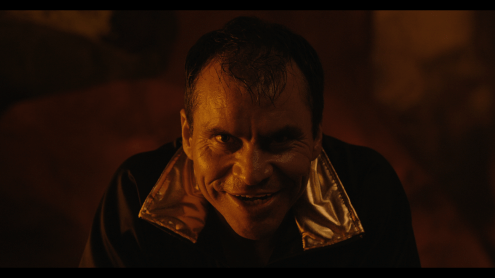
Noe Hernandez plays a svengali-like philosopher of a man with a warped desire for control in We Are The Flesh.

DISCLAIMER: This film review will mention of various explicit acts and may offend some readers. Reader discretion is advised.

“This is not your average party!”

Back in 2014, I ended the VIFF with a Mexican film that was part of the Altered States series called The Incident. I end my VIFF at the Rio Theatre again with another Mexican film part of Altered States called We Are The Flesh. And boy was it something!

The film begins with Mexico City in a completely ruined state. A recluse of a man taking shelter in a hidden location: one of the few livable locations left. Even without uttering a word, he displays some eccentric human behaviors. Even making a bizarre mix of batter, fish and human blood. He talks of the essential elements and of gas.

Two siblings find their way into his location. They’ve been out in the city’s ruins for years and are in need of food and shelter. The man, named Mariano, teaches the two his beliefs and his philosophies. He offers to help them but they must comply to his demands. First he wants them to help him build his domain. They agree, building the walls to his desires. Then he wants the two to have sex. It’s a world where there are no laws. Not even anti-incest laws. The sister complies, fellating the brother. The acts become even more explicit and Mariano dies while masturbating watching them.

The two try to find a place for Mariano’s body. After they find a place in the area, they’re left to their vices on how to fend for themselves. The sister has been mesmerized by Mariano and does things according to the way he wants it but the brother is hesitant. Suddenly Mariano appears again. It’s like he came back to life. But he’s not ready to die yet.

Mariano wants to make sure his world is created before he can die. Cannibalism is part of Mariano’s world. The first victim is a soldier who finds his way into Mariano’s domain. The soldier is scared for his life but Mariano is able to calm him down with his mesmerizing talk and even having him singing along to the Mexican national anthem before being killed by Mariano and the sister. Before Mariano is to sacrifice his own body as flesh to be eaten, he needs more people to be part of his world. Over time the number of people grow. Mariano is then ready to die and have his flesh consumed. The film ends with a man in a dress making his way out of the world and into Mexico City which has returned to its normal state.

Without a doubt the film creates another world: a deeply disturbing world. This world is to be a shelter from a ruined city but instead it’s a world completely devoid of morals and full of lust and animalistic desires. This is the world created by Mariano. This is the world he tries to incorporate the brother and sister into. This is the world he wants to incorporate others into before he decides to leave this earth for good. However it’s a sick world, a world where unspeakable things like incest and cannibalism are the norm because there are no earthly rules. The rules are all gone because Mexico City outside is a load of debris. The two have no choice but to help Mariano create his world and become a part of it.

To make this world work, it all boils down to the character of Mariano to work. Mariano isn’t just a svengali. He comes across as a crazy man full of his wild imagination at first. However he also comes across as a mesmerizing madman reminiscent of Charles Manson of how he’s able to convince the sister that it is the right thing to do all these things including kill the soldier. Mariano’s mind control goes as far as working on the soldier he’s about to kill. The soldier is first scared for his life but as Mariano sings the national anthem, the sister joins in as does the soldier and the soldier is then willing to be killed. That’s the type of mesmerizing mind-control of Mariano. However Mariano knows that if he was to die, it would have to be at the right time. It’s only after hundreds of people become a part of his world that he’s able to sacrifice his body for his feeding. He wanted it that way so that he could create a world of his own. He couldn’t stop at just the brother and sister.

One thing about this film, it’s obvious it’s done for artistic and experimental purposes. This film features countless elements that would make this film uninviting and unwatchable: incest, cannibalism, torture, murder and a demented insanity. It may not be as disturbing to watch as 1975’s Salo but it’s disturbing enough. The subject matter of incest and cannibalism is enough to deter lots of people from seeing this.

Obviously this is a film meant for the film festival circuit. In order for a film like this to get screened, it would need support. Emiliano Rocha Minter is a director who has earned acclaim from fellow Mexican directors Alfonso Cuaron and Alejandro Gonzalez Inarritu. Support of the director from elder Mexican directors is a definite boost for a film like this. However it would surprise me if a film like this does get a release in a box office anywhere. I know dildos were used in certain sex scenes and you can’t call it porn, but even knowing that doesn’t stop those scenes from being hard to stomach. Even with the film being hard to watch, there were some scenes that became confusing. One example: that batter that we see Mariano make at the beginning and then add more flesh to it in a later scene. It’s not clear what it’s for. Even the ending with a person who’s not one of the main characters being the first one to leave gets one questioning.

The film’s possibility of a box office release may be in question but it has actually won some acclaim at some film festivals. The film was nominated for one award at the East End Film Festival two awards at the Rotterdam Film Festival including a Bright Future Award. It even won Best Film at the Fantasia Film Festival.

This is the first feature-length film for writer/director Emiliano Rocha Minter. As I mentioned, Cuaron and Inarritu are already touting him as the next big thing from Mexico. I don’t know if a film like this is good enough to send a message that Minter could be the next big thing from Mexico but it definitely shows his fearlessness. The acting of Noe Hernandez is the highlight of the film. He did an excellent job in capturing Mariano with his eeriness, controllingness and insanity but also his creepy charisma and imagination. It took the right character choices for a lead character like Mariano to work for the film and Hernandez made it work. The next-biggest highlight is Maria Evoli who played the sister. Going from a naive young adult woman to a follower of Mariano is definitely a big effort. The music from Esteban Aldrede added to the eeriness and creepiness of the film.

We Are The Flesh can best be summed up as an ‘envelope pusher.’ It’s definitely an over-the-top film that’s meant for the film festival circuit as it has subject matter too discomforting for your average movie-goer. Even though it can cause many people to leave the cinema, those that stay will be as intrigued as they will be disgusted.

And there you have it. That’s a wrap for my experience at the 2016 Vancouver International Film Festival. Wrap-up blog coming soon with big news.