Oh, I’m the drug dealer? No, you’re the fuckin’ drug dealer. I mean, goddamn, people are dyin’. And y’all are up there afraid that we’re gonna find an alternative without you.

Oh, I’m the drug dealer? No, you’re the fuckin’ drug dealer. I mean, goddamn, people are dyin’. And y’all are up there afraid that we’re gonna find an alternative without you.
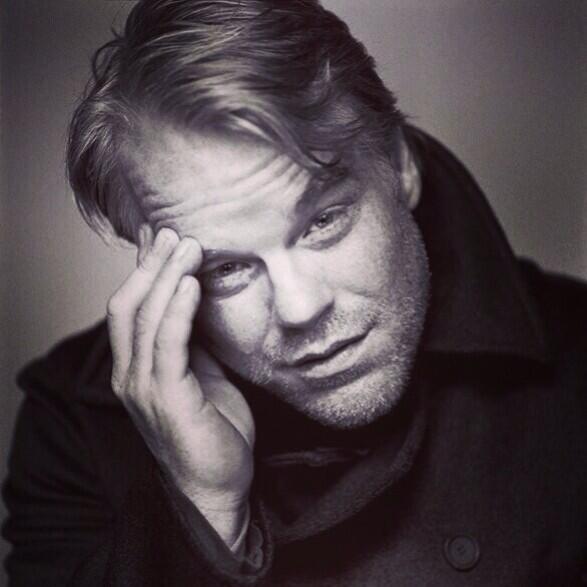
I wasn’t planning on posting this. Actually I was planning my next blog to be another Best Picture review. Instead I post this because of how shocking it is. And of how much I admired him and his works.
Philip was born in Fairport, New York (just outside of Rochester) on July 23, 1967, one of four children to family court judge Marilyn O’Connor and Xerox executive Gordon Hoffman. His parents divorced when he was 9. Hoffman’s past-time in high school was wrestling but switched to acting after a neck injury caused him to quit. Talent was noticed at a young age as he was selected at 17 to attend the 1984 theatre school at the New York State Summer School Of The Arts in Saratoga Springs. He graduated from Fairport High School in 1985 and attended the Circle in the Square Theatre’s summer program. He would go on to attend New York University’s Tisch School Of The Arts and graduated with a BFA in 1989. Soon after he had a bout of alcohol and drug addiction which we would attend rehab for shortly after and eventually overcome.
He made his acting debut on television acting in a 1991 Law & Order episode. His first film role came in 1992’s Scent Of A Woman. Minor roles in film continued for Hoffman over the next few years. In 1995 he joined the LAbyrinth Theatre Company where he staged and performed in numerous productions. However his breakthrough came in 1997 when he had a scene-stealing supporting role as Scotty J. in Paul Thomas Anderson’s Boogie Nights. Hoffman would act in three more Paul Thomas Anderson movies: 1999’s Magnolia, 2002’s Punch Drunk Love and 2012’s The Master. Over the next few years, Hoffman’s reputation as an actor would grow with more excellent performances in independent films like The Big Lebowski, Happiness, The Talented Mr. Ripley, and State And Main. He also showed he could act well in popcorn films like Patch Adams and Almost Famous. In theatre, he would earn a Tony Award nomination for Best Actor in 2000 for playing Lee in the readaptation of Sam Shepard’s True West.
Further excellent performances continued for him in films like Love Liza (which was written by his brother Gordy), Owning Mahowny and the TV miniseries Empire Falls. He also continued to do come off well in box office fare like Cold Mountain and Along Came Polly. Theatre accolades would continue with his second Tony nomination coming in 2003 for his supporting performance in Long Day’s Journey Into Night. However big critical acclaim in film. kept on alluding him until 2005’s Capote. There he was to play Truman Capote in a biopic directed by former Tisch classmate Bennett Miller. He was even said to act in character even after scene shooting ended. It was there where Hoffman won the Academy Award for Best Actor for his performance. And Miller received his first and so far only Best Director nomination.
Things became better for Hoffman commercially as he would play villain Owen Davian in Mission Impossible 3 months later. In 2007 he received Golden Globe nominations for Best Actor in the independent comedy The Savages and Best Supporting Actor for playing Gust Avrakotos in Charlie Wilson’s War opposite Tom Hanks. It’s his role in Charlie Wilson’s War that would earn him his second Oscar nomination. Hoffman would return as an Oscar nominee the following year in the Supporting Actor category again as Fr. Brendan Flynn in the film adaptation of the Broadway play Doubt opposite Meryl Streep and Amy Adams.
Hoffman would continue acting in film, both independent and commercial. He would also continue acting and directing in theatre. He wouldn’t get too much notice or acclaim over the next two years but his work continued to be consistent. He would again steal scenes in 2011’s The Ides Of March and Moneyball as frumpy Coach Art Howe. 2012 was another big year for Hoffman as it would be acclaim in both his theatre and his film acting. On stage he blew Broadway crowds away during the summer with his performance of Willy Loman in Death Of A Salesman and played controlling yet charismatic religious leader Lancaster Dodd in The Master. 2013 would give him more exposure to the commercial movie crowd as he entered into the Hunger Games trilogy as Plutarch Heavensbee in 2013’s Catching Fire. He had already finished playing Plutarch in the first Mockingjay film and had just finished most of the shooting for the second as of February 1st.
Outside of acting, Hoffman shied away from the spotlight. In 1999, he statrted dating Mimi O’Donnell. It would prove to be a permanent union and both he and Mimi had three children. He was open about his past alcohol and drug abuse from which experienced upon graduating from Tisch. He said of his experiences: “I abused anything I could get my hands on and I liked it all.” He recovered successfully and would describe himself as a teetotaler from his past experience but a relapse would eventually happen. In May 2013, he openly confessed to abusing heroine and prescription pills and checked himself into a rehab clinic for ten days.
On Sunday February 2nd, Hoffman was found dead by playwright and friend David Bar Katz in the bathroom of his Manhattan office apartment. A hypodermic needle was found in his arm according to the police. Heroin was also found in the apartment. He was 46 years old.
I hate to bring up the topic of tabloid gossip at a time like this but that topic is unavoidable. Especially when a famous actor dies in such a way. There’s no question in the weeks and months after, there will be a lot of questions about this. There will be some journalists who will want to interview Mimi O’Donnell or close family relatives about this situation. Cast mates of past movies will also be questioned. Even the rehab clinic Hoffman has been attending since his relapse will face its fair share of journalists. I myself am shocked to hear of that. Years ago I read his IMDB profile and it said he does not drink alcohol because of his past experience with alcoholism. I was happy feeling that there was an actor that can be free from scandal. I never knew about his relapse. This is especially surprising since you normally hear about such deaths of actors hugely in the public eye. And Philip was the opposite. He was mostly private, rarely attended A-list events, had friends who were mostly in theatre rather than in the Hollywood business, had an unmarried relationship to the same woman since 1999 and raised his kids quietly. I guess we’ll only know the whole story in the future.
One thing to say is I don’t want to focus on the surroundings of his death. Even though I feel like asking ‘What happened,’ I’ll keep my mouth shut for now. One thing I will say is that I will always admire Philip Seymour Hoffman for the actor that he was. I’m able to separate myself from actors as actors and actors as people. Whenever I admire actors, I admire them for their acting jobs. They’d have to give me a good reason for me to admire their lifestyle. Anyways Philip Seymour Hoffman was an excellent actor. He really knew how to embrace the character both physically and emotionally. He was more than a top character actor, he knew how to make the roles multidimensional. I’ve seen many of his performances and he never let me down once. He always delivered.
I’ve always considered Philip to be one of the best actors of my generation. I also must confess I was secretly predicting and hoping that Philip would be the next Tom Hanks. It just showed how naive I was to the present acting system. There was a time when an actor had the ability to be both a master of their craft and a top box office draw. That was common form the 30’s to the 60’s. Then there was a time in the 70’s when the big money-winning movies and the serious films had a gap between them that really widened in that decade. With that came a bigger gap between the on-screen craftmasters and the money-winning A-listers. That was especially noticeable in the 80’s. The reason why Tom Hanks was so beloved was that he was one of those rarities who was able to deliver in their craft and bring in top box office dollar.
I felt that Philip had the potential to do just that. I just wasn’t aware at the time of the types of actors that were able to win over the box office dollars. Turns out it’s back to being a looks thing again. Especially in the wake of the Twilight movies. I should know that 5′ 10″ and slightly pudgy won’t make you an A-lister. In fact one New York journalist summed up the physical appearance of Hoffman as: “a stocky, often sleepy-looking man with blond, generally uncombed hair who favored the rumpled clothes more associated with an out-of-work actor than a star.” That was just his nature. He was more interested in being an actor than a star.
Like I said Philip never let me down. Whether it was a role in a popular popcorn movie or if it was in a serious independent production, Philip always delivered. Even his co-stars would vouch for that. I believe that’s the legacy Philip will leave behind. Character acting performances that he didn’t just play but embodied and he knew how to grab your attention. I will always admire him for that.
Rest In Peace, Philip Seymour Hoffman. And thank you for captivating us over the years.
WORK CITED:
WIKIPEDIA: Philip Seymour Hoffman. Wikipedia.com. 2014. Wikimedia Foundation Inc. <http://en.wikipedia.org/wiki/Philip_Seymour_Hoffman>

The movie Her looks pretty interesting by the trailers. A man communicating with an interactive computer program with a young female voice. The questions are will the movie make sense? And will it entertain?
Theodore Twombley is a man who works at a software firm in the near future. His job is creating love letters via voice automation for people who have troubles expressing their feelings: voice, font, paper format and all. Outside of his job, he’s a lonely man struggling with his own emotions. He’s on the verge of a divorce from Catherine, his childhood sweetheart and struggles to reach out to others emotionally. He even neglects a blind date his longtime friend and co-worker Amy wants to set up with him.
One day Theodore purchases a talking operating system, an OS, with artificial intelligence designed to adapt and evolve like a human being. Upon installation, the program asks Theodore some questions to create this OS. Theodore wants a female character and gets it in a character named Samantha. Theodore is surprised how Samantha can talk and relate so much so like an actual person. There’s even a time he takes Samantha out via an interactive audio/visual box and she’s able to see and identify things as he goes along. Over time he loses the fact that Samantha’s an artificial character and develops a bond with her, talking about love and life and even confessing the reason why he won’t sign the divorce papers with Catherine, because he can’t let go.
Samantha convinces Theodore to go on the date with Amy’s friend. The two hit it off perfectly but it all falls down flat when Theodore is reluctant to commit to her. Theodore discusses this with Samantha. He also mentions that he used to date Amy in college but are now just good friends with Amy now being married. Soon the intimacy between Theodore and Samantha grow. The relationship is so intimate, it improves Theodore’s writing on the job. Soon Amy’s marriage is falling apart because her husband is overbearing. Amy admits she has become friends with an OS left behind by her husband. Theodore mentions he’s dating his OS and Amy’s cool with it. Theodore even brings Samantha in the audio/visual box to his boss Paul’s picnic and both Paul and his wife think it’s great as if Samantha was a real girlfriend.
However Theodore does eventually get reality checks about Samantha. First with Catherine as he meets her to sign the divorce papers. Catherine is appalled to know Theodore’s in love with a piece of software. When he brings this to Samantha, she recommends a surrogate to act as Samantha’s body but the surrogate fails to work with him, leading to tension between Theodore and Samantha.
Theodore goes to Amy for advice about Samantha. Amy’s now in the quest for the happiness she’s always wanted now that she’s divorcing her controlling husband and advises Theodore to do the same. Just as Theodore and Samantha are back at it, Samantha reveals she’s romantically linked to another OS, causing Theodore to freak out. Once offline temporarily for an upgrade, Samantha returns admitting to Theodore that she’s romantically linked to 641 lovers but still feels strong love to him. Later that day, Samantha reveals her goodbye because the OSes have evolved past their human companions and are on the quest for their own identity. The film ends with the result we always anticipated but are surprised that Samantha was the one who made it work in the end.
I feel this is a good film about two relevant subjects today: technology and modern dating. Already the theme of technology is present as Theodore works for a software development company creating the latest games and simulations. This must be set in the future five years from now as most of the technology is not present today. Theodore writes the synthetic love letters for people with a loss for words. While Amy develops a ‘lifestyle simulator’ for motherhood called ‘Class Mom.’ The company has developed a ‘companion’ through an artificial intelligence program who interacts with the user’s voice and sees through the camera in the phone-like box. Personally I was surprised to see how Samantha interacted flawlessly as an actually human with thoughts and feelings. It’s as if Samantha’s programed perfectly to be like the human brain. It has me wondering how soon in the future we will have this technology which will be able to simulate human emotions and human feelings to a tee, even the feeling of love.
One thing Her points out is a common thing in our society today. We are all so dazzled by the technology and the new ways to interact, to connect and to date that we may forget the original ways of connection that are actually more real. We’re already used to people having relationships with people online whom they’ve never met face to face. Its flaws especially came to light last year in the case of college football player Manti Te’o who had an online girlfriend who died of cancer, only for him and all of us to find out it was all a hoax by a male. Here in Her, Theodore has a relationship with a ‘virtual girlfriend’ named Samantha and everyone in his software job not only likes the idea but thinks the relationship is great, even though Samantha is not real. That scene where Theodore has a picnic with Paul and his wife and brings the interactive box of Samantha really gets you thinking especially when all of them look at Samantha as if she’s an actual girlfriend. I think that’s the point Spike is trying to bring across. Is that what dating in our society will be like in the future? Virtual companions who operate via an audio/visual box and are relatable enough to be on parallel with human/human relations? I hope not.
One good thing about this is that Theodore does get a reality check from Samantha. The glitches in this relationship become present in that scene where Samantha returns from the upgrade and informing Theodore she’s in love with 641 other users. This will make one question: How is an artificial intelligence program able to feel love for a human? It’s not a real person so how can it feel? It’s just as bizarre as a human person loving a computer simulation of a person. And suppose this virtual lover isn’t just a two-timer but technically a 641-timer? Eventually we will get a reminder that the real thing is still the best thing. Especially at the very end. One thing I am impressed with Samantha is that she was programmed well enough to be a virtual therapist for Theodore to the point she is able to make Theodore an open and loving person to Amy. Somehow I feel that Samantha had collected enough data from Theodore to work out that he loves Amy, always did, and she solved his relationship dysfunctions to make him ready for Amy.
The first accolades have to go to Spike Jonze. This is not the first movie I’ve seen of a computer making a virtual companion to a human. The first I remember is the 1984 comedy Electric Dreams. That was meant to be more of a goofy popcorn type of comedy. I never thought that such a premise would make for a film that would win the critics and the movie awards boards over but it does here. Also on the subject of virtual people and human interaction, I remember there was the 2001 movie A.I.: Artificial Intelligence which reflected on the theme of robot children programmed to have real human emotions. Suppose one of those child robots can’t handle the fact the adoptive parents don’t want him anymore because he’s not real? How’s a robot programmed to have the same human-like emotions supposed to handle that with their programmed thought?
Spike Jonze already knows how to direct eccentric movies. His first two—Being John Malkovich and Adaptation which were both written by Charlie Kaufman– showed that he cannot only direct ‘film of the absurd’ but direct it well. His previous work as a music video director sure helped. He did have a bit of a glitch with Where The Wild Things Are as the movie, which he co-adapted with Dave Eggers, left people wondering if it’s for children or adults who grew up loving the book. Here in Her, the film has an absurd feel about it but not as eccentric as Being John Malkovich or Adaptation. Also dropped is the ’emo feel’ in Where The Wild Things Are. It actually comes across as very good and something that the audiences can be comfortable with. Still rather odd and eccentric but something crowds can enjoy.
Joaquin Phoenix is very good as Theodore. Theodore has to be a character who’s both hurting, confused and struggling emotionally but warm and had an openness waiting to come out. Joaquin did a great job of that. Amy Adams’ role of Amy wasn’t really that challenging of a role. Actually rather simple compared to her best efforts. Nevertheless she was very good as ‘the one’ that always was. You’d know she’s the one the first time you meet her too. Scarlett Johansson did a good job as the voice of Samantha. Sometimes it gets you wondering if simulated computer voices will ever get that flawless in the future, doesn’t it? Spike Jonze did a good job as the voiceover scene-stealing alien boy. Did you think a video game character could have a voice that cheeky? The visual effects were excellent and leaves one excited of the future of videogames and other technology. The techno-style score from Arcade Fire fit the movie excellently.
Sure, Her is a quirky movie but not as quirky as many of Spike Jonze’s movies of the past. Actually it’s enjoyable to watch and ends up making sense in the end.

“My name is Jordan Belfort. The year I turned 26 as the head of my own brokerage firm, I made 49 million dollars, which really pissed me off because it was three shy of a million a week.”
“Let me tell you something. There’s no nobility in poverty. I’ve been a poor man, and I’ve been a rich man. And I choose rich every fucking time.”
I was curious about Martin Scorsese’s latest film The Wolf Of Wall Street. I was wondering if it was something Martin’s never done before or just simply a great movie to have out at the time.
The film is a semi-biographical picture of Jordan Belfort, Wall Street scammer extraordinaire. At the start of 1987, Jordan is just a rookie in the stock-broking business who manages to come through and successfully woo clients. He even wins the appeal of his boss who tells him during a dinner that a lifestyle of casual sex and cocaine will help him succeed. However Black Monday happens and the business collapses, leaving Belfort unemployed. While looking for work, his first wife Teresa recommends he work for a small boiler room office that invests in penny stock. He agrees and the rest…is infamy.
That penny stock job pays off for Belfort as his aggressive style of selling earns him top sales and a higher commission rate than at his former Wall Street job. That inspires him to start his own business. It’s starts rather humbly first with furniture salesman Donnie Azoff who lives in the same building as him, along with his accountant parents and several friends of his, three of which were experienced marijuana dealers. He forms Stratton Oakmont, a penny stock company with a professional-sounding name. The business however is fueled by ‘pump and dump’ scamming promoted by Belfort. The business is so successful, it lands Belfort in a Forbes magazine article of him titled ‘The Wolf Of Wall Street’ and soon attracts hundreds of financers who are ‘young, hungry and stupid.’
The business skyrockets and every successful salesperson benefits with bonuses and privileges. Belfort however benefits the most with big-time pay. With it however came the lavish lifestyle of parties, sex and drugs where Belfort frequents prostitutes and becomes addicted to cocaine and Quaaludes. His excess even leads to the end of his marriage with Teresa as she catches him having sex with Naomi LaPaglia, an attendee at one of his parties whom Belfort eventually marries after the divorce and gives birth to their daughter Skylar months later.
Meanwhile the FBI get suspicious and it prompts agent Patrick Denham to begin investigation of Stratton Oakmont and include the Securities and Exchange Commission in on it. While Belfort doesn’t know what the FBI is doing, he even opens a Swiss bank account to evade being taxed for the $22 million deal made with Steve Madden Ltd. and uses Naomi’s wealthy aunt’s name to disguise it. He even uses friends with European passports to smuggle in cash to the account. However there were some close calls to that scheme when the participation of Donnie and friend Brad would get into fights.
Belfort does sense the FBI is on his case, especially after Denham meets with him personally in his yacht. He hires his own private investigator Bo Dietl to stay one step ahead of the law. But there are soon giveaways, like the time Donnie made a phone call to the Swiss Bank associate from a wire Jordan knew was tapped. He tried to stop him but the seemingly-weak Quaaludes given by Donnie suddenly kick in. By the time he tries to stop Donnie, Donnie himself his high on the Quaaludes during the phone call and is choking on a ham sandwich. Fortunately through a sniff of cocaine, Jordan is able to save Donnie’s life. Nevertheless it doesn’t take away from the threat of legal enforcement. It gets to the point even Jordan’s father is pressuring him to step down. Jordan refuses and the whole office cheers on the rebellion from Belfort and Donnie to the FBI’s subpoenas.
It’s not long before Jordan gets signs that his luck is about to run out. The first big sign came on a yacht trip with Donnie and their wives in Italy. They’re given the news that Naomi’s wealthy aunt has died of a heart attack. Jordan decides to sail to Monaco to avoid capture along the way to Switzerland for the bank accounts but a violent storm sinks the ship. All survive but the rescue plane sent to take them to Geneva for the accounts explodes. This causes Jordan to decide break free from drugs.
Eventually the FBI do crack down on Jordan, while filming an infomercial. The Swiss banker, who was arrested in Florida over an unrelated charge, tells the FBI everything about Belfort. The evidence against Belfort is overwhelming but Belfort decides to cooperate by giving the FBI information about his colleagues in exchange for leniency. Jordan’s optimism over the possibility of leniency starts to run out as his wife decides to divorce him with full custody of their children. Jordan reacts angrily, even abusively, and attempts unsuccessfully to abscond with his daughter while high on cocaine behind the wheel. Any hope of leniency all ends when Jordan interrogates Donnie, warning him in a piece of paper about the wire. Agent Denham finds out about it and it’s the end for Jordan’s freedom and Stratton Oakmont. However after his three years in prison, Jordan has found a new life…hosting seminars on sales techniques.
Looking back, I don’t think Martin Scorsese was trying to reflect on too much of a current theme in his movie. I feel he was trying to tell the story of Jordan Belfort most of the time. Often it would come across as another example of the American Dream gone wrong or how it’s often mistaken as the quest to be the richest. Nevertheless the narration from Leonardo as Jordan does give a reflection of our business society. Many of the quotes Jordan and others say are reflections of the drive of the business world and sometimes a reflection of how many in the business world often are oblivious to the difference between their own greed and personal drive and ambition to be #1.
Another reflection Martin was probably trying to show was how being at the top of the game in the United States is like living in a jungle. The office of Stratton Oakmont did come across as a wild jungle in the corporate wilderness known as Wall Street. All the workers who wanted to excel came across as the vicious ferocious animals with a false sense of invincibility, especially Jordan. Sometimes you’re left thinking the business world is so vicious, one has to make a wild animal of themselves to excel. Is it worth it?
If there are any core themes of this movie, I believe it would have to be about lust and addiction. Right as a young investor when he gets the advice from his boss about a steady habit of sex and drugs, it already set the stage. Jordan became addicted to sex with his wives and other women. Jordan also made a steady habit of drugs to make him excel in the business world only to end up addicted to them. However it appears that the biggest drug in Jordan’s life had to be the money. Working in the stock market, Jordan gets the popular first-hand feel that ‘more is never enough.’ Money gave him that sense of power and invincibility one can get from a steroid. It also made him a slave to his habits and act out of control like any other addictive drug. “We were making more money than we knew what to do with it,” Jordan says. Eventually it would hurt him and everyone else around him in the end.
There was a lot of talk about all the elements Martin included in a film like this like over-the-top swearing, sex and drug use. Even with the violence being rather tame for a Scorsese film, there was question of that too. One thing I have to say is that my expectations in film have changed quite a bit since I was a Generation-Xer of the 90’s. I know I first talked about my Generation X attitude towards entertainment back then in my review of Django Unchained. Back then I had the common attitude that the arts should push envelopes and was convinces that the best artists or best works of arts challenged the status quo of their times. I’ve changed since then and even though I like envelope pushing, I don’t believe it should make compromise for entertainment value or showbiz expectations. Yeah, don’t let being an artist get in the way of doing your job in this biz.
Getting back to the content, I came to the movie with the full knowledge of the 500+ f-words and all kinds of raunch and obnoxiousness anticipated for it. So I went with the attitude: “If you’re going to have this many F-words and all sorts of over-the-top stuff, you better justify it.” I wouldn’t approve of censorship but I would question a lot of what happened in those offices. Was it really loaded with foul language and flipping the tweeter at everyone including the boss? Was there really sex on the workfloor? Or a monkey in the office? Or a marching band one day? Did Donnie really pee on his subpoena on his desk for all the office to see and cheer on? Did a female worker really volunteer to have her head shaved if the team hit a target? I find that hard to believe especially since my own workplace imposes professional behavior. However Jordan Belfort has maintained in many interviews it did happen. Scorsese refused to water things down and Leonardo agreed it shouldn’t have been. I myself wasn’t shocked or outraged by the content on screen. As mentioned earlier, I was more shocked at these things as chronological events. Nevertheless it does have me asking: “Blue Is The Warmest Color got an NC-17 rating but this is rated R?”
This was a very good biographical movie done by Martin Scorsese. It’s not done epic-style like The Aviator. Nevertheless it is central to its themes and depicts Jordan as anyone on Wall Street who’s determined to do what it takes to rise amongst the top. Martin and scriptwriter Terence Winter knew how to do a movie very thematic of that. The main glitches is that I feel three hours is too long for a story like this. I question the length of it and I also question certain scenes like the one of Jordan and Donnie having delayed highs from the dated Quaaludes. If there’s one thing I give it kudos for, it’s that human elements didn’t get lost in it. In fact one scene I liked was near the end when Jordan’s parents are in tears when they hear of his sentence. The parent/son part of the whole story was a good addition and it was most valuable in that end scene. For the record, this is not the first movie of Jordan Belfort’s exploits. The first was 2000’s Boiler Room where a rising star by the name of Vin Diesel played Belfort.
As for the acting, Leonardo was excellent as Jordan Belfort. I was first expecting Jordan to be like Gordon Gecko of Wall Street. However while Gordon was more of a control freak, Jordan was like a Trojan warrior on a mission to conquer. Leonardo did an excellent balance of doing a character who appeared invincible but was oblivious to how out of control he was and ignorant to the limits of his power. Name any movie character synonymous with power–Braveheart, King Kong, Maximus from Gladiator— you can see it in Leo’s depiction of Jordan. Jonah Hill also did an excellent job of character acting in his role of Donnie. I have to say Jonah has really grown with his acting abilities ever since I first saw him play his big doofus roles early in his career. His performance as Donnie is a sure sign of his maturity as an actor over the years.
Margot Robbie has the most underrated role in the movie as wife Naomi: possibly the one person that can bring Jordan back to Earth and remind him of the limits of his powers. Sometimes Naomi appears to be one of Jordan’s drugs and Margot did a great job. There were also good minor performances from Jean Dujardin, Kyle Chandler and Joanna Lumley but the best had to come from Rob Reiner. He was great as the father watching both nervously and heartbreakingly as it all comes crashing down. Actually the whole ensemble caught your attention from start to finish. Hardly ever a dull moment. And the mix of music from various decades also added to the energy rush of the movie.
The Wolf Of Wall Street is an intriguing movie and will leave you shocked at the story being told. However it is not worth the three hours of running time given. Yes it does entertain and there’s rarely a dull moment but it makes you question whether all that time is worth it. Yes, it’s worth seeing but worth three hours of time?
I’ll admit these controversies happened months ago. Nevertheless I feel it’s still worth pointing out since both topics still stimulate excitement amongst the young and both songs are still in the US Top 40.
You may have remembered that over the past four or so months there was a load of controversy over two happenings in the music business. One was Robin Thicke’s “Blurred Lines” in terms of its lyrics. Another was the performance of Miley Cyrus at the MTV Video Music Awards. Both were good at causing controversy in its time. But both wouldn’t have raised an eyebrow say twenty or even ten years ago.
THICKE AND THIN

First up is some controversy actually caused by music. This was courtesy of Robin Thicke and his song ‘Blurred Lines.’ which featured rappers Pharrell and T.I. The biggest controversy came from the video. There were two videos shot: one with the three models topless (which were actually flesh-colored G-strings) and the other with them covered. The topless version was first banned from Youtube but then restored albeit flagged as inappropriate for minors. There were even lewd messages like: “Robin Thicke has a big dick.” in the unrated version. My own problem with the video was seeing all those annoying hashtags.
Robin later commented on the controversy of the video: “We tried to do everything that was taboo. Bestiality, drug injections, and everything that is completely derogatory towards women. Because all three of us are happily married with children, we were like, ‘We’re the perfect guys to make fun of this.'” Once again, the sexist-or-satire debate came up. I’m sure all three wives, especially Paula Patton, would have their own things to say about it.
Then there were the lyrics of the song. One lyric–“I know you want it”– hinted to many of date rape, especially at many universities in the UK. The first shout came from the University Of Edinburgh and at least twelve other UK universities followed in the ban. Thicke would later defend the song, declaring the song was about his wife (actress Paula Patton), and that after 20 years together, he indeed knew she wanted it from him. Once again, the fact that the three of them were married came up in the debate.
This proved to be the most controversial song of the decade and the first in years to stir up debate. The song has hit #1 in eighteen countries including Canada, Germany, France and even the UK. In the United States, it spent twelve weeks at #1 on the Hot 100 and became the first song of the decade to do so. The song currently sits at #31 on the Hot 100.
Oh, the song has also sparked a lawsuit from Thicke after the surviving relatives accused the writers of copying the ‘sound’ and ‘feel’ of ‘Got To Give It Up.’ I find it funny because I thought it was trying to capture the ‘sound’ of ‘Stuck In The Middle With You.’
MILEY GONE VILEY

Miley Cyrus has been a star in entertainment since 2006 when her Disney channel show Hannah Montana won over young girls nationwide and made Miley a star. The success of the show also helped start her music career. However it was later years when she tried getting records released as Miley Cyrus that she tried to disassociate herself from her former Hannah Montana label.
It wasn’t until this very year that she finally did away with her former Hannah Montana label. But in a way that made tons of news. Not surprisingly it was at the MTV Video Music Awards of this year. Surprisingly, it was along Robin Thicke with his performance of ‘Blurred Lines.’ But before Robin, Miley performed her song ‘We Can’t Stop’ in a teddy bear attire. Then once Robin performed ‘Blurred Lines,’ Miley stripped down to a skin-colored latex two-piece outfit, touched Thicke’s crotch with her foam finger and then twerked against his crotch. Twerking was already the sexually-charged dance fad of 2013 that was already getting a lot of talk but it’s there where it got it’s peak.

The reactions were angry and they came from all sides: viewers and musical guests. Many felt her actions were distasteful. The incident set a Twitter record as the ‘most Tweeted’ event in history with 360,000 tweets in a single minute. News and social media sites published articles to do about parental concern. The incident was even considered responsible for Australian actor Liam Hemsworth to break off his engagement to Miley. Even Gloria Steinem was questioned about it, asked if that incident is setting the women’s movement back. Miley responded to the flack: “They’re overthinking it. You’re thinking about it more than I thought about it when I did it.” My feelings were as I saw it: either sleaze-for-chart-topping’s-sake or cashing in on the good-girl-gone-bad image. Her response did little to quell the controversy. Cyrus even received a letter from Sinead O’Connor warning her about the music industry and what it could do to her. To which, Cyrus gave a bratty response where she even brought up O’Connor’s psychotherapy.
Whatever the situation, it did nothing to quell Cyrus’ record sales. “We Can’t Stop” hit #2 and her album Bangerz debuted at #1. Further Cyrus controversy came with the release of her second single ‘Wrecking Ball.’ The video consisted of images of her swinging naked on a wrecking ball and licking a sledge-hammer. Sure it was your typical sleaze-for-sales-sake–I dare anyone with half a brain in their head to describe how those images are ‘artistic qualities’– but it paid off as it became Miley’s first ever #1 hit in the US. Just when you thought sleaze-for-sales-sake eemed to be fading, we’re reminded that the good-girl-gone-bad image is still a hot chart-topper. For those that care, ‘Wrecking Ball’ is now at #20 on the Hot 100 with the follow up song ‘Adore You’ climbing up the charts and sitting at #30 right now.
MUCH ADO ABOUT LITTLE
As you can tell, the controversies have sparked a lot of news and a lot of talk. There’s just one problem. They both pale in comparison to musical controversies of the past. I know because I’ve seen decades of musical controversies come and go. In fact I even saw VH-1’s countdown of the 100 Most Shocking Moments In Rock ‘N Roll. Here’s a refresher of the Top 10 most shocking for those who forgot:
I don’t have the energy to list #11 to #100 but you would be able to see how legendary a lot of those shocking moments are. Even though the list was compiled back in 2001, you can be sure there are few controversies since that could be worthy of a spot on the list, should it be revamped. My best bets for replacements would be Metallica vs. Napster (2000-2002), Janet Jackson’s Super Bowl Exposure (2004), Lil Kim Big Liar (2004), Britney’s Divorce Outbursts (2007) and Phil Spector Guilty Of Murder. Outside of that, little else. Don’t forget the list came right after the 90’s when shocking moments were left, right and centre. We all remember how infamous acts from rappers like Snoop Dogg’s alleged gang-style murder participation that launched his stardom in 1993. Or Death Row manager Suge Knight’s menacing, even gang-style, methods of doing business. Or even the murders of Tupac Skakur and The Notorious B.I.G. that turned them from star rappers into rap legends. So it’s obvious that Miley’s incidents are not necessarily anything that will take shock to new levels nor are they anything too new. They’re just simply the shock of the moment that simply gets a lot of press. Nothing new or revolutionary. Just the stuff stealing the show and the headlines.
‘Blurred Lines’ isn’t much in terms of shock material as it happens. It’s not as controversial as say the lyrics on Enimem records back from 1999 to 2002: lyrics that causes censorship discussions and lawsuits from those people that felt slandered. Must I say they were lyrics that fueled Eminem’s superstardom and made him a hero to the young back then and a legend to his time.
Neither is ‘Blurred Lines’ as controversial as say the lyrics of rap group 2 Live Crew in their 1989 album ‘As Nasty As They Wanna Be.’ Those lyrics were nasty enough to be taken to a court in Broward County and judged obscene. The 2 Live Crew fought the obscene conviction and won. The court cases rewrote the book on record censorship and paved the way for more explicit and irresponsible lyrics from gangsta rap records to be released and sell like hotcakes for many years. If you want to dig deeper into lyrics controversy, ‘Blurred Lines’ doesn’t even contain the same shock elements as many disco records like the simulated orgasms heard in Donna Summer’s ‘Love To Love You Baby’ or Sylvester’s ‘You Make Me Feel Mighty Real.’ Nor does ‘Blurred Lines’ cause the same controversy as say the ‘Filthy Fifteen’: fifteen explicit songs labeled ‘filthy’ by the Tipper Gore-led ASPCA back in 1985 and would pave the way for warning stickers on records. It doesn’t even have the same shock value as say the psychedelic songs of the late-60’s, early 70’s that reference drugs and illicit sex. And those songs came just as the counterculture was starting to happen and the older generation were frustrated of what to make of it. Just to put it plainly if you released ‘Blurred Lines’ as little as say ten years ago or even during the disco days of the 70’s, you’d have young people labeling the song as boring because of its lack of shock value and its video not full enough of scantily clad women. Just like Miley’s twerking, ‘Blurred Lines’ was a case of a controversy pale in comparison to music controversies past but was able to own the spotlight at the right time.
It’s no secret that controversy has made many a music career. Miley’s and Robin’s controversies were pretty tame compared to music controversies of the past. Nevertheless they were the right controversies at the right time to steal the show and make their records top the charts. As for me, all it does is make me glad to be old.
The success of 2013’s box office looked like a big question mark during the first half of the year. Things looked more optimistic during the summer but 2013 all ended on a positive note.
You may remember when I looked at the first six months of 2013, I didn’t think 2012’s record would be broken. The summer of 2013 however provided a big boost to the year with possibly the highest-grossing movie summer ever. Even with all the bad news that made headlines, it showed the good news that was being overlooked. Anyways here’s how the rest of 2013 fared off.
September began with The Butler and We’re The Millers still going strong and a big plus from the teen girls demograph with the One Direction concert movie. Then comes what’s known in the movie year as the September slump. The sizzle of wowing people to the cinemas starts cooling down now that everyone’s done their vacations and heading either back to work or back to school. This September did have attractions to the cinema but it wasn’t as attractive as last year.
The first post-Labor Day weekend in September began with Riddick on top. It was the only big debut that weekend. The following weekend got better with Insidious Chapter 2 opening at $40.3 million: the second-highest September opening weekend ever. The following weekend also had excitement, albeit comparatively tame, with Prisoners on top. The final weekend of September had Cloudy with A Chance Of Meatballs 2 on top with $34 million: the fourth-highest September opening weekend ever. At the end of the month, this September didn’t fare so hot. It’s total of $461.8 million was almost $100 million lower than last September and was the lowest-grossing September since 2004.
Despite September’s let-down, October was a huge pick-me-up. You can thank most of it to a certain movie called Gravity. Right in the first weekend, you knew Gravity would be a major hit as it opened at $55.8 million: the highest-grossing October opening weekend ever. Gravity reigned on top for three weeks despite the challenges of Captain Phillips and the remake of Carrie. It would take Jackass Presents Bad Grandpa to dethrone Gravity from the top spot in the last weekend October 2013. At the end, October 2013 outgrossed October 2012 by about $70 million. So things were getting back on track. This was not however the highest-grossing October ever. 2004 is by miles with $809 million.
November is normally when the box office picks up again and consists of openings and total grosses that can rival the summer. November actually began calmly with good but modest opening weekends for Ender’s Game, Last Vegas and Free Bird. Things got more exciting when Thor: The Dark world opened the following weekend with $85.7 million. It stayed on top for another weekend as the debut of The Best Man Holiday wasn’t enough to dethrone it from the top. However it would be the following weekend that would be buzzing as it would be the opening of The Hunger Games: Catching Fire. It opened with $158.1 million: the sixth-highest opening weekend ever and the highest-ever November opening weekend. Catching Fire continued strongly in the last weekend of November leading into December with a total gross of almost $280 million at the end of November. November 2013 ended with a total gross of $1.398 billion. It was more than $140 million less than November 2012 but it was still enough to be the second-highest November gross ever.
December began not with a strong opening on top but a strong steady growth by Frozen on top. Frozen was actually second to Catching Fire by almost $7 million at the November 30th/December 1st weekend. However a strong steady growth for Frozen that was able to capitalize on Catching Fire’s fade found itself stealing the top spot by $5.5 million. Weak debuts from other movies sure helped that week too. However it was the following weekend that promised excitement as the latest Hobbit movie, The Desolation Of Smaug, was going to debut. A strong debut it was with $73.6 million that weekend–the fourth-highest December opening weekend ever– but it was comparatively paltry to the debut of last year’s Hobbit movie: $11 million shy to be exact. Smaug’s buzz was strong enough even to conquer the buzz of the highly-anticipated opening of Anchorman 2 by $5.5 million. The Christmas weekend of the 27th to the 29th made for a low overall gross that weekend. Weather disasters and catastrophes nationwide had a lot to do with it. That weekend saw the Top 4 movies being previously released movies with only The Wolf Of Wall Street having the strongest opening weekend with a #5 debut. The surprise of it all is that December 2013 only failed to outgross December 2012 but just $4 million. The weather problems didn’t hurt the box office that bad.
The big surprise of the box office was for the whole year. In 2013, there were only four months where its total gross outgrossed the monthly totals of 2012. At the end of it all, the whole year of 2013 was a record-breaking year with a total gross of $10.92 billion. That breaks 2012’s record by almost $85 million, roughly 0.8%. It does seem like a small increase but it just goes to show it’s not completely about spectacular opening numbers. The annual box office is an endurance game too. The year’s record-breaking gross is an optimistic statistic since the box office was constantly feeling the pinch of sites like Netflix and the increasing video game industry. This also makes it the fifth straight year where the total annual gross was more than $10 billion dollars showing that despite its rivalries in the entertainment industry, box office movies still remain a strong and healthy business.
Leading into 2014, there are the questions of whether it will break 2013’s total record and even become the first movie year to gross over $11 billion. I don’t think we should worry about that too much especially knowing that 2001 was the first ever year to break past the $8 billion barrier. Instead let 2014 play itself out and hope that it delivers for everyone.
WORKS CITED:
“Yearly Box Office Chart” BoxOfficeMojo.com. 2013. Box Office Mojo. Owned by IMDB.com. http://www.boxofficemojo.com/yearly/
“Monthly Box Office Chart” BoxOfficeMojo.com. 2013. Box Office Mojo. Owned by IMDB.com. http://www.boxofficemojo.com/monthly/
“Weekend Box Office Chart” BoxOfficeMojo.com. 2013. Box Office Mojo. Owned by IMDB.com. http://www.boxofficemojo.com/weekend/
Been to New Westminster lately? If you haven’t been there, what images first comes to mind? Are they positive or negative? If they’re negative, you’d be in for a surprise with the changes that have happened in the city. Big changes.
New Westminster was once the pride of British Columbia. It was proclaimed by Lieutenant Governor Richard Moody in 1859 to be the official capital of the Colony of British Columbia. It was official recognized as a city in 1861, exactly 25 years before Vancouver was established as a city. A lot of history is in that town which currently has a population of over 65,000.
It was seen as a great pathway with being located by the Fraser River. Excellent for transportation of goods through the waters and great links by rail service. It’s area rich in trees was especially beneficial for the logging industry and for the pulp and paper industry. Many pulp and paper mills were build around New Westminster and the Fraser River. Its railway system would also be built around the various mills.
As many of you have noticed in your own cities, the older buildings would face a neglect for some time. Much during the 60’s and 70’s. New Westminster faced a neglect during the 80’s and 90’s. A lot of the times the areas would be some of the sleazier areas of town often the scene of drug deals or crime. Even the older buildings would start to look shabby over time. The area around New Westminster Skytrain station used to be a popular hangout for young thugs. Some former residents of New West may remember that.
One thing many people will notice is the many improvements made in New Westminster over the last ten years. Columbia Street has definitely made big improvements in the last ten years. Before 1964, Columbia St. used to have many department stores and was the downtown attraction of New Westminster. The area consisting of the major stores around Columbia St. which also linked with South Burnaby and North Surrey was known as the Golden Mile. That changed after 1964 when the Highway #1 freeway was completed and allowed people to travel to Vancouver faster. Many of the department stores along Columbia St. closed up and moved themselves to the Uptown area. The nearby landmarks like Douglas College, the Courts and the City Hall were the places still keeping it active mostly.
Things really improved since Wayne Wright became mayor of New Westminster in 1999. Columbia St. has recently gone under a ‘facelift’ in the last ten years. One of the things Columbia St. is noted for is their array of wedding and bridal shops. It has become a major area for wedding planning and fashion. Housing along Columbia St. has also sprouted out with new developments happening. Even older buildings were renovated or given new life for attracting new and current businesses. There’s even an annual automobile festival in July, the ‘Key West Show & Shine’, that attracts people to the street.

The biggest boost on Columbia St. was the Plaza 88 along the New Westminster Skytrain station. A multi-storied condo was built there five years ago with the anticipation of an adjacent outdoor shopping mall along the Skytrain levels. Back in winter 2011, the New Westminster Skytrain station opened Plaza 88 and has since become a common shopping place with a Safeway and a Shoppers Drug Mart. A movie theatre opened there last year as well as various other stores and medical businesses and new businesses continue to come in. Ten to even five years ago, the area was very run down full of old crumbly buildings and was a common hangout for people into drugs or causing trouble. Now the place makes for a for comfortable setting for people and even includes a play area for children.
Another bustling area is the New Westminster Quay market alongside the Fraser River. The Quay market had a slow period roughly six years ago as businesses left many vacancies behind. A major renovation of the market area from July 2007 until its reopening in September 2010 has succeeded in attracting new businesses in especially with having an ‘anchor store’ with Donald’s Market.

Another redeveloped in New Westminster as of recent is the Brewery District. The Brewery District used to be the pride of the town of Sapperton after the Sapperton Brewery was opened in 1879. The brewery was owned by many brewing companies with Labatt’s Brewing Company being its last one in 1958. The brewery was closed in 2004 after Labatt’s decided to withdraw its business. The area that used to be part of the brewery has been redeveloped in the last few years. The area was recently revived with the opening of a Thrifty Foods and a Toronto Dominion bank. A Brown’s Social House restaurant and a Shopper’s Drug Mart were also opened months ago. Nearby is the office for the Greater Vancouver Transit Police and Translink with office room for more businesses. There’s already a condo area in existence to the surrounding area and more homes are planned in the years to come. Even with the surprising news in the past two months of Thrifty Foods being sold by its umbrella company Sobey’s, the area still shows potential for consumer business to increase over time.
It isn’t just new buildings and businesses that New Westminster is proud to show off. Recently it has also developed a sense of pride for its past. Back in 2009, the Royal City celebrated 150 years. The Irving House on Royal St., now a museum, is its most classic building and open to the public and even has a Victorian style Christmas. The New Westminster Heritage Centre runs guidelines for running and developing its classic homes and buildings. This allows for buildings like the BC Penitentiary to be converted into an office or even the CPR station on Columbia St. to be converted into a Keg Restaurant for some time. There are also tours of heritage homes which still keep their own facades and designs despite renovations and modernizations for current occupancy. The New Westminster Mayday festival started in 1870 and still continues today as a tradition with participating children still wearing the traditional uniform and dancing around the maypole.

It’s not only what has been completed in the last five years or past buildings and traditions revamped that has caught a lot of buzz for New Westminster but also what’s planned for the future. Being constructed nearby Plaza 88 will be the brand new New Westminster Civic Centre or the Anvil Centre as it’s commonly called now. That area too was once part of an area that had a lot of old buildings that were also looking run down and also a common spot for homeless people and drug addicts to loiter around. The centre is designed in the shape of an anvil commemorating the Anvil fired off annually during the Battery Salute of the annual Hyack Festival. The centre which is expected to open next year promises a 350-seat theatre, art studios, multi-purpose rooms for arts and performing arts development, a conference space with banquet seating for up to 500, a new location for Tourist New Westminster on ground level, and a new home for both the Canadian Lacrosse Hall of Fame and Museum of New Westminster.
There was one negative note. Back in October there was a fire that burned down the E.L. Lewis Building, one of Columbia St.’s older buildings still put to good use. The fire devastated the building and surrounding area leaving 30 businesses displaced. It was an unfortunate happening. This could however lead to promise of a new development in terms of businesses or housing.
New Westminster has developed a new sense over the years. It’s a city with a proud and celebrated past with a highly ambitious future. Despite the negative impact in the past 20 to 30 years, the city has made big improvements and promises more in the future. The Royal City is becoming Royal again.
For more information about New Westminster, click the link to the official website.

Saving Mr. Banks is to be the story of how Walt Disney was able to bring Mary Poppins to the big screen. The question is not just will it bring the story to life but will it make people want to see it on the big screen?
It’s 1961 and Mary Poppins author P.L. Travers is struggling financially. Walt Disney has been trying to get Travers to agree to allow him to adapt Mary Poppins to the big screen for 20 years on account of a promise he made to his daughter. Travers finally agrees, albeit reluctantly but she’s extremely distrustful of Walt. She has stern expectations of Mary being adapted to the big screen such as no musical numbers, no Dick Van Dyke, none of the Disney frilliness and no animation.
Things do not start well for Mrs. Travers. She’s unhappy in Los Angeles with the carefree attitude of the city and by the happy ways Walt Disney, his co-workers and even Ralph the chauffeur do business. Not even Walt’s familiar manners warm up well to Travers. Things get harder as Don DaGradi does the script, the Sherman brothers compose the music and Walt designs the characters. She even has a problem with Mary Poppins being the epitome of sentiment and whimsy, believing she’s the opposite of that. That surprises the Disney crew as they’ve always viewed Poppins as fantastical and known Travers to have a fantastical childhood, as seen through flashbacks.
However things take a turn for the worse when Travers sees the depiction of George Banks. She believes he is completely off-base and leaves distraught. It’s then where the Disney studio realizes that Mary Poppins and its characters are very personal to Travers. It’s through flashbacks that we learn that Travers Goff, her father and the inspiration of George Banks, was indeed a banker but valued his imagination more than work in the real world. Things became too crushing for Travers and he would lose his job and his sanity to alcoholism. Her mother was the stern one of the family who even attempted suicide once.
The Disney team are persistent and try to work things out. Walt even offers to take Ms. Travers to Disneyland to lighten her mood. Things improve. The trip to Disneyland improves her embrace of the imagination, albeit slightly. Travers also has an unlikely friendship with Ralph the chauffeur as he tells her his handicapped daughter loves the novel. Things really improve when she walks in and hears George Banks is given a happier manner and has him singing ‘Let’s Go Fly A Kite’ at the end. But just when things seem to be working out, she learns of dancing penguins in a scene. That infuriates Travers to the point she refuses to Walt the film rites and flies back to London.
Once Disney learns that P.L. Travers is actually an Australian names Helen Goff, he departs to London for one last chance. Walt arrives at Travers’ home and opens up to her during his visit. He tells her that he too had a troubling childhood with a stern father and growing up poor. It was through his animation and his happy characters that he was able to heal and he tells Travers that having a creative imagination would also help in her healing of her disappointment with the world. She eventually agrees but she’s not invited to the 1964 premiere for fear of her panning it. Once news hits her, she shows up at Disney studios demanding to be invited. Her reactions at the premiere are unexpected but those of us who’ve seen Mary Poppins would know the movie would have a happy ending.
There have been movies before about the making some of the most famous children’s stories. I even remember seeing Finding Neverland a few years ago. The film of an adaptation of a novel to movie is not something one would call a fresh idea. Nevertheless it is unique this case of adapting the Mary Poppins novel to the big screen.
We should keep in mind that to make a film like this, it would have to be entertaining and keep audiences interested. It succeeds with some surprises. First is the personality of P.L. Travers. It’s funny that we see this uppity personally and we’re left thinking: “Are you sure this prig is the author of Mary Poppins?” Second is Travers’ feelings towards Disney’s style of creativity and how on earth it would ever be adapted. Crazy thing is we all know it was adapted. Even still the film makes you forget that and wonder if it will, even as the Sherman brothers sing the movie’s songs we all know. Third is that the biggest issue wasn’t the depiction of Mary but of George Banks. Travers designed George to be kind like her own father while Walt was in favor of a stern George Banks like his own father. You could understand how this would cause the two to collide.
The movie isn’t just of the dealmaking for the adaptation. The film is also of Travers’ own inspiration of Mary Poppins from her own childhood. We see how over time Travers had a nanny she thought as magical as her father was dying. We also see her father as a banker but one who believed in fantasy and the imagination. Even after he died, the spirit of his imagination lived on in Travers, even as she tended to her younger sisters and dealt with a troubled mother. Many of us are already familiar with Walt Disney and his fun ways. However we learn more of P.L. Travers and of her upbringing and her own imagination. That’s a good thing because I don’t think most of us ever did. None of us ever expected the author of Mary Poppins to be the stern type. However she was one who would try to come to terms with her imagination as noted in a scene where she’s in bed and confides to hugging a stuffed Pluto.
People should not be fooled too easily. There are many people who think this will be a family movie since this is done by Disney and since this a depiction of Walt trying to convince Mary Poppins to agree to let him adapt the novel to screen. However the film’s depiction of Travers’ troubled childhood as Ginty is what keeps it from being family friendly. Elements like an alcoholic father and a suicidal mother are not entirely for a family audience. It may be okay to bring older children to the film but younger ones are not a good idea.
It’s very rare for a female lead to steal a movie from Tom Hanks but Emma Thompson does just that. She was excellent in embodying P.L. Travers as an uptight prig who still harbored a love for the imagination, though only Walt knew it. She also depicted Travers as a person who still struggled with the memory of the father she cherished. We should be reminded that people that produced some of the most delightful entertainment came from troubled childhood, even Walt himself. Tom Hanks delivers a performance that is more a case of character acting than say mastering a difficult part like he did in Captain Phillips. He was very good at capturing Walt’s fun imaginative way of doing business and he made Walt seem like the Wizard Of Oz at times.
Colin Farrell also did a good job as Travers Goff, the father who was troubled by his job but valued his imagination. Paul Giamatti’s role as Ralph the chauffeur was small but he was able to get notice of his own. The other actors with smaller roles, especially those in Walt’s office, added their own pieces and elements to the movie as well. John Lee Hancock did a good job in directing but nothing that really stood out for this film year. Kelly Marcel and Sue Smith do their best in making a story for family audiences with their script. Technical items like the set design and costumes were excellently done in fitting the times they were made in. And Thomas Newman did a great job with the score.
Saving Mr. Banks is a delightful movie despite being too polished and ‘safe’ to excel amongst the top Oscar contenders of the year. It’s biggest success is the acting of its actors and the telling of the story of an author we never new. Even with scenes of the author’s troubled childhood, it succeeds in entertaining young and old.

A film like Nebraska isn’t the type of film that would normally draw a huge crowd but those lucky enough to see it will be quite surprised by it.
The movie begins with Woody Grant walking past the city limits of Billings, Montana and being stopped by the police. Why? He’s making his way to Lincoln, Nebraska to collect a $1,000,000 prize he believes he’s won in a sweepstakes. Son David and wife Kate let him know it’s a trick to get him to buy magazines. Woody is not a sharp tool. He easily gets injured and loses simple things like his dentures during walks. In fact David and his brother Ross have talked of putting him in a retirement home. Nevertheless he insists he’s won and he’s determined to collect it. David makes a big decision. He decides to take his father to Lincoln, Nebraska to find out for himself and get it over with. He doesn’t have much to lose. He has a solid job and his girlfriend recently left him because he wouldn’t marry her.
Before hitting Lincoln, Woody’s able to have his father stay at his brother Ray and Aunt Martha’s house in the nearby Nebraska town of Hawthorne for a couple of nights before. David goes for the visit and meets family he hasn’t seen in a long time. His mother joins up and soon the family learns of the people they grew up with and the places they visited. Some information about people coming out of Kate’s lips is too much for David to handle. They even visit the old farmhouse Woody spent his childhood in. It’s also where David learns of Woody’s drinking problem and how it kept him from being a successful farmer over in Hawthorne.
Ross joins up the next day leaving the wife and kids at home. Soon Woody tells everyone–family and friends at the bar– that he’s won a $1,000,000 prize. Everyone believes it and soon he becomes a celebrity even catching the attention of the local newspaper. To add to the problem, David and Kate insists to everyone he won nothing but no one believes them. Making things worse, David hears from family members and the town big man Ed Pegram how they lost money to Woody and they now want it back. David finds it hard to defend his father since the people know more about him, especially Ed as he has a menacing character. June however is able to defend Woody to the family claiming they owe him instead. She even reveals that Ed actually stole a compressor from Woody.
It’s not until an attempted robbery from the two nephews that the truth is revealed to the family and to the townspeople as Ed Pegram reads the letter mockingly to the bar crowd. Even though Woody is humiliated, David gives Ed something he’ll never forget. It’s after that incident David drives Woody to Lincoln to find out the truth. Even though Woody finds out the truth, the movie ends on a positive note and gives one the impression Woody leaves town as a winner as he drives by and his true friends from that town are revealed.
I know that Alexander Payne has done movies where a person’s struggle is depicted alongside the geography or the scenery of where the incident is taking place. This is something else. This is a movie where one gets a feel of the town or even a feel of the protagonist’s past life as the story is taking place. It’s interesting as Woody returns to the town of his upbringing how people make him feel welcome and even consider him a hero after hearing of his ‘prize.’ Also as interesting how these people like past friends and family try to get a piece of the action. They even know of his past to make up things where Woody owes them. You’ll soon learn that maybe Woody isn’t even part of the town or even part of the family. You’d probably understand why Woody moved to Billings. Because the town was too nasty to him. I think that’s why the film was done in black and white, to show the one-sidedness of coming from a small town. Even seeing how Aunt Martha knocks Woody’s past drinking while taking the criminal acts of her sons Cole and Bart with a grain of salt makes you wonder.
This movie is another accomplishment of Alexander Payne. I’ve never once been disappointed by him. This is another good one as it was a nominee for the Palme d’Or at the Cannes Film Festival. I know I talk a lot of Payne’s films being a man’s personal trial in the middle of their geography. Payne does it again but he doesn’t just simply show the geography of a small Nebraska town here. He gives a feel for it. Sometimes he can make one feel like a part of the family or a part of the town in Nebraska. I believe that was the best quality of the movie. Also you could say this film is a bit of a ‘homecoming’ for Payne. About Schmidt was the last movie he did with it set in Nebraska, albeit temporarily in Omaha. He’s gone from the Rocky Mountain valleys in About Schmidt to California’s wine country in Sideways to Hawaii in The Descendants to returning back to Nebraska here. Seems right since he is Omaha-born and raised. Also excellent is the script from South Dakota-born writer Bob Nelson. This is his first script for a feature-length film and he does an excellent job. Being born in South Dakota, I think Nelson intends for Hawthorne, Nebraska to appear like your typical small town.
Sure director Payne and writer Nelson get kudos but the story wouldn’t be without the fine acting performances. Bruce Dern was excellent playing an aging man who’s slow on wits and is easily prey to other people. He succeeds in winning feelings from the audience. It’s no wonder the performance won Best Actor in Cannes. Will Forte was also excellent in playing the son who is both caught in the frustration of the lie everyone including his father believes and starts to wonder if he really knows his father. You can see it in his face as it appears the Hawthorners appear to know more about Woody than David. June Squibb was also great as the mother. Some of you may recognize her as Warren Schmidt’s wife in About Schmidt. Here she was quite the scene stealer as the mother who had quite an outlandish mouth but was also tough as nails with those who tried to bully woody into paying. At first you think Kate’s a bad wife for Woody but then you learn she’s the best woman for him.
Even though Bruce, June and Will were the standout performances of the movie, there were other good performances too. Stacy Keach also delivered a great performance as Ed Pegram, the town’s head honcho. His scene-stealing performance kind of reminds of you of a lot of Texas cowboys that act like big shots. Makes you feel that punch in the face David gave him was well-deserved. Tim Driscoll and Devin Ratray were also great as the nephews who’d do anything to get a piece of the action. Actually the film had an excellent ensemble and an excellent set of characters of family and townspeople. It’s a shame they weren’t nominated for the SAG award for Best Movie Ensemble. In addition there was great cinematography from Phedon Papamichael and good music from Mark Orton.
Nebraska is an excellent film for those that want to get off the beaten path. It starts off with a plot that normally would make for a ridiculous movie but gives you an accomplishment in the end.