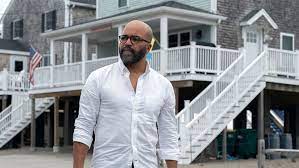
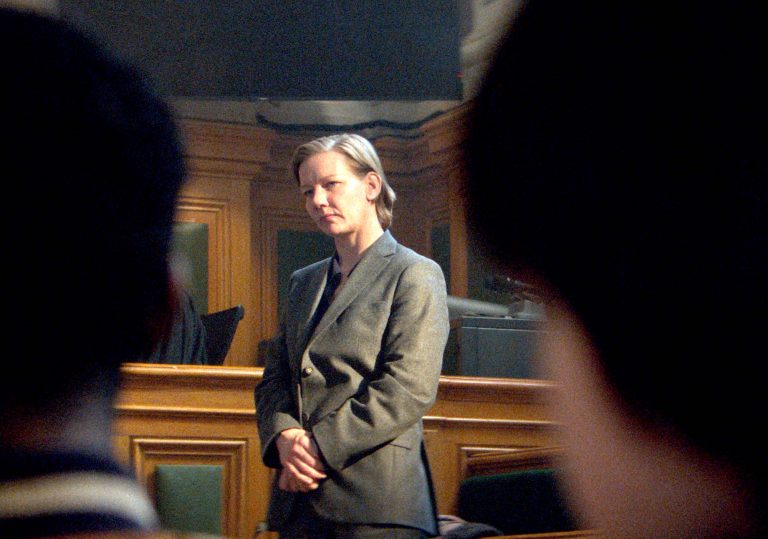
Oscars 2024 Best Picture Reviews: Part One

Ten is not a set number for the number of Best Pictures nominees. Nevertheless it’s still nice to have ten as the total of nominees.

This year, there are a wide variety of films nominated from science fiction to two musicals to a musicography to a dark comedy to a horror movie to many types of dramas. Here  are my first two reviews of the Best Pictures nominees:
Anora

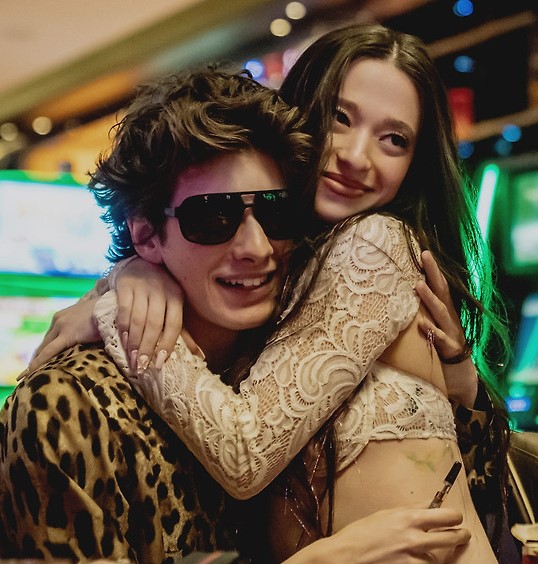
This is quite the unexpected comedy that delivers an unexpected sad ending. A sad ending was anticipated but the sad ending we got was not the one anticipated. It seems odd to have a story about a stripper/hooker marrying a rich kid to be one of the best films of the year but Sean Baker has developed a reputation for directing films about people in the sex trade. This is quite the story itself. We have a stripper who plays a ‘love kitten’ day after day for lusting men, but craves real love. We have a billionaire’s son who’s too spoiled, immature and careless to get it about life and love. He thinks marrying Anora is easy like that and he can live the same irresponsible life again, but he has a lot to learn. We have Igor, the henchman hired by the Zacharovs to have the marriage annulled, but Igor becomes the first person to see Anora as a human being throughout this whole ordeal. We also have the Zacharovs who are so obsessed with their money and power, they think they can do whatever they want. This is the kind of story that brings a lot to the table to talk about.

It’s hard to pinpoint the exact theme of the story because there’s so many topics and themes this story presents a point about. One could be the theme of sex workers. As I mentioned, Baker’s films often deal with sex workers. Here we see the case of a sex worker who is treated like a piece of meat and there are times her true feelings are shown. There are moments we stop seeing Anora as ‘this thing’ and start seeing her as a person. There’s also the case of wealth and privilege. Not only do we see wealthy people having the best luxuries but we see them having a privileged son living a careless irresponsible life, we see how the rich devalue marriage both with Vanja’s eloping of Anora and the Zacharov’s own marriage, we see how being a henchman to the Zacharovs means having to leave a christening of your godchild because your boss demands so, and we also see how the rich Zacharovs know that their money gives them power and uses it against Anora. Especially when the mother insists the family doesn’t apologize to anyone just as Igor points out Vanya owes Anora an apology for the eloping. It’s quite the irony when a stripper or prostitute has a better sense of what marriage is all about than a billionaire’s son. Or even his parents.

Often overlooked, I feel one of the top themes in the film is love. We have Anora, a stripper who pretends to love the men she sleeps with, but she craves real love. We have Vanya, whom Anora thinks she found love with as she spends weeks with him and easily falls for his marriage proposal. Anora is oblivious Vanya wants to marry an American so he doesn’t have to return to Russia and work his father’s business. Even the scenes as Vanya’s playing video games after the two marry hinds at Vanya’s irresponsibility. We also have Anora’s delusion with the marriage. Even though Vanya continues to play video games after they marry, she still thinks she met her love. We have the Zacharovs who view their son marrying a sex worker to be a disgrace to the family. We also see scenes which make you question the Zacharov’s own marriage. Finally we have Igor who becomes the first person to see Anora as a human being instead of ‘that thing.’ It was made obvious in the scene where Igor says Vanya owes Anora an apology. That ending where he allows her to stay at the Zacharovs one last night to sleep, bathe and pack and the ending scene as he’s about to drop her off is also an irony. He’s first hired as a henchman to stop the marriage, even if it means brute force, and now he actually has feelings for Anora. A shock to us all, and to a disheartened Anora as well.

This is the big breakthrough film Sean Baker has been waiting for. The film world has known Baker for a long time as one knocking on the door. He’s delivered small breakthrough films before with 2015’s Tangerine and 2017’s The Florida Project. Here, he directs a story that’s intriguing and unpredictable. It first seems like a film that would give us a cartoonish story but as the film progresses, the story is a lot deeper and it’s not the story we thought it was. Also worthy of top acclaim is lead actress Mikey Madison. If you thought you’d never shed tears for the character of a stripper, you will be wrong. It’s remarkable we have a film where the character of a stripper is shown to have real three-dimensional feelings, but Mikey’s performance of Anora was deep and revealing and we actually start feelings for her. He go from seeing her as ‘that thing’ to seeing her as a frail hurt person. Also excellent is Yura Borisov. Nobody expects any of the henchmen to have feelings for Anora, but Yura catches us by surprise. It’s also he who makes the movie into something we didn’t expect. Also good is Mark Eydelshteyn in playing Vanya. His portrayal as an immature irresponsible spoiled rich son makes you want to hate him in the end. Both Aleksey Serebryakov and Darya Ekamasova are great at Vanya’s parents. They also succeed in making you hate them as much as you’ll hate Vanya. We can see why Vanya is a spoiled brat.

Anora is not your typical story of a prostitute or a stripper. It’s a story of a love gone wrong and ends with a love you don’t know if it should be. Those who see it won’t forget it.
The Brutalist

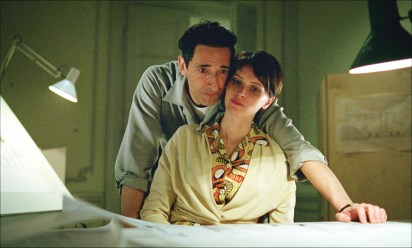
We’ve seen stories about the difficulties of achieving the American Dream before. Some are harder than others. This film takes a cynical look at an architect who achieved his American Dream. We have a Jewish architect who left post-Holocaust Hungary to find refuge in the United States and achieve his success there. We see how he has to fight his demons like his infidelity, family members that are petty, harrowing memories that cause him to take heroin, a difficult market for his Bauhaus style, rival architects, people that want to use him and above all, his own egotism. It’s not at all a pretty sight to see but it does tell a good story of a man hoping to pursue his greatness in the United States.

The thing that makes this film is not just the telling of Laszlo Toth’s story, but how it’s presented. The film begins as Laszlo’s ship sails past Ellis Island and he sees the Statue Of Liberty, but from his angle, he has to look at it upside down. He has to struggle to achieve his dream by eating at soup kitchens, living at the YMCA, embraced and then neglected by a family member who’s a successful business man, and having to prostitute himself at times. His breakthrough comes by fluke as it was the renovation unapproved by Harrison Van Buren where they first meet, and the meeting is bad. It’s after Harrison discovers who Laszlo is and of Laszlo’s pre-war success in Hungary that he’s willing to take him on. It’s not an easy task as it involves years of work and labor, supplies cancellations, dirty work form Harrison, his friendship with Gordon put to the test and Laszlo’s own ego coming to light. Then there’s how Laszlo’s attempt on success threatens his marriage to Erszebet as she has now arrived in the United States. She knows his secrets and she says she’s fine with it, but it will become obvious she’s not. His success threatens family unity with the niece as the daughter adopted after the Holocaust.

The crazy thing about the film having a half-hour intermission may have some question its purpose. We should remember many decades ago, it was common for long movies to have intermissions. This film’s intermission is very successful not only in dividing the movie properly, but give you the feeling you’re watching two different films. The first half focuses on Laszlo’s arrival, his attempt to make it in the United States, the dirty obstacles he has to face and his big break. And right while he’s writing to Erzsebet with the hopes of her coming to the United States. At the end of the intermission comes a new scenario. As Erzsebet finally arrives in the United States with niece Zsofia, there’s the added pressure of keeping a family together. Especially since Laszlo can’t keep his secrets to Erzsebet any more and she has a disability to deal with. Over time, she senses things like Laszlo’s ego and how Harrison wants to make a pet out of him. Despite being confined to a wheelchair, Erzsebet is able to muster the strength to use her walker to confront Harrison about his mistreatment of Laszlo. The ending epilogue is also something as Laszlo is saluted for his work, in Italy. It’s like he achieved his American Dream but had to achieve it at a harrowing cost and he had to get his honor from outside the US.

This is an accomplishment from Brady Corbet. Younger adults may remember his teen actor days in films like Thirteen and Thunderbirds. Like a lot of young actors, Corbet felt the need to make films of his own. This is Corbet’s fourth feature film. This film that he directs and co-wrote the story with wife Mona Fastvold is definitely something. It mixes some classic film styles while telling the story of a Holocaust survivor’s pursuit of the American Dream. There have been films where the American Dream has been achieved at a big cost before, but this film meshes Laszlo’s pursuit with the shaping of the United States and most notably Pennsylvania after World War II. As the US shapes itself after the war, Laszlo attempts to shape his success in the US, but at a huge price that comes at the cost of him, his dignity and his marriage. Right at the end as they have the tribute gala in the epilogue, you wonder if this should be a happy occasion or not with what Laszlo has gone through.

Excellent performance from Adrien Brody. Remember him from 2003’s The Pianist? He appears to have kept it low-key since. This year, he comes back with another performance of a lifetime where he shows Laszlo to be a creative man and a troubled man. He will make you hate him as much as he will break your heart. Also great is Felicity Jones as Erzsebet. It’s the appearance of Erzsebet that most turns this film into two films in one. With her arrival comes the change of environment. She appears to be one who will most interfere with Laszlo’s success and even a victim of his own selfishness but in the end, she’s the best person Laszlo needs during his most troubling time. Guy Pearce is also great as the deceptive Harrison. He’s excellent in portraying an all-American businessman who welcomes Laszlo and his talents, but as long as something’s in it for him and is willing to make a toy of Laszlo. Additional excellent acting comes from Raffey Cassidy, as the niece Zsofia who’s mute at first but soon develops her ability to talk, and from Isaach de Bankole as Gordon, Laszlo’s first friend and business associate who Laszlo later turns on in his success. Excellent technical merits are the cinematography of Lol Crawley, the production design of Judy Becker and the musical score from Daniel Blumberg.

It’s easy to see why The Brutalist is a heavy favorite to win Best Picture. It combines a graphic disturbing story of one man’s pursuit of the the American Dream and shows it in a stylish artistic fashion. Hard to outdo it.

And there’s my look at the first two Best Picture nominees for this year. If you’ve seen them, you can understand why they’ve won most of the Best Picture awards.

My Predictions For The 2023 Academy Awards

Once again it’s another year of seeing all the Best Pictures nominees before Oscar night! How do I do it? Actually how do I afford it? Anyways the Oscars are again to be held on the second Sunday of March. Jimmy Kimmel is back as the host. Its’ so refreshing to have a host back! Once again, I make my predictions for who I think will win. Here’s who I think will be the winners of the 2023 Academy Awards:

BEST PICTURE

Just when I thought Olly Gibbs and his tradition to do the image of the Oscar nominees ended last year, he does it again. Maybe he just likes doing it for fun! And of the love he gets for it!

Now about my blogging of Best Pictures reviews, a funny thing happened. When I started, I intended to divide the reviews into a blog of four and two blogs of three. Before I finished the first blog, I did a Word check for spelling, grammar and the word count. Each time I did a single movie review, I noticed each review was either close to a total of a thousand words or had already surpassed it. I published that four-review blog at first but as I was working on the second blog, I noticed the reviews for all three films were over a thousand words. I figured having blogs of three or more reviews would be too much to digest. Like seriously, would you read a blog that becomes over five-thousand words long? I didn’t think so. That’s why I did the single movie blogs after that! Glad I came to my senses!

Now the nitty gritty of the ten nominated pictures. Did you know if you only see the Best Picture nominees alone, you will have seen the films that make up a total of 71 nominations? That makes up almost 60% of the nominations this year! Four are comedies, four are depictions of people that existed or events that happened, most are releases from late in the year, two were the biggest hits of the summer, three are directed by women, and two were the biggest darlings of the 2023 Cannes Film Festival.

The Best Picture nominees have some interesting nomination statistics. All but one of the ten had their script nominated in the screenplay category while five of the films’ directors make up all the Best Director nominees. Eight of the films have acting nominations and 16 of the 20 nominated acting performances come from Best Picture contenders. The films make up all the Best Film Editing nominations. The nominated films own four of the five nominations for Cinematography, Costuming, Production Design and Original Score. The combined ten-set also own three of the five nominees in Original Song (with two Barbie songs nominated), Makeup and Hairstyling, and Production Design. The only category outside of Animated Feature, Documentary Feature or the short films categories where none of them got a nomination is in Visual Effects.

Without further ado, here are my opinions of the Oscar chances of the ten Best Picture nominees with links to my reviews in the title:

American Fiction –  In my review of the film, I declared it the best comedy of the year. It is a funny sad comedy. It lampoons the expectations of the white-dominated “liberal elite” on black literature or black arts. It taunts how most white people like to eat up certain common depictions of African-Americans, including negative ones. Monk and his plugging of the release of his pandering “gangsta” novel showcases it all well. It’s not an angry satire which one would expect from Spike Lee, but the comedy is sensible and you’ll laugh at the truthfulness. Despite how good it is, there are films with bigger buzz and bigger chances of winning the big award.

Anatomy Of A Fall This is a courtroom drama story with a lot of intrigue. A suspicious fatal fall, a wife who’s a public figure and a bisexual, a husband who suffered from depression, a blind son who looks like he was given a sheltered life, a prosecutor who looks determined to win the case, a defense team who wants to make the facts clear, and a dog that could hold the key to the truth. All of which make for a story that will get one intrigued and all a great drama. I found the film worthy of a Best Picture win, but there are other films that have more of what it takes.

Barbie – This movie definitely had the biggest fanfare and the biggest advertising I’ve seen in a long time. As the movie made its way into theatres, it became beloved by critics and became the biggest box office hit of the summer! It even had enough endurance to make its way into the awards accolades. As you know, it got a good amount of Oscar nods but snubbed in the two most anticipated categories: Actress for Robbie and Director for Gerwig. I’m sure it will win two Oscars but its Best Picture chances faded fast.

The Holdovers – When was the last time a Christmas-themed film was nominated for Best Picture? Seems like eons ago. This is a charming story of three lonely people at a prep school spending Christmas together and it ended up being the best thing for all three. The film has its heartbreaking moments and its humorous moments. They mix well together and they give the other its own time. The film ends with the feeling of hope for all three. It’s one of the best comedies of the year but I see it having rough competition to win Best Picture.

Killers Of The Flower Moon –  Scorsese does it again! He takes a moment of historic infamy in the United States and makes an excellent depiction of the people and events. I don’t think it was worth being 3 1/2 hours long but it was a good story that keeps one intrigued and helped Scorsese nab his tenth Best Director nomination. Also despite Hollywood being known for its bad depictions of Native Americans, this film did an excellent respectful depiction of them. Although it looks like Best Pictures material, it’s missing a key nomination. This is the only one of the Best Picture nominees whose screenplay wasn’t nominated. I feel that will hurt its Best Picture chances.

Maestro Biography films are usually loved by the Academy. It’s no wonder a film about Leonard Bernstein should appeal to the Academy. And for Bradley Cooper to direct, co-write and play Bernstein himself to boot! One thing this film succeeds in doing is it keeps from being the common biography film. It’s also about his wife Felicia, definitely about his music and it shows a hidden side to Bernstein most never new. This film is worthy of the Best Pictures win but there’s one other that has the right stuff.

Oppenheimer You can describe J. Robert Oppenheimer however you see him. Brilliant genius? Imaginative? A pioneer? A hero? A killer? A communist? An unfaithful husband? An arrogant man? You be the judge. This film does more than show Oppenheimer and him leading the project to create the atomic bomb. It is three-dimensional in depicting the person. It does a great job of capturing his imagination. It also shows the aftermath of his work and how it haunts him for the rest of his life.

I make this film my Should Win and Will Win pick. Also I have to say if it wins, it will be refreshing to see a blockbuster back as the Best Pictures winner. To think the last time a film that grossed $100 million won Best Pictures is 2012’s Argo! Yeah, that long ago!

Past Lives It’s very rare for a film about a slow, mostly quiet story can win people over. Often a story like that gets dismissed as “boring.” Also it’s not often for a story of something distinct with one’s culture can be embraced by different people. This film succeeds in getting people engaged with a quiet story of childhood lovers reuniting and the Korean element of In-Yun added in engaging to filmgoers. I admire it for being a story that gets people engaged. The problem for winning Best Picture is its only other nomination is for the screenplay. That eliminates its chances of winning Best Pictures right there.

Poor Things  There seems like every Oscar season, there’s at least one Best Pictures contenders that’s either odd or absurd or eccentric, but charming. This is the film for this year. Yorgos Lanthimos knows how to take the absurd and turn it into a charming story. Here he takes a story that appears like Dr. Frankenstein meets female empowerment. It’s a film that’s sci-fi, absurdist drama, romance and comedy rolled into one. Although it seems like Oppenheimer is a lock to win Best Pictures, this film and it’s late buzz looks to be the Most Likely Upstter. Who knows? Best Pictures surprise wins have happened before.

The Zone Of Interest – Another darling of Cannes 2023 starring Sandra Huller. Must be her lucky year. Of all the Best Pictures contenders, this is a film whose biggest storytelling assets aren’t the actors or the script. It’s about what’s happening around them. It’s what’s happening behind the walls. It’s a story that appears to have simplistic scenes but when you look back, those scenes tell a lot more. Also while this is not a Holocaust film that gives you what you want in the end, it does send a strong message at the end of the Nazi’s eventual fate. Great film and a deserving Best Pictures nominee, but I feel it’s missing some qualities to win Best Pictures, like standout acting performances.

BEST DIRECTOR

Should Win and Will Win: Christopher Nolan – Oppenheimer

We have a lot of super directors that are quite active. Steven Spielberg, Martin Scorsese and James Cameron come to mind. One director that should rank with them is British director Christopher Nolan. He’s had a wide array of films he directed to success. It started with 2001’s Memento, had his big Hollywood break with 2008’s The Dark Knight, taken further with 2011’s Inception and finally got his first Best Director nomination with 2017’s Dunkirk. I’m sure all of us can name at least one Nolan film we like. Finally he proves his mettle as Oppenheimer is the most renowned film of 2023. It’s won critics and audiences alike and has won the lion’s share of awards. Christopher Nolan’s time is finally now.

BEST ACTOR

Should Win and Will Win: Cillian Murphy – Oppenheimer

There’s a quote from Leonard Bernstein — another person who’s portrayal in a film earned the actor a Best Actor nomination — that went approximately “Art shouldn’t answer questions. Rather art should provoke questions.” I believe that’s what Cillian Murphy does here in Oppenheimer. Without a doubt, he gets into the character of J. Robert Oppenheimer, but his portrayal leaves you questioning how you should see J. Robert. Should you see him as a hero? A killer? An unfaithful man? An arrogant person? A backstabber? The movie is about that, but it is Cillian’s performance that helps make it.

BEST ACTRESS

Should Win: Lily Gladstone – Killers Of The Flower Moon
Will Win: Emma Stone – Poor Things

The buzz is all there. Lily Gladstone has won a ton of awards. Her performance of Mollie Burkhart who goes from loving wife to betrayed in the end had a lot to do with how great Killers Of The Flower Moon is. She even stole the show from Leonardo and made it her film. If she wins, she will become the first Native American actress to win an Oscar. Only thing is hot on her heels is Emma Stone in Poor Things. Emma’s performance of a woman with a baby’s brain who develops into a more empowered version of herself is also an excellent work. Emma has also clinched a few wins of her own like the Critics Choice and the Bafta. Something is telling me that despite Lily being highly favored, Emma will win.

BEST SUPPORTING ACTOR

Should Win and Will Win: Robert Downey Jr. – Oppenheimer

Very often, an actor or actress who’s famous for notable roles will get a lot of renown for playing a character completely different from what you expect. Robert Downey Jr. may be recognized by face but he will become unrecognizable through his acting as you watch. Just like Cillian Murphy will make you question how to see J. Robert Oppenheimer, Downey Jr. will also make you question how to regard Lewis Strauss. Should you see him as an enemy of Oppenheimer’s? Is he jealous? Does he feel betrayed? Or through it all, does he still hold an admiration for him? Downey Jr. succeeds in doing all that.

BEST SUPPORTING ACTRESS

Should Win and Will Win: Da’Vine Joy Randolph – The Holdovers

Performances in comedies commonly get the short end of the stick come Oscar time. Da’Vine Joy Randolph’s performance as Mary Lamb is deserving of the win. It often seems unorthodox for a heartbreaking scene to be shown in a comedy, but we get it when Mary has that moment of heartbreak as she hurts over the loss of her son. It’s one of the most heartbreaking scenes of the year, but The Holdovers still manages to be a comedy. Even Mary seems like a role fit for a comedy as she learns to live again as she’s reunited with her sister. It’s her transformations from starting off living her daily life to going to one extreme of emotions to the polar opposite at the end as why she deserves to win.

BEST ADAPTED SCREENPLAY

Should Win and Will Win: Cord Jefferson – American Fiction

One of the most interesting things to happen in this category is the screenplay for Barbie had mostly received its awards and nominations in the Original screenplay category. A script based on a doll doesn’t seem like an adaptation of any kind. Despite that and despite winning the Critics Choice award in the Original category, weeks before the nominations were to be announced, they announced they would make a running in the Adapted category. The Barbie script succeeded in getting nominated.

Despite that, it’s still the script of American Fiction from Cord Jefferson that has won most of the awards and deserves to win. I mean the lack of proper representation of African Americans in the arts world is enough to disappoint people and even outrage some. Something makes me think if Spike Lee were to do his own adaptation of Erasure, it would be an angry drama. But Jefferson turns it into a comedy and lampoons the whole system of how the mostly-white liberal scene treats an obviously-pandering novel before release. The more Monk panders, the more buzz and renown he gets. Jefferson succeeds in making a story of a serious topic look like the circus it can be.

BEST ORIGINAL SCREENPLAY

Should Win and Will Win: Justine Triet – Anatomy Of A Fall

If you’ve seen Anatomy Of A Fall. you too can get drawn into the story and never let go. It presents a fictional story you could see happening in real life and the big question of is the accused innocent or guilty? When you learn of the friction of the marriage, that will cause you to question even more. Meanwhile this is happening as the blind son doesn’t know what to think of his mother. Triet gives us a story that allows us to make our own judgement of the accused as well as through our judgement as the story goes, expose our own way of thinking and even possibly our prejudices. Even at the end, were still left with only our own judgement of Sandra as we reflect back. That’s why I feel she deserves to win.

ADDITIONAL CATEGORIES:

It’s usually in the major categories when I give my long-winded opinions. The only case I will give a long-winded opinion in the technical category section down below will be for the Animated Feature category. Only in very few categories where I feel I’m qualified to make such a judgement will you see me give a Should Win pick. So here are my picks for the technical winners:

BEST ANIMATED FEATURE

This is the one technical Oscar category in which you’ll see me write a paragraph about since I’ve seen all three. For a look at my thoughts on all five, click here for my blog from yesterday. This year’s five contenders are a big mix. One is a Disney film or a Disney collaboration; it does seem like each year there need to be at least one Disney nominee. Two are foreign productions. One is from Netflix. Two are 2D animation and the three others with the latest 3D technology. Looking them over I give The Boy And The Heron my Should Win pick and Spider-Man: Across The Spider-Verse my Will Win pick. The awards race has been a tight race between the two but I think the Spider-Verse film has the edge.

BEST CINEMATOGRAPHY

Should Win and Will Win: Hoyte van Hoytema – Oppenheimer

BEST COSTUME DESIGN

Should Win: Jacqueline Durran – Barbie
Will Win: Holly Waddington – Poor Things

BEST DOCUMENTARY FEATURE

Will Win: 20 Days In Mariupol

BEST FILM EDITING

Should Win: Thelma Schoonmaker – Killers Of The Flower Moon
Will Win: Jennifer Lame – Oppenheimer

BEST INTERNATIONAL FEATURE FILM

Will Win: The Zone Of Interest (United Kingdom)

BEST MAKEUP AND HAIRSTYLING

Will Win: Kazu Hiro, Kay Georgiou and Lori McCoy-Bell – Maestro

BEST ORIGINAL SCORE

Should Win and Will Win: Ludwig Goransson – Oppenheimer

BEST ORIGINAL SONG

Should Win: “I’m Just Ken” – Barbie
Will Win: “What Was I Made For” – Barbie

BEST PRODUCTION DESIGN

Will Win: James Price, Shona Heath and Zsuzsa Mihalek – Poor Things

BEST SOUND

Will Win: Oppenheimer

BEST VISUAL EFFECTS

Should Win and Will Win: The Creator

BEST AMINATED SHORT FILM

Click here for reviews and predictions in this category.

BEST LIVE-ACTION SHORT FILM

Click here for reviews and predictions in this category.

BEST DOCUMENTARY SHORT SUBJECT

Click here for reviews and predictions in this category.

JUST ONE MORE – MOST LIKELY OSCAR UPSETTERS

Once again with my predictions comes six possible upsets that I most think can happen tomorrow night. Remember that despite the big awards buzz and predictions and awards clout, nothing is completely guaranteed. Here are the six biggest surprises I anticipate, and they’re listed in category order:

  • Lily Gladstone for Best Actress for Killers Of The Flower Moon
  • Tony McNamara for Best Adapted Screenplay for Poor Things.
  • The Boy And The Heron for Best Animated Feature
  • Jacqueline Durran for Best Costuming for Barbie
  • Robbie Robertson for Best Original Score for Killers Of The Flower Moon
  • Guardians of The Galaxy, Vol. 3 for Best Visual Effects

And there you have it! Those are my predictions for the 96th Academy Awards. Hopefully the show will run as smoothly as it went last year and without incident! I trust Jimmy Kimmel will do a good job like he did last year.

2023 Oscars Best Picture Review: Poor Things

Emma Stone plays a woman whom, thanks to a transplanted brain, is able to rid herself of the nasty men in her life in Poor Things.

There have been oddball romances before but Poor Things is something else. It’s interesting how some weird science can change a woman’s life for the better.

If you’ve seen Yorgos Lanthimos’ past films, you’ll know he doesn’t shy away from bizarre stories or an eccentric way of storytelling. Here, we have the story of a pregnant woman in Victorian England Dr. Godwin Baxter finds in the river dead from a suicide jump. Dr. Baxter brings her back to life, thanks to the transplant of the brain of her deceased unborn child and names her Bella. Soon his assistant Max McCandless falls in love with her. Unfortunately as Max is about to marry her, she is pursued by a swindler named Duncan Wedderburn who knows the story and wants to take full advantage of her naivety by being the one who marries her. He taker on travels to Lisbon, Alexandria and France with her but she’s too much for him to handle from giving away all his gambling money to the poor of Alexandria to living in a brothel in Paris. It’s through the women in the Paris brothel that she develops her empowerment and Duncan’s engagement with Bella falls apart. Just as she’s ready to marry Max, Duncan has a revenge plan. He reunites her with her former husband: a General named Alfie Blessington. It’s as he reminds her of her past as a woman named Victoria that she falls for him again. it’s of his controlling abusive nature that she’s reminded why she did her suicide jump from a bridge. Alfie things he’s got her, but Bella isn’t Victoria anymore and things change.

It’s funny how there are two films with the theme of female empowerment nominated for an Oscar. The first is Barbie and the messages of trying to achieve empowerment when you’re seen as the exact opposite was found very entertaining by the summer movie crowd. This film is not exactly a film that would win huge crowds. The film, nevertheless, is oddly charming. It is a surprise how a doctor who appears to be a Victorian Dr. Frankenstein is able to bring back the life of a wife who committed suicide through her unborn child’s brain, have her develop, and then find her empowerment though her bumpy road to recovering her thought. In her recovery, there were many opportunities for her to become prey again from Duncan to Alfie, but she always won in the end. Her naivety makes her give Duncan’s money winnings away in Alexandria, causing him to find her too much. Her time with the prostitutes in Paris gives her a great education with love and herself. Her new-found empowerment helped her see Alfie Farrington as the brute husband he was and why she jumped in the first place. This time, she knows how to deal with the man that drove her to kill herself in the first place.

Another funny thing is this film is not only the story of Bella but also the story about the men in her life. At first, you want to think that Dr. Baxter is the controlling one. He took her when he found her dead, removed the deceased unborn child, and performed the lobotomy. When you see all of his creations and all the living creatures of half-and-half animals, you think Bella is the latest subject for him to toy with. You also want to think Max McCandless is just a man who sheepishly does whatever Dr. Baxter tells him to do. That is until you learn of the other men that come into her life. Just as the two try to raise her, Duncan tries to take her into being his own toy, only to lose big-time. Just as McCandless tries to marry Bella, Duncan “reunites” her with Alfie and reminds her of her life as Victoria and of his brutish controlling nature which never changed. In the end, it’s Dr. Baxter and Max who end up being the best men in her life. Dr. Baxter performed the lobotomy that helped her forget herself as Victoria and become Bella. Max is the one who truly loved her and cared about her. It’s no wonder the two are happy to continue Dr. Baxter’s works post mortem.

Top respect should go to Yorgos Lanthimos. Hard to believe this is his first feature since The Favourite. Lanthimos is known for creating absurd situations and somehow make them understandable and watchable. Here, he does it again. He takes a case of a Frankenstein-like experiment and it succeeds in creating a story a woman stronger than she was before her suicide jump. And through her unborn infant’s brain! He knows how to make the odd entertaining and make it work. Also worth acknowledging is scriptwriter Tony McNamara. This story, which he adapts from an Alastair Gray novel, makes the bizarreness of it all understandable, oddly intelligent, and enjoyable. A story like this is one of the least likely places you’ll see a story of female empowerment, but it happens here!

Also excellent is the acting from Emma Stone as Bella/Victoria. Just as this film is Lanthimos’ comeback film, he reunites with Stone to do it! Doing a role of a woman with a transplanted infant brain and having to rapidly mature from and infant’s thinking to an adult’s thinking is a hard task to do even if this were a dramatic film. This role could have been a joke, but Emma knew how to make it work for the story. She makes Bella/Victoria into a believable character from her infant-like ways to her child-like naivety to her sexual maturity to her new-found empowerment. And to make the comedy of it all work to boot! An excellent accomplishment.

The film also has a lot of great supporting performances like Mark Ruffalo as the swindling Duncan Wedderburn who loses in the end. Also great is Willem Dafoe as Dr. Godwin Baxter. He is great in convincing you he’s less of a controlling mad scientist and more the best father figure Bella could have. Ramy Youssef is also great as Max McCandless. He does great work playing the man you think has the least chance of winning Bella’s heart, but does.

Where do I start with the technical accomplishments? I never anticipated a science fiction love story to come from Yorgos Lanthimos The costuming from Holly Waddington, the makeup and hairstyling team, the set design team, they all did a great job of taking the audience back to the past and mixing in futurism to fit the times. The cinematography from Robbie Ryan and the  music from Jerskin Hendrix add to the film’s enjoyment. The visual effects also did a great job in creating the mad science of Dr. Baxter. Especially the half-and-half animals. The effects were both funny and amazing.

Poor Things is a delightful mix of science fiction, romance and comedy. It first seems like the type of film you would not go out to see, but you’ll be glad you did.

2023 Oscars Best Picture Review: Past Lives

Teo Yoo and Great Lee star as two childhood sweethearts who could be destined to be for each other after all these years in Past Lives.

Do you believe in destiny? Do you believe in reincarnation? Past Lives is a story that examines it and how it pertains to love.

Reincarnation and a person’s belief they had a past life or many past lives is a topic popular with many. It’s also a topic of great skepticism. This story is unique as it shows the cultural significance of the topic of reincarnation. Specifically reincarnation commonly regarded through Korean people. This concept is called In-Yun. It’s hard to understand, but protagonist Nora Moon does a good example of simplifying it by saying a simple action could mean they’ve met before in a past life. Even a simple brush of each other’s clothing can send that message of In-Yun between two strangers that simply pass by and never see each other again. The concept of reincarnation itself is completely something someone will choose to accept or not, but something like In-Yun experienced through simple encounters like those are even harder for someone outside of Korea to understand and accept.

Nora is one who believes in In-Yun, despite her non-Korean husband being skeptical. What makes this story unique is how it relates in terms of romance. Could it be that destiny would make Hae Sung and Nora lovers in past lives?  Is it also destiny that they should be lovers in the present? And will it come at the cost of the end of Nora and Arthur? This is a romance story of a different kind! Also how does this belief of In-Yun sit well with Arthur who was never taught In-Yun? It’s not clear of Arthur’s beliefs himself but not being Korean, how will Arthur take to Nora’s belief of In-Yun? Will something he himself doesn’t understand mean this is something that is supernatural and beyond his control and something sending him the message he and Nora were not meant to be?

One thing I learned in my college courses of literature that for a work themed on the culture or popular attitudes of a region the protagonist lives in or a culture the protagonist comes from, it has to find ways to transcend the physical and cultural borders to make it understandable and relatable to “outsiders.” This concept of In-Yun is definitely something most people outside Korea can’t understand, but it gives the viewer a better understanding. Various scenes in the story like their reuniting online twelve years later or even Nora and Hae Sung visiting New York landmarks together, one’s Nora and Arthur didn’t go to together, will also stimulate your interest and question if these former schoolmates are soul mates. Making it not just a story about the two, but also about the man caught in the middle adds to the intrigue. If they’re soul mates, will it come at the cost of the man who loves her? It’s a story with a pace that’s slow and even quiet, but it succeeds in keeping your intrigue of the three involved and of the In-Yun most non-Koreans are just learning about.

This is an excellent film from director/writer Celine Song. A mostly fresh writer on the scene, Song has had experience writing for the stage and for television for The Wheel Of Time. This film is her first-ever work for film. The life of character Nora mirrors her own life as she herself  was born in South Korea in 1988, emigrated to Canada in 2000, achieved her MFA from New York University and worked her way to the New York theatre industry. Like Nora, she married a Jewish-American writer. Even the scenario mirrors her life as five years ago, a childhood sweetheart came to New York to visit. That must have been the making for this and it’s an excellent work.

The film starts with a lounge scene of Nora and Hae Sung talking happily while Arthur is looking down. You don’t hear them talking but you see them and hear the talk from two white observers. Then the story begins. Throughout the film, she takes this personal story and makes it into a story engaging for the audiences of all backgrounds. That’s another thing too. You might dismiss this as a “boring story” at first, but it will spark your intrigue over time. She helps the audience get a better standing and makes them a believer of In-Yun, if only during the film. Even the ending when Arthur gives Hae Sung a warm friendly goodbye seems right and fitting, even if it wouldn’t be your nature to do so. A very excellent film debut from Song.

Also excellent is the performance of Greta Lee. She has been active on the acting scene for the last ten years. She does a great performance as one who strongly believes in this In-Yun, even if it might threaten her marriage. Nevertheless she also exhibits confusion and heartbreak well. For a performance that’s not too demanding, Greta does a graceful job with it. Teo Yoo is also great as Hae Sung. It’s quite the effort playing someone whole heartedly believing in a soul mate only to learn right there it was not meant to be. Also great is John Magaro as Arthur. He played the frustration of being the man who might lose Nora to something she believes in and he doesn’t understand. He also makes the befriending of Hae Sung at the end believable.

Past Lives takes a love story about destiny some could dismiss as a joke and turns it into something great and something believable. It becomes a more engaging story as you continue watching.

2023 Oscars Best Picture Review: Oppenheimer

Oppenheimer will get you questioning whether J. Robert Oppenheimer (played by Cillian Murphy) deserves to seen as a hero or villain, or neither.

Would a film about J. Robert Oppenheimer attract crowds to the cinema this summer? Oppenheimer proved to have the right stuff to make it happen.

When the film first arrived, there was the big question. Would a film about the inventor of the atomic bomb fly or would it flop? Would today’s audience care about a story of the inventor of the atomic bomb? Especially with this being a film with a budget of almost $100 million. Would it be a box office hit during the summer? In addition, does the film justify its three-hour running time? Oppenheimer surprised all naysayers by answering “yes” in all cases. It even succeeded in being a hit right while the Barbie phenomenon was in full-swing. No wonder 2023 will be remembered as the summer of “Barbenheimer!”

This film succeeds in justifying it’s importance. It’s easy to develop a fascination for the man who pioneered the “Nuclear Age.” Hiroshima and Nagasaki are still as intriguing and haunting today as they were when the bombs were dropped in August 1945. Even how this would pave the way for the introduction of the nuclear bomb and how it would cause the most intense moments of the Cold War of the past can make people intrigued in the man that started it all. Even though the most intense days are gone, it doesn’t mean the threat is no longer. There’s still Communist China, North Korea and even Putin taunting the world with threats. As long as nuclear bombs exist and are ready to use, J. Robert Oppenheimer will remain a man of intrigue.

The film can’t just be about building the nuclear bomb. The film is about the man himself. Oppenheimer himself started his career off as an aggressively ambition physics professor who had a clever and creative way of describing complicated things. It’s after he learns of nuclear fission in 1938 that he senses that it’s something that can be weaponized. The timing of this comes just as World War II dawns. The Manhattan Project is commissioned in 1942 to create such a weapon. J. Robert, who was Jewish himself, knew of the importance of stopping the Nazis. J. Robert didn’t simply agree to create such a bomb for the sake of having one created. He created one because he sensed the Germans themselves could learn of this and create one of their own. The war ends in Germany without a single use of such a weapon, but as its relevance is questioned, J. Robert suggests it could end the war in the Pacific. The bomb is tested successfully and that prompts President Truman to order them used in the war.

Then Hiroshima and Nagasaki happen. Everything changes for Oppenheimer. He is now ridden with guilt, feeling responsible for all the deaths that happened. The American people, on the other hand, see him as a hero for ending the war. President Truman, full of excitement with winning the war, taunts J. Robert’s empathy and rejects his wish to end further atomic development. It’s at the 1954 hearings that J. Robert, his legacy and his ties to communists are put under question and he has to confront himself on who he is. Eventually his arrogance and competitiveness would take his toll on him in the end. He’d have to face the music of the new world order he helped pioneer.

It’s also about the personal side of the man. J. Robert was a man of ambition in his early days of studies. He was also a man who thrived on knowledge and frequently consulted with Albert Einstein many times, relying on his knowledge. He was a man who liked difficult things and took an interest in the mystical and the cryptic. He was also the husband of Kitty Puening, but the marriage was rocky and riddled with J. Robert’s infidelity. His ties to communists in the intellectual community, and even with wife Kitty being a former writer for a communist newspaper, is something that could easily cause the suspicion in the 1950’s communist crackdown. J. Robert Oppenheimer was as much a complicated person as he was an important part of history.

This film should be seen as the crowning achievement of writer/director Christopher Nolan. His career has spanned over half a century starting in 1998 with Following, making his North American breakthrough with 2001’s Memento. His career would be full of landmark films like The Prestige, The Dark Knight, Inception, Interstellar, and Dunkirk. Until this film, only the latter has earned him an Oscar nomination in directing. He’s frequently delivered remarkable storytelling and has often found big box-office success, but many feel he’s missing the big renown he deserves. This film, which is an adaptation of the 2005 book American Prometheus, not only makes us take interest in the man who pioneered the nuclear age, but take us into the times and in the person Oppenheimer was. He succeeds greatly in creating a film that keeps out intrigue in the man himself as our intrigue into the creation of his bomb. Definitely the best film in an illustrious career he’s created.

We should also give many top accolades to Cillian Murphy. As much as this is Nolan’s masterpiece, we should also admire Cillian for making the film work for his portrayal of J. Robert. He does a great job in portraying the man and his genius, his weaknesses, his arrogance, and his hidden frailties. Definitely one of the film’s biggest highlights. Also excellent is the performance of Emily Blunt as Kitty Oppenheimer. Not only does she show her struggles with J. Robert’s infidelity and the potentially-destructive work he’s carrying out, but she’s able to tell J. Robert bluntly some awful truths about him, the world and all he caused. Also excellent is Robert Downey Jr. playing Lewis Strauss, the former colleague who turns against him and vilifies him in the end. Additional excellent performances come from Matt Damon as Ge. Leslie Groves who’s cynical and fearful of J. Robert’s work, Florence Pugh as J. Robert’s “other woman,” and Tom Conti as Albert Einstein, whom J. Robert often confides in and confesses to.

The technical feats of Oppenheimer are also excellent. There’s the cinematography of Hoyte van Hoytema, a frequent collaborator of Nolan’s, who did a great job of using the black-and-white and color imagery to showcase the two sides of the story. There’s the excellent editing from Jennifer Lame which showcased the story well and justified the film’s three-hour length. There’s also the costuming, hairstylists and makeup personnel that did a great job in recreating the looks of the past. The production design team also did a great job in their recreation of past buildings and the empty town meant to test the bomb’s effects. There’s also the great musical score from composer Ludwig Goransson that adds to the suspense and eeriness of the film and the sound team that delivers the right sound mixing needed for the story.

Oppenheimer is a deserving summer movie hit, an accomplishment for Christopher Nolan, and one of the best films of 2023. It’s a film that can get you feeling sorry for a historical person we should really hate and also show how important the story of his invention is for our times.

2023 Oscars Best Picture Review: Maestro

Maestro is a dead-on portrayal of Leonard Bernstein (played by Bradley Cooper) and his wife Felicia (played by Carey Mulligan)

Would a film about Leonard Bernstein be worth seeing? The film Maestro succeeds in making anyone who likes music worth seeing.

There are a lot of musical geniuses we know of for their music, but few we know of for themselves and the lives they led. Leonard Bernstein is one. Many of us are familiar with the conducting he performed or the music he’s written. What most of us are unaware of is his eccentricities as someone in the arts, his past of marrying a woman despite being gay, and his extramarital affairs. Despite it all, despite Bernstein’s failings as a person outside of his music, he still found Felicia to be his soul mate. That one person in the world who knew him inside out and understood him. There’s no doubt if Bernstein was out now, he’d have no problem pursuing a man openly. It was the times where loving his own was a criminal offense that could lead to his downfall. His liaisons with men had to be as secretive to the world as they had to be secretive to Felicia. The thing is had he lived in a time when it was okay to love your own, he wouldn’t have love Felicia: the one person meant for him. It does leave you thinking what would have happened if Leonard was free?

Even though it does a lot of focus on his marriage to Felicia and his infidelity during the time, it doesn’t forget it’s a musicography. It shows Leonard’s career from its start coming from a lucky break of the guest conductor falling ill to opening doors for him and his music to be heard in symphony halls and on the stages of Broadway musicals and on the silver screen, and even intricate choral pieces. It’s known that geniuses are known for their eccentricities. Leonard’s eccentricity was music singing inside of him and his need to create. If there’s one scene that stands out how much music was a part of Bernstein, it was him conducting his musical Mass. His body movements as he conducts sends that message of how into the music he was. Even as he was no longer the grand composer, he still spent the last years of his life teaching music students. He gave back as much as he created.

Though this is without a doubt a musicography of Leonard Bernstein, this is also about Felicia Montealegre. An actress herself, she was a free spirit of the arts like Leonard. She was understanding of his homosexuality, but was willing to take the risk of loving him and even marrying him. She herself was an actress and she also embraced the free-spirited feelings of the artist. Her love for him as well of her support for his work is as undying as his support for her and her work. She fends of rumors of his liaisons with men by reminding people and insists she holds reign over him as his wife. Even though she does, it’s obvious there will come a testing point in this. Especially as rumors are heard by his daughter Jamie and alcoholism controls his life. Even though the marriage does break down in the late-60’s she still remains with him and it’s as she’s dying of breast cancer that brings them back together. It seems as though despite the hurt, Felicia still believed Leonard was the one for him just like she appeared to be the only one for Leonard. The scenes of her death and as Leonard tries to live his last years without her sends that message.

Excellent work from Bradley Cooper. This is not the first time he acts, co-writes and directs in a film. A Star Is Born was the first. In this, his second effort, he does a great three-dimensional job in recreating Leonard Bernstein with the character he creates and the story he co-wrote with Josh Singer. He takes Bernstein inside out and showcases aspects we hardly knew of a person we’re familiar with. The film is also a great showcase of Cooper over the years. How many of you remember 2009’s The Hangover, Cooper’s breakthrough film, and still carry that image around of him over the years? This film is quite possibly the best film to rid one of that image of Bradley Cooper that’s lived rent free in your head for years and showcase his maturity of an actor over the years. Even seeing how you hardly sense a drop of Cooper in the role and see Bernstein will give you some new-found respect for him.

Also worthy of admiration is Carey Mulligan. Just like you see Leonard instead of Bradley in this film, you will also see Felicia instead of Carey in the film. Her performance of Felicia is something completely different from what you’ve seen Carey perform before. It will even get you thinking at times the film may be more about Felicia than Leonard. She does a great job who loves Leonard and embraces the freeness of the artist, but will have it tested throughout her marriage. Also great is Sarah Silverman as the sister Shirley. Those who only know Silverman through her comedy will be surprised to see she can pull drama off well too. She’s great as the one who knows Leonard inside out and serves one to warn Felicia of him. Also great is the performance of Matt Bomer as David Oppenheim: the man caught in the middle of this love triangle. For technical efforts, Matthew Libatique does a great job in doing the cinematic images and angles. The makeup team does a standout job in creating Cooper’s face to look like Bernstein from the age spots to the nose. The sound department is also great. They know that this film is about Bernstein’s music and they do an excellent job in working the sound right for the film.

Maestro is a three-dimensional biographical film that succeeds in getting one to get even closer and more personal with Leonard Bernstein. It’s also about the love of his life that would never die.

2023 Oscars Best Picture Review: Killers Of The Flower Moon

Lily Gladstone (L to R), Robert de Niro and Leonardo di Caprio star in Killers Of The Flower Moon, a true crime drama that’s also an ugly part of history.

Killers Of The Flower Moon is a film of a crime story we often forget. It’s one we need to be reminded of, especially because of the times we live in.

Let’s face it. American Fiction may show how bad the entertainment industry is at dealing with entertainment featuring African Americans. How easily we forget Hollywood has also had a terrible history in it’s depictions of Native Americans. I’m sure those “Cowboys And Indians” movies come to mind, and boy did they age badly! The depictions of Native Americans have been better over the years, but imperfect. Sure, we have Dances With Wolves, but stereotypes are still present in a lot of entertainment or Indigenous actors lack presence and proper depiction in films.

As bad as the depiction of Native Americans are in Hollywood films, it’s nothing compared to the treatment of Native Americans in its centuries of history. We’ve all learned the history. The influx of settlers and the ruling colonialists throwing them off their land, the various “Indian Wars,” the reservations created, their own Residential School system, it’s a sorry history. Sure makes those games of “cowboys and indians” you used to play an embarrassing memory, doesn’t it? Here, we have an incident that has gone forgotten over the years: The Osage Murders that happened almost a full century ago.

We see the story. The indigenous are forced off their land into anywhere. The Osage were one such people lucky to find their own wealth through natural resources. Soon, the Indigenous of Osage were wealthier than the white people. However court orders white guardians to guard their wealth. One man enters the community and plays an elder to get the wealth. His nephew even falls in love with an Osage woman he’s the driver of and eventually marries her. Then the crime happens,. Many Osage in the town are killed, including three of the women’s sisters. Even the nephew is prompted to give his wife insulin poisoned with heroin and she nearly dies. As she recovers truths are unraveled and soon the elder and his sheepish nephew face the music for what they’ve done.

This story’s presentation of the murders and the crime can be seen through many angles. The thing about the film is that it not only focuses on the murders but it also focuses on the greedy white men, most notably William Hale, who sought to take that very wealth. Over time, crime comes to the town of Fairfax, Oklahoma with murders coming with the greed. Sounds like your common mob story, but that’s what it became. A story of a white mob killing the Indigenous people for their riches. As much as this is about rich Indigenous people being killed in the name of greed, it also comes across as an unnoticed “Indian War.” You’ve heard the history. Hundreds of Indian wars between white settlers and the Indigenous peoples. The war ends with many of the Indigenous killed and they’re forced off their land. In this story’s case, it appears as a war over the riches and who should have control. Once again, white people feeling they should be calling the shots. And in the state of Oklahoma in the 1920’s. The Osage had many signs sensing something would be wrong. From white people showing up in their towns to the alert they received from the 1921 Tulsa race riots to marching in a parade along with the Ku Klux Klan just behind them. A lot of signals. And with these murders happening around the time the FBI was being formed, the film succeeds in making this incident look like the incident that pioneered the FBI to be instituted.

Even with this being a crime story, it’s also a love story of a love that blossomed and died because of this. Ernest Burkhart drives Molly and falls in love with her. The love appears genuine between the two. They marry with Hale’s blessing and form a family. Then tragedy comes with many of Mollie’ sisters and her family dying ugly brutal deaths. Meanwhile Ernest is constantly under Hale’s thumb. He’s constantly torn between the love of Mollie and his loyalty to following Hale’s orders, including his order to give Molly insulin laced with heroin. Mollie would have been the last of her sisters to die, but she survived. Over time, secrets unravel. That last scene between Ernest and Mollie narrowed the story down. What should have been love between the two became betrayal and near-murder.

This is another good achievement from Martin Scorsese. In all of his sixty-five years in film making, Scorsese isn’t afraid to dive into new territory or try new things. This film he directed and co-wrote with Eric Roth is a telling story of the incidents that happened and how it affected a peoples. It shows how a story of a crime committed in the name of greed from almost a full century ago is a case of the systemic racism many Americans believe to be the right thing and insist on having.

There are some Indigenous film critics that feel this story could have been done better if written by an Indigenous writer. I do agree an Indigenous scriptwriter would have done a better job of telling this story from the side of the Indigenous people. Nevertheless, this is a crime story. If you’ve seen Scorsese’s past works, it seems as though Scorsese is the master of crime dramas. He does an excellent job of showing the crime that happened and the greed that fueled it. He also succeeds in showing the Indigenous people in a dignified manner and stays away from the common cliches white writers normally give Indigenous stories. Even the ending as the present-day Osage people are shown celebrating themselves is a big change of pace and worthy of admiration.

The acting of Leonardo Di Caprio as Ernest is good, but this is not his best effort. I’ve seen better acting from him before. Nevertheless he does succeed in making you question the history. Did Ernest truly lover Mollie? Or did he marry her to get her riches at the cost of her life? Ernest did have involvement with murdering her sisters and their families, but did he want to intentionally kill Mollie with her laced insulin? Di Caprio’s acting will make you question. Of all the acting, the standout is the performance of Lily Gladstone. She succeeds in making it look more like Mollie’s the film’s protagonist as Mollie’s the one caught in the middle. Lily does an excellent job of acting without overacting. Her performance really tells a lot of the story of a women going from being in love to going through unimaginable tragedy to almost being a victim herself to herself achieving her own independence. She’s also good at conveying despite braking free, there’s still the hurt of betrayal left behind. Also excellent is Robert de Niro as William Hale. Having worked with Scorsese many times, de Niro does a good job of showcasing Hale as the community “elder” who’s a crime boss when people aren’t looking. That’s something common in mob stories, but de Niro succeeds in making Hale look like exactly that.

Additional good acting performances come from Cara Jade Myers for her performance of the rebellious Anna Kyle, Jesse Plemons as investigator Thomas Bruce White, and Tantoo Cardinal as the grieving and sick mother Lizzie Q. Rodrigo Prieto does a great job with the cinematography. Thelma Schoonmaker does a great job with the editing, but it does leave you questioning whether the film should be 3.5 hours long. The production design is excellent in recreating 1920’s Fairfax. Jacqueline West does a great job in costume design in accurately recreating the Indigenous costumes flawlessly. Finally the score and music composed by the late Robbie Robertson add to the drama of the story and the triumph at the end.

Killers Of The Flower Moon is a great story showing how a crime spree is very reflective of systemic racism. It also does a great job not only recreating the story, but showcasing the people that were in the middle of it, both perpetrators and victims.

2023 Oscars Best Picture Review: Barbie

Margot Robbie (right) stars as Barbie and Ryan Gosling (left) star as Ken as Barbie bring the legendary dolls to life.

DISCLAIMER: This is from a blog of four reviews I originally posted on March 2, 2024. The original blog has been removed.

Unless you’ve been under a rock, you would know that Barbie was the big hit movie of 2023. You may also ask did it deserve its box office success or its Oscar acclaim?

I actually learned about the Barbie movie over a year before its release. I saw photos of it on social media. During the time, I thought it was odd. A movie about the Barbie doll coming to life? Could it work? Would it be a dud? I know Greta Gerwig was directing it. I already knew Greta had established herself as a force to be reckoned with in films like Lady Bird and her adaptation of Little Women. Nevertheless I was skeptical that even a director with her accomplishments could make a good film about the Barbie doll. It was up for the release and the reception to tell the full story.

I have to say before I saw it in theatres, I first thought this would be a fail waiting to happen. A big-budget movie about Barbie dolls coming to life didn’t sound like a winner to me at all. Then once the film hit the theatres, it was obvious Greta created a winner. Instead of the film about Barbie dolls, the film’s focus was about feminism and how the patriarchy had made it hard and continues to make it hard. One would ask “Why would one make a movie with a feminist focus by including Barbie dolls?” Simple. Ever since the Barbie doll came, it has been widely blamed for the image problems of young women and commonly seen as “setting the woman’s movement back.” We’ve all heard the arguments and the controversies for decades.

Here, Gerwig settles the score. She creates a world of different Barbie’s based on the owner’s own making of the Barbie. In the middle is “Stereotypical Barbie:” a carefree girl who lives a life of blissful joy which comes to a screeching halt as her owner goes through her frustrations of life. She attempts to go to the real world and the Mattel headquarters to sort things out, only for Ken to piggyback his way in and adopt a patriarchal attitude as a way to fix his own identity crisis.  That leads to the group of Ken’s overtaking Barbieland and claiming it as their own. Meanwhile Barbie’s frustrations grow and grow even after she meets her owner, who happens to be a Mattel employee. Her owner’s frustrations become her own. It’s through meeting women in the real world that don’t look like her and are happy that she gets a sense of what happiness is. Over time, Ken learns he doesn’t have to start the patriarchy in Barbieland to get his sense of self-worth back, but Barbie’s still in a struggle.

It isn’t until he finally meets Ruth Handler, the creator of the Barbie doll, that she finally gets her sense of self back. I feel that scene at the end where Barbie meets up with Ruth is the best scene as it settles the score on the Barbie doll debate, too. After decades of debate and dispute about the doll, we get a moment in the film that finally settles the score about the doll and the image it’s to project. It’s through that ending we learn Barbie was not meant to be the stereotypical ditzy blond we commonly see it as. The Barbie doll was meant to be the epitome of her daughter Barbara. Something beautiful. Mattel may have toyed with the Barbie doll over the decades, but that scene finally settles the score on the matter. The Barbie doll is the result of mother-daughter love. And Stereotypical Barbie finally gets a sense of the never ending story of herself, as well as the human touch which is better than anything she could get in Barbieland.

Top respect should go to Greta Gerwig. Even without the whole Barbie phenomenon of 2023, Gerwig, who directed and co-wrote the film with husband Noah Baumbach, deserves credit for making a hit and a critical success for something that many felt was a bomb waiting to happen. She takes a common theme about the Barbie doll, of how many feel it is a bad influence to young girls and feminism as a whole, and makes it thought-provoking. Despite it being a thought-provoking film, she also keeps it comical and even entertaining to watch. I mean we are talking about a movie about Barbie dolls. Nevertheless, the film shows it can be funny and entertaining and still be able to get its message across strongly. As well as settle the score on the Barbie doll itself. Not to mention, achieve the first ever billion-dollar blockbuster directed by a woman! Congratulations, Greta, for doing all what we thought was impossible!

The film also finds its strength firstly in the acting of Margot Robbie. To take a character like “stereotypical Barbie” and make her three-dimensional without compromising the comedy is an excellent effort. They always say comedy is the hardest thing to do. Try doing comedy while trying to send an important message at the same time. Robbie succeeds in doing that. Also succeeding in achieving that is Ryan Gosling as Ken. Ryan gives personality to the Ken doll that the actual Ken doll has seemed to lack over the years. He succeeds in making Ken an insecure one and one to see patriarchy as the answer to his self-esteem. The performance is as bizarre as it is comical and entertaining. He even manages to make comedy of the patriarchy. Also worthy of acclaim is the performance of America Ferrera. While Barbie and Ken bring on the entertainment, it’s the character of Gloria who brings the movie’s darkness. America succeeds in creating an insecure Mattel employee whose personal insecurities influence Barbie’s insecurities and finding herself happening along Barbie finding herself. Also adding to the film is the narration from Helen Mirren. Her narration adds more charm.

For technical credits, Barbie has to get the biggest respect. Creating something like Barbieland and the Barbie dolls that live there is as much of an accomplishment as the film itself. First, there’s set designers Sarah Greenwood and Katie Spencer. They succeeded in making Barbieland into a land of Barbies that we can’t see anyone else doing a better job. It’s as big and colorful as it should be. Also top respect for costume designer Jacqueline Durran for designing the right type of costumes that look like perfect looks for Barbie dolls but very wearable for the actors and actresses. And then there’s the music. Those who saw it will know there are musical moments without the film being a full musical. Songs like “What Was I Made For?” “Dance The Night,” and “I’m Just Ken” add to the entertainment factor of the film. You can thank the many established songwriters who added their talents to this film.

For technical credits, Barbie has to get the biggest respect. Creating something like Barbieland and the Barbie dolls that live there is as much of an accomplishment as the film itself. First, there’s set designers Sarah Greenwood and Katie Spencer. They succeeded in making Barbieland into a land of Barbies that we can’t see anyone else doing a better job. It’s as big and colorful as it should be. Also top respect for costume designer Jacqueline Durran for designing the right type of costumes that look like perfect looks for Barbie dolls but very wearable for the actors and actresses. And then there’s the music. Those who saw it will know there are musical moments without the film being a full musical. Songs like “What Was I Made For?” “Dance The Night,” and “I’m Just Ken” add to the entertainment factor of the film. You can thank the many established songwriters, and main musical writers Mark Ronson and Andrew Wyatt, who added their talents to this film.

Barbie is more than just a humorous story. It’s a story that takes on the patriarchy, highlights feminism and has something to say about a doll that has delighted billions of girls. And thousands of boys, too. It also lives up to all the “Barbenheimer” hype of the summer of 2023 and entertains the theatregoer easily.

2023 Oscars Best Picture Review: American Fiction

Jeffrey Wright portrays a serious African American writer who faces pressure from a white-dominated entertainment society in the comedy American Fiction.

DISCLAIMER: This is from a blog of four reviews I originally posted on March 2, 2024. The original blog has been removed.

Not that often are the Academy Awards friendly to comedy films. American Fiction is just the type of comedy that can do the trick.

Those of you on social media must be very familiar with the #OscarsSoWhite campaign. Despite there being seven acting nominees that are racial minorities this year, we need to have things more consistent over the years. Focusing back on the film, the Oscars and their lack of consistency in making their nominees diverse is just one of the problems with Hollywood and the entertainment system as a whole in dealing with racial minorities. Hollywood is gratefully responsible for this. Those who’ve seen classic films of the past will have seen a negative or mocking depiction of a racial minority. Awareness groups in the last decade have helped to make Hollywood think twice about how racial minorities are depicted in entertainment. Even though they won’t stop an insulting depiction from happening again, they will raise hell when it does and make people think twice.

In this film, it’s very obvious the theme of the film is about African-Americans depicted in all forms of arts and entertainment. It’s not only about how they’re depicted in entertainment. It’s also about an entertainment system where top sales and ratings are the bottom line. African Americans have various personalities and life goals and directions, but it’s always about the images that sell the most. And that’s the problem Thelonious “Monk” Ellison has to deal with. His novels are of excellent quality and good for how they give a good atypical depiction of African American life. Nevertheless there’s the problem of his works not selling. That frustrates him to the point he feels he has to sell out and do a “gangsta” novel. I’m sure many others feel the same pressure.

The film is a humorous look of an African-American author trying to get respect in the literary world which all-too-often seems to favor quantity over quality. It spoofs the whole system and how the white-dominated public treats works from African-Americans from his latest manuscript being rejected for not being “black enough” to his books being sold in the African-American section of a bookstore to his adding clout to his author’s guise as a criminal on the run from the law to a jury of a book festival consisting mostly of white limousine liberals lauding his upcoming novel. It also includes the irony of the one African-American member of the jury, rival author Sintara Golden, panning his novel as pandering. Meanwhile Monk himself finds her novel pandering.

Although the story is obviously about a significant topic, the story also has a lot of personal elements for Monk. This story is also about the author’s difficulty of trying to create and market his breakthrough novel right during a load of sudden complications in his life. He’s put on a sabbatical by his college because of his frequent confrontations with students. While reuniting with his family in Boston, his sister suddenly dies. His mother’s Alzheimer’s worsens and she needs to be placed in a care facility. The maid who he grew up with has to leave her job and eventually marries. His brother is going through a divorce and drug addiction after his wife caught him with another man. In addition, he is developing a relationship with an established lawyer named Coraline but the relationship ends as he disagrees with her about Sintara’s book. Try plugging a breakthrough novel with all this happening!

Top respect should go to director/writer Cord Jefferson. This film is actually based from a 2001 novel Erasure. Jefferson does a great job in satirizing the difficulty of trying to make it as a “black writer” from the difficulty of doing his work his way to the pressure of dropping his artistic integrity and selling out by writing a pandering “gangsta” work to the “liberal elite” (full of mostly white people) taking it as serious literature worthy of acclaim to the media machine building up the hype to Monk taking his pandering further to add to the hype. It’s both funny and smart at the same time. Mixed with its humor, it’s very much an eye opener about the pressures African-Americans go through to make it in arts and entertainment. It pokes fun at the expectations of what African-American literature is expected to be from the elite of the arts who are mostly not African-American and an entertainment industry where top sales have always been the bottom line. It also pokes fun at the “liberal elite” who are mostly of white people who want diversity but are clueless in how to do it right, despite being the ones pulling the strings. Despite the themes, it also includes the human elements like Monk’s connection with his family and love interest and how it helps him understand himself better as a writer and as a person. Even that element of Monk dealing with his ‘genius’ characteristic adds to the story.

Respect should also go to Jeffrey Wright in playing Monk Ellison. It’s not an easy thing to do a comedic performance with intelligence, even though the story does just that. Wright does a great job of a ‘genius’ writer who feels compelled to throw away his dignity as he’s on a sabbatical and just sell out with a pandering novel. At the same time, Wright adds dimension with his role as Monk tries to keep family ties together and tries to start a relationship with Coraline, only for his ‘genius’ characteristics to interfere. That’s quite an effort to do and to keep comedic for the sake of the film. There are some great supporting performances. First is from Sterling K. Brown as the brother dealing with the frustrating addiction and troubling changes in his life. There’s Lessie Uggams as the mother with Alzheimer’s robbing her of her quality of life but also able to say something to help Monk get a better focus of himself. There’s also Erika Alexander as the girlfriend who knows how to draw the line with Monk’s attitude and arrogance. With the musical score of Laura Karpman added in, you have a winning film.

American Fiction is just the intelligent comedy we need right now. It makes the difficulties of African Americans trying to make it in arts mixed with the attitudes of the mostly-white elites in the business look like the circus that it is. At the same time, it makes it as much about the author as a friend and a member of the family and his difficulty with his personality interfering with that. Already I declare this the Comedy Of The Year.

2023 Oscars Best Picture Review: Anatomy Of A Fall (Anatomie d’Une Chute)

Sandra Huller plays writer Sandra Voyter suspected of killing her husband in the courtroom thriller Anatomy Of A Fall.

DISCLAIMER: This is from a blog of four reviews I originally posted on March 2, 2024. The original blog has been removed.

Anatomy Of A Fall first appears to be a common courtroom drama with a story of intrigue. Over time, you’ll learn it’s a film that’s a lot more.

Courtroom dramas have caught our intrigue time and time again. We’re presented with a criminal scenario or a legal scenario, but it’s up for us to decide whether they’re guilty or innocent or who to side with in a dispute. We learn the verdict and we’re left to decide if it’s the right verdict or not. This story is a unique story. It presents a case of a death from a fall. The deceased is the French husband of a German novelist. The fall happens from a chateau in a remote mountainous area of Grenoble. The first to notice the fall is the seeing-eye dog of the blind son. Questions arise. We learn of the troubled marriage. People turn against the woman. The prosecutor is determined to prove her guilty. The son watches despite his blindness, and seems like he doesn’t know what to think. Could he hold the truth? Could his seeing-eye dog also provide clues to the truth?

This isn’t simply a story of whether Samuel’s death is a murder, a suicide or an accident. It’s a story that develops over time with each new fact exposed, opinions from people in the story coming about, and your own opinions being formed. As we learn of Sandra Voyter, her turbulent marriage, and her recent liaisons, some of us are tempted to look down upon her and even suspect her of possible murder. As we learn about Samuel and his immaturities and later of his depression over the last few years, will that change our mind? The film is as much about how we see things and see people as it is about our story itself. Even possibly exposing sexist attitudes we didn’t think we had. There’s even the angle of the trial as seen through Daniel: the child caught in the middle. A blind boy, he has the biggest sense of the friction his parents have been going through. He lost his father and he’s at risk of losing his mother if she’s found guilty. During the time, he doesn’t know what to think of his mother and often feels lonely. Almost as if Snoop, his seeing-eye dog, is the only one who loves him and he can trust. Sometimes your concern shifts from how Sandra will be found by the courts to what will happen to Daniel. It’s like the film is two stories in one. Even Daniel’s testimony at the end will make you reconsider your stance in the case.

Top respect goes to director/writer Justine Triet. Triet has become only the eighth female director to be nominated for the Best Director Oscar. This film is actually a project she co-wrote with Arthur Haran for actress Sandra Huller to star in after the two worked together in 2019’s Sibyl. She creates a great story that presents a death and the question if it’s an accident or a murder. She presents it as a story of a French-speaking wife and a German-speaking husband who use English as a common ground to sort things out, but it adds friction. The death, the courtroom drama, the turbulent marriage, the communication barrier, and the son caught in the middle adds to the story. Even the ending which allows you to draw your own conclusion of the incident adds to the film.

Along with Triet, there was great acting from Sandra Huller. Her acting in this story helps create the character along with the actions and allows the audience to make their decisions in the case. Huller is as much of a storyteller as Triet herself. Also great is the performance of Milo Machado-Graner: the son caught in the middle. There are many times in the story, some thanks to camera shots of the courtroom drama, where one can think the film is as much about Daniel as it is about Sandra. He’s trying to make sense of what is happening. He is suspicious of his mother but is scared he will lose it all. There are times he tries to be tough with him teaching himself piano by sound clips, but you can tell he could break down. It seems like the dog Snoop is his one friend, especially with his sheltered upbringing. Graner makes him a boy you want to hug. Adding to the film is Messi The Dog as Snoop. Through Messi, we see Snoop is more than Daniel’s seeing-eye dog and best friend. He’s also one that hold clues to what could expose the truth. Additional great acting performances include Samuel Theis as Samuel Maleski, the husband that struggled with mental illness whose struggles threatened the family, and Antoine Reinartz as the prosecutor who will get you wondering if he wants justice done or simply to have Sandra found guilty.

This film has been lauded with buzz since the Cannes Film Festival. The film won the Palme d’Or at the and Triet became only the third female director in history to win. You know how I talked about Messi The Dog adding to the story? At Cannes, Messi was even given the Golden Dog Award for his efforts! Even after Cannes, film festival after film festival it was entered in would have this come away as the big winner. The film also won six European Film Awards. The film was not France’s official submission in the Best International Feature Film category. I assumed it’s because there’s too much English in the film, but other articles are suggesting there may be politicking.

Anatomy Of A Fall is a great legal drama that tells the story of a death in question and doesn’t only leave its fate to the juries, but for the audience to decide for themselves what they believe to be the truth. Even Triet herself won’t say if Sandra is guilty or not. All your call!