VIFF 2016 Review: Tales Of Two Who Dreamt

tales-website
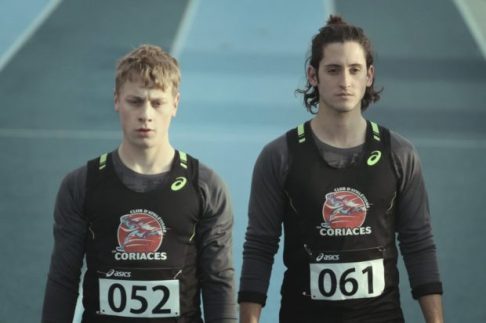
Tales Of Two Who Dreamt document the dreams of a Romani refugee family who dream of immigrating to Canada and hopefully doing a small film.

One thing about the VIFF is that it will show films done by Canadian directors or people close to home. In fact the VIFF credits itself as the film festival that shows the most Canadian films: shorts and feature-length. One example this year of a feature-length Canadian film shown at the VIFF was Tales Of Two Who Dreamt which was a unique documentary.

The film begins with a man, Sandor Laska, telling a story of a boy who turned into bird after a dream. Over time, we the director is planning to make a small film of this story. Even a makeup artists is seen putting a beak on the son Alexander.

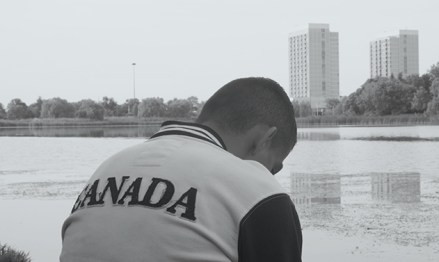
What we get is something else. We hear the story of the father and the Laska family. They are refugees living in a tall apartment in Toronto specifically for refugees. They are Romani people from Hungary. They seek refuge in Canada because they are of an oppressed minority and often face discrimination.

As they live in the apartment awaiting approval of their status in Canada, we learn there are many Romani families also seeking refuge. Often they meet together and party together. The children play soccer on the apartment’s field together often with refugee kids from other countries.

Time passes as the family continues to pursue both dreams: the dream of doing the film and the dream of immigrating to Canada. In the end, neither happen. Their immigration case wasn’t approved and they have to return back to Hungary where they really have nothing to return to. The film that was to be made couldn’t be done. The family were deported back before it could be completed.

This film is a good eye opener to the Romani people that seek refuge. They are a people who number in the tens of millions spread across various countries of Europe. They are people whose lifestyle are considered questionable. They are a people who value their cultural roots in music and dance often to the point they neglect working a real job. They live their lives their own way; many of which are illiterate.

The Romanis are seen by the other people in the country as lazy, irresponsible or even the ‘scum of the earth.’ They are often referred to as ‘Bohemians’ or ‘gypsies’: the latter of which they consider to be a slur. They’ve had their discrimination over the decades and centuries. They were even one of the groups of people executed during the holocaust. Discrimination against them still continues today in various European countries. Some countries like Italy have passed anti-Romani laws. Some countries like Hungary let discrimination go freely. You can easily see why a family like the Laskas would try to seek refuge in Canada.

Sometimes when you see the struggle of the Laskas and other Romanis in the apartment as they seek their residency status, you sometimes think this film is about the refugee situation as a whole. What you see the Romanis struggling with is often what you see most refugees struggling with. That tall apartment with nets on the outside put on after the death of a six year-old boy who fell off his 19th floor balcony tells a lot about the place where refugees wait to hear their fates in Canada. At the end, you get thinking that the Laskas didn’t succeed in escaping what they attempted to escape. Sandor talks about how the interpreter didn’t state his case right to the judge and that had to be why his residency status was revoked. Sometimes it makes you sense could the interpreter have an anti-Romani attitude? Did he misinterpret purposefully so that the Laska did fail and then get sent back to Hungary to return to their discrimination? It does get you thinking.

Directors Nicolas Pareda and Andrea Bussmann turn the film into a docudrama. There are times when the film gets ready to film the ‘birdboy’ story, times when they focus on another family who are to be part of the skit, times when they focus on the apartment building as a whole, and times when they focus on the Laskas and their reality. It’s a mix of various shots from family struggles to kids playing to young adults holding a party. The two directors try to piece together the many stories. There are times when scenes are shown with a score of a Romani song sung a capella. There are even times when they include Timea’s scratchy violin-playing as score to a scene in the film. Sometimes it hits, sometimes it misses. There are times when the mixed organization appears to work and then there are times when the film feels disjointed. I think the film aimed to be creative in its documentation during times when it wasn’t supposed to be.

Despite the film’s noticeable imperfections, I would have to say the best thing about this film is that it gave a voice to a people. This was a chance for Romani refugees to tell their story of what they faced and why they came to Canada along with the hopes for their children. The adding in of the ‘birdboy’ story adds color to the film as it is a Romani tale. You can see why the film is called Tales Of Two Who Dreamt. The first dreamer was the ‘birdboy’ and the second dreamer was Sandor Laska. I’ll admit I was disappointed at the end to learn the ‘birdboy’ film was never finished. But it’s something that just happens and you saw why.

Tales Of Two Who Dreamt is a documentary that’s noticeably disjointed in a lot of areas. It is still very valuable as it gives an image of the refugee situation Canada is trying to deal with.

VIFF 2016 Shorts Segment: Teen Trouble

Cinema

One thing about the VIFF is that you will have the opportunity to see shorts films whether it be a short shown before a feature or a segment of shorts assembled together. They pack a lot of entertainment value for something brief in length. The first shorts segment I was lucky to see was Teen Trouble. It consisted of seven different shorts situated in seven different countries all with a teen-related subject and boy were they entertaining:

-I Love Anna (Finland)- 12 year-old Finnish boy Santeri has always had a crush on Anna: the local farm girl. Anna likes Santeri too. One night Anna’s parents are away and she has to look after her little sister. This could be Santeri’s chance to take it to new levels.

The quality of this short is that it takes you into the excitement of the moment as it progresses without any added music score. It adds to the excitement of the moment. Another added quality is it will remind you of when you fell in love for the first time or even of your own sexual curiosities when you were that age.

-Fabrizio’s Initiation (Argentina)- Sexual feelings many years later. Only Fabrizio is now a 15 year-old Argentinian boy who has been in a relationship with Nadia for over a year. Their chances of doing it for the first time are constantly interrupted. However Fabrizio’s friends derive a plan to make it work by conniving the village elder into giving them his car and fixing it up for the moment. Will this finally be it? The film ends with a surprise in more ways than one.

This is a humorous short about the constant pressure of losing your virginity for the right moment and trying to make it right. Hey, it’s not always prom night! It also will remind you of your own teenage love and of all the stuff you tried to do behind your parents’ back.

-The Law Of Moments (UK)- The lessons of Isaac Newton younger sister Mal studies from physics class play into this drama. Mal and Lucy are teen sisters who lost their closeness as older sister Lucy got involved with partying. It’s been of concern to Mal as she sees Lucy and her mother constantly fighting. One night, Mal goes to the farm to see what kind of crowd she’s hanging with. It’s not pleasant at all. Mal goes to help Lucy only for things to end not as it should.

Here we go from comedy to drama. This is a good story that shows the end at the beginning and how it came to be. The addition of Mal’s physics lesson as well as her childhood memory of her and Lucy on the see saw add style to the story line. Very creative.

-Three Minute Warning (UK/Palestine)- This possibly the darkest short of the segment. Palestinian teen girl Miriam has to look after her mother who has a leg problem. It’s a daily thing which includes cooking for her mother and even assisting her to the bathroom and it robs her of the carefree life most teenage girls have. One night a warning bomb– a bomb sent three minutes before the real bomb is to hit its target– hits their apartment. Miriam has to help her mother make the escape while all the others leave them behind. It’s hopeless and it sets up for the heartbreaking ending.

No doubt Palestinian director Iqbal Mohammed has something to say in this short. It was very well-told and will leave you infuriated with the political situation in the Middle East today.

-On The Roof (Spain)- Five Barcelona teen boys love to go to the top of their apartment balcony to spy on sunbathing women during the summer. Bonus points if they’re topless. One day they go to check out a topless sunbather. One boy, Adrian, spots a naked man showering. He also learns something of himself he never knew. One of Adrian’s friends senses his attraction and reacts with hostility. He even senses it on the youngest of the friends and pressures the young boy to take a photo of the bather standing on the top ledge. Adrian stops and volunteers to do it. The end comes with a surprising result but nothing dreadful.

This short focuses on a teen boy’s discovery of his same-sex attraction which catches him by surprise and causes hostility among one of his friends. The short also focuses on teen male machismo which naturally approaches same-sex attraction with hostile discomfort. A reminder of some of the difficulties gay teens go through.

-Winds Of Furnace (Mexico)- A young Mexican teen boy faces a daily responsibility of looking after his grandmother. One day, two of his friends come to his house with a van they stole. The three go out to have fun in their neighborhood. However you know something will go wrong when they take a body found in the van and dispose of it. It’s the case as a van driven by a cartel crosses their paths and shoots one of the friends. This leads to a vicious chase where the boy fires a gun at the cartel. The ending ends with you thinking this is what’s meant to be.

This short didn’t have its subtitles on at the time so it was hard to make sense. However it was a good story of peer pressure taken to the extreme with the potential for dangerous consequences. The heat of the moment left you wondering if he would be killed by the end. I’m sure a lot of boys in Mexico have gone through this temptation. It’s good to see he was possibly the one who didn’t get killed.

-Aeris (Canada)- A young rising teen snowboarder is seen as a possible future great in the sport. However, the 19 year-old suffers a broken leg during competition requiring plates, screws and months of healing. Months later, she goes snowboarding with her friends to see if she still has it and to get her competitive drive back. This proves difficult as she encounters fans on the mountain and even the fear of her broken leg returning if she tries another jump.

This may be the least heavy short of the seven but it does feature a pressure: a personal pressure young rising phenoms in sport know all too well. It makes for a good snowboarding story. It even gets you fearing for her as well as she questions whether to make that big jump.

In summary, all seven shorts were very good and had a lot to say about teen life in the humorous moments, the tense moments and even tragic moments. All definitely gave an image of what it’s like to be young.

Teen Trouble was an impressive selection of shorts. Anyone can be entertained by something in the selection.


VIFF 2016 Shorts Segment: Space And Time

CinemaShorts, shorts, shorts. Lots of them worth seeing at the VIFF. The next segment I saw this year Space And Time which consisted of nine shorts filmed by Canadian directors. They were all different but all shared something in common:

-24:24:24 dir. Daniel Dietzel- This is a film shot on a Montreal street corner facing the CCSE Maisonneuve over a 24-hour time period. What makes it amusing is that it shows the same corner with images of various hours at once. Sometimes all 24 simultaneously. The splitting of the various footage images in its sections along with the sounds mixed in will definitely make you curious during the whole thirteen minutes. The images of time and seeing the images of the Maisonneuve and the tower of the Olympic Stadium add to its charm. It’s surprisingly pleasant and enjoyable to watch. Quite the kaleidoscope.

-By The Pool dir. Karine Belanger- The film begins at an outdoor pool as a worker cleans the pool out in the spring just before it opens. He finds a small fish. Throughout the film, there are images of people doing aquarobics, swimming laps, swimming and playing, going off the diving board, late-night lifeguard parties and even a pool emergency. As summer ends, the diving board gets taken down and the pool gets drained. The man cleaning the drained pool finds a big fish! Funny how a film simply showing the summer of an outdoor pool can be amusing.

-Ranger dir. Sandra Ignagni- It’s a boat trip from a town in Labrador to an Arctic town. The long trip on the M. V. Norther Ranger is documented from boarding for deoarture to arrival. It focuses on everything from passengers to the captain directing to crewmen working to the waters it travels to passengers sleeping overnight to its arrival. It makes for a good simple unnarrated documentary film that tells a lot.

-Last Night dir. Joel Salaysay- Sarah is woken up by a phone call by her friend Jamie and tells her to come over. However the calls become more frightening over time as Jamie calls her back and doesn’t know where she is. Jamoe sounds like she’s lost or has lost her memory. As Sarah tries to get help, she tries to keep connection with Jamie. This is a good short as it keeps the audience intrigued not knowing what will happen next and hoping for the best for Jamie and Sarah.

-Late Night Drama dir. Patrice Laliberte- A young thug is in pursuit with a man he’s at odds with. He finds him at a night club and picks a fight with him. As he’s booted out, his girlfriend is angry at him and they get into a squabble in the car. After he throws a fit, she leaves him to drive off by himself.

This was all in French with the subtitles absent. Despite it, I could get a good sense of what’s happening. This is your typical night club drama you see all the time. What makes this film intriguing is its method of ‘follow-around’ cinrmatography. The audient follows the story wherever the young jerk goes keeping one in the thick of the drama

-Oh What A Wonderful Feeling dir. Francois Jaros- A woman deals with a truck-stop that’s normally a meeting place for those working their job, a spot for young people biking around and even a place of ill repute. She tries to make sense of the situation while also trying to solve a problem of her own. Even the paranormal comes into play. It doesn’t make for a lot of sense but it does tell the story well.

-Seven Stars dir. Sofia Banzhaf- A Vancouver woman visits Tokyo but struggles with her feelings of anxiety and alienation there. It’s a four-minute film that tells its situation. It’s more about the person in the place and their feelings rather than what happens.

-Stone Makers dir. Jean-Marc E. Roy- It’s just a four-minute film of a work day in a granite quarry but it’s more if you look close enough. The machines move around in almost a fluid motion like they’re dancing and the granite slabs look like works of art. It makes for an ‘oddly-satisfying’ film.

-Einst dir. Jessica Johnson- It starts with a view of a lone section of the Lower Seymour Conservation Reserve. Then a young woman comes to take off her clothes with nothing but a swimsuit on and swim in the Seymour River. As she goes under, she doesn’t re-emerge, leaving us to wonder. The quality of this short is its mix of natural beauty added with the mystery of the story. That’s what makes the film intriguing.

The nine shorts shown in this segment were all impressive. It was good to see them. There were some with stories to tell while some were more about focusing in on the scenery and the area around them. There were a few that turned out to be just footage and filmage of as-is situations. They remind you a lot of these ‘oddly satisfying’ videos on YouTube of everyday things that are somehow picturesque to look at and even tell its own story. Now you know why these ‘oddly satisfying’ videos are a hit.

Space And Time was an impressive selection of Canadian films. It was an hour and a half well-spent and was very enjoyable.

It’s VIFF Time Again

Cinema

Yes, the Vancouver International Film Festival starts again. Today begins the 35th installment of the Film Festival. This year will not only be exciting because of what to see but also what new additions are happening.

This year’s theme is: “Expand the frame.” Part of the aim of this year’s VIFF is to make the Festival more accessible and more creative. One of the new additions is the VIFF Hub. The Hub and surrounding area will be the location for lectures and exhibitions surrounding film and art. There will even be art exhibitions, virtual reality exhibits and music performances from DJs, local performers and performers from around the world. Some events are free of charge as long as you’re a VIFF member while some may be ticketed events. The VIFF website will explain it all.

Film is still the centre of it all. There will not only be films shown but lectures from industry professionals as well. Directors, producers and actors will appear at some showings for Q&A’s including an appearance of Tatiana Maslany. Deal-making will also be included in the process. This year, for the first time, there will be an IMAX film shown over at the Telus World of Science for the Closing Gala.

As for volunteering, this year there were 1100 volunteers signing up. Way higher than the usual 800 that serve the required 32 hours of work. Because of that, volunteer seating will be limited during many films or not allotted at all. Nevertheless I should be able to get in to see a lot of good films. This year promises to have hundreds of shorts and feature films from 73 countries, including five ‘globetrotting’ films. As of press time, 13 films are official submissions for  the category of Best Foreign Language Film for this year’s Oscars. A footnote worth adding is A Flickering Truth from last year’s VIFF is New Zealand’s official entry in the category for this year. Canadian films will remain the focus as has been in past Festivals. This year’s top sponsor is no longer Rogers but a more local big name in telecommunications: Telus. SuperChannel will take over the People’s Choice awards.

As for highlights, here’s a list of some of the films headlining the VIFF:

  • OPENING GALA: Maudie – A biographic film of Canadian folk artist Maude Lewis starring Sally Hawkins and Ethan Hawke.
  • CLOSING GALA:  Voyage of Time: The IMAX Experience – An IMAX spectacle of the universe from the beginning of time to today. Written and directed by Terrence Malick and narrated by Brad Pitt.
  • American Honey – A drama about a teenage orphan trying to grow up. Directed by Andrea Arnold and stars Shia LaBeouf.
  • The Birth Of A Nation – This Sundance’s hot ticket and the hottest thing to come from the fest in years. Nate Parker writes, directs and stars in this drama of a slave rebellion that occurred decades before the Civil War.
  • Elle – The latest black comedy from controversy-causing director Paul Verhoeven. Isabelle Huppert plays a video game CEO with a lust for power and revenge.
  • The Girl With All The Gifts – A British zombie drama directed by Colm McCarthy and stars Gemma Arterton and Glenn Close.
  • Graduation – A Romanian drama of a doctor doing what he can to insure his daughter gets into a presigious university. Director Cristian Mungiu won Best Director at this year’s Cannes Film Fest for this.
  • The Handmaiden – A Korean drama of a pickpocket who plays a Japanese maid of an heiress whose fortunes he plans to steal. Divided by chapters and loaded with sensuality.
  • Human – A documentary by French director Yann Arthus-Bertrand. It focuses on the world from on high from positive things like love to even negative things like murder.
  • I, Daniel Blake – This year’s Palme d’Or winner at Cannes, this film focuses on a man getting his disability status reassesses and denied benefits. Ken Loach’s look at one man rivaling the system.
  • Julieta – Pedro Almodovar is back! Spain’s submission for the Best Foreign Language film for this year’s Oscars, Almodovar returns to the heart-on-the sleeve melodramas with female lead characters he’s most famous for.
  • Manchester By The Sea – Another highlight from this year’s Sundance. Director Kenneth Lonergan showcases a story of a man (Casey Affleck) returning to his Massachusetts home after the death of his brother and trying to sort out his family’s past.
  • Milton’s Secret – A Canadian hot ticket directed by Barnet Bain, it’s a unique story of how a troubled 12 year-old teenager finds relief from the frustrations of his life through his grandfather. Stars Donald Sutherland and Michelle Rodriguez.
  • Moonlight – Director Barry Jenkins showcases a drama of an African-American man struggling to come out despite the past troubles that haunt him.
  • Toni Erdmann – Germany’s submission for the Best Foreign Language film for this year’s Oscars, the film tells the story of a woman frustrated with her conniving father and his female disguise that irritates her to the point of leaving him behind after her promotion.

So this is what this year’s VIFF has in store. It all starts September 29th and it all ends October 14th. Lots of excitement to come.


Rio 2016: Seven Canadians To Watch

Canada Olympic

I admit I’ve come to accept it after the Sochi Olympics. Since the late-90’s Canada has become a winter sports superpower but field a very good Summer Olympics team. In past Olympic Games, both Canada’s summer and winter teams were on the same levels. Very often the summer team would outperform the winter team. That has changes since the late-90’s as you can tell by the medal totals with each Games.

However it’s not fair at all to say our Summer Olympic team is lousy. Here in Canada, we have a lot to deliver. The 2015 Pan Am Games and the recent World Championships in various sports have shown we have a lot of athletes in contention. Sure we only won a single gold out of our 18 medals back in London but we have a solid team this year. Sports Illustrated predicts Canadians to win a total of seventeen medals including four gold.

Anyways you saw my focus on foreign contenders in Rio yesterday. Without further ado, here are the seven Canadians of focus:

Brianne Theisen-Eaton – Athletics: The last time a Canadian woman won a gold medal in track and field was in 1928 and that was the very first Olympics track and field events for women were contested! Canada was one of the best countries in women’s track and field in 1928 winning two of the five events and two additional medals. Yeah, what has happened since? Well the drought could very well be over. When Brianne Theisen graduated from high school, she went to the University of Oregon and it was the best decision. She represented Canada in London and finished 11th. She would later marry American decathlete Ashton Eaton and she’s been on a roll since finishing second at the last two World Championships. She also won the Goetzis HypoMeet this year with a points total that’s the highest of 2016 and has propelled herself as the favorite. She will face stiff rivalry from defending Olympic Champion and reigning World Champion Jessica Ennis-Hill and Worlds bronze medalist Laura Ikauniece-Admidiņa of Latvia. 2016 could just be Brianne’s year. Also look to see if Brianne and Ashton become the first married couple since the Zatopeks in 1952 to both win athletics golds in the same games.

Shawnacy Barber – Athletics: Canada is not known for its pole vaulters. Our last Olympic entry was back in 1992. Our only two medals in the men’s event came all the way back in 1908 and 1912. That can all change thanks to New Mexico-born Shawn Barber. He didn’t qualify for London at the tender age of 18 but his talent was obvious that year as he already broke the Canadian record. He has improved in both his vaulting heights and his competitive consistency over the years and even won the World Championship last year. He even vaulted six metres for the first time ever during an indoor meet this year. He will face challenges from defending Olympic champion Renaud Lavillenie of France, American newcomer Sam Kendricks and even home-country threat Thiago da Silva. Whatever the situation, Barber is sure to deliver.

Brooke Henderson – Golf: Here in Rio there won’t be any new sports on the program but there are two sports that were part of the Olympic program in the past that were cancelled out. The two returning sports are Rugby, albeit in Sevens format, and Golf. Golf was contested at the 1900 and 1904 Olympics. The last Olympic gold in golf was won by a Canadian: George Lyon. Professionalism may have a lot to do with that. Since there’s now no such thing as ‘amateur’ anymore, it seems right that golf returns especially since it’s international enough. Canada has a strong shot at winning through 18 year-old Brooke Henderson. Already displaying a combination of talent, drive and youthfulness that has best been seen in the past through Se-Ri Pak and Nancy Lopez, Henderson has already won three LPGA events. Her last two– the KPMG women’s PGA Championship and the Cambia Portland Classic–came this June and propelled her to 2nd-place World ranking. She’s a heavy favorite to win in Rio but she will face challenges from World #1 Lydia Ko of New Zealand, latest American great Lexi Thompson and last year’s British Open winner Ariya Jutanugarn of Thailand. Win or lose, Brooke has a bright future ahead of her.

Mark de Jonge – Canoeing: Until 2008, there were the 500m and 1000m events in flatwater canoeing for men. In 2012, the program replaced the 500m events with 200m sprints. That has worked for the advantage of Canadian kayaker Mark de Jonge. The Calgary-born Dalhousie grad won bronze in London the first Olympics it was contested. Since then, de Jonge has moved up in the ranks from silver at the 2013 Worlds to gold at the 2014 and 2015 Worlds. De Jonge will face challenges from France’s Maxime Beaumont and Sweden’s Peter Menning who finished second and third to him respectively last year. It could just well be de Jonge’s moment here in Rio.

Rosannagh MacLennan – Trampolining: Ever since trampolining has been introduced to the Olympic program in 2000, the Canadian team has left each Olympics with at least one medal. The women’s event has always had a Canadian medalist with Karen Cockburn winning 2000 bronze, 2004 silver and 2008 silver. In London, Rosie MacLennan became Canada’s first ever Olympic champion in trampolining. Rosie also had the bizarre distinction as being Canada’s only Olympic champion at those Games. Rosie has since won the 2013 World Championship and finished second the following year. She found herself out of the medals in 2015. She plans to return to her winning form in Rio but she will face the rivalry of 2015 champ Li Dan of China and two Belarussians: 2015 bronze medalist Tatiana Piatrenia and Hanna Harchonak. 2016 will be the arena for her to prove herself on top again.

Brittany MacLean – Swimming: Canada is known for its medal-winning swimmers. Sports Illustrated predicts Canada to win no medals. However one that could prove SI wrong is distance freestyler Brittany MacLean. The Etobicoke native who swims for the University of Georgia has a reputation in the distance freestyles with a 7th place finish in the 400 in London. However she was too injured in the 2015 season and had to miss out on the Worlds. This year, MacLean has the 6th-fastest time in the world in the 400 free and the 4th-fastest in the 800 free. Sure the distance freestyles are where Katie Ledecky is all the talk but Brittany MacLean just could win Canada’s first Olympic medal for a female swimmer since 1996. That feat could also be achieved by backstroker Kylie Masse or butterfliers Penny Oleksiak or Noemie Thomas. Actually Canada has its strongest women’s swim team in a long time. While the men’s team could only qualify ten swimmers. Looks like it’s the girls’ turn to shine.

AND ONE TEAM:

Canada’s Women’s Soccer Team: I’ll admit I didn’t review them when I did my pre-Olympic preview for London. And good reason why not. Back at the 2011 WWC Canada lost all three of their Group Stage games. However the turnabout the team made under the new coach John Herdman was evident as the team left the Olympics with the bronze medal. Their performance won the hearts of so many Canadians, I referred to them as ‘Our Girls.’ Canada has continued to show consistency with a quarterfinal finish at the 2015 WWC. Since then, the team have won most of their games losing only to Brazil, Denmark, USA and France. Canada won this year’s Algarve Cup and 19 year-old defender Kadeisha Buchanan was named the best player of the tournament. They’re not expected to win a medal in Rio but the team could just surprise the world again like they did four years ago.

And there you have it. My review of Canadian athletes to look out for in Rio. Notice that I reviewed the four Canadians Sports Illustrated predicts to win gold? Whatever the situation, I’m sure they’ll do our country proud.


Movie Review: Room

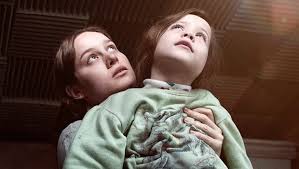
Room is a drama of a mother (Brie Larson) and a son (Jacob Tremblay) bonding in a difficult situation.

I’ll admit I was late in reviving my interest in the movies with Oscar buzz. Room was even at the VIFF and I ignored it thanks to not hitting the website AwardsDaily. However Room was out in November and I finally had my chance.

The film begins with Jack waking up in a room. The room is small and crowded with a television, small kitchen, beds, bathtub and a toilet. There are no windows but there is a skylight in the ceiling. The only other person who lives in this room is a young woman named Joy, his mother. Soon we learn the two are abduction victims held captive in a shed full of escape alarms by a man she calls Old Nick. We also learn that Joy has protected Jack from knowing the truth of the situation and tried to create a world of childhood wonder for him. She even gets him to hide from Old Nick fearing Nick will sexually assault Jack the way she’s been.

Joy has been calm about her abduction situation mostly as Old Nick has kept them both fed well and sheltered well despite his obvious sexual assault on Joy of which Jack was born from. However food, clothing and shelter supplies have been scarcer since Old Nick has been kept out of a job for six months. Joy has attempted to escape before but it failed. This time, she uses Jack where she gets him to fake having a fever. It doesn’t work. The next day she gets Jack to play dead in a rolled-up carpet and to run out of the back of Nick’s truck when he gets to a stop sign en route to ‘burying’ him somewhere. The plan works as Jack is able to get out in a residential area. Jack is rescued but police would have to pursue Old Nick back at the shed where he has Joy hostage temporarily. The two are soon reunited in freedom from Old Nick.

Once free, Jack and Joy are given medical treatment where Joy is reunited with her mother Nancy, stepfather Leo and father Robert. Jack is thanked by Nancy for taking care of Joy.

As the two are starting to embrace their new freedom from captivity, they realize that they are not completely free. There’s the general public that are so dazzled by the story, the media turns this into a circus. There is Joy dealing with her divorced parents and the fact Robert doesn’t want to accept Jack. There’s even Joy returning to her room and unpleasant reminders of her fun carefree life before the abduction. While Jack is embracing his grandmother and stepgrandfather, his new freedom and the whole new world for him that comes with it, Joy can’t handle her situation and she attempts suicide. Jack sends her a piece of his hair in hopes she gets better. Eventually Joy does recover and thanks Jack for giving her reason to live. However there’s one last thing to do.

This is a film based on a novel by a novel by Irish-Canadian author Emma Donoghue released five years ago. Filmmakers hired Emma to write the script for the film. Normally a situation like an abduction of a minor and a child coming from the abduction would make for something unwatchable. I wouldn’t blame any of you for feeling that way. What makes it watchable is that it’s mostly seen from the child’s point of view. Throughout the film we see the world through the eyes of Jack. Him and his sense of wonder at the small world around him as well as his hope for entering the world outside keeps this film from feeling the tense situation around it. I will say that most people would find the child’s sense of awe and wonder in the middle of an abduction would find it bizarre but it’s a creative twist that actually helps the story.

However the film is not without reminders of realities. First is the father who doesn’t want to look at Jack. While Joy sees Jack as his child and Nancy willfully accepts Jack as her grandson, grandfather Robert doesn’t want to accept him. Possibly because he may see Jack as a product of his daughter’s abduction and rape and would naturally be upset by it. Second is the media attention. No doubt the freedom achieved by Jack and Joy is a remarkable story but the media attention that came with it was too much, especially since Joy would just want to get back to her life again. Also just as Joy is getting use to life back at home, she’s reminded of her life before the abduction and of so many things that were cut short because of it.

The highlight of the film is actually the bond between Joy and Jack. No doubt Joy is a victim of her abduction. Her son Jack is where she’s able to forget her problem temporarily and feels like a mother instead of a victim. Plus she loves him back. She could have seen him as a product of her rape and neglected him but instead chooses to be a mother. Seeing her make a birthday cake for him and protect Jack from Old Nick shows how much she means to him. Even after they’re free, they still have a bond: a bond that gives Joy a reason to live after her suicide attempt.

The film I’ll admit is even a reminder of how both children and adults see situations differently. Joy sees the shed as her prison but Jack doesn’t. Joy is doing what she can to keep Jack from seeing this as a traumatizing time for the both of them and creates for him a world of joy, creativity and wonder for Jack. That’s why Jack feels an attachment to the shed to the point he even calls it ‘Room.’ Even the time in freedom is seen in different ways. Jack sees it as a time for new worlds and new explorations. Joy is supposed to see it as her time of the freedom she thought she’d never achieve but there are a lot of things that bother her like a father who doesn’t want to accept Jack and a future that was robbed from her. Even that scene at the end as the two see ‘Room’ one last time shows the difference in how the two feel. Jack willfully says goodbye to it–now a place of the police’s crime scene as is should be– but you can still see the trauma in Joy’s face. However seeing how Joy willfully says goodbye to it upon Jack’s request reminded me that if us adults handled their problems they way children like that do, we’d have much less trauma in our lives.

I will admit that I knew the film was shot in Vancouver. Whenever I see a film that was made in Vancouver, I try to identify the sites and sets in the film with areas of Vancouver I know well. I was able to do so. Even though the film is set in Ohio, it couldn’t fool me!

This film is the North American breakthrough for Irish director Lenny Abrahamson. His direction along with Donoghue’s screenplay adaptation of her own novel is the right mix and delivers a great story. I will admit the story of Room begins on an awkward note as we don’t fully understand the situation. The abduction and Joy’s impregnation of Jack from Old Nick becomes more obvious later on. I feel the two together made the right choices.

Brie Larson was the right pick for Joy. She displayed the right mix of compassion, trauma and frustration. It’s not easy to play a character who’s first a victim of abduction and rape and later adjusting to her freedom but she succeeded in playing Joy Newsome excellently. Just as excellent is Vancouver actor Jacob Tremblay. He was the right fit to play Jack with his naivety, his sense of wonder and his undying love for his mother. Joan Allen, William H. Macy and Tom McCamus were all good as the grandparents. Sean Bridgers was rather limited in his role of Old Nick. Mind you Old Nick wasn’t too be that big of a role anyways.

Room has to be the best film coming out of Vancouver this year. It’s a very unique story that makes what would normally be an unwatchable and even taboo situation very watchable. Even enlightening.

Election 2015: Canada Votes

ElectionsCanadaToday on October 19th, all of Canada will vote for who will lead the country over the next four years. For over ten years and three terms, Conservative leader Stephen Harper has led Canada. He seeks a fourth term but faces tough opposition from Liberal leader Justin Trudeau and NDP Leader Tom Mulcair. Possible challenges come from the Bloc Quebecois and Gilles Duceppe and the Green Party under Elizabeth May. One thing about this election is that it has proved that anything can happen and no one is guaranteed the label of ‘winner.’ It’s been that close and full of yo-yo statistics. Here’s my rundown:

-Conservative Party: Stephen Harper – You can’t go anywhere without people talking about Stephen Harper. He ran for Prime Minister for the first time in 2004 and was seen as the one to help put conservative muscle back into Canadian politics. Even though he didn’t win, he did succeed in bringing the conservative side back into politics. The Conservative party had 99 seats, up from 72 in 2000, and the victorious Liberals under Paul Martin were left with a minority government after three terms as a majority under Jean Chretien.

Then in January 2006, a new election was held at the sudden revelation of the corruption of Liberal leader Paul Martin and after Governor General Michaelle Jean dissolved parliament. This worked for the benefit of Stephen Harper as the Liberal Party lost enough seats to give Harper’s Conservatives victory. Sure it was a minority with 124 seats but it was enough to give the Liberal party their first loss on the national level since 1988. This meant new changes for Canada with a Conservative government having most of the power albeit only with a minority.

There were many varied opinions about the first term of Stephen Harper. There were many on the left who felt he was too right-wing or making a lot of decisions they felt were wrong. There were others who admired him simply because ‘he says he’s gonna do some thing and he does it.’ I think that’s what wins people: a politician that actually delivers on their claims. This was enough for Harper to be able to win the next election in 2008. He increased the number of seats from 127 to 143 but it was still a minority.

Over time, people across Canada, especially in BC, were expressing their disappointment with his policies. I especially remember the arts community unhappy about the cuts in funding they were dealt in 2008. Then in March of 2011, the Conservative Party was found to be in contempt of parliament. The Government General, like in 2005, again dissolved parliament. This time things went the reverse. Harper’s Conservatives won a third term, this time with a majority of 166 seats.

The time since has been loaded with corruption and complains to Harper and the Conservatives. They run the gamut from political overspending on advertising to reducing door-to-door delivery of mail to the point there will only be mail boxes by 2019, to denying funding for science to promoting the controversial Keystone pipeline for boosting the export of crude oil to the controversial bill C-51 which appears to threaten Canadian’s privacy freedoms the same way the Patriot Act threatened Americans’ privacy rights. A lot of his misdoings appear to make good things he did like provide tax breaks to families and transit users.

-Liberal Party: Justin Trudeau – The Liberal party is one party that has had its biggest struggles ever these past ten years. It started with the Paul Martin fiasco leading the Liberals to their first ever election loss after winning the previous four. It continued with Stephan Dion in 2008 as their seat total declined from 95 to 77. However it was at the 2011 election under Michael Ignatieff where the Liberal party hit what appeared to be rock bottom by winning only 34 seats. They weren’t even the official opposition. After Ignatieff’s resignation just days later, they looked for a leader who could fill the spot. They found it in Justin Trudeau, the 43 year-old son of Prime Minister Pierre Elliot Trudeau. In fact, Justin was born while his father was Prime Minister.

The buzz around him grew but it hasn’t been without controversy. Justin has been faced with accusation that he’s riding off the coattails of his father’s legend. His only jobs before have either been a raft guide or a school teacher. This was especially noteworthy in Stephen Harper’s ads attacking Trudeau with the claim he’s “Just not ready.” It included the comment, ‘Nice hair, though.’ I myself even felt he didn’t deserve my vote because “He hasn’t proven himself politically. He’s all image and no real cred.” Even some of his campaign claims like his promise to legalize marijuana or prostitution have caught the disgust of many. Last poll had him in the lead. Whatever the situation if he wins, he will have to prove he deserves it.

-New Democratic Party: Tom Mulcair – The 2011 election was a landmark for the NDP. Actually it started months after the 2008 election when the NDP led by Jack Layton teamed up with the Liberals for a coalition takeover of parliament in order to reduce Harper. It didn’t work but it did catch the eye of the nation and it caused Canadians to look more favorably to the NDP party: a national party who were often lucky enough to just finish third in national elections.

The 2011 was a landmark for the party as they won 103 seats, up from 36 and the most they’ve ever won. Leader Jack Layton became the head of the official opposition. He only had months to enjoy his victory as he would die of cancer later that year. It would take time to find a new leader of the party and they found it in Tom Mulcair. Since he assumed power, he has been seen as Harper’s toughest political rival most able to put pressure on the Conservatives. He has hoped to take that with him to the election. It worked in August when the campaign trail began. However the NDP have been in a struggle since to win back the approval ratings they had back then and sit third. Only tonight’s election will tell the tale.

-Bloc Quebecois: Gilles Duceppe – If any party has had it harder than the Liberals since 2011, it’s the Bloc Quebecois. It’s not even just because of slipping to two seats. It’s of going through three different leaders after Duceppe resigned from incumbents to leaders voted in. After all the frustration, Duceppe is back in. He’s hoping to bring the Bloc’s power back into Canadian parliament and push for Quebec independence.

-Green Party: Elizabeth May – One party on the grow is the Green Party. They’ve been around for decades but it’s only in this century that they’ve been able to see their political power grow. I know. I’m from BC where the Green Party appears to have possibly its biggest support. Elizabeth May has done a lot to boost this party which holds left-wing policies and ideas noticeably different from the other two leading liberal parties: Liberal and NDP. In fact the Greens won their first ever seat in Parliament back in 2011 but it was not May.

The Green Party may have a candidate in almost every riding and their policies may appear to be the best for the country but they still have to develop more political muscle before they can be considered a serious contender. However May has done nothing wrong as a leader and should keep doing what she’s doing and take it further.

Since the start, the election has been called anyone’s game and hard to predict. The NDP had a lead at the start but it appeared to deteriorate over time and they hang at third in the polls. Harper and the Conservatives only had a brief lead in September for a week or two but found themselves soon slipping and now find themselves at second. Right now the Liberals lead at 37% at the last polls. Anything can happen on Election Day. In fact in BC, Christy Clark’s Liberals were expected to lose according to the polls but they won. The biggest shocker is the advance polls held during the long weekend of October 9-12. Voter turnout was way higher than expected. An increase of 16%. The increase resulted in a lot of long line ups. I myself had to wait almost a full hour to vote. nevertheless this is an optimistic sign as it shows more Canadians are willing to vote in this year’s election as compared to 2011.

Whatever the situation, it will be decided by 8pm Pacific Time who will be the Prime Minister of Canada. It could be decided earlier upon final results in Ontario but you never know. Anyways history will be decided tonight.

Funny thing but if the US presidential election can best be described as “two five year-olds fighting over the same toy,” what should the Canadian national election be described as?

VIFF 2015 Review: Hadwin’s Judgement

Hadwin's Judgement is about Grant Hadwin and why he committed his act of what some would call 'ecoterrorism.'
Hadwin’s Judgement is about Grant Hadwin and why he committed his act of what some would call ‘ecoterrorism.’

British Columbia, especially Greater Vancouver, is known for people using radical and even destructive methods to make their statement heard on an issue. One such person who’s lesser known in Grant Hadwin who cut down a beloved tree on the Queen Charlotte Islands in 1997. The documentary Hadwin’s Judgement traces Hadwin’s path from logger to radical to his mysterious disappearance.

The film is almost like a biography of Grant Hadwin and the moments in his life that changed him forever. Grant Hadwin was born in West Vancouver. He came from a logging family and eventually found himself working on the Queen Charlotte Islands. However he soon developed an anger when he saw how much forest was being cut down from the island and how fast with the modern cutting methods. He writes letters of complaints to businesses. He even tries to start his own business which makes products out of decayed wood or wood long cut down but it doesn’t succeed.

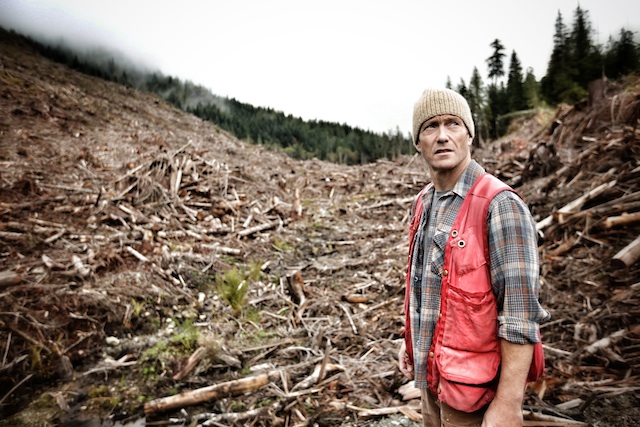
Doug Chjapman plays Grant Hadwin in re-enactments with no dialogue but says it all with his mind.
Doug Chapman plays Grant Hadwin in re-enactments with no dialogue but says it all with his mind.

The deforestation of the area along with his mental instability takes his toll on him and he cuts down the sacred tree of the island– the 1000 year-old Kiidk’yaas (The Golden Spruce)— to send his message. He awaited trial with many a person angry at him. However Grant pursues a kayaking trip up the Boeing Strait. He is never seen again although his broken kayak, letter in lamination and tools have been found intact. He has still never been found dead or alive.

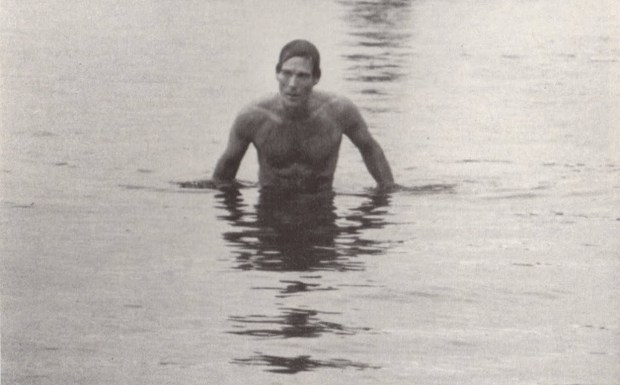
The film is mostly a documentary featuring people who mostly knew Grant during his lifetime. It features co-workers to friends to a local photographer who photographed him swimming just before his disappearance to John Vaillant who wrote an award-winning book on him. It also interviews people of the Haida Gwaii who knew the tree. The Haida Gwaii consider trees to be sacred so it’s no wonder the chopping of that tree would hurt them deeply.

However the film doesn’t just present people interviewed. It also provides people first-hand knowledge of the Haida Gwaii people, their legends and their beliefs. It provides insight to Grant’s feelings around the time and includes narration of the letters he wrote in his protests. It even includes moments in Grant’s life re-enacted by actor Doug Chapman playing Grant. Doug never utters a word of dialogue in his acting but it’s like you’re reading Grant’s mind just with the looks on his face. You could see why Grant would lose his patience with what was happening and do what he did. It still remains a question. Was it Grant’s attitude to the deforestation of the area? Or was it a mental imbalance? Or both? Even I myself wondered if he valued trees so much why would he cut the sacred Golden Spruce down? I later assumed Grant did it possibly to say to all those logging companies: “You want wood so bad? Here’s your wood, bastards!” That’s my belief to why he did it. People snap.

Despite the storytelling, narration and re-enacting of Grant’s moments, the best attribute of the documentary has to be the cinematography. Right from the start, you see images of the rain forest, an aerial view of Queen Charlotte Island and a panoramic shot of the forest. Already images of beauty that tell what this island is all about and why the island’s natural features are important. It’s not just beautiful images like those that make the film but the uglier images too. The film includes footage of the tree cutting mechanisms through all angles. You can see just how they can cut down a whole tree in seconds. You can see why through such mechanisms looms the threat of deforestation. So much cutting in so little time. The film also shows the ugly aftermaths of all the trees cut down. There’s one panoramic view that not only shows a wide forest but of a cut-down area. That’s one of the many eyesores. Other eyesores include closer shots of land that used to be forests, images of piles of dry dead wood and the biggest of all: the Golden Spruce down on the ground with its leaves soaking in the river. Even single images like that of a freighter full of logs tells the story of the land and why Grant Hadwin was compelled to make such a judgement. Shots that included Grant also provided for the storytelling including the site of his broken kayak.

Sasha Snow did a great job in creating a documentary that gives people’s opinions of Grant through all angles and even re-enacts some of his key moments. Sasha not only includes those that know him but the local Haida Gwaii and author Vaillant. Sasha made a lot of smart choices in telling the story such as having an actor act out Grant’s moments instead of showing photographs. In fact we only see one photograph of Grant in the film right at the very end.

Hadwin’s Judgement is more than a documentary. It takes you inside the person, the land, the people of the land and the economic pressures of the times. I don’t know if the film completely supports Hadwin’s decision but it provides the reasons why he did it.


2015 FIFA Women’s World Cup: My Prediction For The Final

Womens CupIt took 50 matches to round the 24 contenders to the two finalists for the Women’s World Cup on Sunday. It was decided to be the United States and Japan, same as at the 2011 WWC. It was an interesting match where the game ended 1-1 in regulation and 2-2 after extra time. Penalty kicks gave Japan the win. Anyways Japan have a chance to repeat or the USA can get their revenge and their third Women’s World Cup in the process. However I will make my prediction here for who I feel will win the final.

Third-Place Match: Germany vs. England

Of course I have to make a prediction for who I think will win the bronze medals. We have two teams that are broken-hearted and you can’t blame them. Germany was ranked #1 in the world and sure played like it during the tournament until they got to the semifinals. There the Americans came alive and had their best win over the Germans 2-0. Especially biting for Celia Sasic as she has been the WWC’s top scorer and miss a penalty during that game. The German team was hoping for this World Cup to be the one where they can make a comeback. Even though it’s a big improvement over their quarterfinal exit from four years ago, the loss still bites.

I don’t think I need to explain the frustration England is going through. This World Cup was to be the WWC where the Three Lionesses finally came of age and they did in their quarterfinal win against Canada. Cheers came from all over including the most lauded male players in England. In their semifinal against Japan, they appeared like they had the advantage as they did most of the attacking and shooting. Then just in injury time in the second half came the heartbreaking own-goal from Laura Bassett. That ended it for them as Japan would win 2-1 and become the finalist instead.

Head-to-head play undoubtedly favors Germany as England has never won against Germany in their seven previous matches. Their last duel together was a year ago and Germany won 3-0. However anything can happen and this game could go to whichever team is the least disheartened.

My Verdict:

As heartbroken I am for Bassett, I will have to say that Germany will take it 3-1. The Germans just have that much of an advantage.

WWC FinalWOMEN’S WORLD CUP FINAL: United States vs. Japan

Team Overview

The United States- What can I say? The Americans have been the best performers of the Cup so far. They may have drawn against Sweden but they’ve had convincing wins elsewhere. Their wins have mostly been conservative but they’ve known how to deliver each time. It was their 2-0 win against Germany however where the Americans were finally starting to show their brilliance.

It’s not to say they’re a 100% bet to win the World Cup. We shouldn’t forget the US lost to Japan at the last World Cup final on penalty kicks. Also the two tied 1-1 in their most recent duel last year. It’s all up to the Americans to deliver.

Japan- Until 2011, the furthest Japan ever got at a WWC was a single quarterfinal. 2011 changed everything as they became Women’s World Cup champions. Nadeshiko has continued their success since with an Olympic silver medal and a Women’s Asian Cup victory. Here they appear on fire as they’ve won every single match they’ve played in Canada.

However there’s one thing about Japan people have noticed. They’ve noticed that they’re not always all together. In fact some even noticed some errors in their game against England. A lot of people are saying Japan’s just lucky. They will have to perform solidly and strongly in the final if they want to repeat as Women’s World Cup holders. Also in terms of head-to-head stats, Japan has lost to the US more often than won.

My Verdict:

Okay this is going to be a tight one but I think the USA will win 2-1 in extra time. Actually it could be possible the US’s winning goal could be during injury time after 90 minutes or even in the last five minutes of regulation. Do you know how many game-winning goals have been scored here in Canada either after the 85th minute or in injury time?

And there you have it. My predictions for who will win the Women’s World Cup and the bronze medals. Now all I have to do is find a place to see the game. Can you believe tickets for the final were sold out months ago?

2015 FIFA WWC: My Semifinal Predictions

WWC SemisOkay, it’s getting closer to crown the winner. First the group play, then the Round of 16 and then the quarterfinals. Now we have four survivors. Three of which have already won the Women’s World Cup at least once. The other having their best WWC ever. It’s time to hold the semifinals to decide the two finalists and the two for the third-place match. Here are my thoughts on who should take the semis:

SEMIFINAL #1 – GERMANY vs. USA

Head-To-Head Stuff:

I really doubt FIFA.com has all the stats together on this. For the record, FIFA.com states Germany and the U.S. have met only three times before with the US winning twice. The US has scored a total of 8 goals in those matches with Germany scoring 7. Another website has stats from 11 years back and shows Germany has actually lost to the US three times in the seven times they’ve played each other in that time. The US’ only loss was on penalties. The US’s last actual loss to Germany was 3-0 at the 2003 World Cup semifinals.

Breakdown:

The quarterfinal of Germany vs. France was something. Two teams raked both first and third in the world respectably playing a quarterfinal where it took penalty kicks to decide it. Now comes the semifinal and it’s also going to be something. The teams ranked both first and second in the world playing for a trip to the final. Adding to the drama is that both teams are the only ones to win two Women’s World Cups. So how do they stack?

In terms of play, Germany has been the stellar one in terms of scoring but it took France in the quarterfinals to send the message about Germany’s vulnerability. They may be #1 but they’re not invincible. The United States have been consistent en route to keeping their solid record of making the Top 4 of every WWC intact. They haven’t been scoring as big as Germany but they’re not making any losses happen and have only conceded a single goal. However playing to a 1-0 win against China in their quarterfinal may question their ability to challenge Germany in the semis.

MY VERDICT:

This is a toughie. It’s even possible this game could end up being a 0-0 draw after extra time in which Germany would win on penalty kicks. I believe it could be as tight as Germany’s match against France on Friday. However I predict Germany will win 1-0 in extra time. Sure the Americans have the better history against them but Germany is the team that’s been playing with power.

SEMIFINAL #1 – JAPAN vs. ENGLAND

Head-To-Head Stuff:

Once again FIFA.com doesn’t provide too many reliable stats. They just mention Japan and England playing head-to-head twice with a 2-2 draw (2007 World Cup) and a 2-0 win for England (2011 World Cup). Actually another website helped me track down a game the two played in 2013 where they drew 1-1.

Breakdown:

The Nadeshiko, as the Japanese women are commonly called, are defending champions and they are playing like the champions they’re reputed to be. They’ve had nothing but straight wins. Even if they are conservative in size, they’re showing themselves to be a team strong, ready and full of talent from Homare Sawa, their most capped player on the team, to 22 year-old Mana Iwabuchi who scored the winning goal against Australia. However the play here in Canada has showed that teams are capable of rivaling them. Australia gave an excellent challenge as did ‘lesser’ teams like Cameroon and the Netherlands. I know they haven’t really shown any vulnerability here in Canada but they will have to deliver more against England if they want to make it to the finals.

As a Canadian, I’m not too happy about England beating us in the quarterfinals. However this is a breakthrough for the Three Lionesses as this is England’s first-ever trip to the WWC semifinals. Having their own Premier League sure helps. I’ve often said that the women can teach the men a thing or two about winning. Sure, they’ve never lost to Japan but Japan has a record of strong play and a field with more talent and experience. England is still growing at their own pace. It’s a lot of growth but I don’t think it’s enough to make the World Cup winners. In fact their loss to France in group play is an example of how vulnerable England can get.

MY VERDICT:

I feel Japan will take it 2-1 in extra time.

And there you go. My predictions for the semifinals. Stay tuned to see who two teams will be playing for the Cup on Sunday.