2023 Oscars Short Films Review: Animation

It’s interesting with seeing the reels of the shorts films, the Animation nominees are often the ones with the least total running time. They go by so fast, the shorts.tv reel add in a couple of other shortlisted films that got their honorable mention.

Anyways without further chit-chat, here are my reviews of the nominated animated shorts:

Letter To A Pig (dir. Tai Kantor) – The story begins telling of a boy hiding in a pig sty from Nazis who seek to put him in a concentration camp. The Nazis can’t find him. Fast-forward many decades later. The man tells his story to school students on Holocaust Memorial Day. He tells of how he credits the pigs in the pig sty for saving his life. He even wrote a letter to the pig. As he reads it aloud, one boy gives a taunting “oink,” while a female student listens intensely. As she engages herself in the story, she imagines herself and her classmates coming across a giant almost monstrous pig and them holding him prisoner in a trap. As they hold the pig prisoner, she can feel her nose metamorphose into a pig snout. Soon she feels sympathy for the pig and lets the pig go. As the pig is set free, he shrinks into a piglet and she hugs him.

This is an impressive story. It’s a story of a man who tells how a sty of pigs — animals he had been taught his whole life to regard as filthy and disgusting — helped spare him from dying in the Holocaust. As the young girl hears the story, she reflects on her own feelings of human hatred directed towards a pig in her mind and how she develops sympathy soon after and learns to love the pig. The story has its themes of collective trauma, fear and identity. It’s done in an impressive style that consists of a mix of 2D pencil drawings with minor colorization and mixing it with live-action images. The film is as much about the imagery as it is about the story. That’s why I give it my Will Win pick.

Ninety-Five Senses (dirs. Jared and Jerusha Hess) – The story begins with a man telling his views of human senses and colorful images about from the words he tells. At first you get the impression, this man is friendly. Then you hear his story. This man is on death row having his last meal. The capital offence he committed was arson of a repair shop he was fired from. He loved the jobs, but couldn’t handle being fired. He responded by setting it ablaze, forgetting the shop was also a house where the family lived above. As he anticipates his last meal, he looks over his past with regret, but also a sign of hope in the afterlife. He even has an outlook of how all once a person died, each of the five senses fade in their own way one by one. After a life of only five senses, he looks forward to the 95 senses in the afterlife.

It’s very rare you hear a story of a man awaiting execution to be told with a light-hearted spirit or even with some optimism. Never mind including humor. The man, voiced by Tim Blake Nelson, does a great job in telling his story without it becoming a common “Sob Story” you’d expect from a Death Row inmate. The story comes with some surprises for those who watch, like you wonder how a man that sounds so friendly would end up on Death Row. The film even ends on a humorous note. The story not only tells of the incident and of his observations and hope, but it does so in including in all five of the human senses. The story is told through six different animation styles and a multitude of colors that’s a delight to watch, despite the dark subject matter.

Our Uniform (dir. Yegane Moghaddam) – This film is where Yegane tells her story of growing up as a girl in Iran right after the Islamic Revolution. She talks of how the female teachers taught the girls to shout anti-American, anti-Israel and anti-UK messages on a daily basis. She talks of the uniform she was required to wear at school and of how the women there were firm in how all girls should wear their clothes in a proper manner and have all their hair hidden in a hijab. She talks of the difficulty she had in the hijab covering her hair that was longer than the hijab cloth, which got on the women’s nerves. She reflects on how growing up, she was taught under the new revolution to feel like she was inferior to men or below men.

No question this is a film of how a girl was indoctrinated with sexism not simply at a school, but from a system implemented by the ruling regime. The theme of the story is to do about clothing and the strict religious regulations of how girls should wear their clothing according to the new regime. The story is told with stop-motion imagery using clothes or fabrics of the clothes she wore as a child. The images drawn or painted on the clothes as well as the stop-motion movements of the clothes do a great job of telling her story. The use of clothing in the animation of telling the story is vital since clothing has a lot to do with what life was like under the regime. It makes the images as vital to the story as Yegane’s retelling. Hiding all your hair in a hijab and wearing a dress that covered everything was the new law in Iran and the film shows it in a unique way.

Pachyderme (dir. Stephanie Clement) – A woman retells her story of how as a young girl, she would often stay at the cabin of her grandparents. Her grandfather’s stern manner leaves her with a feel of fear and discomfort. The cabin was located by a lake. The cabin bedroom she sleeps in has a displayed elephant tusk the grandfather names “Pachyderme,” pointing in its direction in the hall. The room would give the girl and eerie sense about it through the wood imagery and the creaking of the boards. Even though the grandparents would say there’s nothing to fear, she felt there were monsters to take her. She goes to a lake where a woman had drowned some time earlier and feels spirits drawing her to its depths. Some time later, the grandfather dies and Pachyderme is split in two. As she returns to the cabin following her grandmother’s death, she takes both pieces of Pachyderme to the lake to bury it in the water. One of the two pieces is not completely immersed.

This film has to be the darkest of the five. In reading articles about it, it deals with the subject of incest. Incest itself is disturbing enough for audiences so it makes sense that it’s told through subtle imagery and storytelling that hides the actual facts. The theme of how she regards her grandfather as a monster and how it’s represented in Pachyderme adds to the storytelling, including the burial at sea. The ending where she attempts to bury the two pieces of Pachyderme in the water remind us she can bury a horrific memory like her grandfather’s terrible ways, but the small piece sticking out reminds us the bad memory can’t completely be buried. The imagery of the story is told through 2D images that appear as common images one would remember from storybooks they read. Possibly the monster that is her grandfather is epitomized through the common images of monsters we read in our children’s books of the past. It’s charming in its imagery as it is disturbing to see and listen to the harrowing story.

War Is Over! Inspired By The Music Of John And Yoko (dir. Dave Mullins) – The film starts in a battlefield of war. One soldier has a chess set where he appears to play by himself. After he makes his move, he writes his move on a piece of paper and attaches it to the leg of a messenger bird. The bird flies to “enemy territory” and gives the message to an “enemy” soldier who also has a chessboard and looks like he’s playing by himself. After he makes his move, he writes his move to a message for the messenger bird to deliver. Over time, the intrigue grows with the soldiers on both camps. As the bird delivers message after message, the anticipation on what the next move will be or who will win appears to quell the enmity between both sides. Then checkmate! But the sergeant is disgusted by what he sees. He reminds the camp they’re enemies and the battle must begin now. The soldiers on both sides line up with bayonets and all ready to do battle against the “enemy.” The battle begins and bloodshed ensues. On the field one soldier notices the messenger bird is shot dead. Just as the two soldiers from the chess game confront each other, it’s there from a message that slips out that one realizes the other is his chess rival. They drop their guns. All drop their guns when they see the written message “War Is Over.”

This is a creative story Dave Mullins directs and co-wrote with Sean Ono Lennon and Brad Booker produces through the inspiration of John Lennon’s legendary Christmas song and the message “War is over if you want it.” The one 3D-computer animated film nominated in this category this year, this is a film with a montage appearing to have a World War I setting and sends a message that still matters today. There may be a winner in a chess game but there are no winners in war. The scene where all the soldiers are intrigued and excited by a chess game against a player from the “enemy” side sends the message that enmity is something war creates and provokes, and is often unnecessary. The ending where the bloody battle is instantly ended with the written message “War Is Over” also sends a message of how many battles are in vain. The story first seems to be a story that’s either cute or “fluffy,” but the ending of the bloody battle with “Merry Christmas (War Is Over)” sends a significant message that is as important today as it was when John and Yoko recorded it back then. That’s why I give it my Should Win pick.

And there you have it. That’s my review of the five films nominated for Best Animated Short Film. Interesting that in a time where animated features appear to be dominated by 3D computer animation, only one of the five nominated films is such. That’s what I like best about this category. It opens itself up to various styles of animation, rather than going with one that’s all the rage.


VIFF 2019 Review: The Great Green Wall

inna-modja
The Great Green Wall is about an African reforestation project as seen through one of its biggest supporters: Malian singer Inna Modja.

“We must dare to invent the Future”

-Thomas Sankara

Judging by the title, you’ll think The Great Green Wall is about something environmental. You are mostly right. However this film is about something more, just like the wall.

Before I get into the film, I need to explain what the Great Green Wall is. It’s official name is The Great Green Wall Of The Sahara And The Sahel. The Great Green Wall is an environmental project and initiative meant to protect Africa against climate change and desertification. Those most vulnerable to desertification are the lands and people around the areas where the Sahara ends off known as the Sahel. This environmental wall of reforestation is to be done across twelve African countries around the Sahel. The main goal is to prevent the spread of the Sahara that has desertified a lot of green space in the past, strengthen regional resilience and natural systems for a sound ecosystem, and also maintain better living conditions and a better quality of life and even a future for the people’s of Africa around this area.

The idea of a ‘great green wall’ to contain the Sahara was first imagined by a British botanist in 1954, but was never taken seriously. The idea was brought up again in 2002 at an international meeting of the Community Of Sahel-Saharan States and approved in 2005. The African Union endorsed it in 2007 and the first plantings occurred in 2008. Eleven of the countries involved created the Pan-African Agency of the Great Green Wall (PAGGW) as well as a harmonized strategy to plant out the Wall was adopted by African nations and implemented by the UN in 2012. However by 2016, only 15% of the acreage has been planted. Although many countries have been successful in planting, many of their plans are threatened by civil war.

The film is the Wall as seen through the eyes of Malian singer Inna Modja. She was born Inna Boccum but was called Ina Modja by her mother as a child as Modja is ‘bad girl’ in her native Malian language. Inna grew up in a musical family and was heavily influenced by both the traditional sounds of African pop music and American hip-hop and R&B of her teen years as well as the jazz records owned by her father. When she broke into the music world in 2009, she settled for a pop/soul sound. Her music ranges from themes of common pop songs to songs with strong political messages. Her music is not only big in Africa but also popular in France and Belgium.

Right at the start of the film, Inna talks of her own identity having elements with the Sahel. She grew up around the Malian area of the Sahel. The Great Green Wall is a project she is heavily dedicated to. She states the biggest elements the Wall is meant to combat: desertification, climate-change, poverty and even war. She also talks of her planned trip to visit areas around the Sahel where the Wall is vital to. It’s a trip that will take almost a year and will face the interruptions of her music schedule.

Before she embarks on her trip, she shows areas of Mali where forestation has occurred. She talks of her own childhood growing up on the Sahel. The first country she visits is Senegal. There she learns of the common belief shared by many young Africans: ‘flee to Europe or die trying.’ There’s a common belief in most of the young of Africa that there’s no future here in Africa. That their future is in Europe. Inna sees the importance of the wall as a way to keep the young in their African countries. It’s critical as it’s projected that 60 million young Africans are anticipated to migrate or attempt to migrate to Europe within the next 20 years.

Inna goes into more countries over time. She goes into Burkina Faso. One of her favorite leaders is Thomas Sankara: former president of Burkina Faso. She admires him and also hold dear to his saying ‘we must dare to invent the future.’ She then travels to Chad: a country that has suffered the most environmental damage. We learn of Lake Chad of how it used to be a big lake and it’s dissolved almost into nothing. She tells of the poverty and wars that have come from Chad’s environmental devadtation, including war children.

She then travels to Nigeria: the most populative country in Africa. She meets up with singer Waje who is a top singing star in Nigeria. She uses her fame for good and is just as supportive of the wall. Over in Nigeria she learns of many ugly truths that are common in Africa. The biggest one being children turned into soldiers. She even talks to two former child soldiers that tell their story. She then goes to Niger which has the highest birthing rate in the world: more than seven per mother. She meets with mothers who talk about the hope for their children, including one mother who just gave birth.

Her last trip is to Ethiopia. There she meets with singer Betty G., but she also sees the biggest ray of hope. For most the biggest image of Ethiopia is the famine of 1984. During the famine, hundreds of thousands of people died of starvation. Much of the areas of land that was dry dirt during the famine have seen forestry and horticulture replanted and developed. The area where there was mass starvation and death is now full of plant life. After Ethiopia, Inna returns back to Mali with a new outlook on Africa and ready to send the message out in her performances.

The film is an informative film as it’s a documentary about the wall and how much it means to a singer. We should also know that Inna is also a political activist. She has not only spoken about the Great Green Wall bit also spoken out against violence against women and female genital mutilation, which she herself was against her parents’ will. Inna is not afraid to include these topics in her music.

The film shows how Inna is passionate about the topic and wants to go to many parts of the Sahel to learn more of the issues surrounding the Sahel and to remind all of us why this Wall is important. Especially since only 15% has been planted and grown. We’re reminded of the Wall’s importance. It’s not just to prevent desertification. It’s not only to bring back an ecoculture in Africa. It’s also for the future of these African countries. It’s to give them a livelihood. It’s to prevent or end wars. It’s to give future generation of Africa a future there instead of Europe.

The film, which is co-produced by Brazilian director Fernando Meirelles, shows how this Wall is about African countries coming together to make this wall happen. One thing about this Wall is that many treaties and organizations have come about this. This involved many times of leaders of African nations coming together. However through Inna’s eyes we also see musicians coming together to help make this wall a reality and help make for a better Africa. We see as she meets with Malian band Songhoy Blues, we see as she meets with Senegalese rapper Didier Awadi, as she meets with Nigerian singer Waje and as she meets with Ethiopian singer Betty C. In each case, the musicians are people that put messages in their music. We see them bonding with Inna for a common cause as they also share the same concerns. The Wall means a lot to them, and here we see how music unites people for a common cause.

The Great Green Wall is about an ambitious environmental project, but the film shows this wall is a lot more. It’s for the future and liveliness of Africa, to prevent the spread of the world’s biggest desert and for the future people of Africa to have a life of promise. The film, and Inna Modja, do an excellent job in delivering this message.

WORKS CITED:

WIKIPEDIA: Great Green Wall. Wikipedia.com. Wikimedia Foundation Inc. 2019.<Great Green Wall>

WIKIPEDIA: Inna Modja. Wikipedia.com. Wikimedia Foundation Inc. 2019. <Inna Modja>

DVD Review: Zootopia

zootopia
Judy Hopps, voiced by Ginnifer Goodwin, faces up to life in the big city in Zootopia.

I admit it. I bypassed Zootopia when it first came out in March 2016. It’s common for me to be ‘all Oscared out’ at that time and I’d be too tired to go to the movies. However its buzz leading up to the Oscars led me to want to see it. I’m glad I finally had the chance.

The film has a very entertaining premise with a rabbit trying to succeed as a policewoman in a multi-species city. To make it work, the film had to create the city of Zootopia and make it work with all the animal species there. Disney is already renowned for its talking animals and having such would work here. However to have them in the city of Zootopia and existing together in its various areas took a lot of thought to arrange it properly. On top of that, having someone like Judy Hopps just move in adds to the complexity. As she experiences Zootopia and what it has to offer, we experience it too.

One thing about this movie is that with it coming from Walt Disney Studios, you know it has to have the ‘Disney Vibe’ to it. You know, the look, sound, and feel of a Disney show. All the shows on the Disney Channel are known for having that vibe. It’s evident as all the actresses act like Minnie Mouse. So it becomes expected that a film from Walt Disney Studios looks, sounds and feels like a Disney film. There’s no shortage of the Disney Vibe in Zootopia. Even with it being set in the present times, the Disney feel is very much there.

Top praise should go to directors Byron Howard and Rich Moore for directing an excellent animated film. The two have had past experience doing Disney films and Howard even goes as far back as Disney’s 2D animation days. Both Howard and Moore are two of seven who wrote the story for Zootopia of which, storywriters Jared Bush and Phil Johnston would do the final script. The final result is something entertaining and flawless. The vocal talents were also excellent with Ginnifer Goodwin as Judy Hopps, Jason Bateman as Nick Wilde and Idris Elba as Chief Bogo.

This is another plus for the Walt Disney Studios. For so many decades, they had the reputation of being the top animation studio in the business. However they faced a serious challenge from Disney partner Pixar once they became the game changer by making 3D animation the new norm. WDS knew they had to make the transition to 3D but it wasn’t easy. It was almost like Pixar was the professor and those at WDS were the students for a long time. However it’s become evident that Walt Disney Studios is now able to hold its own in 3D animation as it has delivered stellar hits in the last five years like Wreck-It-Ralph and Frozen. It even looks like it’s beating Pixar at its own game! Zootopia is another accomplishment for WDS as it continues to reclaim its #1 status in animation. Besides anything less than #1 should be taken as an insult by Disney.

Zootopia looks to be the top favorite to win the Oscar for Best Animated Feature. It’s top competition appears to come from Kubo And The Two Strings. Kubo has won most of the awards in that category but Zootopia has claimed most of the major awards like the Critics Choice, the Golden Globe, the Producers Guild and the Annie Award. However Kubo has won the National Board of Review and most recently the BAFTA. The Oscar result should be interesting.

Zootopia is another hit for Disney. It’s sweet and entertaining but smart and well thought-out. It’s easy to see why it’s arguably the top animated movie of the year.


Oscars 2013 Best Picture Review: Dallas Buyers Club

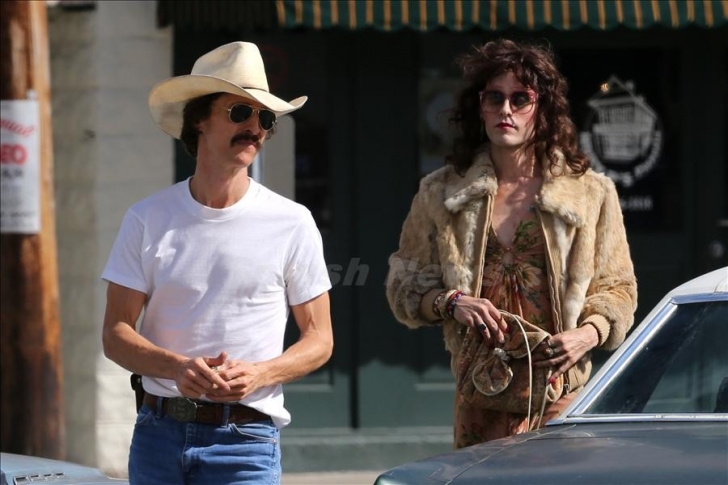
Matthew McConaughey (left) and Jared Leto make unlikely business partners in Dallas Buyers Club.

Oh, I’m the drug dealer? No, you’re the fuckin’ drug dealer. I mean, goddamn, people are dyin’. And y’all are up there afraid that we’re gonna find an alternative without you.

The Dallas Buyers Club will take you back to a hard moment in history that most of us are familiar with. But it also takes us to something involved with it that we’re actually unfamiliar with.
Ron Woodruff is a 35 year-old electrician and part-time rodeo hustler living in Dallas. He’s not the easiest to get along with as he engages in frequent sex with rodeo girls, sniffs a lot of coke and shortchanges many of the men he arranges gambling deals with. He’s also as typically homophobic as most Texas men. However his physical condition has been acting up. The doctor tells him he has full-blown AIDS and just 30 days to live. He considers it nonsense: he’s not gay. It isn’t until he goes to the library and reads a Time magazine article about AIDS that he learns a promiscuous heterosexual male like him is high risk.
Having the condition is not easy. He’s ostracized by family and friends. He is given a drug at the Dallas Mercy Hospital by Dr. Saks called AZT. AZT is the only AIDS drug approved by the FDA for testing and is among the half with AIDS testing this drugs out while the other half receive a placebo. Ron tries to get AZT illegally by bribing a hospital worker but it only worsens his health to the point he’s hospitalized, sharing a room with a transgendered AIDS patient named Rayon whom he doesn’t get along with. Once the worker stops giving him the AZT, he decides to hit Mexico to get it. What he gets instead is a doctor whose medical license in the US is revoked who tells him of the harm AZT causes. The doctor gives him medicines that are unapproved in the US.
Noticing the improvements in him three months later, Ron decides to pursue in dealing these drugs in Dallas by importing them. They’re not illegal since they’re neither untested nor unapproved. It’s a challenging process as he has to disguise himself as a priest and pass customs by swearing they’re for personal use. Meanwhile Dr. Saks notices the problems with the patients on AZT but can’t discontinue administering the medicine as ordered by her supervisor Dr. Savard.
Once back in Dallas he starts business by dealing them over at the gay bars. He bumps into Rayon again. Even though he’s uncomfortable with her, he knows she can attract more people to his medicines. The two start their own bu8siness in a shared hotel room called the ‘Dallas Buyers Club’ where AIDS patients can get these successful-but-unapproved medicines albeit at a $400 annual membership fee. The Club is very popular with AIDS patients lining up to get these medicines and it even helps Ron become friends with Rayon.
The club and its practices however can’t stay secret for long. Once Ron has a heart attack, Dr. Savard learns of his practices and is angry it’s interrupting the trial of AZT. One FDA agent confiscates one of the medicines and threatens to have Ron arrested. However he finds an ally in Dr. Saks who supports the club as she knows of other ‘buyers clubs’ in other US cities. The two become friends but still have to keep this business a secret as she is still commanded to conduct AZT testing.
Ron continues with the club and even goes to countries like Germany and Japan getting the latest in AIDS treatments, disguising himself as a businessman. Ron still faces problems with the club as the FDA agent gets the police to go to the club but receives just a fine. Soon it’s the law any drug unapproved by the FDA is now an ‘illegal’ drug. As the club is about to lose money, Rayon who herself has become a coke addict goes to her estranged father to beg for money. She gives Ron $10,000 passing it off as her chased-in life insurance.
Unfortunately while Ron is on a trip to Mexico to purchase more ‘illegal’ AIDS drugs, Rayon is taken to the hospital as her condition worsens. She is given AZT and soon dies. Ron is infuriated, feeling it’s the AZT that killed her. Then Dr. Saks, who is also upset with Rayon’s death, is also under fire by the hospital for participating in the Dallas Buyers Club and is asked to resign. She refuses as she’s rather be fired instead.
Rayon’s death changed Ron for the better. Soon the Dallas Buyers Club becomes less of an interest to make money and more to help AIDS patients stay alive, especially the gay people whom he has started to feel more of a compassion for after Rayon’s passing. He even goes to gay communities and AIDS outreach groups passing out pamphlets about the dangers of AZT. As one of his drugs is harder to acquire, Ron launches a lawsuit against the FDA. The judge shows compassion to Ron and his cause but his hands are tied. The film ends sending the message that even though Ron lost the trial, he is still a winner.
One thing this film will remind you of is of the harshness of the AIDS epidemic during the 1980’s and early-90’s. One line that stuck out to me was when a doctor said the epidemic will get worse before it gets controlled. I know because before the number of infected and dead started tapering down starting in 1996, it was hard and frustrating. I myself was actually very familiar with the AIDS epidemic back in the 90’s. I learned of its origins in the book And The Band Played On and of a lot of the difficulties in the US with the documentary Common Threads. It was after the latter when I made sure more than ever in my life to learn what I could to protect myself.
One thing I was not made aware of was these underground drug programs. There were these programs like the Dallas Buyers Club that smuggled these medicines approved in other countries but remained unapproved by the FDA into the United States. Ron Woodroof was not the only one doing this. In fact the script details at least two other US cities that had this drug program. I’m sure San Francisco and New York had their own programs.
This may be set during the early years of the AIDS epidemic but the film makes a strong detail that’s relevant today. They point out about drugs that can prolong lives greatly in the case of fatal diseases but remain unapproved by the FDA because of its lengthy testing time. A lot of lives are at stake during the waiting time. Even though some countries have approved some of those medicines already, they still remain unapproved in the US. That was a huge test to people like Ron Woodroof that considered this unacceptable and made the Dallas Buyers Club because of it. I’m sure it’s possible there are underground medicine facilities today in the US that are importing cancer drugs and other AIDS drugs still awaiting FDA approval.
Even though this film is about a smuggling operation exercises because of the FDA’s lack of timeliness, it’s also about the man Ron Woodroof. I don’t know the whole story of Ron but this film shows a unique story of a man who was a rodeo cowboy and hustler who slept with hookers and didn’t care about AIDS until it hit him. Soon he was able to take his hustling and dealing and using it for good. He had a homophobic attitude at first–common to most Texas men at the time– but it dropped once he had AIDS and met other gay men going through the same ordeal. Ron soon became a person for others but confided to Dr. Saks that he wants to live his life again and get back to rodeo life. In the end, he turned out to be that: a rebel cowboy who was a winner in the end. The ends ended up justifying the means too. Ron was originally expected to live a month after his diagnosis in July 1985. Instead he lived another seven years, dying in 1992.
Like any ‘based on a true story movie’ there’s always question of the truthfulness. No exception here. News stories say Ron actually wasn’t so homophobic at first in real life (and may possibly be bisexual), nor was he as violent or even a bull rider, nor did the characters of Rayon and Eve Saks exist. There are even claims that the Dallas Mercy Hospital wasn’t event hat cruel to AIDS patients. I won’t deny the lack of truthfulness in the story. It doesn’t however deter from the drama of the film. The story does have a lot of truth to it as Ron did attempt to challenge the FDA in court only to lose. I won’t deny the lack of truthfulness. In fact I would read a news story that said he had a daughter born in 1971 and there’s no appearance of the daughter at all in the film. I do feel it is a good film that gives a good portrayal of an epidemic and how government organizations like the FDA often fail the public. It was also a good depiction of the man Ron Woodroof if not an entirely truthful one.
The highlight of the film has to be the acting performances. Matthew McConaughey is practically unrecognizable with his cowboy get-up, loss of 40 lbs. and cowboy like Texas accent. His transformation into the role of Ron Woodroof was excellent. I couldn’t notice anything of McConaughey on screen. Also excellent was Jared Leto. He was quite the scene-stealer as Rayon and that was an excellent job of character acting. Jennifer Garner may not have as showy or transformative a role as Dr. Saks but she was also very good doing a performance not what one would expect to see from Garner on screen. Craig Borten and Melissa Wallack wrote an excellent script that keeps one intrigued but also gives the characters dimension. Jean-Marc Vallee also does an excellent job in direction. He’s had his experience directing film in Quebec and he does an excellent job with his first American production.
Dallas Buyers Club is an unlikely film that keeps one intrigued and entertained. One can question the truthfulness of the story but it succeeds in getting one to confront a moral dilemma. Especially on a situation that’s happening now.

Movie Review: Moonrise Kingdom

Kara Hayward and Jared Gilman escape together in Moonrise Kingdom.

Moonrise Kingdom is one of those films one who wants get off the beaten path might want to see. Knowing that Wes Anderson is directing it is one sign this is something out of the ordinary. But is it enjoyable?

The film starts with a young girl, the oldest of four children and only daughter, has her binoculars out for a search. She leaves her house on the search with her cat, six books and a record player but we don’t know what she’s searching for. Her name is Suzy Bishop. Meanwhile it’s rise and shine for the Khaki Scouts at Camp Ivanhoe. Only one scout is missing and no one can find him. His name is Sam Shakusky.

Flashback a year ago. Suzy is about to perform for a church musical for Noye’s Fludde by Benjamin Britten. Sam sneaks in and meets Suzy. It was like love at first sight for the two. Over the year’s time, they were pen friends and they made a secret pact to reunite in the summer and run away together. Now today is the day. As Suzy is walking to the area with binoculars in hand, Sam paddles his canoe over the lake well-equipped with camping equipment. They meet and camp out for several days on a secluded cove which they call Moonrise Kingdom. Their love blossoms as the days pass and as Sam paints pictures of her.

Eventually the two are located by the scoutmaster, the police and Suzy’s parents. They’re first able to evade escape by the scouts after Suzy stabs one in the side with lefty scissors. But it’s all too late as they are caught. Suzy is taken home by her parents and is ordered never to see Sam again. Sam is in custody with Captain Sharp and is about to be sent to ‘juvenile refuge’ because he is an orphan and his foster parents no longer wish to house him. The two run off again and hide. One other thing to add: a hurricane is expected to hit the area in a matter of days.

It’s this second incident that people are more cooperative. The Scouts learn of the love of the two and believe it their duty to help them hide. The Scouts even seek out the help of Cousin Ben to help them in the hiding out. It appears to be successful but there are many twists and turns including a flash flood within the camp and the recovering stabbed boy blockading Sam’s escape. After a lengthy chase, they return back to the church as it is about to do a musical. Problem is all those attempting to chase the two down head there too and the hurricane is slowly but surely approaching. Sam and Suzy refuse to give up and even go as far as going to the top of the church steeple while the storm is at its wettest and windiest to evade capture. The ending ends in an offbeat way but it’s a happy ending that ends in a charming manner.

I’m unsure if Wes was trying to get a point across in this movie or if he was just trying to deliver a quirky but nice story. It’s easy to sense that there may be a message here with a lot of elements in the story: 1965, New England, scouts, church plays, lawyer parents, an orphan who runs away a lot, a girl with behavioral problems. Whatever the situation, Wes succeeded in making this offbeat kiddie-romance quite charming. Wes has had a history of doing charming but quirky movies like Rushmore, The Royal Tenenbaums, The Darjeeling Limited and even the animated family movie The Fantastic Mr. Fox. Here he has a story of children in love that commonly make for a typical cutesy story, adds his own quirks in there, gives the two children in love unique characters and delivers a winning and entertaining story. How often can a director accomplish that?

Besides Anderson’s filmmaking, the film has  other great qualities too. The script he co-wrote with Roman Coppola, son of Francis Ford Coppola, adds to the charming quirkiness of the movie. The acting performances of the leads Jared Gilman and Kara Hayward were very good, especially since they’re debut performances. The one thing is that Wes Anderson wanted the two to act in a certain style of acting that would fit the movie instead of your typical acting. Both did a good job of not only doing their character but succeeding in making the chemistry both quirky and a perfect aspiring at the same time. Anderson also brings back actors he has worked with in past movies like Bill Murray, Jason Schwartzman and Larry Pine and he also includes Edward Norton who will star in his upcoming The Grand Budapest Hotel. Their addition as supporting players also add to the story as well as supporting performances from other established actors like Harvey Keitel, Bruce Willis, Frances McDormand and Tilda Swinton.

It wasn’t just the writing, directing and acting. The music also added to the movie as well. The first is the inclusion of Benjamin Britten’s music in the movie. It’s obvious Wes had a liking to Britten’s music as a child. In fact we hear the Young Person’s Guide To the Orchestra played by Suzy’s little brothers at the beginning. The original music from Alexandre Desplat also added to the movie’s charm too. Many can agree that the use of such music had a lot to do with the movie’s charm.

Moonrise Kingdom is an odd and quirky story that will win you in the end. Great movie to watch for moviegoers who want to get off the beaten path.