VIFF 2025 Review: Bidad (بیداد)

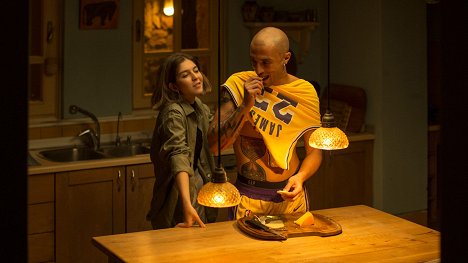
An Iranian singer named Seti (left, played by Sarvin Zabetian) is threatened by the law and only has a random man she met (right, played by Amir Jadidi) supporting her in Bidad.

At this year’s Festival, you will see a lot of films that deal with the harsh realities of the filmmaker’s home nation. Bidad is a film that deals with the issue of simple human rights.

Seti is a young Iranian woman who dreams of a singing career. In Iran, only men can be lead singers and female singers are relegated to the background. Seti did sing at a park sing-along but was stopped by the Guidance Patrols, or ‘morality police’ of Iran. Since she can’t perform on a public stage, the most she can do is post videos of her singing on social media. Seti also has a major problem in her life. Her mother Homeyra, whom she lives with, is an alcoholic who can’t seem to recover from her addiction. To make matters worse, Homeyra often has an alcohol-fueled explosive temper. Seti often stumbles into her with a bottle in her hand, and it infuriates her.

Seti is a bit of a rebel. She dares to walk the streets of Tehran without a veil or a hijab, despite the chance of the Guidance Patrols arresting her even for that. She even cuts her hair in anger. One day after rehearsing with others in her underground college, she comes across a man who hoots at her from her car. At first, she thinks it’s just another young jerk male. She reluctantly decides to spend the night at his place. She learns this man named Bebin is a lot more. He has shown a liking to Seti and her music. Overnight she learns more about Bebin and he’s a man who really cares about her. Bebin also has a secret of his own. He has a bottle of specialty alcohol that he has to keep hidden from the Guidance Patrols. He gives her a drink and he talks about hope of seeking refuge in another country.

Seti has a public performance set up for her at a club. The advertising had to be kept to a minimum for the sake of Seti’s safety. Homeyra is scared to see her there but Bebin will see her perform. Before she is even able to perform, the Guidance Patrols bust the place up. They boot everyone out of the club. Infuriated, Seti attacks the Patrol and runs off with Bebin helping her escape. The Patrols did track her identity down and later arrest her at home. She is taken into custody for a week’s period of time. The cell she’s kept in feels like a prison. The inspections she is forced to endure from both male and female patrols are humiliating. She is released on bail awaiting trial.

After her release, she returns home. Homeyra tries to show Seti that she has stopped drinking for nine days. Seti learns some unhappy news. Her social media account is restricted and Homeyra posted a message that Seti will never perform or post videos again. Seti is infuriated and lets out her anger to Homeyra. She leaves for the streets and soon learns the club she performed at is closed off by a concrete barrier. Soon, she learns of an underground public music rally. Many other women will be performing. On her way, she’s fortunate to bump into Bebin again.

Seti and Bebin find a group of ‘underground’ performers. It looks ideal for Seti to sing as many women are singing and are without veils. Just as Seti finds a female guitarist to sing along with, the Guidance Patrols bust the location up and are ready to make arrests. Bidad knows if Seti is caught, she would be arrested and could be executed. Bidad is willing to take her to safety, but Seti insists on singing with the guitarist. The ending doesn’t give full details of the aftermath but the images during the credits are telling.

Seti’s story is a common story for many women in Iran. Men have more freedoms and the women are frequently targets of the Guidance Patrols if they don’t obey. It’s been that way since 1978 when the Islamic Revolution happened in Iran. Even seeing how there are a lot of women that are part of the Guidance Patrols speaks a message how there are many women in Iran who agree with this restrictiveness. Seti is a woman of rebellion. Her only weapon is her singing voice, but the powers that be in Iran consider it a threat. No veil and a woman singing in public. You can understand the reason for rebellion with the Iranian women revolting in 2022. In fact, the word Bidad is Farsi for ‘outcry.’ You can see that this film is also outcry about this problem. That scene where Seti cuts her hair will remind you of how Iranian women cut their hair during the revolt that year.

It should also be reminded it’s not just women doing what women are not allowed to do that are under scrutiny from the Guidance Patrols. Drinking alcohol is a crime for any Iranian. That explains why Bebin has a hidden bottle of whiskey and that’s why Homeyra can’t get proper treatment for alcoholism. Because she’ll be arrested.

The film isn’t just a reminder of what women in countries like Iran are going through. The film is about Seti herself. Seti loves to sing. It’s her expression. She does not understand why only men get the lead and only men can perform in public. It’s because of her passion for singing that she dares to perform in the club and dares to attack the Guidance Patrol when she’s about to be arrested. It’s because she’s furious with her mother when she learns she posted a fake video that she’ll never sing again. How dare she say a lie like that on social media about her passion. You can understand why Seti dared to perform at that underground performance. She won’t even let the threat of death stop her from doing what she loves.

This film is a great work from Iranian director Soheil Beiraghi. Iranian women and their fight for their rights and autonomy are a common theme in his films like 2016’s I (Me), 2018’s Cold Sweat (Permission), and 2020’s Popular. This fourth feature he directed and wrote is another story of Iranian women and their struggle. This is something how Iran and their Guidance Patrols consider something as simple as a woman singing in public is seen as a threat to order. He has a statement to make and he does an excellent job of making it as a dramatic story rather than something preachy. It’s tricky to do something like that but he succeeds very well. This film was a nominee for the Best Film award at the Karlovy Vary Film Festival and won the Crystal Globe at that Festival for Special Mention.

The performance of Sarvin Zabetian is excellent. She not only delivers a good performance but she makes Seti and her dream of public singing a relatable story. One can’t help but feel a connection to her dream and disgust to why she’s forbidden, and she succeeds in making us feel that way. Leili Rashidi is another actor who delivers a great performance. Her performance of Homeyra is one where you don’t know whether to despise her or feel sympathy for her. I know Seti makes it appear living with her is like a prison of its own but sometimes, you sense Homeyra is also a prisoner of her own situation. Amir Jedidi delivers a great character in his role of Bebin. He makes Bebin to be a likeable person, especially as he’s the one person Seti feels completely secure around, but I feel his role could have been developed more.

Bidad is both a tragedy and a story of hope. You can see an incident like this happening in Iran. You can also sense the film telling you despite these dark times, there is hope for the future of women in Iran.


2023 Oscars Short Films Review: Animation

It’s interesting with seeing the reels of the shorts films, the Animation nominees are often the ones with the least total running time. They go by so fast, the shorts.tv reel add in a couple of other shortlisted films that got their honorable mention.

Anyways without further chit-chat, here are my reviews of the nominated animated shorts:

Letter To A Pig (dir. Tai Kantor) – The story begins telling of a boy hiding in a pig sty from Nazis who seek to put him in a concentration camp. The Nazis can’t find him. Fast-forward many decades later. The man tells his story to school students on Holocaust Memorial Day. He tells of how he credits the pigs in the pig sty for saving his life. He even wrote a letter to the pig. As he reads it aloud, one boy gives a taunting “oink,” while a female student listens intensely. As she engages herself in the story, she imagines herself and her classmates coming across a giant almost monstrous pig and them holding him prisoner in a trap. As they hold the pig prisoner, she can feel her nose metamorphose into a pig snout. Soon she feels sympathy for the pig and lets the pig go. As the pig is set free, he shrinks into a piglet and she hugs him.

This is an impressive story. It’s a story of a man who tells how a sty of pigs — animals he had been taught his whole life to regard as filthy and disgusting — helped spare him from dying in the Holocaust. As the young girl hears the story, she reflects on her own feelings of human hatred directed towards a pig in her mind and how she develops sympathy soon after and learns to love the pig. The story has its themes of collective trauma, fear and identity. It’s done in an impressive style that consists of a mix of 2D pencil drawings with minor colorization and mixing it with live-action images. The film is as much about the imagery as it is about the story. That’s why I give it my Will Win pick.

Ninety-Five Senses (dirs. Jared and Jerusha Hess) – The story begins with a man telling his views of human senses and colorful images about from the words he tells. At first you get the impression, this man is friendly. Then you hear his story. This man is on death row having his last meal. The capital offence he committed was arson of a repair shop he was fired from. He loved the jobs, but couldn’t handle being fired. He responded by setting it ablaze, forgetting the shop was also a house where the family lived above. As he anticipates his last meal, he looks over his past with regret, but also a sign of hope in the afterlife. He even has an outlook of how all once a person died, each of the five senses fade in their own way one by one. After a life of only five senses, he looks forward to the 95 senses in the afterlife.

It’s very rare you hear a story of a man awaiting execution to be told with a light-hearted spirit or even with some optimism. Never mind including humor. The man, voiced by Tim Blake Nelson, does a great job in telling his story without it becoming a common “Sob Story” you’d expect from a Death Row inmate. The story comes with some surprises for those who watch, like you wonder how a man that sounds so friendly would end up on Death Row. The film even ends on a humorous note. The story not only tells of the incident and of his observations and hope, but it does so in including in all five of the human senses. The story is told through six different animation styles and a multitude of colors that’s a delight to watch, despite the dark subject matter.

Our Uniform (dir. Yegane Moghaddam) – This film is where Yegane tells her story of growing up as a girl in Iran right after the Islamic Revolution. She talks of how the female teachers taught the girls to shout anti-American, anti-Israel and anti-UK messages on a daily basis. She talks of the uniform she was required to wear at school and of how the women there were firm in how all girls should wear their clothes in a proper manner and have all their hair hidden in a hijab. She talks of the difficulty she had in the hijab covering her hair that was longer than the hijab cloth, which got on the women’s nerves. She reflects on how growing up, she was taught under the new revolution to feel like she was inferior to men or below men.

No question this is a film of how a girl was indoctrinated with sexism not simply at a school, but from a system implemented by the ruling regime. The theme of the story is to do about clothing and the strict religious regulations of how girls should wear their clothing according to the new regime. The story is told with stop-motion imagery using clothes or fabrics of the clothes she wore as a child. The images drawn or painted on the clothes as well as the stop-motion movements of the clothes do a great job of telling her story. The use of clothing in the animation of telling the story is vital since clothing has a lot to do with what life was like under the regime. It makes the images as vital to the story as Yegane’s retelling. Hiding all your hair in a hijab and wearing a dress that covered everything was the new law in Iran and the film shows it in a unique way.

Pachyderme (dir. Stephanie Clement) – A woman retells her story of how as a young girl, she would often stay at the cabin of her grandparents. Her grandfather’s stern manner leaves her with a feel of fear and discomfort. The cabin was located by a lake. The cabin bedroom she sleeps in has a displayed elephant tusk the grandfather names “Pachyderme,” pointing in its direction in the hall. The room would give the girl and eerie sense about it through the wood imagery and the creaking of the boards. Even though the grandparents would say there’s nothing to fear, she felt there were monsters to take her. She goes to a lake where a woman had drowned some time earlier and feels spirits drawing her to its depths. Some time later, the grandfather dies and Pachyderme is split in two. As she returns to the cabin following her grandmother’s death, she takes both pieces of Pachyderme to the lake to bury it in the water. One of the two pieces is not completely immersed.

This film has to be the darkest of the five. In reading articles about it, it deals with the subject of incest. Incest itself is disturbing enough for audiences so it makes sense that it’s told through subtle imagery and storytelling that hides the actual facts. The theme of how she regards her grandfather as a monster and how it’s represented in Pachyderme adds to the storytelling, including the burial at sea. The ending where she attempts to bury the two pieces of Pachyderme in the water remind us she can bury a horrific memory like her grandfather’s terrible ways, but the small piece sticking out reminds us the bad memory can’t completely be buried. The imagery of the story is told through 2D images that appear as common images one would remember from storybooks they read. Possibly the monster that is her grandfather is epitomized through the common images of monsters we read in our children’s books of the past. It’s charming in its imagery as it is disturbing to see and listen to the harrowing story.

War Is Over! Inspired By The Music Of John And Yoko (dir. Dave Mullins) – The film starts in a battlefield of war. One soldier has a chess set where he appears to play by himself. After he makes his move, he writes his move on a piece of paper and attaches it to the leg of a messenger bird. The bird flies to “enemy territory” and gives the message to an “enemy” soldier who also has a chessboard and looks like he’s playing by himself. After he makes his move, he writes his move to a message for the messenger bird to deliver. Over time, the intrigue grows with the soldiers on both camps. As the bird delivers message after message, the anticipation on what the next move will be or who will win appears to quell the enmity between both sides. Then checkmate! But the sergeant is disgusted by what he sees. He reminds the camp they’re enemies and the battle must begin now. The soldiers on both sides line up with bayonets and all ready to do battle against the “enemy.” The battle begins and bloodshed ensues. On the field one soldier notices the messenger bird is shot dead. Just as the two soldiers from the chess game confront each other, it’s there from a message that slips out that one realizes the other is his chess rival. They drop their guns. All drop their guns when they see the written message “War Is Over.”

This is a creative story Dave Mullins directs and co-wrote with Sean Ono Lennon and Brad Booker produces through the inspiration of John Lennon’s legendary Christmas song and the message “War is over if you want it.” The one 3D-computer animated film nominated in this category this year, this is a film with a montage appearing to have a World War I setting and sends a message that still matters today. There may be a winner in a chess game but there are no winners in war. The scene where all the soldiers are intrigued and excited by a chess game against a player from the “enemy” side sends the message that enmity is something war creates and provokes, and is often unnecessary. The ending where the bloody battle is instantly ended with the written message “War Is Over” also sends a message of how many battles are in vain. The story first seems to be a story that’s either cute or “fluffy,” but the ending of the bloody battle with “Merry Christmas (War Is Over)” sends a significant message that is as important today as it was when John and Yoko recorded it back then. That’s why I give it my Should Win pick.

And there you have it. That’s my review of the five films nominated for Best Animated Short Film. Interesting that in a time where animated features appear to be dominated by 3D computer animation, only one of the five nominated films is such. That’s what I like best about this category. It opens itself up to various styles of animation, rather than going with one that’s all the rage.

Animated Movies Review

2016 was a stellar year for animated movies from Zootopia to Moana to Kubo And The Two Strings to Finding Dory. 2016’s line-up gave people lots of reason to come to the movie theatres. 2017 was very lackluster in comparison. We’re talking about a year when The Boss Baby was nominated for Best Animated Feature and even the mere existence of The Emoji Movie. 2017 almost made it look like if Sausage Party were released that year instead, it would be a Best Animated Feature nominee! However the best animated movies of 2017 slowly made its way on the screen in the latter months of 2017. I was lucky to see Ferdinand, Coco and Loving Vincent: three of the best of the year.

Ferdinand

Ferdinand

When I was about to see Ferdinand, I wondered how they would able to take the small story and turn it into a feature-length picture. I myself remember an animated short made by the Walt Disney studios made decades ago that was very humorous. However I wondered how would a feature-length adaptation play out?

The story starts out well with an entertaining look, but a bit of sadness at the beginning. As it progresses to adult Ferdinand, Ferdinand is funny and charming as a husky but flower-loving bull. John Cena adds to the characterization of full-grown Ferdinand. The characters of Lupe, Una and the other bulls add to the story.

There were times I wondered how will they get to where Ferdinand is scouted out by his accidental outburst? How will it be written out? Although it’s not true to the fable, the writers were able to create a way for Ferdinand to be discovered and sent to the bull rings to fight.

Another case that had me wondering was right in the middle of the story. It had me wondering how on earth the story would have a happy ending? Of course the film needed to have a kid-friendly happy ending, but in a situation where the bull either becomes a fighting bull who dies in the ring or to the slaughterhouse as meat? Nevertheless the writers were able to make the story work with good events to the plot and not just simply drag it out over the time. Even creating an ending where Ferdinand wins over the crowd and getting them to want him to live works for the film.

For the most part, Ferdinand is not all about the type of intricate story you’d expect to find in a Disney/Pixar film. Instead Ferdinand is about creating a charming modern adaptation of the short fable with charming and entertaining characters. It succeeds in charming the audience as well as entertaining the children. Despite the story being elongated into a feature-length picture, the film does not waste time. It succeeds in being entertaining. It also adds in some other elements that gets one nervous of what will happen to Ferdinand, even if they know the story. The story works in its feature-length and will not disappoint fans of the fable. It’s also good at winning crowds too as it made a good $282 million at the worldwide box office.

coco

Coco

Very often you know the Disney/Pixar collaboration will deliver something fresh and original in its arsenal that’s able to win us over. This year, they deliver Coco. Coco is unique because it’s of a Mexican family situated in Mexico. The question is will they make something original and unique entertaining to the public?

The team of writers and animators at Disney/Pixar are known for their innovations and their frequently-successful way of trying new concepts. First there was 1995’s Toy Story: the first-ever 3D animated feature. Then came A Bug’s Life which created an engaging story revolving around insects. Then Finding Nemo not only told a story about fish, but successfully took us to another world. The Incredibles was good at teaching morals in an entertaining way. Ratatouille made an entertaining story involving a rat. Wall-E magically gave us an engaging story about two robots in love with very little dialogue. It was Brave where they not only gave us their first female protagonist, but welcomed a female writer on their ‘dream team.’ And there was Inside Out which made character out of emotions.

Coco is not just a new movie from the Disney/Pixar collaboration, but a new chapter for them. They hired Mexican/American writer Adrian Molina as the scriptwriter along with Matthew Aldrich. Molina had already been part of Pixar as a 2D animator for Ratatouille, a storyboard artists for Toy Story 3 and Monsters University, and even wrote the script for Walt Disney Studios’ The Good Dinosaur. The voice cast is predominantly of Mexicans or Mexican Americans. Disney/Pixar even hired a ‘cultural consultant’ group of three Mexican-Americans including one former CEO of the Mexican Heritage Corp to make sure they were doing a film respectful of Mexican people.

The result is a film that has garnered praise even from both critics and even Mexican-American communities. The film even received excellent reviews from Latin American film critics. The film was also a top box office winner having grossed $730 million so far. Even in Mexico, it spent three weeks at #1 in the Mexican box office and grossed a total of $57.8 million in Mexico.

Now the film itself does what Disney/Pixar films have a reputation for: taking the audience to a new world. Here they give an excellent depiction of the Land Of The Dead that looks very intricate and maybe too big, but succeeds in making sense to the viewer. Once again the animation team does an excellent job in creating this new world and even the smallest detail is done with perfection. Once again Disney/Pixar is tops in animation quality.

However there was one time I was confused by the story. I’ll admit like most, I thought Ernesto was the great-great-grandfather. I was shocked when I learned that Ernesto killed Hector with poison. It left me wondering if Miguel’s great-great-grandfather was in fact a dirty killer. Even seeing Ernesto send Miguel to die in the cenote pit left me shocked. ‘Why would Ernesto do this to his own great-great-grandson?’ It’s in the pit with Hector that we learn that Hector is really the great-great-grandfather. That was a relief. It was there where it became better sense why Miguel needed to redeem the name of the family through the spirit of Hector. The story was very well-written and very entertaining. Also the song ‘Remember Me’ is an excellent song for the movie that makes for the perfect tearjerker moment you don’t feel manipulated by.

One again Disney/Pixar delivers a masterpiece in Coco. It is as top-quality as it is magical to watch.

kinopoisk.ru

Loving Vincent

Now the previous two films in which I just talked about are both the more family-friendly films. Loving Vincent is the polar opposite of both. It’s not cute, it’s less family-friendly, and it’s not even 3D computerized animation. It also didn’t even make $10 million at the box office. Nevertheless it is charming in its own ways.

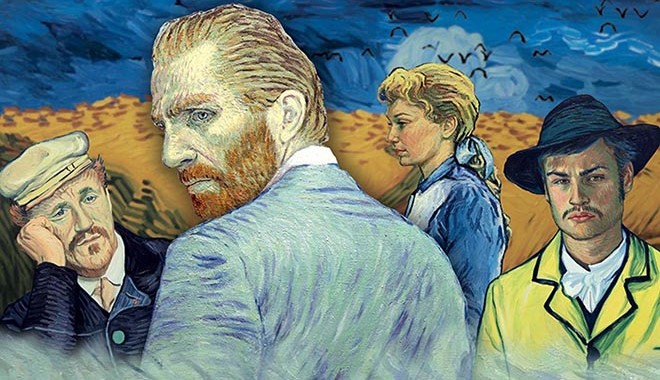
The film is a plot where Armand Roulin is asked by his father Joseph to deliver a letter from Vincent Van Gogh who died a year earlier to his brother Theo. After learning Theo died, Armand looks to find the right person to give the letter to. Throughout the journey, Armand tries to get the answer to whether Vincent’s death was a suicide or not? He was released from a hospital after found to be in good mental capacity six weeks before.

Armand comes across many people in Vincent’s life. Some have positive things to say. Some negative things. All have something to say about the person of Vincent, the various people he met with or fought against, and his personal feelings before his death. This still leaves Armand confused and his question of Vincent’s death unanswered. It’s right after Dr. Gachet promises to give the letter to Theo’s widow that he learns van Gogh’s suicide wasn’t of mental agony, but to free himself and his brother. Later Armand receives a letter from Theo’s widow thanking him.

This animated film about Vincent Van Gogh couldn’t be a simple animated film. Instead this is a film in which the images were done by 100 painters trained to paint like Van Gogh. The object of the film was to create a story involving characters of people Van Gogh painted and was close to in his life across a backdrop that’s just like the paintings he painted. Basically an animated story about Van Gogh that captures the essence of Van Gogh’s art. The story may be fictional, but it succeeds in playing out like a Van Gogh painting. It even gets one that knows very little about Van Gogh’s works or his life intrigued. It even gets fans of Van Gogh’s art admiring the film for capturing the essence of the artist and his works. I also like how the film ended as “Vincent (Starry Starry Night)” was playing. It would make those who never understood what the song was all about understand it better.

So there’s my look at three of the best animated films of 2017. All three are nominated for an Oscar for Best Animated Feature. All three are enjoyable in their own way.