2023 Oscars Short Films Review: Documentaries

Once again with the Academy Award nominations being awarded for the biggest feature-length films of the year, the AMPAS Academy also rewards the short films in three categories. I’m lucky to live in Vancouver where I can see the short films on the big screen.

The first set of films I will be focusing on is Documentaries. In each of my blogs about the short films, you will also get my predictions for which films Should Win and Will Win:

The ABC’s Of Book Banning (dirs. Sheila Nevins, Nazenet Habtezghi and Trish Adlesic) – This documentary focuses on recent regulations implemented in American school systems in the past ten years to ban certain children’s books. Most notably in Florida. There are three classifications: Restricted – disallowed to children unless permission from parent; Challenged – at risk of being banned from school libraries; and Banned – completely banned from school libraries. The books banned are mostly to do about the themes of racism and racial empowerment, sexism and female empowerment, and LGBT pride. The authors are unhappy and the children can’t fathom why they’re banned and are disappointed with the reading material they are allowed to read.

This is a smart documentary that highlights the problem from all angles. It doesn’t just show the classification system but also the books that have fallen prey to this system. We hear verses from the book and we sense why they’re banned, but still wonder what’s the problem? We hear from some of the authors of these banned books and what they have to say. We hear what the children have to say and how they can’t understand why they’re banned and what they’re left with are books with weak material. You’re left feeling for those children and the lack of knowledge they’ll be receiving. You’re also left wondering about how the USA — a nation that advertises itself as “the land of the free” — can allow for book banning to happen. I thought book banning and book burning were considered “Un-American!” Not anymore? That’s why I pick this as my Should Win and Will Win picks.

The Barber Of Little Rock (dirs. John Hoffman and Christine Turner) – In this documentary, we are introduced to Arlo Washington. He started as a barber in Little Rock, Arkansas to help raise and provide for his younger siblings after his mother died shortly after his graduation. Over time, he progressed to opening his own barber shop, then his own haircutting school, and then opening a loan company that gives loans to African Americans and other impoverished people the banks normally reject. The film not only showcases what Washington has accomplished but also interviews some of his loan customers from his bank and gets them to describe systemic racism.

The best thing about this documentary is its insightfulness. It touches on a topic we commonly hear about, but know very little of the stories of people who live it. We learn of the man who beat the odds, but he’s not hoarding all his wealth to himself. He’s a man who knows the problem and is willing to create things to empower people like never before and even fight a centuries-long problem like never before in the community. The film also reminds us that what he’s fighting is a nation-wide problem. The opinions from his interviewed clients about the topic of economic discrimination and systemic racism will open your eyes to the very people who have been hurt by this. Although Washington is doing a great job fighting it in Little Rock, he can’t fight it alone and there’s lots to be done nationwide. This documentary is very much an eye-opener.

Island In Between (dirs. S. Leo Chiang and Jean Tsien) – The film is about S. Leo Chiang, a Taiwanese-born American filmmaker, who returns to his nation of birth, but to an area he only knows from his family’s past military duties. The part of Taiwan he returns to is the Island of Kinmen. Kinmen is a set of Taiwanese islands that are closer to Mainland China than the main island of Taiwan. Actually the area of Kinmen he lives in has just a three-mile separation from the island city of Xiamen through the Tuyu Islet. As he sees this seemingly-short gap of water between the two islands and the rusty military guns that sit by the coast, he reflects how he was taught Taiwanese pride in his childhood and of anti-China propaganda he was taught. He talks of his confusion of his citizenship as he mentions of using his Taiwan passport to return to the US, but use his American passport to visit China. He talks of radio messages sending messages of freedom to the citizens of Xiamen and continue to be sent. He talks of the fear of war with Mainland China that could erupt and how tensions appeared to be easing in the last twenty years. One of the breakthroughs was a ferry system that could allow Taiwanese people to visit Mainland China that went well until the COVID pandemic hit.

This film serves as a reminder of the Cold War we forgot still exists. The Iron Curtain that was broken down in Eastern Europe in the early 1990’s overshadowed that hard-line Communism still exists in a few nations like the People’s Republic of China. Those unfamiliar with history will need to know China underwent a Cultural Revolution shortly after World War II which separated the Communist mainland from the capitalist Taiwan. The two nations have been bitter political enemies since the start. There was warfare between the two in the 1950’s. Despite the war ending many decades ago, the fear of another war still continues despite the guns rusting away on the coasts of the island. Chiang shows how all this has had a hard time for him establishing his identity. The national politics, the use of passports and the recent slow breakdown of political barriers leaving him wondering how should he identify himself? Chinese? Taiwanese? American? This is another documentary that’s insightful about a topic we so easily overlook.

The Last Repair Shop (dirs. Ben Proudfoot and Kris Bowers) – This film focuses on a shop in Los Angeles that repairs musical instruments. It’s not just any repair shop. This repair shop repairs musical instruments for the 80,000 school students in the Los Angeles Unified School District area free of charge. It’s the last shop of its kind left in LA. Featured are the repair people: Dana, who repairs stringed instruments; Paty, who repairs and cleans brass instruments; Duane, who takes care of woodwinds; and Steve, who repairs and tunes pianos. In the film we learn Dana is a gay man who had to be closeted in his early years, even as he did music in his prime. Paty, a single mother, first appeared to have a limited future as a music teacher until a chance to show her skills opened doors for her and a better income for her family. Duane used to be a banjo player who performed for the President of the United States. Steve learned music in his home nation of Armenia until a war in 1990 where his father was killed caused his family to flee to the US. The film also shows some of the students whom benefit from the repairs performed. Most are from underprivileged areas. The film ends with a final symphony with all.

This is one of the least heavy documentaries of the five nominated. This is a film that will remind you not to take things for granted. We learn of the students whom are benefiting from this. Students that value the music lessons and see ambition in their instruments and their lessons. Students that wouldn’t have much of a chance elsewhere, or would come at a cost. We learn of the people in charge of the shop. We learn of their backgrounds and how music either was always part of their life or changed their lives for the better. We learn of how some like Paty have this as an opportunity to beat the odds and have something better for herself and her family. As we watch the final symphony, we see how for all involved that music is not just music. It’s a crucial part of their lives and represents a future of promise for the young. This is not simply a documentary that’s light-hearted. It’s as much insightful as it is a delight to watch and enjoy.

Nǎi Nai & Wài Pó (dir. Sean Wang) – Two grandmothers. Both in-laws. One grandmother goes by the name Nǎi Nai. The other goes by the name Wài Pó. One is in her 80’s, but still feels young. The other is 94, but feels like she’s 100. They both live in the same house and sleep in the same bed. The two talk of their history and of how they first met. The two talk of how both of them, each different in their own way, manage aging and still do their best efforts to maintain a vital life. The two also talk about the fears of aging. Especially as one looks through an old personal phone list and notes how it has the numbers of those that are deceased.

This is a documentary that’s sweet, funny and sad at times. We see two grandmothers of the filmmaker who go by different names and live together. Their friendship is surprising since in-laws are known to be at odds with each other. They show how they continue to pursue vitality in their ages and will do it in their own way, whether by one doing cultural sword arts or one drinking shamelessly. They also show that they won’t shy away from some of the dark realities of aging. They know that despite the vitality they pursue and odds they aim to beat, there are some sad reminders of some realities around the corner. It’s a mix of bitter and sweet that is impressive to watch. Including the ending where one calls Sean a brat!

And there you have it. That’s my review of the five documentaries nominated in the category Best Documentary Short Film for this year’s Oscars. I know I described many of them as “insightful,” but all of them are eye-openers that will get you to see more about topics you may already be familiar with, topics you never know about or even topics you may have overlooked before.
VIFF 2020 Shorts Segment: Programme 2

Those that know me will wonder if I will get my shorts fix at the VIFF this year. The answer is ‘Yes.” VIFF had twelve different shorts segments showing online. The shorts I saw were part of a segment titled Programme 2. Nothing fancy this year for the title. However the short films gave a lot of variety to watch and also a lot of Canadian directors to watch out for.

-Toward You (dir. Mayzam ‘Sam’ Motazedi): A young Iranian-Canadian girl dreams of becoming a socially-conscious slam poet. Problem is wherever she tries to do her act, like an Iranian rug store or an Iranian grocery, she gets booted out. Her biggest fan is a family member she lives with. He’s deaf but he can hear her as he puts his hand on her portable speaker. He has a problem. He has a bad health condition and he’s addicted to smoking his hookah pipe. He even forgets about the day she’s to perform at a show she booked. Distraught, she goes to perform at a senior’s center. The nurses find her act hard to deal with and end it. Despite it, she’s applauded by the seniors. She returns home having to deal with the ailing man.

Up until the end, it was a very good film. It shows a good story about a young girl with a creative passion and a dream. It also shows the difficulties she had to deal with in her own life. However the ending didn’t make a lot of sense. I feel it ended on the wrong note, or the ending didn’t appear like its purpose was justified.

-Zoo (dir. Will Niava): Three young adult males of different races are having their ‘fun’ in Montreal. They cause vandalism, act like tough guys and smoke weed al to their pleasure without a care. Then when they’re in a parking lot, a man dressed in normal clothes comes to inspect the boys. He then sets his sights on the black male whom he especially sees him to be a troublemaker. He tries to arrest him, but he does something brutal to him, leaving him what he appears to be unconscious. The man leaves him behind and it’s up to the boys to take him to the hospital.

No doubt the message is about police brutality on black people. That’s a hot topic because of the deaths of Breonna Taylor and George Floyd. In fact, the film maker makes the message seen at the end. I believe the film maker was sending the message that Canada’s no angel either. The interesting thing is the man who arrested him and assaulted him wasn’t even wearing a uniform. Was the man an undercover policeman? Or was he a citizen taking the law in his own hands? Does get you thinking.

-Even In The Silence (dir. Jonathan Elliott): It’s a film with a poem in an Indigenous language in the background as the story is told of a young girl and her boyfriend. They’re madly in love, but things go wrong at a party involving a lot of drinking. She drives him home but they get into an argument and a car crash happens. Sometime later, through embracing her culture, she’s able to find healing. She goes to the area of the crash to lay flowers, and she feels his spirit again.

This is a very brief film with a lot of focus on both the poem and the visuals. It attempts to send the overall message through both means. It’s use of Indigenous language is also important as it’s about young Indigenous people trying to find healing through tragedy.

-Spring Tide (dir: Jean Parsons): Emily and Hannah are two teen friends who just want to relax during their summer days. Maybe meet some boys. They do attract the attention of two older boys who are doing work for a nearby business. Their names are Zach and Austin. They develop conversation with the two boys and Emily catches the attention of Zach. She tells him a humorous story and she attracts him. One night, Zach brings her to his hotel room. She declines his sexual advances and Zack acts like a jerk. Later on, he confesses something to her. At the end she tells Hannah of her experience.

The film is a reflection of a teen girl and her first sexual experiences. It reminds you of how summer is that time when sexual curiosity and expérimentations happen. At the same time, it’s not just about sexual curiosity. It’s also about the two characters. Both are either a teen or a young adult. Their immaturities are made obvious in how they treat each other privately. However it soon becomes a case where Zach shows his insecurities. He goes from a jerk to being the insecure one almost instantly. That’s pretty much it. It showcases the behaviors as much as it showcases the moment.

-Laura (dir. Kaayla Whachell): Laura is in a detention center. She has been arrested for abandoning her child in a motor vehicle. She is met with an Asian-Canadian lawyer. He tries to ask her about her Indigenous heritage or her family history. Laura tells of her own stories of her childhood and how she met her husband. When their baby was born, she was happy as can be. Sometime soon the marriage was falling apart. Then right in the middle of the road, she has an anxiety attack. The lawyer is trying to get to the root of the problem, to see if it has to do with being in an Indigenous family or community, but all Laura wants is her baby back.

I think the message of the film is trying to say how non-Indigenous in the legal system seem not to be able to deal with Indigenous people well. This lawyer appears well-meaning and seems like he’s trying to get to the root of the problem, but Laura is frustrated. She has a mental condition that causes these attacks. She’s in danger of losing her baby, but she feels the lawyer doesn’t get it. He seems not to be paying attention to her issues and desires. It sends a strong message. Both about the justice system and about problems in Indigenous communities.

-Canucks Riot II (dir. Lewis Bennet): The film consists of found footage during the 2011 riot after the Stanley Cup finals game which the Vancouver Canucks lost to Boston Bruins and a riot ensued. The film shows footage of the crowds before the game, during the game, during the rioting and aftermath.

The film isn’t exactly an original film. However it does show a lot of interesting images of the whole incident. There’s footage of people in the crowds shouting “Riot 2011′ before the game begins, sending a message there were people who came to riot, just like during the 1994 Stanley Cup finals (which Vancouver also lost). There were scenes of acts of human selfishness and chaos. There were scenes of people committing the acts of vandalism and looting. There were scenes of an interviewer interviewing a young student from another country who’s both excited and appalled at what he saw. This film sheds a lot of light on the riot and allows you to draw your own conclusions.

Parlour Palm (dir. Rebeccah Love) : A woman brings a parlour palm plant into the house she shares with her lawyer husband. It appears the relationship is going fine at first. However time will tell a different story. He is overworked and she feels ignored. She keeps on hearing bad environmental news and that causes her to go deeper in depression. She tries to get his attention with the artistic creations she shows, but she gets interrupted by him. Then one night, she finally decides to give him a show. It’s a show where she just lets it all out ‘everything is falling apart!’ It causes him to want to call the emergency crew. However he gets the message in the end.

This is a bizarre story as it involves a woman who appears to have a lot of artistic dreams of her own. She tries to use her artistic performance passions to get his attention, but it appears not to work until the very end. This is a unique story about a relationship that is doomed to end. Two differing personalities and one personality who appears to just explode all of a sudden. You have to get into the characters to fully understand them and the story. It’s funny that this is the one short that doesn’t have a social message, ends in the heaviest fashion.

The films I saw were seven unique films that had a lot to tell. Some had a social message. Some offered a ray of hope. Some just told a story. Some did on a bad note wondering what will happen next. I admire short films as a way for up-and-coming director to express themselves creatively. Often short films are a means to lead the director to bigger and better projects in the future. I see potential in all the directors here. One would be interested in what the next film they create will be.

I was able to complete another one of my three main VIFF goals of watching a shorts segment thanks to Programme 2. I’m glad I saw them. They were all good to watch. Also who knows? This may lead to something bigger and better in the future.

Oscars 2012 Best Picture Nominee: Les Miserables

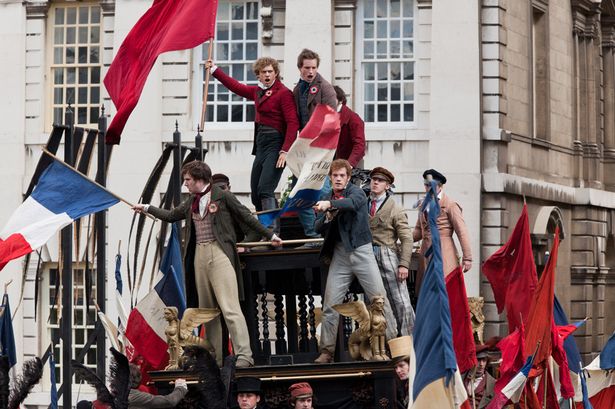
Les Miserables

How many of you are familiar with the Broadway musical Les Miserables? Lots of you, I’m sure. Yes, Les Miserables was the one Broadway musical phenomenon from the 1980’s that could even have Andrew Lloyd Webber looking over his shoulder. When you heard that the musical finally would have a film adaptation, how many of you looked forward to seeing it? I’m sure a lot of you have including me, but does it deliver to movie crowds and especially to fans of the musical?

One thing I’ve learned about hit musicals being adapted to the big screen is that it’s a very tricky job. The whole filmmaking crew has the job of dealing with the fact the fans of the musicals want something that won’t disappoint them. The scriptwriter has the duty to make a script that includes the musical’s most popular songs mixed with the emotions of the characters in each scene. The director has the duty of making the songs, the emotions, the setting and the theme fit into a 2 1/2 hour long movie. The actors have the duty of delivering a performance that’s both believable and entertaining in both their acting and their singing, especially when a camera is filming them up close and it will be seen by all.

For the record, I saw the stage musical when it came to Canada in 1995. Most of the numbers possessed the same energy, spirit and emotion that was present in the stage musical. The only number I thought was lacking the same spirit was “Master Of The House”. That was the one number that had the least spirit and flavor that was present in the musical. Also Gavroche didn’t make that grand of an introduction. I know he does so in the stage musical but he just didn’t seem to grab you attention at the beginning the way he does on stage.

One thing I have to say about the film version is that it gave me a better understanding of what the musical is all about. Back when I first saw it on stage, I didn’t fully understand it. Now that I’m older and my attention span is better, I can understand it’s about redemption and the triumph and trials of justice in a world devoid of morals and justice. It was entertaining to watch on stage but it was through seeing it on film that it’s like a story from a Dickens novel where a man makes a promise to a dying woman and keeps his promise despite his trials and rivals until the end.

We should remember that there are many loyalists of the musical Les Miserables who hold the stage production dearly to themselves. The musical version of the Victor Hugo novel began in Paris in 1980 by Claude-Michel Schonberg and Alain Boulbil and became a musical on Broadway in 1985 thanks to the translations of Herbert Kretzmer. If you remember Broadway back in 1985 there were two types of musicals: those of Andrew Lloyd Webber that go on to charm the word and every other musical. Ever since it’s been released it’s become a huge Broadway phenomenon that could even rival some of Webber’s most legendary musicals. Every city it touched, it drew huge crowds. So you can imagine that when the film version of the musical came out, there would be a lot of pressure placed by fans of the musicals. It’s like that with any musical where loyal fans expect it done excellently if not perfect. There have been many musical adaptations that have been hits and misses in terms of comparing it with the stage play. Chicago and Hairspray are two examples where the film version hit. Rent and Nine are two examples of the film version missing. I myself have seen the stage production. I personally was impressed by it and I don’t see anything that would let anyone loyal to the stage musical down. I feel Tom Hooper and the producers did a very good job with it. I talked earlier about the energy of most of the songs still there. That had to be the best quality in terms of keeping it true.

There has been some flack from Tweeters and some fans of the musical about the use of actors in the movie. You’ve heard the disses: “Actors trying to sing.” I do give them partial credit because many actors had to learn singing for the sake of getting acting jobs in musicals. In fact John Travolta even made it clear after Saturday Night Fever that if you wanted to get acting work in New York, you had to sing, dance and act. Don’t forget that if there were singers in the film, there would be disses like: ‘singers trying to act.’

Anyways getting to the nitty gritty, one can notice those that are able to sing their roles gracefully from the actors just trying to sing. Russell Crowe gave his best effort as Javert but often came across as too forced and sometimes uncomfortable at what he was doing. Eddie Redmayne also didn’t look too comfortable performing as Marius. That’s the risk when you take when you insist on singing your parts instead of ADR. Hugh Jackman did an excellent job not just in singing and acting as Jean Valjean but also for being consistent in having the biggest role in the musical. Anne Hathaway as Fantine was however the best at combining both singing and acting in their role and coming across the most gracefully. In fact it was her performance of “I Dreamed A Dream” that stood out above all others. It’s no surprise to me if she wins the Oscar. The lead actors were not the only ones who impressed. Helena Bonham Carter and Sacha Baron Cohen did a good job in their supporting roles. Daniel Huttlestone was a good scene stealer as Gavroche is supposed to be. If there’s any fresh face that could rival the veterans, it’s Samantha Barks that was excellent in her supporting performance as Eponine.

Tom Hooper was given the difficult task of taking the musical and putting it on screen and he succeeded very well in doing it. William Nicholson also had the challenge of turning the script and songs of the musical and turning it into something for the big screen. He did a very good job of it retaining the spirit of the musical and of the songs. Also noticeable is that there are some scenes of dialogue. The stage musical doesn’t have that. Good to see he added those small parts of dialogue without dulling or upsetting the musical. As I said before, the music was great with Schonberg, Boulbil and Kretzmer even composing a new song ‘Suddenly’. The technical aspects like the sets, costuming, cinematography and sound mixing were also top notch.

Les Miserables finally has its chance to hit the big screen and faced a huge whack of pressures expected on any adaptation of a legendary Broadway musical before opening. The end result is an accomplishment, if not a triumph.

Oscars 2011 Best Picture Nominee: The Artist

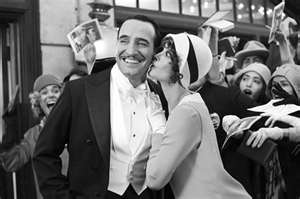
Georges and Peppy's fates are sealed with a kiss in 'The Artist'.

Miss silent movies? Some of you are too young to know what silent movies are, never mind appreciate them. Anyways The Artist is a throwback to the days of the silent movie and it does a top notch job of it.

It’s 1927 and the era of silent films. Georges Valentin is the king of the big screen. The premiere of his latest release A Russian Affair is applauded greatly. He is quite the charmer with his debonair looks and his mall dog Jack by his side. Zimmer, his boss at the Kinograph Studios, loves him. Clifton, his valet, considers him his best friend. Outside he’s signing autographs when a young wannabe named Peppy Miller accidentally falls into him after dropping her purse. The incident is an event for photographers and even leads her to the cover of Variety magazine with the title ‘Who’s That Girl?”

Peppy and Georges meet again as she auditions as a dancer for his latest movie. He insists on giving her a role and even gives her a fake beauty mark for a competitive edge in Hollywood. It works as her fame is soon rising. Meanwhile Georges has a nightmare one night where he’s in a world of sound and he’s the only one who can’t talk.

It’s 1929 and Zimmer announces that Kinograph will now be doing movies with sound, or ‘talkies’ from now on. Valentin is unhappy feeling talkies are a passing fad. He stubbornly makes and directs his own silent film with his own finances. Unfortunately it opens on the same day as Peppy’s latest talkie release. Before the release, she’s being interviewed in a restaurant where she proudly talks of herself as ‘fresh meat’ and ‘out with the old, in with the new’ until she comes face to face with Valentin. Peppy’s movie is a hit while Georges’ silent movie is a flop. Georges’ wife kicks him out of the house and he takes up an apartment with Clifton. Meanwhile Peppy is a major Hollywood star. Despite her stardom, she never loses her thoughts and concerns for Georges. She even attends the premiere of his silent film.

Things turn for the worse for Georges especially after the stock market crash where it gets to the point he auctions everything off and fires Clifton who he hasn’t paid for a year. One day in a drunken rage, he burns all the copies of his movies save one. He’s trapped in the fire and can’t get out until Jack the Dog is able to attract a policeman’s attention. He’s rescued and taken to a hospital where Peppy soon takes him to her house to recuperate.

Georges awakes not only to find himself in Peppy’s house but to learn Clifton now works for her. Peppy then pleads to Zimmer to get Valentin to star in her next film, even going as far as threatening to quit Kinograph  if he doesn’t agree. Meanwhile Georges discovers all his auctioned-off items at Peppy’s house and then returns to his burned-out apartment. Peppy arrives at George’s apartment just as he’s about to commit suicide. It’s then when they reconcile and she persuades Georges let go of whatever pride is eating him and star in her next film. I won’t tell you how it ends exactly but it does end happily and on a surprise note.

It’s unique that it shows the swing from the silent world to the sound world as a personal trial of Georges Valentin. The world of silence made him a star, made him beloved and helped define him. When talkies came into play, silent movies went out of fashion and Valentin faded with them. Even despite his insistence of them being an art form, silent movies were not liked anymore. Valentin’s devotion to silence and his anger to his lost fame almost becomes like a source of pride for him as he even goes as far as neglecting the help given from those who act like ‘guardian angels’ to him: Jack, Clifton and Peppy. It’s only in the world of sound, a world Georges feared, that he’s able to recover.

Another thing this movie reminds us is that this world of disposable stars in Hollywood is nothing new. The movie does show a truth that a lot of stars popular during the era of silent films would lose their stardom during the start of talkies to a new era of stars. Does John Gilbert come to mind? And that line from Zimmer that: “The public wants fresh meat and the public is never wrong.” gives us a reminder of what Hollywood is about and always was about. Those who complain that Hollywood is not about the art of filmmaking and ‘all about the money’ are reminded in this film that it always was that way. Even while it has churned out some of the most classic and most beloved movies of all-time, it was still a profits-first system even during its Golden Age. The battle between ‘film as art’ and ‘film as entertainment’ still continues now.

Overall this was an excellent movie that is the brainchild of French director Michel Hazanavicius. He directs, writes and even edits the film. He also includes Jean DuJardin and Berenice Bejo who have worked with him in two of his past productions. Their performances on their own stand out as two of this year’s finest. Often one thinks that a lot of acting involves annunciation of words but a lot of acting is also done in silence too. In fact there’s even one completely mute performance–Holly Hunter in The Piano–that even won an Oscar. And we see the quality of the silent performances in this movie. Supporting performances from James Cromwell and John Goodman also add to the movie and stand well on their own. Also we have the dog Uggie as Jack the Dog who’s as much of a charmer as he is a scene stealer. The accompanying score from Ludovic Bource is also another top quality of the movie that adds to its highlights. The set design and costuming also work perfectly to set the time period. You’d hardly know this was made in 2011. Overall this is a well-organized film that’s as entertaining as it is artistically merited.

The Artist is a very charming throwback to the silent movie age. It retains the charm of silent movies and the era while maintaining an intriguing story and top notch acting. The big question is will its silence be golden on Oscar night? It’s heavily favored. We’ll just wait and see.