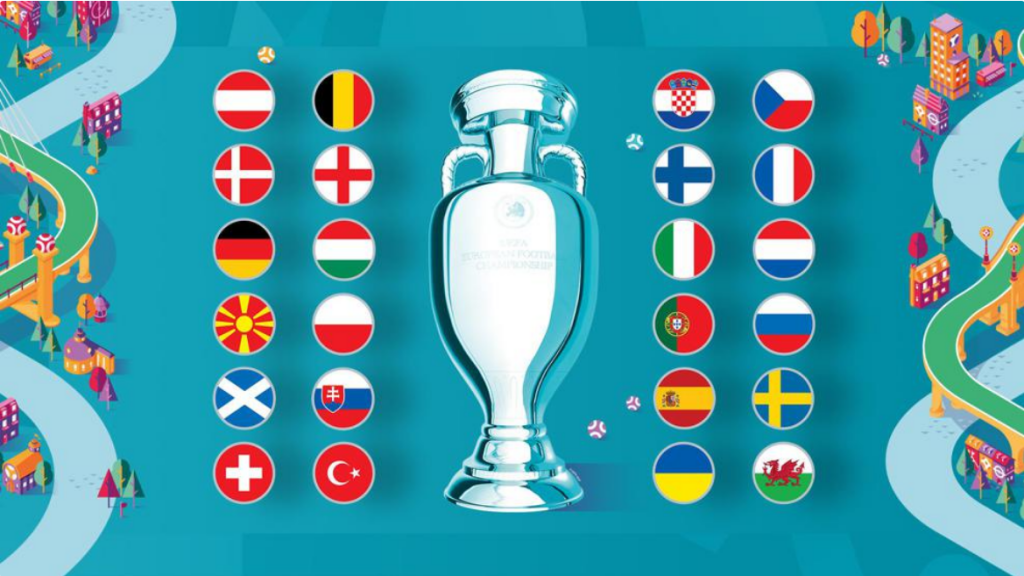
UEFA EURO 2020: Group E and Group F Review

Interesting to note for this year’s qualifying teams, there are only two new teams competing this year: Finland and North Macedonia. Also this year are nine of the ten countries that have one at least one Euro title. Greece is the only former winner that didn’t qualify. The funny thing about football is that any team can win the Euro. There have been surprise victories before when the underdog came out the winner like Denmark in 1992 and Greece in 2004. It’s very possible a country that has never won a Euro before can win here.

Continuing on with my group reviews, I focus on Group E and Group F today.

GROUP E

For this group, this looks to be the most unpredictable. This group consists of two teams that are known for great play, but frequently fall short. It also has two teams that can go further than most people expect them to.

Spain (6) – La Furia Roja are an enigma. For so long they had been known as football’s greatest underachievers. However that all changed around the time of the late-noughts, early-2010’s. During that time, Spain won two straight Euros (2008 and 2012) and finally clinched the World Cup in 2010. After that, Spain lost their winning edge. They were stopped in the Group Stage of the 2014 World Cup and since then it’s been the Round of 16 at both Euro 2016 and the 2018 World Cup.

Spain have been in a struggle to get their winning ways back. The current team has an all-Spanish team of coaches. Most of the players play for La Liga with six playing in England’s Premier League teams. Since the start of 2020, they’ve only had a single loss, to Ukraine. They would also beat Ukraine in that time as well as Germany, Switzerland and Lithuania. They also had draws against Greece and Portugal. Chances are Euro 2020 could be the domain for Spain to redeem itself.

Sweden (18) – One thing about football is never underestimate the Blågult. After a disappointing Group Stage ouster at Euro 2016, they came back with a World Cup qualifying surprise against Italy in the playoff round and would then go on to finish in the quarterfinals of the Cup. And this is after superstar Zlatan Ibrahimovic retired from the national team!

You can thank coach Janne Andersson for the turnaround. Team Sweden’s players play for various leagues around Europe. They arrive at the Euro competition with a set of mixed results since the beginning of 2020. They’ve had losses to France, Portugal and Denmark, but they’ve also had wins against Russia, Croatia and Denmark. Whatever Sweden does here in Euro 2020, they have what it takes to deliver the unexpected.

Poland (21) – Making it to the quarterfinals of Euro 2016 has been Poland’s biggest Euro success ever. This is a team that has finished as high as third at two World Cups and three Olympic medals including gold in 1972. Unfortunately Poland didn’t get the breakthrough they were hoping for at the 2018 World Cup as they were out in the Group Stage. Robert Lewandowski didn’t even score a goal.

The current Polish team consists of players who mostly belong to teams in England’s Premier League and Italy’s Serie A. Poland has had mixed results in its play since the beginning of 2020. They’ve won against Bosnia, Finland and Ukraine, both also lost to England, Italy and the Netherlands. The Euro 2020 arena will be another chance for Poland to prove itself and what it’s made of.

Slovakia (36) – Slovakia is a team that is constantly under low expectations, but will surprise many of their naysayers. They’ve only qualified for a single World Cup back in 2010 and their first-ever Euro was the Euro 2016. In both cases, they progressed past the Group Stage into the Round of 16.

Here in Euro 2020, The Falcons hope to do much better. Their coaching staff is completely of Slovakian coaches and the players play for a wide variety of leagues throughout Europe. Slovakia have had a mixed set of results since the beginning of 2020. They’ve won over Russia, Scotland and Northern Ireland, drawn against Cyprus and R. O. Ireland, and lost to Israel and the Czech Republic. Anything can happen in Euro 2020 and the Slovaks have what it takes to pull a surprise.

My Prediction: For this group, I anticipate that Spain will top it and Sweden will come in second. I have a feeling Poland will come in third but may not have enough to earn the wildcard qualifying berth.

GROUP F

Of all the groups in Euro, this is the group most deserving of the title the Group Of Death. Two of them have won the World Cup in the past ten years, one is the defending Euro champion and the other is a former great looking to reclaim its greatness.

Hungary (37) – The Magyars have been hoping to regain the success their team used to have from the 1930’s to the 1960’s that carried them to two World Cup finals and three Olympic gold medals. For those that don’t know, the Euro began in 1960 and Hungary’s best-ever result is a third back in 1964. For a long time it seemed like their era was long over. However Euro 2016 showed signs of a comeback as the team qualified for the first time since 1972 and made the Round of 16.

The head coach is Italian Marco Rossi whose been hired since the 2018 World Cup. A majority of the players play for teams in the Hungarian league. Since 2020, they’ve only had a single loss to Russia, a single draw to Poland, and wins against Iceland, Serbia and Turkey. Not much is expected of Hungary here but they have what it takes to pull an upset in Euro 2020.

Portugal (5) – Portugal comes to Euro 2020 as the defending champions. They started the Group Stage with straight draws but came on in the knockout round winning all their games en route to the win. Unfortunately, they followed it up at the 2018 World Cup with an ouster in the Round of 16.

Fernando Santos, who coached them at Euro 2016 is still their head coach. Cristiano Ronaldo is their captain, but they also have a lot of other greats with the team like Pepe, Joao Moutinho and Rui Patricio. Since the start of 2020, they’ve only had a single loss, to France. They’ve had draws to Spain and Serbia, and wins against Croatia, Sweden and Israel. Portugal has made it as far as the semi-finals in four of the last five Euros. It’s highly likely the magic of the Navigators will be back in Euro 2020.

France (2) – France is a case of a success story that rose over time. They started after humiliation at the 2010 World Cup. Then became slow-and-steady progression with a quarterfinal finish at the 2014 World Cup to becoming runners-up at Euro 2016 to winning the World Cup in 2018.

Les Bleus is still coached by Didier DesChamps who has coached them since the 2012 Euro. Ironically there are more players on France’s team that play for Spain’s La Liga and England’s Premier League than in France’s Ligue 1! Goalkeeper Hugo Lloris, who is the team captain, plays for Tottenham Hotspur! For play, France has only had a single loss since the beginning of 2020, to Finland. They’ve won against Croatia, Sweden and Wales, but also had both a win and a draw against both Portugal and Ukraine. Euro 2020 could be the stage where France can claim their third title.

Germany (12) – The Mannschaft have always been known as a top contender in football, whether it be the World Cup or the Euro. Their win at the 2014 World Cup kept their reputation of consistency alive. However their reputation took a severe beating at the 2018 World Cup when they were ousted in the Group Stage. That made it the first World Cup in 80 years Germany failed to progress past the opening round. Some say it was because of a team that wasn’t together. Some even say it’s the ‘curse’ of the defending World Cup champion. Germany’s disappointment would continue as they struggled during the first year of the UEFA Nation’s League.
Despite the setbacks, Joachim Low is still the national coach. The current team features some of the 2014 World Cup alumni but mostly consists of a lot of new younger players. A majority of players play for Germany’s Bundesliga. Since the beginning of 2020, Germany have only had two losses: to Spain and North Macedonia. They’ve also drawn against Spain as well as Switzerland and Denmark and they’ve achieved wins over Ukraine, the Czech Republic and Iceland. A recent 7-1 win over Latvia shows the Mannschaft have something to prove. Euro 2020 could prove to be the domain for Germany to redeem themselves.

My Prediction: This is a tough one as even the best teams have shown some visible weaknesses. I predict Spain to top the group with Portugal second and Germany third, but with enough game stats to qualify as a wildcard.

And there you have it. That’s the last of my predictions for Euro 2020. Sure, a lot could be told. However we should remember that lots have changed since the pandemic and that could also mean the prowess of some teams. Those expected to fare well might now here. That’s why whenever I make my predictions, I tell people not to use them for gambling bets! Anyways this should be an exciting month with a lot of exciting play.

VIFF 2019 Review: Pain And Glory (Dolor y gloria)

Pain And Glory
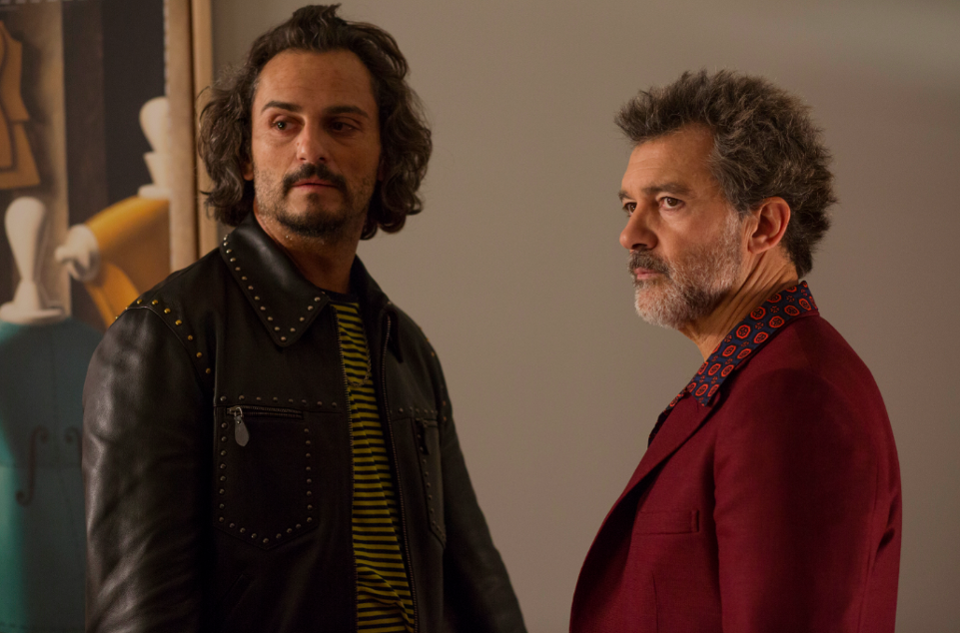
A film director, played by Antonio Banderas (right), seeks to get back his creative inspiration despite his failing health in Pain And Glory.

It’s to be expected that Pain And Glory would get a huge turnout at the VIFF. Pedro Almodovar is a darling of the arthouse film world. The buzz is this time, he’s reuniting with Antonio Banderas for the first time in over 30 years. Is it worth the hype?

The film is told by the first-person view of film director Salvador Mallo. Salvador is in a pool meditating alone. He has had open-heart surgery in the past. He’s had issues involving both his family and his sexuality in his past. He became renowned through his breakthrough film Sabor– a still beloved in its current remastering — but considers every film since to be a failure. He’s also had issues with back pain and other medical issues. All of this has caused a struggle to get inspired again with filming. He knows he has to, but he can’t. Not even as his landmark film Sabor (‘flavor’ in Spanish) has been remastered and re-released.

Over time, he learns he has to make peace with his past. He first reflects back to his childhood. His mother was the biggest influence in his life. As a child, he was a dreamer and his mother always fancied him to be one. He did great in academic studies, but he had a love for singing and a special love for movie stars. He was sent over to a convent school; something that was of great expense to his mother. However he also reflects to the last days he was with his mother. He was so consumed with his filmwork and his writing, he was negligent to his ailing mother. He did however promise he would take her back to the countryside where she could spend her last days, but she died before he could.

As his film Sabor is being re-released and even shown to film enthusiast, he reunites with Alberto Crespo, the lead actor of the film. Mallo hasn’t spoken to Crespo in 30 years because of his perceived ‘bad’ performance in the film. Crespo is not happy to see him, but gets Mallo into smoking heroin. During his heroin-smoking, he’s able to recount some of his memories. One is of the time in his childhood when his parents had to move into a whitewashed cave house because of how poor they were. The mother hired a laborer to repaint the inside. As part of the deal, Salvador is to teach the illiterate laborer how to read and write.

Another flashback of past memories comes during a Q&A during a screening of Sabor. Mallo, at Crespo’s house at the time, is too down to attend, but corresponds with the crowd through Crespo’s phone. Crespo is able to tell the crowd of some of the wonderful memories of the 80’s and talks of Federico: Mallo’s boyfriend at the time. Federico is in the crowd and responds. That infuriates Mallo and he responds to Crespo violently. It just reminds him it’s another past memory he has to come to terms with. Mallo loved Federico and the two were almost inseparable, but Federico had a bad drug addiction at the time and Mallo had to end the relationship. The heroin abuse Mallo is addicted to is very similar to the struggle Federico went through during their time together. Eventually Federico and Mallo reconcile during a dinner. He learns Federico has sobered up since, moved to Buenos Aires, married a woman and fathered three children.

Over time, Mallo needs to recover from his own drug addiction and have further check-ups on his throat which causes him to choke for no reason. He knows his time is very limited, or feels strongly that it is. His assistant gives him tickets to an opening to an art gallery. Over at the opening, Salvador notices a drawing of a boy sitting with a book. That drawing isn’t any child. It’s Salvador! It then reminds him of the time in Salvador’s childhood the laborer was drawing a picture of Salvador sitting with a book as a thank-you gift. Only his mother would later hide the drawing without Salvador’s knowledge. After the laborer finished, he needed to bathe. Salvador left to lie down in the bed from all the heat, but woke up to get the man a towel. When he saw the laborer naked, Salvador had a look of delightful surprise and fainted. The laborer thought Salvador fainted of heat stroke.

Soon Salvador is able to buy the drawing and he sees the thank-you message from the laborer on the back. His assistant recommends Salvador to find the laborer through a Google search, but Salvador feels it’s not worth the bother. Soon Salvador does go for the surgery to get the growth removed from his throat. The film goes to a scene to Salvador’s childhood of him with his mother waiting for a train during a village fiesta and watching the fireworks in awe. Only it’s not a flashback. It’s a scene from a film Salvador is directing about his past life. His desire to film has returned again!

When one watches the film, one can easily wonder if this is a film meant to be autobiographical of Almodovar himself? The life of Salvador does seem to mirror Almodovar’s own life in many ways. Pedro himself fell in love with films and movie stars as a child He was sent to a religious school as a boy in hopes of becoming a priest and was abused. Pablo is openly gay, and of course became a renowned film maker. Even the falling out between Salvador and Crespo is actually symbolic of the falling out between Almodovar and Banderas. However there are a lot of differences between Salvador and Pedro. Salvador appears to be born around 1960 while Pedro was born in 1949. Salvador is an only child raised by a mother and father who’s rarely there while Pedro was one of four raised by both parents; his father being alcoholic. Salvador appears to have had one masterpiece film while Pedro has had decades of masterpiece films. Also while Salvador appeared to lack inspiration and the drive to make films after illness and physical setbacks, Almodovar appeared to continue well.

Nevertheless it still gets one thinking. The film got me thinking does Almodovar see Women On The Verge Of A Nervous Breakdown, his breakthrough film outside of Spain, to be garbage or the bane of his existence to him? Artsy types are so full of self-loathing! Also I have not been too familiar with Almodovar’s health problems. I have not known of any health problems happening to Almodovar. If there are any problems, they have not been made too public. Almodovar has made his back problem open recently, but did he ever have that throat problem? And the drug addiction. I know addiction is common in Almodovar films, but I haven’t heard of Almodovar addicted to heroin smoking.

This film may not be the best film Pedro Almodovar has done, but it has to be his most personal. There are a lot of similarities between Salvador and Pedro. There are also some that become questioning. Was Almodovar ever hooked on heroin? Is Almodovar envisioning what he could have been if he were a one-hit-film-wonder? One thing about Almodovar’s films is that he doesn’t just tell a story. He creates a lot of moods and images as if he’s paining a cinematic portrait. He tries to get us to feel the characters, feel the moments, feel the emotions. He has the ability to romanticize even the most bizarre moments. Even a man who impregnates a comatose woman (in 2002’s Talk To Her). This film is no exception. He helps us see the story through the eyes of Salvador in both his flashbacks and of the present moment, and romanticizes it. This is another accomplishment for Almodovar. It’s no wonder he’s become a film festival darling.

The funny thing of the film is that the flashbacks of Salvador’s childhood appear to be flashbacks. However it’s at the end that we learn that the flashbacks of his childhood we see are the flashbacks intended for Salvador’s new film. Filming within a film. That should have been apparent when there was Penelope playing the younger version of the mother in the flashbacks while the older mother had blue or green eyes. It made you wonder how did that happen? Now you know at the end.

The film also marks a great return to Almodovar collaborating with Antonio Banderas. Those of us in North America remember how he became a huge movie star in the 1990’s. What many did not know is that it was through Almodovar’s films that Banderas had his breakthrough. I still remember how he played a husband in Women On The Verge Of A Nervous Breakdown. Banderas actually acted in five of Almodovar’s film before breaking into the US upon the release of Mambo Kings. It appears like both made the other’s success. Here they reconnect and Banderas delivers what could be his most intimate, if not his best, acting performance ever. He does an excellent job of adding dimension to the character of the filmmaker in all of his joys, his hurts and his passions. Also Banderas isn’t afraid to show the surgery scars from his own open-heart surgery here.

Asier Exteandia is also good at the actor Crespo who is able to make peace with him, albeit turbulently. Also a delight to watch is Asier Flores as young Salvador. He added to the light-hearted parts of the film and even added some comedy too. The score from Alberto Iglesias helps dd to the feel to the film. Iglesias has contributed to the scores of many of Almodovar’s films and he does a great job of it again here.

The film could do well at this year’s Oscars. For the Cannes Film Festival, it was nominated for the Palme d’Or and won Best Actor for Banderas and Best Soundtrack for Iglesias. The International Cinephile Society gave the Prix Du Jury award to Almodovar and the Best Actor award to Banderas, and Banderas also won Best Actor at this year’s Hollywood Film Awards. This film is also Spain’s official submission to the Oscar category of Best International Feature Film; the seventh Almodovar film to be Spain’s official entry in this category.

I wouldn’t say Pain And Glory is worth the hype, but it is a very unique story. It almost autobiographical in some ways. Even if it’s not completely autobiographical, it makes a good story all its own.

2019 FIFA Women’s World Cup Group B Focus

One thing about football is that there is normally a lot of foregone conclusions on who will win the Cup and who don’t have the best chances. Those are not all guarantees. Even the best teams can bomb out sooner than anyone expected. And I will be getting to that very shortly in my blog. In the meantime, I will be focusing on Group B today. It’s easy to assume one team will win the Cup, but upsets are bound to happen. So without further ado:

Germany fixed-Germany (2): Germany has been seen as one of the best women’s teams consistently. They’ve been in all seven previous World Cups and won twice. In 2016, they won their first Olympic gold medal after three bronzes. They’ve been in the Women’s euro all ten times and won eight. However it’s not to say they’ve had some inconsistencies too. The last World Cup where they finished in the Top 3 was their winner in 2007. Also a year after winning Olympic gold, they were beaten in the quarterfinals of Euro 2017 by Denmark. Even the best have an Achilles heel.

If there’s one thing, Germany has been consistent in play in the last twelve months. They’ve won against Canada, Italy, France and Sweden. They’ve also drawn against Japan and Spain. Chances are if Germany’s on target, they can make this World Cup #3.

ChinaChina, People’s Republic of (15): China is another team that experienced big success when women’s football started establishing itself in the 1990’s. They dominated in the 90’s, but have been set back in recent years. There was even a brief time at the beginning of this decade, they didn’t qualify for either the World Cup or the Olympics. Recent years have shown an improvement with China as they made the Round of 16 at the last World Cup and the quarterfinals at the 2016 Olympics.

China’s last twelve months have had a lot of ups and downs. They’ve had wins against teams like South Korea, Cameroon and Russia. They even tied the Netherlands at the Algarve Cup. However they’ve also had losses to France, Denmark, Norway, Japan and the United States. France 2019 will be the place for them to show the world what they’re made of.

Spain Fixed-Spain (13): Spain’s women’s team is a team just starting to enter the stage of women’s football. In fact their appearance at Canada 2015 was their very first WWC. It was a learning experience for them as they left with two losses and a draw. In the women’s Euro, they did have one semifinals appearance all the way back in 1997. They were able to qualify for the last two Euros and finish in the quarterfinals both times. However the most recent Euro was another case of scraping by as their only win came against Portugal.

In the last twelve months, Spain has shown that they’ve made a lot of improvement. They may have lost to Poland, England and the United States, but they did achieve draws against Canada and Germany, and they also won against Finland, The Netherlands, Switzerland and Brazil. France is the arena for them to prove themselves once more.

South-Africa-flag.jpg-South Africa (49): South Africa is one of four teams making their Women’s World Cup debut. South Africa has competed in the Olympics twice in 2012 and 2016. South Africa has also been runner-up five times in the CAF Women’s Championship.

South Africa will be coming to France with a lot to prove. They’re one of the lowest ranked teams in the world competing in France. In 2019, they have yet to win a game, enduring losses to the United States and the Netherlands. However they did draw against Jamaica and Sweden. It’s quite possible South Africa is just a team that hasn’t proved themselves and France 2019 could be the domain to show how much they can do.

MY GROUP PLAY PREDICTIONS:

This is one of the easier ones to predict. I’ll have to say I predict Germany to top with China in second. I anticipate Spain to take third.

And there’s my take on Group B. I aim to have all my takes on the groups completed by Wednesday. Which means I’m planning Group C’s focus tomorrow. Stay tuned.

Oscars 2018 Shorts Review: Animation and Live-Action

Cinema

I’m good at keeping count of all the years I’m able to see all the Best Picture nominees, but I don’t know how many consecutive years I’ve seen the shorts. However I did it again this year. I lucked out and saw all the shorts for this year’s Best Live-Action Short Film and Best Animated Short Film categories. There were a lot of differences of the films, but a lot of similarities too. Here’s my review of the films:

LIVE-ACTION SHORT FILMS:

The col thing about this year is that two films — Fauve and Marguerite — come from Canada. More specifically, Quebec. The five films nominated are very different in genre and story, but all are deserving of their nominations:

Detainment: dir. Vincent Lambe – This is the most controversial of the five films. February 12, 1993 started off as a day in which two 10 year-old boys named Jon Venables and Robert Thompson simply played truant from school and stole items from nearby stores. That all changed when they saw 2 year-old James Bulger standing outside the butcher shop unattended. The film focuses intensely on the police interrogations. Both Thompson and Venables are interrogated separately. Both boys’ parents are in the room listening in, and in complete paralyzing shock.

The film is based off of some of the recorded interrogations of the two boys. The film appears to be a character study of the two individual boys. Thompson appears defiant and remorseless while Venables is constantly lying and frequently cries, even hysterically. The film also relives the moments such as when adults butt in and how they walked Bulger the long distance to the track where he died. It becomes gripping without getting too disturbing.

NOTE: The film has attracted a lot of controversy because of its subject matter. The James Bulger murder is a murder that still upsets the UK, especially Liverpool, to this day. The mother has gone on BBC speaking her anger and demanded the film be removed from the list of nominees. That’s why even though I think it’s the best film of all five, I feel it should not win the Oscar. I don’t see it trying to bring any sympathy to the two boys, but it still upsets many from the UK to this day.

Fauve: dir. Jeremy Comte – Two boys, Tyler and Benjamin, are playing an innocent power game. They first do it around an abandoned train. However they decide to take their game to a surface mine for a concrete factory. Then the game becomes deadly as Benjamin finds himself sinking in the wet cement. Tyler tries to help, but to no avail as it stops him too. Any help from Tyler helps to no avail. Then the aftermath as a woman offers a ride home tells a lot.

The film is a good short story. The story starts off as simple fun and games, but then turns to a dark tragic drama when you least expect it. Even the ending leaves you asking questions at the end. Very good short.

Marguerite: dir. Marianne Farley – Marguerite is an elderly lady nearing the last years of her life at home. She is nursed on a daily basis by a young nurse named Rachel. One day, she overhears a phone conversation between Rachel and another woman. It sounds romantic. Later, Marguerite notices Rachel’s phone in the bathroom and sees romantic photos of Rachel and the other woman. One day, Marguerite unearths a photo album. The photos are back in the 1960’s and are of her and another woman named Cecile. It brings back memories of the two. Cecile would later marry a man. After being put to bed early because of a fall, Marguerite confesses in her bed to Rachel of Cecile and why she never ‘loved’ her.

This is a story that is slow, but it tells a lot. It’s about two women, both lesbians, who are a product of their times. One couldn’t love a woman because it was considered a ‘mortal sin’ and was criminalized. The other is free to love another woman without guilt. It’s there where they share their special bond at the end. That’s why I declare this my Should Win pick.

Mother: dir. Rodrigo Sorogoyen – Marta is relaxing at her place with her mother around. Her son Ivan is on the coast of the French Riviera with his father on vacation. Soon Marta receives a phone call from Ivan. Ivan is alone on a remote area of the coast. The father abandoned him. Nobody except a strange man is around. The battery in Ivan’s phone is dying. Soon Marta calls the police, but the police have no way to locate Ivan as Ivan doesn’t know where he is. Then a second phone call from Ivan happens. That leaves Marta even more frightened and causes Marta to rush out.

The film’s best attribute is that it captures the moment. It’s between cellphones and Marta’s domain. The qualities are what we know and what we don’t know and it builds on the suspense. The weakness is that it appears to be part of a film rather than a full film. It feels like it has a beginning and a middle, but no end. I’m sure the purpose of the director was to give us a film that leaves us in suspense, but it leaves you wondering what was the point of this partial-film? Social message? Suspense story? What?

Skin: dir. Guy Nattiv – Troy is a ten year-old boy growing up in a remote area of the southern USA. The father, Johnny Aldd, is bringing him up to be rough and tough. The father even teaches Troy how to shoot a real gun with the help of his neo-Nazi friends. One day at a supermarket, Troy smiles at an African American man just simply buying groceries. Johnny gets angry and shouts racist slurs, but the black man walks off calm, collect, but angry and lets him know it. Johnny response by getting his friends to rush over and beat the black man up near his van while his family watches in horror, and Troy watches on.

Days later, Troy and Johnny go out somewhere, but the father is captured by a van of African American men. They put a sleeping injection in Johnny and a tattoo artist goes over his racist tattoos, leaving you wondering what will come. After eleven days, Johnny is dropped back at his home. The tattoo artist completely covered him in black, to Johnny’s horror. As Johnny tries to come home, his wife and son react in fear. It ends with a surprise ending.

No question the main theme of the film is about racism. However the film is also about cliques and breeding fear into people. The film can say that the culture of fear can also be why the United States has a gun problem. Seeing how neo-Naziism exposed its face in the Unite-The-Right rally in August 2017, this is a film very relevant to our times. Even with its bizarre story and surprise ending. That’s why I pick it at my Will Win pick.

ANIMATED SHORTS:

This makes for a very eclectic five films chosen for this year. One of the films is from a Canadian animation company. However there are two American films that hint they may have some Canadian ingredients:

Animal Behaviour: dirs. Alison Snowden and David Fine – Various animals walk into a psychology group meeting with a dog doctor leading the meeting. All have a problem to confess. However problems arrive when a gigantic ape with an anger problem comes in. He doesn’t want to be helped. The pig, the leech and the moth are all cooperative, but the ape is disruptive. Then the ape confesses his problem, but also throws a fit in the process and all havoc is wreaked. Right at the end, and with all the damage done, the ape appears helped and will be back next week.

This is some clever 2D animation that may appear simple and crude by most, but fits the story well. Also the whole story of all the animals involved and their problems makes for funny hilarity.

Bao: dirs. Domee Shi and Becky Neiman-Cobb – A Chinese-Canadian woman makes dumplings for her busy husband, but one comes alive. She raises it to be like her own baby. She mothers it with her caring nature, but the son grows up out to be rebellious and even leaves to marry a white woman he loves. She can’t handle it and eats him. Heartbroken after ‘eating’ him, she wakes up to find out it’s just a dream. She’s a mother going through empty-nest syndrome and the child dumpling in her dream was mirroring her own son’s life. It ends on a happy note.

This is the short shown before Incredibles 2. Once again, Pixar adds another excellent writer to its dream team. Director Domee Shi started as a storyboard artist for The Good Dinosaur and Inside Out. Here she has a chance to let her creativity flow with a charming story which transcends race and delights people of all ages and backgrounds.

Late Afternoon: dirs. Louise Bagnall and Nuria Gonzales Blanco – Emily is an elderly woman who is constantly tended to by Kate. Frequently Emily’s memory goes back to her past from moments in her childhood and her carefree nature and then to moments in her young adulthood. Her memory keeps going in and out. Then at the end, she’s reminded Kate is her daughter.

This does seem like a heavy short as the story appears to be either about Dementia or Alzheimers. The use of animation helps with the drifting of Emily’s mind from the present to the past back to the present again. A very good short, but it may be too deep for some.

One Small Step: dirs. Andrew Chesworth and Bobby Pontillas – Luna is a Chinese-American girl with dreams of becoming an astronaut. She lives with her father, a shoe cobbler. He has always let Luna know how much he loves her with the shoes he crafts for her and with his business. He uses his money to promote Luna’s dream. As a young child, Luna cherishes every minute of her father. As she grows up, she becomes more distant from her father and even too busy with her college work. Things take a turn for the worse as she starts failing courses and is denied acceptance into astronaut training. Then one day she comes home and learns that her father has passed. Heartbroken, she then turns her life around and starts a new ambition. This leads to the happy ending we all want.

The story is a very good story as it deals with a common theme of father-daughter relationships. The story may appear heartbreaking, but ends with the positive energy it began with. The animation was excellent and the story, with no dialogue at all, told us a lot. I call this my Should Win and Will Win pick.

Weekends: dir. Trevor Jimenez – A young boy living in downtown Toronto in the mid-1980’s is divided between the time between the homes of his father and his mother. The father is more playful with an imagination into samurai swords. The mother is more serious while she’s dating a man who doesn’t take well to the boy. As the stories shift between the two world, they become intertwined with the boy’s dreams and the dreams tell a lot about the realities of the home lives he’s going through.

Trevor Jimenez has been a storyboard artist for Pixar films and has his chance at doing his own short film. It’s all hand-drawn which adds to the effect of the story. The point of this story was to mix the eerie dreams with the boy’s unfriendly reality. It does a great job in creating the right environment for the film and the drama.

And that’s my look at this year’s Oscar nominated short films. Last year I was better at predicting the shorts winners, but this year looks to be very open. There are some that look like clear winners, but anything can happen in these categories. It will all be decided on Sunday the 24th.

VIFF 2018 Review: Petra

Petra film
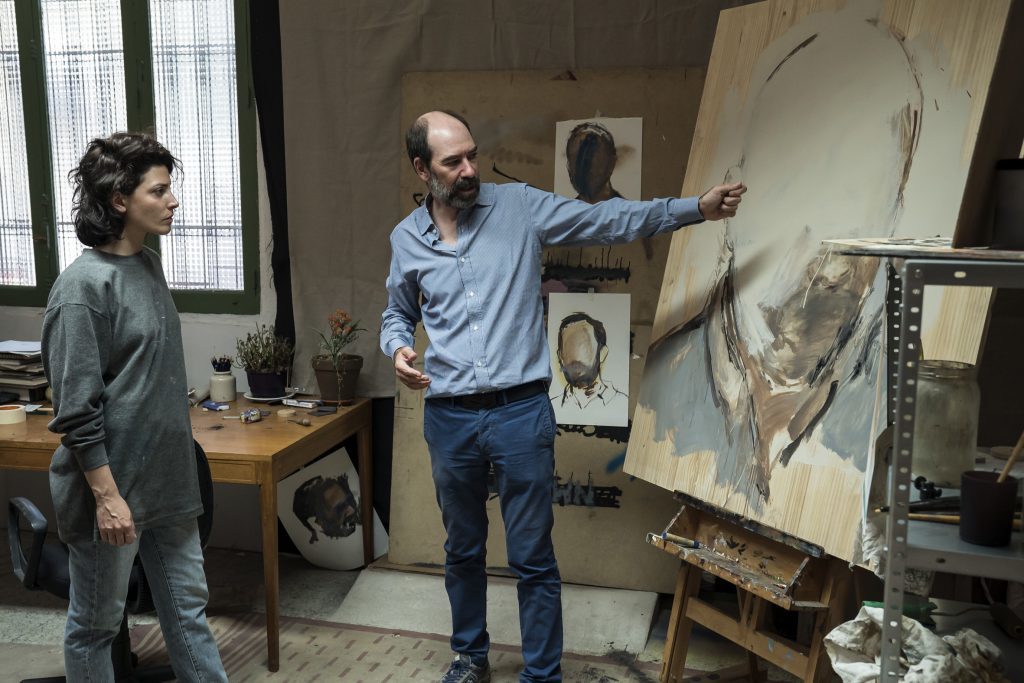
Petra is the film of an artist (played by Barbara Lennie) who seeks tutelage from a legend (played by Joan Botey) but gets more than what she bargained for.

Interesting how a lot of films I’ve seen at the VIFF are to do about deep dark secrets being exposed. Petra is one of those films that exposes some dark secrets.

The film is seven chapters starting with the second chapter. Petra is a young budding artist. She is arriving at the estate of a well-known artist named Jaume. Over at the place, we sense an unhappy vibe. The house consists of wife Marisa, son Lucas, housekeeper Teresa, her husband Juanjo and their son Pau. She is seeking artistic guidance from Jaume, but gets nothing but insults from her. That leads her disheartened with her own work. Jaume is actually a tyrant to everyone he works with. Lucas talks with Petra of a dark ‘confession’ and tries to advance to her, but she rejects.

In the third chapter, Jaume had just finished having sex with Teresa. He criticizes her for not enjoying the non-consentual sex and threatens to tell Pau. Teresa later commits suicide. At the funeral Lucas looks at his father with contempt. Moving to the first chapter, Petra’s mother is dying. She tells of an artist she loved. However she does not reveal it to be Jaume. She doesn’t want Petra to have Jaume in her life. In the fourth chapter, Petra confronts Jaume with reason to believe he is her father. She tells him of a letter her mother wrote years ago. Marisa later admits there has been infidelity in both their lives. Throughout their marriage, they both have had their share of various lovers.

In the sixth chapter, Jaume does admit to Petra that he is her father. Right as Petra is pregnant. He also tells that truth to Lucas. Lucas is infuriated. He tries to shoot Jaume but Jaume reminds him he doesn’t have what it takes. Instead Lucas shoots himself. In the fifth chapter, we learn that Petra and Lucas have become more than just friends. They even get romantic. In the seventh chapter, the people try to deal with their lives after the death of Lucas. Marisa confesses to Petra that Lucas is not Jaume’s son, but the son of an extramarital affair she had. Petra is infuriated and tells Marisa never to see her again. Jaume is seen conversing with Pau. Then as Jaume walks away, Pau shoots him dead. The film ends with Petra looking after her daughter and Marisa showing up as a meeting of goodwill. The film ends with them conversing together in a friendly manner.

The film is definitely one in which goes from something simple to being a film where dark truths are exposed. At first you think Petra is there to see Jaume to learn how to be a better artist. That would appear to be the case. However then it becomes clear that Petra is soon after a truth. A truth that could not just destroy Jaume, but those around him too. In time, a truth about Marisa is also exposed. Dark secrets come to the forefront and a lot of lives are destroyed because of it. You sometimes think there’s no way the film would end with anyone at peace, but somehow it does.

The unique thing about Petra is not just telling the story, but doing it in a non-chronological order . This may be a film of seven acts, but it begins with act two, continues with act three, but then leads into act one. There’s also the shift from act four to act six, and then leading back to act five. That shifting around of the acts works because the film presents itself in situations that has the viewer asking why the situation? Why the friction? It’s when it goes back to the recent past that we get the answers why. This playing around in time, just like it’s done in Pulp Fiction, works for telling the film’s story.

Also it’s unique how this film takes place in the world of art. I know I’ve seen a lot in terms of the freeness or even the foolishness of the way actors live out their love lives. It’s interesting seeing this about an adulterous artist whose wife is just as adulterous. It often leaves you wondering if they lived a strained marriage where they decided to stay together for the sake of Lucas? Or were they an open marriage? There are a lot of open marriages in the world of arts and entertainment. It makes you wonder.

Whatever the situation, the film sometimes seems it’s as much about Jaume as it is about Petra. Petra is a woman searching for the truth and relating to the people she meets along the way. However the film shows just how much of a monster Jaume is. I know that arrogance is common among artists and even berating behavior, but Jaume appears to be a person with no conscience. He berates the artists he works with and Petra’s work, he berates Lucas for being unable to break away from him, he lures his housekeeper in sexual temptation, and even appears at the end as if he doesn’t care about Lucas’ death. It’s no wonder after Jaume is shot to death, Petra and Marisa appear to be at peace as they meet. I think that was it about the film. Jaume was the tyrant in people’s lives and Petra would be that missing link that would free others.

This is the latest film from Spanish arthouse director Jaime Rosales. Rosales has developed a reputation over the years starting with his 2003 short film The Hours Of The Day which won the FIPRESCI Prize at Cannes, his 2007 feature Solitary Fragments which received a lot of critical renown, and 2014’s Beautiful Youth which was nominated for Un Certain Regard at Cannes. Here he directs a story he co-wrote with Michel Gatzambide and Clara Roquet. He places it in an artistic setting with a mostly quiet environment, but that doesn’t take away the intensity of the friction. Instead the quiet slow nature makes you feel the friction. Barbara Lennie does a very good job of playing the lead protagonist, but it’s Joan Botey playing the tyrant Jaume that steals the show. Both do an excellent job of managing their roles well.

Petra is a film that tells a story in a varying chronological order. However it does so to get us to the heart of the story in a surprising way.

World Cup 2018 Preview: Group B

The funny thing about World Cup draws is the surprises they end up having. The biggest surprise about Group B is how close the countries are to each other! As in 2014, Spain is in Group B. However their Iberian neighbors Portugal is in the same group! Their very first match of the Cup will be another episode in their Iberian rivalry and the first on the World Cup stage! Then there’s Morocco just underneath Spain. And Iran isn’t too many thousands of miles away. Actually I think Group B is the group with the least geographical separation! Here’s my take on the Group B teams:

Portugal Fixed

-Portugal (4): The 21st century has seen the coming of age of The Navigators. Their biggest breakthrough came at the 2016 Euro where they went from drawing all their games to claiming the Cup in the end. This will prove to be an exciting World Cup as many believe this will be Cristiano Ronaldo’s last chance to try to win the World Cup, as he will be 37 by the time Qatar 2022 comes around.

Portugal is more than just Cristiano Ronaldo. There’s striker Ricardo Quaresma, midfielder Joao Moutimho and star defensemen Pepe and Bruno Alves. Portugal looks consistent leading up to the Cup. They’ve had a good record since their Euro win. However they’ve had some notable losses like 3-0 to The Netherlands back in March and 3-2 against Sweden last year. They’ve also had some noteworthy draws such as 1-1 to the US and 2-2 to Tunisia. Portugal could just be able to come back to action here in Russia.

Spain Fixed

-Spain (8): Things have been a real struggle for La Roja after the 2014 World Cup. The most notable being ousted in the Round of 16 at Euro 2016. It bit Spain so badly, Vicente del Bosque was sacked as team coach. They now have a new coach: Julen Lopetegui. He comes off of coaching Spain’s youth teams and Portugal’s Porto team. The change of coaching has worked very well. Spain came on top of the World Cup qualifying group. Spain have also not lost a match since Euro 2016 and even had a spectacular 6-1 win against Argentina back in March. However Spain has had some noteworthy draws like a 3-3 draw to Russia and a 1-1 draw to Germany. Much of that is due to Spain’s set of strikers being young and lacking experience.

Leading to Russia 2018, Spain will be led by captain Sergio Ramos; one of four players on the team with more than 100 caps. Spain’s team consists of all but seven players who play for La Liga. Spain also has a lot of strong midfielders in Andres Iniesta, Sergio Busquets, and David Silva. Along with Ramos, Spain has Gerard Pique and Jordi Alba adding to their strong defense. 2018 can be another stellar year for Spain.

mo-lgflag

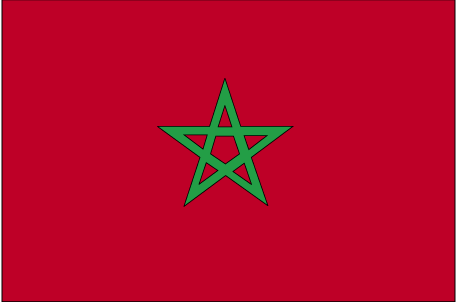
-Morocco (42): Nigeria may be most lauded African team but Morocco deserves some credit. They are the first African team to advance past the Group Stage; all the way back in 1986. This will be Morocco’s fourth World Cup and their first in 20 years. They were lackluster in play over the last two decades or they’d just pull a surprise and soon fade away during that time. That has changed since 2016 when they acquired French coach Herve Renard. Renard had coached Zambia to the 2012 African Nations Cup. Ever since Renard helped Morocco qualify for the World Cup, he’s signed with the team until 2022.

Morocco has had an impressive record these past two years. Despite losses like 2-1 to The Netherlands and 1-0 to Finland, they have scored notable wins like 2-1 against Serbia, 2-0 against the Ivory Coast and 3-1 against South Korea. Not too much is expected of Morocco with Spain and Portugal being favorites, but they could pull off an upset in Russia.

Iran

-Iran (36): This is Iran’s fifth World Cup. No doubt they’re hoping this will be their first where they make it past the group stage. Portuguese coach Carlos Queiroz has been kept on as manager of Iran since 2011. He’s the coach that has coached the most games involving the national team. Most of the team’s players play for Iran’s Persian Gulf Pro League and Greece’s Superleague. Iran’s victories in the last while have been mostly to Asian teams. However they have drawn 1-1 against Russia and South Korea sending the message that they are capable of more than what most expect. Russia 2018 could just be their moment.

And there’s my look at the teams of Group B. As for who will advance to the Round of 16, I’m going to go with my best hunches and declare Spain and Portugal. However either Morocco or Iran could pull off a surprise.

STADIUM SPOTLIGHT

Two ore stadiums added to the mix. Both will host four matches, all in the Group Stage. And both with host a Group Stage match for Group B. So without further ado:

-KALININGRAD: Kaliningrad Stadium

kaliningrad stadium

Year Opened: 2018

World Cup Capacity: 35,212

World Cup Groups Hosting: B, D, E, G

Kaliningrad Stadium is known for its unique location. It’s in the city of Kaliningrad which is part of the tiny Kaliningrad Oblast: a Russian Oblast bordered by Poland and Lithuania and situated over 400 miles west of the Russian mainland! It’s location at the Baltic Sea explains why Kaliningrad Stadium is also nicknamed Arena Baltika.

This new stadium wasn’t cheap. It came at a cost of € 257 million and had lost its original developer when it filed for bankruptcy in 2014. The stadium is located on Oktyabrsky Island and is expected to reduce its capacity to 25,000 after the World Cup. After the World Cup, the Stadium will serve as the host stadium for team FC Baltika Kaliningrad.

-SARANSK: Mordovia Arena

Mordovia

Year Opened: 2018

World Cup Capacity: 44,442

World Cup Groups Hosting: B, C, G, H

Like Kaliningrad Stadium, Mordovia Arena will also be practically fresh for the World Cup. However this World Cup Stadium is more about its design. The design is based on the image of the sun, the main symbol of ancient myths and legends of the Mordovian people. The stadium is situated around the Insar River and is part of a big land development for the city of Saransk. Part of the development includes a new residential neighborhood, a new park, and a space for recreation, public festivities and leisure activities.

The stadium has hotels, fan zones and attractions located within walking distance. After the World Cup, the stadium is expected to reduce its capacity after the World Cup to 28,000 and will serve as the host venue for team FC Mordovia Saransk. The stadium will also be turned into the largest sports, cultural and leisure center in Saransk and Mordovia.

So there you have it. Another Group Stage group summary and two more stadiums in the spotlight. More World Cup reviews coming.

VIFF 2017 Review: Summer 1993 (Estiu 1993)

Summer 1993
Summer 1993 is an autobiographical story of young Frida (played by Laia Artigas) trying to adjust to her new family after being recently orphaned.

Summer 1993 is a unique Spanish film for its depiction of childhood. It’s also a unique story about a girl that’s semi-autobiographical.

The story begins with a young six year-old girl named Frida who’s recently orphaned. She has lost both her parents to AIDS with her mother dying in the summer of 1993. The whole family including the mother is hugely concerned for Frida’s well-being. Her mother’s brother Esteve agrees to take care of her. Frida is taken to their mountainside pueblo in the Catalan Pyrenees to like with him, his wife Marga and 3 year-old daughter Anna.

It’s taking a long time for Frida to get adjusted to her new surroundings. She feels like a misfit in the town and very rarely socializes with anyone else. On top of it, she feels uncomfortable around the chickens. AIDS isn’t spoken around her and her family. When in conversation, they simply refer to it as ‘that illness.’ It does become apparent what ‘that illness’ is when Frida cuts herself and her family panics.

She also misses her mother, but doesn’t know how to grieve about it. Every day, she goes to the tiny grotto near the farm and prays to her mother. There’s even a time she places a pack of cigarettes to her mother by the Madonna. That’s the best way Frida knows how to grieve.

Over time, Frida appears to be developing a friendship to Anna; possibly even a sisterhood. It would become apparent Frida’s acting out when she plays a game with Anna in the woods only to leave Anna behind. Anna is found, but with a broken arm. The family is infuriated with the way Frida is acting, feeling she has no morals. Unknown to Esteve and Marga, Frida hears it all. Frida starts feeling like she’s unloved and decides the thing to do is to run away. It’s there as the family comes to search for her that Frida is reminded that she is loved. It becomes a turning point for her as she now feels like an accepted person at home and in the community.

This isn’t your typical film from Spain. Usually most fans of ‘arthouse’ film think of Pedro Almodovar when the word Spanish film comes to mind. Here, Carla Simon is not aiming to be the artist Pedro Almodovar is reputed to be. This film is actually autobiographical of Simon. She herself lost her mother to AIDS in the summer of 1993. Her father died some time before. The summer of 1993 was the first summer she spent with her new family. Basically Simon wanted to send a message with this film: “With the movie, I wanted to express the fact that children can suffer a thing so cruel but they are still able to understand death. That we have to talk to them about death, because a six year-old child can understand. The question/thing/issue is how they manage their feelings. We talk also about children’s ability to adapt, how they can survive and keep going, and the fact that children are more able than adults.

It wasn’t mentioned whether Frida’s actions in the film mirrored Carla’s actions in real life. However Frida did exhibit a lot of common behavior traits common in children that have lost a parent at their young ages. The film shows how Frida goes from being a child who exhibits behavior relatives don’t know what to make of to soon belonging to a family and even grieving at the end.

Carla Simon directs and co-writes with Valentina Viso a story that’s intriguing, but also very natural and without overdoing the drama. It plays the events out as they come without trying to grab hold of attention. All the better for it. On top of it, the story is shown through the child’s point of view, which makes it that more autobiographical. Young Laia Atrigas does a very good job of playing Frida. She does a no-nonsense job of playing a six-year old girl and doesn’t try to be cutesy. She just does what she needs to do. The adult actors in the film, especially David Verdaguer and Bruna Cusi, also do a very good job in their parts as the concerned but confused foster parents. The film is set very well in its Catalan settings with scenes in both the pueblo and in the Catalan village. The film gives the feel of being in Catalonia. The film also included something noteworthy of the time as we see Frida wearing a T-shirt with Cobi: the mascot of the 1992 Summer Olympics from Barcelona.

A bit of trivia. Summer 1993 is Spain’s entry this year in the Academy Award category for Best Foreign language Film. It is the second film in the Catalan language to be submitted as Spain’s entry in that category. The first ever is Black Bread.

Summer 1993 is a story about a young girl’s change of surroundings and how she responds to it. It’s autobiographical depiction works well as it plays out in a no-nonsense fashion. The better for it.

WORK CITED: Zorita, Kristina. “Interview With Director Carla Simon” European Women’s Audiovisual Network. 6 March 2017<http://www.ewawomen.com/en/events/interview-with-director-carla-simon.html>

Oscars 2016 Shorts Reviews: Animation and Live-Action

Cinema

I’m lucky to be living in Vancouver. It’s one of the few cities one can be able to see the nominated shorts in a big-screen theatre. Gives me a chance to review them myself and even make a should-win pick for myself. This year is quite an array of nominees in both animation and live-action. So without further ado, here are my thoughts on the nominated shorts:

ANIMATED:

-Blind Vaysha (Canada/France): dir. Theodore Ushev- This is a unique 2D animation story of a Bulgarian folk-tale. A story of a girl with one eye that can see the past and one eye that can see the future and cannot live in the present. The story also shows the attempts of others to fix Vaysha’s blindness. The linocut-style animation, however, was unique and had a lot of style and flare to it.

The story doesn’t really end. Instead the film ends asking the audience their perspective. It has a unique narrative point and I get why it’s done that way, but I often wonder if the film ended on the right note.

-Borrowed Time (USA): dirs. Andrew Coats and Lou Hamou-Lhadj – At first you’ll think this is a family-friendly story at the beginning but soon learn it’s not such as you move on. It’s a dark Western story of a man returning to the spot of a family tragedy from his childhood. The hurt comes back from it and he decides to do something drastic but something happens.

I have to admire Pixar animators Coats and Hamou-Lhadj for making a brief departure from their traditional family fare and doing something more mature under Quorum Films. No, it’s not R-rated like Pear Cider And Cigarettes but it’s dark enough to be adult. I think this short is most likely to upset my pick for the winner.

-Pear Cider and Cigarettes (Canada): dirs. Robert Valley and Cara Speller- Now this is a refreshing R-rated alternative. It sometimes reminds you of a Grand Theft Auto video game or the film Waltz With Bashir. However it is a personal story from director Valley. It’s a story that makes you wonder how far would you go for a friend? Especially if that friend is selfish, conniving, irresponsible and manipulative?

It’s a story that entertains and charms and even gets you to hate Techno too. Sometimes I wonder why was he friends with that jerk? I don’t know if it’s because it was set in Vancouver or because it was an R-rated alternative but it won me over and I make it my Should Win pick.

-Pearl (USA): dir. Patrick Osborne- This is the first VR short to be nominated for an Academy Award. A musician and his daughter travel in a hatchback with a song as a bond between the two. We see the two age, the daughter mature into a musician of her own and have her own version of the song. The viewer gets a 360 degree view of the whole 5-minute story.

Looks like something Richard Linklater would do. Actually it might remind you of Waking Life. An excellent short that’s entertaining and will touch you too. Might even make you go to iTunes and download No Wrong Way Home.

-Piper (USA): dirs. Alan Barillaro and Marc Sondheimer- This is the short shown before Finding Dory. A baby bird looking for food on the beach with her mother looking on and guiding her. Pixar does it again by delivering a clever, charming, and entertaining short with the dialogue absent and the animation as detailed to a tee as it gets. It’s excellent, but it’s something we’ve come to expect from Pixar even with their shorts. Nevertheless this is my Will Win prediction.

And those are my thoughts for the Animated Shorts up for the Oscar. A lot of styles of animation between Canadian and American companies. All five were very entertaining. We’ll see who wins.

LIVE-ACTION SHORT FILMS

This year there are no films with English as the language of the majority. All five are from European countries. Here’s the rundown:

-Ennemis interieurs (France): dir. Selim Azzazi – A man from Algeria seeks to be a French citizen but the interrogator at immigration has big questions for him about meeting with a group of Algerian men back some years ago which led to him being arrested and imprisoned for two years. The interrogator keeps insisting he answers but he’s very reluctant to do so. Even to the point of neglecting his chances of French Citizenship. Why? What will make the man give his answers?

It’s a story that appears boring at first but grows with intrigue with each minute and with each new detail. The interest builds over time. It even makes you wonder why is he withholding the names of the other men? Feelings of brotherhood? Fear of retaliation from them? Also this may be about an incident in the past but it’s very relevant, especially with the Paris bombings happening in November 2015. This is my Will Win pick.

-La Femme et le TGV (Switzerland): dirs. Timo von Gunten and Giacun Caduff – Elise is a woman who wave her Swiss flag at the passing TGV train to Zurich every time it passes her house at 6 in the morning and 6 in the evening . After that she bicycles to her job at the town patisserie. It’s her daily routine for 30 years; a routine she doesn’t want to change. One day, she comes across a letter that was thrown to her by a man who goes on that daily TGV. He’s a man from France looking for work. The two develop a friendship only by mail and packages. Over time she hopes to meet this man. Then one day the train stops coming. It’s changed route? How will she deal with the change? Will she ever see the man?

It’s a charming comedy that has you engaged with the character (based on a person who has existed and did wave her Swiss flag at passing TGV trains). Gets you thinking about the woman. Is she an eccentric? Is she naive? Lonely? Unpredictable ending but a happy one.

-Silent Nights (Denmark): dirs. Aske Bang and Kim Magnusson – Inger is a young Danish woman who helps at the Salvation Army during the day and looks after her ailing mother at night. Kwame is a Ghanian immigrant who came to Denmark for a better future and to support his wife and children at home. However he’s been left homeless and makes money from recycling.

They both meet as Kwame agrees to help. The two develop a mutual friendship and even progress into something more. However it’s put to the test when Kwame steals money from the charity to pay for his daughter’s malaria treatments. Even though Kwame is banned for life, Inger forgives him and still loves him. Then Inger’s mother dies and she learns about Kwame’s family in Ghana just as she learns she is pregnant. It’s over between the two. However Inger sees Kwame one last time where she gives him advice, and something else.

It’s obvious that this story is about the immigrant situation in Denmark and the difficultly of the times for all. It presents both Inger’s side and Kwame’s side. However it’s more. It’s about a love that’s true. Inger loves Kwame so much, she’s willing to forgive him for all the terrible things he did. It makes the choice she makes for her and her baby look like the right thing. This is my Should Win pick.

-Sing (Hungary) dirs. Kristof Deak and Anna Udvardy – Zsofi is the new girl at a school. She most looks forward to singing in the choir. However on her first rehearsal, the instructor talks of a choir competition where the prize is a performance in Sweden. She also tells Zsofi her voice is not ready for the choir and tells her to lip sync. Along the way, Zsofi finds a friend in star singer Liza. The two become good friends. However Liza notices Zsofi not singing but others. When she brings this up with the instructor, she not only admits it but tries to convince the children it’s the right thing for the competition. All of which leads to a surprise ending and the ending you think is right.

Often I question what the point of this film is. Is it about competitiveness to the point the ‘lesser’ singers are not allowed to sing for the sake of the big prize? Or is it a reminder of Hungary’s past communist regime; of how those that fit in are allowed to and those that don’t aren’t, but make like everything’s okay?  Even the choir director could remind you of a communist dictator on retrospect. Whatever the point, the story was entertaining and sweet. Reminds you of the joys of childhood and the right thing paying off in the end.

-Timecode (Spain) dir. Juanjo Gimenez – It starts as a check for a woman on a security job during the day. One day she learns of a broken car light. Upon viewing the video of what happened, she sees the worker before her dancing before hitting the car. She decides to give him a dancing video of her own. Video after video follows. Then on their last day, magic happens.

At first you think the man is something eccentric but this story builds into something that ends on a bizarre note. A very good film.

And there are my thoughts on this year’s nominated shorts. Now remember both categories are the hardest to predict the winner. For example, last year the consensus of critics ranked Stutterer the least likely to win Best Live Action Short and it won. Even Annie wins for Piper and Pear Cider and Cigarettes are not a guarantee that either will win.

With my shorts predictions out of the way, I just have my main predictions for all the categories to deliver. But not before my last Best Picture summary. Coming up tomorrow morning.


VIFF 2016 Shorts Segment: Teen Trouble

Cinema

One thing about the VIFF is that you will have the opportunity to see shorts films whether it be a short shown before a feature or a segment of shorts assembled together. They pack a lot of entertainment value for something brief in length. The first shorts segment I was lucky to see was Teen Trouble. It consisted of seven different shorts situated in seven different countries all with a teen-related subject and boy were they entertaining:

-I Love Anna (Finland)- 12 year-old Finnish boy Santeri has always had a crush on Anna: the local farm girl. Anna likes Santeri too. One night Anna’s parents are away and she has to look after her little sister. This could be Santeri’s chance to take it to new levels.

The quality of this short is that it takes you into the excitement of the moment as it progresses without any added music score. It adds to the excitement of the moment. Another added quality is it will remind you of when you fell in love for the first time or even of your own sexual curiosities when you were that age.

-Fabrizio’s Initiation (Argentina)- Sexual feelings many years later. Only Fabrizio is now a 15 year-old Argentinian boy who has been in a relationship with Nadia for over a year. Their chances of doing it for the first time are constantly interrupted. However Fabrizio’s friends derive a plan to make it work by conniving the village elder into giving them his car and fixing it up for the moment. Will this finally be it? The film ends with a surprise in more ways than one.

This is a humorous short about the constant pressure of losing your virginity for the right moment and trying to make it right. Hey, it’s not always prom night! It also will remind you of your own teenage love and of all the stuff you tried to do behind your parents’ back.

-The Law Of Moments (UK)- The lessons of Isaac Newton younger sister Mal studies from physics class play into this drama. Mal and Lucy are teen sisters who lost their closeness as older sister Lucy got involved with partying. It’s been of concern to Mal as she sees Lucy and her mother constantly fighting. One night, Mal goes to the farm to see what kind of crowd she’s hanging with. It’s not pleasant at all. Mal goes to help Lucy only for things to end not as it should.

Here we go from comedy to drama. This is a good story that shows the end at the beginning and how it came to be. The addition of Mal’s physics lesson as well as her childhood memory of her and Lucy on the see saw add style to the story line. Very creative.

-Three Minute Warning (UK/Palestine)- This possibly the darkest short of the segment. Palestinian teen girl Miriam has to look after her mother who has a leg problem. It’s a daily thing which includes cooking for her mother and even assisting her to the bathroom and it robs her of the carefree life most teenage girls have. One night a warning bomb– a bomb sent three minutes before the real bomb is to hit its target– hits their apartment. Miriam has to help her mother make the escape while all the others leave them behind. It’s hopeless and it sets up for the heartbreaking ending.

No doubt Palestinian director Iqbal Mohammed has something to say in this short. It was very well-told and will leave you infuriated with the political situation in the Middle East today.

-On The Roof (Spain)- Five Barcelona teen boys love to go to the top of their apartment balcony to spy on sunbathing women during the summer. Bonus points if they’re topless. One day they go to check out a topless sunbather. One boy, Adrian, spots a naked man showering. He also learns something of himself he never knew. One of Adrian’s friends senses his attraction and reacts with hostility. He even senses it on the youngest of the friends and pressures the young boy to take a photo of the bather standing on the top ledge. Adrian stops and volunteers to do it. The end comes with a surprising result but nothing dreadful.

This short focuses on a teen boy’s discovery of his same-sex attraction which catches him by surprise and causes hostility among one of his friends. The short also focuses on teen male machismo which naturally approaches same-sex attraction with hostile discomfort. A reminder of some of the difficulties gay teens go through.

-Winds Of Furnace (Mexico)- A young Mexican teen boy faces a daily responsibility of looking after his grandmother. One day, two of his friends come to his house with a van they stole. The three go out to have fun in their neighborhood. However you know something will go wrong when they take a body found in the van and dispose of it. It’s the case as a van driven by a cartel crosses their paths and shoots one of the friends. This leads to a vicious chase where the boy fires a gun at the cartel. The ending ends with you thinking this is what’s meant to be.

This short didn’t have its subtitles on at the time so it was hard to make sense. However it was a good story of peer pressure taken to the extreme with the potential for dangerous consequences. The heat of the moment left you wondering if he would be killed by the end. I’m sure a lot of boys in Mexico have gone through this temptation. It’s good to see he was possibly the one who didn’t get killed.

-Aeris (Canada)- A young rising teen snowboarder is seen as a possible future great in the sport. However, the 19 year-old suffers a broken leg during competition requiring plates, screws and months of healing. Months later, she goes snowboarding with her friends to see if she still has it and to get her competitive drive back. This proves difficult as she encounters fans on the mountain and even the fear of her broken leg returning if she tries another jump.

This may be the least heavy short of the seven but it does feature a pressure: a personal pressure young rising phenoms in sport know all too well. It makes for a good snowboarding story. It even gets you fearing for her as well as she questions whether to make that big jump.

In summary, all seven shorts were very good and had a lot to say about teen life in the humorous moments, the tense moments and even tragic moments. All definitely gave an image of what it’s like to be young.

Teen Trouble was an impressive selection of shorts. Anyone can be entertained by something in the selection.


UEFA Euro 2016: Group D Focus

Euro Logos

Wow! Euro 2016 is not even a week away. Fast notes about the ten stadiums staging the Euro. Six were venues of the 1998 World Cup. The other four are new stadiums that opened anywhere from back this January to four years ago. Glad to see this Euro isn’t that big of an expense. Although five of the ‘older’ stadiums did need upgrades for this event. Anyways here’s my look at the Group D teams:

TurkeyTurkey (13): Turkey is a team known for its infrequent successes. It has competed in three Euros and two World Cups. It finished third in the 2002 World Cup–its first World Cup since 1954– and hasn’t qualified since. Turkey didn’t qualify for the 2004 Euro but finished in the semis in 2008 and didn’t qualify for 2012. Turkey’s back now. All but six players play for Turkey’s Super Lig, three play for German teams and captain Arda Turan plays for Barcelona. The team has done very well in play the past year and a half including wins against the Netherlands, Czech Republic and Sweden. Their only loss came to England two weeks ago and the score was 2-1. Turkey is one team that shouldn’t be underestimated.

Croatia ficedCroatia (23): Croatia has a reputation of being world class ‘minnows’ that will surprise you when you least expect it. However Vatreni has struggled to regain their strong reputation they had back in the late 1990’s. In fact the team’s play has been mostly quiet news. However they still should not be underestimated. They may have lacked a standout moment for the team in recent major tournaments but they’ve continued to exhibit consistent play. They may lack a standout superstar but they function excellently as a team unit. Since World Cup 2014, they’ve regained the consistency they’re known for. They’ve had wins against Russia, Israel, Norway and Bulgaria and have even drawn against Italy. The team has only had two losses in that time: against Argentina and Norway. In this group, their toughest opposition will be Spain as they’ve only won against them once in the last 25 years. In that same time, they’ve never lost to Turkey and the Czechs. Euro 2016 is another time for the team to prove themselves once again.

Spain FixedSpain (6): We’ve talked about England trying to recover from its 2014 World Cup embarrassment. England’s not alone. Spain entered the Cup as the reigning holders only to lose their first two Group games which meant their elimination as Group play concluded. Like England, La Roja didn’t drop their coach: Vicente Del Bosque. Their road to redemption did have a struggle for the remainder of 2014 as they lost three of their six 2014 games after the Cup. Spain did have challenges bringing in new players who aren’t as well seasoned as their veterans still on the team. However Spain were very good in qualifying for the Euro and their only loss in 2015 came to the Netherlands. This past week they scored big wins against Bosnia (3-1) and South Korea (6-1). No doubt they will be coming to France with something to prove.

Czech Republic fixedCzech Republic(29): The Czechs are an enigma in football. Since the divorce of Czechoslovakia in 1992, the team has qualified for every Euro even being finalists in 1996 and semifinalists in 2004. However they’ve only qualified for one World Cup: back in 2006 and they were out in Group Stage. Their play since the 2014 World Cup has also been enigmatic. They’ve lost to the United States, Slovakia, Iceland, Turkey, Poland and Scotland. However they’ve also won against Iceland, the Netherlands, Serbia and Russia. France will be another chance for the team to prove themselves.

Prediction: This is a tough one because both teams have a lot of strengths but they also have a lot of very noticeable weak spots. You could call this a ‘group of death.’ I predict Spain to top it with Croatia second and Turkey third.

And there are my thoughts for Group D. Next up my review of Group E.

UPDATE:

Here are my reviews of other groups: