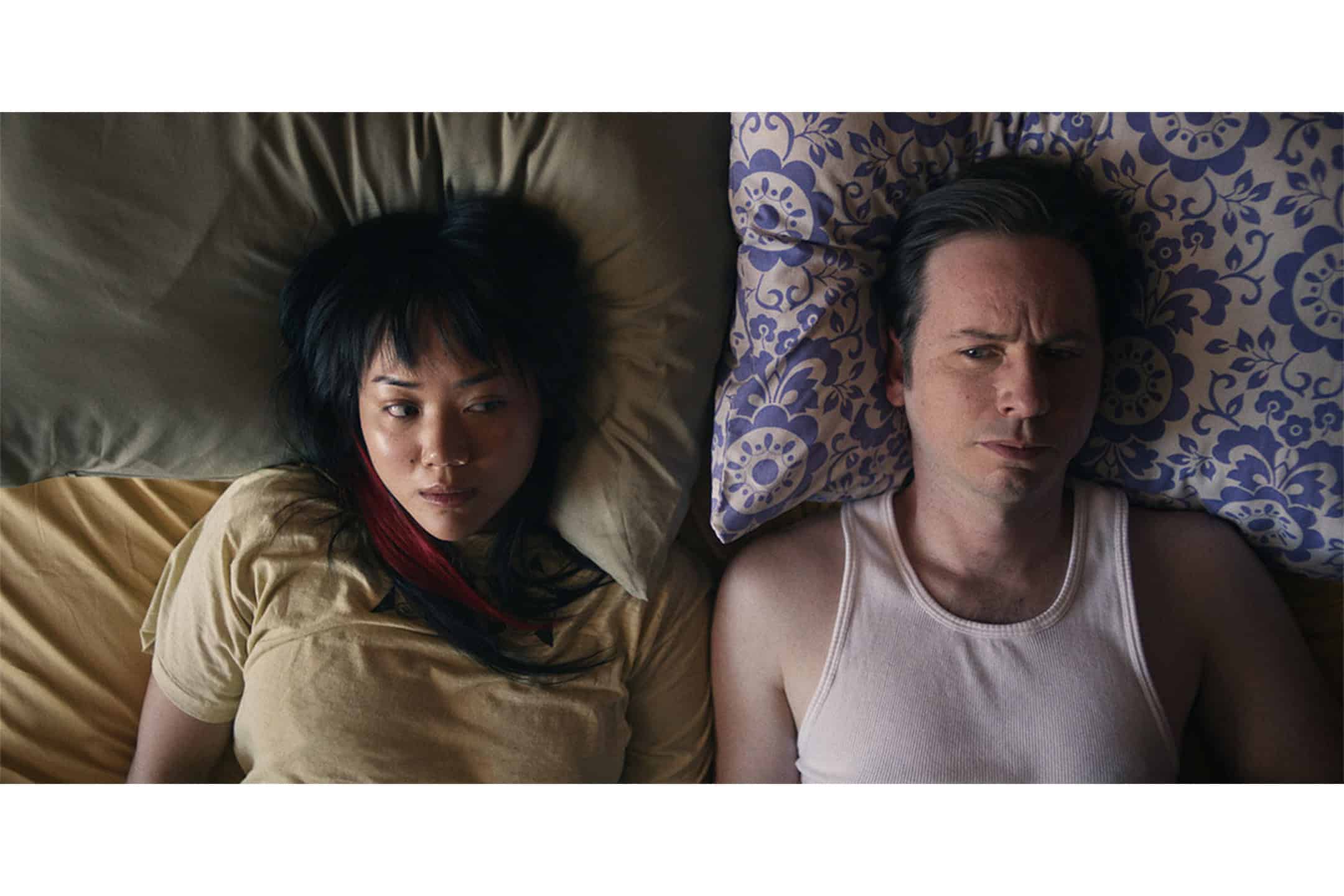
VIFF 2024 Review: Paying For It

Emily Le and Dan Beirne play a couple who try open love and go in unorthodox directions in the oddball romance Paying For It.

I first took an interest to Paying For It knowing it’s directed by Sook-Yin Lee. I had no clue of what to expect. Boy was I in for a surprise!

Chester Brown and Sonny Lee are a Toronto couple in a tough situation. They’ve had a romantic relationship together for years and do a lot together, but they haven’t had sex in a long time. Both Chester and Sonny come from two different worlds in the arts. Sonny is a video jockey on the music channel Max Music and Chester is an illustrator/author of cartoon books that detail his personal life. Sonny has a few friends at her place of work while Chester frequently meets with his work colleagues from the same writing community and has a close friendship bond with them. Sonny has a lot of success but Chester is struggling to make a name for himself. Chester is quite introverted and keeps to his circle while Sonny’s not afraid to meet new people.

Sonny recommends they try open love. Maybe they were or weren’t meant for each other and maybe they need time away to figure it out. Sonny being famous on national television has no problem finding other men. Chester on the other hand struggles. His author friends warn him jealousy will sink in pretty soon. Chester does become frustrated how Sonny is able to find many a nightly partner. It even reflects in his illustrations. Chester tries an unorthodox route advised from one of his writer friends: prostitutes. Besides, he’s given up on romantic love.

Over time, both find a lot of pleasure from what they get into but they struggle to find the one. Every other man Sonny hitches up with, he’s a great passionate lover but they’re not as fun as Chester and they don’t relate to her as well. Also at work, she learns one of her female colleagues is attracted to her. Meanwhile each prostitute and escort Chester gets involved with involves something complicating or some kind of discomfort. Many are willing to give Chester what he wants that night but most of them completely back off of any commitment. Some even have demands of their own. Despite it all, Chester is finding a quality in this he feels is missing in monogamy.

Simultaneously, both have difficulties and challenges at their own jobs. Sonny had no problem being a VJ while the alternative rock wave of the 90’s was riding high, but the wave has become a ripple and in came the tsunami of boy bands and other teenpop acts Sonny does not like introducing at all. Over time, Chester and his friends question about what’s going on with his many hook-ups and it affects the art for his latest literature. Especially since Chester hasn’t found ‘the one’ and it’s frustrating for him.

Then things change over time. Chester’s writing career and the careers of his writer-colleagues get a boost. Chester also spends the night with an escort who’s her own madam and it changes his life. Sonny, on the other hand, won’t be silent about the frustration with her job and her life, even on live TV. That eventually leads her to be dropped form Max Music. The two eventually reunite during a tragic moment. The death of her dog. It’s as they mourn together they learn they had something so special, no new love of theirs can replace that, even though they have to move on.

The film is about this complicated thing called love. I’m sure a lot of you look at the situation in your relationships and find yourselves asking why can’t we just love? Why do we have to make it complicated? This film itself is about that human fallibility of making love more complicated than it should. In this case, it’s not just creating the freedom of an open relationship but also the types of people both of them date during that time. Then there’s the mix of the two professions that are similar that they’re both in art or entertainment, but very different. Then there’s the talking with friends. The people they most trust to confide into and divulge their personal feelings. Then there are the changes in their lives. Then there are human idiocies and their attitudes. All that is what makes love more complicated than it should be.

Basically this is a story about a relationship that was doomed to end. Chester and Sonny are close, but complicated. The expired birth control should send that message. Eventually Chester and Sonny grew as different people and learned in the end, they were best as friends. Chester may have found a new love with an escort who’s her own madam but his relationship with Sonny made clear he’ll never have a closeness with another that’s the same. Sonny may have found men that were better at making love, but she learned they all made lousy partners. It was Chester who had no problem with her squirt gun or her dog or any of her other oddities. The ending gave a message I have seen often enough where two in a relationship couldn’t succeed as a couple but they could succeed as soul mates.

The film does give a lot of humor and in a lot of ways is somewhat biographical of both Brown and Lee. For those that remember MuchMusic during the 80’s and 90’s, you will remember Sook-Yin Lee as one of the VJ’s in the 1990’s. Yep, Canadian Generation Xer’s like me and early Millennials will have fond memories of her. Those of us who remember her from that and see the film will see the humor in how what’s happening in the film mirrors her own life and will laugh at the humor involved. Those who have read the book Paying For It will know that Brown and Lee were romantically linked and it detailed the complications. The film does some changes with the dates as it has the film taking place as Sonny’s career is bustling while Brown’s is struggling. In real life, Brown started his relationship with Sook-Yin in 1992, before she was signed onto MuchMusic and the relationship ended in 1996 just shortly as Sook-Yin’s MuchMusic fame took off.

This is a great alternative comedy from director Sook Yin-Lee. It is a very personal story to her and she’s able to show the comedy in it in this story she co-wrote with writer Joanne Sarazen. She’s also able to make some of the changes in chronology work for the flow of the film. There were some elements of shock in the film, but the story and settings made the shock humor work. Emily Le is great as Sonny Lee. She’s great at doing the comically side of the story as well as some of the more serious moments. She may not be Sook-Yin’s twin as far as personality goes but she knows how to do it well. Dan Beirne was also great as Chester Brown. I myself never knew Chester or read his works so I’m judging his performance for how well Dan did his role. Beirne was very good at playing an introvert engaging in a sexual activity most introverts wouldn’t normally try and it changes him. His awkward traits made the character and the story. The addition of the other supporting characters like Chester’s writer friends or Sonny’s ‘other men’ also added to the storytelling and the comedy of the film.

Paying For It isn’t just a sex comedy full of sex humor and some shock humor. It’s also quite a smart comedy about a couple that could no longer be but have a special bond. It’s even a comedy that tells about our own idiocies when it comes to love.
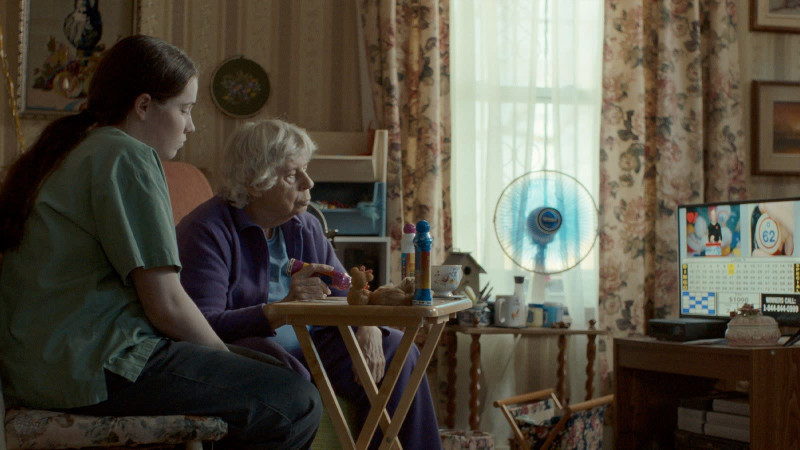
VIFF 2024 Review: There, There

A young home-care nurse (played by Katie Mattattall) and her elderly patient (played by Marlene Jewell) form an unlikely friendship in There, There.

One thing at the VIFF is that it’s known for showcasing works from various filmmakers from Canada. There, There is the latest film from Nova Scotia director Heather Brown. It tells of an unlikely friendship of two people.

Ruth is an elderly woman living in her small Halifax home. She is doing the best she can to live her life but she is limited in both her physical ability and her mental ability. She does get home care from a young nurse named Shannon. Shannon helps with Ruth through her daily life and even helps her with playing television bingo and getting bread crumbs for Ruth to mix seeds and feed birds. Feeding birds is a favorite past-time of Ruth. Shannon is roommates with her best friend who is a social media influencer. Sometimes Shannon helps with her videos.

Soon, we learn both women are going through difficulties in their lives. For Ruth, her memory has been declining. She sees a doctor concerned she may be developing dementia. She also notices her house has been getting more insects. She buys bug spray from her local store and tapes dead bugs on paper to show the doctor. She fears the bugs are entering her body. She experiences incontinence one day. As for people in her life, Shannon is the only one who visits and the storekeeper appears to be the only other person who talks to her.

As for Shannon, she’s pregnant. Her boyfriend, who has goals of being a race car driver, has abandoned her. Even blocking her communication from social media messages. Despite that, she’s looking to get her boyfriend to face up. She even goes to the racetrack to no avail. She searches for a lawyer to take him to court once the baby is born. Meanwhile her best friend seems to be more focused on social media than on their friendship.

For a while, the two are able to find the time they need to relax. Ruth is able to make her way to the parks or the street areas where she’s able to feed the birds. Despite her pregnancy, Shannon is able to find time for a night out. The two are also helpful to each other in their own ways. There was one time when Shannon was in tears while nursing and Ruth gives her comfort. Shannon also gave Ruth her phone number in case any problems. Then almost simultaneously, everything changed. Ruth found herself stuck in an unknown place and lost in the night. Around that same time, Shannon goes into labor.

Also simultaneously, both women experience the changes in their lives. Ruth is unfit to live alone anymore. Her dementia has gotten so bad, she now has to be in a nursing home. Shannon has given birth to her daughter. For a period of time, the place she lives in becomes a place for three. Both women also learn the new changes in their lives cause them problems. Ruth may get fed, bathed and included in activities of vitality, but she can’t go out of her nursing home to feed the birds like she used to. The doors are securely locked so none of their residents can leave unassisted. As for other belongings, most of hers are now gone and she relies on donations. One donation bag, she finds a baby doll she keeps. For Shannon, her friend moves out of the place because she finds living with someone else’s baby a discomfort for her life. Shannon is still trying to pursue her boyfriend. One time, she goes to a car wash after spotting him in hopes of confronting him and showing him his child.

One day, a ray of hope. Shannon pays a visit to Ruth at the nursing home. They watch a show together. Shannon brought some bread crumbs and is able to take Ruth out to a park to feed the birds. During the visit, Ruth claims no one has visited her in years. Shannon lets her know she’ll be there. The film ends in a quiet moment with both women at their place of rest and symbolizing how they both share a bond.

This is a film of two types of women who would be seen as getting the short ends of the stick. We have a lonely elderly woman in the last years of her life concerned for her physical and mental well-being, but still trying to life as vital of a life she can. We also have a young woman who’s pregnant sooner than she hoped through a boyfriend that ended up to be irresponsible. In what should be a carefree time in her life, she faces a lot of pressures and frustrations and it’s slowly becoming a discomfort for her roommate. I’m sure you may know a woman in either of these situations. Although it’s a case where they are normally supposed to be associated with each other just as nurse and patient, it becomes a lot more over time. Just as the sudden changes happen for both of them, they reunite and it becomes obvious they have a bond between them. The story becomes a case of two lonely Halifax women of different backgrounds finding a type of unity with each other. It’s as much heartwarming as it is heartbreaking.

Some people may dismiss this as a boring film. It’s important to know when you go to a film not knowing what it’s about or just going to a film because it’s available for you to see, you should welcome what you see and judge once it’s over. From how I’ve seen it, this is a story of two women of two backgrounds that are quite common in our society. The story moves slowly but each scene tells a lot of what the two women are dealing with and how they live their lives at any given point of time. For those that have seen this film, you will notice many scenes where there is no dialogue. It’s likely the scenes were meant to do its own storytelling by imagery instead of words. With each scene without dialogue, it does a very good job of telling its story and creating the scene. The film’s mix of using scenes of dialogue and scenes of wordless imagery help in telling the stories of both women, their separate lives and their unique bond.

It’s been said by many that films should not answer everything about the story. It should have the audience asking questions or forming their answers. What the film shows presents a lot. What the film doesn’t show also presents a lot too. After seeing the film, it did leave me with a lot of questions about both Ruth and Shannon. For Ruth, it had me wondering about her past life. It left me wondering was she ever married? Does she have any family of her own, like surviving siblings, nieces or nephews? How come it’s only Shannon and the storekeeper that treat her like she exists? For Shannon, it leaves me wondering about her present and her future. Will she raise her daughter well? What about her own family? Does she not keep in contact with them? Also will she get her boyfriend to face the music? He owes her and the child. This film is very good in getting me to ask a lot of questions.

As is, this is a very good film by Nova Scotia director Heather Young. This is her fourth film and second feature. She presents a good story of two women who would be overlooked in our society but form a bond not just by one being dependent on the other but sharing a closeness that words don’t need to make present. It’s by the actions, by the moments together and even by the time alone. Young also does a smart job of choosing to have non-actors play the two main roles. Having non-actors helped with the performances here. The performance from Marlene Jewell of the elderly Ruth is very good and very believable. A retired nurse herself, she is probably very familiar with women in this type of setting or situation. She plays the part very believably. Katie Mattatall is also excellent in her role as Shannon. I don’t know of her own life but she played the frustrations of a young abandoned pregnant woman very well and very believably. She makes you feel Shannon’s situation.

There, There is a unique story about two different women who develop a special bond. It’s also a story that tells more in its images than its dialogue. That’s the most unique element of the film.

VIFF 2024 Shorts Segment Review: Forum 3

Once again, I achieved a VIFF goal when I attended Short Forum 3. This forum of eight shorts is more international and has a wide variety of styles and subject matter.

Jane’s In The Freezer (USA – dir: Caleb Joye): It’s a quiet day at the pier at the lake in Detroit. A woman who’s just gazing tried to develop conversation. Her name is Jane. The conversation doesn’t last long. She goes to the mall. At one store, she pretends she’s a worker and helps to assist with a customer’s purchases. While at the liquor store, she sees a man she claims is her son and tries to ide herself from him. After he’s gone, she sets up a dating profile on a website and goes to a nearby bar where she hopes to meet someone new. All the young men ignore her or reject her passes.

The main theme of this short film is about loneliness. It’s a common topic nowadays as it seems that it’s at an all-time high thanks to modern technology. In this story, we have a middle-aged woman trying to connect with someone. Anyone. No matter where she goes, she’s either ignored or shunned. She looks for constant opportunities to make some new friends or a new love time and time again and looks like she won’t stop. She also appears like she’s either trying to either hide or recover from a past where she estranged herself from her son. The film succeeds in getting the viewer to feel sorry for her and also wonder what her past was.

My Dog Is Dead (Japan – dirs: Tasuku Matsunaga and Takehiro Senda): Riko is a young woman in the big city of Tokyo who lives with her boyfriend Yoshiki. Just recently, she received a phone call from her mother that her dog Koppe died. She has to return back to her town. Yoshiki agrees to take her there but views the trip as tedious. She’s quiet but he treats it like a road trip and they frequently squabble over the choice of radio station. At the private memorial service with Riko, her mother and Yoshiki, Riko is in tears but Yoshiki gives her an odd look.

The film is as much about the boyfriend in the relationship as it is about the trip home. Things appear normal in the relationship but that appears to change after Koppe’s death. Riko wants to mourn Koppe one last time but it appears Yoshiki thinks it’s odd. Even that change of radio stations sends a message that maybe he’s not the right boyfriend for her and has an immature side about him. It’s a story that says as much from the images as it does from the dialogue.

Shoes And Hooves (Hungary – dir: Viktoria Traub): An animated story, pedicurist Paula has been in search for love but has always felt inferior because her upper body is human and her lower body is horse-like. She lives in a world full of full-humans, full-animals and those like her who are half-and-half. One day, she meets an alligator man named Arnold. On the first date, there’s a sense of chemistry between the two, mostly from Arnold, but Paula senses the relationship is doomed.

This is a unique story about self-image and self-acceptance. Paula needs to deal with her insecurities and her desires. With it being an animated film, it tells its story in an array of creative story telling mixed with unique imagery and metamorphosis that only animation can do. It’s as good of a creative story with a message as it is dazzling to watch for the visuals.

Nemo 1 (Canada – dir: Alberic Aurteneche): The only documentary of the eight films here. The film is shot around the Chittagong Ship Breaking Yards in Chittagong, Bangladesh along the Bay Of Bengal where ‘dead ships’ are scrapped for recycling metal. The film gives a good look as the Nemo 1 ship is the latest ship being scrapped from the various areas being broken to how high above the waters or ground they have to work. Then words from a Bangladeshi writer are shown as images of other older scrapped ships are shown. The film ends with ugly details of this yard.

There is no dialogue or spoken word here as far as the images of the ships. Only the spoken word parts are spoken. This documentary is about the images we see and the accompanying music. We see something so big and something we don’t know if we should find disturbing or not. The inclusion of the spoken word is a philosophical message of what happens if we do wrong. Unfortunately, wrong is happening as the work is deadly and the year cuts safety corners. This documentary has a lot to say and says it in its style.

Tayal Forest Club (Taiwan – dir: Laha Mebow): In a small Taiwanese town, a teenaged tribal boy named Yukan buys a bottle of wine at the store. He goes with his best friend Watan on a nature trek to the forest and to offer the wine to his ancestors. It’s a good escape from Yukan’s drunken father. They leave the town but not after passing the town drunk. As they go in the forest, they have fun until they learn their wine offering is missing. Within hours, the two find themselves lost in the night. What will happen? Soon a spirit man comes who looks like the town drunkard. Soon they are safe.

This is a good story of two young Taiwanese tribal teens. It’s also a reminder to us of how it’s not just in Canada and the Americas where Indigenous people or tribal peoples face discrimination. It’s a worldwide problem. There you see two teen friends who are misfits just like the other tribal peoples in their town. As they go out in their trek in the wilderness, they learned they forgot their wine offering and end up lost, but they get a connection to the nature that other Taiwanese wouldn’t know. Their tribal connection helps lead them home.

-Chuff Chuff Chuff (dir: Chao Koi Wang): A man from Hong Kong appears to be on a train asleep as the train passes through forest land. He wakes up and sees his home being like it’s inside a train car. He thinks it’s just a dream but the Cantonese-speaking woman reminds him it’s not. What he sees on the TV screen of the view from a train car is really happening.

This is a surprisingly fast film (six minutes). At first you will wonder what this film is about. I’m sure you can’t get the full message after watching a six-minute film. You will need to think about it more after watching. It appears the film is about a case of the common barrier of dreaming and reality and of how it’s not as far apart in this world. The addition of the turtle in the living room floor adds to the concept of the two wanting what’s out of reach.

-Nietzschean Suicide (Iran – dir: Payam Kurdistani): It’s in the 1930’s. The pharmacist, who is expecting his wife to give birth soon, is one who works strictly by the book and won’t play games. When he learns the town midwife is coming to him for a death wish requesting cyanide, he refutes her pleas, declining her fake prescription. Soon his son is born and he’s being sued by a client for agreeing to something ‘Nietzschean.’ He’s now ready to grant the midwife her wish in a unique way.

This is a unique drama as it does capture the cold feelings of the time. The silence adds to the intensity of the situation of the midwife’s death wish and the pharmacist caught between waiting for his son to be born and what he feels is the right thing to do. It keeps the viewer interested in what will happen next and will he give in?

-Darker (USA – dir: Matazi Weathers): Los Angeles is in a dystopian time. A pandemic has taken over and caused people to return to their homes. There’s word of a prison riot that is spiraling out of control. The riot grows to fire and unrest on the streets. At the same time, black insurgents and trans hackers along with their allies promote an uprising.

This film doesn’t exactly have a beginning, middle or end. It looks more like it captures a moment of when all hell breaks loose. Not just any hell. A hell fueled by the anger of racism and other types of discrimination. Images of the riots of 2020 and news stories talking of 1992 give the sense this film is sending a message. If we don’t solve the problem of racism and other forms of discrimination, all hell will break loose again and it will be worse than ever.

And there you go! That’s my look at the eight films as part of VIFF’s Short Forum 3. There was only one Canadian film. There were four Asian films, two American and one European. Most were dramas. There was one documentary and one animated film. All eight films are unique in their own ways and all are very creative.

VIFF Returns For 2024

The Vancouver International Film Festival returned for 2024 to make it their 43rd annual festival. As has been the case since the COVID pandemic, it’s an eleven day festival that started on Thursday the 26th and will end on Sunday October 6th. The Festival will not only show films but there will be live music performances as part of VIFF Live, talks about film insiders and technical people with VIFF Talks, forums as part of VIFF Industry, musical discussions as part of VIFF Amp, forums in skill development with VIFF Labs and promotion of works from promising filmmakers with VIFF Catalyst.

For my volunteer duties, I return to working for the International Village. I’m back to doing common usher duties like scanning tickets, line control, ushering to seats, whatever the venue managers call for me to do. Once again, I have my VIFF goals of hoping to see at least ten films including one shorts segment, one feature-length Canadian film and nation’s official entry in the Best International Feature Film for the upcoming Oscar race. I’ll have no problem with the endurance of watching films. I saw one the day it opened. I may have a problem posting all my reviews in a timely manner. You all saw how long it took me last year. The good news is I have no post-secondary online course so you will get the reviews a lot faster. Not exactly in time before the Festival ends, but enough ample time.

As for films, the Festival will be showing a total of 150 feature-length films and short films during its run. Theatres showcasing the films for this Festival include the VanCity theatre (the main theatre only), the International Village, Rio Theatre, Vancouver Playhouse Theatre, Centre for the Performing Arts, Cinematheque, SFU Goldthorp Theatre and new for the VIFF this year, a single screen from the Fifth Avenue Cinema. And now for the highlights of this year’s VIFF:

OPENING GALA: Ari’s Theme – This year’s VIFF opens with a documentary, and of provincial subject matter. It’s of Victoria composer Ari Kinarthy who won’t let his muscular spinal atrophy destroy the artist inside of him and is determined to compose his work. Eight members of the Vancouver Symphony Orchestra are expected to be live and perform a live score to the film.

CLOSING GALA: Emilia Perez – France’s official entry in the Best International Feature Film category for the Oscar race. The director of 2009’s Une Prophete presents a story of a Mexican former drug lord who is on trial for the crimes just after completing gender reassignment surgery. Zoe Saldana plays the lawyer assigned to defend her. Her performance won her a Cannes Film Festival prize for acting.

All We Imagine As Light – This film from India won the Grand Prix Award at Cannes. It tells of three nurses and the difficulties of their lives. One is a workaholic who works to forget about her estranged husband. Another has a Muslim boyfriend and avoids her parents as they want her with a Hindi man. The other is a widow who faces being thrown out on the streets because of land developments. Three different stories in which many women can see themselves in.

Anora – This year’s Palme d’Or winner in Cannes! A bizarre story of a Las Vegas stripper winning both the affection and eventual love of a spoiled Russian son of an oligarch. When the parents learn of the romance, all hell will break loose. Sean Baker, the director of The Florida Project and Red Rocket, promises something unpredictable!

Bird – The latest film from Andrea Arnold. A young 12 year-old girl named Bailey lives in one of England’s shabbiest slums. She has to deal with a childish father, a soon-to-be-stepmother she hardly knows, a half-brother part of a gang and her mother’s new abusive boyfriend. Can an eccentric stranger she just met one day change things for the better for her?

Can I Get A Witness? – A folksy but futuristic Canadian film. Starring Sandra Oh as the mother, it’s a story of a young woman whom, after the brink of an environmental crisis, tries to work with her colleague on a worldwide mandate to protect all life.

Conclave – From the director of the 2022 remake of All Quiet On The Western Front comes a story where a bishop in the Vatican (played by Ralph Fiennes) outlays the plan to have a new Pope elected after the passing of the recent one. This leads to factions, conspiracies and a squabble among seven bishops that leads to disaster.

The End – Joshua Oppenheimer directs a tragic drama that’s also a musical. It stars Michael Shannon, Tida Swindon and George MacKay and it’s about a selfish greedy family whom, two decades after the world’s environmental collapse, have selfish plans from outside their bunker but threaten to have it exposed by an outsider.

The Girl With The Needle – Denmark’s official entry in the Oscar race for the International Feature category. Based on a story of one of Denmark’s most notorious serial killers, a young seamstress left lonely after World War I has an affair with the owner of a clothing factory. It makes things worse and she turns to a man who offers ‘services in need.’

I’m Still Here – Brazil’s entry into the Oscar race. From renowned director Walter Salles comes a story of a Brazilian congressman and his family in the 1970’s while Brazil was under a dictatorship. He tries to prevent his teenage daughters form entering politics but that leads to trouble as he is picked up by armed man one morning. That could tear his family apart.

My Favorite Cake – The winner of the FIPRESCI Prize at the Berlin Film Festival. It tells the story of a widowed 70 year-old woman in Tehran who’s going through empty nest syndrome since her daughters moved out. One day, she listens into a conversation of late-in-life romance and soon finds herself fancying a cab driver.

Nightbitch – It’s directed by Marielle Heller and stars Amy Adams. A woman in the suburbs finds her life mundane having to tend her toddler and her husband leaving her alone as he travels city to city for his work. Soon she becomes more dog-like both physically and mentally over time and even attracts all the other dogs of the neighborhood.

The Piano Lesson -The third August Wilson play Denzel Washington brings to the big screen, it’s directed by son Malcolm and stars son John David. A man reunites with his sister in Pittsburgh in the 1930’s with a friend, a gift of a truckload of watermelons and a plan to sell the family piano she owns. The sister, who considers it a family heirloom, refuses to have any of it.

Rumors – A three-director collaboration that includes Guy Maddin. It tells of a G& meeting which world leaders assemble to create a first statement on the current crisis, in a remote gazebo isolated from the rest of the world. Their setbacks are dealing with a vain but incompetent Prime Minister of Canada and mysterious problems coming to light. If it’s from Guy Maddin, you know it will be out of the ordinary and unforgettable.

The Seed Of The Sacred Fig – Germany’s official entry in the Oscar race. It tells of an Iranian man who’s a newly promoted private investigator for the government in the early days of the feminist rebellion of 2022. His handgun goes missing, but neither his wife nor his two daughters will confess to having it. As the protests grow in size, Iman’s anger and paranoia grows and it threatens his relationship with his family.

The Tragically Hip: No Dress Rehearsal – Since they formed 40 years ago, The Tragically Hip have become one of Canada’s most beloved rock bands. This documentary directed by former member Mike Downie promises to showcase the Hip as you’ve never seen them or known them before with unseen backstage footage and rehearsal footage.

And there you go. That is my preview for this year’s Vancouver International Film Festival. I hope for this to be another ‘VIFFtastic’ year!

2024 Copa America: My Semifinals Predictions

Just four teams are left in the running for the Copa America.

Some of you may wonder why I didn’t do a Copa America blog for the groups with a game to go or a quarterfinals prediction blog. Firstly, blogs are too tiring. I like the Copa America but my hands can only take so much typing and I can only have so much inspiration. I’m not a professional blogger. Secondly, I was on vacation in my city of birth. So naturally, I will embrace my rest and relaxation while I have it.

Now that my vacation is near ending, it’s time to focus on the semifinals of Copa America 2024. The group play has been something. Argentina was great as expected, but Canada progressed even though they scored just a single goal in group play! Also Canada’s more lauded CONCACAF rivals of the USA and Mexico didn’t qualify for the quarterfinals! Even Panama qualified thanks to their 2-1 win over the USA! Venezuela, who has never won a Copa or even qualified for a World Cup, topped Group B with straight wins! The tight rivalry of Colombia and Brazil was expected to pour over into group play and it did!

Then the semifinals! Interesting that the CONMEBOL have it there’s no added extra time and goes straight to penalty kicks. It’s something because that was the case for three of the four quarterfinals! Only Colombia’s 5-0 win over Panama was a decisive game.

Now we have the semifinals. Like the Euro, they will also be contested on the Tuesday and Wednesday. Only one CONCACAF team still stands. Chances are it will again go to a CONMEBOL team. A CONMEBOL team has always won the Copa and that’s how it should be. In the meantime, here’s my look at the two semifinals:

SEMIFINAL #1: ARGENTINA vs. CANADA

Head-To-Head Stuff:

Aside from Argentina’s 2-0 win over Canada in the very first game of this Copa, their only other time meeting was in 2010 where Argentina again won, but the score was 5-0.

Team-By-Team Analysis

ARGENTINA: When you are the current World Cup Holder, a lot is expected from you. The Albiceleste did not disappoint in the Group Stage. They began the Copa with a 2-0 win over Canada, followed it with a 1-0 win over Chile and capped it off with a 2-0 win against Peru. All three games won, nothing conceded. It’s when they got into their quarterfinal against Ecuador that the challenge began. They conceded for the first time at this Copa and drew 1-1. It was after the penalty shootout that they won.

No doubt they intend to repeat as Copa champions. In the past few years, they built up a full top-notch team instead of relying on just Messi. Actually here at the Copa, the top scorer has been 26 year-old Lautaro Martinez! For their semifinal, I can’t really see them having much of a chance of losing. I think the only way they can is if they underestimate their opponent. It’s highly unlikely they will but I have seen big-name teams underestimate opponents and then lose.

CANADA: It’s easy to underestimate The Canucks. Most of the other teams here at this Copa have had bigger renown and are way more lauded. Canada came with something to prove and they did a good job of proving it. They may have opened with a 2-0 loss to Argentina but they came back with a 1-0 win over Peru and a scoreless draw against Chile. It is possible to qualify for the knockout round by scoring a single goal! That’s football for you!

Their quarterfinal win against Venezuela was a game where Canada showed both its strengths at the right time, but also their weaknesses. It’s obvious Canada intends to send a top team to the World Cup when they co-host two years from now. Their first time ever to a Copa America semifinal is a feat all its own. Nevertheless they will need to improve more if they want to go far. As for their upcoming semi, they should not let their group stage loss get to them. Argentina is a tough team but they’re beatable. It’s up to Canada to deliver well.

My Final Verdict: I thought tournaments organize themselves so that teams that play each other in group play don’t meet again until the final. I know the World Cup does it. Despite the two clashing again so soon, I think Argentina will take it 3-0.

SEMIFINAL #1: URUGUAY vs. COLOMBIA

Head-To-Head Stuff:

The two have dueled each other 45 times before. Uruguay won 20 times, Colombia won 14 times, there were 11 draws.

Team-By-Team Analysis:

URUGUAY: Here in the USA, La Céleste have put on quite a show. At a time when one wonders who the successors for Suarez and Cavani will become, in come new stars like Darwin Nunez, Maximiliano Araujo and Mathias Olivera who have dazzled during the Copa. Uruguay opened with a 3-1 win over Panama, followed it up with a 5-0 win over Bolivia and then delivered a 1-0 win over the hosting Americans.

Despite the stellar play in the Group Stage, they followed it with a scoreless draw against Brazil in the quarterfinals that was won on penalty kicks. Many complained it was lacklustre play from two top teams. A team like Uruguay will have to get itself together. Especially since Colombia had a big win in their quarterfinal.

COLOMBIA: Most people originally thought Group D was Brazil’s for topping, but Los Cafeteros had other plans. They began with a 2-1 win over Paraguay, followed it with a 3-0 win over Costa Rica and followed it with a 1-1 draw to Brazil. Their consistency took them to the top of Group D. They also followed it up in the quarterfinal with a 5-0 win over Panama. They were the only team to actually win their quarterfinal match!

The team have it together and they have what it takes to win. It’s a matter of them delivering at the moment. As they face Uruguay, they know it can go either way. They’ve been brilliant this whole tournament. They will have to continue their brilliance to get into the final.

My Final Verdict: They’ve had fierce rivalries before. The winning team is usually the one with the better World Cup chances. I think this will play to a 2-2 draw and Uruguay will win on penalty kicks.

And there you have it! Those are my predictions for the semifinals of the Copa America. Interesting this is while the Euro doesn’t have a third-place game, the Copa America does. I’m undecided if when I do my blog predictions for the final, I should predict the third-place match. Only time will tell.

2024 Copa America: Group A Focus

Some of you may be wondering why would I do a focus on the groups of Euro 2024 but not on the upcoming Copa America? Actually I will do a focus on the upcoming Copa America in the United States. Looking back, I find it weird that I only did one set of blogs for a Copa America all the way back in 2015, but none since. About time I fixed that.

Ever since I first focused on the Copa America, which would become my only focus until now, there seemed to be a change every tournament. When I first did it in 2015, it was a twelve-team quadrennial tournament. The first major change came in 2016 when the Copa America decided to have a tournament to celebrate its centennial. And in the United States: a nation that’s not part of the CONMEBOL! In addition, a tournament of 16 teams!

For 2019, it looked like it would get back to normal returning to its quadrennial occurrence, hosted by Brazil and back to being a twelve-team tournament. Then the COVID pandemic happened. A Copa America returned in 2021, held in Brazil. This time, it was only the ten CONMEBOL teams competing in two groups of five.

Now it looks like the Copa America is to be contested in leap years, just like the Euro. After this year, the next Copa will be in 2028. Hard to believe the Euro final and the Copa America final are both on the same day! For the tournament of the Copa America, it will be a sixteen-team tournament with all ten CONMEBOL nations and six guest nations all from the CONCACAF. Fourteen stadiums across the United States will have games contested. It’s possibly because it can prepare itself for the World Cup in two years.

In Group A, we have the defending Copa champions, two more CONMEBOL teams and a CONCACAF team. So without further ado, here’s my look at the teams of Group A. Numbers in brackets are the latest FIFA rankings:

-Argentina (1): At long last, Messi has his Copa America and his World Cup. Over the last ten years, it became apparent that Messi can be a one-man team for Argentina. It needs to have other top players to be the best team in the world, and they’ve done it before in the past. The first breakthrough came when they won the 2021 Copa America against Brazil 1-0. That would pave the way for the Albiceleste’s win in Qatar. They’re still strong and they show little sign of slowing down.

Lionel Scaloni continues to be the manager of the team he’s managed since the 2018 World Cup ended. The squad for the Copa has not been announced, but Messi will definitely be there. Also anticipated to be named to the team is defender Nicolas Olamendi, midfielder Rodrigo de Paul, forward Angel di Maria and goalkeeper Dibu Martinez. Since their World Cup wins, they’ve won all but one game. Their only loss came from Uruguay back in November 2023. Argentina could have what it takes to do it again as long as their success doesn’t spoil them.

FUN FACT: Argentina’s win of the World Cup must have rubbed over to the other American teams. Seven of the teams at this Copa have an Argentinean coach!

-Peru (32): La Bicolor or Los Incas are an on-again off-again team. The current team is a far cry from their Golden Generation in the 1970’s and delivered a legend with Teofilo Cubillas. Nevertheless, they’ve shown a recent surge in prowess with a 4th place at the last Copa, runners-up at the Copa in 2019 and qualified for the 2018 World Cup.

Peru has been managed by Uruguayan Jorge Fossati for less than a year. The squad consists of top players like defender Luis Advincula, midfielder Christian Cueva, forward Pablo Guerrera and goalkeeper Pedro Gallese. In the past year and a half, Peru’s wins have all been outside the CONMEBOL: Dominican Republic, Nicaragua and South Korea. They’ve endured draws to Venezuela, Morocco and Paraguay and losses to six teams including Brazil, Germany and Argentina. This Copa America is another chance for Peru to prove itself and their team’s strength.

-Chile (42): It’s hard to describe how good La Roja are at any given time. When they’re on, they’re on. When they’re off, they’re off. They’ve been in nine World Cups and their best finish is third, but they always have the bad luck of meeting Brazil in the World Cup knockout rounds who would eventually end their run. Also they hit it big in the mid-2010’s when they won their first-ever Copa in 2015, repeated in 2016, but have finished out of the Top 3 since and last qualified for a World Cup in 2014.

Since the beginning of this year, Chile has been coached by Argentinean Ricardo Gareca. Top players include defender Mauricio Isla, forwards Alexis Sanchez and Eduardo Vargas, and goalkeeper Claudio Bravo. In the past year and a half, they’ve had wins against Cuba, Albania and Peru, a win and a draw against Paraguay, draws against Colombia and Bolivia, and losses to France, Ecuador, Venezuela and Uruguay. The Copa America is the arena for Chile to show how good they are and possibly chase another win.

-Canada (49): Les Rouges or the Canucks are one of the six CONCACAF teams here at the Copa America. Canada has struggled for a long time to be seen at a world level. In 2022, it qualified for its second-ever World Cup. The fun ended at the Cup as it lost all three of its matches and it finished second-last. Since then, Canada has been focused on getting serious as they will co-host the 2026 World Cup with the US and Mexico and want a team they can be proud of. Even here at the Copa, they will play the opening game against Argentina. You can bet they want to look good here too!

Since the beginning this year, the Canadian team has been coached by American Jesse Marsch. Canada’s squad for the Copa has not been named yet but it’s strongly believed the team will include defenders Alphonso Davies and Richie Laryea, midfielder Jonathan Osorio and forward Cyle Larin. Since Qatar 2022, Canada has achieved wins against Cuba and Panama, has had draws against France, a win and a loss to Jamaica, a draw and a loss to the United States, and losses to Japan and the Netherlands. Canada will get a good sense of where it’s at here at the Copa and just could surprise the Americas at all they can do.

My Predictions: While the 24-team Euro allows for the top two and third-placers based on a wild card system, the sixteen-team Copa America is strictly the top two. I think the two will be Argentina and Chile.

And there you have it. My introduction to Copa America 2024 and my look at Group A. Just when I thought my writing would take a break after my Euro 2024 group blogs ended, I was wrong!

2023 Oscars Short Films Review: Live-Action

It’s interesting when the Academy deliver their nominations for feature-length films, they’re mostly for English-language films. Most of them being American films. Yet the nominees for the short films categories are often multilingual. For the films nominated for the live-action category, we have  films in French and Danish. We also have three English-language films, but two are from the UK. Not as much foreign language as the animated films but still it tells how these categories are among the most international of them all.

What’s interesting about the short films in the live-action is that many are from up-and-coming directors, as is the common case in this category, but we also have one British film directed by Wes Anderson! Also in the film are renowned star actors like Benedict Cumberbatch, Ben Kingsley, Dev Patel, Ralph Fiennes and Richard Ayoade. The other films also show actors of renown like Brittany Snow, Leif Andree and David Oyelowo. So there’s something about short films that make well-known actors want to pursue them.

Without further ado, here are my thoughts on the Live-Action short films nominated for the Oscars:

The After (dir. Misan Harriman) – Dayo is a successful businessman in London. One day, he drives his daughter to the top floor of a parkade to meet up with his wife. Suddenly a man wielding a knife commits a massacre all over the parkade. The man stabs his daughter to death. The wife, heartbroken, jumps to her death as Dayo fights to restrain him for the police. Time passes. Dayo is resigned from his position and makes his pay an Uber driver. He has cut off all contact from his friends and colleagues and won’t even meet with crisis management counselors. Although he keeps to himself, it’s obvious he’s still hurting on the inside. As he waits for his latest customers at the airport, he takes the picture of his family and sings “Happy Birthday.” The daughter of the family he’s to drive looks very much like his own late daughter. He tries to restrain his emotions at first as the parents make their way to the car. During the drive, the couple are consistently arguing in front of the child, but the daughter is sensing something is wrong with Dayo. Dayo still tries to keep his cool. As he gets out lets the family off at their house, the daughter goes to hug Dayo and Dayo just breaks down. The parents are shocked by what they see and leave him, but Dayo picks himself up.

How do you live again after you’ve lost it all? This is the type of question we don’t normally ask ourselves or don’t want to think about but unfortunately, there are some people who have to do exactly that? This is a story that does a great job of showing the before-and-after of a tragic incident that claims the lives of Dayo’s wife and daughter. Throughout the story, Dayo is the storyteller through his actions and his emotions. Even without dialogue, you can sense what Dayo is saying through his body language. He doesn’t know how to live again or deal with his emotions. It’s right after the breakdown he has after the daughter hugs him that Dayo knows he has to continue on, despite how hard it will be. This film which is the directorial debut film for Misan Harriman tells a gripping story with a profound message. David Oyelowo does an excellent job in his performance in both scenarios of the story. If they could give Oscar nominations for performances in short films, I’d say give one to David!

Invincible (dir. Vincent René-Lortie) – The film begins with a young boy in the driver’s seat in a car named Marc who telephones his mother, but doesn’t say a word. His mother tells him to come home, but police lights flash. Rather than surrender to the police, Marc drives the car off the cliff into the water. Going back weeks earlier, Marc is on a family vacation having fun with his family at the lake. He plays with his little sister but is embarrassed of how she chickens out with her finger over his lighter. This is the last set of fun Marc will spend with him before being sent to the youth detention centre. The first day, Marc can’t stand being in a sweltering room with no way to cool off. He ignites the sprinkler system which the officials put him on a stern warning. A councillor tries to deal with Marc and tells him how he has what it takes to be a smart positive influence on others and can’t understand why he’s always getting in trouble. One day, the official sees progress in Marc and how he helps others. The officials decide to take the boys to a nearby community pool. it appears Marc is having fun with all of them but when the councillor isn’t looking, Marc does his latest escape. Marc runs into a car but as the woman enters a store to call the ambulance, Marc steals it, attempting to take his escape further. As Marc stops, he calls his family. The mother, aware the police are pursuing Marc, pleads for him to return as the sister tests her pain with the candle.

This is a story inspired by a troubled 14 year-old boy from Quebec who killed himself as he drove into a lake in 2008. The story haunted the people in the area for many years. The boy, Marc-Antoine Bernier, was a friend to the director. Here, it appears the director is using his film to bring some respect back to Marc. Marc was an intelligent boy capable of a lot of good, but kept on getting into trouble. We all have known a kid like that in our childhood. Although this is a story inspired by a real-life person and based on true events, there may have been events or happening added to the story. Only Marc knows what really happened. Nevertheless Vincent makes a good effort to redeem Marc from the story he tells and even tries to get us to feel some empathy for him. We’ve all had those years when we were younger when we all felt we were trapped mentally, if not physically. If Vincent doesn’t make you feel empathy for Marc, he does make for an intriguing story. That’s why I make this film my Should Win pick.

Knight Of Fortune (dir. Lasse Lyskjær Noer) – Karl is at a multi-chapel funeral home where he comes to mourn his wife. Left alone, he can’t bring himself to open the casket. He tries to adjust a light but it breaks. Frustrated, he goes to a bathroom where he encounters another widower named Torben. Torben claims he can’t open the casket for his wife. Karl goes with Torben to the chapel and helps open the casket. As Torben attempts to say his “last words,” a family comes in. They’re the real family of the deceased woman including the real widower. They allow Torben and Karl to stay. When the widower is at a loss for words, Torben is able to say the right words as if the woman really was his wife. Karl leaves Torben angrily but he later learns from the funeral directors that Torben lost his wife in a boating accident three years ago and never had a real chance to say goodbye. Outside in a nearby bench, Karl notices Torben. Instead of anger, Karl laughs and invites Torben to the chapel where his wife is. Torben is able to open the casket and Karl is able to say his last goodbyes. As Karl gives his wife one last kiss Torben sings “Knights Of Fortune.”

Another story of loss and coping. Although this story deals with the subject of death in a gentler manner, and even includes humor, We all know that loss is never an easy thing to deal with, but it needs to be dealt with. This is a story of a widower struggling to properly say goodbye encountering an imposter who knows the right words to say goodbye to a woman he’s never really met, but makes like she was his wife. Once Karl learns about Torben that he’s not simply an imposter, but a hurting man who uses funerals of wives to say the goodbyes he always wanted to say to his own wife, could Torben be the very person to help Karl deal with his grief? This is a story of grieving, healing and saying goodbye that is greatly different from other stories. Nevertheless it does offer a message of healing and hope. It’s ironic how this imposter is exactly what Karl needs to properly deal with is loss and say goodbye, and a friendship that really shouldn’t be, happens.

Red, White and Blue (dir. Nazrin Choudhury) – Rachel, a waitress in a diner, looks at a pregnancy test and sees a positive result. Rachel is a single mother who has difficulty to support her two children. She also lives in Arkansas where abortion is illegal, thanks to the overturning of Roe v. Wade. She plans a trip for an abortion procedure in Illinois where it is legal, but it’s more than she can afford. One day, a woman customer who somehow knows what Rachel is dealing with leaves her a tip which makes up the remainder for her abortion trip. Soon, she leaves her son Jake with a friend as she takes her daughter Maddy on this trip. This is the first time out of Arkansas for both of them. Before they go to the clinic, they go to a carnival as it’s just before Maddy’s birthday. Maddy wants a merry-go-round ride, but it’s more than Rachel can afford. She agrees to one ride and Maddy chooses the elephant. At the clinic, Rachel learns she’s late for her appointment but through past recollections and as the receptionist learns the dirty facts, she tries to make it urgent.

No doubt this story is about abortion. Especially in post-Roe v. Wade United States. The thing is this story is more than that. You know the story is about the pursuit of an abortion, but it’s not what you originally think at first. You think it’s about an impoverished mother getting an abortion because she’s two-and-through, but things change as you learn more information. You wonder why on earth would a mother take her young daughter on an abortion trip? Soon you learn there’s more to the reality of unexpected pregnancy and abortion that meets the eye. Including a lot of upsetting truths. It’s also surprising how in a story that has a theme that hits close to home and presents a story that many would find upsetting, it is still able to have a heart-warming ending that works. That is something in film that is very tricky to do, but Choudhury accomplishes it!

The Wonderful Story Of Henry Sugar (dir. Wes Anderson) – Based on a short story written by Roald Dahl, Henry Sugar is the pseudonym of a wealthy bachelor who loves to gamble away his inherited riches. Thing is he never seems to have enough and wonders how can he get more money? He learns the legend of a man from India named Imdad Khan who learned the fine art of levitating and seeing with is eyes closed, thanks to the teachings of a Great Yogi. Thing is as the doctors were studying Imdad, Imdad tells his story and dies suddenly. Henry tries through great lengths to master this technique through all he can learn. Once he finally masters the sight trick, he goes out gambling and wins big! Problem is all this money isn’t making him any happier. At first he thinks the right way to give the money away is to throw it off a balcony. After it causes a riot, police recommend Henry develop a better method. Henry then spends the next twenty years traveling the world, gambling, and donating his winnings to hospitals and orphanages.

This is the last of the five shorts shown in the shorts.tv reel. After seeing four stories that were either depressing, too serious or had dark subject matter, it was refreshing to end the reel with a light-hearted comedy. The story succeeds in making the tale amusing. Already we have a major director directing it and four major actors — Cumberbatch, Kingsley, Fiennes and Patel — acting in it. Nevertheless the story telling, set changes, and the acting of all make it a delight to watch. It makes for a “guilt-free guilty pleasure” as I like to call such things. That’s why I make this film my Will Win pick!

And there you have it. Those are my reviews of the five films nominated in the Oscar category Best Live-Action Short Film for this year. That also completes all my reviews for the Oscar-nominated short films. Those short film categories are usually the hardest to pick a winner. You think you know what will win, but end up surprised in the end. We’ll see how it all goes on March 10th.

VIFF 2023 Review: When Adam Changes (Adam Change Lentement)

The teen years are never easy. And overweight Quebec teenager Adam proves it in the animated film When Adam Changes.

The animated film When Adam Changes fulfilled the third of my annual VIFF goals of seeing at least one feature-length Canadian film. It’s an animated film that tells a common story of growing up the oddball, but done in a unique and entertaining way.

It’s a summer in the 1990’s. A grandmother is dying in the hospital. All the family members surround her. Then the grandmother utters her last words. It’s an insult of the size of the torso of Adam, her 15 year-old grandson. Adam has endured a whole lifetime of insults from her because he’s overweight. Crazy thing about it is her insult makes Adam’s torso grow bigger! After she dies, everyone is in tears, except Adam.

With the grandmother dying, Adam’s family will be having family over to make funerary plans, host gatherings and also have Uncle Mario living with him, his older sister and his parents. With Adam being 15, the father wants him to learn responsibility. He gets him to do things like mow a neighbor’s lawn, take care of the house of his cousin’s, and walk a neighbor’s dog. The latter is a bizarre case as the previous walker takes the bags of droppings and hangs them from a neighbor’s tree. Adam’s not too happy about that. He just wants to hang out with his equally awkward best friend, play video games or watch action movies.

As the family and other relatives make funeral plans and arrangements, Adam goes about his duties the best he can. He even disposes of the dog dropping properly. However problems arise. In the area of his dog walking is a boy named Pierrot. Adam knows Pierrot. Years ago, he was encouraged to befriend him on the playground. It went well until an accident Adam caused led to a big gash on Pierrot’s face. The scar from the accident is still very noticeable on Pierrot’s face and Adam is afraid to make eye contact with him To add to his problems, he learns a bully from his school lives close by. He’s going to take pleasure in being mean to Adam. Adam does see a possible ray of hope in his girlfriend, who’s also a classmate of his. He notices she takes a liking to him. Can he win her?

As the days pass, the funeral happens. Adam does his best to speak about his grandmother, as all her grandchildren were to say something about her. It’s not easy since she was so mean to him, but he pulls it off. After that difficult task, Adam goes about doing his duties. It’s not always easy as the school bullies are harassing him and seeing him being left out of parties makes him feel like a misfit. To add to his personal insecurities, his sister has a boyfriend who doesn’t look like the type to trust. On top of it, he keeps seeing Pierrot walking down the sidewalk with a long metal rod. Why? Is it personal? Does Pierrot hate him from that incident from long ago?

One day, Adam has a ray of hope. The bully’s girlfriend invites him to Marianne’s party. His best friend encourages him. Things do not go all that well. It’s crazy but Adam wants to do something to be popular and win her love. He fantasizes being the hero as he watches the action movies. Then he tells her a party at his place. Hopefully this will make things work out.

Adam’s been waiting for this moment. He’s even watched some of his action movies to make him feel big. Then the doorbell rings. She came! But shoe brought friends along, including her boyfriend. This is going to be a long night for Adam. The party doesn’t go well and his sister caught her boyfriend cheating. Suddenly Adam sees an opportunity with his classmate. She gets into a scuffle with her boyfriend, but he turns abusive to her. That’s it. Even though he may have bullied Adam in high school, Adam’s not taking it and he gives him a piece of him with moves he learned from the movies. The bully’s down on the ground. Adam things he won her, but i9t’s not the case. Dejected, Adam leaves the house. He notices Pierrot and that the reason for the metal rod was to take the dog dropping out of the tree and sending them to the original walker. Adam helps and it turns out a friendship between the two was there after all. The film ends with Adam at the couch with family.

Let’s face it. The teenage years are the years you both love and hate. You love it for the best music and best movies of your life. You hate it because of all the jerks and mean peers you have to deal with. I’ve even said that high school is a total social “torture chamber.” I think everyone can remember the false sense of superiority some students had or the many times peers made one feel inferior. We see that in Adam as he’s often fat-shamed. He wants to fit in, but he also has his hopes on a bigger prize: that girl. Can he win her? He looks like he can win her and he has a chance.

Watching the film will remind us of our teenage years. They’re some of the best moments of our lives and some of the worst moments of our lives. The film does a good job in displaying that in a humorous form that can make us laugh off even some of our worst high school memories. It also doesn’t miss in showing some of the ugly cases of teenage life such as use of substances, bullying, infidelity and abuse. Even that thing where someone hurls an insult at an aspect of Adam’s body and that aspect grows, wasn’t it just like us back in our teen years? Didn’t we also feel that same way the instant somebody taunted us about a physical flaw of ours, whether it be minor or major? I guess that’s what the film is intended to do. Remind us of our teen years as the most frustrating years of our lives, but in a humorous way.

The film ends with a touching moment where the protagonist gets the message that despite the garbage and pressures around you, it’s important to surround yourself with people who care about you. There’s Adam with his teenage sister, Uncle Mario, his parents and his best friend watching a movie. Leaving the peers who used him and crashed his party somewhere else. With the frustrations that come with being a teenager, I guess that’s what you need to have. Have a time to be around the people who make you feel good about yourself. That scene is a good “To hell with it,” to the garbage of teenage peer pressure.

This is a unique story and film by Joel Vaudreuil. Up until now, Joel has had experience in creating animated shorts and even directing music videos. This is his first attempt at making an animated feature and it’s impressive. Its 2D animation is unique in its style and fits the story well. Vaudreuil also gives a story that does hit close to home but in a humorous way. Yes, the teen years were a hurtful time for all of us, but it’s able to make light of it well. Even some of the nastier moments of our lives. Very impressive first feature-length film.

This film has already won an award in animated film. The Ottawa Animated Film Festival made it the Grand Prize winner.  The Annecy International Animated Film Festival made it a nominee for the Contrechamp Award for Best Film.

When Adam Changes is an enjoyable animated movie. It’s another example of how Canada keeps on sending out winning animation time after time. It’s also a good reminder of why you’re glad your teenage years are long over!

VIFF 2023 Shorts Segment Review: Forum 2

With me having to spend the entirety of VIFF in Vancouver this year, I have better chances of completing my three annual VIFF goals. I was able to complete the second of my goals: see a segment of short films. I did so at a “Film Forum” titled Forum 2. Not the most original of titles, but the stories made up for it. On top of it, they’re all from Canadian film makers. Definitely worth checking out:

-Sisters (Ontario – dir. Marisa Hoicka): The film begins with a 1960’s look and it appears to be an instruction film on how to be a “proper woman.” Instead the film is the narrator talking about how her “sister” taught her how to be a powerful woman with what she said and how she lived.

This is a unique short film. It comes in the guise of your stereotypical instructional film on how to be prim and proper, but instead is a story about empowerment. Throughout it all, it never loses that 60’s feel it intends to have. Very good film that does a lot in its brief time.

-Four Mile Creek (Quebec – Dir. Ryan McKenna):****The story begins with the retelling of the Cormier family as they go through Ontario until their eventual settlement to La Salle, Manitoba. Their journey is in the mid-1880’s and during a time of rampant smallpox. While in Ontario, the Cormier children were hit and their eight year-old daughter Aurore died. She was buried in the plains near their house and outside Kenora, Ontario by her father because a priest would not perform the blessing. A century later, a group of University of Winnipeg archivists, including family and one claiming to be haunted by Moise Cormier’s ghost, go on a mission to research and uncover Aurore Cormier’s grave.

This is a docudrama that combines recalling of letters from the Cormier’s to re-enacting of the moments of the family and their smallpox ordeal to those involved in the uncovering telling their story. It’s two films in one and tells a revealing historical story known to few. Impressive and creative.

-Cloud Striker (B.C. – dir. A.W. Hopkins): At an Indian Residential School in 1931, four male students are being punished by the nun. Their crime: speaking in their Indigenous language. One student, Elijah Cloud Striker, is defiant and even uses his Indigenous name in front of the nun. She slaps him and gives him the hardest of the punishment. A man comes to visit. He’s Chief Cloud Striker and he’s looking for his son. Both the nun and the priest try to persuade him to stop but the Chief punches the priest in the face after he hurls the chief a racist slur. The Chief and Elijah make a run for it. Later while resting in a remote area, they talk and wonder why their people aren’t angrier about this

The treatment of Indigenous peoples through the residential school system has scarred our nation like nothing else. Especially since Canada has been dealing with the ugly aftermath this past half-century. It’s unclear if this is based on a true story or if this is a story of an incident the filmmaker wishes had happened. The film is good at retelling ugly things that happened at residential schools and how it hurt peoples. The ending talk between the Chief and Elijah gives an impression of how a lot of Indigenous people feel about this system. That mention from Elijah of two boys being buried is another ugly reminder. Even though the residential school system completely ended in 1996, I’m sure there’s a lot of harbored anger with the system, the Roman Catholic Church, and the Canadian government. This story tells a lot.

-Conviction (Alberta – dir. Bruce Thomas Miller): A former convict named Joseph, an Indigenous man, is released from prison after years of incarceration. He is given a job as a custodian at a thrift store. He is given residence with a man maned Quincy who himself was a former convict and is to look out for him. At his job, he has to deal with co-workers who find him suspicious, a second-in-command who wants to be at odds with him, a customer who hurls an insult at him and traumatic memories of his crimes and his incidents in prison. At the end, Quincy reminds Joseph of what he himself had been through and he’s someone for Joseph to turn to.

We go from a film about the ugliness of Residential Schools to a film about the aftermath. Over time, it became evident the residential schooling system was a terrible idea as it led to substance abuse, homelessness, substance addictions, suicides and crime among the Indigenous people’s. Joseph is like a lot of Indigenous men who want to leave their ugly past behind and want to start a new life, but doesn’t know if he can. The director/writer wrote this script as he himself was going through his own healing of PTSD. It speaks volumes of the struggle they have to go through. Sometimes, Joseph doesn’t know if his freedom is a bigger hell than prison and may feel it’s better to return. At the same time, it’s a reminder there is support along the way from those who also went through what they went through. Excellent story that’s well-acted and gets one thinking.

-Black Box Investigations (B.C. – dir. Paige Smith): A woman buys a disposable camera. She takes all sorts of pictures of her, of her surroundings and of various angles. She buys another with a flash. Again all sorts of weird photos, including inside her mouth. The photos are for all to see.

This is the kind of short film I’d expect to see in a shorts show of MODES. Although I didn’t exactly like this short film, I give the director credit for wanting to play around and want to do something creative and fun.

-Autre Chose (Quebec – dir, Etienne Lacelle): A biker is repairing his motorbike. He had a bad crash the day before. He has a hard time repairing his bike but succeeds. He wants to go for one last ride in the wild. On thing. Just before he leaves, he comes across a strand of long blonde hair on him. It’s a strand of his late girlfriend who died in the crash. He puts it in a small bag and heads off on his bike with a rifle. He drives through the terrain but gets his bike stuck. He tries to camp out and throws his girlfriend’s hair in a bonfire. While out walking the wilderness, he contemplates shooting himself. He doesn’t and moves on. As he comes across a lake, he cleanses himself in it. But as he drives off, he comes across her hair again.

This is a unique short film with no dialogue and lets the images and the sounds tell the story. You can get a sense of what is happening with the story. The images of the story even gets one asking questions. Like did he kill her during the accident? The thought of suicide and the bathing in the lake just after could mean it’s showcasing a chance at redemption. The ending can also send a message that even if redemption is possible, he still has to deal with the unresolved aftermath. The film really gets you thinking and will leave you with questions of your own..

-The Great Kind Mystery (Newfoundland =dir. Ella Morton): Images of Daniel’s Harbour, Newfoundland and its surrounding area are shown as young artist Amy Hull, who is of Mi’kmaq and Inuk descent, tells her story. The stories she tells are of the area of Daniel’s Harbour and its history, her denial of her Indian Status while she was attending university, and of the pride she feels of her ancestry.

This is the third Indigenous-themed short that was part of the segment. The first dealt with oppression of the past, the second dealt with the aftermath and this short deals with the current systemic racism in Canada’s Indian Act. This film is a reminder that Canada still has a long way to go to do things right and drop its racist systematic treatment of Indigenous peoples, especially in these post-Residential School times. This documentary is also a film that inspires hope. Amy is young and resilient and refuses to let racist politics destroy her pride or her identity and pursue her artistic dreams. She embraces her identity despite what has happened to her and won’t bow down. This film, and Amy’s story, is a ray of hope for the future.

-Element (Quebec/Ivory Coast – dir. Will Niava): It’s a hot summer day in Abidjan, the capital city of the Ivory Coast. A group of four young thugs have a hard time trying to make money. Their current business is not doing so well so they decide to get involved in illegal things. As the money gets better, things make a turn for the worse such as in their unity, the leader’s relationship with his girlfriend and even his soul. He even comes across a vision of himself of him dead and all of his loved ones at his funeral. It’s there he emerges from the ocean water and starts a new life, but not without something tragic at the end.

This is a unique story as it tells the story of pursuing life in the fast lane with the mix of spirituality. What the leader experiences is consequences both in the earthly world and the spiritual world. The inclusion of the spiritual world adds to the film and shows a form of spirituality rarely seen by others. It’s rare to see something like that in a film about young thugs trying to live fast. Overall, a great unique drama.

That’s what it was. Eight shorts from eight Canadian directors. Two were from BC, three were from Quebec. Three were from female directors and three were Indigenous themed. Most were dramas, some were experimental and some were even documentaries or docudramas. All of them are unique in the stories they showed and what messages they want to send. Also all of them showcase directors with a promising future.

Those are my thoughts on the eight short films of Forum 2. Some I liked, some I found intriguing, a few I didn’t. All of them did showcase the director’s works and abilities very well.

2023 Women’s World Cup: Group B Focus

It’s interesting that this year’s Women’s World Cup is timed well. Normally it would be held in June but summer up in the Northern Hemisphere is winter for the Southern Hemisphere. July and August will be like January and February down under. Nevertheless the weather should still be great for playing.

It’s crazy how because of COVID, there were a lot of setbacks in the sports world and football tournaments had to inch their way back to its normal holding. Euro 2020 was held starting in June 2021. The Women’s Euro that was to be held in the summer of 2021 was held in the summer of 2022 instead. The men’s World Cup in 2022 was held in November and December instead of July and August. Seeing how the Women’s World Cup is held only a month and a half later than usual shows things are slowly getting back to normal.

Now the focus is on Group B. There are teams with high expectations and underdogs. All can pull a surprise:

-Australia (10): Many can argue that the Matildas are the sleeping giants of Women’s Football. The highest they ever finished in a Women’s World Cup is in the quarterfinals. The highest they ever finished at the Olympics was fourth in 2021. They’ve won an Asian Cup and three Oceania Cups. Being host, they could surprise everyone and possibly make their first-ever semifinal.

Australia is coached by Sweden’s Tony Gustavsson. The team consists of nine members who have achieved more than 100 caps including captain Sam Kerr and defender Clare Polkinghome. Most of the players play for England’s Women’s Super League teams. Since 2022, they’ve scored wins against England, Spain, Czechia, Sweden and Denmark. They’ve also lost to Scotland and twice to Canada. I’m sure the Matildas are eager to show the world what they’re made of on home soil.

-Republic of Ireland (22): One thing about having 32 teams at this year’s Women’s World Cup, we will be having a lot of teams that have been underestimated in the past coming alive. One of which is the team from the Republic of Ireland, commonly known as “The Girls In Green.” Interesting they’ve never qualified for a Euro, but their qualifying stats for the World Cup resulted in them achieving a berth.

The team is coached by Dutch woman Vera Pauw who played for the Netherlands in the 90’s. Most of the players play in teams for England’s Women’s Super League. Since 2022, Ireland have won against Zambia, Morocco, Scotland and Finland. They’ve drawn against China and lost both their games against the US this year. Here in the Group Stage, anything can happen. It’s very possible Ireland can prove here to be a stronger team than what most of the world thought.

-Nigeria (40): Nigeria is one of only seven teams that have competed at every Women’s World Cup. The Super Falcons have often been seen as the best women’s team from Africa. They’ve made the knockout round of the Women’s World Cup twice, including the last WWC in 2019. They’ve won the African Women Cup of Nations eleven out of fourteen times and have won African Women’s National Team Of The Year four times. Nevertheless there’s no doubt they want to take things further.

The team is coached by American Randy Waldrum who has over 30 years of experience coaching women’s teams in both the NCAA and women’s national teams. Most of the women play for leagues around Europe but team captain Onone Ebi plays for the Nigerian league. Since 2022, they’ve achieved wins against Costa Rica, Haiti and New Zealand, a draw against Morocco and losses to United States, Japan and Colombia. 2023 is another test to see how far they’ll go.

-Canada (7): Canada is a team that’s hard to describe. At the Women’s World Cup, their highest finish ever is 4th. At the Olympics, the team has amassed two bronze medals and won gold in 2021! Canadians have produced many big names like Christine Sinclair, Melissa Tancredi and Kadeisha Buchanan. No kidding Canada wants to come here to challenge.

Despite not having a hard time qualifying for the WWC, the Canadian team is one of many women’s national teams that has had labor or pay disputes in the four years since 2019. The first came in February of this year when the team said they’d go on strike because of intended budget cuts, including to its youth team. They also received support from the men’s team as they claimed Soccer Canada obstructed justice in not making clear why the cuts were necessary. Teams from England, the US, Ireland and Japan wore purple armbands in support of gender equality for the Canadian women’s team. Things got uglier later in February as Soccer Canada forced the women to return to the team, claiming they never got legal permission to strike. Later that month, Soccer Canada president Nick Bontis resigned under pressure. Since March 9th, there has been no major news whether a pay equity resolution has been reached.

The team is coached by England’s Bev Priestman who was an assistant coach to England from 2018 and 2020. Most of the women play for American professional or intercollegiate teams. The current team has a lot of legends like Christine Sinclair, Sophie Schmidt, Kadeisha Buchanan and Kailen Sheridan, but also has some rising stars like Jordyn Huitema, Julia Grosso and Jayde Riviere. Since 2022, Canada has had wins against Australia, Argentina and Morocco, has drawn against South Korea, has had two wins and a loss against Brazil and has had losses to the US, Japan and France. Anything can happen at the Women’s World Cup and Canada could just reach new heights.

My Prediction: Predicting for this group should be easy, but it’s not that easy since football is an unpredictable sport. I would predict hosts Australia to top Group B with Canada coming in second.

And there you go. There’s my look at the teams of Group B for the Women’s World Cup. Be sure to check the FIFA website to see which networks will broadcast the games.