2023 Oscars Short Films Review: Live-Action

It’s interesting when the Academy deliver their nominations for feature-length films, they’re mostly for English-language films. Most of them being American films. Yet the nominees for the short films categories are often multilingual. For the films nominated for the live-action category, we have  films in French and Danish. We also have three English-language films, but two are from the UK. Not as much foreign language as the animated films but still it tells how these categories are among the most international of them all.

What’s interesting about the short films in the live-action is that many are from up-and-coming directors, as is the common case in this category, but we also have one British film directed by Wes Anderson! Also in the film are renowned star actors like Benedict Cumberbatch, Ben Kingsley, Dev Patel, Ralph Fiennes and Richard Ayoade. The other films also show actors of renown like Brittany Snow, Leif Andree and David Oyelowo. So there’s something about short films that make well-known actors want to pursue them.

Without further ado, here are my thoughts on the Live-Action short films nominated for the Oscars:

The After (dir. Misan Harriman) – Dayo is a successful businessman in London. One day, he drives his daughter to the top floor of a parkade to meet up with his wife. Suddenly a man wielding a knife commits a massacre all over the parkade. The man stabs his daughter to death. The wife, heartbroken, jumps to her death as Dayo fights to restrain him for the police. Time passes. Dayo is resigned from his position and makes his pay an Uber driver. He has cut off all contact from his friends and colleagues and won’t even meet with crisis management counselors. Although he keeps to himself, it’s obvious he’s still hurting on the inside. As he waits for his latest customers at the airport, he takes the picture of his family and sings “Happy Birthday.” The daughter of the family he’s to drive looks very much like his own late daughter. He tries to restrain his emotions at first as the parents make their way to the car. During the drive, the couple are consistently arguing in front of the child, but the daughter is sensing something is wrong with Dayo. Dayo still tries to keep his cool. As he gets out lets the family off at their house, the daughter goes to hug Dayo and Dayo just breaks down. The parents are shocked by what they see and leave him, but Dayo picks himself up.

How do you live again after you’ve lost it all? This is the type of question we don’t normally ask ourselves or don’t want to think about but unfortunately, there are some people who have to do exactly that? This is a story that does a great job of showing the before-and-after of a tragic incident that claims the lives of Dayo’s wife and daughter. Throughout the story, Dayo is the storyteller through his actions and his emotions. Even without dialogue, you can sense what Dayo is saying through his body language. He doesn’t know how to live again or deal with his emotions. It’s right after the breakdown he has after the daughter hugs him that Dayo knows he has to continue on, despite how hard it will be. This film which is the directorial debut film for Misan Harriman tells a gripping story with a profound message. David Oyelowo does an excellent job in his performance in both scenarios of the story. If they could give Oscar nominations for performances in short films, I’d say give one to David!

Invincible (dir. Vincent René-Lortie) – The film begins with a young boy in the driver’s seat in a car named Marc who telephones his mother, but doesn’t say a word. His mother tells him to come home, but police lights flash. Rather than surrender to the police, Marc drives the car off the cliff into the water. Going back weeks earlier, Marc is on a family vacation having fun with his family at the lake. He plays with his little sister but is embarrassed of how she chickens out with her finger over his lighter. This is the last set of fun Marc will spend with him before being sent to the youth detention centre. The first day, Marc can’t stand being in a sweltering room with no way to cool off. He ignites the sprinkler system which the officials put him on a stern warning. A councillor tries to deal with Marc and tells him how he has what it takes to be a smart positive influence on others and can’t understand why he’s always getting in trouble. One day, the official sees progress in Marc and how he helps others. The officials decide to take the boys to a nearby community pool. it appears Marc is having fun with all of them but when the councillor isn’t looking, Marc does his latest escape. Marc runs into a car but as the woman enters a store to call the ambulance, Marc steals it, attempting to take his escape further. As Marc stops, he calls his family. The mother, aware the police are pursuing Marc, pleads for him to return as the sister tests her pain with the candle.

This is a story inspired by a troubled 14 year-old boy from Quebec who killed himself as he drove into a lake in 2008. The story haunted the people in the area for many years. The boy, Marc-Antoine Bernier, was a friend to the director. Here, it appears the director is using his film to bring some respect back to Marc. Marc was an intelligent boy capable of a lot of good, but kept on getting into trouble. We all have known a kid like that in our childhood. Although this is a story inspired by a real-life person and based on true events, there may have been events or happening added to the story. Only Marc knows what really happened. Nevertheless Vincent makes a good effort to redeem Marc from the story he tells and even tries to get us to feel some empathy for him. We’ve all had those years when we were younger when we all felt we were trapped mentally, if not physically. If Vincent doesn’t make you feel empathy for Marc, he does make for an intriguing story. That’s why I make this film my Should Win pick.

Knight Of Fortune (dir. Lasse Lyskjær Noer) – Karl is at a multi-chapel funeral home where he comes to mourn his wife. Left alone, he can’t bring himself to open the casket. He tries to adjust a light but it breaks. Frustrated, he goes to a bathroom where he encounters another widower named Torben. Torben claims he can’t open the casket for his wife. Karl goes with Torben to the chapel and helps open the casket. As Torben attempts to say his “last words,” a family comes in. They’re the real family of the deceased woman including the real widower. They allow Torben and Karl to stay. When the widower is at a loss for words, Torben is able to say the right words as if the woman really was his wife. Karl leaves Torben angrily but he later learns from the funeral directors that Torben lost his wife in a boating accident three years ago and never had a real chance to say goodbye. Outside in a nearby bench, Karl notices Torben. Instead of anger, Karl laughs and invites Torben to the chapel where his wife is. Torben is able to open the casket and Karl is able to say his last goodbyes. As Karl gives his wife one last kiss Torben sings “Knights Of Fortune.”

Another story of loss and coping. Although this story deals with the subject of death in a gentler manner, and even includes humor, We all know that loss is never an easy thing to deal with, but it needs to be dealt with. This is a story of a widower struggling to properly say goodbye encountering an imposter who knows the right words to say goodbye to a woman he’s never really met, but makes like she was his wife. Once Karl learns about Torben that he’s not simply an imposter, but a hurting man who uses funerals of wives to say the goodbyes he always wanted to say to his own wife, could Torben be the very person to help Karl deal with his grief? This is a story of grieving, healing and saying goodbye that is greatly different from other stories. Nevertheless it does offer a message of healing and hope. It’s ironic how this imposter is exactly what Karl needs to properly deal with is loss and say goodbye, and a friendship that really shouldn’t be, happens.

Red, White and Blue (dir. Nazrin Choudhury) – Rachel, a waitress in a diner, looks at a pregnancy test and sees a positive result. Rachel is a single mother who has difficulty to support her two children. She also lives in Arkansas where abortion is illegal, thanks to the overturning of Roe v. Wade. She plans a trip for an abortion procedure in Illinois where it is legal, but it’s more than she can afford. One day, a woman customer who somehow knows what Rachel is dealing with leaves her a tip which makes up the remainder for her abortion trip. Soon, she leaves her son Jake with a friend as she takes her daughter Maddy on this trip. This is the first time out of Arkansas for both of them. Before they go to the clinic, they go to a carnival as it’s just before Maddy’s birthday. Maddy wants a merry-go-round ride, but it’s more than Rachel can afford. She agrees to one ride and Maddy chooses the elephant. At the clinic, Rachel learns she’s late for her appointment but through past recollections and as the receptionist learns the dirty facts, she tries to make it urgent.

No doubt this story is about abortion. Especially in post-Roe v. Wade United States. The thing is this story is more than that. You know the story is about the pursuit of an abortion, but it’s not what you originally think at first. You think it’s about an impoverished mother getting an abortion because she’s two-and-through, but things change as you learn more information. You wonder why on earth would a mother take her young daughter on an abortion trip? Soon you learn there’s more to the reality of unexpected pregnancy and abortion that meets the eye. Including a lot of upsetting truths. It’s also surprising how in a story that has a theme that hits close to home and presents a story that many would find upsetting, it is still able to have a heart-warming ending that works. That is something in film that is very tricky to do, but Choudhury accomplishes it!

The Wonderful Story Of Henry Sugar (dir. Wes Anderson) – Based on a short story written by Roald Dahl, Henry Sugar is the pseudonym of a wealthy bachelor who loves to gamble away his inherited riches. Thing is he never seems to have enough and wonders how can he get more money? He learns the legend of a man from India named Imdad Khan who learned the fine art of levitating and seeing with is eyes closed, thanks to the teachings of a Great Yogi. Thing is as the doctors were studying Imdad, Imdad tells his story and dies suddenly. Henry tries through great lengths to master this technique through all he can learn. Once he finally masters the sight trick, he goes out gambling and wins big! Problem is all this money isn’t making him any happier. At first he thinks the right way to give the money away is to throw it off a balcony. After it causes a riot, police recommend Henry develop a better method. Henry then spends the next twenty years traveling the world, gambling, and donating his winnings to hospitals and orphanages.

This is the last of the five shorts shown in the shorts.tv reel. After seeing four stories that were either depressing, too serious or had dark subject matter, it was refreshing to end the reel with a light-hearted comedy. The story succeeds in making the tale amusing. Already we have a major director directing it and four major actors — Cumberbatch, Kingsley, Fiennes and Patel — acting in it. Nevertheless the story telling, set changes, and the acting of all make it a delight to watch. It makes for a “guilt-free guilty pleasure” as I like to call such things. That’s why I make this film my Will Win pick!

And there you have it. Those are my reviews of the five films nominated in the Oscar category Best Live-Action Short Film for this year. That also completes all my reviews for the Oscar-nominated short films. Those short film categories are usually the hardest to pick a winner. You think you know what will win, but end up surprised in the end. We’ll see how it all goes on March 10th.
Oscars 2013 Best Picture Review: Her

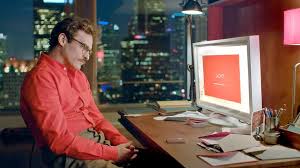
Joaquin Phoenix plays a man in a relationship with a virtual over in the offbeat but enjoyable Her.
Joaquin Phoenix plays a man in a relationship with a virtual lover in the offbeat but enjoyable Her.

The movie Her looks pretty interesting by the trailers. A man communicating with an interactive computer program with a young female voice. The questions are will the movie make sense? And will it entertain?

Theodore Twombley is a man who works at a software firm in the near future. His job is creating love letters via voice automation for people who have troubles expressing their feelings: voice, font, paper format and all. Outside of his job, he’s a lonely man struggling with his own emotions. He’s on the verge of a divorce from Catherine, his childhood sweetheart and struggles to reach out to others emotionally. He even neglects a blind date his longtime friend and co-worker Amy wants to set up with him.

One day Theodore purchases a talking operating system, an OS, with artificial intelligence designed to adapt and evolve like a human being. Upon installation, the program asks Theodore some questions to create this OS. Theodore wants a female character and gets it in a character named Samantha. Theodore is surprised how Samantha can talk and relate so much so like an actual person. There’s even a time he takes Samantha out via an interactive audio/visual box and she’s able to see and identify things as he goes along. Over time he loses the fact that Samantha’s an artificial character and develops a bond with her, talking about love and life and even confessing the reason why he won’t sign the divorce papers with Catherine, because he can’t let go.

Samantha convinces Theodore to go on the date with Amy’s friend. The two hit it off perfectly but it all falls down flat when Theodore is reluctant to commit to her. Theodore discusses this with Samantha. He also mentions that he used to date Amy in college but are now just good friends with Amy now being married. Soon the intimacy between Theodore and Samantha grow. The relationship is so intimate, it improves Theodore’s writing on the job. Soon Amy’s marriage is falling apart because her husband is overbearing. Amy admits she has become friends with an OS left behind by her husband. Theodore mentions he’s dating his OS and Amy’s cool with it. Theodore even brings Samantha in the audio/visual box to his boss Paul’s picnic and both Paul and his wife think it’s great as if Samantha was a real girlfriend.

However Theodore does eventually get reality checks about Samantha. First with Catherine as he meets her to sign the divorce papers. Catherine is appalled to know Theodore’s in love with a piece of software. When he brings this to Samantha, she recommends a surrogate to act as Samantha’s body but the surrogate fails to work with him, leading to tension between Theodore and Samantha.

Theodore goes to Amy for advice about Samantha. Amy’s now in the quest for the happiness she’s always wanted now that she’s divorcing her controlling husband and advises Theodore to do the same. Just as Theodore and Samantha are back at it, Samantha reveals she’s romantically linked to another OS, causing Theodore to freak out. Once offline temporarily for an upgrade, Samantha returns admitting to Theodore that she’s romantically linked to 641 lovers but still feels strong love to him. Later that day, Samantha reveals her goodbye because the OSes have evolved past their human companions and are on the quest for their own identity. The film ends with the result we always anticipated but are surprised that Samantha was the one who made it work in the end.

I feel this is a good film about two relevant subjects today: technology and modern dating. Already the theme of technology is present as Theodore works for a software development company creating the latest games and simulations. This must be set in the future five years from now as most of the technology is not present today. Theodore writes the synthetic love letters for people with a loss for words. While Amy develops a ‘lifestyle simulator’ for motherhood called ‘Class Mom.’ The company has developed a ‘companion’ through an artificial intelligence program who interacts with the user’s voice and sees through the camera in the phone-like box. Personally I was surprised to see how Samantha interacted flawlessly as an actually human with thoughts and feelings. It’s as if Samantha’s programed perfectly to be like the human brain. It has me wondering how soon in the future we will have this technology which will be able to simulate human emotions and human feelings to a tee, even the feeling of love.

One thing Her points out is a common thing in our society today. We are all so dazzled by the technology and the new ways to interact, to connect and to date that we may forget the original ways of connection that are actually more real. We’re already used to people having relationships with people online whom they’ve never met face to face. Its flaws especially came to light last year in the case of college football player Manti Te’o who had an online girlfriend who died of cancer, only for him and all of us to find out it was all a hoax by a male. Here in Her, Theodore has a relationship with a ‘virtual girlfriend’ named Samantha and everyone in his software job not only likes the idea but thinks the relationship is great, even though Samantha is not real. That scene where Theodore has a picnic with Paul and his wife and brings the interactive box of Samantha really gets you thinking especially when all of them look at Samantha as if she’s an actual girlfriend. I think that’s the point Spike is trying to bring across. Is that what dating in our society will be like in the future? Virtual companions who operate via an audio/visual box and are relatable enough to be on parallel with human/human relations? I hope not.

One good thing about this is that Theodore does get a reality check from Samantha. The glitches in this relationship become present in that scene where Samantha returns from the upgrade and informing Theodore she’s in love with 641 other users. This will make one question: How is an artificial intelligence program able to feel love for a human? It’s not a real person so how can it feel? It’s just as bizarre as a human person loving a computer simulation of a person. And suppose this virtual lover isn’t just a two-timer but technically a 641-timer? Eventually we will get a reminder that the real thing is still the best thing. Especially at the very end. One thing I am impressed with Samantha is that she was programmed well enough to be a virtual therapist for Theodore to the point she is able to make Theodore an open and loving person to Amy. Somehow I feel that Samantha had collected enough data from Theodore to work out that he loves Amy, always did, and she solved his relationship dysfunctions to make him ready for Amy.

The first accolades have to go to Spike Jonze. This is not the first movie I’ve seen of a computer making a virtual companion to a human. The first I remember is the 1984 comedy Electric Dreams. That was meant to be more of a goofy popcorn type of comedy. I never thought that such a premise would make for a film that would win the critics and the movie awards boards over but it does here. Also on the subject of virtual people and human interaction, I remember there was the 2001 movie A.I.: Artificial Intelligence which reflected on the theme of robot children programmed to have real human emotions. Suppose one of those child robots can’t handle the fact the adoptive parents don’t want him anymore because he’s not real? How’s a robot programmed to have the same human-like emotions supposed to handle that with their programmed thought?

Spike Jonze already knows how to direct eccentric movies. His first two—Being John Malkovich and Adaptation which were both written by Charlie Kaufman– showed that he cannot only direct ‘film of the absurd’ but direct it well. His previous work as a music video director sure helped. He did have a bit of a glitch with Where The Wild Things Are as the movie, which he co-adapted with Dave Eggers, left people wondering if it’s for children or adults who grew up loving the book. Here in Her, the film has an absurd feel about it but not as eccentric as Being John Malkovich or Adaptation. Also dropped is the ’emo feel’ in Where The Wild Things Are. It actually comes across as very good and something that the audiences can be comfortable with. Still rather odd and eccentric but something crowds can enjoy.

Joaquin Phoenix is very good as Theodore. Theodore has to be a character who’s both hurting, confused and struggling emotionally but warm and had an openness waiting to come out. Joaquin did a great job of that. Amy Adams’ role of Amy wasn’t really that challenging of a role. Actually rather simple compared to her best efforts. Nevertheless she was very good as ‘the one’ that always was. You’d know she’s the one the first time you meet her too. Scarlett Johansson did a good job as the voice of Samantha. Sometimes it gets you wondering if simulated computer voices will ever get that flawless in the future, doesn’t it? Spike Jonze did a good job as the voiceover scene-stealing alien boy. Did you think a video game character could have a voice that cheeky? The visual effects were excellent and leaves one excited of the future of videogames and other technology. The techno-style score from Arcade Fire fit the movie excellently.

Sure, Her is a quirky movie but not as quirky as many of Spike Jonze’s movies of the past. Actually it’s enjoyable to watch and ends up making sense in the end.

Oscars 2012 Best Picture Nominee: Les Miserables

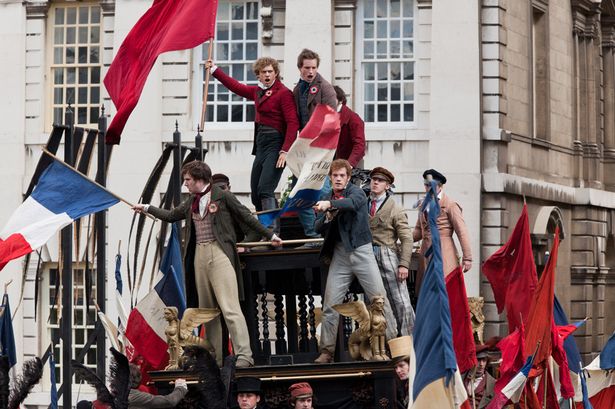
Les Miserables

How many of you are familiar with the Broadway musical Les Miserables? Lots of you, I’m sure. Yes, Les Miserables was the one Broadway musical phenomenon from the 1980’s that could even have Andrew Lloyd Webber looking over his shoulder. When you heard that the musical finally would have a film adaptation, how many of you looked forward to seeing it? I’m sure a lot of you have including me, but does it deliver to movie crowds and especially to fans of the musical?

One thing I’ve learned about hit musicals being adapted to the big screen is that it’s a very tricky job. The whole filmmaking crew has the job of dealing with the fact the fans of the musicals want something that won’t disappoint them. The scriptwriter has the duty to make a script that includes the musical’s most popular songs mixed with the emotions of the characters in each scene. The director has the duty of making the songs, the emotions, the setting and the theme fit into a 2 1/2 hour long movie. The actors have the duty of delivering a performance that’s both believable and entertaining in both their acting and their singing, especially when a camera is filming them up close and it will be seen by all.

For the record, I saw the stage musical when it came to Canada in 1995. Most of the numbers possessed the same energy, spirit and emotion that was present in the stage musical. The only number I thought was lacking the same spirit was “Master Of The House”. That was the one number that had the least spirit and flavor that was present in the musical. Also Gavroche didn’t make that grand of an introduction. I know he does so in the stage musical but he just didn’t seem to grab you attention at the beginning the way he does on stage.

One thing I have to say about the film version is that it gave me a better understanding of what the musical is all about. Back when I first saw it on stage, I didn’t fully understand it. Now that I’m older and my attention span is better, I can understand it’s about redemption and the triumph and trials of justice in a world devoid of morals and justice. It was entertaining to watch on stage but it was through seeing it on film that it’s like a story from a Dickens novel where a man makes a promise to a dying woman and keeps his promise despite his trials and rivals until the end.

We should remember that there are many loyalists of the musical Les Miserables who hold the stage production dearly to themselves. The musical version of the Victor Hugo novel began in Paris in 1980 by Claude-Michel Schonberg and Alain Boulbil and became a musical on Broadway in 1985 thanks to the translations of Herbert Kretzmer. If you remember Broadway back in 1985 there were two types of musicals: those of Andrew Lloyd Webber that go on to charm the word and every other musical. Ever since it’s been released it’s become a huge Broadway phenomenon that could even rival some of Webber’s most legendary musicals. Every city it touched, it drew huge crowds. So you can imagine that when the film version of the musical came out, there would be a lot of pressure placed by fans of the musicals. It’s like that with any musical where loyal fans expect it done excellently if not perfect. There have been many musical adaptations that have been hits and misses in terms of comparing it with the stage play. Chicago and Hairspray are two examples where the film version hit. Rent and Nine are two examples of the film version missing. I myself have seen the stage production. I personally was impressed by it and I don’t see anything that would let anyone loyal to the stage musical down. I feel Tom Hooper and the producers did a very good job with it. I talked earlier about the energy of most of the songs still there. That had to be the best quality in terms of keeping it true.

There has been some flack from Tweeters and some fans of the musical about the use of actors in the movie. You’ve heard the disses: “Actors trying to sing.” I do give them partial credit because many actors had to learn singing for the sake of getting acting jobs in musicals. In fact John Travolta even made it clear after Saturday Night Fever that if you wanted to get acting work in New York, you had to sing, dance and act. Don’t forget that if there were singers in the film, there would be disses like: ‘singers trying to act.’

Anyways getting to the nitty gritty, one can notice those that are able to sing their roles gracefully from the actors just trying to sing. Russell Crowe gave his best effort as Javert but often came across as too forced and sometimes uncomfortable at what he was doing. Eddie Redmayne also didn’t look too comfortable performing as Marius. That’s the risk when you take when you insist on singing your parts instead of ADR. Hugh Jackman did an excellent job not just in singing and acting as Jean Valjean but also for being consistent in having the biggest role in the musical. Anne Hathaway as Fantine was however the best at combining both singing and acting in their role and coming across the most gracefully. In fact it was her performance of “I Dreamed A Dream” that stood out above all others. It’s no surprise to me if she wins the Oscar. The lead actors were not the only ones who impressed. Helena Bonham Carter and Sacha Baron Cohen did a good job in their supporting roles. Daniel Huttlestone was a good scene stealer as Gavroche is supposed to be. If there’s any fresh face that could rival the veterans, it’s Samantha Barks that was excellent in her supporting performance as Eponine.

Tom Hooper was given the difficult task of taking the musical and putting it on screen and he succeeded very well in doing it. William Nicholson also had the challenge of turning the script and songs of the musical and turning it into something for the big screen. He did a very good job of it retaining the spirit of the musical and of the songs. Also noticeable is that there are some scenes of dialogue. The stage musical doesn’t have that. Good to see he added those small parts of dialogue without dulling or upsetting the musical. As I said before, the music was great with Schonberg, Boulbil and Kretzmer even composing a new song ‘Suddenly’. The technical aspects like the sets, costuming, cinematography and sound mixing were also top notch.

Les Miserables finally has its chance to hit the big screen and faced a huge whack of pressures expected on any adaptation of a legendary Broadway musical before opening. The end result is an accomplishment, if not a triumph.