Eurovision Song Contest Held During The Pandemic

In the middle of May 2021, the Eurovision Song Contest took place while the COVID pandemic was still happening. In addition, it allowed seating capacity for thousands of spectators. One would consider this to be a very dangerous move as the world is trying to recover from a world wide pandemic. Few know that this is an event to test whether it’s possible to hold a concert during a pandemic.

EUROVISION 2020 CANCELLED

2020 started like any other year. If there was COVID happening, it was half a world away and showed no real signs of crossing any borders. The Rotterdam Ahoy arena looked like it had plans to be made ready to stage the Eurovision 2020 while national TV networks were getting their performers and songs ready, whether by internal selection or by hosting national finals. Then the pandemic crossed borders. The news got more frightening every day as cases were starting to crop up from country to country. Sports events like the PGA golf series, MLB and NFL football had to cancel their seasons, the Olympics had to postpone to the following year. Then in mid-March Eurovision 2020 had to cancel because of the pandemic. That was just after all 41 competing nations had already submitted their entries and songs.

The COVID-19 pandemic led to the cancellation of the 2020 Eurovision Song Contest in Rotterdam.

With no Song Contest happening and it being hugely complicated, if not impossible, for people to meet up, the European Broadcasting Union (EBU) decided to have all the entered songs recognized for the participation. There would still be a set of Eurovision shows during the days the Song Contest was originally intended to take place. The Tuesday and the Thursday which were originally supposed to have the semi-finals contested had the Eurovision Song Celebration which paid tribute to the songs and performers of that year and during what was to be their respective semi-final performance. Even before the Song Celebration, the Eurovision Youtube channel had the artists of 2020 perform ‘home concerts’ to keep people’s spirits up.

On the Saturday that was to have the Grand Final held, May 16, 2020, there was Eurovision: Europe Shine A Light. It was a two-hour show which paid tribute to the 41 songs and performers who were to be participating that year. A piece of the video of their song was played followed by a message of well-wishes during this pandemic from the respective entered act remotely from their home country. The show was held with a central location of Studio 21 in Hilversum instead of an arena. Past Eurovision entries gave their wishes to all during this time. There were additional performances from past Eurovision entries singing past Eurovision songs with encouraging messages like ‘Ein Bisschen Frieden,’ ‘Molitva,’ and ‘What’s Another Year.‘ Italian entry Diodato performed ‘Volare‘ live from Milan as well as showcased his song ‘Fai Rumore‘ from an empty arena in Verona. Singers of the two most recent winning songs, Israel’s Netta and the Netherlands’ Duncan Laurence, performed original songs about the frustration of loneliness one receives during the time we all have to isolate ourselves to prevent contagion. Israel’s Gali Atari performed her 1979 winning song ‘Hallelujah‘ with Dutch Junior Eurovision contestants and Junior Songfestival entries from past years. It was done as a Zoom-style ensemble. The show ended with all the 41 contestants singing a piece of the 1997 winning song ‘Love Shine A Light‘ with the song ending with all of them singing together as a Zoom-style choir with Katrina Leskanich, formerly of Katrina and the Waves, to sing the last part.

There were also two noteworthy announcements that happened during the show. The first announcement came during the part when they were with the 2019 Junior Eurovision winner Viki Gabor from Poland. From her home in Poland, she announced that the Junior Eurovision Song Contest will be taking place in Warsaw on November 29, 2020. The second announcement came from the hosts of Europe Shine A Light. It was announced that the Eurovision Song Contest will be taking place in May 2021 in Rotterdam.

CONSIDERING OPTIONS FOR EUROVISION 2021

The announcements of a Junior Eurovision in six months time and a Eurovision in a year’s time seemed like far-fetched things at the time. Nobody knew what the pandemic would be like over time. Rates were increasing at frightening rates, people were still in lockdowns and a vaccine of any kind had not been discovered. Nevertheless it was something still worth pursuing. Twelve months since the ill-fated 2020 Contest is enough time for the pandemic to either subside or for preventative measures like vaccinations to be in effect. Countries were already announcing their intention to compete in 2021. Many even announced their intended 2020 entry would be their performer for 2021. However staging the Contest would be difficult. Possible, but difficult. The EBU had four scenarios to deal with. Each of the scenarios would involve the holding of shows, presence or non-presence of performers, number of spectators, side events and the media press:

  • Scenario A (normal): This would almost be as if the pandemic never happened. All shows from Ahoy Arena, all the participants in Rotterdam to perform, arena filled to 100% capacity, side events happening throughout Rotterdam the Press Centre would have all 1,500 anticipated press people on site.
  • Scenario B (1.5 metre social distancing): All shows would be from Ahoy, but only performers who are COVID-negative could perform on stage. Since there would still be no guarantee that the performers would all be COVID-negative on the day of the show, they would all do taped back-up performances that would act as their Contest submission in case. Those whose country was still under lockdown because of travel restrictions could have a taped performance recorded by their network. Arena audience could be anywhere from 0% to 80%, side-events would have to be adapted virtually, and the 1500 press people would be limited to 500 on site and 1000 virtually.
  • Scenario C (Travel-restrictive): All shows would still be from Ahoy and the arena would still have a capacity of spectators anywhere from 0 to 80%, but participants would all do their performances in their home country. There would still be adapted side performances, but greatly reduced and all 1,500 press people would conduct interview questions virtually.
  • Scenario D (lockdown): Even with a lockdown mode, there would still be a show from Ahoy arena as there was a show from a studio during 2020’s lockdown in the Netherlands as well as most of Europe. The arena however would only be empty of spectators, consisting only of show and network personnel. There would be no side-events, performers would do their performance in their home country and again all 1,500 press people would conduct interview questions virtually.

JUNIOR EUROVISION 2020: THE FIRST TEST EVENT

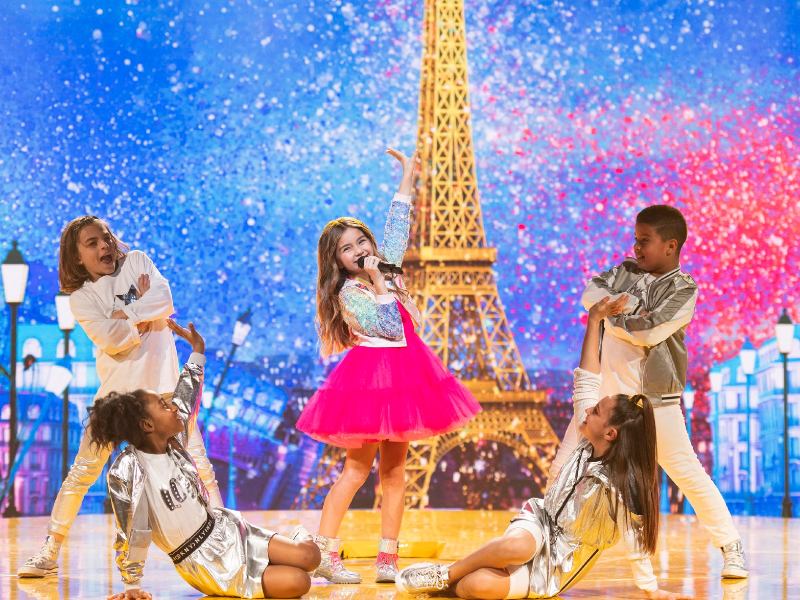
Six months in between the intended Eurovision Song Contest 2020 and the Junior Eurovision Song Contest 2020 was enough time to get a good sense of how to conduct business and events during the pandemic. The 2020 Eurovision Contest couldn’t be held because everything happened all of a sudden and it was too sudden to plan an alternate for holding a Contest. However the EBU was well-aware statistics and restrictions would change by the time Junior Eurovision, the song contest for performers aged 9 to 14, would come around on November 29, 2020. Some would be for the better, some worse. It was decided that the Junior Eurovision would be held in a situation close to that of Scenario D. I will get to the specifics in the next three paragraphs.

The 2020 Junior Eurovision Song Contest held in November that year was a trial of Eurovision Scenario D consisting strictly of studio performances.

Over time, seven nations that competed at the 2019 JESC such as Australia, Italy, North Macedonia, Ireland and Portugal would not participate because of the COVID situations in their country. Armenia intended to compete, but the Nagorno-Karabakh conflict that happened a month before Junior Eurovision was about to start led to their withdrawal. In the end, twelve countries, the lowest since 2013, chose to compete. Germany was one country that would make their Junior Eurovision debut. The Contest organizers were sensitive to the pandemic and announced that the Contest would be restricted to studio performances. They gave two options where the performers could do their performances in Warsaw in the studio of the host network TVP (Telewisja Polska) or in the studio of their respective nation’s network. I believe it was a case of three performances could be done and the best of the three was chosen as the performance for the competition. Only performers from four nations — Poland, Malta, Ukraine and Serbia — were willing to do their performances in Warsaw. Performers form the other eight countries stuck to doing their performances in the studio of their respective nation’s network. Also performances and parts from the Common Song — a song performed by each nation’s singing entries as an ensemble onstage — had to be recorded from whichever studio they performed at beforehand.

Junior Eurovision 2020 was finally held on November 29 inside the TVP headquarters in Warsaw. There was an audience but it was restricted to network organizers and their families. The show began with a performance from last year’s winner Viki Gabor performing her winning song from that year: ‘Superheroes.’ Back-up dancers were present during the performance. For the remainder of the show, the chosen performances from the studios were the competitive performances the juries judged on and the home audiences would vote for online. Instead of the Green Room where the competing performers would normally sit, drink and mingle in, the performers and their assistants were in a special room in their respective network studio. It was also live broadcast from the room where interviews were conducted and their reactions to the scoring would take place.

For the Interval Acts after all the competitive performances were shown and viewers voted, the Common Song was shown as if all the performers gathered together as one. It was actually created through hologram technology. Another hologram performance was the performance of the 2019 Eurovision-winning song ‘Arcade’ by winner Duncan Laurence and Poland’s two Junior Eurovision winners Viki Gabor and Roksana Wegiel. Viki and Roksana performed together, but Laurence’s part was done in an NPO Zapp studio in the Netherlands. The winning song — “J’Imagine” by singer Valentina from France — was a song whose submitted performance was taped one month earlier in a France 2 studio in Paris. There was not the usual Winner’s Reprise where the act of the winning song traditionally goes back on stage, accepts the award and gives and encore performance of their winning song. Instead Valentina and her team celebrated in the France 2 studio and a replay of the submitted competitive performance was done instead of the Winner’s Reprise.

EUROVISION 2021 PLANNING

In all honesty, that year’s Junior Eurovision did feel like a constricted event with all the performers limited to taped performances in a studio, hologram performances of most interval acts, and studio rooms instead of a green room. It didn’t have the same look and feel as if the performers were performing in from of a live audience full of excitement or the same celebratory feel of the performers all getting together in the Green Room having their post-performance fun. What it did do is that it showed that a Eurovision contest was possible. It would be very limited but very possible. Also on an optimistic note, that year’s Junior Eurovision’s online voting had the most online votes totalling 4,500,000! That showed the pandemic can’t stop the Eurovision excitement. For the organizers of Eurovision 2021, this Contest served as an example on how to do a Eurovision if it does come down to a Scenario D situation. Of course they would want to do the Contest with a bigger stage, as many performances on that stage as possible, and with a live audience full of excitement. It would be dependent on time and the situation involving the pandemic as they got closer and closer to Contest time. This would be dependent on statistics of numbers of cases, possible other COVID variants and their effects, the potential for vaccines to be distributed, the efficiency of testing, and the latest studies in COVID prevention.

As time passed, it was announced all 41 nations that entered in the 2020 Contest intended to participate in the 2021 Contest. Many nations intended to enter their entry from 2020 into the 2021, but a new song had to be created in order to keep within the rules. Some nations stuck to having their usual national contests to have the performer and song selected, but said their respective 2020 entry can participate without having to audition. As for the pandemic, there would be a lot of changes over time in terms of the pandemic. The statistics would yield differing results, but vaccinations would also begin to take place en masse in the countries and many travel restrictions would be lifted. This would allow for the ability for performers to travel to the Netherlands to perform and even foreign visitors to come. The one thing the vaccinations and eased restrictions did not do over the time is decrease the potential contagion of COVID significantly nor the disease’s effects on those that caught it. The organizers in the end decided to do the Contest via Scenario B. There would be live performances for all six live rehearsals and three live shows, and the Dutch Cabinet approved a live performance one month before the Contest. Concert crowds would be a limited number and there would be no spectators standing on the arena floor level. More details on the concert crowds in the Handling Of Ticket Holders section. Side events would be impacted such as the ‘Turquoise Carpet’ being the only in-person side-event to take place normally, the Opening Ceremony not held, the Eurovision Village to be held only as an online event and the EuroClub cancelled completely.

The 2021 Eurovision Song Contest was allowed to take place in Rotterdam’s Ahoy arena with spectators. The event was under strict preventative regulations for performers and spectators alike.

Safety Measures For Performers

None of the nations from 2020 that intended to compete in 2021 cancelled out because of COVID-related reasons, but two nations did withdraw. Armenia withdrew because of political unrest from after the Nagorno-Karabakh conflict and Belarus withdrew because their entry for this year had a political message, which is against the EBU rules for the Contest, and would not submit a replacement song. Thirty-nine nations did compete in the Contest. Twenty-six of those nations had the act that was intended for the 2020 Contest as their entry for 2021.

The COVID pandemic was just as real of a threat in the performers’ home countries as it was if they were in Rotterdam. The EBU knew this. They were still aiming for live performances for rehearsals, jury performances and live Contest performances. They still wanted to make sure the performers didn’t endanger themselves or others. In addition, not all travel restrictions had been lifted for the participating countries. The EBU gave the entries the obligation to record back-up performances on video for in case they could not perform their song live on stage whether it be the semifinal, final, or even rehearsals because of travel restrictions. Rules for back-up performances were the artists were each given an hour and during that hour, they were allowed to give three performances of their song. At the end of taping, the delegation would decide which one of the three performances they were most satisfied of. The choice would be the entry’s official back-up submission.

There was also the possibility that some performers would test negative while in their home country, but end up testing positive or being a high-risk group any time while they were in Rotterdam. It could happen anytime, whether it be after the first rehearsal, but before the jury performance or even the live performances. Performers had the option to use their best rehearsal performance or even a jury performance, whichever they were happiest with, as their back-up performance for the Contest. There could even be stand-ins for the rehearsals should one test positive and have to sit the rehearsals or performances out. There were times when these regulations for this year’s Contest were very helpful for all thirty-nine to have a performance worthy of submission for the Contest:

  • Australia was still unter travel restrictions. Montaigne could not travel to Rotterdam to do her performance of her song ‘Technicolor‘ so the chosen back-up performance acted as the entered song. Audiences both in the arena and through television would see the performance on the LED.
  • Kateryna Pavlenko, lead singer of the Ukrainian band Go_A, reported feeling ill before the performance of their song ‘Shum’ for the second rehearsal just before the first semifinal. Rules were that anyone reporting feeling ill before performing no matter what had to miss because of a precaution. All other band members tested negative for COVID-19. The band continued with their performance as a Dutch singer, Emmie van Stijn, acted as the stand-in. Pavlenko soon after took a COVID test and the results were negative. Pavlenko was able to continue performing for the remainder of the competition. The band was so impressed with van Stijn’s singing and diction of the Ukrainian language, they had her sit with them in the Green Room during the semifinal as a thank-you!
  • All six members of the Icelandic entry Daði og Gagnamagnið were COVID-negative when they arrived in Rotterdam. Their performance of their song ’10 Years’ went as normal during the first and second rehearsals. However one of the members tested positive for COVID. They had a rule that they would all perform as a band on the Eurovision stage. They opted to miss out from further performances. Their performance from the second rehearsal was their chosen submission for the jury performances and live shows.
  • 2019 winner Duncan Laurence was slated to reprise his winning song ‘Arcade‘ and perform his new song ‘Stars‘ as part of the interval act of the Grand Final. Laurence opened the first semifinal with the song ‘Feel Something,’ but tested positive for COVID shortly after. Duncan had to miss performing live in the Grand Final, but he did deliver a message of well-wishes on the LED screen and pre-recorded performances of ‘Arcade‘ and ‘Stars‘ were used instead.

Handling Of Ticket Holders And Rapid Testing

It was decided by Dutch Parliament in less than three weeks before the start of the Contest that the event would be open to spectators. Organizers set the limit to the number of performances accessible to public audiences to be nine: all jury shows, family shows and live shows of the two semi-finals and Grand Final. The number of spectators per show was set to a limit of 3,500. Now I know a lot of people would be freaking out over live crowds occurring during a pandemic, but there were rules and regulations regarding spectators for the Contest. In fact the Contest was a pilot event event under FieldLab Concerts. Rules included:

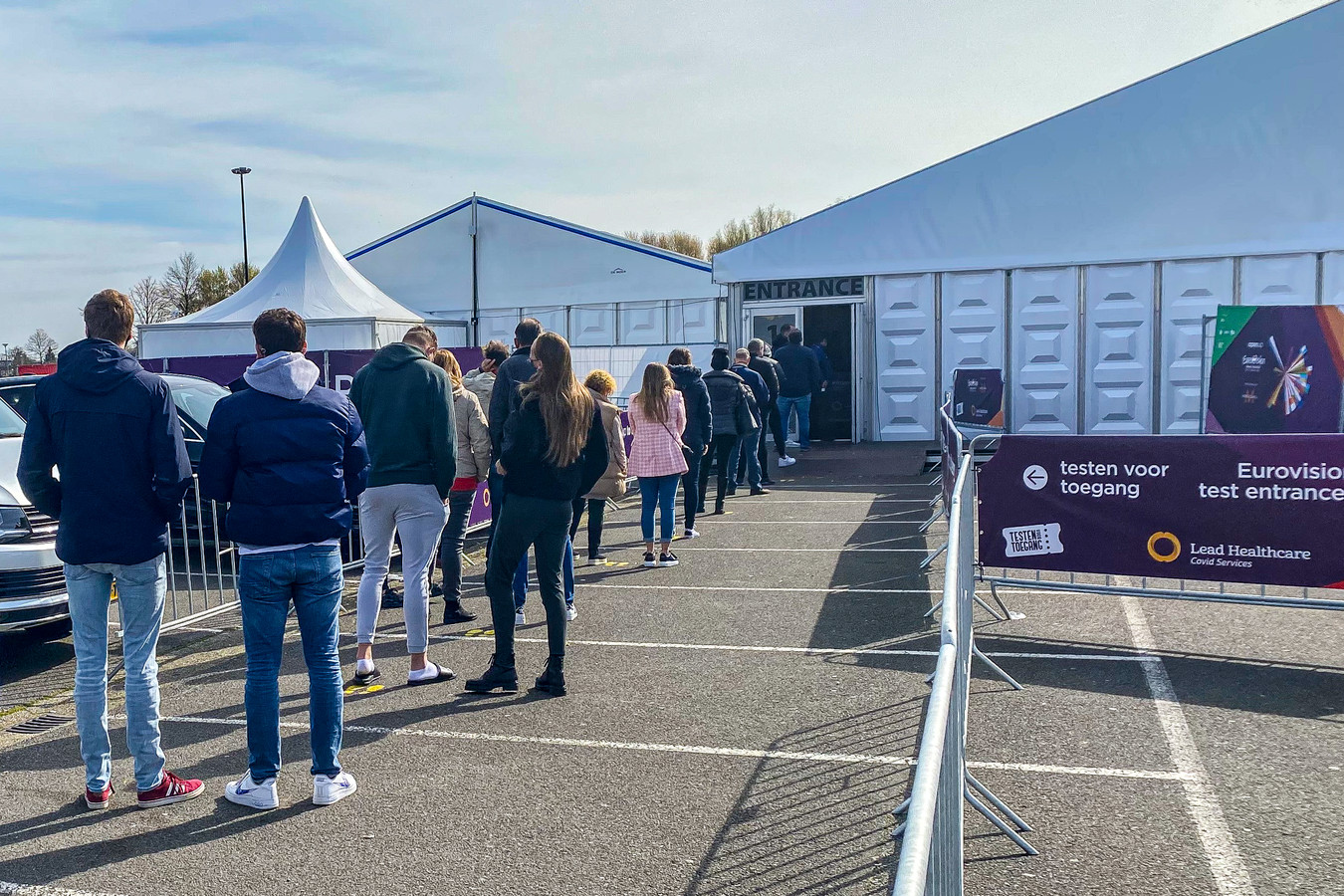
Ticket holders had to personalize their tickets, undergo COVID tests within the day of their event, and show up at the Ahoy entrance during their allotted time-slot.
  • High-risk groups as defined by the Netherlands’ National Institute for Public Health and the Environment (such as those 70 years or older) cannot purchase tickets.
  • Those attending the events couldn’t just simply purchase tickets. All sold tickets had to be personalized and registered. Meaning only the specific person is allowed to use the ticket. There are to be no ticket exchanges. Part of the personalization includes ticketholders to download the Close app and CoronaCheck app.
  • Just after purchasing the ticket, the Eurovision Contest Shop will bring ticketholders to a webpage to personalize the tickets. The ticket will be accessible for the Close app.
  • Ticketholders will need to take COVID tests the day of the ticketed event. Maximum 24 hours before the event’s anticipated end. Showing a card that confirms COVID vaccination is not enough. Appointments for COVID testing would have to be made through the Dutch ‘Testen Voor Toegang’ website which assists in setting appointments for rapid COVID testing throughout the Netherlands. Even attendees coming from other countries will have to be tested in the Netherlands. Test results can be made available as soon as an hour after they’re taken. Tests done through Testen Voor Toegang appointments are the only valid COVID tests for the Contest.
  • Results of the COVID test will be made available through the CoronaCheck app. Those that test negative are allowed to attend their ticketed event. Those that test positive are not allowed and they do not receive a refund.
  • All spectators who test negative can’t simply arrive at the Ahoy Arena anytime. In their Close app, they are given an entrance time-slot for them to show up at the entrance to their ticketed event and do their airport-style security check.
  • At their entrance, they are required to show both their ticket and their negative COVID test result in order to be admitted.
  • As far as face masks go, attendees are allowed to take off their face masks when they’re inside the actual arena seating. Spectators are allowed to eat and drink inside the arena seating.
  • Spectators will have to put their face masks back on once they leave the arena seating area. That includes in areas of the Ahoy Arena such as concession lobbies or the washrooms. Arena seating is the only mask-free area for Contest spectators.
  • Once spectators are outside the Ahoy Arena building, all mask-wearing regulations made by the Dutch government apply.

Also worth taking note is that all spectators had to be in seated areas. In fact the Green Room took up the whole arena floor area outside of the stage to ensure no spectators on floor level and the performers’ own social distancing. This is arguably the first big event with large spectators to be held during the pandemic so it’s obvious strict regulations would be required. Since the Contest has been completed, there has been no news of massive positive tests from spectator attendance. It so far has proven to be an excellent success, if not a flawless success, that a concert can still take place during the latter period of a pandemic and make progress to more back-to-live performances. Even spokespeople throughout the Contest were speaking their delight and approval of the Contest getting back to live performances and celebrative spirits. Also for those who want to know who the winner is, but don’t know, it’s Italy’s glam-rock band Måneskin who won with the song ‘Zitti e Buoni.’

This year’s Eurovision Song Cotest proved that live performances with spectators can happen during a time of a pandemic. Measures in terms of ticket holders and performers had to be strict and within government regulations, but it all turned out to be successful in the end.

WORKS CITED

WIKIPEDIA: Eurovision Song Contest 2020. Wikipedia.com. 2021. Wikimedia Foundation Inc. <https://en.wikipedia.org/wiki/Eurovision_Song_Contest_2020>
WIKIPEDIA: Eurovision: Europe Shine A Light. Wikipedia.com. 2021. Wikimedia Foundation Inc. <https://en.wikipedia.org/wiki/Eurovision:_Europe_Shine_a_Light>
WIKIPEDIA: Junior Eurovision Song Contest 2020. Wikipedia.com. 2021. Wikimedia Foundation Inc. <https://en.wikipedia.org/wiki/Junior_Eurovision_Song_Contest_2020>
WIKIPEDIA: Eurovision Song Contest 2021. Wikipedia.com. 2021. Wikimedia Foundation Inc. <https://en.wikipedia.org/wiki/Eurovision_Song_Contest_2021>
Tickets For Eurovision. EBU 2002-2021. Website by SCRN. <https://eurovision.tv/tickets>

My Predictions For The 2020 Academy Awards

To think that before 2020, the Academy was strict about having films viewed in theatres. Internet films were off limits. Then the pandemic happened. Most of the theatres were closed. Most films had to put themselves on online streaming services to have themselves viewed. The Academy became more forgiving in that aspect and allowed for more streamed films to be submitted as entries. The pandemic also caused the Oscars themselves to be delayed until the last Sunday of April. That also meant those other ‘influencer’ award shows would have to delay in compensation of the pandemic too.

Whatever the situation, I was able to see all eight Best Picture nominees. Yes, it involved signing up for more than one streaming service and renting movies on Youtube, but it had to be this year. Hopefully next year, I’ll be back in the theatres. As for this year, I saw them all and now I’m ready to make my opinions for the winners for the 93rd Academy Awards:

BEST PICTURE

Last year, Olly Gibbs did a similar picture of the Best Picture contenders. This year he does it again! I’ll bet most of you who have seen any of the Best Picture nominees most likely saw it through a streaming service. That seems to be the case this year. The favorites were seen through a wide variety of streaming methods like Netflix, Hulu, Disney+ or Amazon Prime. For most, it was the only way to access any of the Best Picture nominees.

Normally I’d publish separate reviews of the various Best Picture nominees and include the link to the blog in my review. This was not the case that I reviewed them before Oscar day. Separate reviews will have to come later. In the meantime, here’s my take on the eight Best Picture nominees:

The Father: To make a film about dementia that’s watchable is a big challenge. Having a lead actor like Anthony Hopkins helps. However this is a unique story as it goes through the father’s life as he and his daughter are going through major changes in their lives. The father’s struggle with dementia gives hints to his past. It makes for a unique and telling story. However I don’t see it as having what it takes to win Best Picture.

Judas And The Black Messiah: This is the story of the Black Panther with a big following and the FBI agent who sets him up for his assassination. It’s to do about a powerful leader who had a love for his woman and the FBI who poses as the leader’s friend only to lead him to the fatal heist. This is an intriguing story that gives you a piece of history that is often overlooked. Also it provides insight on the secret that haunted the FBI agent until the end of his life. Excellent film worthy of Best Picture, but unable to contend due to the tightness of this year’s competition.

Mank: For those who like seeing films of the Golden Age of Hollywood, you’ll like seeing Mank. This is a film that focuses on Herman Mankiewicz, Hollywood scriptwriter and producer. It focuses on his messing with the political system, his difficulties in the Hollywood studio system and his struggle with alcohol. It presents a unique story for someone that should be presented as unlikeable as most of the Hollywood producers should be seen. This is a film with Best Picture marked on it, but a certain other film has better Best Picture clout.

Minari: There have been stories of immigrants in pursuit of the American Dream before. This is a unique story because it’s of Korean farmers seeking to pursue the American Dream in Arkansas in the 1980’s. It’s of a family that tries to pursue a better life, brings the grandmother over in hopes to build the family back up, and a son struggling with a heart condition. This is a very personal story from writer/director Lee Isaac Chung. It has Best Picture potential, but there are at least three other films that are seen as stronger contenders.

Nomadland: This is an introspective look at the modern-day American nomad. Desperation in an economy that failed them is what caused them to adopt this modern style of the nomad life. However it’s something that they don’t just simply get used to doing, but it becomes a lifestyle for all those involved. There is a central character named Fern who first appears she has no choice but to accept this nomad life. Even as things don’t get any better, she learns to make it her own life, embrace her experiences, and then be able to say goodbye to her own life. This is an excellent personal story that really caught a lot of people’s eyes. That’s why I make it my Will Win pick.

Promising Young Woman: This is definitely a film that’s been made with rage in mind. And good reason. When the #MeToo movement came out, it highlighted a lot of problems. This is a rape revenge film that focuses on a friend’s rape and the failings that went around her like the friend who wouldn’t believe, the college system that hides things for the protection of their reputation, the friend of the rapist who watched and did nothing. The film also focuses on the culture of misogyny that provokes date rape. Cassie is the central figure that first comes off like she is the one to put misogyny in its place and later tries to get revenge for her friend’s rape. I think it’s the Generation X-er in me that likes how this film is like a lightning rod on society. That’s why I call it my Should Win pick.

Sound Of Metal– This is a unique story of a drummer who goes deaf and doesn’t know how to struggle with hearing loss. His willingness to accept deafness and move on with his life or his desire for a hearing implant that will give him his old life back is the central part of the story. This is a very good story that relies on images and sounds to tell of the musician’s struggle and also of the new life he tries to get used to. Very good film. Also in a year where this year’s batch of Best Picture contenders have been commonly described as ‘a pack of downers,’ this is the most uplifting film without going too overboard in its uplifting moments.

Trial Of The Chicago 7: This is a historical film that comes at the right time. It was released at a time when there was, and still is, a lot of political turmoil in the United States. It’s about a group of men arrested and tried for taking a stand for what they believed in. It’s about a corrupt judge who constantly made the wrong decisions on others. It’s about a political system that’s all about keeping the order of things. Centrally it’s about a leader who needed to fasce his fears and muster the courage displayed by the others. Excellent retelling of a historical moment. Among one of the top contenders for the win, but this is the year for Nomadland.

BEST DIRECTOR

Should Win and Will Win: Chloe Zhao – Nomadland

Directors nominate the Best Director nominees. This Oscar category is known for its all-too-frequent exclusion of female nominees. The first was back in 1976: Lina Wertmuller for Seven Beauties. Since then, it’s been Jane Campion for The Piano in 1993, Sofia Coppola, daughter of Francis Ford Coppola, for Lost In Translation in 2003, Kathryn Bigelow in 2009 for The Hurt Locker (which she won), and before this year, the last was Greta Gerwig for Lady Bird back in 2017. Five female nominees before the 2020 nominees were announced. This year made Oscar history as the first year two women were nominated for Best Director: Chloe Zhao and Emerald Fennell. The two female directors have the most talked-about films of this Oscar season: Nomadland and Promising Young Woman. It looks as though Zhao is poised to become only the second female winner of the Best Director category.

Also who knows after this year? Maybe in the future, two or three female Best Director nominees will become the annual norm.

BEST ACTOR

Should Win and Will Win: Chadwick Boseman – Ma Rainey’s Black Bottom

Most of us will remember Chadwick Boseman as T’Challa the Black Panther in the MCU. Since his death, there has been a lot of attention paid to a lot of his other works of the past. As 2020 was drawing to a close, the big focus was his performance as Levee Green in Ma Rainey’s Black Bottom. In fact it’s his performance as Levee that steals the show from Ma. It makes it more the story about Levee’s own struggle for fame and fortune and his inner hurt and struggles. His portrayal of Levee Green cuts deep to the core. Giving him the Best Actor Oscar is the best way to remember him.

BEST ACTRESS

Should Win and Will Win: Viola Davis – Ma Rainey’s Black Bottom

Boseman may have stolen the film as Levee Green, but Viola’s performance of Ma Rainey helped give this film its powerful 1-2 punch. Davis’ character is both that of an entertainer whose beloved and a person subject to the same hurt and harshness a black woman in America gets. As she cuts her record Ma Rainey’s Black Bottom, you can tell the wrath she feels towards her lifetime and her struggles are present in the story. That’s why I feel Viola deserves the Best Actress Oscar.

BEST SUPPORTING ACTOR

Should Win and Will Win: Daniel Kaluuya – Judas And The Black Messiah

This year’s Oscars had a surprise with two Supporting Actor nominations for Judas And The Black Messiah. The nomination for Kaluuya was not a surprise as he won the Golden Globe for supporting actor. The nomination for LaKeith Stanfield was a surprise as it was felt Stanfield played the lead as Bill O’Neal. That had a lot of people wondering who’s the lead if O’Neal is supporting? I can’t answer that question. I will say that Stanfield didn’t get a single lead acting win or nomination so the Supporting Actor campaign was very successful here. Nevertheless the film belongs to Kaluuya for his performance of the late Black Panther Fred Hampton. He was very good at portraying Hampton both as a rebel with a cause and as a man with a lot of love.

BEST SUPPORTING ACTRESS

Should Win and Will Win: Youn Yuh-jung – Minari

Youn Yuh-jung is an actress with an illustrious career in South Korea. Minari is pretty much the film where she’s introduced to North America. And it’s a great performance as a grandmother who first exhibits over-the-top behavior to becoming closer with grandson David to struggling with life after a stroke. She helped make the grandmother the central character of the story and it’s because of this I feel she should win here.

BEST ORIGINAL SCREENPLAY

Should Win and Will Win: Emerald Fennell – Promising Young Woman

For a long time, Emerald Fennell was just another struggling actress. Her biggest success is in the British television series Call The Midwife. She also had good roles in film such as in Anna Karenina, Pan and The Danish Girl. Her first attempt at directing and writing was in the short film Careful How You Go. Promising Young Woman is her first attempt at a feature-length film and boy is it an eyebrow raiser. There have been ‘rape revenge’ movies before, but this is a film that doesn’t just get revenge on the rapist. It’s a story of one who has a reckoning of all those involved in her best friend’s rape like the friend that didn’t believe her, the college administration ‘protecting the boys’ futures,’ the lawyer who was menacing to the victim upon his client’s command, and the friend of the rapist who just watched and stood by. This is an angry film, but well written and well thought-out. Fennell’s feature went the furthest this year.

BEST ADAPTED SCREENPLAY

Should Win and Will Win: Chloe Zhao – Nomadland

For those that read Jessica Bruder’s book Nomadland: Surviving America in the Twenty-First Century, one would know it’s not a novel. It’s a set of stories of people that are modern-day nomads in America. Zhao was able to create a story of a fictional woman coming from an actual economic setback. She makes a nomad of herself because of the desperate times she was going through and of the people she meets along the way. It has a beginning, middle and end and it’s a story that is a reflection of life. That’s why Nomadland has to be the winner here.

BEST ANIMATED FEATURE

Will Win: Soul

BEST CINEMATOGRAPHY

Should Win and Will Win: Eric Messerschmidt – Mank

BEST COSTUME DESIGN

Will Win: Ann Roth – Ma Rainey’s Black Bottom

BEST DOCUMENTARY FEATURE

Will Win: My Octopus Teacher

BEST FILM EDITING

Will Win: Mikkel E. G. Nielsen – Sound Of Metal

BEST HAIR AND MAKE-UP

Will Win: Sergio Lopez-Rivera, Mia Neal and Jamika Wilson – Ma Rainey’s Black Bottom

BEST INTERNATIONAL FEATURE FILM

Will Win: Another Round (Denmark)

BEST ORIGINAL SCORE

Will Win: Trent Reznor, Atticus Ross and Jon Batiste – Soul

BEST ORIGINAL SONG

Will Win: “Speak Now” – One Week In Miami

BEST PRODUCTION DESIGN

Will Win: Donald Graham Burt & Jan Pascale – Mank

BEST SOUND

Will Win: Sound Of Metal

BEST VISUAL EFFECTS

Will Win: The Midnight Sky

SHORT FILM PREDICTIONS

For my reviews of the nominees and predictions for the wins for the various shorts categories, just click here for Animation and Live-Action and here for Documentaries.

JUST ONE MORE – TOP OSCAR UPSETS

Here are the six upsets I anticipate are most likely to happen. In category order:

  • Carey Mulligan for Best Actress in Promising Young Woman
  • Maria Balakova for Best Supporting Actress in Borat Subsequent Moviefilm
  • Lee Isaac Chung for Best Original Screenplay for Minari
  • Joshua James Richards for Best Cinematography for Nomadland
  • Time for Best Documentary
  • Tenet for Best Visual Effects

And there you have it. Those are my predictions for the winners of the 93rd Academy Awards. The Oscars ceremony promises to be like a film. We’ll have to wait and see!

Oscars 2020 Shorts Review: Animation and Live-Action

Just hours ago, I posted my opinions and predictions for the Documentary short films that were nominated. This is a continuation of the short films where this time the focus is on the nominees for Live Action and Animated:

BEST LIVE-ACTION SHORT FILM

Feeling Through: dir. Doug Roland – A young man in New York leaves his friends for a date. He bumps into a man who through a sign says he’s both blind and deaf. His name is Artie. Tareek wants to leave, but Artie needs his help. First it’s a case Artie needs to be helped across the street. Then it becomes a case Artie needs help on a bus. Tareek wants to leave and be with is girlfriend, but reluctantly agrees. Artie can communicate by writing letters and numbers with his finger in the palm of people’s hands, and vice-versa. It’s there they introduce themselves to each other and Tareek cancels out on the date to guide Artie. It continues through the night as Artie needs food and needs a bus ride home.

This is a unique story of the start of a friendship of two unlikely people. I’ve seen similar films before but this is unique that it features a friendship between a fully-able person and a Deafblind person. Robert Tarango who plays Artie is Deafblind in real life and works at the kitchen of the Helen Keller National Centre. This is also excellent how it showcases people that we hardly know that much about. Sure, we may be familiar with Helen Keller, the most famous Deafblind person in history, but it reminds you of the others that have gifts of their own too. Reminds you that Deafblind people are more capable than you think.

The Letter Room: dir. Elvira Lind – Richard is a prison officer who does his duties faithfully. His job is in a maximum security penitentiary and often works with people on Death Row. One day, Richard gets a new duty. His new duty is to overlook incoming mail communication. It’s not just looking over letters, but scrutinizing for any hidden messages or hidden drugs or other things. Most messages are routine. However one set of messages catches his eye. It’s from a woman named Rosita. She’s the wife of a death row inmate. Her letters are romantic messages to her husband. Most of the time, Richard loses his focus on his job and looks at the letters like they’re pages from a romance novel! Then comes the ultimate. He has to meet face to face with her!

This is an amusing story. With a guard, played by Oscar Isaac, becoming infatuated with letters he’s supposed to scrutinize, you get the feeling this will lead to something bizarre. It’s the comedic nature of the story that gets you. You don’t expect a story like this to lead to anything comedic, but it does. And it looks good instead of dumb.

The Present: dir. Farah Nabulsi – The film begins with a Palestinian man named Yusef crossing the overcrowded Israel Checkpoint to get back home after finishing work in the morning. Back at home, he meets with his family. The fridge is breaking down. He wants to buy a new fridge for his wife Noor as an anniversary present. He decides to take his daughter Yasmine with him. Getting the fridge means going to past Israeli guards into the town of Beitunia and it’s a walking trip. The guards at the border before entering the Palestinian region, one younger and one older, debate what is the right way to people that cross. Yusef tries to cross with his daughter by his side, but is given a cold treatment by the guard. He is let through where he can buy the fridge, have a red bow put on it, and have it carted back to his home at his request. He and his daughter cart the fridge up the hill. However it’s again meeting with the crossing guards. As they inquire, they demand he cart the fridge past the gates himself, which causes him to have an outburst, feeling it’s impossible. His daughter resolves things by pushing it through the narrow gates herself.

This is a story where you don’t know where it will go. You know of the hostility between Israelis and Palestinians in the West Bank. You know how badly Palestinians are treated. You have a sense how something as innocent as a refrigerator can be seen as a terrorism threat. You can understand how Yusef has the frustration where he has to live a life of facing crossing guards every single day of his life. The film says a lot. It says what’s it’s like to be Palestinian. It says what it’s like to live in an area of political turmoil and common terrorist incidents. How even a simple refrigerator can be seen as hiding a bomb. Makes you glad you don’t live there.

Two Distant Strangers: dirs. Travon Free and Martin Desmond Roe – African-American Carter James wakes up in the morning. He’s in the bed of the woman named Perri, also African-American, he dated the night before. He wants to get home to feed his dog Jeter before he goes to work at his job as a graphic designer. Shortly after he leaves the building, he’s approached by a white police officer named Merk who suspects he has marijuana in his bag. Carter tries to justify it, even defend it, but the officer violently reacts on him as a woman videotapes the incident with her cellphone. Instead of dying, Carter wakes up in Perri’s bed. He tries to leave again. There are some differences from the day, but officer Merk returns and the same confrontation happens with Merk pinning his head to the ground with his knee. Again instead of dying, Carter again wakes up in Perri’s bed. He decides not to leave, but Merk enters in where Carter’s shot in bed. This is a continuos time-loop. Carter even develops conversation with Perri. Carter hopes to end it all. He approaches Merk. Merk is friendly and offeres him a ride home. It appears to end on friendly terms, but Merk shoots him in the alley. Again instead of dying, he wakes up in Peri’s bed.

This is a unique time-loop story that has something to say. The biggest topic is about how African Americans are treated by the police: one of the hottest topics of 2020. Every death at the hands of officer Merk appears to be very similar to a lot of high-profile deaths at the hands of police like George Floyd and Breonna Taylor. The film has something to say where deaths like these also happen to well-to-do African Americans. Even that line where Carter asks Perri if she owns a gun and her response: “I’m a black woman in America. Of course I do.” Even the playing of the Bruce Hornsby song “The Way It Is,” an anti-racism hit song from 1986, sends a strong statement about the police force’s brutal treatment of African Americans in the United States. That’s why I pick it as my Should Win and Will Win pick.

White Eye: dirs. Shira Hochman and Kobi Mizrahi – An Israeli man named Omer is searching for his stolen bicycle. It’s been gone for two weeks. He tried reporting to the police, but they haven’t bothered listening. He walks past the alley of a restaurant and sees what looks to be his bicycle. He sees it locked at a bike post. He insists to the police that’s it. The police inquire with the restaurant of who the owner/thief is. The man, an Ethiopian immigrant named Yunes, comes out and insists he bought the bicycle. This leads to a debate with the police. They insist they see his passport. The passport shows his Visa expired four months ago. His boss insists to the police Yunes renewed his visa. Meanwhile Omer goes looking around for a powersaw to get the lock sawed off. As he goes around, he sees the officers being hostile on Yunes while his boss insists his innocence. We see Omer go through the restaurant and see illegal immigrants in the freezer trying to hide themselves. We then see the police car gone, and Yunes. Then Omer has the saw to saw off the lock. He saws the bicycle instead.

This is a short film that packs a lot. It focuses on hostile accusations, a police force that lacks efficiency, racism, illegal immigration, and all in a film with a single take. That’s the biggest surprise of the film: it’s a story that’s all a single take that follows its subject Omer around to its eventual end of the story. Definitely a great work.

BEST ANIMATED SHORT FILM

Burrow: dir. Madeline Sharafian – A rabbit has down on paper her dream hole in the ground: a private hole to herself with her disco ball. Once she digs her place and sets up, she comes across a mole and a field mouse who show her their blueprints and offer their help. She declines and runs off for a place for her own private hole in the ground. It’s no use as she bumps into some frogs, then some hedgehogs, then some newts and then some partying beetles and ants. As she continues to dig for her own place, she comes across water, which floods every other place she dug up in her path. She’s embarrassed of it all, but the creatures offer to build her place where she can have shared access with the others. She agrees happily and she gets her own place — disco ball and all — where she happily lets the other creatures drop in anytime.

This is a fun story to watch. However if you look close enough, it’s a story about introversion and how one feels comfortable being with themselves and having their own way. I feel this short is saying things would be better if we reached out and got together instead of always kept to ourselves.

Genius Loci: dir. Adrien Merigeau – Renee, a loner and an African immigrant to France, finds a lot of loneliness in the streets of Paris. Then one day her imagination takes shape. She’s able to lose the sense of the city and finds herself in the tranquility of a cafe with a woman playing music. It’s there where she’s able to find the peace in her mind.

This is a good story consisting of haunting voices, haunting noises and colorful shapes and imageries. You really get what’s haunting Renee’s mind. You also get the sense of tranquility Renee achieves after she finally gets her peace with the musician. It’s the combination of colorful and creative imagery with the mix of sounds that make this a great story to watch.

If Anything Happens I Love You: dir. Will McCormack and Michael Govier – A couple struggle to stay together after the death of their daughter. As they drift apart, their shadows morph into their hidden emotions. The mother does laundry, but a soccer ball comes out and turns on a record player and plays the song ‘1950.’ As ‘1950’ plays, the daughter’s image comes out and it forms images in her life. The image even shapes the daughter’s tenth birthday party in front of both parents. Then the images of her final day as she says goodbye to her parents. Both prevent her from going, but it’s no use. It’s a dream and the dream relives how she was shot in school. The film ends with the daughter’s note to the parents: “If anything happens, I love you.’ The daughter then appears to both parents and gets them to reunite as the soul of their daughter is a glowing light.

This is unique imagery in a story that hits hard. Nobody likes knowing of a child’s death, never mind a school shooting. Nevertheless this film does act as a healing story filled with eye-catching imagery. It will touch you deeply if you catch it on Netflix. It’s because of the positive and touching rapport that I predict it to be my Will Win pick.

Opera: dir. Erick Oh – This film is one big imagery. It looks to be an ancient civilization as it happens in what appears to be a pyramid as it’s led by a God-like figure. It’s a process that appears to be from birth to death. Then something happens that appears to provoke the chaos in the order. This disruption causes chaos throughout and there are changes throughout the system. Then when it’s resolved, it returns back to its original order.

This is a unique animated film. It’s like a looping narrative that speaks about humanity and all the stories are all on this one big image that one notices as the images focus on going down and then up in a single take. Throughout the film, it appears it’s trying to tell us about the human race as it is educated, as it works, as it serves their religion. The chaos ensues as it tells of class struggle, of racism and of war. The message the film has to say among a continuous image that tells a different story as focus is shifted from place to place is what makes this eye-catching. That’s I make this my Should Win pick.

Yes-People: dirs. Gísli Darri Halldórsson and Arnar Gunnarsson – The only 3D short of the bunch to be nominated. It’s to do about three sets of people in an apartment. One’s an older couple, one’s a middle aged couple who are unhappily married, the other is a family consisting of a mother with both a teenaged son and a young boy. They go about their routines, the older son to school, the middle-aged husband to work and the older husband to shovel the snow. During the daytime inside the apartment, the older wife reads Proust, the middle-aged wife hides a drink from her husband, and the mother teaches her young son recorder. Outside the apartment, the older husband shovels the snow, the middle-aged husband works at his desk and the teenage son snoozes during class. At night, the older couple get it on. The middle-aged wife hopes it will get her husband to make love, which it doesn’t and the mother and teenaged son are shocked from what they hear. At the end of it all, the older husband sees the snowfall for overnight knowing what he’ll be doing tomorrow morning.

This is a fun story. It’s filled with some humor and excellent imagery. It has a lot of surprises. In addition, the only dialogue we hear is the word “Yow.” It’s fun to watch without taking it that seriously.

And there you have it. Those are my reviews of the Oscar-nominated shorts films and my predictions for the winners. Winners to be decided Sunday night.

Oscars 2020 Shorts Review: Documentary

It was a big wonder if I would be able to see the Oscar-nominated shorts this year. The theatres are still closed and now is a case where in BC, places can’t have more than 10 people at a time. It’s frustrating not to be able to go places. Nevertheless I’m happy to have the chance to stream the shorts. To start with, I’ll be dealing with the Documentary nominees:

Colette: dirs. Alice Doyard and Anthony Giacchino – During World War II, Colette Marin-Catherine was a young French woman who took part in the resistance against the Nazis. Her older brother Jean-Pierre, stockpiled weapons for the resistance. He was caught, tried, and extradited to the Dora-Mittelbau concentration camp where he was eventually killed. It’s 2019 and the 75th Anniversary celebrations of D-Day are approaching. Colette is to make a return to Dora-Mittelbau to come to terms with her past: a past that still upsets her 75 years later. She doesn’t know if she can do it. She relies on director/producer Alice Doyard for help. During the trip, it appears she might not be able to do it. She can’t hold herself as the mayor of Dora-Mittelbau makes a speech about preventing such an incident like happening again. She confides in Doyard her past and her fears as the moment is approaching. Then she visits the Camp. It brings back bad memories. Then she visits the oven where her brother is executed. She’s in tears and she says her goodbyes to Jean-Pierre.

This is an important film. This is a film that reminds you that very often, wounds and scars are very heard to heal, even 75 years later. Peace needs to be made, but peace is hard to achieve. Especially after something this horrific. The film does an excellent job of making it Colette’s story. However it also does a good job of making it Alice’s story too. Dealing with Colette, she learns a lot and is also overcome with her own emotions. The two even develop a closeness as Colette passes her brother’s ring onto her. It’s a great short film about humanity.

A Concerto Is A Conversation: dirs. Kris Bowers and Ben Proudfoot – Composer Kris Bowers is about to perform a concerto he recently wrote at the Walt Disney Concert Hall. Interviewing him is his grandfather: 91 year-old Horace Bowers Sr. Horace Sr. had just come from a celebration honoring him for his dry-cleaning business that has served the area of Los Angeles he lives in. Kris appears in many an outfit. During the film, Kris interviews Horace and Horace interviews Kris. Horace reveals how he escaped the segregation in Florida for a better life in Los Angeles. He talks of racism he experienced in LA, but an opportunity to make a business happen. Kris talks about music, how much it means to him and some of the music he wrote over the years. The film then ends with his concerto and his grandfather watching on.

This was the last of the documentaries seen as part of the five-set. Since the other four were of depressing subject matter, it was nice to see one of an uplifting story. This is a story of a grandfather and grandson who are successful in two different ways. The grandfather owns a dry-cleaning business that has been hugely successful in the Los Angeles area it serves for decades. The grandson is a composer whose musical scores have been heard in video games, television and film including Madden NFL, Mrs. America, Green Book and The United States vs. Billie Holiday just to name a few. The film shows what it’s like to be black in the United States. It’s also as much about the triumph as it is about the struggle. The film is both an interview where one asks questions to the other and a show of a bond between the two that’s on full display during the documentary’s 13 minutes. You’ll enjoy it and be enlightened.

Do Not Split: Charlotte Cook and Anders Hammer – This film is a compilation of footage of the Hong Kong protests. The footage takes place over a period of eight months from August 2019 when the protests start to March 2020 when Hong Kong goes through social restrictions because of the COVID pandemic. The footage is of various individuals you will only see once and some individuals you will see constantly in the film. In the film, you will see images of the protests, rioting and even makeshift places of shelter they use during the protests. You will see a lot of actions they take, but you will also hear them speak their mind about the issues.

This film will capture your attention and will not let go. This film really gets you concerned with the students and their welfare. If you are up to date on the situation in Hong Kong, the film will make you side with the students and give you a good understanding why they’re fighting this. The arrangement of the footage is great at capturing the essence of the story as well as giving the people their voice.

Hunger Ward: dirs. Skye Fitzgerald and Michael Shueuerman – The film is focused in two therapeutic feeding centres in Yemen. The film focuses on the two female doctors in the feeding centres. Over in the centres, the doctors have to deal with children near death and as well with the families. This is happening during the Yemeni Civil War during what the UN calls the biggest current civilian crisis in the world. The film shows how they deal with them, how they weigh them, how they deal with near-death situations and their attitudes of the whole issue. They even show the aftermath in two cases when the child dies. It shows devastating reactions from family members and the frustrations of the doctors. One of the nurses keeps an album on her iPhone of images of all the children she dealt with who unfortunately didn’t make it. The film also shows survivor stories, like of two girls that did make it.

This is a film that showcases an issue that often gets overlooked by the media. We hear of wars but we often overlook some of the effects of the wars, like how it affects children. This is a film that definitely has a message about its topic. This malnourishment during the Yemeni Civil War ranks Yemen second only to the Central African Republic for the worst child malnutrition in the world. The doctors themselves have their own messages to say. One talks of how Yemen used to be such a great nation, but it has now fallen. The other doctor, she blames this child malnutrition not only on the war but the whole nation, including herself. The film also includes the two survivor stories as messages of hope. The film ends sending a message that the stories of hope and tragedy you see are part of an issue that’s still fighting. I admire how a film like this showcases a message the world’s news cameras rarely focus on. That’s why I give it my Should Win pick.

A Love Song For Latasha – dirs. Sophia Nahali Allison and Janice Duncan – The film is narrated from young women who knew Latasha Harlins personally. For those who don’t know who Latasha Harlins personally, Harlins was a 15 year-old African-American Los Angeles girl whom in 1991 was shot to death by a hostile storeowner in L.A.’s Koreatown. The store owner was found guilty of manslaughter and was given a very lenient sentence which had no prison time at all. In this film, you hear from women who used to know of Latasha of who she was and of her hopes and dreams, including a dream to be a lawyer. You see images of areas where Latasha lived and played and went to school. You also hear from one woman of the store Latasha would meet her fate. She talks of how the owner was already known for her hostility. Latasha knew of it but brushed it aside, saying “She won’t kill anybody.” She couldn’t have been wronger that day when she went to simply buy some orange juice and the storeowner thought she was shoplifting. That led to a violent confrontation where the owner shot her in the back of her head.

The film gives a human image of a person who was a subject of racial tension back in the early 1990’s. For those that didn’t know, the L.A. Riots of 1992 were started by the reaction of the verdicts of the police officers in the beating of Rodney King. however the Koreatown area of Los Angeles was a particular scene of much of the rioting. The death of Latasha and her killer’s lenient sentence was most to do with that. In fact the liquor store Latasha was shot dead at was burned to the ground during the riots. This film creates Latasha not simply as a victim of racism, but as a young girl with hopes and dreams. The media shows one thing; these girls show another thing. The film also showcases images of Latasha’s childhood, images of Latasha at school, and images of young African-American girls in poses of confidence.

This is a documentary important to have out. 2020 was known for its race riots. This film takes us back to the race riots of Rodney King and shows how complex of an issue racism is and how it’s not just one central story that’s the cause of the friction. Yes, the reaction of George Floyd’s death is what provoked the riots of 2020, but George Floyd wasn’t the only victim. Same with Rodney King and the 1992 L.A. Riots. The story of Latasha reminds us it’s not just Rodney’s incident that provokes such an angry backlash. The story reminds us that Latasha is not just a 15 year-old African-American girl who met bad luck that tragic day. She was a somebody. She was a person that mattered, and she will never be forgotten. That’s why I make this film my Will Win pick.

And there you have them. Those are my reviews of the five films nominated for the Oscar category of Best Documentary Short Subject. Reviews of the other short films coming very soon.

My Predictions For The 2020 Oscar Nominations

This year’s Oscars may not make you want to go to the theatres, but it will make you stream like crazy. This year may have a lot of cases where movie theatres were either forced to close or limit capacity because of health regulations. This year also made may film companies send many Oscar-calibre films to streaming services since theatrical release would be harder than ever to achieve. The Academy has been very forgiving in this situation. They’ve loosened up the rules for this year in particular to allow movies that only had a streaming life have Oscar eligibility. What can I say? Nobody wanted this pandemic. Especially since many people are now labeling this period of time the ‘Coronaversary!’Has it been a year already?

In a regular year, the Oscars would have been awarded by now. Actually the last Sunday of February. This year the nominations are delayed until March 15th. Nevertheless it has still kept Oscar-trackers like myself busy. And I’m ready to make my predictions for this year:

BEST PICTURE
The Father
Judas And The Black Messiah
Ma Rainey’s Black Bottom
Mank
Minari
News Of The World
Nomadland
Promising Young Woman
Sound Of Metal
Trial of the Chicago 7

BEST DIRECTOR
Lee Isaac Chung – Minari
Emerald Fennell – Promising Young Woman
David Fincher – Mank
Aaron Sorkin – Trial Of The Chicago 7
Chloe Zhao – Nomadland


BEST ACTOR
Riz Ahmed – Sound Of Metal
Chadwick Boseman – Ma Rainey’s Black Bottom
Anthony Hopkins – The Father
Gary Oldman – Mank
Tahar Rahim – The Mauritanian

BEST ACTRESS
Viola Davis – Ma Rainey’s Black Bottom
Andra Day – The United States Vs. Billie Holiday
Vanessa Kirby – Pieces Of A Woman
Frances Mcdormand – Nomadland
Carey Mulligan – Promising Young Woman

BEST SUPPORTING ACTOR
Chadwick Boseman – Da 5 Bloods
Sacha Baron Cohen – Trial Of The Chicago 7
Daniel Kaluuya – Judas And The Black Messiah
Leslie Odom Jr. – One Night In Miami
Paul Raci – Sound Of Metal

BEST SUPPORTING ACTRESS
Maria Balakova – Borat Subsequent Moviefilm
Glenn Close – Hilbilly Elegy
Olivia Colman – The Father
Amanda Seyfried – Mank
Youn Yuh-jung – Minari

BEST ORIGINAL SCREENPLAY
Will Berson and Shaka King – Judas And The Black Messiah
Lee Isaac Chung – Minari
Emerald Fennell – Promising Young Woman
Jack Fincher – Mank
Aaron Sorkin – Trial Of The Chicago 7

BEST ADAPTED SCREENPLAY
Paul Greengrass and Luke Davies – News Of The World
Christopher Hampton and Florian Zeller – The Father
Kemp Powers – One Night In Miami
Ruben Santiago-Hudson – Ma Rainey’s Black Bottom
Chloe Zhao – Nomadland

BEST ANIMATED FEATURE
Farmageddon: A Shaun The Sheep Movie
Onward
Over The Moon
Soul
Wolfwalkers

BEST CINEMATOGRAPHY
Eric Messerschmidt – Mank
Lachlan Milne – Minari
Joshua James Richards – Nomadland
Darius Wolski – News Of The World
Hoyte Van Hoytema – Tenet

BEST COSTUME DESIGN
Alexandra Byrne – Emma
Ann Roth – Ma Rainey’s Black Bottom
Trish Summerville – Mank
Bina Daigeler – Mulan
Susan Harman and David Wolsky – The Personal History Of David Copperfield

BEST DOCUMENTARY FEATURE
Dick Johnson Is Dead
MLK – FBI
My Octopus Teacher
Time
The Truffle Hunters

BEST FILM EDITING
Kirk Baxter – Mank
Harry Yoon – Minari
Chloe Zhao – Nomadland
Frederic Thoraval – Promising Young Woman
Alan Baumgarten – Trial Of The Chicago 7

BEST HAIR and MAKEUP
Birds of Prey
Hillbilly Elegy
Ma Rainey’s Black Bottom
Mank
One Night In Miami

BEST INTERNATIONAL FEATURE FILM
Another Round – Denmark
Collective – Romania
Dear Comrades – Russia
La Llorona – Guatemala
Two Of Us – France

BEST ORIGINAL SCORE
Jon Batiste, Trent Reznor and Atticus Ross – Mank
Alexandre Desplat – The Midnight Sky
James Newton Howard – News Of The World
Trent Reznor and Atticus Ross – Soul
Ludwig Goranson – Tenet

BEST ORIGINAL SONG
“Fight For You” – Judas And The Black Messiah
“Io Se (Seen) – The Life Ahead (La vita davanti a sé)
“Hear My Voice” – Trial Of The Chicago 7
“Husavik” – Eurovision Song Contest: The Story Of Fire Saga
“Speak Now” – One Night In Miami

BEST PRODUCTION DESIGN
Emma
Mank
News Of The World
The Personal History of David Copperfield
Tenet

BEST SOUND
Greyhound
Mank
News Of The World
Nomadland
Sound Of Metal

BEST VISUAL EFFECTS
Birds Of Prey
Mank
The Midnight Sky
Mulan
Tenet


Just like I did in past years, I not only did predictions for the nominees but also possible upsetters in most of the categories. With this year being a year where most films were streamed, there could be upsets a pleanty. So here are my picks for the potential upsetters:

BEST PICTURE
Da 5 Bloods
One Night In Miami

BEST DIRECTOR
Regina King – One Night In Miami
Spike Lee – Da 5 Bloods

BEST ACTOR
Sacha Baron Cohen – Borat Subsequent Moviefilm
Steven Yeun – Minari

BEST ACTRESS
Sidney Flanagan – Never Rarely Sometimes Always
Rosamund Pike – I Care A Lot

BEST SUPPORTING ACTOR
Jared Leto – The Little Things
Bill Murray – On The Rocks

BEST SUPPORTING ACTRESS
Jodie Foster – The Mauritanian
Helena Zengel – News Of The World

BEST ORIGINAL SCREENPLAY
Eliza Hittman – Never Rarely Sometimes Always
Abraham And Darius Marder – Sound Of Metal

BEST ADAPTED SCREENPLAY
Ramin Bahrani – White Tiger
Jonathan Raymond And Kelly Reichardt – First Cow

BEST ANIMATED FEATURE
The Croods: A New Age
The Willoughbys

BEST CINEMATOGRAPHY
Phedon Papamichael – Trial Of The Chicago 7
Newton Thomas Sigel – Da 5 Bloods

BEST COSTUME DESIGN
Francine Jamison-Tanchuck – One Night In Miami
Nancy Steiner – Promising Young Woman

BEST DOCUMENTARY FEATURE
The Painter And The Thief
Welcome To Chechnya

BEST FILM EDITING
Yorgos Lamprinos – The Father
Mikkel E. G. Nielsen – Sound Of Metal

BEST HAIR and MAKEUP
Emma

BEST INTERNATIONAL FEATURE FILM
Night Of The Kings – Cote D’Ivoire
Quo Vadis Aida? – Bosnia-Hercegovina

BEST ORIGINAL SCORE
Emile Mosseri – Minari

BEST ORIGINAL SONG
“Loyal Brave True” – Mulan

BEST PRODUCTION DESIGN
Ma Rainey’s Black Bottom
Mulan

BEST SOUND
Soul
Trial Of The Chicago Seven

BEST VISUAL EFFECTS
Soul
Welcome To Chechnya

Those are my predictions for the nominations for the 2020 Academy Awards. The nominees will be revealed the morning of Monday the 15th. We’ll wait and see what the decisions are!

My Predictions for the 2020 Golden Globes

The Golden Globes are happening unusually late in the year. Keep in mind 2020 was no ordinary year. It either cancelled everything out or held it up. What can I say? A pandemic can do that. The pandemic has caused a lot more films intended for big-screen release go to the small screen. Even those with huge big-screen releases intended had to have a limited big-screen release with it then relegated to streaming services. That in turn led to the Academy to be more forgiving towards online films this past year. This in turn will make all the other awards shows, including the Golden Globes, more forgiving to the films. Nevertheless the show must go on and February 28th it will!

The weird thing is I’ve only seen two of the films in contention for the Golden Globes. You gotta love quarantines and lockdowns. But you also gotta love streaming services too! Anyways here are my predictions:

FILM:

Best Motion Picture, Drama
Winner: 
Nomadland
Most Likely Upsetter: Promising Young Woman

Best Motion Picture, Musical or Comedy
Winner:
 Borat Subsequent Moviefilm
Most Likely Upsetter: Hamilton

Best Actor in a Motion Picture, Drama
Winner:
 Riz Ahmed, Sound Of Metal
Most Likely Upsetter: Chadwick Boseman, Ma Rainey’s Black Bottom

Best Actor in a Motion Picture, Musical or Comedy
Winner:
 Sacha Baron Cohen, Borat Subsequent Moviefilm
Most Likely Upsetter: Lin-Manuel Miranda, Hamilton

Best Actress in a Motion Picture, Drama
Winner:
 Carey Mulligan, Promising Young Woman
Most Likely Upsetter: Viola Davis, Ma Rainey’s Black Bottom

Best Actress in a Motion Picture, Musical or Comedy
Winner:
 Maria Balakova, Borat Subsequent Moviefilm
Most Likely Upsetter: Michelle Pfeiffer, French Exit

Best Supporting Actor in a Motion Picture
Winner:
 Leslie Odom Jr., One Night In Miami
Most Likely Upsetter: Sacha Baron Cohen, Trial Of The Chicago Seven

Best Supporting Actress in a Motion Picture
Winner: 
Amanda Seyfried, Mank
Most Likely Upsetter: Glenn Close, Hillbilly Elegy

Best Director
Winner: 
Chloe Zhao, Nomadland
Most Likely Upsetter: Emerald Fennell, Promising Young Woman

Best Screenplay, Motion Picture
Winner:
 Emerald Fennell, Promising Young Woman
Most Likely Upsetter: Chloe Zhao and Jessica Bruder, Nomadland

Best Foreign-Language Film
Winner:
 Another Round (Denmark)
Most Likely Upsetter: La Llorona (Guatemala)

Best Animated Feature Film
Winner:
 Soul
Most Likely Upsetter: Wolfwalkers

Best Original Song, Motion Picture
Winner:
 “Io Se (Seen)”, The Life Ahead
Most Likely Upsetter: “Speak Now”, One Night In Miami

Best Original Score, Motion Picture
Winner:
 Trent Reznor, Jon Batiste and Atticus Ross, Soul
Most Likely Upsetter: Trent Reznor and Atticus Ross, Mank

Those who know me well enough know I will predict the winners for the television categories but not predict the most likely upsetters. So my predictions for the winners:

TELEVISION:

Best TV Movie or Miniseries: Small Axe

Best TV Series, Drama: The Mandalorian

Best TV Series, Comedy: Schitt’s Creek

Best Actor in a TV Series, Drama: Jason Bateman, Ozark

Best Actor in a TV Series, Comedy: Ramy Youssef, Ramy

Best Actress in a TV Series, Drama: Olivia Colman, The Crown

Best Actress in a TV Series, Comedy: Catherine O’Hara, Schitt’s Creek

Best Actor in a Miniseries or TV Movie: Mark Ruffalo, I Know This Much Is True

Best Actress in a Miniseries or TV Movie: Cate Blanchett, Mrs. America

Best Supporting Actor in a Series, Mini-Series or TV Movie: John Boyega, Small Axe

Best Supporting Actress in a Series, Miniseries, or TV Movie: Julia Garner, Ozark

And there you have it. Those are my predictions for the 78th Golden Globe awards. Winners to be decided on Sunday evening. It would not only be interesting to see who wins, but how the show is conducted in these preventative circumstances. Anyways a pandemic won’t stop the fun. It may limit things, but it won’t stop the fun!

VIFF 2020 Wraps Up Its First Online Fest

It does seem awkward to do a wrap-up for the Vancouver International Film Festival. Not just because it’s way into December, but because most of the film festival was online! Plus all my VIFF activity for 2020 was online! Nevertheless I feel it’s worth it.

2020 was an interesting festival as it had to resort to mostly online viewing of films. There were airings of films at theatres like the VanCity and Cinematheque, but they were very few and had limited capacity. Despite all this, the online system did give the opportunity to watch many of the films that were part of this year’s Film Festival. There were 102 feature films, 98 short films and 19 talks and events at this year’s VIFF. The number of VIFF Gold passes sold out. Despite the lower number of films, viewership was still good as it totaled over 50,000 online views.

For me, this was a unique experience to view a film festival all all online. I first had a goal of seeing ten films online. There was some time where I thought I had a lot of catching up to do as there were days I didn’t watch. Then it was like the last five days I did a lot of cramming. Like two films a day each day. In all honesty, I prefer watching films in the theatre. Having them in the theatre is better for demanding my attention. If I watch it on a computer, I will easily be distracted by other things online or want to sneak a websearch in. If I’m in the theatre, it’s nothing but that film.

Nevertheless I was successful in seeing fifteen feature films and two shorts segments. I saw six Canadian films or film segments, one multinational set of shorts, four American films, four European films, and two Asian films.Those who know me know my film goals for the VIFF consist of three main goals: one Canadian feature-length film, one shorts segment, and one contenders of the Best International Feature Film Oscar. The goal of a Canadian film was accomplished with Monkey Beach: the first VIFF film I saw this year. The shorts segments I did twice with Programme 2 and Reel Youth. The International Feature contender I was not able to do. During VIFF, there weren’t even ten countries that gave their official submissions to the AMPAS Academy. At the time, none of them were shown at the VIFF. The reason why so few is because the 2020 Oscars will be held on the last Sunday of April 2021 and the other countries were in no rush. During that time, I went with films I felt would best contend: Undine, Father and There Is No Evil. As time passed, it would eventually be revealed none of those films became their nation’s official submission in the category. Looks like this was one goal I had to put on hold this year.

One thing that was not absent from this year’s VIFF was their award winners. Awards were still given out. I’m happy to say that three of the films I saw won awards. One thing about this year’s awards was that because of the nature of the festival, most of the people’s choice or audience award categories could not happen. Thus only one audience award. Included for this year are VIFF Immersed awards for virtual reality that is sponsored by VeeR VR network. Here’s a list of the award winners from this year’s VIFF:

BC Spotlight Awards

Sea To Sky Award
Presented by Telus
WINNER: Nuxalk Radio (dir. Banchi Hanuse)
Special Mention: Cosmic (dir. Meredith Hama-Brown)

Best BC Film Award
Presented by CreativeBC, Encore by Deluxe
WINNER: The Curse of Willow Song (dir. Karen Lam)

BC Emerging Filmmaker Award
Presented by UBCP/ACTRA, AFBS & William F. White
WINNER: Jessie Anthony for Brother, I Cry

Best BC Short Film
Presented by Telus Storyhive
WINNER: Cake Day (dir. Philip Thomas)
Special Mention: Sunken Cave And A Migrating Bird (dir. Qiuli Wu)

Canadian Film Awards

Best Canadian Film
Presented by Directors’ Guild of Canada
WINNER: Beans (dir. Tracey Deer)
Special Mention: Nadia, Butterfly  (dir. Pascal Plante)

Emerging Canadian Director
Presented by Directors’ Guild of Canada
WINNER: Violation (dirs. Madeleine Sims-Fewer and Dusty Macinelli)

Best Canadian Documentary
Presented by the Rogers Documentary Fund
WINNER: Call Me Human (dir. Kim O’Bomsawin)
Special Mention: Prayer For A Lost Mitten (dir. Jean-Francois Lesage)

Best Canadian Short Film
Presented by Side Street Post
WINNER: Bad Omen (dir. Salar Pashtoonyar)
Special Mention: Moon (dir. Zoe Pelchat)

Most Promising Director of a Canadian Short Film
Presented by Delta Air Lines
WINNER: Acadiana (dirs. Guillaume Fournier, Samuel Matteau and Yannick Nolin)
Special Mention: Labour/Leisure (dirs. Jessica Johnson, Ryan Ermacora)

VIFF Impact Award
Presented by The Lochmaddy Foundation
WINNER: The Reason I Jump (dir. Jerry Rothwell)

Rob Stewart Eco Warrior Award
Presented by RBC and Cineplex
WINNER: The Hidden Life Of Trees (dir. Peter Wohlleben)

VIFF Immersed Awards

Best Cinematic Live Action
WINNER: Kowloon Forest (dir. Alexei Marfin)

Best In Documentary
WINNER: By The Waters Of Babylon (dirs. Kristin Lauth Schaeffer and Andrew Halasz)

Best In Animation
WINNER: The Book Of Distance (dir. Randall Okita)

Honorable Mention In Animation
In The Land Of Flabby Schnook (dir. Francis Gelinas)

Audience Award
WINNER: Ecosphere: Raja Ampat (dir. Joseph Purdam)

VIFF Immersed Volumetric Market Awards
Sponsored by VeeR

  • Uninterrupted (dirs. Nettie Wild and Rae Hull)
  • A Vocal Landscape (dirs. Omid Zarai and Anne Jeppesen)

Before I wrap up my blog, I’ll give you the other films in which I saw at the fest. All films listed below are Canadian unless otherwise noted:

And there you have it. That’s my wrap-up of the film festival. I know it took me a long time to finish it all up, but I finally mustered the energy after all my work and courses. As for next year, we’ll see how the VIFF is carried out. Will they do more online films? Will they reduce the number of theatres or keep the same number they had in 2019? All I can say is I hope to see the VIFF films back in theatres. I like volunteering and being part of events. Only time will tell how VIFF 2021 is played out.

VIFF 2020 Review: Jumbo

A carnival ride is the object of desire of Jeanne (played by Noemie Merlant) in Jumbo.

I ended my VIFF with the French film Jumbo. It was part of the Altered States slate. I agree the film was something else!

The film begins in an amusement park in a French city. Jeanne Tantois is the park custodian. Her job over there is just her labor. She has a fascination with many of the rides there, but she doesn’t get along well with too many of the men that she works with. She’s a young girl who lives with her parents. Her mother Margarette wonders when she will find the right boy. At home, she creates things like celestial ceiling images or mobiles consisting of a lot of LED lights. There in her room, she lets her imagination run free. She even has a belief that objects have souls, even moving motorized objects.

One day, a new ride comes to the amusement park. It’s a 25-foot tall ride set to accommodate 32 at a time. Jeanne cleans the light bulbs, but soon notices the ride, named ‘Jumbo,’ is communicating with her. She’s surprised by it all. Jumbo offers her a ride. She accepts with her riding alone, and she appears to enjoy it in an erotic sense. Over time, she has gotten to have a closer liking to Jumbo. Jumbo communicates with her: green lights for yes, red for no. Soon her liking for Jumbo isn’t just simple. It’s intimate.

Not everybody is accepting upon hearing Jeanne’s love for this carnival ride. The other teens from her school including a group of boys poke fun at her. Her boss and the head custodian look at her with huge suspicion or something’s wrong with her. Margarette meets Jumbo, rides him, and is shocked that she could be attracted to an object. However it takes a lot of convincing to her mother that her attraction to Jumbo is real and is her everything.

The relationship between her and Jumbo grows. One night she lays down on Jumbo and his oils enter into her almost as if a sexual pleasure. Then the workers at the amusement park are given awards for the best services. Jeanne is given an award for her services with the bullying boys watching from the back. Then the shocking news. Jumbo will no longer be at the amusement park. Jeanne is devastated. Even more so when she learns Jumbo will be transported to an amusement park in Belgium. Her boss makes it clear it’s her attraction to Jumbo that caused their decision. That leaves Jeanne no other choice. She must marry Jumbo before he’s taken away. Margarette and her stepfather are willing to assist her in the marriage. The two perform the rites as both Jumbo and Jeanne accept. All three go for one last ride and get off in time before the bullying boys from her school can get them.

Now there have been films about people having feelings of love to objects in the past. However this is something unique as it’s of a young female with an attraction to a carnival ride. This could have come across as a dumb story. However there is such a thing as objectophilia. Writer Zoe Wittock learned of a story of a Florida woman who was in so love with a carnival ride, she tried to marry it. Even then, to make it believable, it required that from a believable character. Jeanne is that character. She herself is a dreamer who likes to draw and is fascinated by lights and stars. She even mentions at the beginning of her belief that objects have souls of their own. It was necessary for her to say something like that for her objectophilia to be believable.

Even with the imagination, the film had to make Jumbo come alive as well. If Jeanne sees the soul inside Jumbo, we the audience have to see it too. It works as we see Jumbo come to life whenever Jeanne is around and when Jeanne conveys her emotions and feelings. Plus right at the end, Jeanne’s mother and stepfather have to see Jumbo’s soul for themselves in order for Jeanne to marry it. As bizarrely erotic this story is, it needs to have the scenes to make us believe it and the characters to make it work. And it does.

Top credit goes to writer/director Zoe Wittock. Before Jumbo, she wrote and directed four short films. Jumbo is her first feature-length film. It’s also marks her return to film work after a five-year hiatus. A woman sexually attracted to a carnival ride looks like the premise for a bad movie or something completely freakish. Zoe, however, is able to make it work with the story and making the story of Jeanne’s love believable and also giving character to the ride. Additional credit should go to Noemie Merlant. It’s also the believability of Noemie’s performance that keeps Jumbo from being dismissed as a stupid movie. She made the objectophilia believable and not look as freaky as one would anticipate. It’s very surprising to see her play a completely different character than Marianne from Portrait Of A Lady On Fire as well as a different time period. There’s also excellent acting from Emmanuelle Bercot as the mother who has to struggle to accept her daughter’s objectophilia and in the end be encouraging to Jeanne in marrying Jumbo.

Jumbo appears like a film that would not win too many awards on the film festival circuit, but it has won one and has received nominations. It won Best Feature Film at the Chattanooga Film Festival, nominated for a New Direction award at the Cleveland Film Festival, nominated for a Best First Feature Award at the Philadelphia Film Festival, a New Visions Award nominee at the Sitges – Catalonian Film Festival and Best International Film at the Jeongju Film Festival.

Jumbo has what would first be dismissed as a ridiculous story. What made it work was the actors making the story and the bizarreness believable as we watch.

And there you have it! That’s the last of my film reviews of this year’s VIFF! my wrap-up of this year’s Festival is coming soon!

VIFF 2020 Review: Black Bear

What starts as film work leads into what becomes a bizarre love triangle in the film Black Bear.

It’s funny I didn’t see my first American live-action film at the VIFF until the second-last day of the Festival. Black Bear was that film. It was quite a story.

The film begins with a woman in a swimsuit out by the dock near a lake in the Adirondacks region and just meditates by the water instead of swimming. We later see that woman walking down a road in what appears to be a remote area of the woods. She has a lot of baggage. A man stops to ask if she’s lost. She says she’s an actress-turned-director names Allison. He introduces himself as Gabe. He is actually the director who will be working with Allison on an upcoming production. Allison is willing to accept Gabe’s offer to bring her luggage to the place. During the walk she reveals she chose directing because she’s hard to work with. She’s known for emotional outbursts. She hopes to spend some time at the cottage in hopes that the natural greenness with help her unblock her creativity and help her to produce her next project. They arrive at their cottage near the lake with his pregnant wife Blair waiting. Gabe tries to introduce Blair to Allison, but you can sense the jealousy in Blair’s body language, even though she tries to hide it.

During the dinner, things really get heated. Blair talks of how they moved from Brooklyn to the Adirondacks; because Brooklyn was too expensive and they were getting nowhere in the film business. Blair soon gets all confrontational with Gabe. She even gives him a hard time in front of Allison about a comment she perceives as his male chauvinisms. Allison sides with Gabe, adding more suspicious feeling from Blair. The dinner leads to more friction from Blair about Gabe and how she can’t stand the world he creates. Late at night, Gabe finds Allison alone. The two develop a good conversation. Then it leads to a lot more. It turns out Gabe has had a thing for Allison since they first met and she has a thing for Gabe too. Right while they are about to have sex, Blair physically attacks both of them. She knew it all along and she’s infuriated. She even chases Allison out, but it leads to an area in the woods where Allison is confronted by a black bear. The bear doesn’t attack Allison at all.

The film then progresses forward weeks or months later to the wrapping up of the film. The shooting is taking place around the cottage and the dock. The crew is setting up. The directors are having confrontations of how to have the next scenes shot. Gabe and Blair are cooperating well for this project. It’s possible they’ve decided mostly for the sake of the film to put all personal feelings aside. But for the last scene, Allison appears to be out of it. The calm, cool Allison from that time before is not there. She appears angered or hurting inside. However the final scenes still need to be shot.

As Allison becomes more uncooperative with the actors and crew on the set, she finds a place to withdraw herself. Problems arise all over the place. The crew have their issues of setting up and one has a severe stomach problem. The directors have an ego clash over what is to be done. Gabe and Blair have talks about the film that appear to be more about their relationship, or fading relationship. The actors squabble with each other. However it’s Allison who’s the biggest of the problems. She’s just become an emotional time-bomb. It’s unclear why she’s that way but any attempt from anyone to get her to work properly on the scene, especially from Gabe, only succeeds in making her even more confrontational. Eventually she does agree to the scene, but it appears things could go better. After the shootings done, she leaves the cottage where she comes across the bear again. Again the bear doesn’t attack and Allison smiles for the first time today.

This is an interesting story about a bizarre love triangle and how it intermingles with film. An actress who wants to venture into film decides to meet with the director of her next film. She makes the way into the house and the wife suspects something. Everything falls apart from that point on. Blair starts friction with Gabe while Allison appears to coax him. It results in an affair that drives Blair angry. Three weeks later, work on the film happens and Allison can’t take it anymore. She becomes an emotional timebomb. You’re left wondering why? She said at the beginning of the film she was confrontational on the set. Is that the reason why Allison is acting like a time bomb? Or could it be she still has feelings for Gabe? Or is something deeper than that? Even of a natural sense? You’re left to wonder.

Despite how interesting the story is, it does get confusing. The first story appears to set up for the second story. I can understand how films don’t try to reveal everything mainly so the audience can make their own decisions, but there’s still too much that’s unclear. One of the things that’s unclear is whether the marriage between Gabe and Blair ended. They get along better while shooting. You’re left to wonder did they patch things up or did they split and are now getting along better? Another is Allison. I know I mentioned how Allison’s behavior on the final day of shooting get you wondering. If you saw the scene yourself, you yourself would find it hard to decide the biggest reason why she’s acting that way. Also confusing is the role of the bear in the film. The film’s two scenes are titled Part One: The Bear On The Road and the second scene is Part Two: The Bear By The Boat House, but you don’t see the black bear until the very end. The bear doesn’t attack Allison in either scene and the appearance of the bear causes Allison to smile at the end. You’re left to wonder what’s the symbolism of the bear? Allison coming to grips with her mentality? Her tranquility with nature finally reached? You’re left wondering.

Despite the confusing story, this is an ambitious film from writer-director Lawrence Michael Levine. This is the sixth film and third feature-length film he writes and directs and the first of his films he doesn’t act in. The film is impressive that it is a psychological film about human nature and how personal problems, especially among people in the arts, cause the friction, but its imperfections are noticeable. The best work from the film comes from the actress Aubrey Plaza. She goes from an actress who doesn’t appear to be the type to call a time-bomb at first to one who fits the description of ‘time-bomb’ perfectly. Her transformation was excellent because she was portraying two different Allisons and it worked excellently. Christopher Abbott was also good as Gabe: the director left confused in all of this. Sarah Gadon was excellent with portraying Blair as one who does not shy away from letting her personal feelings show. Additional technical efforts that highlight the film are the cinematography of Robert Leitzell, the cinematic score of Giulio Carmassi and Bryan Scary, and the images of pencil and paper of going from scene to scene and the end credits.

Black Bear hasn’t won too many awards on the film festival circuit. It was a nominee for a NEXT Innovator Award at the Sundance Film Festival and a New Vision Award at the Sitges – Catalonian Film Festival. Nevertheless those who saw it have talked a lot about it and its story and it has become a major attraction at film festivals.

Black Bear does make for a drama about a bizarre love triangle. It’s a story of the affair and the aftermath. The problem is there’s too much in the film that is unclear, including the inclusion of the bear.

VIFF 2020 Review: There Is No Evil (شیطان وجود ندارد)

There Is No Evil is four films in one about the topic of the death penalty and how Iran carries it out.Definitely a film that will make people think.

I was eager to watch There Is No Evil because of a lot of the pre-festival buzz surrounding it. it’s a very thought-provoking film.

The first quarter of the film is a simple setting. It’s a man named Hashmet and his wife. They’re coming home in the same car doing daily tasks before they arrive home and picking up the daughter from school. The wife is actually arriving home from work. They talk about plans of going to a wedding and of caring for his wife’s mother. The husband actually works his job in the early morning. After the wife and daughter arrive in their well-to-do home, have their dinner and go to bed, the husband then goes off to work. He wears a uniform of a guardian. He makes his way to a private room with some food. With his job, he has to wait until all lights in a section turn green. There are a few red ones. Then the lights are all green. He presses a button. The button involves a platform men who are about to be hanged stand on. The button he presses drops the platform from underneath their feet and they hang until their deaths: whether it’s immediate or by strangulation of the noose.

The second quarter of the story shows a bunker room for soldiers. It is Iranian law that a young soldier is to assist with the execution process. It can be any one in the bunker area. Pouya is the one chosen. He is completely against committing this act. He will have to perform this act or else he will not receive a completion certificate, which will mean no chances for a good career. He talks of doing mutiny and escaping with his girlfriend. All of the other soldiers think this is too risky of a move. Some even think he’s a sissy. Then the moment for his service comes. Pouya is all prepared and dressed. As they’re walking their way to the gallows, Pouya suddenly revolts against the guard. He then makes his way into another room where he also revolts against the security guards. Pouya then breaks free. He meets his girlfriend in a remote locate. The two drive off where they talk of their future plans for outside Iran.

The third quarter of the film belongs to a young soldier named Javad. Javad is on a three-day leave from his military service. First thing he does on his leave is bathe in the river before seeing his girlfriend Nana, whom he hopes to marry one day. Nana’s family is setting up a memorial service in the house. Javad willingly attends the private service until he sees the picture of who the memorial service is for. It’s for a man Javad helped execute. Javad is brought to guilt over what he did. He tells Nana and she is heartbroken. He tries to convince her of what he did. He said “If we say no, they will destroy our lives.” He can be seen trying to wash his face in the river. To some, it may look like he’s trying to drown himself.

The fourth and final quarter is the story of a couple and their niece. Their niece Darya arrives at the airport after arriving from Germany and they’re excited to see her. The trip is supposed to be a nice get-together, as he takes Darya in the rural countryside. Darya is uncomfortable with the hunting trips as she refuses to kill a living thing. However the get-together is to turn solemn as the uncle has some heartbreaking news to tell. He is dying and has less than a year to live. Darya is heartbroken. However the uncle has two other pieces of news to confess to her. The first is that he used to participate in the process of capital punishment as a soldier. The second is that he is Darya’s father. Darya is upset with all this news. She can’t even begin to look at him in the face. The story ends asking more questions than answers.

The main topic of the film is the death penalty in Iran. It’s good that a film about this topic is made. Iran is second only to the People’s Republic of China as the country that carries out the most executions. Many believe Iran carries out the most per capita. The crimes for execution range anywhere from murder to rape to even crimes considered non-capital in other countries like armed robbery, arson, burglary, counterfeiting and even non-crimes like fornication, blasphemy, homosexuality and adultery. Often when there are hangings, their bodies are out on display in the public streets of the cities. The film shows that those people who do the escorting of prisoners to be executed are soldiers of the Iranian army. Such is a military duty. There may be some soldiers that think it’s the right thing, some that think nothing of it, and some that are dead-set against it. Whatever the situation, military service is mandatory in Iran if you want to have a future of any kind. If you reject your military duty and don’t receive a completion certificate, you won’t be able to apply for a passport or a job. Although the part involving Hashmet has nothing to do with the military, it shows that he can have a well-do-to life through this system. Executioners are well-paid in Iran.

This film presents four different stories of capital punishment. The people are not linked in any way whether it be the people they execute or any family relation so it almost looks like four short films stringed together. The first is of a man who carries out his daily life with a good standard of living by Iranian standards and does his job normally. The second is of a young soldier who is dead-set against it and plans to commit mutiny. The third story is of a soldier who realizes who he led to execution when he’s over at a house for the memorial. The fourth is a man who’s the biological father of the girl and has to confess his past before he dies. These films can stand alone, but they’re all interconnected in this feature film that has something to say about the death penalty, and the systemic regime of Iran that supports this system of rewarding those who carry out the duties.

The film is well-constructed as it sets up for the main topic of the film and the second and third stories are more a case of the rebel and the conformist who regrets what he does. The fourth story is a bit unique as it’s of a man who is nearing his death and he regrets what he did. The fourth story didn’t make the most sense. Often you wonder why the daughter is angry. Is it his past of participating in executions? Or is it his truth he had to tell? It’s hard to understand at that point.

This film is a remarkable achievement for director/writer Mohammad Rasoulof. Just right after the 2017 Cannes Film Festival where his film A Man of Integrity premiered and won the Un Certain Regard Award, he was arrested for ‘endangering national security’ and ‘spreading propaganda’ against the government. He was eventually sentenced to a year in prison and banned for life from filmmaking. Rasoulof is not the first Iranian director to be criminally sentenced. Jafar Panahi who directed 3 Faces was also given a prison sentence and a ban on filmmaking. We should admire these Iranian directors. They’re risking their freedom to tell the truth that the government wants hidden. With Rasoulof, he’s defying his lifetime ban to tell his feelings about the death penalty in Iran. His assembly of four short films into a feature-length film of a common theme is his brave attempt at sending the message to the world. Although it’s a strong assembly until the last film doesn’t seem so clear in its message, it is worthy of admiration and being labeled an accomplishment. I don’t think there was a single standout performance among the acting. There was no single lead performance. All the actors who performed in their vignettes embodied the character and the story well. Also world noting, Rasoulof’s daughter Baran plays Darya in the film.

There Is No Evil has had an impressive tally on the film festival circuit. It started to year off by winning three awards at the Berlin Film Festival including the Golden Bear for Best Film. Since then, it has also won Best Narrative awards at the Heartland Film Festival, Montclair Film Festival and the Philadelphia Film Festival. It’s also won the Audience Award at the Sao Paulo Film Festival and Rasoulof won the Best Director Award at the Valladolid Film Festival where it was a nominee for the Golden Spike Award for Best Film.

There Is No Evil is a powerful film with something to say about capital punishment and the regime that promotes it. The four stories are not related by story but by the common theme. All four have something to say about the subject. A proud accomplishment from a director who could be criminally punished again for making such a film.