VIFF 2024 Review: The End

I find it quite fitting that the last film of VIFF I saw was titled The End. It’s also interesting that there would be an attempt to create a musical on a subject one would not normally create a musical about.

The musical begins in what appears to be a home of a wealthy family. The son is happy with the diorama of America he has. The father and mother consider it the idea life or the dream life. Or is it? Is it the dream life when all people need to participate in emergency raids? Turns out this ideal place of the family is a bunker underneath a salt mine they need to live in because the planet is unlikeable. The mother, father and son are among the lucky few to survive this ‘end of the world’ and this bunker is their refuge. The three aren’t the only ones living in the bunker. Also ‘lucky’ to be living there is a family friend, a doctor, the butler and the son’s ex-wife Mary. They’re the only other people the parents were willing to trust while still living on Earth’s ground. The father was an oligarch who faced death threats in his lifetime on Earth.

It should appear like they have it all in their underground bunker. They have all the luxuries they need for themselves, the friends they could trust the most on Earth living with them, samples of plants and species to keep, grow and breed for themselves, and there’s even a diorama of Earth’s site for the son to marvel at. Actually the son feels something missing in his life as he spent almost all of it below ground. Then one day, an ‘intruder’ is detected in their shelter. The intruder is a young African-American woman. She was one of the few that managed to survive the devastation as her family have all been killed. The son is attracted to her as he sees something captivating in her. Possibly because she’s the only person in his life who has lived recent time at the surface.

The romance between the son and the girl kindle, but the mother and father are not happy about it. She’s an outsider. She’s an interference to the ideal life they envisioned having once the apocalypse happened. The mother even suspects her of having an ‘agenda.’ Soon awful truths begin to unravel from the girl as she has the most knowledge of the devastation at the surface. All the pollution that was caused killed her family. Soon the news hits Mary as she learns the pollution is what caused her son’s terminal cancer and she neglected him in the end by bringing him to the surface to die. She soon dies in heartbreak. Then the parents learn of the hurt they caused. Mostly the father as on Earth, he bribed corruption in developing countries to happen for his gain, his company caused massive pollution around the world and his political ties allowed his influence and policies to be adopted around the world. A world he did his part to destroy. The mother tries explaining to her son she did all this to protect him, but he doesn’t buy it. The parents wonder is there any way they can find any redemption or forgiveness for what they’ve done? They do find it, but not in the way anyone expects.

It shouldn’t be too much of a surprise that there would end up being an ‘end of the world’ musical. Creativity is just waiting to happen. I’m sure this is not the first apocalyptic musical ever done. The story itself is an ambitious story. An oligarch family live in a bunker below the devastated Earth and live happily with themselves and the people they want. Suddenly they find an outsider in their area. The parents don’t know what to do with her. The son falls in love with her. Meanwhile as the two become closer, ugly truths about the parents and the choices they enforced caused much of this earthly destruction and they are finally facing the music about it. This musical does touch on a lot of things such as environmental damage, blood money and people who ‘ruled the world’ facing the music for the devastation they cause.

The thing about this musical is that it doesn’t feel all that together. I know it’s a musical that has most of the activity taking in one small place and it doesn’t lead too much outside, but one does get the sense a musical like this could have been done much better. Its biggest flaw is there are many times in which during many dialogue parts of the song, you forget it’s a musical until a song is thrown in. Now don’t get me wrong. Cinematic musicals are as hard to create for the big screen as stage musicals are hard to adapt to the big screen, but one can’t help but think as they watch along that this could have been a way better musical. I’ve often sensed that if Adam McKay were to do an ‘end of the world’ musical like this, it would be a lot angrier and with humor that delivers a lot more hard blows as McKay is known to do.

Despite its flaws, I give credit to Joshua Oppenheimer for his ambitious attempt to create such a musical. This film is not only Oppenheimer’s first attempts at a big-screen musical but also his first attempt at a feature-length film that isn’t a documentary. His two documentaries The Act Of Killing and The Look Of Silence have both been nominated for Oscars in the Best Documentary Feature category. In this film he directs and co-wrote the screen play with Rasmus Heisterberg, his lack of experience in directing live action shows as it’s not all together. Mind you those that know the story know it’s not an easy story to direct and set. Never mind throw in songs ever now and then. Some critics have labeled such a film an ‘experiment.’ If this film is a successful experiment, it’s an uneven success where the flaws are noticeable. The songs composed by Marius de Vries and Joshua Schmidt are good but there aren’t as many as there should be in a musical.

By the looks of screen time, it looks like George Mackay is the lead actor in this film. I’m unfamiliar with his experience at singing or musical theatre but he does a very good job in this film. He plays the naive son clueless about the outside world very well. His chemistry with the girl is often because she symbolizes the outside world he craves to live in. Also playing the role well is Moses Ingram. She’s most famous for playing Jolene in The Queen’s Gambit. She does a great job at playing the survivor of this catastrophe who’s able to capture the son’s love. Michael Shannon and Tilda Swinton do a good job of playing the parents. Curiously, Shannon is only 17 years older than Mackay. I didn’t think Michael looked that old! They both do a good job who are first in love with what they have and then learn this paradise is an illusion and they confront the truth of what they caused. Also great is Danielle Ryan who plays the first love of the son who soon confronts her role in the responsibility of her son’s death.

The End attempts to create a musical that attempts to be like a sad comedy. The energy and overall mood are not as fluid as they should be. The acting and singing are both good, but the film doesn’t seem to be all together.

And there you have it! Finally the last of my reviews of films from the Vancouver Film Festival of 2024. You’ll be getting my wrap-up blog soon.

VIFF 2024 Review: Balomania

Balomania is about balloon artistry in Brazil. An art that’s illegal in its country of origin.

Is setting a big artistic stylish balloon in the air a crime? Balomania is a documentary that focuses on the popularity of balloon art in Brazil that is illegal.

The film begins with Danish-Spanish filmmaker Sissel Morell Dargis detailing her move to Brazil at 19. She soon became a graffiti artist and became known popularly as ‘Simba.’ During her first years, she noticed what she thought were stars floating from the favelas of Sao Paulo. Her Brazilian friends told her they’re balloons and they were launched in the air by a secret society called the ‘baloeiros.’

That discovery started a fascination in her of that ‘balloon world’ that still continues to this day. The balloons are the hot air balloons launched without passengers. They come in all sorts of artistic designs. Some include a wide banner hanging from underneath it. Some include hundreds of small burning candles in colored cups whose arranged image adds to the balloon’s allure. Some even include fireworks. These balloons are very expensive to make but those involve with it believe it runs in the blood and is passed from generation to generation. This group of balloon launchers she meets with launches balloons once a week.

This balloon culture is also illegal in Brazil. In the past, it was common for Brazilians to release such artistic balloons in the sky. Then in 1999, the government felt it was happening more often than it should and they criminalized it. The government claims the reasons for these bans on balloons are because of public safety, air flight safety and for environmental issues. Dargis feels there’s something more underlying to it. Possibly classism of peoples.

She meets with the many men involved in this balloon culture and are part of these ‘balloon mafias.’ She meets the artists, the crafters, the launchers, and the catchers who catch the balloon in time so that no one is arrested and will eventually have to relaunch that balloon one day. She meets with those like Zulu, Tron, legend Sergio and young father Jaba. They talk of the balloon works they’ve done in the past. They talk of how expensive it is and how they don’t get paid anything for it. Just the thrill of dazzling people who view them. Jaba talks of how he wants to break the record of the biggest balloon ever launched.

Over the ten years, Sissel films this sub-culture, she showcases the balloons crafted and launched, the catchers who catch and relaunch, and the personal lives of many of those involved. She especially focuses on Jaba as he is a father to a six-year-old son and Jaba’s seen as the future of this balloon group. Sissel also films news stories of how the governments feel they’re not doing enough to stop this and feel the best solution is to toughen the jail sentences to 5-8 years. Sissel also gets opinions from people in Jaba’s favela who speak their mind about it. The favela has divided opinions. Some feel criminalizing this is just an excuse to distract form the real problems of the nation like defeating poverty, drug crime and corruption. Some people do favor the criminalization and see it as a safety threat. We even see one case where a balloon launched in the night burns up in a similar way the Hindenberg burned up. Jaba’s son tries to convince his grandmother that it’s art.

The COVID pandemic hits Brazil. Sissel is reminded her filmmaking of this balloon underworld was a distraction to her main purpose for life in Brazil, which was making video games. Sissel did however create a video game about balloon launchers called Cai Cai Balao. During those years that passed, Sissel wonders if Jaba achieved his goal. Balloon godfather Sergio has died. Jaba left creating and launching balloons for the sake of becoming a responsible father to his son. The project of the balloon of Jaba’s dreams, the biggest balloon ever with half a ton of fireworks, did not die and is carried on by his group. Although he’s not an active member anymore, he is still part of the group. The influence never leaves. We see it being launched in the air successfully with more than a hundred men involved..

I think it’s a common thing that can happen in any nation at any time. Even in the nations with the most freedom. A style of art that the nation’s government feels uneasy about or so much contempt for, they criminalize it. We’ve seen it before in the past with genres of music or literature. Paintings and statues have also come under government scrutiny for centuries. Here in the big cities of Brazil, we have balloon launching. The setting off of these eye-catching balloons. It was done commonly in the 80’s and 90’s but the government criminalized it because it was done too much and fear of safety both in the air and on the ground. If I was a Brazilian politician, I wouldn’t criminalize it, but I would have people who know how to do it properly licensed to do it.

Here in this documentary, it presents the art and those involved through a variety of angles. Since this is about the balloon art, there has to be a lot of scenes of the crafts they launch in the air. It’s part of Brazil’s culture. It’s eye-catching. There’s a set of people who are involved in this and it’s like a whole culture of these baloeiros. It’s an art that costs in the tens of thousands to make and they get paid nothing for it. It’s also the passion for it where you’re still a part of it even after you’re no longer active with it. It’s something these men do sometimes at the expense of family relations. It’s also a source of controversy among the public. Is launching an artistic balloon in the air a crime? Is it worth having these alleged criminals in prison for years? The film also uses news stories, talk from politicians and even debate from citizens about this. One scene I liked is the debate between Jaba’s son and his grandmother who thinks it should be criminalized. She asks him why he thinks it’s art and his response: “Because it’s very beautiful and if it’s beautiful, it’s art.” Smart way of thinking!

This documentary is an accomplishment for Sissel Morell Dargis. It’s natural for a creative person who takes an interest in some topic or some subject to want to do a film about it. This film is ten years of film footage from Dargis of those involved with the craft, those who watch and those who fear it. It succeeds in getting the audience interested in those involved with the craft as it succeeds in dazzling their eyes with the images of the balloons created and launched. It also succeeds in convincing one that the criminalization of this craft is foolish while also presenting the side of those who support the criminalization. Although it appears to side more with those that consider it art, it still tries to let you decide for yourself. It’s no surprise that due to the nature of touching on a craft that’s criminalized, Dargis has to do most of the filming on simple hand-held cameras. The documentary is as intriguing to watch as it is about the filmmaker making her point.

Balomania is an intriguing documentary that shows the art, the artists, the tricks of the trade and the opposition they face. It’s also about the director making the film and making friends along the way. It’s an art documentary that becomes a lot more.

UEFA Euro 2024: Predictions For Knockout Rounds

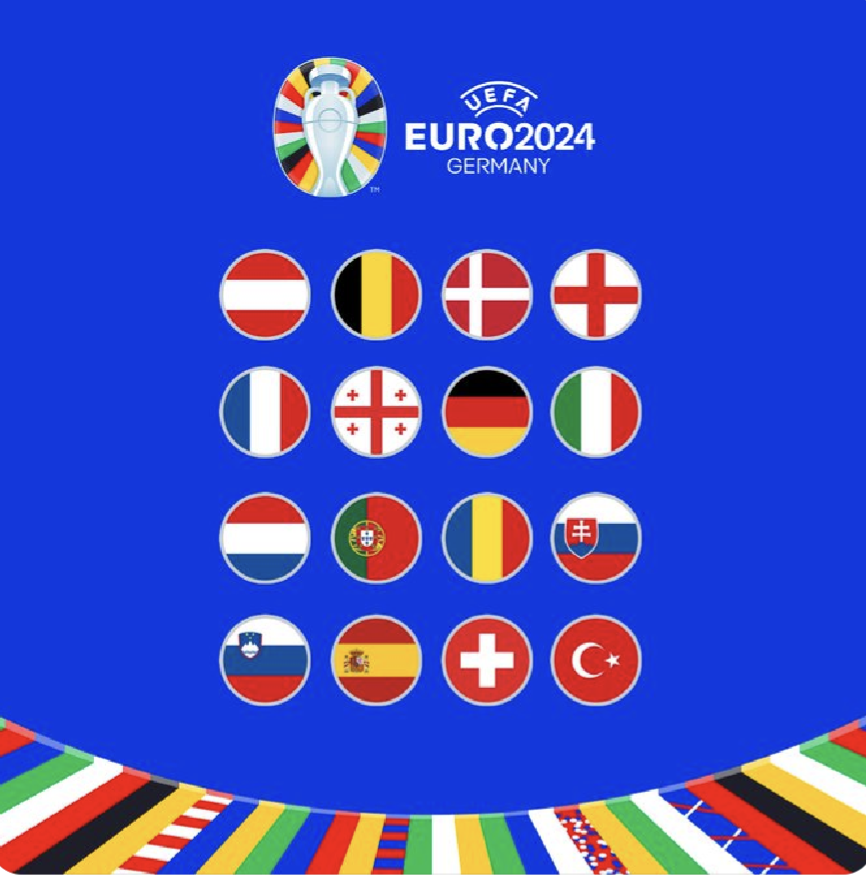
The image above shows the flags of the sixteen nations still in the running. The whole point of those 36 games of group play is to reduce the field of 24 to the 16 most worthy of advancing. After that, each round is a knockout match to pare down the field to the two to square off for the Euro Cup. The group play was quite interesting. A hat trick wasn’t scored but a lot of brilliant goals. There were four 0-0 games. I hate 0-0 games! There were a lot of controversial referee calls. Also a lot of shockers from teams one wouldn’t consider a favorite but made it through. For all the teams, none of the teams had a case of losing all three games. One group was a case of only a single win and the rest draws to decide. Another group was a case all four teams had a win, a loss and a draw. It must have been tough to decide the finishing order, which they eventually did.

On Saturday the 29th starts the knockout rounds. After all that group play to narrow the 24 to 16, the upcoming Round Of 16 is just a single game for each team to narrow the field of 16 to 8. The layout for the Round of 16 doesn’t make the same clear sense as the Round of 16 in a 32-team World Cup, but this is how UEFA arranges it. I just hope the tournament ends up with the right two in the final. In the meantime, here are my predictions for each match. Matches are in chronological order and my prediction for the winner will be bolded:

ROUND OF 16

Switzerland (Group A 2nd.) vs. Italy (Group B 2nd.): Switzerland finished 2nd in Group A without a loss. It all started with a 3-1 win to Hungary, then 1-1 draws to both Scotland and Germany. Italy opened well against Albania 2-1, lost to Spain 1-0 thanks to an own-goal and drew 1-1 against Croatia in the stoppage time at the end. For this match, I predict Switzerland to win on penalty kicks. The last time Switzerland lost to Italy was 1993.

Germany (Group A 1st.) vs. Denmark (Group C 2nd.): Being the host nation, Germany knew they had to deliver, and deliver well! They did just that opening the Euro with a 5-1 win over Scotland and a 2-0 win over Hungary. Their qualification guaranteed, they could afford to draw 1-1 against Switzerland. Denmark had the good fortune of drawing all three games in their group: 1-1 draws to Slovenia and England and ending with a scoreless draw to Serbia. For this game, I predict Germany to win because they’ve been better at delivering this tournament and making wins happen.

England (Group C 1st.) vs. Slovakia (Group D/E/F 3rd.) Group C was the group where five of the six games were draws. England delivered the only win: 1-0 against Serbia. With their scoreless draw to Slovenia and 1-1 draw to Denmark, that was enough to make them top Group C. Slovakia was in a group that was just as tight. All four Group E teams had a win, a draw and a loss. Slovakia’s win was to Belgium 1-0, their loss to Ukraine 2-1, and their draw to Romania 1-1. For this game I predict England. England has never lost to Slovakia in the six times they played. A single draw at Euro 2016 but never lost.

Spain (Group B 1st.) vs. Georgia (Group D/E/F 3rd.): Spain had it’s win of Group B guaranteed after the second game! They opened 3-1 against Croatia and did 2-1 against Italy. Their 1-0 win over Albania just was a bonus for straight wins. Georgia went from the surprise of qualifying to the surprise of this tournament. They lost their opener to Turkey 3-1, came back to draw against Czechia 1-1 and then win to Portugal 2-0. For this match, I predict Spain. The two have met head-to-head seven times and Spain only lost to Georgia once. Spain won the rest of the times..

France (Group D 2nd.) vs. Belgium (Group E 2nd.): A classic match! France finished second in Group D starting with a 1-0 win over Austria, the only Group F team to beat Austria, a scoreless draw to the Netherlands and a 1-1 draw to Poland. Belgium started their Group E play with a surprise 1-0 loss to Slovakia, then came back with a 2-0 win to Romania and ended with a scoreless draw to Ukraine. For this, I think this will go to a draw with France winning on penalty kicks.

Portugal (Group F 1st.) vs. Slovenia (Group A/B/C 3rd.): Portugal not only clinched qualification after their first two games, but they also clinched first place in Group F in the process! A 2-1 win over Czechia and a 3-0 win over Turkey is all it took. They could afford to lose to Georgia 2-0 and still top Group F! Slovenia was straight draws with 1-1 to Denmark, 1-1 to Serbia and ended with scoreless against Denmark. Despite the same goal differentials as Denmark, their extra yellow card caused them to finish third in the group. Portugal look on target but I think the game will go to Slovenia. Why? In the one time they ever met, a friendly just three months ago, Slovenia won 2-0.

Romania (Group E 1st.) vs. The Netherlands (Group A/C/D 3rd.): Romania began Group E with a 3-0 win over Ukraine, then endured a 2-0 loss to Belgium and ended it with a 1-1 draw to Slovakia. The Netherlands also had their own win, loss and draw in Group D. They began with a 2-1 win over Poland, a scoreless draw to France and a surprise 3-2 loss to Austria. The two have met 13 times and Netherlands have won nine times. I predict Netherlands to win again.

Austria (Group D 1st.) vs. Turkey (Group F 2nd.): Nobody expected Austria to go too far at Euro 2024. Even their 1-0 to France thanks to an own-goal didn’t help. Then came their 3-1 win over Poland and their 3-2 win over the Netherlands en route to topping Group D. Maybe Austria is a stronger team than we thought! Turkey began Euro 2024 with a 3-1 win over Georgia, endured a 3-0 loss to Portugal and came back to a 2-1 win over Czechia. The last time Austria and Turkey met was three months ago and Austria won 6-1. I expect Austria to win again.

QUARTERFINALS

Why do I predict quarterfinals before I even know who the quarterfinalists are? Do you know how tiring writing is? Anyways as in past years, I plan to take a short break and not publish my next Euro blog until just before the semifinals. With that in mind, I’ll go as if my predictions for the Round of 16 matches actually came true. So here are my thoughts:

Spain vs. Germany – They frequently meet and the results alternate: 26 previous meetings; 8 Spain wins; 9 Germany wins; 9 draws. I think this will be a tight match leading into a penalty kick round which Germany will win.

Slovenia vs. France – They’ve met three times in the past and France has won each time. Even though their last previous meeting was over 20 years ago, I don’t think much has changed. I expect France to win again.

Netherlands vs. Austria – It’s possible two teams that clashed in the Group stage could meet again this soon. If they do meet again, I anticipate a draw game with Netherlands to win on penalties.

England vs. Switzerland – They’ve met 27 times before but England has won nineteen times. I’m not expecting much to change this time so I think it will be a win for England again.

And there you have it. Those are predictions for the Round of 16 matches and my ‘estimates’ for the quarterfinals. All we have to do is wait for the games to play to see who really wins. In the meantime, you’ll get my next blog where I predict the semifinals.

UEFA Euro 2024: Group Stage With One Game To Go

How about that? All 24 teams have completed their second game, or Matchday 2. There’s only one last group game to play and that will finalize the Group Stage standings and determine the qualifiers for the knockout rounds.

This year, there is an interesting allotment of the types of teams playing, but there are certain types of teams here in Germany that have stood out the most. We have teams who appeared to have lost their greatness before now playing hard to get it back. We have teams demonstrating their known consistency. We have underdogs surprising fans with wins over big guns. We also have teams that had a “Golden Generation” for many years that looks like their luster is running out and the younger players haven’t been well-trained to keep their team’s prowess active.

Now there’s only one game remaining in the Group Stage. That’s commonly referred to as ‘Matchday 3.’ Three teams right now have already guaranteed qualification by winning their first two games. With more than two groups having at least one draw game, two wins are a guarantee for qualification at this stage. Two of those teams have also already guaranteed a first-place finish in their group because of their win over the team in second place. Here at Euro, head-to-head results supersede goal differentials which the World Cup uses to to be the top tie-breaker in group rankings. In addition, only one team is guaranteed elimination already. Right now, the fates of twenty teams are still unknown and they will all need Matchday 3 to decide everything.

With one game to go, here’s my look at the teams in each of the Euro 2024 groups and what they need to qualify. Teams that have already qualified will be bolded. Group titles will contain links to my original group blogs:

Group A:

Some could say Germany did it in the very opening game. That remains to be seen. What is a fact is Germany won both their opening games and the hosts have guaranteed themselves qualification to the knockout round! A 5-1 against Scotland in the opener and their 2-0 win over Hungary did it. Second in the standings is Switzerland with their 3-1 win over Hungary and a 1-1 draw against Scotland. Germany and Switzerland meet for their last game. Switzerland can guarantee qualification with a draw. Even if they lose, the are still assured a top-three finish and are in conformable standings to qualify, though it’s not guaranteed. Their play against Germany will decide it all.

Of the teams in Group A that have not won a match, Scotland is third with a 5-1 loss to Germany and a 1-1 draw to Switzerland. At the bottom is Hungary with a 3-1 loss to Switzerland and a 2-0 loss to Germany. Both teams will face each other Sunday. No doubt that in order to have qualifying chances for the knockout round, either team must win. Despite the advantage of a draw to Switzerland, a draw against Hungary will not be enough for Scotland to qualify with two draws and a big loss. Even if Hungary wins over Scotland, it’s game results and goal differentials that will decide if their among the four wildcard teams that advance.

Group B:

Spain did it! They opened with a 3-0 win over Croatia and a 1-0 win against Italy thanks to an own goal from Riccardo Calafiore. Their two wins guarantee them qualification no matter what happens in Game 3. Their win over Italy guarantees them first place in Group B! Although Italy’s qualification is not guaranteed, the Azzurri are second with their 2-1 win over Albania. A draw against Croatia is all they need to qualify.

For the two teams at the bottom, Albania and Croatia, they still have qualification chances with both having a loss and a draw but for both teams, they need nothing less than a win to qualify. That will be a nail biter especially because both teams will face a highly touted opponent on Matchday 3; Albania will face Spain and Croatia will face Italy. After that 2-2 draw, Albania has an advantage because they have less of a goal differential. Nevertheless it’s down to the wire for both teams in a must-win situation. I don’t call Group B the Group Of Death for nothing!

Group C:

Sometimes in group play, you can get some groups that are quite decisive in who are the biggest and best in the group. Other times, the play in the group will be hard to decipher who are the powers of the group. Group C is that group as it’s hard to tell who are the better teams. Four games have been played and three of them were 1-1 draws. The only game where a winner was declared was England’s 1-0 win over Serbia. That lone win puts England at the top of the group and with very comfortable chances to qualify. I’ve been calling Group B the “Group Of Death” because of the caliber of the teams but it looks like with the closeness of play at Euro 2024, Group C should be called the “Group Of Death.”

Actually right now, none of the teams have enough points to qualify, but none of the teams are out. All four are still eligible. Despite England having it best, both Slovenia and Denmark have it good with two tie games each. A win from either will solidify qualifying. At the very least, a draw could help either of them for a wildcard berth as three draws is three game points and even goal differentials. Serbia still has qualifying chances but being the one team in Group C to take a loss, they will need nothing less than a win to qualify. Two draws and a loss won’t cut it in the wildcard third-place runoff.

Group D:

Group D has a unique situation. None of the teams have guaranteed qualification and one team is out of contention. The three teams that still have chances will need Matchday 3 to decide anything and everything. Leading the group are the Netherlands and France with a win and a draw each. The Netherlands opened well with a 2-1 win over Poland while France won over Austria 1-0 thanks to an own-goal by Maximilian Wober. The two teams played each other on Friday but it ended a scoreless draw. If you ask me, there are a lot of big name teams that are not playing like they want it. A simple draw can guarantee qualification for either team.

Austria opened up with the hard luck of a 1-0 loss to France thanks to Wober’s own goal. When they faced Poland, it was a surprise 3-1 win for Austria. That win is crucial for Austria’s qualifying chances, but their match against the Netherlands will decide things. As for Poland, they’re out. They lost 2-1 to the Netherlands and 3-1 to Austria. Even if they win their game against France and Austria loses, Austria will still have the advantage for their win over Poland. The head-to-head factor.

Group E:

Sigh. That subject about the ‘Group Of Death’ again! Group E is another group worthy of being labeled the Group Of Death because of the play so far. Talk about tight play! All four teams of Group E are even. All four had a win and a loss. Teams most people thought would not be among contenders delivered surprise wins at the start and keep their qualifying chances healthy. I’m not sure if there are any specific head-to-head rules that explain the current rankings, but the goal differentials look to be what’s deciding the current rankings. Despite losing to Belgium 2-0, Romania leads thanks to their 3-0 win over Ukraine while Belgium takes second due to their 1-0 loss to Slovakia. Slovakia is third because of even goal differentials after their 2-1 loss to Ukraine and Ukraine is at the bottom as the one nation with negative goal differentials thanks to their 3-0 loss to Romania.

Any of the four can qualify. Thanks to all four having a win and a loss, none have guaranteed qualification and none are out and it will take Matchday 3 to decide everything. Slovakia will play Romania and Ukraine will play Belgium. If both games are draws, only then would the current standings factor in qualification. It will have to be a case of either both games having a winner and a loser or the case of one game having a winner and the other drawing in order to decide the qualifiers to the next round.

Group F:

There must be something about being a team from the Iberian Peninsula this year because Portugal not only qualified but like Spain, they too guaranteed top of their group! It took a 2-1 win over Czechia and a 3-0 win over Turkey to solidify it! Even if they lose to Georgia on Wednesday and Turkey wins, Portugal will still finish first because of their win over Turkey.

Despite the loss, Turkey is second in the group and has good chances to qualify. Turkey can still qualify if they draw, even if Georgia wins. For both Czechia and Georgia, both teams will need nothing less than a win to qualify. Their 1-1 draw against each other keeps them in contention but a win needs to happen for either to qualify. Especially for the third-place wildcard berths because the two third-place teams with the lowest game results will join the fourth-place teams from each group packing for home sooner than they hoped!

And there you have it! That’s my summary for the Euro 2024 groups with Matchday 3 being all that’s left for all 24 teams. It will be interesting to learn of the other thirteen that advance and the seven others that get an earlier-than-hoped return home!

UEFA Euro 2024: Group C Focus

Group C has an interesting allotment of teams. First, there are two Balkan teams. Second, there are two teams that met in the semifinals at the last Euro. I mentioned that Group B is commonly scene as the “group of death” because of having three of the best teams in the World, but this group looks like a group where anything can go. It’s possible any of the teams can be ranked anywhere in the end. So with our further ado, here’s a look at the teams from Group C:

-Slovenia (57): One thing about the Balkan nations is that they know how to pull surprises. Slovenia is one such team that knows how to surprise. From the tiny Balkan/Alpine nation of just slightly over 2 million comes a team that was last at the Euro in 2000 and has played in two World Cups. It’s even won against some big names like Italy and Portugal. Among the teams they’re playing here, they’ve never won against England or Denmark but have beat Serbia once.

The team, which is one of only two teams at Euro 2024 that doesn’t have an official nickname, has been coached by Matjaz Kek since 2018. Kek played with the very first Slovenian national team. The players play for various teams in Europe and North America. Stars are Atletico Madrid goalkeeper Jan Oblak, midfielder Jasmin Kurtic and striker Josip Ilicic. Over the past year and a half, they’ve had wins to Northern Ireland, San Marino, Portugal and Armenia. They’ve had a draw to Bulgaria, a win and a loss to Finland, and a draw and a loss to Denmark. Euro 2024 is a new chance for Slovenia to prove itself. They could be the minnows that break through!

-Denmark (21): If there’s one team that’s unpredictable, it’s Denmark: the lone Nordic team to qualify for Euro 2024. De Rød-Hvide were the surprise winner of 1992. They also delivered shockers in Euro 2020. The first was after teammate Christian Erikson suffered cardiac arrest. The team played on and ended up in the semifinals. Some say it was because of Eriksen that they had the spirit to go that far. The team would go on to return to the World Cup in 2022.

Denmark has been coached by Kasper Hjulmand since August 2020. Star players include goalkeeper Kaspar Schmeichel, midfielder Eriksen and defender Simon Kjaer. In the last year and a half, they’ve won against Finland, San Marino, Sweden and Norway. They drew to Switzerland and had a win and a draw to Slovenia. They’ve also had a win and a loss to both Kazakhstan and Northern Ireland. It’s possible Germany can be the place for Denmark to prove its team one of the best in Europe. A surprise win again like in 1992? Never say never in football!

-Serbia (33): It seems as though the Orlovi struggle to relive the glory days of Yugoslavia where they finished fourth twice at the World Cup and finished runner-up in two Euros. Ever since Yugoslavia split up in the 1990’s, it first started as Serbia-Montenegro which was a single Euro in 2000 and a single World Cup in 2006. On its own, Serbia has successfully qualified for three World Cups in four attempts but has only now qualified for its first Euro out of five tries.

The team has been coached by Dragan Stojkovic for over three years. The players play for various clubs in Europe and Arabia with most players playing for Greek teams. Their stars include midfielder Dusan Tadic and forward Aleksandar Mitrovic. The team has had wins to Lithuania, Cyprus, Sweden and the United States. They’ve had draws to Bulgaria and losses to Hungary, Austria and Belgium. It’s quite possible Serbia can make their Euro debut a bang and go further than most predict!

-England (4): People have a love-hate relationship with the Three Lions. They always bring the finest combined football talent in the world onto their team, but they often can’t play as a team. You figure a team as talented as England would have won a plethora of awards! One thing in the last eight years is England sure has changed as a team as there has been more team unity in play. The World Cup saw them in the semifinals in 2018 and quarterfinals in 2022. At the last Euro, England made it to their first-ever championship final. They scored five minutes into the game, but it was downhill from there as Italy equalized and it led to penalty kicks where England, of course, lost.

Despite their biting losses, the team has played with the most team unity it’s had in decades. You can thank coach Gareth Southgate for that ever since he became coach in 2016. All members play for Premier League teams except two, including captain Harry Kane who plays for Bayern Munich. England brings a team full of top players but it also brings in a lot of young talent too. Since World Cup 2022, they’ve had wins against Italy, Scotland, Australia and Bosnia. They’ve had a win and a draw against both Ukraine and North Macedonia. They only had two loss since the World Cup and they were against Brazil and Iceland. Euro 2024 could be another chance for England to clinch its first-ever win.

My Predictions: It never fails. At the end of play, all four teams will have to be ranked. I believe the qualifiers from this group will be England and Denmark. Serbia will be in third, but I don’t think they will have enough points to qualify.

And there you go. That’s another look at a Euro 2024 group. This time Group C. Hard to believe I’m halfway done! Well it’s in good time as Euro starts in a week!

2023 Oscars Short Films Review: Live-Action

It’s interesting when the Academy deliver their nominations for feature-length films, they’re mostly for English-language films. Most of them being American films. Yet the nominees for the short films categories are often multilingual. For the films nominated for the live-action category, we have  films in French and Danish. We also have three English-language films, but two are from the UK. Not as much foreign language as the animated films but still it tells how these categories are among the most international of them all.

What’s interesting about the short films in the live-action is that many are from up-and-coming directors, as is the common case in this category, but we also have one British film directed by Wes Anderson! Also in the film are renowned star actors like Benedict Cumberbatch, Ben Kingsley, Dev Patel, Ralph Fiennes and Richard Ayoade. The other films also show actors of renown like Brittany Snow, Leif Andree and David Oyelowo. So there’s something about short films that make well-known actors want to pursue them.

Without further ado, here are my thoughts on the Live-Action short films nominated for the Oscars:

The After (dir. Misan Harriman) – Dayo is a successful businessman in London. One day, he drives his daughter to the top floor of a parkade to meet up with his wife. Suddenly a man wielding a knife commits a massacre all over the parkade. The man stabs his daughter to death. The wife, heartbroken, jumps to her death as Dayo fights to restrain him for the police. Time passes. Dayo is resigned from his position and makes his pay an Uber driver. He has cut off all contact from his friends and colleagues and won’t even meet with crisis management counselors. Although he keeps to himself, it’s obvious he’s still hurting on the inside. As he waits for his latest customers at the airport, he takes the picture of his family and sings “Happy Birthday.” The daughter of the family he’s to drive looks very much like his own late daughter. He tries to restrain his emotions at first as the parents make their way to the car. During the drive, the couple are consistently arguing in front of the child, but the daughter is sensing something is wrong with Dayo. Dayo still tries to keep his cool. As he gets out lets the family off at their house, the daughter goes to hug Dayo and Dayo just breaks down. The parents are shocked by what they see and leave him, but Dayo picks himself up.

How do you live again after you’ve lost it all? This is the type of question we don’t normally ask ourselves or don’t want to think about but unfortunately, there are some people who have to do exactly that? This is a story that does a great job of showing the before-and-after of a tragic incident that claims the lives of Dayo’s wife and daughter. Throughout the story, Dayo is the storyteller through his actions and his emotions. Even without dialogue, you can sense what Dayo is saying through his body language. He doesn’t know how to live again or deal with his emotions. It’s right after the breakdown he has after the daughter hugs him that Dayo knows he has to continue on, despite how hard it will be. This film which is the directorial debut film for Misan Harriman tells a gripping story with a profound message. David Oyelowo does an excellent job in his performance in both scenarios of the story. If they could give Oscar nominations for performances in short films, I’d say give one to David!

Invincible (dir. Vincent René-Lortie) – The film begins with a young boy in the driver’s seat in a car named Marc who telephones his mother, but doesn’t say a word. His mother tells him to come home, but police lights flash. Rather than surrender to the police, Marc drives the car off the cliff into the water. Going back weeks earlier, Marc is on a family vacation having fun with his family at the lake. He plays with his little sister but is embarrassed of how she chickens out with her finger over his lighter. This is the last set of fun Marc will spend with him before being sent to the youth detention centre. The first day, Marc can’t stand being in a sweltering room with no way to cool off. He ignites the sprinkler system which the officials put him on a stern warning. A councillor tries to deal with Marc and tells him how he has what it takes to be a smart positive influence on others and can’t understand why he’s always getting in trouble. One day, the official sees progress in Marc and how he helps others. The officials decide to take the boys to a nearby community pool. it appears Marc is having fun with all of them but when the councillor isn’t looking, Marc does his latest escape. Marc runs into a car but as the woman enters a store to call the ambulance, Marc steals it, attempting to take his escape further. As Marc stops, he calls his family. The mother, aware the police are pursuing Marc, pleads for him to return as the sister tests her pain with the candle.

This is a story inspired by a troubled 14 year-old boy from Quebec who killed himself as he drove into a lake in 2008. The story haunted the people in the area for many years. The boy, Marc-Antoine Bernier, was a friend to the director. Here, it appears the director is using his film to bring some respect back to Marc. Marc was an intelligent boy capable of a lot of good, but kept on getting into trouble. We all have known a kid like that in our childhood. Although this is a story inspired by a real-life person and based on true events, there may have been events or happening added to the story. Only Marc knows what really happened. Nevertheless Vincent makes a good effort to redeem Marc from the story he tells and even tries to get us to feel some empathy for him. We’ve all had those years when we were younger when we all felt we were trapped mentally, if not physically. If Vincent doesn’t make you feel empathy for Marc, he does make for an intriguing story. That’s why I make this film my Should Win pick.

Knight Of Fortune (dir. Lasse Lyskjær Noer) – Karl is at a multi-chapel funeral home where he comes to mourn his wife. Left alone, he can’t bring himself to open the casket. He tries to adjust a light but it breaks. Frustrated, he goes to a bathroom where he encounters another widower named Torben. Torben claims he can’t open the casket for his wife. Karl goes with Torben to the chapel and helps open the casket. As Torben attempts to say his “last words,” a family comes in. They’re the real family of the deceased woman including the real widower. They allow Torben and Karl to stay. When the widower is at a loss for words, Torben is able to say the right words as if the woman really was his wife. Karl leaves Torben angrily but he later learns from the funeral directors that Torben lost his wife in a boating accident three years ago and never had a real chance to say goodbye. Outside in a nearby bench, Karl notices Torben. Instead of anger, Karl laughs and invites Torben to the chapel where his wife is. Torben is able to open the casket and Karl is able to say his last goodbyes. As Karl gives his wife one last kiss Torben sings “Knights Of Fortune.”

Another story of loss and coping. Although this story deals with the subject of death in a gentler manner, and even includes humor, We all know that loss is never an easy thing to deal with, but it needs to be dealt with. This is a story of a widower struggling to properly say goodbye encountering an imposter who knows the right words to say goodbye to a woman he’s never really met, but makes like she was his wife. Once Karl learns about Torben that he’s not simply an imposter, but a hurting man who uses funerals of wives to say the goodbyes he always wanted to say to his own wife, could Torben be the very person to help Karl deal with his grief? This is a story of grieving, healing and saying goodbye that is greatly different from other stories. Nevertheless it does offer a message of healing and hope. It’s ironic how this imposter is exactly what Karl needs to properly deal with is loss and say goodbye, and a friendship that really shouldn’t be, happens.

Red, White and Blue (dir. Nazrin Choudhury) – Rachel, a waitress in a diner, looks at a pregnancy test and sees a positive result. Rachel is a single mother who has difficulty to support her two children. She also lives in Arkansas where abortion is illegal, thanks to the overturning of Roe v. Wade. She plans a trip for an abortion procedure in Illinois where it is legal, but it’s more than she can afford. One day, a woman customer who somehow knows what Rachel is dealing with leaves her a tip which makes up the remainder for her abortion trip. Soon, she leaves her son Jake with a friend as she takes her daughter Maddy on this trip. This is the first time out of Arkansas for both of them. Before they go to the clinic, they go to a carnival as it’s just before Maddy’s birthday. Maddy wants a merry-go-round ride, but it’s more than Rachel can afford. She agrees to one ride and Maddy chooses the elephant. At the clinic, Rachel learns she’s late for her appointment but through past recollections and as the receptionist learns the dirty facts, she tries to make it urgent.

No doubt this story is about abortion. Especially in post-Roe v. Wade United States. The thing is this story is more than that. You know the story is about the pursuit of an abortion, but it’s not what you originally think at first. You think it’s about an impoverished mother getting an abortion because she’s two-and-through, but things change as you learn more information. You wonder why on earth would a mother take her young daughter on an abortion trip? Soon you learn there’s more to the reality of unexpected pregnancy and abortion that meets the eye. Including a lot of upsetting truths. It’s also surprising how in a story that has a theme that hits close to home and presents a story that many would find upsetting, it is still able to have a heart-warming ending that works. That is something in film that is very tricky to do, but Choudhury accomplishes it!

The Wonderful Story Of Henry Sugar (dir. Wes Anderson) – Based on a short story written by Roald Dahl, Henry Sugar is the pseudonym of a wealthy bachelor who loves to gamble away his inherited riches. Thing is he never seems to have enough and wonders how can he get more money? He learns the legend of a man from India named Imdad Khan who learned the fine art of levitating and seeing with is eyes closed, thanks to the teachings of a Great Yogi. Thing is as the doctors were studying Imdad, Imdad tells his story and dies suddenly. Henry tries through great lengths to master this technique through all he can learn. Once he finally masters the sight trick, he goes out gambling and wins big! Problem is all this money isn’t making him any happier. At first he thinks the right way to give the money away is to throw it off a balcony. After it causes a riot, police recommend Henry develop a better method. Henry then spends the next twenty years traveling the world, gambling, and donating his winnings to hospitals and orphanages.

This is the last of the five shorts shown in the shorts.tv reel. After seeing four stories that were either depressing, too serious or had dark subject matter, it was refreshing to end the reel with a light-hearted comedy. The story succeeds in making the tale amusing. Already we have a major director directing it and four major actors — Cumberbatch, Kingsley, Fiennes and Patel — acting in it. Nevertheless the story telling, set changes, and the acting of all make it a delight to watch. It makes for a “guilt-free guilty pleasure” as I like to call such things. That’s why I make this film my Will Win pick!

And there you have it. Those are my reviews of the five films nominated in the Oscar category Best Live-Action Short Film for this year. That also completes all my reviews for the Oscar-nominated short films. Those short film categories are usually the hardest to pick a winner. You think you know what will win, but end up surprised in the end. We’ll see how it all goes on March 10th.

VIFF 2023 Review: Apolonia, Apolonia

French painter Apolonia Sokol and her attempt to make a career as an artist is the subject of the documentary Apolonia, Apolonia.

Those of you who are into the new artists may or may not know who French painter Apolonia Sokol is. The documentary Apolonia, Apolonia appears to be a documentary about Sokol, but becomes a lot more.

The film starts in 2013 as Apolonia gets herself ready for her art exhibit. The film then flashes back to 2009 when Danish film maker Lea Glob first meet the young Apolonia after just graduating from the Ecole National Superior de Beaux-Arts de Paris. She talks of her childhood of just growing up, the daughter of two actors, with her mother in an artist’s flat owned by a Parisian theatre company. She also reveals she had cancer as a child and was not expected to survive but the nuns prayed over her and she made it. As Apolonia has graduated, she decides she wants to be a professional artist. She feels it’s in her. She’s grown up her whole life around the artistic friends. Her artistic influence throughout her life is inseparable from her. Though it comes right after her professor tells her that her paintings are less interesting than her personality.

Undaunted, she starts her first works in Paris. She decides with her first paintings what her art will be about. They won’t simply be portraits of people, mostly women. She aims to get to know the subjects she paints more intimately and wants that reflected in her paintings. For painting women, she has a goal of redefining the modern woman through her paintings. She sets up her works in her flat which she continues to hold parties with many artistic types. Soon the theatre building she’s lived in her whole life is repossessed and her mother has to find a new apartment. One woman she meets from a party, a Ukrainian woman named Oksana, soon becomes Apolonia’s girlfriend and she starts living in her apartment with the mother. Oksana, who formed a feminist activist group at her college called Femen, is very understanding of Apolonia’s artistic goals, unlike Apolonia’s recent ex-boyfriend. Early in her pursuits, she has many art exhibitions in Paris and various cities in France. Apolonia continues her works just as both Oksana and her mother are living in the apartment and it makes things cramped.

It’s only a matter of time until Apolonia captures the eye of someone big in the arts world. His name is Stefan Simchowitz and he is famous for being a renowned art collector. Simchowitz sees promise in Apolonia’s works and he offers her a ‘big break’ where she can have her art viewed in Los Angeles by some of the biggest names in the art world. There is one catch; the deal includes a minimum number of paintings to create. This becomes a case of both ambition and frustration for Apolonia. She struggles with that demand with the number of paintings she tries to do simultaneously, with the expense of her flat in Los Angeles, with the expense of her painting materials, and her loved ones being thousands of miles away. When the works are finally launched on display, her works get a lot of good reviews. She also gets some critiques including one critic saying that her works look more forced than inspired.

Over time, Apolonia continues to paint and continues to showcase her works around the world in France, Denmark, other American cities, Argentina and Turkey. As her exposure grows, things become more difficult for her. She questions her artistry and if it should even submit to commercial pressures. Things also stand in the way with the relations with people closest to her. The relationship with Oksana ends and her new love is a man. She’s still insistent on not being a mother, and even has an abortion. Then in 2018 while doing an exhibit in another country, Oksana commits suicide. It breaks Apolonia’s heart, but she paints her memory in her next paintings. Then suddenly, the filmmaker herself becomes hospitalized after giving birth. Lea, the director, is not supposed to make it, but she recovers. Flashing forward to the 2020’s, Apolonia has been honored for her works by the artistic board of the French government. She reflects on all it took for her to make it to this level.

This is a telling documentary. It is very rare for a documentary to showcase an artist and their attempt to make it in the arts work from their very start to when they finally make it. As we follow the artist’s path, we can easily see why Apolonia would want to be an artist. She was surrounded by the arts and artistic people throughout her life. It eventually becomes her turn to express herself. We get a look at all the works she creates and why she paints she does. We see all the difficulties Apolonia goes through to achieve her renown such as her first exhibitions, her first contract, the cost of creating the many works expected of her, the critics she has to deal with, the sexism in the arts world, the loss of her former girlfriend. Even family situations as her father wants her to become a mother but her grandmother is fine if she doesn’t have children. It’s a long 13 year struggle that comes with the triumph in the end. Anyone who’s interested in making it as an artist should see this. It will show them a lot and remind others familiar with the arts world it’s still hard to make it as an artist. Always was.

Those who watch this documentary will also see it’s not just about Apolonia Sokol. The film is also about the documentarian herself. As she continues to film Apolonia and her life, she grows as a human. Apolonia’s emergence as a great in the world of art coincides with Lea’s emergence as a documentarian and also as she grows as a person. In a bizarre twist of fate, Lea also cheats death as she was given a low chance of surviving after her child’s birth. Just like Apolonia was given a low chance of surviving her childhood bout with cancer. Sometimes it seems the two were fated to be together.

This documentary is unique that it mixes three different stories into one and somehow pieces it together well. It first comes as a film that follows a young emerging artist as she works to establish herself. It shows the works she does, her inspiration, her free personality and the sexist hurdles she tries to overcome. It also shows her in her personal life. It shows her as she tries to establish herself as an adult and faces the pressures from family and others to find someone she can commit herself to or even the pressure to become a mother. It also shows her relationships: first with a Ukrainian woman named Oksana, then with a French man. There’s also dealing with Oksana’s suicide which hurts Apolonia to this day. Finally there’s the filmmaker herself Lea Glob. Just as Lea helps make Apolonia in her film, it becomes a case where Apolonia makes Lea. Definitely a documentary that goes beyond its original mission.

Top accolades belong to Lea Glob. From first meeting Apolonia in 2009 to constantly coming back to her to tracing her career’s biggest moments, she captures an artist in the making. She captures an artist’s soul with a fierce feminist attitude that she includes in her works. She captures the difficulties Apolonia faces to make it as an artist, especially sexism and capitalism. She captures Apolonia’s relationships with the people around her and some of the heartbreak she experiences. She also captures her own unity with Apolonia as she is also an against-all-odds survivor story too. One could joke the two may be long lost sisters!

This film has already won many a documentary award at film festivals. Among them, wins in documentary categories at the Amsterdam International Documentary Festival, Hong Kong Film Festival, the CPH: DOX Festival, the Goteberg Film Fest and the One World International Human Rights film Festival

Apolonia, Apolonia is a documentary intended to track the growth and progress of a rising artist, but it also tracks the growth and progress of the film maker herself. It’s rare to see and it captures your intrigue too.

VIFF 2023 Intro And Review: The Promised Land (Bastarden)

Mads Mikkelsen plays Gustav Kahlen, a settler in 18th Century Denmark in the film The Promised Land.

VIFF INTRO: Normally I do a separate blog for VIFF when it opens. Since the Festival ended on Sunday the 8th, I’ll do a brief summary here. The Vancouver International Film Festival returned. This year, there were no longer films to stream as VIFFaccess is no longer. It became a case cinemas are working to bring crowds back to the theatres. Same with VIFF as its films were shown at seven different facilities. There was a reduced number of films shown at 140. Now that the pandemic is almost over, the arts communities have to downsize in order to rebuild itself. Nevertheless a lot of great films to see coming from 73 nations. A wide selection of Canadian films, Indigenous films, LBGT-themed films, documentaries and an excellent number of films directed by women are yours to watch. And even after the Festival with VIFF repeats just after! The Festival may be over but the reviews are still worth posting as the films could return to the VIFF theatre, get wider release or even be put on a streaming service.

One of my goals of the Vancouver International Film Festival is to see at least one film that’s a nation’s official entry in the Best International Feature Film category for this year’s Oscar race. I did it on my very first VIFF film: Denmark’s The Promised Land. This film already has a lot of buzz, and rightly so.

It’s the middle of the 18th Century in Jutland; territory ruled by Denmark. A peasant man named Ludvig Kahlen of unknown fatherhood sets out to cultivate the untouched heath land in hopes to win honor from the king. Even though the king’s men accept and give him servants, he soon makes an enemy with Frederik Schinkel who owns the land and wants to believe his say supersedes that of the king’s. He also reminds Kahlen that those who attempted to cultivate the land before him have failed. Nevertheless Kahlen is stubborn and is determined to make it work with the minister Anton Eklund and a servant couple. He also meets a dark-skinned Romani orphan girl named Anmai Mus who tries to connect with him, but he rejects her at first with the common racist attitude.

Over time as Kahlen gets better at his work, Schinkel gets more envious and more control-hungry. He even takes the servant husband, has him whipped in his private chamber and executed with boiling water poured on him in a dungeon. All are shocked but Schinkel is remorseless. A distraught Kahlen soon develops an intimacy with the servant’s widow. He even welcomes Anmai Mus in his life and soon it becomes a family-like situation between the three. As for the heath, Kahlen and the two work tirelessly against a stack of odds to make the land work. If it’s not the land that’s hard and lacks fertility, it’s the unpredictable weather, workers that desert and the murder of Eklund by Schinkel’s men.

In the second year, Kahlen gets a new set of settlers from Germany. They are hesitant to help Kahlen out as they view Anmai Mus as a wicked child because of her dark skin. Kahlen is insistent since he has developed a fatherly love for her. Meanwhile problems threaten Kahlen’s goal and his unity with Ann Barbara and Anmai Mus. The jealous Schinkel starts coming onto Ann Barbara and creating a love triangle between her and his cousin wife. In addition, the workers refuse to assist as long as Anmai Mus is there. They consider her bad luck. Kahlen makes a resolution to send her to a boarding school miles away. It works in getting the settlers to work, but Ann Barbara is disgusted how he did this in the name of his pride.

The cultivation of the heath becomes successful, but the envy of Schinkel gets to the point he feels he has to destroy what Kahlen has created. Kahlen’s land and livestock are set ablaze. Kahlen responds by killing some of Schinkel’s men. That leads him to being captured by Schinkel and sentenced to death. The method being whipping and boiled water: the fame fatal punishment Ann Barbara’s husband receives. Kahlen is whipped mercilessly and Schinkel would delight in seeing him burned to death but as Kahlen is put in the dungeon, Schinkel is called to his chamber. Ann Barbara awaits him and promises him an unforgettable night. After a cup of tea, which Ann Barbara poisoned, Schinkel convulses and Ann Barbara has him at his most vulnerable. Ann Barbara does not resist arrest at all for his murder.

Schinkel’s murder is successful in stopping Kahlen’s execution, but Ann Barbara is imprisoned for life hundreds of miles away. Before Kahlen returns to his farm, he takes Anmai Mus away from the boarding school and promises never to let her go. Upon returning to the fame, Kahlen leads and demands the settlers treat Anmai Mus with respect. Over the years, the farm is prosperous and Kahlen earns the title of baron from the king. Also Anmai Mus grows up to be a successful woman who wins the eyes of a young man in the area. It is after her marriage to him and her goodbye to Kahlen that Kahlen knows what he must do. The ending is slow, but it comes with a surprise result.

This is one of those films that is based on a historical person that gets you questioning if it’s real or not. This story of Ludvig Kahlen as he and his wife try to grow a farm and overcome the ruthlessness of landowner Schinkel does appear farfetched in how it plays out. Actually this is based on a novel from Danish writer Ida Jessen. Nevertheless this film does tell a lot about the case of classism and racism. It was as problematic back then as it is today. It will shock many how the settlers viewed the dark-skinned daughter as bad luck, but that’s how most people thought back then. Also seeing how someone who owns the land thinks he has bigger empowerment on situations than the king, we can see examples of people like that in the world.

I’ve seen films based on a novel based on a historic person before. It seems to be a common thing now. Although it is still common to do historical dramas, it’s become more common lately to adapt novels of stories loosely based on historical people. Gets you wondering about the “Based on a true story” factor. In this film, we see a case where a historical figure overcomes racism and adopts a dark-skinned girl. He overcomes classism by making the Heath fertile and marries the widow of his servant. He overcomes geographic odds by cultivating land in Jutland. He also overcomes his own class odds by him, a bastard peasant son who’s normally destined to stay in the peasant class, achieving Baronhood. It’s uncertain how much of this is true or loose fiction, but it is a story to get one thinking.

You can either welcome a loose story of historical figures like this or you can pan it for its inaccuracies or farfetched drama. However you view it, this film plays this story out in a unique style. One can say it plays out in the style of an epic film with all this recreation. Some would even view the film as an unlikely romance. Some even say this story plays out with the common dramatic elements of an American western. It takes a story of a historical person few have heard of and makes people get intrigued by the drama and even anticipate what will happen next. It even adds some comedy with the behavior of people, including Schinkel. The stupidities of Schinkel are behaviors that can easily remind people of bad behavior of some rich people of today. In addition, this story does not end like your typical drama. There are atypical twists at the ending, surprising people who didn’t expect the film to end that way. Maybe sending the message this film isn’t what they thought it would be about.

Top credits go to director Nikolai Arcel. Arcel has already amassed a good reputation with having written for fourteen previous films and directing five. One film he wrote and directed, A Royal Affair, was nominated for an Academy Award. In this film that he directed and co-wrote with Anders Thomas Jensen and Ida Jessen, he goes back into the genre of epic films and delivers a drama that’s grand in spectacle and thrills. Also worthy of top honors is lead actor Mads Mikkelsen. Here he temporarily leaves behind the MCU and Indiana Jones that has catapulted his stardom and returns to Denmark for a character he helps create and enhance with his performance. Also worth admiring is Simon Bennebjerg who creates a villain in Schinkel that succeeds in making you hate him for being evil and laugh at him for being stupid. Additional good performances include Amanda Collin for adding the drama as Ann Barbara and Melina Hagberg for adding in the charm as Anmai Mus. The set designers did an excellent job in recreating the barren land of the 18th Century and the score by Dan Romer adds to the dramatic feel of the film.

Danish film has really had it strong at the Academy Awards in the 21st Century, especially these last ten years. In the Best International Feature Film category, Denmark has achieved two of its four wins, six additional nominations and three years making it into the annual shortlists this Century. Arcel himself had one of his films, A Royal Affair, nominated in that category back in 2012. The Promised Land is the second of his films submitted as Denmark’s official film in this category. This film was even nominated for the Golden Lion at this year’s Venice Film Festival. At that same festival, Arcel was given Honorable Mention for the SIGNIS Award.

Whether it is true or mostly made up, The Promised Land is an intriguing story about classism and racism and the lust. Even a telling story about what it’s like to live under a monarchy. It’s also an unlikely love story.

2023 Women’s World Cup: Group D Focus

I’ll be touching on the more serious topics in a later blog. In the meantime, I want to touch on some of the other unique traits of this Women’s World Cup:

  • Number of venues and cities hosting: ten stadiums in nine cities (Sydney hosting two)
  • Slogan: Beyond Greatness
  • Mascot: Tazuni – A penguin endemic to New Zealand
  • Match Ball: Adidas OCEAUNZ
  • Official Song: “Do It Again” by BENEE and Mallrat

That’s only some of the traits of this Women’s World Cup. There’s too much to tell in detail so I limited it to five things. In the meantime, here is my look at the teams from Group D. One thing I have to say about the groups is that right when you think you know who will qualify, you will second-guess yourself. So here’s my take:

-England (4): Lately the Lionesses have become the toast of England. The Women’s Euro was held in 2022 in England just a year after the men’s Euro was held. Just like the men, they made it to the final to be played in Wembley Stadium. While the men lost on penalty kicks, the women won against Germany 2-1 in added extra time. So it ended up being the women who got the nation to sing “It’s Coming Home.” They also won the Arnold Clark Cup after winning all their games. Their win of the Euro last year makes them one of the favorites to win here in Australia/New Zealand.

Their coach is Sarina Wiegman, the Dutch coach who coached the Netherlands to the 2019 World Cup final. The team consists of legends like Lucy Bronze, Jordan Nobbs and Millie Bright as well as rising young talents like Lauren Hemp and Ella Toone. Since 2022, they’ve had a stellar record with wins against top teams like Sweden, Germany and the US. They’ve also had draws to Norway, Brazil and Portugal and a recent loss to Australia; their first loss in thirty matches. Never underestimate England. They’re a team that can rise to the occasion here. And possibly have the nation singing “It’s coming home” again!

-Haiti (53): Haiti is known as the poorest country in the Western Hemisphere. Despite it, they place a lot of hope in their athletes. This year is a delight because for the first time, Les Grenadières qualify for the Women’s World Cup. They achieved it in a playoff round and it was wins against Senegal and Chile that allowed them to clinch their berth.

The team is coached by French coach Nicolas Delepine. The team has at least half the members under 23 and most play for colleges or leagues in the Unites States or France. Their two wins to qualify for the World Cup are two of the team’s three wins they’ve had in the last 12 months. They’ve also had losses to Costa Rica, Nigeria, Portugal and Jamaica. Haiti may be a team new on the international circuit but they can use this World Cup as a great learning experience and help them excel further in the future.

-Denmark (13): This is a comeback for Denmark. When women’s football was just starting to get recognition, Denmark was at its first Olympics in 1996 and at four of the first five Women’s World Cup. After that, it appeared De rød-hvide lost their edge as the last WWC they competed in was in 2007. They did finish as runners-up at Euro 2017, but failed to qualify for France 2019. Recently a new Danish team have arrived to bring Denmark back to being a top world contender.

Bringing Denmark back to its first Women’s World Cup in 16 years is head coach Lars Sondergaard who has coached the team since 2017.The team is composed mostly of member who play for various women’s leagues around Europe. Top names are forward Pernilla Harder, midfielder Sanne Troelsgaard and defender Katrine Veje. Denmark has had mixed success in play in the last 12 months. They’ve scored wins against Switzerland, Norway, Sweden and Japan, but endured losses to Spain, France, the Netherlands and Australia. The stage is here in Australia and New Zealand to prove to the world that Denmark are back and ready to challenge.

-People’s Republic of China (14): Like Denmark, China has also been widely regarded as a past great team in women’s football. They were runners-up at the 1999 World Cup and the 1996 Olympics. Since then, they went through a decline to the point they didn’t qualify for either the 2011 Women’s World Cup or the 2012 Olympics. In the past ten years, the Steel Roses have been showing signs of making a comeback with finishing in the quarterfinals at the 2015 WWC and the 2016 Olympics. In 2022 they won their first AFC Women’s Asian Cup since 2006.

The team is coached by Shui Qingxia who was part of the 1996 Olympic team that won the silver medal. Most of the players come from teams from the Chinese Women’s Super League. Very few team members play in leagues outside of China. Leading the team is forward Wang Shanshan and midfielder Zhang Rui. China is one of few teams willing to play against Russia and they played two friendlies against them early in July winning both. China’s also had draws against Switzerland, Ireland, Japan and South Korea, and losses to Spain and Sweden. China comes to the Women’s World Cup with something to prove and they are ready to prove it here.

My Prediction: This is another group that is not as easy to predict as it looks. Some games can go either way and there’s the possibility of shockers. For this group, I predict England and the People’s Republic of China to qualify to the knockout round.

And there you have it. That’s my prediction for Group D. I’ve already reviewed a lot of top contenders, but there’s still more to come over the week.

2022 Oscar Shorts Review: Animation and Live-Action

Did you think with this being an Oscar year I would miss my chance to see the films nominated in the short films categories? The chance was there and I took it again. All the films had a unique style about them and all appeared worthy of their nominations. So here I go. Here are my reviews for the nominated films in the Animation and Live-Action categories.

BEST ANIMATED SHORT FILM

The Boy, The Mole, The Fox And The Horse (dirs. Charles Mackesy and Matthew Freund) –

A boy is lost in the winter snows. A mole finds him. He hopes the mole will lead him home, a home he’s never had before, and wants to grow up to be kind. The two hope the river they find will lead them there, but they’re encountered by a fox. The fox wants to hunt them both down, but finds himself in a trap. The mole frees him and the fox runs away. The next day the mole falls into the river, but is saved by the fox. The fox joins the mole and the boy on the journey to the boy’s home. Along the journey, they encounter a white horse who is an outcast. The three welcome the horse along the journey. Soon they discover the horse has a special trait. He can fly like Pegasus! Soon they come to the village where the boy’s home is. The three animals say their good-byes, but the boy makes a surprising decision.

It seems like every year, there has to be at least one animated short from the UK that’s nominated. This is this year’s nomination. This is an adaptation o f a 2019 children’s book from Charlie Mackesy, who co-directs this short film. This is a 2D short that has been on Apple TV starting this Christmas. It has a quiet soft tone that’s more touching than sentimental. It makes the right moves and is able to be soft without getting too mushy or manipulative. This is one charmer that I give both my Should Win and Will Win pick.

The Flying Sailor (dirs. Wendy Tilby and Amanda Forbis) – It’s the morning of December 6, 1917 along the coast in Halifax. Two ships collide within each other with one catching on fire. A sailor thinks nothing of it and lights a cigarette. Only the burning ship soon explodes. The sailor goes flying naked in an out-of-body experience. His life flashes before his eyes from childhood to his life at sea as Halifax is engulfed by the blast. The blast sends him out of earth and even out of the galaxy. Then all of a sudden, he’s brought back down into the galaxy, then earth, then back into Halifax into a body of water. Miraculously he’s still alive. He even stares a shocked fish in the eyes.

As I was watching this, I asked myself “Is this about the Halifax Explosion?” Yes, it was. In fact the film makers dedicate the film to a sailor who flew 2 kilometers in the explosion and lived to tell! This film from the National Film Board of Canada is one of of two animated features from The New Yorker Screening Room to be nominated. It’s a clever story that doesn’t need any dialogue for us to get the message. It lets the images and the moments tell the story of a man who’s near a sudden death contemplate his existence. A fast film, but entertaining and even humorous from start to finish.

Ice Merchants (dirs. Joao Gonzalez and Bruno Caetano) – A widowed father and son run an ice selling business. The ice comes from a box they fill with water, let freeze overnight, and break up to sell the next day. They get their freezing temperature by being up on the very mountain they have their house upon. The house is thousands of feet above the ground hanging from ropes and requires a system of pulleys and ropes to get to. They have to skydive down together into the town to sell their wares. The flight always causes their hats to fall off. They use the money from sales to buy new hats. Then one day, the son notices the water in the box didn’t freeze. The temperature is above freezing. The high temperature of the snow is causing an avalanche and the house’s ropes are breaking. The parachute falls from the house. The father makes the decision to jump with his son. Fortunately a female skydiver finds the two in the air, grabs hold of them, and opens her parachute. The two survive, but in a surprising way!

This film from a Portuguese animation company is another film from The New Yorker Screening Room. It’s a good 2D film that is as much about its art as it is about telling its story. It uses only a few colors at a time for each of its scenes. It has the visuals and the music tell the story without having any dialogue. It also does a very good job in showing the drama of the climax. It also ends on a happy and humorous note that works well with the story.

My Year Of Dicks (dirs. Sara Gunnarsdottir and Pamela Ribon) – It’s 1991 in Houston and Pam seeks to lose her virginity as she is approaching womanhood. She, however, is undecided which boy she wants to lose her virginity with. She constantly trusts the opinions of her best friend Sam, who is male. The first boy she tries to lose it with is David, a skateboarder who thinks he’s a vampire. She’s attracted to his mystique, but soon learns what a jerk he is and of the little game he had with his guy friends. The second boy is Wally, who’s a theatre usher. They try to do it in a broom closet during work hours, but it doesn’t work out. Third boy is Robert, whom she finds as nice. She soon learns he’s gay and was interested in Sam. Pam tries a party hosted by her friend Karina. She meets a boy named Joey who appears to be orderly. The party comes to a sudden halt and Pam learns Joey is a Nazi! The story ends with a surprise that Pam learns what she was searching for was there all along.

It’s a story with both intrigue and humor. The rotoscope animation adds to the story and adds to the comedic elements of the story. Pam brings an intriguing story and Sara Gunnarsdottir does a great job of animating and directing it.

An Ostrich Told Me The World Is Fake And I Think I Believe It (dir. Lachlan Pendragon) – Neil is a telemarketer trying to sell toasters. His boss confronts him of his poor performance and threatens to fire him. As he continues working, he hallucinates and notices things missing from his cubicle. He wakes up and he sees an ostrich. The ostrich can speak and tells him this world is a ‘sham’ and advises him to get a better look at his surroundings. Neil soon finds his way out of the animation world and into a prop box full of his own mouths. The following day, Neil is shocked to see all the furniture removed. A co-worker named Gaven tells him it’s a corporate decision, but Neil rips his mouth off. The creator tries to intervene, but Neil falls off the set. With Neil’s body all broken up, the creator puts him back together and on the set. The next day, Neil is confronted by his boos, and quits.

This Australian short is an amusing stop-motion animated film. It goes from the animated story to the world of the production studio. It’s funny how the film knows it’s stop-motion and knows how to joke around about that fact. That adds to the humor of the story. It’s a funny film that goes from the animated story to the real world and back to the animated story. It seems odd at first, but it’s very likeable.

BEST LIVE-ACTION SHORT FILM

An Irish Goodbye (dirs. Tom Berkely and Ross White) – Two brothers from Belfast, Turlough and Lorcan, have lost their mother. The priest gives the sons the ashes and attempts to give them their mother’s ‘bucket list,’ but Turlough thinks its useless. Turlough, who works in London, wants to sell the farm and have Lorcan, who has Down’s Syndrome, live with his aunt. Lorcan wants nothing to do with it. Lorcan says he has the bucket list and still believes they can fulfill his mother’s wishes with her urn. The two agree to try all 100. However it’s the 99th, skydiving, that her urn smashes. Turlough soon finds out the truth about Lorcan’s bucket list the priest. That leads to even bigger friction, but a resolution does occur after they proceed with the 100th item.

This Irish short film is a well-acted film that’s mixes both tragedy and comedy with the intensity of family drama. It also deals with the issue of Down’s Syndrome in a humorous manner that doesn’t tread on being insulting or having mockery. It’s a story you anticipate to be sad, but instead turns out to be humorous, enjoyable, and even heart-warming. It’s worth seeing.

Ivalu (dirs. Anders Walter and Rebecca Pruzan) – It’s morning in Greenland. The Queen of Denmark is to visit. Pipaluk is looking for her older sister Ivalu. Her father, who acts like he doesn’t care, says she ran away. Pipaluk tries looking for Ivalu. She sees a raven and thinks Ivalu’s spirit is in the bird. As she continues the search, she remembers the conversations she had with Ivalu. It’s then she faces the facts of a lot of ugly secrets about Ivalu and how her father treated her. Pipaluk feels she has to confront the awful truth. In the end Pipaluk wears Ivalu’s dress for the Queen’s visit.

This is a story that touches on a taboo rarely discussed but is well-known among indigenous peoples. Child sexual abuse is also very common in the Inuit populations of Canada. Although this is touchy subject matter, it does a good job in adapting a short story into a watchable film. The film has visuals that are both mystic and disturbing. It’s a sad story that does come as life-affirming at the end. Its imagery is the film’s best quality.

Le Pupille (dirs. Alive Rohrwacher and Alfonso Cuaron) – The story revolves around a Roman Catholic boarding school in Italy during World War II. The central character of the story is a girl names Serafina. She’s an outcast at the school and the nuns are strict to all the girls, including Serafina. Mother Superior Fioralba is the strictest of them all. Christmas is fast approaching and the girls are to put on a Nativity play. The people in the town see the girls as darlings, but Fioralba always finds something to scold them about like singing a romantic song on the radio, which Fioralba describes as ‘filthy.’ She’s angry Serafina won’t admit to singing the lyrics and tells her what a bad girl she is. On Christmas, a rich socialite, who’s frustrated by her cheating boyfriend, gives the nuns a big red cake for the girls. Fiorabla thinks the cake is a bad thing as soldiers are starving. At the Christmas dinner, the girls are about to have dessert of the cake, but Fioralba tries to convince them not to have it. Serafina, shamed by her scolding, is able to get a slice. Fioralba hoped to use the cake for the Bishop’s visit. In the end a chimney sweep is given the cake which, thanks to him falling, is enough for everyone from the schoolgirls to his chimney sweep friends to the alley-way pets to have some of the cake.

It’s a charming story. I didn’t think Cuaron would be the type to do a short film for Disney. And in Italian. At first, you think with subject matter like this, it would be a dark story. Instead it turns out to be humorous and also turns out to be a good lesson in charity the girls and the chimney sweeps end up teaching a stern but dishonest nun like Fioralba. It’s also a story that shows how freeing yourself can even triumph over in a strict religious boarding school. And during World War II in Italy to boot! That’s why I give this film my Will Win pick.

Night Ride (dirs. Elrik Tveiten and Gaute Lid Larssen) – In a town in Norway, a woman with dwarfism named Ebba is waiting for a tram on a cold night. A tram arrives, but the driver is taking a half-hour’s break. Impatiently, Ebba sneaks her way on the tram as he’s in the washroom. She plays along with the buttons in conductor’s controls and is able to get the tram moving. The conductor leaves the washroom shocked to find the tram moving, but Ebba moves on wit the runaway tram. Two rude males board the train along with a woman named Ariel. One of the males hits on Ariel, only to learn she’s trans. The two males get confrontational with Ariel, even threatening, but Ebba stops the tram to face up the men to stop. Even as the men are rude to her about her height, she doesn’t back down. She then tells the men to lead the tram and Ebba and Ariel get off. It’s just Ebba and Ariel on the bus bench as they watch a police car chase the runaway tram. They both laugh together.

It’s very rare that a film can take the topic of transphobia and make a comical situation. Here we have a case of a woman with dwarfism who steals the train and the trans woman whom the woman prevents from being attacked. It’s almost as if the runaway tram was a miracle for Ariel as it prevented physical abuse from happening. Not to mention the eventual comeuppance of the transphobes as both Ebba and Ariel see the police car chasing the tram on a bench. Both are cold, but they’re both safe, unlike the transphobes. And an unlikely friendship to boot!

The Red Suitcase (dir. Cyrus Neshvad) – Ariane, a young woman from Iran, has just arrived at the Luxembourg airport. She looks fearful. She has her red suitcase but refuses to leave past security. This causes suspicion among the guards and they check her suitcase. All that’s inside is clothes, pencil drawings. and art supplies. Nothing threatening. The true threat is past security. A middle-aged man her father arranged for her to marry. Her father even instructs her to approach the man through text message. Ariane has to escape and try to avoid catching his eye. She tries to get her money exchanged for Euros. It doesn’t exchange to much. She then tries to go out to look for an escape. She sees an airport bus and boards it, using her exchanged money to get on. Meanwhile the man is impatient as he has a big wedding planned that day. He received a message from Ariane’s father that her flight has arrived. He notices her money envelope so he knows she is outside. He searches in the bus area. He boards the very bus Ariane is on. Ariane finds an escape. He sees her suitcase but can’t find her. Ariane hides herself in the baggage area of the bus and won’t leave until it’s safe. Even a text from her father promising if she returns home, she can have anything won’t calm her. Then the bus drives off with the man on board and Ariane still at the airport.

The theme over here has to be the subject of arranged marriages. This is especially an important film as the Iranian feminist movement has been fighting for their freedoms since October. Those scenes where Ariane takes off her hijab and one where she cuts her hair are definitely part of the message. Even though the film is important because of its subject matter, the way the film plays out as we see one side of the subject matter and we learn more as it goes along is a creative element. Even the scenes of near-misses add to the intensity. We all wants Ariane to avoid being with the husband she doesn’t want, but we fear for her safety. We get the relief at the very end. Ariane is alone at the airport with all her money spent and without her suitcase, but she is free. It’s because of this that I designate this film as my Should Win pick.

And there you have it. That sums it up for the Animated and Live-Action short films nominated for this year’s Oscars. Those that aren’t normally film buffs, watching these shorts are more worth it than you think!