2023 Oscars Best Picture Review: Anatomy Of A Fall (Anatomie d’Une Chute)

Sandra Huller plays writer Sandra Voyter suspected of killing her husband in the courtroom thriller Anatomy Of A Fall.

DISCLAIMER: This is from a blog of four reviews I originally posted on March 2, 2024. The original blog has been removed.

Anatomy Of A Fall first appears to be a common courtroom drama with a story of intrigue. Over time, you’ll learn it’s a film that’s a lot more.

Courtroom dramas have caught our intrigue time and time again. We’re presented with a criminal scenario or a legal scenario, but it’s up for us to decide whether they’re guilty or innocent or who to side with in a dispute. We learn the verdict and we’re left to decide if it’s the right verdict or not. This story is a unique story. It presents a case of a death from a fall. The deceased is the French husband of a German novelist. The fall happens from a chateau in a remote mountainous area of Grenoble. The first to notice the fall is the seeing-eye dog of the blind son. Questions arise. We learn of the troubled marriage. People turn against the woman. The prosecutor is determined to prove her guilty. The son watches despite his blindness, and seems like he doesn’t know what to think. Could he hold the truth? Could his seeing-eye dog also provide clues to the truth?

This isn’t simply a story of whether Samuel’s death is a murder, a suicide or an accident. It’s a story that develops over time with each new fact exposed, opinions from people in the story coming about, and your own opinions being formed. As we learn of Sandra Voyter, her turbulent marriage, and her recent liaisons, some of us are tempted to look down upon her and even suspect her of possible murder. As we learn about Samuel and his immaturities and later of his depression over the last few years, will that change our mind? The film is as much about how we see things and see people as it is about our story itself. Even possibly exposing sexist attitudes we didn’t think we had. There’s even the angle of the trial as seen through Daniel: the child caught in the middle. A blind boy, he has the biggest sense of the friction his parents have been going through. He lost his father and he’s at risk of losing his mother if she’s found guilty. During the time, he doesn’t know what to think of his mother and often feels lonely. Almost as if Snoop, his seeing-eye dog, is the only one who loves him and he can trust. Sometimes your concern shifts from how Sandra will be found by the courts to what will happen to Daniel. It’s like the film is two stories in one. Even Daniel’s testimony at the end will make you reconsider your stance in the case.

Top respect goes to director/writer Justine Triet. Triet has become only the eighth female director to be nominated for the Best Director Oscar. This film is actually a project she co-wrote with Arthur Haran for actress Sandra Huller to star in after the two worked together in 2019’s Sibyl. She creates a great story that presents a death and the question if it’s an accident or a murder. She presents it as a story of a French-speaking wife and a German-speaking husband who use English as a common ground to sort things out, but it adds friction. The death, the courtroom drama, the turbulent marriage, the communication barrier, and the son caught in the middle adds to the story. Even the ending which allows you to draw your own conclusion of the incident adds to the film.

Along with Triet, there was great acting from Sandra Huller. Her acting in this story helps create the character along with the actions and allows the audience to make their decisions in the case. Huller is as much of a storyteller as Triet herself. Also great is the performance of Milo Machado-Graner: the son caught in the middle. There are many times in the story, some thanks to camera shots of the courtroom drama, where one can think the film is as much about Daniel as it is about Sandra. He’s trying to make sense of what is happening. He is suspicious of his mother but is scared he will lose it all. There are times he tries to be tough with him teaching himself piano by sound clips, but you can tell he could break down. It seems like the dog Snoop is his one friend, especially with his sheltered upbringing. Graner makes him a boy you want to hug. Adding to the film is Messi The Dog as Snoop. Through Messi, we see Snoop is more than Daniel’s seeing-eye dog and best friend. He’s also one that hold clues to what could expose the truth. Additional great acting performances include Samuel Theis as Samuel Maleski, the husband that struggled with mental illness whose struggles threatened the family, and Antoine Reinartz as the prosecutor who will get you wondering if he wants justice done or simply to have Sandra found guilty.

This film has been lauded with buzz since the Cannes Film Festival. The film won the Palme d’Or at the and Triet became only the third female director in history to win. You know how I talked about Messi The Dog adding to the story? At Cannes, Messi was even given the Golden Dog Award for his efforts! Even after Cannes, film festival after film festival it was entered in would have this come away as the big winner. The film also won six European Film Awards. The film was not France’s official submission in the Best International Feature Film category. I assumed it’s because there’s too much English in the film, but other articles are suggesting there may be politicking.

Anatomy Of A Fall is a great legal drama that tells the story of a death in question and doesn’t only leave its fate to the juries, but for the audience to decide for themselves what they believe to be the truth. Even Triet herself won’t say if Sandra is guilty or not. All your call!

2023 Oscars Short Films Review: Live-Action

It’s interesting when the Academy deliver their nominations for feature-length films, they’re mostly for English-language films. Most of them being American films. Yet the nominees for the short films categories are often multilingual. For the films nominated for the live-action category, we have  films in French and Danish. We also have three English-language films, but two are from the UK. Not as much foreign language as the animated films but still it tells how these categories are among the most international of them all.

What’s interesting about the short films in the live-action is that many are from up-and-coming directors, as is the common case in this category, but we also have one British film directed by Wes Anderson! Also in the film are renowned star actors like Benedict Cumberbatch, Ben Kingsley, Dev Patel, Ralph Fiennes and Richard Ayoade. The other films also show actors of renown like Brittany Snow, Leif Andree and David Oyelowo. So there’s something about short films that make well-known actors want to pursue them.

Without further ado, here are my thoughts on the Live-Action short films nominated for the Oscars:

The After (dir. Misan Harriman) – Dayo is a successful businessman in London. One day, he drives his daughter to the top floor of a parkade to meet up with his wife. Suddenly a man wielding a knife commits a massacre all over the parkade. The man stabs his daughter to death. The wife, heartbroken, jumps to her death as Dayo fights to restrain him for the police. Time passes. Dayo is resigned from his position and makes his pay an Uber driver. He has cut off all contact from his friends and colleagues and won’t even meet with crisis management counselors. Although he keeps to himself, it’s obvious he’s still hurting on the inside. As he waits for his latest customers at the airport, he takes the picture of his family and sings “Happy Birthday.” The daughter of the family he’s to drive looks very much like his own late daughter. He tries to restrain his emotions at first as the parents make their way to the car. During the drive, the couple are consistently arguing in front of the child, but the daughter is sensing something is wrong with Dayo. Dayo still tries to keep his cool. As he gets out lets the family off at their house, the daughter goes to hug Dayo and Dayo just breaks down. The parents are shocked by what they see and leave him, but Dayo picks himself up.

How do you live again after you’ve lost it all? This is the type of question we don’t normally ask ourselves or don’t want to think about but unfortunately, there are some people who have to do exactly that? This is a story that does a great job of showing the before-and-after of a tragic incident that claims the lives of Dayo’s wife and daughter. Throughout the story, Dayo is the storyteller through his actions and his emotions. Even without dialogue, you can sense what Dayo is saying through his body language. He doesn’t know how to live again or deal with his emotions. It’s right after the breakdown he has after the daughter hugs him that Dayo knows he has to continue on, despite how hard it will be. This film which is the directorial debut film for Misan Harriman tells a gripping story with a profound message. David Oyelowo does an excellent job in his performance in both scenarios of the story. If they could give Oscar nominations for performances in short films, I’d say give one to David!

Invincible (dir. Vincent René-Lortie) – The film begins with a young boy in the driver’s seat in a car named Marc who telephones his mother, but doesn’t say a word. His mother tells him to come home, but police lights flash. Rather than surrender to the police, Marc drives the car off the cliff into the water. Going back weeks earlier, Marc is on a family vacation having fun with his family at the lake. He plays with his little sister but is embarrassed of how she chickens out with her finger over his lighter. This is the last set of fun Marc will spend with him before being sent to the youth detention centre. The first day, Marc can’t stand being in a sweltering room with no way to cool off. He ignites the sprinkler system which the officials put him on a stern warning. A councillor tries to deal with Marc and tells him how he has what it takes to be a smart positive influence on others and can’t understand why he’s always getting in trouble. One day, the official sees progress in Marc and how he helps others. The officials decide to take the boys to a nearby community pool. it appears Marc is having fun with all of them but when the councillor isn’t looking, Marc does his latest escape. Marc runs into a car but as the woman enters a store to call the ambulance, Marc steals it, attempting to take his escape further. As Marc stops, he calls his family. The mother, aware the police are pursuing Marc, pleads for him to return as the sister tests her pain with the candle.

This is a story inspired by a troubled 14 year-old boy from Quebec who killed himself as he drove into a lake in 2008. The story haunted the people in the area for many years. The boy, Marc-Antoine Bernier, was a friend to the director. Here, it appears the director is using his film to bring some respect back to Marc. Marc was an intelligent boy capable of a lot of good, but kept on getting into trouble. We all have known a kid like that in our childhood. Although this is a story inspired by a real-life person and based on true events, there may have been events or happening added to the story. Only Marc knows what really happened. Nevertheless Vincent makes a good effort to redeem Marc from the story he tells and even tries to get us to feel some empathy for him. We’ve all had those years when we were younger when we all felt we were trapped mentally, if not physically. If Vincent doesn’t make you feel empathy for Marc, he does make for an intriguing story. That’s why I make this film my Should Win pick.

Knight Of Fortune (dir. Lasse Lyskjær Noer) – Karl is at a multi-chapel funeral home where he comes to mourn his wife. Left alone, he can’t bring himself to open the casket. He tries to adjust a light but it breaks. Frustrated, he goes to a bathroom where he encounters another widower named Torben. Torben claims he can’t open the casket for his wife. Karl goes with Torben to the chapel and helps open the casket. As Torben attempts to say his “last words,” a family comes in. They’re the real family of the deceased woman including the real widower. They allow Torben and Karl to stay. When the widower is at a loss for words, Torben is able to say the right words as if the woman really was his wife. Karl leaves Torben angrily but he later learns from the funeral directors that Torben lost his wife in a boating accident three years ago and never had a real chance to say goodbye. Outside in a nearby bench, Karl notices Torben. Instead of anger, Karl laughs and invites Torben to the chapel where his wife is. Torben is able to open the casket and Karl is able to say his last goodbyes. As Karl gives his wife one last kiss Torben sings “Knights Of Fortune.”

Another story of loss and coping. Although this story deals with the subject of death in a gentler manner, and even includes humor, We all know that loss is never an easy thing to deal with, but it needs to be dealt with. This is a story of a widower struggling to properly say goodbye encountering an imposter who knows the right words to say goodbye to a woman he’s never really met, but makes like she was his wife. Once Karl learns about Torben that he’s not simply an imposter, but a hurting man who uses funerals of wives to say the goodbyes he always wanted to say to his own wife, could Torben be the very person to help Karl deal with his grief? This is a story of grieving, healing and saying goodbye that is greatly different from other stories. Nevertheless it does offer a message of healing and hope. It’s ironic how this imposter is exactly what Karl needs to properly deal with is loss and say goodbye, and a friendship that really shouldn’t be, happens.

Red, White and Blue (dir. Nazrin Choudhury) – Rachel, a waitress in a diner, looks at a pregnancy test and sees a positive result. Rachel is a single mother who has difficulty to support her two children. She also lives in Arkansas where abortion is illegal, thanks to the overturning of Roe v. Wade. She plans a trip for an abortion procedure in Illinois where it is legal, but it’s more than she can afford. One day, a woman customer who somehow knows what Rachel is dealing with leaves her a tip which makes up the remainder for her abortion trip. Soon, she leaves her son Jake with a friend as she takes her daughter Maddy on this trip. This is the first time out of Arkansas for both of them. Before they go to the clinic, they go to a carnival as it’s just before Maddy’s birthday. Maddy wants a merry-go-round ride, but it’s more than Rachel can afford. She agrees to one ride and Maddy chooses the elephant. At the clinic, Rachel learns she’s late for her appointment but through past recollections and as the receptionist learns the dirty facts, she tries to make it urgent.

No doubt this story is about abortion. Especially in post-Roe v. Wade United States. The thing is this story is more than that. You know the story is about the pursuit of an abortion, but it’s not what you originally think at first. You think it’s about an impoverished mother getting an abortion because she’s two-and-through, but things change as you learn more information. You wonder why on earth would a mother take her young daughter on an abortion trip? Soon you learn there’s more to the reality of unexpected pregnancy and abortion that meets the eye. Including a lot of upsetting truths. It’s also surprising how in a story that has a theme that hits close to home and presents a story that many would find upsetting, it is still able to have a heart-warming ending that works. That is something in film that is very tricky to do, but Choudhury accomplishes it!

The Wonderful Story Of Henry Sugar (dir. Wes Anderson) – Based on a short story written by Roald Dahl, Henry Sugar is the pseudonym of a wealthy bachelor who loves to gamble away his inherited riches. Thing is he never seems to have enough and wonders how can he get more money? He learns the legend of a man from India named Imdad Khan who learned the fine art of levitating and seeing with is eyes closed, thanks to the teachings of a Great Yogi. Thing is as the doctors were studying Imdad, Imdad tells his story and dies suddenly. Henry tries through great lengths to master this technique through all he can learn. Once he finally masters the sight trick, he goes out gambling and wins big! Problem is all this money isn’t making him any happier. At first he thinks the right way to give the money away is to throw it off a balcony. After it causes a riot, police recommend Henry develop a better method. Henry then spends the next twenty years traveling the world, gambling, and donating his winnings to hospitals and orphanages.

This is the last of the five shorts shown in the shorts.tv reel. After seeing four stories that were either depressing, too serious or had dark subject matter, it was refreshing to end the reel with a light-hearted comedy. The story succeeds in making the tale amusing. Already we have a major director directing it and four major actors — Cumberbatch, Kingsley, Fiennes and Patel — acting in it. Nevertheless the story telling, set changes, and the acting of all make it a delight to watch. It makes for a “guilt-free guilty pleasure” as I like to call such things. That’s why I make this film my Will Win pick!

And there you have it. Those are my reviews of the five films nominated in the Oscar category Best Live-Action Short Film for this year. That also completes all my reviews for the Oscar-nominated short films. Those short film categories are usually the hardest to pick a winner. You think you know what will win, but end up surprised in the end. We’ll see how it all goes on March 10th.
VIFF 2023 Review: Last Summer (L’Été Dernier)

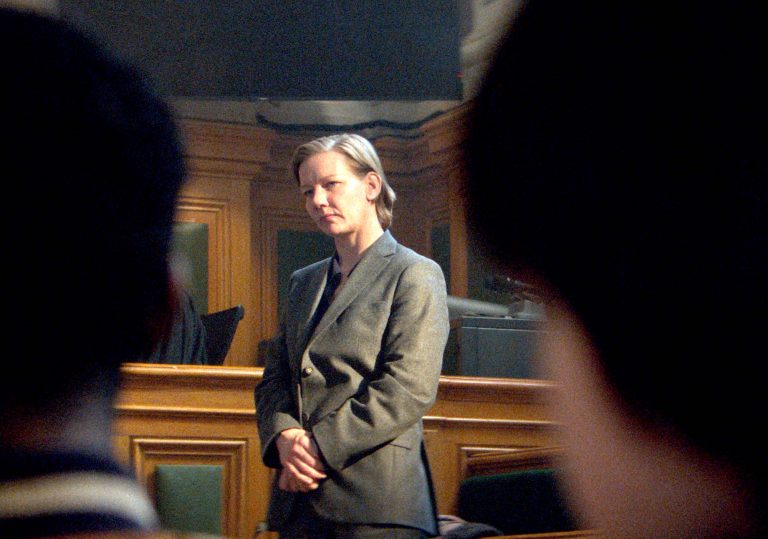
Samuel Kircher and Lea Drucker play stepson and stepmother that goes too far in the French film Last Summer.

For those that attend film festivals, there are many patrons who hope to catch a film with a bizarre storyline that looks good. One film that attempts to do it is the France film Last Summer. It’s a bizarre story that comes with unexpected twists.

Anne is an attorney in family law. She knows the system well and what works and what doesn’t in the Corts, but she will fight for her clients. Especially children. Anne is well-respected with how she works with rape cases, especially those involving minors. Anne is married to Pierre and has two adopted daughters from China. She does a very good job of balancing family life with her career.

Things change when Theo enters the picture. Theo is the 17 year-old son of Pierre’s from his first marriage. Theo is a troubled boy frequently getting in and out of trouble. Pierre is hoping a summer stay at his house will help improve him and improve his relationship with his son. In fact Pierre picks Theo up after his release from a detention centre. Anne is hoping to have this time to establish a mother-son relationship with her stepson.

Over time, Theo has no problem with being one of the family. He comes to family occasions well. He’s able to be a fun brother to his step-sisters. Anne has also found Theo to be a lot of fun to be around. It seems like they’ve developed a good relationship…or it’s something more. Anne is attracted to Theo and lets him know it. Theo is attracted to Anne in turn. Their closeness becomes more. A lot more.

Only problem is secrets don’t stay secret for long. The first exposure comes at a family birthday party. Anne’s sister catches them too close. She is disgusted and hurls an insult. Soon Pierre hears the news from Theo. Anne insists it’s all a lie. Whenever Pierre tries to bring it up, Anne knows of the right thing to say. When Theo confronts her in her office, she levels with him. She reminds him of his bad reputation and that no one will believe him. As time passes, Anne has successfully convinced Pierre and her sister that what they thought all along isn’t true. Soon Anne has one last encounter with Theo, which shocks everyone in the end.

Now this film is something. Very rarely do we have a film about incest created. And rightly so. Incest is a topic that almost all of us find disturbing and still churns a lot of people’s stomachs. This is a bizarre case. Theo is the stepson of Anne. Even if you get yourself questioning your morality as he’s not a blood relative of hers, he’s still the son of Pierre. Theo is a boy Anne is not to be attracted to in more ways than one. Seeing how the romance that is not to be unravel itself is enough to shock the pants out of the audients.

The funny thing about this film is that this film appears be about an incident of incest but if you look closer, you’ll see the film looks to be about Anne. Anne is a lawyer and an advocate: a respected woman who appears to champion the causes of exploited children. Soon she finds herself in a ‘tangle’ with Theo — a tangle that would lead anyone in the hottest of hot water — but she’s able to state her innocence and successfully convince those closest to her that it’s all a lie. We often forget that is the profession of lawyers and politicians: the power of the talk. Talk that wins cases, talk that wins minds, talk that can even trump proven truths. Anne has that ability to deliver that type of talk power and we see it throughout. She has the talk to win cases for young girls in family court, talk that can convince her husband and even her sister who catches her in the act that there’s no incest, and talk to convince Theo he won’t win his case against her. Usually a film about such an incident would be a film consisting of the incident, arrest, trial, conviction and any aftermath. I think that theme of Anne and the power of her talk may be the reason why the film ended in the way it did.

This is an incredible film by Catherine Breillat. Breillat is not well known outside of France. Her films in France have been known for decades to do about sexuality and family conflict. Her most notable works are 2001’s Fat Girl and 2007’s The Last Mistress. This film which she directed and co-wrote with Pascal Bonitzer is her first release in ten years and is actually an adaptation of a 2019’s Danish film Queen Of Hearts. Breillat does a great job in capturing the intensities of moments and having only us the viewer knowing the truth of the story. She knows how to capture what’s at stake should Anne be found guilty and expose a power play between the accuser and the accused.

The thing to make a film like this work is the acting. Lea Drucker was excellent as Anne, the one calling the shots. She knew how to make Anne the imposing figure that she is with the ability to be convincing to everyone even if we know it’s all a lie. Olivier Rabourdin was great as the husband who’s struggling to make sense of the whole situation of whether this really happened, what type of father he is. He was excellent at playing the man caught in the middle. Also great is newcomer Samuel Kircher. He gives Theo his recklessness, his innocence and his vulnerability without missing a beat. Very well done for a first performance.

Let’s just say Last Summer is a film of intrigue. It’s a film that features of an unspeakable happening and it comes with a lot of surprises including an ending nobody anticipated to happen. It’s a film that will get you thinking of what you saw over and over again!

VIFF 2019 Review: Boyz In The Wood

Boyz Wood
Boyz In The Wood are of four English boys who you think would fail an orienteering assignment in the Highlands, but you’ll be surprised.

Sure, teenagers are a source of comedy. Boyz In The Wood looks to be the right stuff give you the laughs at a teenager’s expense you’re looking for.

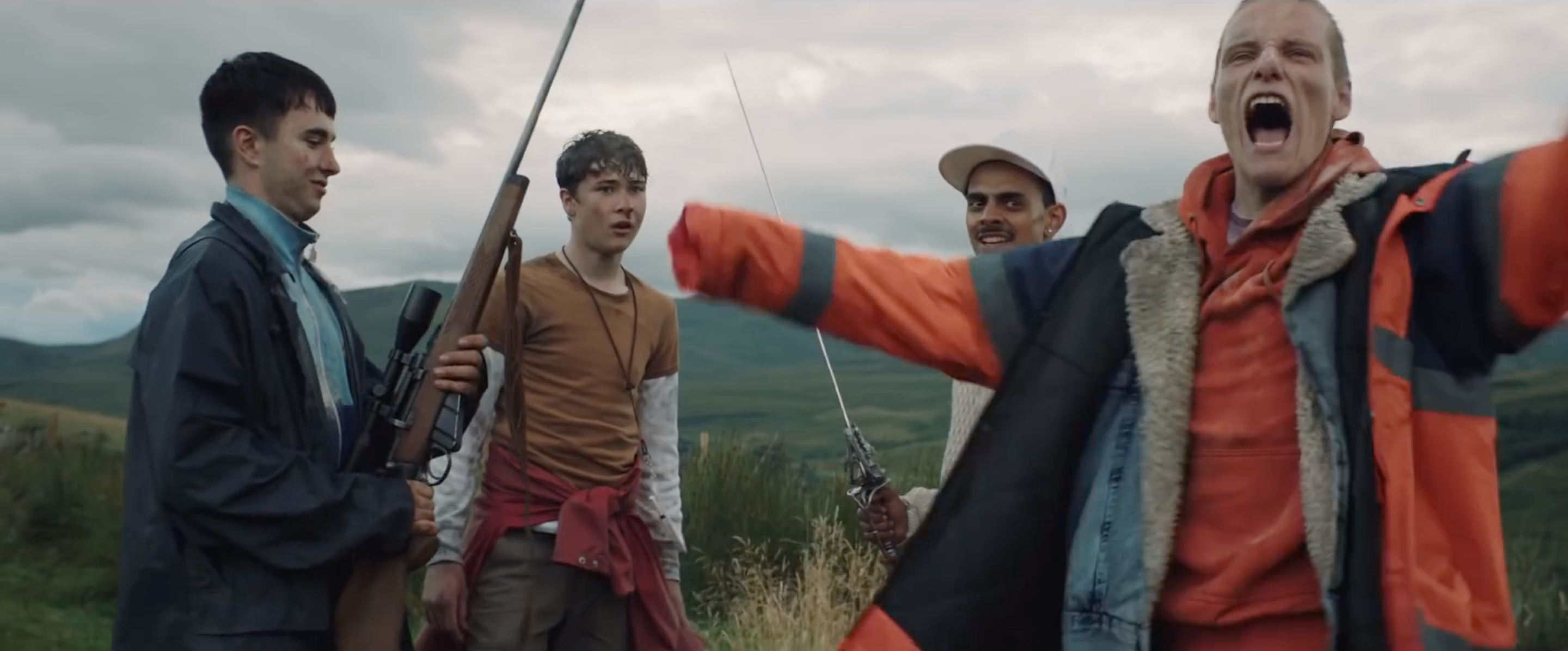
The film starts with four English teenage boys who are commissioned by the school to do an orienteering session in the lowlands of the English/Scottish border as part of an orienteering assignment. There’s Duncan who has a knack for destroying public property, Dean who likes to do unique drugs, one boy who thinks of himself as a rising rap star under the name DJ Beatroot, and Ian who’s the nerd just trying to fit in and wants to win the Duke Of Edinburgh award. Under their supervision is Mr. Carlyle who is hoping this exercise will help the three delinquent boys learn some responsibility. Meanwhile the police are trying to solve a crime in the area, but don’t know what crime they’re trying to solve.

Ian appears to be the only one taking the assignment seriously as Duncan brags about what he did at school, DJ Beatroot fancies his future rap career and Dean attempts to smoke a joint of certain concoction and it explodes. The others want to try the drug too. However Dean is too weirded out by the experience. Unknown to the boys at the time are a fancy-dressed rifleman from the Highlands. He’s soon joined by a woman in similar dress. They’re pursuing ‘the Dukes,’ but their pursuits change when they see the four teenage boys. Now the boys’ lives will soon be at stake.

The boys soon learn they are targeted by the two Highlanders. They try fend them off by using a container of Dean’s drugs as a bomb. That only causes the Highlanders to get even more furious. The boys try to get help from the police, but it doesn’t help as they’re more concerned about stolen bread in the region. They try and use a van but end up hitting Mr. Carlyle. Thinking he’s dead, they try and make something like he was in an accident by leaving the van with Mr. Carlyle in reverse. Then Ian is shot by one of the Highlanders. He tries to walk but is stuck. Instead of the boys helping, they leave him for dead.

As time passes, the police are still confused on the issue and the Highlanders are still on pursuit. However the boys appear lost. DJ Beatroot goes into a meeting lodge where he bumps into some local farmers. They recognize him and talk about how much they love his raps. DJ Beatroot gives them a show they just go for. The boys are attracted to the noise and they meet up again. Soon DJ Beatroot leads to where Ian is lying and they rescue him.

The boys have one last blast of fun as they learn that rabbit droppings make for a good hallucinogen. All four engage for one last blast. However as the orientation is nearing its time limit, Ian talks about his issues about being a misfit and left out. That’s when all three admit that they too are the losers of the school too. However they still have to get focused. On top of it, the Highland couple meet up with their fellow Highlanders in pursuit of the four boys.

Soon the police finally get it. They’re searching for a bread thief. The missing bread is the biggest problem in the area. Nothing else happens. So they set out to the Highlands to find the thief. In the Highlands, all the Highlanders have the boys hostage and ready to shoot them at the sound of three. Before the sound of three, the van lands on them all! The police get there and they not only found the boys safe and sound, but they found the stolen bread. The boys are heroes of the region! In the van, Mr. Carlyle isn’t dead! He’s alive and slowly gets his consciousness back and wonders what the heck went on while he was out.

The whole theme of this comedy is idiocy. We have three groups of people and they all show their own unique idiocy in the film. We have the group of teens that are obnoxious or misfits, or both. We have the police force that can’t seem to sort out their priorities on crime in the region. We also have the half-masked Highlanders who feel they have to use brutal violence to solve their issues. This adds to the humor of the film and adds to the story line where the ones most likely to fail end up being the ones that win in the end. The boys unwittingly accomplish their goal and become town heroes at the same time.

This is an against-all-odds comedy that plays out in crazy fashion. Four teens are given an orienteering session as part of an assignment and the hopes of a teacher straightening them out. You have one teen who’s into crazy drugs, one who’s naturally obnoxious, one who only cares about his rapper ambitions, and one nerd who’s trying to belong. Yeah, it sounds pretty similar to The Breakfast Club, or Stand By Me. Take your pick. Their personalities make it look like they’re all bound to fail and everything imaginable goes wrong. Or if it does work out, it will be done in hilarious fashion. It does work out and Ethan finds himself with three new friends: the three you last thought would befriend him. Even that scene where he gets left behind leaves you wondering, but it all works out.

The interesting thing about the film is that is occasionally goes from a story with a beginning, middle, and end to a music video. It’s understandable. The story does feature a rapper with big dreams, even if all he raps about is his penis. The story also focuses on some of the boys trying to get high and it’s trying to recreate a lot of hallucinations and have it done in musical fashion. However there are times when this mesh is a bit distracting and does make the story seem uneven. Yes, it’s fun and entertaining to watch, but it does make you wonder if it was overdone or not.

This is the first feature-length film done by Ninian Doff. He’s done a lot of film shorts and video shorts in the past. Here he’s trying to make a film that is part comedy/drama and part music video. It’s entertaining, but its imperfections are noticeable. Nevertheless it is worth enjoying. The film even caught the attention of Tobey Maguire. Yes, the Tobey Maguire from the Spider-Man movies from fifteen years ago! Tobey is executive producer of this film. The acting was also good and humorous. All of the actors played their parts well. However I feel the show-stealer is Viraj Juneja. DJ Beatroot was quite the charming idiot and he did it very well.

Boyz In The Wood is an imperfect but humorous and entertaining comedy about a group of teen males and orienteering. It may not exactly reach the level of stupidity of Beavis And Butt-head, but it is funny and it ends in sensible fashion.

Movie Review: The Hateful Eight

hateful-eight
The Hateful Eight focuses on eight despicable people in the same building. It leaves the audience wondering who will still be alive at the end, if anyone at all.

Quentin Tarantino is possibly the most uncompromising director in Hollywood. Even when he’s not at his best, he can still make a statement. I gave The Hateful Eight a look. I have to say I found it had a lot to like.

It starts in post-Civil War America in the frontiers. It’s a cold day and there’ signs that there’s a blizzard coming soon. Major Warren, an African-American bounty hunter, has three bodies to take back to Red Rock. He hitches a ride with a stagecoach despite being told by driver O.B. Inside the current passenger wants to be alone. Warren does get the ride and meets his other passengers: another bounty hunter by the name of John Ruth who has his bounty, the ruthless Daisy Domergue, with him handcuffed to him also headed to Red Rock. The ride is not pleasant as Daisy should racial slurs at Warren. To which Ruth response with a punch in her face. However Warren and Ruth are able to bond as Warren reads him his letter from Abraham Lincoln.

Along the way, the coachman  comes across a Lost Causer by the name of Chris Mannix who claims he’s to be the new sheriff of Red Rock. Mannix is welcome but tension between him and Warren start over each other’s war records. However both Ruth and Warren make a pact to protect each other’s bounties.

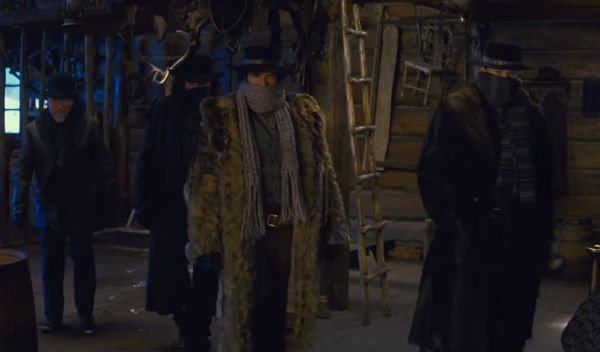
The blizzard becomes so powerful, the four have to take refuge at the nearby Minnie’s Haberdashery, a stagecoach lodge. Minnie’s not there and the four are greeted by Bob, a Mexican who claims Minnie is visiting her mother and he’s in charge. Also at the Haberdashery are Red Rock hangman Oswaldo Mobray, cowboy Joe Gage who’s simply traveling to visit his mother, and former Confederate general Sanford Smithers. Ruth knows they will all be in the lodge overnight and trouble is bound to brew with all these differing and conflicting people. So he gets all but Warren to disarm.

They even try to get the eight to have a civilized dinner of stew at the same table. However Mannix points out to Warren that his letter from Abraham Lincoln is a forgery. Warren admits it, stating his letter gets him respect from white people that he’d otherwise be denied. Ruth is outraged when he hears this. Warren also has another confession, but to Smithers. He provokingly confesses to him that he tortured, sodomized and killed his son in lawful self-defense in revenge for his son executing black soldiers during the Civil War.

Another incident happens known only to Domergue, the coffee was poisoned. She alerts no one of this and allows for Ruth and O.B. to pour a mug. After drinking they both vomit and collapse. Mannix is fortunate enough not to drink the cup he poured after he saw what happened. Domergue is able to kill Ruth but through her own gun. Warren attempts to be the master of justice, determined to find out who poisoned the coffee. Only to uncover that Bob is possibly an impostor because Minnie’s haberdashery does not allow Mexicans. He suspects from the start that Minnie was killed and executes the Mexican. To the surprise of everyone, Warren is shot from below. Further shootouts follow leaving Mannix and Mobray wounded.

The film then flashes back to the beginning of the day when it was to be a typical day for Minnie’s Haberdashery. However a robbery happened where everyone including Minnie were killed. Only Smithers is still alive. The leader of the heist was Jody Domergue, Daisy’s brother, who plans to ambush Ruth knowing they’ll eventually stop here because of the anticipated blizzard and his gang will take Daisy away. Returning back to the current situation, the story goes into various confrontations and leads to an unpredictable ending.

Of all the films that are happening around this Oscar season, this appears to be the one film that shows no real intention of making a political statement or social statement of any kind. Actually what it is doing is telling a story that for the whole of it only takes place not even for a full day. It’s starts with a free African-American major wanting a stagecoach ride only to end up in the same coach as two others. Then another. All of which are polar opposites and you know a fight would start any minute. Then the four get to a shelter during the blizzard which happens to be a haberdashery place with four others, also a set of characters too with traits you know could add to the conflict.With eight spiteful people in the same place at the same time with a bone to pick with at least one of them, you know hell will break loose any minute and you wonder who will be the first to get killed. Even as you watch the whole film unravel, you will end up surprised to see anyone at the end of the movie alive.

Once again Quentin Tarantino delivers. He’s one of few directors that doesn’t have to succumb to the pressures of parental guidance groups, family values groups or even the pressures of Hollywood and be able to deliver his stuff his way. As I said at the beginning, he’s possibly the most uncompromising director in Hollywood. He is no holds barred in terms of the use of profanity and racial slurs in this film and uses no restraint. As is common in his movies, he divides his film into segments or even chapters as he does here. Also like his past films, he plays with the chronology of time as the incidents of what happened before the eight got together is shown as the fifth chapter rather than a simple flashback as most film makers would do.

Another thing Tarantino does here like he does in some of his other films is throw in some subtle humorous moments. One example is the case of a cowgirl from New Zealand. Another is getting all of the eight at a table to eat their dinner in a civilized manner, or as civilized as it can get. Another example of his dark humor is the gory effects of when one gets shot in the face or when one drinks the poisonous coffee. And an additional example is how he has items be a significant part of the film. The same way the watch, Kahuna Burger, suitcase and wallet fit the story of Pulp Fiction to a tee, we have Warren’s letter from Abraham Lincoln. He does the type of movie violence that can even make Martin Scorsese jealous. He always was a film maker who didn’t play by the rules. He always made his own rules.

I will admit being a longtime fan of his movies, I was wondering what The Hateful Eight would be like. His last two films weren’t exactly his best: Inglourious Basterds could dazzle at first but would later be seen as ridiculous in afterthoughts and Django Unchained look both ridiculous and redundant as revenge being rehashed. Here Tarantino takes a chance by having most of the situation happen in a single physical location. Most of the time you have that in the case of student films or feature-length films of rising directors. Here Tarantino uses his experience and his knowledge of directing and writing to create a full intense film that’s predominantly set in a single place. That was very creative of him as he does a good job in the story and directing and delivers a movie that gives you the sense anything can happen any minute.

However the film is awfully long and there are many scenes that seem like they are drawn out. Sometimes there are times you’re actually wondering why something hasn’t happened yet.I do give Tarantino credit for delivering a story that’s unpredictable but I still feel almost three hours is too long for such a film.

SPOILER ALERT: Ending Will Be Revealed In This Paragraph. Bypass This Paragraph If You Want The Ending To Be a Surprise. If there’s one surprise Tarantino gave me, it’s the ending. Usually Tarantino is one film maker that doesn’t usually have sentimentality in his films. I have never seen a sentimental moment in any of his previous films. However the ending as Mannix and Warren appear dying was possibly the most sentimental thing I’ve ever seen in a Tarantino film. Sure, that’s not saying much but it’s still atypical enough to notice. No, I didn’t shed a tear as didn’t anyone else in the theatre but it was still a surprise.

Tarantino may be the brains behind what’s all happening in the film but it’s the actors that make it come alive. All eight of the main actors had to deliver a character that was as likable as they were hateable. Basically the type of characters whom you wouldn’t shed a single tear over when they die. They succeed in doing so and even make you welcome their deaths at times. Samuel L. Jackson and Kurt Russell were the ones able to command the most attention. However the biggest scene stealer will have to be Jennifer Jason Leigh. Her performance as the uncoothed Daisy Domergue really caught everyone’s attention. Her character of Daisy could have been considered annoying or even a distraction but she made it work. Her turn will also surprise you how a woman can be as ruthless as the men. The second show stealer would have to be Walton Goggins as Sheriff Mannix. Goggins also had a character that could have easily been dismissed as annoying or over the top but he became more likable and oddly enough appreciable by the end. If there was one more scene stealer, it had to be Bruce Dern as the spiteful Confederate General. Even the minor roles such as Minnie and Six Horse Judy were played well.

The film also did well in terms of its technical aspects. Robert Richardson did a very good job of cinematography both among the outside shots and inside shots. The natural and created sets works well too. Once again, Tarantino delivers a film with an excellent mix of songs from the past that fit the film well. However it’s the addition of the score from Ennio Morricone that give the film an added boost.

The Hateful Eight is not Tarantino’s best film ever. In fact it’s imperfections are noticeable. Nevertheless the film rarely gets boring and will still please Tarantino fans.

Movie Review: Django Unchained

Django Unchained movie still

If you’ve seen Lincoln already, you’ve already seen one man’s approach to slavery. Now Django Unchained is another man’s approach to slavery that’s more what Quentin Tarantino had in mind and not what you’d expect.

The film starts with the Speck brothers walking a group of male slaves down across Texas in 1858, three years before the Civil War. Their journey is interrupted by Dr. King Schultz who appears to be a traveling dentist. He offers to buy one of the slaves, Django Freemen. Before the Specks can refuse Schultz shoots one of the Speck brothers to death, shoots the other leaving him in pain and frees the other slaves to let them kill the wounded Speck.

Schultz confesses to Django he’s no longer a dentist but a bounty hunter who kills fugitives for reward money whenever the opportunity arises. He especially chose Django because he can help identify his next targets, the three ruthless Brittle brothers. Schultz admits he hates slavery and offers Django to help with freedom, $75 and a horse as a reward. Django assists successfully in helping Schultz shoot down the Brittles.

Not only does Django get his promised rewards but Schultz hires him as his bounty hunting associate. This comes as Schultz learns that Django has a wife: Broomhilda ‘Hildy’ von Shaft who is also a slave now owned by a separate owner. Schultz is hoping making Django his associate will reunite him with Hildy. Schultz does a good job in training him and Django is fully ready with the shooting skills and the desire for blood. His first operation on Smitty Bacall is a success from hundreds of feet above off a cliff. Django and Schultz are successful in other bounty shootings too and soon learn Hildy is owned by plantation owner Calvin Candie. Once arriving as his plantation, Candyland, we learn Calvin is a charming but brutal man who has his male ‘mandingo’ slaves fight to the death for his entertainment pleasure.

The two try to pose as ‘mandingo’ purchasers to Candie however the purchase turns real when they witness a slave mauled to death by angry dogs. They then ask for Hildy as an addition. Candie agrees to the sale but it raises the suspicion of Candie’s staunch slave Stephen who suspects Django knows Hildy and is up to something with this sale. Upon the advise of Stephen, a drunken ruthless Candie gives Schultz a deal: Hildy for $12,000 or death. Schultz agrees and shoots Candie after the offer. A shootout occurs with Schultz shot and Django shooting many of and many of Candie’s men dead only to end when Stephen threatens to kill Hildy is he doesn’t surrender.

Django is sent to punishment by Stephen and Candie’s sister working as a coal miner worked to his death. That’s what Stephen thinks as Django is able to outsmart the slave drivers, kill them and take their dynamite. This comes for the set up at the end for Django’s revenge on Stephen and all those at the plantation. Even though most people know what the ending will be, it’s the style that it’s done in that’s the treat of the movie.

One thing about this movie is that it’s not supposed to be the answer to slavery. It’s not supposed to be even a version of how slavery should have been solved all along. What this movie is basically is Quentin doing what he does best: a revenge movie done in his style. I’ve been an admirer of him since Pulp Fiction. I remember when I first saw it near the end of 1994. I was a college student of the time and Pulp Fiction was a movie that impressed people of my generation. I came from a generation that was strongly anti-censorship and looked at commercialism in movies as a downgrade in creativity and an attempt to soften the authentic. When Pulp Fiction came out, we were impressed. Finally a movie where the director/writer has complete creative control and it excels. Finally a movie that takes filmmaking to new levels as filmmaking should. Finally a film that pushes envelopes as us Generation Xers in college felt all art should. Finally a movie that makes original pay off at the box office. Finally an independent movie that could make the Hollywood fare at the time look like a laughing stock. Finally a film that doesn’t censor itself and doesn’t bow down to pressures of ratings boards or family values groups and it excels. In the end, Pulp Fiction has been hailed by most as the best film of the 1990’s.

Eighteen years have passed since Pulp Fiction has been released. While most directors have had a flare last for a number of years only to flare out over time, Tarantino never did. He still delivers movies that know how to charm and even enchant. Also while it appears that there’s a lack of taking film in new directions right now and more interest in creating a box office winner, Tarantino is still one who dares to stand out, take risks and do things his way. One thing I’ve come to know of Quentin Tarantino’s movies over the years is that he aims to deliver a film in style. It’s seen very clear in the films he shows that he attempts to tell a story via film noir or blaxploitation or spaghetti western style. He wants to deliver a stylized story as he’s done in his past movies and he does it again here.

Another thing Quentin does in his films that he does again here is deliver a movie with stylized characters with eerily charming personalities and deliver their acting with style. We see it with the characters of Django Freeman, Dr. Schultz, Calvin Candie, Hildy and Stephen. All of them have their personalities in their likeable traits and their hateable traits. All also deliver in their stylized acting without coming off as ridiculous. Few times can an actor get away with doing such a showy stylized character in movie performances without looking ridiculous or over-the-top. It’s here in Quentin Tarantino movies where it works the best. It’s funny because when I learned Django was about a slave getting revenge, I was expecting the actors to play characters with mannerisms from the 1850’s. Not in a Tarantino movie.

Also noticeable is how Quentin works to avoid the sentimental and touching in his films and it’s seen again here. The two where I got the biggest sense of this was firstly the scene where Django shot Smitty Bacall from a cliff and we see Smitty’s son coming to him on the ground. There’s no scene of the son’s reaction. The second was the scene where Hildy saw Django after being away from him for so long. I was expecting Hildy to be in tears and embrace him. Instead she faints at the sight of him. Not what I expected but should’ve in a Tarantino movie.

If there’s one glitch to comment about the movie, it’s that it’s yet another revenge flick from Tarantino. Back in the 90’s his films had the focus of the criminal mind. I was good with that. In the 21st Century, his movies have been focused on the theme of revenge, from the Kill Bill series to the Death Proof part of the Grindhouse movie to Inglourious Basterds. I didn’t have a problem with that because it was done entertainingly and even enchantingly at times in some scenes. Here it was a case where I went with the feel “Not another revenge story from Quentin Tarantino.” I’ll admit that it was a very stylishly done movie that delivers in entertainment value but seeing Tarantino toy around with the theme of revenge once again gives me the impression he’s masturbating to that theme a little too gratuitously.

Don’t get me wrong. I’m not trying to say in my review that this is the movie that is the turning point for my respect for Tarantino. In fact I still consider him one of the best filmmakers out right now. I would however like to see him work with other themes too. Like many people, I feel one trait that makes for a great director is one that can do many genres well. Steven Spielberg is an example of a director that can do a multitude of film genres. Martin Scorsese may be famous for gangster films but he showed he can do other styles of film well too, even family movies. Ang Lee is another filmmaker that has demonstrated versatility. I would like to see Tarantino become more versatile in the films he delivers. This may sound odd coming from a fan of his movies but I’d like to see him try it.

Okay, enough of me both praising and sacking Quentin. The film’s acting consists of character acting that knows how to be stylish without coming across as ridiculously showy. Jamie Foxx was impressive as Django Freeman. The only problem is that he was constantly upstaged by the supporting players. Christoph Waltz delivered excellently as King Schultz with all of his charming arrogance who somehow had a heart. Leonardo DiCaprio also was phenomenal as the charmingly hateable Calvin Candie. Samuel L. Jackson was excellent as the hateable Stephen: the former slave who now owns and beats his own. He makes you want his payback in the end. Kerry Washington was also good as Hildy but her character lacked the depth and style the leading male characters had. The sets were perfect in fitting the time. Even the springy tooth on Dr. Schultz’s coach looked less ridiculous over time. The music mix was also excellent. Another trait of Tarantino’s movies is the inclusion of music that enhances, stylizes and even enchants in the movie’s story and Quentin delivered again. It was a mix of original music and of songs from decades past that blend like magic into the film.

One would assume a movie like this would be one to cause controversy. And they’re right. This movie has had people speaking out against it on the subject of either the violence or the subject of slavery or the use of racial slurs. The most outspoken critic has been director Spike Lee. Spike has been critical of Quentin Tarantino in the past for the use of a certain racial slur in Pulp Fiction. Spike hasn’t really spoken about the use of that slur in Django but he has spoken about the movie itself and has declared it: “an insult to my ancestors.” This is particularly questionable since there are African American actors in leading roles. If they felt it was an insult to their ancestors, they would have refused to be in the movie. Besides I’ve always gotten the impression Spike Lee wants the world to think he’s the voice of all of black America simply because of Do The Right Thing. Fortunately the controversy hasn’t generated too much news overload.

It’s interesting while Lincoln showcased justice given to slavery, Django Unchained is about one slave’s revenge. Ironic how both are released in the same year and both have expectations to win the Best Picture Oscar. As for Django, it’s starting to feel redundant to see another Tarantino revenge flick but his stylized filmmaking compensates for that and delivers a winner of a movie for the most part. Not for all to see but it will entertain those that do see it.